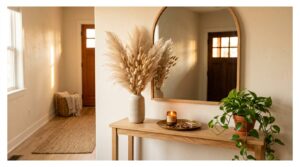
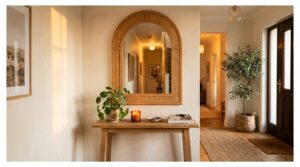
A dining room that only functions as a place to eat is a missed opportunity. The right decor makes it the most beautiful room in the home and a space where people genuinely want to linger.
These ideas create dining rooms that are as stylish as they are welcoming.
Luxury Dining Room Ideas for Elegant Living for a Cozy and Elegant Home
Let’s explore the ideas.
Earthy Terracotta and Sage Color Palette
An earthy terracotta and sage color palette brings warm and cool tones together in a balanced way. Terracotta shows up well through pottery, upholstery, or a painted accent wall. Sage tends to pair with it through table linens or a nearby plant, keeping the whole room feeling grounded.
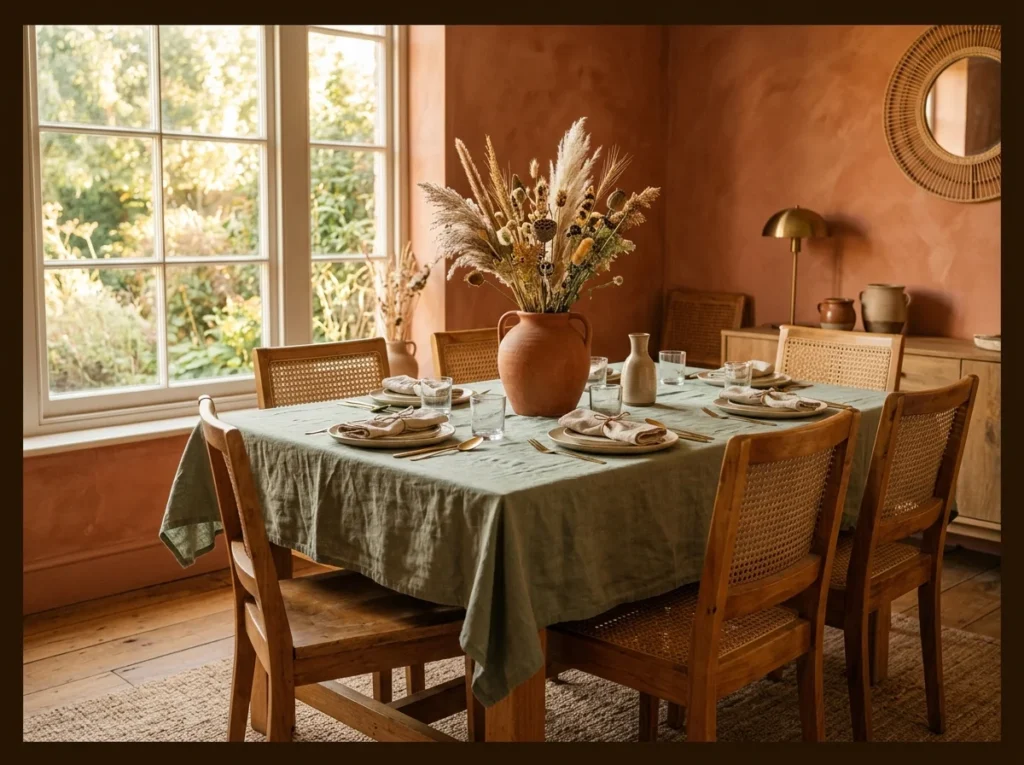
A terracotta and sage dining room palette creates an earthy warmth that makes every meal feel more grounded and intimate. Terracotta on the walls reflects warm light beautifully at dinner time, making the food and the people around the table look genuinely wonderful.
Balance the two tones by using terracotta on the walls and sage as an accent through textiles a linen tablecloth, a ceramic vase, cloth napkins in muted green. These two colors share the same muted earthy quality which is why they always sit so harmoniously together.
Rattan Dome Pendant Cluster Lighting
A cluster of rattan dome pendants adds texture overhead instead of relying on a single traditional chandelier. The woven material casts soft, dappled shadows once the lights are switched on. This approach suits dining rooms leaning toward a relaxed, natural design direction.
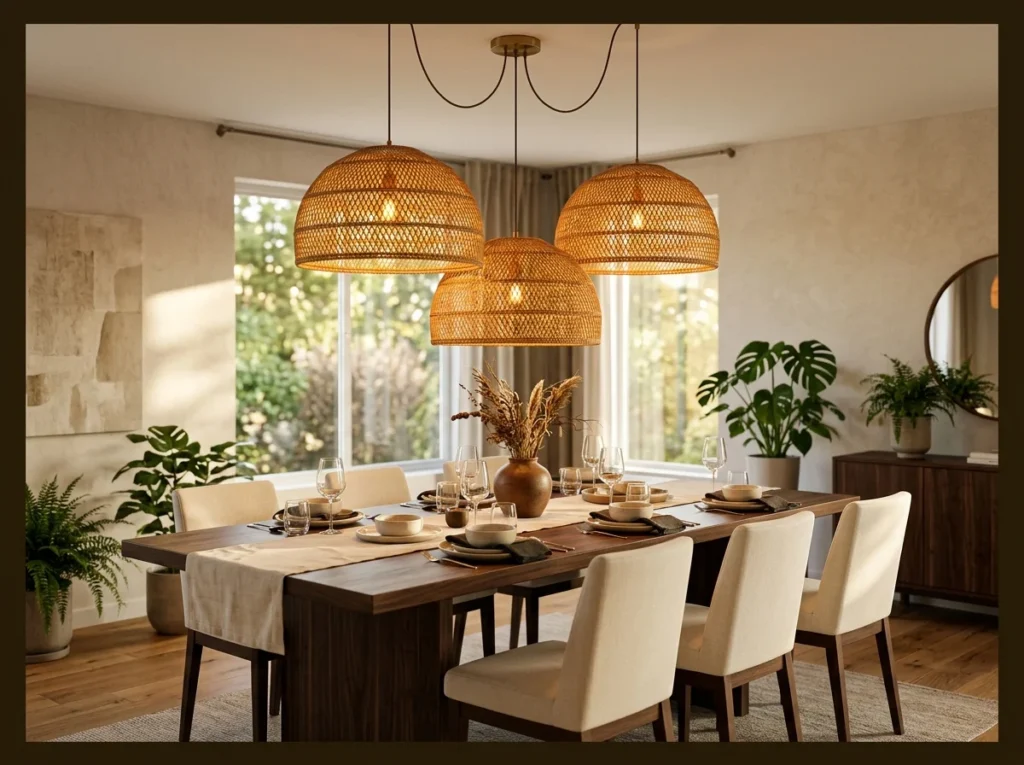
Three rattan dome pendants clustered above the dining table at slightly varying heights create one of the most organic and visually impactful lighting arrangements available. The warm amber light that filters through woven rattan casts the most flattering glow over food and faces at the table.
Hang the lowest pendant 30 inches above the tabletop and stagger the others at 34 and 38 inches respectively. The varying heights create visual movement while all three pendants remain close enough together to read as one composed installation rather than three separate fixtures.
Dark Wood Table with Mixed Chair Styles
A dark wood table paired with mixed chair styles avoids the overly matched look of a standard dining set. Different chair shapes or materials grouped around one table add a collected, personal feel over time. The darker wood tone also grounds the room, especially when paired with lighter walls.
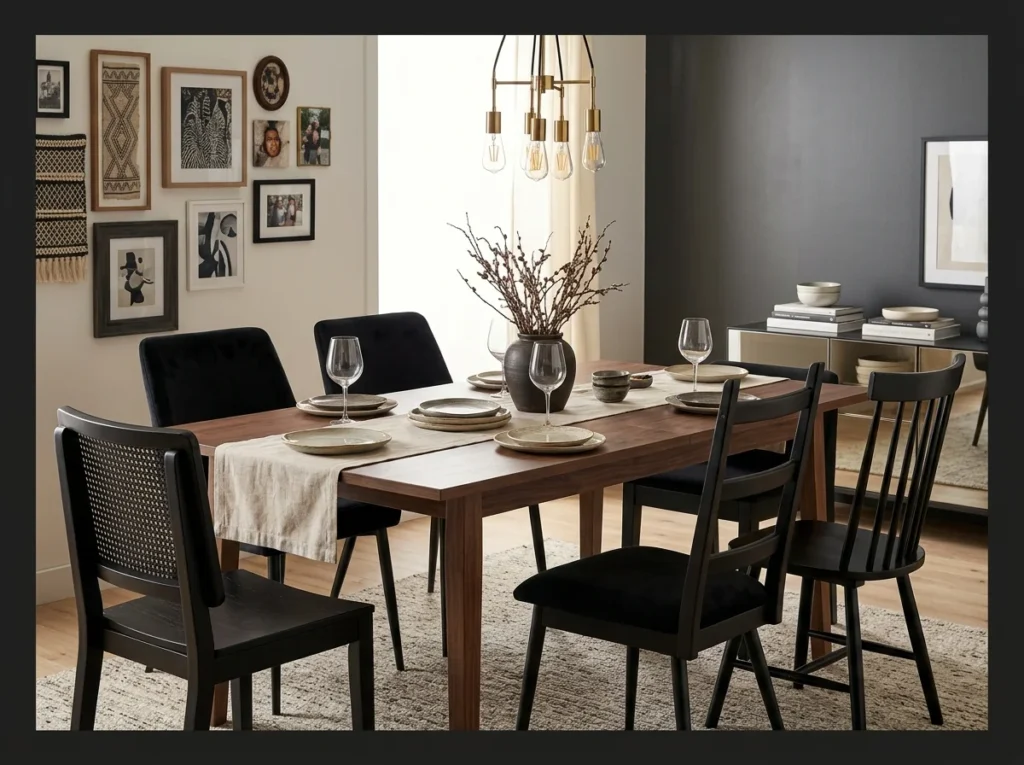
A dark walnut table surrounded by different chair styles that share one common finish all black, all natural wood, or all the same material creates an effortlessly curated look that feels genuinely personal rather than showroom-ready. The variety of chair forms adds visual energy while the shared finish provides the cohesion.
Modern Dining Room Ideas for Elegant Style to Refresh Your Space on a Budget
Mix upholstered velvet seats, rattan-back chairs, and solid wood slatted chairs around the same table. Each chair suits a different body and sitting preference, which makes the dining experience genuinely more comfortable for every guest. Three different chair styles around one table is usually the most the eye can absorb comfortably before the arrangement reads as chaotic.
Velvet Dining Chairs in Jewel Tones
Velvet dining chairs in jewel tones bring both texture and rich color into the room at once. Emerald, sapphire, or deep burgundy shades tend to stand out clearly against neutral walls. This combination suits dining rooms aiming for a slightly more formal, dramatic feel.
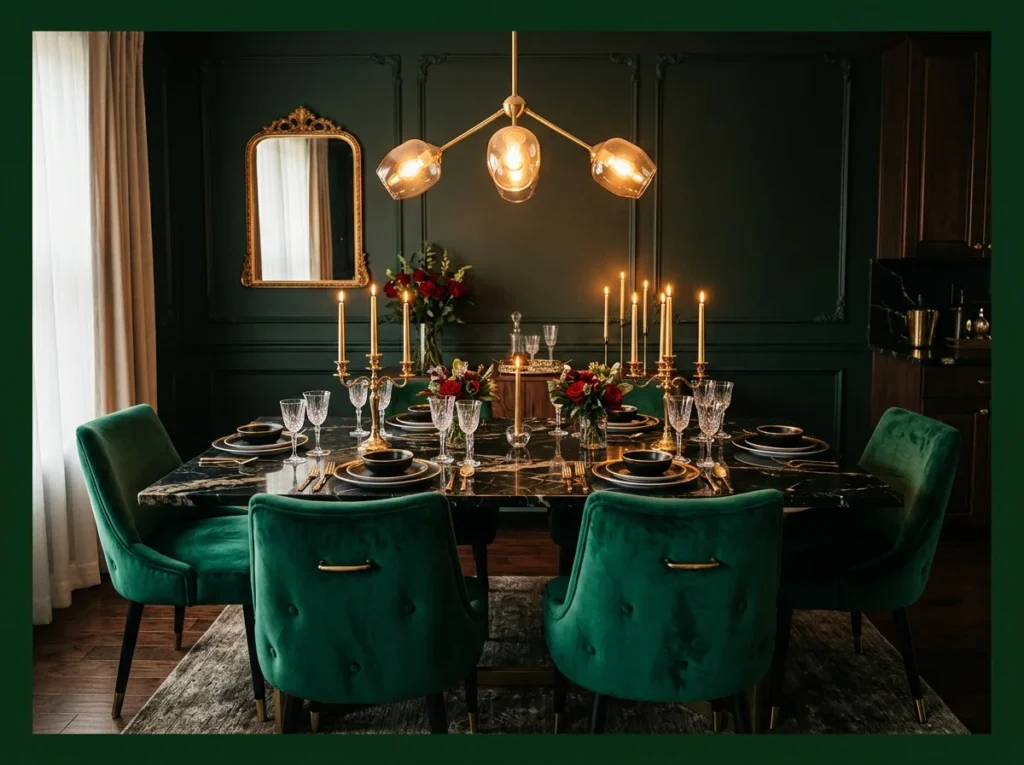
Emerald green, sapphire blue, or deep burgundy velvet chairs immediately elevate a dining room from functional to genuinely luxurious. The pile of velvet catches light differently from every angle and shifts between lighter and deeper shades throughout the evening as the light changes.
Choose a performance velvet rather than traditional cut velvet for dining chairs they handle food spills and daily wear dramatically better while looking almost identical. Six matching velvet chairs around a dark marble or black lacquered table creates an intentional richness that invites people to sit down and stay.
Dramatic Forest Green Accent Wall
A dramatic forest green accent wall gives the dining room a clear focal point without repainting the entire space. This deep color pairs particularly well with wood furniture and warm brass or gold accents. It works especially well behind the table, becoming the backdrop for every meal.
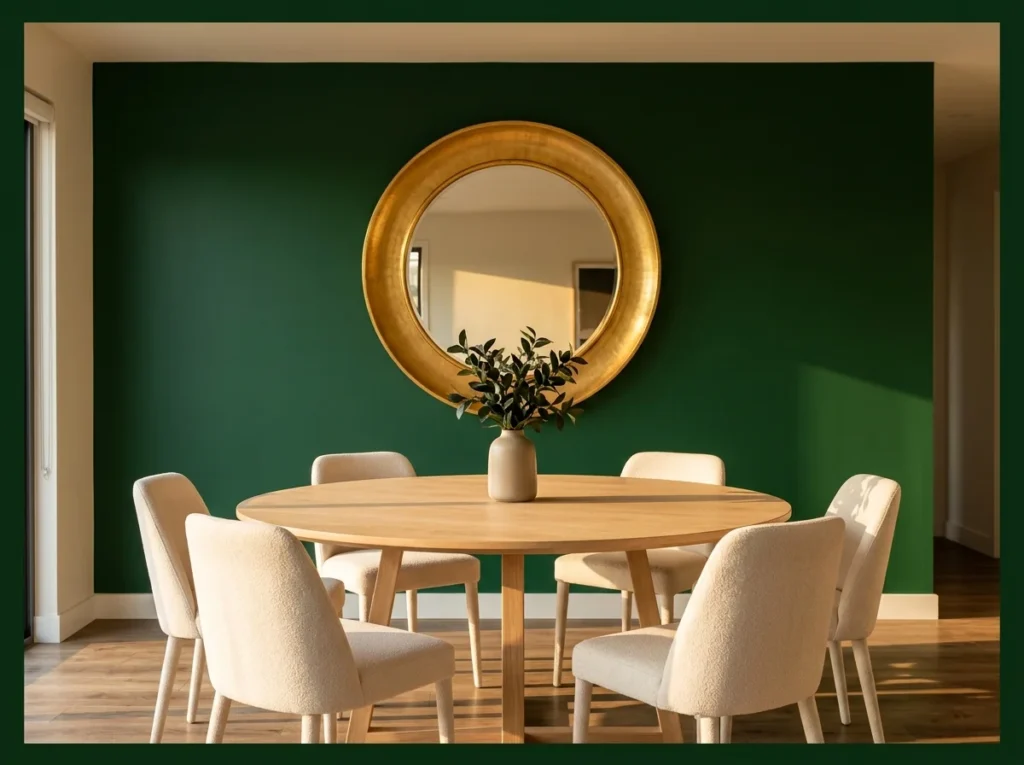
A single deep forest green wall creates the most dramatic and immediately impactful dining room color treatment available. The dark saturated color wraps the table in a sense of enclosure that makes the dining experience feel intimate and considered rather than open and exposed.
A large round gold mirror centered on the green wall completes this treatment without requiring any other art or accessories. The gold frame and reflective glass surface bounce warm light back into the room and create a focal point that draws the eye the moment anyone enters. Keep the remaining three walls in white or the palest possible off-white.
Vintage Sideboard as Styling Anchor
A vintage sideboard adds storage while also acting as the main styling anchor of the room. Books, ceramics, or a small lamp arranged on top give it a curated, lived in feel. Older pieces, whether inherited or found secondhand, often bring character that new furniture cannot replicate.
Dining Room Wall Decor Ideas for Stylish Homes That Add Style and Comfort
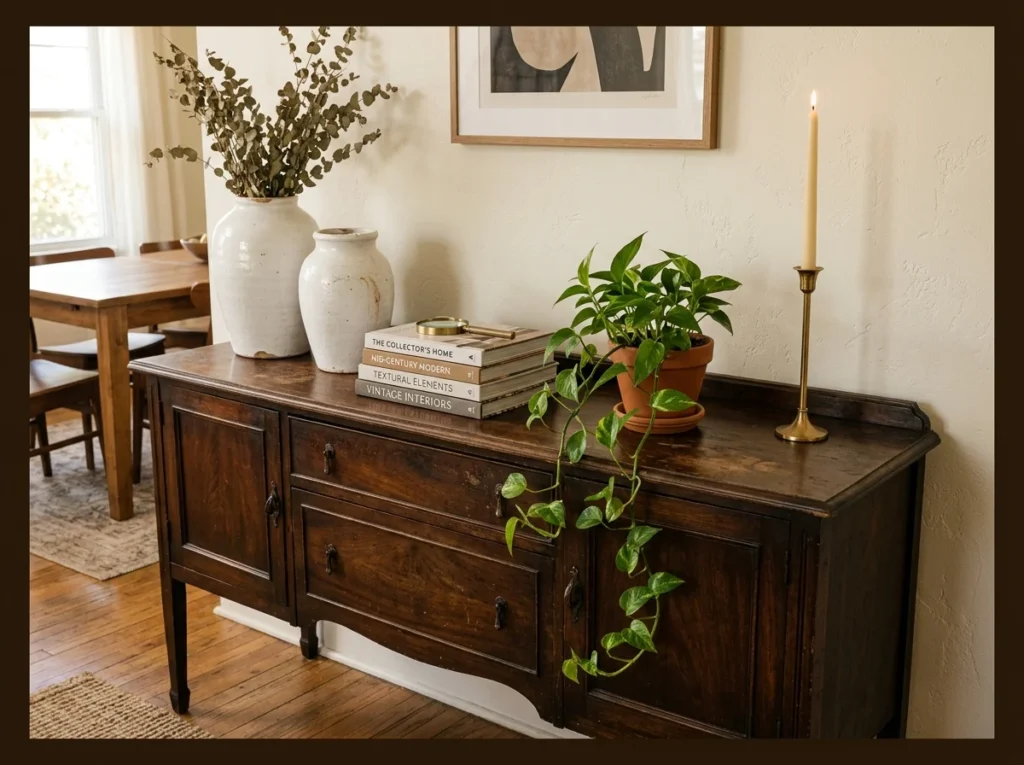
A vintage sideboard or buffet on the main dining room wall creates a secondary surface for serving food, displaying objects, and anchoring the whole room compositionally. The sideboard gives the dining room something beyond the table itself a destination for the eye to travel to when not focused on the meal.
Style the top of the sideboard with three to five objects at varying heights tall ceramic vessels, a low stack of books, a small plant, and one brass candle holder. This is the dining room vignette that makes guests stop and look on their way to their seat. Hunt antique markets for real vintage pieces rather than buying reproduction sideboards the genuine material patina is irreplaceable.
Low Centerpiece with Taper Candles
A low centerpiece paired with taper candles keeps sightlines open across the table during meals. This setup works better for conversation than a tall arrangement that blocks the view between guests. Simple greenery or a small bowl of fruit alongside the candles keeps the display from feeling overly formal.
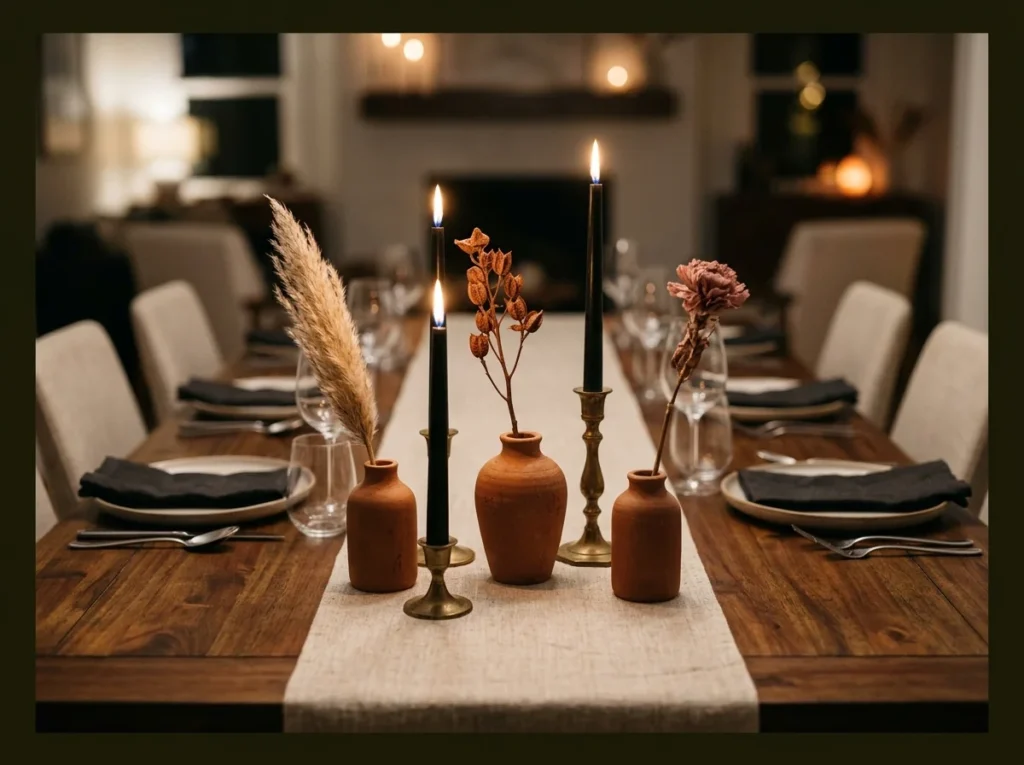
A low centerpiece that keeps everything below 10 inches above the table surface is the fundamental rule of good dining table styling. Higher than that and it interrupts sightlines and makes conversation across the table genuinely awkward. Three small bud vases with dried stems paired with taper candles at different heights achieves visual richness without blocking anyone.
Taper candles in brass or ceramic holders add warm living light to the table center that transforms the whole dining experience at dusk. Always use unscented candles at the dining table fragrant candles compete with the food aromas which are what the whole meal is built around.
Woven Jute Rug Under the Table
A woven jute rug placed under the dining table adds natural texture underfoot. Its rougher, fibrous weave contrasts nicely against smoother wood or upholstered chairs nearby. This rug choice also tends to suit rooms with a relaxed, earthy design direction.
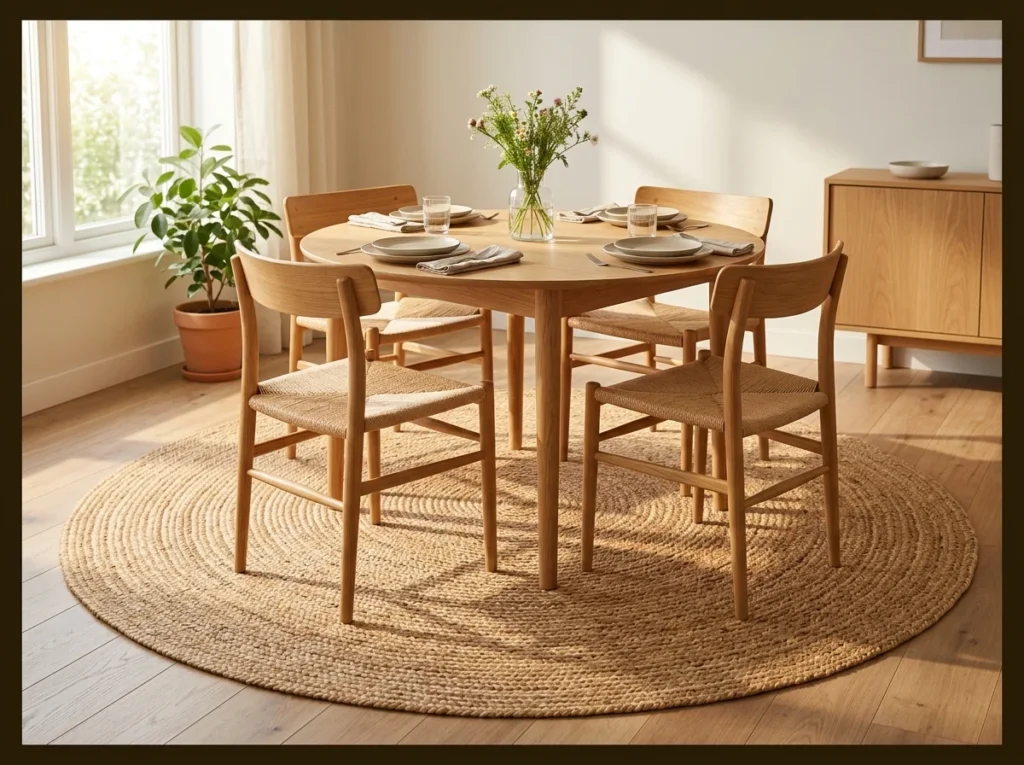
A natural jute rug under the dining table adds warmth, texture, and acoustic absorption to a room that can feel cold and echoey with a hard floor alone. The rough woven fiber of jute is one of the most durable rug materials available for a high-traffic surface that sees constant chair scraping.
Choose a rug where all four chair legs sit on the surface with chairs pushed in, and which extends at least 24 inches beyond the table edge so chairs remain on the rug when pulled back. This proportion makes the rug read as part of the room’s architecture rather than a mat placed under the table.
Gallery Wall of Large Art Prints
A gallery wall of large art prints fills the dining room wall with fewer, bigger pieces rather than many small frames. This approach avoids a cluttered look while still creating a strong visual statement. It works especially well opposite the table, giving guests something to look at during longer meals.
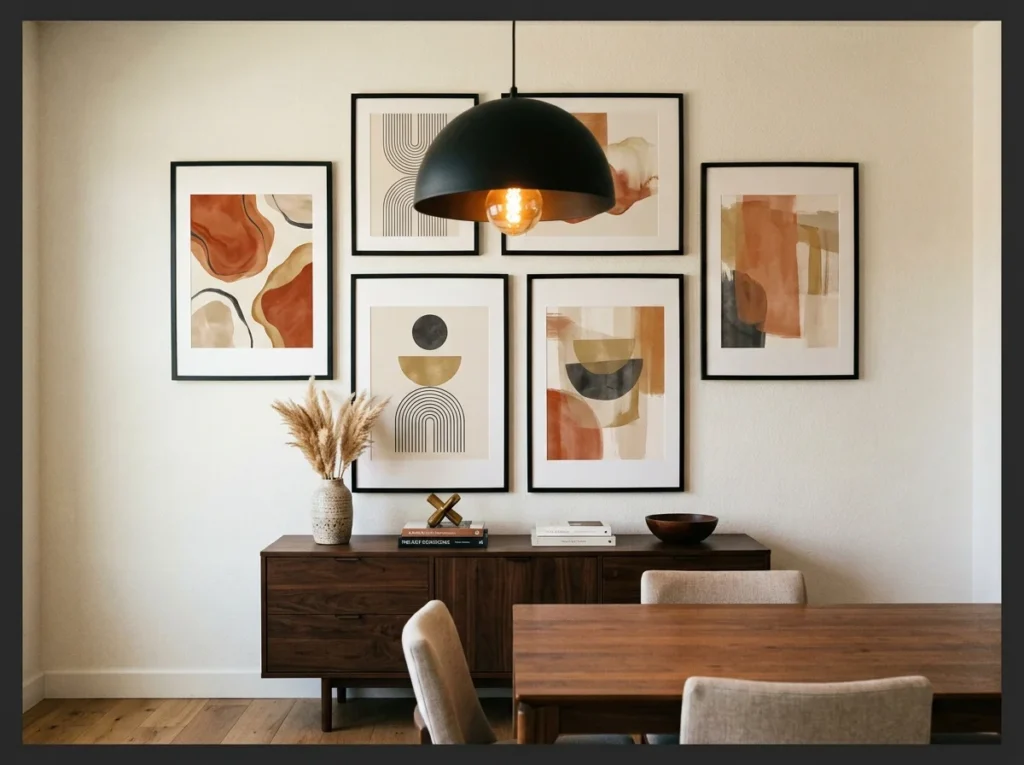
A gallery wall in the dining room works best when the prints are large enough to have visual impact from the seated dining position across the table. Small frames on a dining room wall look insignificant from that distance. Choose prints where the largest is at least 24 by 30 inches.
Keep all frames in the same finish matching black, natural oak, or aged brass and let the artwork itself provide the variety. Lay the arrangement on the floor before hammering any nails. Warm abstract or botanical art in terracotta, sage, and cream tones suits the widest range of dining room palettes.
Dining Room Lighting Ideas to Brighten Space for Modern Family Gatherings
Built-In Corner Banquette Seating
Built in corner banquette seating makes better use of an awkward dining room corner than a full set of chairs would. This layout also seats more people comfortably within a smaller overall footprint. Storage can sometimes be built underneath the bench seats for extra practicality.
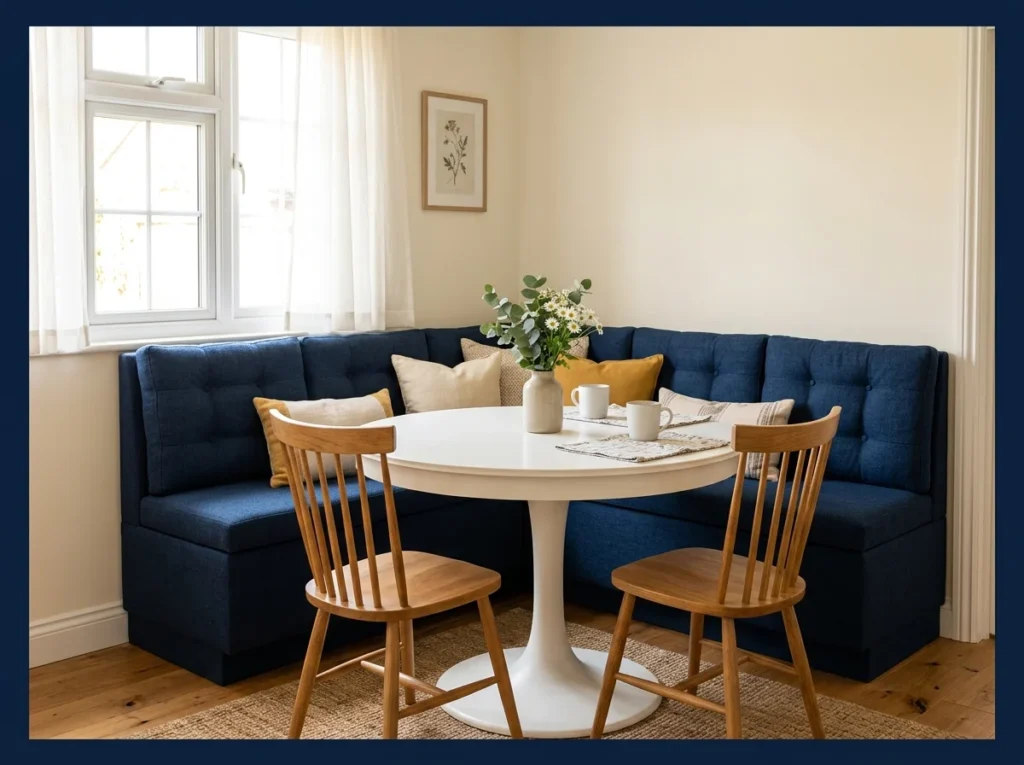
A built-in corner banquette turns a dead dining room corner into the most sought-after seat in the house. The bench configuration seats significantly more people per square foot than individual chairs and the built-in structure creates a genuine architectural feature that makes the room feel custom-designed.
Add storage drawers in the banquette base for extra table linens, candles, and dining accessories the most useful hidden storage in any dining room. Choose a performance fabric for the cushion upholstery so it handles food spills, daily use, and washing without degrading. A navy, sage, or warm ochre banquette cushion color suits most dining room palettes.
Oversized Round Gold Mirror
An oversized round gold mirror adds a focal point while also reflecting light around the dining room. Its round shape softens the harder rectangular lines common in most dining furniture. Placed across from a window, it helps bounce natural light further into the room.
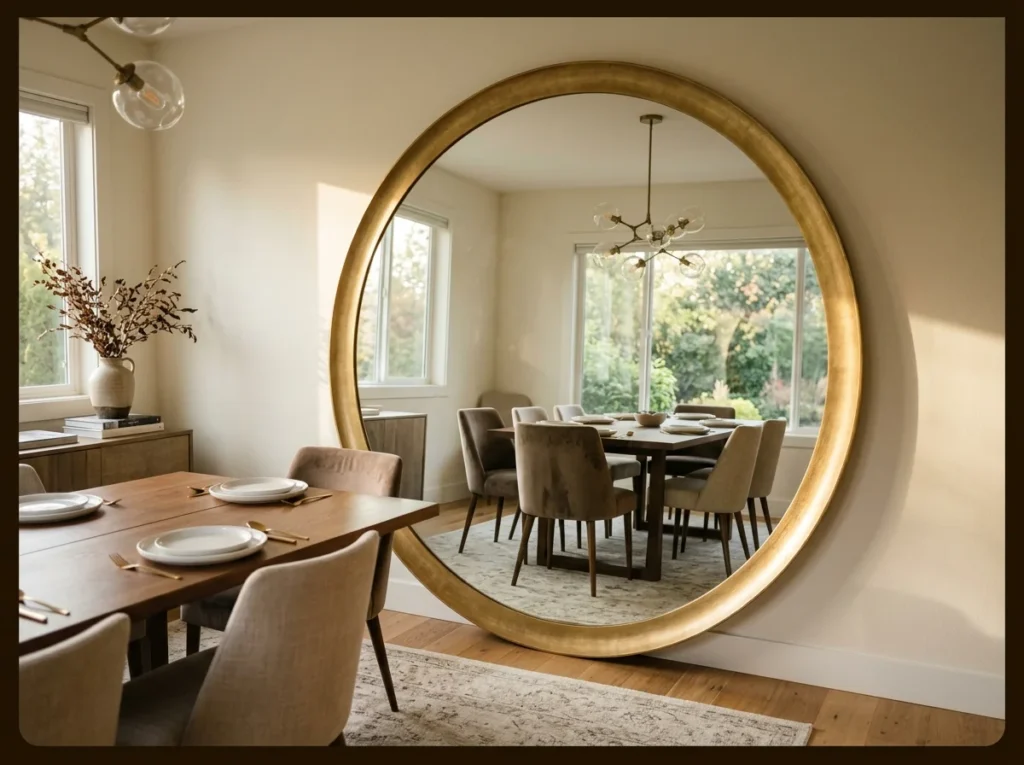
A large round gold-framed mirror in the dining room bounces natural light and the warm glow of the pendant fixture back across the table and around the room. Positioning it opposite or adjacent to a window doubles the natural light and makes the room feel significantly larger and more luminous.
The round form of an oversized mirror contrasts beautifully with the rectangular lines of most dining tables and room walls. A mirror 36 to 48 inches in diameter reads as properly statement-sized in a dining room. Lean it against the wall rather than mounting it flush for the most relaxed, editorial-feeling result.
Botanical or Floral Wallpaper Feature
Dining Room Chair Ideas for Stylish Seating to Create a Warm and Inviting Space
A botanical or floral wallpaper feature brings pattern and color to the dining room without covering every wall. This approach works especially well on a single accent wall behind the table or sideboard. It adds visual interest while keeping the rest of the room fairly neutral.
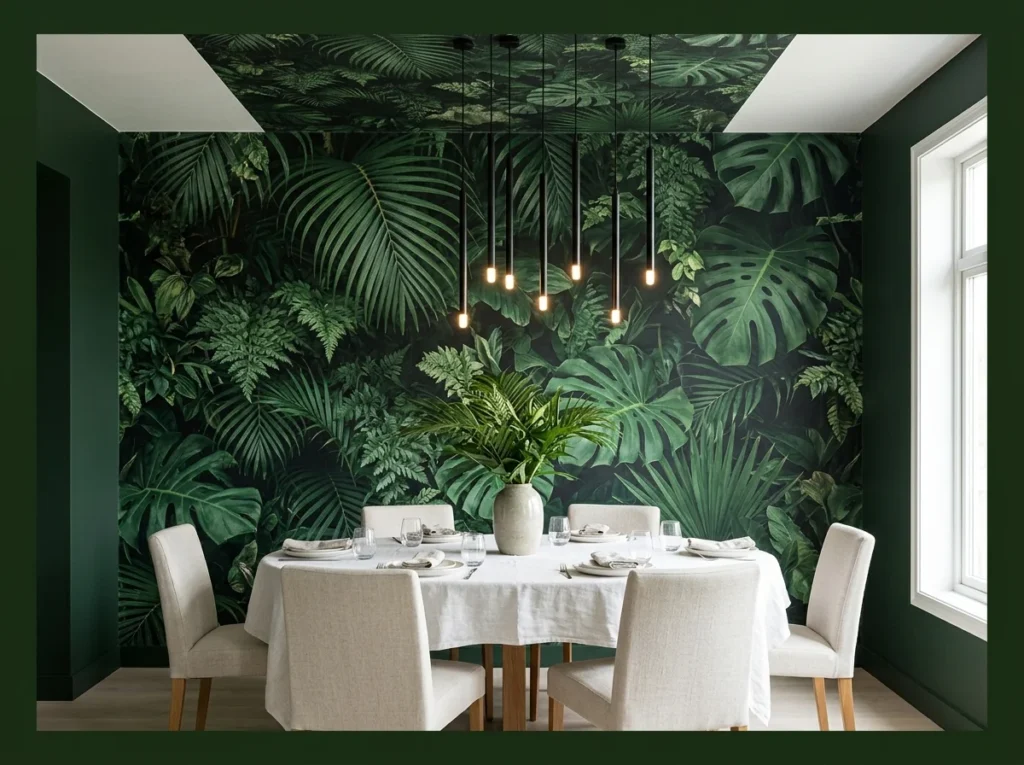
A large-scale botanical wallpaper on the main dining room wall creates an immersive garden quality that makes eating in the room feel genuinely special. Deep green jungle prints, soft floral repeats, and watercolor botanical illustrations all suit the dining room context where dramatic visual statements work better than in smaller rooms.
Keep the furniture completely simple when the wall has this much visual presence a plain white linen tablecloth, minimal accessories, and streamlined seating so the wallpaper remains clearly the star of the room. Peel and stick wallpaper versions are available for renters and work equally well on smooth dining room walls.
Japandi Dining Room Style
A Japandi dining room blends Japanese minimalism with Scandinavian simplicity through natural materials and clean lines. Unfinished wood, neutral tones, and simple pendant lighting are common features of this style. The result feels calm and uncluttered rather than sparse or cold.
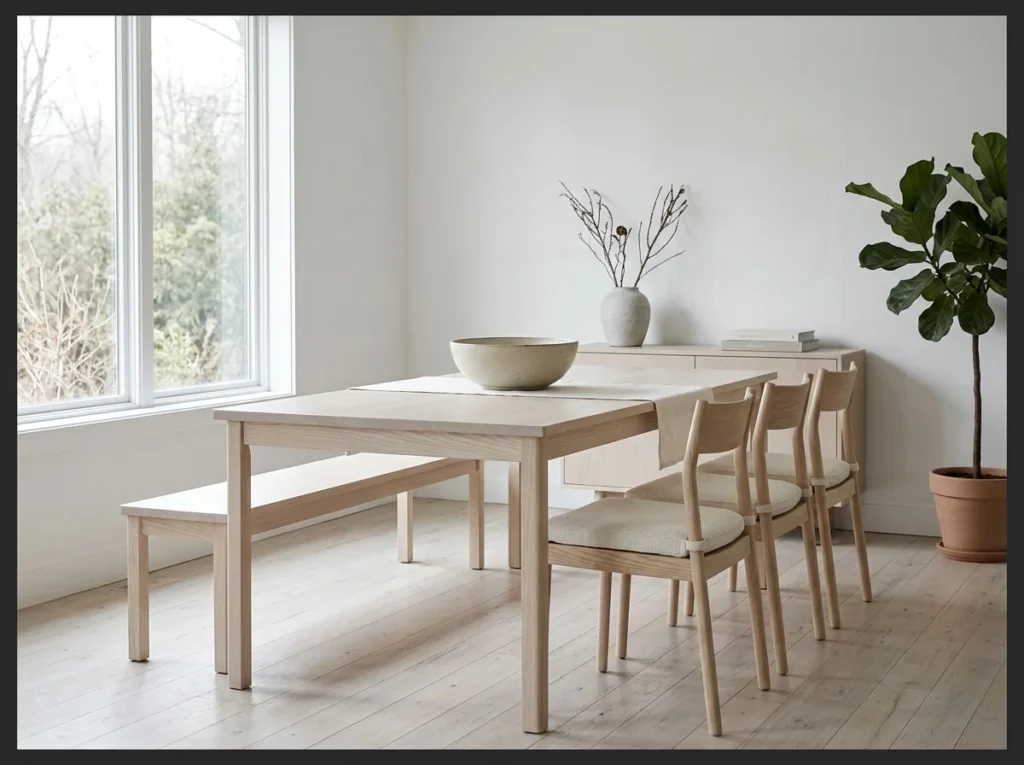
Japandi dining rooms achieve an extraordinary level of calm through deliberate reduction. Everything in the room is chosen for both its function and its inherent beauty there is nothing purely decorative, and nothing that is purely useful without also being considered. A pale ash table with simple bench seating and one ceramic bowl as the sole centerpiece is genuinely all this style needs.
The discipline of choosing less for a Japandi dining room is the challenge and the reward simultaneously. No art on the walls, no sideboard display, no accessories beyond the tableware itself. The materials do the work pale wood, white linen, natural ceramics and the result is a dining room that feels like the calmest space in the house.
Coastal White and Natural Wood Setup
A coastal white and natural wood setup keeps the dining room feeling light and breezy. White walls paired with a raw or lightly stained wood table create an easy, relaxed contrast. This combination suits homes near the coast or anyone wanting a brighter, airier dining space.
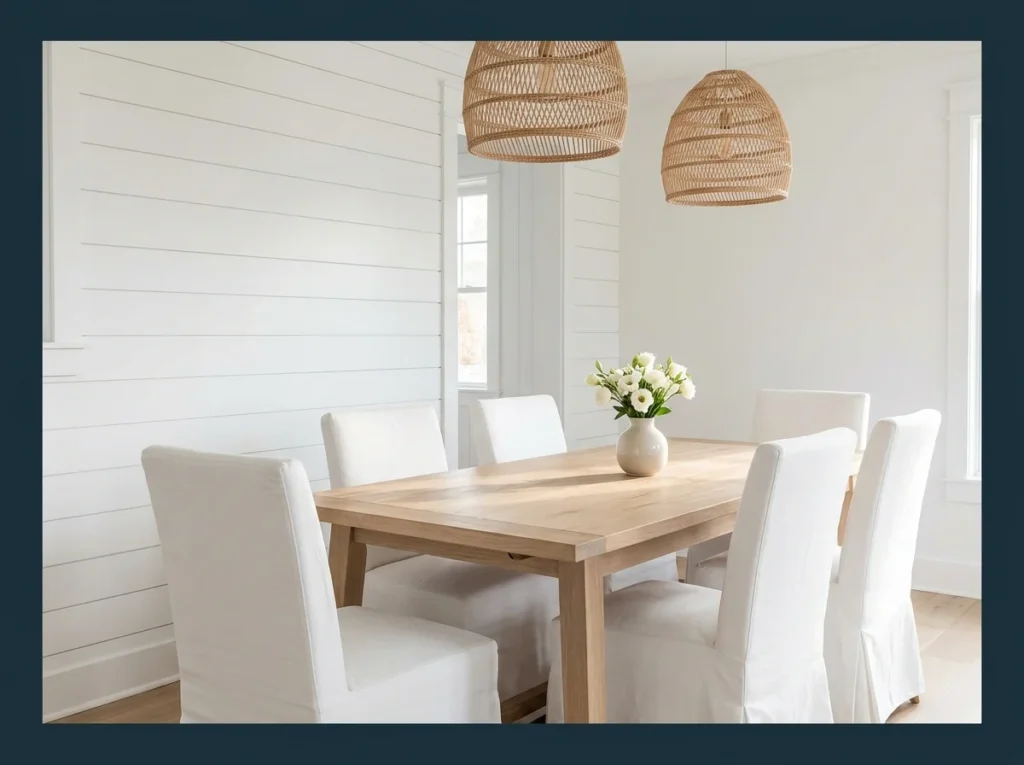
White walls with a bleached or natural oak table and white slipcovered chairs creates a coastal dining room that feels permanently sun-flooded and effortlessly relaxed. The all-white and natural palette reflects maximum available light and makes even north-facing dining rooms feel bright and airy.
Rattan pendant lights above and a small bunch of white garden flowers on the table complete this look with organic warmth. The key is keeping the white tones consistent warm white walls, warm white slipcovers, and warm white ceramics should all share the same undertone so the room reads as a cohesive palette rather than a collection of clashing whites.
Built-In Bar or Drinks Station
A built in bar or drinks station gives the dining room a dedicated spot for glassware and bottles. This setup keeps entertaining essentials close by without cluttering the main table or sideboard. A small counter with open shelving above is usually enough to make it functional.
Green Dining Room Ideas for Fresh Style with Timeless Design Inspiration
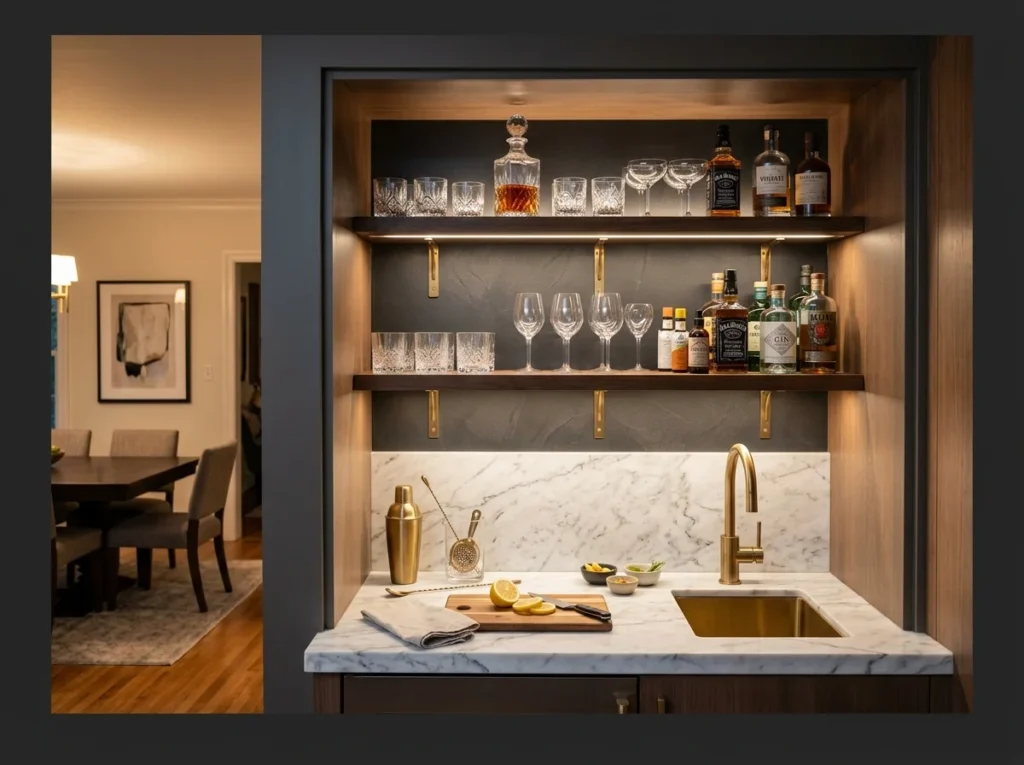
A built-in bar or dedicated drinks station in the dining room keeps guests engaged and served without anyone disappearing to the kitchen. The bar alcove becomes a social focal point before and after the meal somewhere for guests to gather, refill, and linger without crowding the table or the kitchen simultaneously.
Style the bar with beautiful glassware displayed openly on shelves rather than hidden in a cabinet. Crystal glasses and a quality glass decanter are genuinely decorative objects when displayed well and they make the whole drinks station look considered and curated rather than purely functional.
Moody Dark Palette with Warm Lighting
A moody dark palette relies on deep wall colors balanced out by warm, layered lighting. Without enough warm light, a dark dining room can feel closed in rather than cozy. Candles, dimmable fixtures, and warm bulbs all help keep the mood inviting rather than heavy.
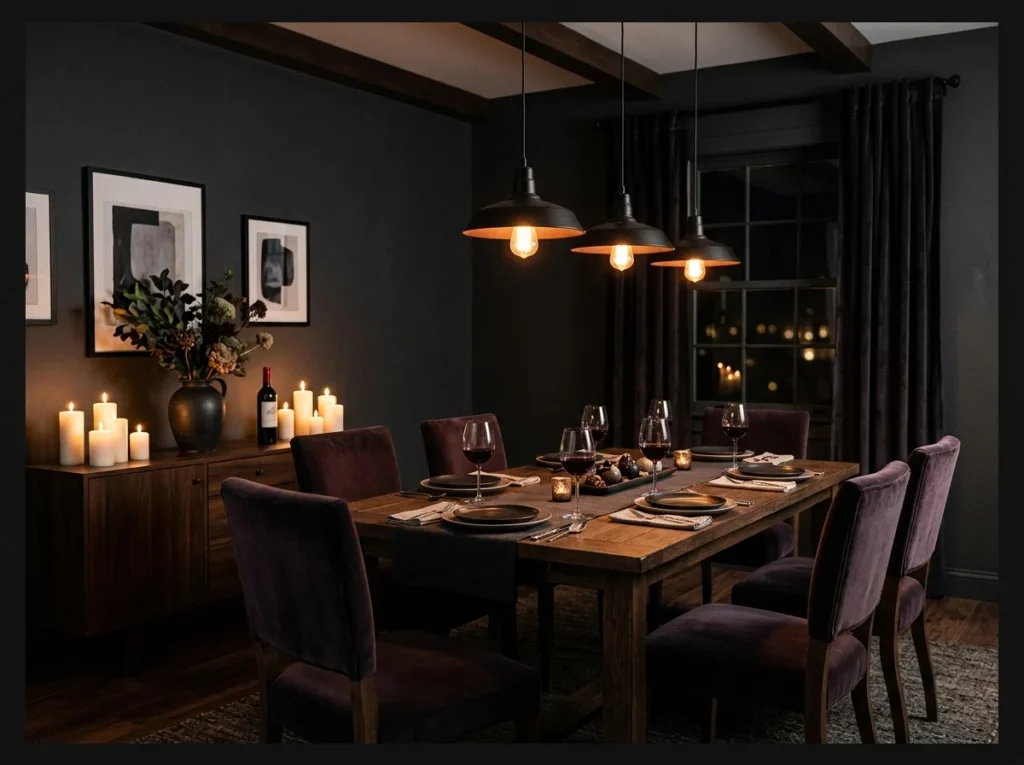
Deep charcoal walls in a dining room create the most intimate and enveloping evening atmosphere possible. The dark surface absorbs ambient light and makes the warm glow of pendants and candles feel genuinely theatrical like dining in a beautifully lit restaurant rather than a home dining room.
Warm lighting is non-negotiable in a dark dining room. Install a dimmer on the overhead pendant and position two additional floor or wall sconce lights in the corners to prevent any single area from reading as too shadowy. Dark rooms with a single overhead light look oppressive while dark rooms with layered warm lighting feel genuinely luxurious.
Linen Slipcover Chairs for Easy Elegance
Linen slipcover chairs bring a relaxed elegance that feels less formal than fully upholstered seating. The slipcovers can also be removed and washed, which matters a lot in a room prone to spills. This approach suits dining rooms that want a soft, easy going look.
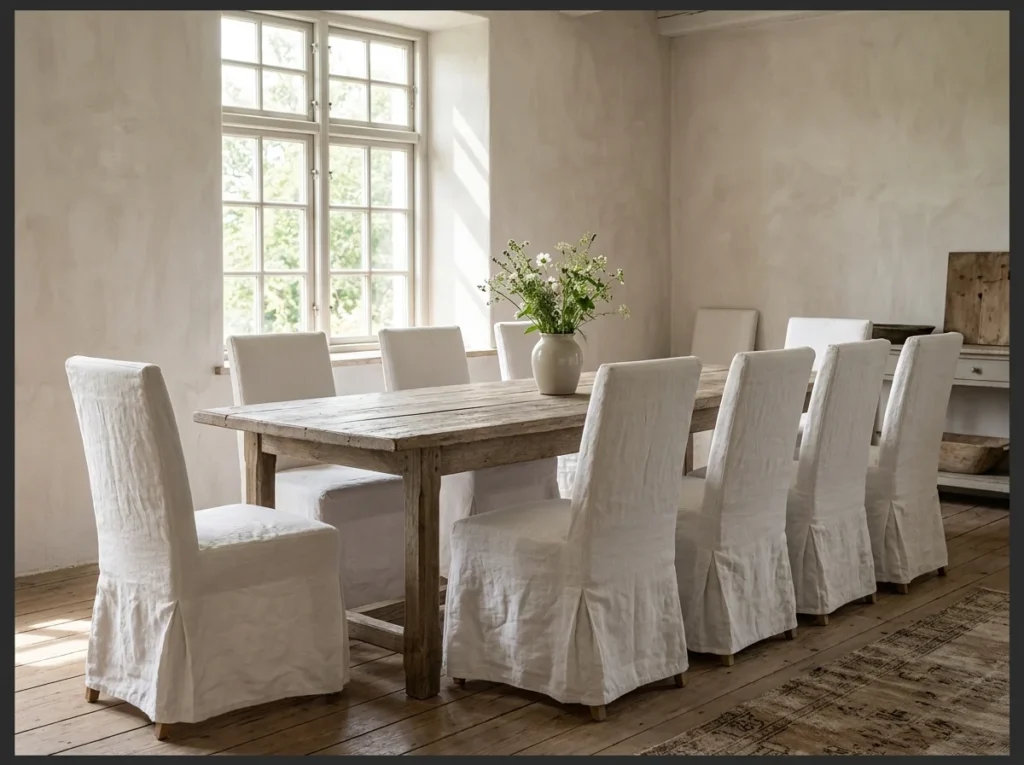
White linen slipcover chairs create a dining room that looks simultaneously relaxed and genuinely elegant. The loose, slightly informal drape of linen slipcovers has a very specifically European quality it feels intentional and sophisticated rather than simply casual.
Machine washable slipcovers are the practical genius behind this choice. Food spills, wine stains, and children’s contribution to dinner are all handled by removing the covers and putting them in the laundry. Change the color seasonally white in summer, natural linen in autumn, and slate gray in winter and the same chairs suit every seasonal mood.
Statement Chandelier Above the Table
A statement chandelier above the table becomes the natural focal point of the entire dining room. Its scale and design set the tone for the rest of the room’s style, whether modern or traditional. Proper height matters here, since hanging it too low or too high can throw off the whole look.
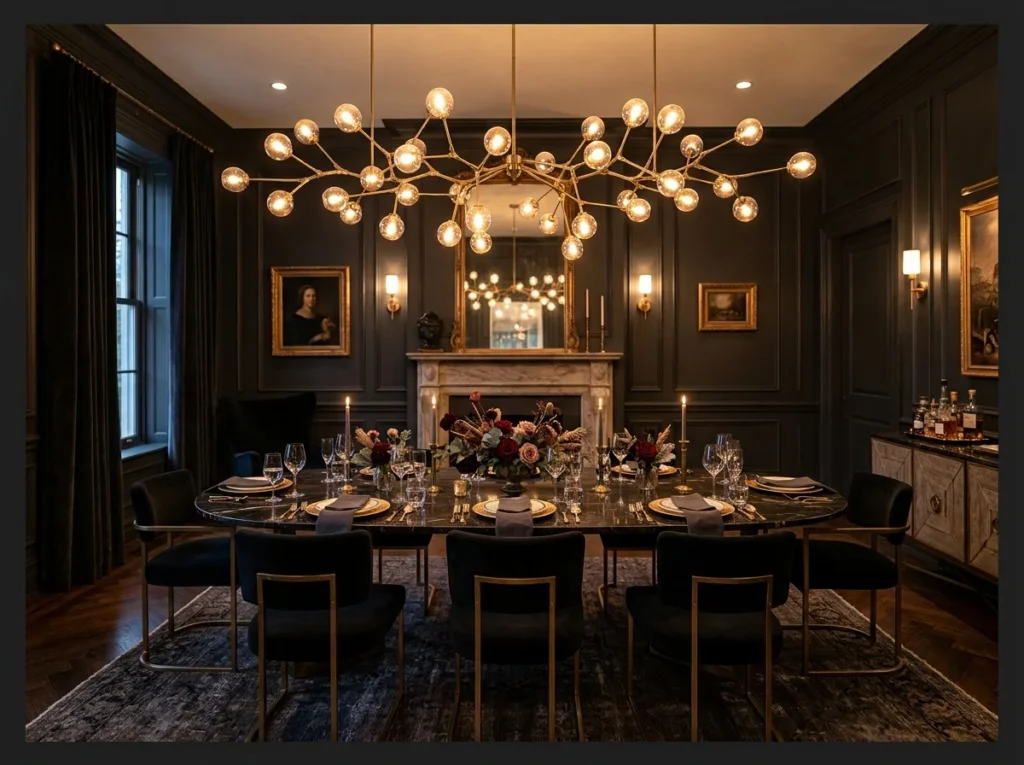
A statement chandelier is the single most transformative fixture in any dining room. It establishes the ceiling height visually, provides the room’s primary light source, and communicates the style and ambition of the entire space in one piece. The chandelier should be roughly half to two-thirds the width of the dining table for the best visual proportion.
Farmhouse Dining Room Ideas You’ll Love for Small Spaces That Feel Bigger
A sculptural branching chandelier with individual warm globe bulbs creates a softer, more organic evening light than traditional crystal chandeliers. Install it on a dimmer switch the most important dining room lighting decision available. The ability to bring the light from bright dinner preparation down to soft intimate dining level genuinely changes how the whole evening feels.
Large Indoor Plants and Greenery
Large indoor plants bring life and color into a dining room that would otherwise rely entirely on furniture and decor. A tall plant in an empty corner also helps balance out the room without needing more furniture. This addition works especially well in dining rooms with decent natural light throughout the day.
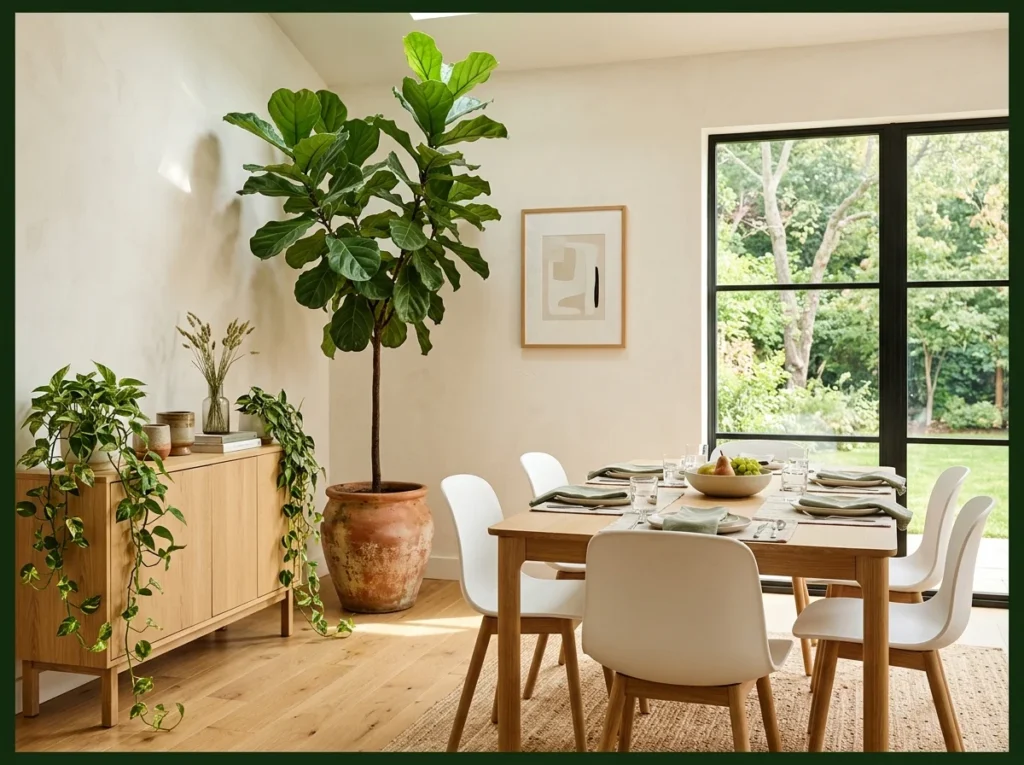
A tall statement plant in the dining room corner adds living warmth that no painted wall treatment or purchased decor object can replicate. A fiddle leaf fig, large monstera, or tall areca palm placed at the corner behind the dining table creates a natural green backdrop that makes every photograph taken in the room look extraordinary.
The plant specifically benefits from being in a dining room because it typically receives indirect light from nearby windows and consistent warmth from regular human occupation. Keep the pot in a natural material terracotta, woven rattan, or raw clay rather than a plastic nursery pot which undercuts the organic quality the plant is there to create.
Open Shelving for Display and Storage
Open shelving in a dining room holds dishware, glassware, or decor without needing a full cabinet. Arranging items at different heights across the shelves keeps the display from looking too uniform. This setup also gives an easy way to swap decor by season without repainting or rehanging anything.
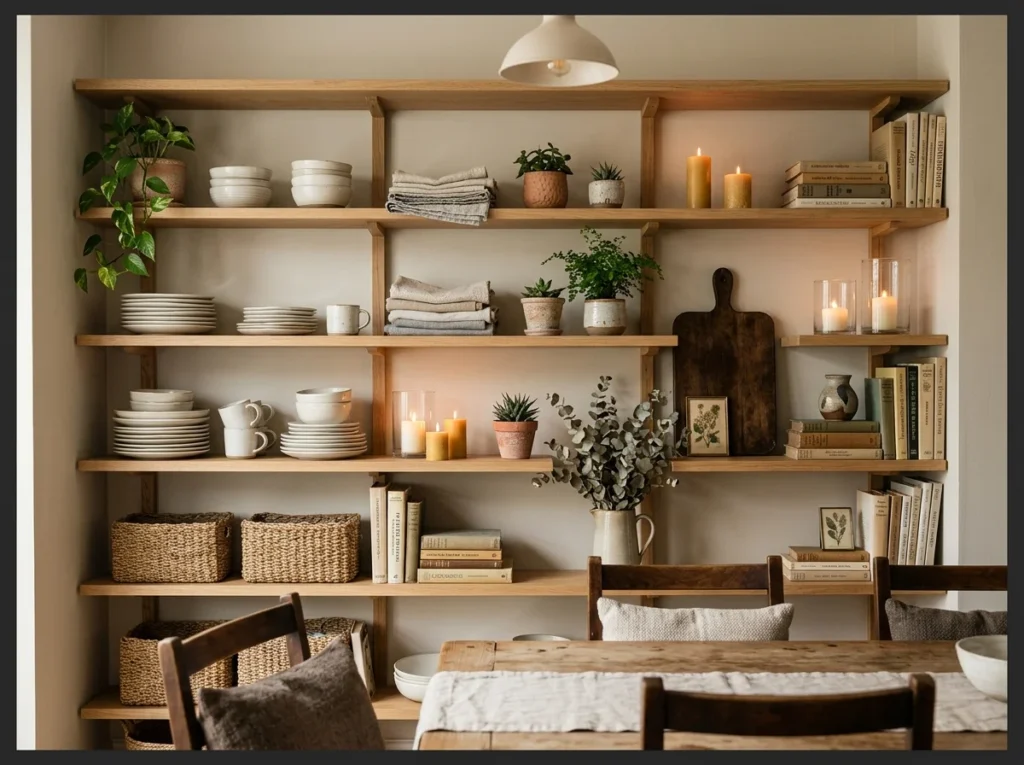
Floor-to-ceiling open shelving in a dining room serves as both storage and the room’s primary visual backdrop. Displaying beautiful ceramic dinnerware, linen napkins, glassware, and a few plants on open shelves makes everyday functional items part of the room’s decor eliminating the need for separate art or wall treatments on that wall.
Style the shelves in tonal groups rather than mixing every object randomly. Whites and creams together on one shelf, natural wood and rattan on another, plants grouped in one zone. This tonal organization makes the open shelving look genuinely curated from across the room rather than simply full.
Textured Plaster or Limewash Wall Finish
A textured plaster or limewash wall finish adds subtle depth compared to a flat painted wall. The slightly uneven texture catches light differently depending on the time of day. This finish suits dining rooms aiming for an organic, handcrafted feel.
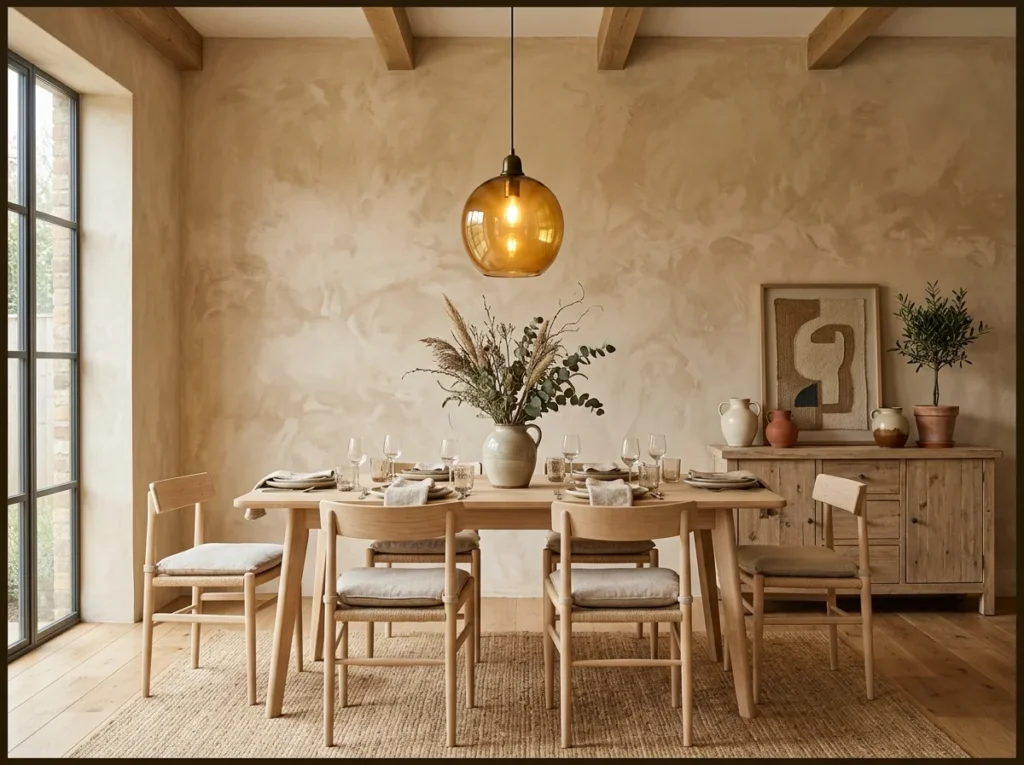
Limewash plaster walls in a dining room provide a textural depth that flat paint entirely lacks. The natural variation in the wash application creates a surface that catches light differently at every hour of the day shifting from warm honey in afternoon sun to a deeper, richer tone under the evening pendant light.
Round Dining Table Decor Ideas for Elegance to Elevate Everyday Dining
Limewash is also naturally antimicrobial and moisture-resistant which suits a dining room environment well. Apply it in the warm sandy buff, pale terracotta, or muted sage tones that suit dining spaces rather than the very pale whites and grays which lose most of their textural character in a dining room context.
Blush and Cream Feminine Dining Room
A blush and cream dining room combines soft pink tones with warmer neutral shades. This pairing tends to feel gentle and romantic rather than bold or dramatic. It suits dining rooms meant to feel soft and inviting rather than formal.
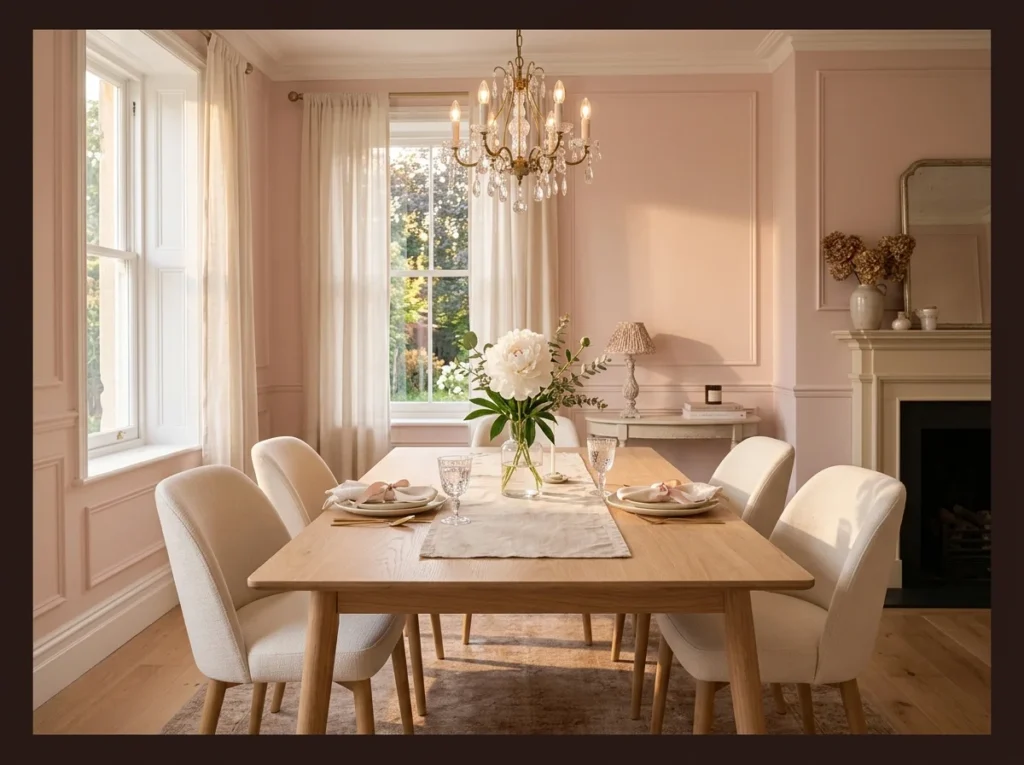
Blush pink walls with cream chairs and a warm oak table create the most romantic and genuinely softening dining room atmosphere available. The pale pink has the specific quality of flattering every skin tone under warm light which makes every guest at the table look and feel their most comfortable and attractive.
Balance the softness of the blush palette with one grounding element a darker wood table, a slate gray rug, or matte black candlestick holders. Without that anchor, the whole room can read as overly sweet rather than sophisticated. One deliberate dark or natural element prevents blush from tipping into nursery territory.
Farmhouse Style with Reclaimed Wood Table
A farmhouse style dining room centers around a reclaimed wood table with visible grain and imperfections. Simple chairs, often mismatched, pair well with the table’s rustic character. This style suits homes that already lean toward a warm, lived in aesthetic.
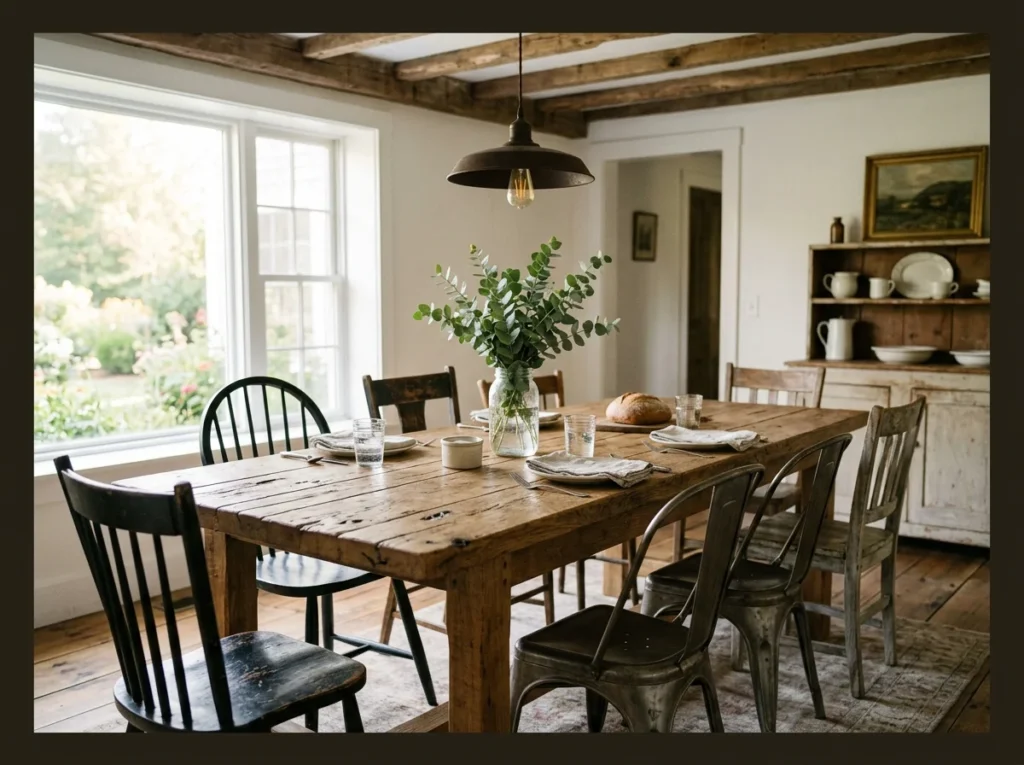
A long reclaimed wood table is the most genuinely characterful dining room furniture purchase available. The deep patina, visible knots, and surface variations of old timber tell a story that no newly manufactured table surface can replicate at any price point. Every mark and grain line makes the table more interesting rather than less.
Pair with mismatched chairs that share a wood or metal quality to complete the farmhouse character. Fresh eucalyptus in a mason jar or simple ceramic jug as the centerpiece adds an organic freshness that suits the honest material aesthetic of the table. No tablecloth the table surface itself is too beautiful to cover.
Modern Minimalist Black and White Dining Room
A modern minimalist black and white dining room keeps the color palette strictly limited to these two tones. Clean lines and simple furniture shapes support the pared back overall look. This approach makes the room feel crisp and high contrast rather than busy.
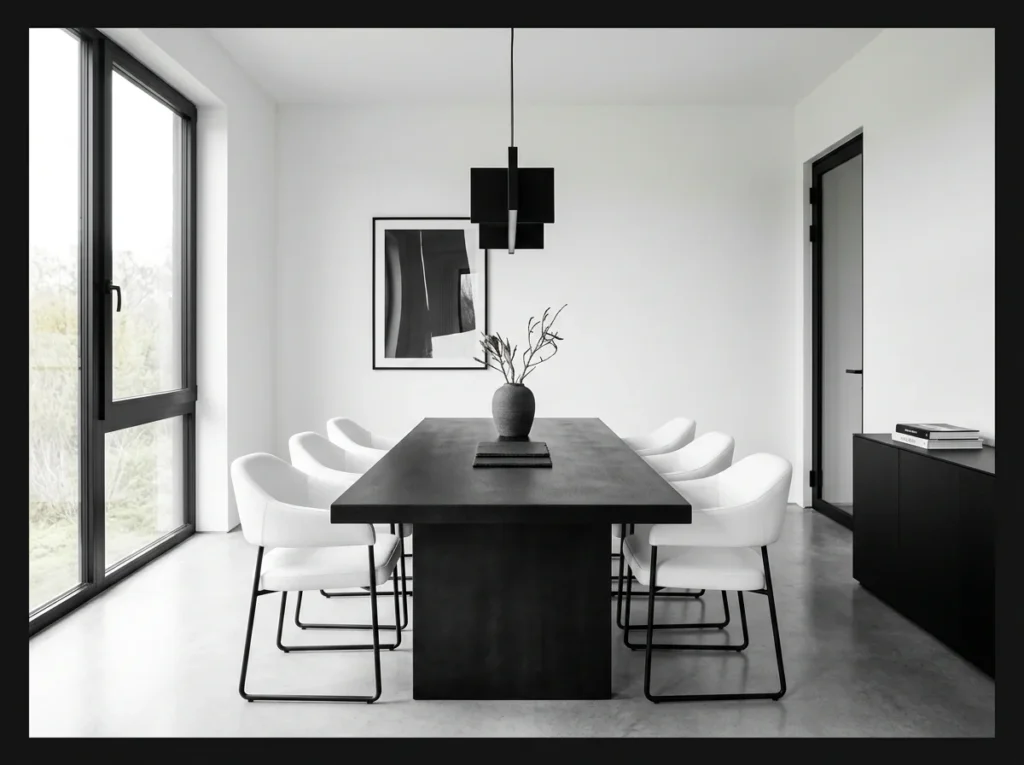
A black steel table with white leather chairs on white walls creates the most graphic and architecturally deliberate dining room composition on this list. The high contrast between the black table mass and the white room makes both elements read with maximum visual impact.
Keep every surface completely clear no centerpiece beyond possibly one slim black ceramic vase with a single stem. In a black and white minimal dining room the restraint is the entire point and the negative space between each carefully chosen element is what gives the room its confident, architectural quality.
Formal Table Setting with Mixed Textures
A formal table setting with mixed textures pairs polished elements like glassware with rougher details like linen napkins or wood chargers. This combination keeps a formal setup from feeling too stiff or one dimensional. It suits dining rooms hosting special occasions where the table itself becomes part of the decor.
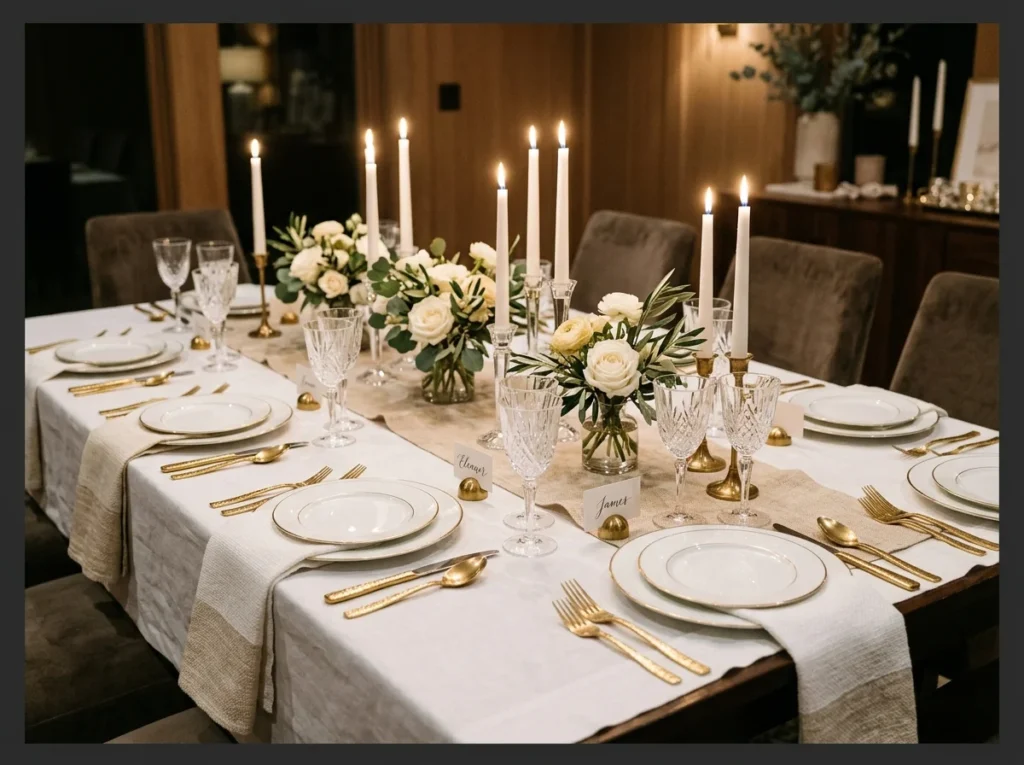
A properly set formal dining table transforms the room into a genuine occasion. Layering the place setting charger plate, dinner plate, bread plate, and folded linen napkin creates visual depth at each seat that a single plate on a bare table entirely lacks. The table itself communicates care and effort before a single guest sits down.
Mix textures rather than matching everything perfectly. Hammered gold flatware beside smooth white bone china beside a rough linen napkin beside a crystal glass creates sensory richness through material contrast. This layering of different surface qualities is what makes a formal setting feel genuinely luxurious rather than simply expensive.
Conclusion
A dining room should feel like somewhere you actually want to spend time not just where you eat quickly before moving to the sofa. The most impactful changes are almost always simpler than people expect: the right light at the right height, a rug that fits properly, a centerpiece that stays low, and a color on the wall that makes the whole room feel different at eight in the evening than it does at eight in the morning.
Pick three ideas from this list that suit your space, your budget, and the style you want to live with every day. Start with the lighting it genuinely changes everything.