Beige and white are safe but green is the dining room color that actually stops people in their tracks. These green dining room ideas range from deep moody forest tones to light sage freshness giving your space a bold, nature-inspired style that feels both timeless and on-trend. Let’s explore these green dining room ideas for a fresh and stylish look you’ll love!
Once your walls are settled, the right seating pulls the whole look together, so it’s worth browsing more bold seasonal color inspiration for chairs that complement the palette.
Deep Forest Green Walls with Brass Accents
Forest green has a depth that plain green paint just doesn’t have on its own. Brass hardware, light fixtures or a mirror frame catch the light and warm up the whole room. It works especially well in dining rooms that only get used in the evening under lamp light.
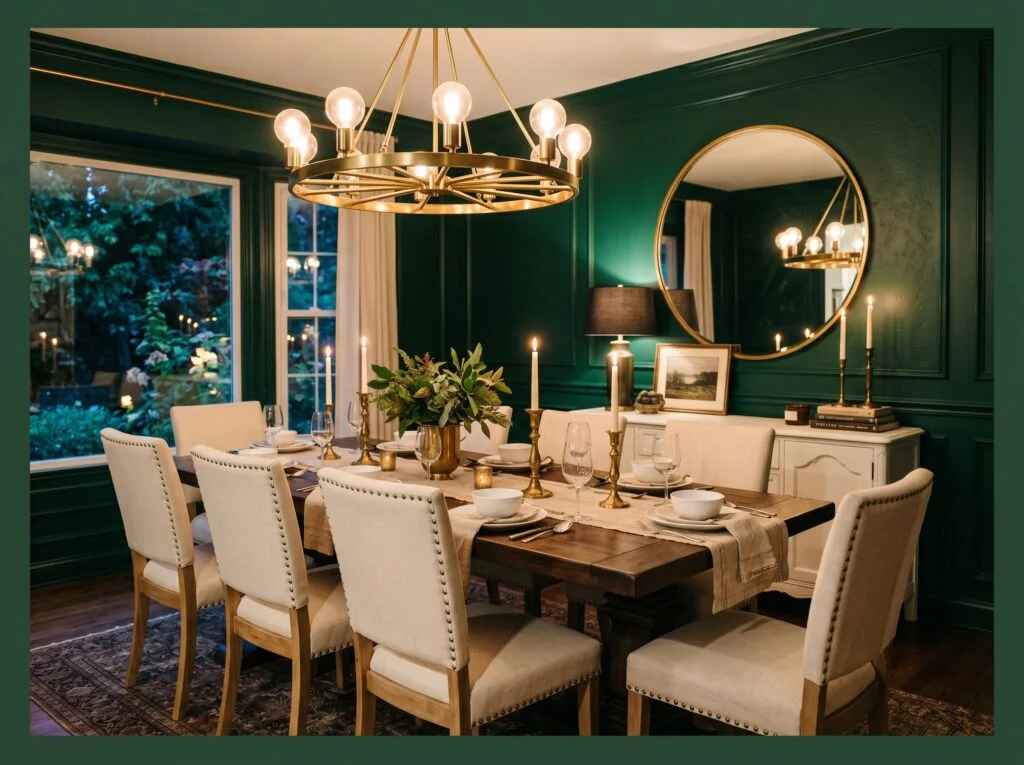
Deep forest green walls create the most immediately impressive green dining room effect the combination of rich, saturated green with warm brass accents produces a jewel-box quality that photographs beautifully and feels even better in person.
The brass accent principle works because the warm gold tones of brass sit directly opposite green on the color wheel the contrast is natural, vibrant, and deeply satisfying.
Pairing that brass warmth with the right light fixtures that complete a room takes the whole jewel-box effect even further.
Sage Green Walls for a Modern Farmhouse Feel
Sage green sits somewhere between grey and green, which is exactly why it suits farmhouse interiors so well. It pairs naturally with white trim, wood tables and simple linen curtains. The color reads calm during the day but still holds its own once the lights are dimmed for dinner.
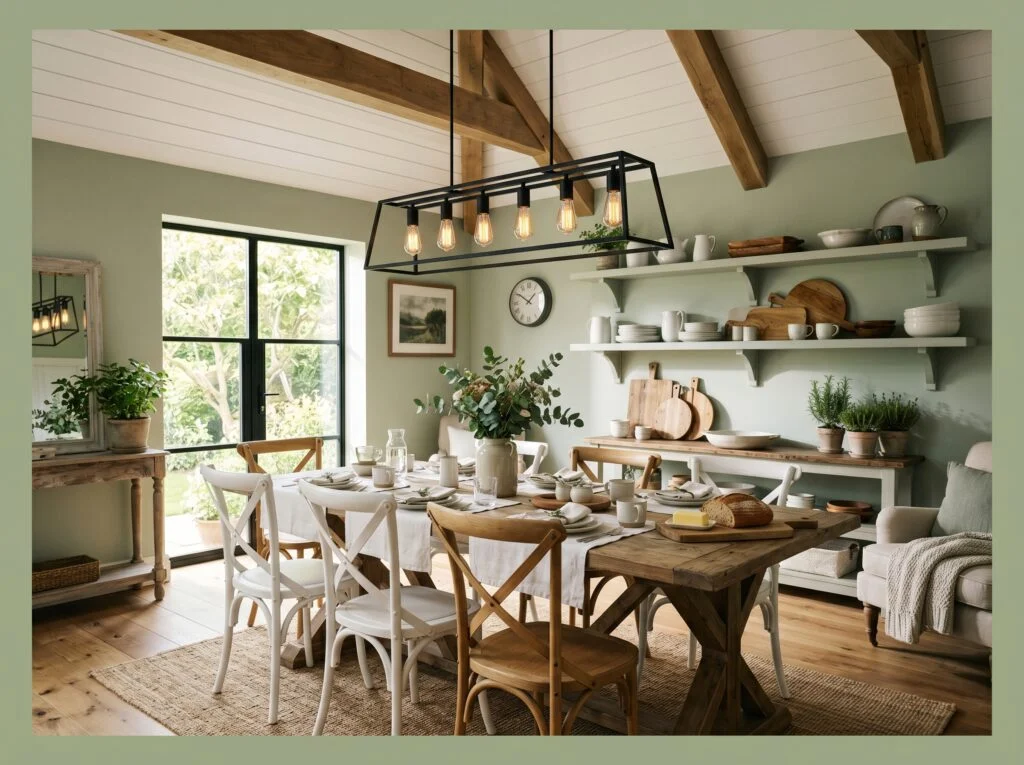
Sage green is the green shade that works as a genuine neutral it has enough color to transform a room’s character while being muted enough to coordinate with almost any furniture style, wood tone, or textile color.
For a modern farmhouse dining room, pair sage green walls with warm natural materials reclaimed wood table, rattan or crossback chair styles, white stoneware dishes on open shelves, and linen napkins in cream or natural tones. The matte finish is non-negotiable for sage green in a dining room eggshell or flat finish absorbs light softly and shows the color at its most beautiful.
Emerald Green Accent Wall Behind the Sideboard
Painting just the wall behind the sideboard turns that piece of furniture into the focal point of the room. Emerald is a saturated shade, so a single wall is usually enough without overwhelming the space. Add a mirror or artwork on top and the whole area becomes a proper design moment.
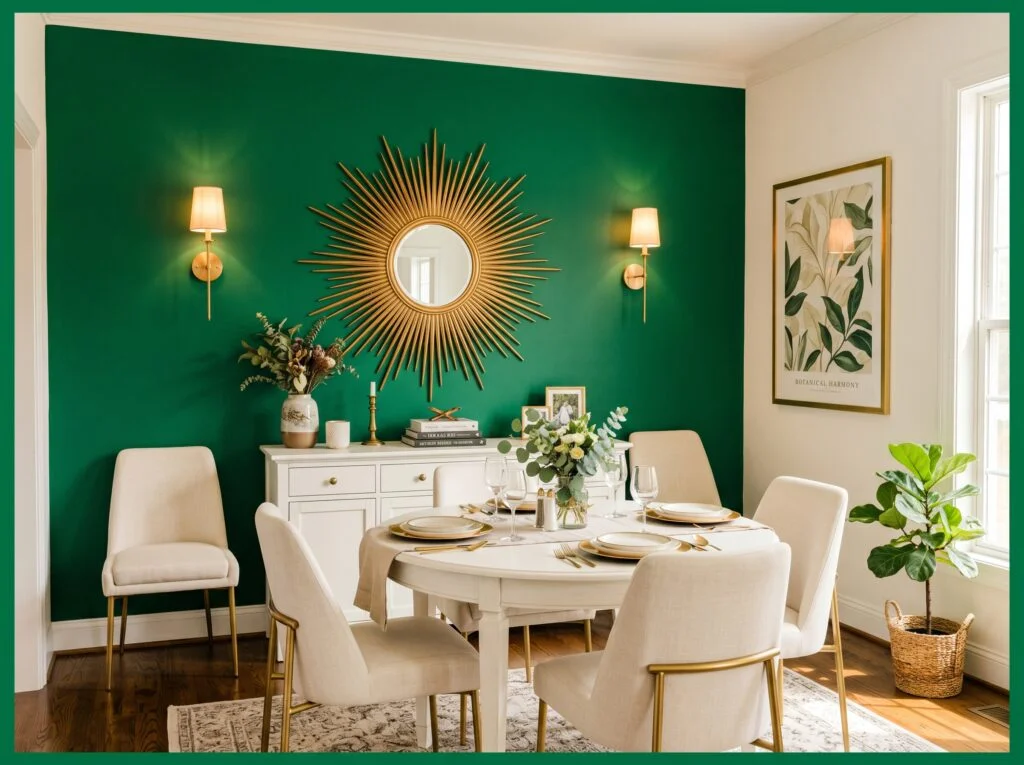
An emerald green accent wall behind the sideboard or buffet is the ideal introduction to bold green dining rooms for anyone who isn’t ready to commit to four green walls.
Position the accent wall on the wall that faces you when you first enter the dining room this gives maximum immediate visual impact from the approach angle. The sideboard in front of the green wall should be light in color (white, cream, or very light wood) to contrast with the deep green behind it.
Sage Green Wainscoting with White Upper Walls
Wainscoting splits the wall visually, with sage green below and crisp white above the chair rail. This layout adds texture and architectural interest without needing any extra decor. It suits older homes with traditional trim details particularly well.
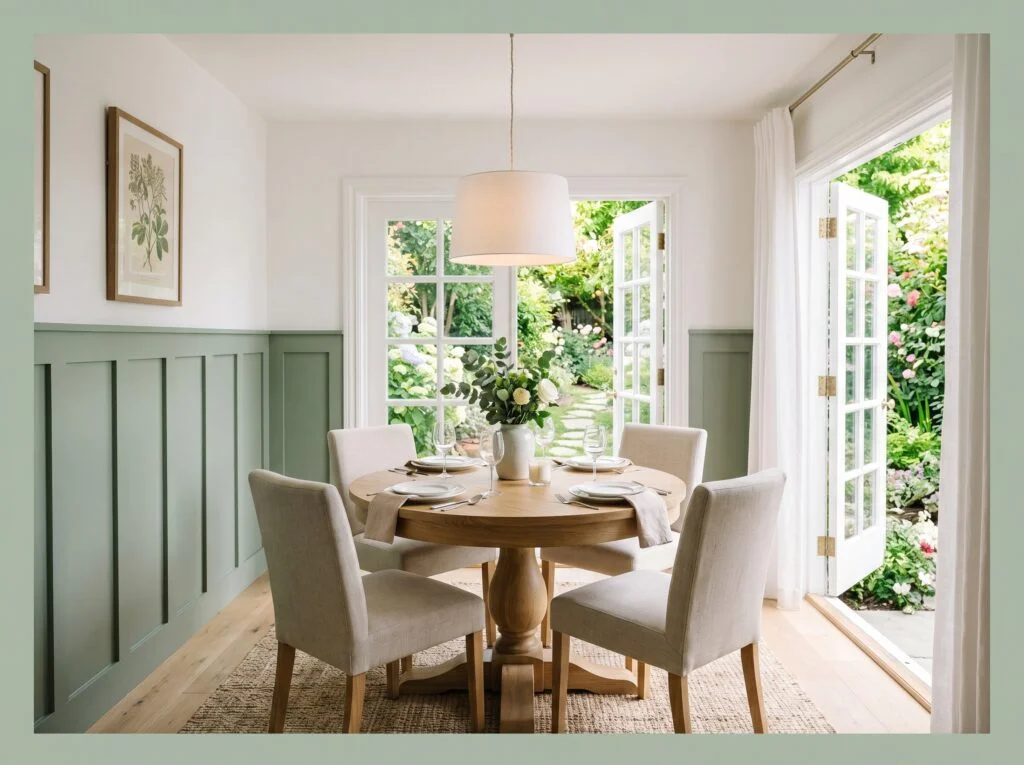
Sage green wainscoting with white upper walls is the most architectural and most refined green dining room approach it uses color in a structured, historically informed way that adds visual depth and wall texture while keeping the room feeling light and airy.
Board and batten wainscoting (vertical boards with flat battens over the seams) is the most popular current wainscoting style for a sage green application because the vertical lines add height and architectural interest simultaneously.
If you like this structured approach, there are wall treatments worth considering elsewhere in the dining room too.
Olive Green Dining Room with Natural Textures
Olive green leans earthier than sage or emerald, closer to something you would find outdoors. Pairing it with jute rugs, linen napkins and unfinished wood keeps the whole room grounded. The combination feels organic rather than styled, which is part of its appeal.
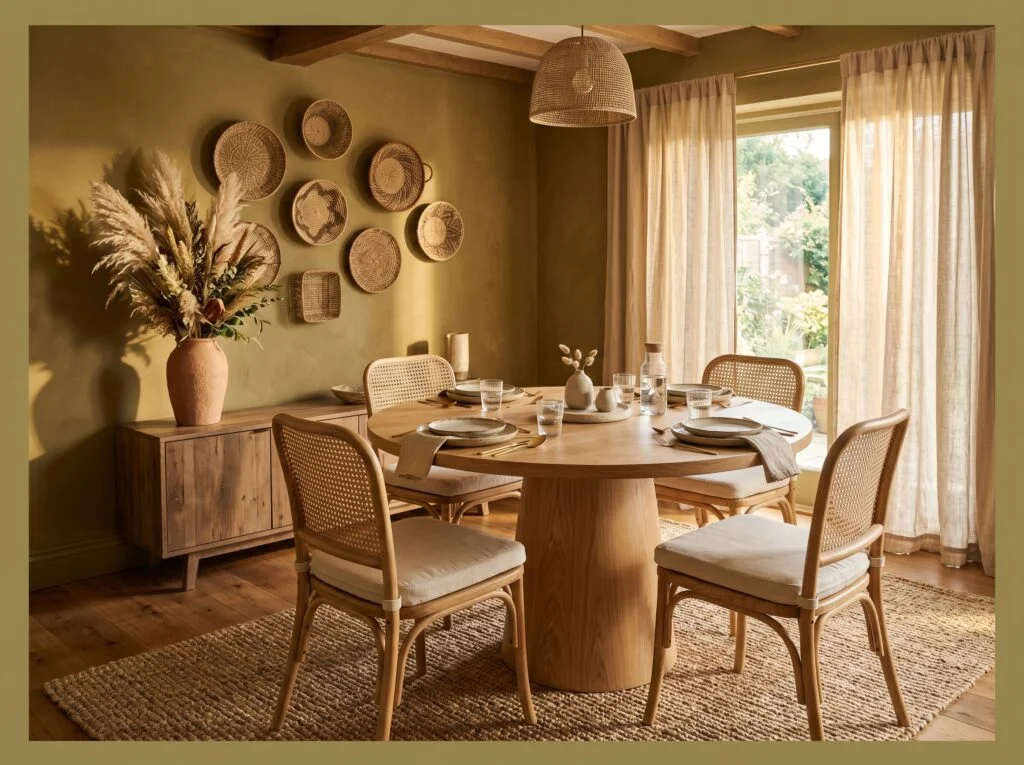
Olive green is the earthiest and most organically rooted shade in the green family it has warmth and yellow undertones that connect more to soil, moss, and autumn foliage than to forest and leaf. In a dining room, this warmth makes the space feel deeply comfortable and natural without the formality that darker greens can carry.
The styling approach for an olive green dining room is all about layering organic textures. Start with the walls in olive green (Benjamin Moore Salamander, Sherwin-Williams Oakmoss, and Farrow & Ball Churlish Green are all excellent choices).
Dark Bottle Green with White Wainscoting
Bottle green is nearly black in low light, giving the dining room a moody, almost formal feel. White wainscoting underneath breaks up all that darkness and keeps the room from feeling closed in. Candles and warm bulbs make this pairing look even richer once the sun goes down.
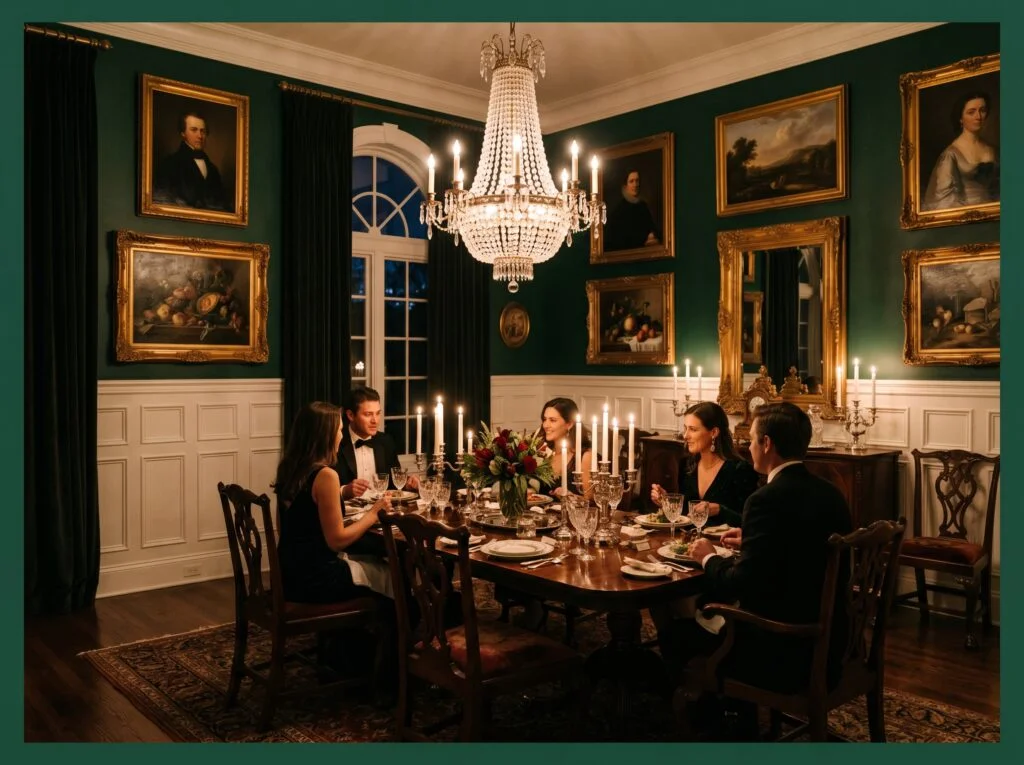
Deep bottle green upper walls above white wainscoting create one of the most dramatic and historically beautiful dining room compositions available it’s the color combination you see in the finest English country house dining rooms, private member clubs, and high-end restaurant interiors.
Oil painting-style art in gold or gilt frames hung on the bottle green upper walls is the specific detail that completes this look the warm gold of the frames against the deep green wall creates the same effect as brass against forest green, but with a more antique, collected quality.
Mint Green for a Small Dining Room
Mint green stays light and airy, which makes it a smart pick for dining rooms without much square footage. Unlike darker greens, it reflects light rather than absorbing it, so the space feels bigger than it is. Pale wood furniture and simple white chairs keep the whole look fresh rather than sugary.
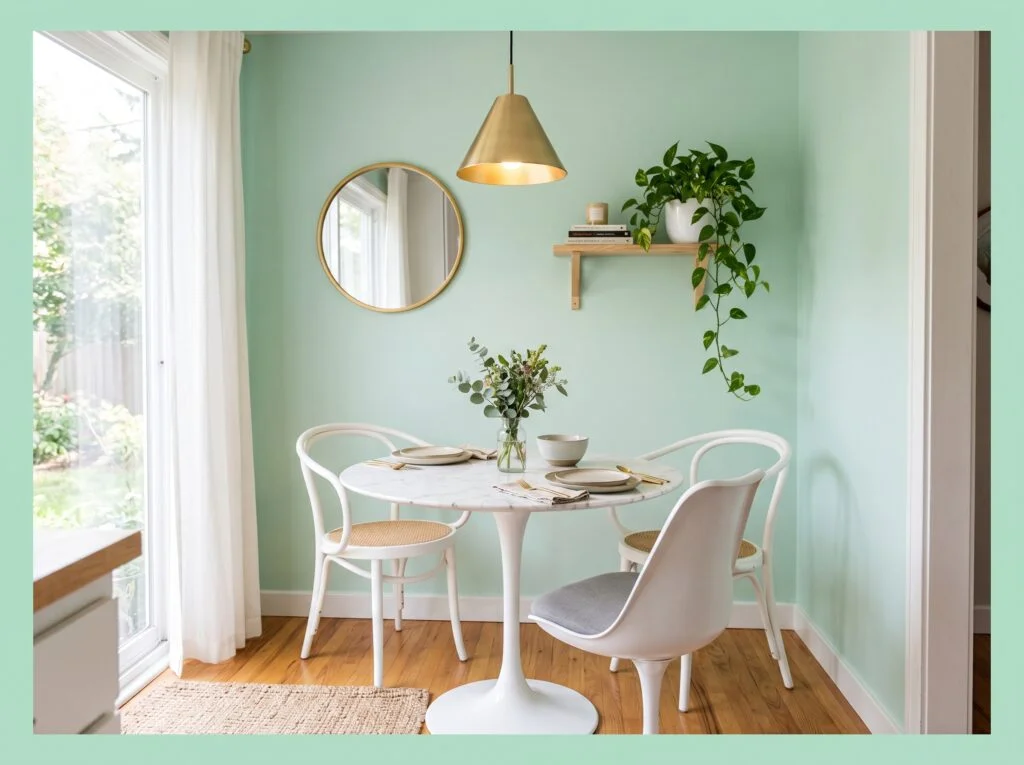
Mint green is the green shade specifically suited to small dining rooms that need every optical illusion available to feel larger and brighter. The high reflectivity of mint green’s light, airy tone bounces natural light around a small room effectively, pushing the walls back visually and making the space feel noticeably more open than it actually is.
Keep everything in a small mint green dining room light and simple a white marble-top pedestal table, white or light wood bentwood chairs, and a single pendant in brushed gold or brass. Avoid heavy curtain treatments that block light; use sheer linen panels or simple roman shades in natural linen instead.
Once the walls feel light and open, it’s worth layering in styling ideas for a bright tablescape to finish the look.
Green and White Botanical Wallpaper Accent
A botanical print wallpaper brings pattern and color into the room in one single move. Large leaf prints in particular add a jungle like energy that flat paint just cannot replicate. One accent wall is usually enough, leaving the rest of the room simple so the pattern stands out.
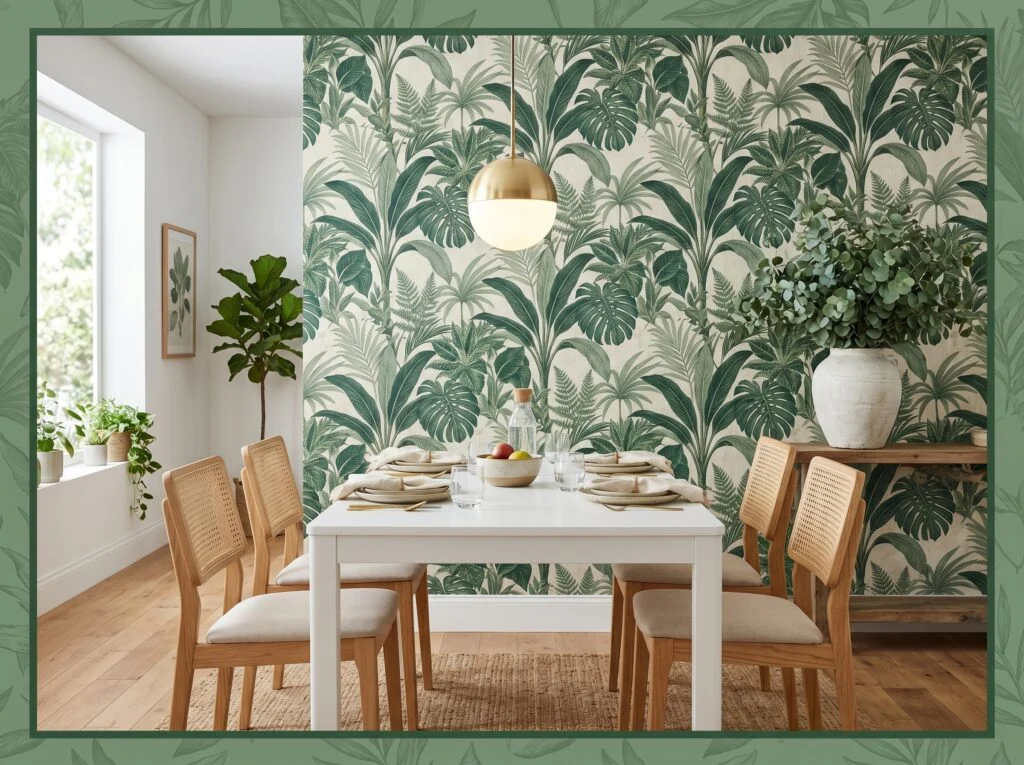
Green and white botanical wallpaper is the most painterly and most dramatically beautiful way to bring green into a dining room it creates a feature wall that feels like a living garden backdrop rather than a painted surface.
Choose wallpaper with a scale appropriate to the wall dimensions a very large-scale botanical print on a small wall looks like a close up detail photograph; a small scale print on a large wall reads as a texture rather than a pattern from a normal viewing distance. For most residential dining rooms, a repeat of 18 to 24 inches works well.
Hunter Green Dining Room with Gold and Velvet
Hunter green has a classic, almost old money feel that gets stronger with the right materials around it. Gold candlesticks, brass light fixtures and velvet dining chairs all lean into that same mood. This pairing tends to work best in rooms used for proper sit down dinners rather than casual meals.
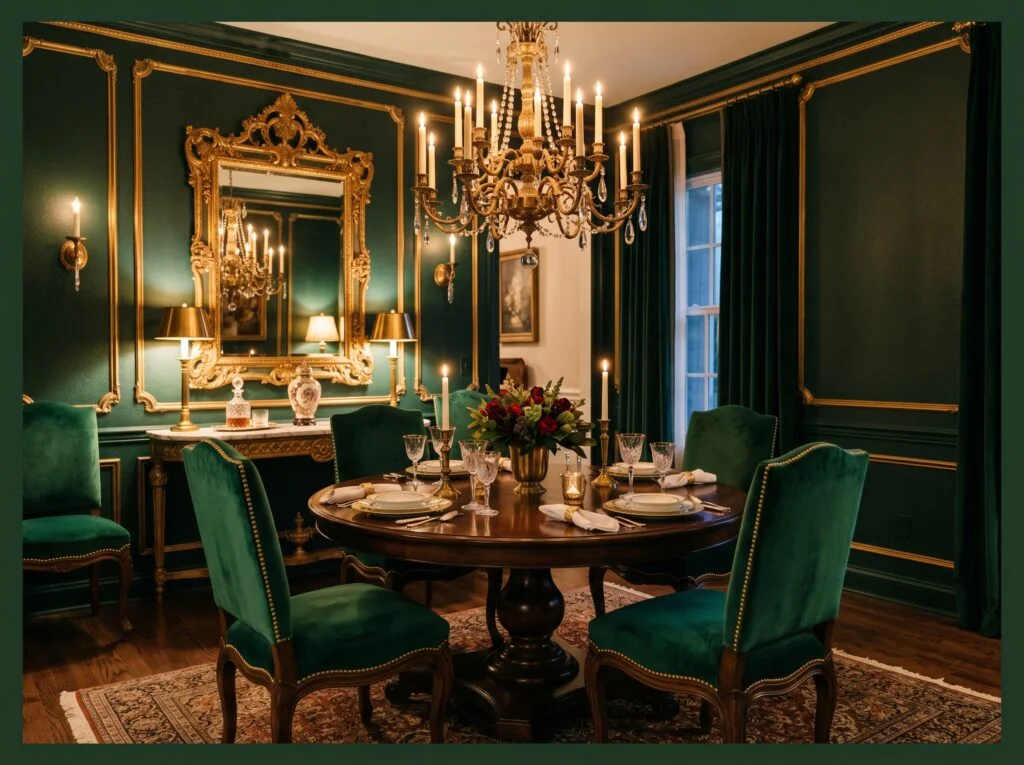
Hunter green with gold accents and velvet upholstery is the most opulent green dining room combination it creates a space that feels like a luxury hotel dining room or a high-end private club, with a depth of material richness and color intensity that casual dining spaces never achieve.
Velvet dining chairs in emerald or deep green against hunter green walls create a tone-on-tone layering effect that’s incredibly sophisticated the slightly different tones and the difference in surface texture (matte painted wall versus light-catching velvet pile) create visual interest without introducing additional colors.
Sage Green Kitchen-Dining Open Plan
Open plan spaces need a color that can carry through two different functions without feeling disjointed. Sage green does that well, staying calm enough for cooking areas and still elegant enough for a dining table. Carrying the same shade across cabinetry and dining walls ties the whole space together visually.
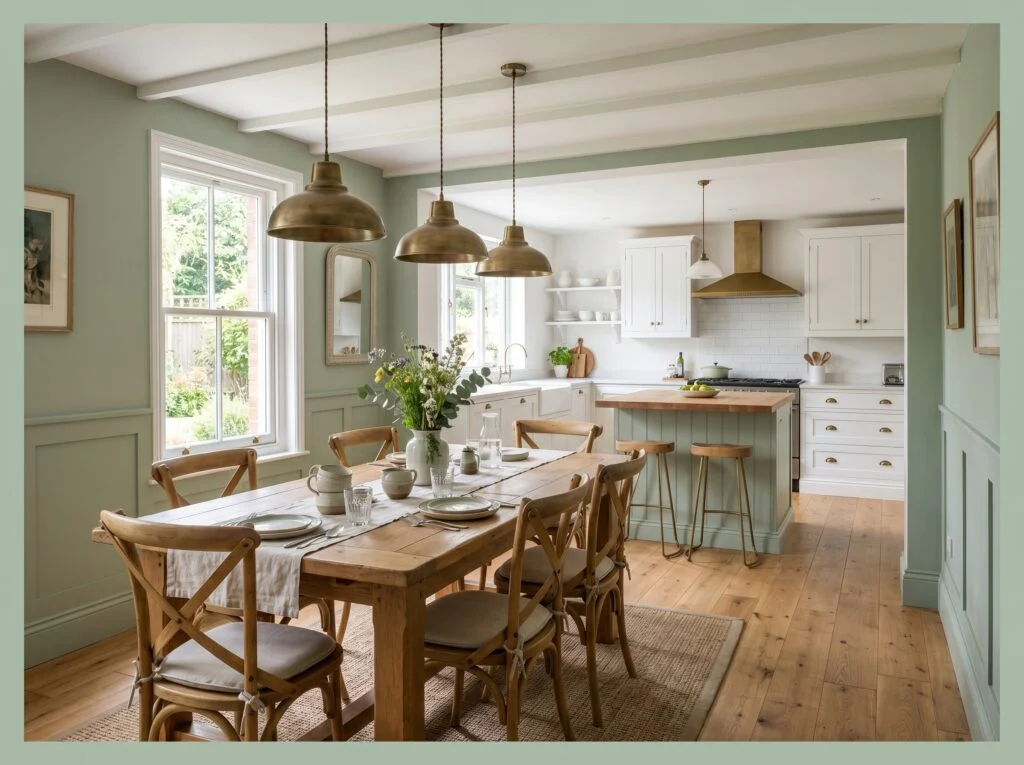
In an open-plan kitchen and dining space, sage green is the most effective color for defining the dining zone without creating a harsh visual break between the two areas.
The key to making an open-plan green dining room work is the transition line. Don’t run the green color arbitrarily to the middle of a wall end it at an architectural break (a doorway, a corner, the edge of a chimney breast, or the end of a kitchen cabinet run).
For more layout ideas for open concept homes, it helps to see how other dining spaces handle that same transition.
Green Dining Room with Black Accents
Black window frames, chair legs or light fixtures add sharp contrast against almost any shade of green. The combination feels more current than green paired with traditional wood tones alone. Even small black details, like drawer pulls, are enough to shift the whole mood of the room.

Green dining rooms with black accents create a more contemporary and graphic version of the classic green interior the black replaces the traditional brass or gold and produces a cleaner, more modern edge that suits contemporary and industrial-influenced dining rooms perfectly.
Black framed botanical art prints on a sage or forest green wall are one of the simplest and most effective styling details for a green-and black dining room the crisp black frames against the green wall look architectural rather than decorative, and the botanical subject matter reinforces the green’s natural associations.
Warm Sage Green with Terracotta and Rattan
Terracotta and rattan bring warmth that sage green alone can sometimes lack on its own. Together they create a palette that feels more Mediterranean than typically Scandinavian farmhouse. Woven light fixtures and clay pots are easy ways to bring in these extra textures.
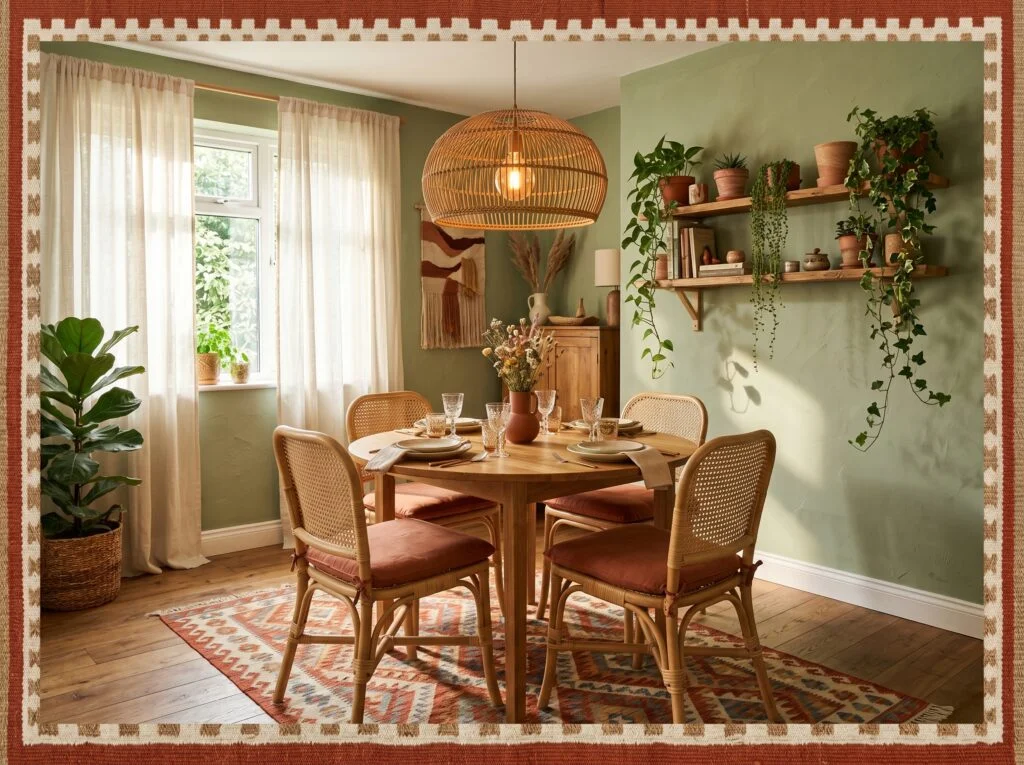
Warm sage green paired with terracotta is one of the most naturally beautiful color combinations in interior design it replicates the color relationships found in a Mediterranean garden, where dusty sage leaves grow beside terracotta pots against a warm stone wall.
Natural rattan is the material that bridges sage green and terracotta most effectively its warm honey-brown tone sits naturally between the dusty coolness of the sage and the warm red-orange of the terracotta. A rattan pendant shade above a round oak dining table, four rattan-back chairs with terracotta linen cushions, and a kilim rug in warm earthy tones beneath the table creates a complete material composition that’s richly textural and deeply cohesive.
Green Dining Room with Exposed Brick
Exposed brick already carries so much texture that green paint only needs to appear on the remaining walls. The rough, warm tone of brick balances out the smooth, cool character of most green shades. This combination shows up often in converted lofts and older city apartments.
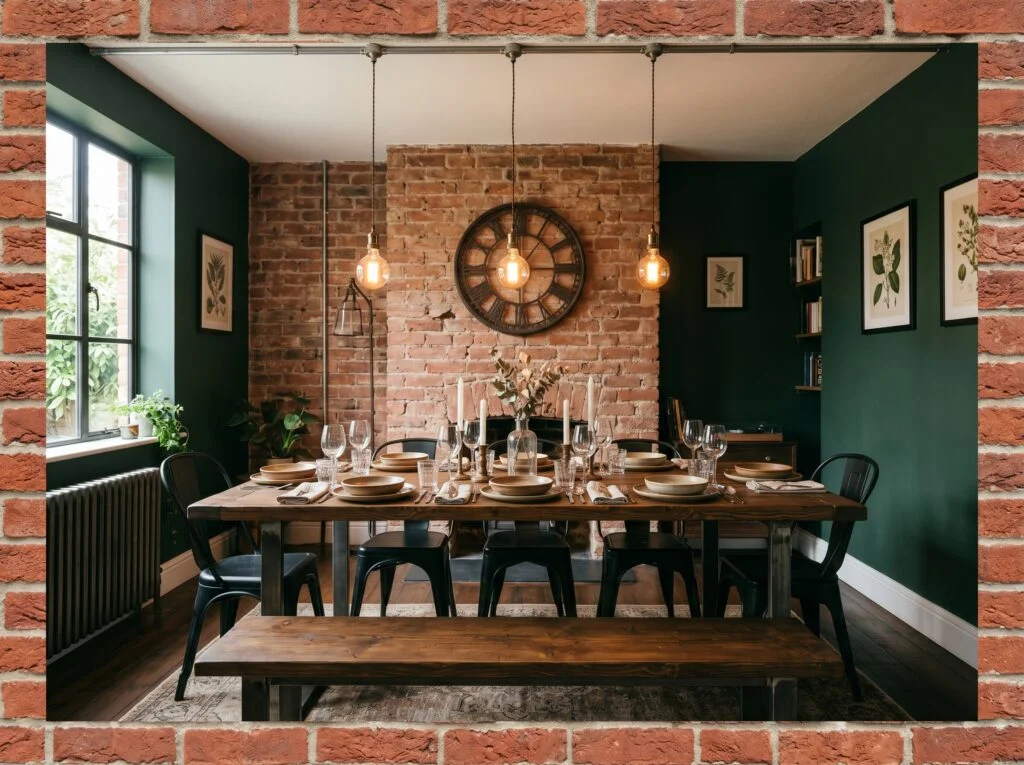
Green dining rooms with exposed brick are the most textural and most characterful combination on this list the rough, warm red of exposed brick against deep green walls creates a material richness that’s simultaneously rustic and sophisticated.
Edison bulb pendant lights on exposed black cord drops above an industrial dining table are the lighting choice that best completes this aesthetic the warm amber glow of Edison bulbs against deep green walls and warm brick creates a specifically beautiful light quality that’s intimate, warm, and deeply atmospheric.
Soft Green Dining Room for Small Apartments
Apartment dining rooms often double as hallways or extensions of the living room, so the color needs to work double duty. A soft, muted green keeps things flexible without competing with furniture from other parts of the home. Light reflective paint finishes help stretch what little natural light these rooms usually get.
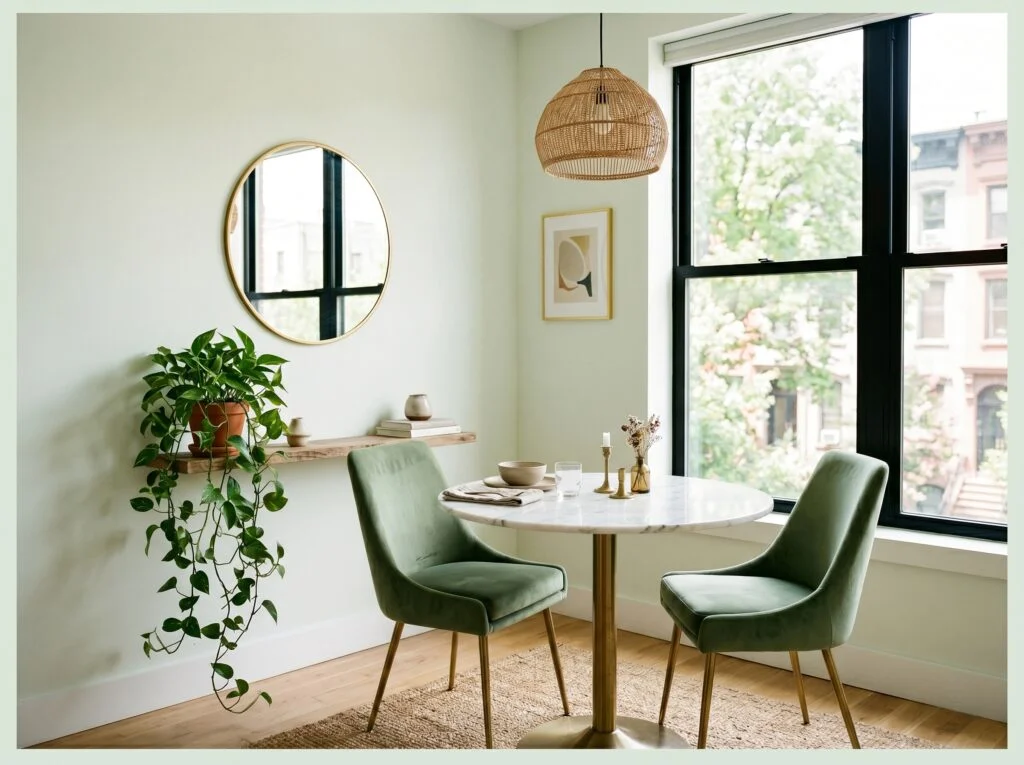
A barely there soft green a green so light and subtle that it reads almost as a warm white in full light and only reveals its green identity in shadow and in cooler light is the perfect color for small apartment dining areas that need maximum light reflection while still adding some color interest.
In a small apartment dining space, every piece of furniture must be earned. A small round marble-top table seats two comfortably without dominating the floor area..
Green Dining Room with Wicker and Linen
Wicker chairs and linen tablecloths bring a relaxed, slightly coastal energy into a green dining room. The natural fibers soften what could otherwise be a fairly formal color choice. This combination works particularly well in rooms that get a lot of natural daylight.
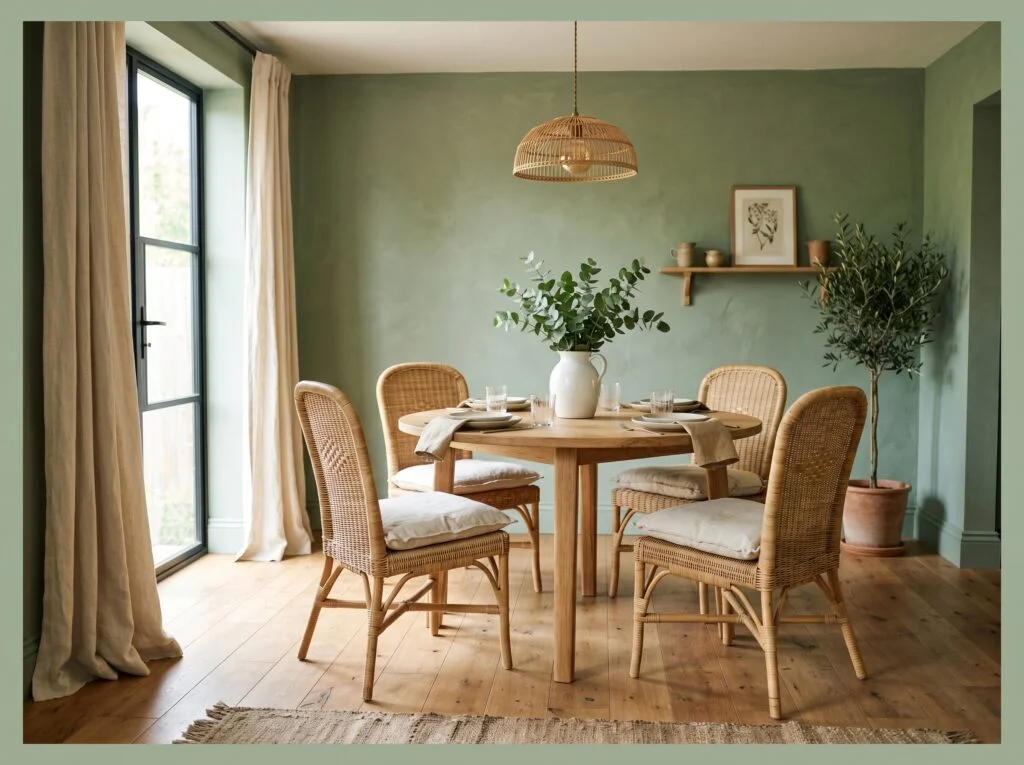
Wicker dining chairs with linen cushions against sage green walls is the combination that creates the most genuinely calm and restorative dining room atmosphere it’s the green dining room equivalent of a deep exhale. Every material in this combination is natural, organic, and texturally quiet there are no hard reflective surfaces, no synthetic materials, and no visual noise.
Natural wicker or rattan-back dining chairs look most beautiful against sage green walls when the chair’s natural honey tone is visible if you choose a dark-stained rattan, the warm contrast against the sage green is lost. Keep the rattan natural or very lightly finished.
Dramatic Dark Green Ceiling
Painting the ceiling instead of the walls is a less obvious way to bring green into the room. A dark shade overhead makes the ceiling feel lower and the whole space feel more intimate. It is a bold move, but one that a lot of people notice and remember after visiting.
A deep green ceiling with white walls is one of the most unexpected and most sophisticated green dining room approaches available it’s the inversion of conventional color placement that makes the room feel designed by someone who genuinely understands architectural color rather than simply following trends.
The chandelier’s relationship with a dark green ceiling is particularly important choose a fixture in warm gold or aged brass with Edison style bulbs that emit warm amber light. The combination of warm amber light against deep green creates a specific quality of luminosity that’s both dramatic and inviting the green absorbs most of the light and re-emits it as a warm ambient glow rather than bouncing it around the room as a white ceiling does.
Green Feature Wall with Gallery Art Display
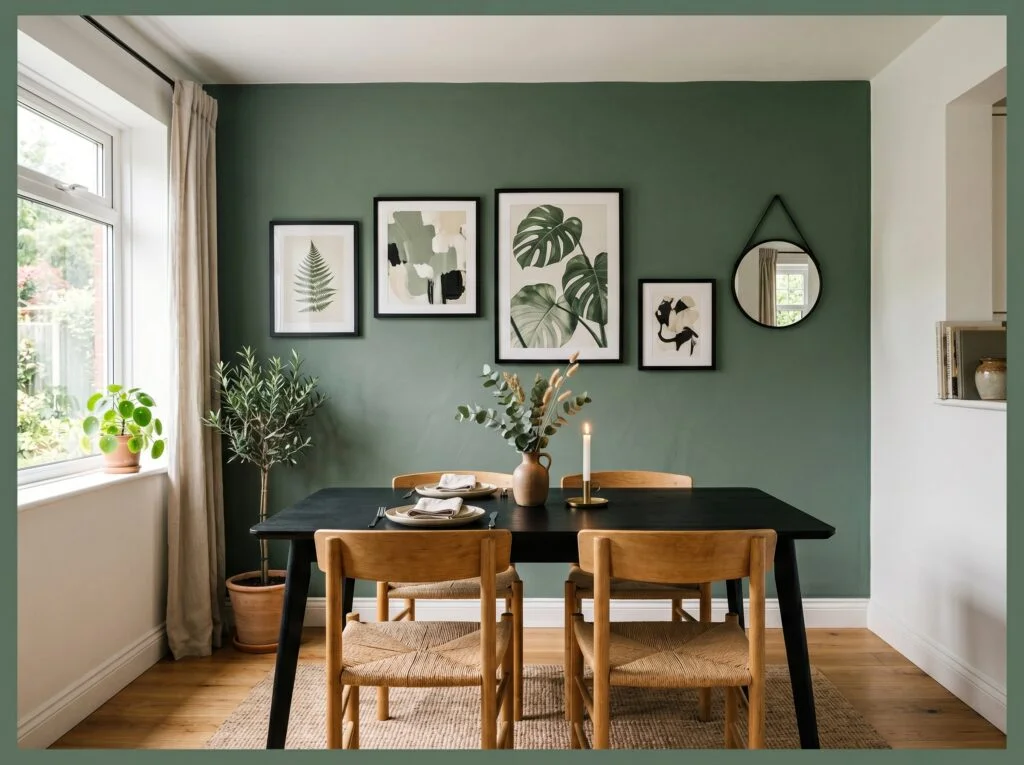
A saturated green wall makes an excellent backdrop for a gallery of framed art or photographs. Darker shades in particular help frames and artwork stand out more than a plain white wall would. Mixing frame sizes and styles against the green keeps the display feeling curated rather than matchy.
A deep sage or forest green feature wall used as the backdrop for a gallery art display creates the most curated and personal dining room composition the rich green wall makes every frame and every artwork look more significant and more carefully chosen than the same pieces hanging on a white wall.
Plan the gallery arrangement before committing to frame positions on the green wall arrange the frames on the floor first to find a composition that balances sizes and spacing before making any holes. Use frames in a consistent finish (all black, all gold, or all natural wood) for cohesion mixed frame finishes on a green wall create visual confusion rather than an eclectic, collected quality.
Green Dining Room Table Instead of Green Walls
Not everyone wants to commit to painting an entire room, and the table itself can carry the color instead. A green lacquered or painted dining table becomes the statement piece while the walls stay neutral. This approach is also easier to change later if your taste shifts down the line.
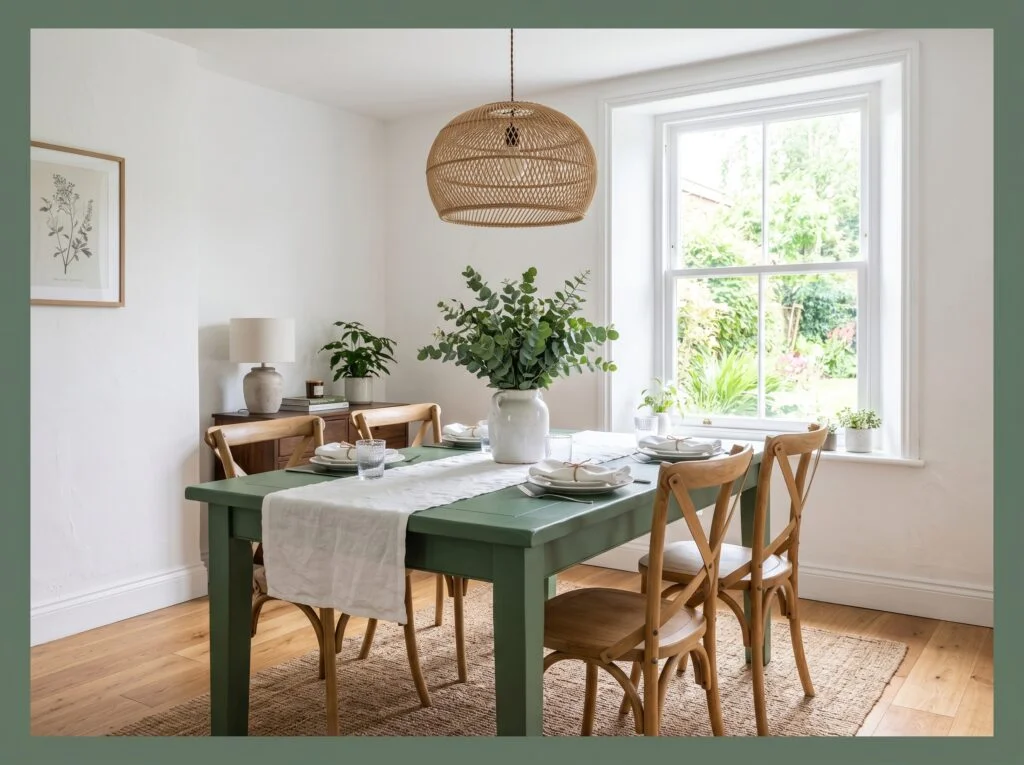
Painting the dining table rather than the walls is the green dining room approach for anyone who wants the color impact without the commitment of a permanent wall color and it’s also one of the most original and visually arresting dining room ideas available.
Painting a dining table is a completely accessible DIY project. Sand the existing surface lightly with 120-grit to remove gloss, apply an oil-based primer, and finish with two coats of furniture paint in your chosen green chalk paint brands like Annie Sloan or Rust-Oleum Chalked produce a beautiful, low-sheen finish that looks intentional rather than obviously DIY.
Layered Greens: Walls, Plants, and Textiles
Using more than one shade of green in the same room can actually work if the tones are layered thoughtfully. Wall paint, houseplants and textiles like cushions or curtains each bring their own version of the color. The key is varying the shades slightly so the room feels rich rather than flat.
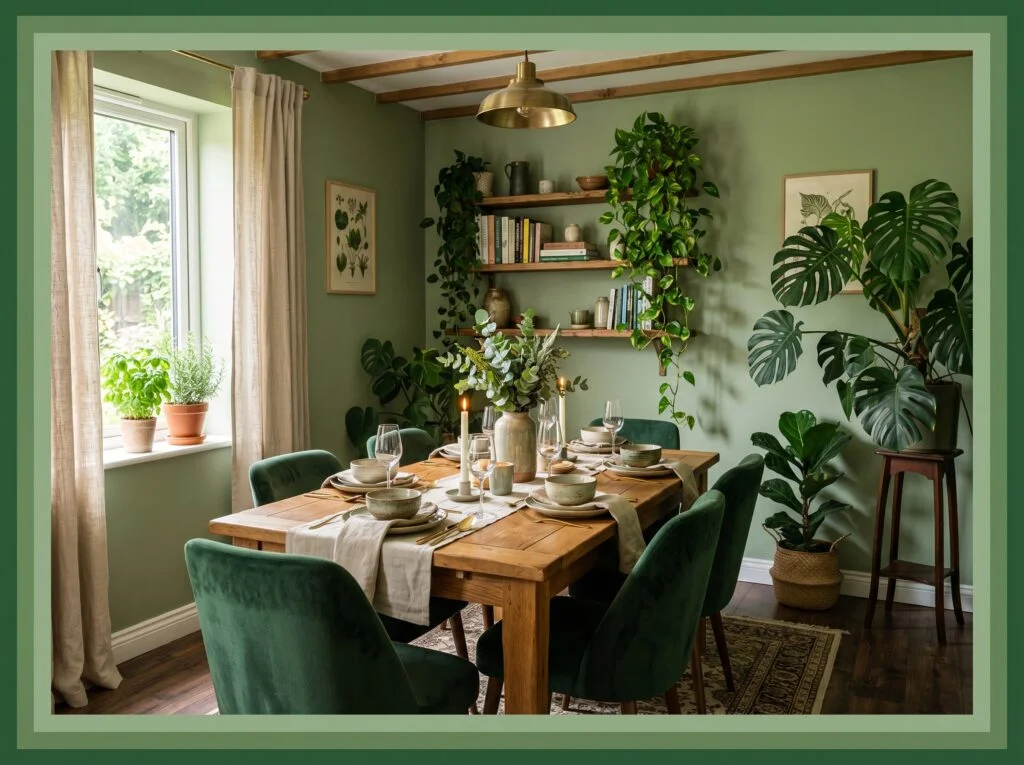
Layering multiple tones of green within a single dining room creates the most sophisticated and nature-immersive green interior possible it replicates the way green appears in natural environments, where dozens of slightly different green tones exist simultaneously in leaves, moss, shadows, and light reflections.
Start with a medium-toned sage or eucalyptus green on the walls as the base layer. Add forest green velvet on the dining chairs for richness and depth at the furniture scale the pile of velvet catches light differently than flat paint and creates a visible tonal difference even between greens of similar value.
Green Dining Room with Floral Centerpieces
Fresh or dried florals on the table pick up on the green walls without needing any extra decorating. Eucalyptus, ferns and other greenery tie directly back into the color story already on the walls. Swapping the centerpiece seasonally is an easy way to keep the room feeling current.
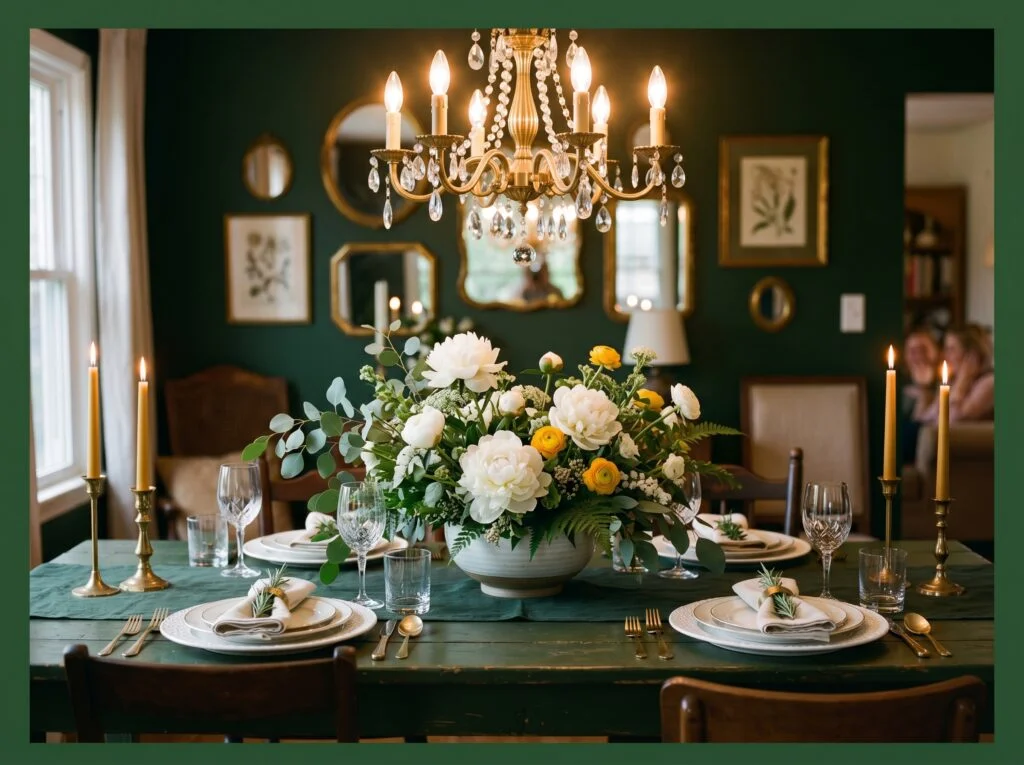
A forest green dining room with fresh floral centerpieces creates the most celebration ready table setting possible the rich green walls provide the lush, garden-party backdrop that makes every arrangement of white flowers look like it belongs in a florist’s editorial photograph.
The centerpiece styling principle for a green dining room is to connect the arrangement to the room’s green use plenty of trailing foliage (eucalyptus, Italian ruscus, or garden fern) in the arrangement so the centerpiece’s greens echo the wall’s green and create botanical continuity between the room and the table.
Green Dining Room with Coastal Influences
Pairing green with coastal elements like driftwood, linen and pale blue accents softens its intensity. This combination feels more beachy cottage than traditional or formal. It works especially well in dining rooms that get plenty of natural light throughout the day.
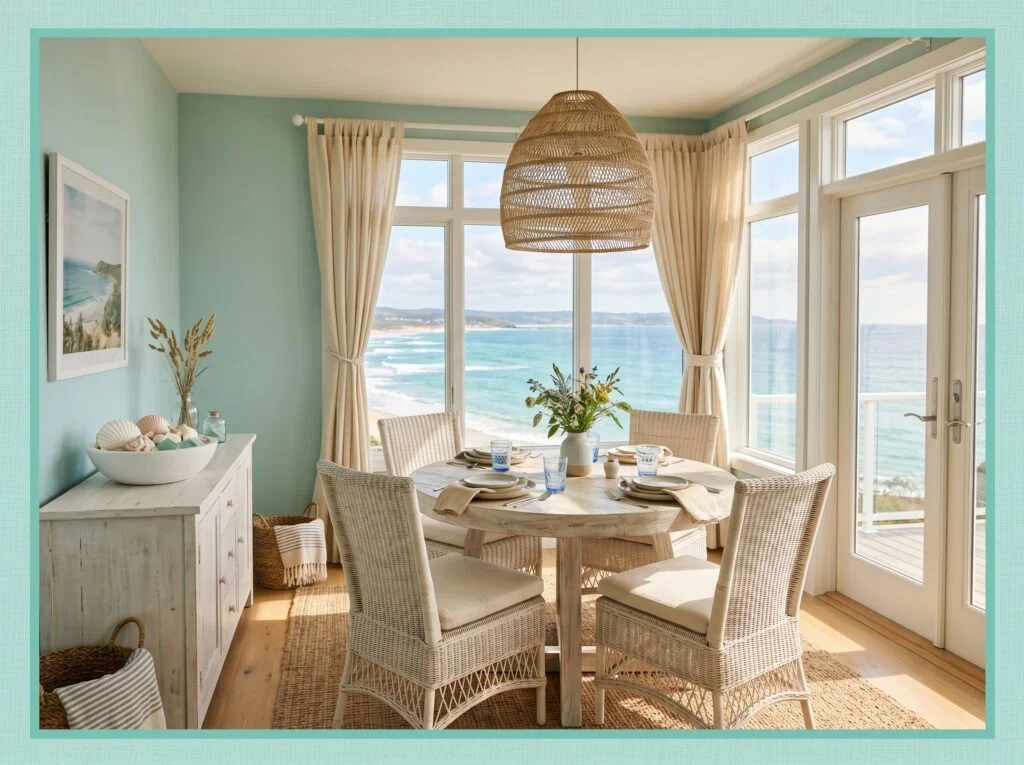
Aqua green and seafoam tones are the coastal green family they carry the suggestion of shallow ocean water and bring a specifically breezy, vacation-like quality to a dining room that deeper or earthier greens don’t provide.
Keep the material palette for a coastal green dining room light and natural white wicker chairs, whitewashed or driftwood finish wood table, woven seagrass pendant shade, and linen curtains. Avoid dark materials, heavy upholstery, or ornate furniture styles coastal aesthetic requires lightness and informality.
Green Dining Room Lighting Guide
The right light fixture can change how a green wall reads throughout the day and into the evening. Warm bulbs bring out the coziness in darker greens, while cooler bulbs keep lighter shades feeling fresh. Pendant lights over the table are usually the first thing worth getting right in this kind of room.
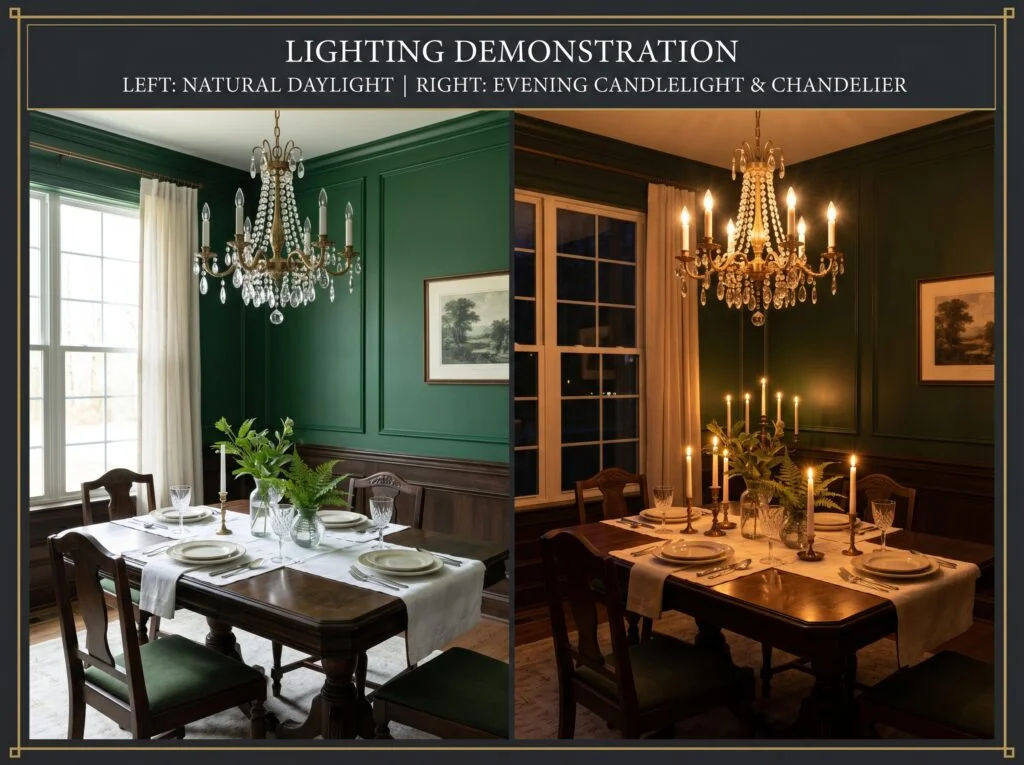
Lighting transforms green dining rooms more dramatically than almost any other wall color and this is the section that most green dining room articles completely skip.
This means your lighting choice for a green dining room is as important as the green shade itself. Use warm white bulbs (2700K to 3000K maximum) in all light sources chandelier, wall sconces, table lamps, and any recessed lights.
Seasonal Styling for a Green Dining Room
A green dining room actually makes seasonal styling easier since the base color already works with so many accent tones. Autumn works well with rust and mustard accents, while spring calls for lighter florals and pastels. Swapping table linens and centerpieces throughout the year keeps the space feeling updated without repainting anything.
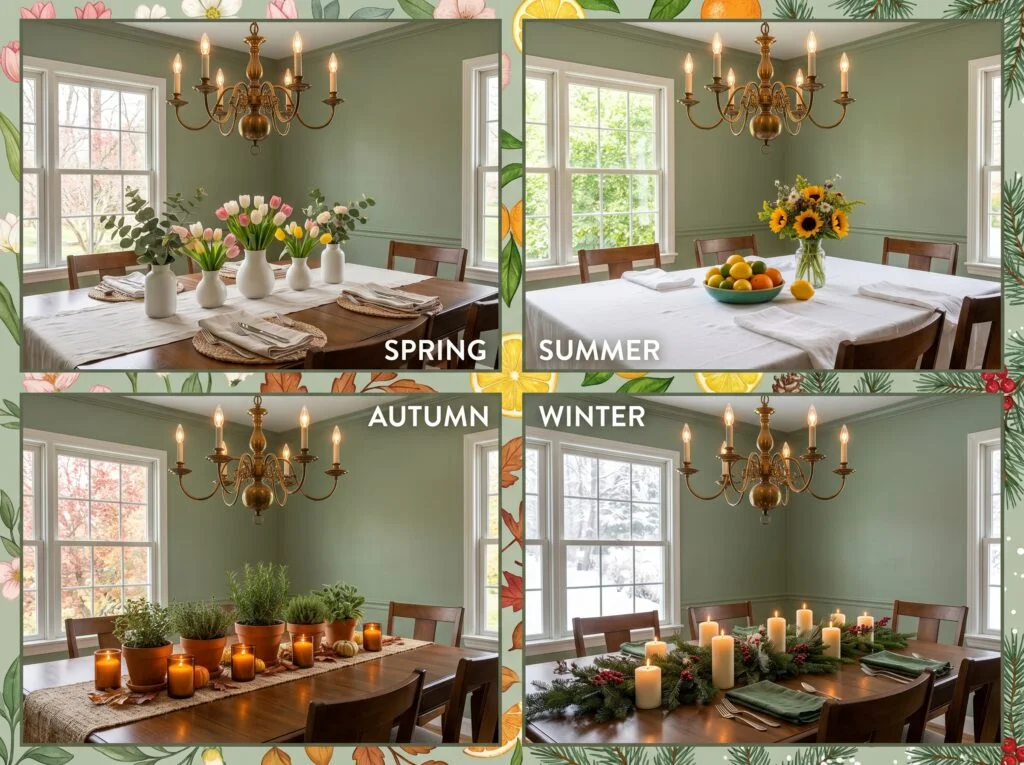
One of the most underappreciated qualities of a green dining room is how naturally it adapts to seasonal decoration and this seasonal styling potential is the idea that no competitor article addresses. Green is the perennial color.
Spring styling for a green dining room: white tulips or peonies in white ceramic vases, pale linen napkins in blush or cream, and small potted hyacinths along the center of the table. Summer: bright linen in white, fresh herbs in simple glass vases, and a bowl of lemons or limes as a centerpiece.
You can find even more centerpiece inspiration for every season to keep your green dining room feeling fresh year-round.
Conclusion
Green is the dining room color that most homeowners think about for months before actually committing to it and then wonder why they waited so long once the paint is on the wall.
The hesitation is understandable. Green feels like a risk in a way that safe beige and agreeable gray never do. But safe beige never made anyone linger at the table longer than they intended. Safe gray never made guests feel like they were somewhere special.
Green does both of those things. It creates atmosphere. It connects the room to nature. It makes food look more beautiful and people look warmer. Start with one idea from this list the shade that speaks to you most clearly, the approach that fits your existing furniture and your home’s style and see how the room transforms.
The dining room you’ve always wanted might just be one coat of sage green away.
And once the walls are done, there are elegant table settings worth exploring to bring the same warmth to the table itself.