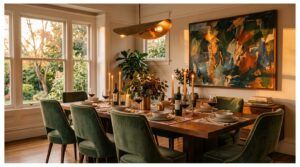
A modern dining room should feel sophisticated without feeling cold. The right combination of materials and lighting makes that balance genuinely achievable.
These ideas create a dining room that is elegant, current, and completely livable.
For an even more indulgent direction, a luxurious take worth exploring builds on many of these same principles.
Let’s explore the ideas.
Sculptural Pendant Light Cluster
Grouping several pendants at different heights turns a lighting fixture into an actual art piece. This cluster works best centered above the table rather than spread across the whole ceiling. It suits a dining room wanting a bold, modern focal point overhead.
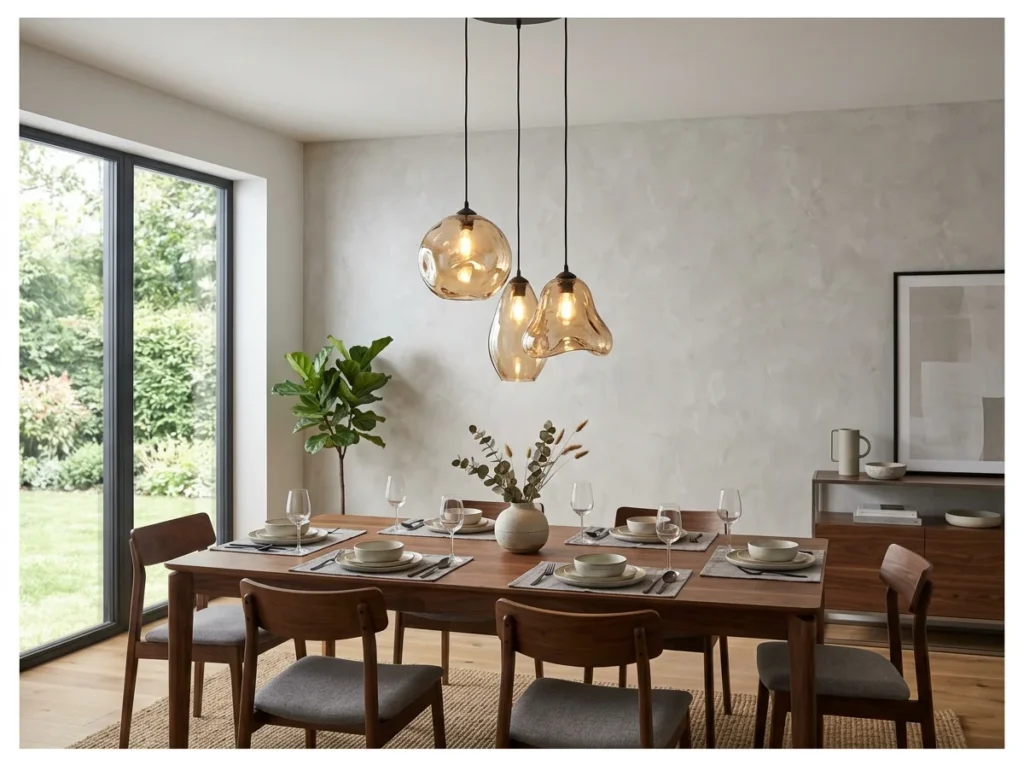
A cluster of sculptural pendant lights arranged asymmetrically above the dining table creates a dramatic artistic focal point that replaces the single centered chandelier convention with something genuinely contemporary. The varied forms within the cluster create visual movement and depth.
Choose three to five pendants in complementary but not identical forms, varying the heights for additional visual interest. The asymmetric cluster suits modern dining tables of every shape and creates a lighting installation that functions as genuine art rather than simply illumination.
The lighting choice that defines the entire room’s character.
Walnut Dining Table
Walnut has a deep, rich grain that stands out clearly against lighter chairs or flooring. This wood tends to darken slightly with age, adding character over years of use. It suits a dining room wanting warmth alongside a more refined material choice.
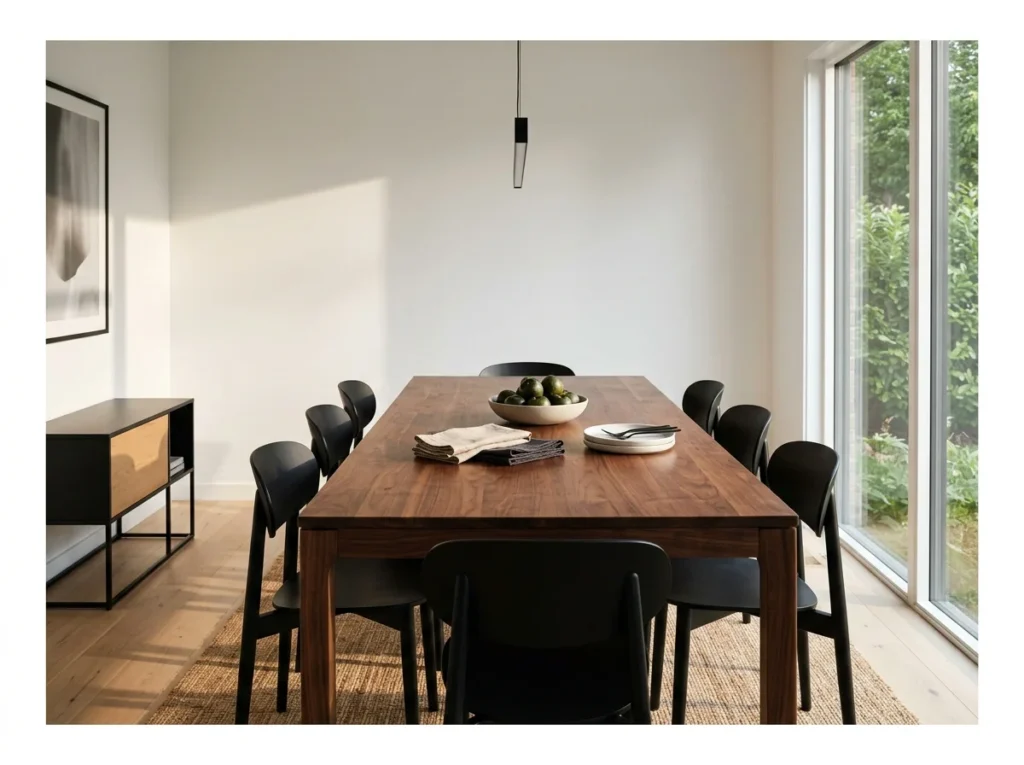
A walnut dining table brings the warm, dark, sophisticated wood tone that defines countless modern dining room aesthetics. The deep brown grain creates immediate visual richness and contrasts beautifully against lighter walls, chairs, or flooring.
Walnut’s naturally darker tone reads as more formal and contemporary than honey-toned oak, making it the most consistently chosen wood species for modern dining tables specifically. A simple rectangular or oval form in walnut, free of decorative carving, creates the cleanest and most genuinely modern table silhouette.
Sculptural Dining Chairs
Chairs with an unusual, curved or sculptural shape act as design objects even when empty. This detail suits a dining room wanting the seating itself to be a visual highlight. Pairing them with a simpler table lets the chairs remain the main focus.
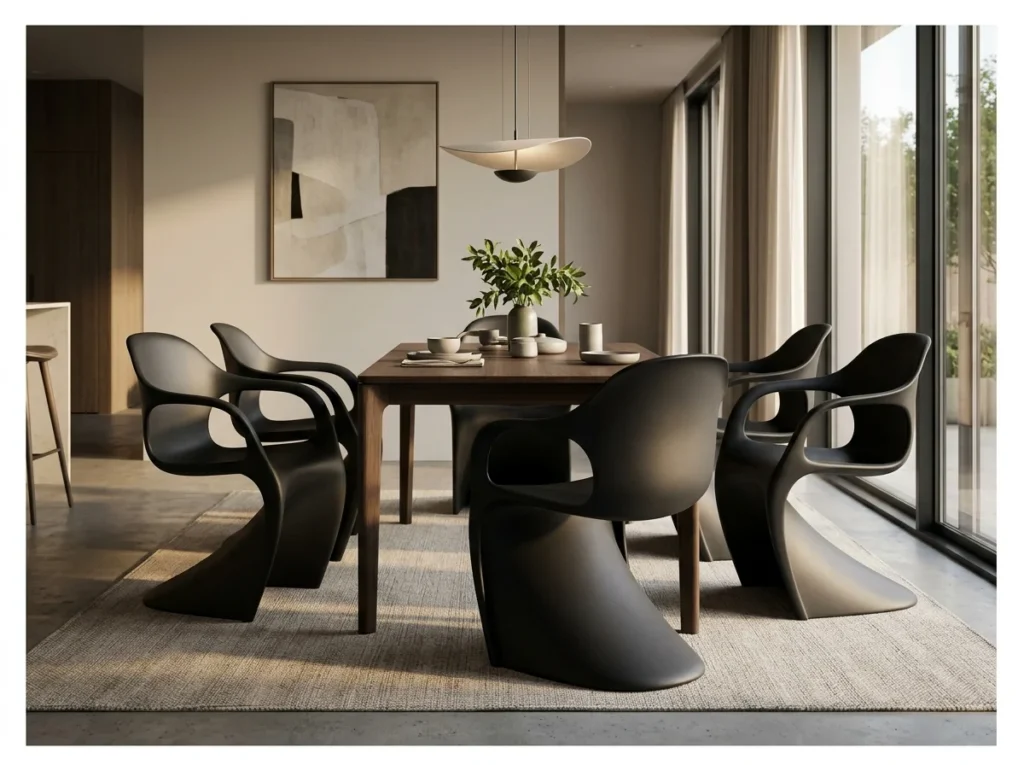
Sculptural dining chairs with curved, organic forms create visual interest and genuine artistic presence around the dining table without requiring elaborate decoration elsewhere in the room. The chair becomes the room’s primary decorative statement through form alone.
Choose chairs with a consistent material and finish throughout the full set for the most resolved appearance. Matte black, warm bouclé, or natural cane all suit modern dining room aesthetics. The chair’s silhouette, viewed both individually and as a repeated set around the table, creates the room’s defining visual rhythm.
For more inspiration on this piece specifically, chairs that suit stylish seating are worth browsing before you commit to a set.
Statement Abstract Artwork
A large abstract piece brings color and movement into a room that might otherwise feel plain. This artwork often becomes the first thing guests notice upon entering the space. It suits a dining room wanting one bold, unmistakable focal point.
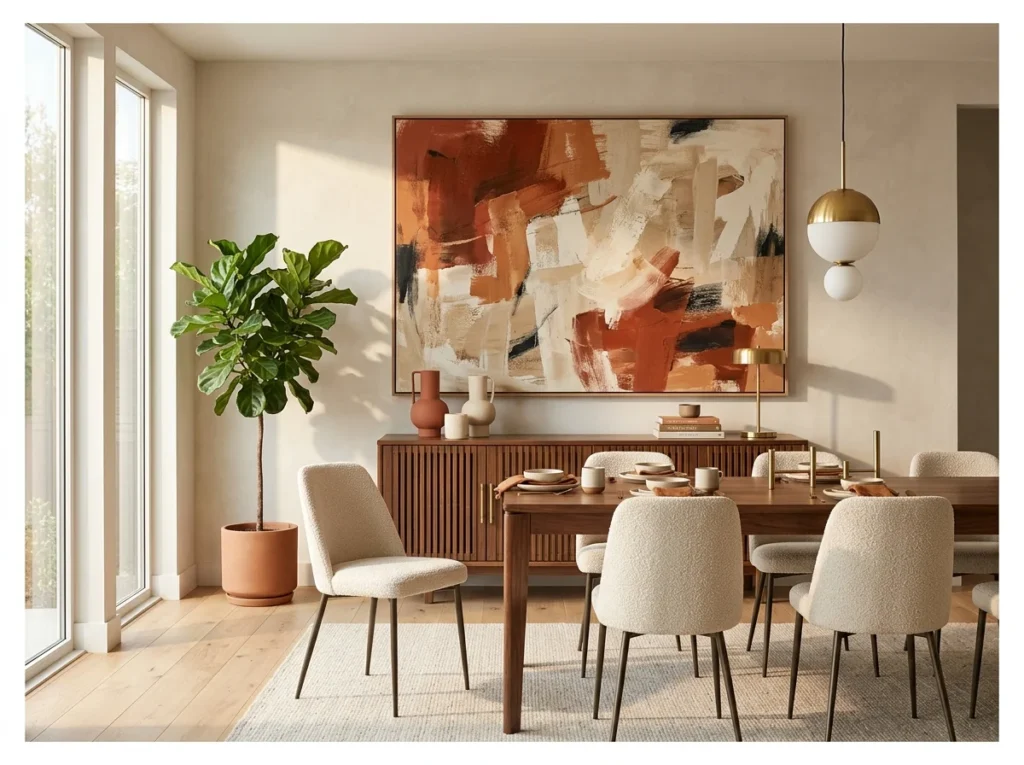
A large statement abstract artwork creates the dining room’s primary color and visual reference point, establishing the palette and mood that every other design decision in the room then responds to. The bold, often unframed canvas suits modern dining room proportions perfectly.
Position the artwork on the wall most visible from the primary seating position at the table, ensuring it remains the focal point during meals. A canvas of at least 100 to 120 centimeters width creates appropriate scale for most dining room walls.
If you’re weighing other options for this space, wall styling with genuine character can offer alternatives beyond a single canvas.
The single piece that sets the entire room’s tone.
Monochromatic Dining Room Palette
Sticking to one color family throughout the room lets texture do most of the visual work. This approach creates a calm, cohesive feel rather than a room full of competing tones. It suits a dining room wanting sophistication without much contrast.
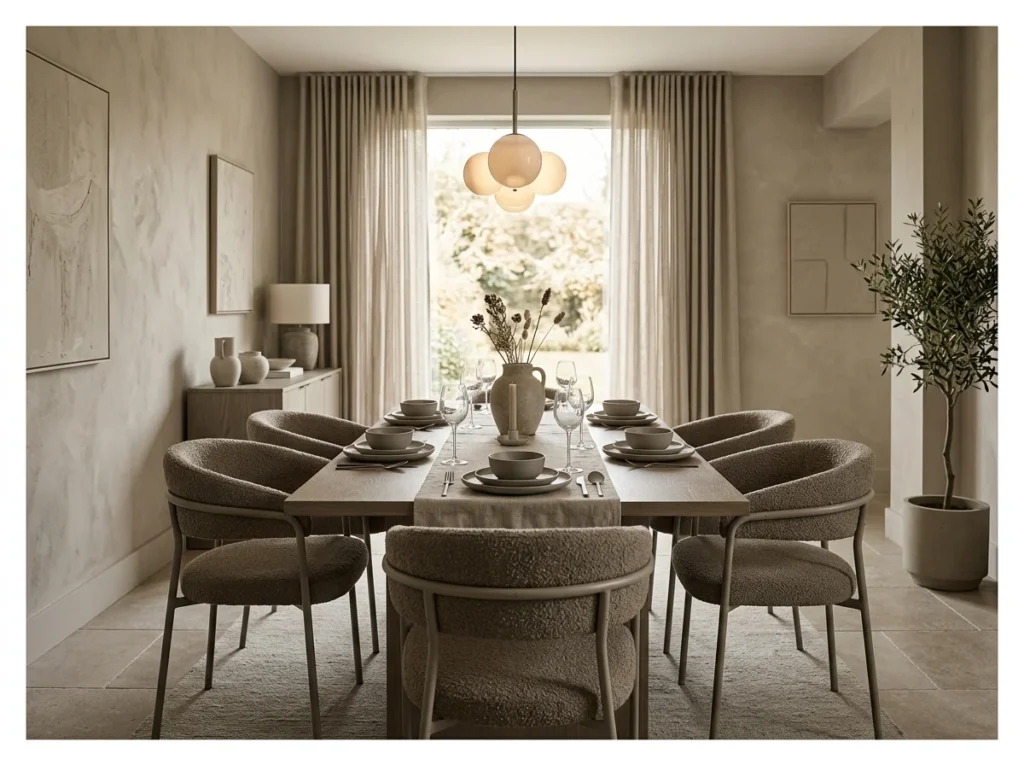
A monochromatic dining room applies one color in multiple tones and textures across walls, furniture, and textiles to create a unified, sophisticated atmosphere where visual depth comes entirely from material and texture variation rather than competing colors.
Warm greige, deep charcoal, and soft sage all create beautiful monochromatic modern dining rooms. The restraint required to maintain this approach across every surface produces a room of genuine sophistication that color-heavy alternatives rarely achieve with the same consistency.
Built-In Banquette Seating
A banquette built into the wall maximizes seating without needing a full set of chairs on every side. This setup also gives the room a cozier, more tailored feel. It suits smaller dining spaces or nooks wanting efficient use of space.
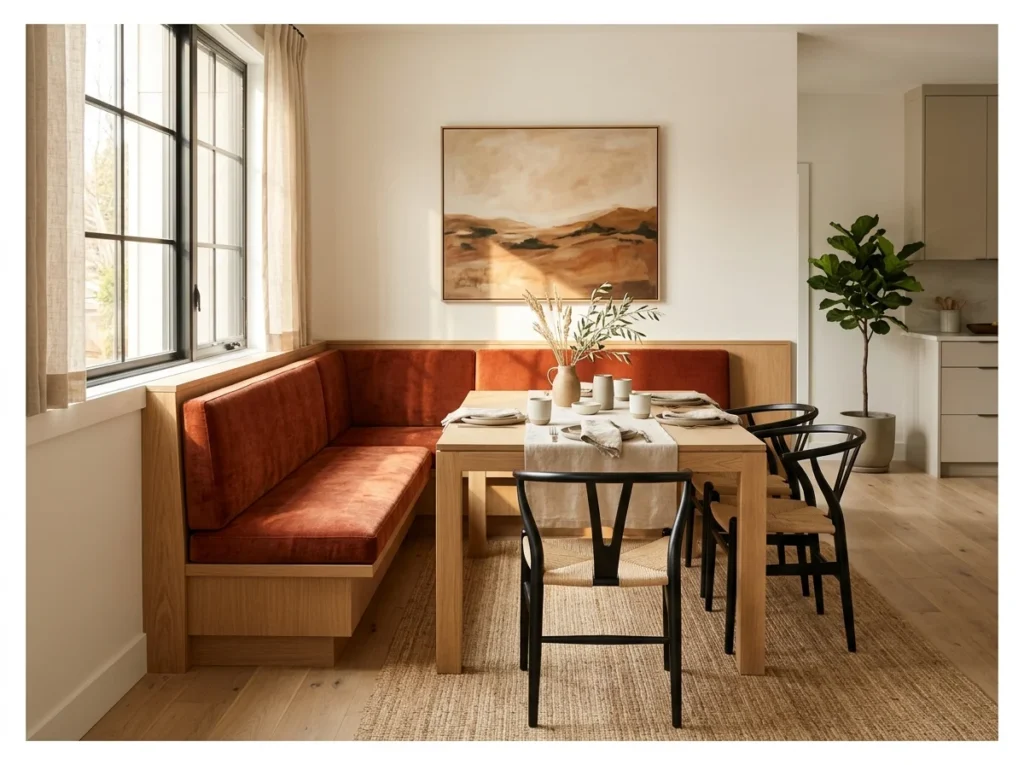
A built-in upholstered banquette along one dining room wall creates a sophisticated, space-efficient seating configuration that suits contemporary open-plan living particularly well. The banquette’s clean lines and built-in quality read as distinctly modern compared to a full set of freestanding chairs.
Pair the banquette with modern chairs on the table’s opposite side for visual variety within the seating arrangement. Deep cushioning in velvet or performance fabric creates genuine comfort while the banquette’s permanence makes a strong, architecturally integrated design statement.
Curved Dining Table
A curved table softens the straight lines common in most dining room furniture. This shape also improves conversation flow since no one sits at a sharp corner. It suits a dining room wanting a more organic, contemporary silhouette.
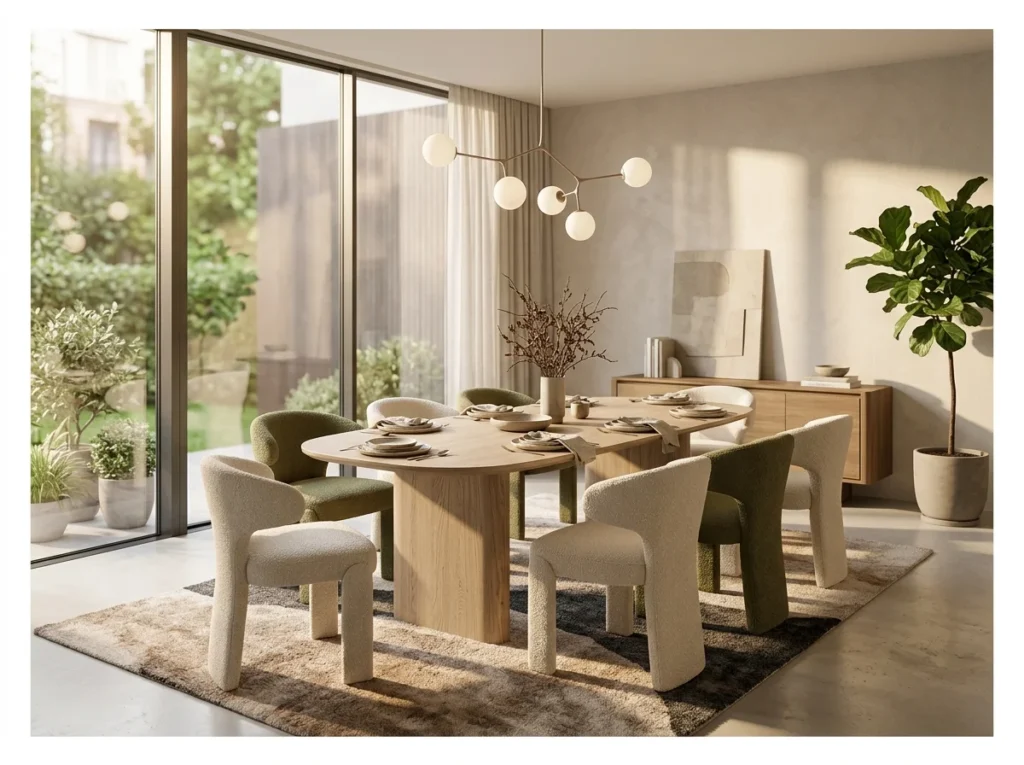
A curved or organically shaped dining table softens the geometry of the dining room and creates a distinctly contemporary alternative to the standard rectangular table that has dominated dining room design for generations. The flowing form suits the broader organic modern design movement.
Oval, kidney-shaped, and freeform organic tables all suit this aesthetic direction. The curved form also improves conversational flow around the table since there are no hard corners creating awkward seating positions, making the shape both aesthetically and functionally modern.
Floor-to-Ceiling Curtains
Curtains hung from ceiling to floor make the whole window feel taller and more dramatic. This detail also adds softness against an otherwise hard surfaced dining room. It suits a room wanting height and a bit of formality.
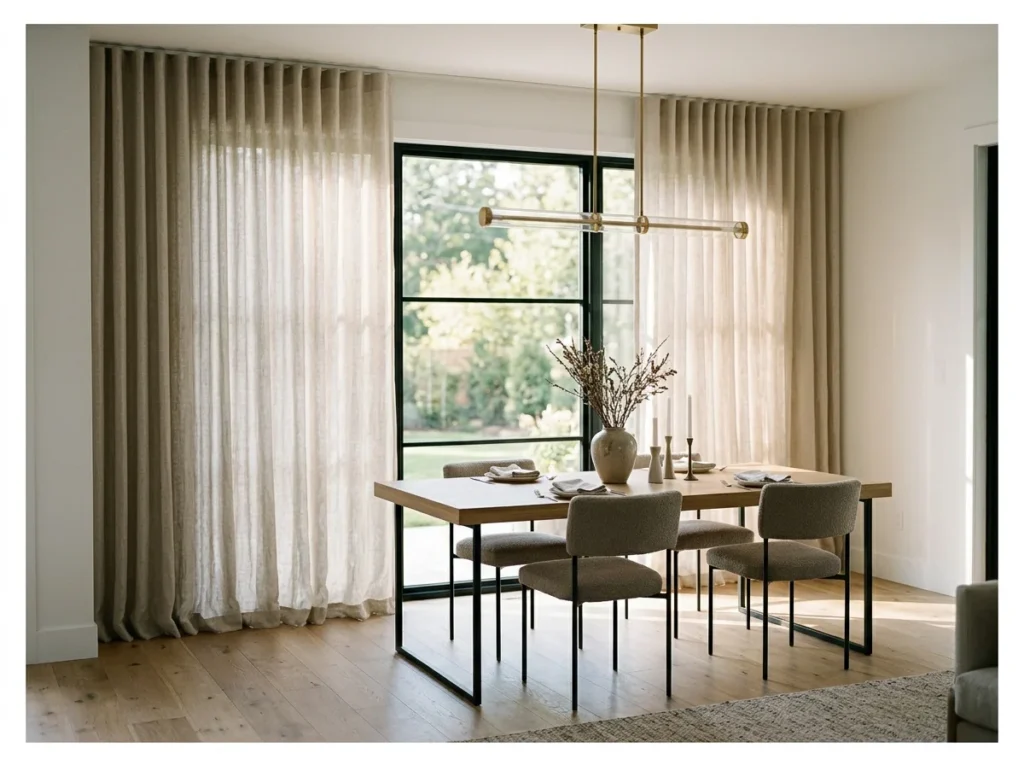
Floor-to-ceiling curtains in the dining room create a soft, elegant architectural statement that makes the ceiling appear taller and the entire room feel more luxurious. The generous drape of fabric from ceiling height to floor adds a layer of softness that balances the clean lines of modern furniture.
Natural linen in warm cream or soft charcoal suits most modern dining room palettes. Hang the curtain rod as close to the ceiling as possible and allow the fabric to pool slightly at the floor for the most luxurious drape quality.
Mixed Material Table Base
Combining materials like wood and metal in the table base adds visual interest below the tabletop. This detail also allows different materials to serve different structural purposes. It suits a dining room wanting more texture than a single material table provides.
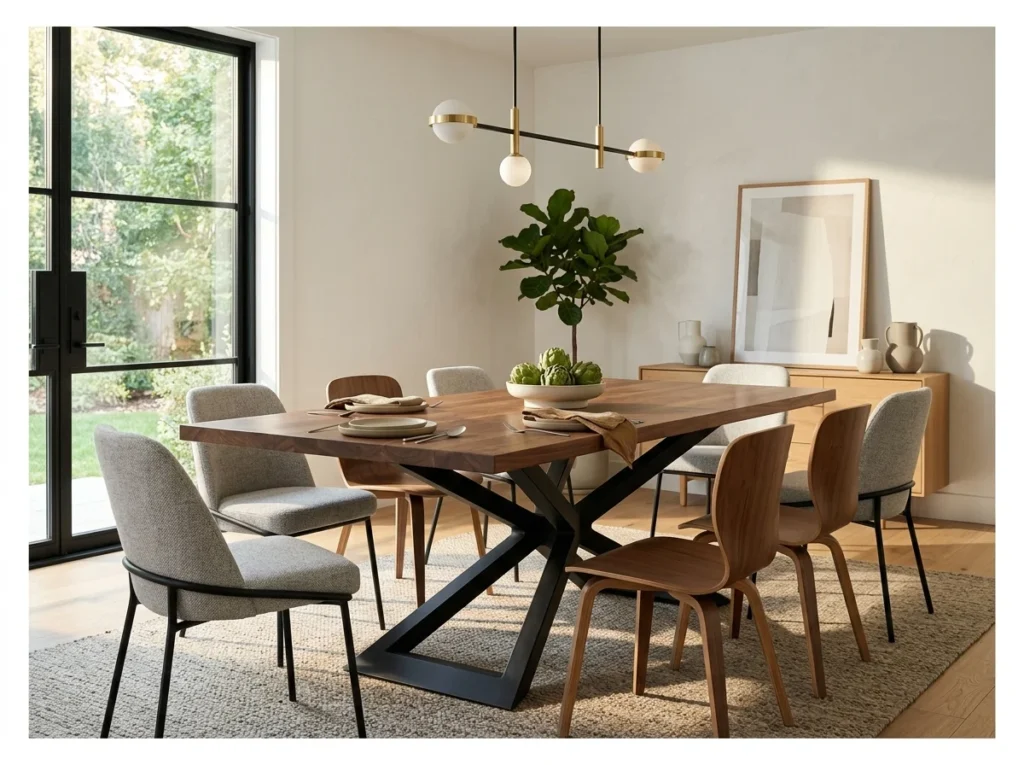
A dining table combining a sculptural metal base with a natural timber tabletop creates material contrast that elevates the entire piece beyond either material used alone. The combination of industrial-feeling metal and organic wood grain is one of the most consistently popular modern dining table approaches.
Black powder-coated steel, brass, and brushed aluminum all create striking table base options when paired with a warm walnut or oak top. The contrast between cool metal and warm wood creates visual tension that makes the table itself the room’s primary design statement.
If pure modern feels too stark, a farmhouse counterpoint worth considering can soften the material mix while keeping it current.
Dramatic Dark Accent Wall
A dark wall behind the dining table creates contrast that makes lighter furniture stand out. This approach adds drama without needing to commit the whole room to one dark color. It suits a dining room wanting a bold backdrop for its main furniture pieces.
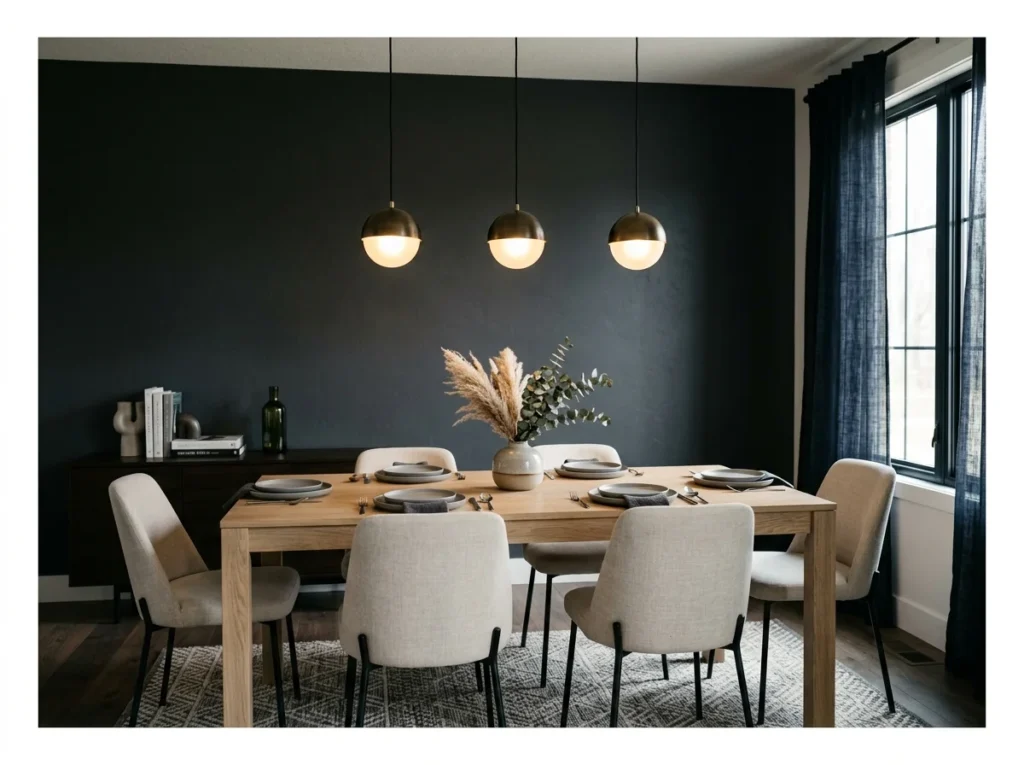
A single dramatic dark accent wall behind the dining table creates depth, sophistication, and a backdrop against which lighter furniture and table settings genuinely glow. Deep charcoal, navy, or forest green all suit this approach within a modern dining room context.
The dark wall makes the dining table feel framed and intentional rather than simply existing in an undefined room. Warm lighting against the dark backdrop creates dramatic shadow and highlight that flat white walls cannot achieve, significantly elevating the room’s evening dining atmosphere.
Bold contrast that makes every dinner feel like an occasion.
Glass Top Dining Table
A glass top keeps the table visually light, letting the base or legs remain the main focus. This material also reflects light around the room, which helps smaller spaces feel larger. It suits a modern dining room wanting an open, airy feel.
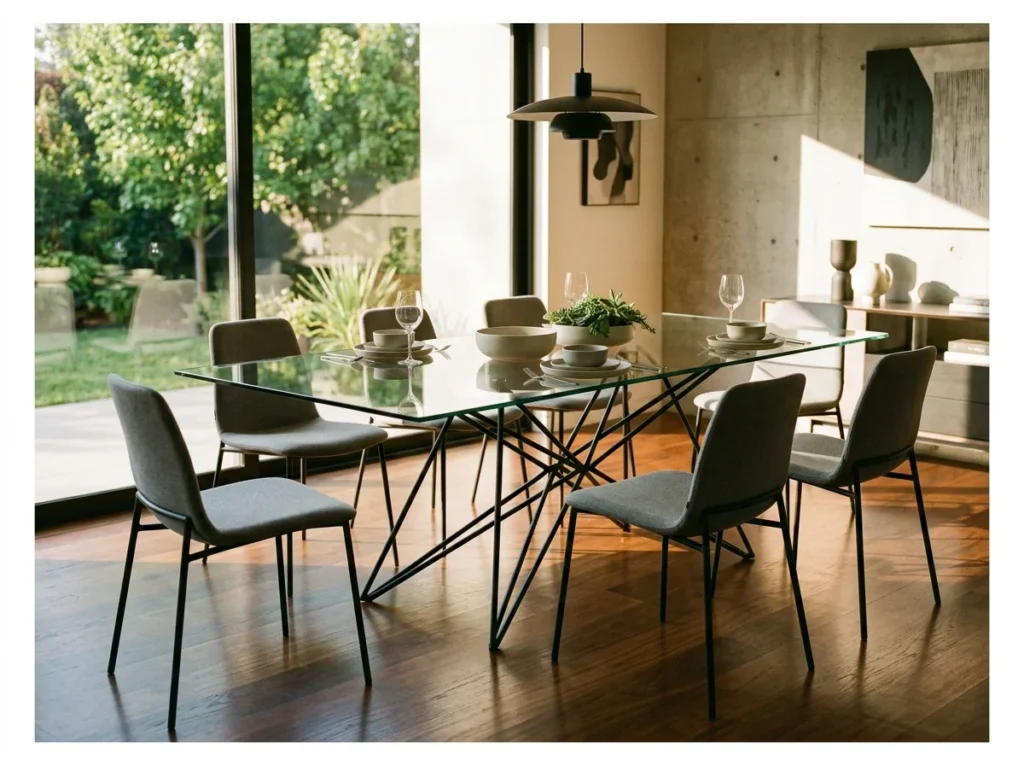
A glass top dining table creates visual lightness and a sense of spaciousness that solid wood or stone tabletops cannot achieve. The transparency allows the table base and floor beneath to remain visible, which is particularly valuable in smaller modern dining rooms.
Pair the glass top with a sculptural base in metal or stone for the most visually striking combination. The reflective quality of glass also catches and amplifies ambient light throughout the room, making this choice especially effective in dining rooms with limited natural light.
Perfect for small dining spaces.
Open Shelving Display Wall
Open shelves turn dishware and glassware into part of the room’s overall display. This setup keeps items visible rather than hidden away in closed cabinets. It suits a dining room wanting function alongside a bit of curated decor.
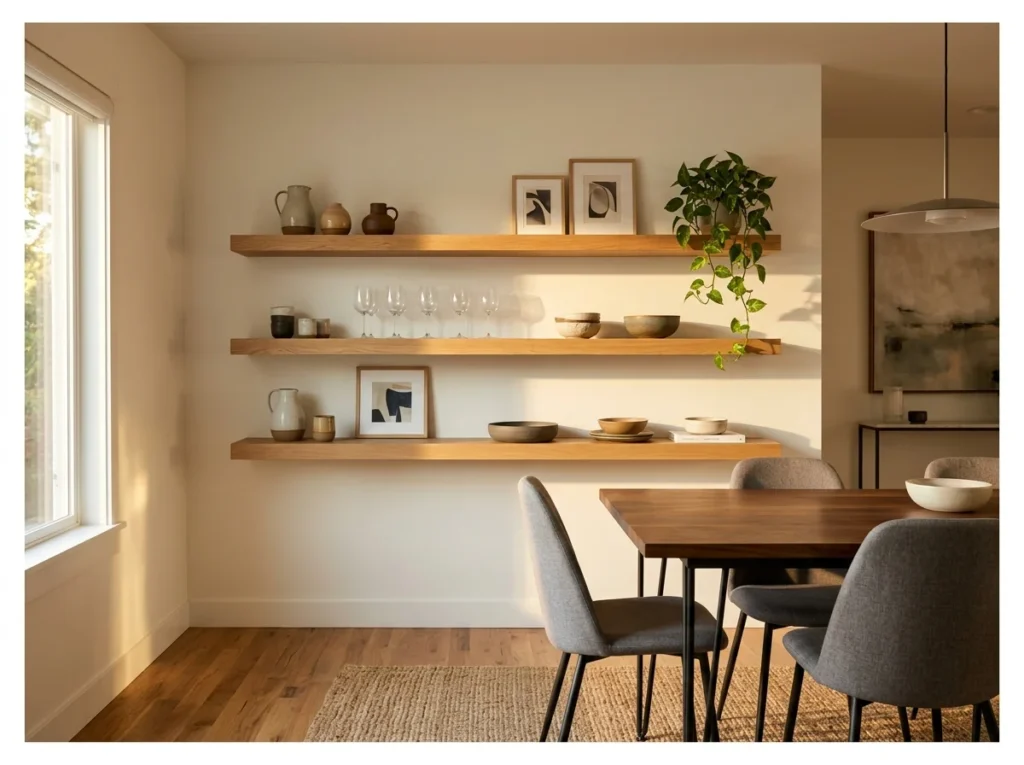
Open floating shelves on a dining room wall create a curated display opportunity for beautiful ceramics, glassware, and personal objects that contribute to the room’s character without requiring closed cabinetry. The shelves become a personal gallery visible during every meal.
Style the shelves with a consistent material and color palette: white ceramics, clear glass, and one trailing plant create the most cohesive modern dining room shelf display. Keep the display edited to avoid visual competition with the dining table itself as the room’s primary focal point.
Statement Mirror
A large mirror in the dining room bounces light around and adds a sense of depth. This piece also doubles as a design object even before considering its reflective purpose. It suits a room wanting to feel bigger and brighter without structural changes.
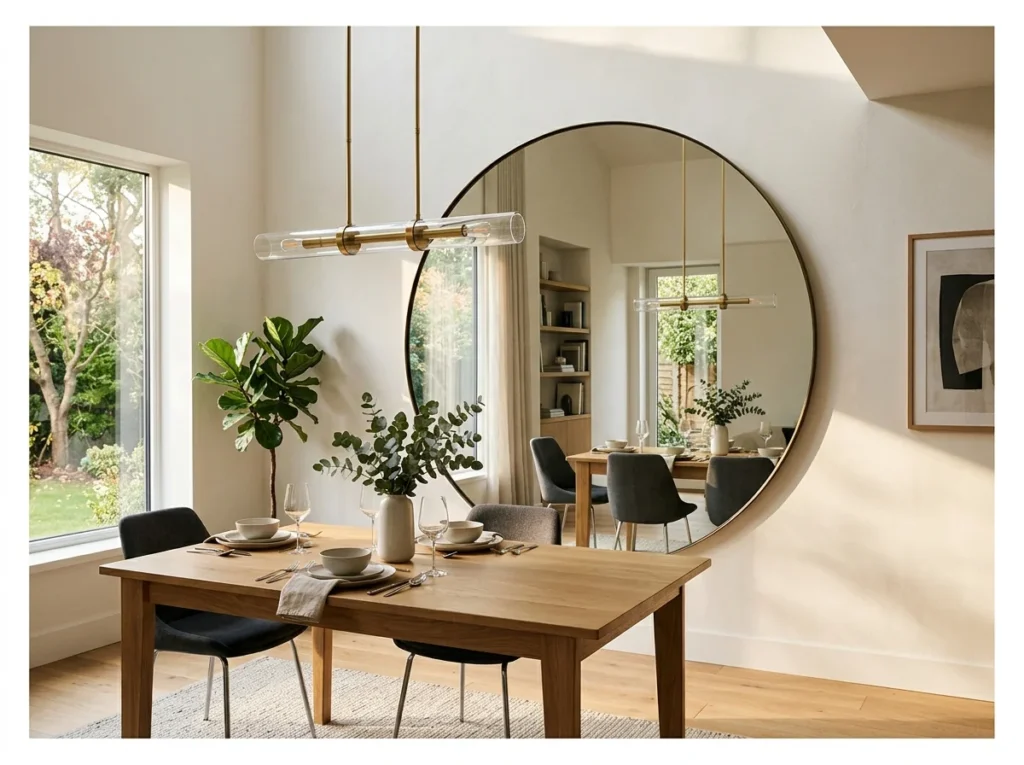
A large statement mirror mounted behind or beside the dining table reflects light and the room’s existing decor, creating the impression of a larger, brighter space while also serving as a genuine decorative focal point in its own right.
Choose a mirror with a sculptural or minimalist frame that complements the room’s modern aesthetic direction. Position the mirror where it reflects the most flattering aspect of the dining room, whether a window, a piece of art, or the dining table setting itself.
Velvet Upholstered Chairs
Velvet chairs bring softness and a bit of shine that plain fabric or wood seating does not offer. This material also adds comfort for longer dinners spent seated at the table. It suits a dining room wanting a touch of luxury without much extra effort.
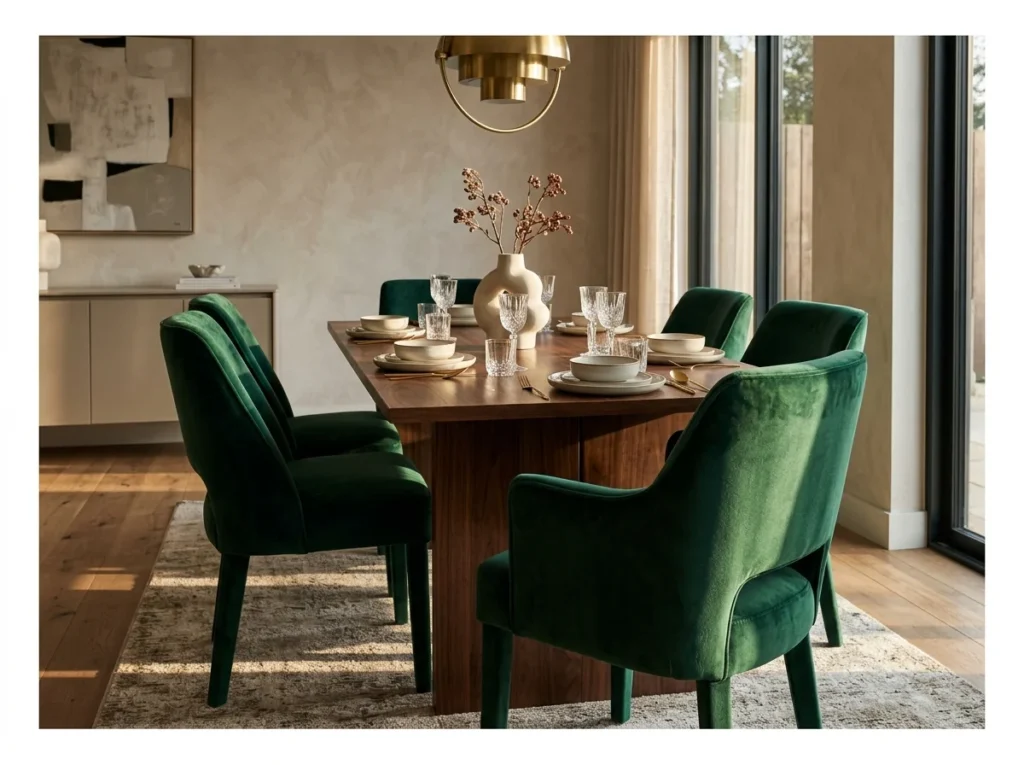
Velvet upholstered dining chairs introduce genuine tactile luxury and rich color saturation that brings warmth to an otherwise hard-surfaced modern dining room. The deep pile of quality velvet catches light beautifully and adds a sensory dimension that wood or metal chairs alone cannot provide.
Emerald green, deep navy, dusty rose, and rich burgundy velvet all create stunning modern dining chair upholstery. Choose performance velvet fabric treated for stain resistance to maintain practicality for regular dining use without sacrificing the material’s visual luxury.
Minimalist Centerpiece Styling
A single vase or simple object keeps the table looking intentional without much clutter. This approach lets the table itself, along with the chairs and lighting, carry the room’s design. It suits a dining room wanting restraint over an elaborate centerpiece.
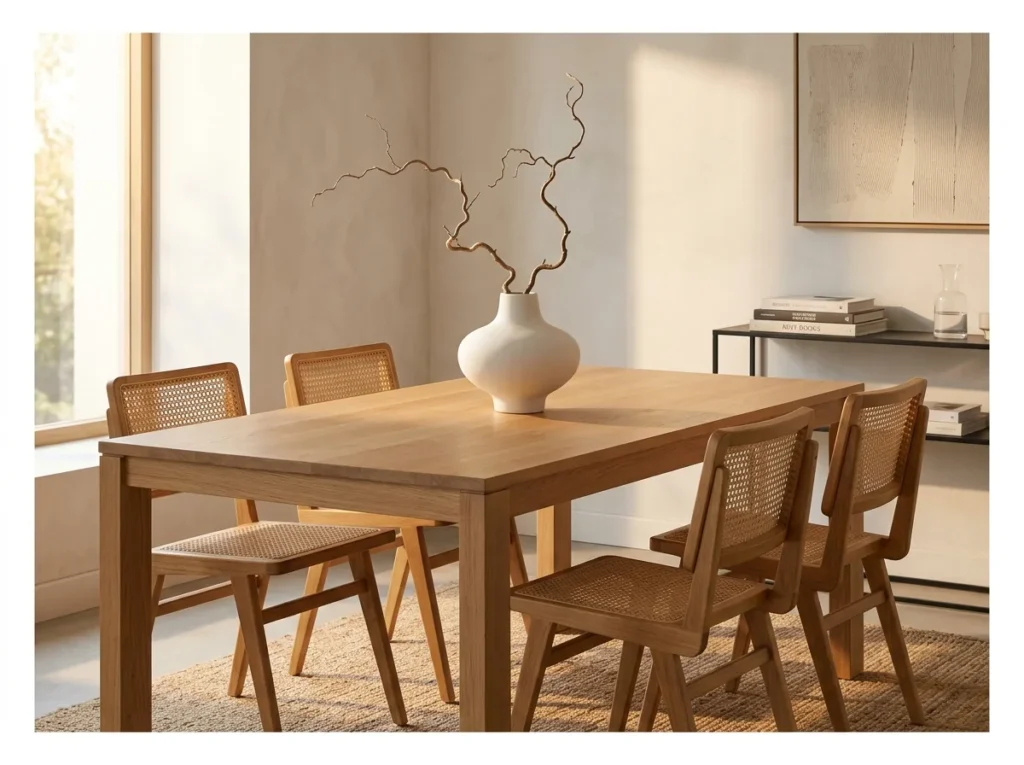
A minimalist dining table centerpiece using one sculptural object rather than an elaborate floral arrangement allows the table itself, the chairs, and the surrounding room architecture to remain the primary visual focus rather than competing with a busy centerpiece display.
One large ceramic vase with a single dried branch, or one sculptural bowl, creates sufficient visual interest at the table’s center without the elaborate floral abundance that suits more traditional dining room styling. This restraint is itself a defining characteristic of genuinely modern dining room design.
Less truly is more in modern dining styling.
Layered Lighting with Dimmers
Combining overhead, wall and table lighting gives the room flexibility depending on the occasion. Dimmers let the mood shift from bright daytime meals to a softer evening dinner. This approach avoids relying on a single harsh light source for the whole room.
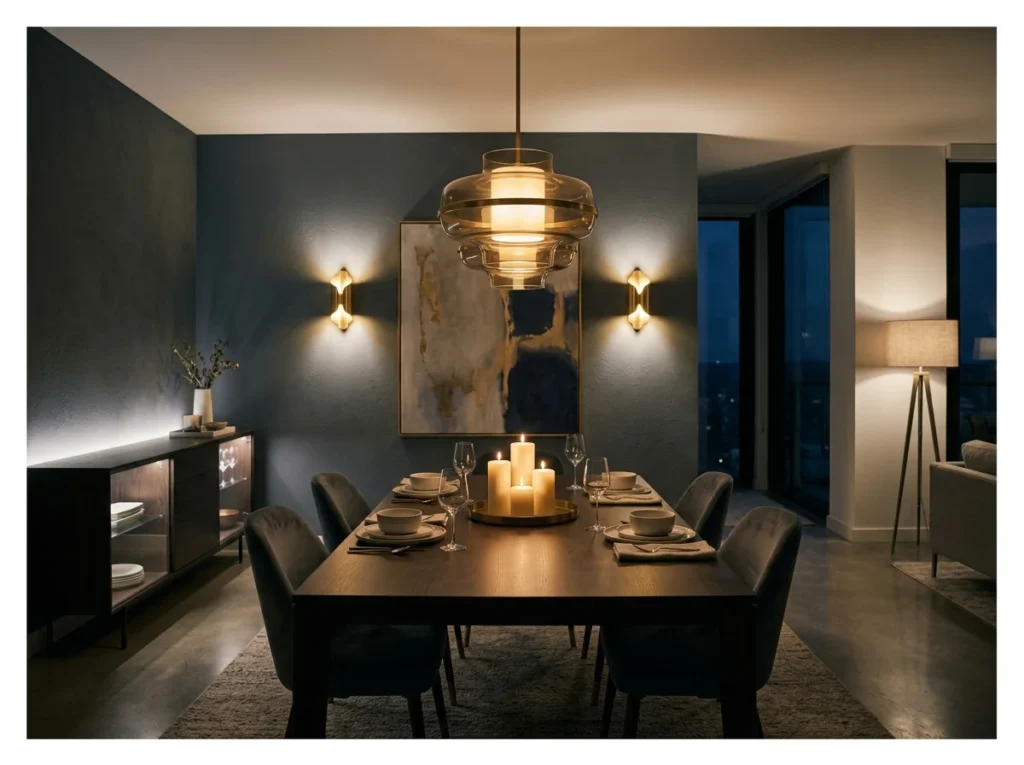
Layered lighting combining a statement pendant above the table, wall sconces for ambient light, and candles directly on the table surface creates the multi-dimensional lighting depth that single overhead fixtures alone cannot achieve. Each layer serves a different function and mood.
Dimmer controls on every lighting circuit allow the room to transition from bright functional light for daytime use to soft, warm ambiance for evening dinners and entertaining. This layered, controllable approach is one of the most significant differences between merely furnished dining rooms and genuinely well-designed ones.
For a deeper look at fixture choices themselves, lighting that brings the room to life is worth exploring on its own.
Natural Stone Table Top
A stone tabletop brings natural veining and texture that wood or glass cannot replicate. Each slab varies slightly, making the table feel more like a unique piece. It suits a dining room wanting a table that doubles as a statement surface.
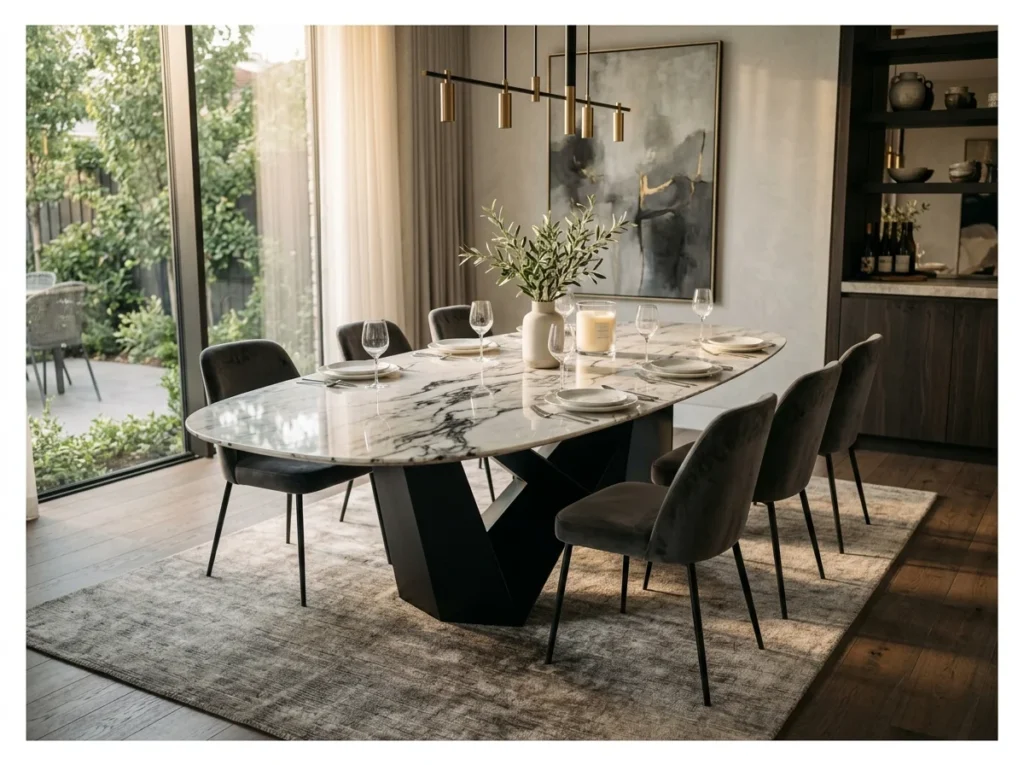
A natural stone tabletop in marble, travertine, or quartzite creates a dining table with genuine material luxury and natural variation that no manufactured surface can replicate. The cool, smooth surface and dramatic veining patterns make a powerful design statement.
Pair the stone top with a sculptural metal base for the most contemporary application of this material combination. Seal natural stone tabletops appropriately to handle daily dining use, including potential acid exposure from wine and food, while preserving the surface’s natural beauty.
Bold Geometric Rug
A geometric rug adds pattern underfoot without needing to change the walls or furniture. This detail also helps define the dining area within a larger open plan space. It suits a room wanting graphic interest at ground level.
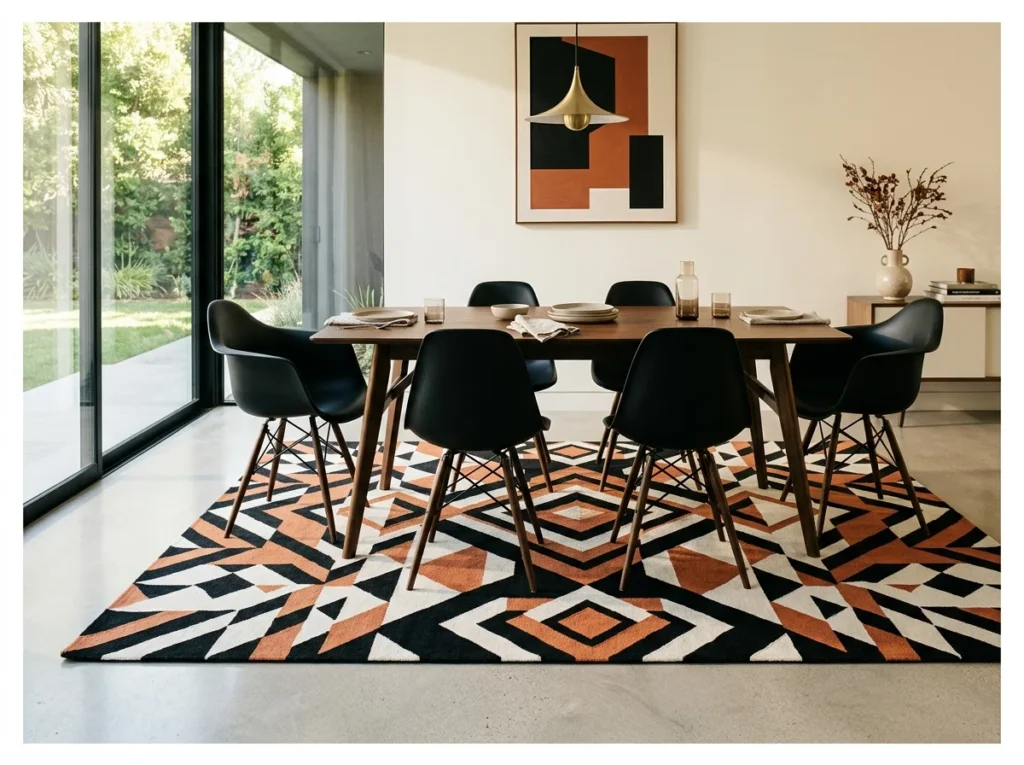
A bold geometric pattern rug beneath the dining table introduces graphic energy and pattern to a modern dining room that might otherwise rely entirely on furniture form and color for visual interest. The rug grounds the seating arrangement while adding genuine personality underfoot.
The rug should extend at least 50 centimeters beyond the table edge on all sides to comfortably accommodate chairs when pulled out from the table. Bold black and white, or warm tonal geometric patterns, both suit modern dining room aesthetics depending on the desired intensity of visual statement.
Built-In Bar or Sideboard
A built in bar or sideboard keeps drinks, dishware and serving pieces close to the table. This setup suits households that host regular dinners or entertain often. It also frees up storage elsewhere in the kitchen or dining area.
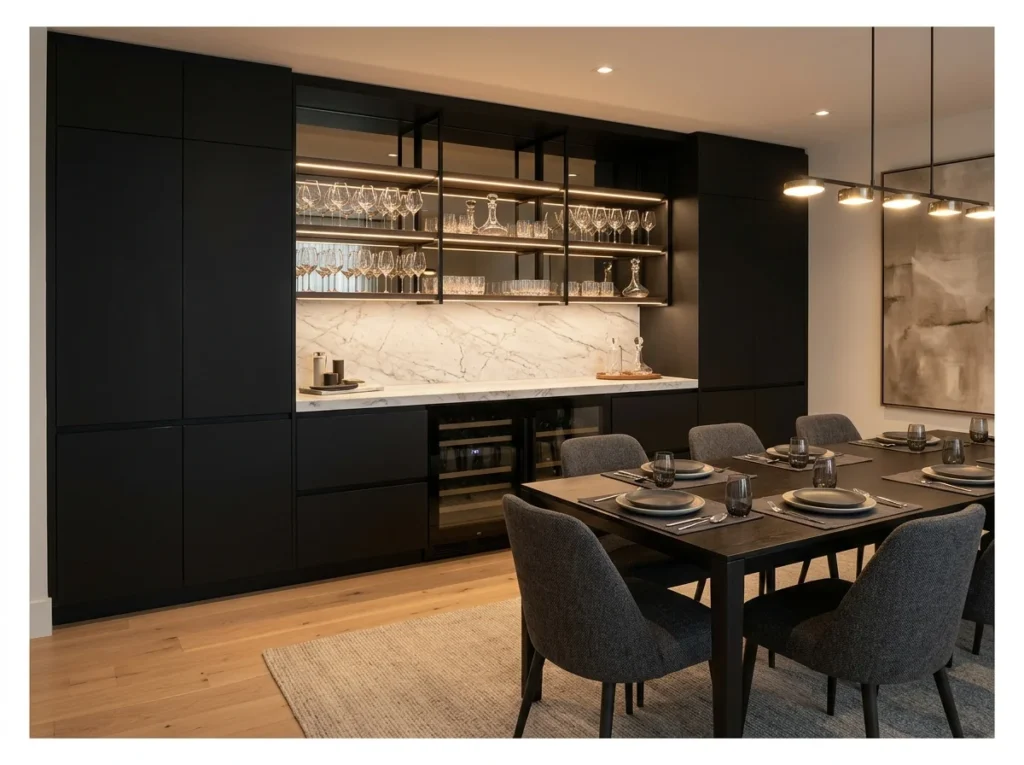
A built-in bar or sideboard along the dining room wall provides essential storage for tableware and serving pieces while creating an additional architectural feature that elevates the room beyond a table and chairs alone. The sideboard often becomes a secondary styling and display opportunity.
Matte black or warm walnut cabinetry with a stone or marble countertop section creates a sophisticated bar area that suits entertaining-focused modern dining rooms particularly well. Open shelving above the closed storage allows for an attractive glassware and ceramics display.
Indoor Plants as Sculptural Accents
Large leafy plants bring height and organic shape into a room full of straight furniture lines. This detail softens the space without needing additional artwork or decor. It suits a dining room wanting a bit of life alongside its main furniture pieces.
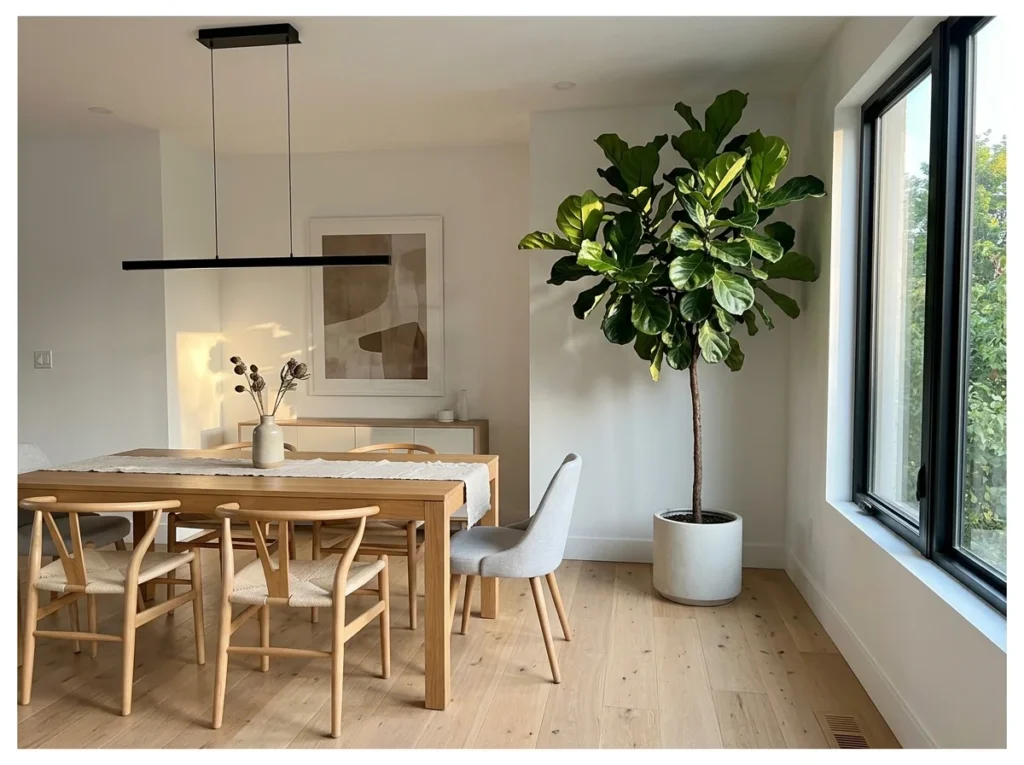
A single large, architecturally interesting plant positioned in the dining room corner introduces organic, living form that contrasts beautifully with the clean lines and hard surfaces that typically define modern furniture and architecture. The plant becomes a sculptural element in its own right.
Fiddle leaf figs, olive trees, and large monsteras all suit this statement plant role in modern dining rooms. Position the plant where it receives adequate light without obstructing circulation around the dining table, allowing it to genuinely thrive as a long-term room feature.
Fresh, alive, and genuinely sculptural.
If you want more color alongside the greenery, a fresher color story worth trying can shift the whole room’s mood.
Mixed Seating with a Bench
Swapping one side of chairs for a bench adds visual variety to the seating arrangement. This setup also makes it easier for guests to slide in without pulling out individual chairs. It suits a dining room wanting a slightly more casual, flexible feel.
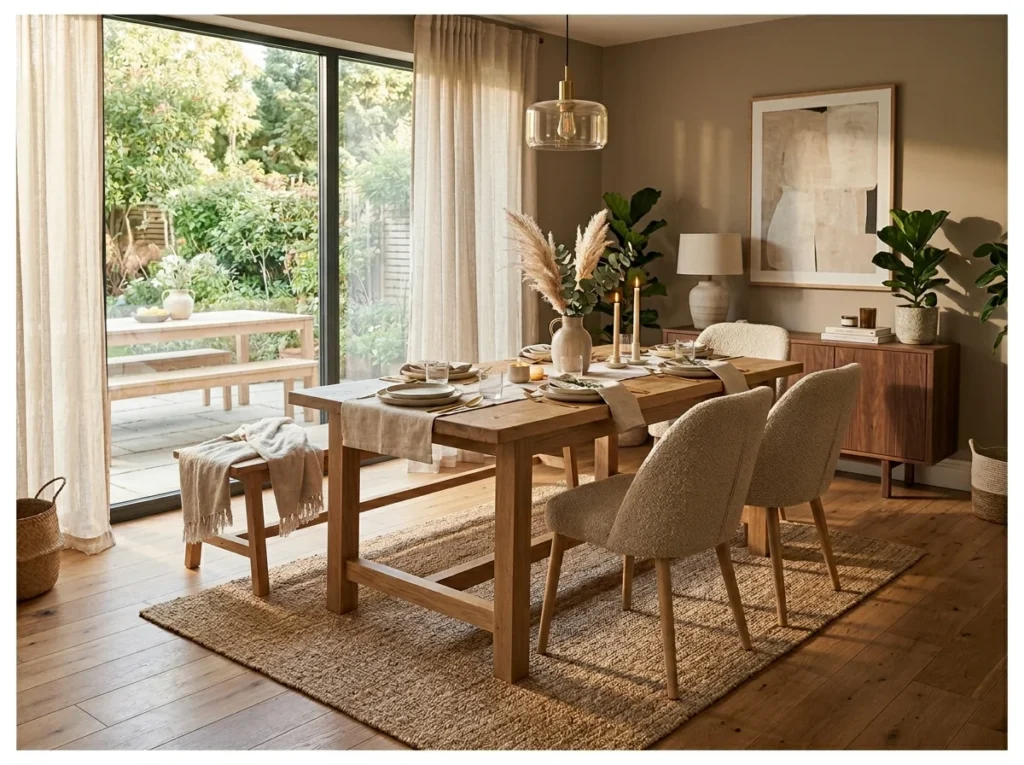
Combining a backless bench on one side of the dining table with upholstered chairs on the remaining sides creates a mixed seating arrangement that feels distinctly modern and relaxed compared to a uniform set of matching chairs around every side.
This configuration also provides genuine flexibility for accommodating additional guests, since a bench typically seats more people in the same linear space than individual chairs. The visual variety between the bench and chairs adds interest without sacrificing the room’s overall cohesion.
Textured Wall Treatment
Wall treatments like paneling or plaster add dimension that flat paint alone cannot offer. This detail catches light differently depending on the angle you view it from. It suits a dining room wanting depth and texture beyond just furniture and decor.
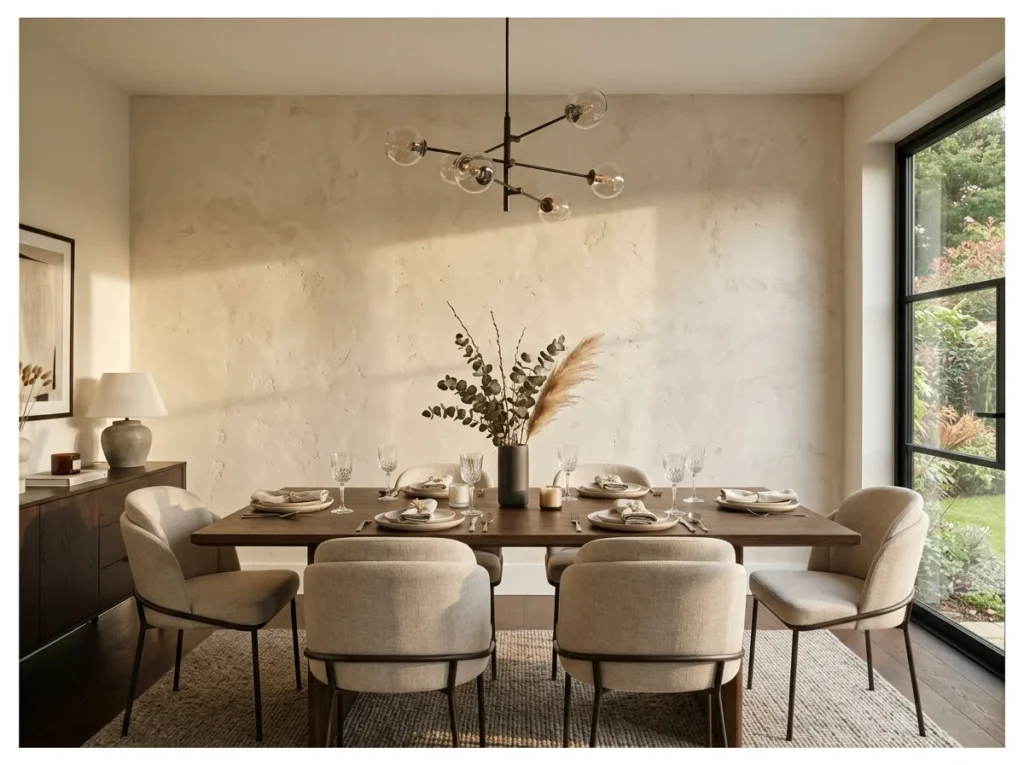
A textured plaster, limewash, or microcement wall treatment behind the dining table creates depth and material interest through surface texture rather than color or pattern. This approach suits modern dining rooms where bold color is undesired but a flat painted wall feels insufficiently considered.
The subtle variation in a textured wall surface catches light differently throughout the day and during evening dining, creating a backdrop with genuine dimension. This treatment is particularly effective in monochromatic modern dining rooms where texture must carry the visual interest that color would otherwise provide.
Dining Room Adjacent to Open Kitchen
An open layout keeps the dining room connected visually and functionally to the kitchen. This setup makes hosting easier since cooking and dining happen within the same sightline. It suits a home wanting a more social, connected everyday living arrangement.
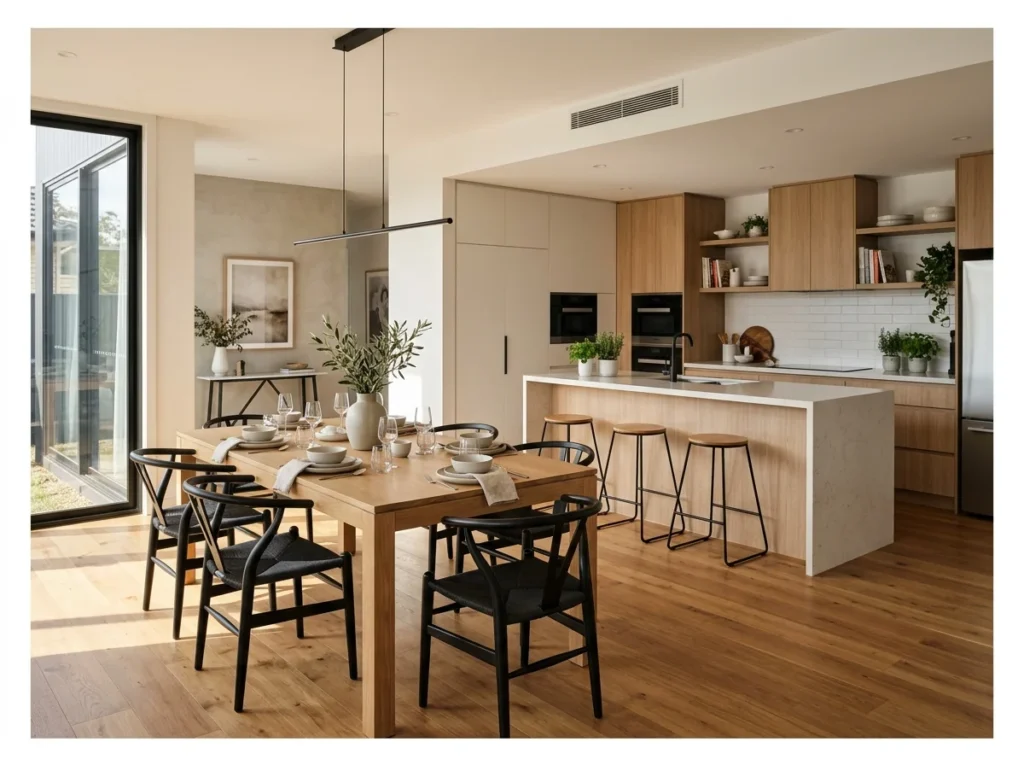
Designing the dining room as a visually and physically connected extension of an open-plan kitchen, rather than a separate enclosed room, reflects the genuinely modern approach to how households actually live and entertain in contemporary homes.
Maintaining a consistent material and color palette across both the kitchen and dining zones, even when they occupy distinct furniture arrangements, creates the cohesive flow that defines successful open-plan modern living. The dining table becomes a natural extension of the kitchen’s social and functional activity.
Conclusion
A genuinely elegant modern dining room balances restraint with warmth, clean lines with genuine material quality, and minimal decoration with at least one moment of real sculptural drama. Getting this balance right creates a room that feels sophisticated and current without ever feeling cold or showroom-sterile.
Start with the table and lighting decisions since these anchor every other choice in the room. Add chairs that contrast meaningfully with the table’s material and form. Layer in one statement art piece, one textile or rug with genuine character, and the lighting layers that make evening dining feel genuinely special.
The modern dining room that feels both elegant and genuinely livable is within reach with these deliberate, considered choices.
Bring it all together and you’ll have a dining room styled for everyday elegance, not just special occasions.