Bare dining room walls make the whole room feel unfinished no matter how beautiful the table and chairs are. The right wall decor transforms the space completely.
Of course, what surrounds the table matters just as much, and seating that pulls its own weight can elevate the whole room alongside your wall choices.
These ideas create dining rooms that are genuinely impressive and genuinely personal at the same time.
Let’s explore the ideas.
Gallery Wall of Mixed Framed Art
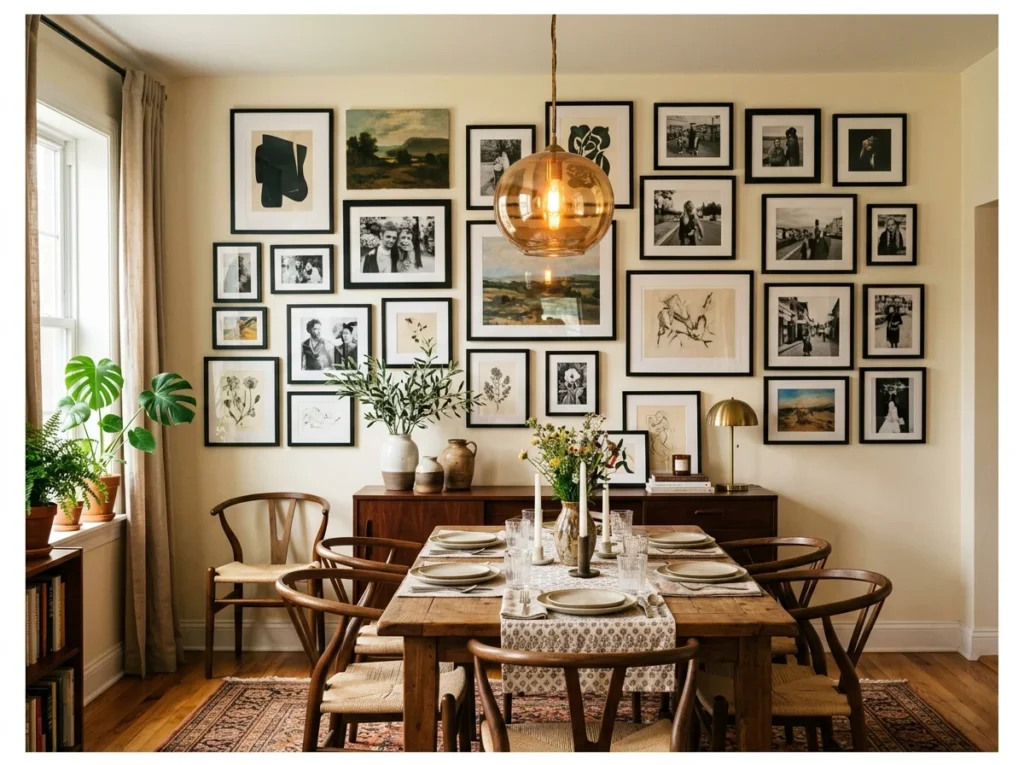
A gallery wall of mixed framed art groups several pieces together instead of relying on just one large print. Different frame sizes and styles mixed together give the wall a collected, personal feel over time. This works especially well in a dining room, where guests spend enough time seated to actually take it all in.
A gallery wall in the dining room uses a collection of framed prints, photographs, and artworks arranged in a composed grouping to create a wall that functions as the room’s primary visual statement. The variety of imagery and frame sizes creates visual richness that a single piece cannot achieve.
Use consistent frame colors, typically all black, all white, or all warm timber, while varying the print styles, subjects, and sizes within the collection. Lay the arrangement on the floor before hanging to find the right composition. Center the gallery arrangement above a sideboard or at the eye level of seated diners for the most effective positioning.
The dining room wall that tells a story.
Single Large Statement Artwork
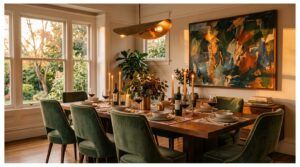
A single large statement artwork fills the wall on its own without needing smaller pieces around it. One bold print or painting can anchor the whole room, especially above a sideboard or empty stretch of wall. This approach tends to feel calmer than a gallery wall since there is only one focal point to look at.
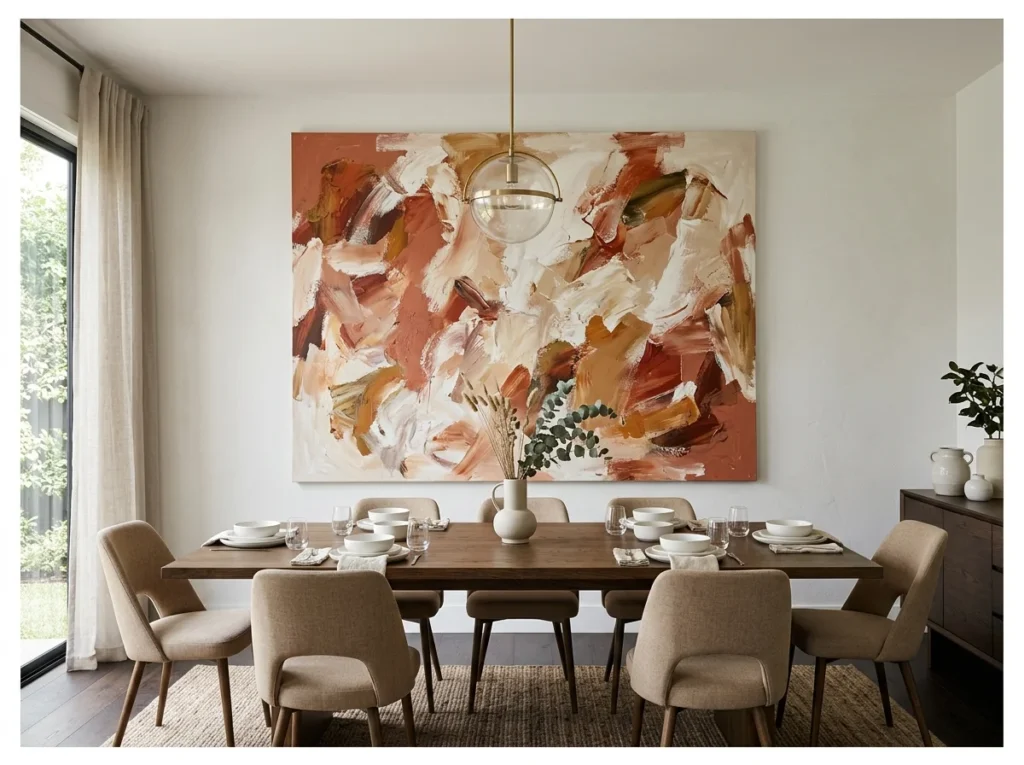
One single oversized artwork hung on the main dining room wall makes a bolder and more confident statement than multiple smaller pieces competing for attention in the same space. The scale of a large artwork commands the room and creates an instant focal point that anchors the entire dining experience.
A canvas or framed print that measures at least 80 centimeters wide, and ideally 100 centimeters or larger, in a dining room works much better than a standard-sized print that looks proportionally too small for the wall. When in doubt, choose bigger. Most dining room artwork mistakes involve pieces that are too small rather than too large.
Decorative Mirror
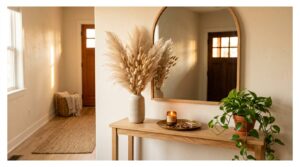
A decorative mirror on the dining room wall reflects light and makes the space feel a bit larger than it is. An interesting frame shape, whether round, arched, or ornate, adds character even without anything else on the wall. Placing it across from a window also helps bounce natural light further into the room.
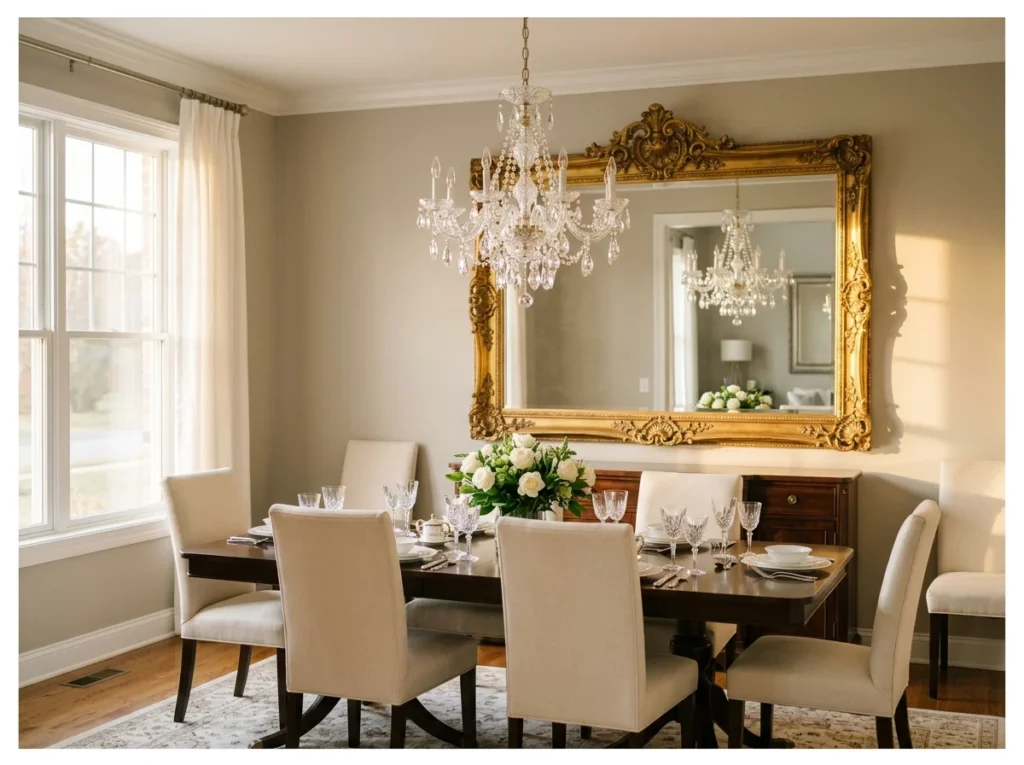
A large decorative mirror on the dining room wall reflects light, amplifies the sense of space, and creates the illusion of a second room beyond the wall. In a dining room this creates a visual depth and brightness that no artwork or print can replicate.
A round mirror with an architectural plaster frame, a rectangular mirror with a slim brass frame, or an ornate vintage-style mirror all work beautifully depending on the dining room’s style direction. Position the mirror to reflect the most beautiful element of the room: the chandelier, the window, or the dining table itself.
Perfect for small dining rooms.
Small footprints call for a bit of creativity, and layout tricks for compact rooms can help you make the most of every corner.
Accent Wall in a Bold Color
An accent wall in a bold color gives the dining room a clear focal point without repainting the entire space. Deep greens, navy, or terracotta are popular choices since they pair well with wood furniture and warm lighting. This approach works particularly well behind a table, where the color becomes the backdrop for every meal.
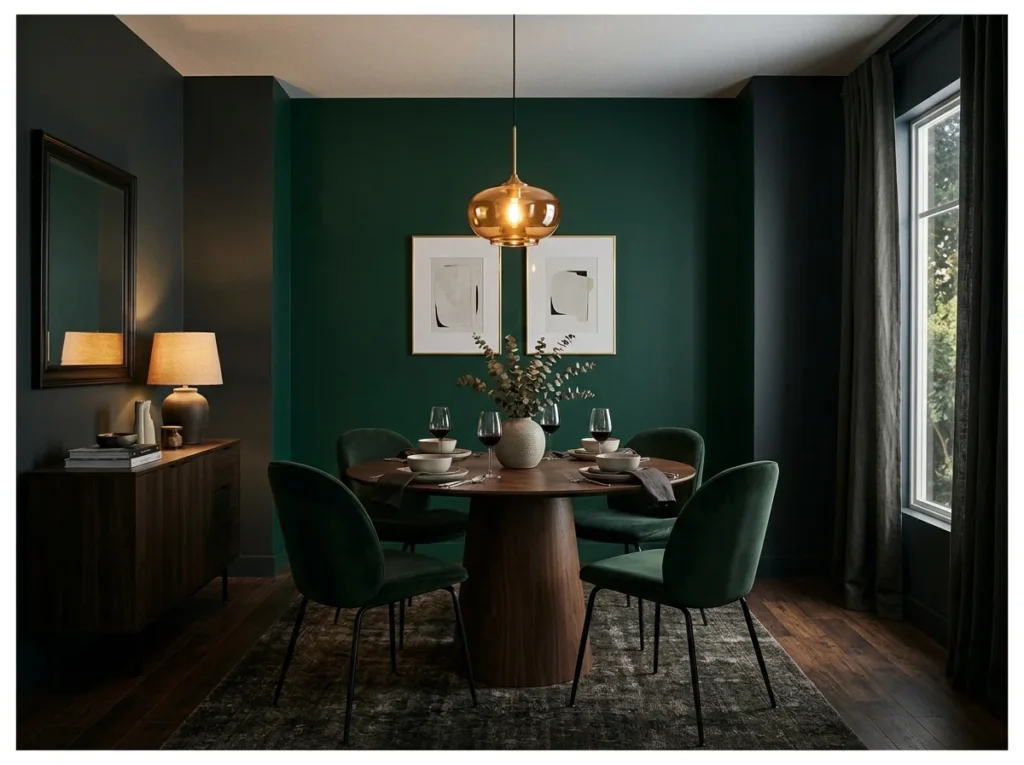
A single boldly painted accent wall in the dining room creates dramatic atmosphere and a clear focal point without requiring any additional wall decor. The color itself does the work. Deep forest green, terracotta, charcoal, navy, or dusty plum all create distinctly different but equally beautiful dining room atmospheres.
If deep green is calling to you, a fresh coat of green everywhere might be the direction worth exploring for the whole room.
Painting only one wall, the wall behind the head of the table or the wall opposite the main seating view, is enough to transform the entire dining room. The contrast between one bold wall and three neutral walls creates the architectural quality that makes painted accent walls so effective in dining spaces.
Wainscoting or Panel Molding
Wainscoting or panel molding adds texture to the lower half of a dining room wall. Painted white or a soft neutral, it brings a traditional, slightly formal feel to the space. This detail also helps protect walls from chair scuffs, which matters in a room that sees regular use.
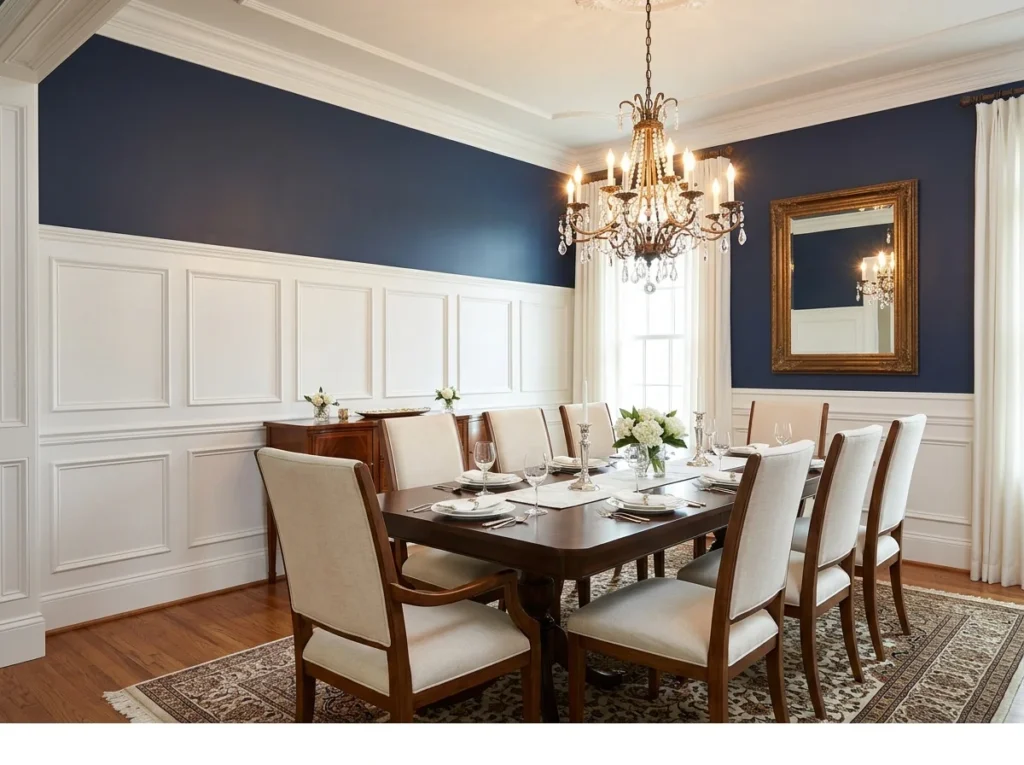
Wainscoting or decorative panel molding applied to the dining room walls adds architectural character that painted walls alone cannot create. The chair rail divides the wall into two distinct zones and the panel detail below adds texture, depth, and a sense of quality that makes the room feel genuinely considered.
Painted white wainscoting with a deeper color above the chair rail is the most classic and consistently beautiful combination. Alternatively, panel molding installed in rectangular patterns on a single-color wall creates the same layered, architectural quality in a simpler execution. The result adds permanent value to the home as well as visual beauty to the dining room.
Timeless character that never dates.
Floating Shelves with Styled Objects
Floating shelves in a dining room hold styled objects like vases, books, or small art pieces without taking up floor space. Arranging items at different heights across the shelves keeps the display from looking too uniform. This setup also gives you an easy way to swap decor by season without repainting or rehanging anything.
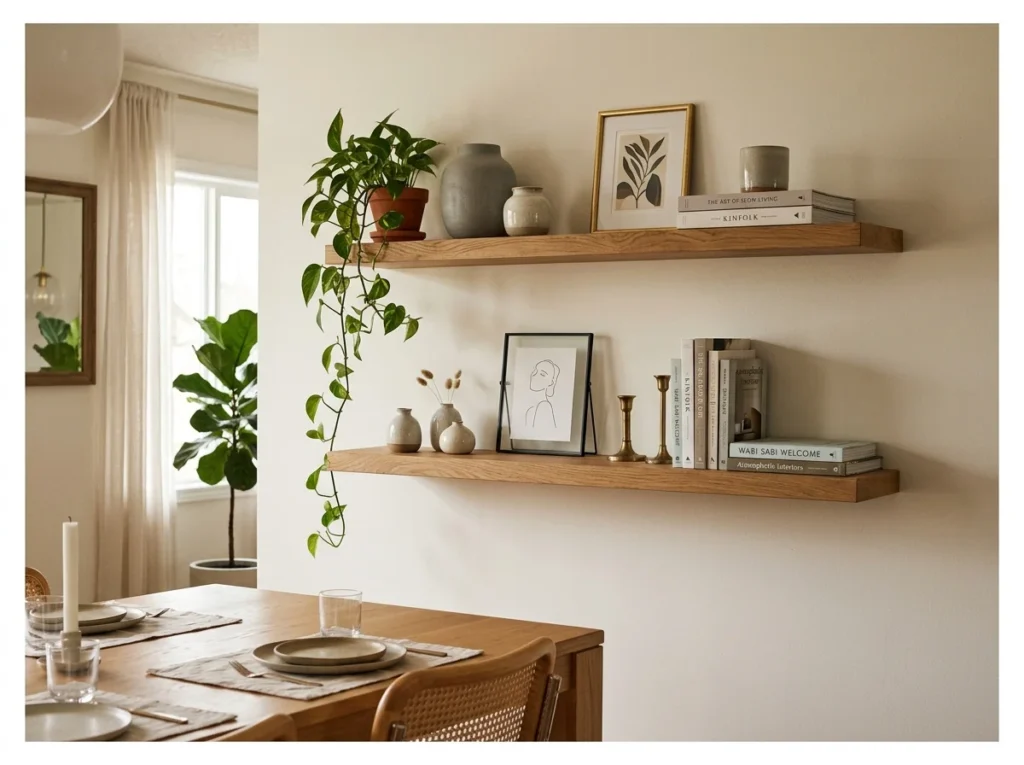
Floating shelves in the dining room create a wall feature that combines decorative display with genuine storage functionality. Unlike artwork that can only be looked at, styled shelves can hold wine glasses, candlesticks, serving items, and meaningful objects that contribute to both the room’s aesthetics and its practical use.
Two or three floating shelves of the same material, positioned at evenly spaced heights above a sideboard or on an adjacent wall, create a composed vertical display. Style each shelf with a mix of heights: a tall vase, a mid-height framed print, a low candle grouping, and a trailing plant for the most natural-looking arrangement.
Getting that balance right is easier once you’ve seen how storage that doubles as display works in other rooms of the house.
Wallpaper Feature Wall
A wallpaper feature wall brings pattern and color to a dining room without covering every wall in the room. Botanical prints or geometric designs are common choices that pair well with a dining table setting. This approach adds visual interest while still keeping the rest of the room fairly neutral.
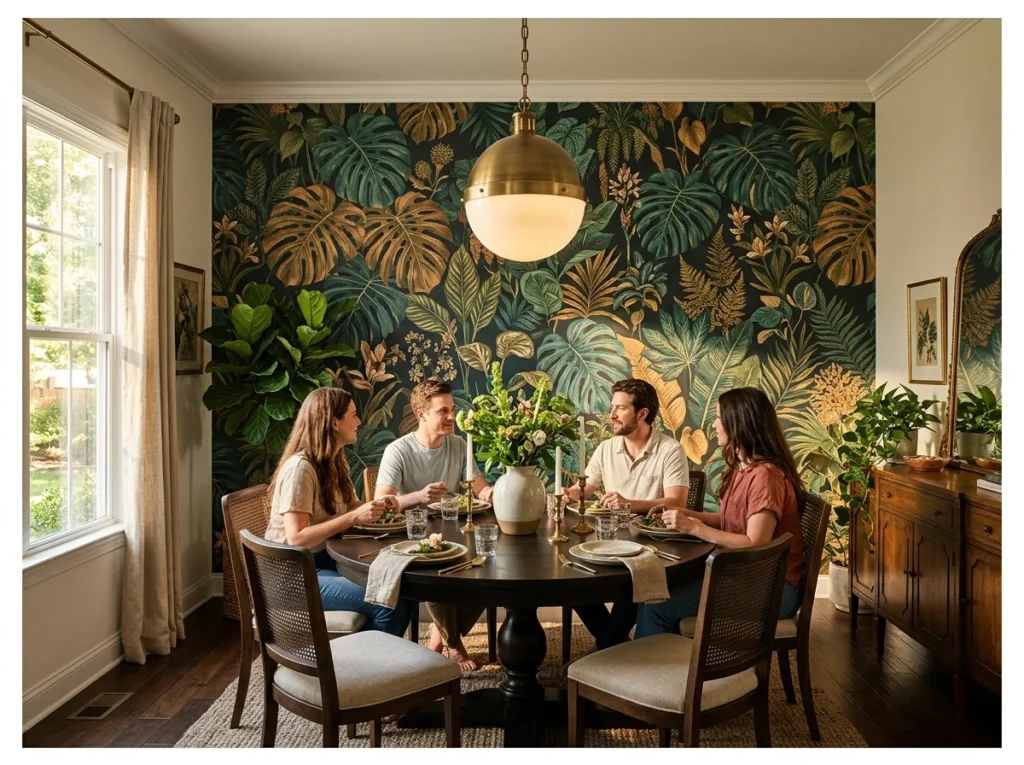
A wallpaper feature wall is the highest-impact single dining room wall treatment available. Applied to one wall only, a richly patterned wallpaper creates an immersive visual depth that paint alone cannot achieve and immediately establishes the entire dining room’s aesthetic character.
Botanical prints, geometric patterns, abstract art wallpapers, and painterly landscapes all work beautifully in dining rooms. Apply the wallpaper to the wall most visible from the main seating position or behind the head of the table for the most dramatic effect. Paired with simple, complementary walls on the other three sides the feature wall commands without overwhelming.
The wall treatment with the most instant impact.
Hanging Macrame or Woven Textile
A hanging macrame or woven textile adds texture to a dining room wall that flat art alone cannot really replicate. The knotted, organic shapes bring a relaxed, handmade feel to an otherwise formal room. This piece works especially well in dining spaces that lean toward a boho or natural design style.
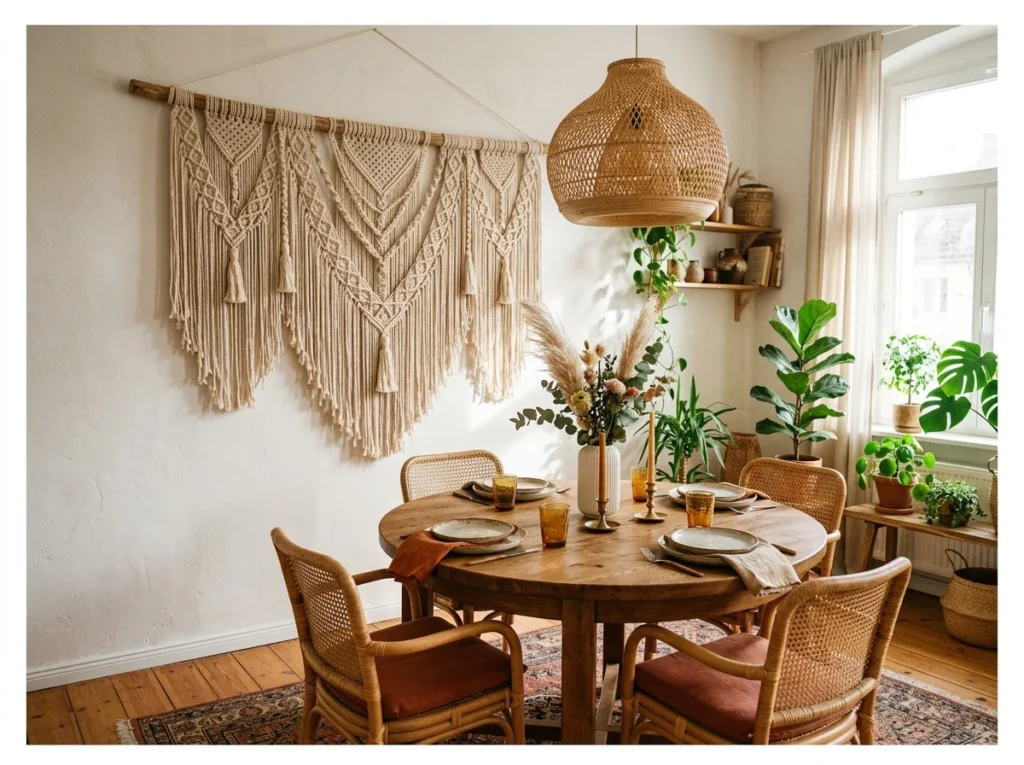
A large handwoven macrame or woven textile wall hanging adds organic warmth and artisanal character to the dining room wall that framed art cannot replicate. The natural fiber textures create a soft, dimensional surface that catches light beautifully and brings warmth into the room from above table height.
Macrame suits bohemian, coastal, farmhouse, and organic modern dining room styles. A piece that spans at least two thirds of the wall width and hangs to approximately table height above the table creates the most proportionally balanced installation. Handmade textiles from independent makers add the one-of-a-kind quality that makes this wall treatment genuinely special.
Plate Wall Display
A plate wall display arranges decorative plates directly on the wall instead of tucking them away in a cabinet. Mixing patterns, sizes, and colors gives the display a collected, vintage character over time. This idea works particularly well in dining rooms, since plates already tie naturally into the room’s purpose.
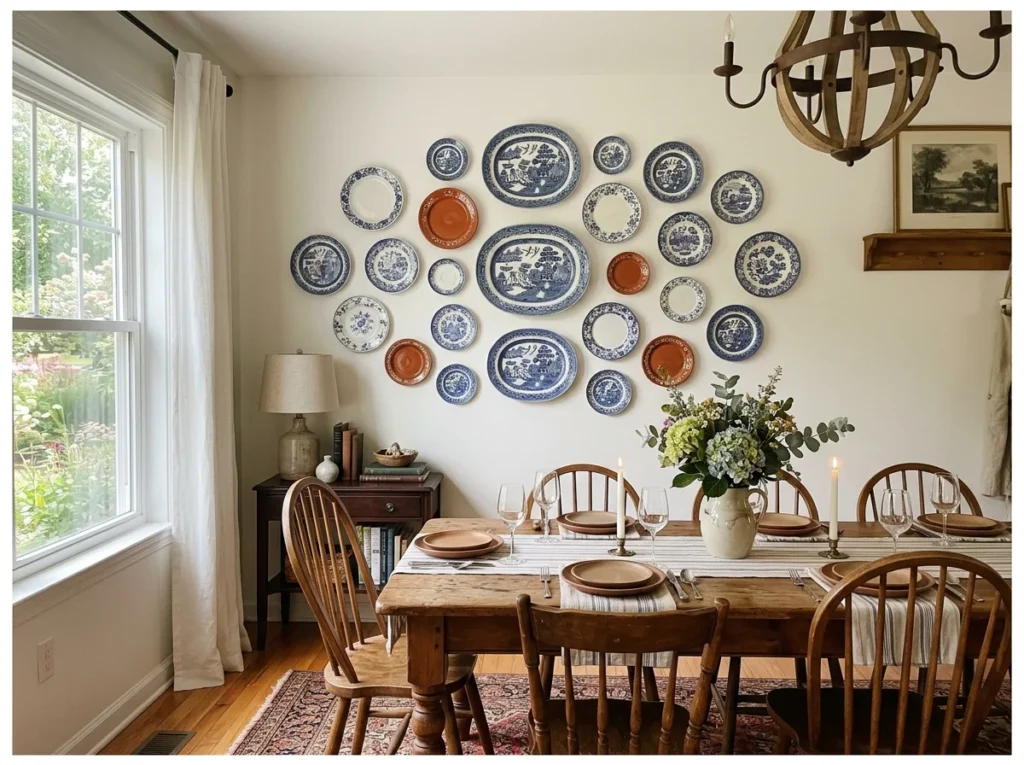
A curated plate wall display uses a collection of decorative or vintage ceramic plates mounted on the dining room wall to create a composed arrangement that references the dining function of the room while adding genuine visual character. Plates hung at varying heights and in organic groupings create a collected, personal quality.
Choose plates within a consistent color story: all blue and white with terracotta accents, all neutral earthy tones, or all black and cream. The color consistency creates cohesion while the variety in pattern and size creates interest. Plate wall hangers mount invisibly from behind the plate and hold each piece securely.
Architectural Wall Niche
An architectural wall niche is built directly into the wall, creating a recessed spot for art or small decor. This feature adds dimension to an otherwise flat wall without needing anything hung on top of it. A small light placed inside the niche can also highlight whatever object is displayed there.
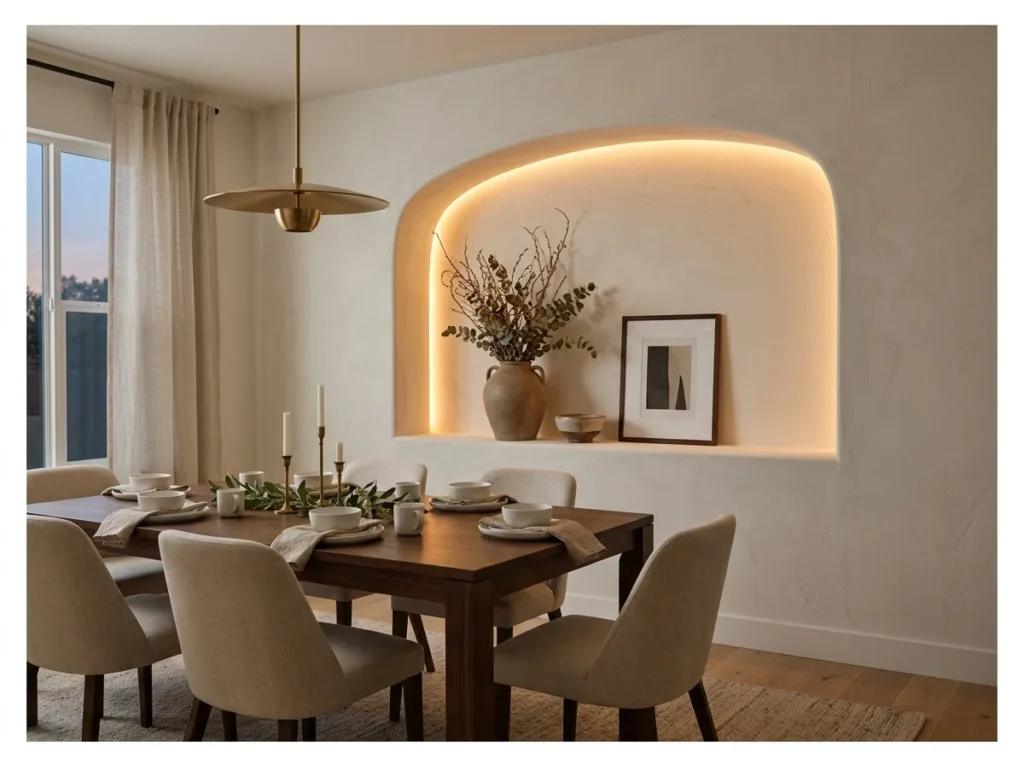
A recessed wall niche creates an architectural display space that adds genuine three-dimensional depth to a dining room wall. The niche frames a curated display and the recessed position gives the contents a jewel-box quality that no surface-mounted display can achieve.
Even a shallow niche of 10 to 15 centimeters creates significant visual depth. Fitting the niche with LED strip lighting that illuminates the display from above or below transforms it into a dramatic focal point after dark. A single large sculptural vase, a stack of beautiful books, or a group of ceramic vessels all display beautifully within a niche.
Greenery and Botanical Art
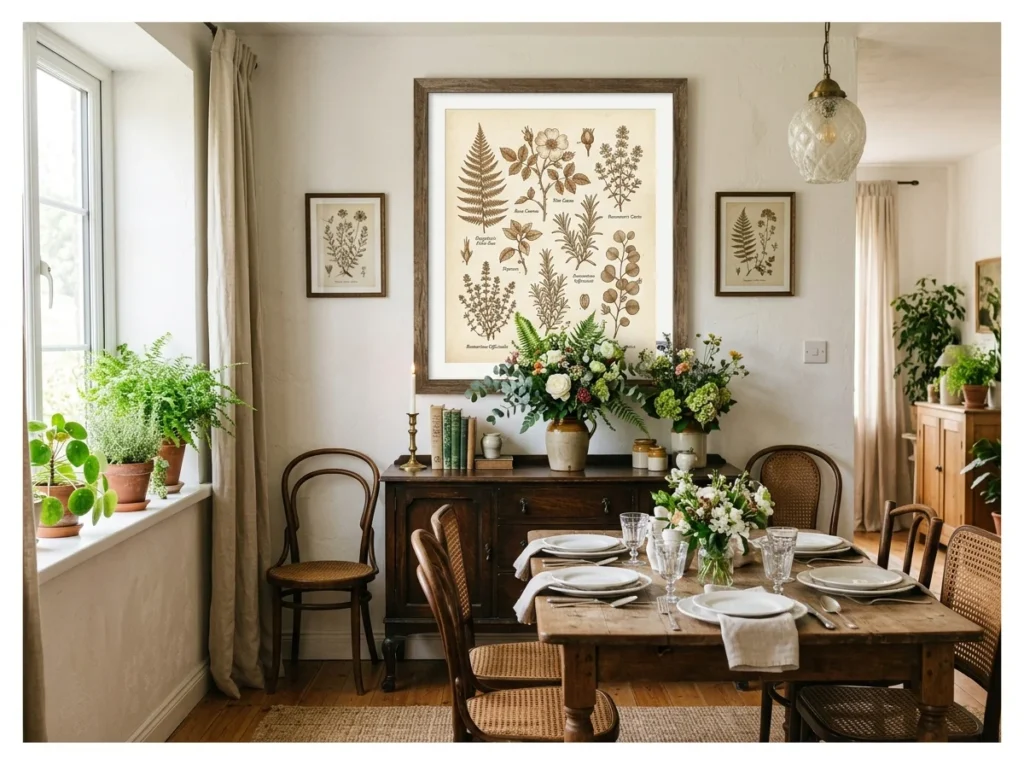
Greenery and botanical art bring a natural, calming element to dining room walls. Framed leaf prints or pressed botanicals pair well with an actual plant placed nearby on a shelf or table. This combination works especially well in dining rooms that already lean toward an earthy color palette.
Botanical art, including large framed herbarium prints, vintage plant illustrations, leaf studies, and oversized pressed botanical specimens in frames, creates a dining room wall decor theme that connects the room to nature and suits every design style from traditional to contemporary.
Large vintage herbarium prints in sepia or black and white on a cream background create a scholarly, refined quality. Contemporary botanical illustrations in vivid green on white create a fresher, more modern effect. Either approach suits a dining room where the warmth and growth quality of plant imagery adds an organic dimension to the formal dining setting.
Fresh, timeless, and universally beautiful.
Framed Menu or Chalkboard
A framed vintage menu or chalkboard adds a bit of personality and function to a dining room wall. A chalkboard in particular can be updated with a weekly meal plan or a quote for guests to see. This idea works well for anyone who wants their dining room decor to feel a little more playful and less formal.
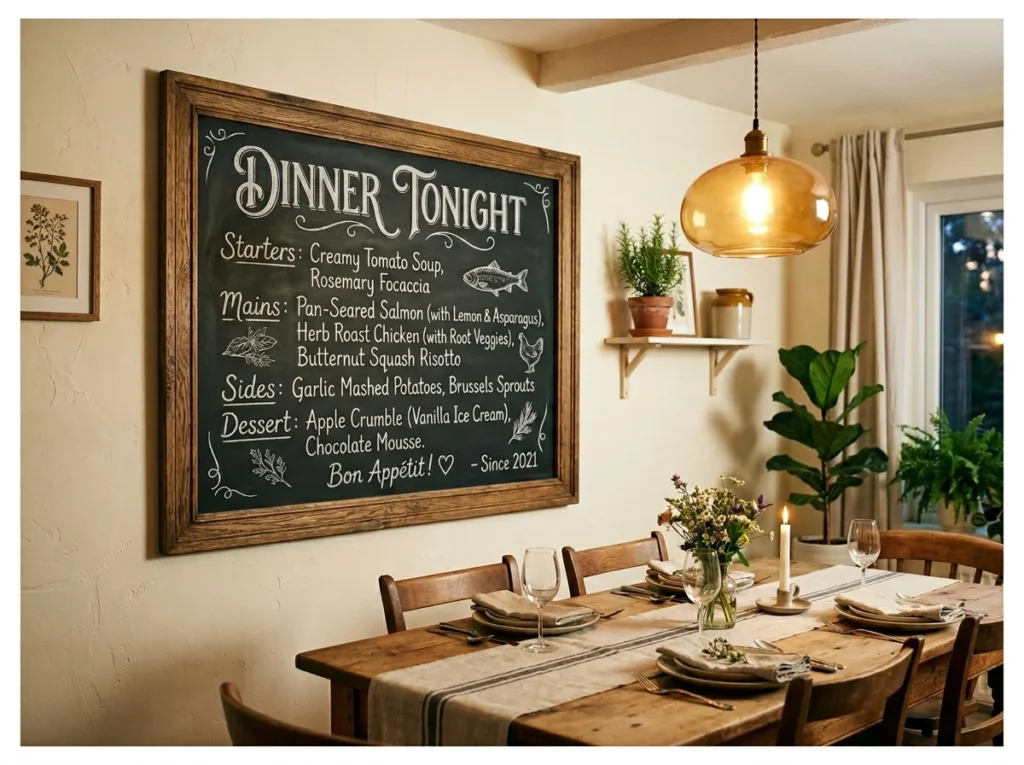
A large framed menu board or chalkboard on the dining room wall creates an interactive, hospitality-inspired wall feature that can be changed for every dinner occasion. A handwritten menu for the evening immediately transforms a family dinner into something that feels genuinely special.
A large ornate-framed chalkboard or a simple blackboard painted directly onto a wall section both work effectively. For everyday use the board can display a favorite quote, a weekly meal plan, or simply a word or phrase that sets the tone for the dining room. For dinner parties a handwritten menu creates an instantly memorable touch.
The dining room wall that changes for every occasion.
Sconce Lighting as Wall Decor
Sconce lighting doubles as both a light source and a decorative wall feature in a dining room. Placed on either side of a mirror or artwork, sconces add symmetry and a warm, ambient glow. This approach works particularly well in rooms where overhead lighting alone feels too harsh for dinner.
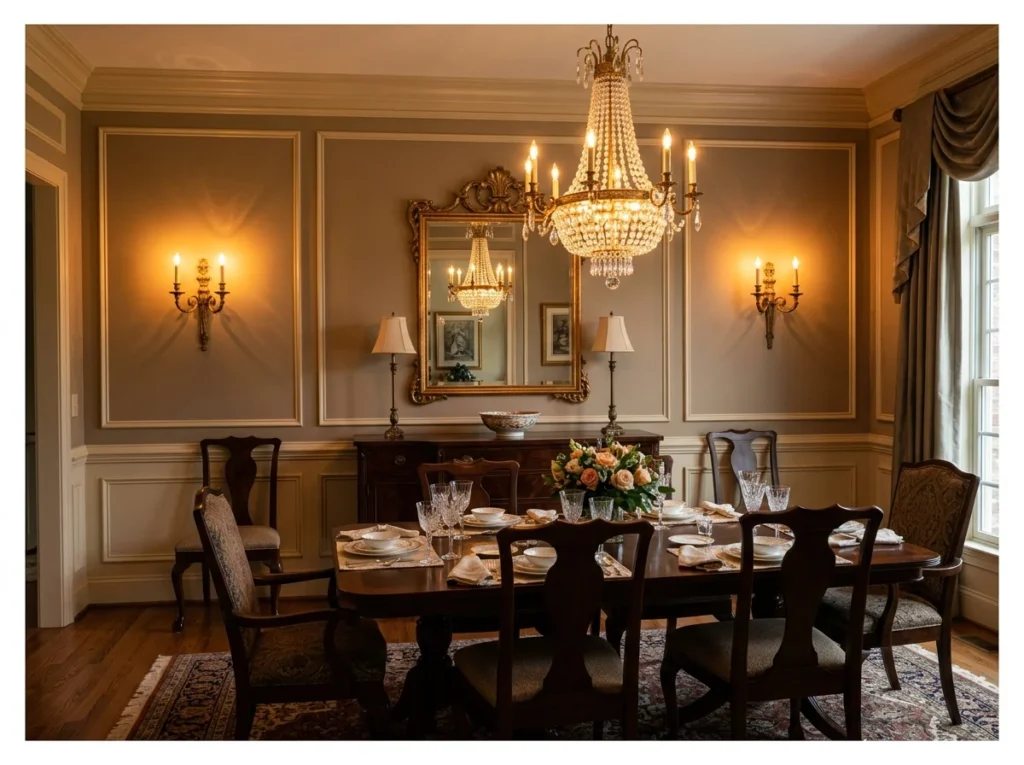
Wall sconces installed symmetrically on the dining room wall serve simultaneously as decorative objects and as a functional secondary lighting layer. A pair of sconces on the main wall creates a formal, balanced composition while contributing warm ambient light that improves the dining atmosphere significantly.
The fixture style of the sconce should complement the dining room’s design direction: candle-style sconces suit traditional and transitional rooms, geometric metal sconces suit contemporary and modern rooms, and rattan or ceramic sconces suit organic and coastal settings. All create the same warm, layered lighting effect that elevates any dining room.
Getting that layered effect right often comes down to the fixtures themselves, so it helps to see a softer glow around the table done well before you shop.
Wood Paneling or Shiplap
Wood paneling or shiplap brings warmth and texture to a dining room wall that plain drywall often lacks. Painted white, it can brighten the room while still adding visual interest through the horizontal lines. Left in a natural wood tone, it leans more toward a rustic or farmhouse dining room style.
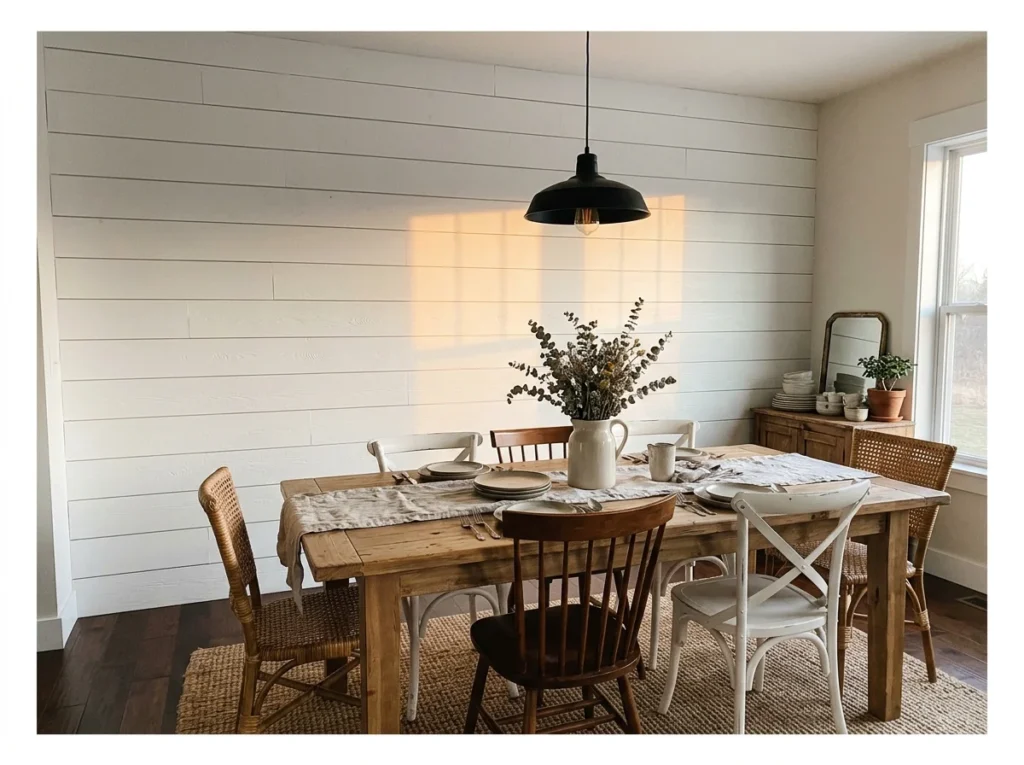
Wood paneling or shiplap installed on one or all dining room walls adds warm natural material texture that painted drywall cannot replicate. The horizontal lines of shiplap create a strong visual rhythm that makes the dining room feel deliberately and beautifully designed.
Painted white, shiplap creates a clean farmhouse or coastal aesthetic. Left in its natural timber tone, paneling creates a warm, organic dining room with a slightly more rustic character. Even a single shiplap accent wall behind the head of the table creates significant visual impact without requiring a full room treatment.
That shiplap look pairs naturally with farmhouse charm for the whole room if you want the rest of the space to match.
Oversized Clock
An oversized clock on a dining room wall works as both a functional piece and a strong visual anchor. Its large scale fills space that would otherwise need several smaller decor pieces to balance out. A simple black or metal frame tends to suit a wide range of dining room styles.
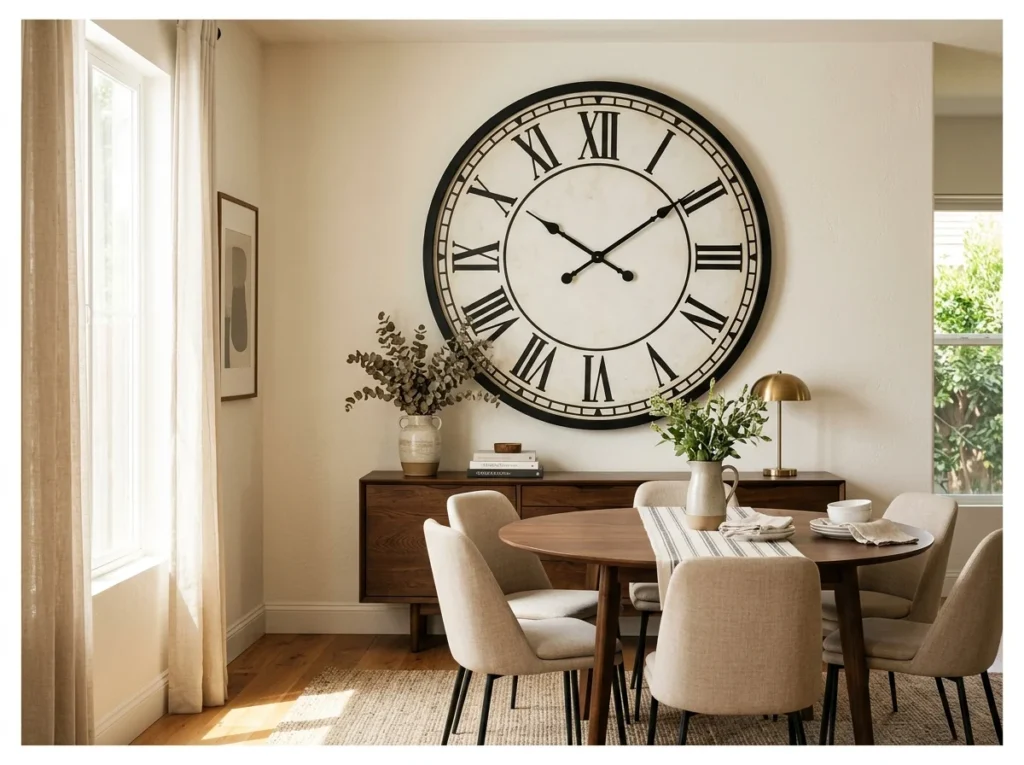
An oversized decorative clock mounted on the dining room wall functions as both a practical timepiece and a dramatic piece of wall art. The scale is what makes this work: a clock measuring 60 to 90 centimeters in diameter commands a dining room wall with genuine visual authority.
Black metal frames with clean white or Roman numeral faces suit contemporary and transitional dining rooms. Aged metal with distressed faces suit farmhouse and vintage rooms. Brass or gold tones suit glamorous and art deco inspired spaces. The oversized scale creates a wall feature with genuine presence that smaller decorative objects cannot approach.
Budget-friendly option with strong visual impact.
Sculptural Wall Art
Sculptural wall art adds dimension to a dining room in a way flat prints or paintings cannot. Metal, wood, or ceramic pieces with raised texture catch light differently depending on the time of day. This approach works especially well as a single statement piece rather than part of a larger gallery wall.
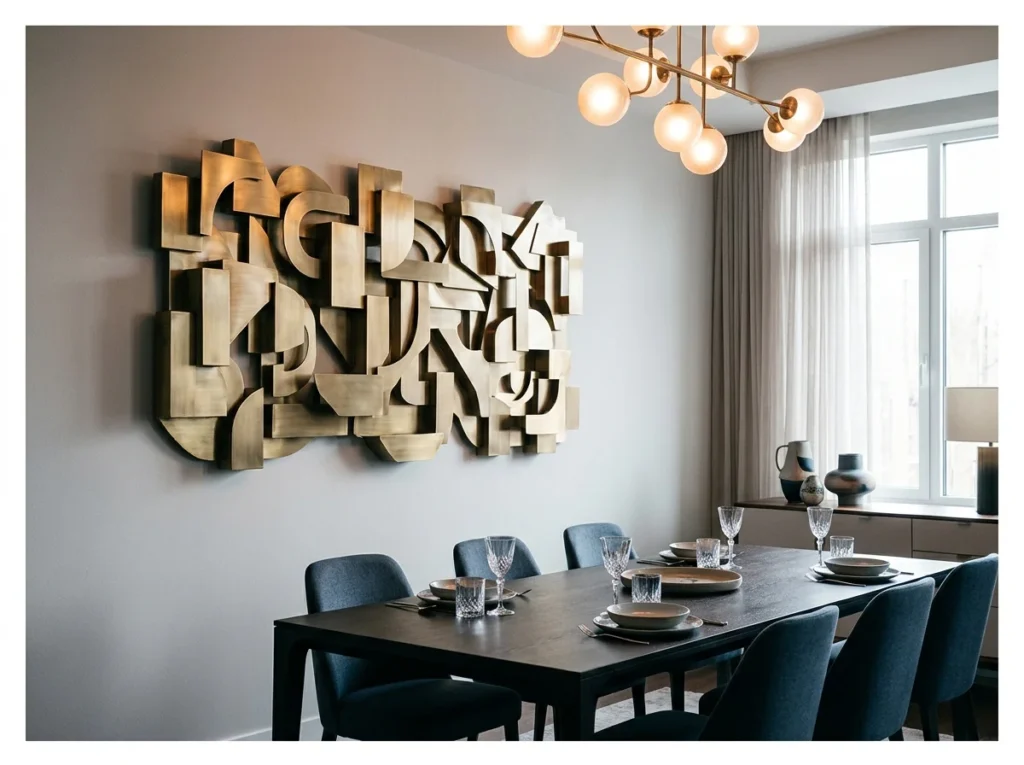
Sculptural wall art goes beyond flat framed prints to create three-dimensional wall features that cast shadows, interact with light throughout the day, and create genuine visual depth on the dining room wall. Metal sculptures, ceramic wall pieces, plaster relief works, and woven wall installations all qualify.
Sculptural art suits dining rooms where a bold, contemporary, or sophisticated design statement is the goal. A large metal wall sculpture in brushed brass or black iron creates a genuinely architectural quality on the dining room wall that changes character as light conditions shift throughout the day and evening.
The wall treatment that creates genuine depth and drama.
Conclusion
A beautifully decorated dining room wall creates the backdrop for every meal, every gathering, and every conversation that happens in that space. It deserves the same level of thought and care as any other design decision in the home.
Start with the one idea from this list that most resonates with your dining room’s scale, existing furniture, and your personal aesthetic. Scale your choice appropriately to the wall and furniture dimensions, position it at the right height, and add the secondary lighting if the idea calls for it.
The dining room you want to invite people into is one good wall decision away from becoming exactly that.
For more inspiration on pulling the whole room together, an elegant finish worth copying is a great place to start.