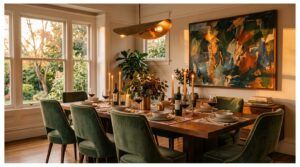
The wrong dining room light makes every meal feel ordinary. The right one makes even a Tuesday dinner feel like a special occasion.
These ideas cover every style, ceiling height, and budget so your dining room finally has the lighting it deserves.
Once the light is right, a full dining room refresh worth exploring can help the rest of the space catch up.
Let’s explore the ideas.
Large Rattan Pendant Light
A large rattan pendant brings a natural, woven texture that most metal or glass fixtures can’t offer. The open weave lets light filter through in a soft, dappled way rather than a direct glow. This style works especially well over dining tables in homes leaning toward a relaxed, organic look.
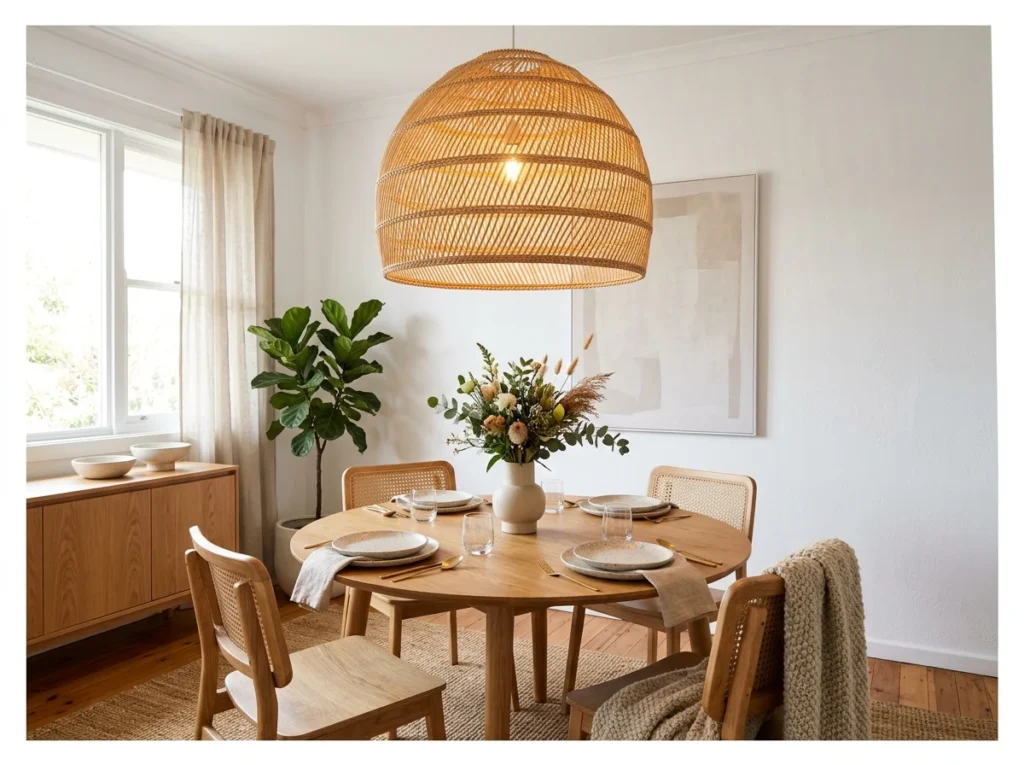
A large rattan pendant light hung above the dining table creates instant warmth and organic texture that completely transforms the feel of the room. The woven natural fibers cast beautiful dappled light patterns across the table and ceiling while providing a soft, diffused downward glow.
Oversized rattan pendants work beautifully in coastal, bohemian, Japandi, and contemporary interior styles. Size matters significantly with rattan pendants, a 60 to 80 centimeter diameter pendant over a four-person round table looks proportionally correct and creates genuine visual impact. Smaller sizes disappear and fail to deliver the statement quality this style is known for.
Warm, natural, and endlessly popular on Pinterest.
Linear Multi-Pendant Over a Long Table
This fixture uses several pendants mounted along a single bar, spaced evenly above a long table. It solves the lighting problem for rectangular tables better than a single centered fixture would. Each pendant can usually be adjusted to slightly different heights for a bit of visual variation.

A linear row of two, three, or four identical pendants hung at the same height over a long rectangular dining table illuminates the full length of the table evenly while creating a composed, intentional ceiling feature. The spacing of pendants should follow the table length with approximately 60 centimeters between each fixture.
This configuration suits modern farmhouse, industrial, and contemporary dining rooms particularly well. Matching shades in black, white, or brass create visual rhythm without complexity. The repetition of identical forms along the length of the table creates an ordered, designed quality that a single centered pendant cannot achieve.
Pair the fixture with chairs that complete the table setting and the whole room will feel pulled together.
Chandelier with Warm Bulbs
Warm toned bulbs, usually in the 2700K range, give a chandelier a softer glow than standard daylight bulbs. This makes a big difference in dining rooms since warm light tends to be more flattering during meals. Even a simple chandelier design looks noticeably cozier once the bulb temperature is right.

A traditional multi-arm chandelier fitted with warm amber Edison bulbs creates the most classic and consistently beautiful dining room lighting combination. The upward and outward light from multiple exposed bulbs creates a warm, enveloping glow that flatters everyone seated at the table.
The key to making a chandelier look contemporary rather than dated is the bulb choice. Warm amber LED Edison bulbs in 2200K to 2700K color temperature create genuine warmth. Cool white bulbs in the same chandelier produce a harsh, clinical light that no amount of design quality can overcome. Always specify the bulb temperature when purchasing chandelier fixtures.
The timeless dining room lighting choice that never fails.
Cluster of Hanging Pendants
Grouping several pendants of different sizes together creates a more layered look than a single fixture. This works well over kitchen islands or smaller dining tables where one large chandelier might feel too heavy. Mixing pendant heights within the cluster adds extra dimension to the arrangement.
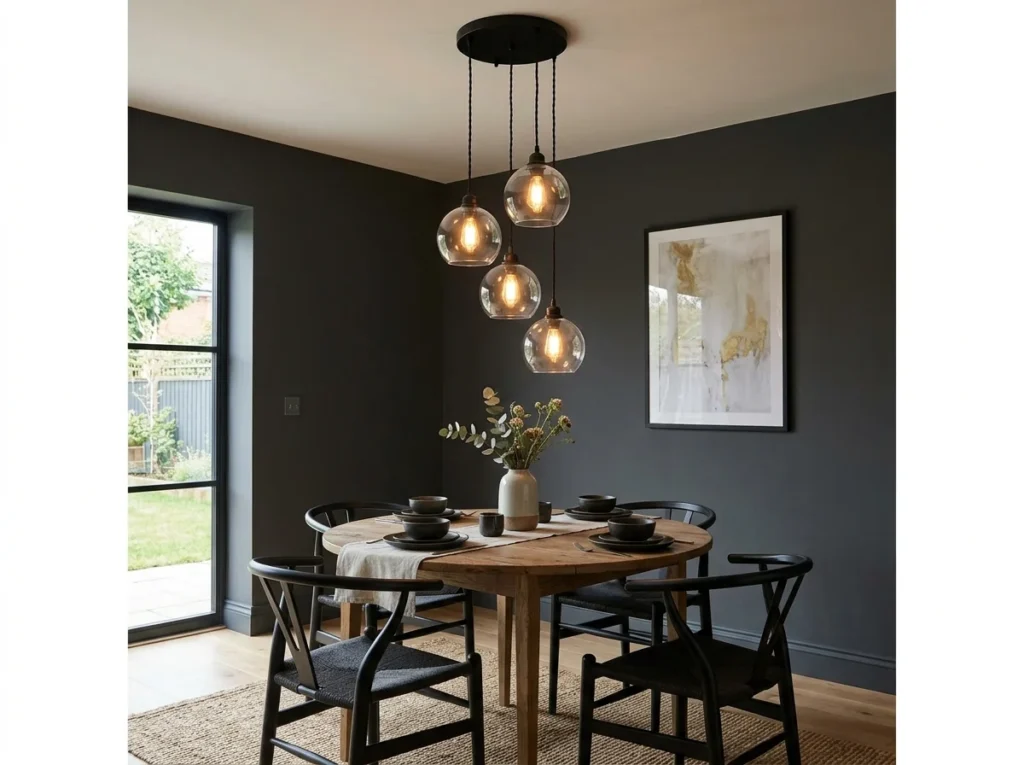
A cluster of multiple pendant lights suspended at varying drop heights from a central ceiling canopy creates a sculptural overhead installation that functions as the room’s primary art piece as much as its light source. The varied heights create visual depth and interest that a uniform arrangement cannot achieve.
Glass globe, ceramic cone, or fabric drum shades all suit the cluster configuration well when used consistently across all pendants. Using the same shade style at different heights looks intentional. Mixing different shade styles at different heights looks unsettled. Three to seven pendants in a cluster over a round dining table creates the most balanced composition.
If you haven’t settled on furniture yet, a table shape worth building around can help you choose the pendant scale first.
Drum Shade Pendant
A drum shade wraps light in a cylindrical form, which softens the glow compared to an open bulb. Fabric shades diffuse light more gently, while metal ones cast slightly sharper shadows. This style tends to suit more traditional or transitional dining rooms.
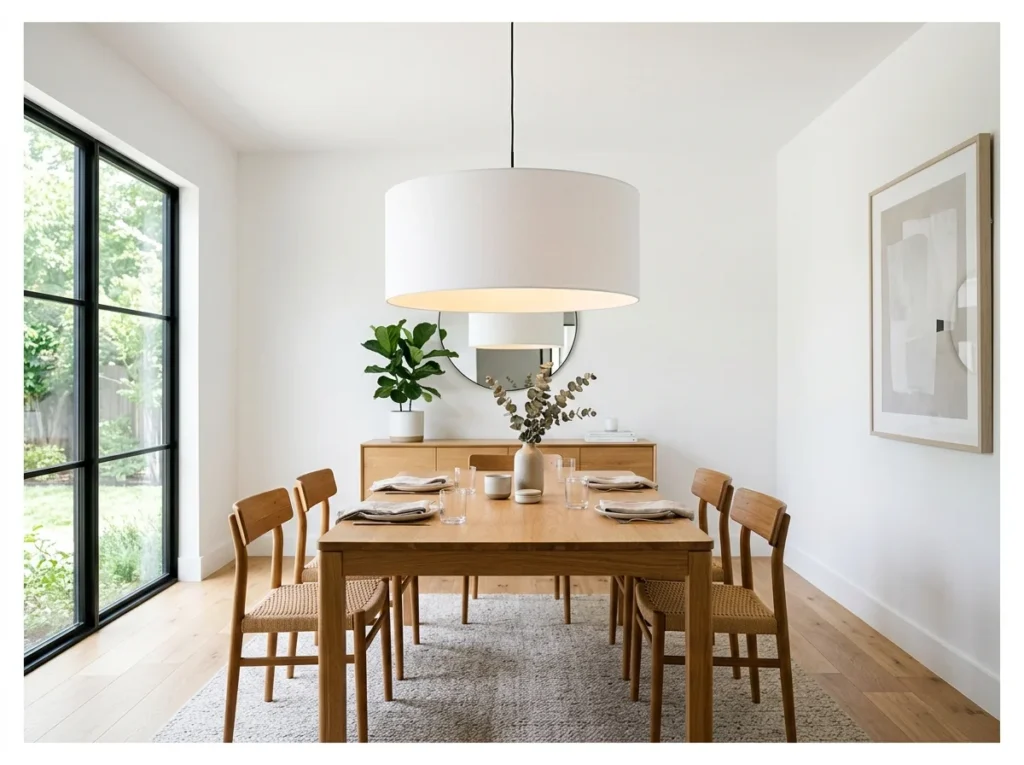
A large drum shade pendant in a neutral tone provides the cleanest and most versatile dining room lighting solution available. The cylindrical shade directs light downward in an even circle that illuminates the entire table surface without creating harsh shadows or unwanted glare.
Drum shade pendants in white linen, off-white cotton, or black fabric suit every interior style from traditional to contemporary. Size the drum shade to approximately two thirds the width of the dining table for the best visual proportion. A 50 to 70 centimeter diameter drum shade suits most standard rectangular dining tables well.
Clean, simple, and works with absolutely everything.
Industrial Edison Bulb Pendant
Edison bulbs are left exposed here, with their visible filament acting as part of the design itself. Black or bronze metal fixtures usually pair with this bulb style for a slightly raw, unfinished look. This combination fits well in dining rooms with brick walls or other industrial elements already present.
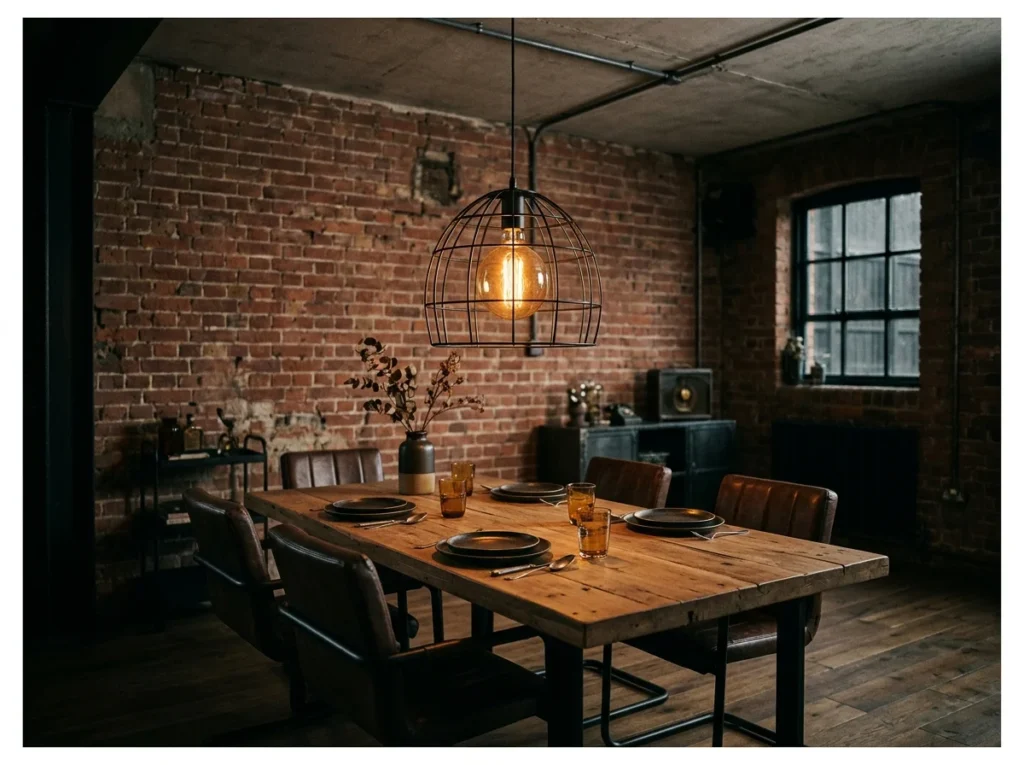
An exposed Edison filament bulb in a simple cage or wire shade creates an industrial aesthetic that suits urban apartments, loft conversions, and any dining room where the design intentionally celebrates honest, raw materials. The visible filament glowing in warm amber becomes both the light source and the decorative element simultaneously.
Choose LED Edison filament bulbs in 2200K for the warmest, most amber filament appearance. Standard Edison filament bulbs in this temperature look almost orange when dimmed, which creates the most atmospheric industrial dining room lighting possible. Pair with a dimmer switch to control the intensity for different dining occasions.
Woven Seagrass Pendant
Seagrass pendants are made from tightly woven natural fiber, giving them a handcrafted, coastal feel. The texture adds warmth to a room without relying on color or pattern to do the work. This style pairs particularly well with wood dining tables and neutral color palettes.
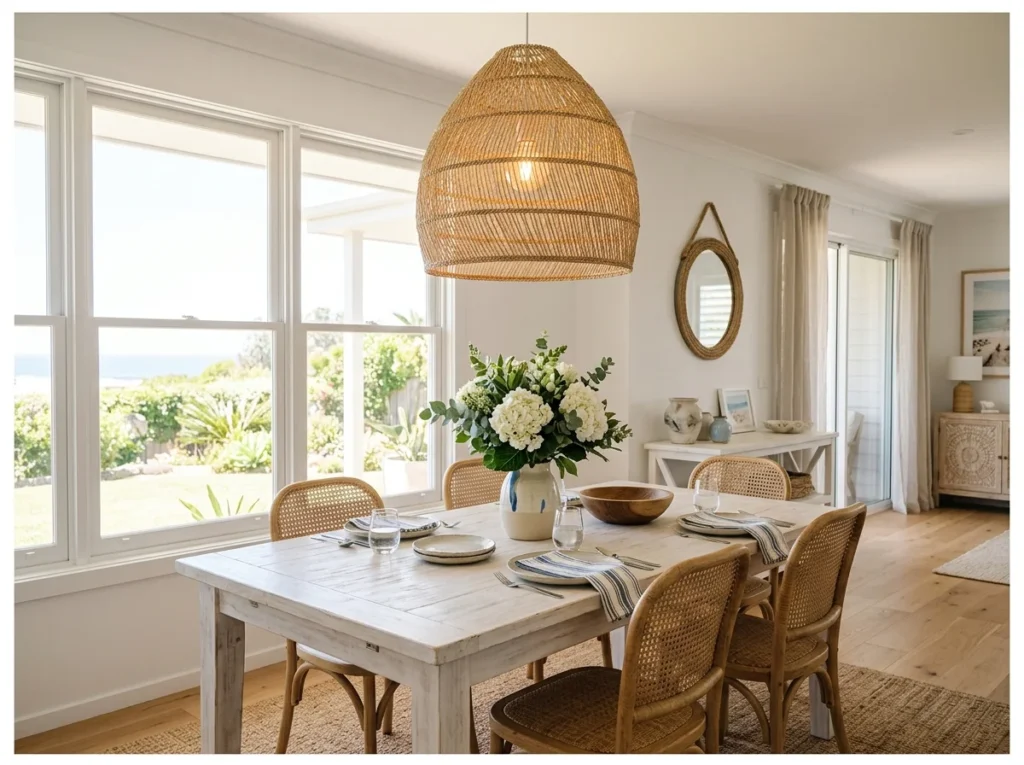
A woven seagrass pendant brings the same natural organic warmth as rattan with a slightly finer, more refined texture. The natural fiber creates a warm filtered glow that feels genuinely organic and handcrafted in a way that no mass-produced glass or metal shade can replicate.
Seagrass pendants suit coastal, Scandinavian, and organic modern dining rooms particularly well. They are available in a wider range of weave patterns and profiles than rattan, including tight geometric weaves that suit more contemporary spaces and loose open weaves that suit relaxed coastal interiors.
Globe Pendant Light
A globe pendant keeps things simple with a single round shade, usually in glass or frosted material. This shape casts light evenly in all directions rather than focusing it downward like a shade would. It’s a versatile option that fits into both modern and more classic dining room styles.
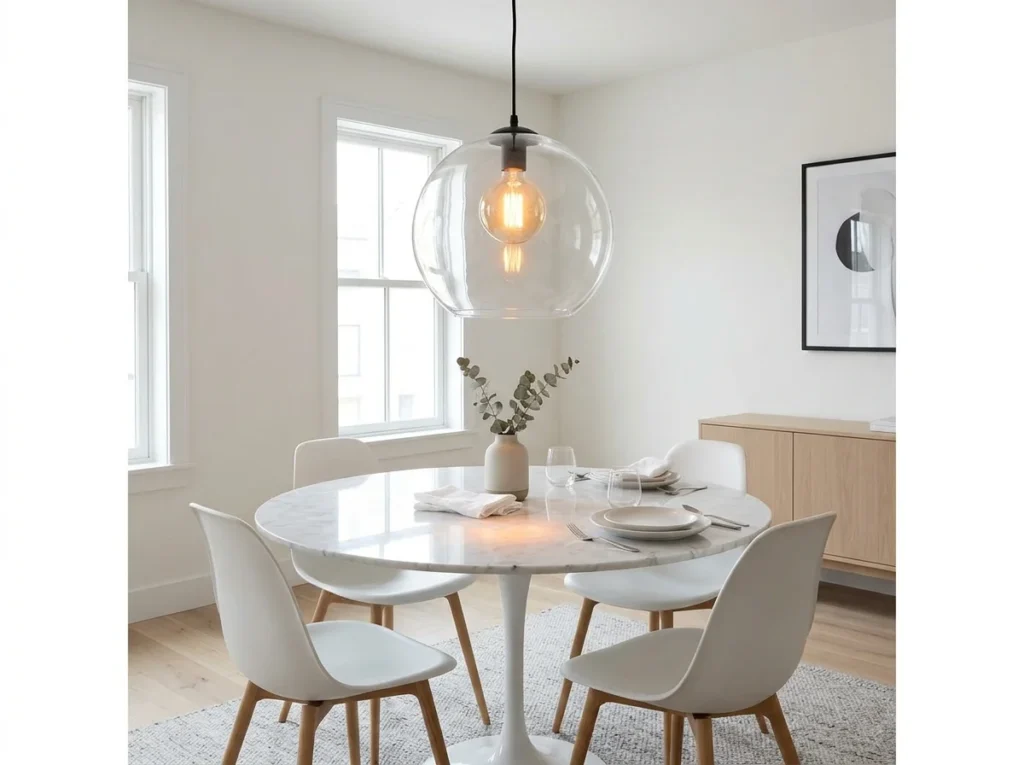
A clear glass globe pendant with a visible filament bulb inside is one of the most versatile and universally flattering dining room lighting choices available. The sphere shape is geometrically satisfying and suits every table shape. The clear glass allows the warm filament light to radiate in all directions.
Globe pendants look equally at home in industrial, Scandi, contemporary, and transitional dining rooms. Size the globe appropriately to the room: a 30 to 40 centimeter diameter globe suits a small dining room, while a 50 to 60 centimeter globe creates the visual presence needed in a larger space.
Statement Black Metal Chandelier
Black metal chandeliers add contrast, especially in dining rooms with lighter walls or ceilings. The metal frame is often left minimal, letting the bulbs themselves become the visual focus. This style works well as a bold centerpiece without needing a lot of extra ornamentation.

A large black metal chandelier with multiple arms and exposed bulbs creates a graphic, architectural statement in a dining room that communicates confidence and intentional design from the moment you enter. The matte black finish against white walls and ceiling creates maximum visual impact.
Black metal chandeliers suit contemporary, modern farmhouse, and transitional dining rooms particularly well. The dark color makes them recede slightly during daylight hours while becoming dramatic and atmospheric after dark when the bulbs illuminate. Choose a size that fills approximately one third of the table width for the most balanced proportion.
Bold, modern, and consistently impressive.
Candle-Style Chandelier
Candle style chandeliers use bulbs shaped like tapered candles instead of standard round ones. This gives the fixture a more traditional, almost old world look even with modern electric wiring. Iron or brass finishes tend to be the most common choices for this particular style.
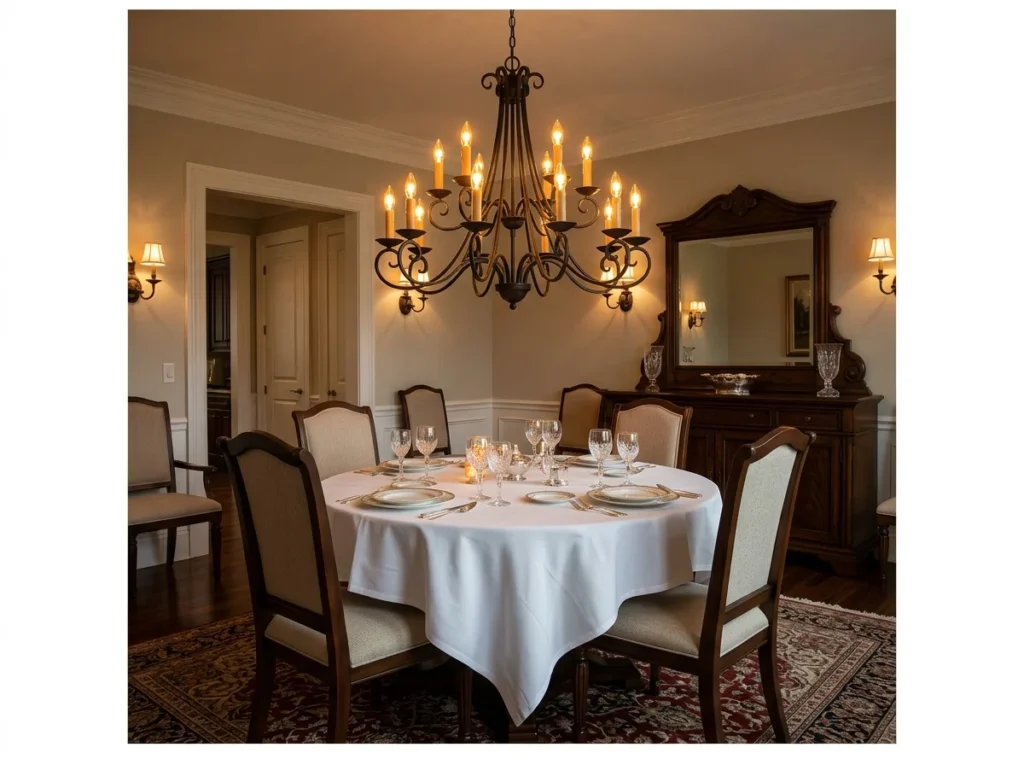
A candle-style chandelier holds multiple exposed bulbs on upward-facing arms that replicate the warmth and visual quality of real candlelight at scale. The multiple small light sources create a warm, dimensional glow that fills the dining room evenly and creates beautiful reflections in glassware and polished surfaces.
This style suits traditional, transitional, and farmhouse dining rooms where the warmth and character of candlelight is the desired atmosphere. Candle-style chandeliers work especially well over round dining tables where the circular fixture and round table share a visual relationship. Always use warm amber LED bulbs rated at 2200K to 2700K.
Oversized Paper Lantern
A large paper lantern brings a soft, diffused glow that feels quite different from metal or glass fixtures. Its lightweight material makes it one of the more affordable pendant options available. This style tends to suit casual dining spaces that lean toward a relaxed, minimal aesthetic.
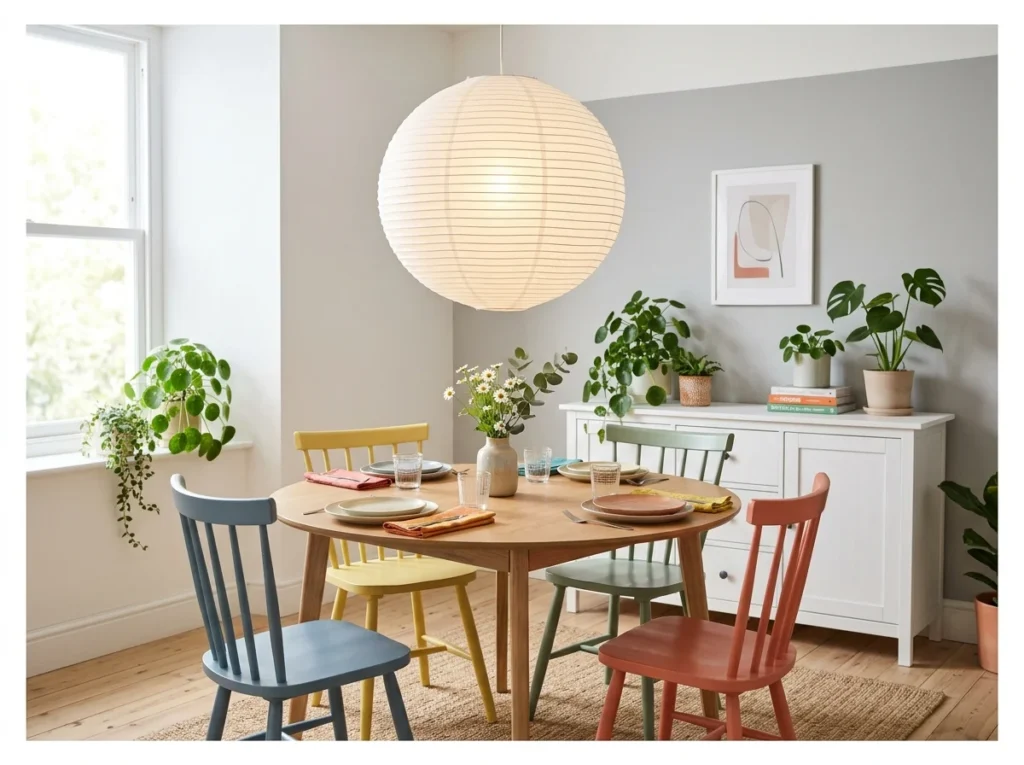
An oversized paper lantern pendant creates a soft, evenly diffused glow that flatters a dining room beautifully at a genuinely affordable price point. The thin paper material allows light to radiate in all directions with none of the shadow-creating directionality of opaque shades.
Paper lanterns are available in diameters up to 80 centimeters and larger, creating a genuinely statement-scale pendant at minimal cost. They suit modern, eclectic, and casual dining rooms particularly well. The lightweight material also means they can hang from even basic ceiling hooks without heavy electrical infrastructure.
Budget-friendly option with beautiful soft light.
Recessed Lighting with Dimmer
Recessed lights sit flush with the ceiling, which keeps the dining room feeling open with nothing hanging down. A dimmer switch lets the brightness shift easily from bright daytime light to a softer evening setting. This option is often used alongside a pendant rather than as the sole light source in the room.
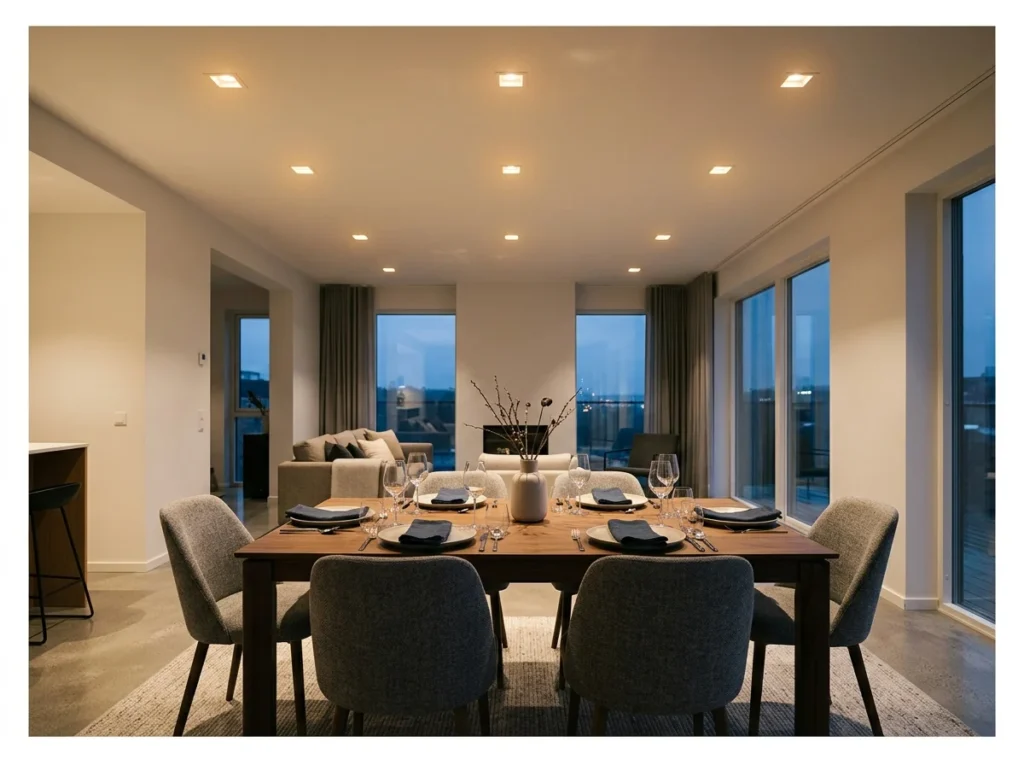
Recessed LED downlights on a dimmer circuit provide the most flexible dining room lighting option available. Dialed to full brightness for daytime meals and cleaning, then dimmed to 20 to 40 percent for evening dining, the same fixtures create completely different atmospheres for different occasions.
Specify warm white 2700K LED downlights in a wide beam angle of 60 degrees or more for dining room recessed lighting. Narrow beam recessed lights create harsh spotlight circles on the table surface rather than an even wash. A fully dimmable circuit is essential since recessed downlights at full brightness are unsuitable for relaxed dining atmospheres.
Wall Sconces for Ambient Dining Light
Sconces mounted along the walls add light at a different height than an overhead fixture would. This creates a softer, more ambient glow that works well alongside a central chandelier or pendant. Placing them near a buffet or sideboard also highlights that part of the room specifically.
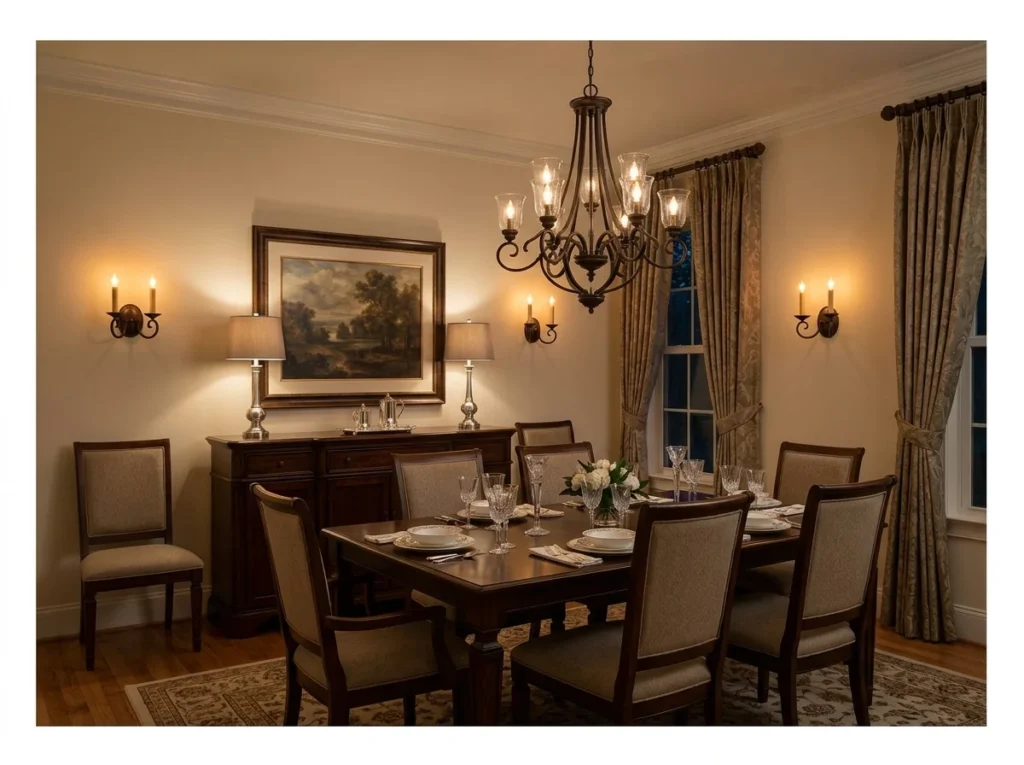
Wall sconces installed on the dining room walls at approximately 170 centimeters from the floor provide a secondary layer of warm ambient light that supplements the primary overhead fixture. The sconce light washes the walls and creates a sense of depth and warmth that ceiling-only lighting cannot achieve.
Sconces suit traditional, transitional, and contemporary dining rooms depending on the fixture style chosen. Even two wall sconces on one dining room wall create a noticeable improvement in the room’s overall warmth and atmosphere. Use dimmable sconces so both lighting layers can be adjusted independently for different dining occasions.
Beneath the sconces, wall styling that adds warmth can round out the layered look you’re building.
Buffet Lamp or Floor Lamp
A lamp placed on a buffet or in a corner adds a warmer, more residential feel compared to overhead lighting alone. This kind of lighting is especially useful for dinners where a softer atmosphere is preferred over bright, even light. It also fills in shadows that an overhead fixture alone might leave in the corners of the room.
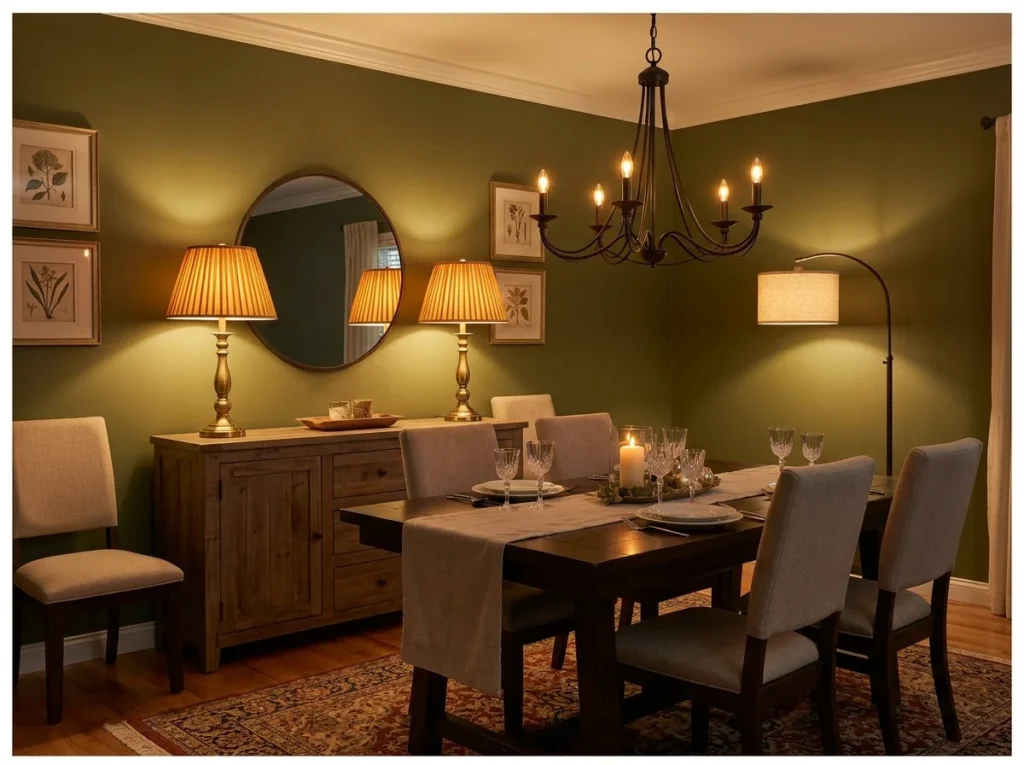
A pair of matching table lamps placed on a dining room buffet or sideboard creates a warm secondary light source at a lower level than the ceiling fixture. The lamp light washes the sideboard surface and creates warm amber glow at eye level that contributes significantly to the room’s overall atmosphere.
This layered approach to dining room lighting mirrors how high-end restaurant lighting works: multiple light sources at different heights create a dimensional, enveloping quality that a single overhead fixture cannot produce. A floor lamp in one corner of the dining room serves the same ambient purpose without requiring furniture to rest on.
The easiest dining room lighting upgrade available.
LED Strip Lighting in Ceiling Coves
LED strips hidden within a ceiling cove create an indirect glow that avoids any visible bulbs or fixtures. This approach works particularly well in modern dining rooms with clean, minimal ceiling detailing. The light bounces off the ceiling first, which gives the room a softer overall brightness.
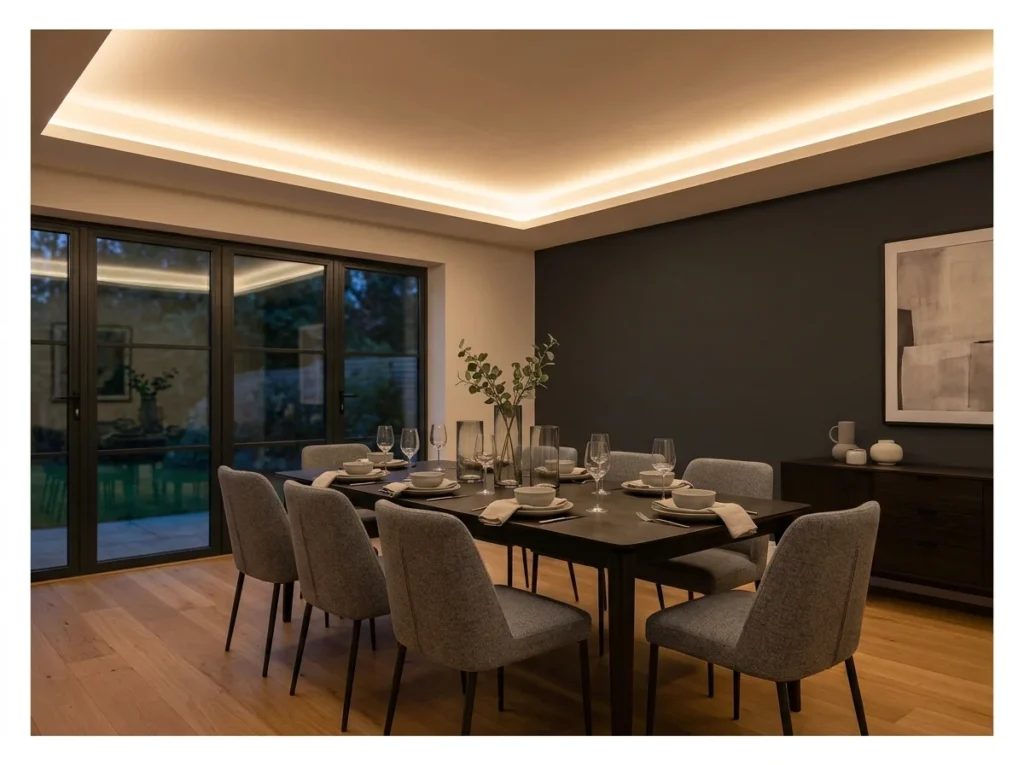
LED strip lighting recessed into a ceiling cove around the perimeter of a dining room creates indirect ambient light that washes the ceiling and fills the room with a soft, shadow-free glow. The light source itself is hidden, creating a floating quality where the room appears to glow rather than being lit by a visible fixture.
This technique is particularly effective in dining rooms with plasterboard ceilings where a cove detail can be built into the ceiling perimeter. Warm white 2700K LED strips create the most welcoming atmosphere. Combined with a central pendant over the table, ceiling cove lighting creates a sophisticated layered dining room lighting system.
Exposed Filament Bulb Pendant
This style keeps the bulb itself fully visible, with the glowing filament acting as the main design feature. Minimal or no shade is used, letting the bulb shape and warm light stand on their own. It tends to suit dining rooms going for a stripped back, slightly vintage look.
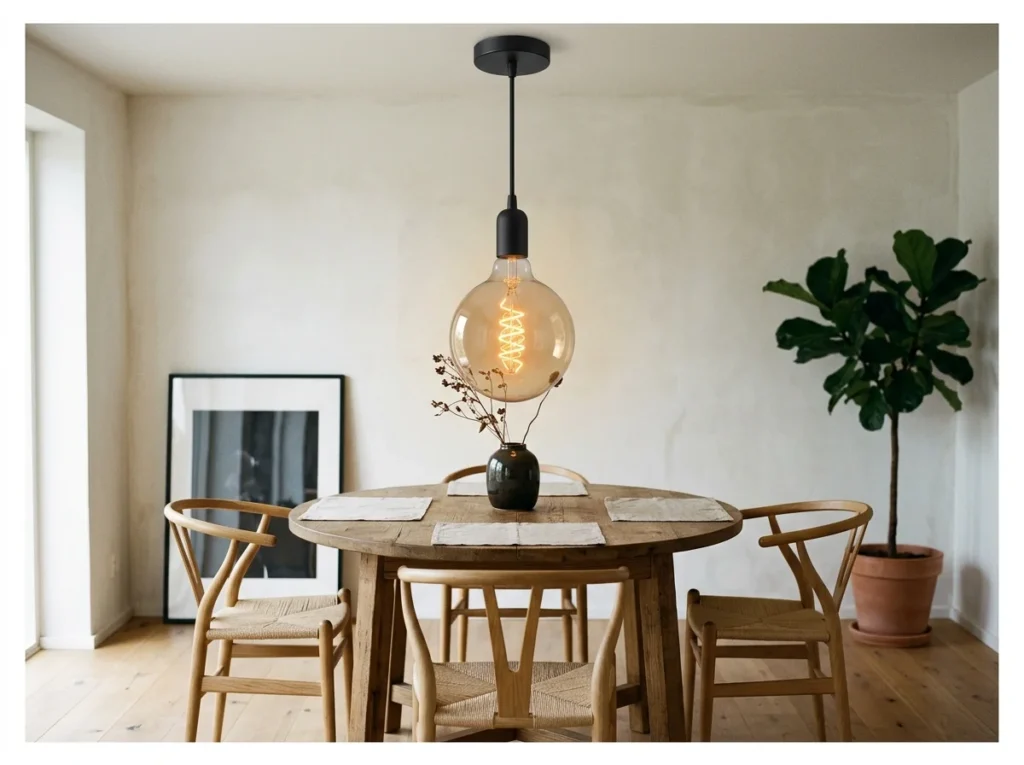
A single large exposed filament bulb on a simple cord pendant, with no shade at all, creates a strikingly minimalist dining room lighting statement where the bulb itself is the design object. Large globe LED filament bulbs in 125 to 165 millimeter sizes have enough visual presence to stand alone over a dining table.
This approach suits dining rooms where the architecture and furniture are already strong enough to carry the space and a simple, honest light source suits the overall aesthetic. The visible spiral or squirrel-cage filament glowing in warm amber creates a genuinely warm and characterful light that elaborate shades sometimes obscure.
Sculptural Concrete Pendant
Concrete pendants add an unexpected material choice compared to the usual metal or glass options. Their heavy, matte texture gives off a distinctly modern and slightly industrial feel. This style works best as a single statement piece rather than in a cluster.
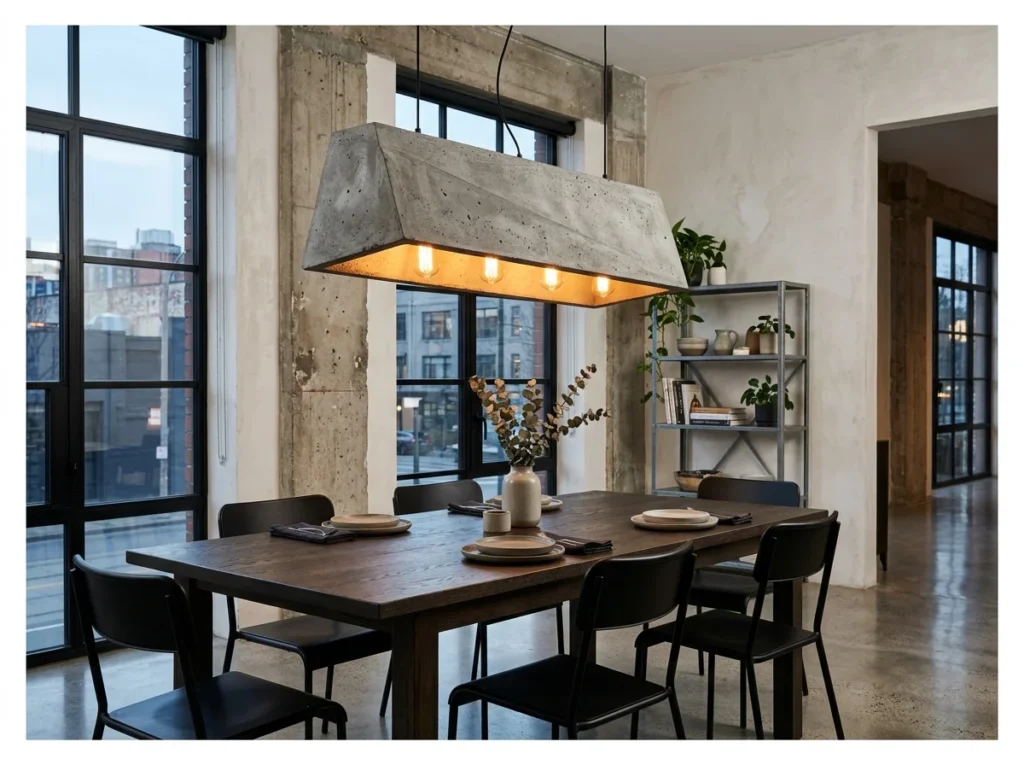
A concrete pendant light brings an architectural, raw-material quality to dining room lighting that no other shade material replicates. The weight and texture of concrete creates a pendant that looks like sculpture as much as it looks like a light fitting. The warm bulb inside contrasts beautifully with the cool grey exterior.
Concrete pendants suit industrial, brutalist, and architectural interior styles and pair naturally with dark timber, exposed brick, and polished concrete surfaces. They are available in dome, cone, and cylindrical profiles. Despite their heavy appearance, most concrete pendants are made from lightweight concrete composite and install like standard pendants.
Brass or Gold Pendant Light
Brass or gold finishes catch light in a way that adds a subtle warmth to the fixture itself. This metal tone pairs well with wood tables and warmer color palettes throughout the room. It’s a popular choice for dining rooms aiming for a slightly more polished, upscale look.
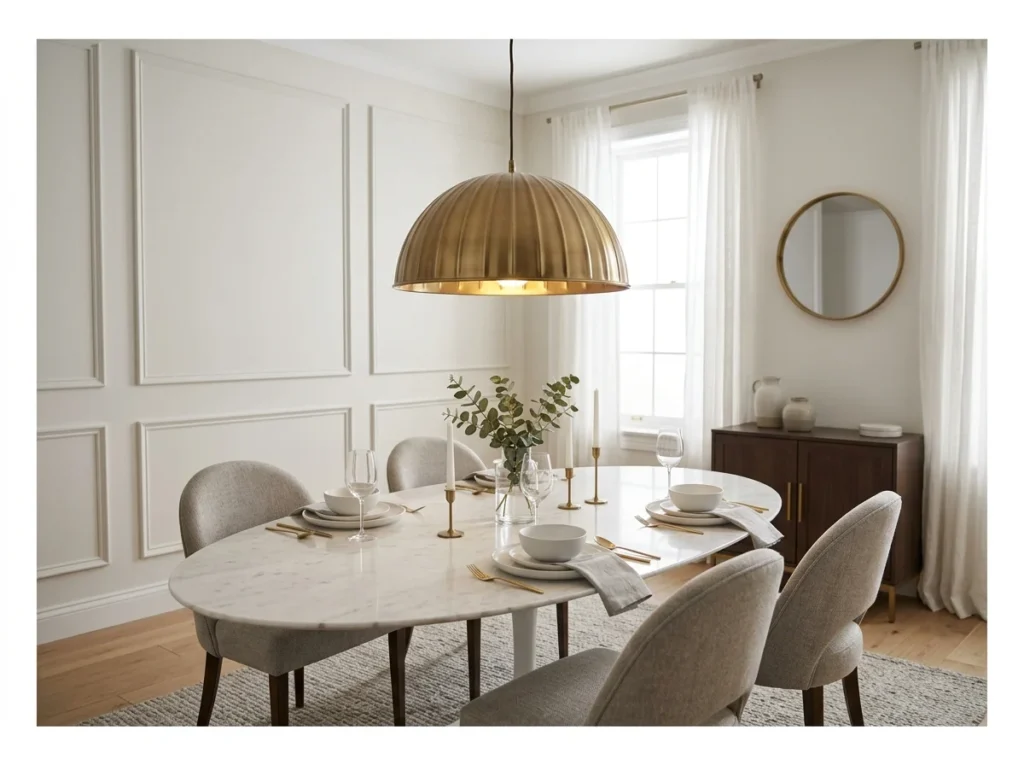
Brushed brass or antique gold pendant lights add warmth and sophistication to a dining room that chrome and stainless steel finishes cannot provide. The warm metallic tone of brass complements both warm timber surfaces and cool marble in a way that makes the dining room feel genuinely luxurious.
Brass pendant lights suit transitional, art deco, and contemporary dining room designs. Brushed rather than polished brass is the most versatile choice because it reflects light softly rather than creating strong mirror-like reflections. Pair with warm white bulbs and the brass fixture glows with an intensely warm and inviting quality.
Warm, sophisticated, and timeless.
Layered Lighting System
This approach combines an overhead fixture with wall sconces, lamps, or recessed lights rather than relying on just one source. Each layer can be controlled separately, which allows the room’s mood to shift depending on the occasion. This setup tends to give dining rooms more flexibility than a single central light ever could.

A layered dining room lighting system uses three separate light sources at different heights simultaneously: a primary fixture above the table, secondary ambient sources such as wall sconces or buffet lamps, and tertiary candle or low-level accent lighting. Together these layers create dimensional, enveloping light that single-source lighting cannot achieve.
The primary layer illuminates the table for practical dining. The secondary layer creates ambient warmth in the broader room. The tertiary layer provides intimate, flattering light at face level. Each layer should be independently dimmable so the balance between them can be adjusted for different occasions from bright family meals to intimate dinner parties.
The professional restaurant lighting technique in your home.
If you’re rethinking the walls too, a color palette worth considering can shape how each lighting layer reads in the room.
Modern Sputnik Chandelier
Sputnik chandeliers use multiple arms radiating outward, each tipped with its own small bulb. This design creates a strong geometric silhouette that works well as a room’s main focal point. It tends to suit dining rooms with a mid century or contemporary style throughout.
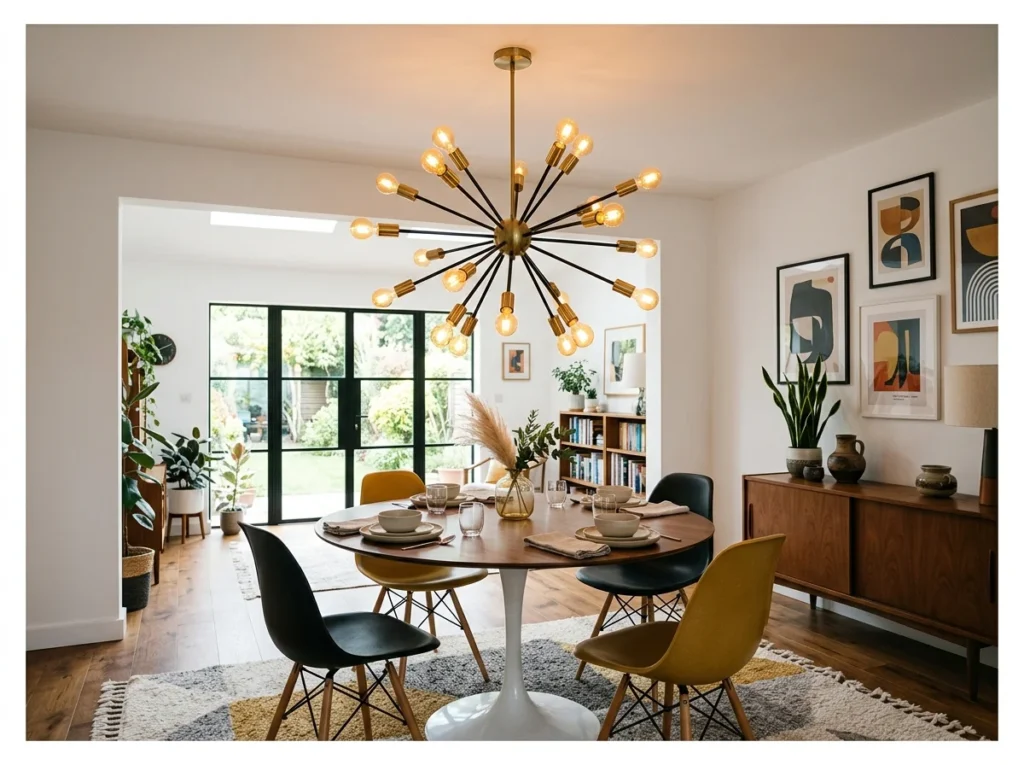
A sputnik chandelier spreads multiple bulb-tipped arms outward from a central sphere in a starburst configuration that creates a sculptural overhead presence unlike any conventional shade-based pendant. The exposed bulbs on each arm glow individually, creating a constellation of warm light points.
Sputnik chandeliers suit mid-century modern, retro, and eclectic dining rooms particularly well and pair naturally with round dining tables. The starburst form references 1950s space age design in a way that feels genuinely vintage yet completely contemporary in a modern interior. Choose brass, chrome, or matte black finishes to suit the surrounding palette.
For a warmer, more traditional counterpoint, a farmhouse look worth pairing with brings its own charm to the same fixture types.
Low-Hung Pendant for Intimate Dining
Hanging a pendant lower than usual, closer to the table surface, creates a more intimate lighting effect. This works especially well for smaller dining tables meant for close, quiet meals. The lower placement also puts more focus directly on the table rather than the room as a whole.
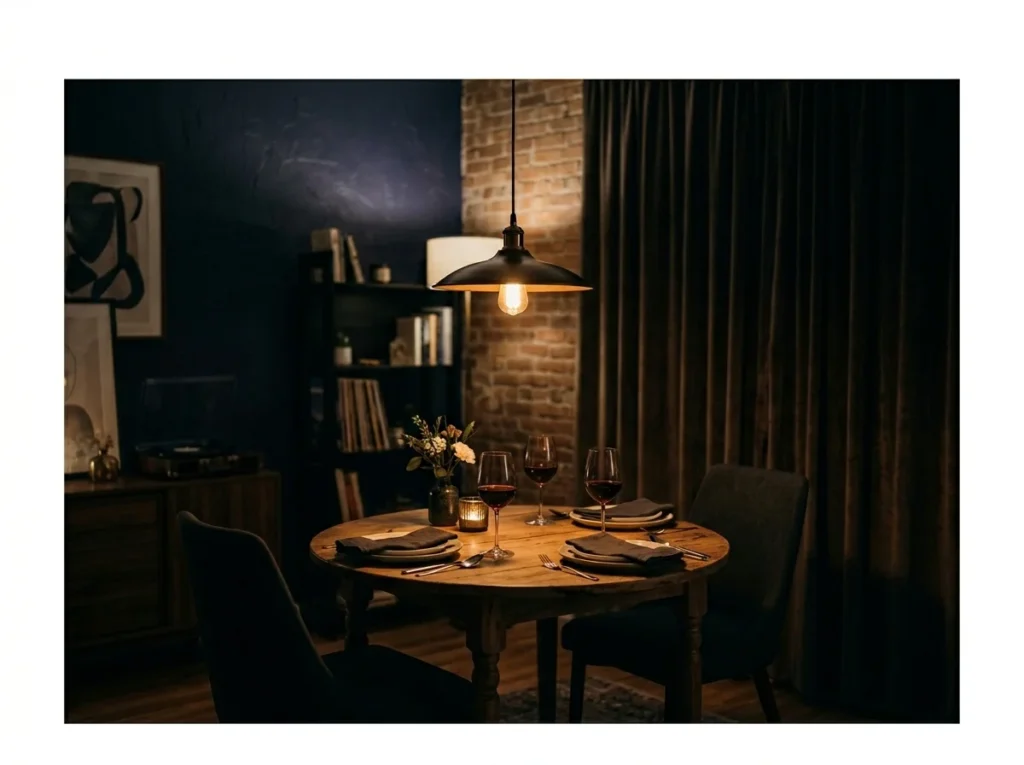
Hanging a pendant light lower than the standard installation height creates a smaller, more concentrated pool of light over the dining table that makes the space feel intimate and private. The effect is similar to dining by candlelight with the focused warm light creating a sense of being in a private world within the broader room.
The standard installation height for dining room pendants is 70 to 90 centimeters above the table surface. Lowering to 50 to 60 centimeters creates the intimate effect while remaining comfortably above head height for seated diners. This works especially well over small two or four-person dining tables in compact dining rooms.
The most romantic dining room lighting technique.
Tiered Crystal Chandelier
Multiple tiers of crystal detailing give this chandelier a more elaborate, formal presence than simpler designs. Light refracts through the crystal pieces, scattering small points of brightness around the room. This style tends to suit larger, more traditional dining rooms with higher ceilings.
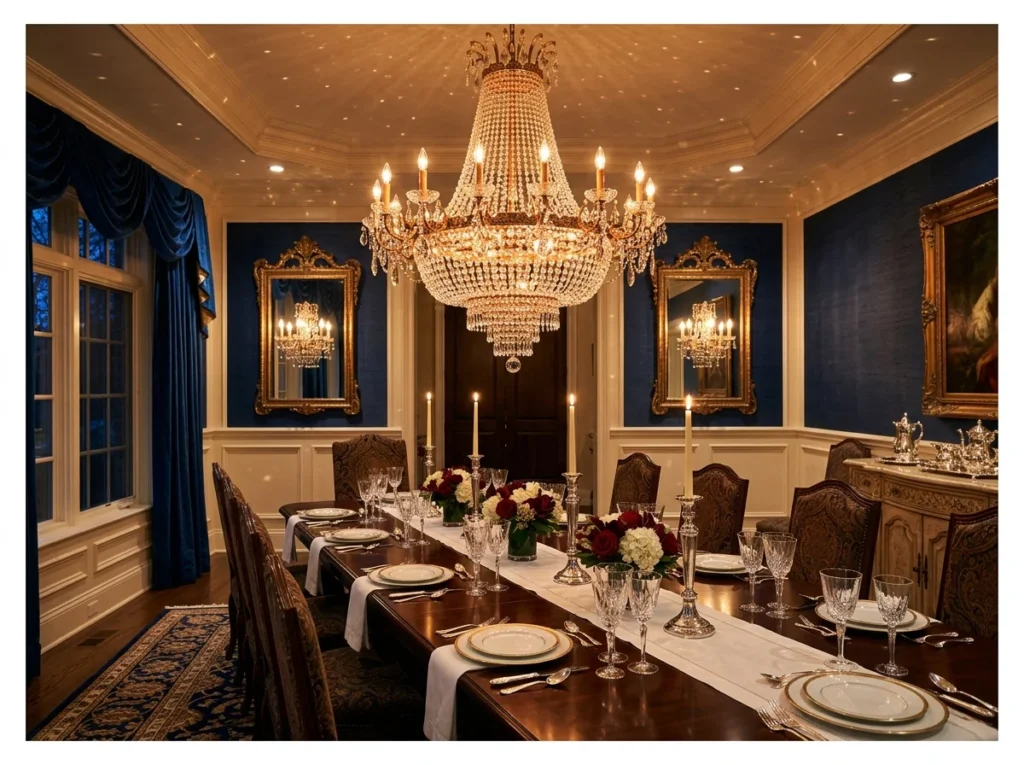
A tiered crystal chandelier creates the most celebratory and opulent dining room lighting atmosphere possible. The crystals refract and multiply every light source in the room, creating constantly moving light reflections across walls, ceiling, and table surfaces that no other fixture can replicate.
Crystal chandeliers suit formal, glam, and transitional dining rooms where the intention is to create a sense of occasion for every meal. They require a ceiling height of at least 2.7 meters to hang at appropriate scale without feeling overwhelming. Dimmable LED bulbs inside the chandelier allow the light intensity to shift from practical to theatrical.
Colored Glass Pendant
Colored glass shades tint the light slightly as it passes through, adding a subtle mood to the room. Amber and smoky tones are common choices since they still keep the light feeling warm rather than dim. This style works well as an accent piece, especially paired with otherwise neutral dining room decor.
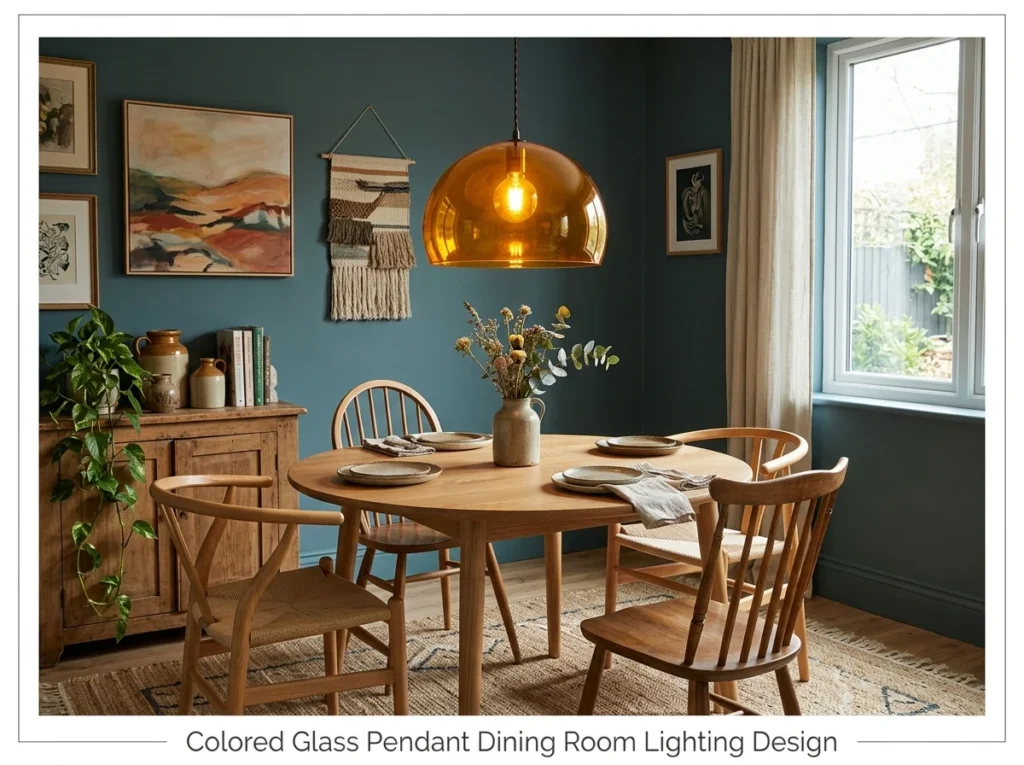
A colored glass pendant in amber, smoked grey, or deep blue tints the light it casts with the color of the glass, adding an extra dimension of warmth or coolness to the dining room atmosphere. Amber glass creates the warmest and most flattering colored light for dining room use.
Amber or smoke glass pendants suit mid-century, eclectic, and contemporary dining rooms. The colored glass works as both a light source and a decorative object since the glass itself is beautiful in both lit and unlit conditions. Position colored glass pendants where natural light will catch the glass during the day and show its translucency.
Conclusion
Dining room lighting is one of the highest-return interior design investments available because the right fixture and the right bulb temperature transform every single meal that happens in the room. The improvement is visible and felt immediately.
Start with the color temperature: warm amber at 2700K or lower is non-negotiable. Then choose the fixture style that suits your dining table shape and interior design. Then install a dimmer. Those three decisions together will produce a dining room that feels genuinely beautiful at every meal.
The dining room you have always wanted starts with the right light.
From there, an elegant setup worth aspiring to is simply a matter of building on the lighting foundation you’ve created.