A dark, narrow entryway is one of the most common and most solvable home problems. The right mirror placed correctly doubles the light and makes every entry feel significantly larger.
These ideas cover every mirror style, size, and placement for a genuinely bright and beautiful entryway.
Once you’ve chosen a mirror, an entry table worth pairing with can complete the whole vignette beneath it.
Let’s explore the ideas.
Large Arch-Top Mirror
An arch top mirror softens the straight lines common in most entryway furniture. Its curved top adds a bit of architectural interest even before anything else is placed nearby. This shape works well leaning against a wall or hung above a console table.

A large arch-top mirror brings softness and genuine architectural interest to an entryway by introducing a curved form into a space that is typically defined by straight walls, angular doorways, and flat ceiling lines.
The arch shape draws the eye upward, which creates the perception of height in any corridor or entry regardless of its actual ceiling height. Position the mirror to reflect the doorway or a window for maximum light amplification throughout the hall.
The shape that makes every entryway feel taller.
Full-Length Leaning Mirror
A leaning mirror skips wall mounting entirely, resting directly against the wall instead. This makes it easy to move or reposition if the entryway layout ever changes. Its full length also gives a quick head to toe check before heading out the door.

A full-length mirror leaning against the entryway wall provides the complete head-to-toe reflection every household member needs before leaving the house, without requiring wall drilling, making it ideal for renters or anyone wanting flexibility.
The casual leaning position also signals design confidence rather than the more formal impression of a hung mirror. A simple wooden or metal frame leans comfortably against most walls without a stand, and the mirror can be repositioned easily as the entry arrangement evolves.
Perfect for renters who can’t drill.
Rattan-Framed Round Mirror
A rattan frame adds natural texture around the glass that a plain metal frame wouldn’t provide. The round shape softens the overall look, especially in entryways with a lot of straight furniture lines. This style tends to suit spaces already leaning toward a relaxed, natural aesthetic.
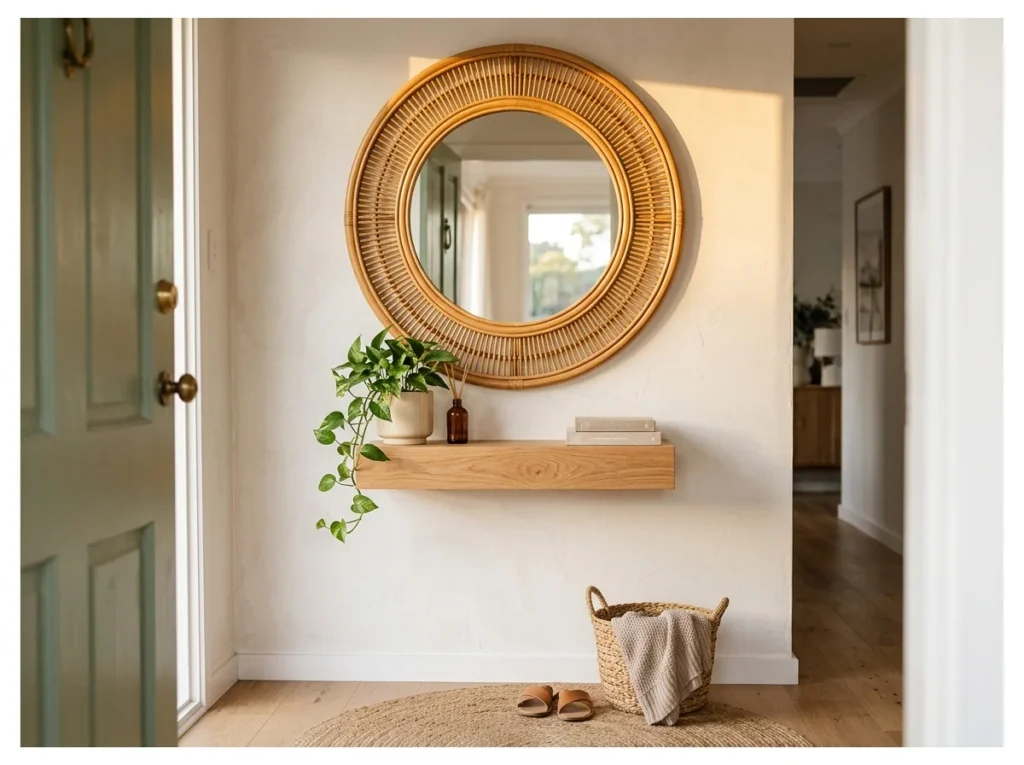
A rattan-framed round mirror introduces natural woven fiber texture and organic warmth to the entryway wall in a way that metal or painted timber frames cannot replicate. The circular form also softens the hard geometry of a hallway.
The natural tan tone of rattan suits virtually every entryway palette from warm whites to earthy greens to deep navies, making this one of the most universally compatible entryway mirror frames available. Round rattan mirrors are widely available and typically very affordable.
Underfoot, a rug that grounds the whole entry adds warmth that balances all the reflective surfaces above.
Budget-friendly option with genuine warmth and style.
Sunburst Decorative Mirror
A sunburst mirror uses radiating metal spokes around the glass to create a bold, eye catching shape. This piece tends to work as a standalone statement rather than blending quietly into the wall. It suits entryways that could use a stronger focal point above a console or bench.

A sunburst mirror serves simultaneously as the entryway’s primary decorative artwork and its functional reflective surface, creating the most decor impact per installation of any mirror style available. The radiating rays draw the eye immediately upon entering.
Gold sunburst mirrors suit traditional and transitional entryways powerfully. Matte black and brushed brass versions suit more contemporary settings. The sunburst form also reflects significantly more light than its actual mirror surface area suggests, since the rays themselves catch and scatter light.
Antique Gold Ornate Mirror
Antique gold finishes bring an aged, slightly worn look compared to a bright polished gold. Ornate detailing around the frame adds a more traditional, formal feel to the entryway. This style tends to suit homes with other vintage or classic furniture pieces nearby.
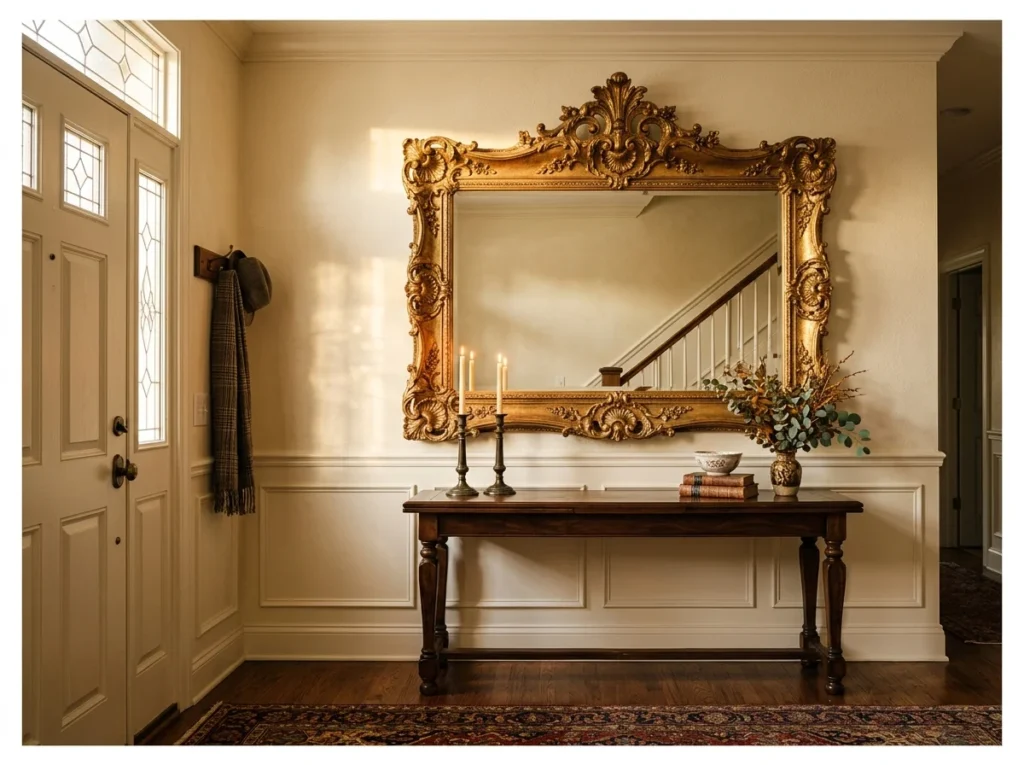
An antique or reproduction ornate gold mirror instantly communicates material investment and considered design in the entryway. The carved gilded frame references centuries of decorative arts tradition and suits Georgian, traditional, and maximalist interior directions.
Position an ornate mirror against a dark, contrasting wall color for maximum visual impact. The frame’s decorative detail reads most clearly against a deep background, while a white wall can make the gold carving appear flat and washed out.
Slim Black Rectangular Mirror
A slim black frame keeps the mirror feeling modern without drawing too much attention to itself. This shape works especially well in narrower entryways where a large round mirror wouldn’t fit. The black finish also pairs easily with most existing hardware or light fixtures nearby.
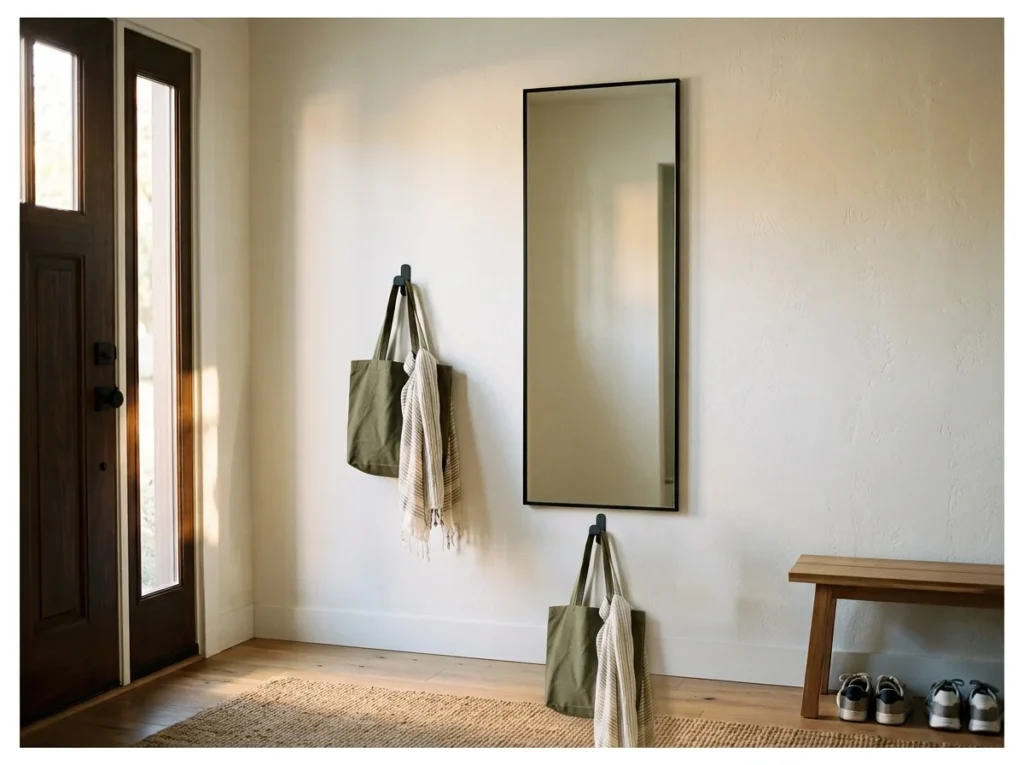
A slim-framed black rectangular mirror creates a graphic, confident entry statement with a precisely minimal footprint that suits contemporary, industrial, and Scandinavian design directions. The thin profile allows the mirror itself to be the visual focus.
This style suits narrow entryways particularly well since the slim frame maximizes the reflective surface area relative to the overall mirror footprint. Matte black resists showing fingerprints at this high-contact point better than polished finishes.
Perfect for small entryways that need maximum reflection.
Gallery Wall with Multiple Small Mirrors
Grouping several small mirrors together creates a collected, layered look rather than a single focal point. Mixing shapes and frame styles within the group adds variety without looking mismatched. This approach also multiplies how much light gets reflected around the entryway.
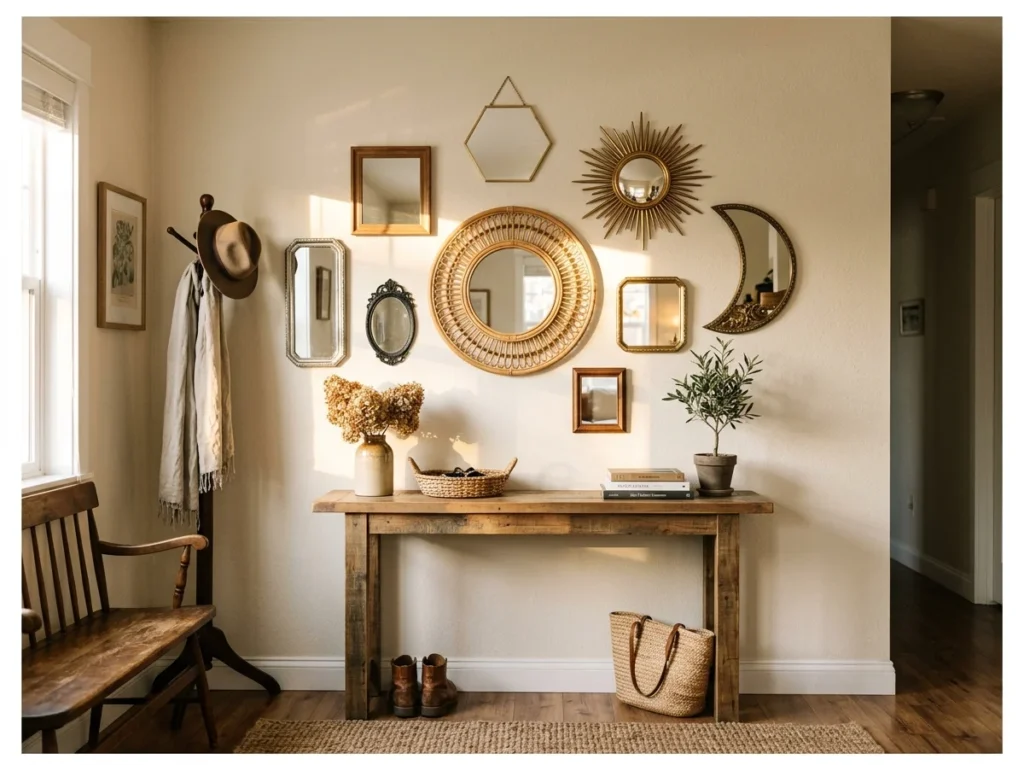
A gallery arrangement of multiple small mirrors in varied shapes and frames creates an entryway wall with collected, personal character that no single mirror can achieve. The variety of frames and shapes creates visual interest while the multiple reflective surfaces amplify light from every position.
Mix frame materials consistently within one color family, all gold, all black, or all natural timber, to create cohesion within the variety. The gallery approach also allows the arrangement to expand incrementally over time as new finds are added.
Console Table with Mirror Above
A mirror hung above a console table is one of the most common entryway pairings for good reason. The table gives a spot for keys or mail while the mirror handles a quick appearance check. Together they create a natural, functional focal point right at the entrance.
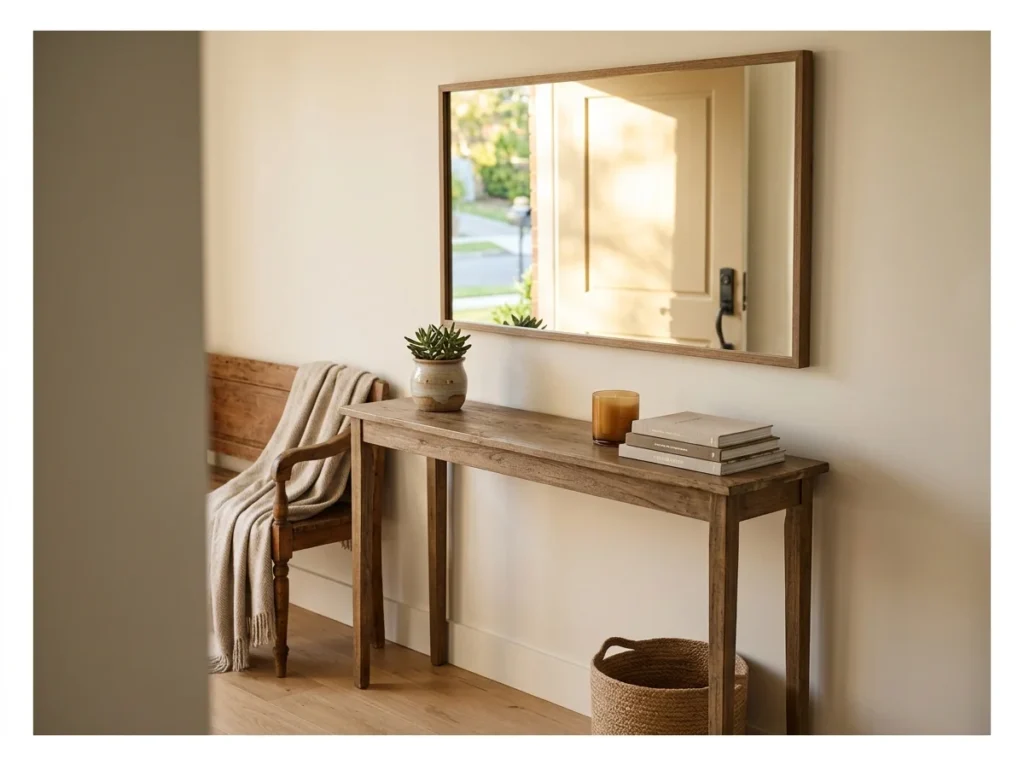
A console table paired with a large mirror mounted directly above creates the most classic and functional entryway arrangement, combining reflective light amplification with a practical surface for keys, bags, and everyday essentials simultaneously.
The mirror’s width should match or slightly exceed the console table’s width for the most balanced and resolved visual proportion. This arrangement creates a complete entryway vignette that photographs beautifully and functions perfectly in daily use.
The classic combination that never looks wrong.
If your entry has the depth for it, a bench that adds functional seating pairs beautifully with a console and mirror combo.
Oversized Statement Mirror
An oversized mirror can make a small entryway feel noticeably larger just through reflected light. This piece tends to work best when the rest of the space stays fairly simple around it. Its scale alone is usually enough to make it the room’s main focal point.
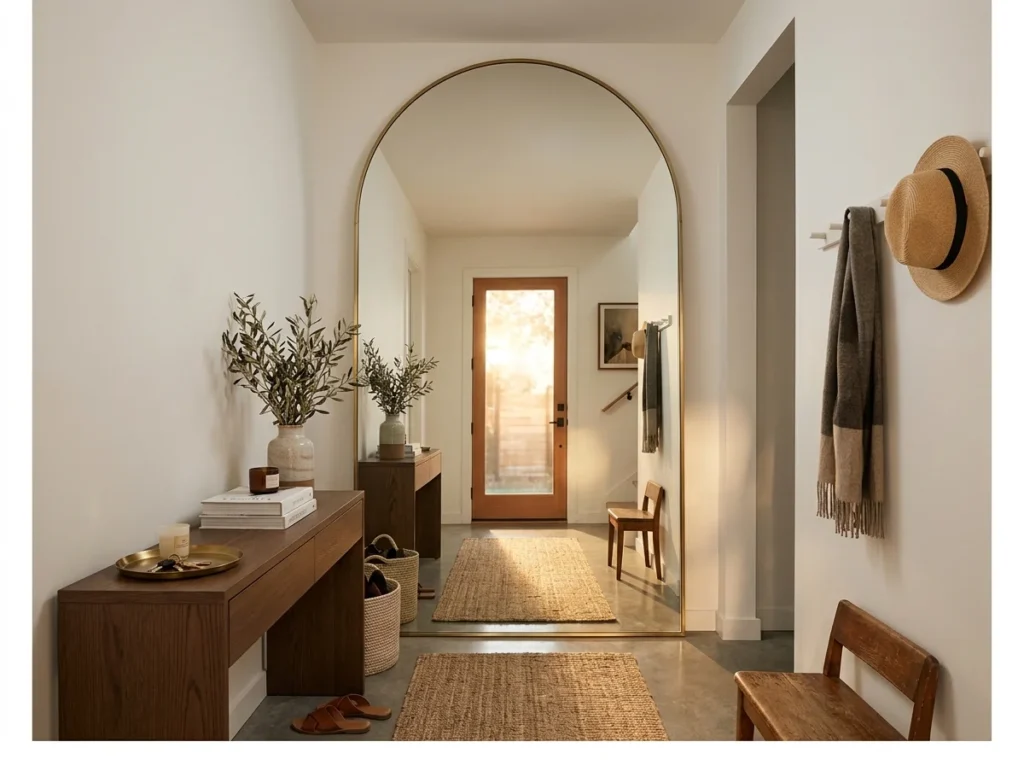
An oversized mirror that fills most of a wall’s height creates the most dramatic space-expanding effect available for any entryway. The large reflective surface essentially creates a visual second hallway behind the glass, doubling the perceived depth of the entry.
This approach works most powerfully in narrow corridors where floor space is genuinely limited. When the mirror is as tall as or taller than the doorway beside it, the proportional effect creates a genuinely impressive architectural illusion.
The illusion that turns a corridor into a room.
Venetian Etched Glass Mirror
Etched detailing around the edges of the glass adds pattern without needing a bulky frame. This style tends to feel more refined and formal compared to simpler mirror designs. It works well in entryways aiming for a slightly more elegant, old world look.
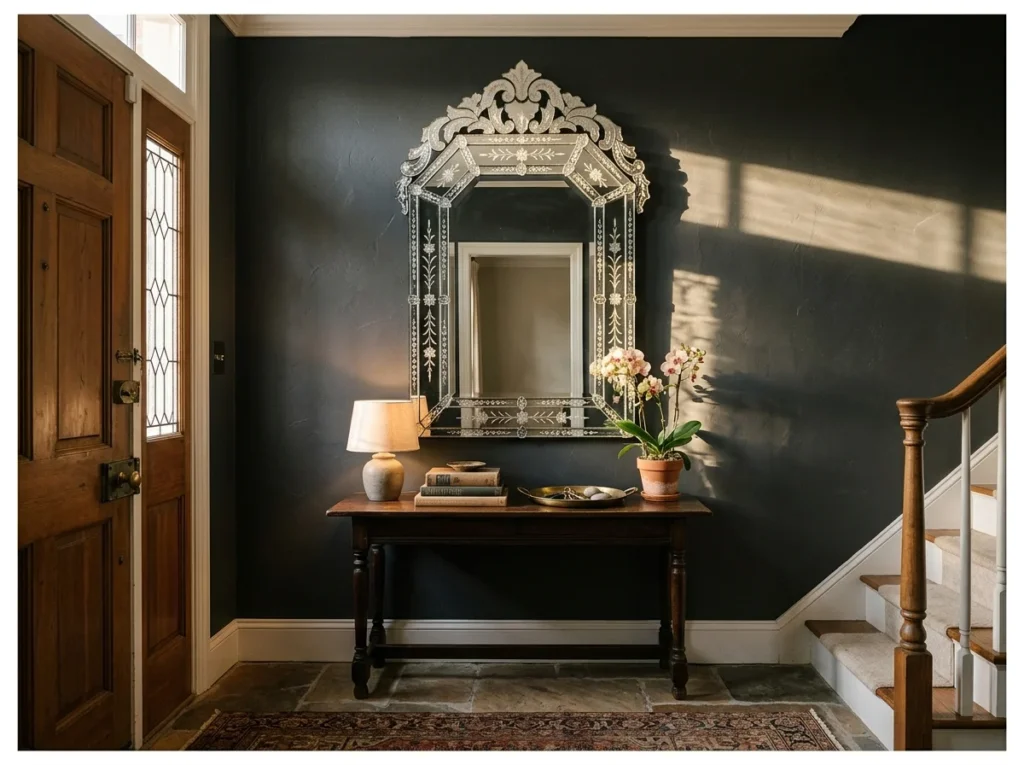
A Venetian etched glass mirror brings handcrafted artisanal quality to the entryway, with decorative etchings on the mirror surface itself rather than limited to the frame. The result is simultaneously a functional mirror and a genuine work of decorative art.
This style suits maximalist, traditional, and eclectic interiors where artisanal craft quality is valued. Position it against a dark wall where the silvered etching appears with maximum contrast and the delicate detail can be fully appreciated at the close viewing distance of an entryway.
Arch Mirror with Shelf Below
A small shelf built into the base of the mirror gives a spot for keys or a small plant. This combination saves space compared to hanging a mirror and adding a separate console table. It works especially well in narrow entryways where floor space is limited.
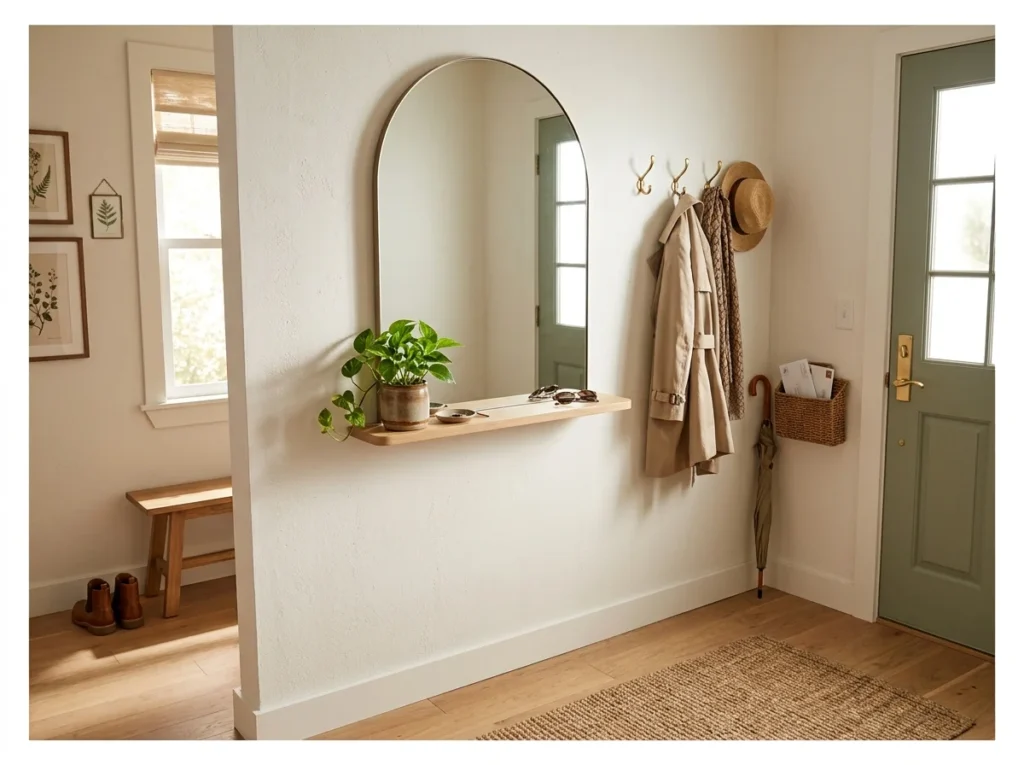
An arch mirror with an integrated shelf at its base combines the light-expanding function of a large mirror with the practical entry surface needed for keys, sunglasses, and daily essentials, all in a single wall-mounted installation.
This combined piece suits entryways too small or narrow for a separate console table, since the shelf provides equivalent surface function at a fraction of the floor footprint. The arch form above makes the piece feel genuinely architectural rather than purely utilitarian.
Perfect for small entryways with no room for a console.
Frameless Rectangular Mirror
A frameless mirror keeps the look minimal, with nothing distracting from the reflective surface itself. This style tends to suit entryways that are already fairly simple or modern in their furnishings. Beveled edges are sometimes added for a subtle detail without introducing a full frame.
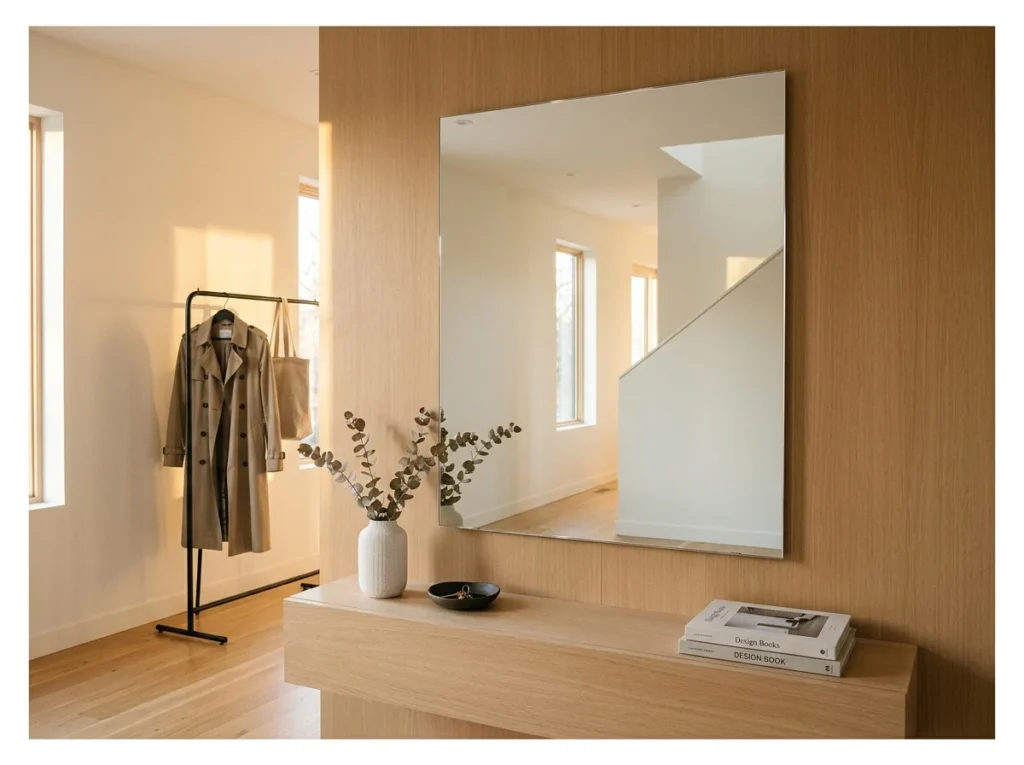
A frameless rectangular mirror with polished or beveled edges creates the most minimal and architectural mirror installation available, where the reflective surface appears to be simply embedded in the wall rather than being a hung object.
This approach suits minimalist, contemporary, and Japandi interior directions particularly well. The absence of any frame also maximizes the reflective surface area for a given wall space, making it one of the most effective space-expanding mirror options.
Hexagonal Mirror Arrangement
Hexagonal mirrors grouped together create a geometric pattern on the wall rather than a single shape. This arrangement works well as an alternative to a standard gallery wall of photos or art. The repeated shape also adds a slightly more modern, graphic feel to the entryway.

A cluster of hexagonal mirrors arranged in a honeycomb-inspired pattern creates a modern, graphic entryway wall installation that reflects light from multiple angles while creating genuine visual interest through the geometric repetition of the six-sided forms.
Mix two or three hexagonal sizes within the same slim frame finish for the most organic and naturally composed cluster arrangement. This approach suits contemporary, geometric, and Scandinavian design directions where pattern and form take precedence over ornate decoration.
Bamboo-Framed Natural Mirror
A bamboo frame brings a lightweight, natural material into the entryway styling. This works especially well in homes leaning toward a coastal or tropical aesthetic. The warm tone of the bamboo also pairs easily with wood furniture nearby.
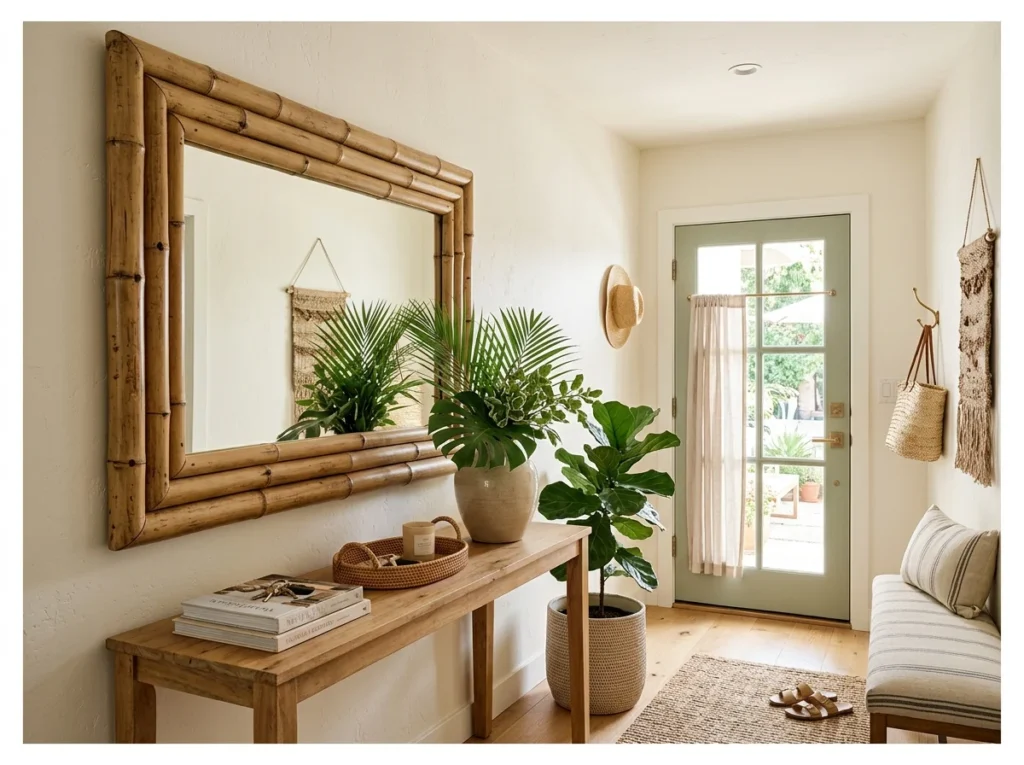
A bamboo-framed mirror brings tropical, coastal, and organic modern material energy to the entryway. The natural bamboo stalks or woven bamboo surface create a genuinely distinctive frame that reads as both handcrafted and environmentally considered.
This frame material suits coastal, tropical, and boho entryway aesthetics particularly well. The light natural tone of bamboo also complements warm white walls, earthy terracotta accents, and natural fiber floor coverings that are common in these design directions.
Vintage Ornate Carved Mirror
Carved detailing along the frame gives this mirror a handcrafted, old world character. No two vintage pieces tend to look exactly alike, which adds a bit of individuality to the entryway. This style tends to suit homes with other antique or collected furniture pieces.

A genuine vintage or antique carved timber mirror, whether in its original painted, gilded, or natural finish, brings irreplaceable material history and character to an entryway. Each piece is genuinely unique, with its own patina and carving detail.
Source vintage carved mirrors from antique markets, estate sales, and online dealers. Often a simple coat of chalk paint in white or charcoal transforms a dated-looking piece into a statement element that suits contemporary interiors while retaining its handmade character.
The character that no new mirror can replicate.
Industrial Metal Frame Mirror
A metal frame, often in black or bronze, gives this mirror a slightly raw, utilitarian look. This style works well in entryways with other industrial details already present, like exposed hardware. Its simple geometric shape also tends to keep the overall design from feeling too busy.
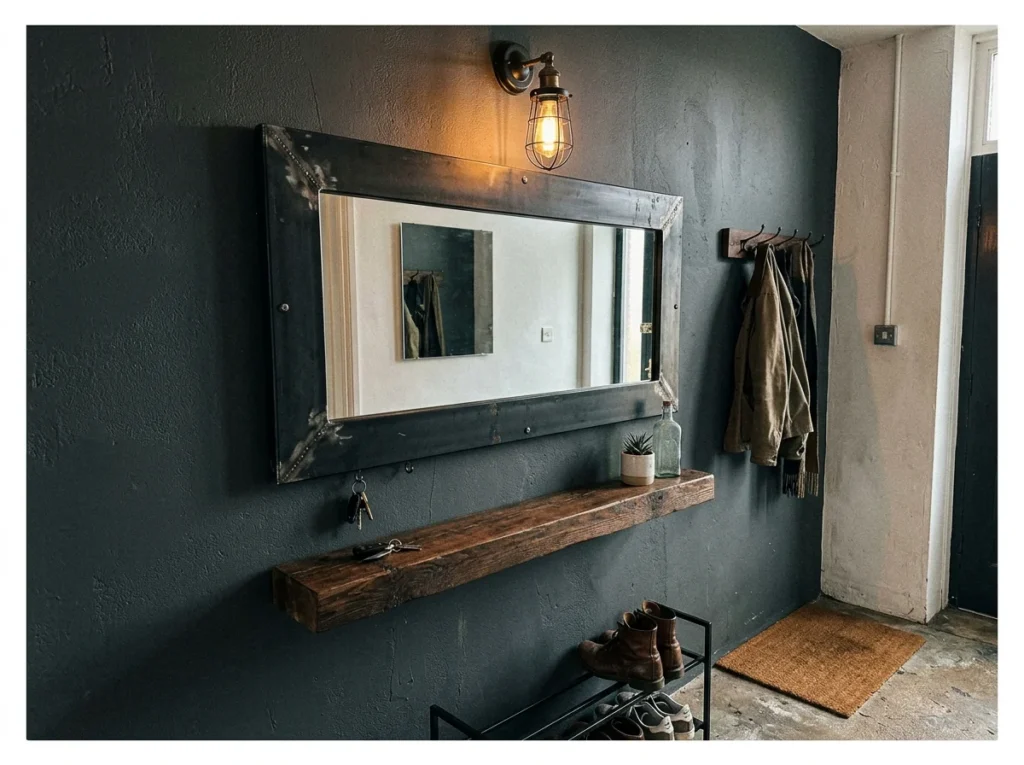
A heavy black steel frame mirror with visible industrial detailing, welded joints, and raw structural honesty creates an entryway piece that suits urban apartments, converted spaces, and any home with an industrial or contemporary design direction.
The visual weight of a substantial steel frame also suits oversized mirrors in larger entryways where a slimmer frame would look undersized. The contrast between heavy black metal framing and the reflective mirror surface creates a genuinely striking design tension.
Scalloped Edge Mirror
Scalloped edges add a soft, wavy detail around the mirror instead of a straight or simple curved frame. This shape tends to bring a slightly playful or vintage feel into the entryway. It works especially well as a smaller accent piece rather than an oversized statement mirror.
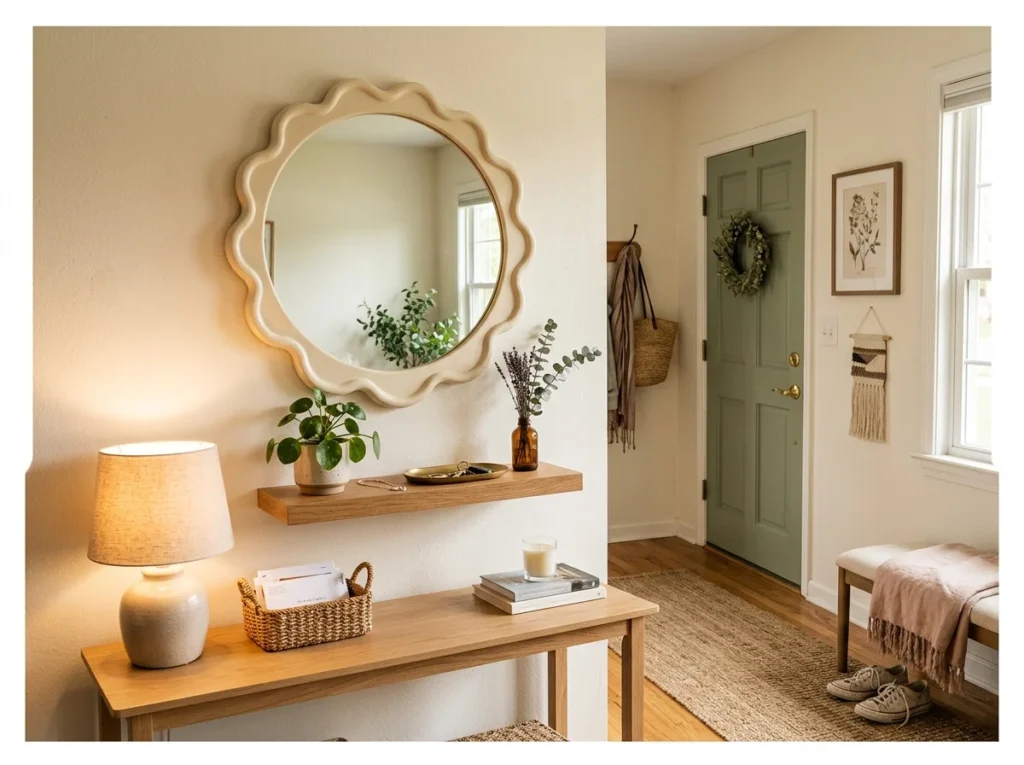
A scalloped-edge mirror uses a petal-like or wave-like border around the circular form to create a mirror with genuine decorative personality that reads as simultaneously playful and considered. The scalloped detail suits coastal, bohemian, and soft contemporary styles.
Cream, white, and terracotta scalloped mirror finishes are the most widely available and suit the widest range of entryway palettes. The organic, asymmetric quality of a well-proportioned scalloped edge creates entryway warmth that more geometric frames cannot achieve.
Trifold or Paneled Mirror
A trifold mirror uses multiple panels, often angled slightly, to give a wider field of reflection. This style works well for a more thorough check before heading out the door. The paneled design also adds visual interest compared to a single flat mirror surface.

A trifold or multi-panel mirror arrangement creates significantly more reflective surface than a single panel of equivalent visual width, since each panel reflects light at a slightly different angle, amplifying the light-multiplying effect.
This approach suits wide entryways or entry halls where a single centered mirror would leave significant wall space unused. The panel divisions also add visual rhythm to the mirror installation that a single flat surface lacks.
Floating Round Mirror at Entry Height
Hanging a round mirror at a slightly lower height puts it right at eye level near the door. This placement makes it more functional for a quick check on the way out. The round shape also softens the entryway if most of the surrounding furniture has straight edges.
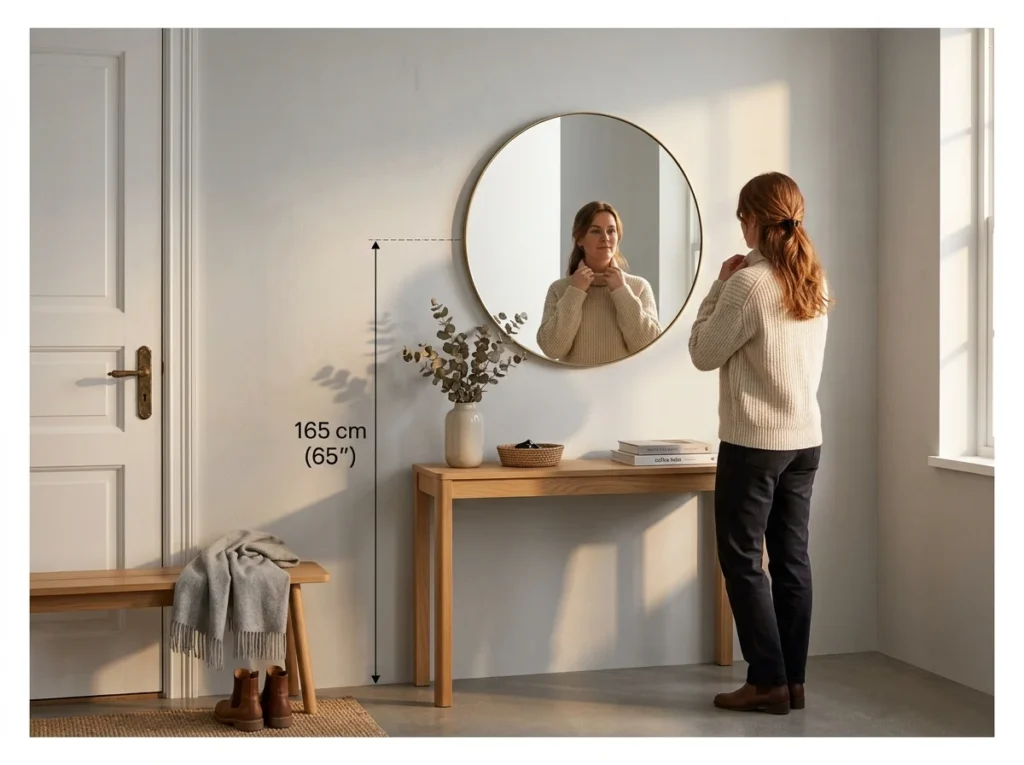
A single round mirror mounted at the correct practical height for face-level reflection, approximately 155 to 165 centimeters to its center, creates the most practically functional entryway mirror regardless of its size, since correct placement matters more than scale.
This simple, precisely placed approach suits minimalist entryways where one well-positioned object creates more satisfaction than multiple competing elements. A slim timber or metal frame in any finish suits this deliberately restrained approach.
Floor-to-Ceiling Mirror Panel
A full height mirror panel makes a small entryway feel significantly larger through reflected space. This works especially well in narrow hallways or tight entry areas with limited square footage. Its scale also means it becomes the entryway’s main feature without needing much else around it.
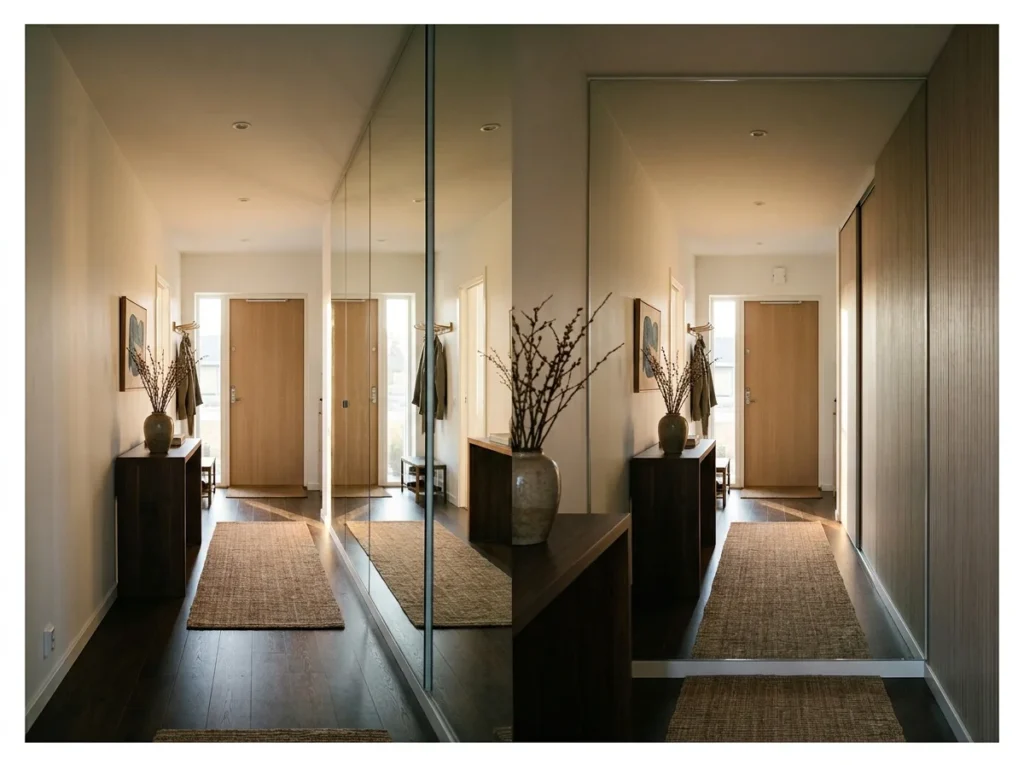
A full floor-to-ceiling mirror panel mounted on one complete wall of a narrow entryway creates the most powerful space-expansion effect of any single interior intervention. The reflected corridor creates the genuine impression of a wider, more generous hall.
This approach is particularly effective in corridors narrower than 90 centimeters where any addition of furniture would further compress the space. The mirror expands visually rather than physically and creates a hall that functions like a significantly larger space than its actual dimensions allow.
Mirror with Built-In Shelf
A mirror with an attached shelf gives a spot for small items without needing separate furniture. This combination works well in entryways too small to fit both a mirror and a console table. It keeps the styling simple while still adding some practical function to the wall.
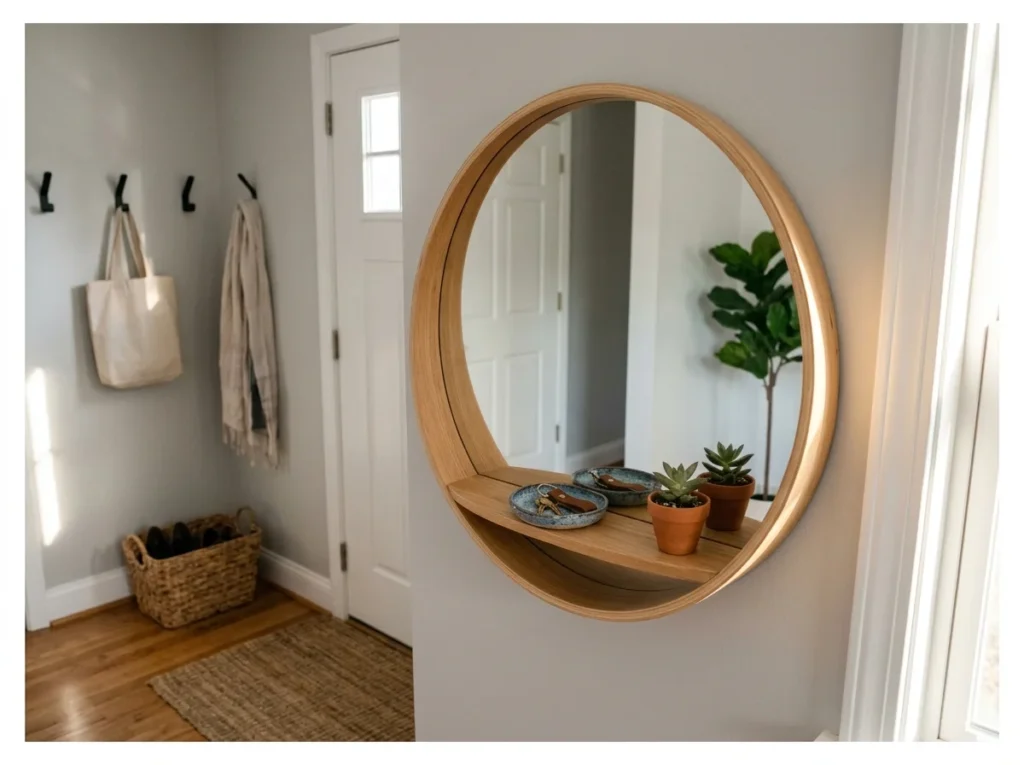
A wall-mounted mirror with a built-in narrow shelf at its base combines full entry functionality in a single installation that mounts directly to the wall without consuming any floor space. The shelf provides enough surface area for daily essentials.
This solution suits the smallest entryways where a standard console table would genuinely be too deep to allow comfortable passage. The shelf can hold a key dish, a small plant, and perhaps one candle, which is all most entryways genuinely need.
Perfect for hallways where every centimeter counts.
Beveled Edge Wall Mirror
Beveled edges catch light along the border of the glass, adding subtle detail without a full frame. This style tends to feel more classic than a completely flat, unbeveled mirror. It works well in entryways that want a bit of detail without going fully ornate.

A beveled edge mirror, where the perimeter of the glass is angled and polished to create a decorative border within the mirror surface itself, adds traditional refinement and a subtle light-catching prism effect that flat-edge mirrors lack entirely.
The bevel creates a gentle sense of depth at the mirror’s border that makes even a frameless piece feel finished and deliberate. This style suits traditional, transitional, and classic entryway designs where subtle craftsmanship detail matters more than bold decorative gesture.
Antiqued or Mercury Glass Mirror
Mercury glass mirrors have a cloudy, slightly distressed finish rather than a perfectly clear reflection. This effect gives the piece an aged look, even if the mirror itself is brand new. It suits entryways going for a vintage or slightly moody aesthetic.

An antiqued or mercury glass mirror has a subtly variegated, clouded surface that creates soft, aged reflections rather than the crisp clarity of modern mirror glass. The effect adds warmth and patina that contemporary mirrors deliberately avoid.
This style suits entryways with a collected, lived-in aesthetic where perfect precision feels out of place. The slightly imperfect reflection is itself a decorative quality rather than a flaw, and the aged appearance adds genuine character to the entry wall.
Entryway Mirror with Hooks Below
Hooks mounted beneath the mirror give a spot for keys, bags, or a coat right at the door. This combination turns a purely decorative piece into something more functional day to day. It works especially well in smaller entryways where separate storage furniture isn’t practical.

A mirror mounted above a row of hooks creates a complete functional entry station that handles both the reflective need and the coat and bag storage need in a single wall section without requiring any floor furniture at all.
This combined approach suits compact entryways where wall space is limited and floor space is genuinely needed for passing through the corridor comfortably. A mirror above and hooks below is one of the most efficient spatial arrangements available for a narrow entry.
For even more organization nearby, storage that keeps the entry tidy can handle everything the hooks can’t.
Mirrored Furniture as Entry Accent
A mirrored console or cabinet reflects light around the entryway in the same way a wall mirror does. This piece also adds a bit of shine and polish compared to standard wood or metal furniture. It works well as a single statement piece rather than pairing with too many other reflective surfaces.
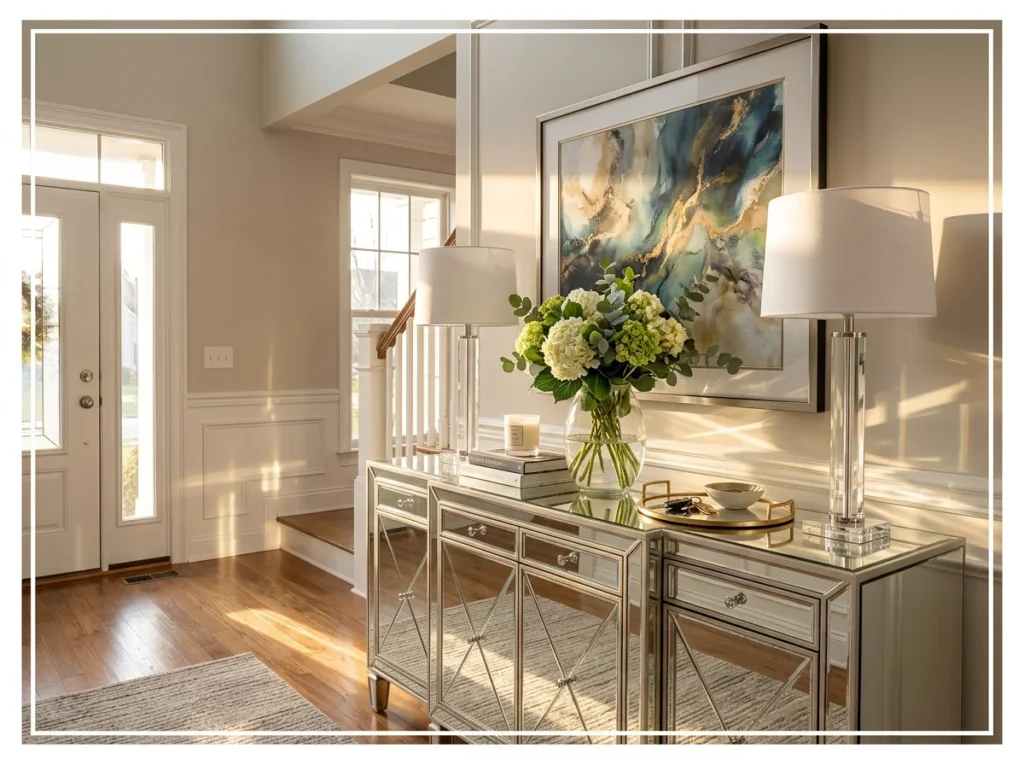
A mirrored console table or side cabinet in the entryway amplifies light from a horizontal surface rather than a vertical one, creating a different kind of reflective effect that complements rather than duplicates a wall-mounted mirror above it.
Mirrored furniture particularly suits glamorous, Art Deco-inspired, and transitional entryway styles where the reflective material on multiple surfaces creates a layered luminosity that painted or natural timber furniture cannot achieve from the same footprint.
Maximum light amplification from every surface.
This same reflective quality carries beautifully into adjoining rooms, so furniture with a glamorous finish is worth considering as you move further into the home.
Conclusion
An entryway mirror is one of the highest-return design decisions available for any home precisely because it delivers both genuine practical function and significant visual transformation from a single installation. Every household member uses it daily, every visitor notices it immediately, and it works around the clock to reflect light into the most challenging room in the house.
Start with the placement decision since correct height and light-reflection angle matter more than any other factor. Choose a frame style that suits the entryway’s existing materials and aesthetic direction. Scale up rather than down when uncertain between two sizes.
If your entry doubles as a mudroom, a mudroom cabinet worth exploring can handle storage while the mirror handles light.
The bright, beautiful entryway you want to walk into every day is one well-chosen mirror away from becoming real.
Add a few finishing touches and you’ll have an entry that welcomes you home the moment you step through the door.




Pingback: 21 Entryway Rug Ideas to Elevate Your Space