Nothing feels more inviting than a farmhouse dining room that warm, gather-round-the-table charm you just can’t fake. These 23 farmhouse dining room ideas feature rustic wood tables, shiplap accents, and cozy vintage touches that turn every meal into a cherished moment. Here are the best farmhouse dining room ideas you’ll absolutely love!
If you want to see how this style translates into other settings, there are other cozy gathering spaces to explore too.
Reclaimed Wood Trestle Table
A reclaimed wood trestle table adds rustic character and timeless appeal to any space with its natural textures and handcrafted look. Its sturdy design makes it perfect for dining, work, or display areas while bringing warmth and a unique story to your home décor.
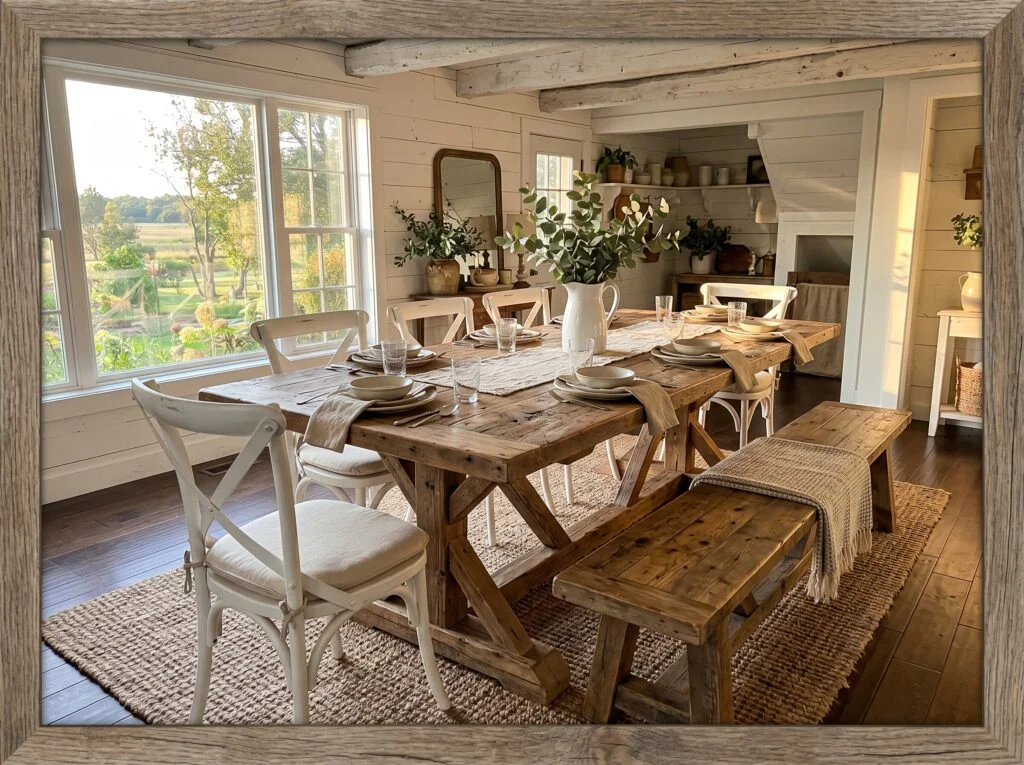
A reclaimed wood trestle table is the single most defining piece in a farmhouse dining room. Nothing else anchors the space the way a thick, honest slab of wood does. The trestle base two A-frame or X-frame supports instead of four legs gives the table a historical, handcrafted quality that no machine-made furniture can replicate.
When sizing your table, go bigger than you think you need. The farmhouse aesthetic loves generous scale. A table that seats eight in a room that fits six looks bold and intentional. A table that seats four in a room that fits eight looks forgotten. Aim for at least three feet of clearance around all sides of the table for comfortable chair movement.
Wagon Wheel Chandelier
A wagon wheel chandelier brings rustic charm and a dramatic focal point to interiors, combining vintage style with warm ambient lighting. Its unique circular design works beautifully in farmhouse, cabin, and industrial spaces while adding character and visual interest overhead.
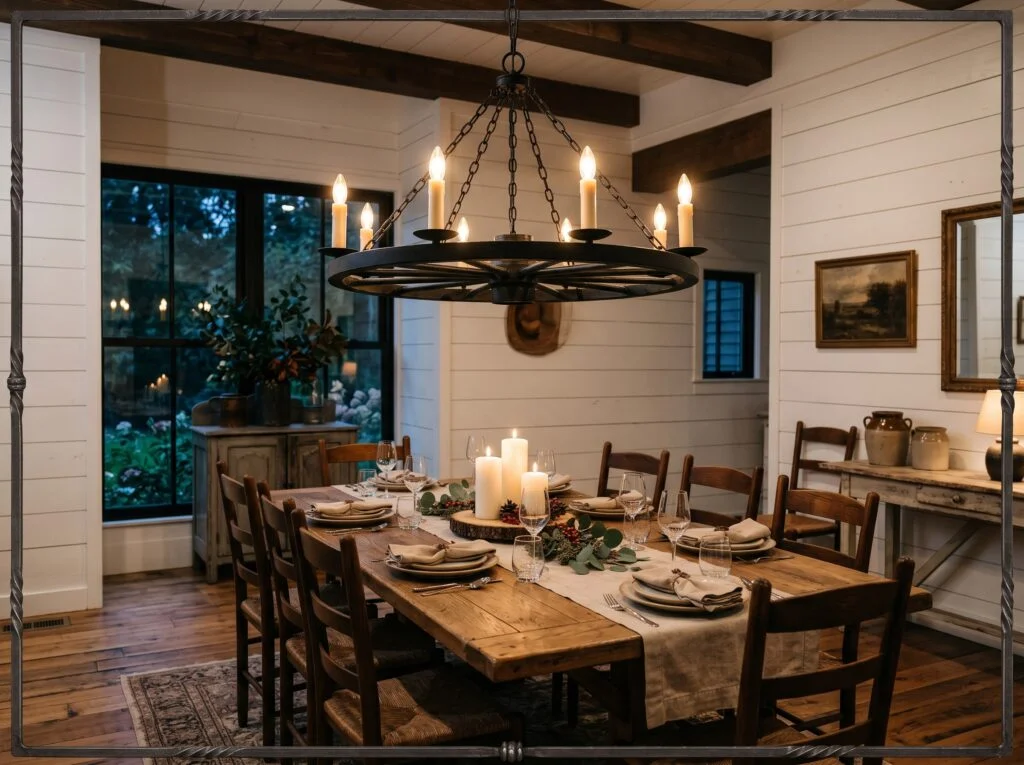
A wagon wheel chandelier is one of the most recognizable farmhouse design elements, and it earns its iconic status. The circular shape fills a long rectangular dining table perfectly, the iron construction adds industrial weight that balances against soft textiles, and the candlestick-style bulbs cast the most flattering, warm light imaginable over a dinner table.
Hang it low between 30 and 36 inches above the tabletop is the standard recommendation, and for dramatic effect, go toward the lower end. Choose a fixture with a diameter roughly half the width of your table for ideal proportion. For an 8-foot table, a 36 to 42-inch chandelier looks right. Use a warm white LED filament bulb in the 2200K to 2700K range for maximum amber glow.
White Shiplap Accent Wall
A white shiplap accent wall creates a bright, timeless backdrop that adds texture and farmhouse charm to any room. Its clean horizontal lines make spaces feel more open while pairing effortlessly with rustic wood, modern décor, and neutral color palettes.
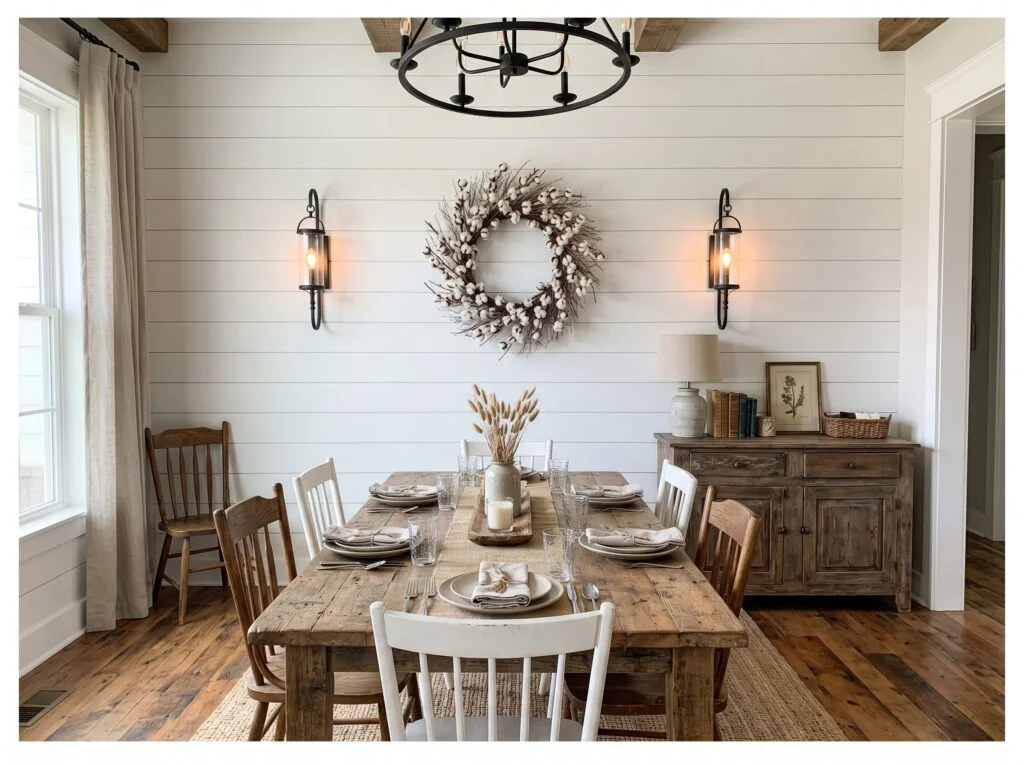
A shiplap accent wall behind the dining table does something that paint simply cannot it adds physical texture that catches light differently throughout the day and makes the wall feel purposeful rather than blank. White shiplap in particular creates the perfect clean, bright contrast against dark wood furniture and black iron fixtures.
Install shiplap horizontally for the classic farmhouse look, or vertically for a slightly more modern interpretation. Real pine shiplap is the authentic choice and costs about $1 to $2 per square foot for the boards alone. If budget is tight, nickel gap wall panels from a home improvement store give the same visual result at a lower installation cost. Paint in pure white (Benjamin Moore Chantilly Lace and Sherwin-Williams Alabaster are both farmhouse favorites) and finish with a flat or matte sheen it hides texture imperfections and avoids the plastic look of a gloss finish.
Mixed-Material Seating
Mixed-material seating combines elements like wood, metal, leather, and fabric to create a balanced look with depth and character. This versatile design approach adds visual interest while allowing you to blend rustic, industrial, modern, or farmhouse styles into one cohesive space.
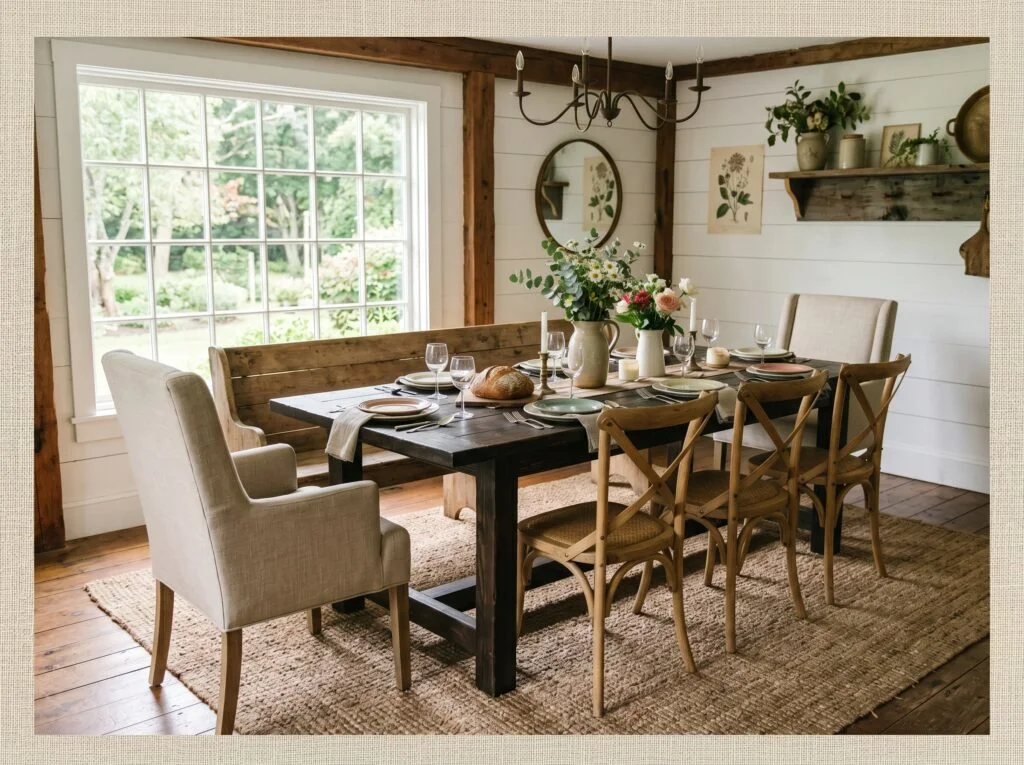
Matching chair sets look like a furniture showroom floor not like a home that developed its character over time. Mixed seating is one of the most important styling principles in authentic farmhouse design, and it applies perfectly to the dining room. The idea is simple: different seating types that share a color or material story.
The bench deserves special mention because it’s so practical for dining. It squeezes in extra guests when needed, it lets small children sit together comfortably, and it creates a more casual, communal feeling than individual chairs provide. A raw wood bench with a simple tied cushion costs very little to DIY from basic lumber.
If you’re curious about more combinations, there are chair styles that pair well together across a range of budgets.
Exposed Dark Ceiling Beams
Exposed dark ceiling beams add architectural character and a dramatic contrast that instantly elevates a room’s design. Their rich tones create a cozy, grounded feel while complementing farmhouse, industrial, and modern rustic interiors with a bold statement overhead.
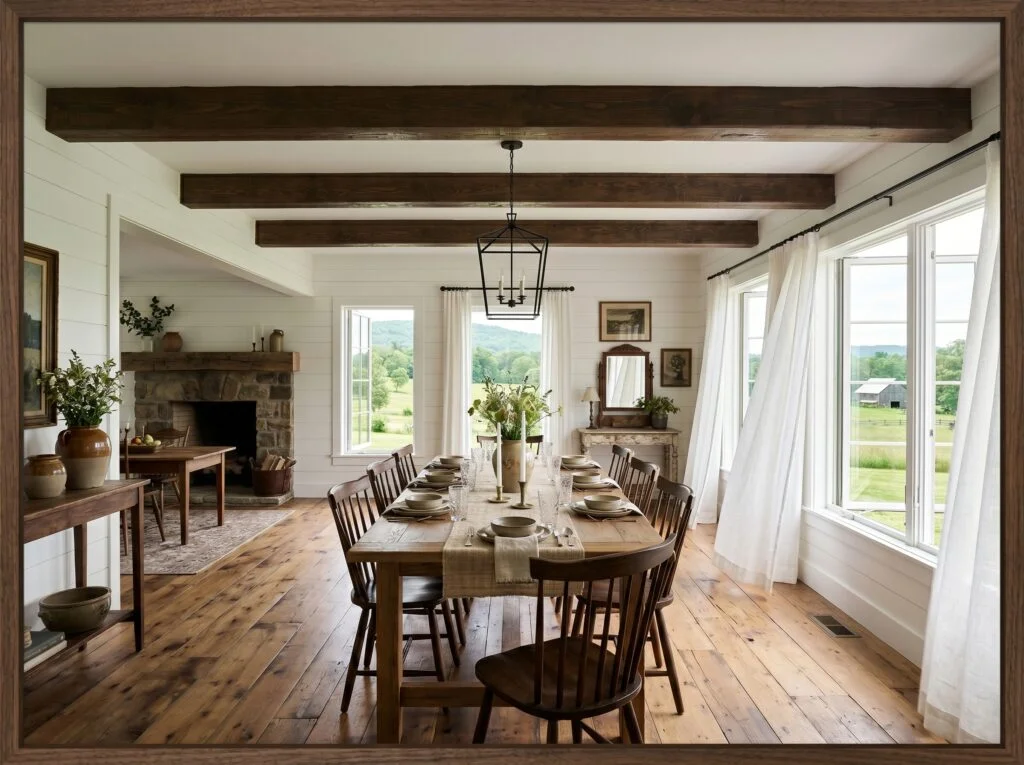
Exposed ceiling beams in a dining room change the entire scale and personality of the space. They draw the eye upward, add perceived height even while making the ceiling feel more intimate, and introduce a structural quality that reminds you of old barns, French farmhouses, and century-old country homes.
Faux wood beams are the accessible version of this upgrade, and the quality options are genuinely convincing from normal viewing distance. They’re hollow polyurethane shells that mount over a nailer board screwed to the ceiling no structural work required, no engineer needed. A set of three faux beams for a standard dining room typically costs $300 to $600 and installs in a day. Real timber beams run significantly higher and require professional installation, but they have weight and presence that no faux beam can fully replicate.
Open Shelf Dining Room Display
Open shelf dining room displays combine storage and style by showcasing your favorite dishes, glassware, plants, and décor pieces. They create an inviting focal point while keeping everyday items accessible and adding personality, warmth, and visual interest to the dining space.
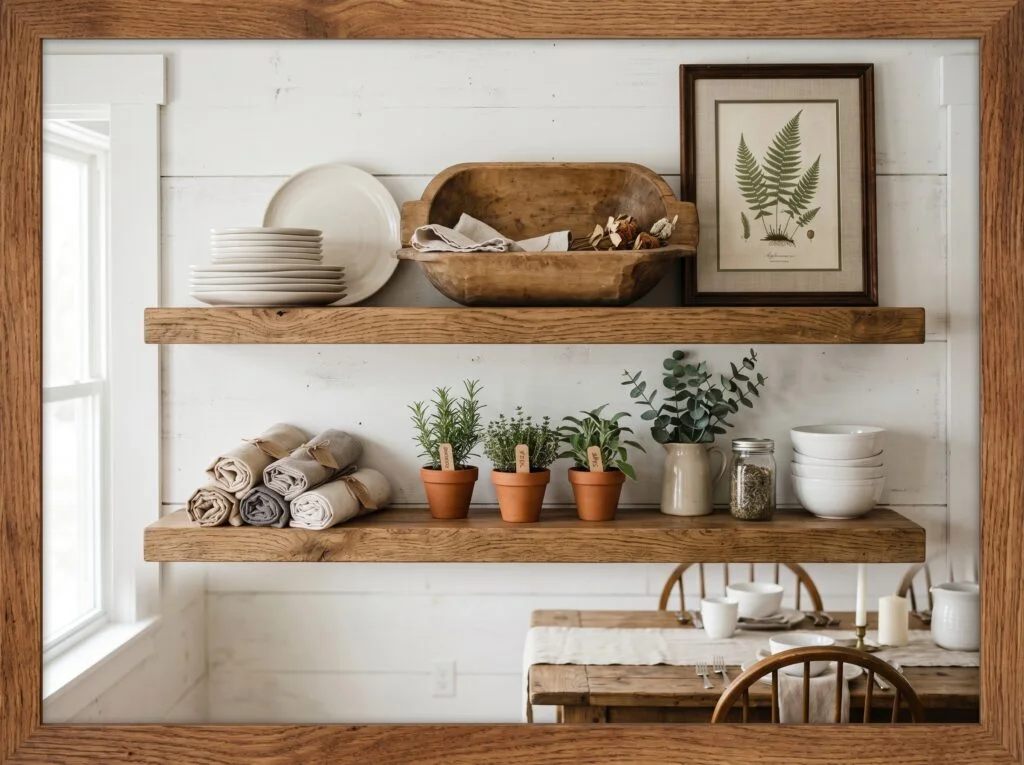
Open shelves in a dining room are doing two things simultaneously displaying your most beautiful everyday items and keeping them genuinely accessible. In a farmhouse dining room, open shelves replace the formal china cabinet with something that feels more lived-in and honest.
Use floating wood shelves rather than bracket-heavy shelving for the cleanest look. Thick live-edge wood shelves make a beautiful statement; simple pine stained in a warm walnut tone is more budget-friendly and works equally well. Space shelves 12 to 14 inches apart vertically enough clearance for stacked plates and tall pitchers. Style them in odd-numbered groupings: three plates, two bowls, one pitcher, one plant..
For more inspiration on filling wall space, it’s worth seeing other ways of displaying dishware in an open layout.
Linear Black Iron Lantern Pendant
A linear black iron lantern pendant adds a sophisticated focal point above dining tables, kitchen islands, or entry spaces with its sleek industrial design. The open frame structure creates a warm glow while blending beautifully with farmhouse, modern, and rustic décor styles.
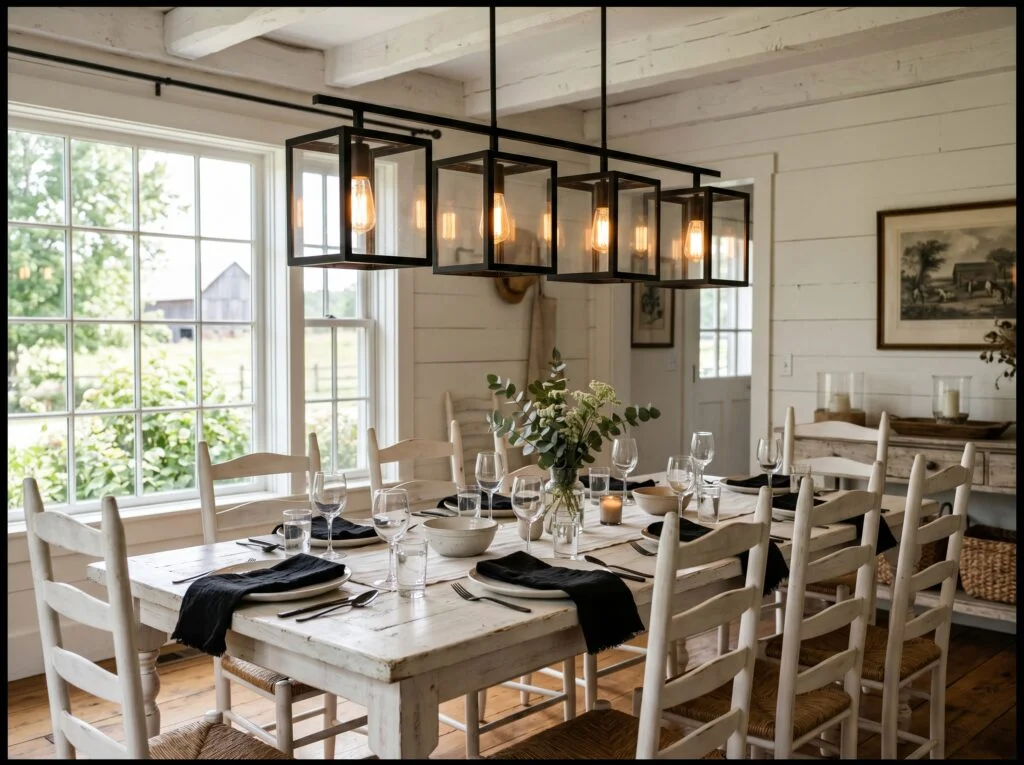
A linear pendant light over a rectangular dining table is the modern farmhouse’s answer to the traditional chandelier. The long horizontal shape follows the table’s footprint, distributes light evenly across all seats, and creates a clean architectural line that ties the room together.
Size is critical with a linear pendant. The fixture should be 60 to 75 percent of the table’s length for a 72-inch table, that’s a 43 to 54-inch fixture. Hang it 30 to 36 inches above the tabletop in rooms with standard 8-foot ceilings, and slightly lower in rooms with taller ceilings for a more intimate effect. Use 2200K to 2700K Edison-style LED filament bulbs they produce the warm amber light that makes farmhouse dining rooms look like they’re lit by candlelight. Avoid bright white or cool bulbs, which kill the warmth entirely and make even beautiful wood furniture look flat.
For more fixture inspiration beyond the linear pendant, there are warm fixtures worth hanging overhead in every style.
Vintage Wood Hutch or China Cabinet
A vintage wood hutch or china cabinet adds timeless charm and functional storage to dining spaces. Its classic craftsmanship provides a beautiful display area for dishes, glassware, and décor while bringing warmth, character, and a collected feel to the room.
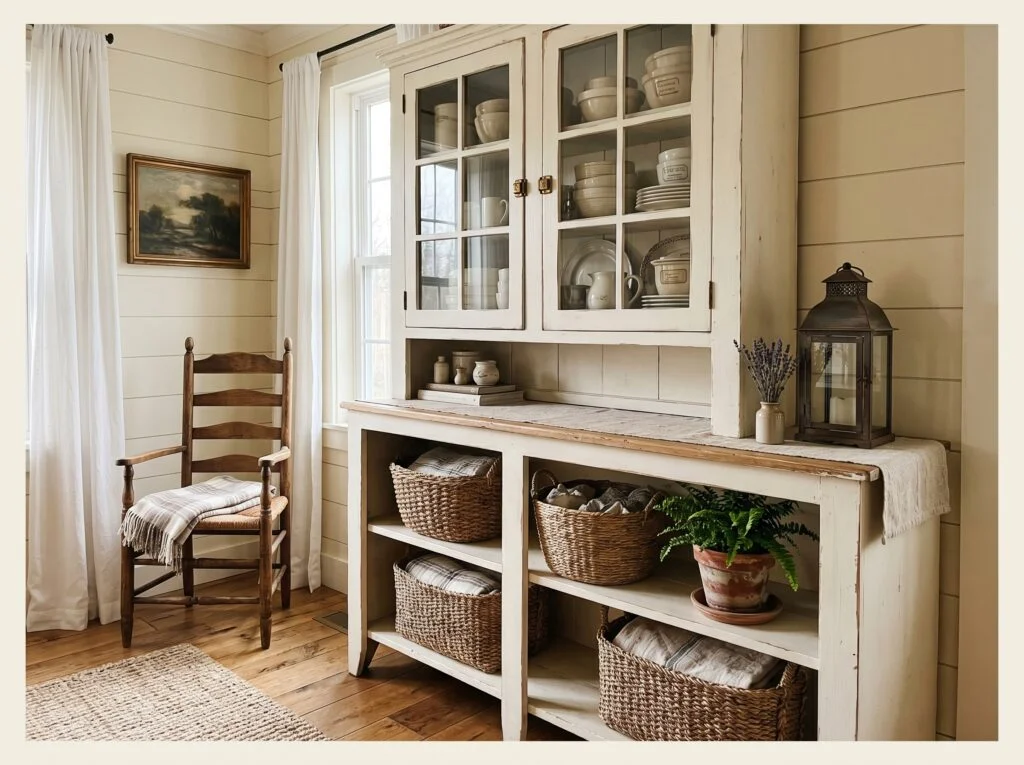
A vintage hutch or china cabinet in a farmhouse dining room is one of those pieces that completely elevates the space. It provides significant storage, creates a tall vertical focal point on an otherwise empty wall, and when styled correctly, looks like a piece that’s been in the family for generations. Painted hutches in antique white, soft sage green, or deep navy all work beautifully in a farmhouse context. The paint softens the formality of the piece and makes it feel more casually elegant than strictly traditional.
Style the upper glass-front sections with intent. Stack plates vertically so the pattern or edge is visible. Layer a small pitcher in front of the plate stack. Put a few books at one end. Leave some empty space a hutch stuffed to every corner looks chaotic, not curated.
Sliding Barn Door to Kitchen or Pantry
A sliding barn door to the kitchen or pantry adds rustic character while saving valuable floor space compared to traditional swinging doors. Its bold design creates a stylish transition between rooms while enhancing farmhouse, modern rustic, and country-inspired interiors.
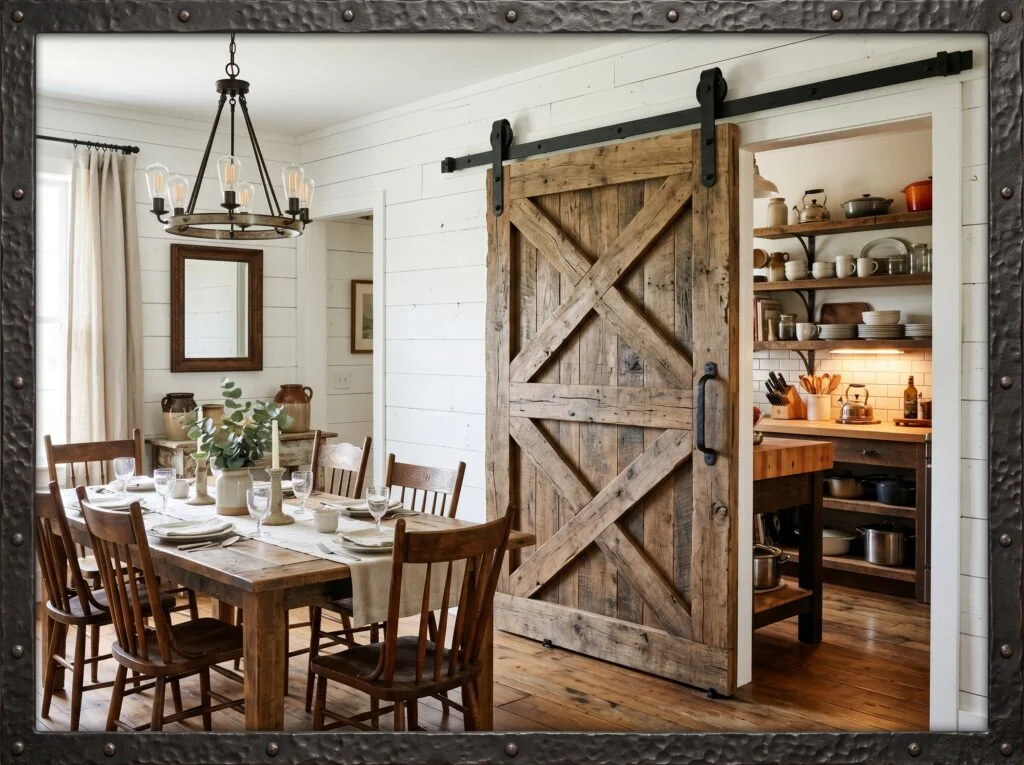
A sliding barn door between the dining room and the kitchen or hiding a pantry, a butler’s pantry, or a pass-through is one of the most practical farmhouse design moves you can make. It saves the floor space a swinging door requires, which matters enormously in a dining room where chair clearance is already at a premium.
Choose a door width that’s 2 to 4 inches wider than the opening on each side to block light gaps when closed. A cross-brace design (two diagonal planks forming an X across the face of the door) is the most authentically farmhouse option. Reclaimed barn wood is ideal for texture and character, but new pine stained in a gray-brown tone or painted in charcoal achieves a similar effect at lower cost.
Shaker-Style Built-In Buffet
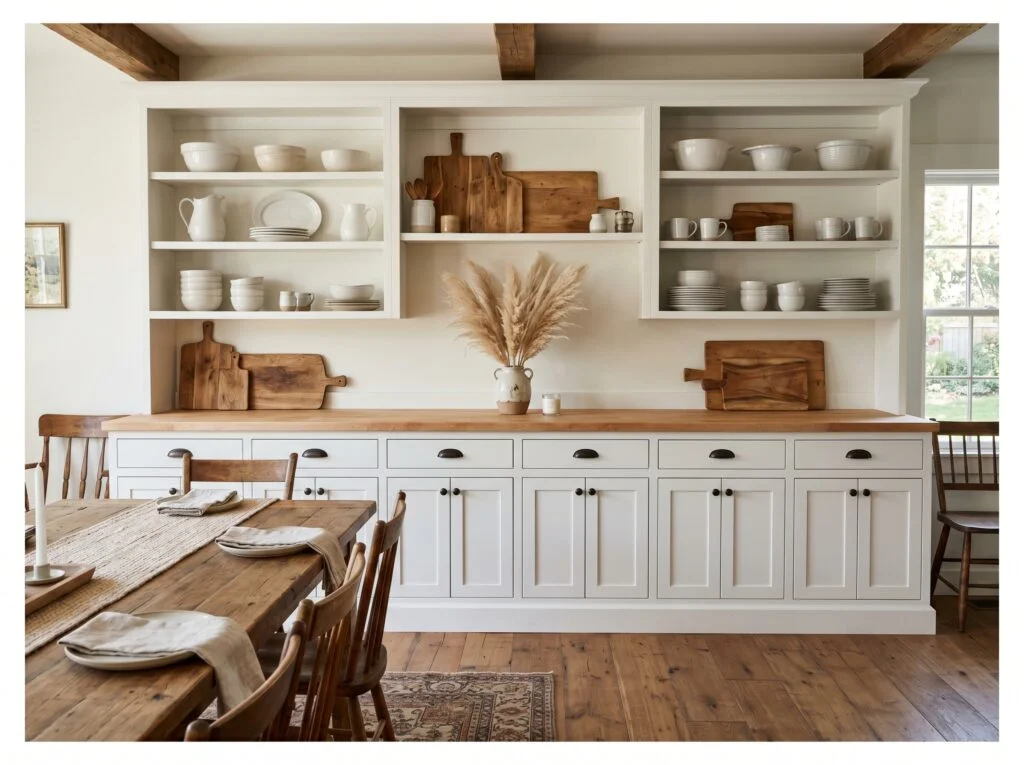
A shaker-style built-in buffet combines clean craftsmanship with practical dining room storage, offering a timeless solution for serving areas and dish organization. Its simple lines and custom design create a polished focal point while blending seamlessly with farmhouse, traditional, and modern interiors.
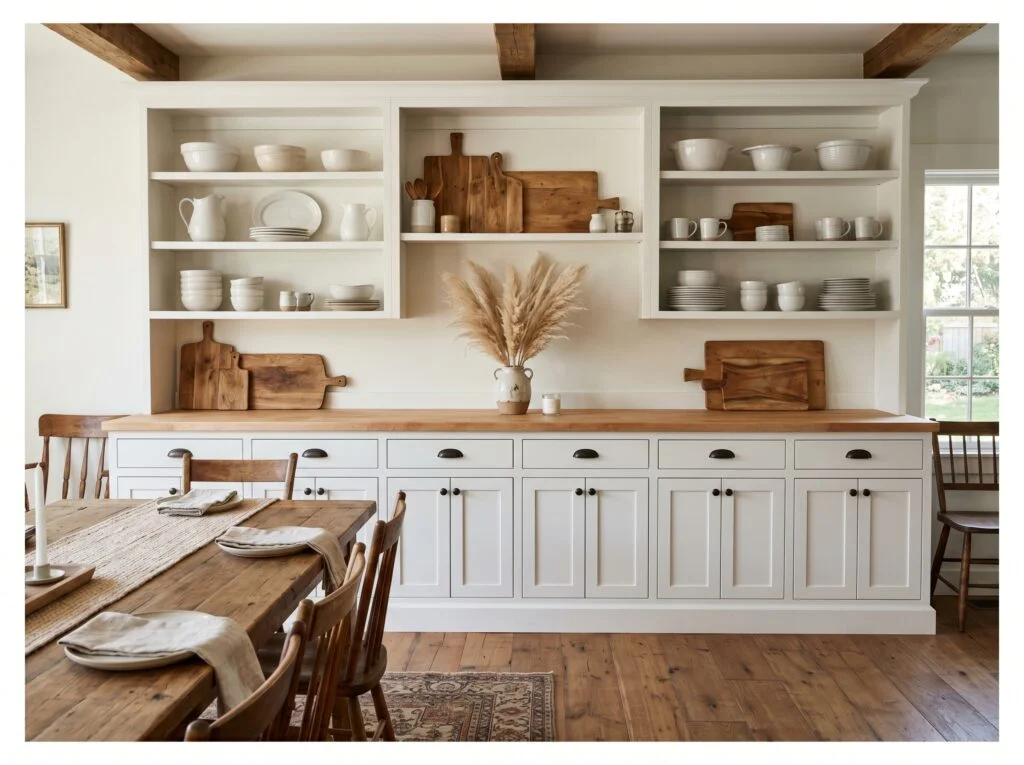
A built-in buffet wall in the dining room is one of the highest-impact, highest-function upgrades you can make to any dining space. It provides enormous storage for table linens, serving pieces, candles, and entertaining supplies. It creates a countertop surface for buffet-style serving during dinner parties.
If a full custom build-in is outside your budget, the IKEA hack version is a well-established and genuinely good-looking alternative. IKEA SEKTION base cabinets topped with a butcher block counter and surrounded by simple trim boards to make them look built-in have fooled professional designers on more than one occasion. Paint them white or a soft sage, add unlacquered brass or matte black bin pulls, and add a few floating shelves above.
Woven Seagrass or Rattan Chairs
Woven seagrass or rattan chairs bring natural texture and relaxed elegance to dining spaces with their handcrafted appeal. Their lightweight design and organic materials create a warm, inviting atmosphere while pairing beautifully with coastal, farmhouse, and bohemian décor styles.
Rattan and seagrass chairs bring a warmth and organic texture to a farmhouse dining room that wood or metal chairs alone can’t deliver. The woven material is simultaneously natural, casual, and sophisticated it references the French and coastal farmhouse traditions where wicker and rattan have always been dining staples. Rattan-back chairs with a wood frame and a simple tied cushion seat are a classic combination that looks right in everything from a bright white coastal farmhouse to a darker, more rustic country dining room.
Look for chairs with a solid wood frame (oak or beech are most durable) and a hand-woven natural rattan or seagrass back panel. The weave should be tight and even loose or sloppy weaving signals low quality construction that will sag or unravel within a year. A removable, washable cushion in natural linen is the practical farmhouse choice. Rattan dining chairs are widely available at affordable price points quality sets of four run between $200 and $600.
Oversized Antique or Vintage Mirror
An oversized antique or vintage mirror adds elegance and depth to a dining space while creating the illusion of a larger, brighter room. Its aged finish and unique frame design bring character, sophistication, and a timeless decorative element to the walls.
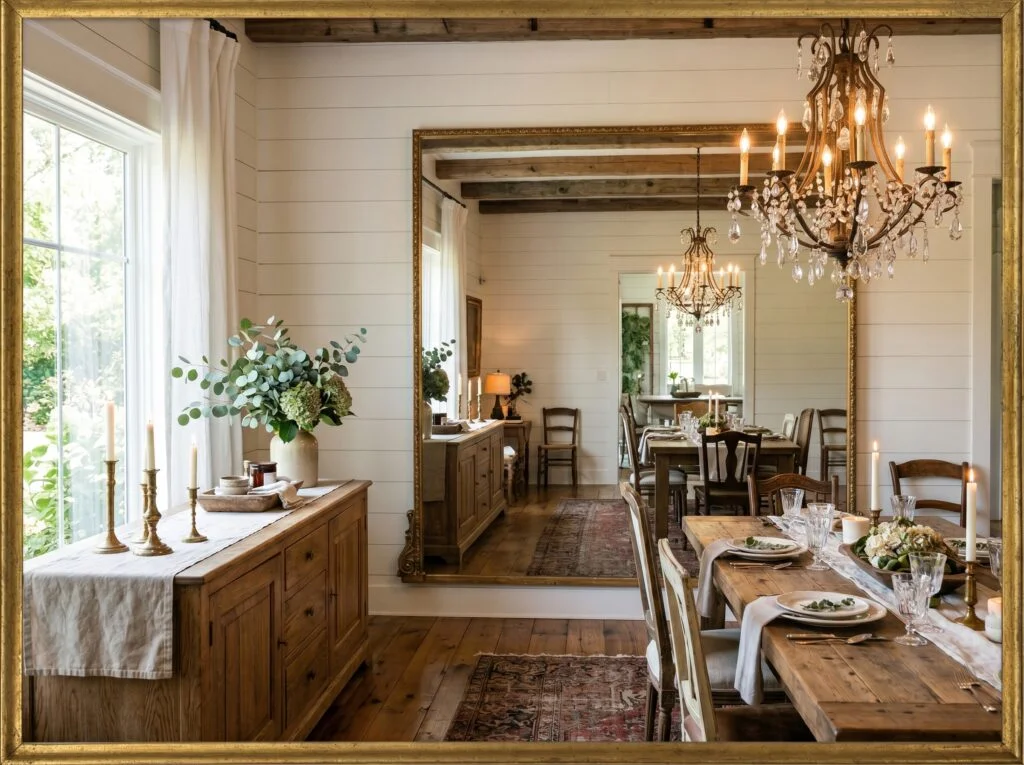
An oversized mirror in a farmhouse dining room does something no other decorating trick accomplishes as effectively it visually doubles the size of the space and bounces light around in a way that makes the room feel bright and airy at all times of day. A large ornate mirror leaning against the wall above a sideboard is particularly effective because the slight lean adds an informal, collected quality that a precisely centered hung mirror doesn’t have. It looks like you found it at an antique market and it’s been there forever.
Choose a mirror with a frame that complements your other materials. A gilded or gold-toned vintage frame works beautifully against white shiplap and dark wood furniture the warmth of the gold connects the two. A distressed white wood frame is softer and more romantic. A simple black wood frame is the modern farmhouse choice. Size matters enormously the mirror should be at least 36 inches wide to make an impact, and 48 to 60 inches is better for a standard dining room wall.
Linen Curtains in Neutral Tones
Linen curtains in neutral tones add softness, warmth, and natural texture to dining spaces while creating a relaxed, elegant atmosphere. Their light-filtering fabric enhances natural brightness and complements farmhouse, coastal, and modern interiors with a timeless, airy feel.
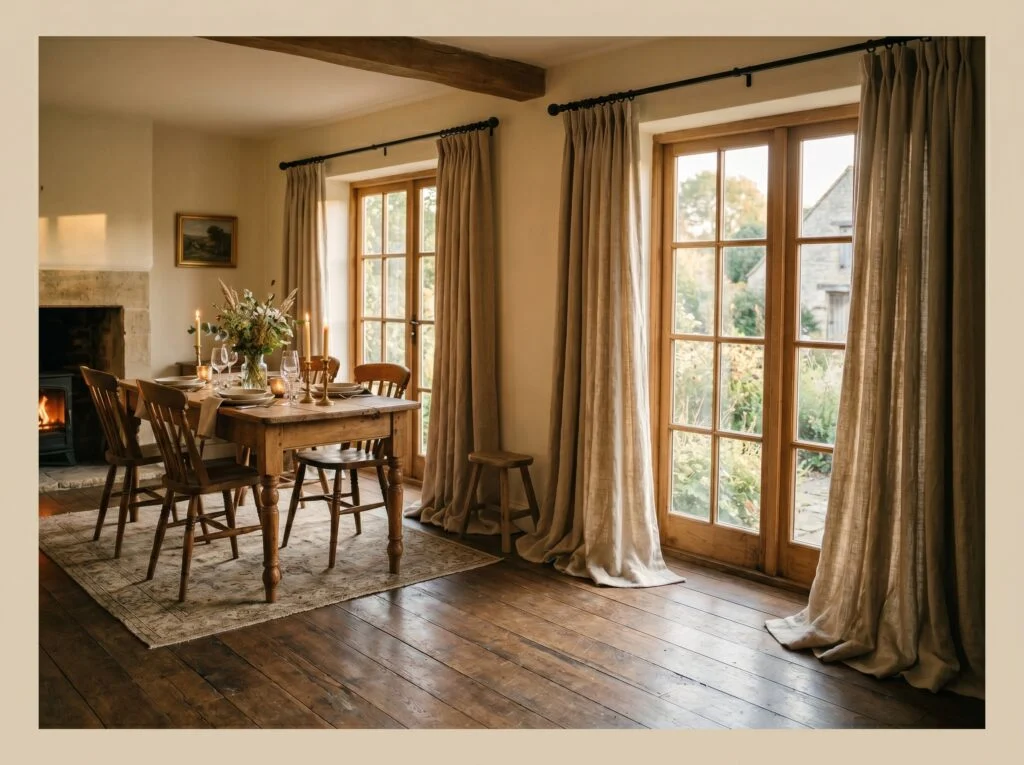
Linen curtains are the farmhouse dining room’s answer to formality they add softness and elegance without feeling fussy or precious. Natural linen in oatmeal, warm white, or soft gray has a relaxed drape and a slightly textured surface that catches light beautifully, especially in a room with good natural light.
Hang the curtain rod as close to the ceiling as possible even in a standard 8-foot ceiling room, ceiling-height curtain rods make windows look dramatically taller and the room feel more spacious. Let the curtain panels pool slightly on the floor (about two inches) for a relaxed, romantic look. Use iron curtain rings and a black or oil-rubbed bronze curtain rod to stay consistent with the farmhouse hardware palette.
Centerpiece Styling: Organic and Layered
Organic and layered centerpiece styling creates a dining table that feels natural, inviting, and thoughtfully designed. Combining elements like greenery, candles, textured ceramics, and wood accents adds depth and warmth while creating a balanced focal point for everyday meals or gatherings.
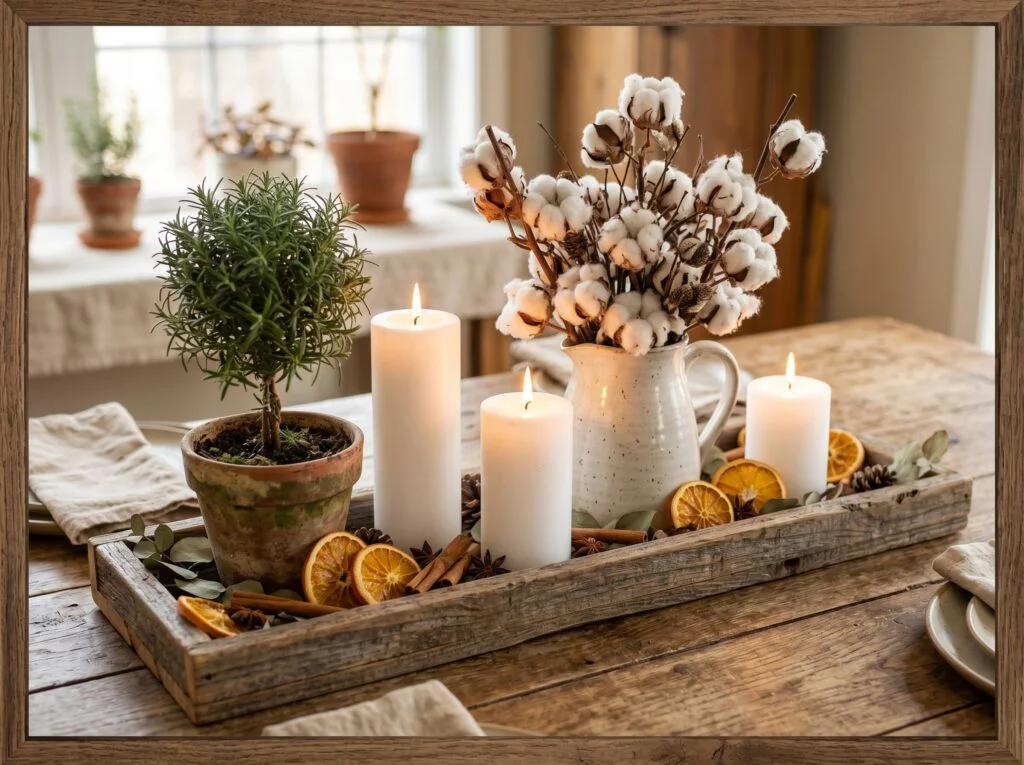
The centerpiece is where most farmhouse dining rooms either look pulled-together or slightly unfinished and it comes down to layering. A single vase of flowers in the middle of the table looks sparse. A long tray anchoring multiple elements at different heights looks intentional and rich.
Dried and preserved botanicals have largely replaced fresh flowers in farmhouse dining styling because they last indefinitely and look arguably more beautiful cotton stems, dried lavender, pampas grass, eucalyptus, and wheat all have that organic, natural quality that fresh supermarket flowers rarely achieve. Mix textures: something smooth (a ceramic vessel), something rough (a wood tray), something soft (dried stems), something hard (a candle). Seasonal updates are simple swap in dried orange slices and pine cones in winter, fresh citrus and herbs in spring, sunflowers and wheat in fall. The tray and the structure stay the same; only the seasonal elements rotate.
If your table is round rather than rectangular, there are styling ideas for a fresh tabletop tailored to that shape.
Farmhouse Color Palette Guide
A farmhouse color palette guide helps create a warm and welcoming atmosphere by combining soft neutrals, earthy tones, and natural-inspired shades. Colors like creamy whites, warm beige, muted greens, and rustic accents bring timeless charm while keeping the space calm and cohesive.
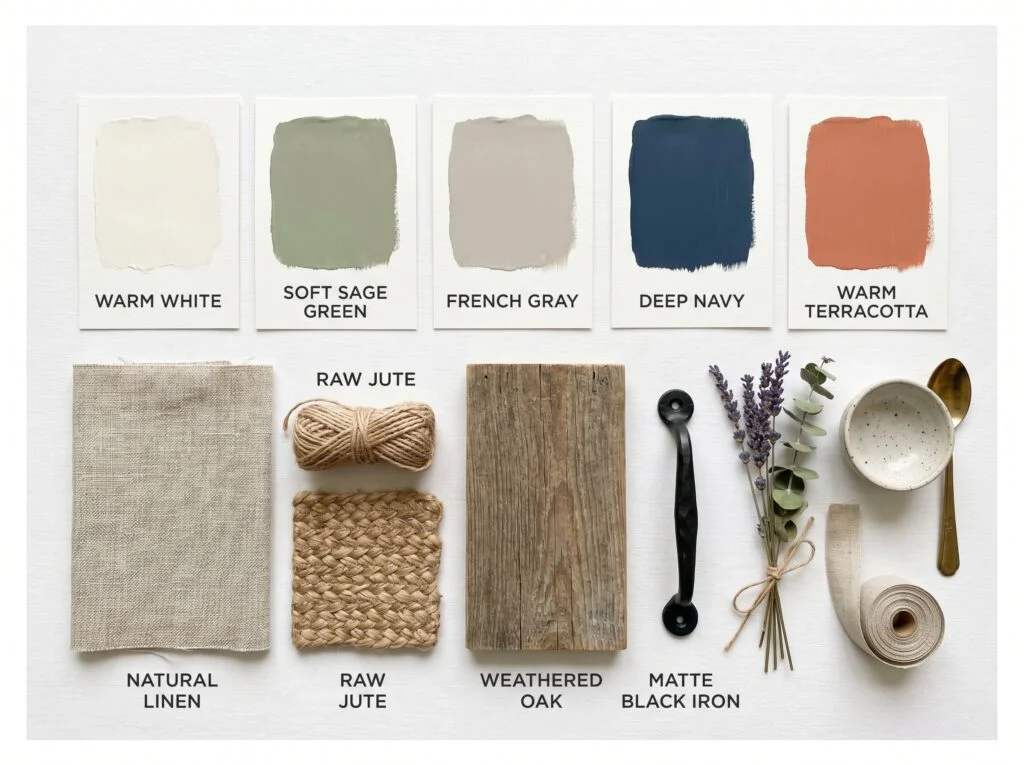
This is the section most farmhouse dining room articles skip entirely, and it’s genuinely important. Color sets the emotional tone of the entire room. The wrong wall color makes even beautiful furniture look dull. The right color makes everything in the room look intentional.
Here are the farmhouse dining room color palettes that consistently work:
Classic Farmhouse: Warm white walls (Sherwin-Williams Alabaster or Benjamin Moore White Dove) with natural wood, black iron, and linen. Timeless, never dated.
Modern Farmhouse: True white (Benjamin Moore Chantilly Lace) with white oak, matte black, and cool gray accents. Crisp and current.
Sage Farmhouse: Soft sage green walls (Sherwin-Williams Clary Sage or Magnolia Green Onyx) with warm white trim, natural wood, and aged brass. The most popular new direction.
French Farmhouse: Warm cream walls (Benjamin Moore Pale Oak or Sherwin-Williams Antique White) with cane furniture, linen, and natural materials. Romantic and soft.
Dark Farmhouse: Deep navy or charcoal walls (Sherwin-Williams Naval or Benjamin Moore Black Forest Green) with white ceiling beams, natural wood, and brass. Dramatic and cozy.
Keep trim and ceiling one to two shades lighter than walls. Use the same iron/brass/wood finish consistently across all hardware and fixtures to create cohesion across the palette.
Vintage-Inspired Plate Wall
A vintage-inspired plate wall adds personality and timeless charm by turning everyday dishware into a beautiful decorative display. Mixing patterns, textures, and antique-style plates creates a unique focal point that brings warmth and collected character to dining spaces.
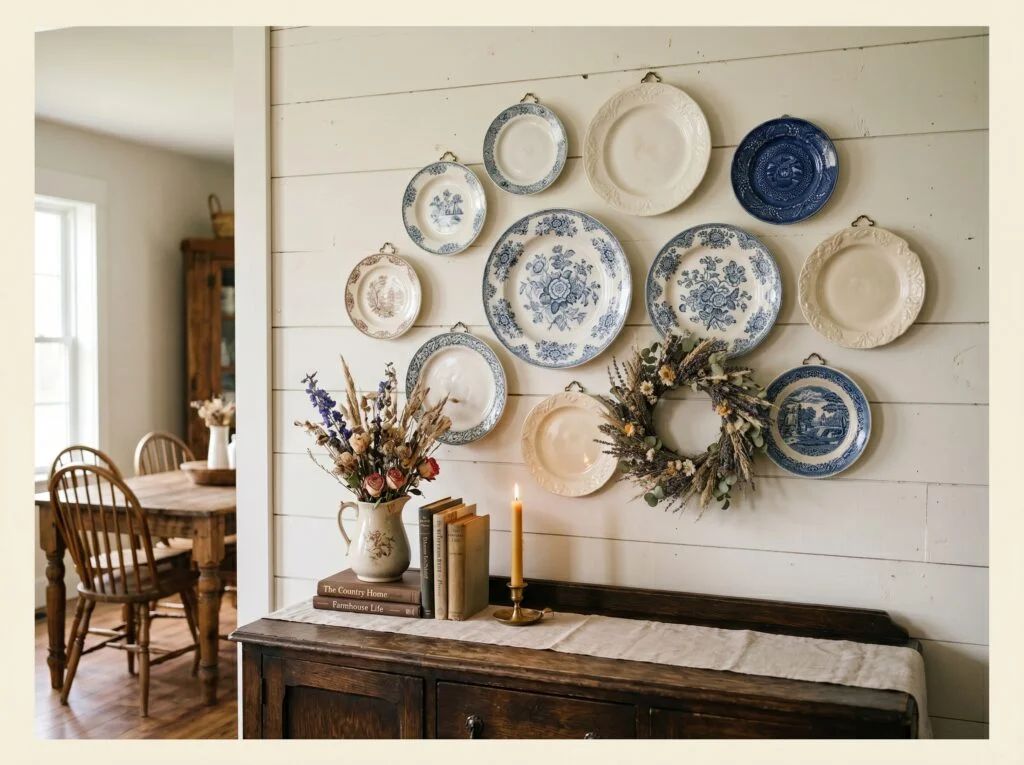
A plate wall is a deeply traditional farmhouse decorating element that has been experiencing a full revival and for good reason. It adds pattern, texture, and visual interest to a dining room wall in a way that’s completely personal and endlessly customizable. A mix of vintage and antique plates from thrift stores, flea markets, and estate sales creates a collected-over-time look that no store-bought art set can replicate. Blue and white transferware is a classic farmhouse choice. Cream and white mixed with occasional soft sage or dusty blue is the more current version.
Arrange plates in an organic cluster rather than a rigid grid. Start with the largest plate in the center of your intended grouping and work outward, alternating sizes and patterns. Use plate hangers that are sized correctly for each plate an undersized hanger on a heavy plate is a safety issue and a potential disaster during dinner. Keep consistent spacing between plates (about two to three inches) for a cohesive look. A plate wall above a sideboard or buffet creates a complete vignette the display connects to the surface below it rather than floating on the wall without a visual anchor.
Natural Wood Wide-Plank Flooring
Natural wood wide-plank flooring adds warmth, texture, and timeless character to dining spaces with its authentic grain patterns and organic beauty. The broader boards create a spacious, elegant feel while complementing farmhouse, rustic, and modern interiors with a durable foundation.
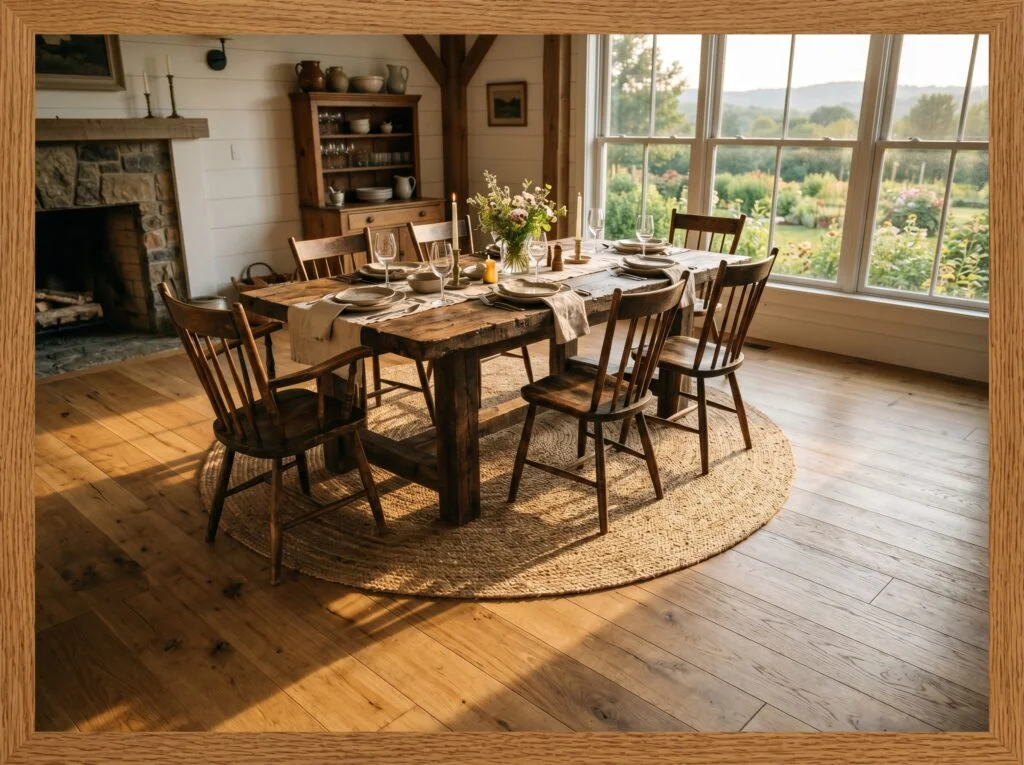
The floor is the largest surface in the dining room, and it sets the material tone for everything above it. Wide-plank wood floors planks that are 5 inches or wider are the authentic farmhouse choice, and they look dramatically different from narrow-strip flooring. The wider the plank, the more of the wood’s natural grain, character marks, and figure you see, and that visible character is exactly what farmhouse design is built around. White oak, hickory, pine, and reclaimed fir are all historically appropriate farmhouse choices that work beautifully in a dining room context.
A natural matte or low-gloss finish preserves the organic quality of the wood high gloss finishes look too formal for a farmhouse dining room and show footprints constantly. Wire-brushed or hand-scraped textures add a distressed quality that masks the inevitable wear from chairs moving in and out multiple times a day.
Built-In Window Bench with Storage
A built-in window bench with storage combines cozy seating with practical organization, making the most of unused space. It creates a charming spot for reading or relaxing while hidden compartments keep blankets, cushions, and everyday items neatly stored away.
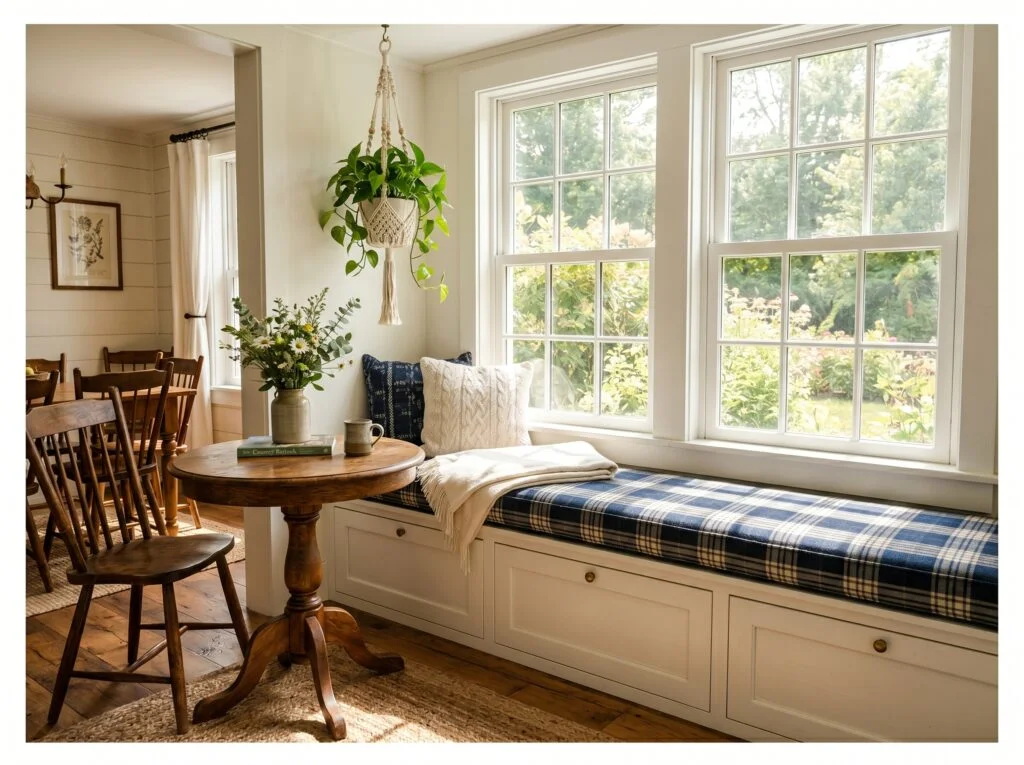
A built-in window bench in a dining room is one of those features that makes a house feel like a home. It creates an informal seating area that invites people to linger with their morning coffee before breakfast, or after dinner when conversation is still going strong. For dining rooms that face a garden, a backyard, or any view worth seeing, a window bench positions you to actually enjoy it. The built-in look makes it feel like the house was designed with intention rather than filled with furniture after the fact.
The storage underneath is what makes the window bench genuinely functional in a dining room. Extra table linens, seasonal tablecloths, candle collections, and entertaining supplies all disappear into the lift-top compartments. Build the bench at standard seat height 17 to 19 inches and at least 20 inches deep for a comfortable seat. A thick cushion (3 to 4 inches) in a durable fabric like performance linen or outdoor canvas holds up to daily use and spills. Add throw pillows in a mix of solid linen and a farmhouse-appropriate pattern (ticking stripe, plaid, or a simple buffalo check) for a layered, comfortable look that invites people to actually sit.
Galvanized Metal and Iron Accents
Galvanized metal and iron accents add rustic character and industrial charm to dining spaces with their durable textures and aged appeal. These elements create visual contrast when paired with wood, soft fabrics, and natural materials, adding depth and a farmhouse-inspired finishing touch.
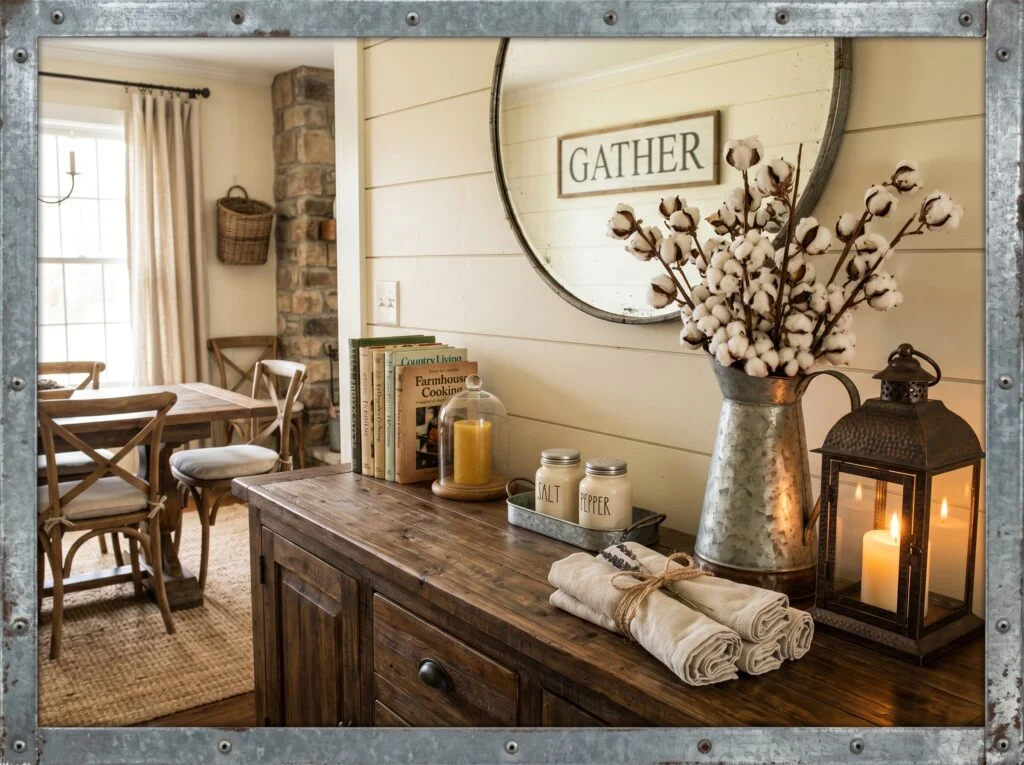
Galvanized metal and wrought iron accents are the detail that keeps a farmhouse dining room from feeling too soft or too precious. The cool gray tone of galvanized steel grounds the warmer tones of wood and linen, and the slightly industrial quality of iron adds substance to a room that could otherwise drift into cottage territory. Use galvanized pitchers as vases, iron lanterns as candleholders, and metal trays as organization surfaces. These materials are also virtually indestructible and look better with age exactly the kind of stuff that belongs in a room that sees daily family use.
Keep metal accents consistent in finish mixing too many different metals (chrome, brushed nickel, galvanized, black iron, brass) creates visual noise. Pick one or two and repeat them throughout. Black iron and natural galvanized steel are the farmhouse combination that works best together. Aged or unlacquered brass mixes well with natural galvanized tones for a slightly more refined farmhouse look.
Farmhouse Table Setting Guide
A farmhouse table setting guide helps create a warm, inviting dining experience by combining natural textures, simple dishware, and rustic details. Layering linens, wooden accents, fresh greenery, and classic tableware adds effortless charm while making everyday meals feel more special.
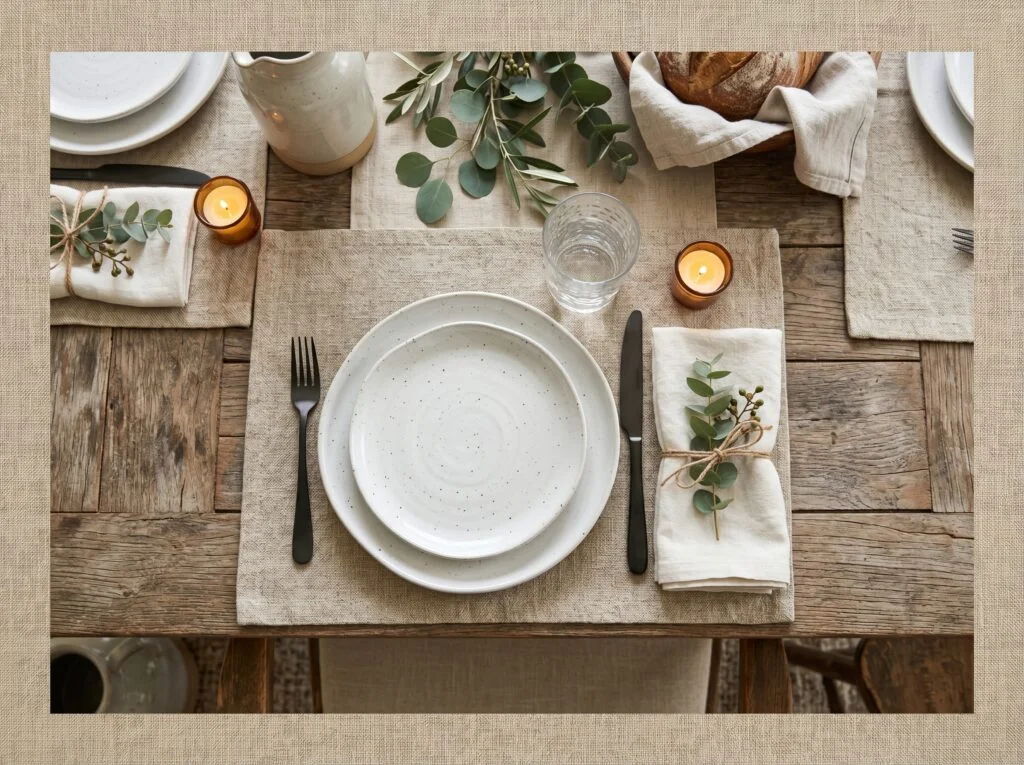
Most dining room articles show a beautiful table without explaining how to actually set one in the farmhouse style and it makes a bigger difference than most people expect. A properly set farmhouse table makes the room look like a magazine photo every time you sit down, and it elevates everyday meals into something that feels worth gathering for.
Start with a linen or cotton table runner rather than a full tablecloth it shows off the wood table surface while protecting it. Place a woven placemat or square of natural linen at each setting. Use white stoneware plates chunky, slightly irregular, and affordable from brands like Hearth and Hand at Target or Mora Ceramics. Matte black or aged silver flatware ties back to the iron hardware in the room. A cloth napkin loosely rolled and tied with twine or a strip of linen looks effortlessly beautiful.
Farmhouse Dining Room for Small Spaces
A farmhouse dining room for small spaces focuses on smart layouts, multifunctional furniture, and cozy design details without sacrificing style. Using compact tables, built-in storage, light colors, and vertical décor helps maximize space while creating a warm and welcoming atmosphere.
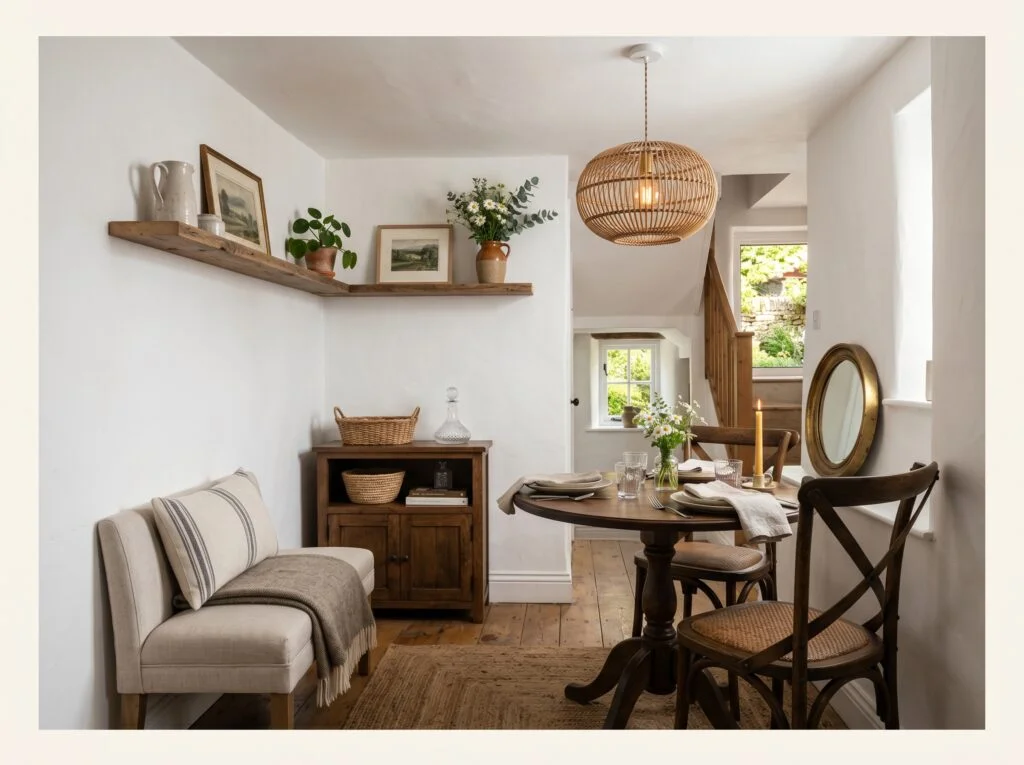
Small farmhouse dining rooms require a different approach than large open-plan spaces, and most inspiration articles show only large, generously proportioned rooms. If your dining room is compact, a round table is your best decision. Round tables seat the same number of people as rectangular tables of equal footprint, but they allow easier conversation across the table, they have no awkward corners, and they feel less imposing in a tight room.
Keep the furniture count low in a small farmhouse dining room. A table, four chairs, and one compact sideboard or a single floating shelf is enough. Resist the urge to add a hutch, a buffet, and a console table the room will feel like a furniture showroom, not a dining room. Use a light wall color (warm white is ideal), hang a mirror to double the sense of depth, and choose a pendant light that hangs high enough to not feel oppressive over a small table. Benches on one or two sides rather than individual chairs everywhere save floor space and improve the room’s proportions significantly.
If color is part of your plan too, there are smart layouts for compact rooms that lean into softer palettes.
Seasonal Farmhouse Dining Room Refresh
A seasonal farmhouse dining room refresh brings new life to your space by updating simple elements like textiles, centerpieces, colors, and natural décor. Small seasonal changes can create a fresh, cozy atmosphere while maintaining the timeless warmth and rustic charm of farmhouse style.
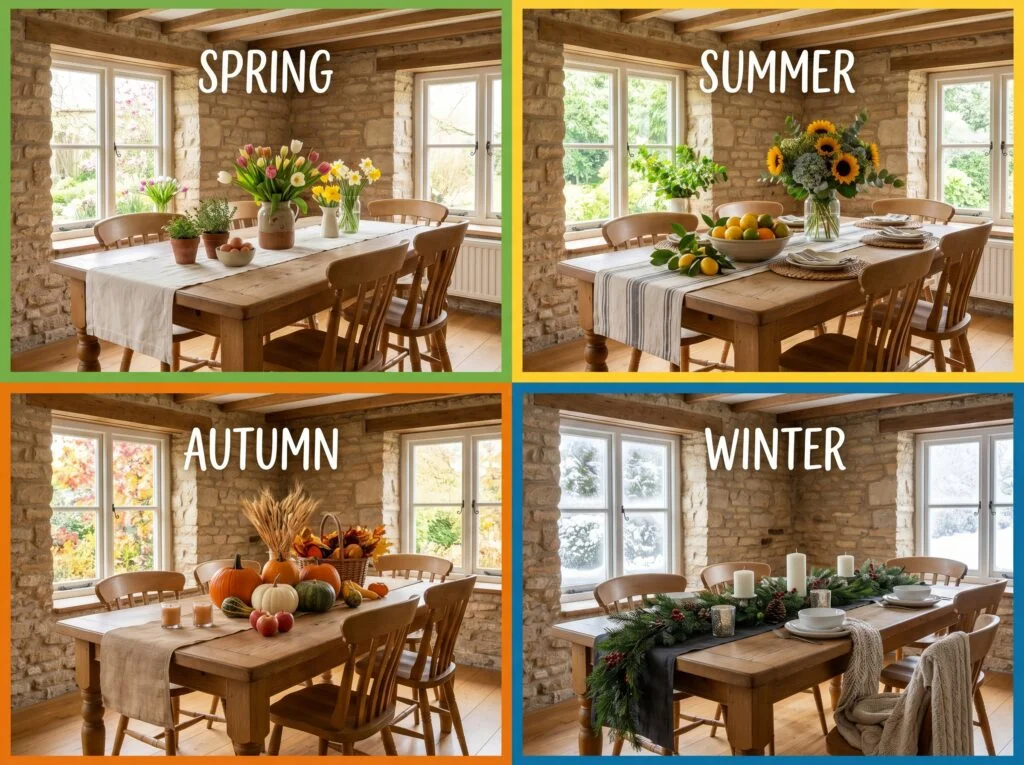
One of the most underappreciated aspects of farmhouse style is how naturally it adapts to seasonal decoration. The bones of the room the wood table, the iron fixtures, the shiplap walls stay constant year-round. Only the soft goods and accessories rotate. This is both easy and affordable because you’re working with natural materials that are inexpensive: dried botanicals, fresh greenery, seasonal produce, candles in seasonal colors, and simple linen in different weights. A full seasonal refresh takes less than an hour and costs almost nothing after the first year of building your collection.
Spring calls for fresh linen in soft green or pale blue, a pitcher of tulips or lilacs, and lighter textures throughout. Summer goes minimal and airy white linen, fresh citrus on the table, lots of open windows. Fall is the farmhouse dining room’s most natural season: dried wheat, mini pumpkins, beeswax candles, and a plaid throw on the bench. Winter warms everything up pine boughs on the sideboard, white pillar candles clustered on the table, a wool runner in cream or gray, and the chandelier dimmed to its warmest setting. Keep a small storage bin for each season’s accessories and the swap takes minutes.
Farmhouse Dining Room Lighting Layers
Farmhouse dining room lighting layers combine ambient, task, and accent lighting to create a warm and functional atmosphere. Mixing statement fixtures, soft overhead illumination, and decorative lamps adds depth while highlighting the rustic textures and cozy character of the space.
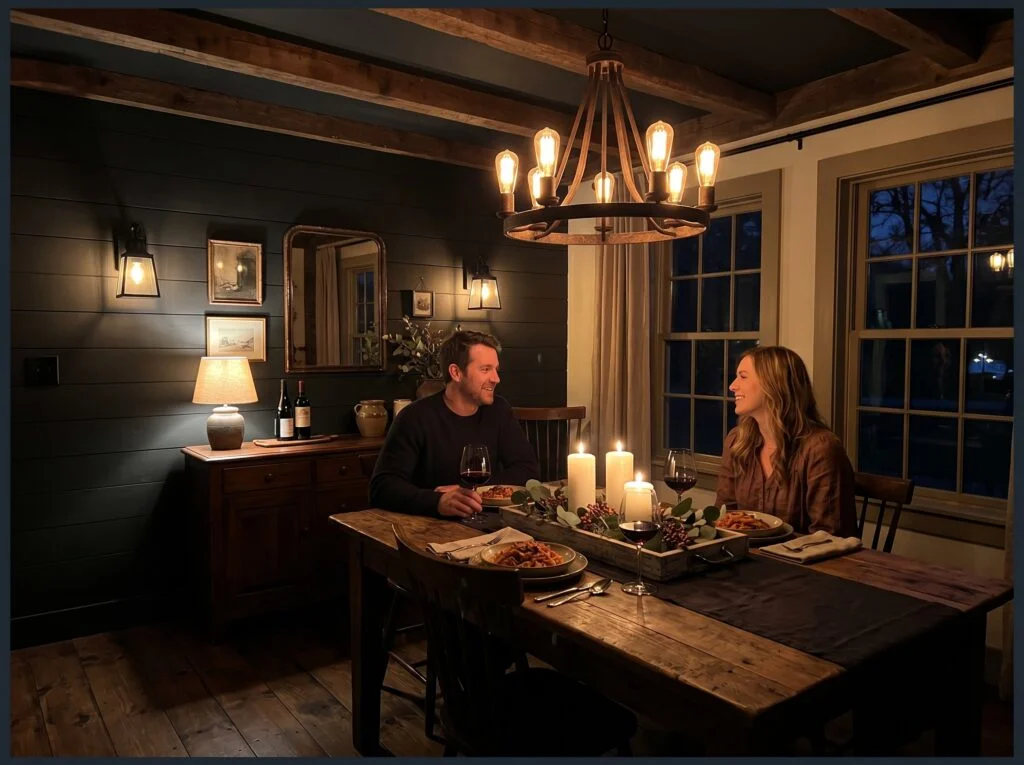
This is another gap most farmhouse dining room articles skip: lighting layering. A single overhead chandelier is not enough on its own to create a genuinely beautiful dining atmosphere. The best farmhouse dining rooms use three to four light sources simultaneously and the result is something that feels warm, dimensional, and completely different from a room with only a ceiling fixture. Layered lighting is why restaurant dining rooms feel so inviting, and it’s absolutely achievable at home with simple additions.
Start with the chandelier as your ambient layer set it on a dimmer so it can drop to 30 to 40 percent during dinner. Add two wall sconces on the accent wall flanking a mirror or artwork for a soft secondary glow that comes from a different angle. Put candles on the table real wax pillar candles or high-quality flameless candles for safety and convenience for the most intimate light layer of all.
Conclusion
A farmhouse dining room isn’t about buying all the right things. It’s about choosing the right things materials that are real, furniture that’s proportional, lighting that’s warm, and details that feel personal rather than catalog-perfect.
You don’t need to do all 23 ideas at once. Start with what bothers you most.Each change builds on the last, and the room develops its character gradually which is exactly how the best farmhouse rooms always come together.
The goal is a dining room that makes everyone who sits down want to stay a little longer.
For a few more finishing decor touches for the table, there’s plenty of extra inspiration to keep the room evolving.