Every home needs a place where the chaos stops before it reaches the rest of the house. A well-designed mudroom cabinet does exactly that.
These ideas keep everything in its place and make coming home feel genuinely good.
Let’s get started.
Once the cabinets are planned, there are more organized entry ideas here to round out the rest of the space.
Floor-to-Ceiling Shaker Cabinet
This cabinet style stretches all the way from floor to ceiling, using every inch of wall space. Shaker style panel doors give it a clean, timeless look that fits most home styles. Upper sections often store seasonal items while lower ones handle everyday coats and shoes.
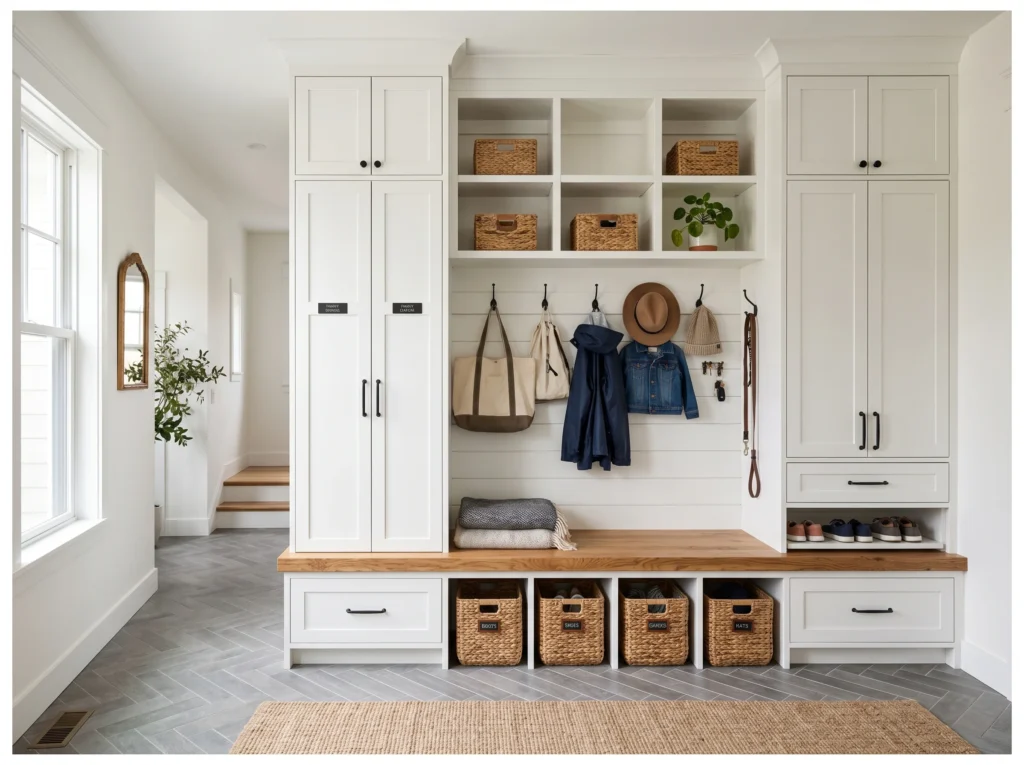
Floor-to-ceiling shaker cabinets use every inch of vertical wall space in a mudroom from floor to ceiling. The classic inset panel door style looks timeless and works with traditional, transitional, and modern farmhouse home styles equally well.
The full height creates enormous storage capacity behind closed doors so the mudroom always looks tidy regardless of what is actually stored inside. Lower sections handle shoes and bags, middle sections work for coats and hanging items, and upper cabinets store seasonal gear cleanly out of sight.
Maximum storage, consistently clean look.
Built-In Bench with Cabinet Below
A bench sits on top while the cabinet underneath hides shoes and clutter out of sight. This setup gives you a spot to sit down while taking shoes off. It works especially well in entryways where floor space is limited.
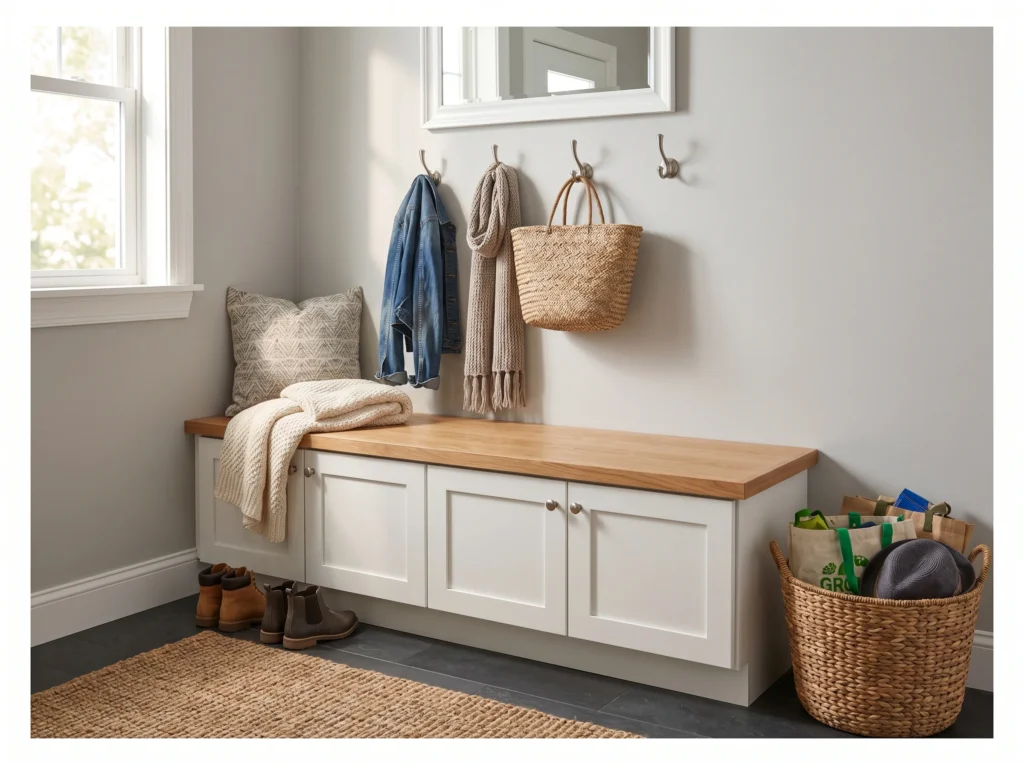
A built-in bench with cabinet storage below is the foundation of almost every great mudroom design. You sit on the bench to put shoes on and take them off, and the shoes go straight into the cabinet below without ever touching the floor.
The cabinet below the bench keeps footwear completely hidden behind closed doors, which is what separates a tidy mudroom from a messy one. Add a cushion on the bench seat for comfort and hooks on the wall above for coats and school bags.
If you’re focused on the seating itself, there’s bench seating built for daily use worth exploring in more depth.
Mudroom Cubby System
Open cubbies are arranged side by side, usually one for each family member. Backpacks, bags, and shoes all get their own designated slot. This layout keeps mornings organized since everyone knows exactly where their stuff goes.
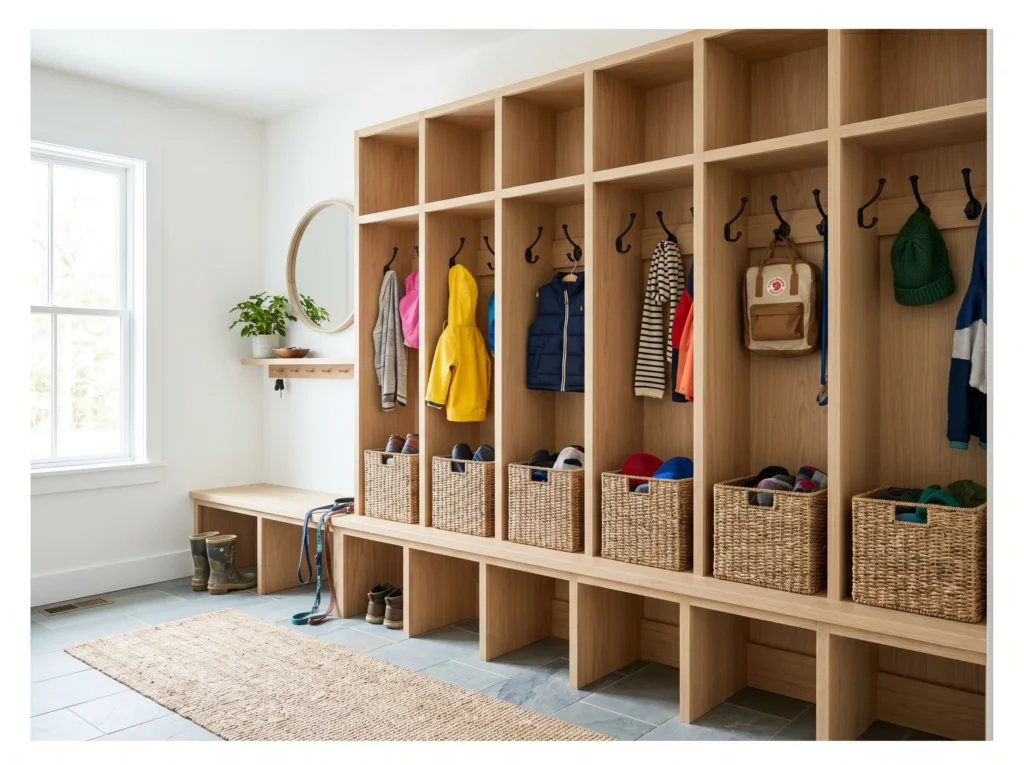
A cubby system assigns a dedicated vertical section of the mudroom to each family member. Each cubby typically includes a hook at the top for a coat or bag, a shelf in the middle, and a basket or drawer at the bottom for shoes.
The individual ownership of each cubby is what makes the system work for families. When each person has their own clearly defined space, items go back where they belong naturally rather than piling up in a communal heap. Label each cubby with a name tag or chalkboard label for children.
Locker-Style Cabinet for Each Family Member
Each locker gets a door, a hook, and sometimes a small bench inside. This style borrows heavily from school or gym lockers, just scaled down for home use. Labeling each locker with a name makes it easy for kids to keep track of their things.
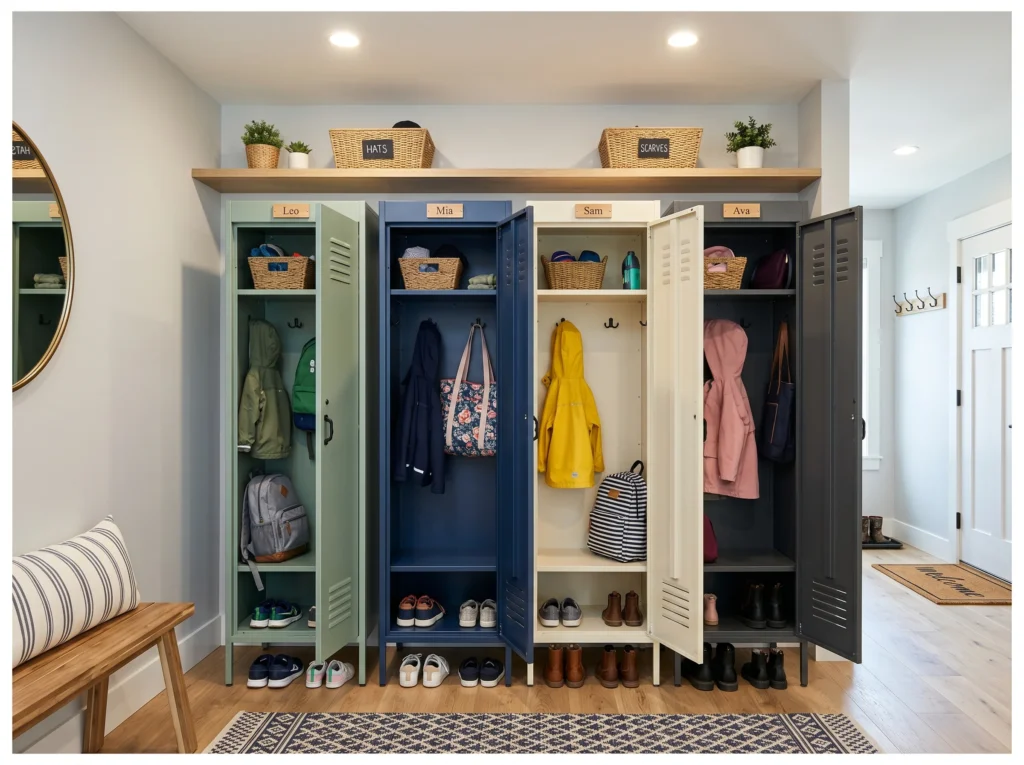
Full-height locker-style cabinets give each family member a completely enclosed personal storage unit. Unlike open cubbies, lockers hide everything behind a solid door so the mudroom looks clean regardless of what each person stores inside.
Assign each family member their own locker and the organization essentially runs itself. Coats, bags, sports gear, and shoes all belong to one person and live in one place. Painting each locker a different color makes the system intuitive even for young children.
For more individual storage lockers for families, it helps to see how other households divide up personal space this way.
Every family member, their own space.
Open Shelf and Closed Cabinet Combo
Open shelves display baskets or frequently used items while closed cabinets hide the messier stuff. This mix gives you both easy access and a tidy appearance at the same time. It’s a practical middle ground for people who don’t want a fully closed off system.
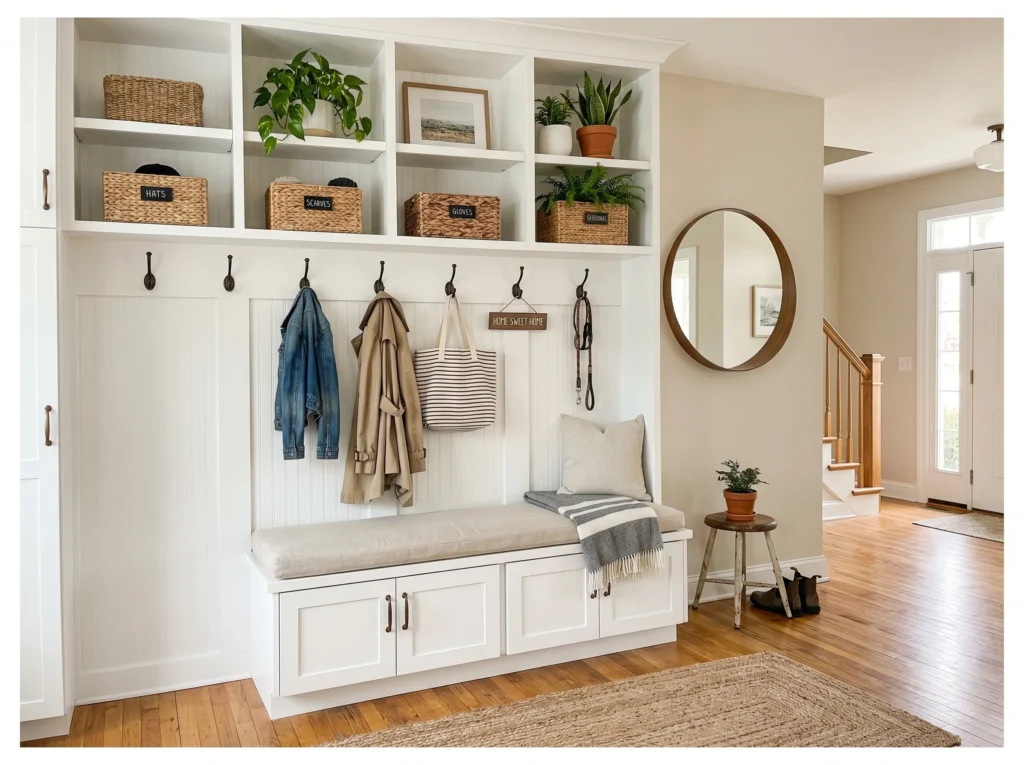
Combining open shelving above with closed cabinets below gives you the best of both storage worlds. The open shelves display attractive baskets, plants, and everyday items you want accessible. The closed cabinets below hide the messier items that do not need to be visible.
This hybrid approach keeps the mudroom feeling open and personalized at the top while maintaining the clean, concealed look that closed cabinets provide. It is visually more interesting than an all-closed or all-open design and works in almost any space size.
Mudroom Cabinet with Charging Station
A built-in outlet and small drawer or shelf section handles phones, tablets, and cords. This keeps charging cables from tangling up on countertops elsewhere in the house. It’s a small addition but makes a noticeable difference in daily routine.
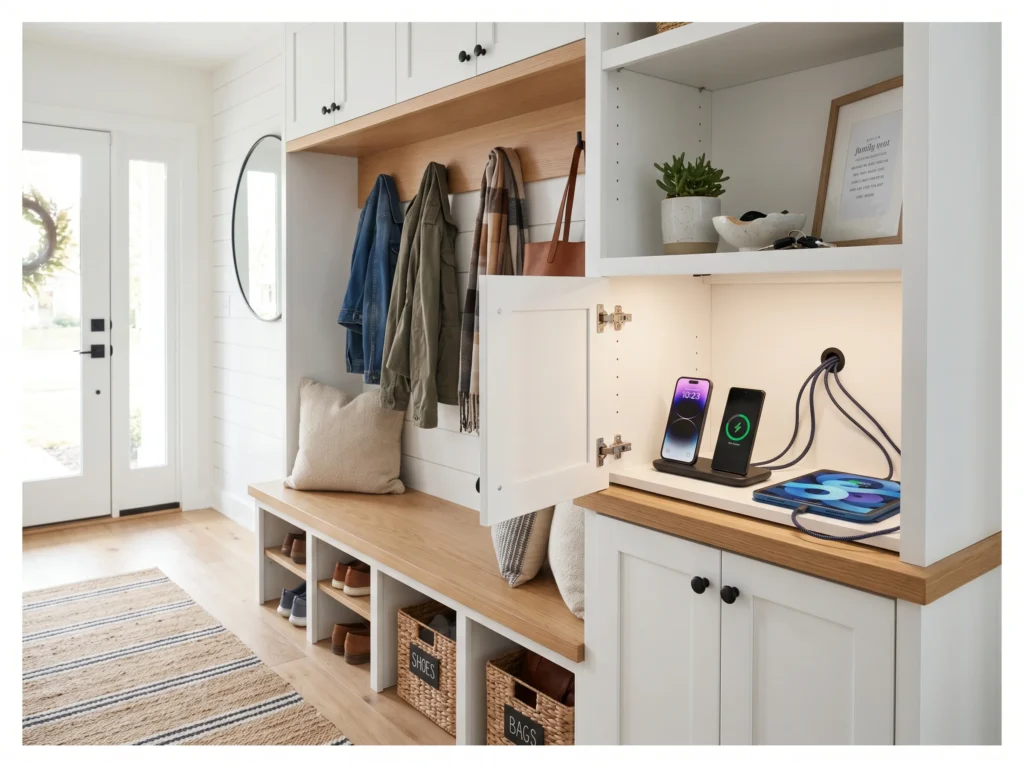
A charging station built directly into the mudroom cabinet gives phones, tablets, and earbuds a dedicated landing spot the moment family members walk through the door. No more searching for chargers and no more devices left charging in random spots around the house.
A small section of cabinet with a power outlet inside, a shelf for devices, and a cable pass-through at the back is all it takes. The cabinet door closes to hide the cables and the charging clutter completely while everything charges safely inside.
Stops devices from taking over every surface.
Farmhouse Mudroom Cabinet
Shiplap panels, black hardware, and distressed wood finishes define this style. Open hooks paired with woven baskets are a common pairing here. It tends to work best in homes that already lean toward a rustic or country look.
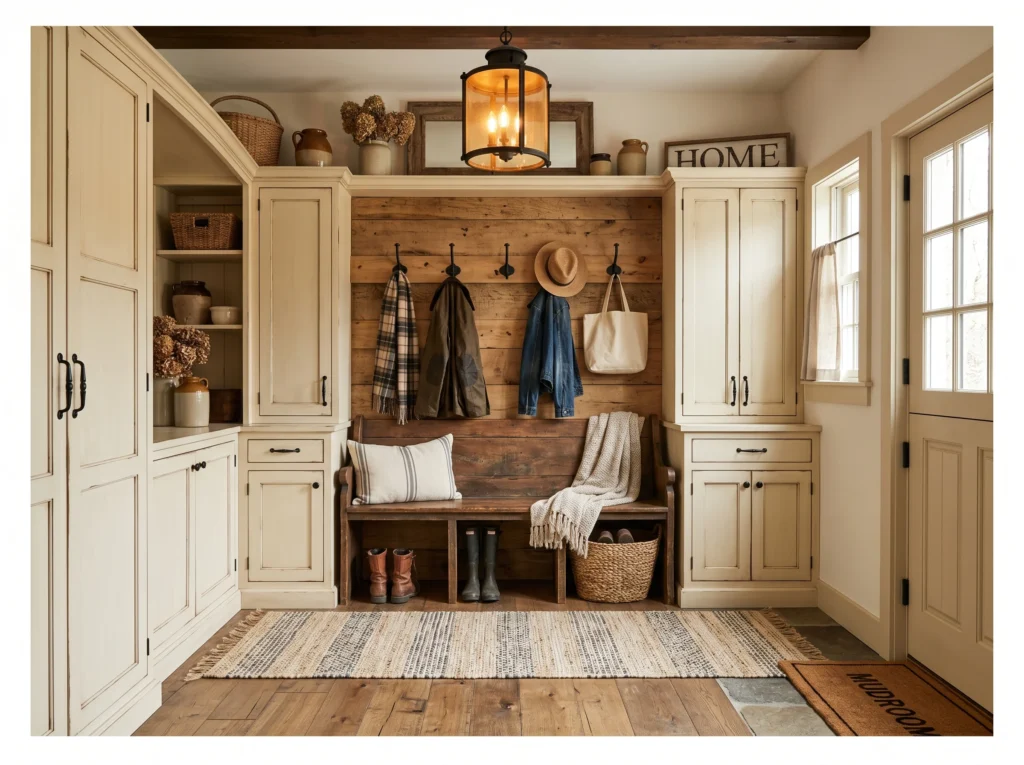
A farmhouse mudroom cabinet combines practical storage with the warm, unpretentious aesthetic that defines country and farmhouse home style. Shaker cabinet doors in cream or soft white, black iron hooks, shiplap wall panels, and a natural wood bench seat all contribute to the look.
The farmhouse style is especially forgiving. Imperfect finishes, slightly mismatched textures, and vintage accessories all add to the character rather than detracting from it. This makes it an ideal choice for families who want a mudroom that looks styled but not overly precious.
If that warm, collected look appeals to you, there are farmhouse entryway details worth adding throughout the rest of the space.
Mudroom Cabinet with Dog Station
A built-in dog station usually includes a spot for the leash, food bowls, and sometimes a small bed nook. This keeps pet supplies from scattering around the entryway. Some designs even add a small drawer just for treats or grooming tools.
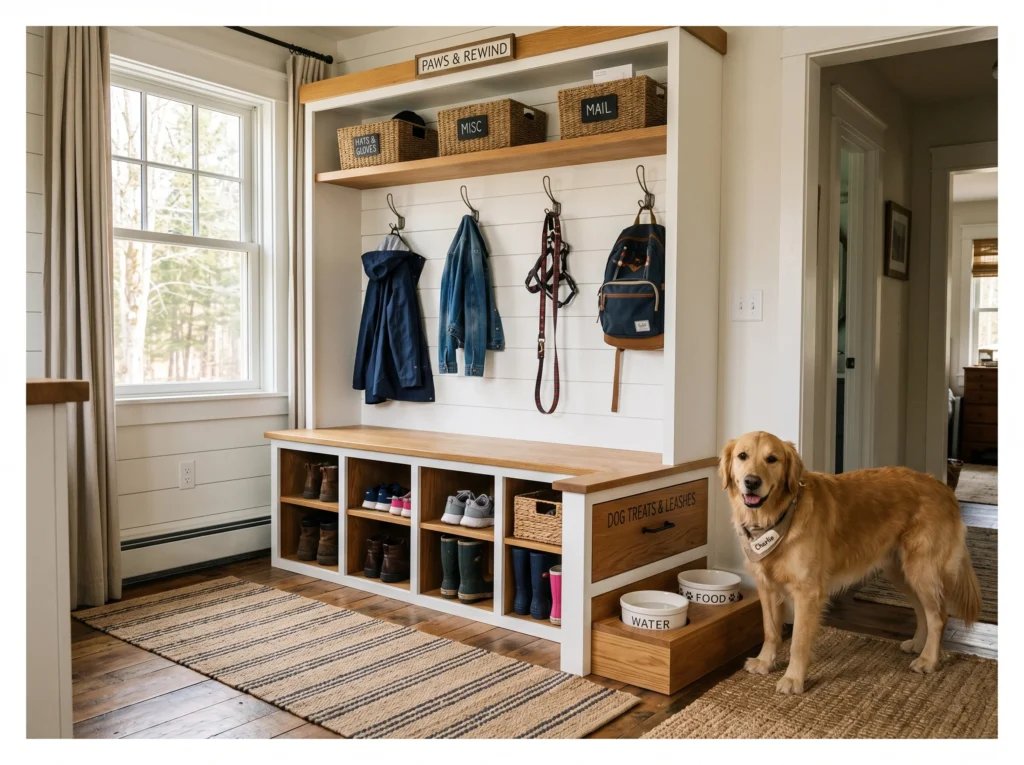
A mudroom cabinet with a built-in dog station dedicates a section of the storage wall specifically to pet needs. A recessed dog bowl holder at floor level, a drawer for leads, treats, and waste bags, and a small shelf for grooming supplies keeps everything dog-related in one organized spot.
Families with dogs know how much gear accumulates at the door. Muddy paw prints, multiple leads, outdoor toys, and vet paperwork all need a home. A dedicated dog station cabinet section means the entry stays organized even on the most chaotic return-from-the-park days.
Because pets deserve an organized mudroom too.
Narrow Mudroom Cabinet for Small Entryways
This design is built specifically for tight spaces where a full mudroom system won’t fit. Vertical storage is used instead of wide horizontal layouts. Even a narrow 12 to 18 inch cabinet can hold a surprising amount when designed well.
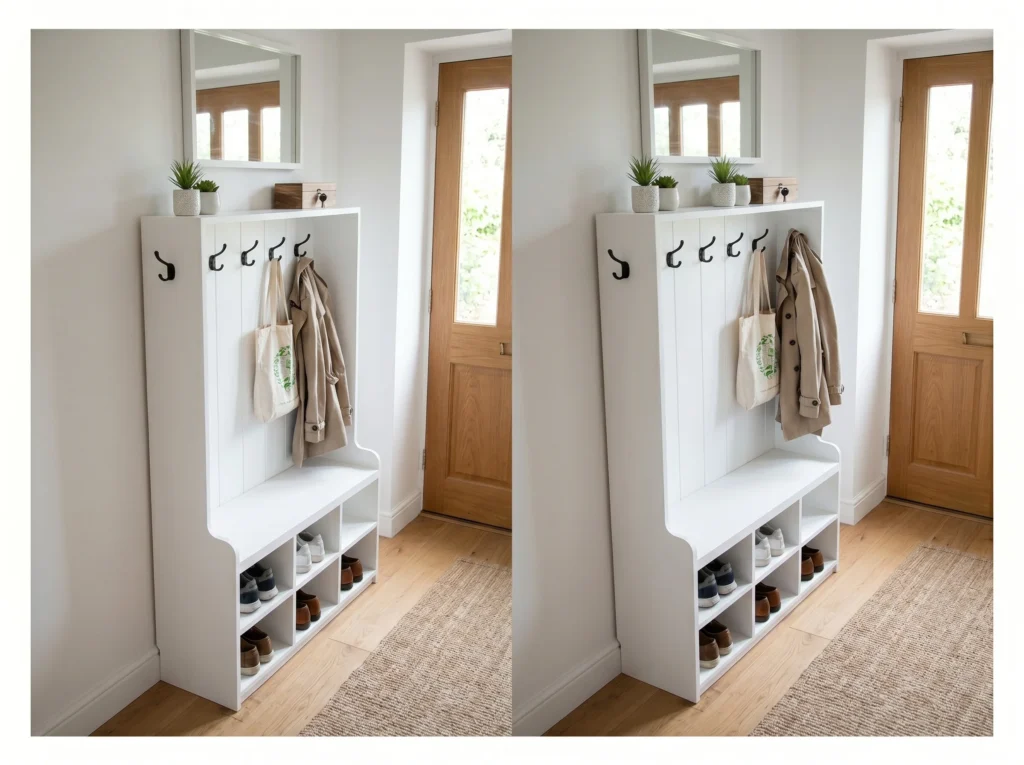
A narrow mudroom cabinet as shallow as 25 to 35 centimeters can fit into almost any entryway hallway without reducing the usable floor width significantly. Slim cabinets of this depth still accommodate shoes, hooks, and small storage cubbies comfortably.
The key to making a narrow mudroom cabinet work is maximizing vertical height. A tall slim unit holds far more than a short wide one and takes up minimal floor space. This is the ideal solution for apartments, townhouses, and homes where a dedicated mudroom room does not exist.
For more compact entry solutions worth trying, it’s worth seeing how other narrow spaces solve this same storage challenge.
Perfect for small spaces.
Two-Tone Mudroom Cabinet
Two different paint colors are used, often splitting the upper and lower sections. This adds visual interest without going overboard with pattern or texture. A darker lower half also tends to hide scuffs and dirt better over time.
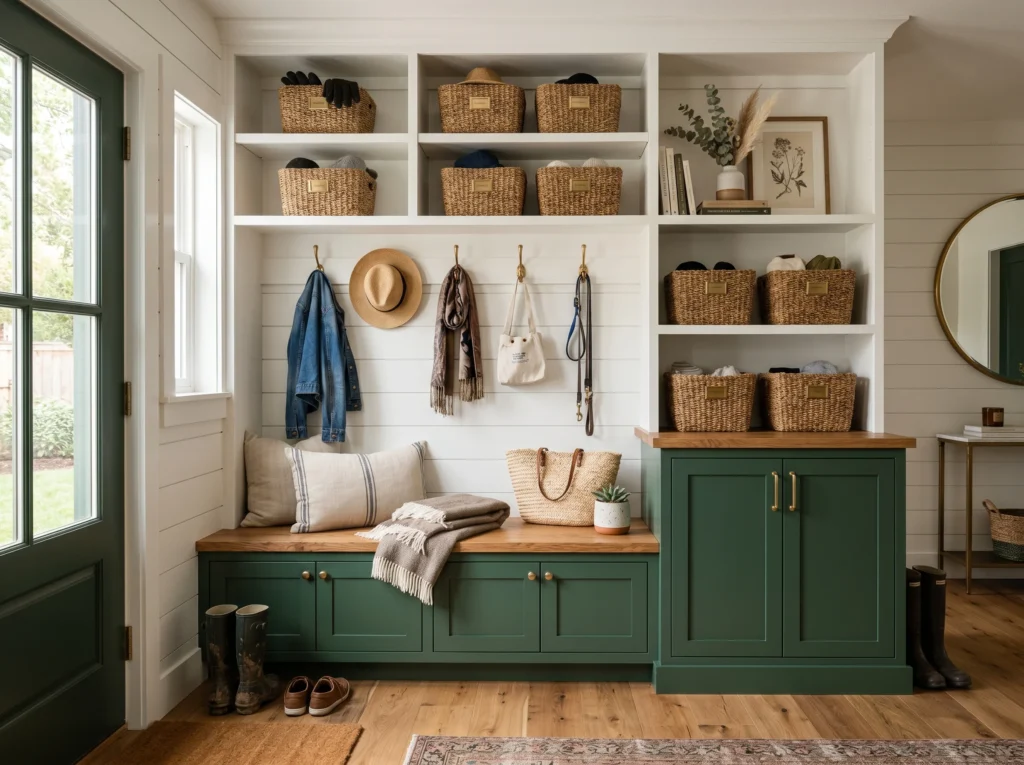
Two-tone mudroom cabinets use one color on the lower section and a contrasting color or material on the upper section. The most popular combinations include navy or forest green below with white above, charcoal below with natural oak above, or sage green below with crisp white above.
The visual interest this creates makes a mudroom feel genuinely designed rather than just functional. It is the difference between a storage wall that serves a purpose and one that also makes you happy every time you walk past it. Hardware choices in brass or matte black complete the look beautifully.
Mudroom Cabinet with Shoe Storage Drawers
Pull out drawers keep shoes hidden away instead of piling up near the door. Some designs slant the drawer bottoms slightly to let dirt and debris fall to the back. This setup works well for households with a lot of shoes to manage.
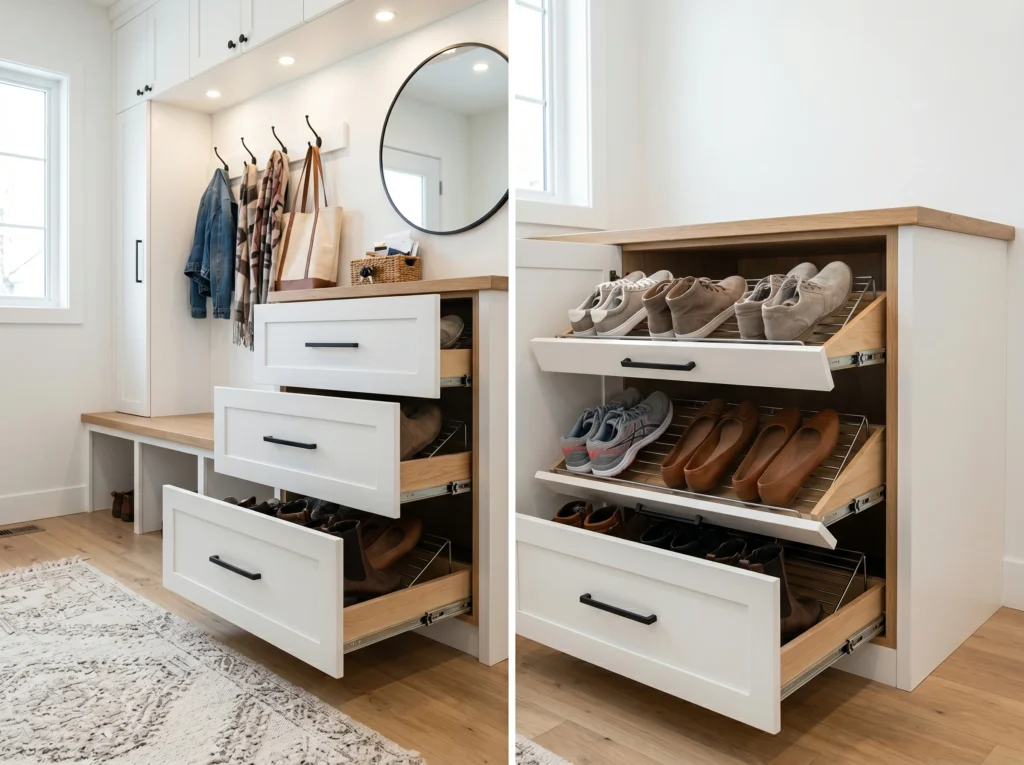
Angled pull-out shoe drawers are one of the most space-efficient shoe storage solutions available. The drawer tilts forward and holds two to four pairs of shoes on angled shelves, using the full depth of the cabinet without any wasted space at the back.
Standard lower base cabinets of 600 millimeter depth can hold four angled shoe drawers stacked vertically, which stores 16 to 24 pairs of shoes in the equivalent floor space of a standard two-door base cabinet. For families with multiple people, this compact density is a genuine game changer.
Mudroom Cabinet with Hooks and Cubbies
Hooks handle coats and bags while cubbies below take care of shoes and smaller items. This combination covers most of what a family actually needs near the entry. It’s one of the more common and budget friendly mudroom layouts.
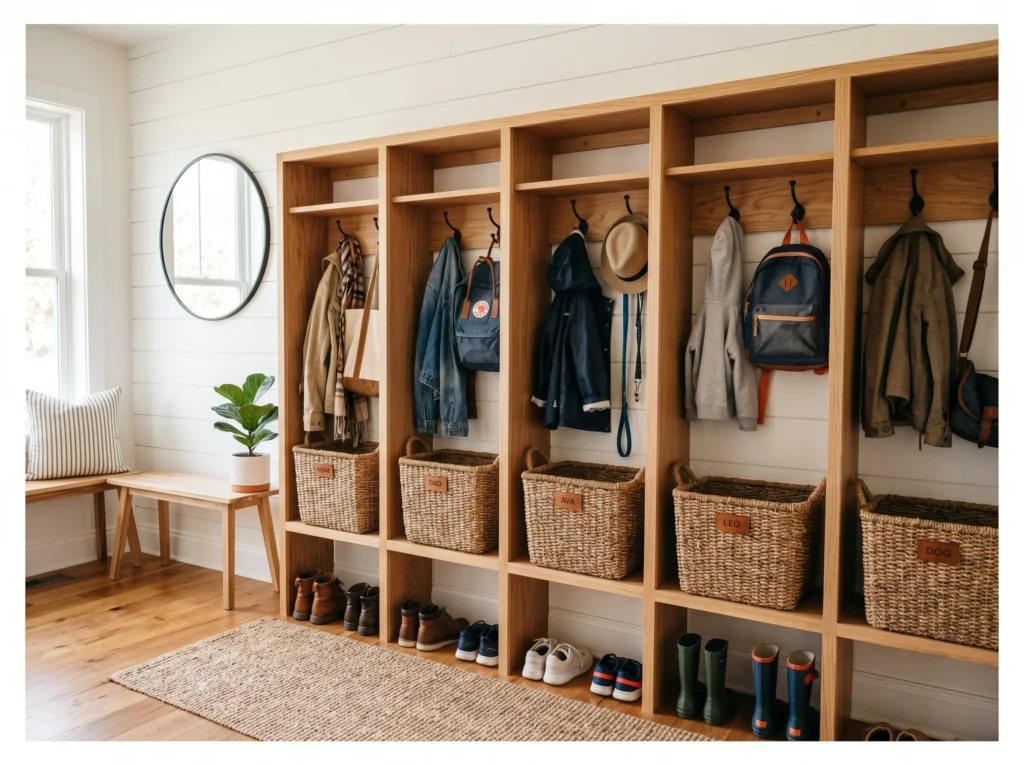
A mudroom design that combines coat hooks above with dedicated cubbies below each hook creates a complete drop zone for each person in one compact vertical section. Coat goes on the hook, bag goes on the cubby shelf, shoes go in the basket below.
The discipline of the system does the organizational work for you. When every item has a clearly designated place within a defined zone, things get put away without conscious effort. Families who switch to this system consistently report their entryways stay tidier with far less effort.
Mudroom Cabinet with Laundry Integration
This design places laundry hampers or a small folding counter right next to the mudroom storage. It makes sense in homes where the laundry room and entryway are close together. Dirty clothes from outside activities go straight into the hamper instead of the floor.
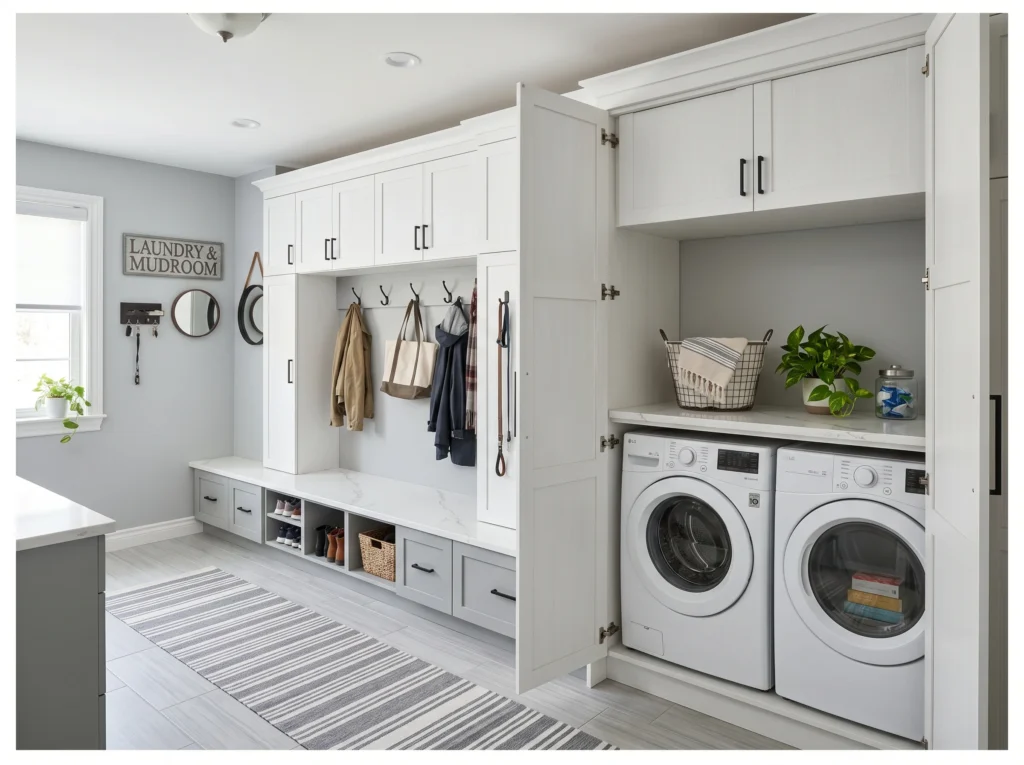
Combining a mudroom cabinet system with a laundry area creates one of the most efficient utility spaces possible in a home. The washing machine and dryer sit behind two large cabinet-style doors that match the rest of the mudroom cabinetry, keeping the space visually cohesive.
A folding counter above the machines adds a practical work surface that the mudroom can also use as a drop zone. This configuration suits homes where the laundry is near the back door and makes the combined space work harder than either zone could alone.
Two rooms working as one.
Mudroom Cabinet with Mirror
A mirror built into the cabinet door or wall panel lets you do a quick check before heading out. It also helps make a smaller entryway feel a bit more open. Some versions add a small shelf beneath the mirror for keys or sunglasses.
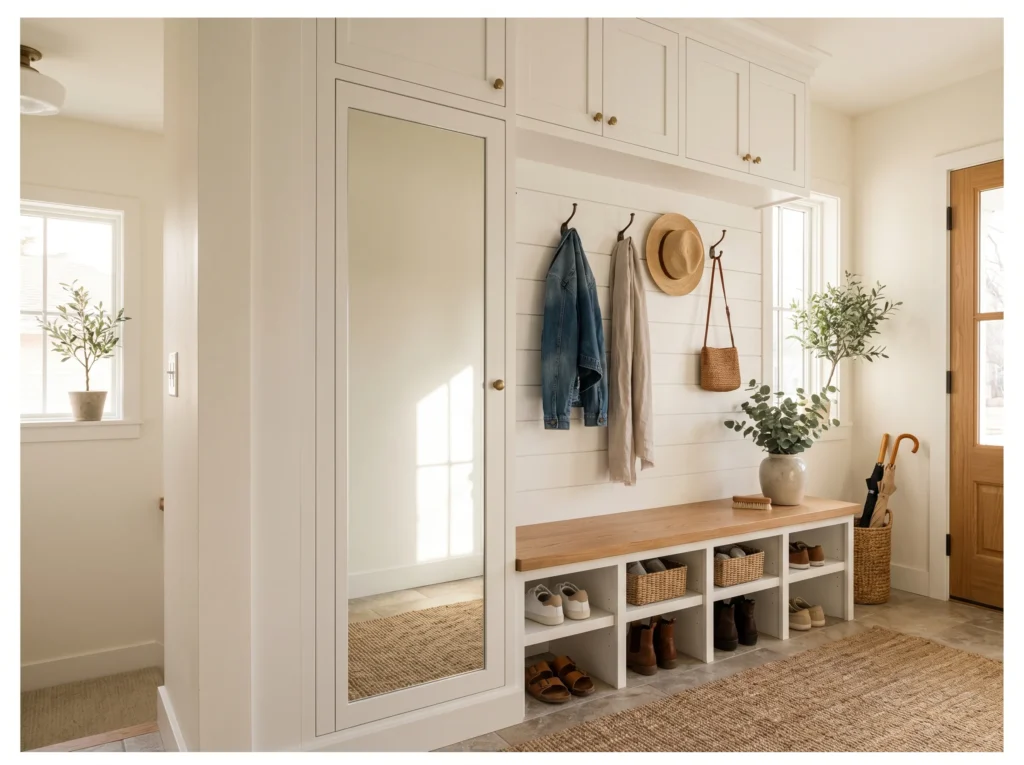
A full-length mirror integrated into one of the mudroom cabinet door panels adds a last-look station to the entryway without requiring any additional wall space. You check your appearance on the way out the door without having to go back to a bedroom.
Beyond practicality, a mirror reflects light back into the mudroom and makes even a small entryway feel significantly more spacious and bright. It is one of those small design decisions that improves both the function and the atmosphere of the space simultaneously.
White Shaker Mudroom Cabinet
White shaker cabinets are one of the most requested styles because they go with almost anything. The simple recessed panel doors keep the look clean without feeling plain. This color also helps brighten up entryways that don’t get much natural light.
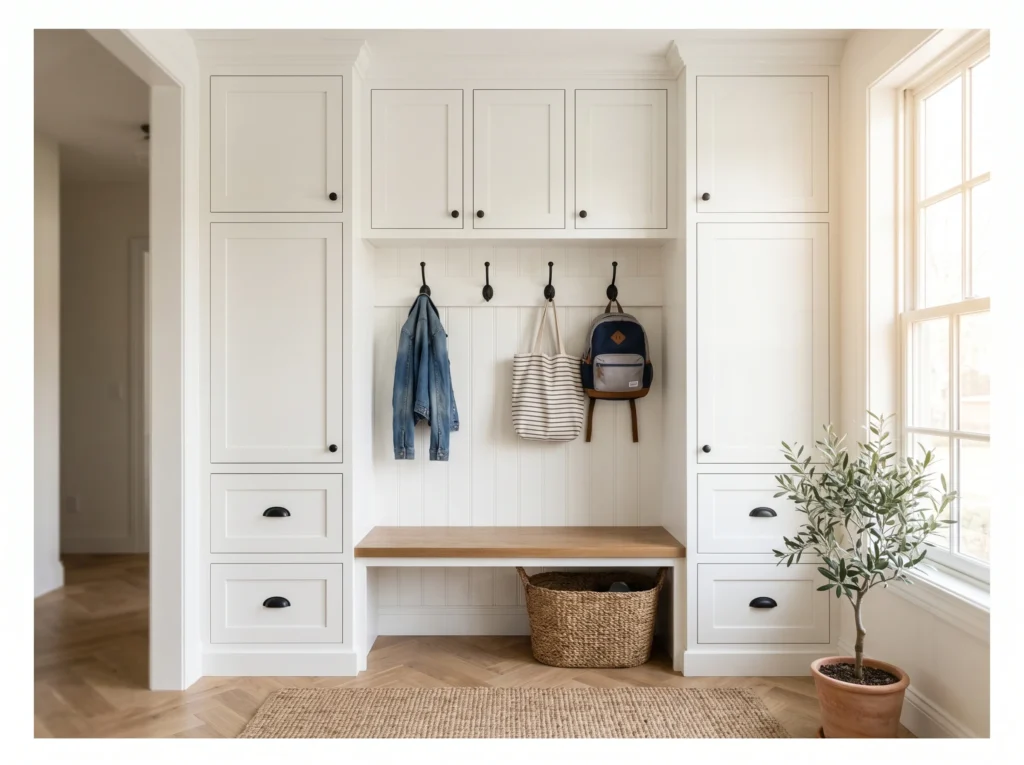
White shaker cabinets are the most universally loved mudroom choice because they suit virtually every home style from traditional to modern farmhouse to transitional. The clean inset panel door is simple, refined, and never looks dated.
White also makes the mudroom feel brighter and more spacious, which matters in entryways that are often narrow or have limited natural light. The consistent white palette throughout the cabinet wall reads as calm and organized even when the day has been anything but.
Timeless, clean, and works with everything.
Mudroom Cabinet with Woven Basket Drawers
Woven baskets slide into open cubby slots instead of traditional drawers. This adds a natural texture that softens an otherwise wood heavy space. Baskets are also easy to pull out and carry around the house when needed.
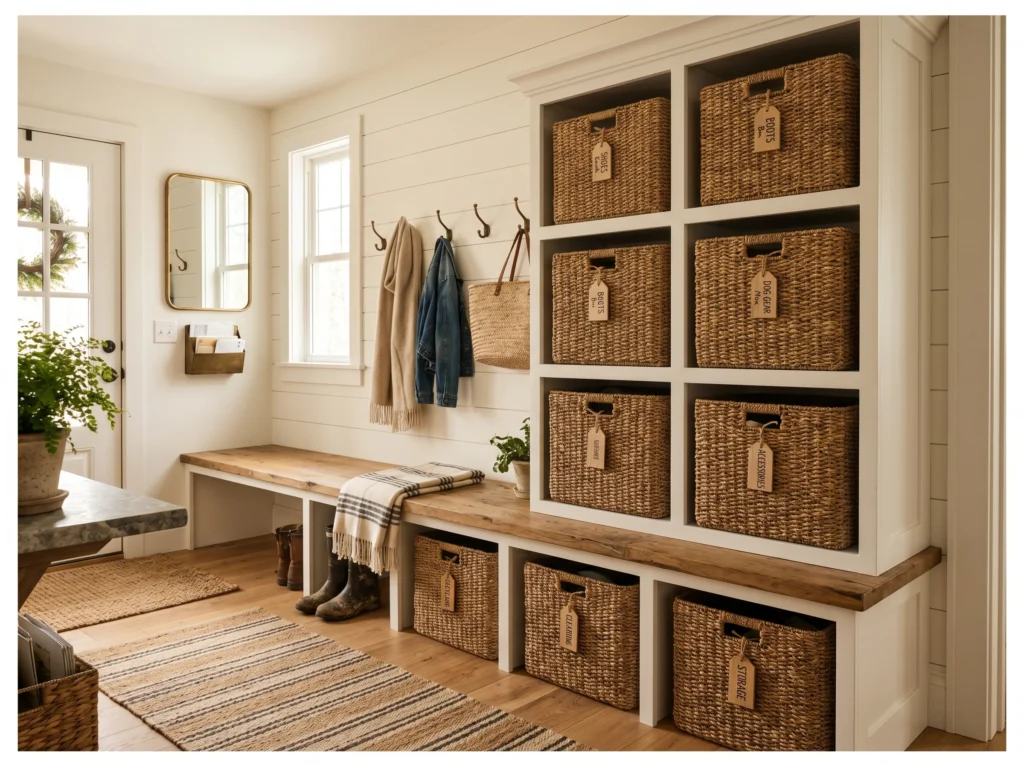
Using large woven seagrass or rattan baskets as pull-out drawers in open mudroom cubbies adds warmth and texture that painted timber cabinet drawers simply cannot provide. Each basket slides in and out of its cubby like a drawer and holds shoes, sports gear, or miscellaneous outdoor items.
Label each basket with a simple handwritten tag or a small chalkboard label so everyone knows what belongs where. Baskets also make cleaning easy since you lift the entire basket out to vacuum or wipe the cubby shelf beneath. They are affordable, readily available, and look genuinely beautiful.
Woven baskets like these pair beautifully with cozy entry decor worth pairing to finish the overall look.
Natural, warm, and budget-friendly.
Mudroom Cabinet with Chalkboard Panel
A chalkboard panel built into the cabinet door is handy for quick notes or reminders. Families often use it for grocery lists or daily schedules right by the door. Kids also tend to enjoy having a spot to draw near the entryway.
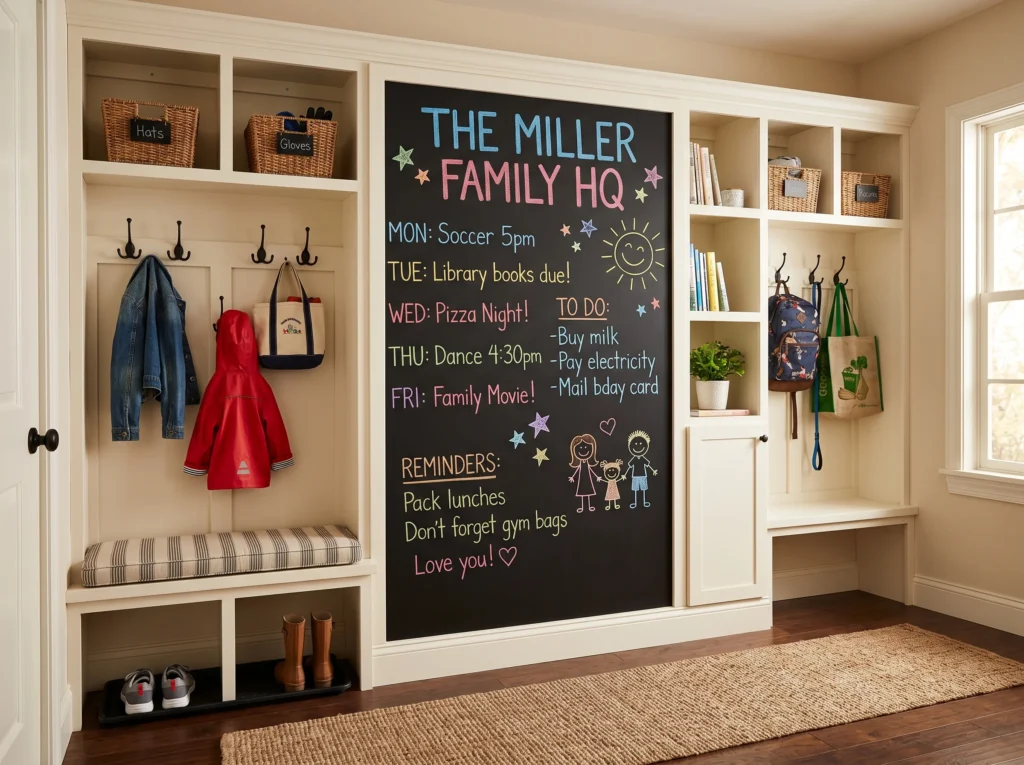
A chalkboard panel built into the mudroom cabinet wall becomes a functional communication hub for the whole family. Write the week’s schedule, after-school reminders, sports practice times, or simple to-do lists directly on the board where everyone will see them on the way in and out.
It costs very little to incorporate a painted chalkboard surface into one section of a mudroom cabinet wall during the design phase. The payoff in daily household communication and organization is genuinely significant, especially for busy families with multiple schedules running simultaneously.
Dark Navy Mudroom Cabinet
Navy blue cabinets add a bolder look compared to the usual white or gray options. This color pairs particularly well with brass or gold hardware. It also does a good job of hiding scuffs and marks from daily use.
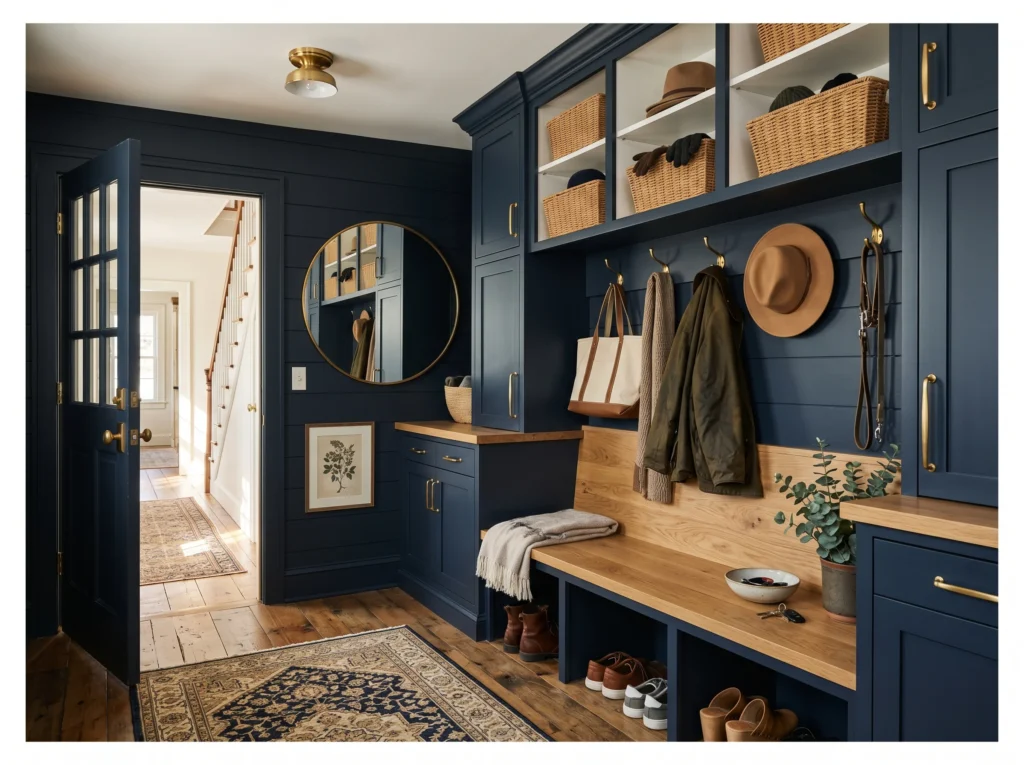
Deep navy blue mudroom cabinets create an entryway that feels genuinely sophisticated and considered rather than purely functional. The dark color hides scuffs and marks better than white and gives the space a strong visual identity from the moment you walk through the door.
Pair navy cabinets with brushed brass or matte black hardware, a warm natural timber bench seat, and white walls above to keep the space feeling bright despite the dark cabinetry. The contrast between navy and natural wood is one of the most satisfying color combinations in home design right now.
Mudroom Cabinet with Coat Closet
A dedicated closet section is added alongside the open storage for hanging longer coats. This keeps bulky winter jackets from crowding the hooks and cubbies. It works especially well in colder climates where heavy outerwear is a daily necessity.
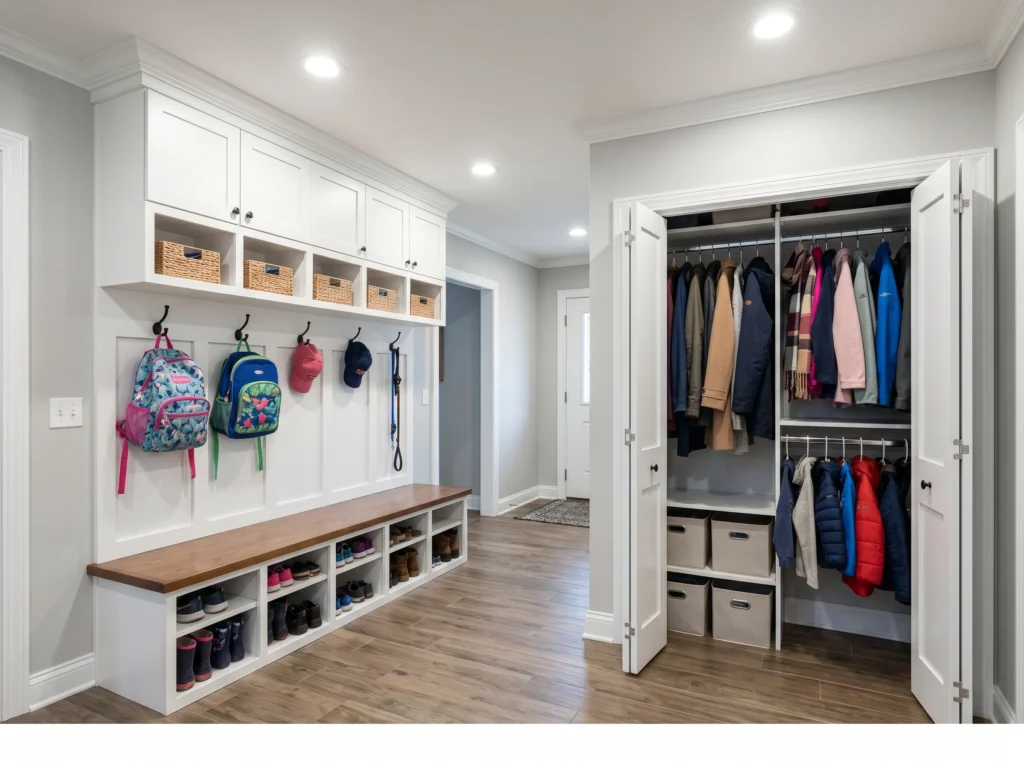
Incorporating a full-height coat closet into one section of the mudroom cabinet wall gives hanging coats, school bags, and longer items a proper home rather than forcing them onto hooks where they often fall or pile up.
A section as narrow as 600 millimeters with a double hanging rail inside holds a surprisingly large number of coats, jackets, and bags neatly. Bifold or sliding doors keep the closet accessible in a tight space. This is the feature that makes the most significant practical difference in family mudrooms.
Freestanding Mudroom Cabinet
Unlike built-in units, this cabinet isn’t attached to the wall and can be moved if needed. It’s a good option for renters who can’t install permanent fixtures. Most freestanding versions still include hooks, a bench, or drawers despite being portable.
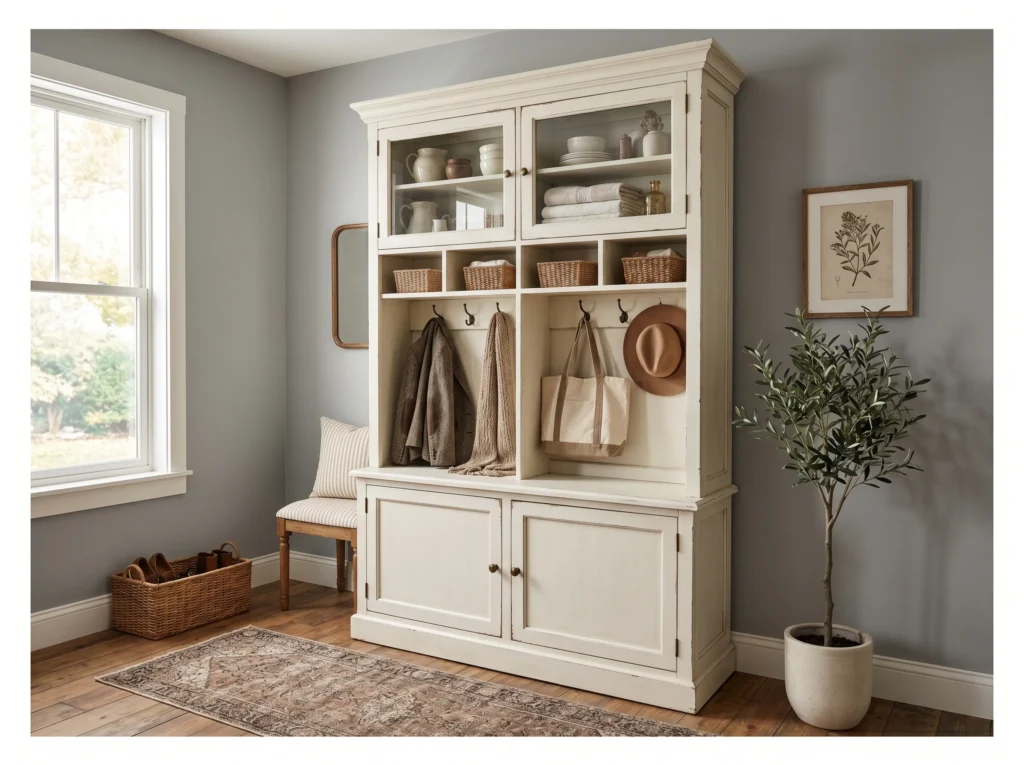
A freestanding mudroom cabinet requires no installation, no carpentry, and no permanent modifications to the home. You place it where you need it and take it with you when you move. This makes it the ideal solution for renters and homeowners who want flexibility.
Quality freestanding mudroom cabinets combine open hook sections, closed storage doors, and bench seating into a single piece of furniture. Some models are modular, meaning you can add or remove sections as your storage needs change over time.
Budget-friendly option for renters.
Mudroom Cabinet with Pegboard Wall
A pegboard section lets you rearrange hooks and shelves depending on what you need to store. This flexibility is useful for households whose storage needs change often. It also adds a slightly more industrial or workshop inspired look.
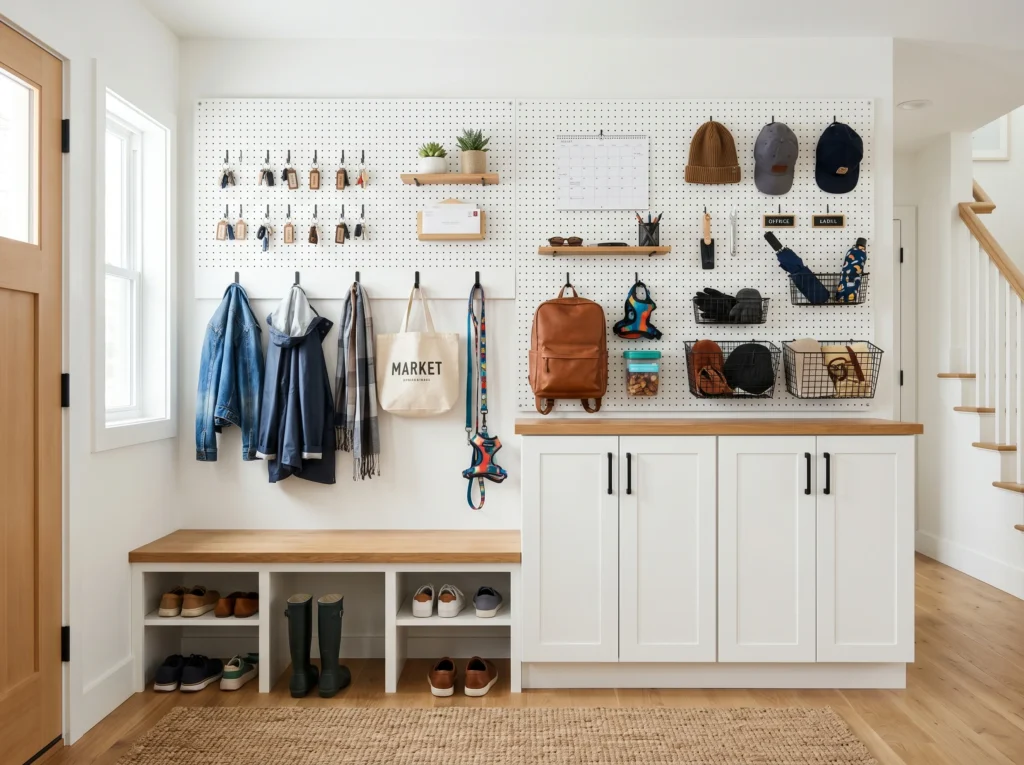
A pegboard wall above the mudroom cabinets creates an infinitely adaptable hanging and storage system that you can reconfigure any time without tools or damage to the wall. Hooks, small shelves, baskets, and holders slot into the pegboard grid and move as your needs change.
This is one of the most practical mudroom additions for households where the daily carried items change seasonally. Sports equipment hooks in winter, bike helmet holders in summer, garden tool clips in spring. The pegboard handles all of it without requiring permanent fixtures.
Mudroom Cabinet with Bench and Open Cubbies
A bench sits in the middle with open cubbies on either side for shoes or bags. This layout keeps things visible and easy to grab on the way out the door. It’s a simple setup that works well for busy households with kids.
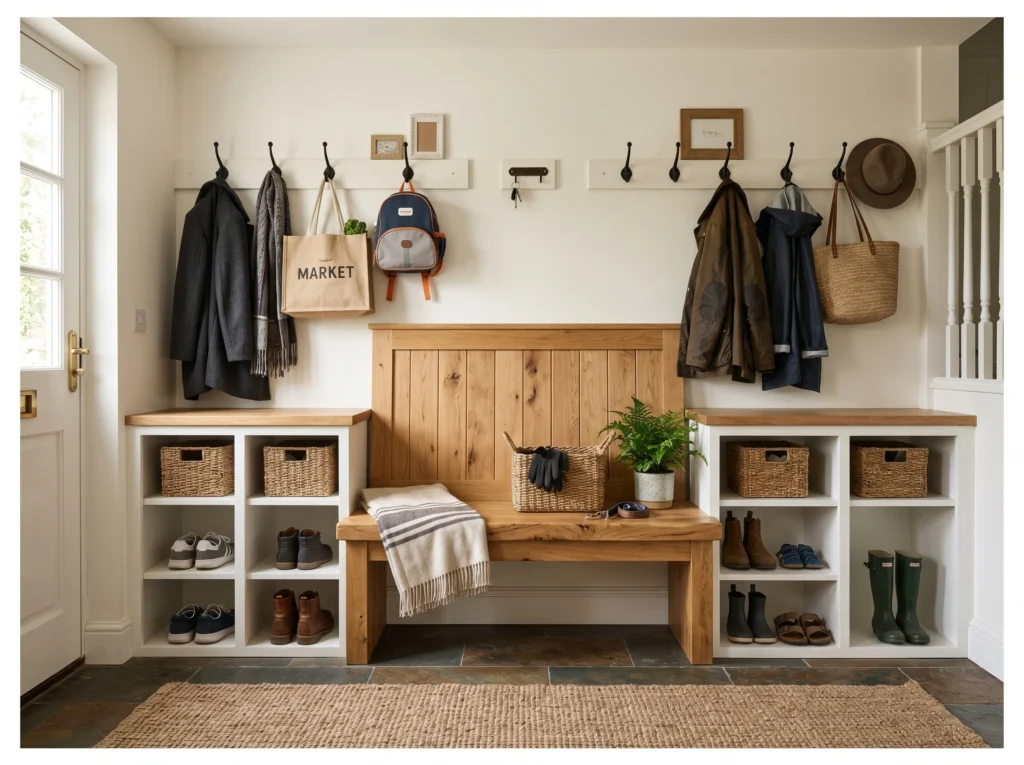
A bench flanked by open cubbies on each side creates a symmetrical mudroom layout that feels balanced, intentional, and generous. Each side of the bench has its own set of cubbies for shoes and baskets and hooks above for coats and bags.
The open cubby approach keeps the space feeling airy rather than enclosed. It works especially well in mudrooms with limited natural light where closed cabinet doors could make the space feel dark and tight. Warm wood tones on the bench and cubby shelves add natural warmth that white painted cabinets alone cannot provide.
Mudroom Cabinet with Built-In Lockers
Full lockers are built directly into the cabinetry, complete with doors and internal hooks. This gives each family member a fully enclosed space instead of just an open cubby. It tends to suit larger mudrooms where there’s enough wall space for the extra depth.
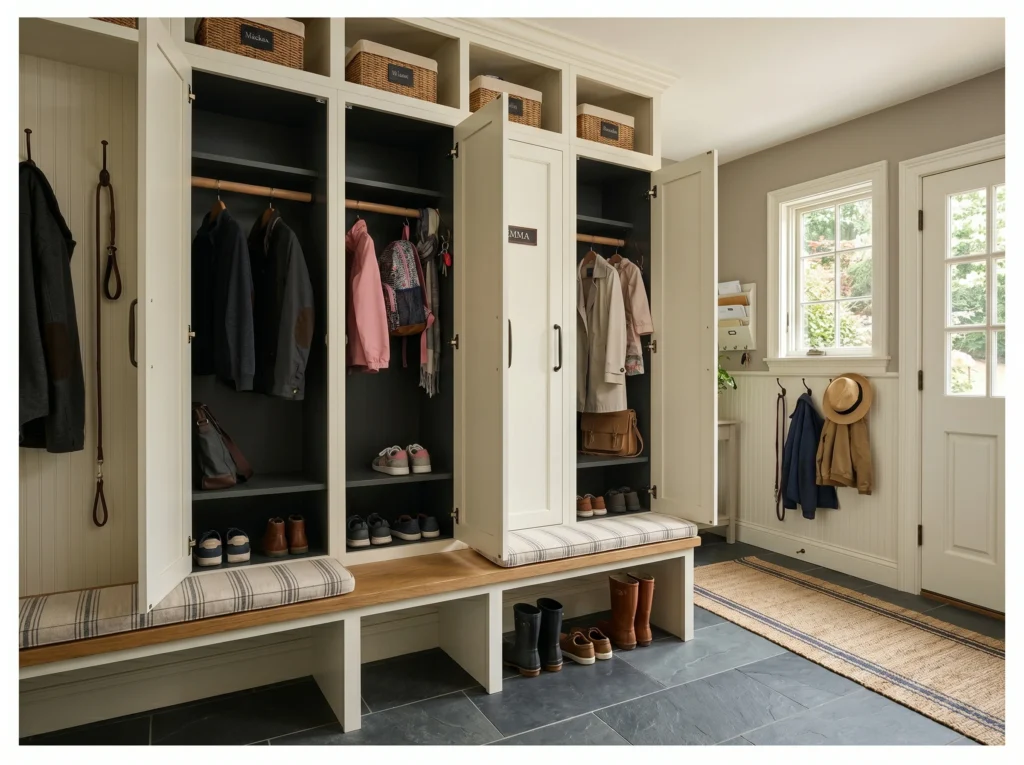
Built-in lockers take the individual cubby concept to its logical conclusion. Each family member gets a full-height enclosed locker with a hanging rail for coats, hooks for bags, and a lower section for shoes and sports gear. The door closes and everything disappears completely.
The built-in nature of these lockers means they are sized precisely for the space and finished to match the surrounding cabinetry exactly. This makes them look far more considered and permanent than freestanding locker units. Name plates or chalkboard labels on each door personalize the system for every member of the household.
The most complete family mudroom storage system possible.
Conclusion
A well-designed mudroom cabinet system is one of the most impactful organizational investments a home can have. It stops clutter at the door, gives every incoming item a designated home, and makes the daily rhythm of leaving and arriving genuinely smoother.
Choose the ideas from this list that address your specific pain points first. If shoes are the problem, start with dedicated shoe storage. If coats pile everywhere, prioritize a closet section or proper hooks. Build the system around how your household actually behaves rather than around what looks most impressive.
The mudroom you have always wanted is simply a well-planned cabinet wall away.
And once the cabinets are in place, entryway styling to finish the space is the natural next step for the rest of the room.