A mudroom without a proper bench means everyone stands on one foot trying to pull on their shoes at the door. The right bench changes the entire entry experience instantly.
These ideas combine real function with genuine style for every entryway size and budget.
If you want to look beyond the bench itself, storage that keeps the whole entry tidy has plenty of ideas worth pairing with it.
Let’s get started.
Built-In Lift-Top Storage Bench
This bench opens from the top, revealing a hidden storage compartment underneath the seat itself. It works well for stashing items that don’t need to be accessed every single day. The closed lid also keeps the entryway looking tidy despite whatever is stored inside.
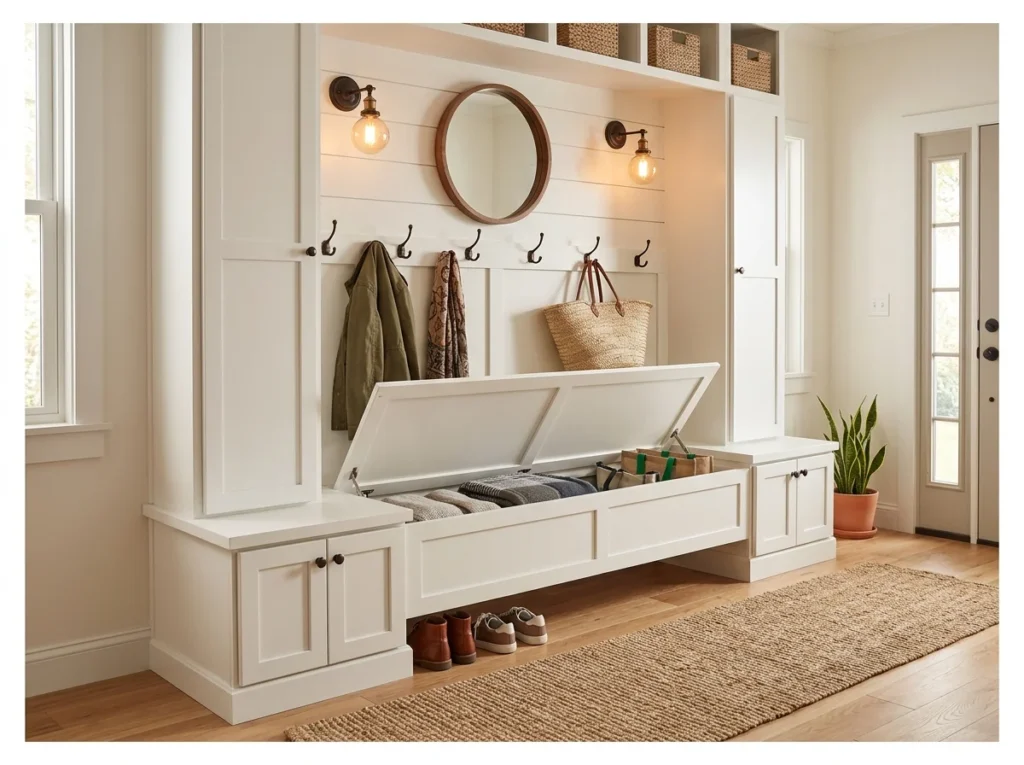
A built-in lift-top bench conceals a full storage compartment inside the bench seat, hiding seasonal gear, sports equipment, and everyday essentials beneath the sitting surface. The hinged lid opens with one hand and stays propped while loading and unloading.
This is the highest-functioning single mudroom bench configuration available because it combines practical seating with significant concealed storage in a single built-in footprint. Gas-lift hinge hardware makes opening effortless even with hands full of bags or school supplies.
The bench that earns its footprint twice over.
Shaker Style White Painted Bench
White shaker paneling gives this bench a clean, classic look that fits almost any entryway. The simple recessed panels keep the design from feeling too plain or too ornate. This finish also helps brighten up entryways that don’t get much natural light.
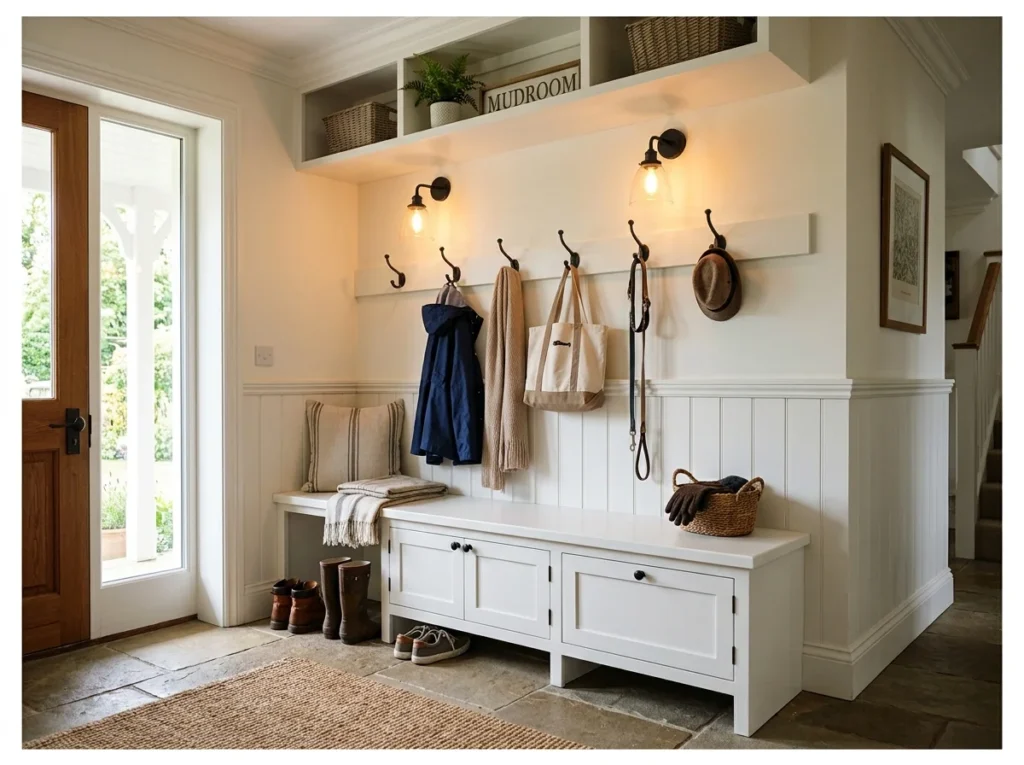
A white shaker bench with recessed panel cabinet doors below creates the most universally compatible mudroom bench available, suiting traditional, farmhouse, transitional, and contemporary entry aesthetics equally well. The clean geometry ages beautifully.
Matte black hardware against white paint creates the graphic contrast that defines much of current mudroom design. The closed cabinet section below conceals items that would look cluttered on open shelves while still keeping everyday essentials accessible.
Bench with Woven Baskets Below
Baskets slide into open compartments beneath the seat instead of relying on drawers. This adds natural texture while still keeping shoes and smaller items out of sight. Baskets are also easy to pull out and carry around the house when needed.
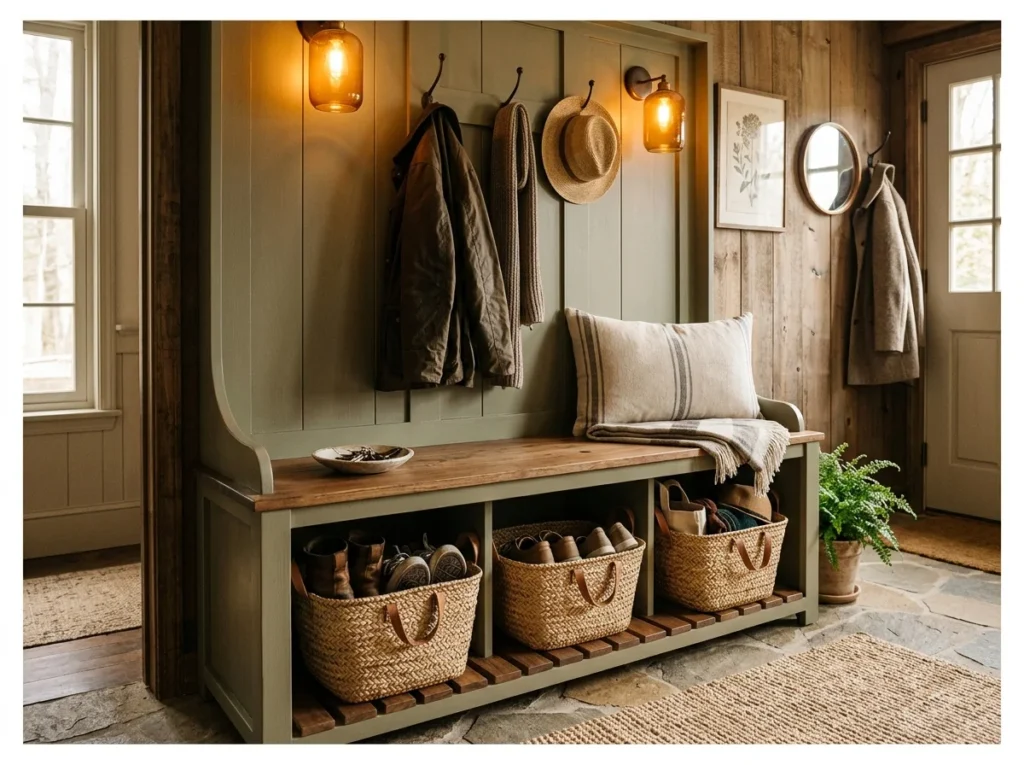
A bench with an open lower shelf holding matching woven baskets creates accessible per-person storage where each household member retrieves their own basket rather than searching through a shared pile. The woven texture adds warmth that wire or plastic bins completely lack.
This approach suits families wanting individual storage organization without the cost or installation complexity of full built-in cubbies. Consistent basket size and material creates visual cohesion even on open shelving.
Budget-friendly option with genuine warmth and organization.
Farmhouse Rustic Timber Bench
Rough sawn timber gives this bench a slightly weathered, handmade look. Black iron brackets or legs are a common pairing that reinforces the farmhouse feel. This style tends to suit homes that already lean toward a rustic or country aesthetic.
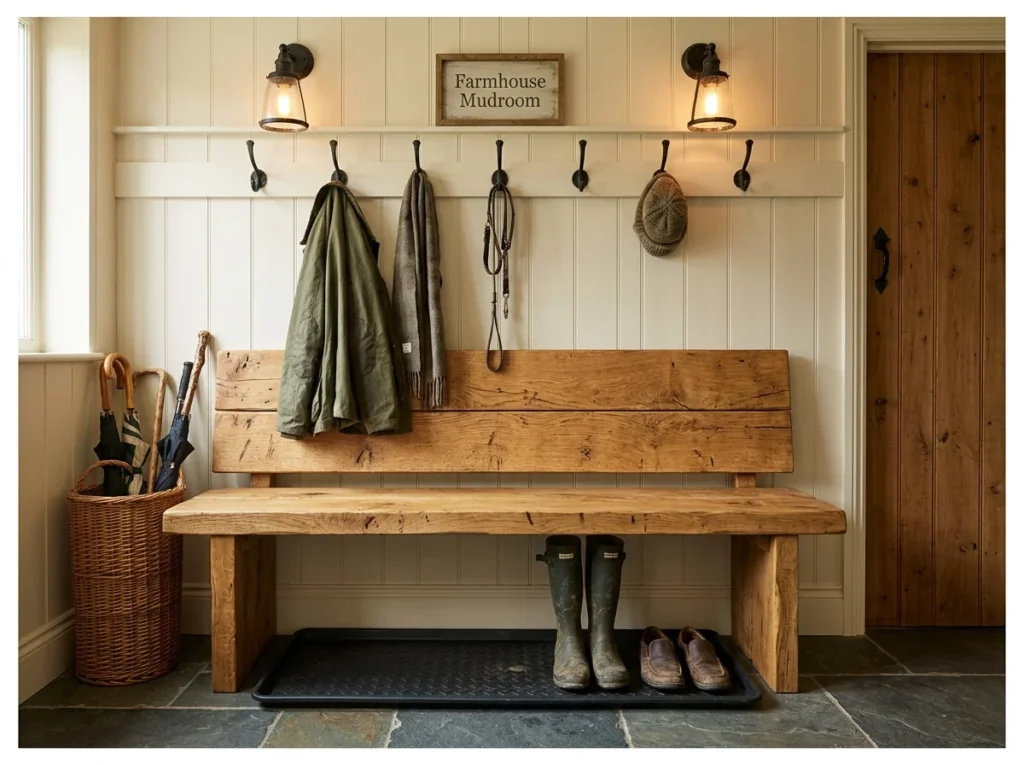
A rough-sawn or reclaimed timber bench with visible grain, natural edges, and honest material character creates a mudroom entry with genuine farmhouse warmth that manufactured furniture cannot replicate. The imperfections are the point.
This style pairs naturally with shiplap walls, black iron hooks, and galvanized metal accents. The bench works as a statement piece even without surrounding built-ins, giving any entry genuine farmhouse character from a single furniture addition.
If this rustic direction is working for you here, a farmhouse feel for the whole entry shows how to carry it through the rest of the room.
Upholstered Cushion Bench
A cushioned seat adds real comfort compared to a plain wood or metal surface. This works especially well in entryways where people sit down to put shoes on regularly. Fabric choice matters here since it needs to hold up to daily wear near a busy door.
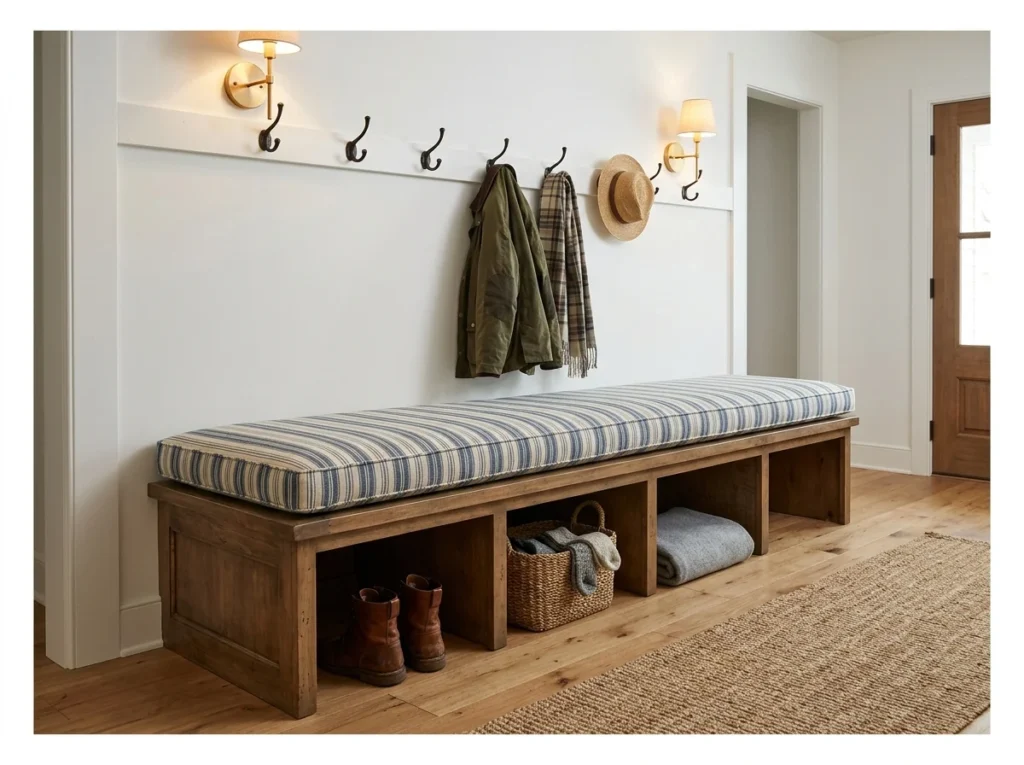
An upholstered bench seat in a durable stripe or solid-color performance fabric transforms a functional entry bench into genuinely comfortable seating that invites sitting rather than perching. The cushion communicates that the space was considered as a room, not just a transition zone.
Choose upholstery fabric rated for heavy use and easy cleaning, since mudroom benches accumulate significant daily contact. Indoor-outdoor performance fabrics handle this well while still looking elegant rather than purely utilitarian.
Built-In Window Seat Bench
A window seat makes use of an alcove or nook that would otherwise sit empty. Storage is often built into the base, combining seating with practical function. Natural light from the window also makes this one of the more inviting spots in the entryway.
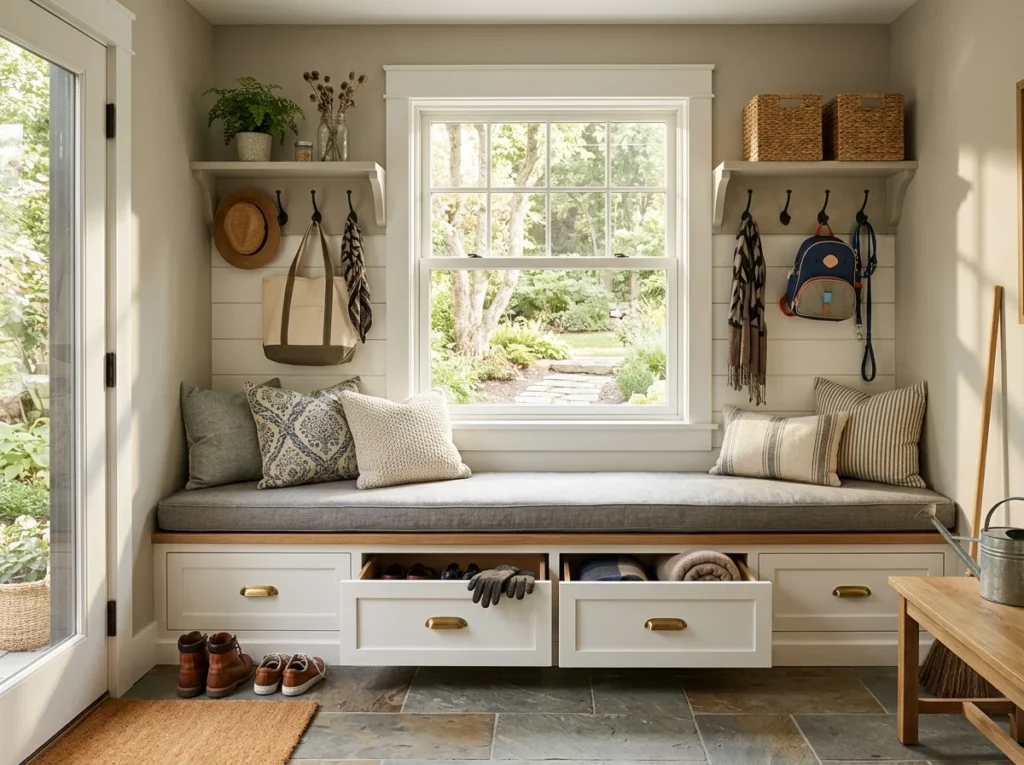
A built-in bench positioned beneath a mudroom window transforms a functional entry bench into a genuinely pleasant seated space where natural light makes everyday coming and going feel more welcoming. The window above provides both light and visual relief.
Storage drawers built into the base below the window seat recover additional function from the footprint. This configuration suits mudrooms with an existing window that has been left unused as a design element, turning architecture into opportunity.
Once the bench is in place, a rug that softens the whole entry is worth layering in underfoot.
Bench with Individual Cubbies
Cubbies built into the base give each family member a designated spot for shoes or bags. This layout helps keep mornings organized since everyone knows exactly where their things go. Open cubbies also make it easy to grab what’s needed without opening any doors.
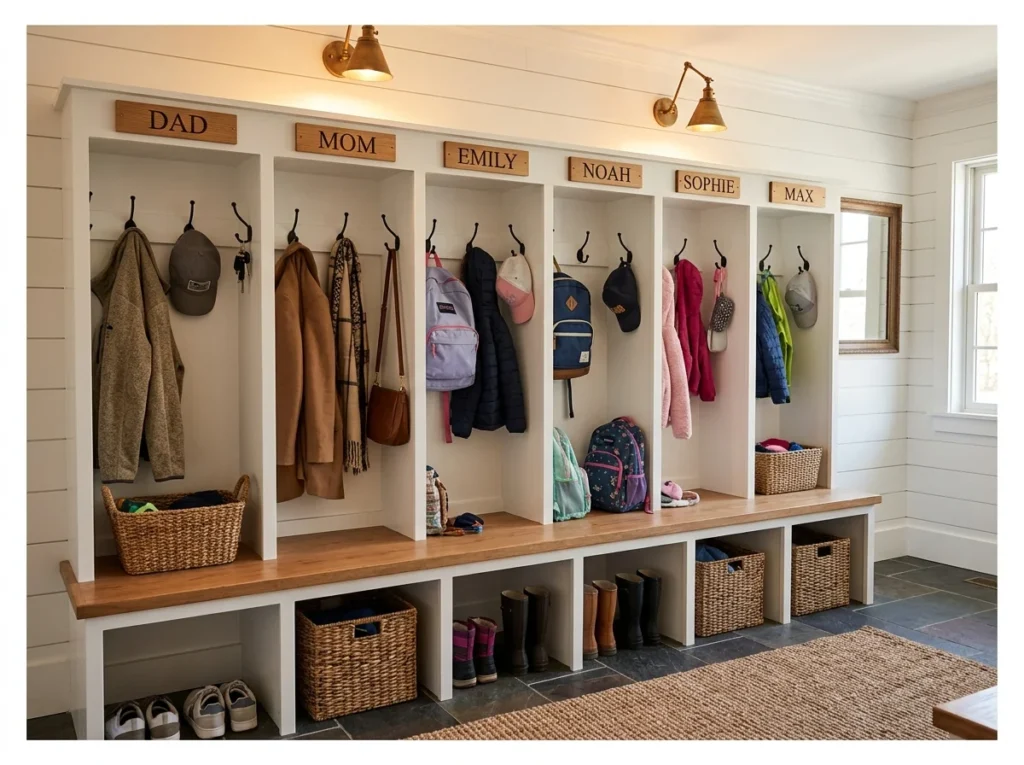
Individual cubbies built above or beside the bench seat create dedicated storage zones for each household member, eliminating the daily argument about whose coat is on whose hook and whose shoes belong in which basket.
Label each cubby with a name or initial for children and guests to identify their zone immediately. This configuration scales well for families of two to six people and remains one of the most consistently requested mudroom bench arrangements available.
The configuration that ends daily entry chaos.
Industrial Pipe and Wood Bench
Metal pipe legs paired with a wood plank seat give this bench a slightly raw, utilitarian look. This combination works well in entryways with other industrial details already present. The mix of materials also tends to hold up well under regular daily use.
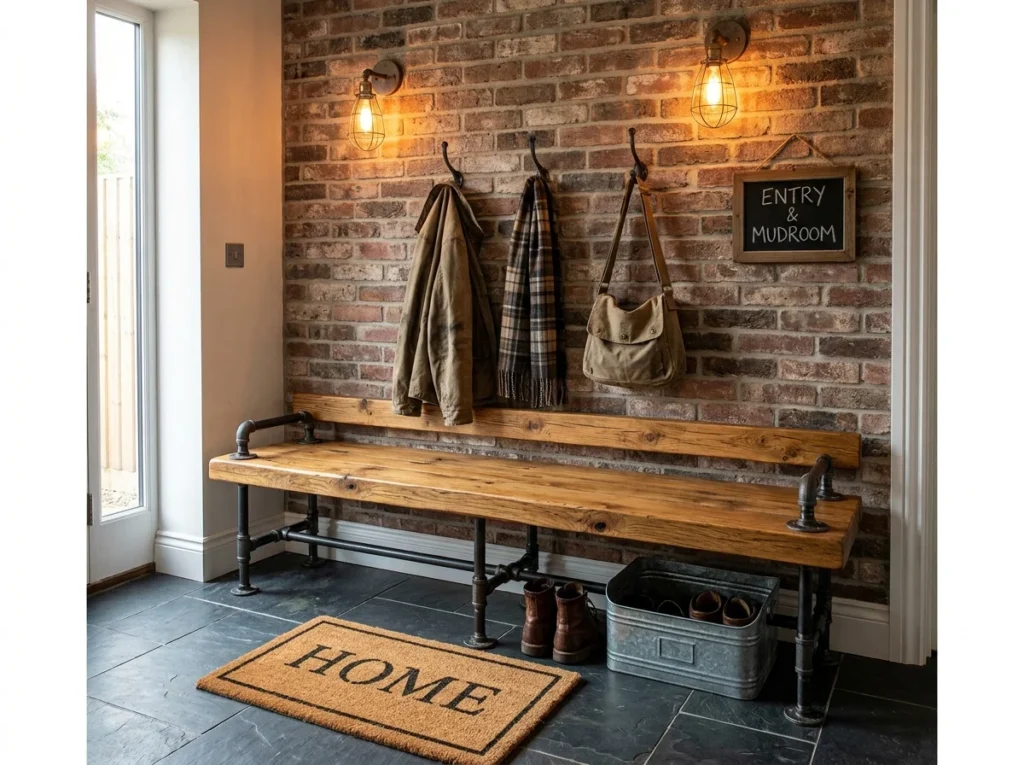
A bench combining a solid timber seat with black iron pipe legs brings industrial material honesty to the mudroom entry, creating an authentically raw look that mass-produced furniture genuinely struggles to replicate. The visible pipe fittings become the design detail.
This style suits contemporary, industrial loft, and urban home interiors where honest material quality defines the aesthetic rather than ornament or polish. The timber seat adds warm contrast to the cool precision of the black metal below.
Floating Wall-Mounted Bench
A floating bench attaches directly to the wall, which keeps the floor beneath it clear. This makes cleaning easier and gives the entryway a lighter, less cluttered look. It tends to suit smaller spaces where every bit of floor space matters.
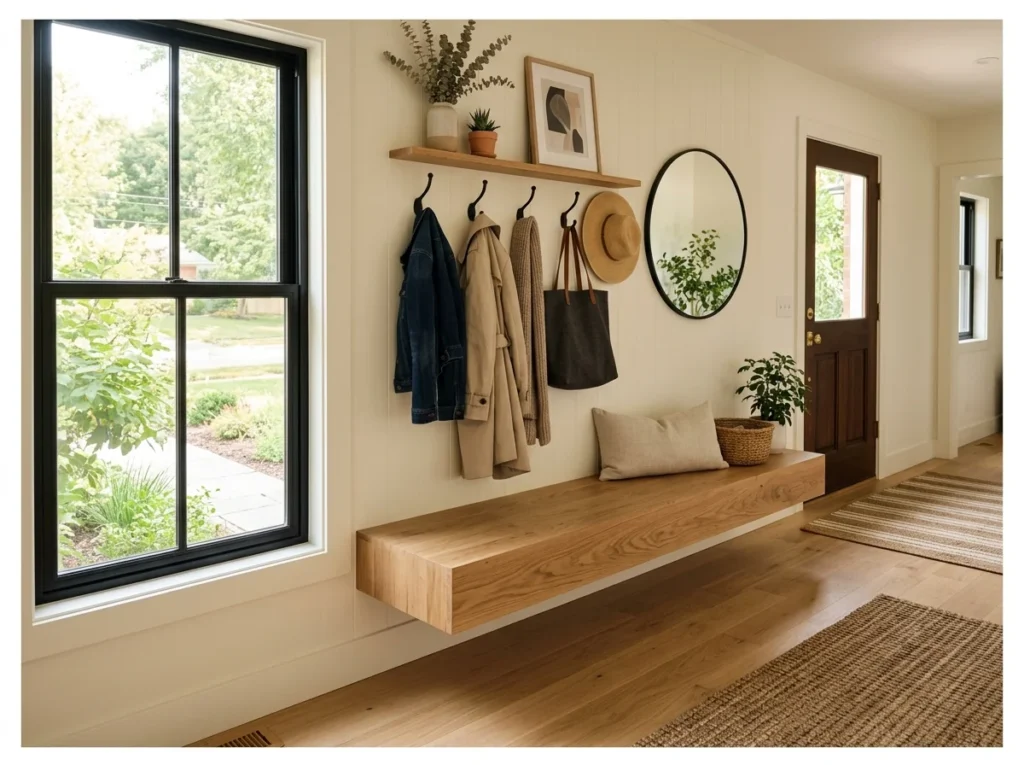
A wall-mounted floating bench requires no floor contact, leaving the area beneath completely visible and clear, which makes the mudroom floor appear significantly larger than a bench with visible legs or a base cabinet would allow.
This floating effect creates a distinctly modern, architectural quality and makes floor cleaning genuinely effortless since there are no legs or base panels to work around. Structural wall mounting into studs is essential to support the seated weight safely.
Perfect for small entryways that need to appear more spacious.
Corner L-Shaped Bench
An L shaped bench makes use of a corner that would otherwise go unused in an entryway. This layout also gives more seating length than a standard straight bench would. It works especially well for larger families needing more than one spot to sit at once.
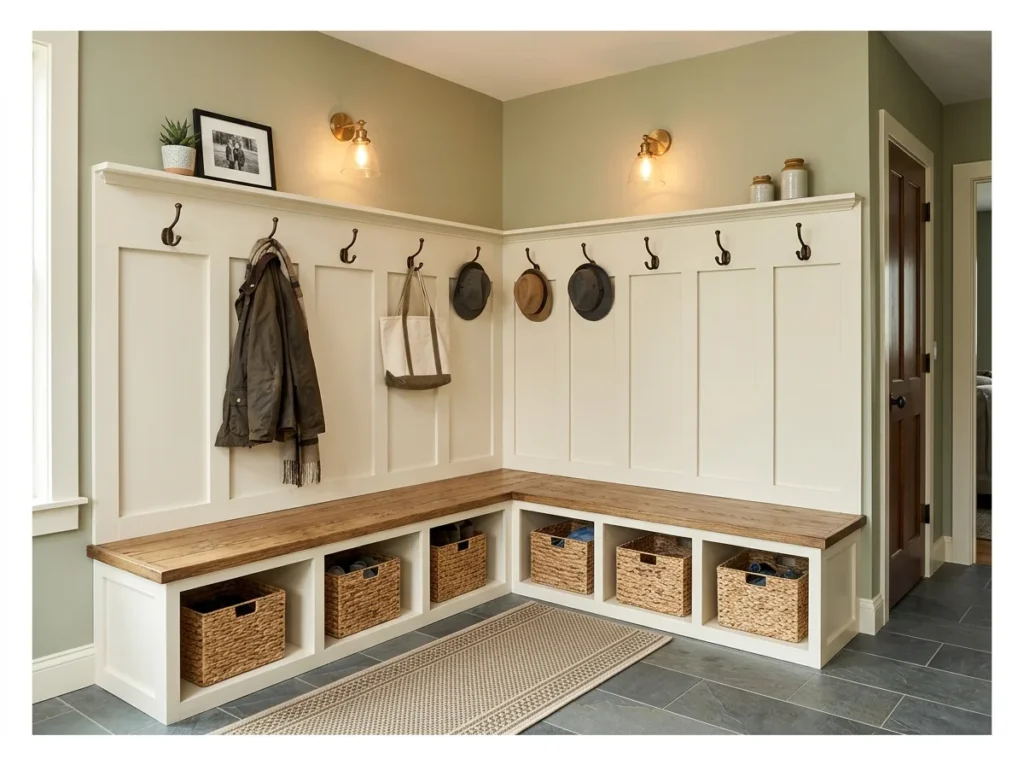
An L-shaped bench fitted into a mudroom corner uses the most awkward and underused zone of any entry layout to create maximum seating capacity, since both walls provide bench length simultaneously without consuming central floor space.
The corner configuration creates a natural social gathering spot where multiple people can sit comfortably at once, particularly useful during morning school rushes when multiple children are putting on shoes simultaneously.
Narrow Entryway Console Bench
This bench is built specifically for tight entryways where a standard sized bench won’t fit. A slim profile still manages to offer a spot to sit without taking up much depth. Even a narrow design can include a small shelf or hooks above it for extra function.
A slim console-style bench measuring 25 to 35 centimeters deep suits narrow hallways and tight entry corridors where a standard bench depth would block comfortable circulation. The minimal footprint delivers seating function without consuming passage width.
This narrow configuration also works along any unused wall section adjacent to a door, including spaces beside coat closets or between door frames, where traditional bench depths would be genuinely impractical.
If your entry is especially tight, a compact layout that still works hard has plenty more tricks worth borrowing.
Perfect for small hallways where every centimeter matters.
Bench with Shoe Drawer Below
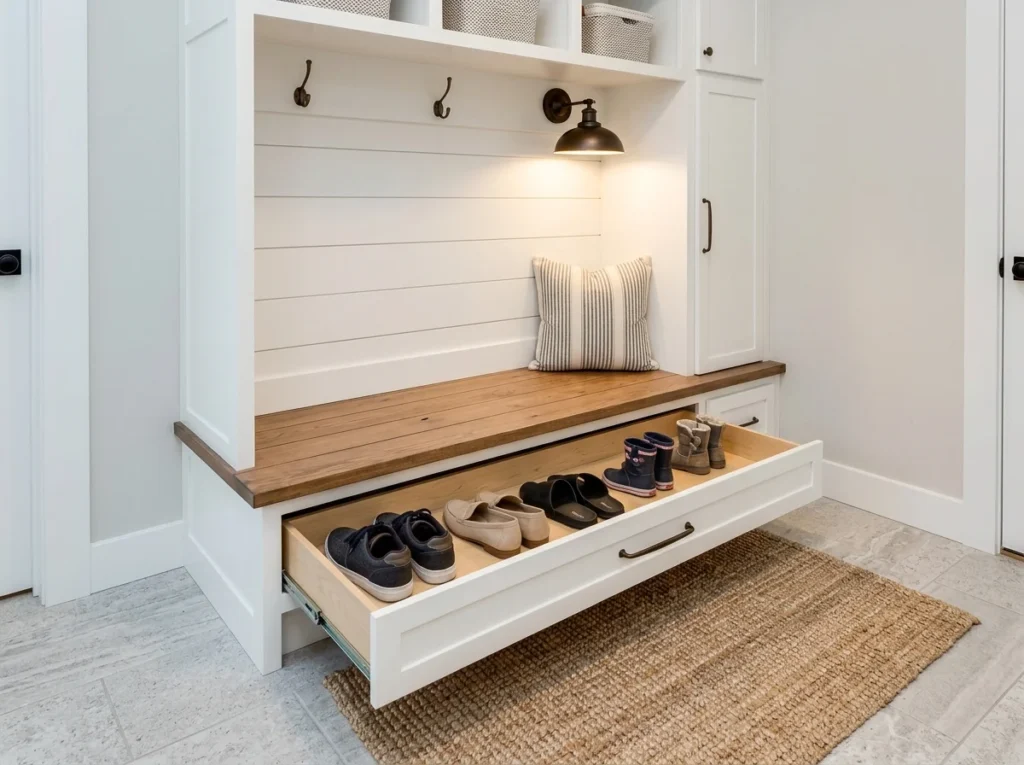
A pull out drawer keeps shoes hidden away instead of piling up near the door. This setup works well for households with a lot of shoes to manage on a daily basis. The drawer also makes it easier to keep the entryway floor clear and swept.
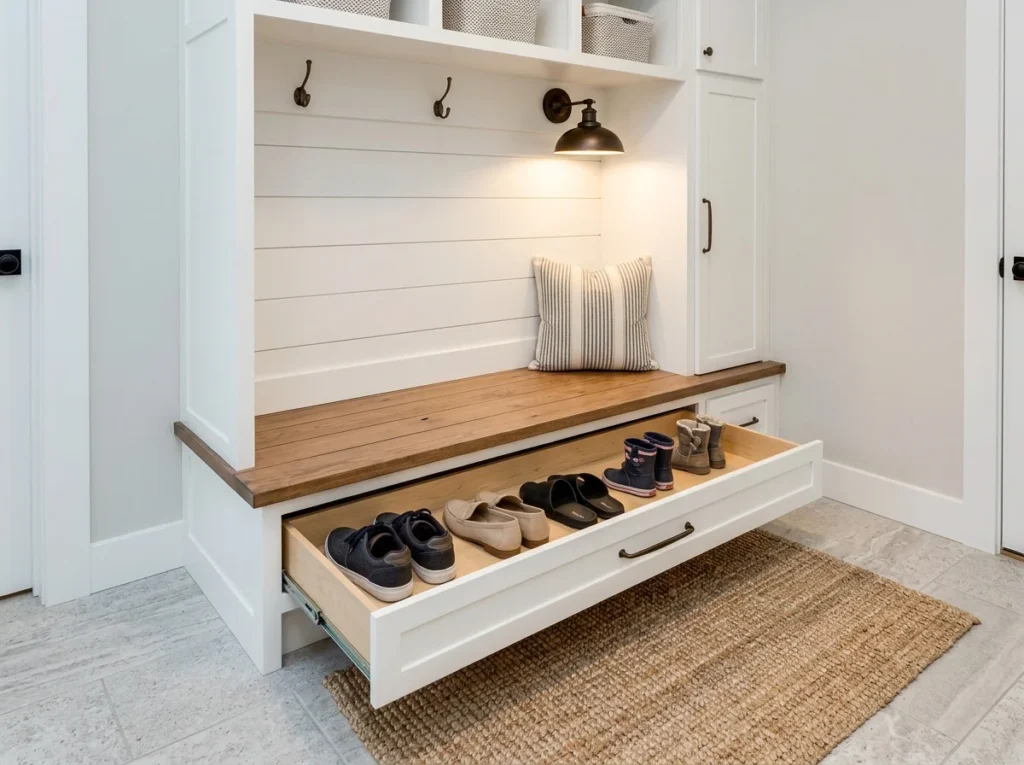
A shallow pull-out drawer beneath the bench seat sized specifically for flat shoes and slippers keeps footwear neatly organized and immediately accessible without requiring separate shoe racks or floor space for scattered pairs.
This approach works particularly well for everyday footwear, the pairs removed and replaced daily, while less-used shoes remain in a closet or elsewhere. The drawer makes the bench zone reliably tidy even when the rest of the mudroom has busy days.
Built-In Bench with Beadboard Back
Beadboard paneling adds texture to the wall behind the bench instead of leaving it flat. This small detail brings a cottage style touch to what’s otherwise a very functional piece. It’s often painted white to match the rest of the entryway trim.
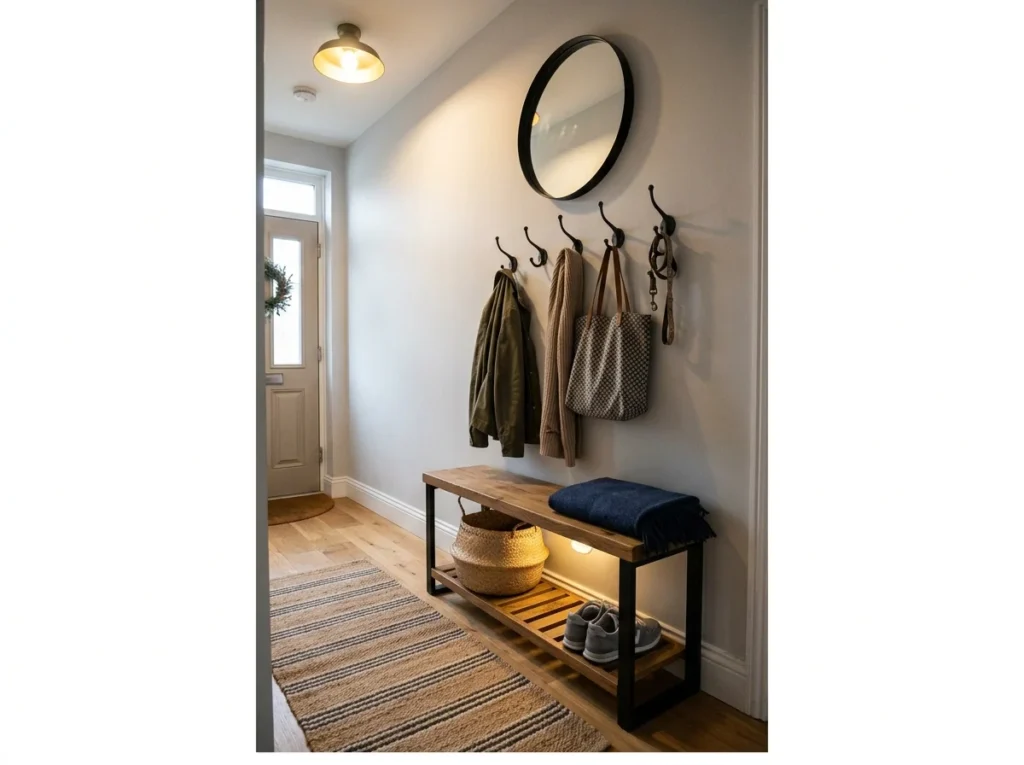
A built-in bench with beadboard paneling on the wall behind it creates a complete, visually cohesive bench zone where the wall treatment and seating feel designed as a single architectural feature rather than separate additions.
Beadboard’s vertical groove pattern adds visual warmth and traditional craftsmanship detail that a plain painted wall behind a bench cannot provide. Painted white, it creates a fresh, cohesive backdrop that suits farmhouse, coastal, and traditional mudroom styles.
Black and Natural Wood Contrast Bench
Pairing black metal or paint with natural wood tones creates contrast without feeling too busy. This combination tends to suit entryways going for a slightly more modern, updated look. The dark accents also help hide scuffs better than an all light colored finish would.
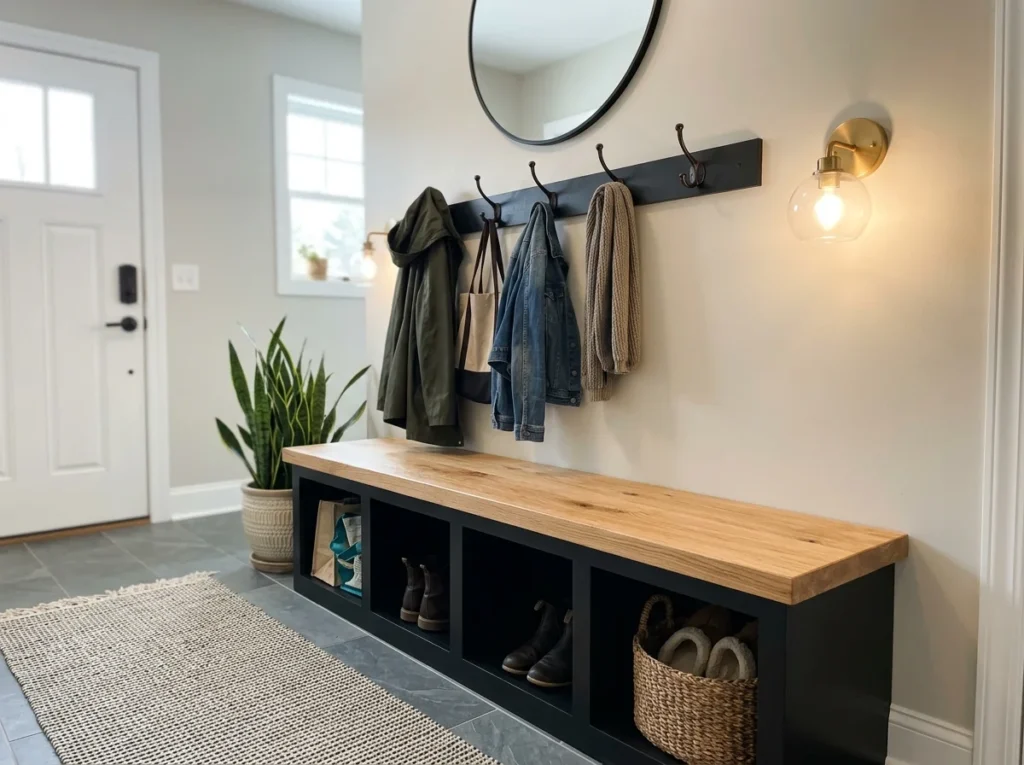
A bench combining a matte black base with a warm natural timber seat creates a sophisticated material contrast that suits contemporary, modern farmhouse, and transitional mudroom designs equally well. The pairing feels deliberate and considered.
The natural wood seat warms the potentially cold quality of an all-black furniture piece, while the black base prevents the warm timber from appearing too rustic or casual for more modern interiors. This balance suits a wide range of interior styles precisely because of its material tension.
Bench with Open Shelf Below
An open shelf underneath keeps shoes or baskets visible and easy to grab. This layout skips doors or drawers entirely, which speeds things up on busy mornings. It tends to suit households who don’t mind a bit of visible clutter in exchange for convenience.
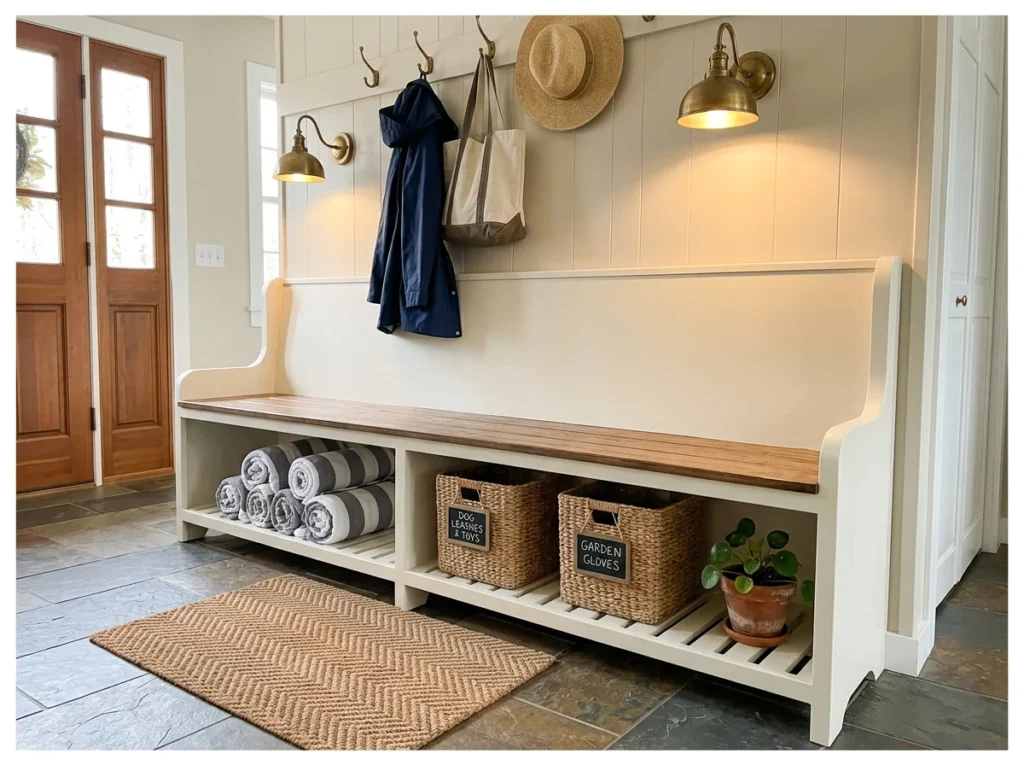
A single open shelf beneath the bench seat provides immediately visible and accessible storage that suits households who prefer to see what is stored rather than opening drawers or cabinet doors to retrieve everyday items.
Style the open shelf with two or three matching baskets, a set of rolled towels, or a neat shoe arrangement. The visible storage rewards daily organization habits since its contents are always on display.
Repurposed Vintage Bench
An old bench, piano stool, or similar piece can be reworked into entryway seating with a little effort. This approach adds character that a new, mass produced bench usually doesn’t have. Sanding and refinishing the piece is often all that’s needed to make it functional again.

A repurposed vintage piece, whether an antique church pew, a reclaimed school bench, or a period settee, brings genuine material history and character to the mudroom that no newly manufactured bench can replicate. Each piece carries its own visual story.
Source vintage benches from antique markets, online furniture resellers, or architectural salvage dealers. Often these pieces require minimal modification: new cushioning, fresh hardware, or simply a thorough clean, to function perfectly as a contemporary mudroom bench.
The character that no flat-pack furniture ever achieves.
Bench with Hooks and Full Locker
This setup combines seating with a full locker section, complete with a door and internal hooks. It gives each family member a fully enclosed space rather than just an open cubby. This tends to suit larger entryways where there’s enough wall space for the extra depth.
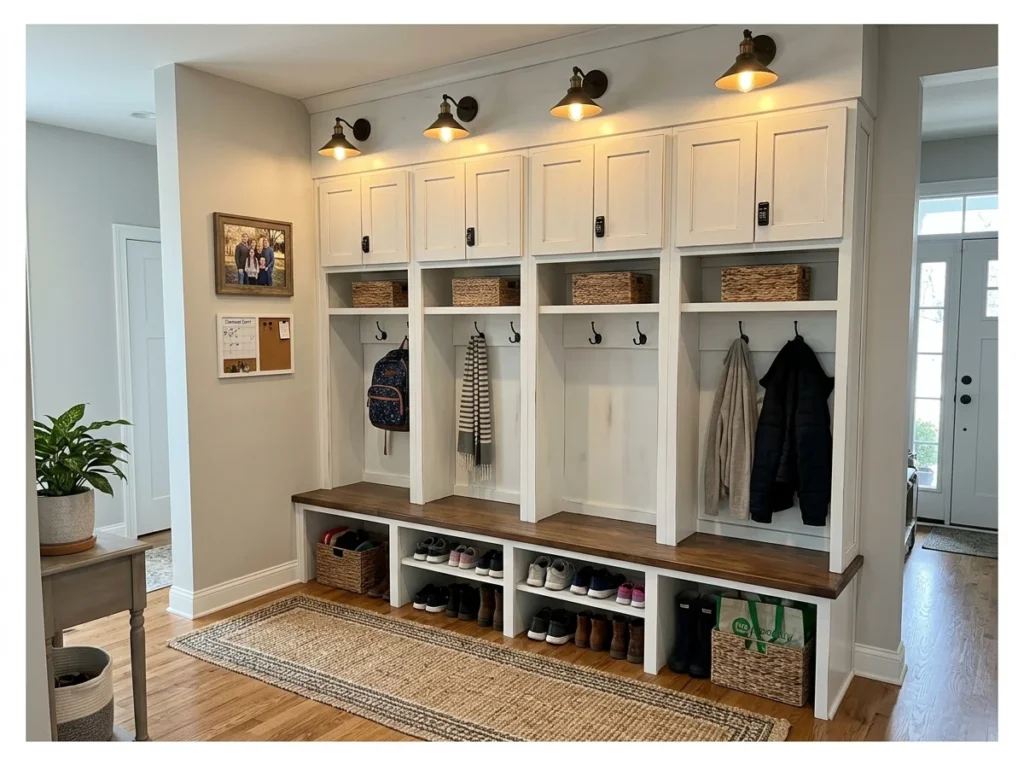
A full locker system with a continuous bench running across the base of individual locker sections creates the most complete per-person mudroom storage configuration, with each section providing hooks above, a shelf for smaller items, and a shared bench seat below.
This configuration suits families needing completely organized, designated zones that prevent one household member’s belongings from spilling into another’s space. The bench becomes an integral architectural element rather than a separate furniture addition.
For more on getting that full system right, lockers built for a whole family covers the idea in more depth.
Painted Colorful Accent Bench
A bold paint color turns a simple bench into a statement piece rather than something purely functional. This works well in entryways that are otherwise fairly neutral and could use a pop of color. Even a small bench in a bright color tends to catch the eye immediately upon entering.
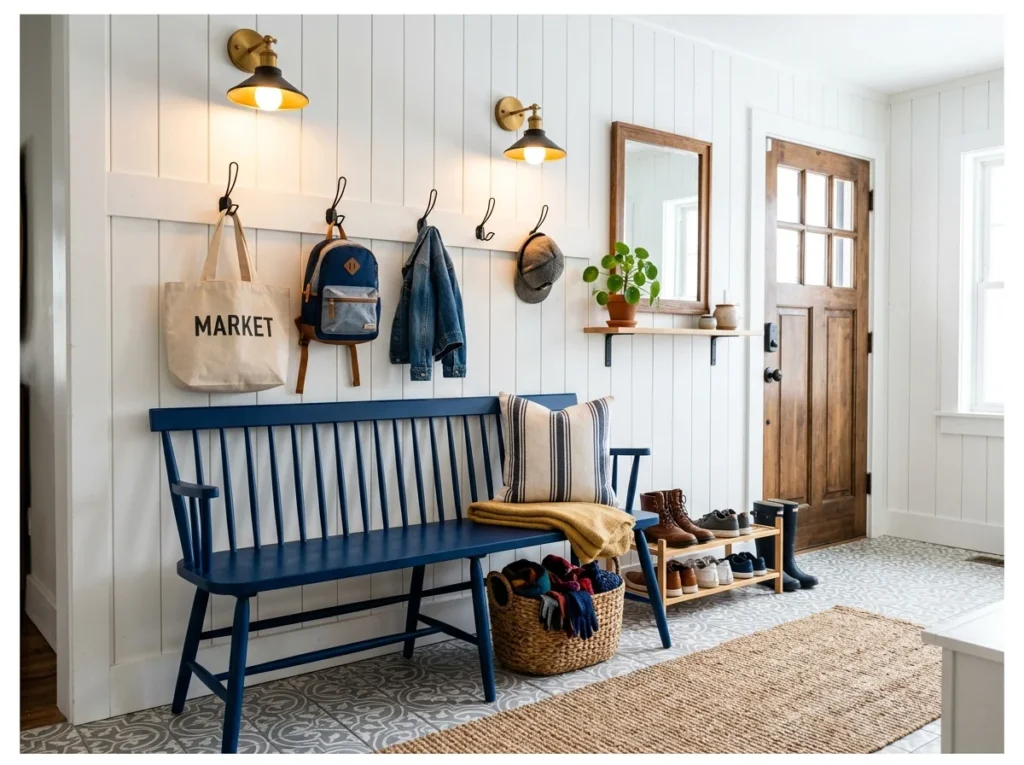
A boldly painted bench in deep navy, forest green, terracotta, or warm mustard creates a confident color focal point in the mudroom that turns an otherwise utilitarian space into a room with genuine personality and deliberate design intention.
The bench color sets the tone for the entire entry aesthetic and can be coordinated with front door color, accent wall tones, or textile choices throughout the adjoining living spaces for a cohesive home design story from the first moment of entry.
Natural Wood Slab Bench
A single slab of wood, often with a live edge, gives this bench a raw, organic look. No two slabs look exactly alike, which makes each bench feel a bit one of a kind. This style tends to suit entryways going for a more natural, minimally processed aesthetic.
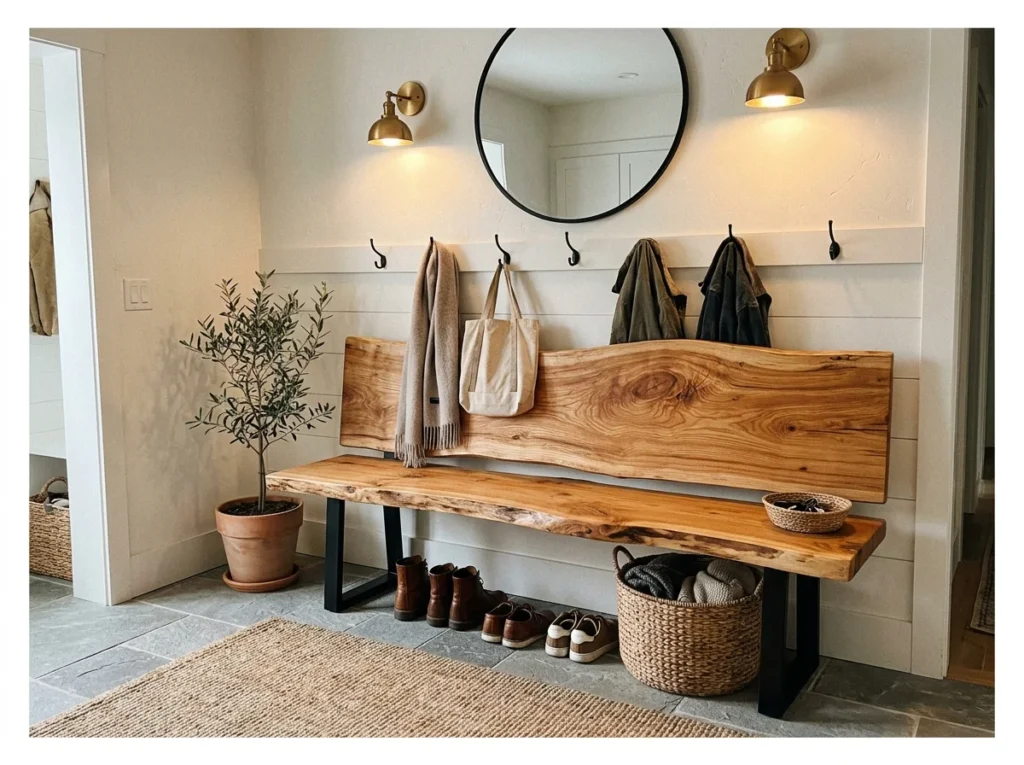
A natural timber slab bench with a live edge front face creates a genuinely one-of-a-kind mudroom piece where the unique profile of the original tree determines the exact form of the bench. No two live-edge slabs are ever identical.
This approach suits homeowners who want their mudroom bench to function as genuine furniture art rather than simply a utility seat. Paired with clean metal legs and minimal hardware, the slab’s organic form becomes the entire design statement.
Minimalist Scandinavian Bench
This style favors simple lines and light wood tones over anything ornate or heavily detailed. Function is prioritized here, with just enough design to keep the piece from feeling plain. It tends to suit entryways that are already fairly pared back throughout.
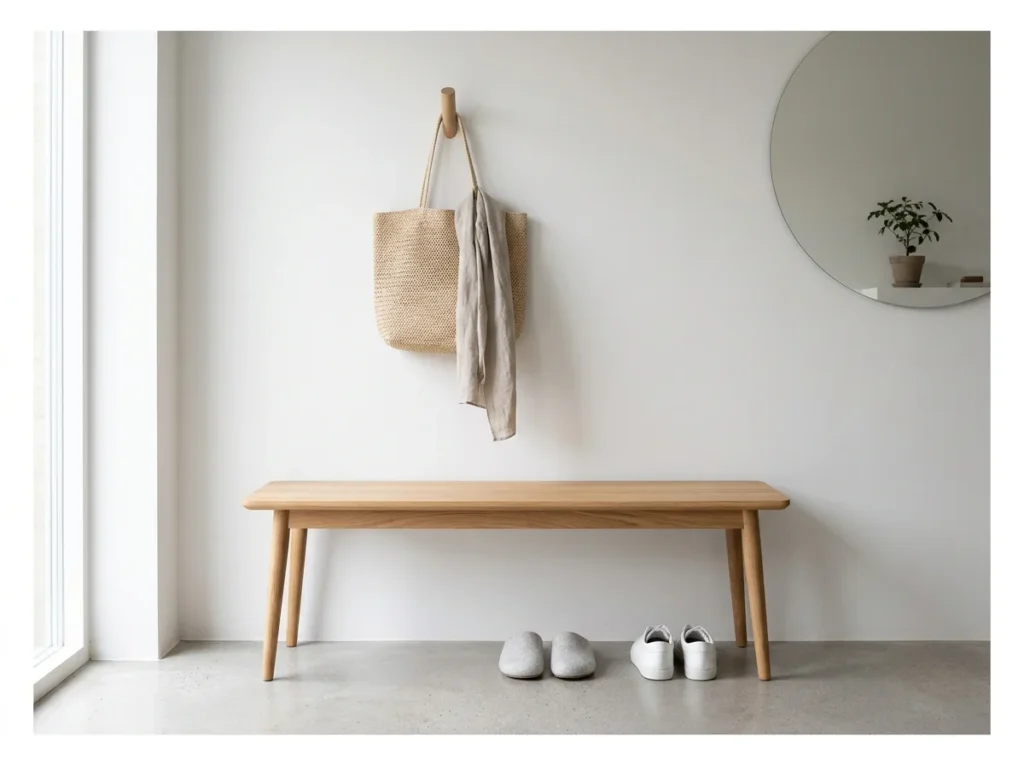
A slim, clean-lined bench with tapered legs in natural oak or pale birch embodies Scandinavian design principles, where form serves function without unnecessary decoration and material quality speaks for itself without embellishment.
This style suits homeowners who value a quietly elegant entryway over a storage-maximal one. The refined proportions create an entryway that feels genuinely calm and considered, allowing a few carefully chosen hooks and a single plant to complete the composition.
To round out that calm composition, a mirror that finishes the entry is worth adding to the wall nearby.
Calm, refined, and genuinely beautiful in its simplicity.
Bench with Charging Station
A built-in outlet and small shelf section handles phones and other devices right at the door. This keeps charging cables from tangling up on kitchen counters elsewhere in the house. It’s a small addition but ends up getting used constantly once it’s in place.
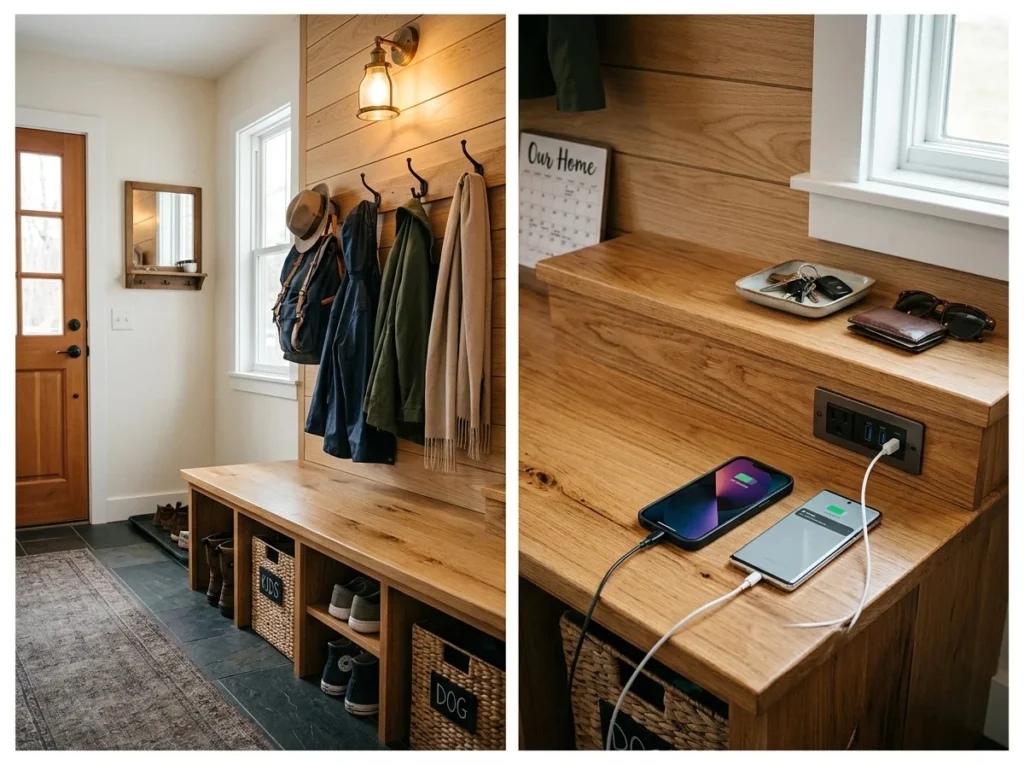
A built-in USB charging station integrated into the mudroom bench surface creates a dedicated landing spot for devices the moment family members arrive home, eliminating phones and tablets spread across kitchen counters and dining tables throughout the home.
This addition suits the mudroom specifically because it is the first room entered after coming home, making it the natural place to set down and charge devices. Flush-mounted power strips with USB-A and USB-C ports serve every current device type.
Freestanding Ready-Made Bench
A freestanding bench isn’t attached to the wall, which makes it a good option for renters. It can also be moved or rearranged if the entryway layout changes down the line. Most ready made versions come with some storage built in, even without being permanently fixed.
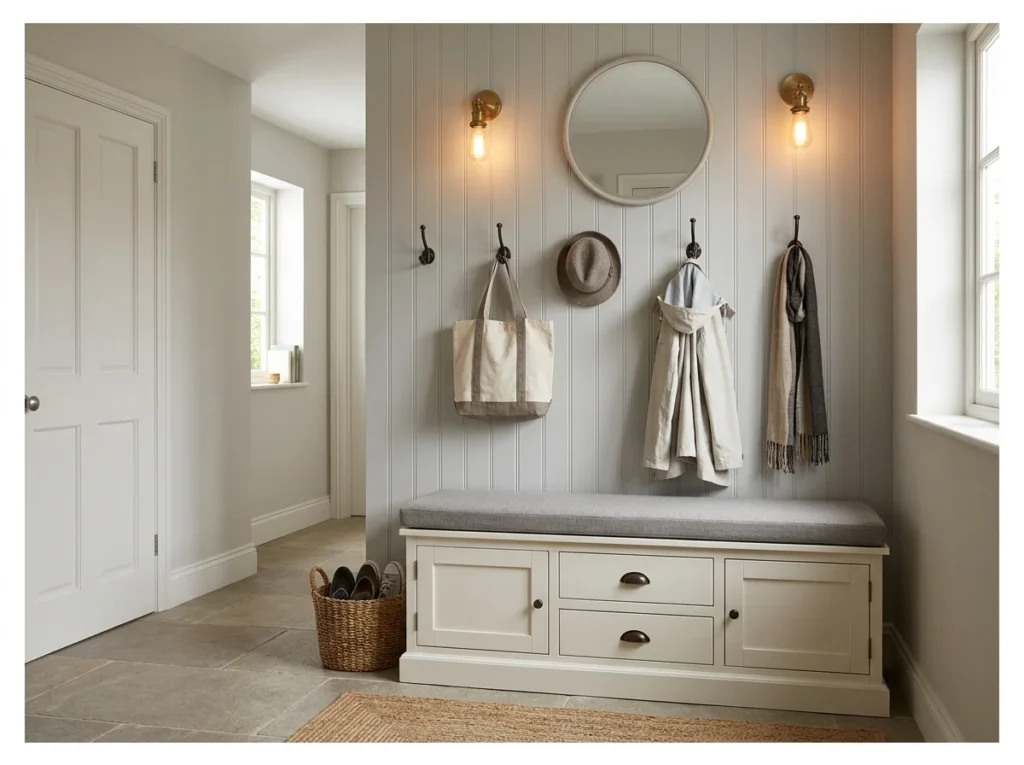
A quality freestanding bench from a furniture retailer delivers most of the function of a custom built-in at a fraction of the cost and none of the construction timeline, making it the most accessible mudroom bench upgrade available to anyone.
Choose a piece with closed storage below, adequate seat depth for comfortable sitting, and dimensions that suit the available wall length. A coat hook rail mounted to the wall above the bench completes the mudroom function without any carpentry.
Budget-friendly option that works immediately without waiting.
Bench with Boot Tray Below
A boot tray placed beneath the bench catches dirt, snow, or water before it reaches the floor. This is especially useful during wetter months when shoes come in soaked or muddy. The tray can be pulled out and cleaned easily without affecting the rest of the bench.
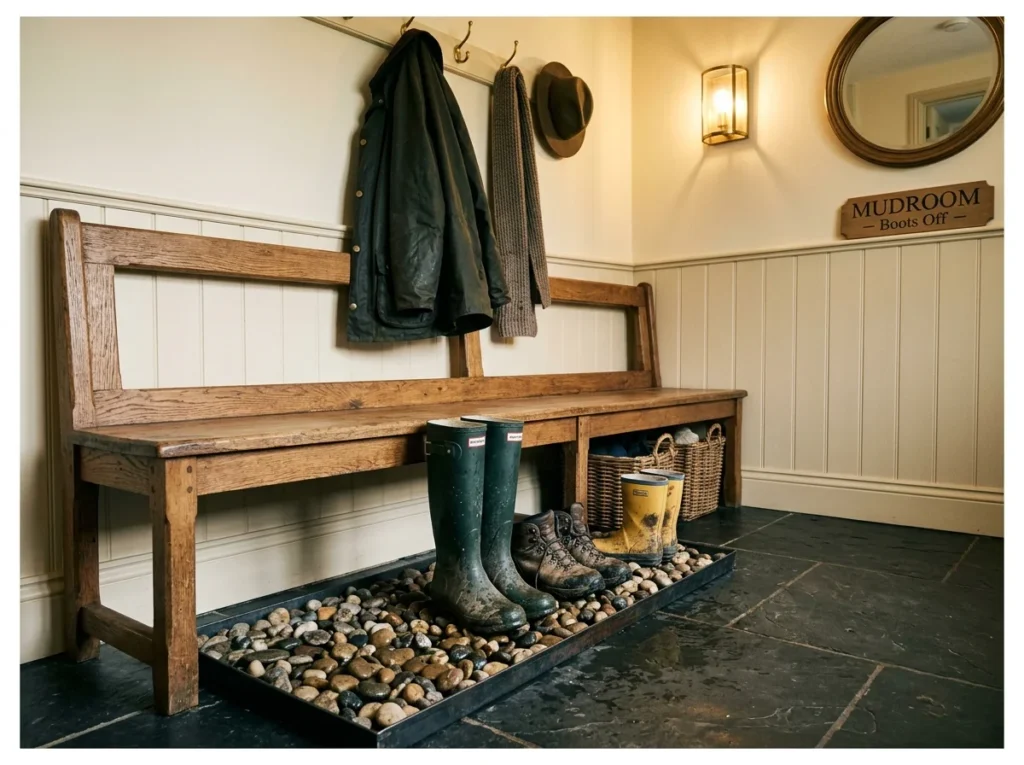
A boot tray filled with smooth river stones positioned directly beneath the bench overhang catches rainwater and mud from wet boots and shoes, preventing puddles on the floor and keeping the mudroom genuinely manageable during rainy seasons.
The tray sits exactly where shoes naturally land when removed while seated on the bench above. River stones drain and dry quickly without absorbing odors, and the organic natural tones complement every mudroom aesthetic from farmhouse to contemporary.
The simplest, most practical mudroom floor solution available.
Conclusion
A mudroom bench done right is one of the most immediately impactful upgrades a home can receive, because it improves the daily experience of coming and going for every single household member, every single day. It creates organization, comfort, and genuine welcome at the exact threshold where the outside world meets the private home.
Start with accurate dimensions for your specific entry space. Choose a bench that suits both the room’s visual aesthetic and the household’s genuine storage needs. Add cushioning for comfort and hooks above for completing the functional system.
The mudroom bench that finally makes your entryway feel organized and welcoming is one good decision away from being real.
And once the bench is sorted, a table styled for first impressions is a natural next piece to bring the same care to.



Pingback: 23 Farmhouse Mudroom Ideas for Organized Homes