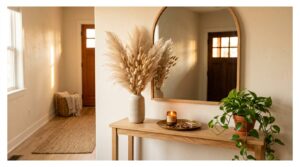
Think you don’t have room for a mudroom? A tiny corner is all it takes when you know the right tricks. These 25 small mudroom ideas use vertical storage, slim benches, and clever hooks to keep shoes, coats, and bags organized even in the tightest entryways. Let’s get started with these small mudroom ideas for smart organization!
If you want even more clever storage tricks to try, there’s plenty of extra inspiration to explore too.
White Shiplap Wall with Matte Black Hooks
A white shiplap wall with matte black hooks creates a clean and stylish entryway look. The bright shiplap adds texture, while the black hooks provide practical storage and a modern contrast.
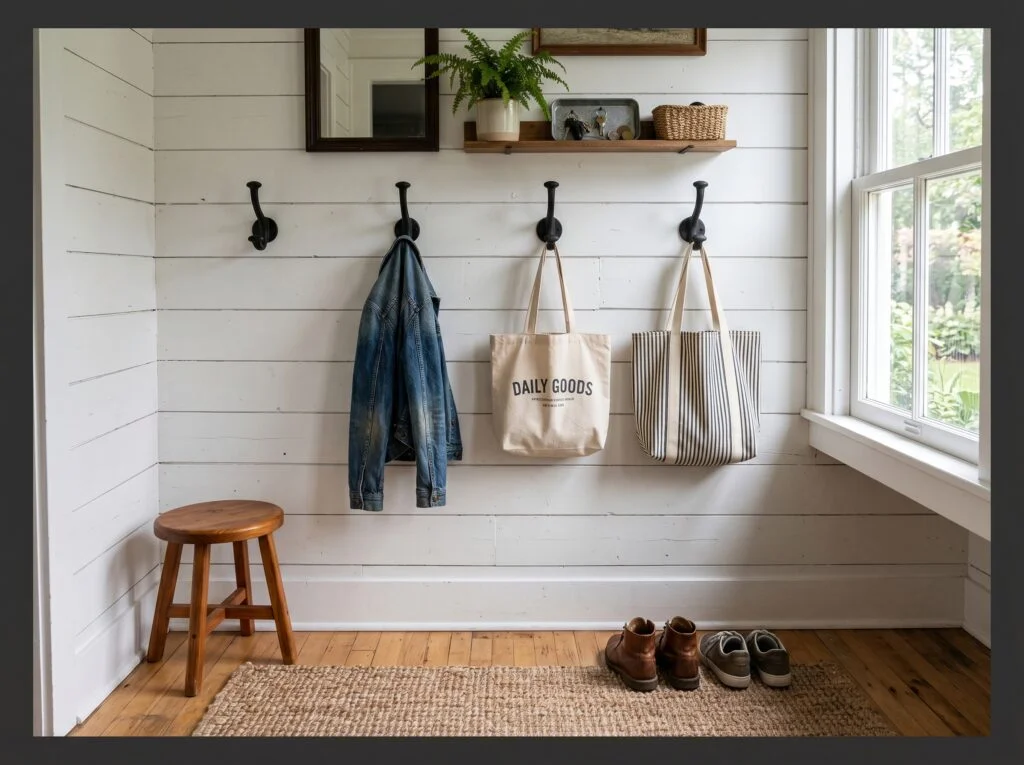
White shiplap is one of the most popular small mudroom wall treatments for a genuinely good reason it adds texture without visual heaviness, reflects light beautifully, and provides a solid backing for heavy-duty hardware. Painting it crisp white keeps the entryway feeling open and airy rather than closed in. The horizontal lines also do something subtle but effective: they widen the visual field and make a narrow hallway feel broader than it actually is.
Pair shiplap with oversized matte black cast iron hooks rather than flimsy chrome ones. The weight difference matters. A good matte black hook holds a heavy winter coat, a loaded backpack, and an umbrella without bending or pulling from the wall. Mount hooks at two heights adult height and child height if you have kids. Add a jute rug on the floor to define the zone and catch dirt before it travels deeper into the house. This combination costs very little but looks like something out of a home design magazine every single time.
Built-In Bench with Open Shoe Cubbies
A built-in bench with open shoe cubbies keeps the entryway organized and functional. It provides a convenient place to sit while offering easy access to shoes, helping reduce clutter and maximize storage space.
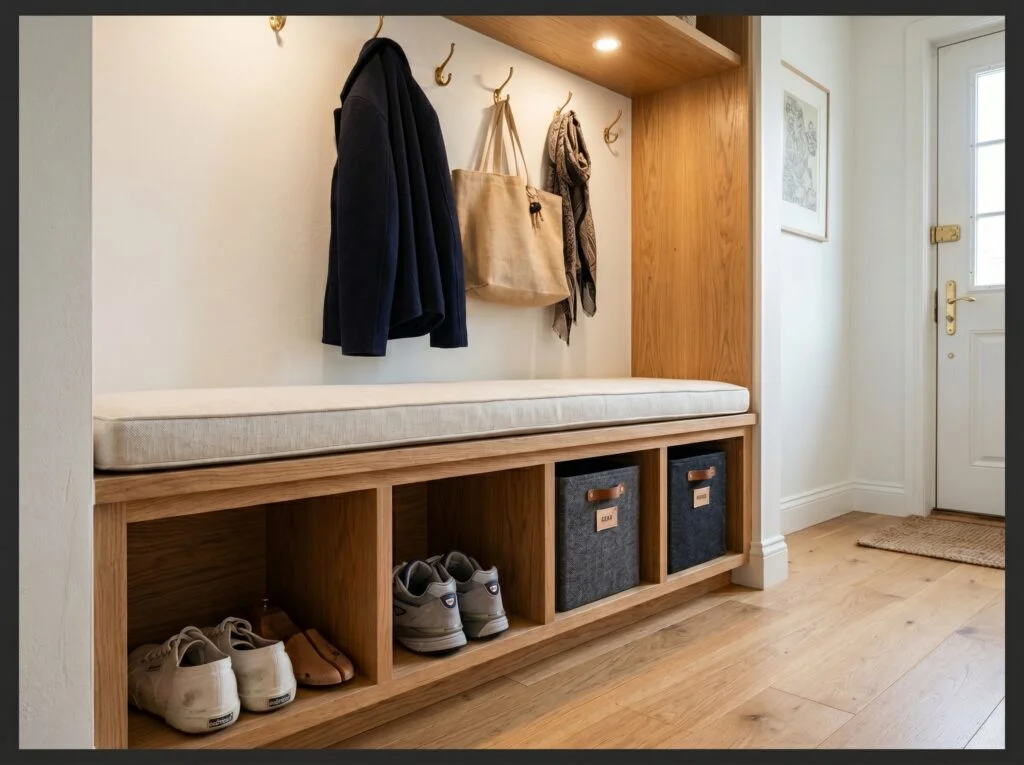
A built-in bench with shoe cubbies underneath is the single most functional upgrade you can make to any small mudroom entry. The bench gives you a dedicated seat to put on and take off shoes which sounds small but eliminates the one-legged hopping act that happens every morning. The open cubbies below keep frequently worn shoes accessible and off the floor without any doors to open or bins to dig through. Grab and go, every time.
Build the bench in natural oak or painted MDF depending on your budget and style preference. Oak costs more but handles daily knocks and scratches far better long-term. Add a slim cushion on top with a washable cover mudrooms get dirty and the ability to throw the cover in the washing machine is not optional, it is essential. Use one or two fabric bins in the cubbies for bulkier items like slippers or shoe-cleaning supplies. Keep the rest of the cubbies open for everyday footwear so the system stays effortless to use.
Floor-to-Ceiling Mirrored Cabinet Wall
A floor-to-ceiling mirrored cabinet wall adds both storage and style to the space. The mirrors make the area feel larger and brighter, while the hidden cabinets keep everyday items neatly organized.
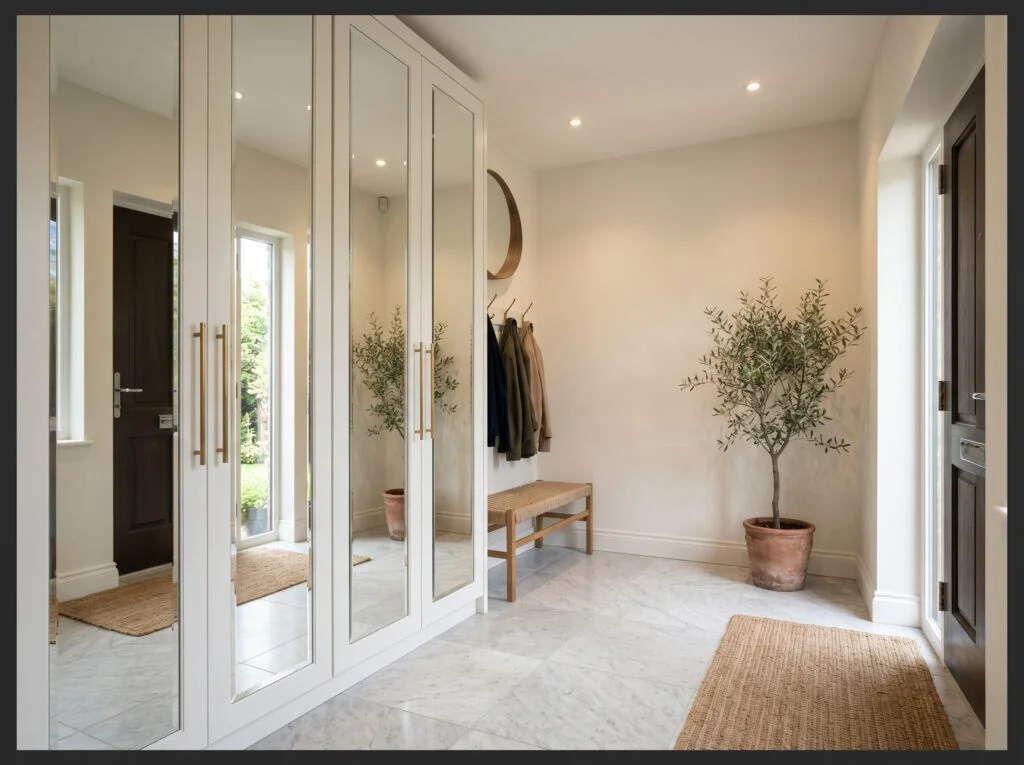
Floor-to-ceiling mirrored cabinets are the most space-efficient storage solution possible for a small mudroom. They hide everything coats, boots, umbrellas, sports gear, pet supplies completely out of sight behind elegant mirrored doors. The full-length mirrors simultaneously make the space feel twice as large by doubling the perceived depth of the room. In a windowless mudroom, mirrors also bounce artificial light around in a way that makes the whole space feel noticeably brighter.
Slim brushed brass handles on each cabinet keep the overall look from feeling cold or clinical. They add just enough warmth and personality to balance the reflective surfaces. Inside the cabinets, use a combination of hooks, shelves, and a pull-out shoe rack to organize the contents by category. Assign one cabinet per family member if possible it is the easiest way to prevent the internal clutter from becoming overwhelming. A small olive tree in a terracotta pot in the corner adds a living element that the mirrors soften and repeat beautifully.
If you’re weighing your cabinet options, there are cabinet styles worth comparing before you commit.
Floating Oak Shelves with Slim Console Table
Floating oak shelves with a slim console table create a warm and modern entryway. The natural wood adds texture and charm, while the open shelves provide space for décor, baskets, or everyday essentials. The slim table also offers extra function without taking up too much space.
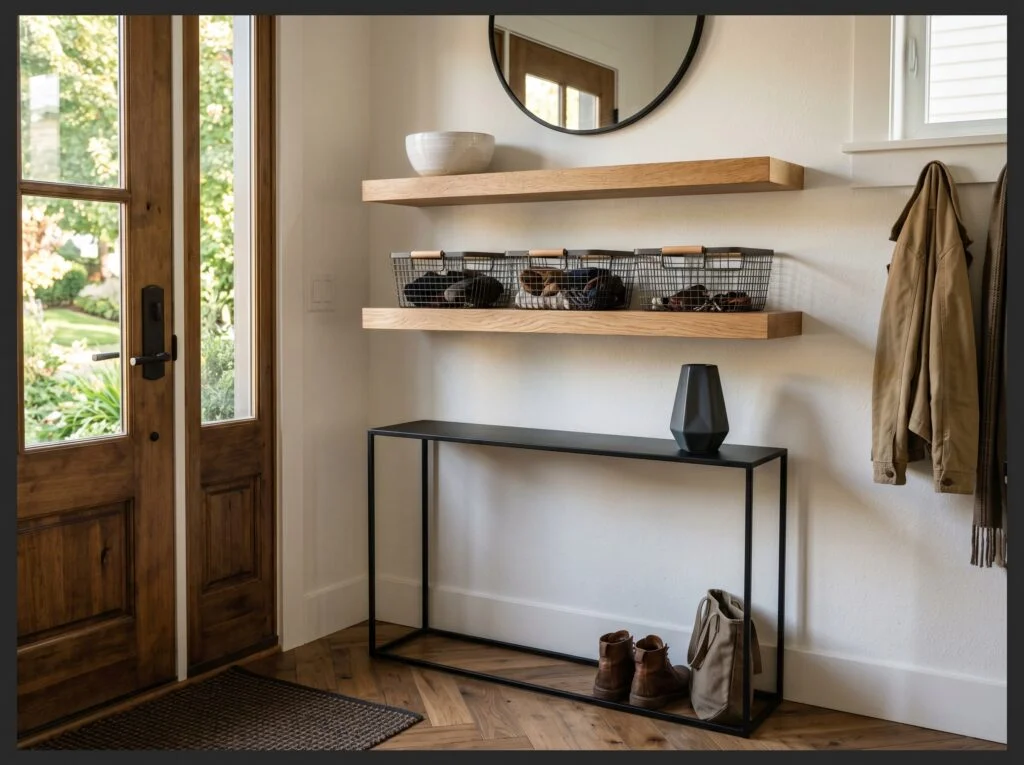
When floor space is critically limited, the slim console table is one of the smartest small mudroom furniture choices you can make. A console table with a depth of ten to twelve inches keeps the walkway clear while giving you a surface to set bags, keys, and mail. Pair it with two floating oak shelves mounted directly above the table and suddenly you have tripled your usable storage without adding any floor footprint at all.
Use the top shelf for decorative items and things you grab daily sunglasses, a bowl for loose change, a small plant. Use the lower shelf for wire mesh baskets that hold scarves, hats, and gloves sorted by season. Wire mesh keeps things visible so nothing gets forgotten at the back. The combination of warm oak wood and black iron keeps the look sharp and intentional. This is particularly effective in a rental property where you cannot do any built-in construction everything here is entirely removable.
Corner Hall Tree with Hidden Storage Bench
A corner hall tree with a hidden storage bench is a smart way to maximize space in an entryway. It provides convenient storage for shoes, bags, and seasonal items while keeping the area neat and organized. The built-in hooks and bench also add everyday functionality.
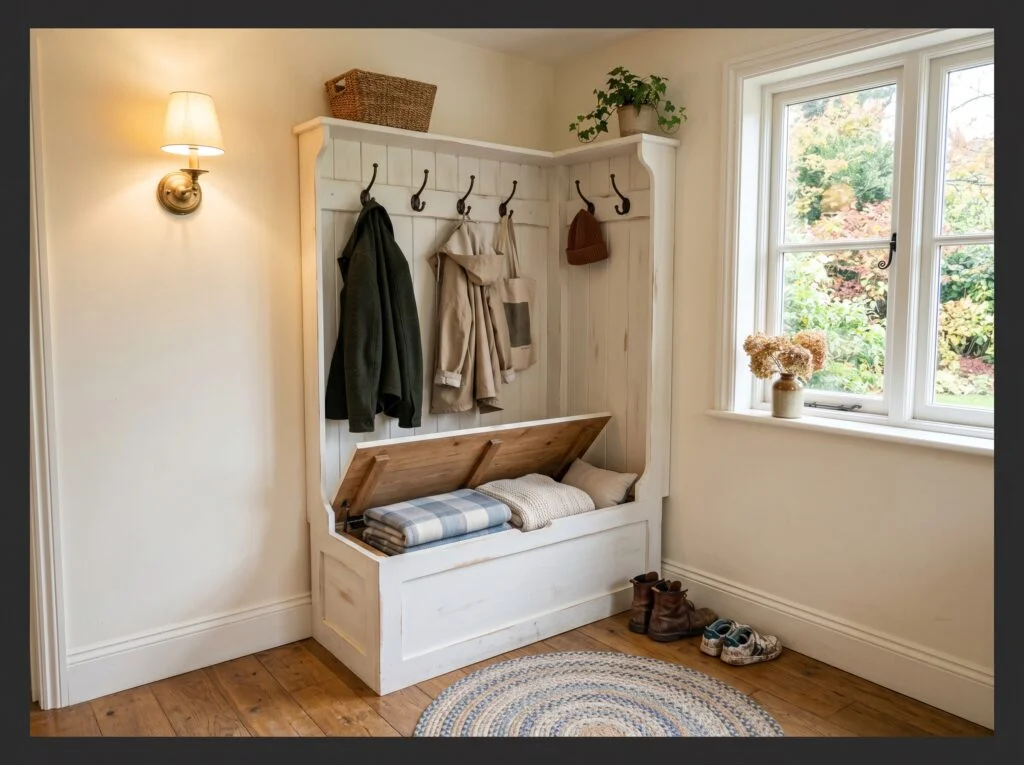
Unused corners are the most wasted square footage in any small mudroom and a corner hall tree solves that problem completely in one piece of furniture. It fits the 90-degree angle exactly, providing coat hooks at the top, an open shelf or two in the middle, and a hinged bench seat at the bottom that conceals storage inside. That hidden bench compartment is where seasonal items live extra scarves in summer, beach bags in winter things you need occasionally but not every single day.
Choose a white painted finish to keep the corner feeling light rather than heavy and crowded. The white reflects the available light and prevents the corner from reading as a dark mass in the room. A round braided rug in front of the hall tree defines the zone and adds warmth underfoot. The circular shape softens the angular lines of the corner furniture beautifully. A single wall sconce mounted beside the unit provides focused light that makes this corner feel like a dedicated room within a room, even when the actual square footage is tiny.
Slatted Wood Modular Wall System
A slatted wood modular wall system adds warmth and texture to the entryway while offering flexible storage options. Its customizable design can include shelves, hooks, and cabinets, creating a stylish and organized space that adapts to different needs.
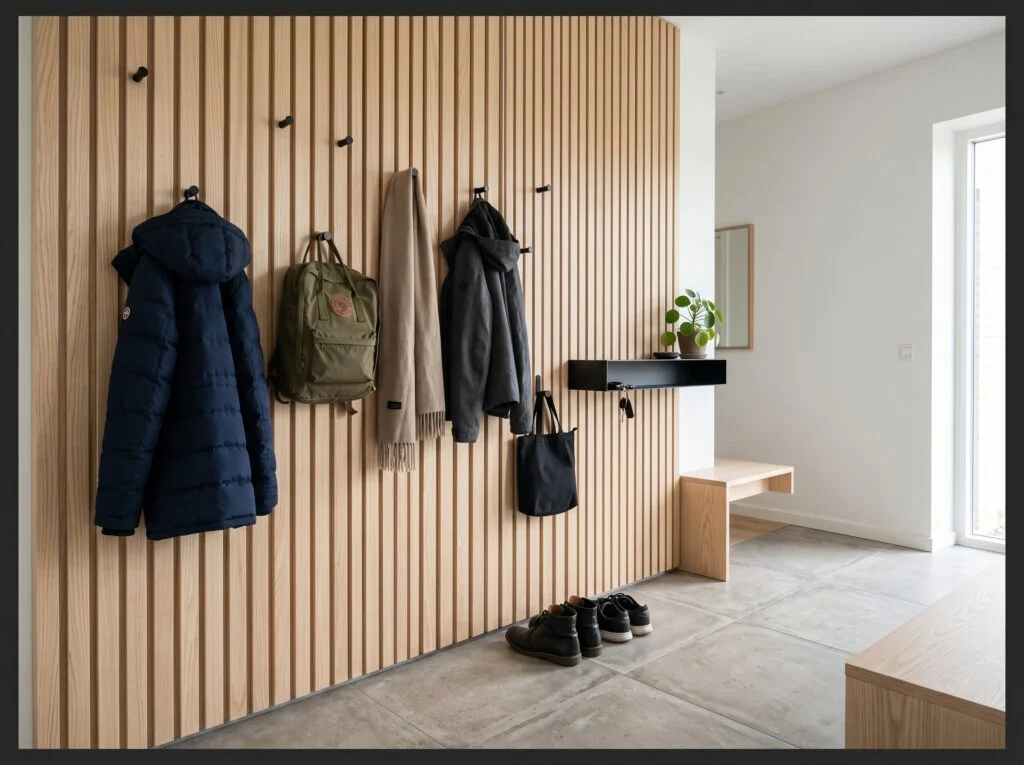
A slatted wood wall system is the modular, adaptable alternative to fixed hooks and shelves and for families whose needs change often, it is genuinely the smartest choice. The horizontal slats accept adjustable black metal pegs, small shelves, baskets, and even rail-mounted bins that can be repositioned at any time without drilling a single new hole in the wall. It grows and changes with your household rather than becoming outdated within a year.
Natural light ash wood gives the wall a Scandinavian calm that reads as sophisticated rather than utilitarian. The vertical panel runs the full width of the available wall and uses every inch of height hang hooks low for children, high for adults, and add a floating shelf extension at counter height for keys and a small plant. A concrete-look floor tile below grounds the light wood tones with a heavier, more industrial element. This combination of warm wood and cool concrete is one of the most visually balanced small mudroom looks available right now.
Pocket Door Hidden Coat Closet
A pocket door hidden coat closet keeps coats, shoes, and everyday essentials neatly tucked away while maintaining a clean and organized entryway. The sliding pocket door saves space and creates a seamless look, making it a practical and stylish storage solution for modern homes.
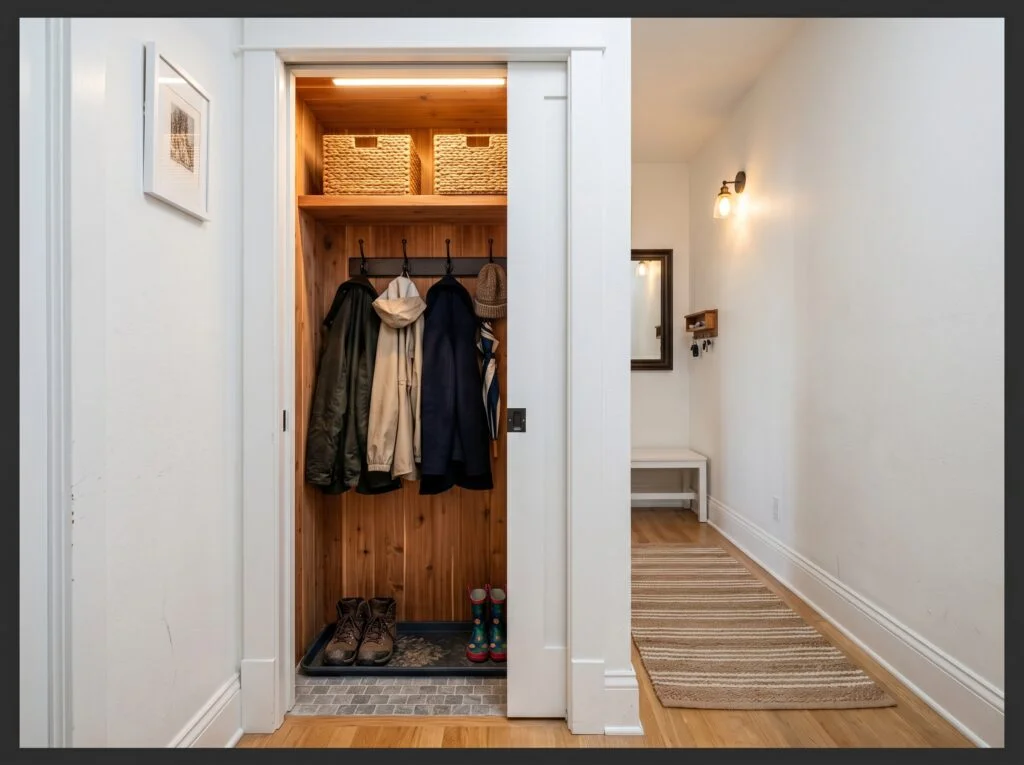
The pocket door is one of the most valuable space-saving tools in any small home and it is criminally underused in mudroom design. A standard hinged door swings 36 inches into the room every time it opens that is floor space constantly being consumed by a door you only need for seconds. A pocket door slides silently into the wall cavity and disappears completely, giving you back every inch of that floor for furniture, rugs, and movement. In a narrow hallway mudroom, this change alone can feel transformative.
Inside the closet, use cedar lining on the walls and floor to naturally repel moths and keep stored woolens fresh without any chemical sprays. Install a double hook rail for coats and a top shelf for wicker baskets holding seasonal accessories. Place a boot tray on the floor to contain muddy footwear and protect the cedar lining below. The whole system keeps the mudroom exterior looking like a simple painted hallway while concealing a surprisingly large amount of organized storage behind that flush, invisible door.
Industrial Pipe Rack with Reclaimed Wood Shelf
An industrial pipe rack with a reclaimed wood shelf adds both character and function to the entryway. The combination of metal pipes and natural wood creates a stylish industrial look, while providing practical space for hanging coats and displaying décor or everyday essentials.
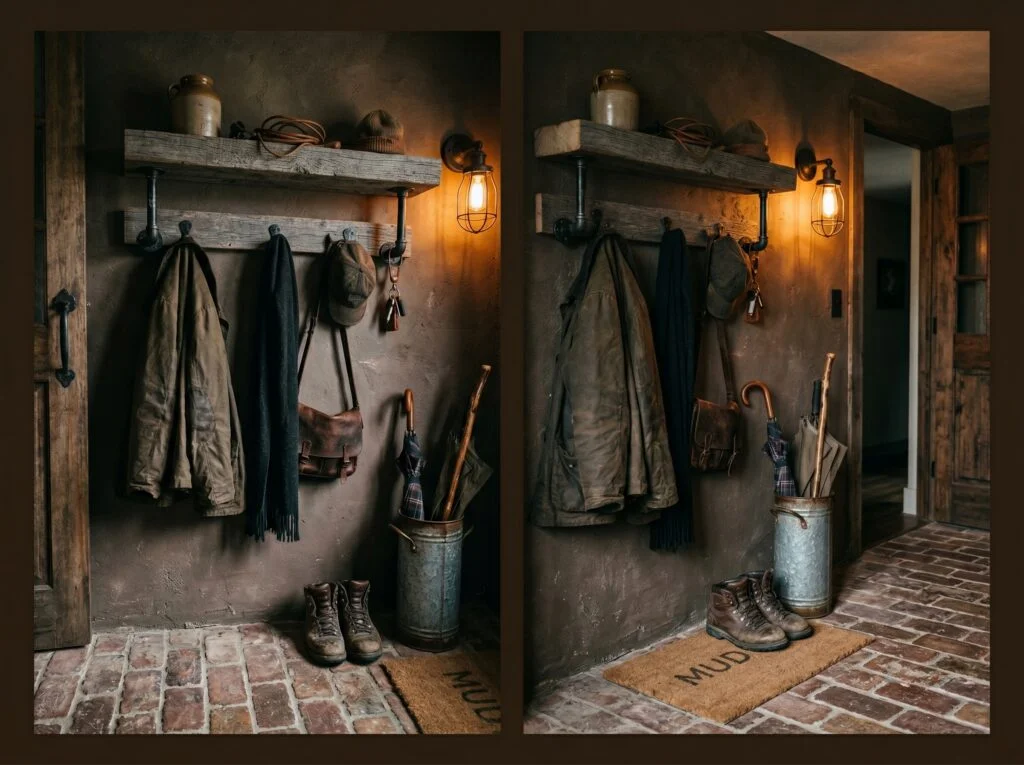
Industrial pipe racks are the most durable wall-mounted storage solution for a mudroom that handles serious daily use. Black iron pipe brackets are rated for far more weight than standard coat hooks and they do not pull from the wall under the load of heavy winter gear, wet coats, and loaded backpacks. Mounting a thick reclaimed gray wood plank across the top of the bracket assembly adds a shelf for hats, gloves, and a small plant. The whole setup costs under $60 in materials if you source the pipe fittings from a plumbing supplier.
The raw industrial aesthetic here is actually perfectly practical for a mudroom because it gets better-looking with age and wear. Small scuffs on the reclaimed wood add character. A little patina on the iron pipe looks intentional. A galvanized metal bucket below catches dripping umbrellas before they soak the floor both functional and completely on-theme. Pair with a brick-pattern floor tile and an Edison bulb sconce and this small mudroom corner looks like it belongs in a converted warehouse loft rather than a suburban entryway.
High-Gloss Navy Cabinet with Brass Hardware
A high-gloss navy cabinet with brass hardware brings a sophisticated and elegant touch to the entryway. The deep navy finish adds richness and depth, while the brass accents create a timeless contrast and provide a refined, upscale look.
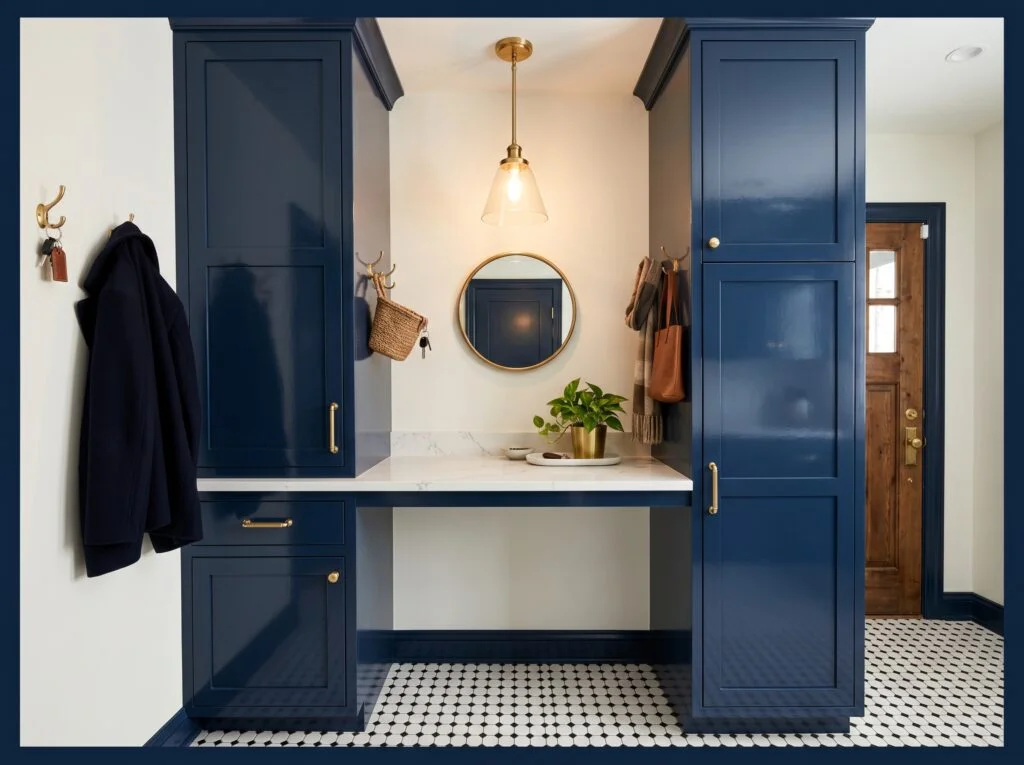
High-gloss navy cabinets in a small mudroom do something that surprises most people they make the space feel larger and more intentional rather than smaller and darker. The reflective gloss surface bounces light around the room in the same way a mirror does, and the deep navy color creates a visual depth that pushes the walls back rather than closing them in. It is a design move that takes confidence and looks absolutely stunning when it lands correctly.
Brass knurled hardware is the essential finishing detail that transforms these cabinets from storage to statement. The warm gold tones against the cool deep navy is a classic color pairing that interior designers have used for decades precisely because it never fails. A white quartz countertop provides a clean bright surface for setting bags and keys that prevents the overall palette from feeling too heavy. Black and white hexagonal floor tile below grounds everything with a timeless pattern that complements both the navy and the brass beautifully. This small mudroom idea photographs exceptionally well it is highly Pinnable for a reason.
Botanical Wallpaper Accent Wall
A botanical wallpaper accent wall adds color, pattern, and natural charm to the entryway. The nature-inspired designs create a fresh and welcoming atmosphere while giving the space a stylish focal point and added visual interest.
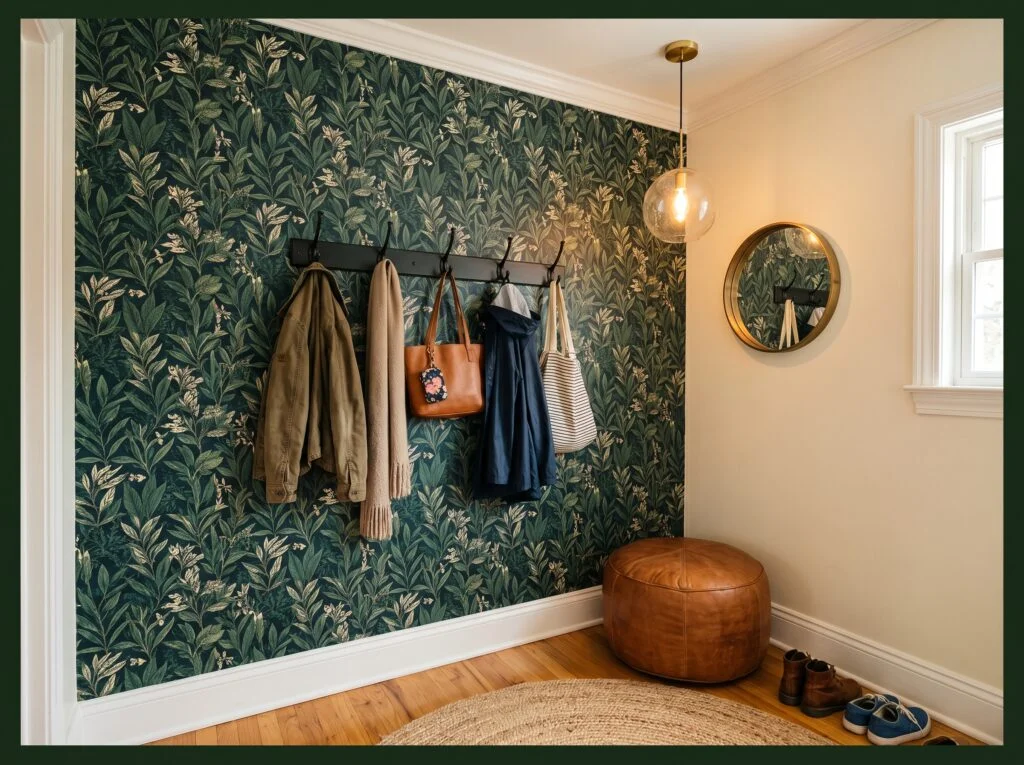
Bold wallpaper in a small space is one of those design moves that beginners avoid and experienced decorators love. The logic is counterintuitive but correct a strong pattern in a small room creates personality and draw rather than claustrophobia, especially when the rest of the room stays simple and restrained. A deep green botanical pattern on one wall turns your mudroom accent wall into the visual centerpiece of the whole entry. Guests notice the wallpaper, not the size of the room.
Pair the wallpaper with a slim black iron coat rack rather than large bulky furniture that would compete with the pattern for attention. The rack provides all the coat storage you need in a profile that sits almost flat against the wall. A honey oak hardwood floor and a cognac leather pouf at sitting height add two warm organic tones that balance the coolness of the dark green perfectly. The leather pouf is better than a standard bench here it tucks close to the wall, it is completely moveable, and it costs a fraction of built-in seating while looking just as intentional.
Fold-Down Murphy Bench for Narrow Hallways
A fold-down Murphy bench is a smart solution for narrow hallways where space is limited. It provides a convenient seating area when needed and folds away neatly to keep the entryway open, organized, and functional.
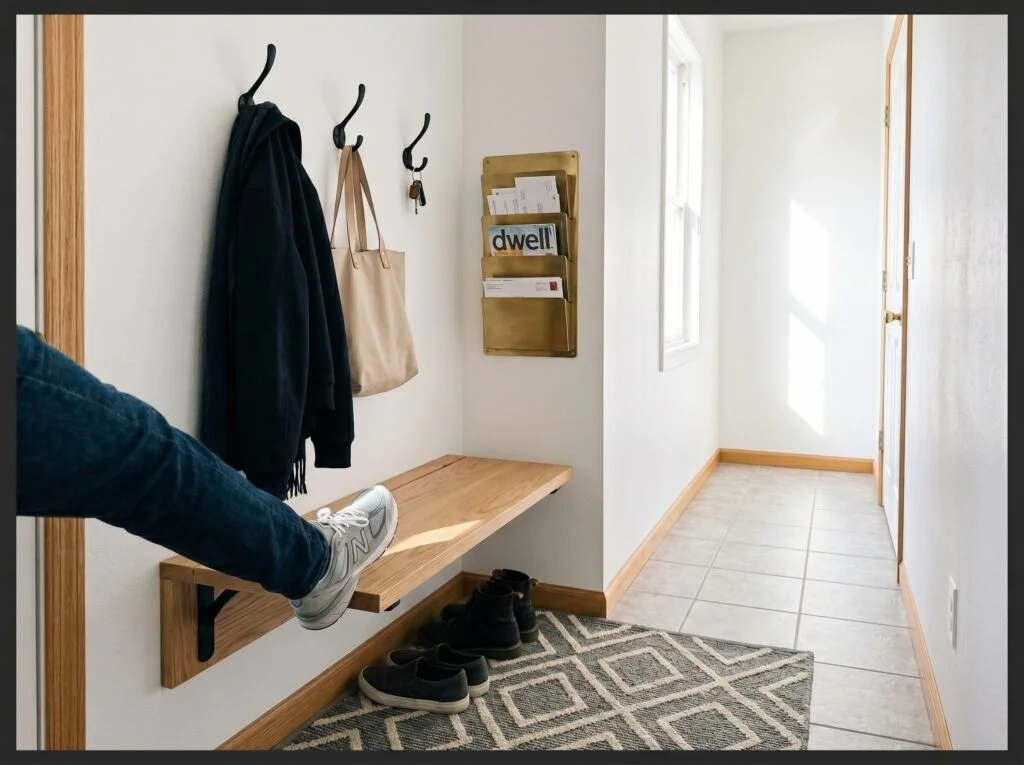
If your mudroom is essentially just a hallway four feet wide or less a permanent bench is not a storage solution, it is a tripping hazard. A wall-mounted fold-down Murphy bench is the answer. It hinges flat against the wall when not in use, completely out of the way of foot traffic. When you need to sit down to change shoes, you flip it down in one second, use it, and fold it back up. The whole operation takes three seconds and gives you seating without permanently consuming the floor.
Mount the fold-down bench at standard seat height about 17 to 18 inches from the floor. Above it, place three oversized matte black hooks for daily-use coats and bags. To the right, a slim brass wall-mounted mail sorter keeps papers organized vertically without adding a table or shelf to the floor plan. A gray geometric runner rug runs the length of the hallway to define the mudroom zone and protect the floor. This entire setup takes up zero permanent floor space and handles a surprising amount of daily traffic comfortably.
For more compact seating solutions, it’s worth browsing seating built for tight entryways.
Pegboard Wall for Total Customization
A pegboard wall offers a flexible and customizable storage solution for the entryway. It allows you to easily arrange hooks, shelves, and baskets to suit your needs, helping keep everyday items organized while adding a practical and stylish touch.
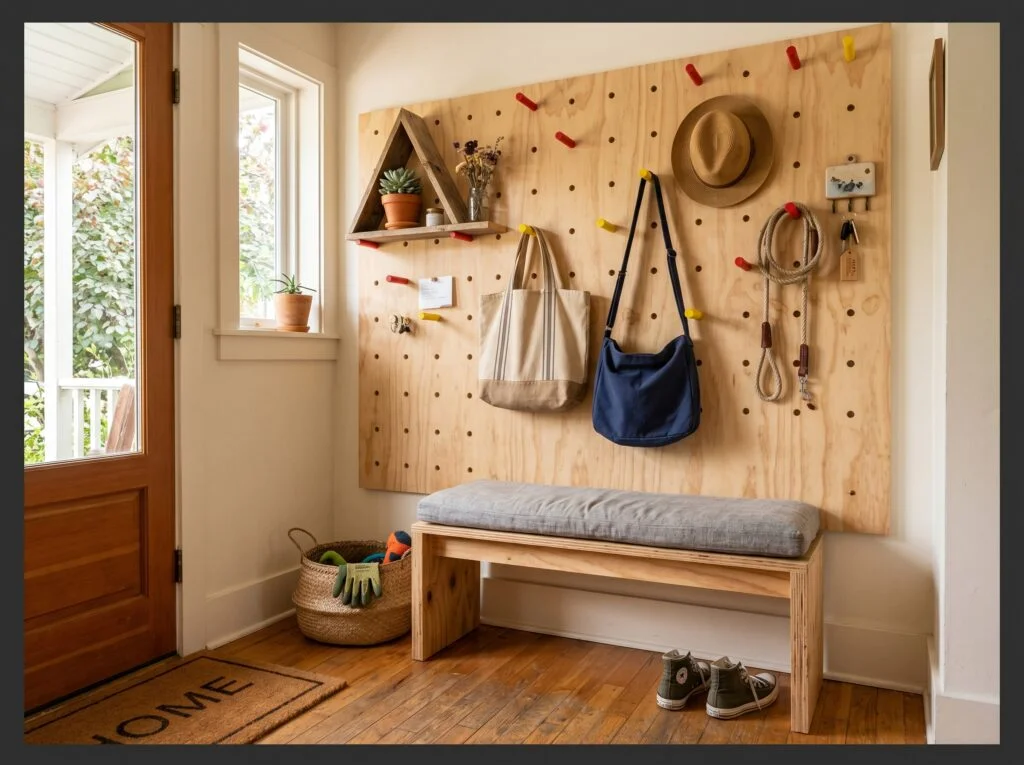
A pegboard wall gives you something that no other mudroom storage system can offer complete, commitment-free flexibility. Every single element can be moved, removed, added, or rearranged in minutes with no tools required. When your household changes new pet, new baby, new season you just pull the pegs out and reinsert them where they make sense now. It is the most forgiving storage system possible and for families that are still figuring out what they actually need, it is the logical starting point.
Mount the pegboard on standoffs so there is a gap between the board and the wall this is what allows the pegs to insert properly. Use a natural plywood rather than the standard white pegboard for a warmer, more finished look that actually suits a home interior. Add a small triangular corner shelf, a key hook, and a power strip bar to the pegboard for charging devices without losing counter space. The bench below with a washable cushion completes the station. This whole wall setup can be done for under $100 in materials on a weekend afternoon.
Woven Basket Gallery Wall
A woven basket gallery wall adds natural texture and warmth to the entryway. The mix of different sizes, patterns, and earthy tones creates a cozy and inviting atmosphere. This decorative feature also serves as a unique focal point, bringing character and a relaxed, handcrafted feel to the space.
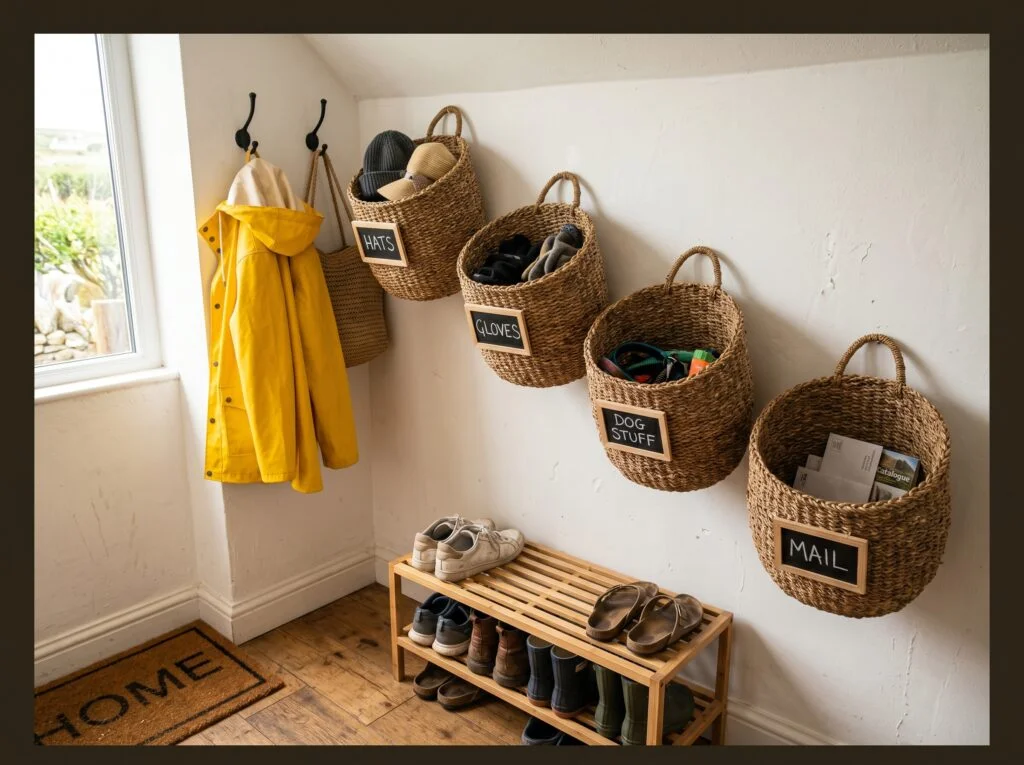
Woven seagrass baskets mounted directly on the wall are a genuinely clever solution for the specific mudroom problem of small loose items. Gloves, hats, dog leashes, sunglasses, spare chargers these are the things that disappear into coats and pockets and then never get found again. Giving each category its own labeled basket on the wall means every small item has a permanent, visible home that takes zero counter space and zero floor space to maintain.
Hang the baskets at staggered heights to create the visual rhythm of a gallery wall rather than a flat utilitarian grid. The organic round shapes and natural seagrass texture bring a warmth and coastal calm to the entry that feels genuinely welcoming rather than purely functional. A low slatted wood shoe rack directly below keeps footwear organized without closing off the floor visually. The open slatted design of the rack lets air circulate under shoes, which also reduces odor a practical benefit that sealed shoe cabinets cannot match.
Tiered Under-Stair Shoe Storage
A tiered under-stair shoe storage solution makes excellent use of unused space while keeping the entryway neat and organized. Multiple levels provide easy access to everyday footwear and help reduce clutter. This smart design combines functionality with a clean look, making it perfect for both small and large homes.
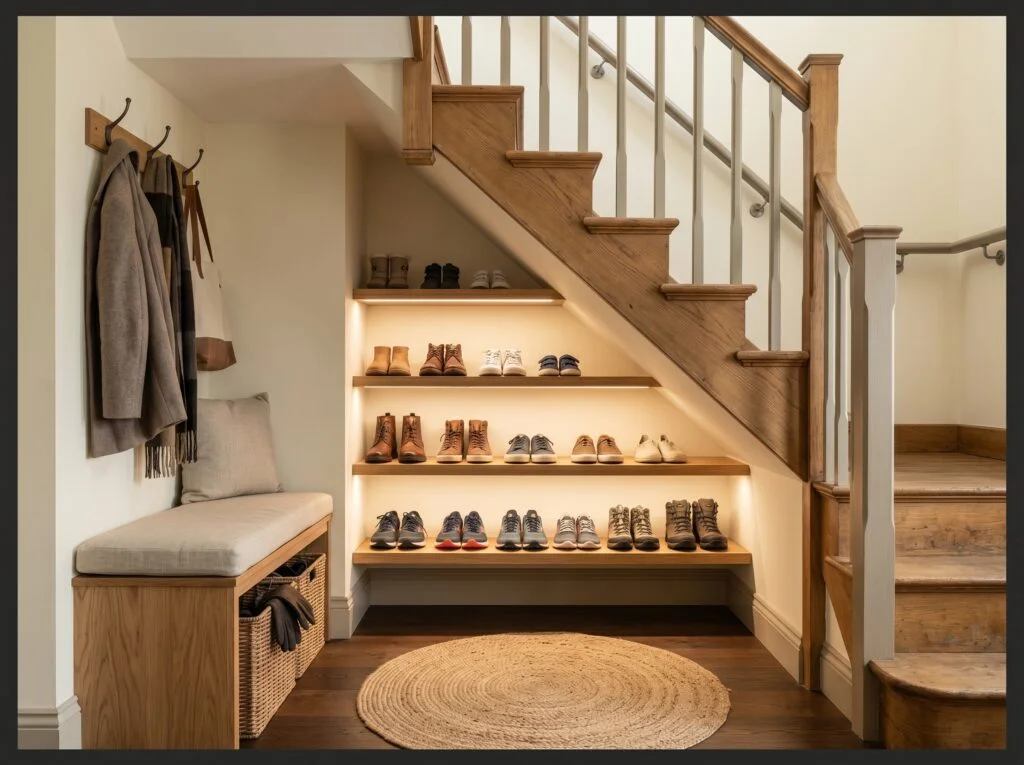
The space under a staircase is the most consistently wasted real estate in any home. That triangular void typically holds a random collection of sporting goods, extension cords, and things you forgot you owned. Converting it into a tiered shoe storage zone for your small mudroom is one of the highest-impact organizational decisions you can make in a home with limited square footage. Three or four tiered shelves following the angle of the stair can hold twenty or more pairs of shoes completely out of sight.
Install warm LED strip lighting under each shelf and the whole nook transforms from a dark cupboard into a functional display that looks genuinely designed. The light also makes it easy to see what is on each tier without crouching and squinting into the back. Use the front of the opening for everyday shoes and the back tiers for seasonal footwear you rotate in and out. A small round jute rug in front of the opening defines the entry zone and brings the mudroom and the under-stair storage into one cohesive space visually.
Round Mirror with Integrated Hook Rail
A round mirror with an integrated hook rail combines style and practicality in one space-saving design. The mirror helps brighten the entryway and creates a more open feel, while the built-in hooks provide a convenient spot for coats, bags, and keys. This combination keeps everyday essentials organized while adding a modern decorative touch.
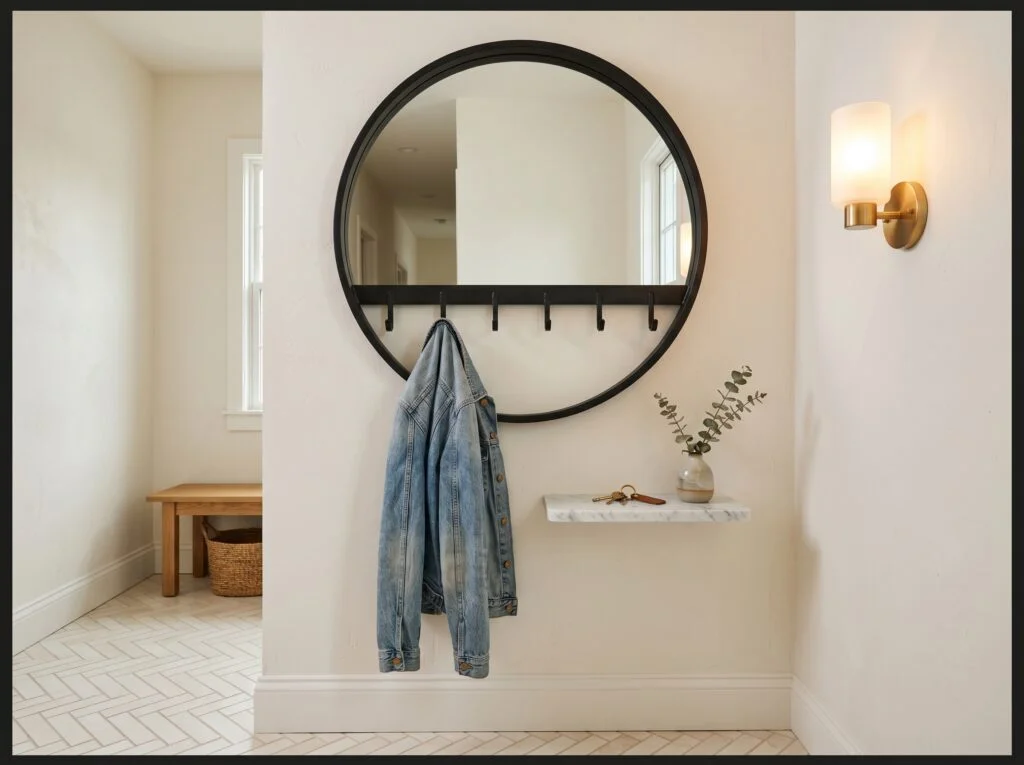
A round mirror with integrated hooks is the most space-efficient single piece of mudroom furniture that exists. It functions as a mirror for that last-second appearance check, a coat rack for daily outerwear, and a visual light reflector all in one compact wall-mounted unit. For a very small entry where a separate mirror and separate hook rail would crowd the wall, the combined piece is the obvious answer. It keeps the wall clean and uncluttered while delivering everything you actually need in that space.
Mount it at a height where the bottom hooks sit comfortably at shoulder level for the primary adult user. Below the mirror, a small white marble floating shelf provides a landing spot for keys, sunglasses, and a small seasonal plant. The marble adds a quiet luxury that makes the whole entry feel more finished than a simple hook-and-shelf arrangement would. This three-piece combination mirror, hooks, floating shelf handles 90 percent of what a mudroom needs to do in a wall space of about 24 by 48 inches.
Vintage Metal Lockers for Family Organization
Vintage metal lockers add character and function to a busy entryway while creating a unique industrial-inspired look. Individual compartments provide dedicated storage for each family member, making it easier to organize shoes, bags, jackets, and everyday essentials. Their durable design also helps keep the space tidy and clutter-free.
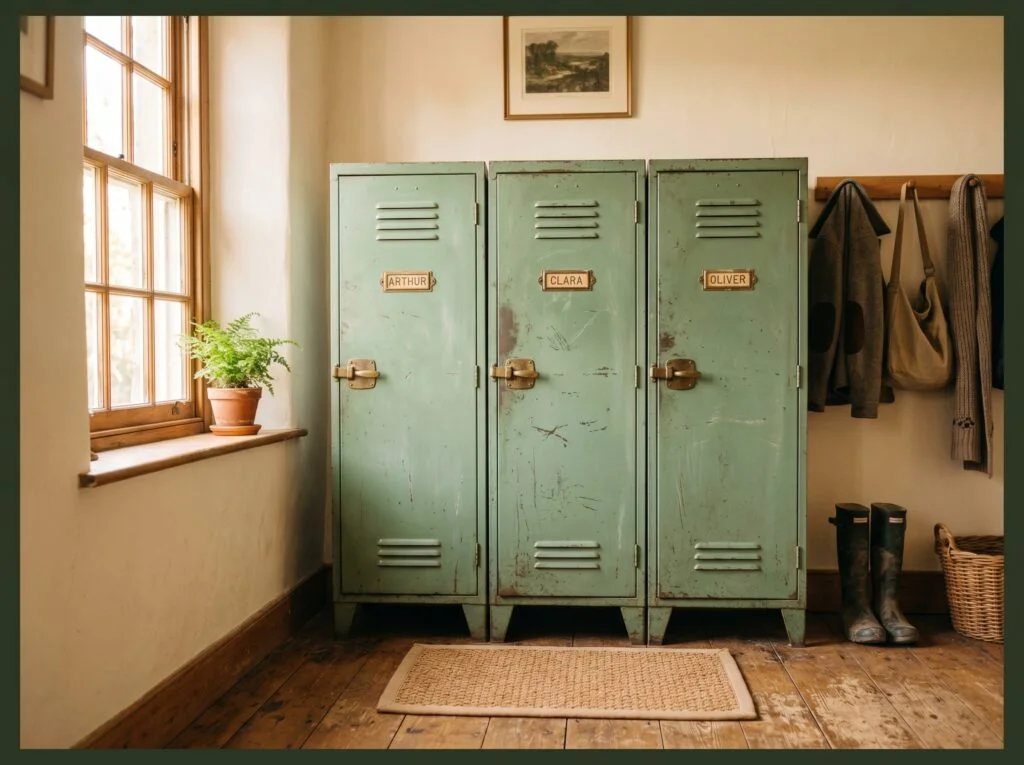
Metal lockers give every family member their own private zone and eliminate the single biggest source of mudroom conflict whose stuff is whose. Each person gets one locker, which becomes their responsibility entirely. You can hang your coat, stash your bag, store your sports gear, and close the door. What is inside is your business. For households with three or more people sharing a small entry, this individual ownership model creates order more effectively than any shared storage system can.
Vintage distressed lockers in sage green, cream, or gray have a warm, antique character that looks completely at home in a farmhouse, cottage, or eclectic interior. New reproduction vintage-style lockers are available at far more accessible price points than genuine antiques and they look nearly identical from a distance. Add a small nameplate to each door for a personalized touch that children particularly love. A worn wood floor and a simple woven entry mat in front complete the setup without competing with the lockers for visual attention.
If lockers appeal to you, there are more locker setups for the whole family to draw inspiration from.
Chalkboard Wall Command Center
A chalkboard wall command center creates a practical and organized space for managing daily routines. It provides an easy place to write reminders, schedules, grocery lists, and important notes for the whole family. This functional feature also adds a personal and creative touch to the entryway while helping keep everyday tasks on track.
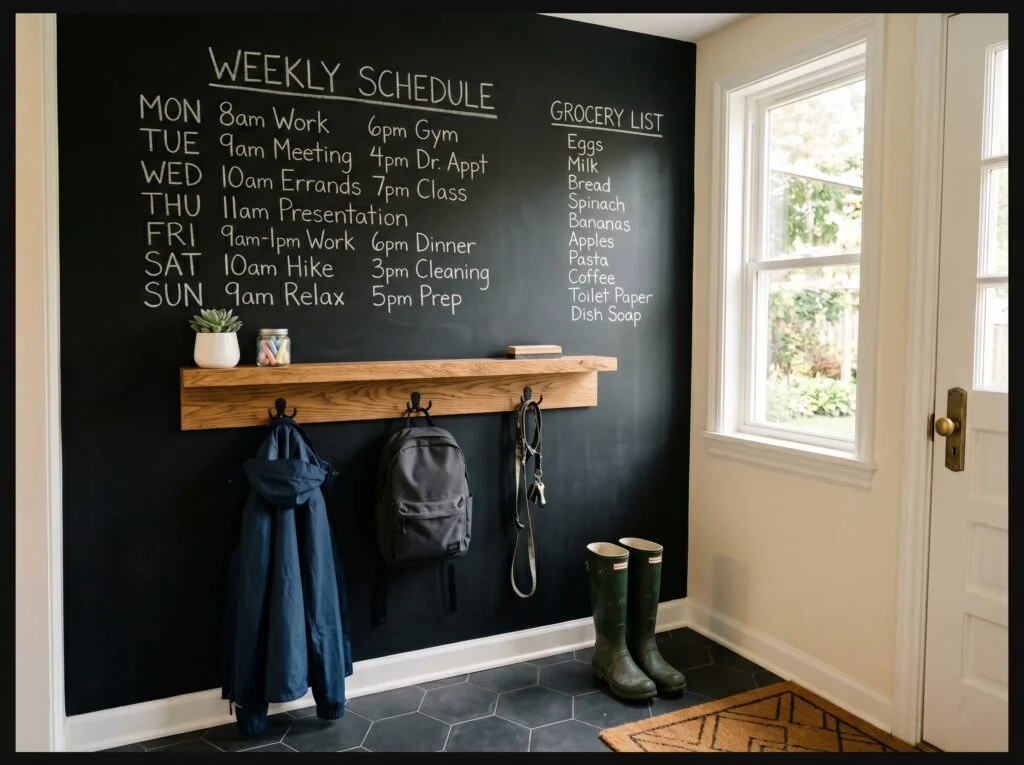
A chalkboard wall turns the mudroom from a coat storage zone into a genuine household command center. The weekly schedule, school reminders, grocery needs, and permission slips that normally clutter the kitchen counter or get stuck on the fridge with magnets find a permanent, visible home right at the front door exactly where you need them as you are rushing out. Writing on the wall feels satisfying in a way that sticky notes simply never do, and erasing the whole week at the end of Friday is surprisingly cathartic.
Chalkboard paint is cheap, easy to apply over any smooth wall surface, and completely landlord-friendly since it can be painted over. The matte black surface hides scuff marks from bags and shoes effortlessly, making it one of the most practical wall treatments for a high-traffic mudroom. A floating wooden shelf mid-wall holds chalk and keeps the writing supplies accessible. Hooks below the shelf handle the coat and bag storage. This is the small mudroom idea that is simultaneously the lowest-cost and one of the most functionally useful on the entire list.
Once the function is sorted, a few warm decor touches for the entry help the space feel finished.
Ceiling-Mounted Pulley Drying Rack
A ceiling-mounted pulley drying rack is a smart space-saving solution for laundry rooms and utility areas. It uses vertical space efficiently by allowing clothes to be raised when drying and lowered when needed. This practical design keeps floors clear while providing plenty of room for air-drying clothes and delicate fabrics.
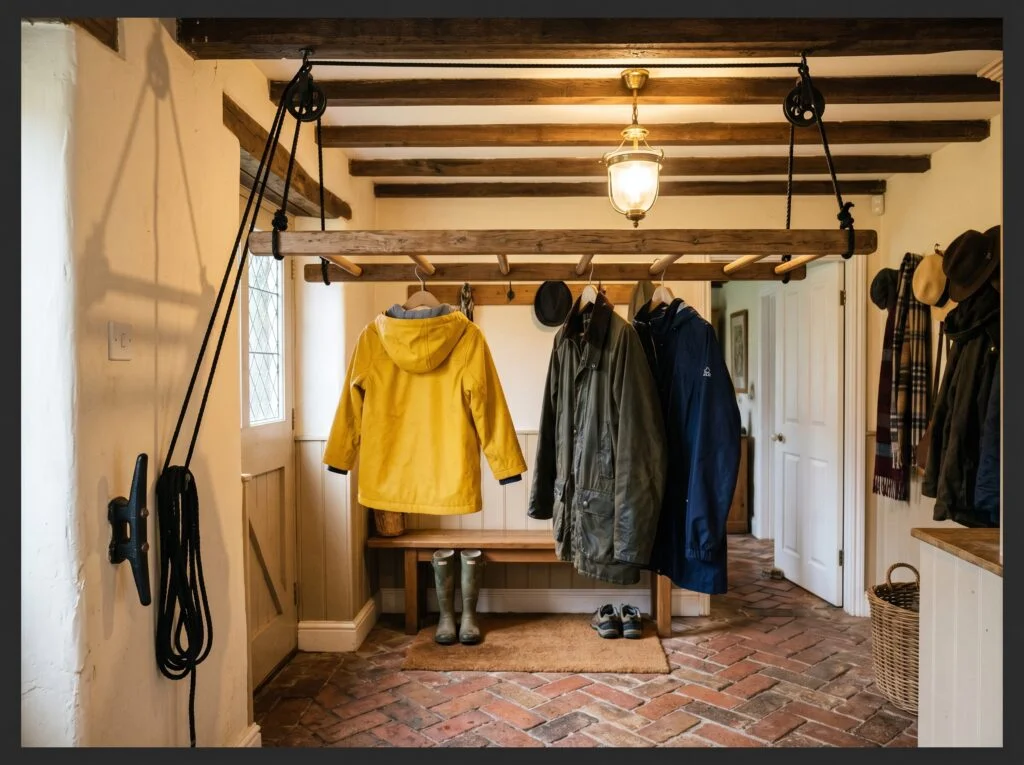
A ceiling-mounted pulley drying rack solves the wet coat problem by using the warmest air in the room which naturally rises to the ceiling to dry gear quickly and completely before it gets put away. The rack lowers on ropes for loading, then hoists up out of the way while the gear dries.
This is a traditional solution from Victorian and Edwardian homes that is experiencing a very well-deserved revival in modern mudroom design. It requires ceiling joists strong enough to anchor the bracket check before you install. The wooden rack itself looks beautiful in a rustic, farmhouse, or industrial-style mudroom and doubles as a decorative element when empty. Pair with a boot tray on the floor below to catch drips and a dedicated hook for umbrellas to catch their drip separately. A small ventilation fan in the room, even a basic bathroom exhaust fan, accelerates drying significantly and prevents moisture from building up on the walls.
Acrylic Console for a Visually Open Entry
An acrylic console helps create a visually open and airy entryway by taking up minimal visual space. Its transparent design makes small areas feel larger and less cluttered while still providing a functional surface for décor, keys, and everyday essentials. This sleek piece works especially well in modern and minimalist interiors.
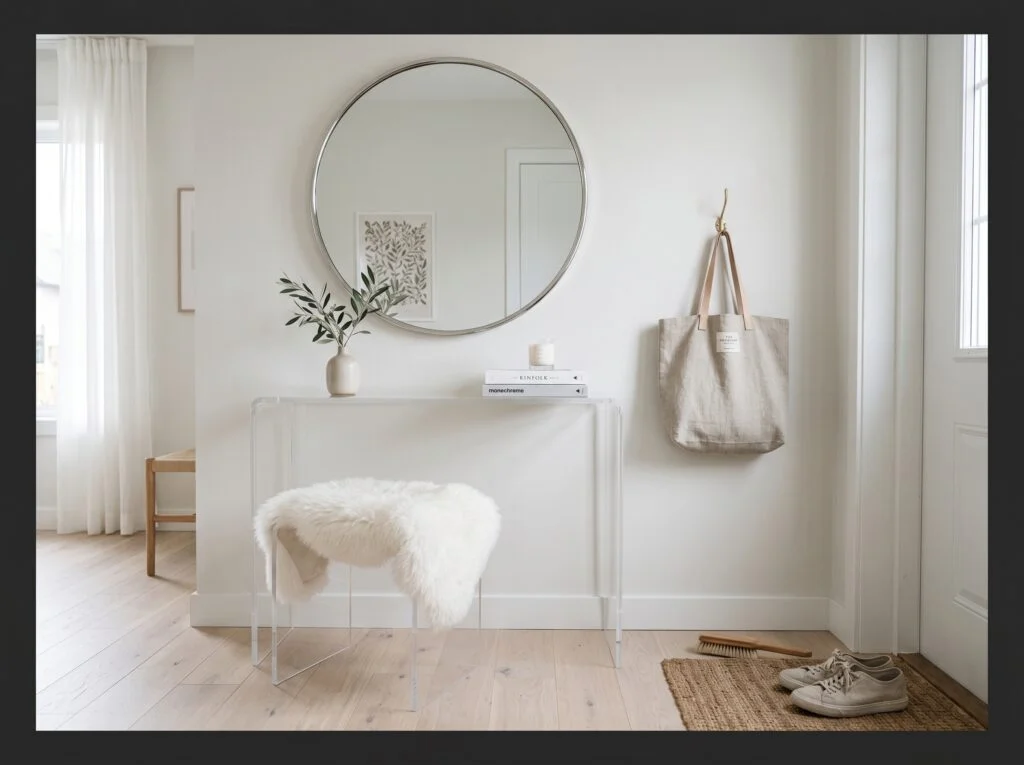
Visual weight is as important as physical size in a small mudroom. Heavy wood furniture, bulky hall trees, and dark storage units make a small entry feel cramped and closed-in even when they technically fit the floor plan. Clear acrylic furniture has almost no visual weight your eye passes straight through it to the floor and walls beyond, which makes the room feel open and spacious. A clear acrylic console table provides a full landing surface for keys, bags, and mail without adding any apparent bulk to the room.
This approach works particularly well in a very narrow or very short entryway where any furniture at all risks making the space feel overcrowded. Pair the acrylic console with a large round silver-framed mirror above it to amplify the open, light feeling further. A single brass hook to the side handles one coat or bag without committing to a full hook rail. A white sheepskin throw draped over a small stool adds texture and warmth so the space does not feel cold or clinical. Everything here is portable, lightweight, and completely renter-friendly.
Minimalist Bamboo Leaning Ladder
A minimalist bamboo leaning ladder adds natural warmth and simple style to the entryway. Its slim design takes up very little space while providing a practical spot for hanging blankets, scarves, bags, or decorative accents. The clean lines and organic texture make it a perfect fit for modern and Scandinavian-inspired interiors.
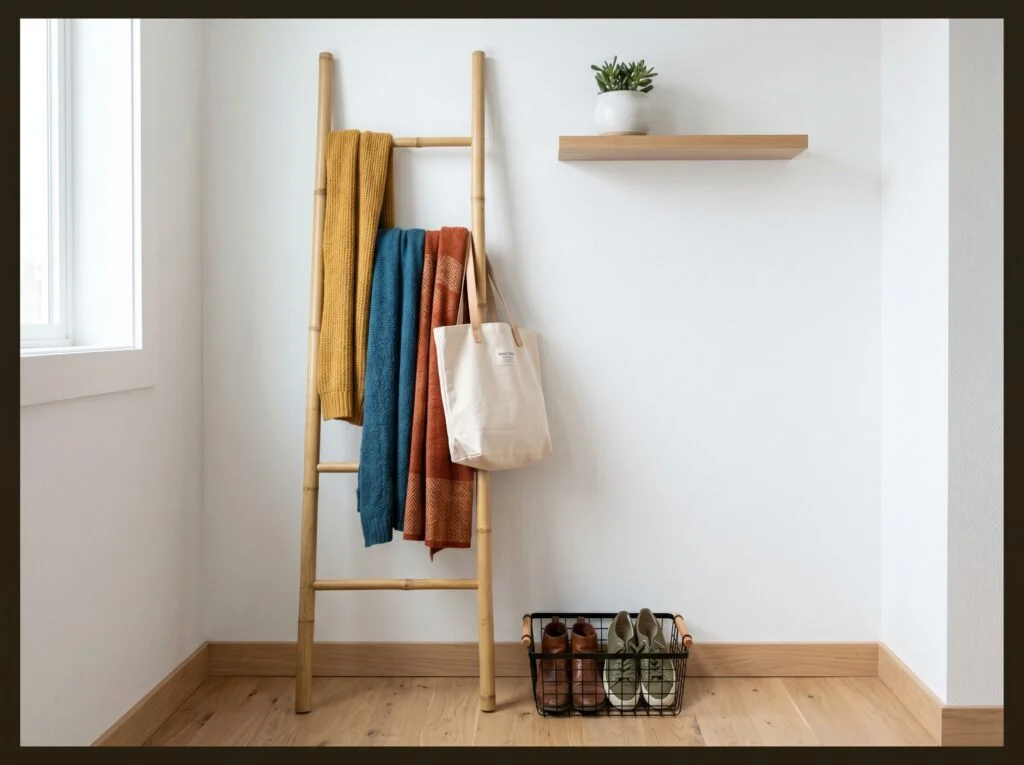
A bamboo leaning ladder is the most budget-friendly small mudroom storage idea on this list and it requires zero installation no drilling, no wall anchors, no tools at all. You simply lean it against the wall and it is ready to use. Each rung holds scarves, light jackets, reusable shopping bags, or a folded umbrella. The vertical footprint is tiny maybe six inches from the wall and the ladder makes use of wall height rather than floor width, which is exactly the right trade in a small space.
Bamboo is a particularly good material choice because it is lightweight, naturally antimicrobial, and resists the moisture and humidity that a mudroom regularly experiences. The warm blonde color pairs naturally with almost every interior style from coastal to Scandinavian to mid-century modern. A small black wire mesh shoe basket on the floor at the base of the ladder catches daily footwear in a contained, visible way. A single thin floating shelf directly above holds a small plant or a key dish. The entire setup can be assembled and styled in under ten minutes for well under $50.
Entryway Bench with Drawers Instead of Cubbies
An entryway bench with drawers offers a cleaner and more organized storage solution than open cubbies. The hidden compartments keep shoes, accessories, and everyday essentials neatly out of sight, reducing visual clutter. This design also creates a polished and streamlined look while maintaining the functionality of a traditional storage bench.
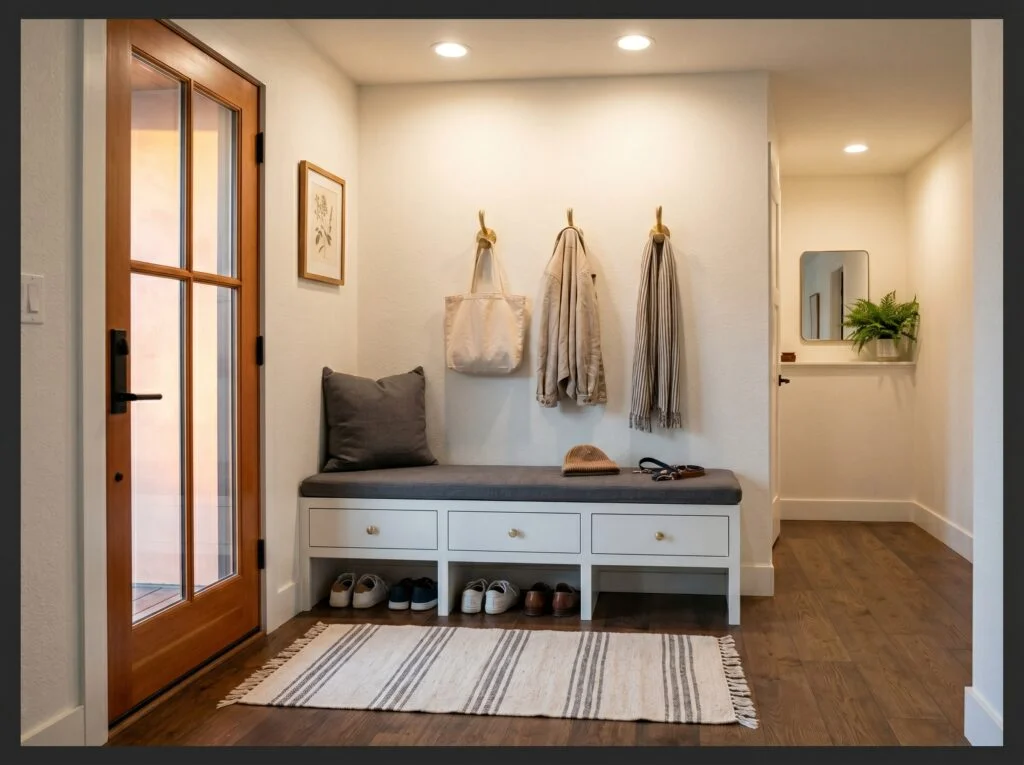
Open cubbies under a mudroom bench are popular but they have one consistent weakness they show everything. The moment shoes are not neatly paired and bags are not perfectly folded, the bench area looks messy regardless of how organized it actually is. A bench with drawers instead of open cubbies hides the contents completely and makes the entire mudroom look tidy even when the drawers are stuffed to capacity. The front of the bench stays clean and presentable at all times.
Slim drawers work particularly well for items that do not stack neatly individual gloves, sports socks, charging cables, pet supplies, and the assorted small objects that every household accumulates near the door. Label the front of each drawer with a simple chalk label or a brass label holder so every family member knows exactly where to look and where to return things. Rounded brass hooks on the wall above handle outerwear. A cushioned top provides seating comfort. This is the mudroom bench idea for households that are tired of cubbies showing everything.
Repurposed Wooden Crates as Modular Storage
Repurposed wooden crates provide a budget-friendly and versatile storage solution for the entryway. Their modular design allows you to stack, arrange, or customize them to fit different spaces and storage needs. The natural wood texture also adds warmth and rustic charm while keeping shoes, baskets, and everyday essentials neatly organized.
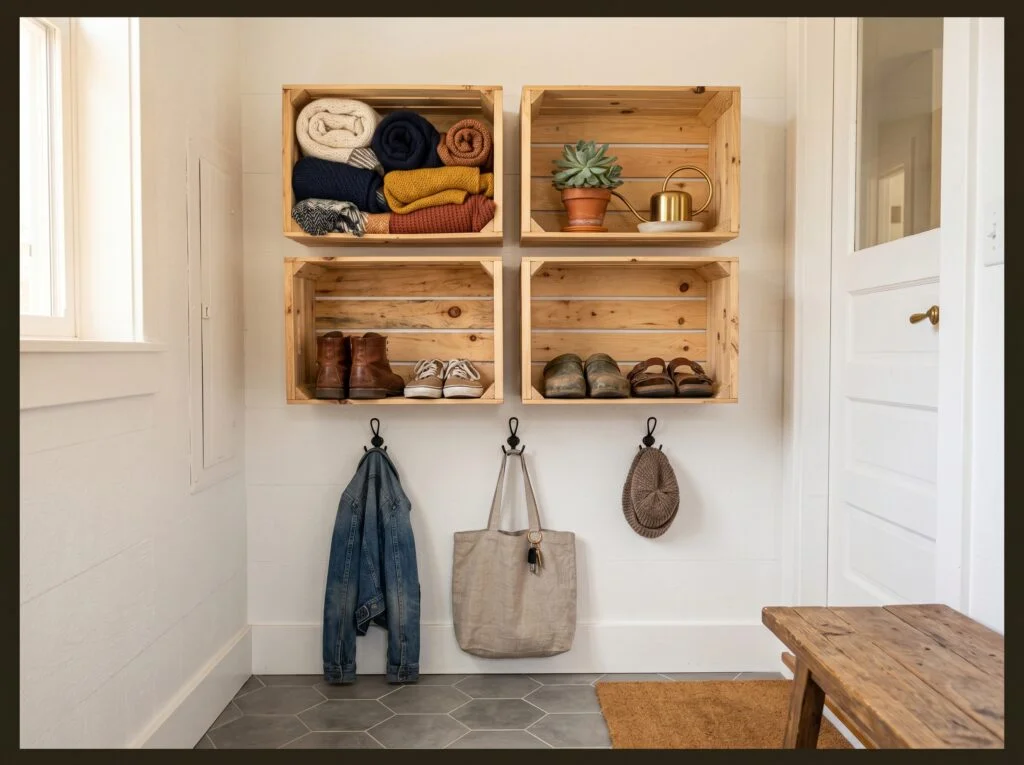
Repurposed wooden crates mounted on the wall create a modular storage system that is both highly functional and deeply charming in a rustic, farmhouse, or cottage mudroom. Stack four crates in a two-by-two grid and you suddenly have four separate organizational compartments shoes, scarves, hats, and everyday essentials each get their own section. The open fronts keep contents visible and accessible, the wooden edges add warm rustic texture, and the whole arrangement costs a fraction of any commercial storage unit.
Sand the crates smooth and apply a coat of clear exterior wax or matte sealant to protect the wood from the moisture and dirt that mudrooms attract daily. Mount them to the wall using heavy-duty brackets anchored into studs wooden crates loaded with shoes are heavier than they look. Three simple black hooks below the crate arrangement handle coats and bags. The combination of the rustic crates and the black hooks against a white wall creates an arrangement that is endlessly popular on Pinterest because it looks like something you saw in a country lifestyle magazine but built yourself on a Saturday morning.
Glossy White Locker-Style Cabinets with Benched Base
Glossy white locker-style cabinets with a benched base create a clean and organized entryway with plenty of hidden storage. The bright finish helps the space feel larger and more polished, while the built-in bench adds everyday convenience for putting on shoes and storing essentials neatly out of sight.
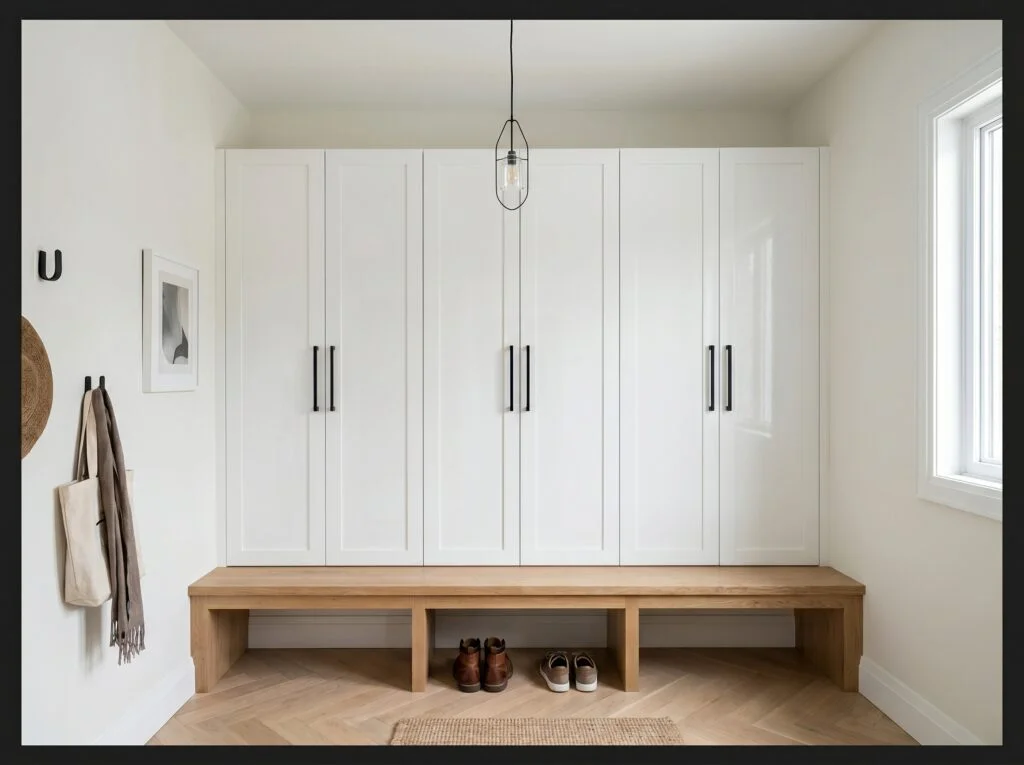
Tall glossy white locker-style cabinets are the most organized-looking small mudroom solution possible because they contain everything from floor to near-ceiling in a completely enclosed, clean-faced column of storage. Each cabinet is effectively a personal wardrobe full-length coat hanging space, shelf for bags and hats above, boot storage at the bottom. Nothing is visible, nothing is scattered, and the front of the mudroom always looks pristine regardless of what the schedule has thrown at the household that week.
A continuous integrated oak bench running across the base of all three cabinets creates both a seating surface and a visual grounding element that prevents the tall glossy units from feeling top-heavy. The warm oak tone against the cool white gloss is a combination that feels considered and sophisticated rather than clinical. Matte black bar handles on each door add a modern edge. This setup works best in a mudroom with a minimum of four feet of wall width three standard cabinet widths side by side and a ceiling height of at least eight feet to get the full visual impact.
Farmhouse Shaker Cabinet with Apron Sink
A farmhouse shaker cabinet with an apron sink brings timeless charm and practical function to the space. The classic shaker design offers a clean and versatile look, while the apron-front sink adds character and makes everyday tasks more convenient. This combination works beautifully in farmhouse, cottage, and traditional interiors.
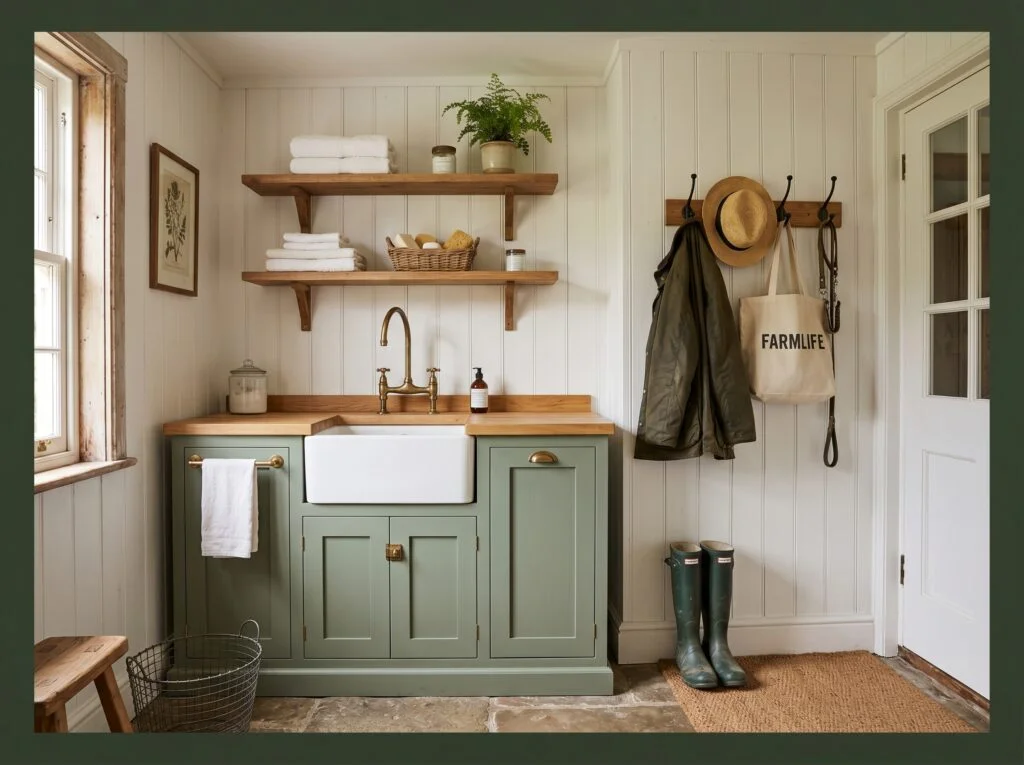
Adding a utility sink to a small mudroom is the one functional upgrade that most articles never mention and that homeowners with outdoors-loving families or dogs consistently say they wish they had done sooner. A small porcelain apron sink built into a shaker-style cabinet gives you a place to wash muddy hands and paws, rinse dirty vegetables from the garden, soak soiled sports socks, and fill the dog’s water bowl all without tracking anything into the main kitchen. It is a practical upgrade that pays for itself in daily convenience almost immediately.
A sage green shaker cabinet with a brass gooseneck faucet above has the warm, lived-in farmhouse character that makes a mudroom feel like a welcoming part of the home rather than a purely utilitarian transition space. Open shelves above the sink hold clean towels within reach and a small wicker basket for miscellaneous supplies. Black iron coat hooks on the adjacent wall handle outerwear. White tongue-and-groove wall panels behind the whole arrangement complete the farmhouse picture. This is the mudroom setup for the household that uses their outdoor space constantly and wants their entry to keep up with that lifestyle.
If this rustic style speaks to you, a farmhouse-style layout to explore might be the next step.
Personalized Mudroom Command Wall with Labeled Zones
A personalized mudroom command wall with labeled zones helps keep the entire family organized and reduces everyday clutter. Dedicated spaces for bags, shoes, coats, and accessories make it easier for everyone to stay organized. This functional setup also creates a tidy, efficient entryway that supports busy daily routines.
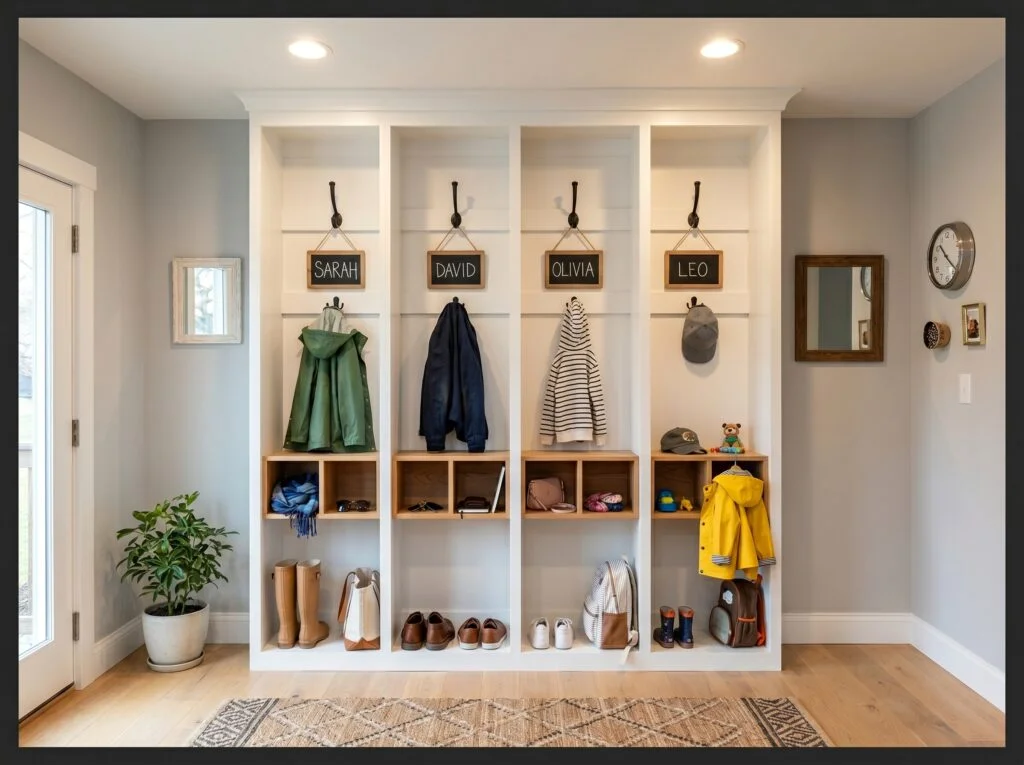
The personalized command wall is the small mudroom idea that works best for families because it eliminates the most common mudroom frustration: everyone’s stuff ending up in the same pile. Dividing the available wall width into equal named sections one per family member gives each person complete visual ownership over their zone. Their hook, their cubby, their shoe slot. When the setup is this clearly defined, even young children understand where their things belong and are far more likely to actually put them there.
The sections do not need to be large to work effectively. A section 12 to 14 inches wide provides enough hook space for one coat, enough cubby depth for a bag, and enough floor slot for two pairs of shoes. Build the whole unit from painted MDF with a router line to create the visual division between sections no physical wall needed. Add a small chalkboard tag with each family member’s name above their section. This system is the single most impactful organizational structure for a busy household mudroom and it takes up exactly as much space as you have available, whether that is 36 inches or 8 feet of wall.
Conclusion
A small mudroom does not need a big budget or a dedicated room to do its job brilliantly. It needs a clear plan, the right storage for your specific household, and at least one solution for each of the three core functions hanging, seating, and shoe storage. Start with those three priorities, pick the ideas from this list that match your space and style, and build from there.
The difference between an organized mudroom and a chaotic entryway is almost never about size. It is about having a defined home for every single item that comes through the door. When everything has a place, everything goes back to that place and the whole morning routine gets a little bit easier, every single day.
And for keeping the rest of the entry tidy beyond just the mudroom, there are more ideas worth checking out.