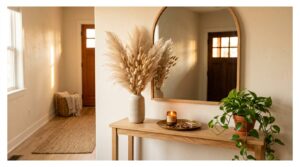
A cluttered entry can ruin even the prettiest home but a farmhouse mudroom makes staying organized look effortlessly charming. These 23 farmhouse mudroom ideas blend cozy rustic charm with smart storage think shiplap walls, wood benches, and cubbies that keep clutter tucked away in style.
Let’s get started with these farmhouse mudroom ideas for a beautifully organized home!
If you want even more ways to tame the chaos at your door, there are other clever entryway organization tricks worth checking out.
Classic White Shiplap Walls
Classic white shiplap walls create a timeless backdrop that instantly adds brightness, texture, and farmhouse charm to any front porch. Their clean horizontal lines make the space feel more open while pairing beautifully with natural wood furniture, greenery, and cozy outdoor décor.
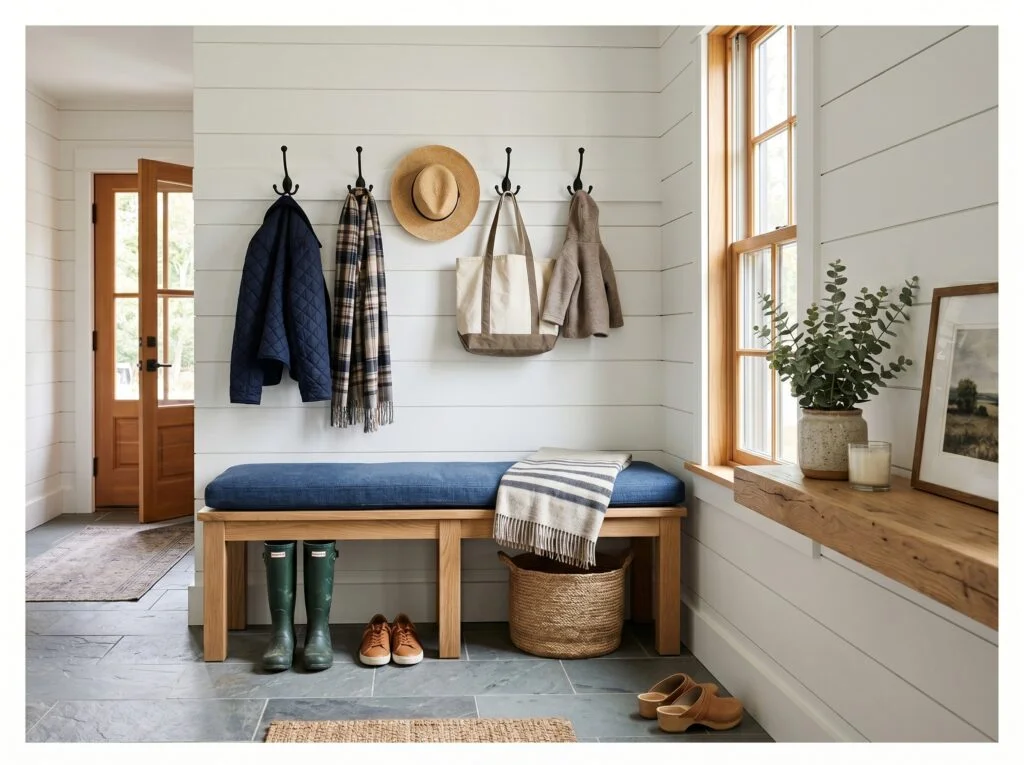
White shiplap is the single most recognizable detail in farmhouse design and for good reason. Those clean horizontal lines instantly make a small, awkward entry space feel intentional and finished. Unlike plain painted drywall, shiplap hides everyday scuffs, dings, and the inevitable “someone’s backpack hit the wall again” marks without looking worse over time. You can DIY it over a weekend with basic tools, and the transformation is genuinely dramatic. The texture alone adds a warmth that flat paint simply can’t deliver.
Pair white shiplap with dark matte black hardware hooks, knobs, and door handles and you get a sharp contrast that looks straight out of a design magazine. If you want to add depth without going dark, try painting a single accent wall in a warm greige or sage green. The white shiplap becomes your neutral canvas, and everything else you add baskets, a wooden bench, a vintage rug looks curated and deliberate. It’s the easiest way to make your mudroom feel like it was designed, not just thrown together.
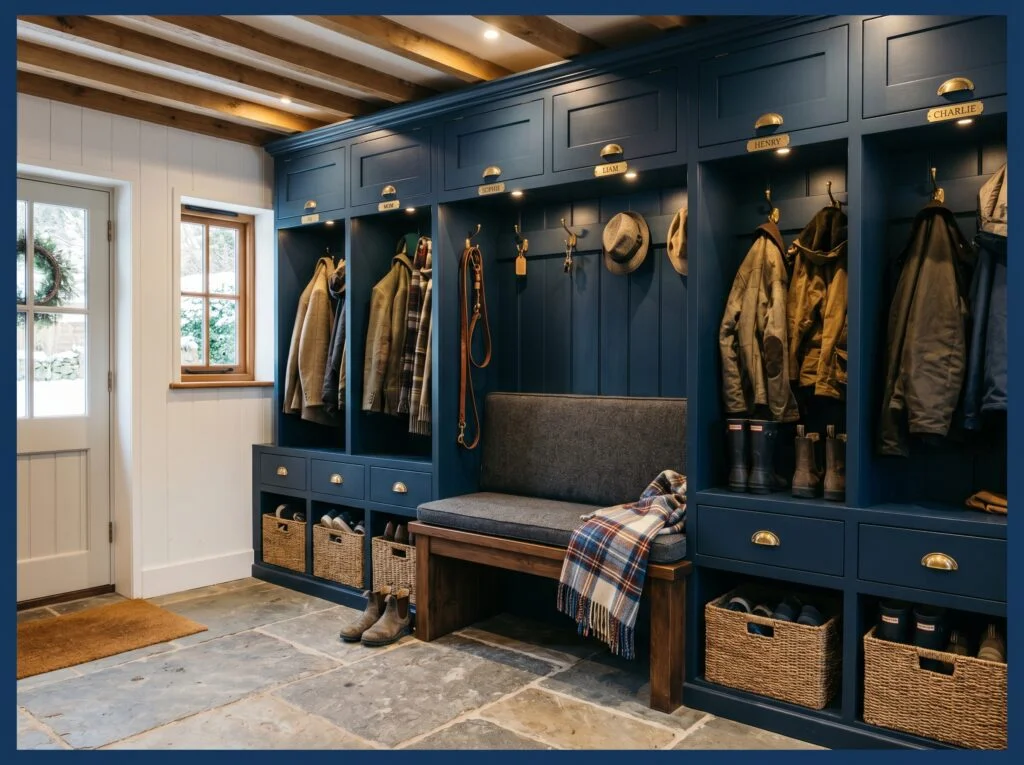
Built-In Storage Cubbies
Built-in storage cubbies provide a practical way to keep your front porch organized while adding a custom, polished look. Use them for shoes, baskets, gardening tools, or seasonal décor to create a clutter-free entryway that feels both functional and stylish.
Built-in cubbies are the gold standard for family mudrooms because they solve the root problem: every person and every item has an assigned spot. When each kid owns a cubby, the “where are my shoes” argument disappears overnight. Label each section with a small chalkboard tag or brass nameplate to make it official. You can build basic cubbies yourself using plywood and paint, or buy modular units from IKEA and frame them in to look custom. Either way, the result is a space that actually functions.
The key is to think in zones when designing your cubbies. Upper sections handle coats, bags, and backpacks. Lower sections store shoes and boots — ideally in pull-out baskets so the floor stays clean. Add a bench seat in the middle section for easy shoe removal. Navy blue, forest green, or charcoal paint on the cabinets adds a sophisticated farmhouse twist while hiding the fingerprints that inevitably come with a busy family. Woven baskets inside the lower cubbies keep shoes hidden but accessible and allow airflow so your mudroom doesn’t smell like a gym locker.
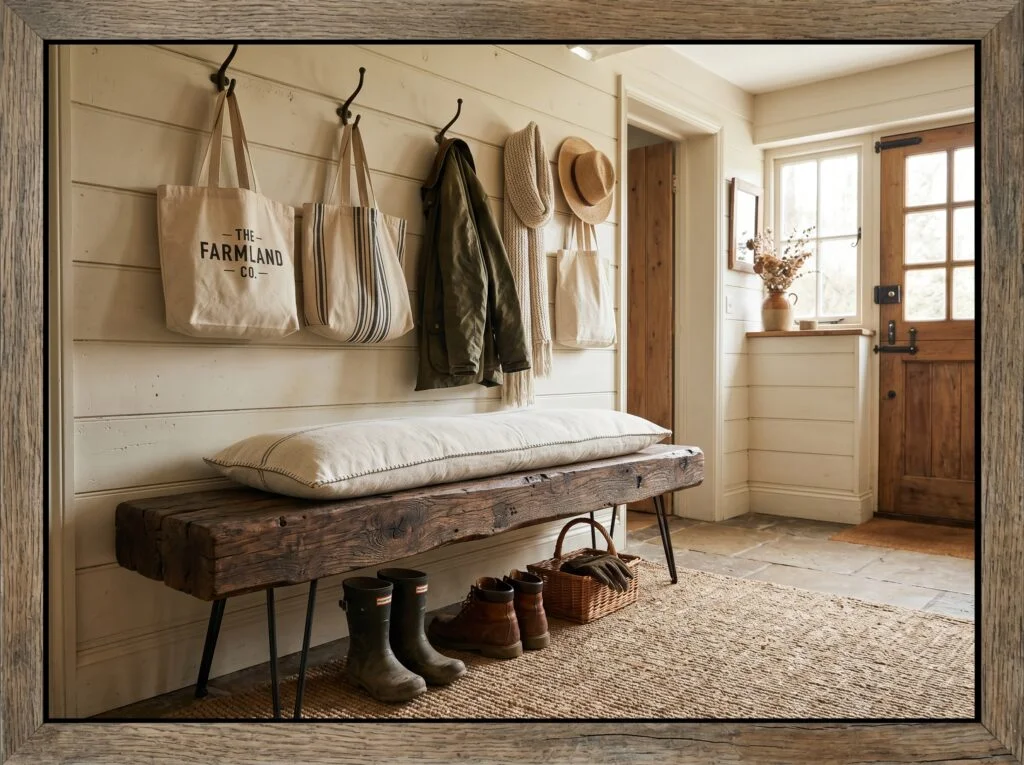
Rustic Reclaimed Wood Bench
A rustic reclaimed wood bench adds character and natural warmth to your front porch with its unique textures and aged finish. It creates a cozy seating area while complementing farmhouse, cottage, and vintage-inspired décor styles with a charming, handcrafted feel.
A reclaimed wood bench is the heart of every great farmhouse mudroom. It gives you a place to sit while putting on boots, it adds genuine character that no store-bought furniture can replicate, and it handles years of heavy use without falling apart. The natural knots, grain variation, and weathered texture of barn wood tell a story. Every scratch it picks up along the way just adds to the charm rather than making it look worn out. That’s something you simply cannot say about a flat-pack bench from a big box store.
When choosing your bench depth, aim for at least 14 to 16 inches so there’s enough room to sit comfortably. If you want hidden storage underneath, add a hinged lid and use the interior for seasonal gear like winter hats or extra dog leashes. Pair hairpin legs in matte black or wrought iron for that perfect blend of farmhouse and industrial. Tuck a woven basket under the open base for shoes, or lay a durable jute runner in front of it to catch dirt before it spreads. A simple linen cushion on top turns a purely functional piece into something that actually looks like it belongs in a home.
If you’re weighing bench options for your own space, it helps to browse a cozy seat with hidden storage before you commit.
Shaker-Style Cabinet Wall
A Shaker-style cabinet wall brings clean lines, timeless design, and smart storage to your front porch. Its simple panel details create an elegant backdrop while providing space to organize shoes, outdoor essentials, and seasonal items without sacrificing style.
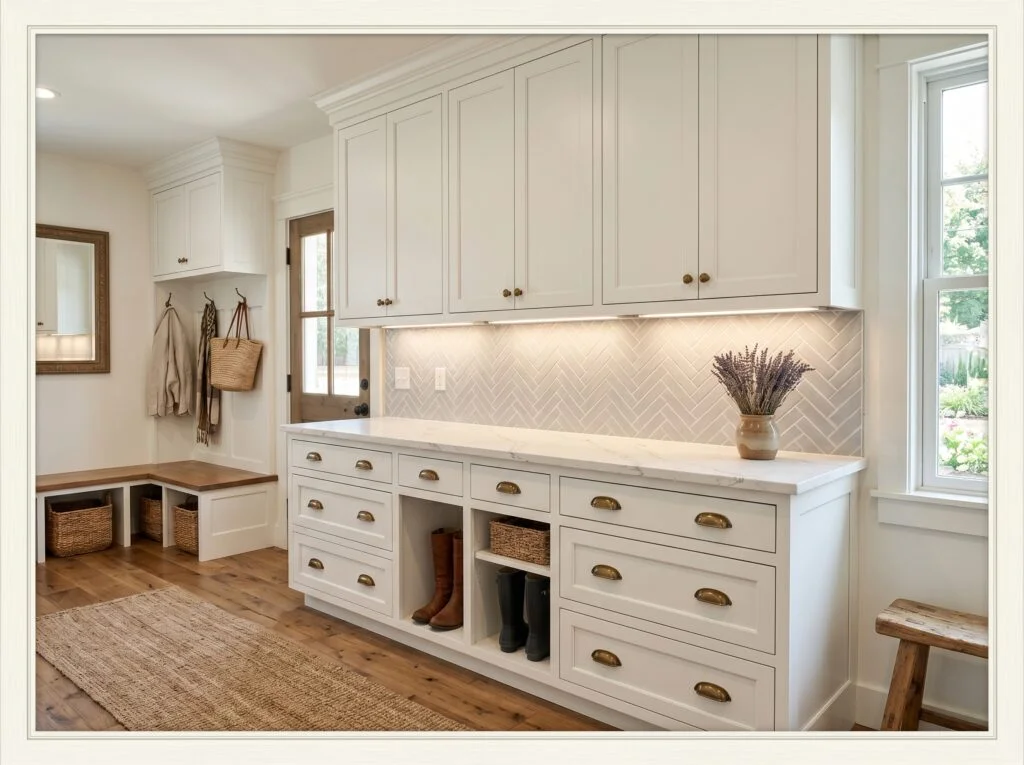
Shaker cabinets in a mudroom give you the clean, timeless look of a kitchen but built entirely for the chaos of daily comings and goings. Upper cabinets store seasonal items, rarely used gear, and anything you want completely out of sight. Lower cabinets keep everyday shoes, sports bags, and cleaning supplies organized and behind closed doors. When everything is hidden, even a busy mudroom feels calm. The simple recessed-panel door style fits equally well in a rustic farmhouse, a modern farmhouse, or a transitional home.
Add a countertop across the lower cabinets to create a drop zone surface. This is where keys land, mail gets sorted, and sunglasses don’t mysteriously disappear. Use a shallow drawer or small ceramic tray on the counter for small daily essentials. Choose antique brass or oil-rubbed bronze hardware to keep the farmhouse character alive. If budget is tight, paint existing builder-grade cabinets in a warm off-white or soft sage new paint and new hardware can make a $200 weekend project look like a $5,000 renovation.
For more inspiration on getting the cabinetry right, there are smart ways to fit compact cabinetry into almost any layout.
Vintage Metal Lockers with a Painted Makeover
Vintage metal lockers with a painted makeover add personality and practical storage to your front porch while creating a unique statement piece. A fresh coat of color can transform old lockers into stylish organizers for shoes, gardening supplies, and outdoor accessories with a charming retro touch.
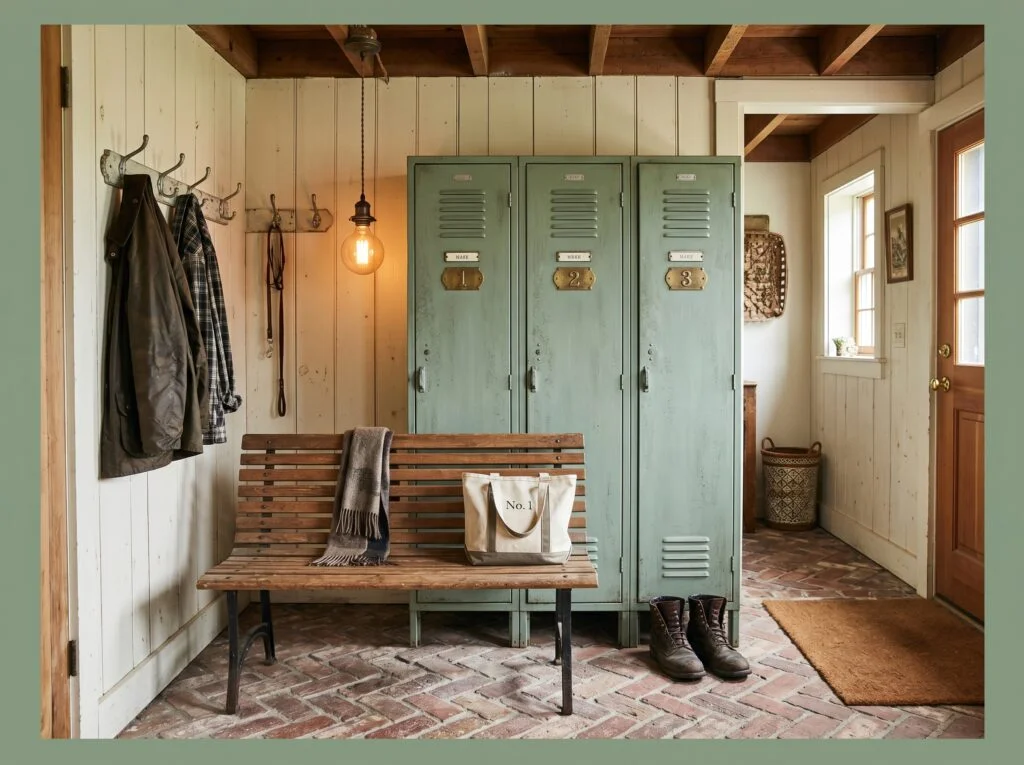
Old school metal lockers have found a second life in farmhouse mudrooms, and they work brilliantly. Each locker becomes a private storage zone one for dad’s work gear, one for the kids’ sports equipment, one for mom’s bags and scarves.
A coat of paint is all it takes to make a used locker look intentional and stylish. Muted sage green, dusty navy, charcoal gray, or warm terracotta all work beautifully. Sand lightly, prime the metal, and use a durable enamel spray paint for the best finish.
If this approach appeals to you, there’s a whole roundup of locker-style storage for busy families to explore.
Peg Rail Coat and Bag Organizer
A peg rail coat and bag organizer is a simple yet effective way to keep your front porch essentials neatly arranged. It provides easy access to coats, hats, bags, and everyday items while adding a decorative touch that works well with farmhouse, modern, and minimalist styles.
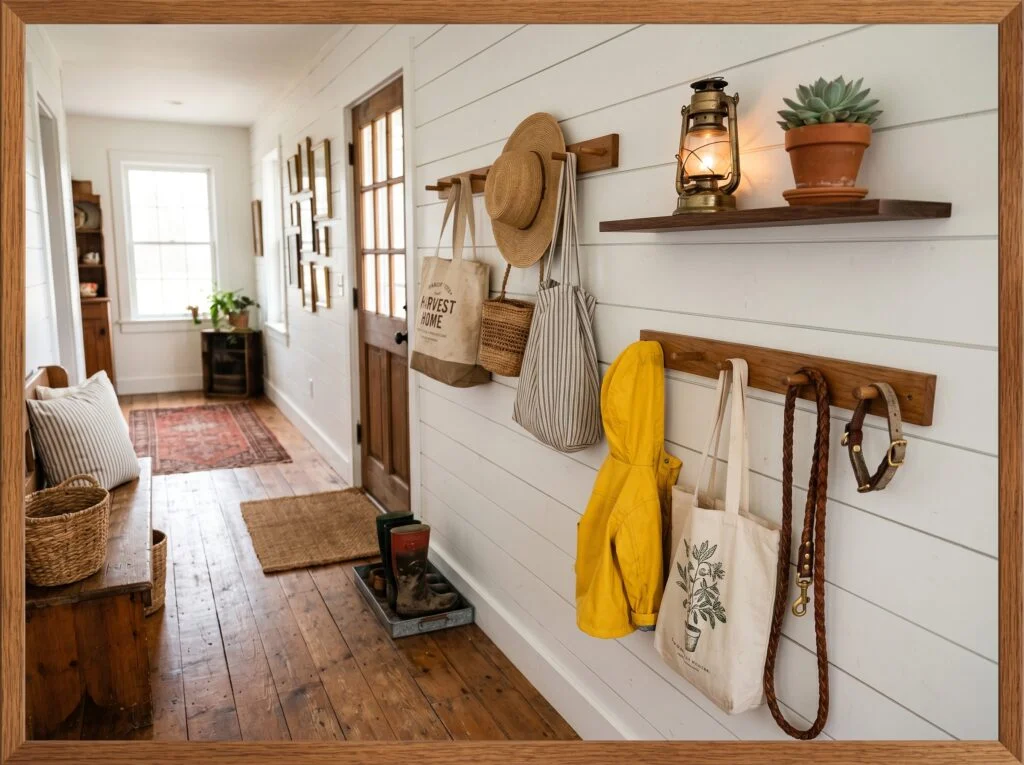
A simple peg rail is one of the oldest, most effective, and most underrated mudroom storage solutions. A Shaker-style peg rail the kind with a flat board and rounded wooden pegs — takes about two hours to install and costs very little, yet it completely transforms a bare wall into a hardworking, beautiful organizer. Mount it at adult height for coats and bags, then add a second lower row for kids to hang their own things independently. Teaching children to hang their own backpacks at their own level is a life skill you’ll appreciate every single morning.
The beauty of a peg rail in a farmhouse mudroom is how naturally it fits the aesthetic. Raw wood, painted white, or stained in walnut the rail works with any palette. Shaker pegs hold more weight than standard hooks and won’t bend under a heavy winter coat. Space the pegs about six to eight inches apart so bags and coats don’t crowd each other. Add a narrow floating shelf just above the peg rail for baskets, a lantern, or a small plant. That combination of shelf plus peg rail gives you serious storage in just 12 inches of wall depth.
Dutch Door Entry for Farmhouse Charm
A Dutch door entry adds classic farmhouse charm while creating a welcoming connection between your home and outdoor space. Its split design allows fresh air and natural light in while maintaining privacy, making it a stylish and functional upgrade for a cozy front porch.
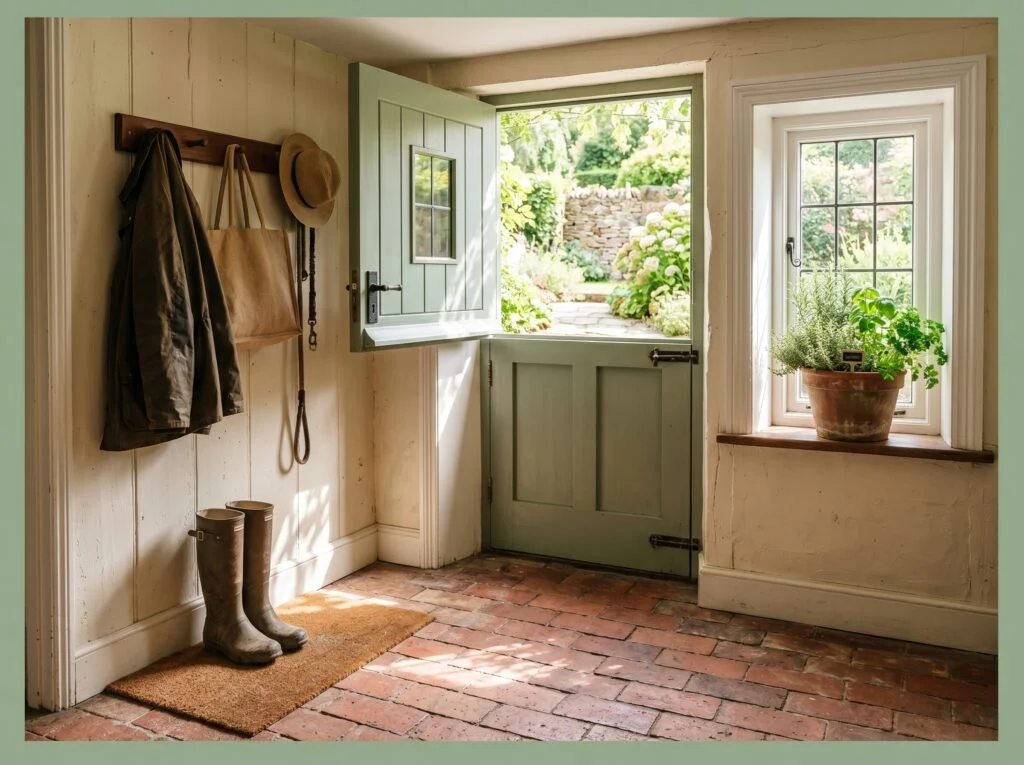
A Dutch door is one of those design choices that looks purely decorative but is actually deeply functional. The split design lets you keep the bottom half closed to contain pets or toddlers while leaving the top open for fresh air and natural light. For anyone with dogs, this is a genuine game-changer no more dogs bolting out the door every time you open it, and no more barricading the mudroom with a baby gate.
Sage green, cream white, or a deep navy work particularly well for Dutch doors in a farmhouse setting. Choose solid wood construction for durability, and add a simple thumb latch at the split for easy one-handed operation. A wrought iron kickplate on the bottom half protects the wood from muddy boots.
Industrial Pipe Coat Rack System
An industrial pipe coat rack system brings a bold, functional touch to your front porch with its combination of metal accents and sturdy design. It provides organized storage for coats, hats, and bags while adding a modern rustic look that complements farmhouse and industrial décor styles.
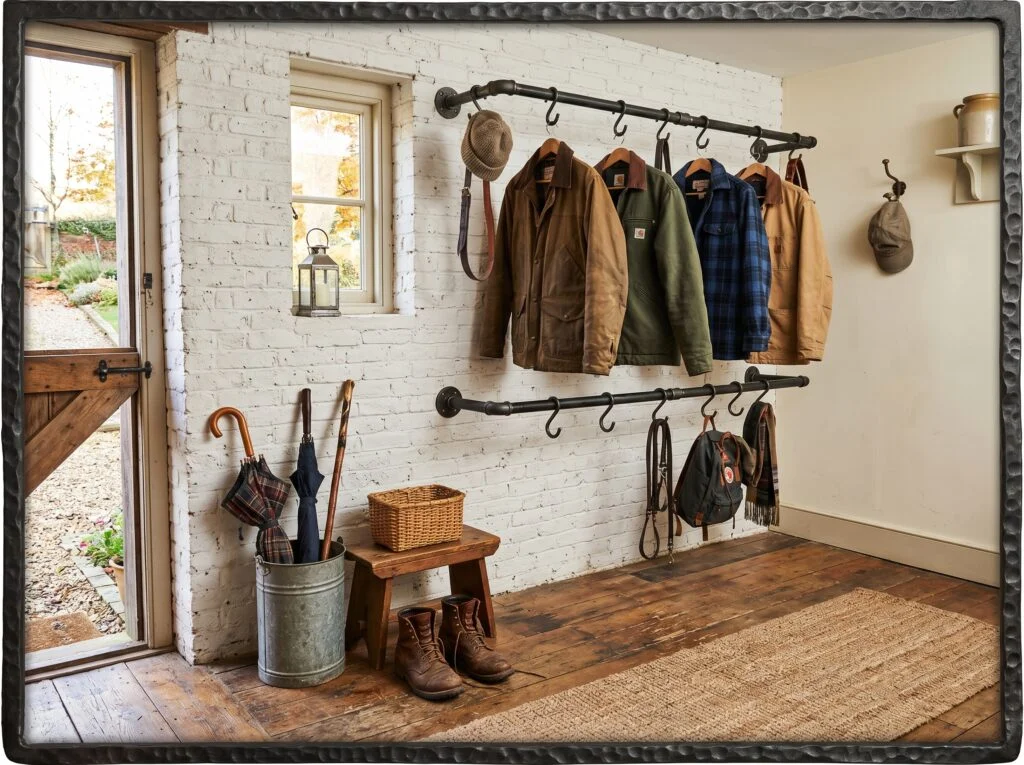
Black iron pipes from the plumbing aisle are one of the best-kept secrets in farmhouse mudroom design. They’re incredibly strong, cost a fraction of what custom shelving costs, and they look genuinely cool in an industrial-farmhouse way.
Use pipe flanges screwed directly into wall studs for maximum strength, and spray everything in flat black or oil-rubbed bronze for a consistent look. Add S-hooks at different lengths to hang bags, purses, and pet leashes with flexibility. Pair the pipe rack with a raw wood shelf mounted just above it for baskets and hats.
Sliding Barn Door for Room Division
A sliding barn door adds rustic character and space-saving functionality when used for room division. Its unique design creates a stylish transition between areas while bringing warmth, texture, and farmhouse-inspired charm to your home interior.
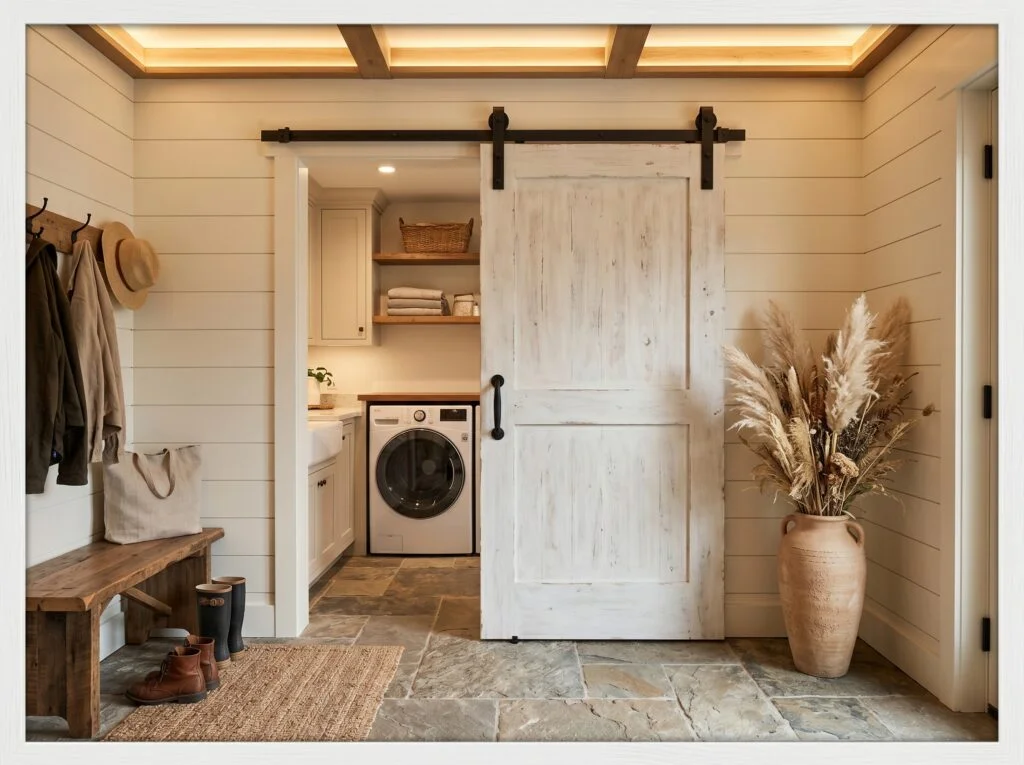
A sliding barn door is the most popular solution for mudrooms that share a wall with a laundry room — and for good reason. It lets you completely hide the laundry area when guests arrive, absorbs sound from the washer and dryer, and saves the floor space that a traditional swinging door would eat up.
Choose a door width that comfortably covers the opening and adds about two inches on each side to block light gaps. White-painted wood, reclaimed barn board, or a combination of wood slats with metal accents all work beautifully. The black iron track hardware adds that signature farmhouse industrial detail that ties the whole look together.
Integrated Pet Washing Station
An integrated pet washing station creates a convenient and organized solution for keeping your furry friends clean without bringing outdoor mess indoors. Designed with easy-to-clean surfaces, storage, and practical features, it adds functionality to your home while making pet care more efficient.
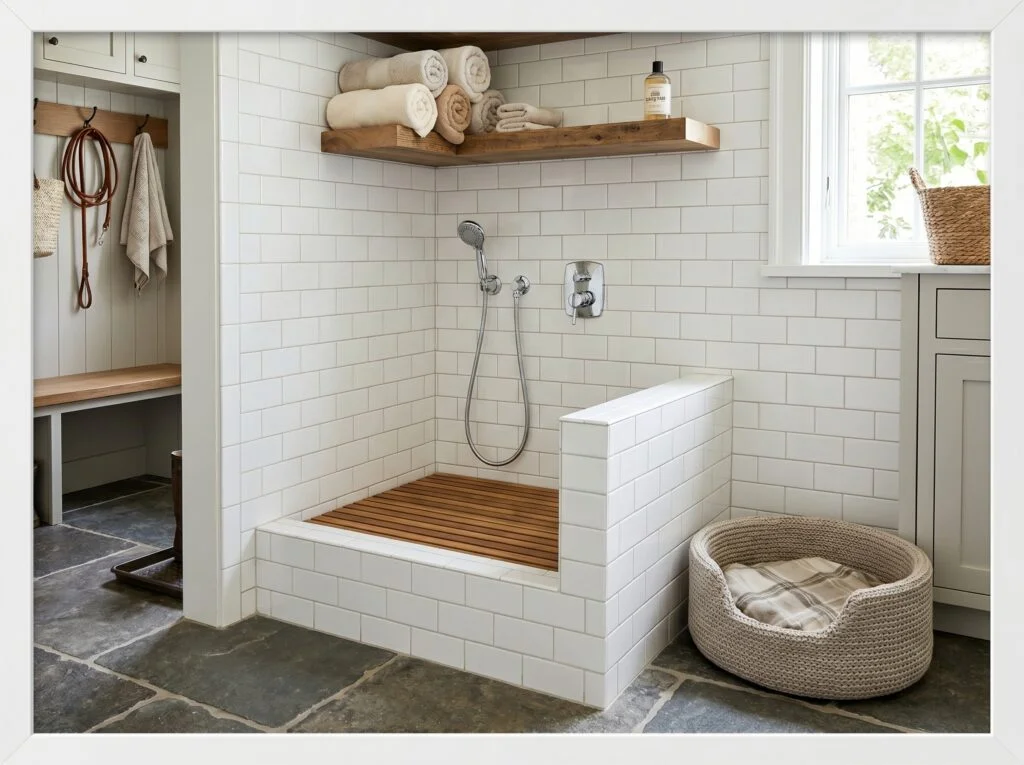
If you have dogs, a built-in pet wash station will change your life. Instead of dragging a muddy dog through the house to the bathtub and scrubbing the tub clean afterward you handle everything right at the door. A simple tiled basin with a hand-held sprayer, good drainage, and a non-slip floor mat is all it takes.
Position the station right next to the entry door so wet paws never touch your main flooring. Mount a wooden shelf directly above the basin for rolled towels, dog shampoo, and a small basket for grooming tools. A wall hook nearby holds the leash so everything is in one place.
Woven Basket Storage Wall
A woven basket storage wall adds natural texture and smart organization to your front porch while keeping everyday items within easy reach. It’s a stylish way to store blankets, shoes, gardening tools, and accessories while creating a warm, welcoming look with a cozy handcrafted feel.
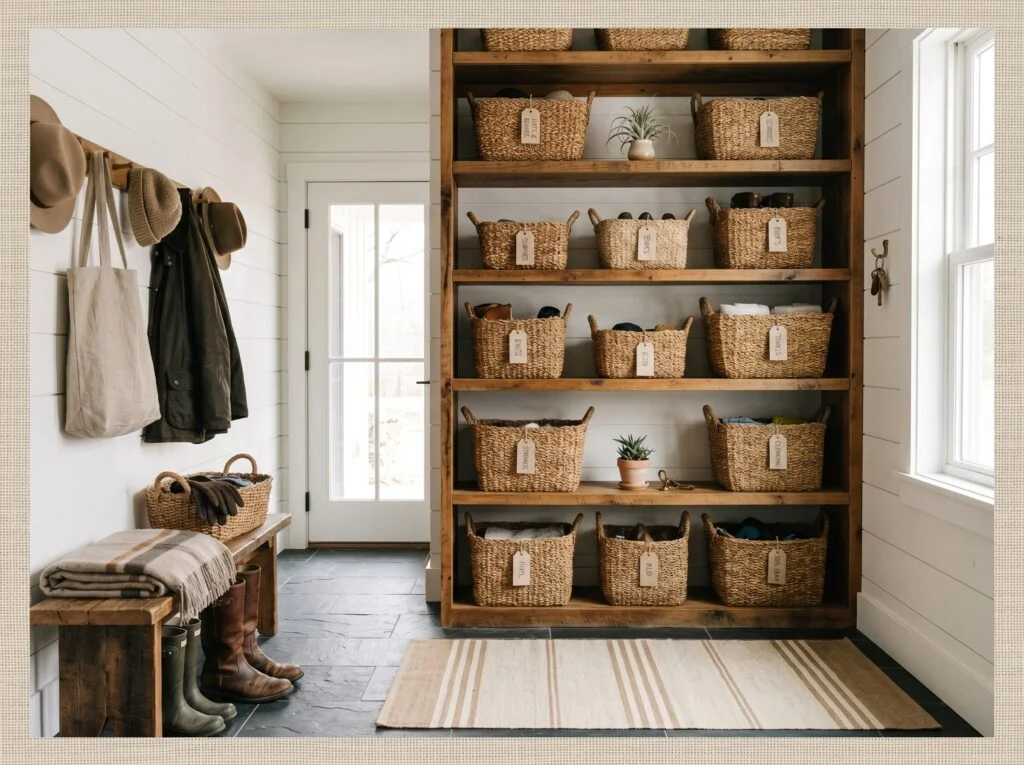
Woven baskets are to farmhouse style what throw pillows are to a sofa they’re the detail that makes everything feel finished. In a mudroom, open shelving lined with labeled woven baskets turns a utilitarian wall into something genuinely beautiful.
Seagrass, rattan, and water hyacinth are all excellent materials for mudroom baskets because they’re durable, breathable, and relatively water-resistant. Avoid fabric bins in a high-humidity or high-traffic area they trap smells and show dirt. Open shelving with baskets is also significantly cheaper than custom built-ins while giving you a very similar organized look.
Chalkboard Wall Command Center
A chalkboard wall command center adds a practical and creative touch to your front porch by keeping schedules, notes, and reminders organized in one place. Combine it with hooks, shelves, and baskets to create a functional entryway station that blends style with everyday convenience.
A chalkboard wall in the mudroom doubles as a family command center, and it genuinely earns its wall space. Write the week’s schedule, grocery reminders, sports practice times, or a simple “don’t forget your lunch” note that actually gets read because it’s at eye level right at the door.
Frame the chalkboard section with thin wood trim painted white or stained in a natural finish to give it a deliberate, intentional look rather than a painted wall that just happened to turn dark. Mount a row of hooks directly below the chalkboard for coats and bags so the wall is doing double duty.
Laundry-Mudroom Combo Layout
A laundry-mudroom combo layout maximizes space by combining two essential home areas into one organized and efficient zone. With smart storage, built-in cabinets, and dedicated spaces for laundry and entryway items, it helps keep daily routines smoother while maintaining a clean, stylish look.
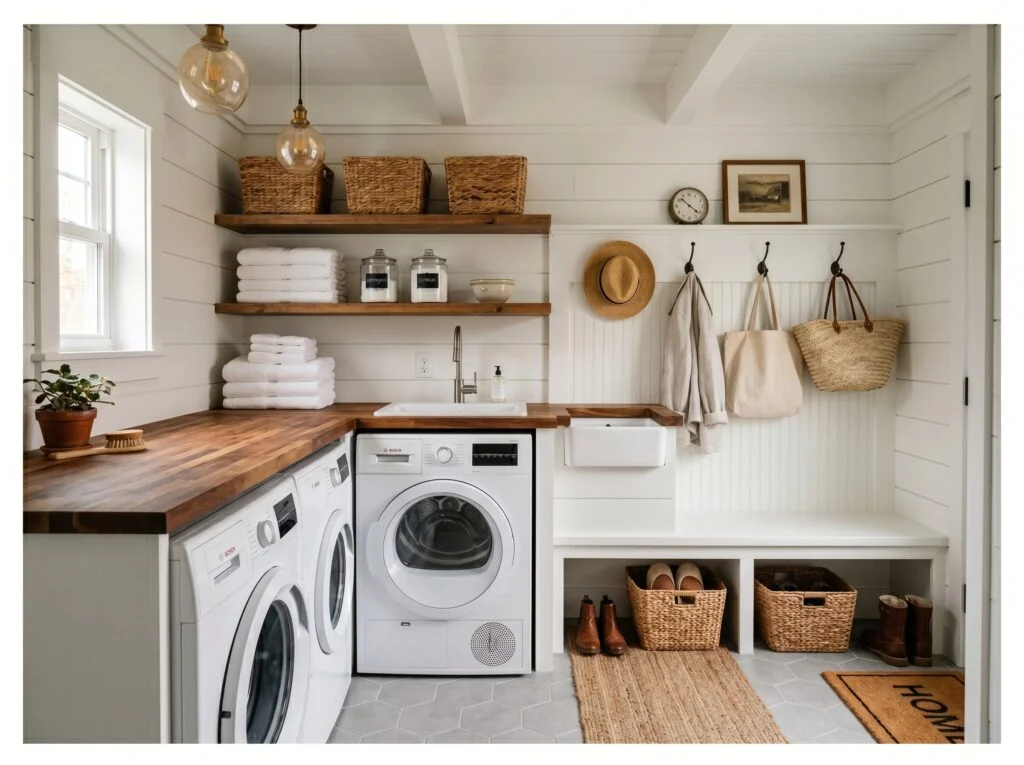
Combining your laundry room and mudroom into one space is one of the smartest layout decisions you can make in a smaller home. It consolidates two high-traffic utility areas into one, which means one floor drain, one utility sink, one set of shelves doing two jobs. Dirty clothes come off near the door and go straight into the washer without traveling through the entire house.
Stacking the washer and dryer frees up wall space for a mudroom bench and hooks beside the machines. A butcher block or laminate countertop over front-load machines creates a folding surface that doubles as a drop zone.
Herringbone Brick Floor
A herringbone brick floor adds timeless texture and visual interest to your front porch with its classic geometric pattern. The durable brick surface creates a warm, welcoming foundation that complements farmhouse, traditional, and modern outdoor designs while adding lasting curb appeal.
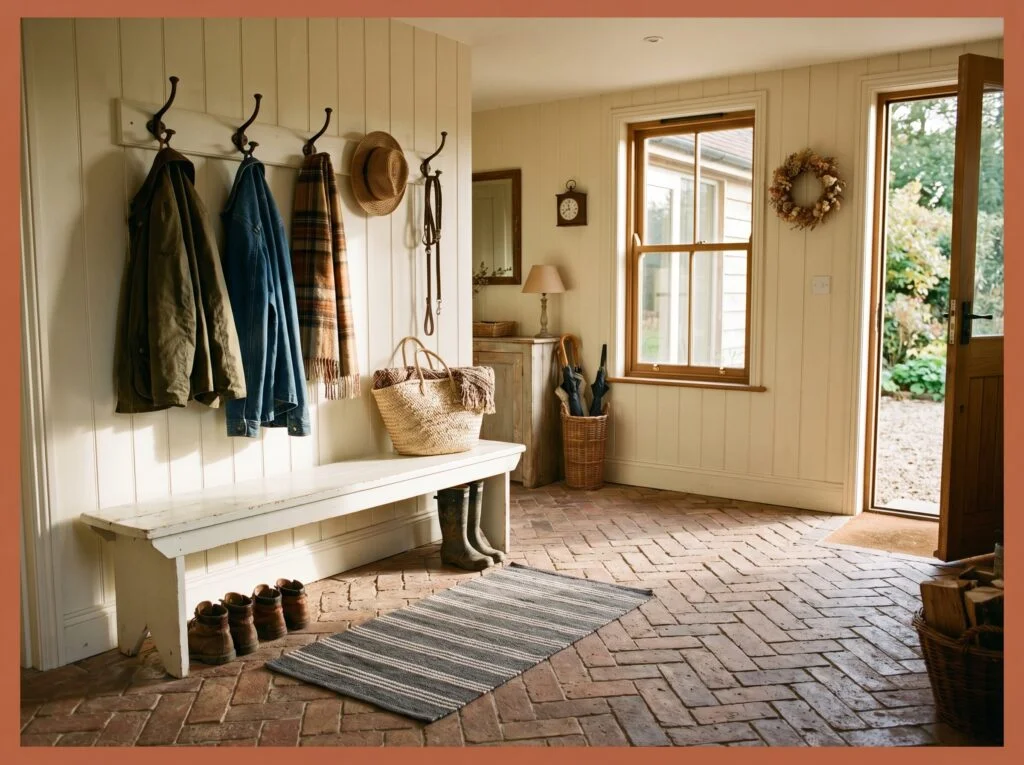
A herringbone brick floor is one of the most durable and beautiful flooring choices you can make for a mudroom. Real brick handles dirt, moisture, and heavy boot traffic without showing wear. The herringbone pattern creates visual interest that makes even a small mudroom entry feel dynamic and purposeful.
If real brick installation is outside your budget, thin brick veneer tiles achieve the same look at a lower cost and with a simpler installation process. Grout in a warm gray or sand tone to keep the look traditional rather than modern. Seal the brick after installation to resist moisture and prevent staining an annual resealing keeps it looking great indefinitely. Pair the brick floor with white walls and natural wood accents to let the floor be the star of the space. A simple striped cotton runner in front of the bench adds softness underfoot and traps the dirt that the brick’s texture might miss.
Vertical Garden or Herb Wall Near the Entry
A vertical garden or herb wall near the entry brings natural beauty and fresh greenery to your front porch while making the most of limited space. It adds texture, color, and a welcoming feel while providing an easy way to grow herbs, flowers, or decorative plants.
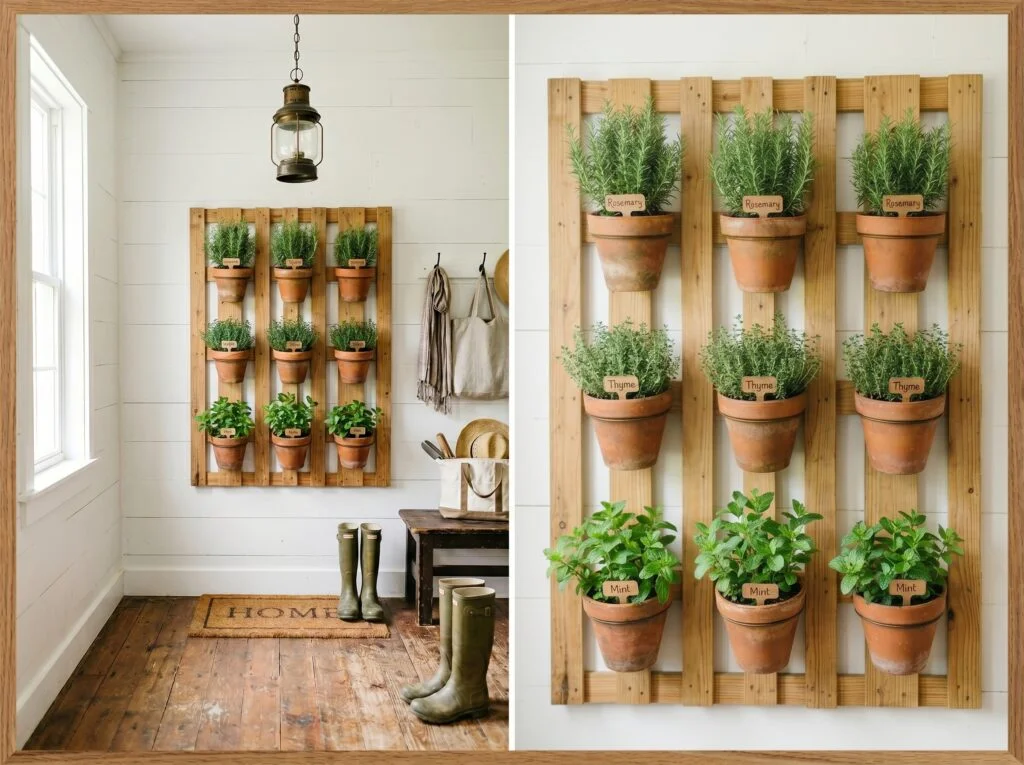
A small vertical herb garden or plant wall near your mudroom entry is a detail that most people completely overlook — and that’s exactly why it makes such an impression. Walking into a space that smells of fresh rosemary or mint changes the entire sensory experience of coming home. A simple slatted wood frame mounted on the wall holds small terracotta pots at different heights. Herbs like rosemary, thyme, mint, and lavender all do well near a door where they get some natural light and air circulation when the door opens.
Keep the plant wall on the wall nearest to a window or directly beside the door to ensure adequate light. If natural light is limited, a small clip-on grow light in a matte black finish barely shows and keeps the plants healthy. This idea works especially well in mudrooms adjacent to kitchens you can snip fresh herbs on the way in without making a separate trip. The terracotta pots, raw wood frame, and live greenery bring organic texture and life to a space that can otherwise feel purely utilitarian. It’s a small addition with a disproportionately large impact on how the room feels.
Built-In Bench with Lift-Top Storage
A built-in bench with lift-top storage combines comfortable seating with hidden organization, making it a smart addition to any entryway or front porch. Use the concealed space for shoes, blankets, outdoor accessories, or seasonal items while keeping the area neat and clutter-free.
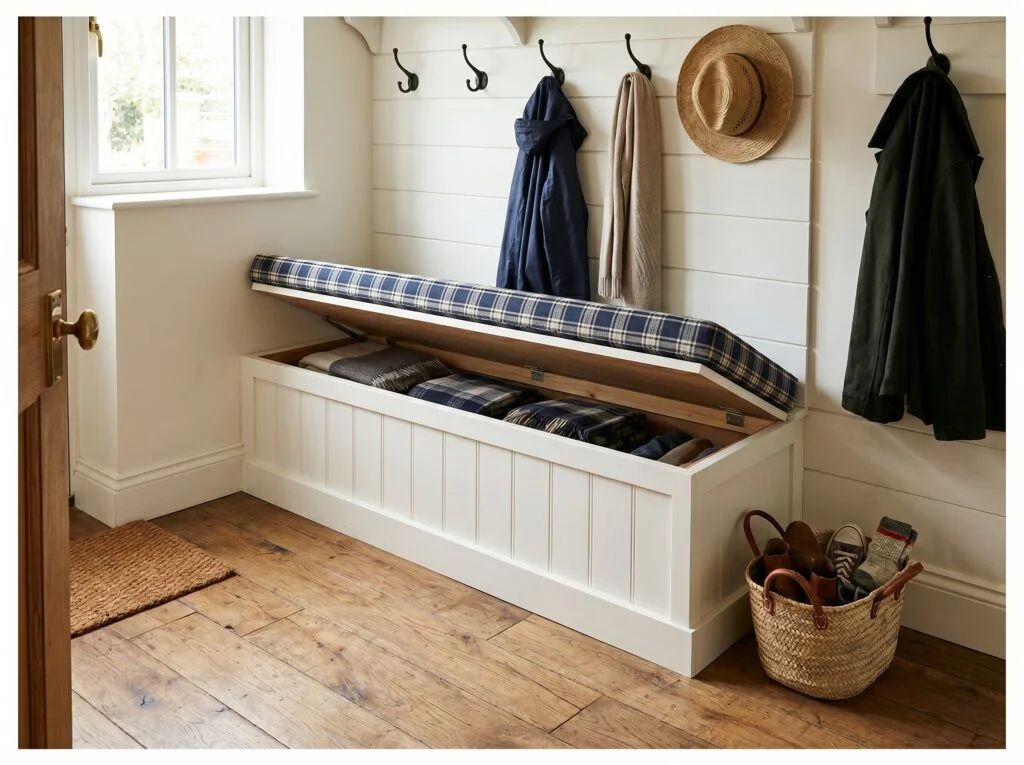
A built-in bench with hidden lift-top storage is the mudroom equivalent of a sofa with storage it looks like a simple seat but secretly holds an enormous amount of gear. Seasonal items like gloves, scarves, and hats live inside during the summer. Winter boots go in during the warmer months. Extra bags, umbrellas, and sports accessories all disappear into the bench and stay out of sight until needed. The lid closes, the cushion sits on top, and nobody knows it’s there. The bench looks clean. The mudroom looks organized.
Build the box from three-quarter inch plywood with a piano hinge along the back edge of the lid for smooth, easy opening. Add a soft-close lid support so the lid doesn’t slam on fingers worth every penny with kids in the house. Paint everything in white or a soft off-white to match shiplap or cabinet walls. A cushion with a washable, removable cover is essential because mudroom cushions take a beating. Choose a durable fabric canvas, outdoor fabric, or tightly woven cotton in a farmhouse-appropriate pattern like plaid, ticking stripe, or solid linen. Function and style, fully merged.
Lantern Pendant Lighting
Lantern pendant lighting adds warmth, character, and a welcoming glow to your front porch while enhancing its overall style. Its classic design works beautifully with farmhouse, coastal, and traditional homes, creating an inviting entrance that feels elegant both day and night.
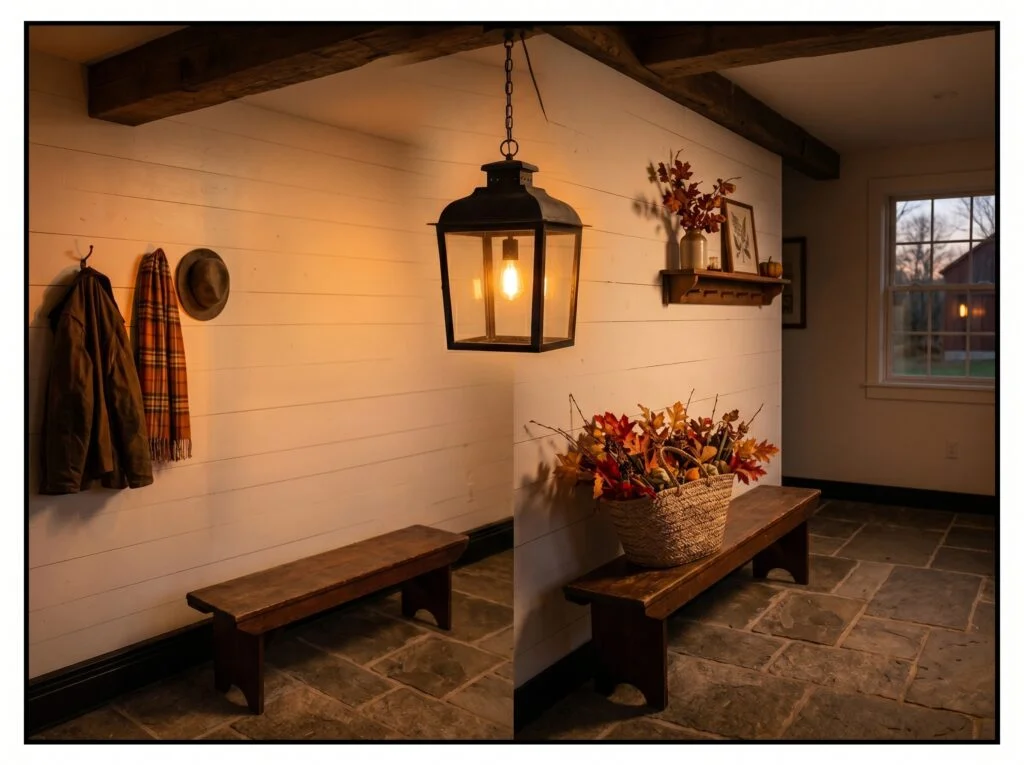
Lighting is the most overlooked element in mudroom design, and it matters more than most people realize. A mudroom with harsh fluorescent overhead lighting feels like a utility room no matter how much shiplap you install. But a well-chosen pendant light specifically a black metal lantern style adds warmth, character, and personality that completely changes the atmosphere of the space. The lantern shape is deeply connected to farmhouse and cottage aesthetics, and it casts a diffused, welcoming glow that makes even a small entry feel inviting.
Choose a pendant size that’s proportional to your ceiling height a 12 to 16 inch lantern works well in most standard mudroom spaces. If you have lower ceilings, a semi-flush lantern mount gives you the same look without hanging too low. Use a warm white LED bulb in the 2700 to 3000 Kelvin range for a light that feels cozy rather than clinical. Add a dimmer switch if your wiring allows it the ability to lower the lights in the evening transforms the mood completely. When the pendant light is right, guests notice the whole room differently. Good light makes everything else you’ve done look better.
Vintage Sign and Decorative Touches
Vintage signs and decorative touches add personality and nostalgic charm to your front porch while creating a unique focal point. Combine them with rustic frames, seasonal accents, or antique-inspired décor to give your entryway a warm, welcoming look full of character.
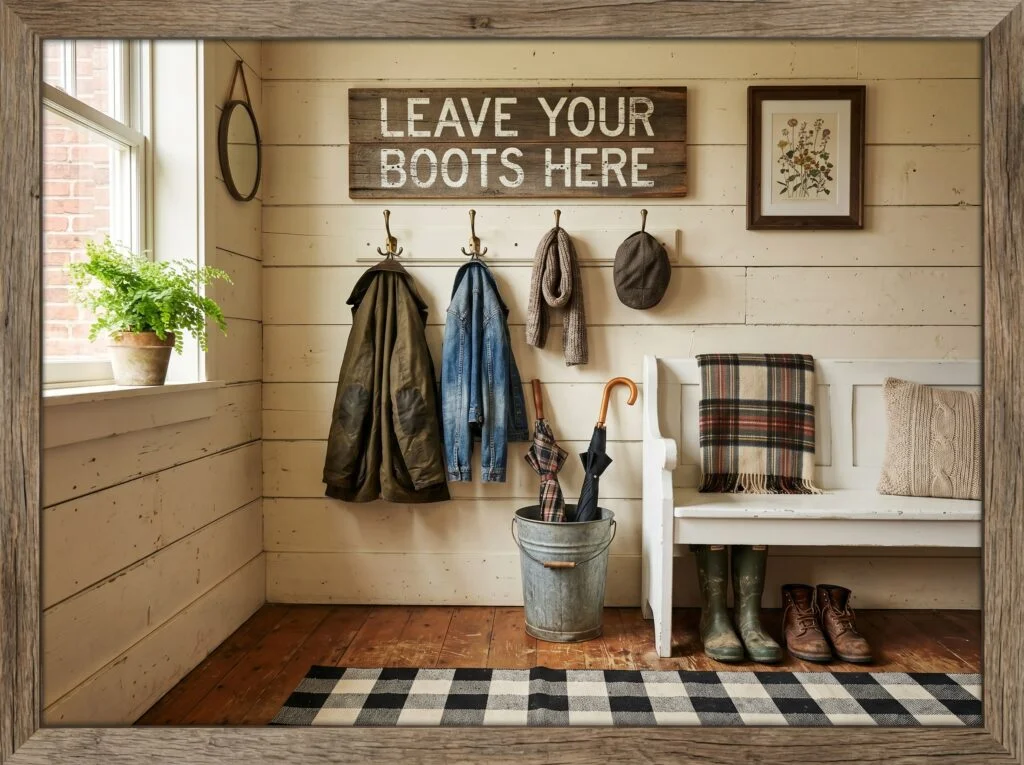
A mudroom that has personality feels completely different from one that only has function. Vintage signs, framed farmhouse prints, antique clocks, and decorative buckets are the details that make a utilitarian space feel like a real room in the house rather than just a pass-through. A hand-lettered wood sign “Leave Your Boots Here,” “Wipe Your Paws,” or simply the family name above the bench tells visitors exactly what the space is for while adding charm that no storage solution can provide on its own.
Keep decorative additions small and purposeful. A galvanized metal bucket makes a perfect umbrella stand and costs almost nothing. A buffalo check rug in black and white or navy and cream adds pattern and farmhouse character while doing the practical job of catching dirt at the door. A single framed botanical print or a small mirror breaks up a wall of hooks and adds visual breathing room. The goal is to decorate just enough that the space feels loved and intentional not so much that the decor competes with the function. One or two well-chosen pieces do more than a shelf full of trinkets.
If you’re leaning into the decorative side of things, there are plenty of ways to create a warmer welcome right at the door.
Corner Mudroom Maximizing Awkward Space
A corner mudroom is a smart way to transform awkward spaces into functional storage areas without wasting valuable room. Add built-in benches, hooks, and shelves to create an organized entryway that keeps shoes, bags, and everyday essentials neatly stored while maintaining a stylish look.
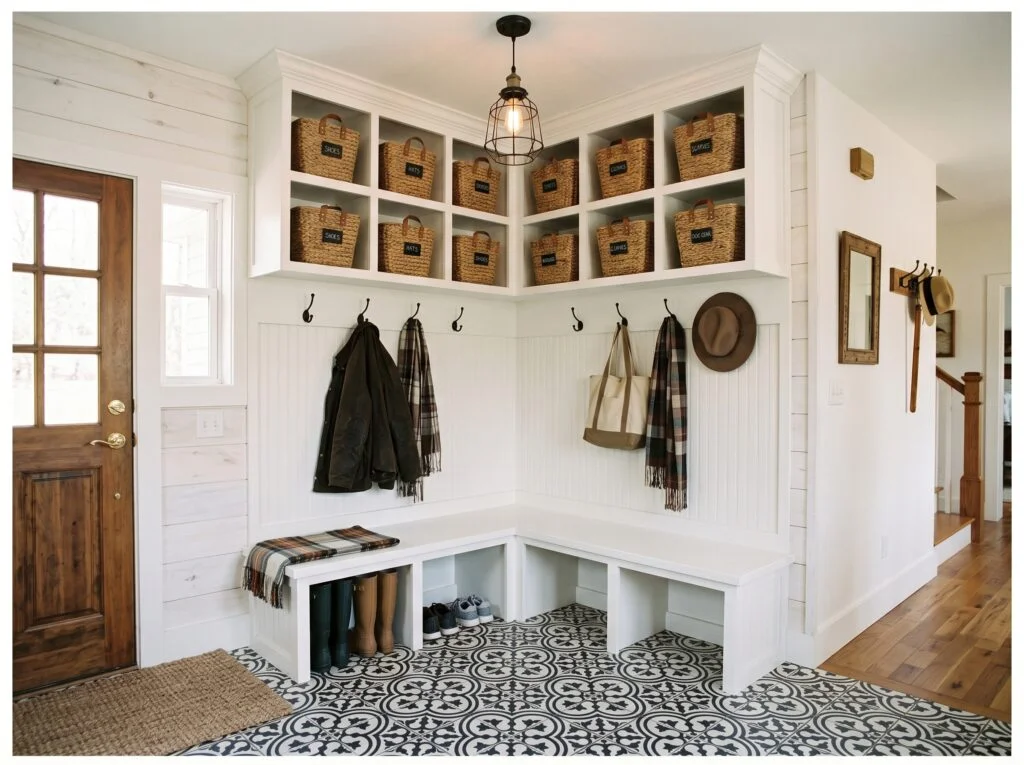
Most mudrooms don’t get a perfectly rectangular, generously sized room. They get a corner of a hallway, a weird L-shaped entry, or a space that’s too narrow to use efficiently. A custom corner bench is the solution that most people don’t think of first — and it’s genuinely brilliant for awkward spaces. Wrapping a bench around two walls maximizes seating and storage without wasting any floor space. You get significantly more bench length in a corner configuration than you’d ever get with a straight-wall version.
Build the corner bench from the same materials as the rest of your cabinetry MDF or plywood painted white works well and keeps costs manageable. Add cubbies above each section of the bench for coat and bag storage, and use the space below the bench for baskets or a built-in shoe rack. A single pendant light centered above the corner anchors the space visually and makes the corner feel like it was designed to be a destination rather than just a dead zone. Geometric tile on the floor helps define the mudroom zone within a larger open-plan entry, giving the space boundaries without walls.
For tighter layouts, it’s worth seeing a few tricks for keeping a compact space feeling open.
Farmhouse Mudroom with Brick Accent Wall
A farmhouse mudroom with a brick accent wall combines rustic charm with practical organization, creating a warm and inviting entryway. The textured brick adds character while built-in storage, hooks, and benches keep daily essentials organized and make the space more functional.
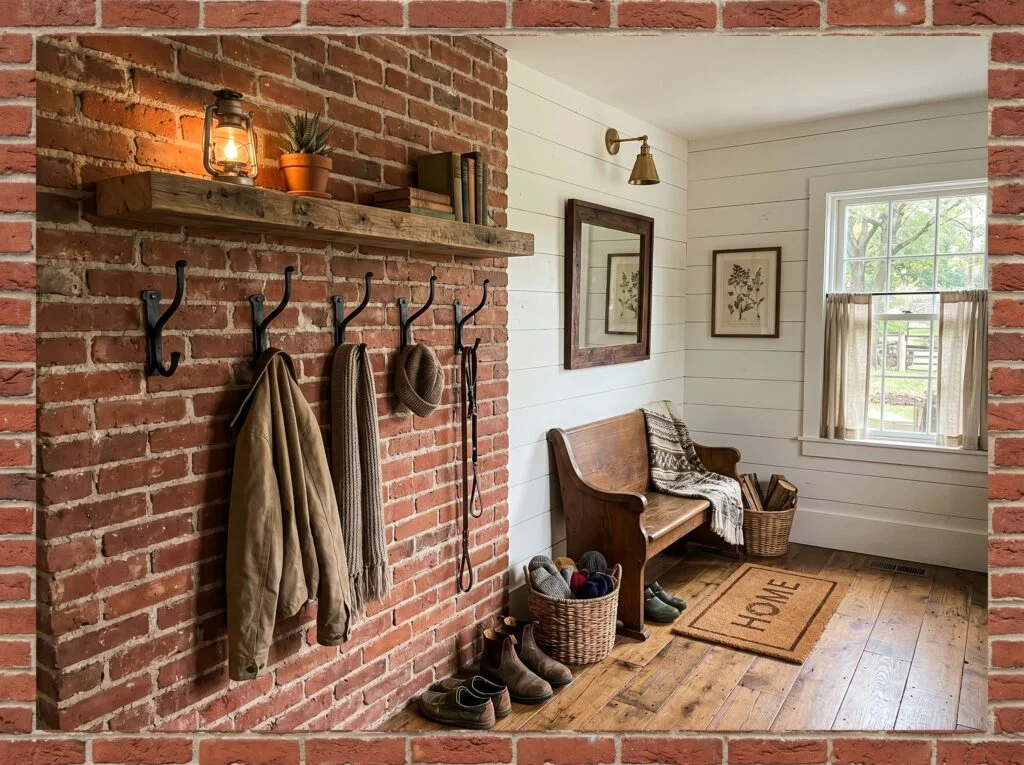
An exposed brick accent wall in a mudroom is an instant character upgrade. It adds raw, authentic texture that no wallpaper or paint treatment can convincingly replicate. If your home has original brick behind drywall — common in older houses — carefully exposing it is a weekend project that pays off enormously in visual impact. If your walls are solid stud framing, thin brick veneer tiles installed over drywall give you the same rustic appearance at a fraction of the cost and weight. Either way, the result is a wall that looks like it has been there forever.
Mount iron coat hooks directly into the brick for a look that feels completely original and structurally very strong. Brick anchors hold substantial weight, so there’s no concern about heavy coats or overstuffed bags pulling hardware out. Keep the adjacent walls clean white paint or shiplap so the brick gets to be the visual star without competing for attention. A floating wood shelf on the brick wall for a small lantern, a succulent, or a vintage clock completes the look. The warmth of the brick against white walls and dark iron hardware is a combination that simply works every single time.
Mudroom Drop Zone with a Charging Station
A mudroom drop zone with a charging station creates a convenient spot to store everyday essentials while keeping technology organized. Combine hooks, drawers, and built-in outlets to manage bags, keys, devices, and chargers in one functional area that reduces clutter and simplifies daily routines.
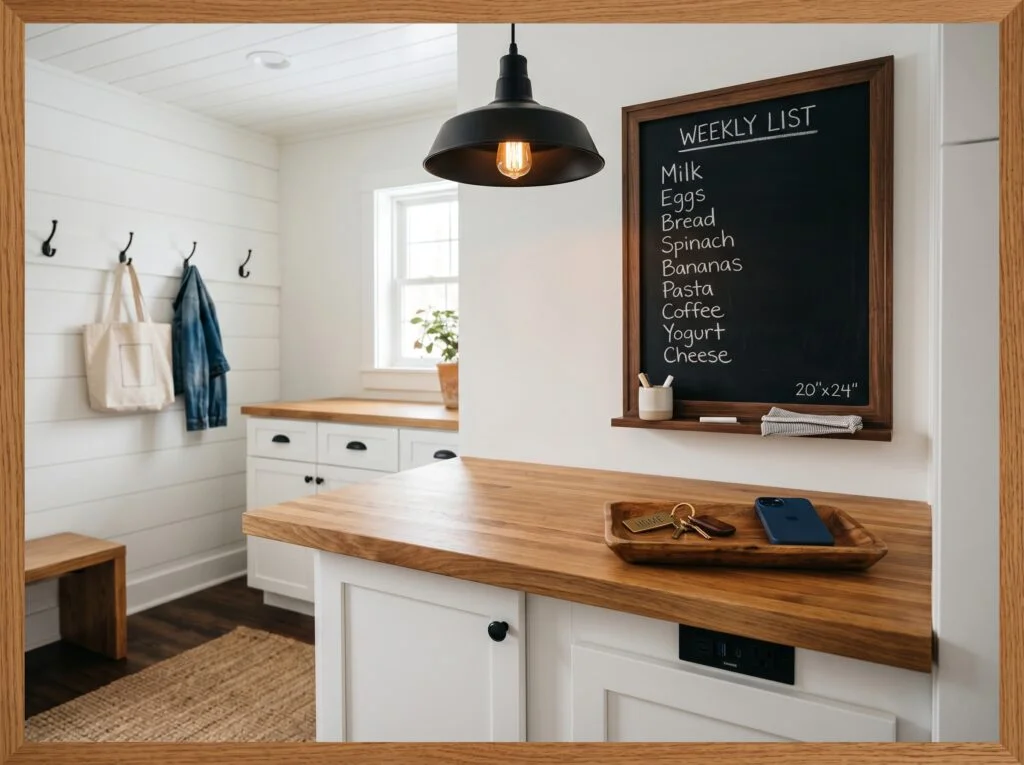
A charging station built into your mudroom drop zone is the upgrade that modern families actually need but almost never see in farmhouse mudroom inspiration photos. Phones, tablets, earbuds, smart watches — everything in your family needs charging, and it all tends to pile up on kitchen counters or nightstands. Relocating the charging station to the mudroom makes complete sense: devices charge while you’re home, they’re ready when you leave, and they’re located exactly where you pick up your keys and bag on the way out the door.
Install USB-A and USB-C outlets flush into the countertop or inside a cabinet with a small cutout for cord management. A wooden tray or small ceramic dish on the counter corrals keys, coins, and small accessories that otherwise scatter everywhere. Label a dedicated spot for each family member’s device to prevent the morning “have you seen my phone” panic. A chalkboard or small whiteboard above the counter handles grocery lists, reminder notes, and daily schedules. This is one of the biggest content gaps in most farmhouse mudroom articles the fusion of traditional farmhouse style with genuine modern family functionality.
Mudroom Bench with Built-In Shoe Rack Below
A mudroom bench with a built-in shoe rack below offers a practical solution for keeping footwear organized while providing a comfortable spot to sit. This space-saving design helps reduce entryway clutter and creates a clean, functional area for busy households.
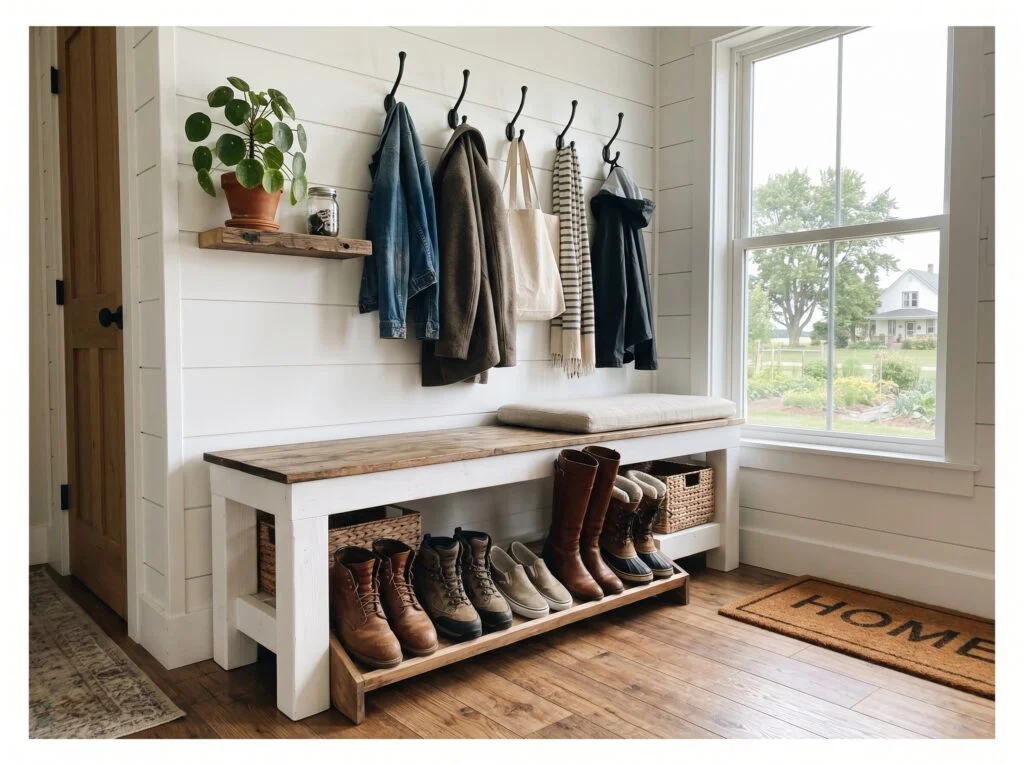
An angled shoe rack built directly under your mudroom bench is one of the cleverest small-space solutions available. It keeps shoes off the floor and organized without requiring any additional furniture or shelving. The angled design holds shoes at a slight tilt, making them easy to grab quickly while preventing them from flopping over and creating a disorganized pile. You can build a simple version from 1×4 wood boards and wooden dowels in a single afternoon, paint it to match the bench, and immediately solve the shoe chaos that every busy mudroom suffers from.
Size the rack based on your family’s shoe collection allow about four to five inches of width per shoe pair for standard sizes. A rack under a 60-inch bench can hold eight to ten pairs comfortably. Use the front row for frequently worn everyday shoes and reserve the back row for less frequently used footwear. Add a small basket at one end of the rack for single shoes waiting for their pair to show up, or for shoe-care supplies like brushes and polish. This small functional detail communicates to everyone in the household that the mudroom has a system, and systems get followed.
Seasonal Decoration Strategy for Your Farmhouse Mudroom
A seasonal decoration strategy for your farmhouse mudroom keeps the space feeling fresh and inviting throughout the year. Rotate simple accents like wreaths, baskets, textiles, and natural elements to add seasonal charm while maintaining the cozy rustic style of your entryway.
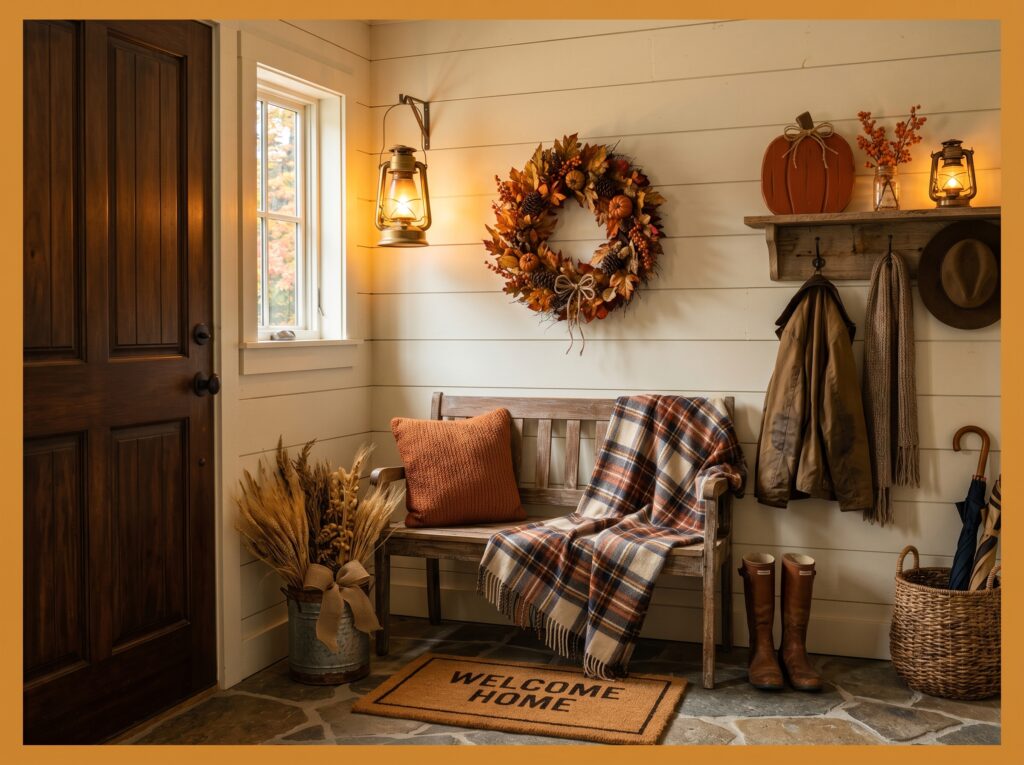
One thing almost no mudroom article talks about is how to keep your mudroom feeling fresh and welcoming across the seasons not just organized. A farmhouse mudroom is perfectly suited to seasonal decoration because the materials it uses (wood, metal, natural fibers, ceramic) translate beautifully across spring, summer, fall, and winter aesthetics. A simple seasonal swap keeps the space feeling alive and intentional rather than like a permanent utility zone that never changes.
In fall, add a small galvanized bucket of wheat stalks near the door, swap in a plaid flannel cushion on the bench, and hang a dried leaf wreath on the shiplap wall. In winter, replace those with pine boughs, white fairy lights, and a heavy wool throw. Spring calls for a small potted tulip or hyacinth on the shelf and a light linen cushion. Summer keeps it simple and minimal a fresh green plant, a light striped runner, clean and airy. None of these swaps cost much or take more than twenty minutes, but they change the entire feeling of the space. A mudroom that responds to the seasons is a mudroom that actually gets loved and maintained.
Conclusion
Your mudroom is the first space you enter and the last space you leave. When it works well, your entire home functions more smoothly. When it doesn’t work, the chaos radiates outward into every other room in the house.
These 23 farmhouse mudroom ideas cover every budget, every family size, and every style preference within the farmhouse spectrum. You don’t need to do all 23. Pick two or three that solve your biggest pain points maybe that’s shoe chaos, maybe it’s a lack of hooks, maybe it’s the complete absence of any organized These 23 farmhouse mudroom ideas cover every budget, every family size, and every style preference within the farmhouse spectrum. You don’t need to do all 23. Pick two or three that solve your biggest pain points maybe that’s shoe chaos, maybe it’s a lack of hooks, maybe it’s the complete absence of any organized system at all and start there. system at all and start there.
And if your entry space serves double duty beyond the mudroom, it’s worth exploring everyday landing zones that stay tidy too.