A mudroom without smart storage isn’t a mudroom it’s just a mess waiting to happen every single day. These 21 mudroom storage ideas are packed with clever built-ins, hooks, cubbies, and stylish solutions that keep shoes, bags, and clutter completely under control. Let’s get started with these mudroom storage ideas for a beautifully organized home!
If your clutter problem extends beyond the entryway, you’ll find plenty of smart storage solutions for garages worth borrowing too.
Built-In Shaker Cabinet System with Named Cubbies
A built-in Shaker cabinet system with named cubbies creates an organized and personalized storage solution for the entire family. Individual compartments make it easy to store bags, shoes, and daily essentials in designated spaces. The timeless Shaker design adds both functionality and classic style to the mudroom.
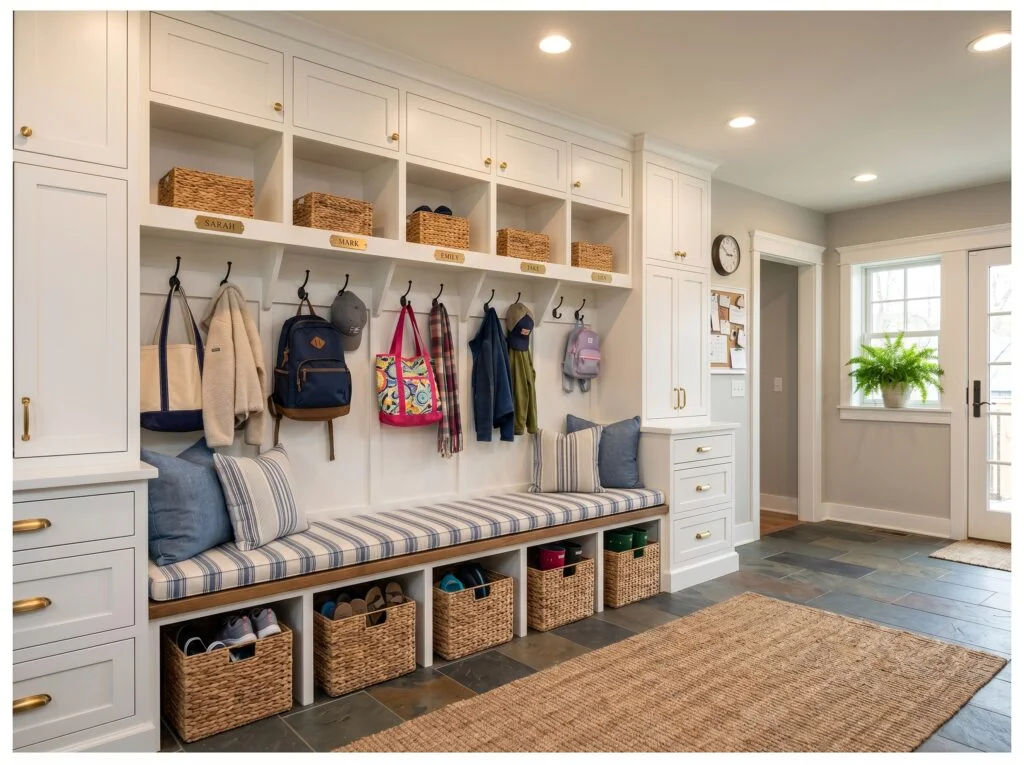
A built-in Shaker cabinet system with individually named cubbies is the gold standard of mudroom storage it solves the family’s chaos problem at the root by giving every person their own clearly defined zone.
Building a full custom built-in system costs $3,000 to $8,000 professionally installed. The IKEA SEKTION cabinet system used as a base with custom trim, added crown molding, and a painted finish is a widely popular and genuinely impressive alternative at $800 to $2,500 in materials for a DIY installation. Install the system so the top of the upper cubby section hits ceiling height even a few inches of gap between the top of the cabinets and the ceiling creates a dust-collecting dead zone and makes the installation look unfinished.
For a softer, warmer take on this same built-in approach, it’s worth looking at farmhouse touches for entry spaces as a design direction.
Peg Rail with Double Hooks for Every Family Member
A peg rail with double hooks provides a simple and practical way to organize coats, hats, and backpacks. Assigning hooks to each family member helps reduce clutter and encourages daily organization. This feature adds both convenience and decorative charm to entry spaces.
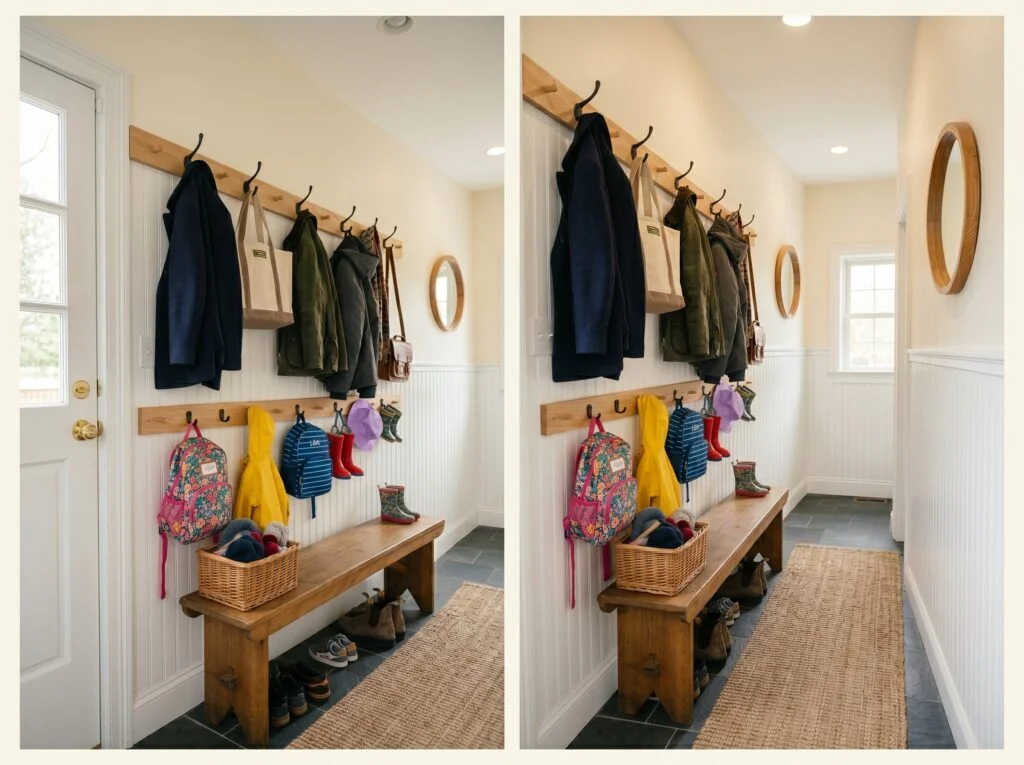
A Shaker peg rail with properly sized double hooks is the most affordable and most effective wall-mounted mudroom storage solution available and it’s the one that most homes can install in a single afternoon for $60 to $200 in materials.
Use solid wood peg rails rather than MDF solid wood holds the weight of heavy winter coats and wet gear without the slow sag that MDF peg rails develop over time. Space pegs 8 inches apart on center for standard coats and bags without crowding.
Bench with Lift-Top Hidden Storage
A bench with lift-top hidden storage combines comfortable seating with valuable concealed storage space. The hidden compartment is ideal for storing seasonal accessories, shoes, and miscellaneous items. This multifunctional piece keeps the mudroom neat while maximizing available space.
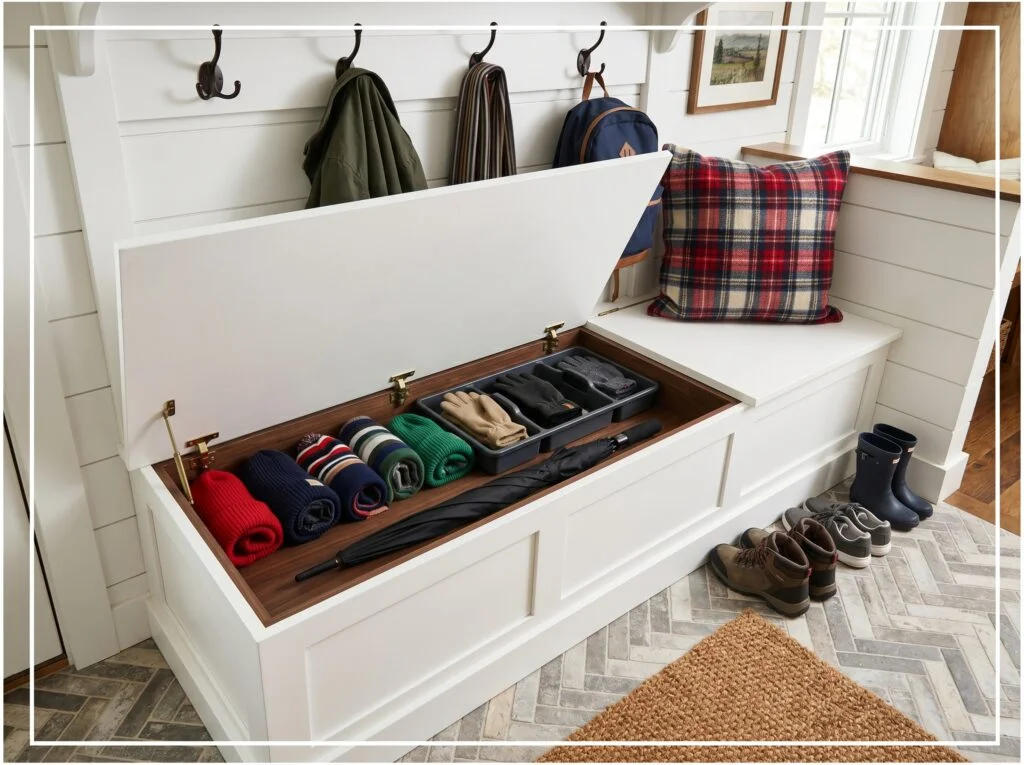
A lift-top bench with hidden storage is the mudroom piece that solves two problems at once it provides essential seating for putting on and removing shoes while concealing an entire category of items that would otherwise pile up on shelves and floors.
Use a piano hinge along the full back edge of the lid for smooth, controlled opening rather than two small hinges at the corners the piano hinge prevents the lid from racking or twisting under the weight of sitting. A soft-close lid support (the same mechanism used on tool chest lids) prevents the lid from slamming on fingers an important safety detail in a household with young children.
If you love the idea of a built-in bench, there are plenty of seating ideas for a cozy entry that translate well from porch to mudroom.
Floor-to-Ceiling Locker Columns
Floor-to-ceiling locker columns provide ample vertical storage and create a clean, structured appearance. Individual lockers help separate personal belongings and keep family essentials organized. This design offers a practical solution while adding a custom built-in look.
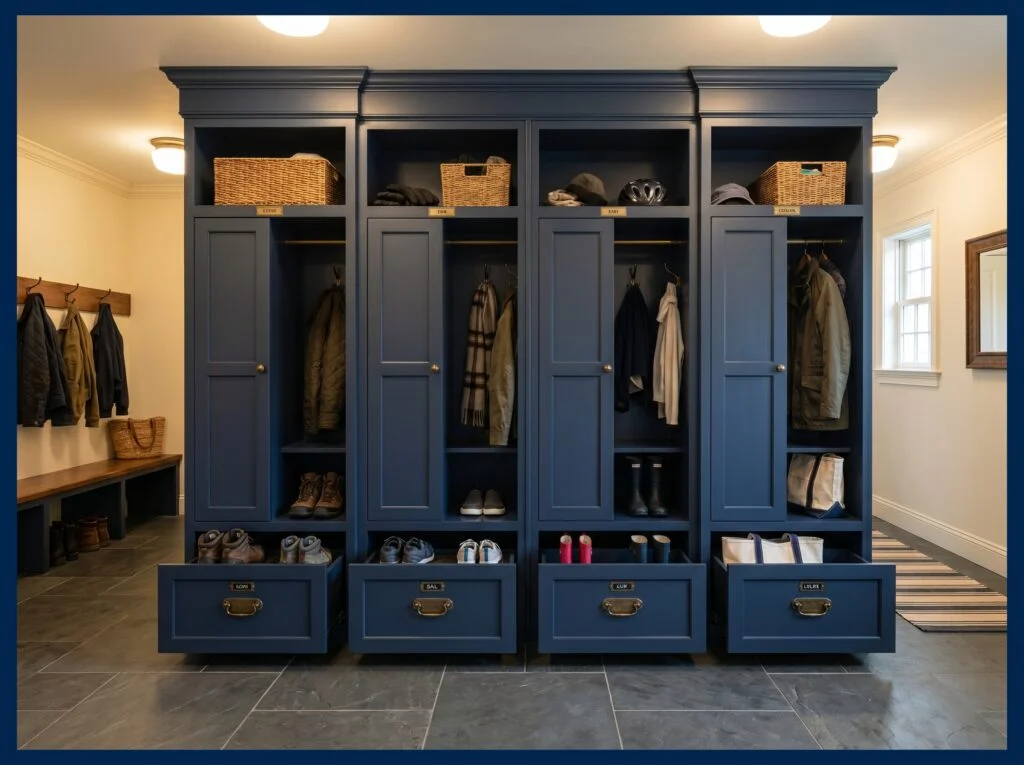
Floor-to-ceiling locker columns give each family member a completely enclosed, private storage zone and the closed-door design is the critical difference from open cubbies.
Divide the interior of each locker into three zones: a top shelf section (accessed through the upper door) for hats, bags, and less-frequently-needed items; a middle hanging section with a single large hook for coats; and a bottom drawer or pull-out for shoes. This three-zone interior turns each locker into a complete individual wardrobe for outerwear and daily-use items. Paint lockers in a dark, bold color navy, forest green, charcoal for a sophisticated look that hides the inevitable fingerprints better than white.
Woven Basket Wall for Loose Accessories
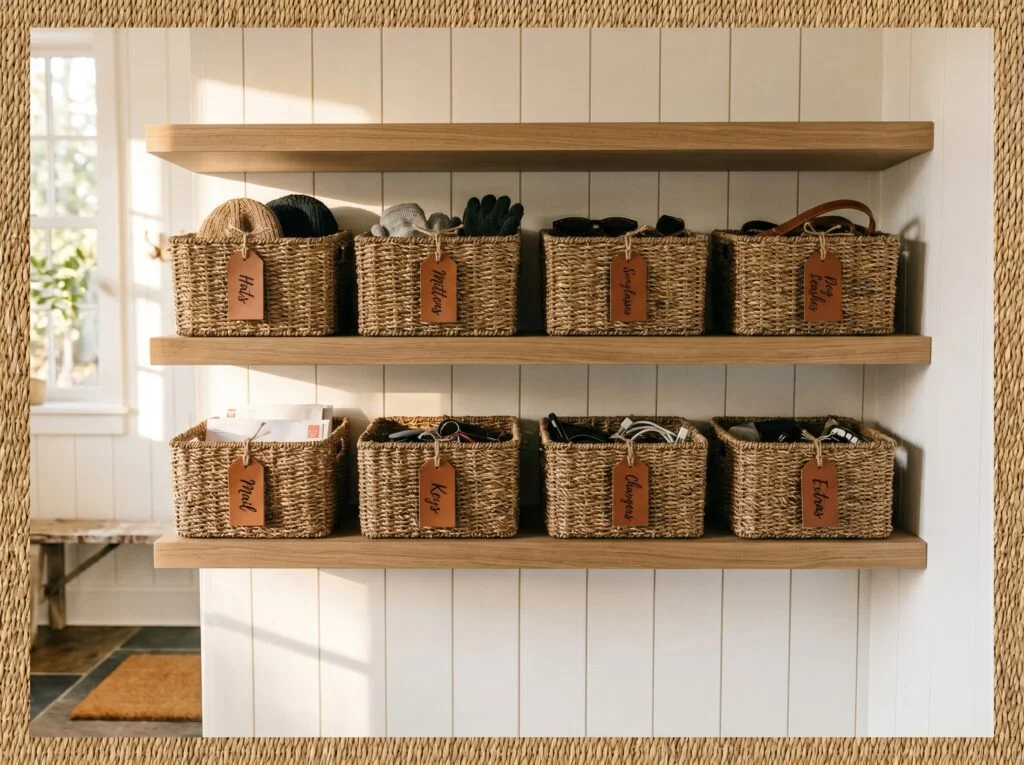
A woven basket wall floating shelves lined with uniform labeled baskets solves the small accessory chaos that haunts every mudroom. Hats without a home pile on benches.
Choose baskets with a flat bottom and a rectangular profile for the most stable shelf placement and the most efficient use of shelf space. Round baskets waste corner space on rectangular shelves. Seagrass and rattan both hold their shape well without being reinforced and are durable enough for the daily grab-and-toss of a working mudroom.
Tiered Angled Shoe Rack Below Bench
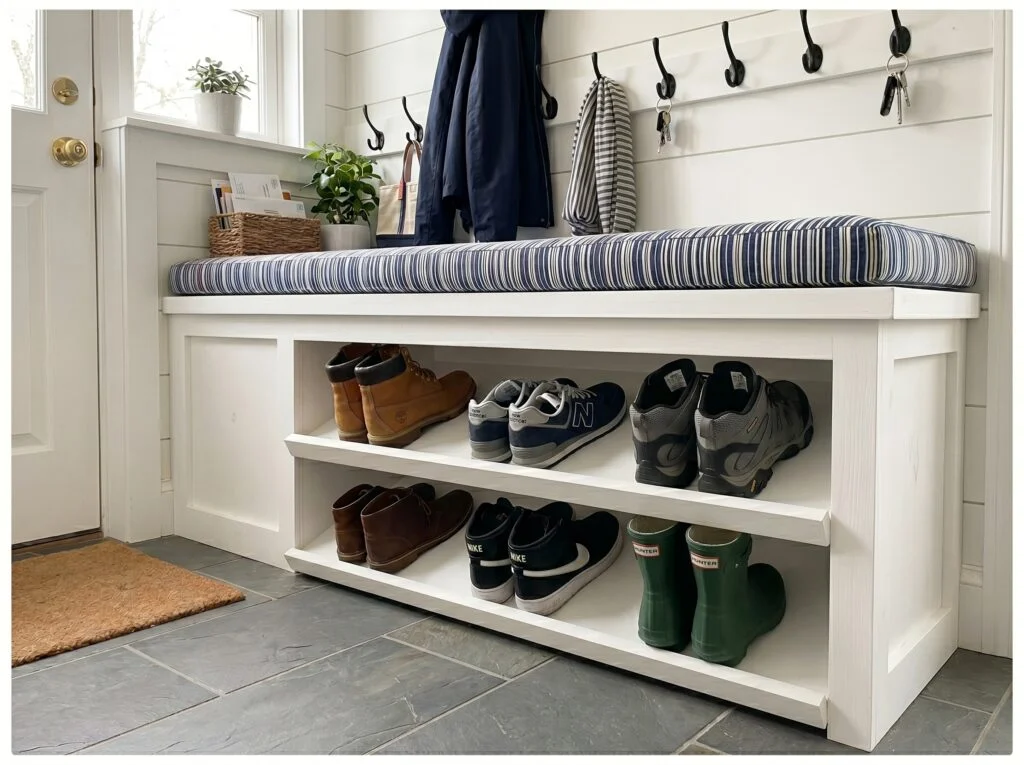
An angled tiered shoe rack built directly into the base section below a mudroom bench is the most space-efficient shoe storage solution available for a built-in system. The forward tilt of each shoe row means every pair faces outward at an angle that shows the shoe’s front you can identify any pair instantly without bending down to look under the bench.
Build the angled racks from 3/4-inch plywood with a 15-degree forward tilt on each rail. The rails (the angled pieces the shoes rest against) should be spaced approximately 4 to 5 inches apart vertically for standard shoe sizes, and 5 to 6 inches for boot storage. Leave the rack open on the front no doors for easy one-handed grab and replace.
Chalkboard Command Center Wall
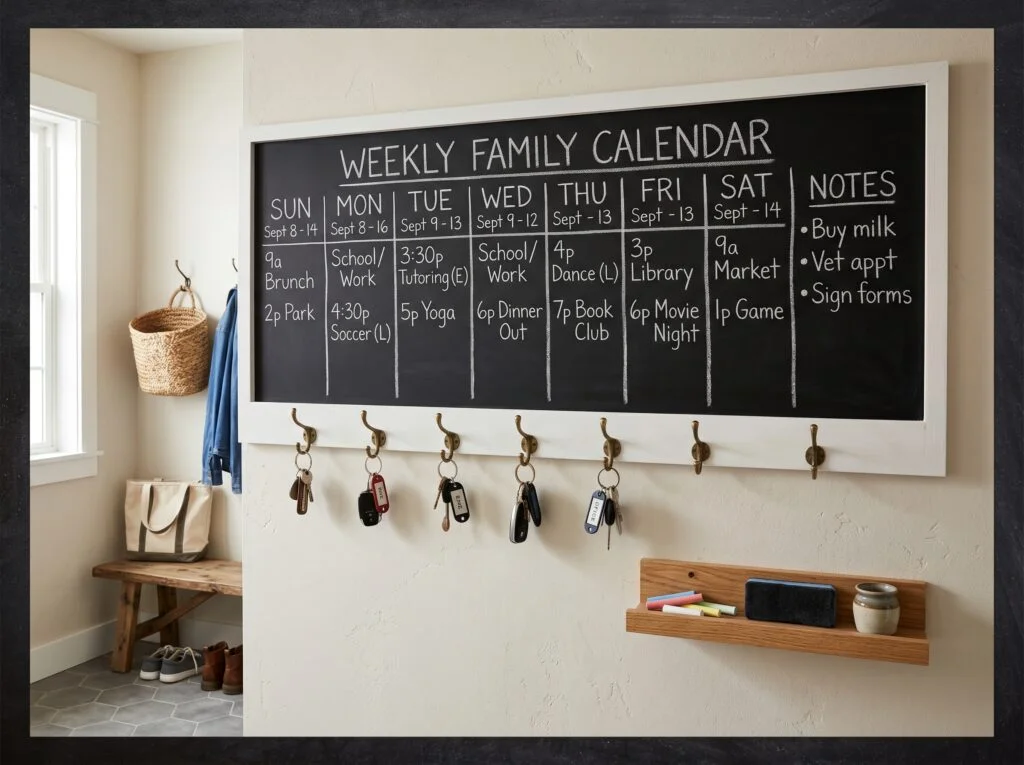
A chalkboard command center in the mudroom is the communication hub that keeps the family’s schedule visible at the exact moment everyone is coming and going when reminders are actually needed, not when they’re scrolled past on a phone.
Paint the chalkboard section at least 24 inches wide and 36 inches tall for enough usable writing surface a small chalkboard section gets used less because there’s never enough room to write what’s needed. Frame the painted section with thin 1.5-inch wood molding painted white or in a contrasting accent color to make the chalkboard look like a purposeful design feature rather than a wall that someone painted dark by mistake.
Pull-Out Drawer System for Shoes
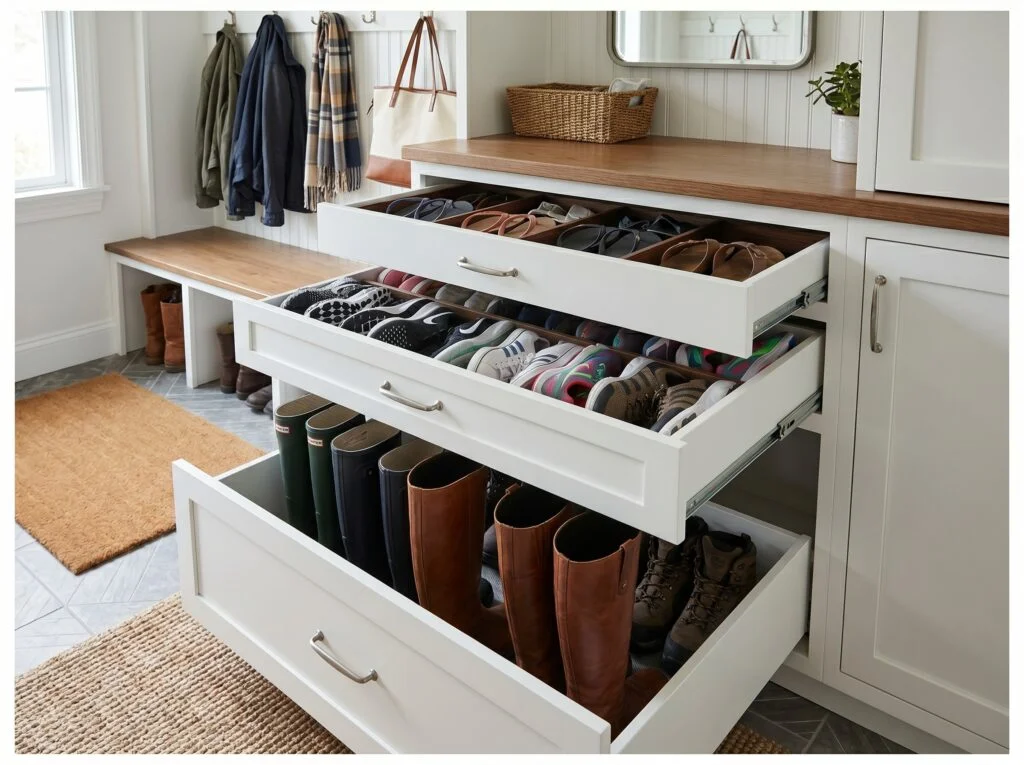
Pull-out shoe drawers are the highest-function shoe storage solution for a mudroom with cabinet-style built-ins they solve the depth problem that shelves create (items at the back become inaccessible and forgotten) by bringing the entire contents of each drawer fully forward on smooth drawer slides.
Install soft-close drawer slides on all shoe drawers they handle the heavy weight of shoes without the slamming that creates noise and eventually wears out the drawer box joints. Size the drawer depth at full cabinet depth (typically 24 inches) so boots can stand fully upright in the deepest drawer.
Magnetic Board for Kids’ Daily Essentials

A magnetic board at child height in the mudroom is the organizational tool that empowers kids to manage their own daily routine rather than depending on adult reminders for every departure. Mounted at 48 to 54 inches rather than standard adult height, the magnetic board is in the child’s natural eye line at the door where it actually gets noticed.
Use a sheet of 26-gauge galvanized steel painted with chalkboard or chalk paint rather than a purchased decorative magnetic board the steel sheet is stronger, larger, and significantly less expensive than retail magnetic board products. The chalkboard surface lets you write on it in chalk in addition to using magnets.
Mudroom Without a Mudroom: Hall Closet Conversion
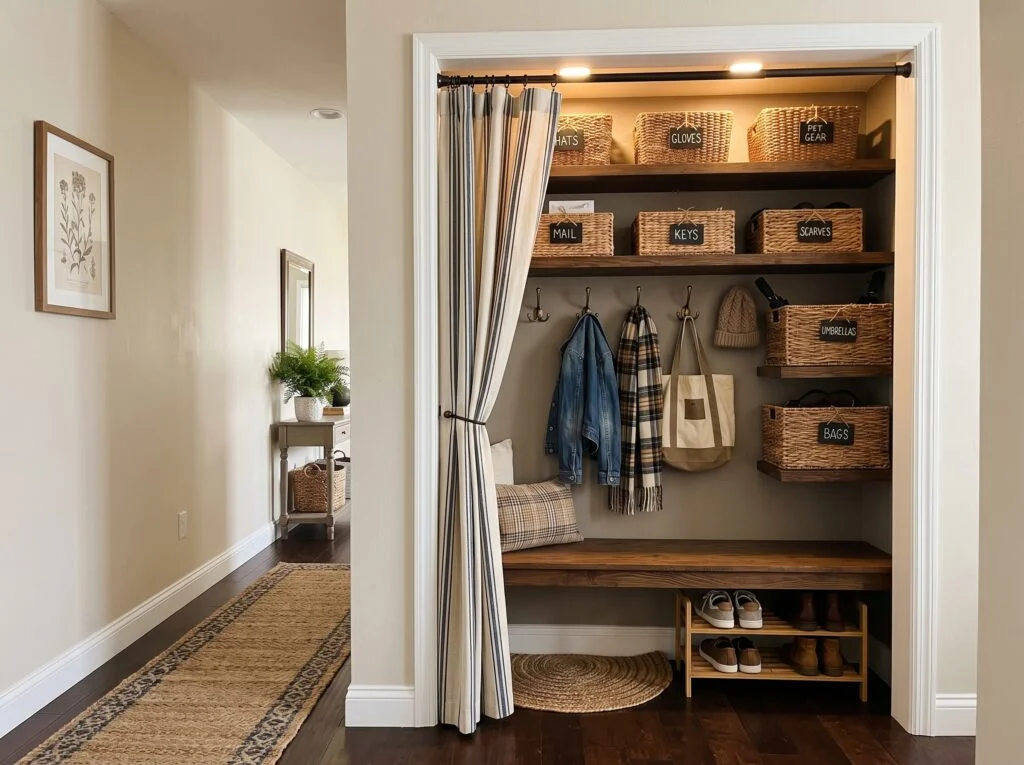
The most common problem with mudroom organization articles is that they assume you have a mudroom. Most homes don’t they have a front door that opens to a hallway, a foyer, or directly into the living room.
The interior of a converted hall closet is approximately 24 to 36 inches deep and 36 to 48 inches wide enough for a short bench, four to six coat hooks, two shelves, and a small shoe section below the bench. Use tension rods with linen curtain panels instead of a door if you want the option to close off the closet view the curtain looks intentional, takes seconds to open and close, and doesn’t require any door hardware.
This kind of closet conversion is especially useful if you’re working with one of those compact layouts for narrow entryways where every inch counts.
Over-the-Door Organizer System
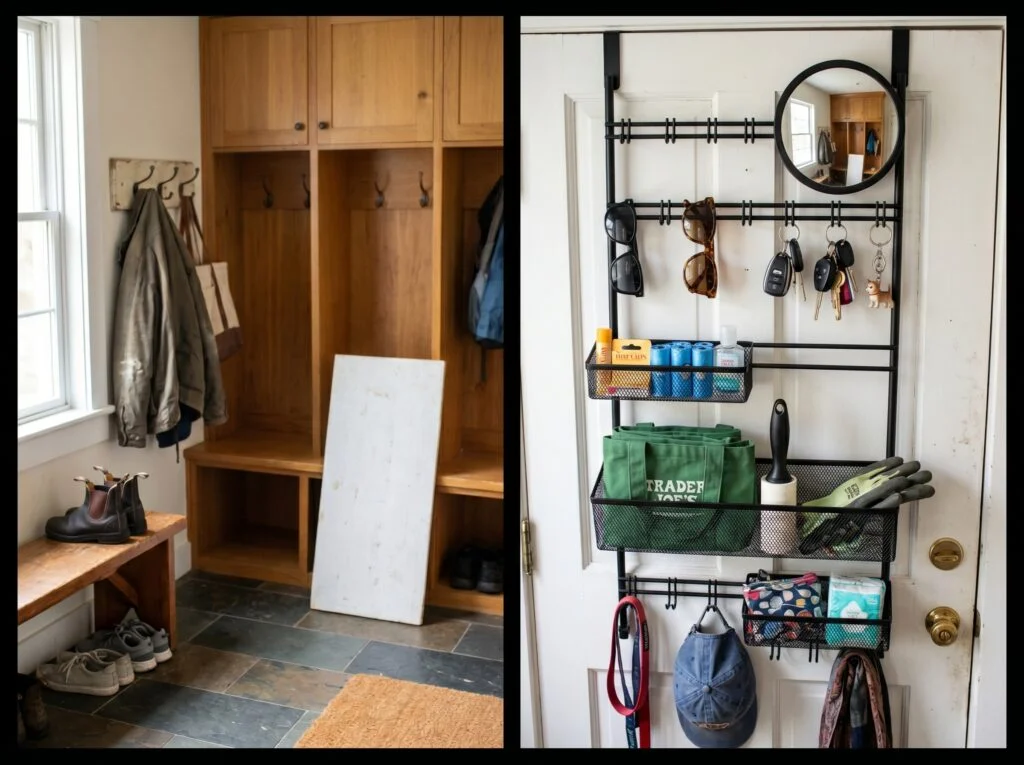
The back of the mudroom door is the most consistently wasted storage surface in any home it faces away from the room when open, so it’s invisible during normal use, and it’s close to the entry point where small daily-carry items are needed most.
Use an over-door organizer specifically rated for hollow-core and solid-core doors the hook depth must accommodate the door thickness plus any door frame clearance to allow the door to close fully without the organizer binding on the frame.
Built-In Window Seat with Storage Below
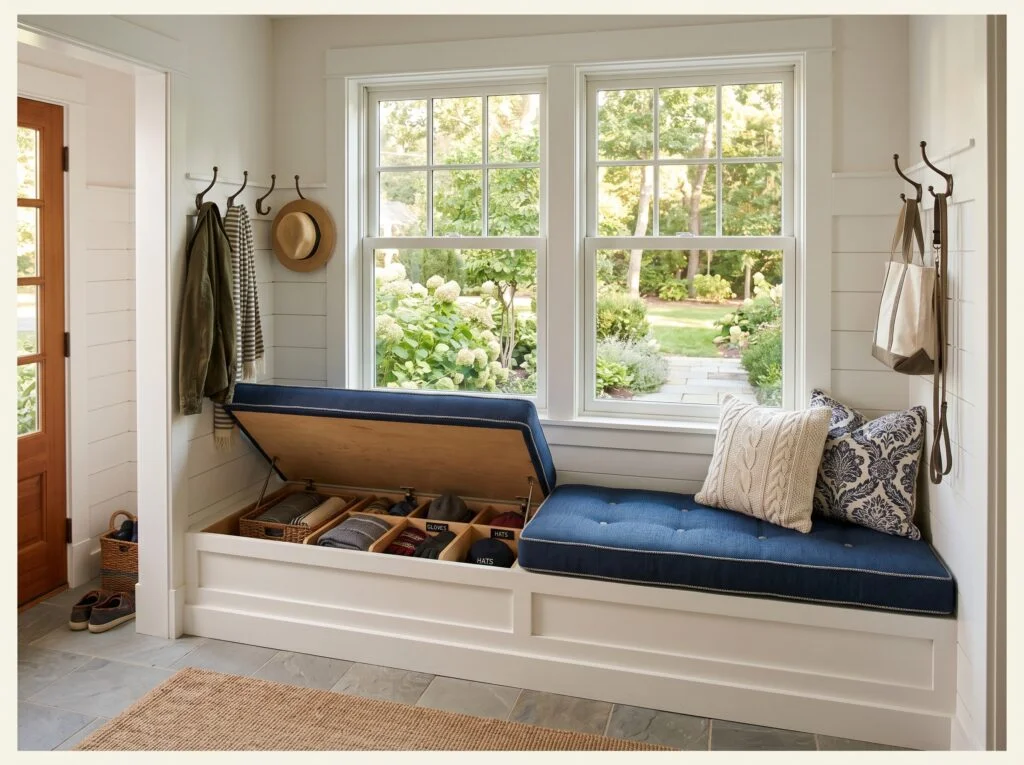
A built-in window seat spanning the width of a mudroom window is one of the most beautiful and most functional mudroom storage solutions it turns an architectural feature (the window) into the focal point of the storage system rather than working around it. The seat provides generous bench seating at the most comfortable and naturally lit spot in the mudroom.
Build the window seat at 17 to 18 inches seat height and at least 20 inches deep for comfortable sitting and generous interior storage volume. Use exterior-grade plywood for the seat box construction mudrooms are high-humidity spaces, and exterior-grade materials resist the moisture swelling that interior-grade plywood develops over time in a well-used entry.
Galvanized Metal Buckets for Boot and Umbrella Storage
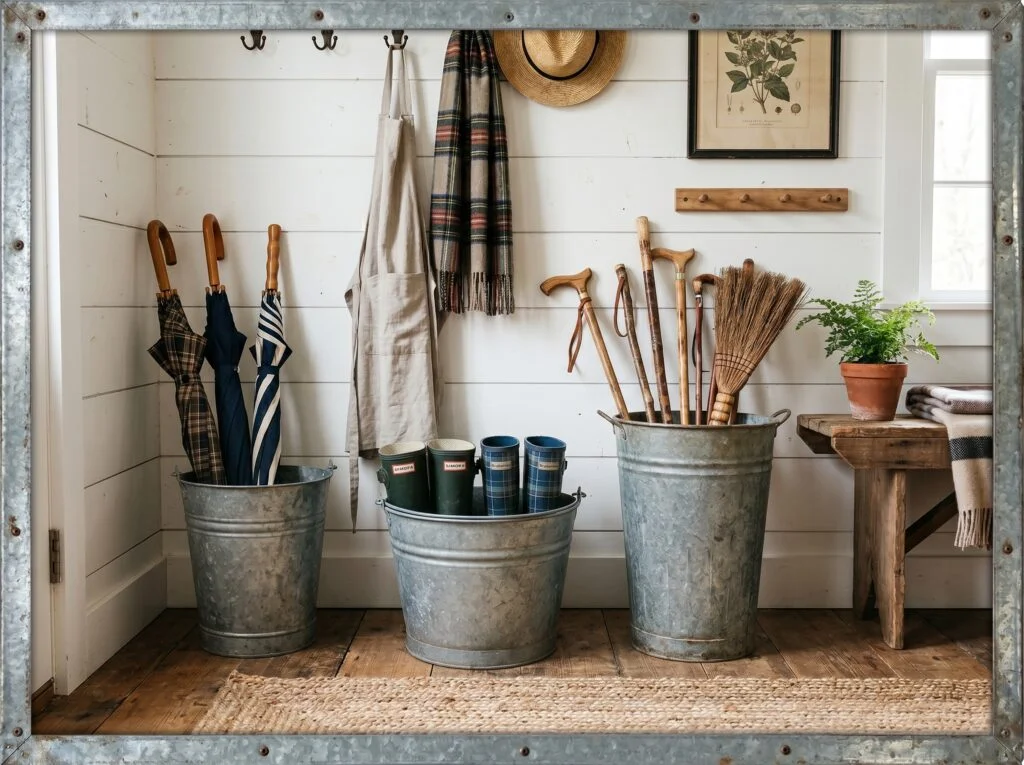
Galvanized metal buckets are one of the most versatile and most affordable mudroom storage solutions for items that don’t fit neatly into cubbies or drawers umbrellas, rain boots, walking sticks, sports balls, and rolled-up items all store effectively in a simple upright bucket.
Use the tallest bucket (18 to 24 inches) for umbrellas and walking sticks. The medium bucket (12 to 15 inches) handles rain boots and gardening clogs stored upright. The smallest bucket (8 to 10 inches) corrals small loose items a whisk broom, a bottle brush for cleaning boots, spare bags.
Mudroom Pet Station
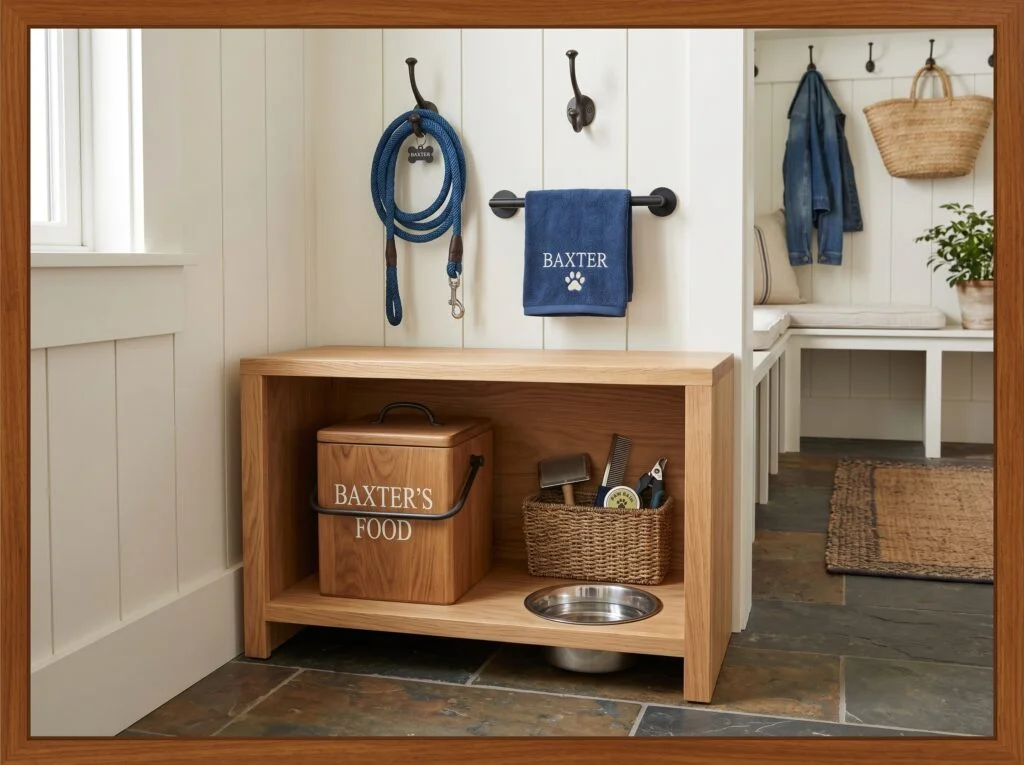
A dedicated pet station in the mudroom is the idea that most mudroom storage articles completely skip and it’s one of the most used sections of any organized mudroom for pet-owning households. Dogs arrive at the door wet, muddy, and carrying outdoor debris into the house every single day.
A more complete pet station adds a low shelf with a lidded dog food bin (keeping food at the door makes post-walk feeding simple), a built-in or recessed water bowl holder so the bowl doesn’t slide across the floor during enthusiastic drinking, and a designated spot for the dog’s crate or bed if the mudroom has adequate space.
Tall Coat Cabinet with Mirror Door
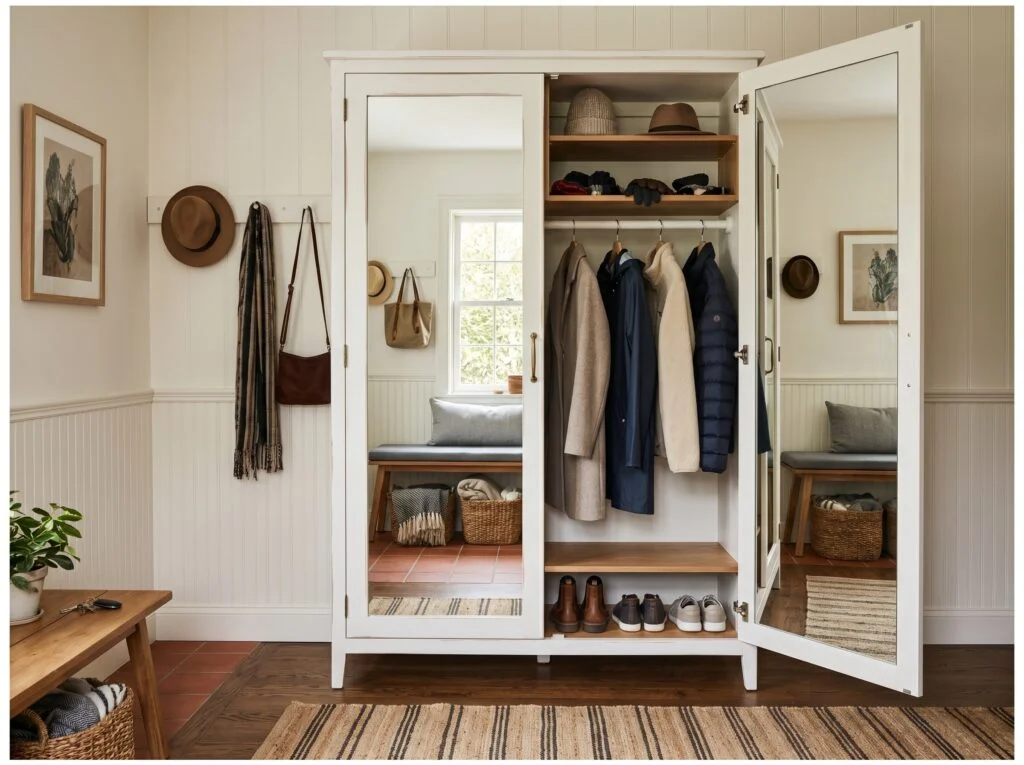
A freestanding tall coat cabinet with mirrored doors is the best solution for mudrooms and hallways that can’t accommodate built-in installation no carpentry, no wall mounting, no structural modification required. The cabinet provides a complete hanging zone (coat rod plus shelves plus shoe storage), fully enclosed behind doors that close and conceal all the contents.
Choose a cabinet that reaches at least 72 inches in height to accommodate full-length coats without the hem dragging on the internal shoe shelf below. The hanging rod should be positionable at a height that fits your household’s tallest coats most adjustable hanging rods can be set between 48 and 64 inches from the cabinet floor.
Floating Lockers Above a Bench
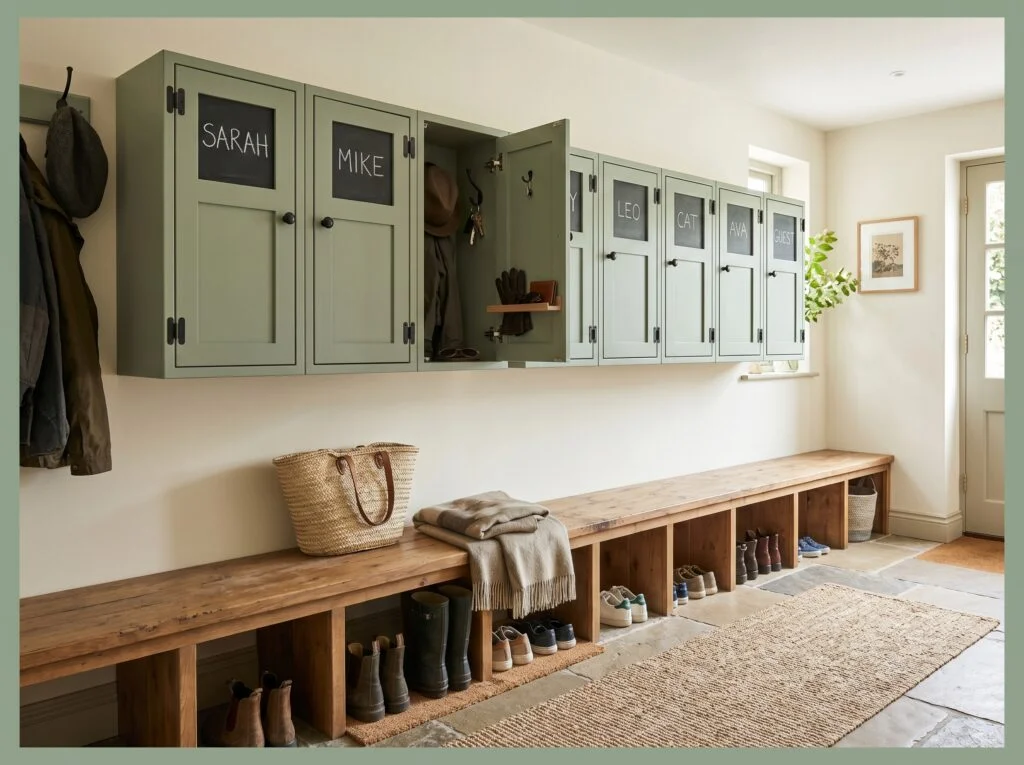
Floating wall-mounted locker boxes above a mudroom bench are the space-efficient alternative to floor-to-ceiling lockers when the full ceiling height isn’t available or when the room is too small for a full-height built-in. Each floating locker box is a small enclosed wall cabinet with a door roughly 12 inches wide, 18 inches tall, and 8 inches deep mounted in a continuous row above the bench.
Build the locker boxes from 3/4-inch plywood with a simple piano hinge door and a magnetic catch for closure. Paint in a color that differentiates them visually from the bench and wall below sage green or navy blue above a white bench and white wall creates a clear visual hierarchy. Mount the row of lockers so the bottom of each box is 12 to 15 inches above the bench surface enough clearance to place items on the bench without obstruction.
Charging Station Built Into the Mudroom
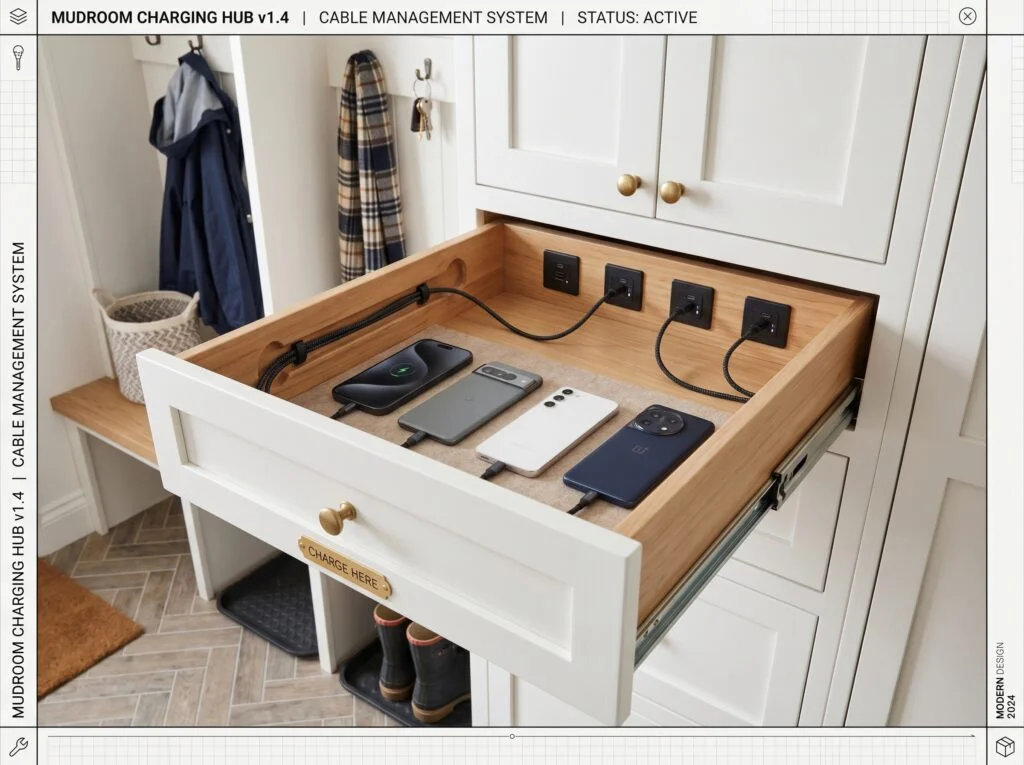
A built-in charging station drawer in the mudroom is the upgrade that most mudroom articles never mention and it solves a daily friction point in virtually every household. Phones, earbuds, smart watches, and tablets all need daily charging, and they all tend to pile up on kitchen counters and dining tables where their cables create clutter and their notifications interrupt meals.
Build the charging drawer with USB-C and USB-A outlets flush-mounted in the drawer back wall, fed by a standard outlet installed in the cabinet interior during initial construction.
Seasonal Rotation System for Mudroom Storage
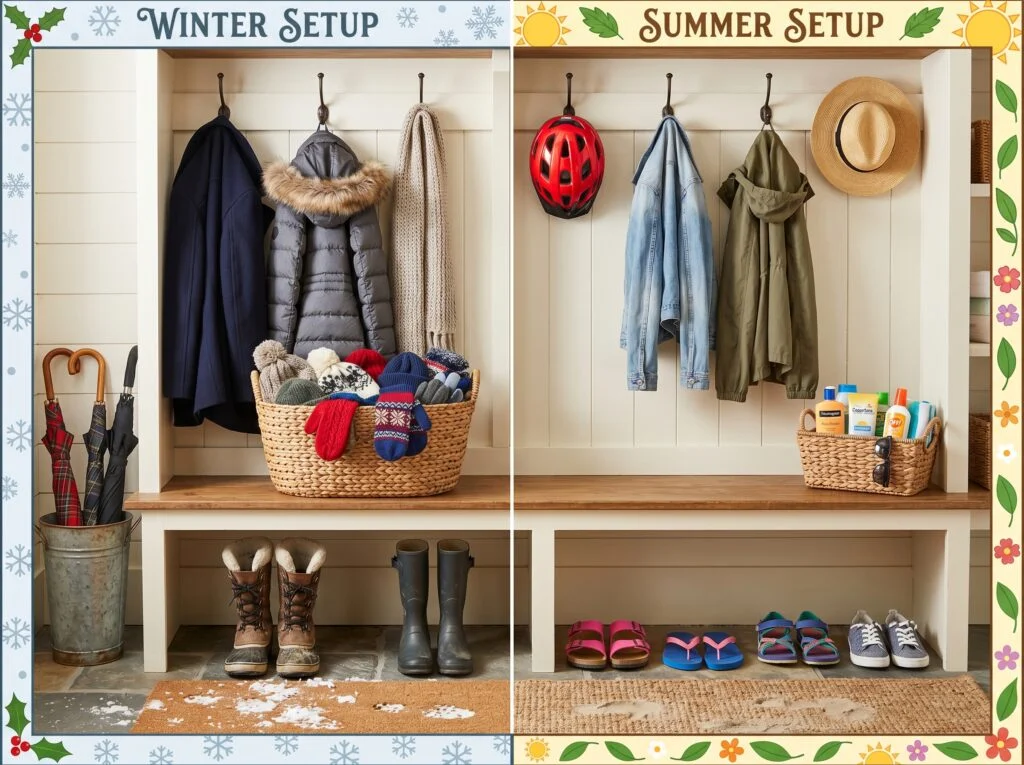
A seasonal rotation system for mudroom storage is the strategy that keeps your mudroom from becoming overwhelmed with gear from multiple seasons simultaneously and it’s the concept most mudroom articles completely ignore.
Conduct a mudroom seasonal rotation twice a year once in April and once in October are good timing targets for most climates. At each rotation, move all off-season gear to long-term storage (a basement shelf, a hall closet upper section, or under-bed storage boxes) and bring the current season’s gear into the active mudroom zones.
Labeled Basket System with Subcategories
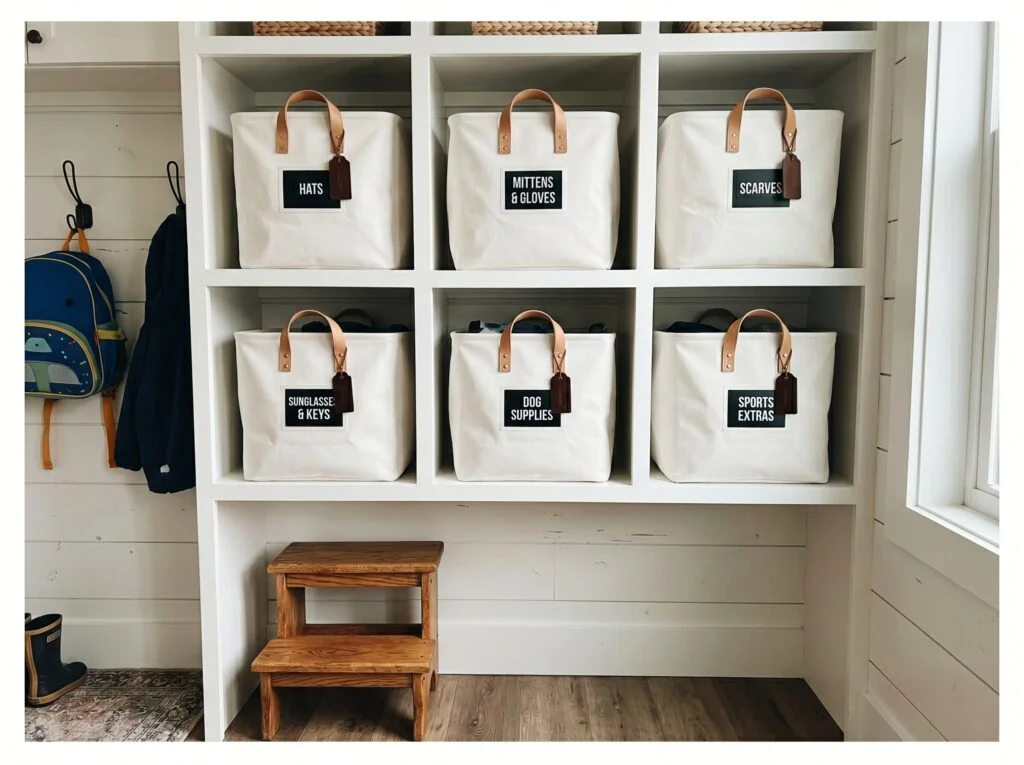
A labeled basket system with specific subcategory names is what separates a mudroom that stays organized from one that reverts to chaos within two weeks of a clean-out. The distinction is in the specificity of the labels. “Accessories” is too broad everything gets thrown in and nothing is findable.
Use uniform basket sizes in the same material and color throughout the shelf for the cleanest visual result mixed basket sizes and materials look like a collection of random storage containers rather than a designed system. Canvas or linen storage baskets in white or natural linen are the most versatile they work in farmhouse, modern, and transitional mudroom aesthetics equally well.
Narrow Mudroom for Small Spaces
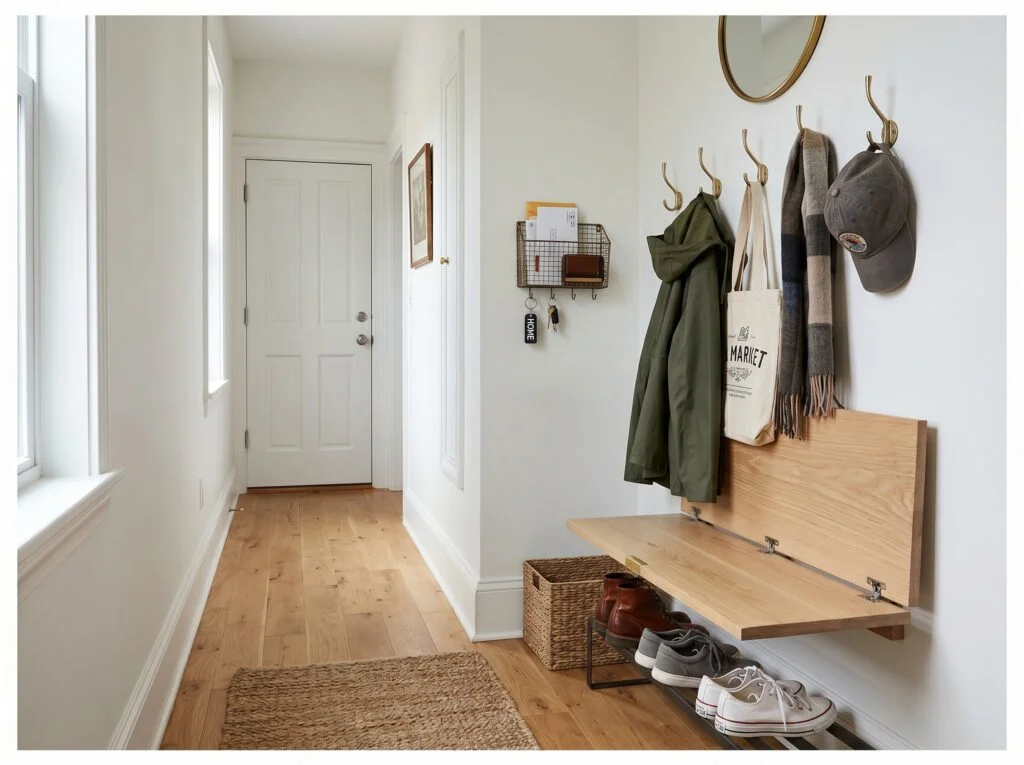
Most mudroom inspiration content shows generous, wide spaces which is genuinely unhelpful for the majority of homes with narrow hall entries, apartment foyers, and tight urban hallways. A narrow 24 to 36-inch wide hallway mudroom requires completely different thinking: every piece must fold, wall-mount, or serve multiple purposes simultaneously, because standard mudroom furniture simply doesn’t fit.
A round mirror mounted above the hook section performs triple duty in a small mudroom it provides the exit check appearance function, visually doubles the depth of the narrow space by reflecting it back, and fills the wall section above the hooks with a decorative element that keeps the space from feeling like a bare utility corridor.
A well-placed mirror is just one of many welcoming touches for the front door that make a small entry feel bigger and brighter.
Custom Mudroom Bench with Shoe Cubbies and Top Shelving
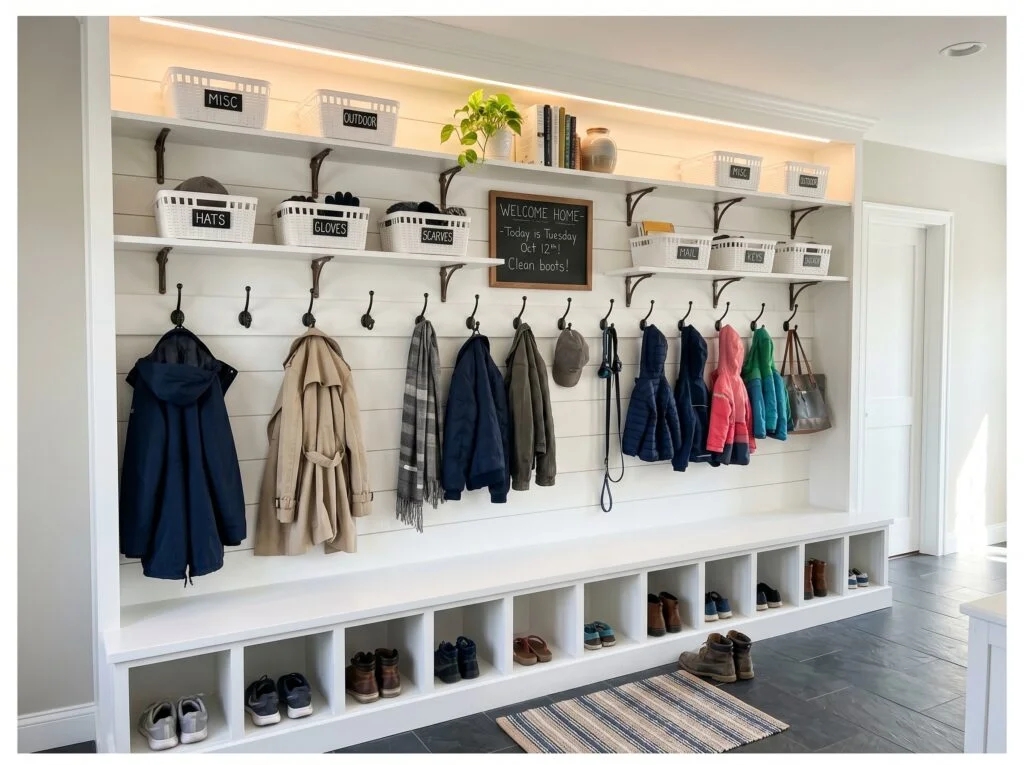
A three-tier complete mudroom wall system shoe cubbies at the base, bench seat in the middle, coat hooks above, and shelves at the top is the most functional mudroom storage configuration possible in a single wall installation.
This four-zone wall system can be built with a combination of modular components from IKEA (using KALLAX or BESTA as the cubby base), a purchased or DIY bench seat over the top of the cubby units, hook rails mounted to the wall above the bench, and simple floating shelves at the highest level.
Underneath a setup like this, it helps to add rugs that hold up to daily traffic since muddy shoes and wet paws hit that floor constantly.
Conclusion
A well-organized mudroom changes how the entire house functions and the change is immediate and daily. The chaos that used to migrate from the door into every other room stays contained at the entry. Mornings run faster. Sports gear has a home. The dog’s things are in one place. No one is yelling about missing keys.
Start with the two ideas that solve your household’s biggest current mudroom problem.
Build from the most critical problem outward. Each addition makes the system stronger and the space calmer. Done well, a mudroom becomes the most hardworking room in the house and the one that makes the whole home feel more organized simply by doing its job correctly at the door.
And once the mudroom is under control, it’s worth carrying that same energy into practical ideas for organized garages nearby.




Pingback: 23 Farmhouse Mudroom Ideas for Organized Homes
Pingback: 21 Entryway Rug Ideas to Elevate Your Space
Pingback: 25 Small Mudroom Ideas for Smart Organization