A mudroom without lockers is just a hallway where things pile up. The right locker system gives every person in your home their own space and keeps the chaos where it belongs.
These ideas create mudroom lockers that are beautiful, functional, and genuinely life-changing for busy households.
Lockers are just one piece of an entryway that stays organized once every item has its place.
Let’s get started.
Classic White Shaker Lockers
White shaker lockers are the most requested style since they blend into almost any entryway decor. The simple recessed panel doors keep the look clean without feeling plain or dated. This finish also helps brighten up mudrooms that don’t get much natural light.
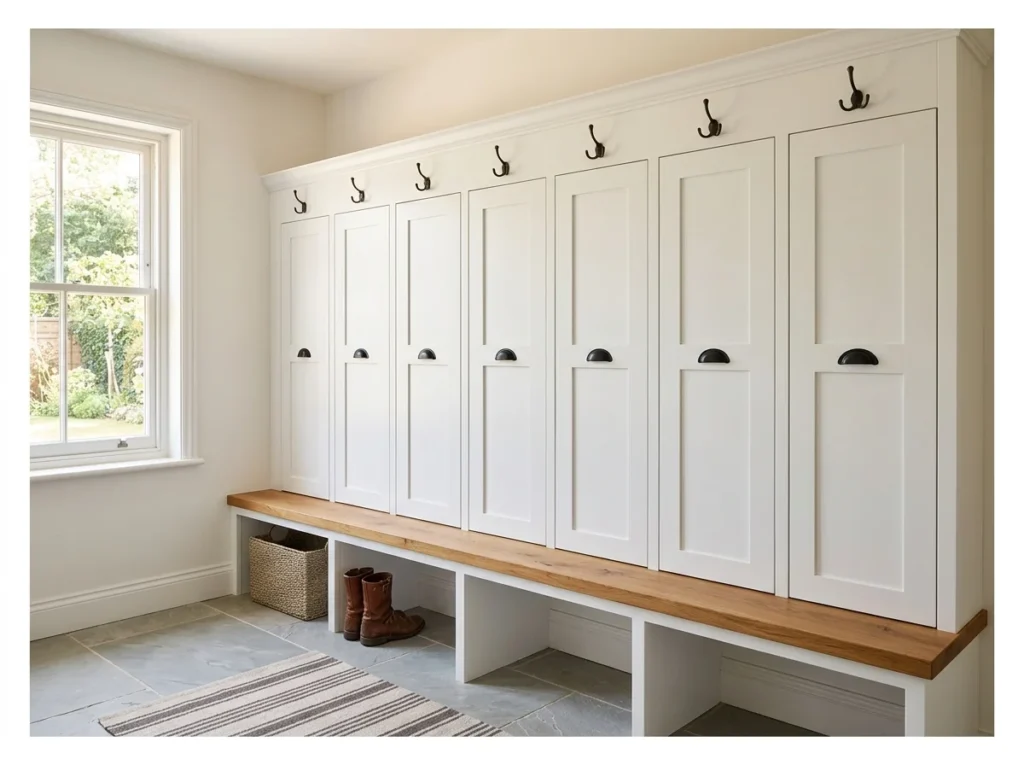
Classic white shaker lockers use the timeless inset panel door profile in a bright white painted finish to create a mudroom storage system that suits every home style from traditional to contemporary. The simple clean lines never look dated and work with every other design decision in the entry.
White shaker lockers make the mudroom feel brighter and more spacious than darker alternatives, which matters in entryways that often lack natural light. They pair beautifully with black iron hardware, natural timber bench seats, and any wall color. This is the most universally appealing mudroom locker design available.
Before you commit, cabinet styles worth comparing first can help you decide between open lockers and closed storage.
Timeless, clean, and works with everything.
Colored Lockers for Each Family Member
Assigning a different color to each locker makes it instantly clear whose stuff belongs where. Kids especially respond well to having their own color instead of a shared neutral space. This approach also adds a playful pop of personality to what’s usually a purely functional area.
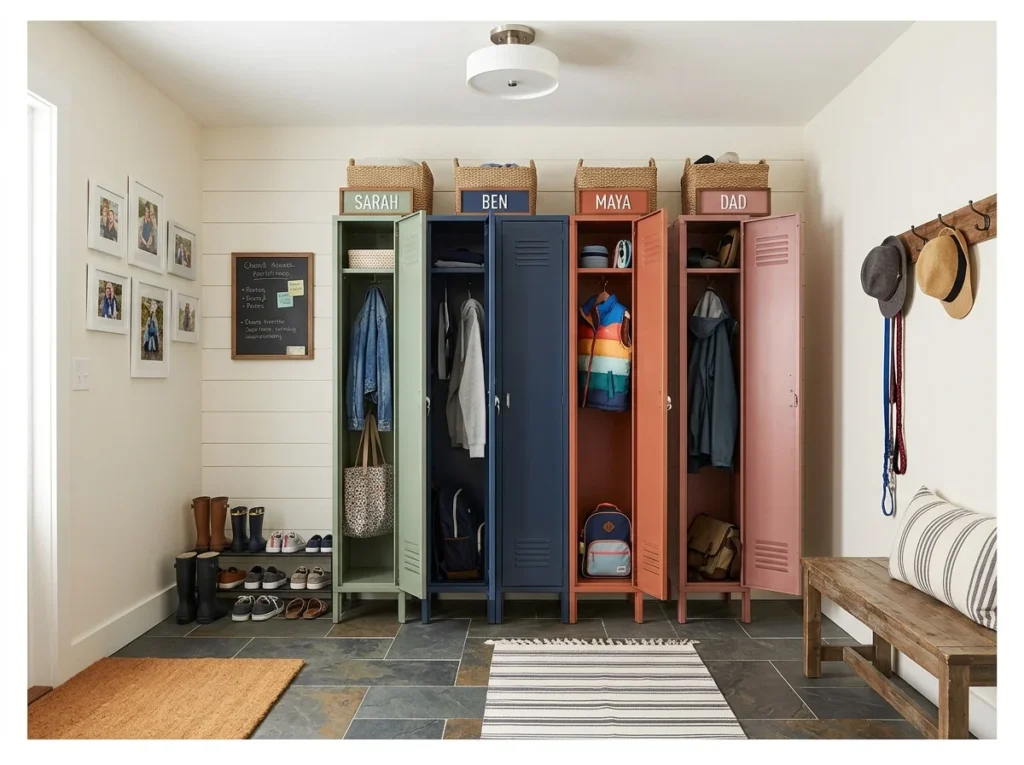
Painting each mudroom locker a different color gives every family member immediate visual ownership of their storage space. Children especially respond to the color coding, consistently returning items to their own locker when it feels distinctly theirs.
Choose a curated palette of muted, coordinating tones rather than saturated primary colors for a result that looks designed rather than playful. Sage green, navy, dusty rose, and terracotta together create a cohesive palette that suits the entryway without clashing with the rest of the home’s color scheme.
Every family member, their own color, their own space.
Open Cubby Locker System
Open cubbies skip doors entirely, which makes grabbing bags or shoes a lot faster on busy mornings. Each cubby usually gets a hook above it for coats or backpacks. This layout tends to suit households who don’t mind a bit of visible clutter in exchange for convenience.
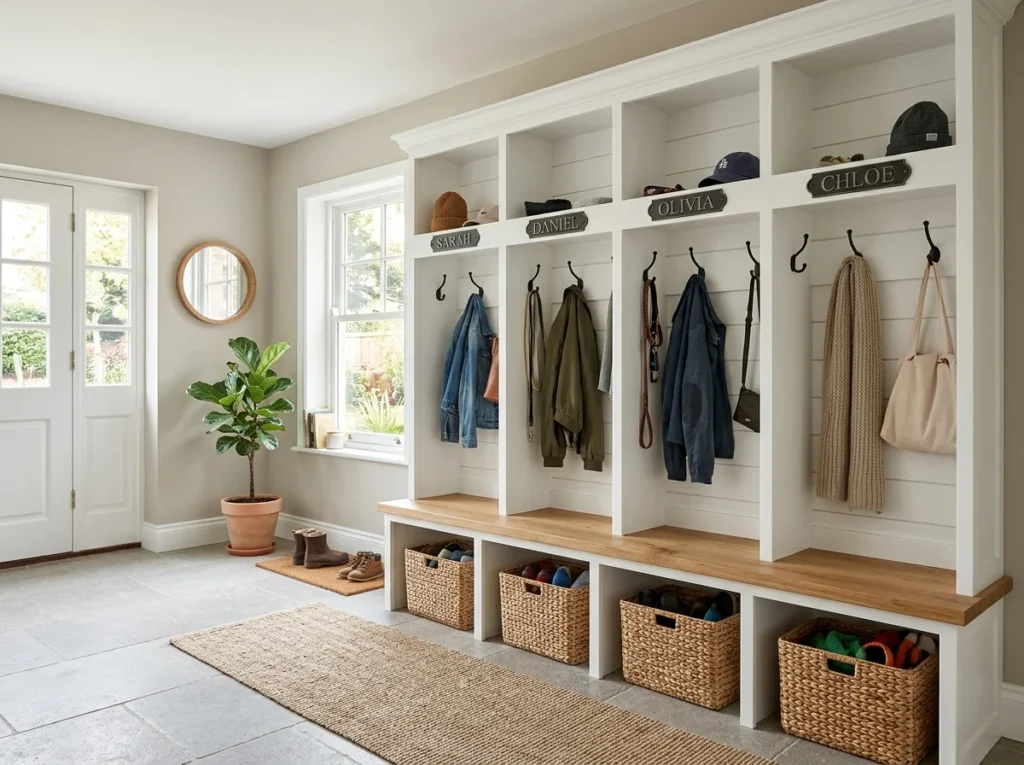
An open cubby locker system removes the doors entirely and creates a clearly defined personal zone for each family member using height, hooks, and baskets rather than enclosed storage. Everything is visible, accessible, and easy to put away without opening any doors.
Open cubbies work particularly well for households with young children who struggle with the coordination required to open and close cabinet doors. When there are no barriers to putting things away, items are more likely to actually land in their correct spot. The open design also makes the mudroom feel more spacious and less enclosed than full-door lockers.
Lockers with Built-In Bench
A bench built directly into the locker system gives everyone a spot to sit while putting shoes on. This setup works especially well near the main entry door where people come and go constantly. Combining seating with storage also saves space compared to adding a separate bench elsewhere.
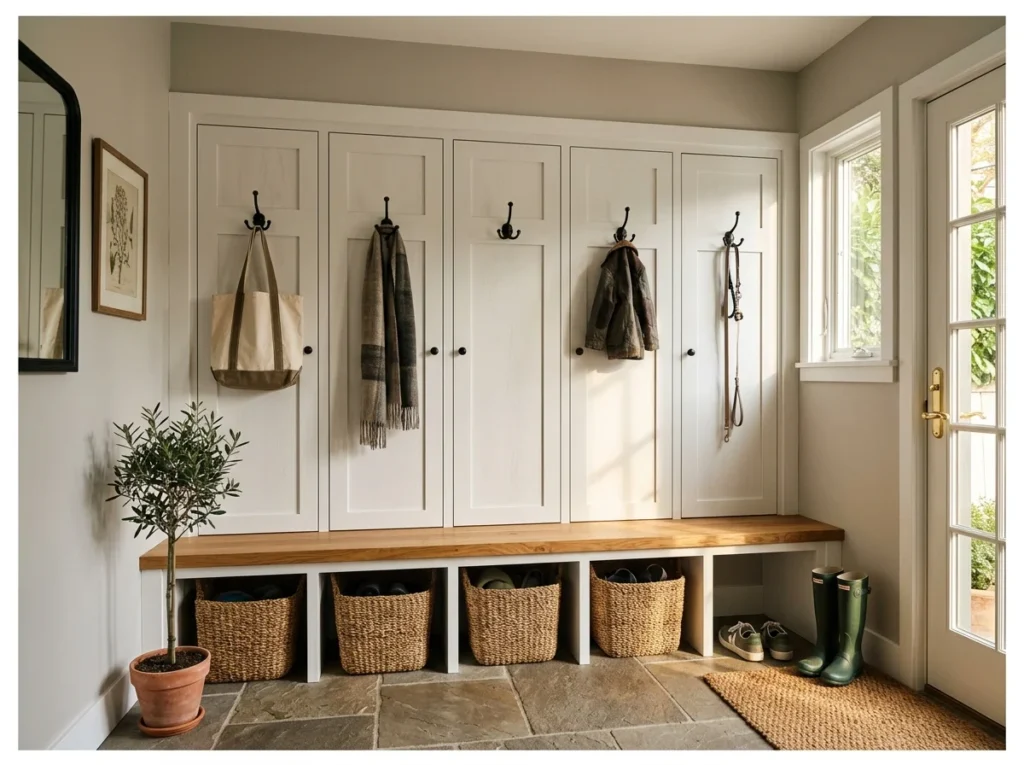
A mudroom locker system with a continuous built-in bench at the base creates a complete entry sequence in one cohesive unit. The bench provides a place to sit while removing shoes, the lockers above store coats and bags, and the space below the bench holds shoes or baskets.
The bench height should be 43 to 46 centimeters for comfortable seating. Adding a cushion or upholstered seat pad in an indoor-outdoor fabric makes the bench genuinely comfortable rather than purely functional. The built-in nature of the bench gives the whole system a custom, architecturally integrated quality.
The same idea works just as well at the front door, where a bench that earns its keep makes coming and going easier.
One unit that handles everything at the door.
Navy Blue Mudroom Lockers
Navy blue lockers add a bolder look than the usual white or gray options most homes go with. This color pairs particularly well with brass or matte black hardware. Darker tones also do a better job of hiding scuffs and marks from daily use.
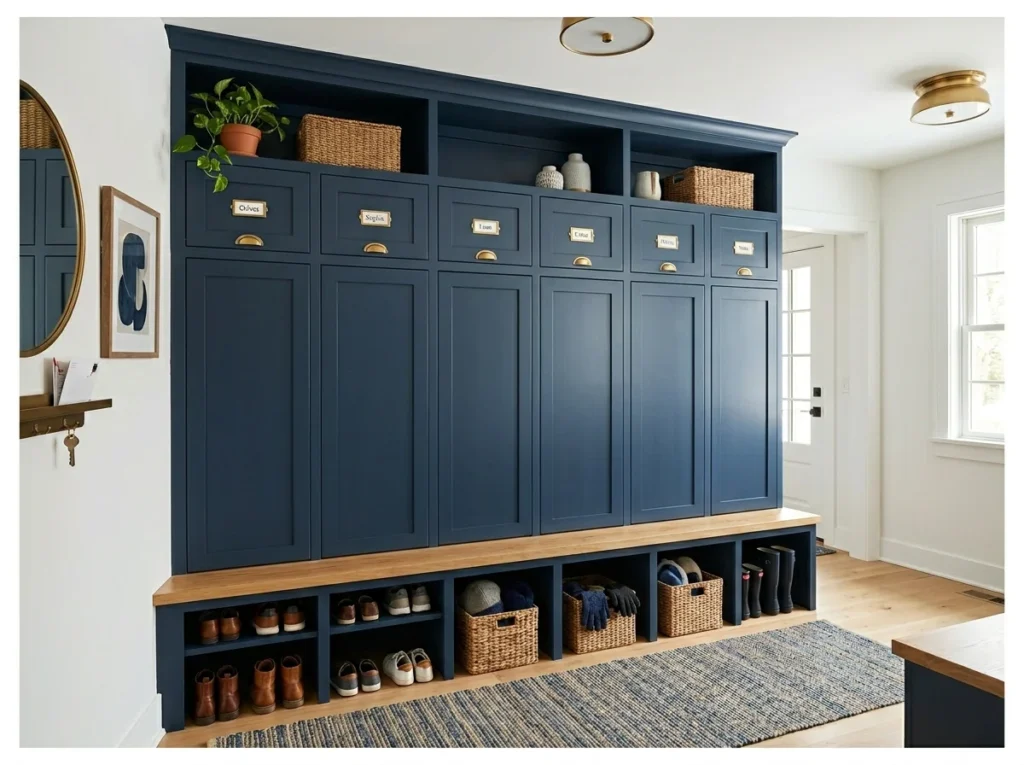
Deep navy blue mudroom lockers create an entryway that feels genuinely sophisticated and considered rather than purely functional. The dark color hides scuffs and marks better than white, which is a significant practical advantage in the highest-traffic area of any home.
Navy lockers work best against white walls with warm brass or matte black hardware. A natural oak or warm timber bench seat breaks up the dark cabinetry and adds warmth. This combination of navy, brass, and natural timber is one of the most popular and consistently beautiful mudroom color palettes available.
Bold, sophisticated, and brilliantly practical.
Lockers with Chalkboard Name Panels
A chalkboard panel on each locker door lets family members write their own name or a quick note. This is especially handy for households with kids who like personalizing their own space. It also doubles as a spot for reminders about school events or weekend plans.
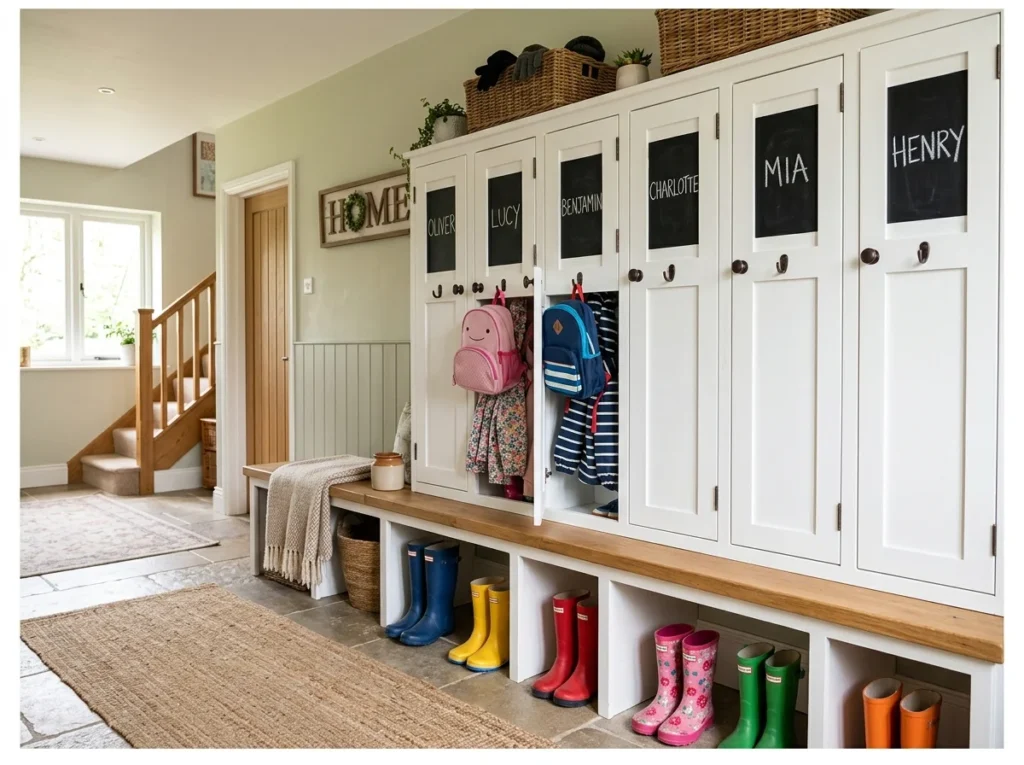
A small chalkboard panel painted onto the front of each locker door provides a personalized name label that is also erasable and reusable as the household changes over time. New family members get a new name written in chalk, and the lockers adapt to whatever the household needs them to say.
Beyond the name display, the chalkboard panel can hold a daily reminder, a sports schedule, or a simple drawing from a child. The combined storage and communication function makes the mudroom locker system genuinely interactive rather than purely organizational.
Budget-friendly option that personalizes every locker.
Tall Full-Height Lockers
Full height lockers stretch from floor to ceiling, making use of vertical space that’s often wasted. This design works well for storing longer items like winter coats or sports equipment bags. Upper sections are usually reserved for less frequently used items like seasonal gear.
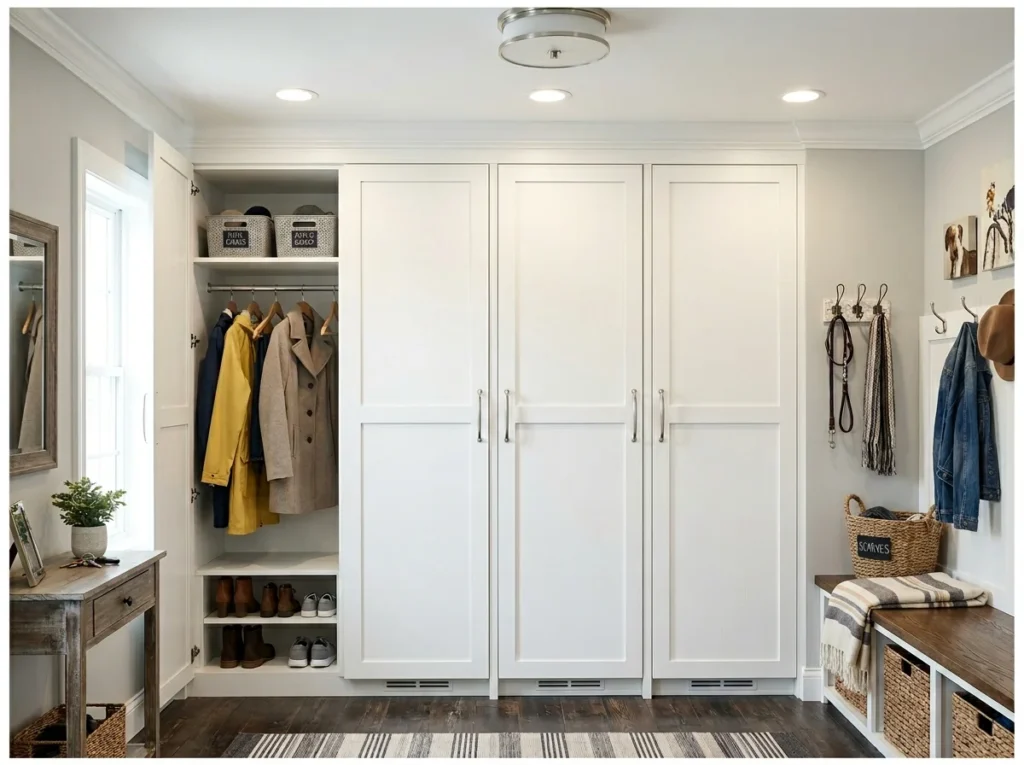
Full-height lockers that reach from floor to ceiling create the most comprehensive personal storage solution available in a mudroom. Each locker contains a full hanging rail for coats and longer items, a shelf above for bags and helmets, and a shoe section at the base.
When the locker door closes, everything disappears completely behind a solid panel. The mudroom always looks tidy regardless of what each person has stored inside. Full-height lockers suit households where each person brings in significant gear, including sports bags, instrument cases, and bulky winter coats that smaller lockers cannot accommodate.
Farmhouse Wood and White Lockers
This style mixes natural wood tones with painted white panels for a warm but classic look. Black iron hooks and hardware are common additions that tie into the farmhouse aesthetic. It tends to suit homes that already lean toward a rustic or country style throughout.
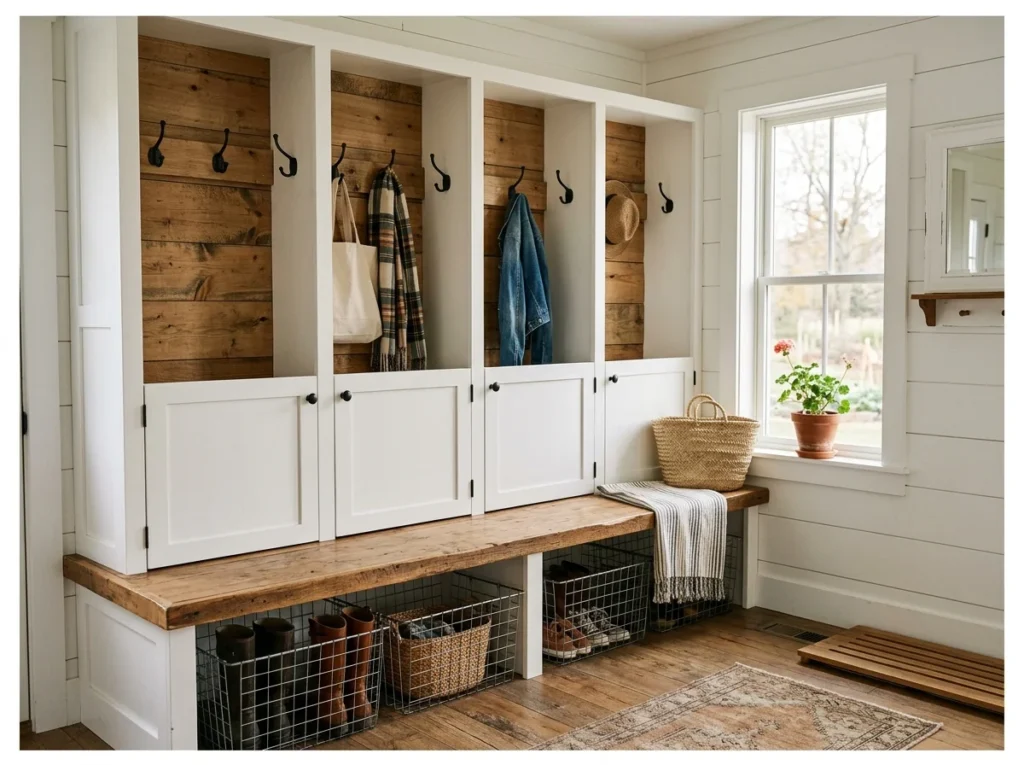
Farmhouse mudroom lockers combine natural timber elements with white painted cabinetry to create a warm, unpretentious entry system that feels collected and comfortable rather than showroom perfect. Shiplap or beadboard back panels within each locker cubby, black iron hooks, and a rustic timber bench complete the look.
The farmhouse locker aesthetic suits craftsman, colonial, and country home styles naturally. The honest material combination of real wood and painted timber creates warmth that all-painted lockers cannot match. This style is also extremely forgiving since the slightly relaxed, not-quite-perfect quality adds to its charm.
If this style speaks to you, a rustic entry with real character is worth exploring for the rest of the room too.
Lockers with Woven Basket Drawers
Woven baskets slide into open compartments instead of standard wooden drawers. This adds a natural texture that softens what can otherwise feel like a very boxy storage wall. Baskets are also easy to pull out and carry around when needed elsewhere in the house.
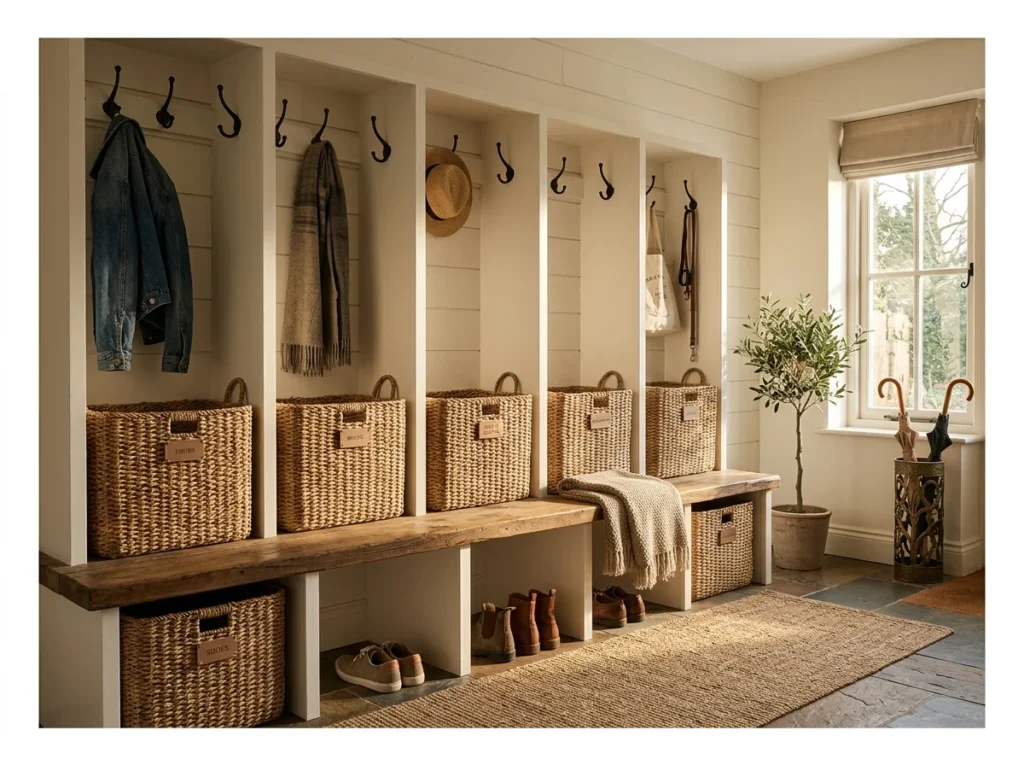
Open cubby sections within each locker that hold large labeled woven baskets create a pull-out drawer effect without the cost of actual drawer hardware. The basket slides out to access what is inside and slides back in to conceal it, combining the best qualities of open and closed storage.
Natural seagrass and rattan baskets add warmth and texture that painted timber cannot provide. Label each basket with a handwritten tag or a printed label insert. This system stays organized because the basket contains the category and the label makes the correct home instantly clear to every family member.
Natural, warm, and endlessly practical.
Two-Tone Mudroom Lockers
Two different paint colors are used, often splitting the upper cabinets from the lower locker base. This adds visual interest without going overboard with pattern or busy detailing. A darker lower half also tends to hide scuffs better than an all white finish would.
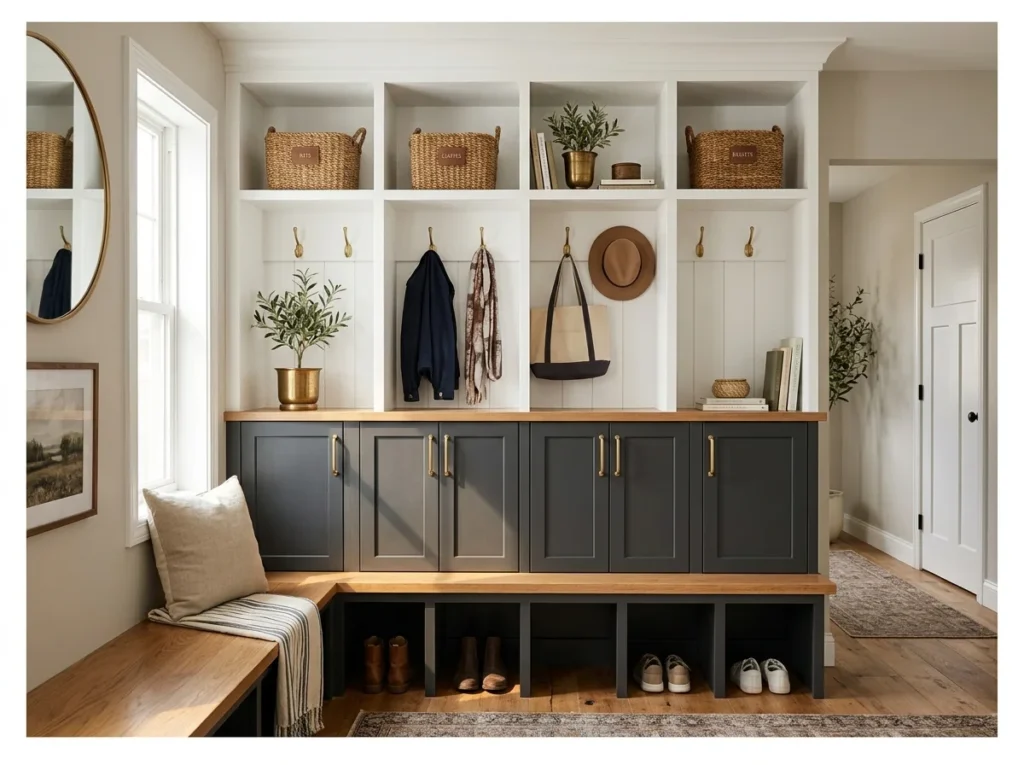
Two-tone mudroom lockers use one color on the closed lower door section and a contrasting color or open design on the upper section. The most popular combination pairs a deep color below with white open shelves above, creating visual balance and making the upper display area feel light and airy.
Charcoal and white, navy and oak, forest green and cream are all beautiful two-tone mudroom locker combinations. The lower enclosed section hides the bulk of daily gear behind the bold color, while the lighter upper section keeps the entryway from feeling visually heavy. Hardware choices in brass or matte black complete the intentional palette.
Lockers with Glass Panel Doors
Glass panels let you see what’s inside without having to open every single door. This works well for households who want a slightly more polished, furniture like look. Frosted glass is sometimes used instead of clear if a bit more privacy is preferred.
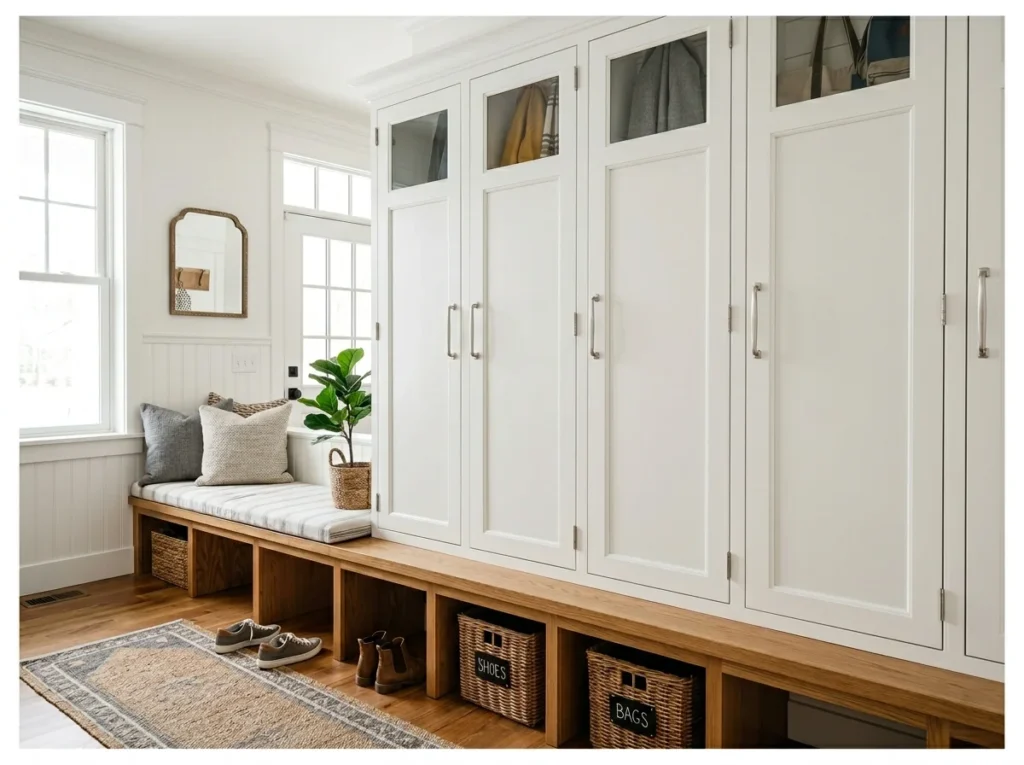
Glass panel locker doors incorporate a small glass pane in the upper section of each solid door, offering a glimpse of what is stored inside without fully exposing the interior. The glass adds visual lightness to an otherwise solid wall of cabinetry and prevents the mudroom from feeling enclosed.
This design works best when the locker interiors are kept genuinely organized since the glass makes contents partially visible. Use matching baskets, hooks of the same style, and a consistent color scheme inside each locker. The revealed interior becomes part of the overall mudroom aesthetic rather than a source of visual clutter.
Mini Lockers for Kids
Mini lockers are scaled down specifically to a child’s height, making them easier for kids to use on their own. Lower hooks and smaller cubbies mean kids can hang up their own coat without needing help. This setup often encourages more independence with morning and after school routines.
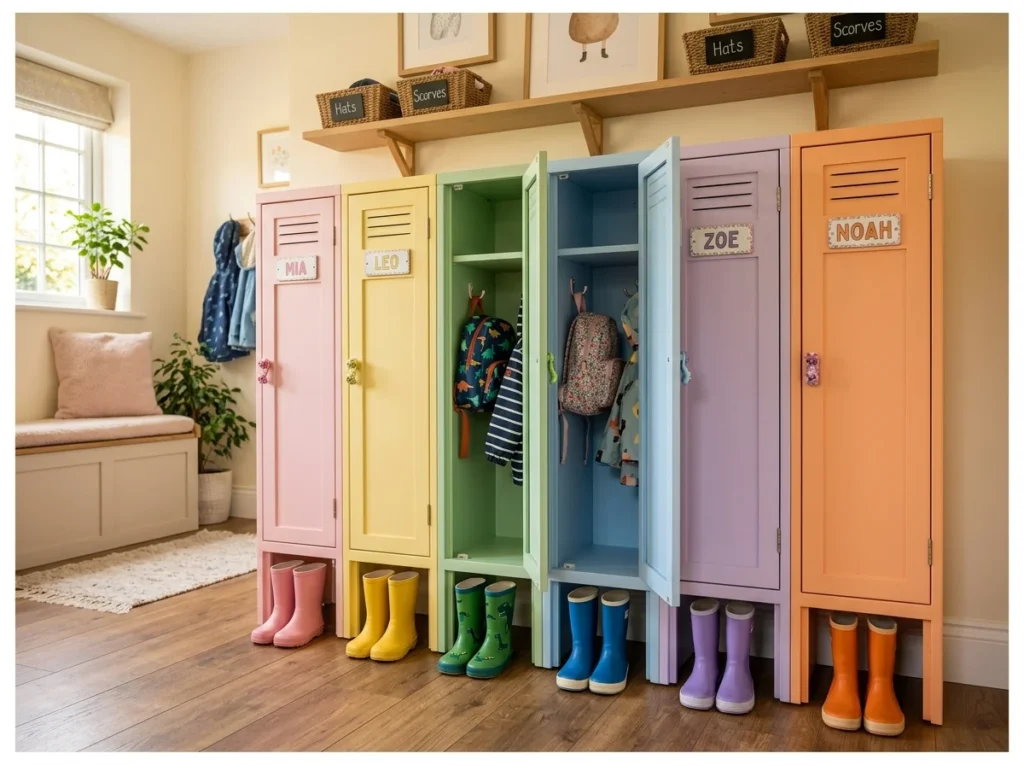
Mini lockers scaled specifically for young children are sized at child height so little ones can access and return their own belongings without help from adults. The low hooks, appropriately sized shelves, and manageable door handles all suit small hands and short reaches.
When children can independently manage their own entry routine, the morning rush and afternoon return genuinely become smoother for the whole household. A child-height locker with a low hook for their coat, a shelf for their bag, and a spot for their shoes teaches organizational habits that benefit them far beyond the mudroom.
Lockers with Charging Station
A built-in outlet and small shelf or drawer handles phones and tablets right at the door. This keeps charging cables from piling up on kitchen counters or other spots in the house. It’s a small addition but ends up getting used constantly once it’s in place.
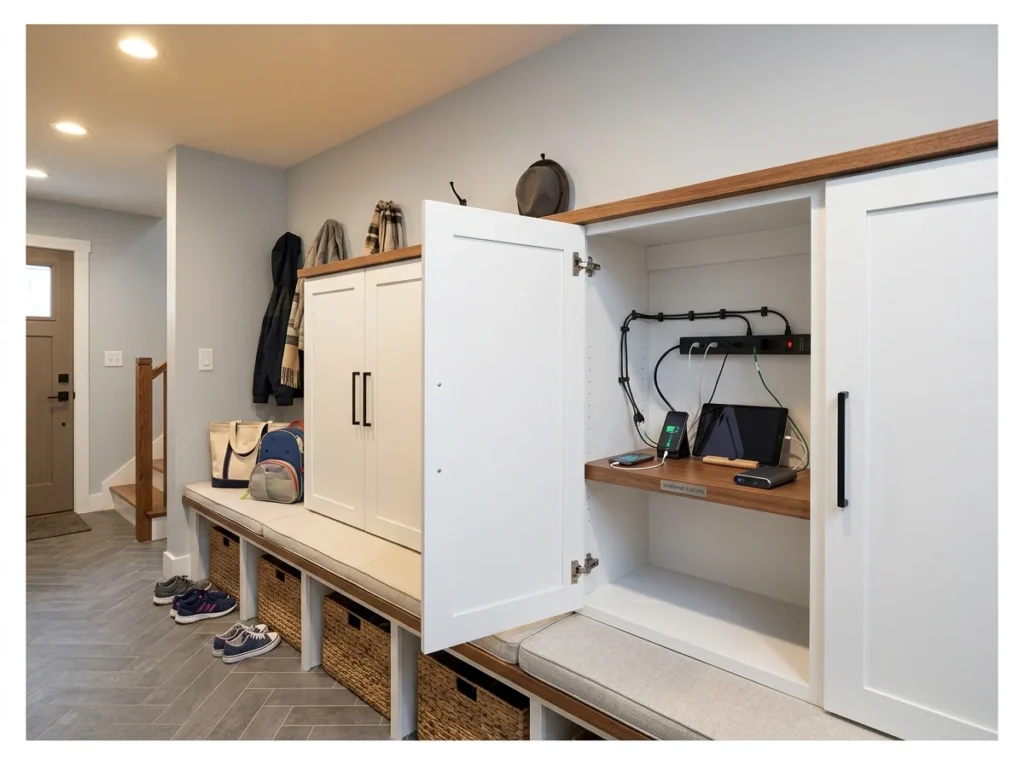
Dedicating one locker in the mudroom system as a charging station gives phones, tablets, and wireless earbuds a consistent home from the moment family members walk in the door. Devices charge inside the locker overnight and are ready to go every morning without ever being scattered across kitchen counters or forgotten in bedrooms.
A power strip mounted to the back panel of the charging locker and a simple shelf provide everything needed. Cable routing holes through the locker back keep cords tidy and prevent tangling. The charging locker door closes and the technology clutter disappears completely from the entryway view.
Stops devices from taking over every surface in the house.
Lockers with Dog Station
A dedicated dog station usually includes a spot for the leash and a small bin for treats or toys. Some designs even build in a little nook for a dog bed underneath. This keeps pet supplies contained instead of scattered near the front door.
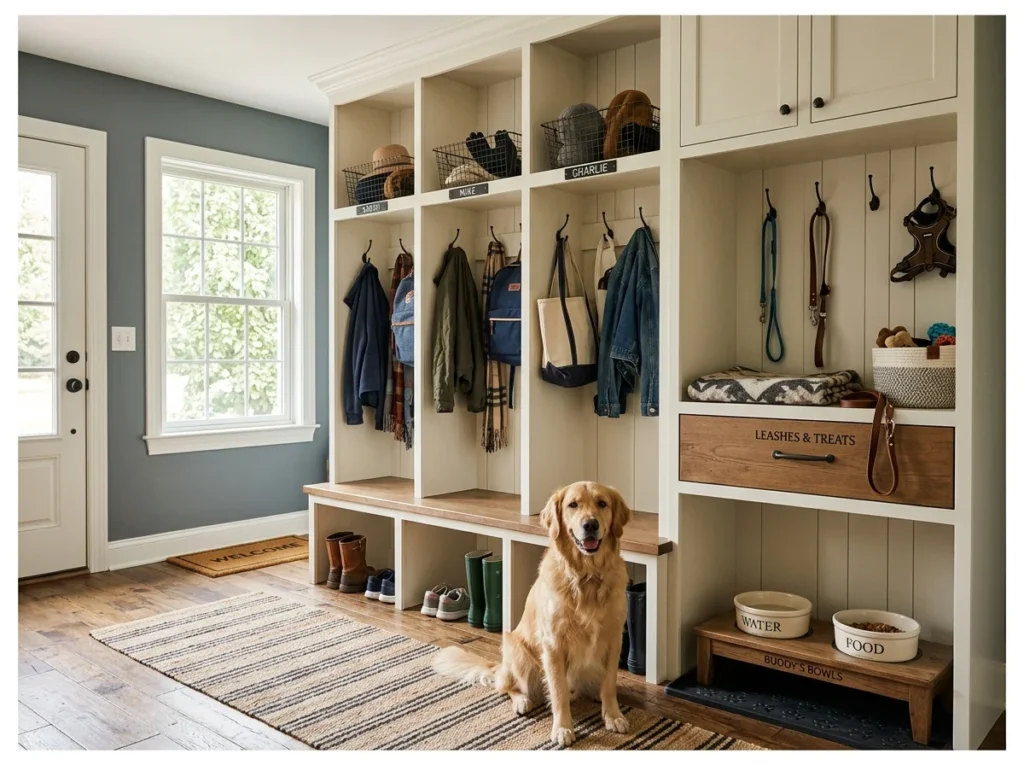
A dog station incorporated into one section of the mudroom locker system gives all pet-related items, including leashes, waste bags, grooming supplies, treats, and outdoor towels, a single organized home at the entry. The mudroom is where dogs come in from outside, making it the logical location for everything dog-related.
A recessed dog bowl holder at floor level, a drawer above for leads and treats, and a hook beside the drawer for the collar keep the dog station compact and fully functional within a single locker bay. This one addition reduces the amount of pet-related clutter that migrates into the kitchen and living areas significantly.
Because pets deserve an organized mudroom too.
Forest Green Mudroom Lockers
Forest green is a less common but increasingly popular choice for mudroom lockers. It pairs especially well with natural wood tones and brass hardware. This color also tends to feel a bit more calming compared to brighter or bolder options.
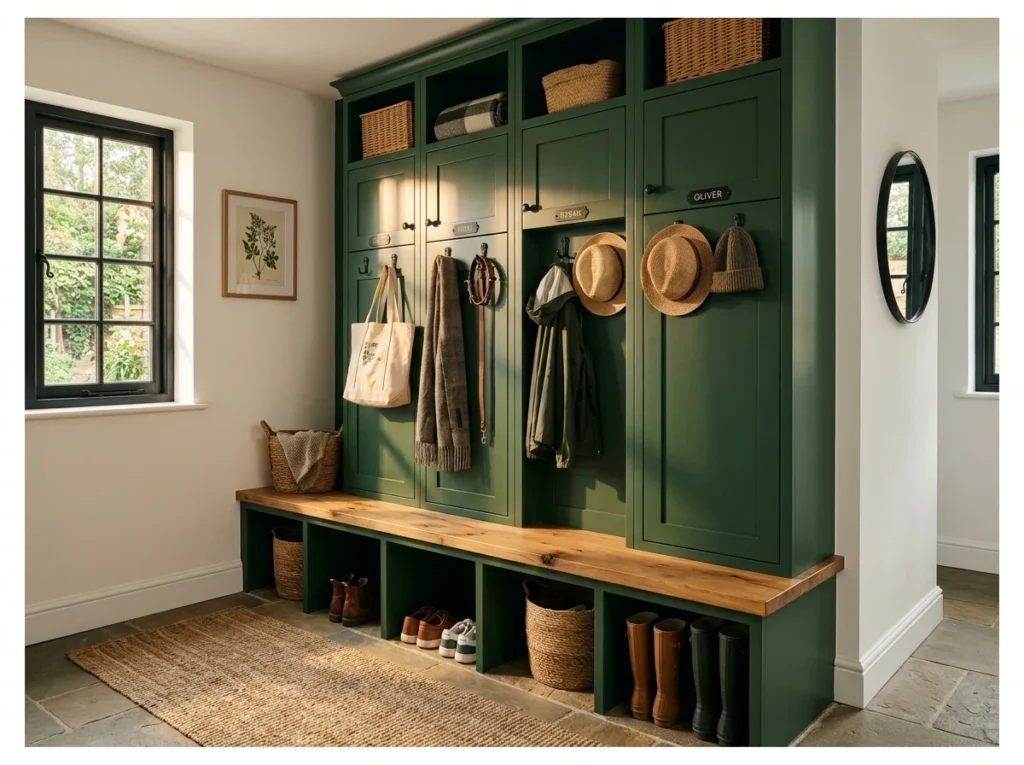
Forest green mudroom lockers bring a nature-inspired richness to an entryway that feels both sophisticated and genuinely welcoming. The deep, earthy green tone is calm and grounding rather than bold or aggressive, which makes it one of the most consistently successful mudroom color choices.
Forest green pairs beautifully with matte black hardware, warm natural timber bench seats, and white or off-white surrounding walls. The combination feels both current and timeless in a way that trend colors never quite achieve. This palette suits craftsman, transitional, and modern farmhouse homes naturally.
Earthy, sophisticated, and completely inviting.
Lockers with Overhead Cabinets
Cabinets added above the lockers give extra storage for items that aren’t needed every day. This is useful for stashing things like extra blankets, sports gear, or seasonal decorations. The closed doors also help keep the overall look tidy despite the added storage.
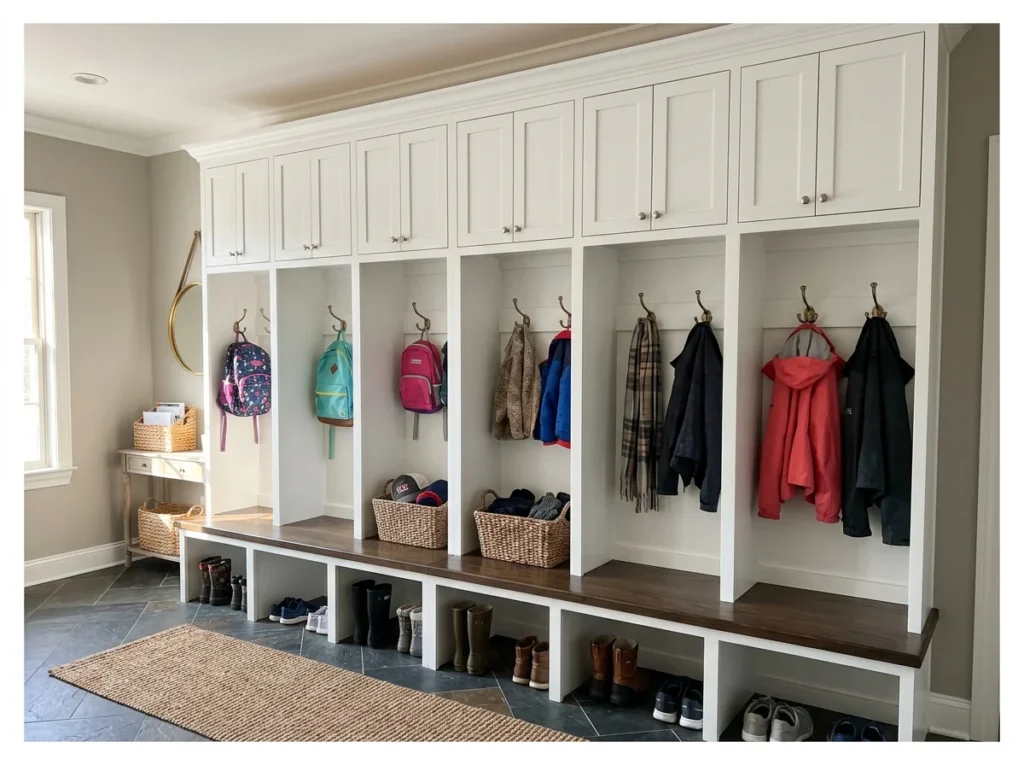
Adding a continuous run of overhead cabinets above the main mudroom locker system creates a second storage tier for seasonal items, infrequent-use gear, and bulky items that do not fit within the lockers themselves. The overhead cabinets store winter gear in summer and summer gear in winter, keeping seasonal items accessible but out of the daily rotation.
The overhead cabinets should align with the top of the lockers below for a clean, continuous vertical appearance. Paint both the lockers and overhead cabinets in the same color to unify the system as a single design element. This configuration creates the highest storage capacity of any mudroom locker layout.
Locker System with a Coat Closet
Adding a closet section alongside the lockers gives a spot specifically for hanging longer coats. This keeps bulky winter jackets from crowding out the smaller hooks and cubbies. It works particularly well in colder climates where heavy outerwear gets used most of the year.
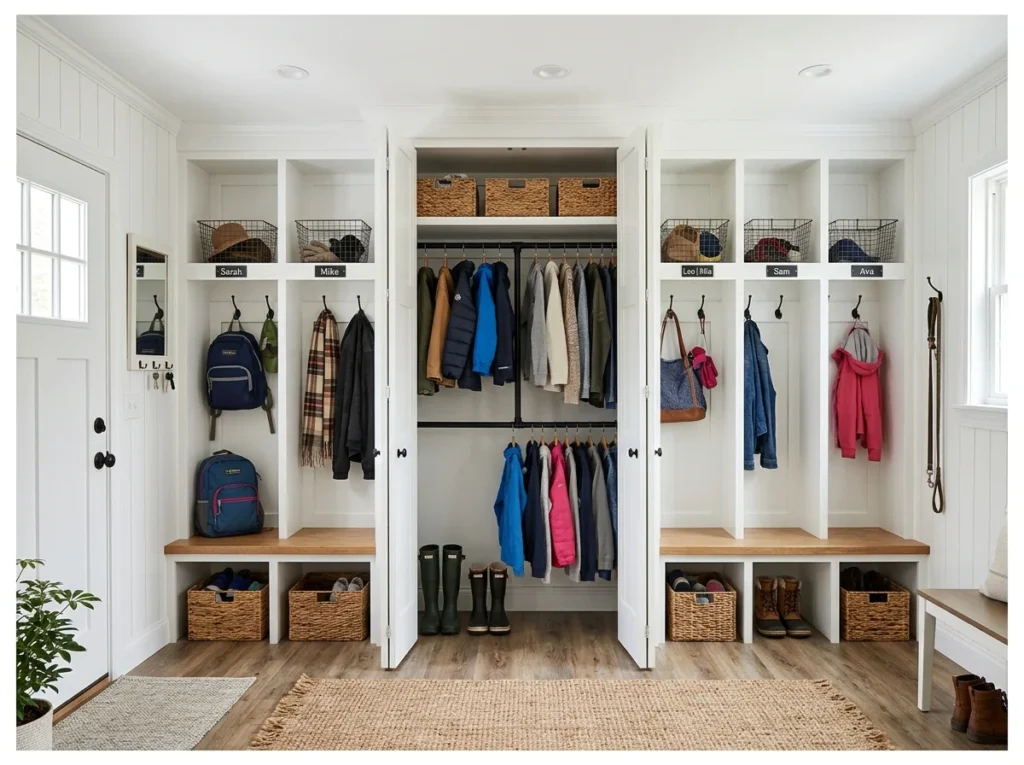
Incorporating one full-height coat closet section within the mudroom locker wall provides proper hanging storage for longer coats, formal outerwear, and items that do not fit on standard coat hooks. The closet section with a double hanging rail handles significantly more garments than a row of hooks.
Position the coat closet at the end of the locker run so the bifold or sliding doors have adequate clearance to open fully without obstructing the bench or adjacent locker doors. This section also suits storing vacuum cleaners, mops, and other tall items that accumulate at the entry but lack a proper home.
Freestanding Lockers
Freestanding lockers aren’t attached to the wall, which makes them a good option for renters. They can also be moved or rearranged if the entryway layout changes down the line. Most freestanding versions still include hooks and cubbies despite not being built in.
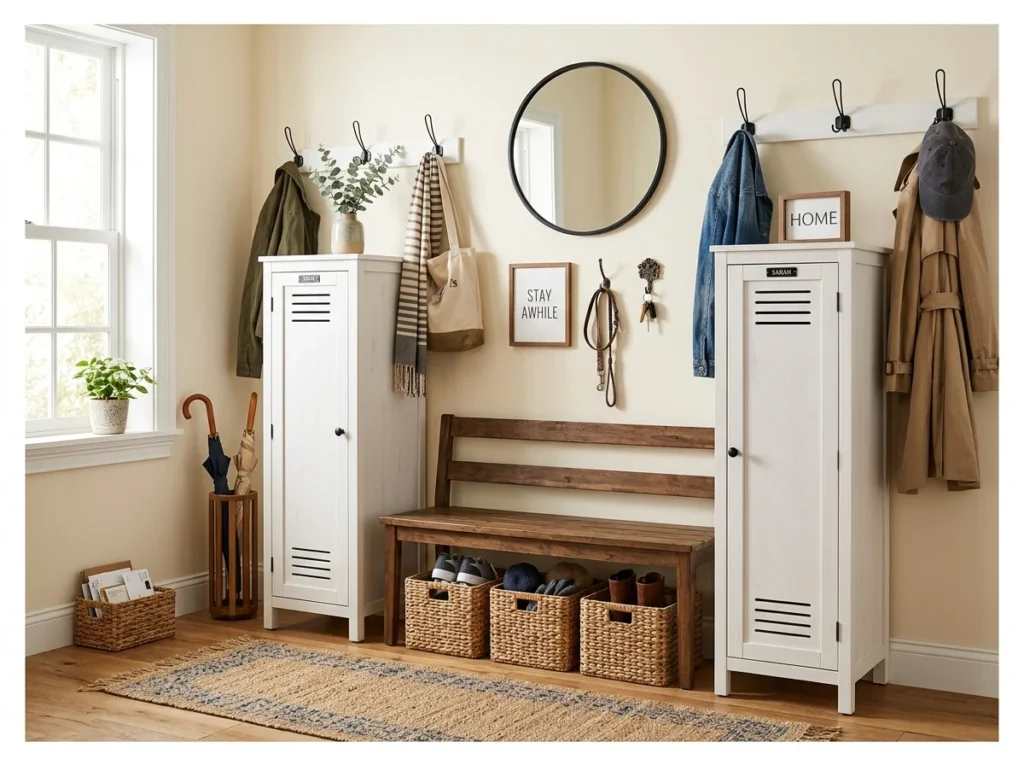
Freestanding mudroom lockers require no installation, no carpentry, and no permanent modifications to the home. They are the ideal solution for renters, apartment dwellers, and homeowners who want mudroom locker functionality without a built-in renovation project.
Quality freestanding locker cabinets in shaker-door styles are available from furniture retailers and can be positioned, moved, and taken when you relocate. Pair two or three matching freestanding lockers with a freestanding bench between them and add wall-mounted hooks above for a result that reads as cohesive and purpose-built.
Budget-friendly option for renters and flexible households.
Lockers with Shoe Cubby Base
A shoe cubby built into the base of the lockers keeps footwear off the floor entirely. Open slots are often angled slightly to make slipping shoes in and out easier. This setup works well for households with a lot of shoes to manage daily.
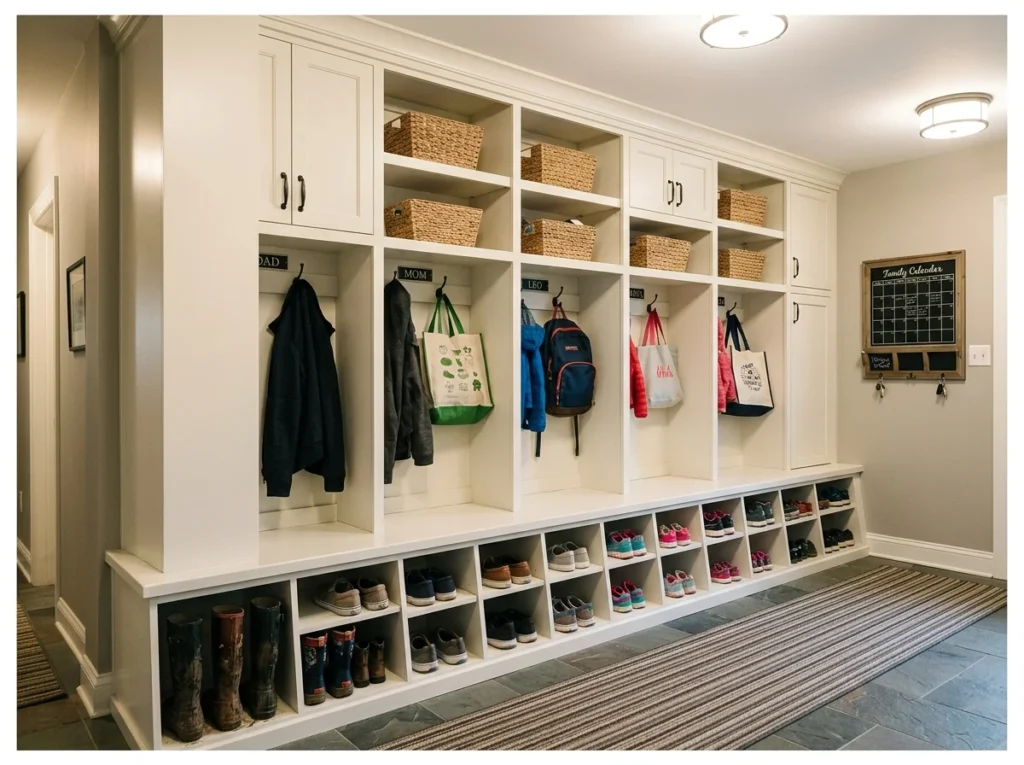
A shoe cubby base built directly beneath the main locker doors integrates shoe storage into the locker system itself rather than leaving shoes to pile up on the floor. Each family member’s shoe section aligns with their overhead locker so the entire entry zone for each person is vertically unified.
Angled shoe cubbies display footwear slightly tilted forward, which makes it easy to see which pair is in each cubby and reduces the width required per pair compared to flat cubby storage. This is one of the most underrated mudroom locker design details and makes a significant practical difference in how the system functions daily.
Industrial Style Metal Lockers
Metal lockers borrow directly from school or gym locker rooms, just adapted for home use. This style often includes visible rivets, mesh vents, and a slightly weathered finish. It suits homes leaning toward an industrial or utilitarian aesthetic rather than a soft, traditional one.
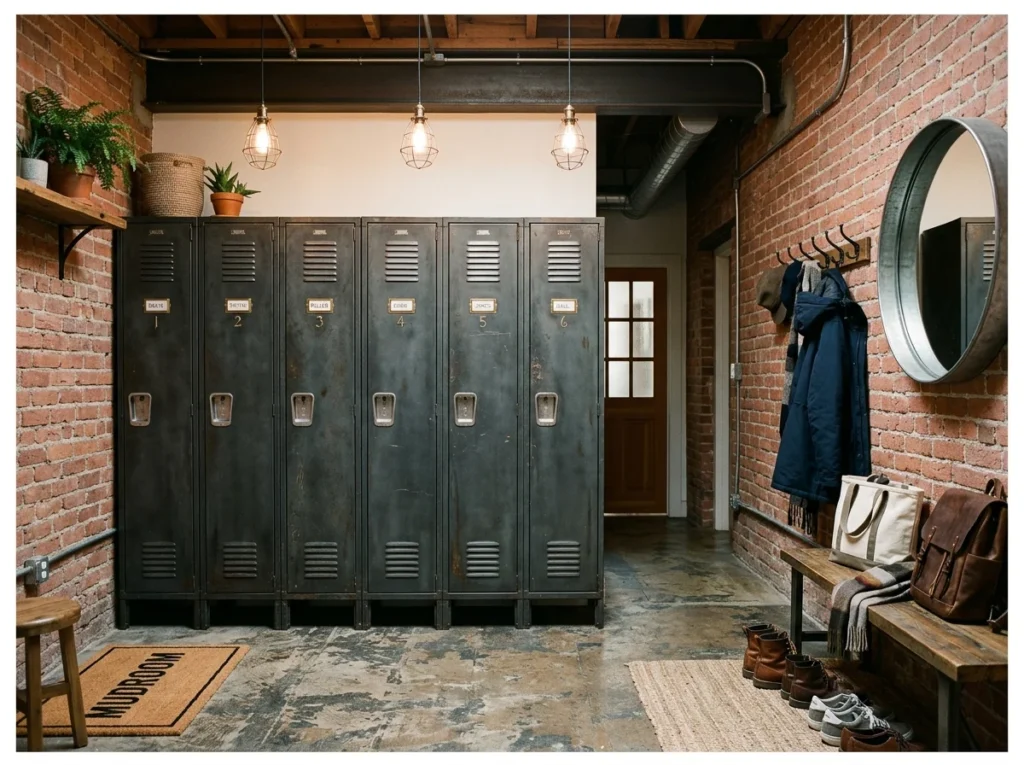
Industrial-style metal lockers bring an authentic, characterful aesthetic to a mudroom that timber and painted cabinets cannot replicate. The steel construction, ventilation details, and recessed handle hardware all reference the original school and workplace locker in a way that reads as intentional and designed in a residential context.
Powder-coated steel lockers in charcoal, black, or dark olive suit industrial, loft, and urban home styles particularly well. They are virtually indestructible, easy to clean with a damp cloth, and never need repainting. The contrast of steel lockers against a concrete-look floor and exposed brick or painted plaster wall is one of the most visually distinctive mudroom combinations possible.
Tough, authentic, and completely unique.
Lockers with Pegboard Side Panel
A pegboard panel on the side lets you rearrange hooks depending on changing storage needs. This flexibility is useful for households whose gear or seasonal items shift throughout the year. It also adds a slightly more functional, workshop inspired look to the overall system.
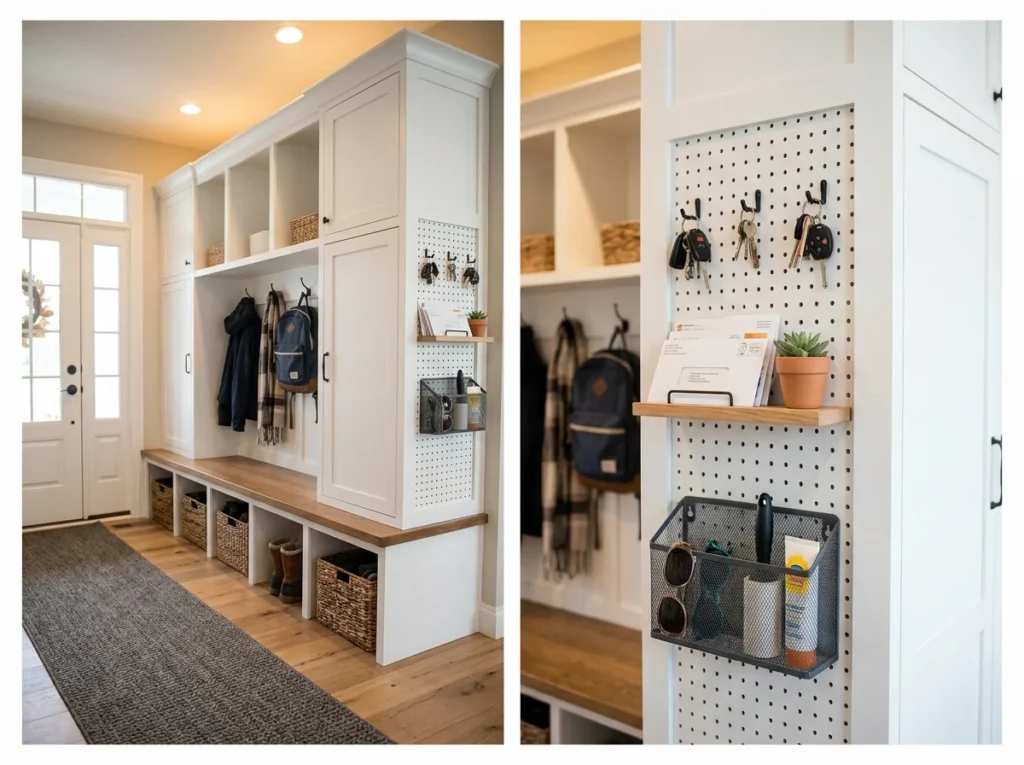
A pegboard panel integrated into the side of the end locker creates a dedicated zone for small everyday accessories that do not belong inside the lockers themselves. Keys, sunglasses, earbuds, and daily accessories all have a consistent visible home on the pegboard rather than disappearing into bags and pockets.
This side panel pegboard requires no additional floor or wall space since it uses the existing side face of the locker unit. A small key hook, a tiny shelf for mail and cards, and a bin for everyday accessories cover the needs of most households. The items stored here are the ones that cause the most daily frustration when misplaced, making this a genuinely valuable addition.
Lockers with Beadboard Back Panel
Beadboard adds a textured backdrop behind the hooks and cubbies instead of plain flat drywall. This small detail brings a cottage style touch to what’s otherwise a very functional piece. It’s often painted white to match the rest of the locker system.
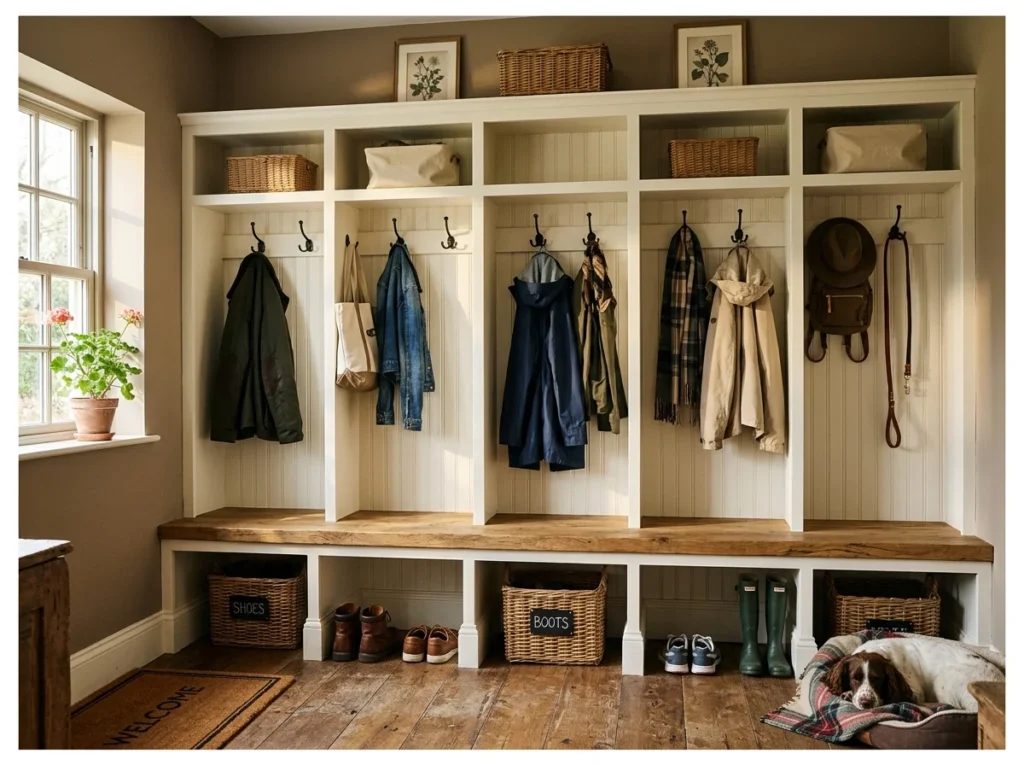
Beadboard paneling installed as the back panel inside each open mudroom locker cubby adds a classic architectural detail that gives each cubby its own distinct backing and a traditional, layered quality that plain painted drywall cannot provide.
The narrow vertical groove pattern of beadboard adds visual depth and texture to each locker interior, making the system look more custom and considered than standard cabinetry. Paint the beadboard the same white or cream as the locker frame for consistency, or use a contrasting color inside each cubby for a subtle two-tone effect.
Slim Lockers for Narrow Entryways
Slim lockers are built specifically for tight spaces where a full width system won’t fit. Vertical storage is prioritized over wide horizontal cubbies to save space. Even a narrow setup can still fit a hook, a small shelf, and room for shoes below.
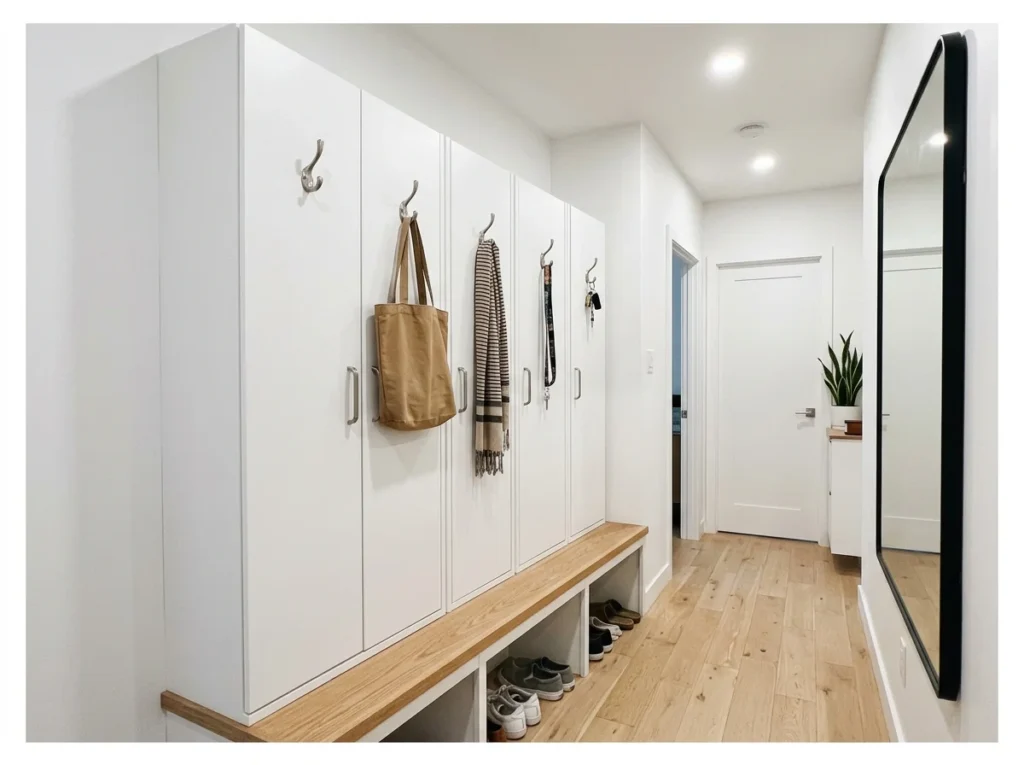
Slim mudroom lockers as shallow as 25 to 35 centimeters deep create functional personal storage zones in entryways too narrow for standard-depth cabinetry. A shallow locker can still accommodate bags on hooks, folded items on a shelf, and small accessories while projecting only minimally into the walkway.
The key to making a slim locker system work is maximizing vertical height rather than depth. A tall slim locker holds more than a short wide one and takes less floor area. Even a 25-centimeter-deep locker with a full-height door, interior hooks, and a shelf provides meaningful daily-use storage in spaces where standard lockers would be impractical.
Perfect for small spaces and narrow hallways.
For tight entryways generally, a compact layout that still works can guide the rest of your planning.
Lockers with Built-In Laundry Drop
A laundry drop built into the locker system gives kids a spot to toss dirty clothes right at the door. This works especially well for families coming in from sports practice or outdoor play. It cuts down on dirty clothes piling up in bedrooms or hallways elsewhere in the house.
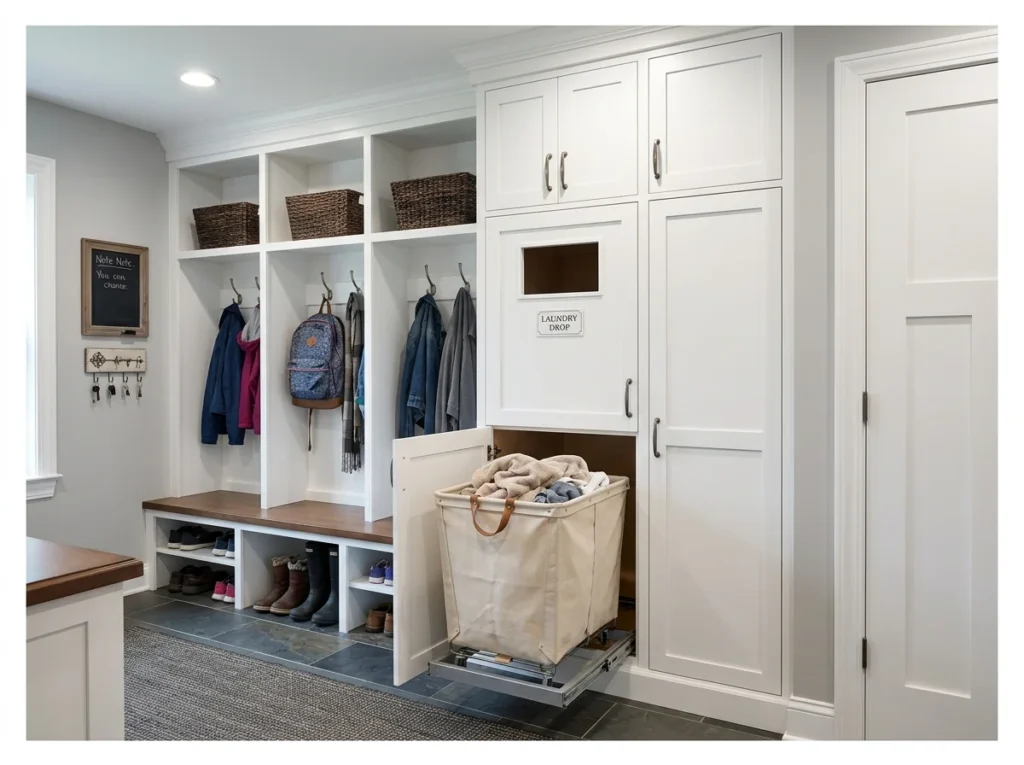
A laundry drop locker dedicates one bay of the mudroom locker system to a built-in hamper on a sliding frame. Sports gear, muddy clothes, and outdoor wear go directly from the body into the hamper at the mudroom entry, preventing worn clothing from traveling through the home to reach the laundry room.
The hamper sits on a pull-out frame similar to a drawer and lifts out completely when full for easy transport to the washing machine. The locker door closes to completely conceal the laundry from view. This single addition reduces the amount of laundry-related clutter in bedrooms and bathrooms significantly.
Laundry that never makes it past the front door.
Underfoot, a rug that grounds the whole entry adds warmth and helps define the space beneath the lockers.
Conclusion
A well-designed mudroom locker system is one of the most impactful investments a household can make in how the home functions from day to day. It creates a system at the entry point where every item has a home, every person has a zone, and the rest of the house benefits from the organization that begins the moment the front door opens.
Start by counting your household members and assessing the specific storage needs of each person. Build or buy the locker system that genuinely serves those needs rather than the system that looks most impressive in a photograph. Then add the details, the labels, the baskets, the bench cushion, the bench, and the bench cushion that make the system feel finished and genuinely pleasant to use every day.
The organized home starts at the door.
Add in small finishing touches that matter and the entry will feel as good as it functions.