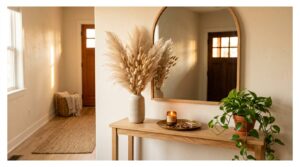
A mudroom should be the most functional room in the house. But it should also be the most welcoming one because it is the first space you walk into every single time you come home.
These ideas create a mudroom that is genuinely organized, beautiful, and cozy at the same time.
If you want more ways to keep things tidy beyond the bench, storage that keeps everyone organized has plenty of ideas worth borrowing.
Let’s explore the ideas.
Built-In Bench with Storage Below
A built in bench with storage underneath gives you a place to sit while pulling off shoes and somewhere to hide clutter at the same time. Lift up lids or pull out bins work well here depending on how deep the storage cavity is. This single piece often replaces a shoe rack, a coat hook, and a random junk basket all at once.
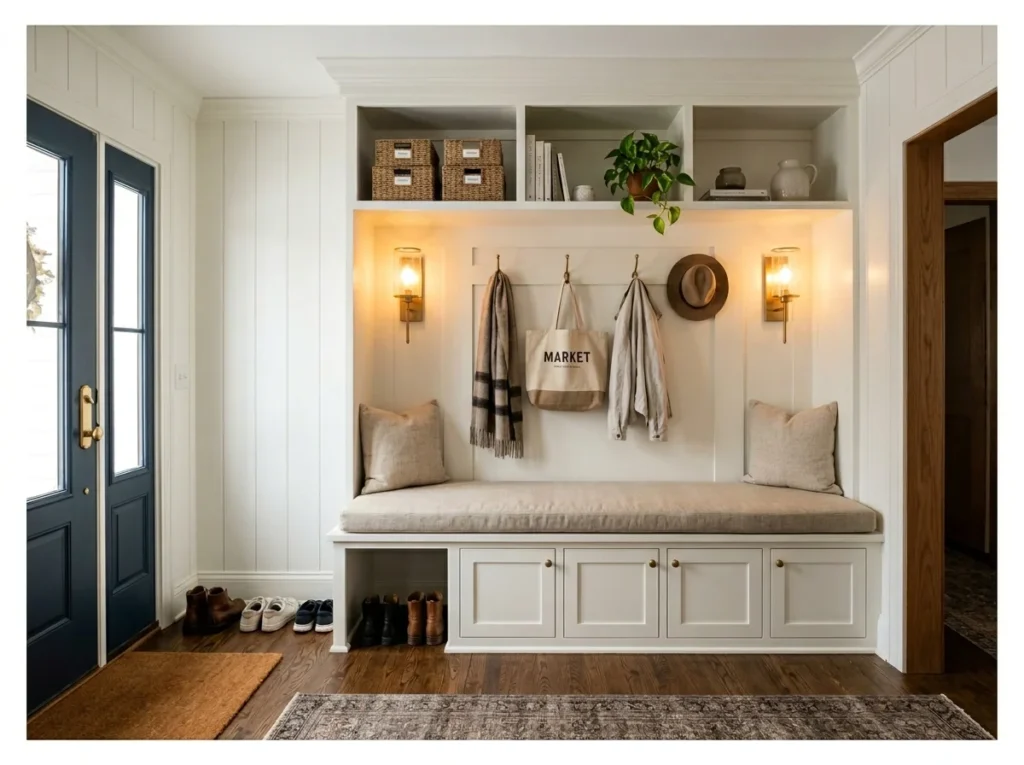
A built-in bench with closed storage cabinets below creates the most functional and space-efficient mudroom element available. The bench surface provides a place to sit while putting on shoes while the storage below conceals bags, sports gear, and seasonal items.
A bench height of 43 to 46 centimeters creates comfortable seated height for adults. Storage below in individual cabinet doors with one per family member creates an organized and personal storage system. A thick linen or velvet bench cushion adds genuine comfort and warmth to what is otherwise a purely functional surface.
The most functional single mudroom piece available.
Shiplap Accent Wall
Shiplap boards running horizontally across one wall give the mudroom some texture without a full renovation. Painting it white or a soft gray keeps the space feeling bright, even in a room with no windows. This kind of wall pairs naturally with hooks or a bench mounted directly onto the boards.
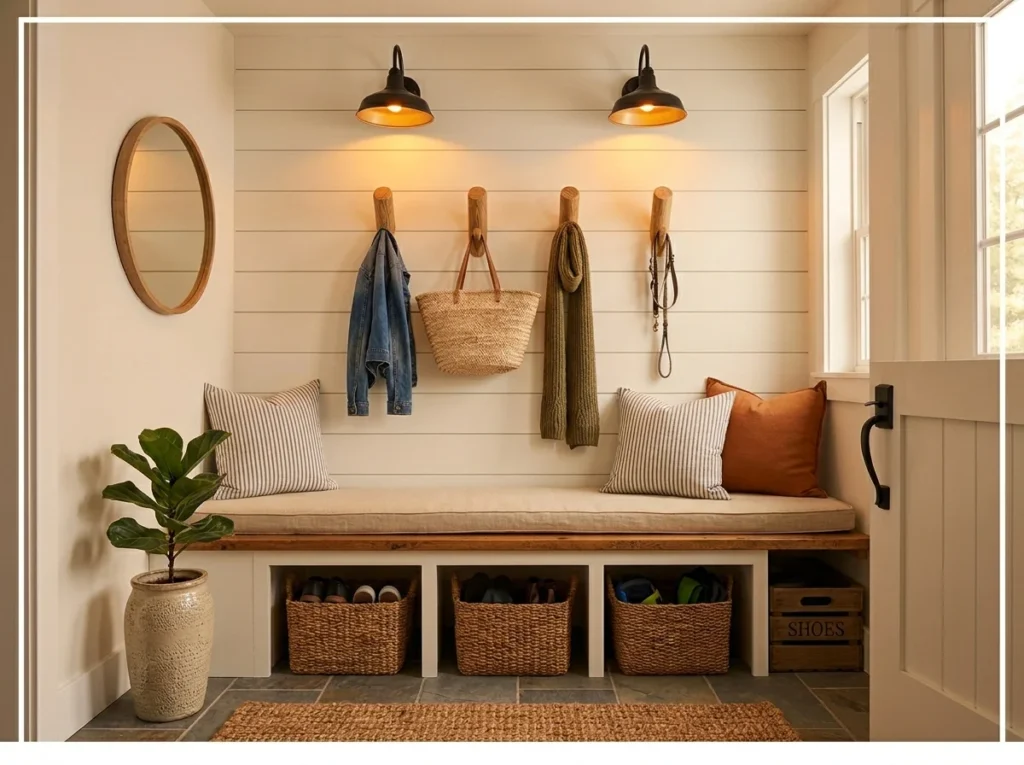
Shiplap on the mudroom accent wall creates immediate farmhouse character and adds a textured, architectural warmth that plain painted drywall cannot provide. The horizontal board shadow lines create depth and visual interest in a small, functional space.
Painted white, shiplap creates a clean and bright mudroom backdrop that makes the space feel larger. Natural timber shiplap creates a warmer, more rustic mudroom character. Either treatment makes the mudroom feel deliberately designed rather than simply functional, which changes how the entire entry feels.
If farmhouse character is the direction you’re leaning, a farmhouse feel for the whole entry shows how far it can be carried.
Warm farmhouse character with minimal effort.
Hooks and Cubbies System
A row of hooks paired with individual cubbies gives every family member their own spot for coats, bags, and shoes. Labeling each cubby, even just with a name tag, cuts down on the daily who left this here arguments. This system tends to work better than a single closet since everything stays visible instead of buried behind a door.
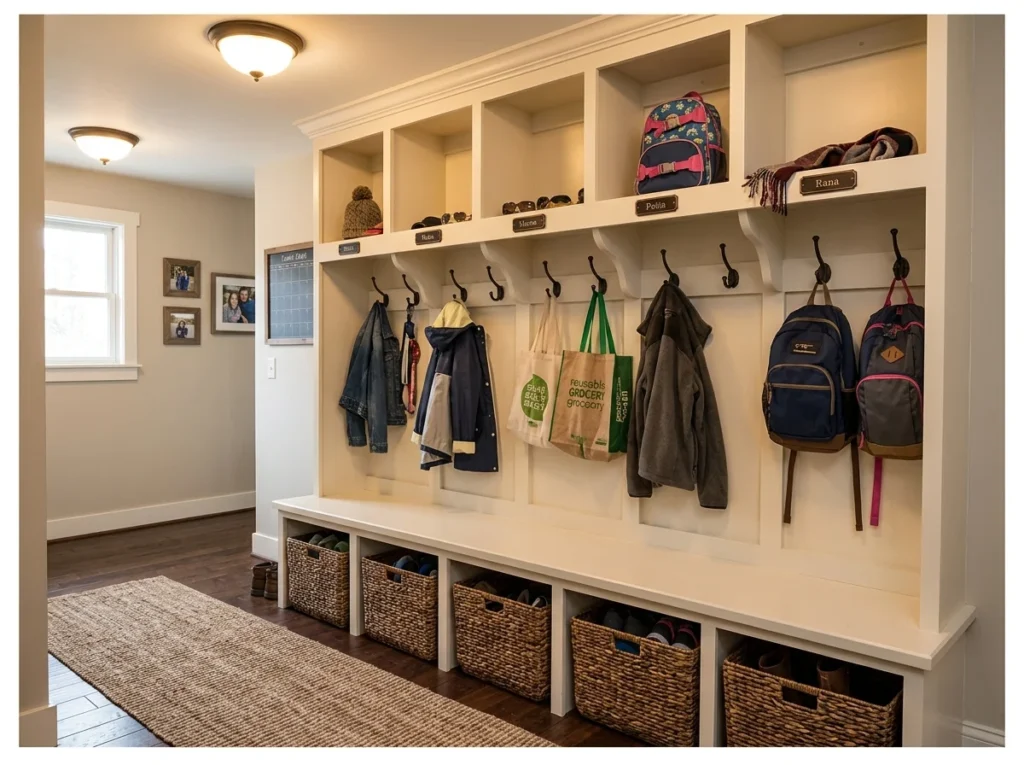
A hooks and cubbies system gives every household member a personal, clearly defined storage zone within the mudroom. Individual cubbies with a name label at the top, hooks below for coats and bags, and a basket at the base for shoes create a complete per-person storage unit.
The personalized cubby system eliminates the mudroom pile-on problem where one family member’s belongings spread across everyone else’s space. Each person is responsible for their own cubby. The system suits families with children particularly well because the height of hooks can be adjusted as children grow.
Warm Sconce or Pendant Lighting
A warm toned sconce or small pendant light softens what is usually one of the more overlooked rooms in the house. Mudrooms rarely get much natural light, so a fixture with a slightly amber bulb helps avoid that cold, unfinished feel. Wall mounted sconces also free up ceiling space in narrower mudrooms where a hanging pendant might feel cramped.
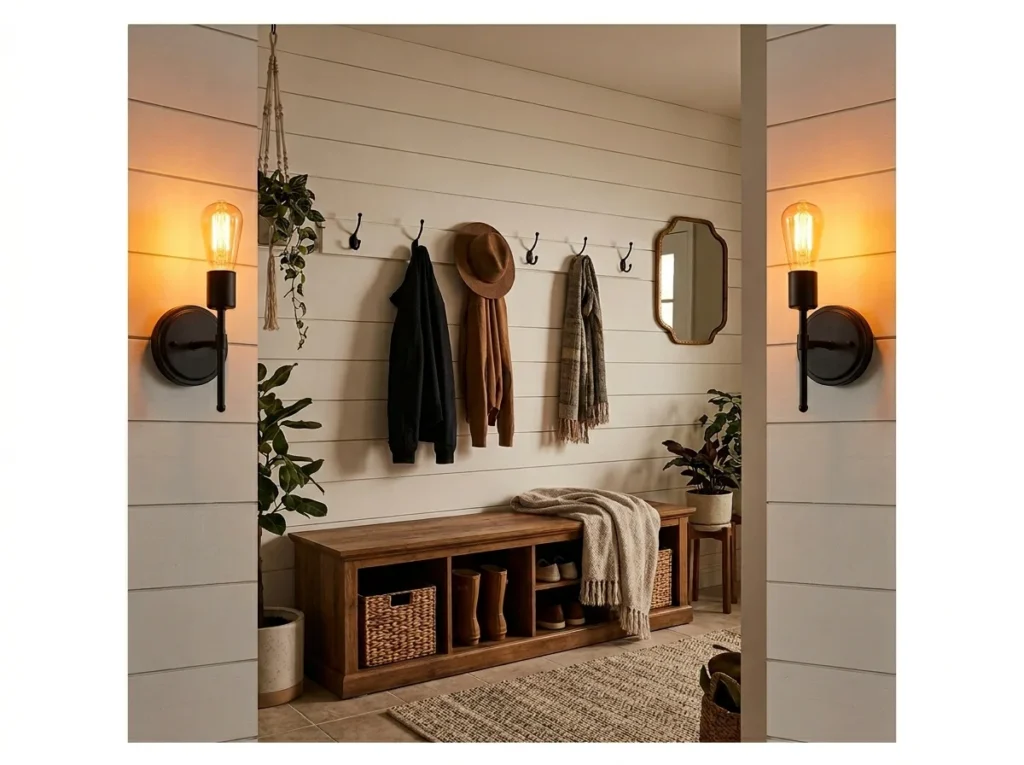
Warm wall sconces or a pendant light in the mudroom create the most important transition from a purely functional entry to a genuinely welcoming one. Warm lighting immediately changes how a small utility space feels from the moment the door opens.
Choose sconces with warm bulbs at 2700K or lower. Mount at approximately 165 centimeters from the floor for the most flattering and practical light height. The warm light quality makes the mudroom feel like a room rather than a utility corridor and creates a positive emotional start to every return home.
The upgrade that changes how coming home feels.
Natural Stone or Tile Floor
Stone or tile flooring handles muddy boots and wet umbrellas far better than carpet or hardwood ever could. Slate and porcelain are common choices since both resist staining and are easy to mop down. A slightly textured finish also helps prevent slipping when the floor gets wet from rain or snow.
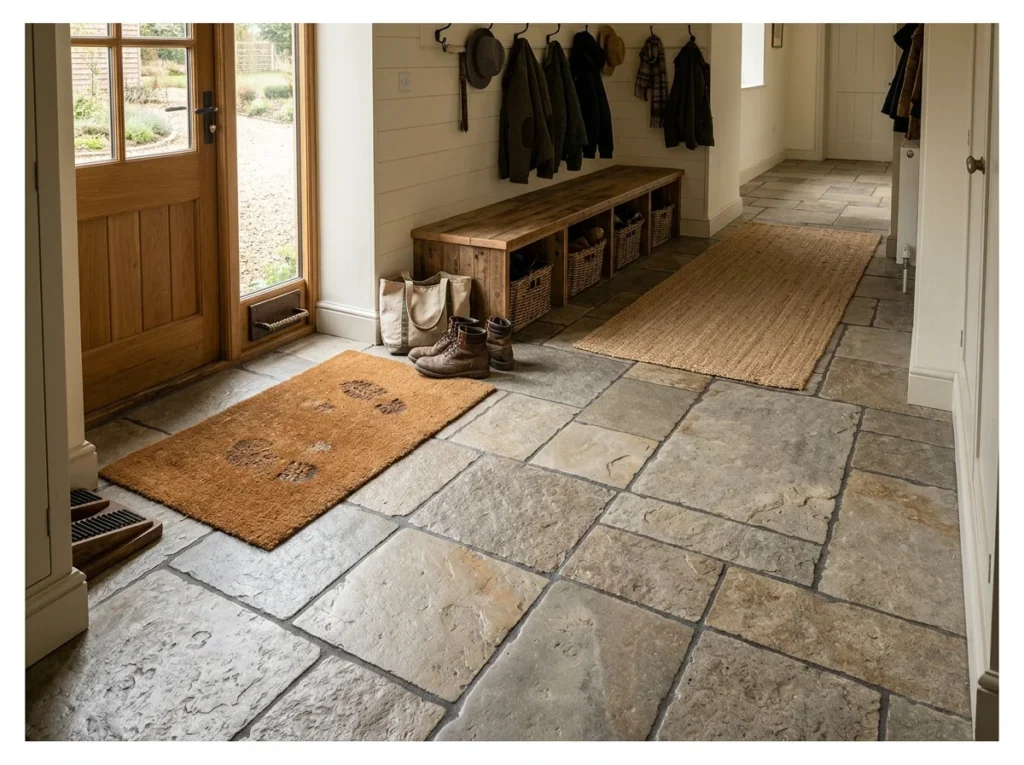
A natural stone or large format porcelain tile floor in the mudroom creates a hardwearing, easy-to-clean surface that handles the highest traffic and most dirt of any floor in the home. Stone and tile wipe clean instantly, never stain permanently, and look better with age.
Natural stone in warm cream, grey, or buff tones creates a beautiful mudroom floor. Outdoor-rated porcelain tile with a textured slip-resistant surface suits the mudroom’s wet weather use. Position a natural fiber rug at the entry for initial dirt capture and warmth underfoot.
Cozy Bench Cushion with Baskets
Adding a cushion to a hard bench makes it far more comfortable for tying shoes or waiting on someone else to get ready. Baskets tucked underneath hold gloves, scarves, or dog leashes without needing a separate cabinet. Choosing a washable cushion cover saves a lot of hassle once muddy paws or wet coats inevitably brush against it.
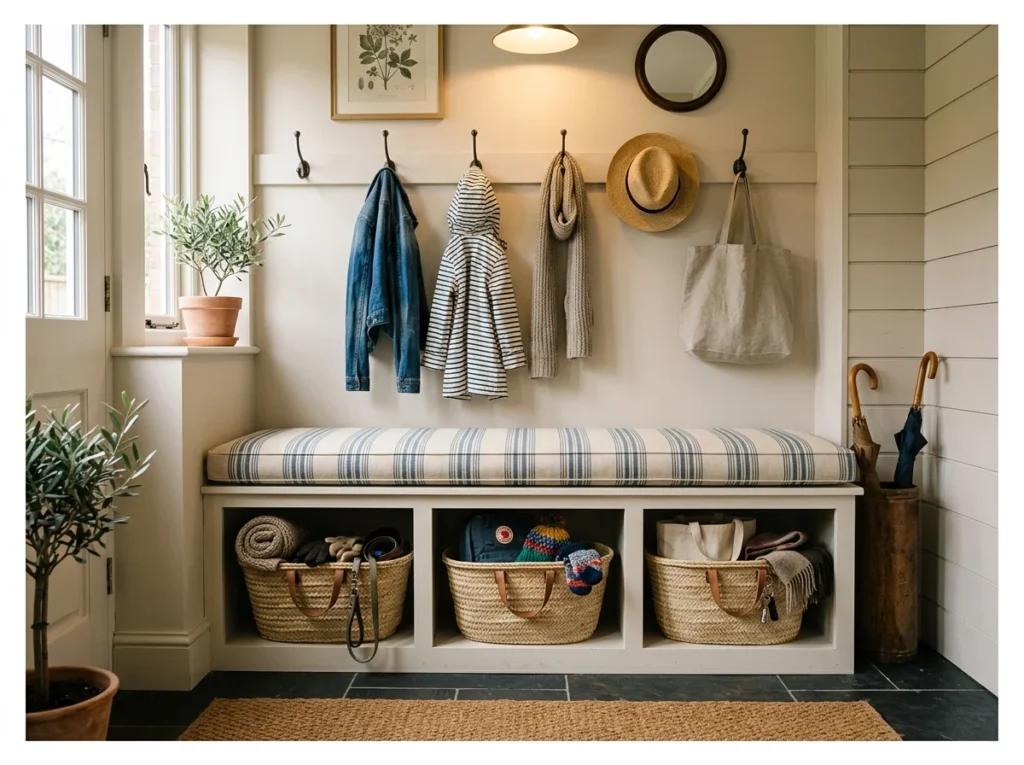
A thick bench cushion combined with woven baskets stored on a lower shelf beneath the bench creates a mudroom seating area that is both genuinely comfortable and genuinely organized. The cushion adds warmth and the baskets provide accessible storage in the most used zone.
Choose a bench cushion fabric in a durable indoor-outdoor material that handles daily sitting, wet coats, and muddy bags. A classic stripe or simple texture suits every mudroom aesthetic. Woven baskets below the bench hold each family member’s daily essentials in an accessible and organized system.
Floating Shelf with Small Vignette
A floating shelf above the bench or hooks gives a spot for small decor, like a candle or a framed photo. Keeping the vignette to two or three items stops the shelf from turning into another catch all surface. This small styling touch makes the mudroom feel less purely functional and a bit more like part of the home.
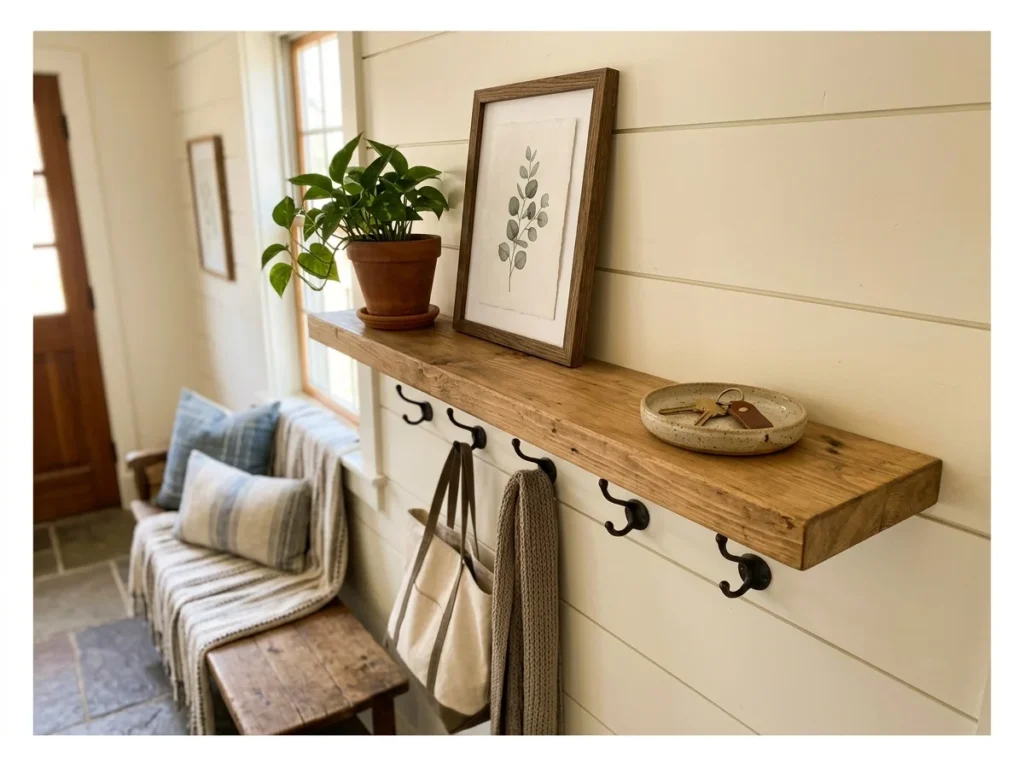
A floating shelf with a small styled vignette above the mudroom bench adds personality and decorative warmth to a space that is typically dominated by purely functional elements. The shelf becomes a small personal gallery within the working entry space.
Style the mudroom shelf with a small plant, a framed welcome or seasonal print, and one functional beautiful object like a ceramic key dish. Keep it edited to three objects. The shelf vignette communicates that the mudroom was genuinely decorated, not merely organized, which changes its entire character.
For more ideas on getting that display right, shelving styled to feel personal has plenty of inspiration worth trying.
Budget-friendly option that transforms the entry’s character.
Framed Art or Welcome Print
A framed print near the entry gives guests something to look at the moment they walk in, rather than just coats and shoes. A simple welcome message or a piece of art in a matching frame style ties the space together. This works especially well hung just above the bench where eye level naturally lands.
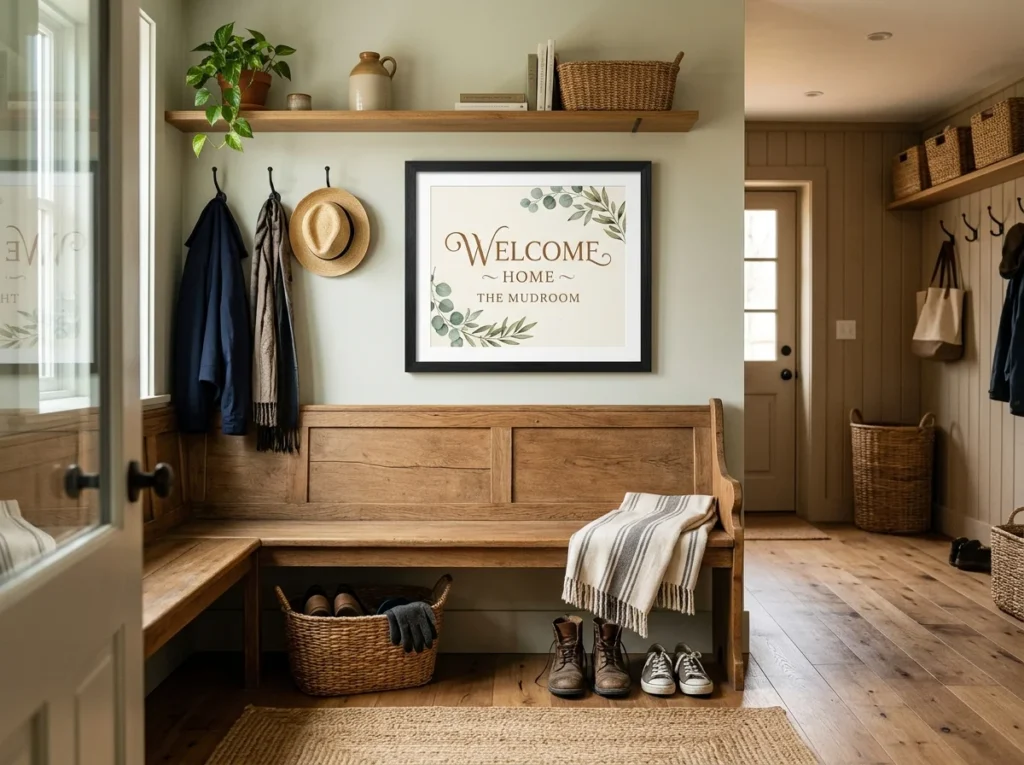
A framed print above the mudroom bench communicates that the entry space was thoughtfully decorated rather than simply organized. Even one well-chosen print elevates the mudroom from utility zone to room with genuine character.
A botanical illustration, a simple welcome typography print, or a meaningful family quote suits the mudroom wall. Keep the frame simple: black, white, or natural timber. The framed print creates a visual anchor above the bench that makes the whole mudroom composition feel resolved and complete.
Seasonal Wreath on the Entry Door
Swapping a wreath on the entry door with the seasons is one of the easiest ways to refresh the space without touching the interior at all. Evergreen for winter, florals for spring, this small rotation costs very little but changes the whole first impression. A simple hook or wreath hanger on the door makes swapping it out a two minute job.
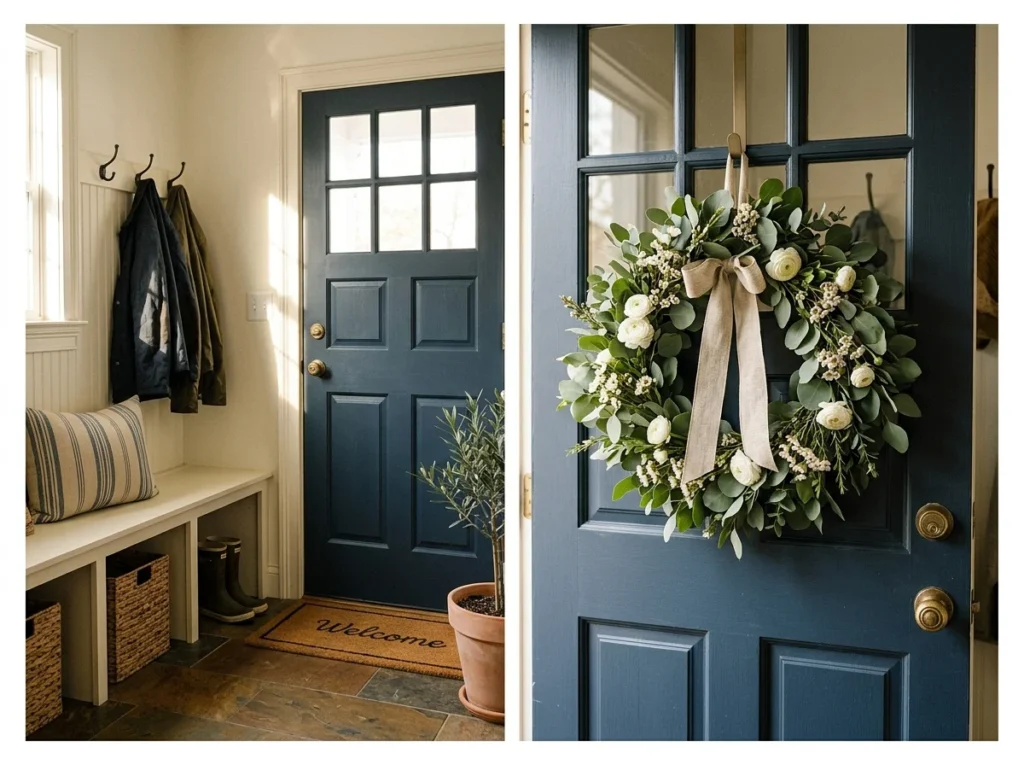
A seasonal wreath hung on the interior or exterior mudroom door creates an immediately welcoming first impression that changes with the calendar to keep the entry feeling fresh and considered throughout the year. The wreath is the simplest and most effective single entry decor element.
Spring brings fresh eucalyptus and white flowers. Summer brings dried botanicals and lavender. Autumn brings russet leaves, berries, and dried seed heads. Winter brings evergreen branches and holly. The changing wreath creates a ritual of seasonal refresh that takes five minutes and completely transforms the entry’s character.
Small Potted Plant or Herb
A small potted plant near the entry brings a bit of life into a room that is mostly hooks, benches, and hard flooring. Hardy plants like pothos or a snake plant handle the lower light of a mudroom better than most flowering options. Even a small pot of rosemary by the door doubles as something useful to grab on the way to the kitchen.
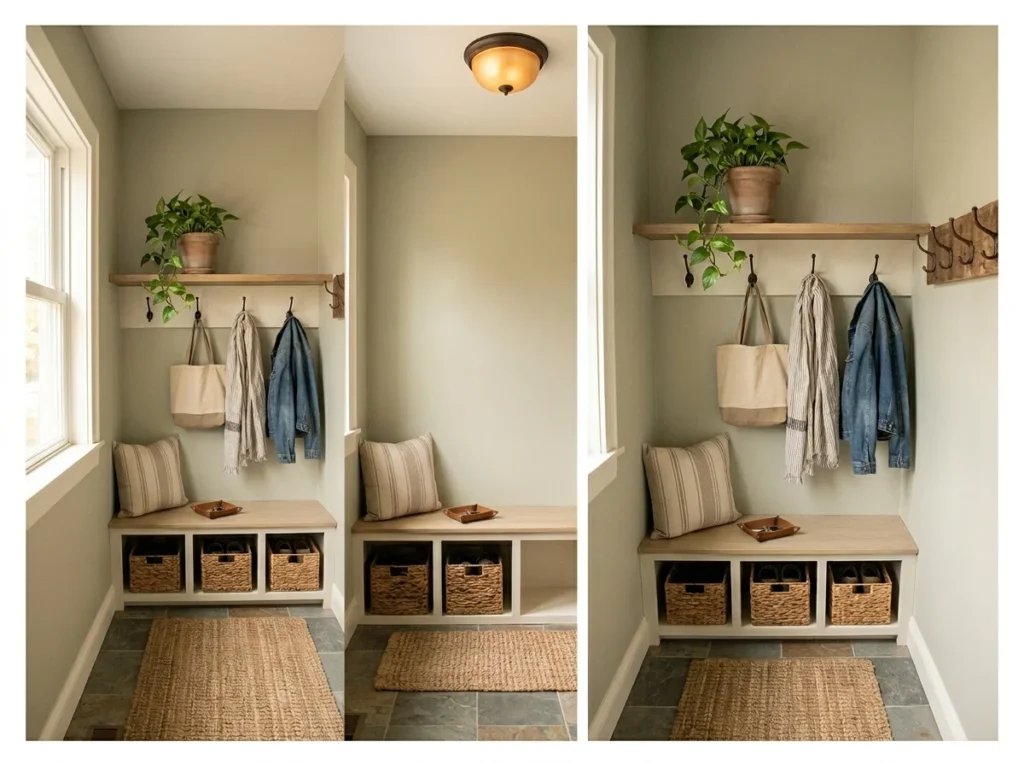
A small potted plant in the mudroom adds living organic freshness to what is typically one of the most purely functional rooms in the home. A small trailing pothos, a compact succulent, or a fresh herb plant in a simple pot creates warmth and life in the entry.
Choose a low-maintenance plant that handles the variable light and temperature conditions of an entry space. Pothos, snake plants, and ZZ plants handle low light and irregular watering. A fresh herb in a terracotta pot adds fragrance as well as visual warmth to the mudroom.
Fresh, alive, and genuinely welcoming.
Woven Basket Storage
Woven baskets tucked onto a shelf or under a bench hold hats, mittens, or dog toys without looking like plastic storage bins. Different basket sizes stacked together add texture while still keeping the room organized. These are also easy to pull out and carry around the house, unlike built in drawers.
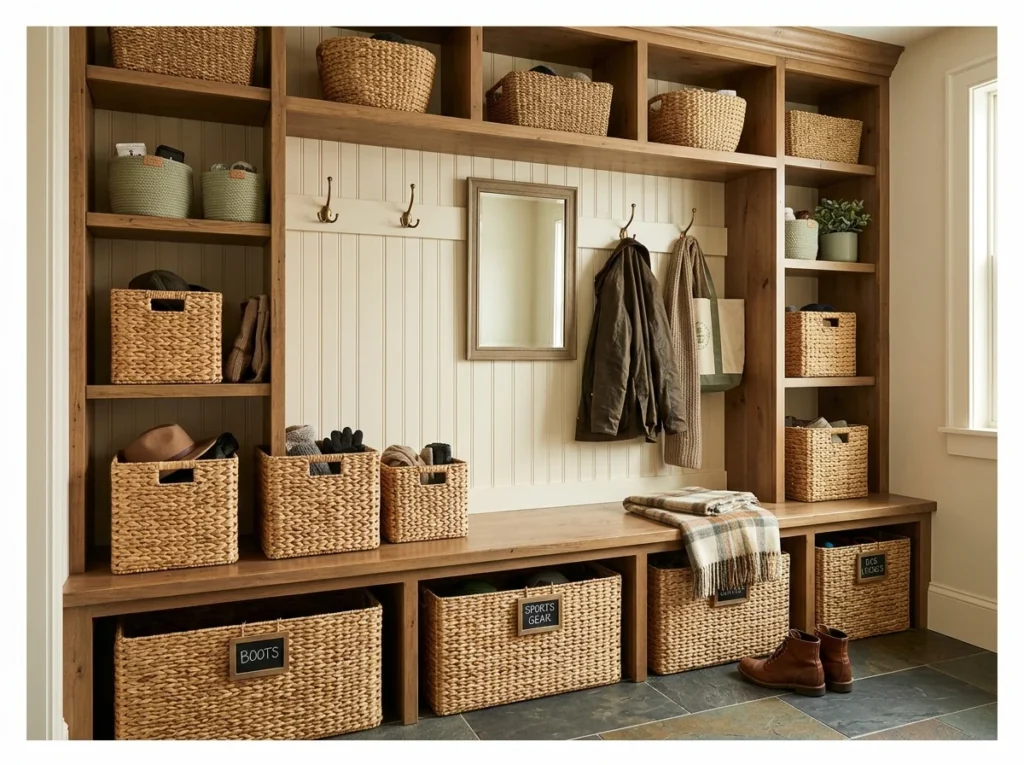
Natural woven baskets used throughout the mudroom for storage add organic warmth and genuine visual character to what might otherwise be a purely utilitarian space. The natural fiber textures create warmth that plastic bins and wire baskets completely lack.
Large baskets on lower shelves organize boots and sports gear. Medium baskets on hooks or shelves contain scarves, gloves, and accessories. Small baskets on the floating shelf hold keys and small daily essentials. Using consistent basket sizes and material throughout creates a cohesive mudroom storage aesthetic.
Personalized Name or Initial Signs
A small sign with each family member’s name above their hook or cubby makes the system easier for kids to actually follow. Wood or metal letters in a matching finish keep the personalization from looking too crafty or cluttered. This detail also makes the mudroom feel distinctly like it belongs to the people living there.
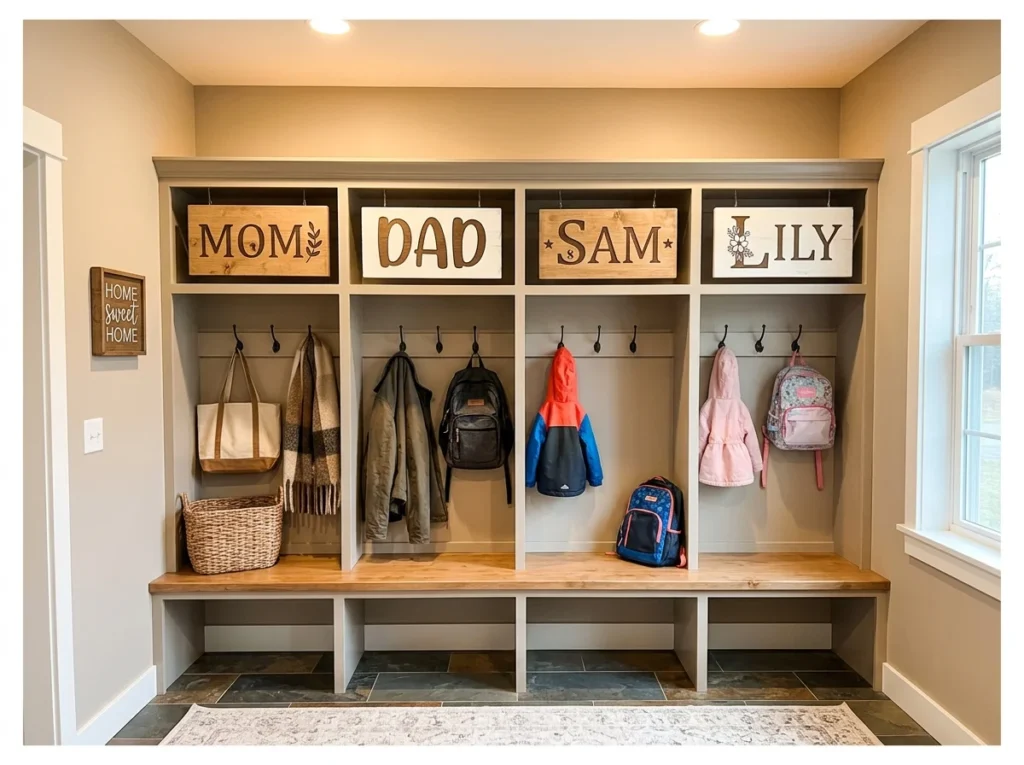
Personalized name signs or initial plaques above each family member’s cubby or hook section create a mudroom where every person has a clearly designated and genuinely personal space. The personalization transforms storage into ownership.
Laser-cut timber name signs, painted letter blocks, or printed and framed name cards all create the personalized cubby system. Children particularly respond positively to seeing their names on their own designated mudroom space. The personalization also eliminates the daily argument about whose coat is on whose hook.
Boot Tray with Stones or Gravel
A boot tray filled with small stones or gravel catches mud and melting snow while letting water drain away from the shoes themselves. This setup works better than a flat rubber tray alone since the stones keep boots from sitting directly in a puddle. Emptying and rinsing the tray every so often keeps it from smelling musty over time.
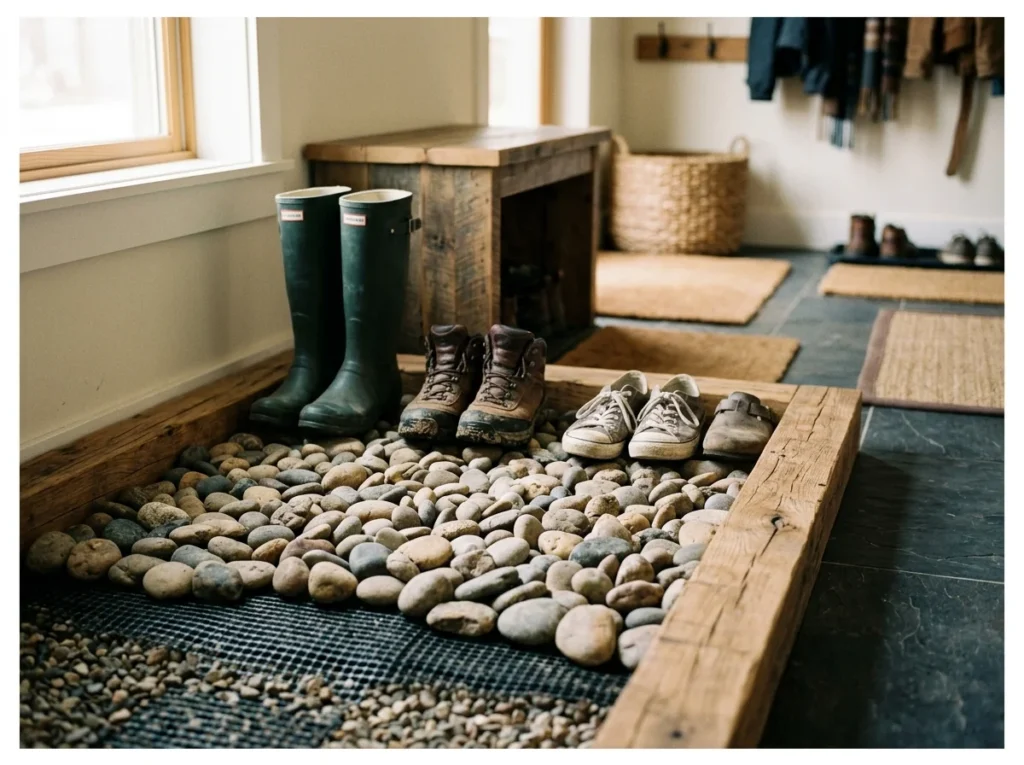
A boot tray filled with smooth river stones or gravel creates a genuinely beautiful and practical mudroom shoe storage solution. Wet boots and shoes drain onto the stones rather than creating puddles on the floor, and the stones dry quickly without absorbing odors.
A simple timber frame tray filled with smooth river pebbles costs almost nothing to create and looks beautiful in the mudroom. The organic natural tone of river stones suits every mudroom aesthetic from farmhouse to contemporary. The tray also contains the mudroom shoe area neatly rather than allowing shoes to spread across the floor.
Budget-friendly option that solves the wet boot problem beautifully.
Warm Rug at the Entry
A rug at the entry gives bare feet something warmer than tile or stone, especially during colder months. Darker patterns or flat weave rugs hide dirt and salt stains better than a plain light colored one. A rug with a rubber backing also helps stop it from sliding around on a hard floor.
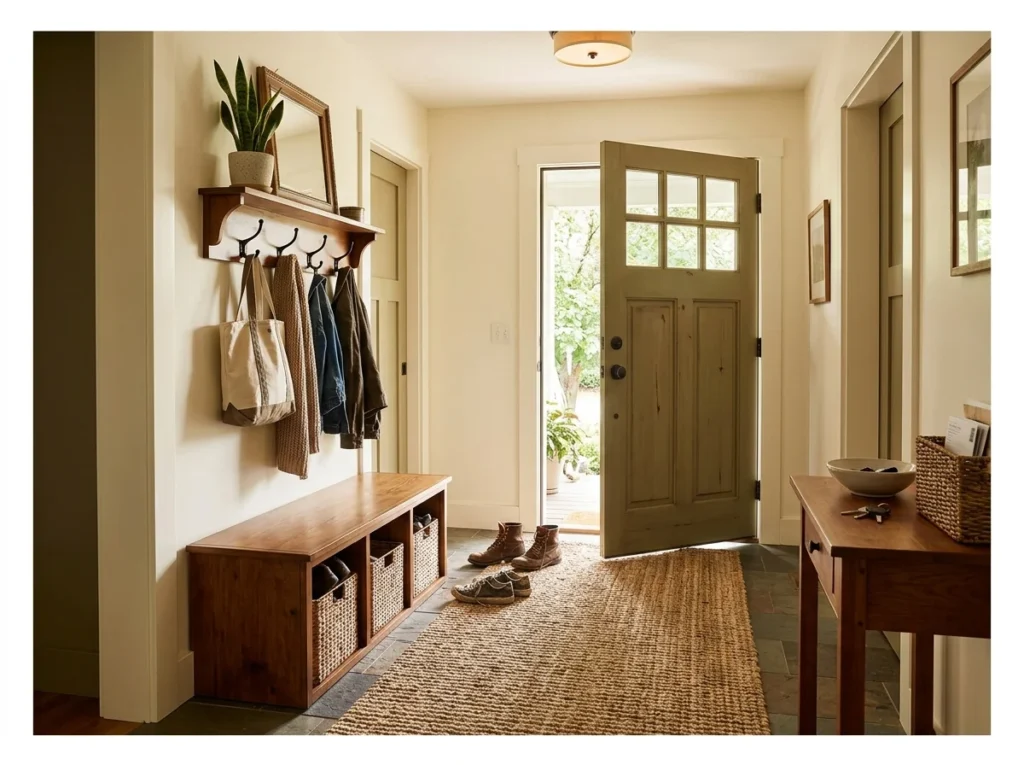
A durable natural fiber or washable runner rug at the mudroom entry creates warmth underfoot, captures a significant amount of dirt from incoming shoes, and adds a decorative layer of texture to the mudroom floor. The rug provides the soft landing zone that hard tile alone cannot.
Choose a washable cotton or synthetic fiber rug for the highest-traffic mudroom position where cleaning frequency is the most important practical specification. Natural jute and sisal rugs create the most organic warmth but require more careful cleaning. A simple stripe pattern in neutral tones suits every mudroom aesthetic.
If you want more inspiration for that first step inside, a rug that welcomes you home has plenty of ideas worth exploring.
Pegboard Organization Wall
A pegboard wall lets you rearrange hooks and small shelves whenever storage needs change, which a fixed cabinet cannot offer. This setup works particularly well for sports gear, umbrellas, or tools that do not fit neatly into a cubby. Painting the pegboard to match the wall keeps it from standing out as purely utilitarian.
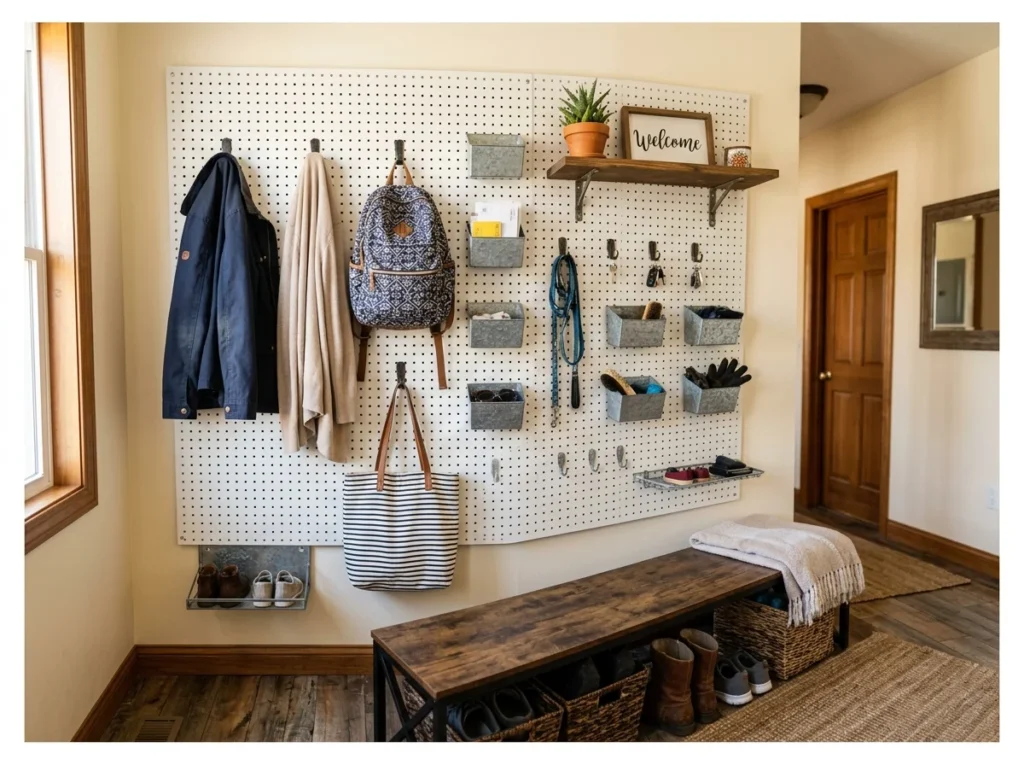
A pegboard organization wall in the mudroom creates an infinitely flexible, wall-mounted storage system where hooks, bins, shelves, and holders can be repositioned to suit changing storage needs without any drilling or wall damage. The pegboard adapts as the household’s storage needs evolve.
Paint the pegboard in the same color as the surrounding wall for a seamless integrated appearance or in a contrasting color to make it a feature element. Organize the pegboard with a coat hook for each family member, small bins for gloves and accessories, and a shelf bracket for a small plant or key dish.
Chalkboard or Message Board
A chalkboard by the door is useful for quick reminders, like a grocery list or a note for someone heading out. Kids especially tend to use this space for doodles once the practical notes run out. Framing the chalkboard to match nearby decor keeps it from feeling like a leftover office supply.
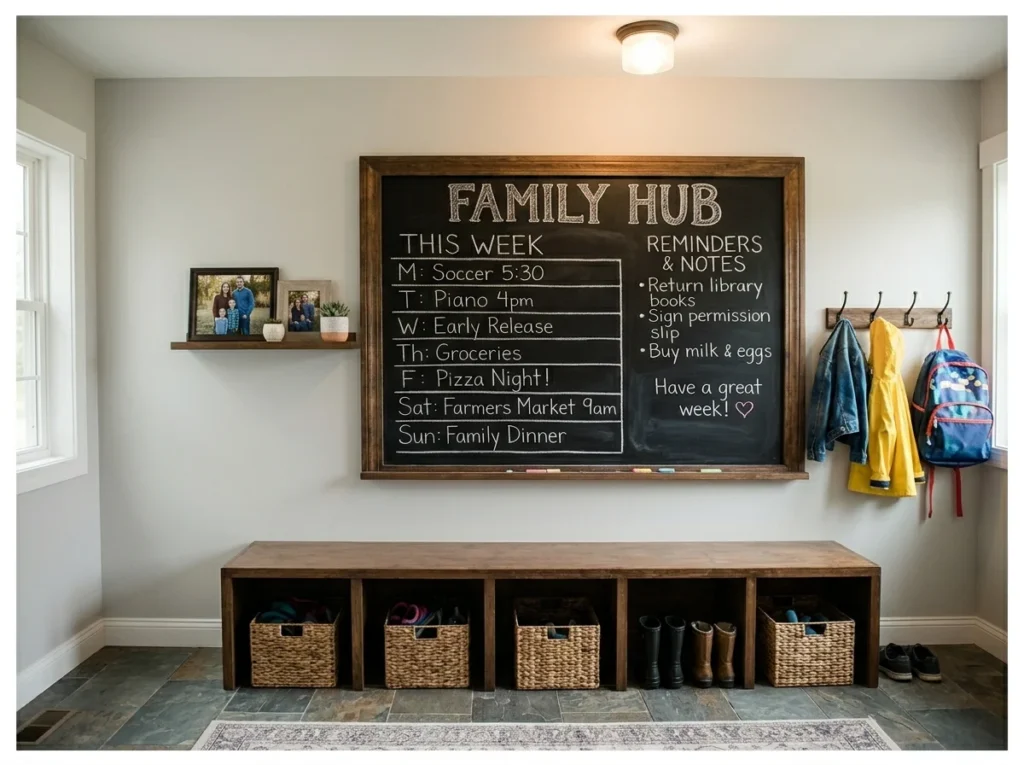
A chalkboard or framed message board mounted in the mudroom creates a family communication hub in the most consistently trafficked room of the home. Every household member passes through the mudroom multiple times daily, making it the most effective location for shared information.
Write the weekly schedule, reminder notes, grocery items, and family messages where everyone will see them naturally during the daily entry and exit routine. The chalkboard also provides children with a drawing surface that makes the mudroom genuinely interactive and welcoming.
Built-In Locker System
A locker system gives each person a fully enclosed space for coats, bags, and shoes, which keeps clutter completely out of sight. This works especially well for larger families where open hooks alone quickly get overwhelmed. Adding a bench in front of the lockers gives a spot to sit while switching shoes before heading out.
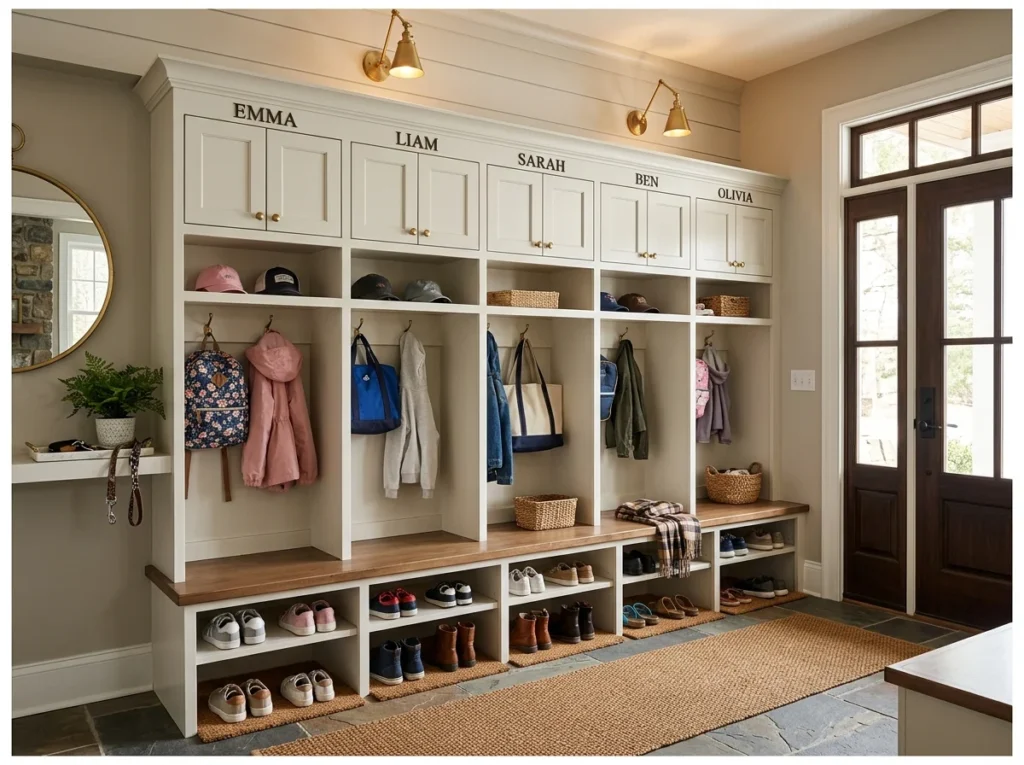
A built-in locker system creates a complete, dedicated storage zone for each household member with closed upper storage for bags and accessories, hook space for coats, and open lower storage for shoes. The locker format provides generous per-person storage within a single organized structure.
Individual locker doors conceal each person’s storage area completely, allowing the mudroom to look tidy even when each locker’s interior is not perfectly organized. The concealment is one of the most important mudroom design principles: tidy appearance does not require perfect interior organization.
The mudroom solution that eliminates daily clutter permanently.
Mirror in the Mudroom
A mirror by the door lets everyone do a last minute check before leaving the house, without walking back to the bathroom. A smaller mirror works fine here since the point is a quick glance, not a full length view. This also helps bounce light around a room that often gets very little natural sunlight.
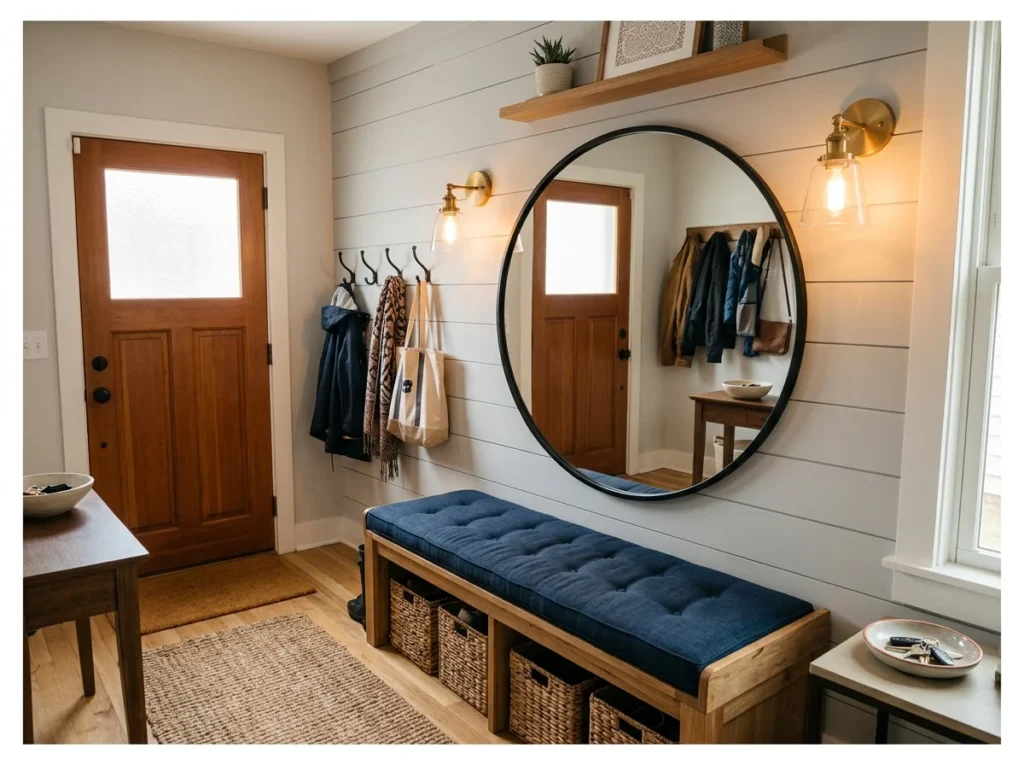
A mirror in the mudroom provides the most used practical function of any decor element: the last outfit check before leaving home. A mudroom without a mirror sends everyone to other rooms for this essential daily moment. Position it at face height for the most useful placement.
A large round mirror reflects the entry space back into the mudroom and creates the visual impression of a larger, brighter entry. A natural timber or rattan frame suits farmhouse and organic modern mudroom aesthetics. A simple black frame suits contemporary and transitional mudroom designs.
For more on choosing a frame that suits the rest of the space, a mirror that earns its spot is worth a look.
The mudroom feature everyone uses every single day.
Dog Wash Station or Pet Corner
A dog wash station with a low tub and handheld sprayer makes cleaning muddy paws far easier than dragging a dog to the bathtub. A nearby hook for the leash and a small bin for towels keeps everything dog related in one spot. This feature has become increasingly common in newer builds, especially for households with larger or more active dogs.
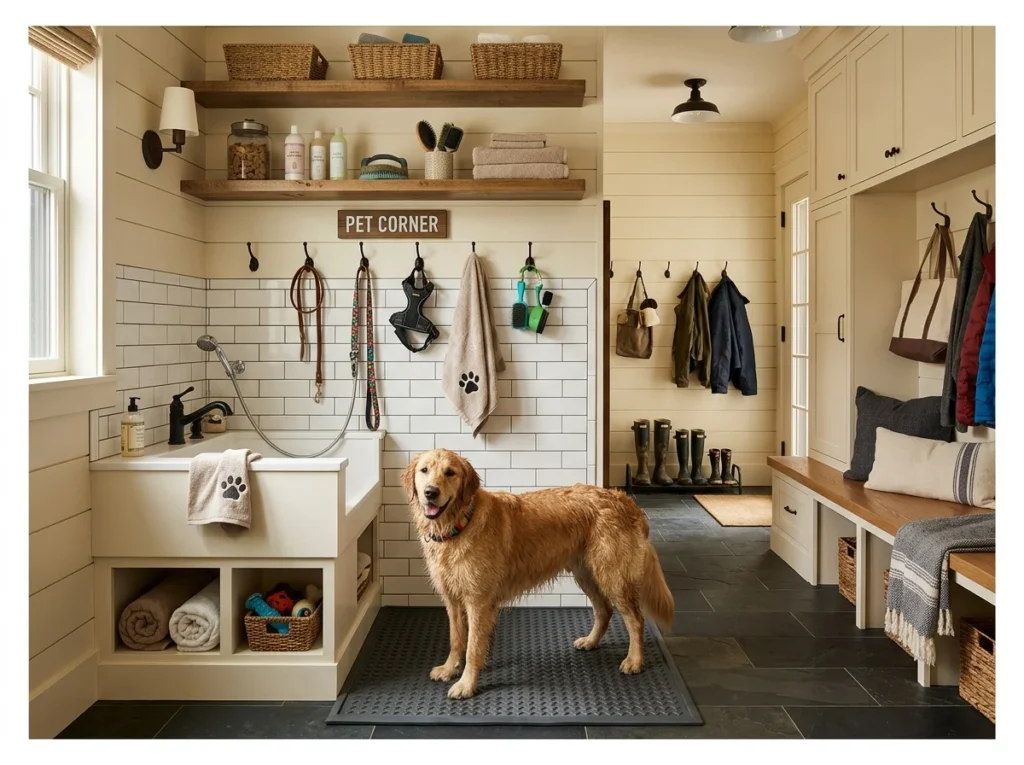
A dedicated pet corner within the mudroom, including hooks for leashes, a mat for feeding bowls, and ideally a low utility sink for dog washing, creates a complete pet management zone that keeps pet-related items organized and pet care tasks in the appropriate room.
A low utility sink beside the mudroom entry makes washing muddy dog paws after walks effortless and keeps that activity out of the kitchen or bathroom. Hooks for leads, a basket for toys, and a mat for food and water bowls create a complete and thoughtful pet station.
Coat Closet Conversion
Converting an existing coat closet into an open mudroom setup usually means removing the doors and adding hooks, shelves, and a bench inside. This approach works well for smaller homes that do not have room to build a dedicated mudroom from scratch. Open shelving in place of a closed door also makes it easier to see what needs washing or has been outgrown.
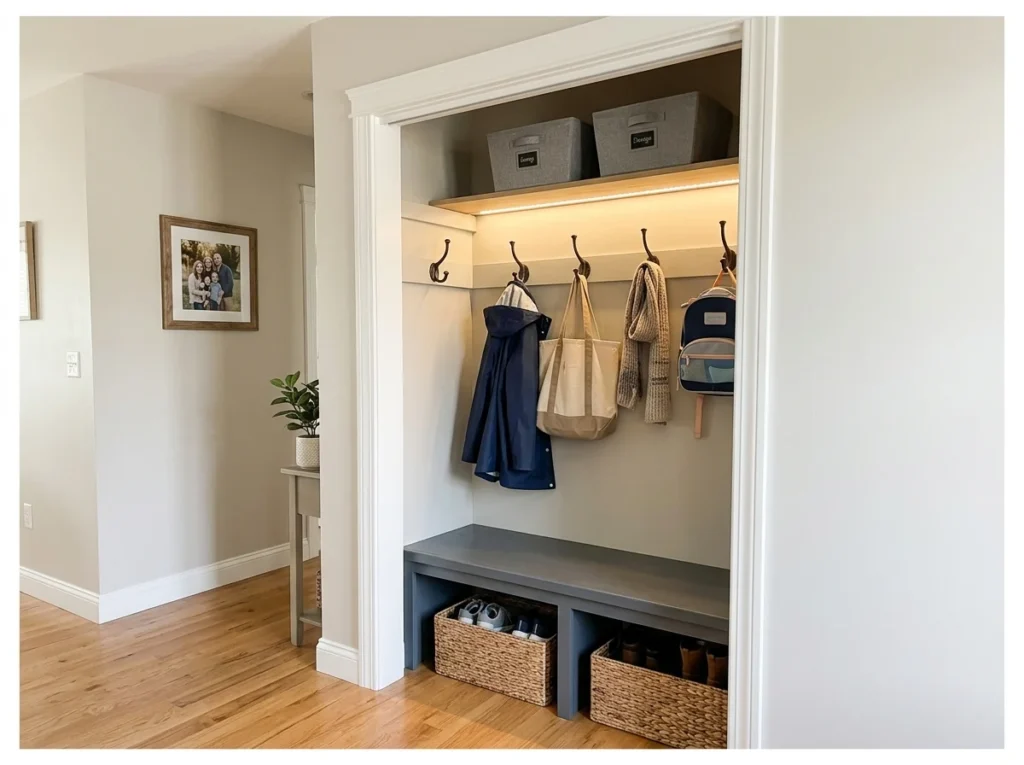
Converting an existing coat closet into an open mudroom nook by removing the doors and fitting a custom bench, hooks, and storage inside the opening creates a surprisingly spacious and functional mudroom within the footprint of a standard closet. No additional space is required.
Remove the closet doors, paint the interior a warm color, install LED strip lighting along the top, fit a bench with storage, and add hooks at two heights for coats and children’s items. The converted closet mudroom is one of the most transformative and affordable mudroom solutions available.
If square footage is tight in your own entry, a compact layout that still works hard has plenty of tricks worth borrowing.
Perfect for small spaces.
Small Charging Station
A small charging station built into the mudroom counter gives phones and tablets a spot to charge right by the door. Hidden outlets and a cable management box keep the counter from looking like a tangle of cords. This is a small addition, but it saves the daily scramble of hunting for a charger before heading out.
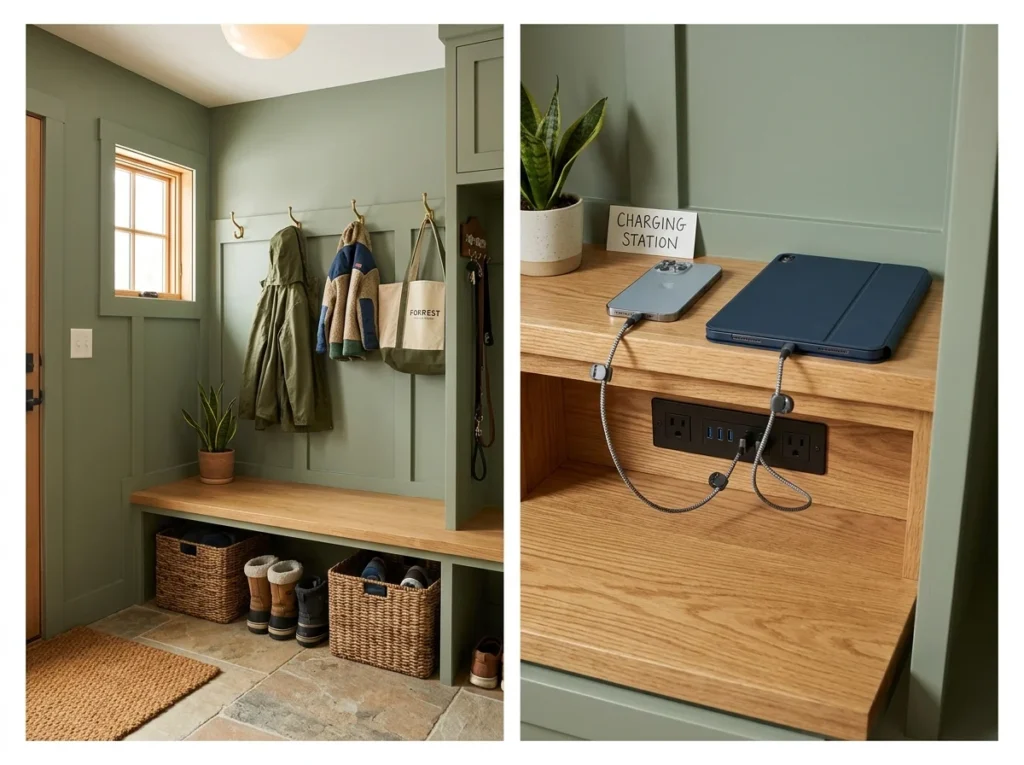
A small charging station built into the mudroom bench or shelf creates a designated landing spot for devices the moment family members enter the home. The mudroom is the natural location for devices because it is the first room entered and the last room before leaving.
A power strip with USB ports mounted inside the bench cabinet or integrated flush into the shelf surface keeps devices charged and in one known location. Devices charging in the mudroom means they are never on the kitchen counter or dining table and are always ready to take when leaving.
Window Seat Mudroom Nook
A window seat built into a mudroom nook adds natural light and a comfortable spot to sit while dealing with shoes and bags. Storage underneath the seat cushion adds function without taking up extra floor space. This setup works particularly well in mudrooms that already have a window along one wall.
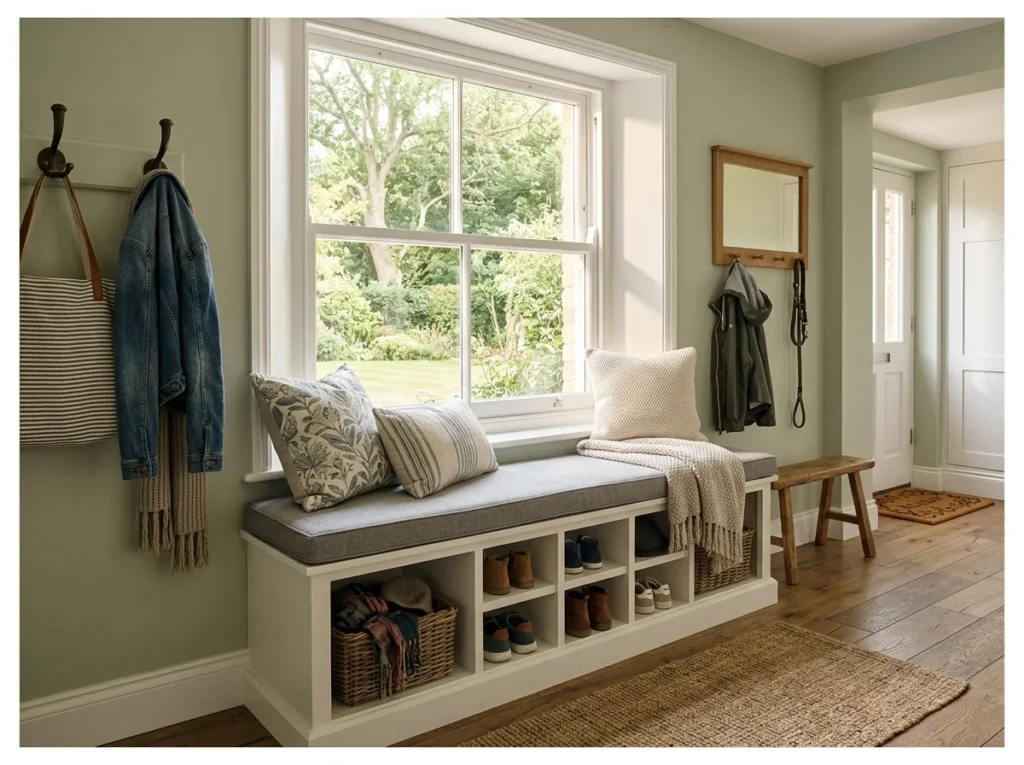
A window seat bench built beneath a mudroom window creates the coziest and most inviting version of the mudroom entry bench. Natural light above the sitting position creates a genuinely pleasant spot to sit while putting on shoes and makes the mudroom feel like a room rather than a utility space.
Storage beneath the window seat in lift-lid compartments or drawers provides generous concealed storage. Cushion the seat with a thick pad and add two or three decorative cushions. The window seat mudroom nook creates a charming entry that makes coming home feel like arriving somewhere genuinely welcoming.
The coziest mudroom element possible.
Mudroom with Laundry Integration
Combining the mudroom and laundry room means dirty clothes and muddy gear both get handled in one central spot. A folding counter above the washer and dryer doubles as extra surface space for bags or mail. This layout is especially practical for families with kids or pets who track in mess daily, since everything gets contained before it spreads through the house.
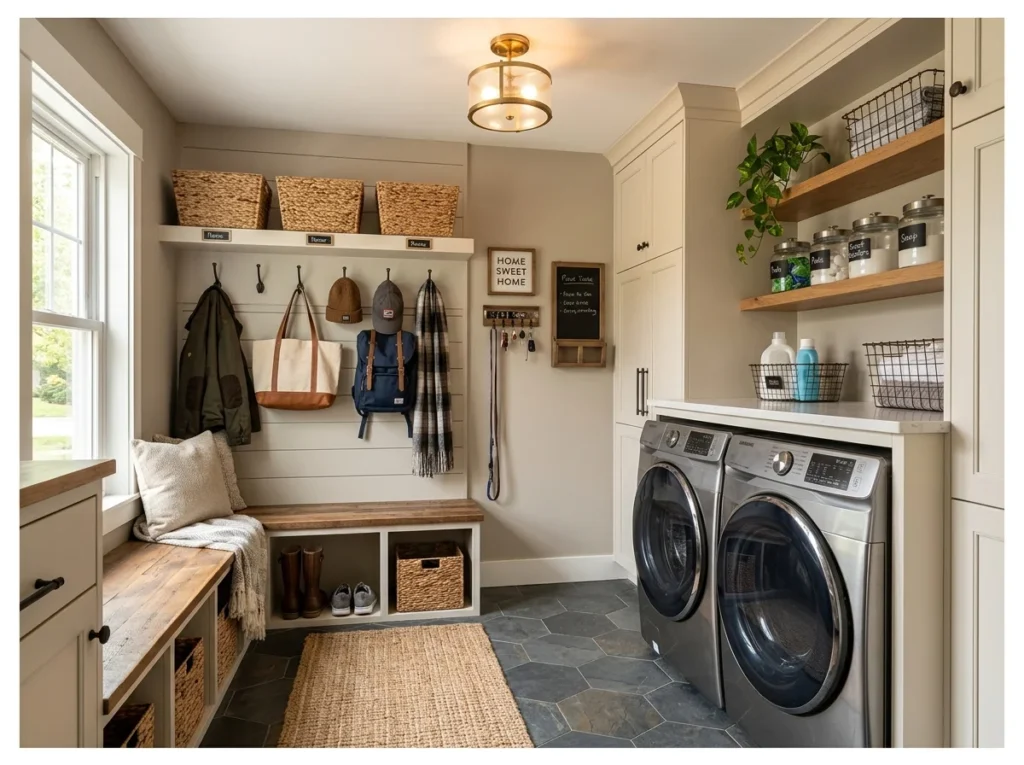
Combining the mudroom and laundry room into one space creates the most functionally efficient entry zone in any home. Muddy sports gear, wet coats, and dirty shoes arrive at the mudroom entry and the laundry is immediately accessible for direct washing without carrying anything through the house.
A laundry zone with washer, dryer, and folding counter on one side and the mudroom bench, hooks, and storage on the other creates a complete utility entry room. A folding counter above the appliances provides a work surface. The combined mudroom-laundry is one of the most practical dual-use room configurations in residential design.
Conclusion
A well-designed mudroom changes how the whole house functions. When coats, bags, and shoes have organized, designated homes right at the door, they do not spread through the rest of the house. The kitchen table stays clear. The hallway stays walkable. The living room stays tidy.
Start with the functional essentials: enough hooks, a bench for sitting, a floor that handles dirt, and storage for the items that currently end up everywhere. Then layer in the warmth: good lighting, a cushion, a plant, a seasonal wreath, and one framed piece that makes the mudroom feel genuinely considered.
The mudroom you want to walk into every evening is one planning session and one weekend away from becoming real.
And if the rest of the house could use the same organizing energy, a laundry space built to match is a natural next room to tackle.