A round dining table creates the most intimate and equal gathering space in any home. The right decor makes every meal feel like a special occasion.
These ideas elevate a round dining table from simply functional to genuinely beautiful at every meal.
Of course, seating that sets the mood too plays just as big a role in how the whole table feels.
Let’s get started.
Single Statement Centerpiece Vase
A single large vase placed at the center of the table can carry the whole tablescape on its own. This works best when the rest of the table stays simple, letting the vase be the clear focal point. Even without flowers, an interesting shape or texture is often enough to make it feel intentional.
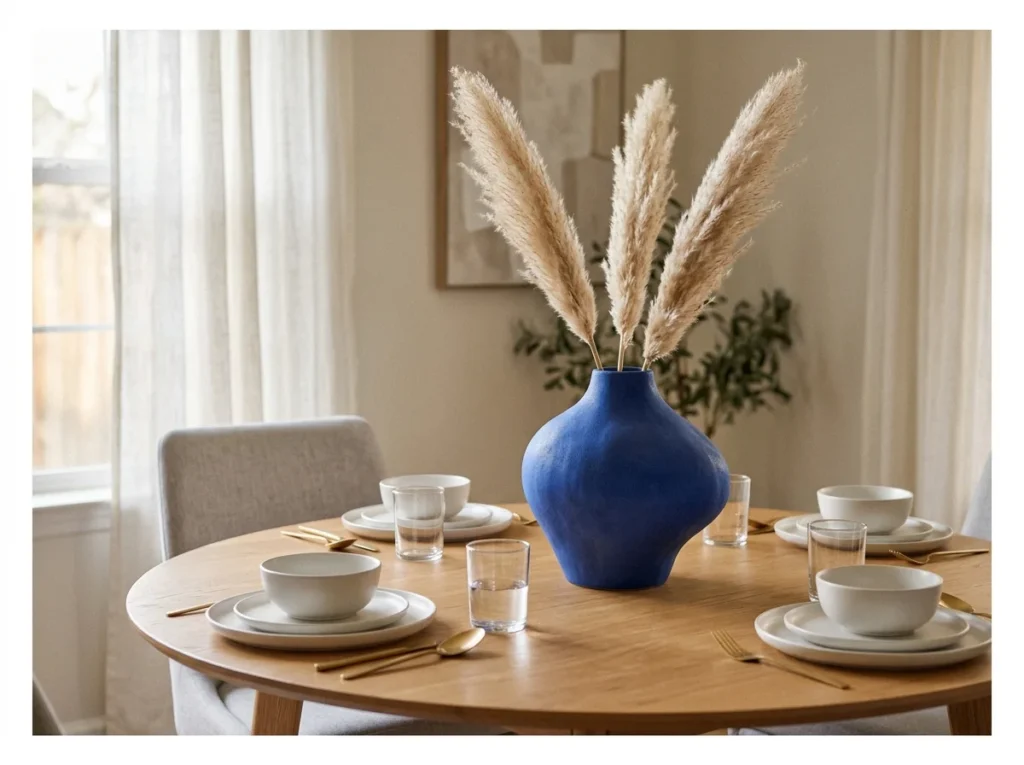
A single large statement vase placed precisely at the center of a round dining table creates the most confident and elegant centerpiece possible. The single object approach lets the vase speak completely without visual competition from surrounding objects.
Choose a vase with genuine sculptural presence. A height of 30 to 50 centimeters suits most round dining tables. Cobalt blue, deep terracotta, matte black, and warm stone all create beautiful centerpiece vase statements. The contained simplicity of one perfect object communicates design confidence more effectively than elaborate multi-piece arrangements.
One great object beats a crowded centerpiece every time.
Low Floral Arrangement
Keeping the arrangement low is important here, since anything too tall blocks the view across the table. This style works well for dinner parties where guests actually need to see and talk to each other. A wide, shallow bowl of flowers tends to suit this approach better than a tall vase.
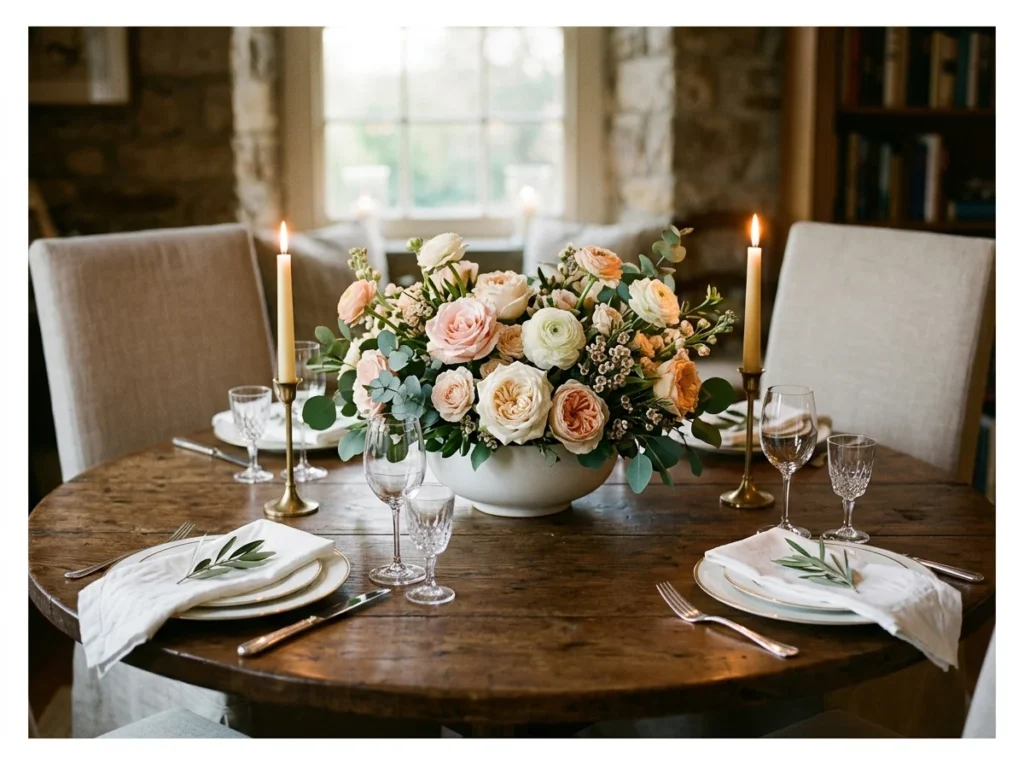
A low floral arrangement in a shallow bowl or squat vase sits below the natural sightline of seated diners, allowing unobstructed conversation across the table while still providing a beautiful, fragrant centerpiece at eye level when looking at the table surface.
The key measurement is keeping the arrangement below 25 centimeters in height. This ensures seated guests can see each other clearly across the center of the table. Generous, rounded arrangements of full garden roses, peonies, or ranunculus with trailing greenery create the most lush and beautiful low centerpieces.
Conversation-friendly elegance.
Cluster of Pillar Candles
Grouping pillar candles at different heights creates a warm glow without needing florals at all. Unscented candles are usually a better choice here so they don’t compete with the smell of food. This setup also works well left unlit during the day, since the candles themselves still look decorative.
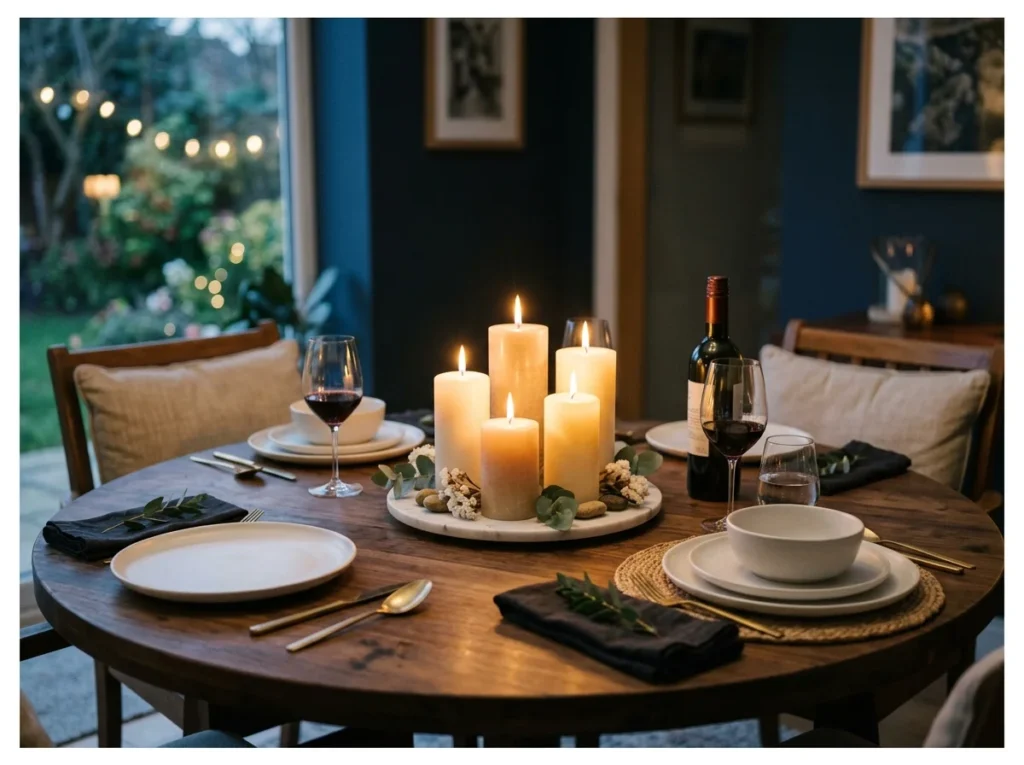
A cluster of three to five pillar candles at varying heights arranged on a small tray creates the most intimate and atmospheric centerpiece for a round dining table at evening meals. The warm flickering light creates beautiful illumination for everyone seated at the table.
Use candles of different heights within one tonal family: ivory, warm white, and soft cream. Place them on a marble, slate, or mirrored tray for visual containment and to protect the table surface. The circle of the tray mirrors the round table shape, creating a visual harmony between the centerpiece and the table beneath it.
Pure candlelit atmosphere.
Single Pendant Light Above
A single pendant hung above the table acts as the centerpiece from overhead instead of on the table itself. This frees up the table surface entirely for food and place settings. The fixture’s design carries the visual weight that a traditional centerpiece would otherwise provide.
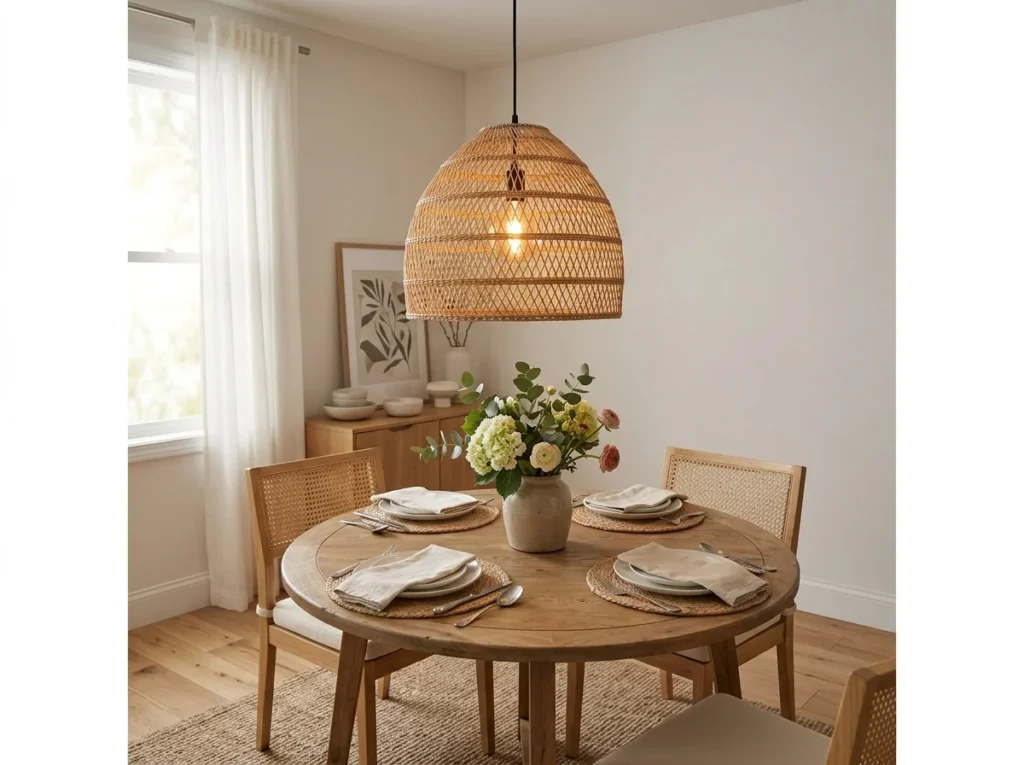
A single pendant light hung at the correct height directly above the center of a round dining table is the most important decor decision for any round dining room. The relationship between the pendant and the round table below creates the fundamental visual composition of the dining space.
The center of the pendant should hang approximately 70 to 85 centimeters above the table surface. The pendant diameter should be approximately 50 to 60 percent of the table diameter for ideal visual proportion. A round or dome pendant shape echoes the round table beneath it, creating a satisfying repetition of the circular form.
The lighting decision that defines the whole dining room.
For more on getting this exact choice right, the pendant that ties it all together is worth a closer look.
Tiered Candle Holder Centerpiece
A tiered holder adds height and structure by stacking candles at different levels. This creates more visual interest than a single row of matching candles placed flat on the table. Metal or glass tiers both work, though the finish should generally match other hardware in the room.
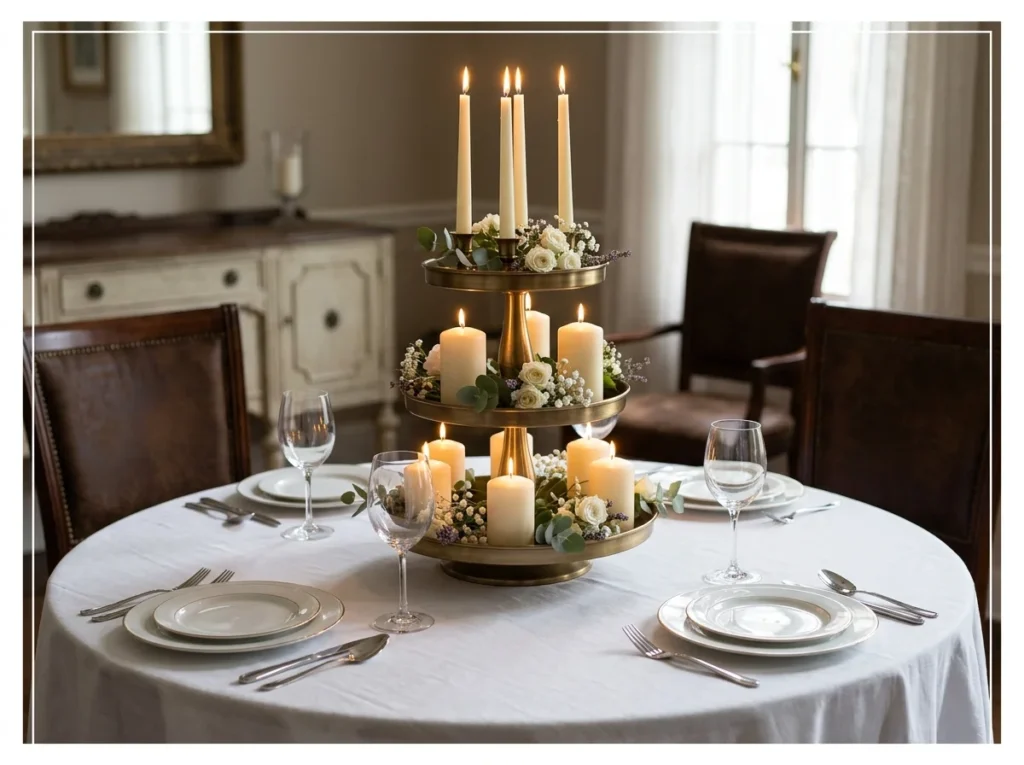
A tiered candle holder creates visual height and depth at the center of a round table through graduated levels rather than a single tall object. The multiple flame levels create a warm, dimensional light source that illuminates every seated face beautifully.
Tiered candle holders in brushed brass, black iron, or clear glass all create different aesthetic characters. The graduated heights, tallest at the top and shortest at the base, draw the eye upward from the table surface while keeping the overall height manageable enough to allow conversation across the table.
Seasonal Botanical Centerpiece
Using whatever greenery or branches are in season keeps the centerpiece feeling current rather than static. Pine in winter or magnolia leaves in fall are both common choices that shift with the calendar. This approach also tends to cost less than buying fresh flowers for every gathering.

A seasonal botanical centerpiece changes with the calendar to keep the round dining table feeling current and connected to the time of year. Spring brings tulips and cherry blossom branches, summer brings garden roses and herbs, autumn brings pumpkins and dried leaves, winter brings evergreen branches and berries.
The seasonal approach keeps the dining table feeling fresh without requiring new permanent decor purchases. Many seasonal centerpiece components come directly from the garden, the grocery store, or the surrounding landscape at no cost. The changing centerpiece also creates a satisfying ritual of refresh throughout the year.
A dining table that changes with the seasons.
Marble Lazy Susan as a Decor Hub
A marble lazy susan combines function and decor by giving guests an easy way to pass dishes around. When not in use for food, it can hold small candles or a short arrangement instead. The stone surface also adds a bit of texture that a plain wood table doesn’t have on its own.
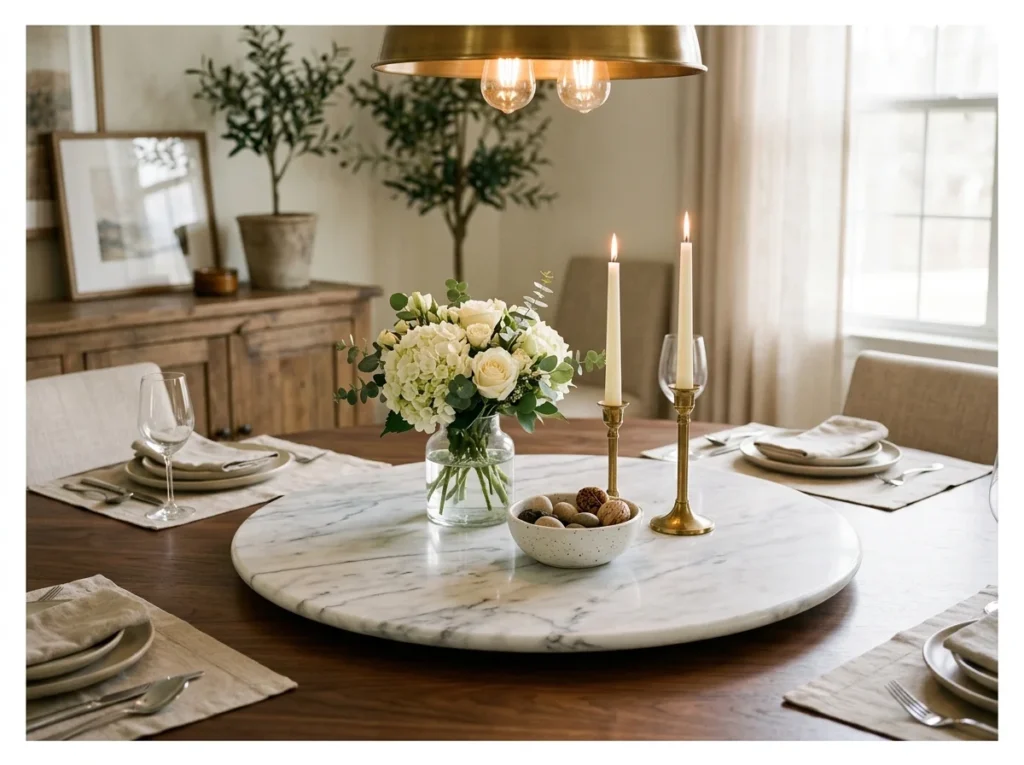
A marble lazy Susan becomes a composed decor hub when styled with a small vase, candles, and a few carefully chosen objects arranged on its circular surface. The rotating platform allows guests to access shared items while the marble itself adds a luxurious material quality to the table center.
Once the table itself is styled, a room dressed to match the table brings the same care to everything around it.
The circular lazy Susan mirrors the shape of the round table beneath it, creating a satisfying concentric circle composition. White Carrara marble, Nero Marquina, and warm honey onyx all create beautiful lazy Susan surfaces. The circular containment of the marble surface also makes everyday table styling and cleanup easier.
Woven Rattan Placemats
Rattan placemats bring texture to the table without needing a separate centerpiece to do the work. This works especially well for casual meals where a full floral display might feel too formal. The natural material also pairs easily with both wood and ceramic dinnerware.
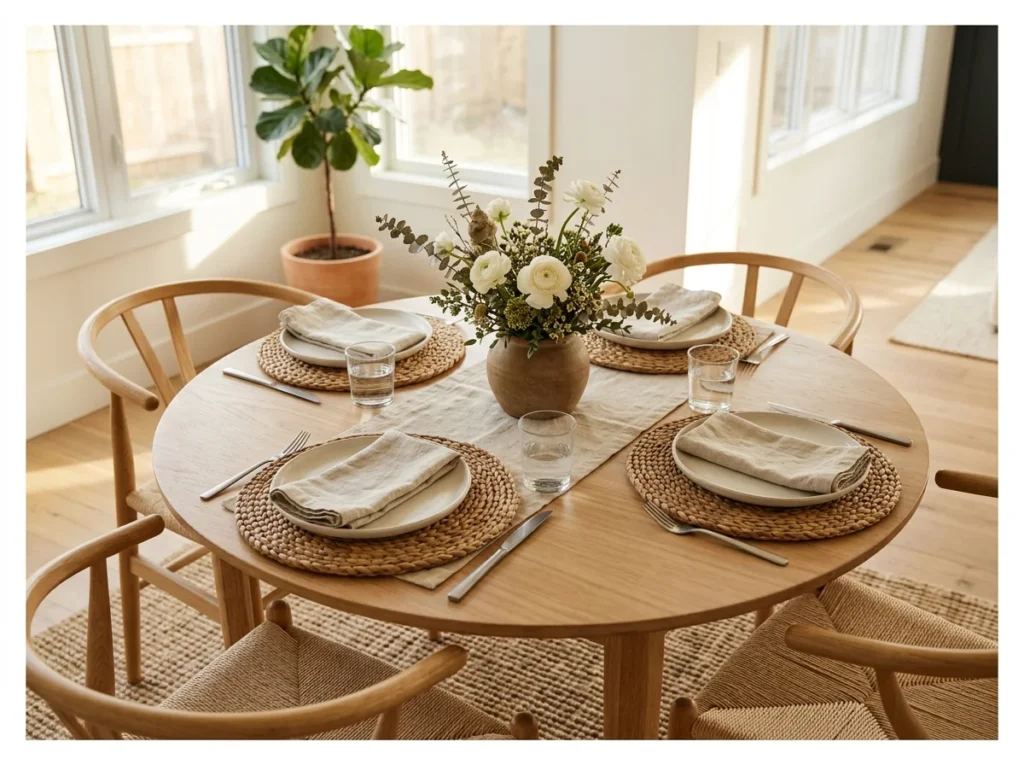
Round woven rattan or seagrass placemats at each place setting on a round dining table create a beautiful visual rhythm of repeating circles that reinforces and celebrates the round table’s natural geometry. The natural fiber texture adds organic warmth to the table setting.
Round placemats of 38 to 40 centimeters diameter suit most standard round dining chairs. The natural rattan tone complements white ceramic, linen napkins, and warm-toned glassware beautifully. Woven placemats also protect the table surface naturally during daily meals.
If natural textures like this are your thing, a farmhouse feel for the whole setting can carry it through the rest of the room.
Natural warmth in every setting.
Linen Napkins with Rings
Simple linen napkins secured with rings dress up each place setting individually rather than relying on the center of the table. This detail works well for both everyday meals and slightly more formal dinners. Mixing napkin colors while keeping the rings consistent is a common way to add subtle variety.
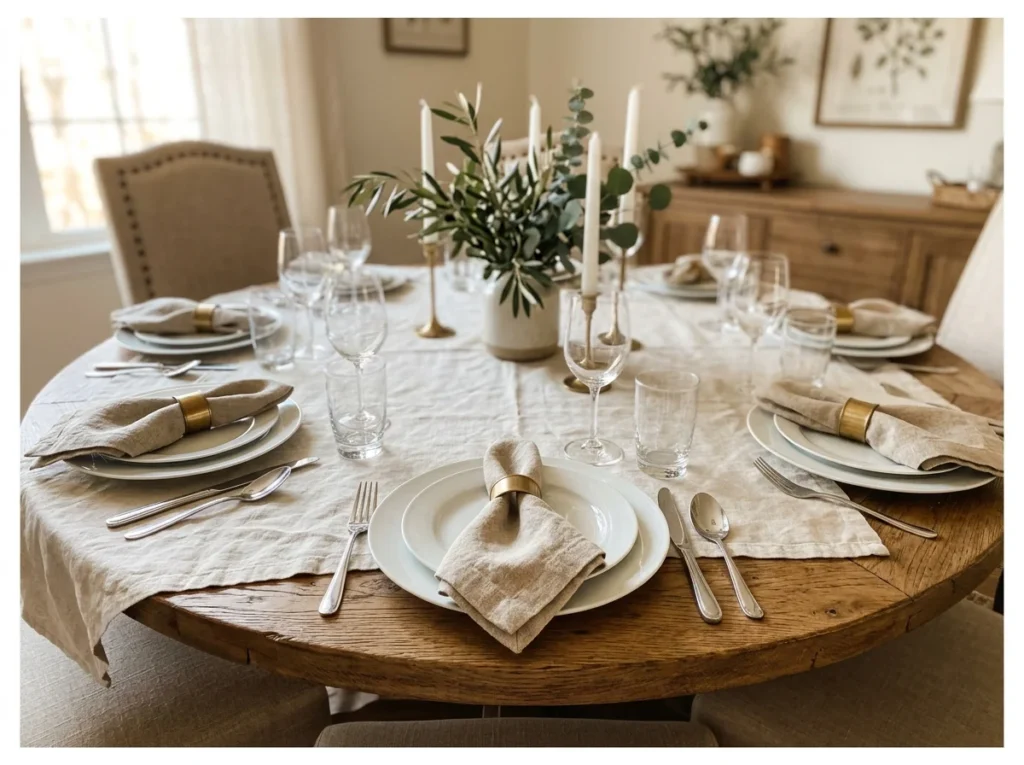
Properly styled linen napkins secured with decorative napkin rings immediately elevate a round dining table setting from casual to genuinely elegant. The napkin ring creates a visual event at each place setting that signals care and intention.
Brushed brass, matte black, woven rattan, and ceramic napkin rings all suit different table aesthetics. Natural linen napkins in undyed or soft sage, dusty rose, or warm cream tones are the most universally beautiful napkin choice for round dining tables. A simple roll fold or loose fan fold showcases both the napkin and ring elegantly.
The smallest detail that makes the biggest difference.
Simple Greenery and Herbs
A scattering of loose greenery or herbs down the table adds color without the structure of a formal arrangement. Rosemary or eucalyptus sprigs are common choices since they also add a light scent. This approach tends to suit more relaxed, family style dinners rather than formal occasions.
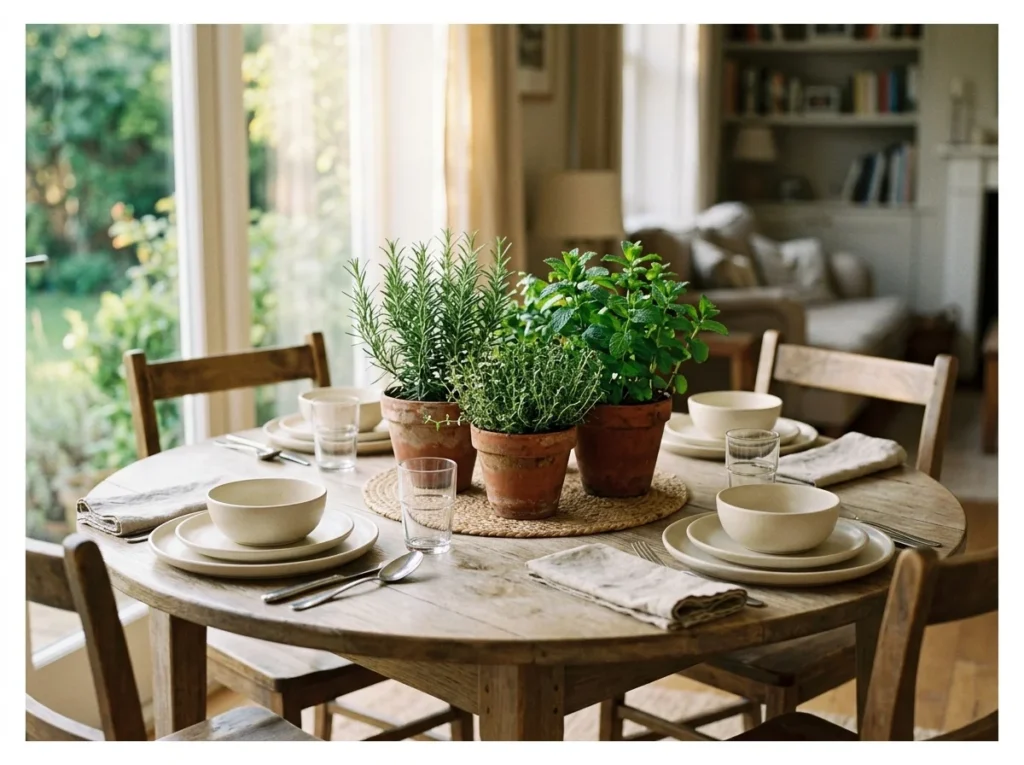
Small terracotta pots of fresh growing herbs arranged as the round dining table centerpiece create a living, fragrant centerpiece that is simultaneously decorative and genuinely useful. Guests can pinch fresh herbs for their food directly from the table center.
Rosemary, thyme, mint, and basil all suit dining table herb centerpieces because they are fragrant, visually attractive, and relevant to the cooking happening nearby. Three small terracotta pots arranged in a loose triangle on a small wooden board creates a complete centerpiece for under a few dollars.
If fresh herbs have you thinking greener overall, a greener take on the dining room shows how far that palette can go.
Budget-friendly option that is genuinely practical.
Lantern Centerpiece
A lantern with a candle inside adds a contained, flicker of light that’s less likely to blow out than an open flame. This works well both indoors and for outdoor dining where wind might otherwise be an issue. Metal or glass lanterns can be dressed up further with a bit of greenery tucked around the base.
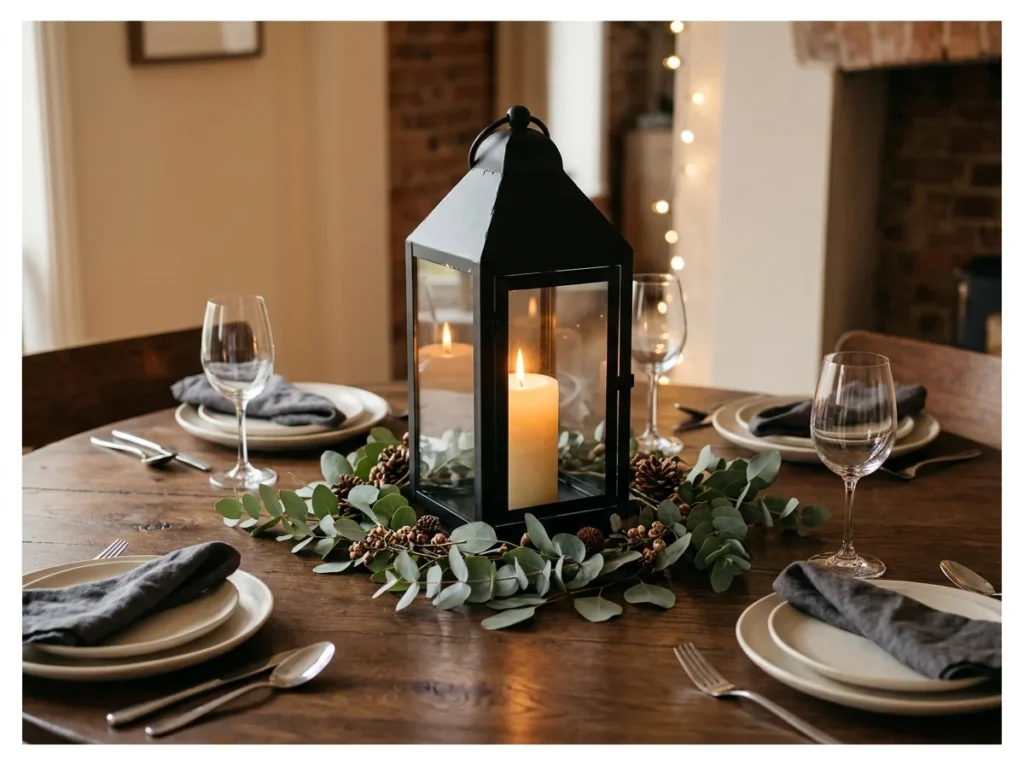
A lantern with a pillar candle inside creates a focused, glowing centerpiece that suits round dining tables of every size. The enclosed flame of a lantern is safer than open candles, which makes it genuinely practical for households with children or in breezy outdoor dining situations.
Black iron lanterns suit farmhouse and contemporary dining rooms. Clear glass lanterns suit coastal and minimal aesthetics. Brass or gold lanterns suit glamorous and transitional dining rooms. Surround the base with trailing eucalyptus or seasonal foliage for a complete and lush centerpiece that takes under five minutes to assemble.
Sculptural Object Centerpiece
A single sculptural piece, whether ceramic or wood, replaces flowers as the table’s main visual interest. This option requires no upkeep and can stay on the table between meals without wilting or needing water. It tends to suit more modern or minimalist dining rooms particularly well.
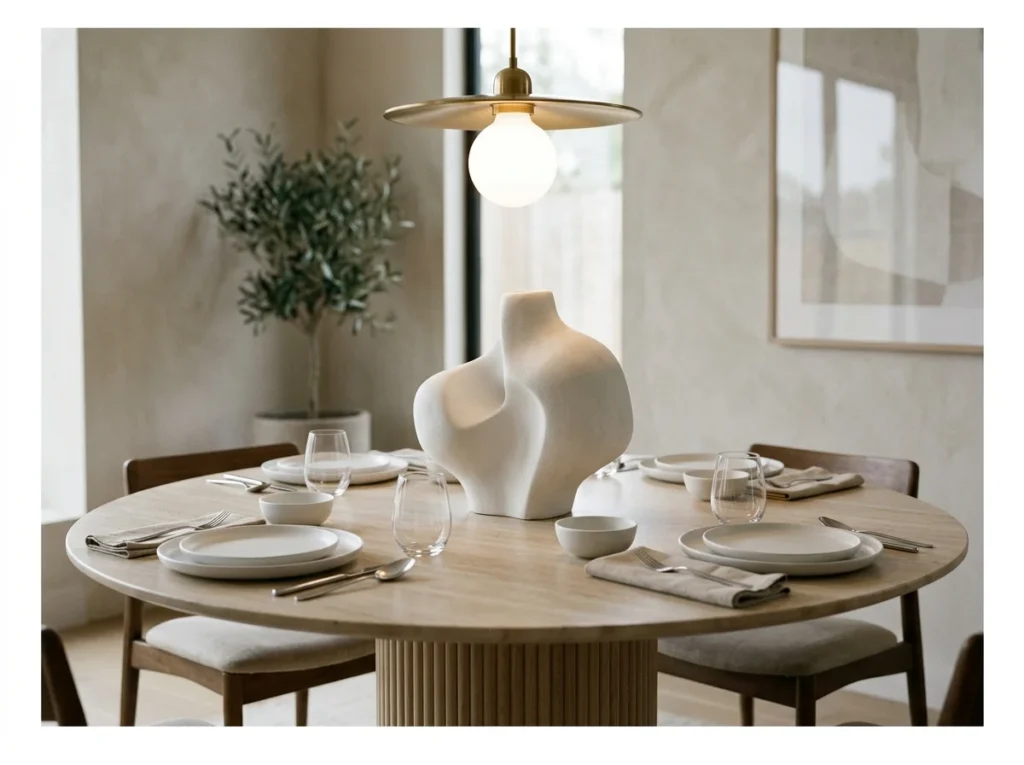
A sculptural object rather than a floral or candle centerpiece creates a dining table that feels genuinely artful rather than conventionally styled. A large ceramic vessel, an abstract figurine, or a beautifully formed stone object creates a centerpiece with genuine artistic presence.
The sculptural centerpiece suits contemporary, minimal, and art-forward dining rooms where the table setting is treated as a design composition rather than a conventional tabletop arrangement. One single sculptural object of significant scale and quality creates more visual impact than multiple smaller decorative items competing for attention.
Layered Table Runner
A table runner layered over a tablecloth adds texture and a defined stripe of color down the center. This also gives a natural spot to place smaller decor items like candles or a short vase. Mixing patterns or textures between the runner and tablecloth adds depth without much extra effort.
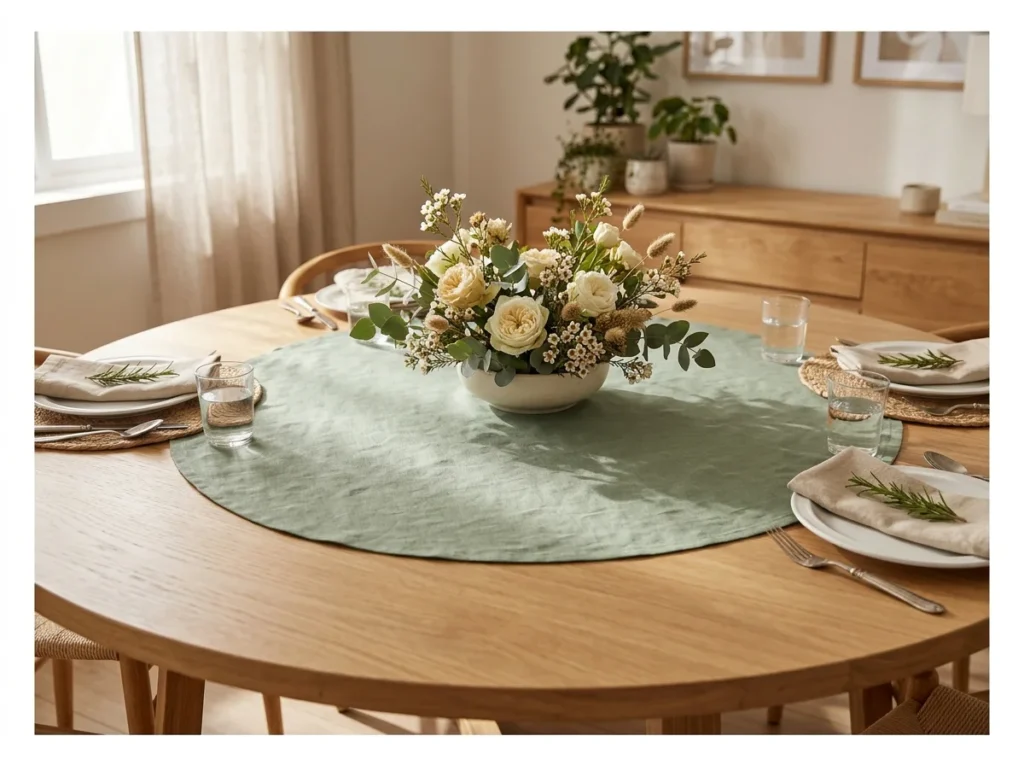
A circular table runner designed specifically for round tables lays flat across the table center and creates a defined styling zone for the centerpiece arrangement without requiring a full tablecloth. The runner adds color, texture, and visual warmth to the natural table surface.
Circular runners in natural linen, woven cotton, and embroidered fabric all suit different round dining table aesthetics. Position the centerpiece arrangement on top of the runner to create a layered composition with depth and visual interest. The runner also protects the center of the table from heat damage from serving dishes.
Geometric Tray with Objects
A tray groups smaller decorative items together, keeping the table from looking scattered. Candles, small vases, or a few decorative objects can all sit within the tray’s defined edges. This makes it easy to move the whole arrangement at once when the table needs to be cleared.
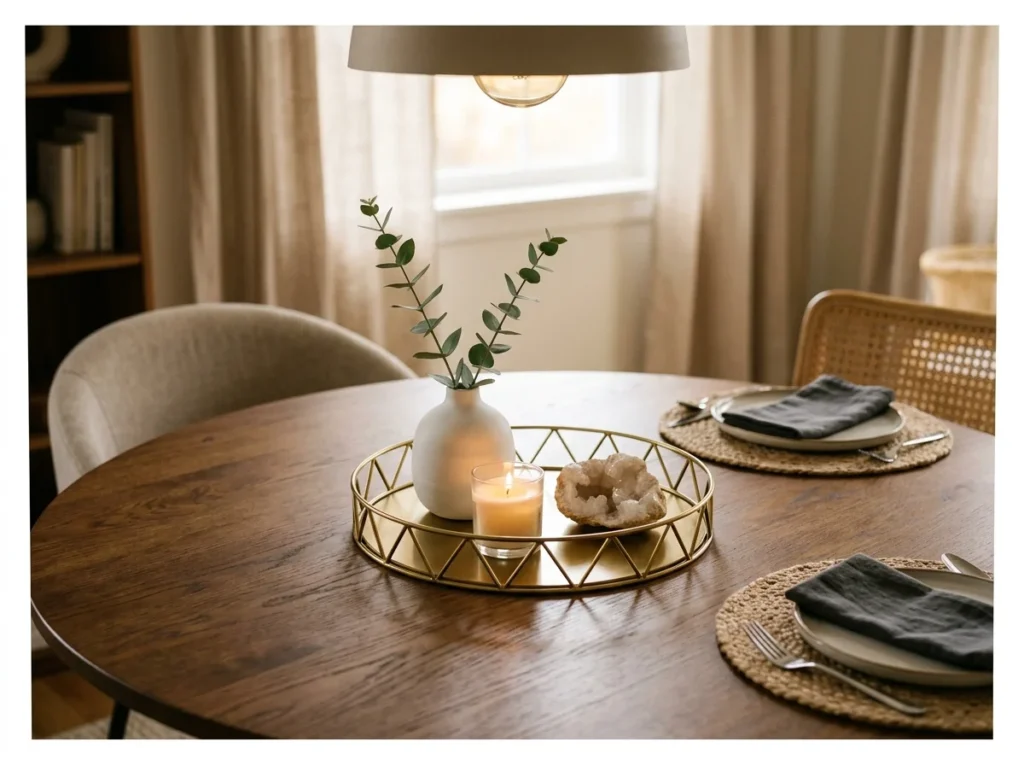
A round geometric tray in brass, marble, or lacquered wood creates a defined display zone at the center of the round dining table. The tray contains the centerpiece objects visually and creates a composed, framed quality that loose objects placed directly on the table cannot achieve.
A round tray on a round table creates a satisfying concentric circle composition. Keep the objects within the tray to three or fewer: one small vase, one candle, and one additional decorative object. The containment and restraint of the tray arrangement signals design confidence.
Perfect for small round tables.
Mix of Candlesticks at Varied Heights
Candlesticks in varying heights create a more dynamic look than a single row of matching ones. This works particularly well down the center of a long table, where the height changes catch the eye as you walk past. Mixing metal finishes, like brass and black, adds even more variety to the arrangement.
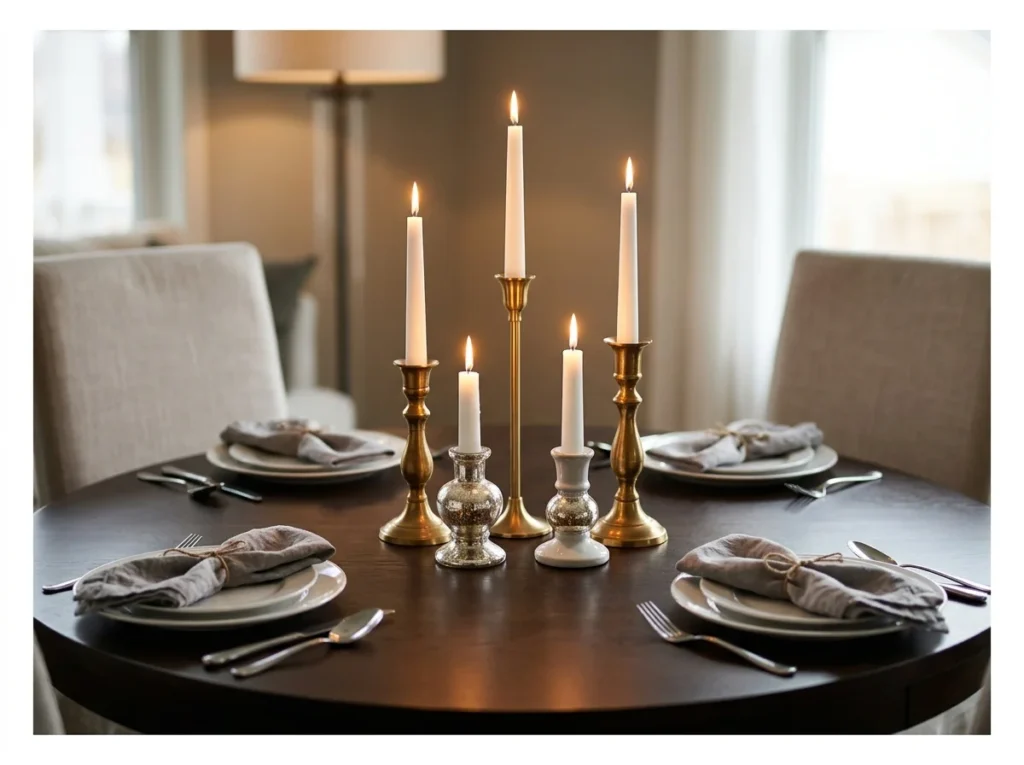
A grouping of five candlesticks at varied heights creates a dynamic, layered centerpiece that creates beautiful warm light across all sides of the round table equally. The varied heights produce visual rhythm while the consistent candle color and holder finish creates cohesion.
Group candlesticks in odd numbers of three or five with the tallest at the center and progressively shorter holders toward the outside of the arrangement. Brushed brass, matte black, and clear glass are the three most versatile candlestick finishes for round dining tables. All should hold taper candles of the same color.
Dried Flower Arrangement
Dried flowers hold their shape and color for months, which makes them a low maintenance centerpiece option. Pampas grass, dried eucalyptus, and wheat stems are all common choices for this style. This arrangement also tends to suit a more neutral, earthy toned tablescape.
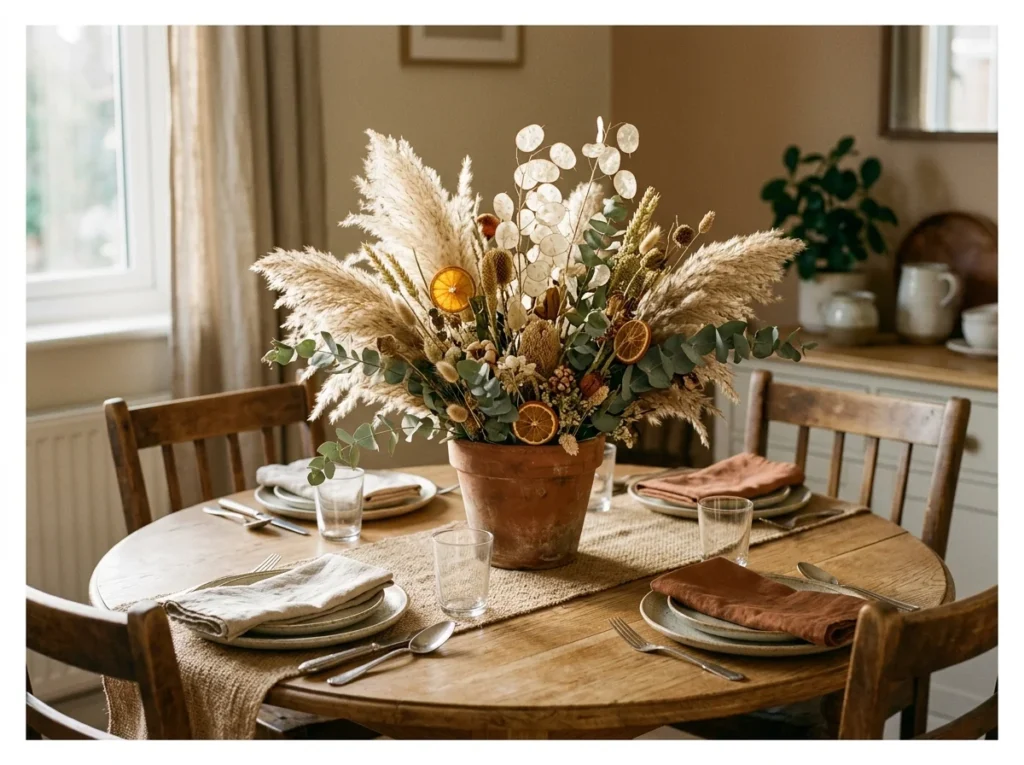
A dried flower arrangement as the round dining table centerpiece creates a permanent, low-maintenance centerpiece that looks beautiful every day without requiring fresh flowers or regular replacement. The muted, natural tones of dried botanicals complement every dining room palette.
Pampas grass, dried lunaria, preserved eucalyptus, dried ranunculus, and cotton stems all work beautifully in dining table dried arrangements. Loose, abundant arrangements with natural movement suit round tables better than tightly structured arrangements. The centerpiece lasts months or years with no maintenance beyond occasional gentle dusting.
Permanent beauty, zero maintenance.
Single Branch in a Tall Vase
A single branch in a tall vase adds height and a bit of drama without the bulk of a full floral arrangement. This works especially well with bare branches in winter or blossoming ones in spring. The minimal approach also keeps the table from feeling overly styled or busy.
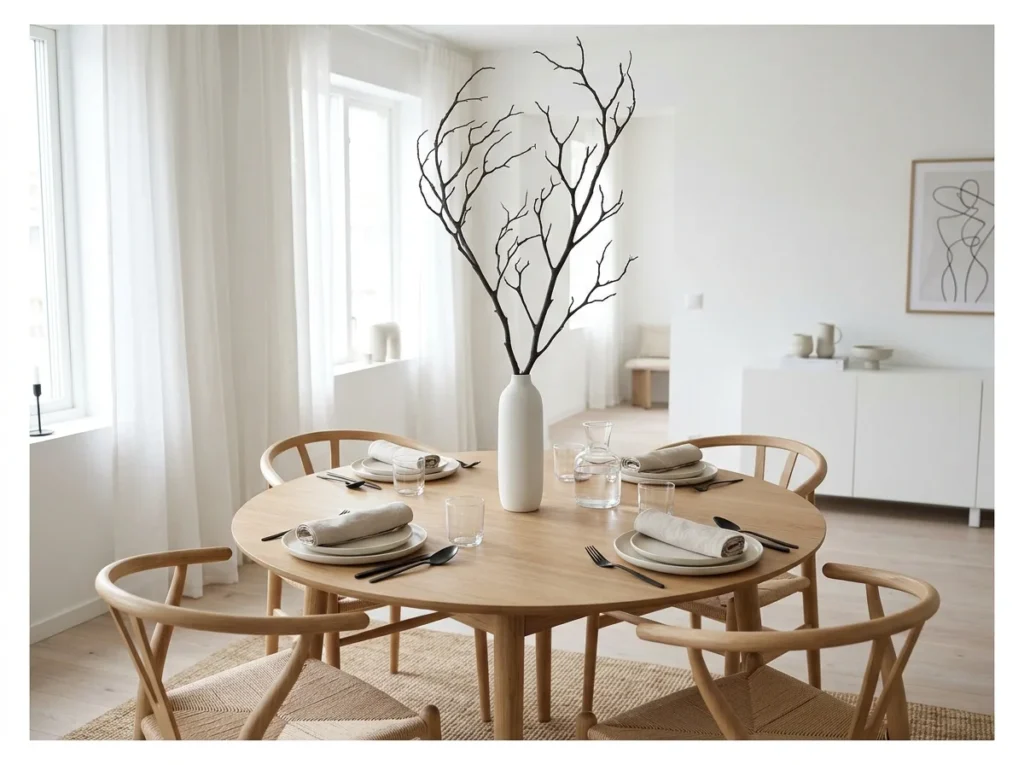
A single architectural branch, whether cherry blossom in spring, bare sculptural branches in winter, or eucalyptus stems in summer, placed in a tall slim vase creates a dramatic vertical centerpiece that brings the quality of Japanese ikebana flower arrangement to the dining table.
The key is choosing a branch with genuine sculptural presence. A pale white cherry blossom branch in early spring creates the most visually spectacular single-stem centerpiece. Bleached white preserved branches create a permanent architectural centerpiece. The restraint of one significant branch creates more visual impact than a busier arrangement.
Seasonal Fruit Bowl
A bowl of seasonal fruit doubles as both decor and something guests can actually eat. Citrus in winter or stone fruit in summer both add natural color to the table. This option tends to suit casual, everyday dining more than formal dinner settings.
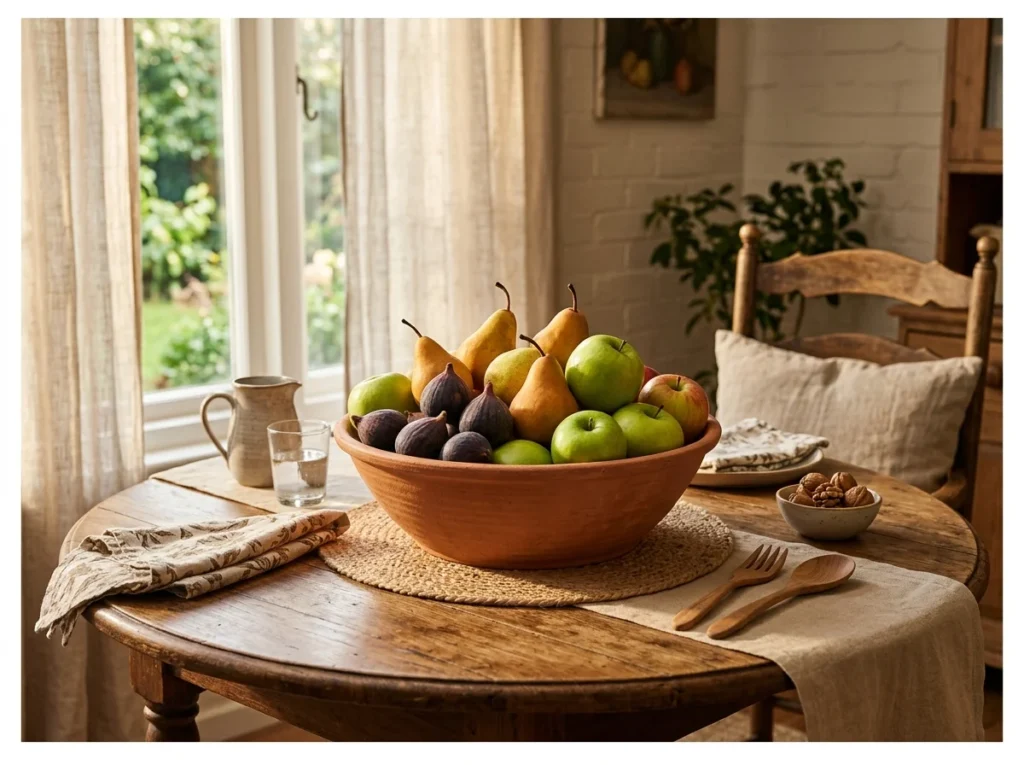
A generously filled fruit bowl makes one of the most naturally beautiful and genuinely practical dining table centerpieces available. A wide, shallow ceramic or wooden bowl filled with seasonal fruits creates a centerpiece that is simultaneously decorative, fragrant, and completely edible.
Choose fruits within a limited color palette for the most composed visual result. Purple figs, golden pears, and dark cherries create a sophisticated autumn palette. Green apples and lemons create a fresh summer palette. A genuinely abundant bowl that is truly full always looks more beautiful than a sparse one.
Budget-friendly option that is also genuinely useful.
Neutral Linen Tablecloth
A neutral linen tablecloth gives the table a soft, textured base without introducing any pattern. This works as a foundation that other decor, like candles or a small vase, can sit on top of. Linen’s slightly wrinkled texture also tends to look more relaxed than a perfectly pressed cotton cloth.
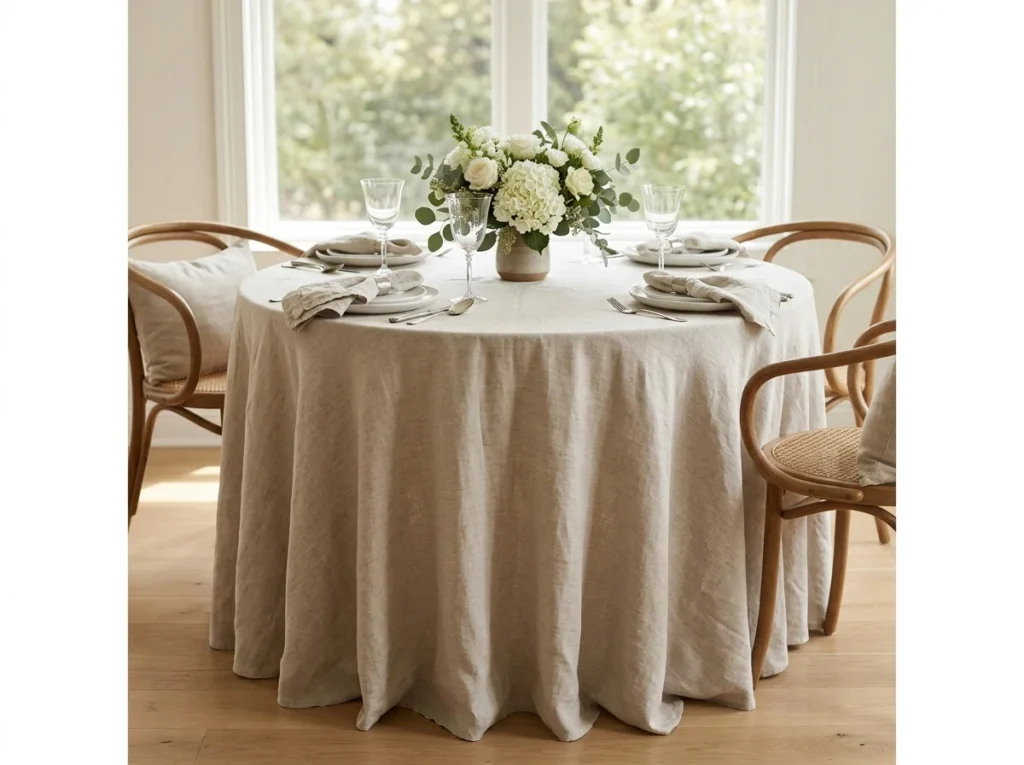
A floor-length natural linen tablecloth creates instant elegance on a round dining table. The fabric falls evenly all the way around the circular table, creating a soft, draped quality that completely transforms the table from a piece of furniture into a dressed dining destination.
Natural undyed linen in its characteristic oatmeal tone is the most versatile tablecloth choice because it complements every place setting color, every centerpiece style, and every dining room aesthetic. Linen softens with every wash and becomes more beautiful over years of use.
The table transformation that takes thirty seconds.
Crystal or Glass Candle Holders
Crystal or glass holders catch and reflect candlelight in a way that solid metal or ceramic ones don’t. This adds a bit of sparkle to the table, especially once the sun goes down. A few of these holders grouped together tend to look more effective than just one on its own.
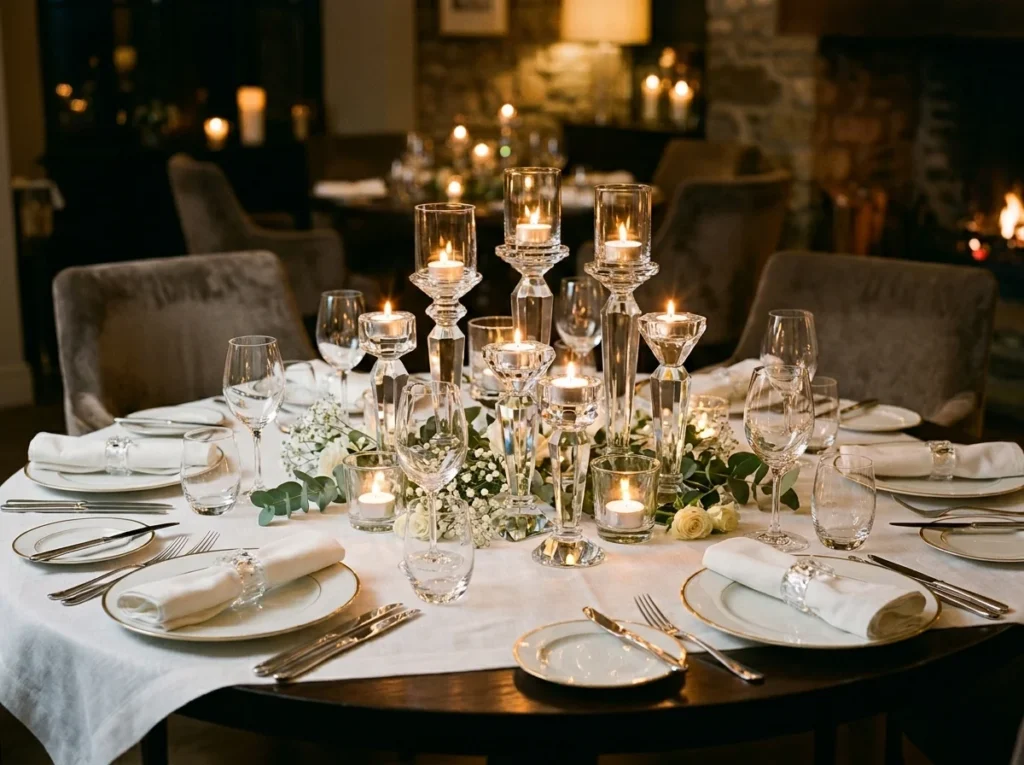
Crystal and glass candle holders arranged as a round dining table centerpiece create a sparkling, light-catching display that multiplies the warm candlelight into thousands of tiny reflections. The prismatic quality of crystal creates an effect no opaque material can replicate.
A mix of crystal candlesticks, mercury glass votive holders, and clear glass pillar candle vessels creates a varied but cohesive glass arrangement. The transparency of the glass allows each candle flame to glow from within, creating both a light source and a visual object of genuine beauty.
Matching Dinnerware as Decor
Coordinated dinnerware can act as the table’s decor on its own, without needing a separate centerpiece. This works well for tables that already have a strong pattern or color running through the plates and bowls. Keeping the rest of the table simple lets the dinnerware itself stand out.
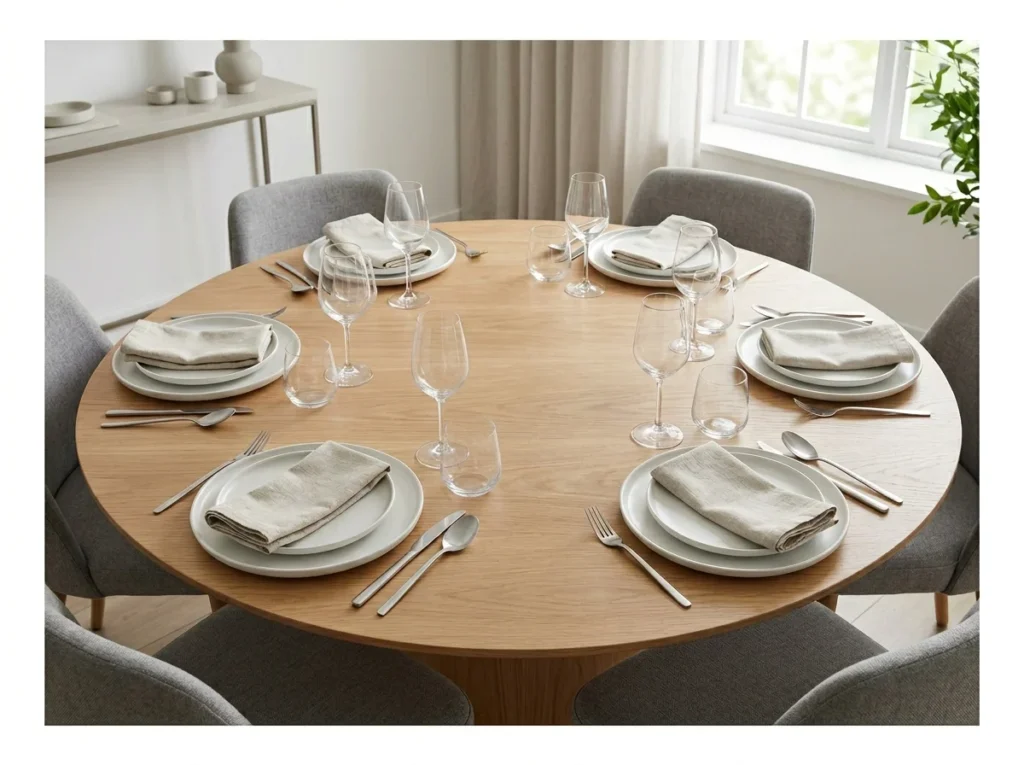
Using beautifully matched dinnerware laid out with precision at each place setting creates a dining table where the decor is entirely the tableware itself. A round table set with identical plates, identical glassware, and consistently folded linen napkins creates a composed, elegant visual without any separate centerpiece.
This approach suits contemporary and minimalist dining rooms where restraint is a core design principle. The dining table becomes a precise composition of circles: the round table, the round plates, and the round rim of each glass all reinforcing the central circular form.
For those who want to push this restraint even further, a more elevated take on the room offers plenty of inspiration.
Minimal yet completely beautiful.
Single Perfect Plant
One well chosen plant, kept small enough not to block sightlines, brings life to the table without much fuss. A small potted herb or a compact succulent both work well for this purpose. This option also lasts far longer than fresh cut flowers with very little upkeep required.
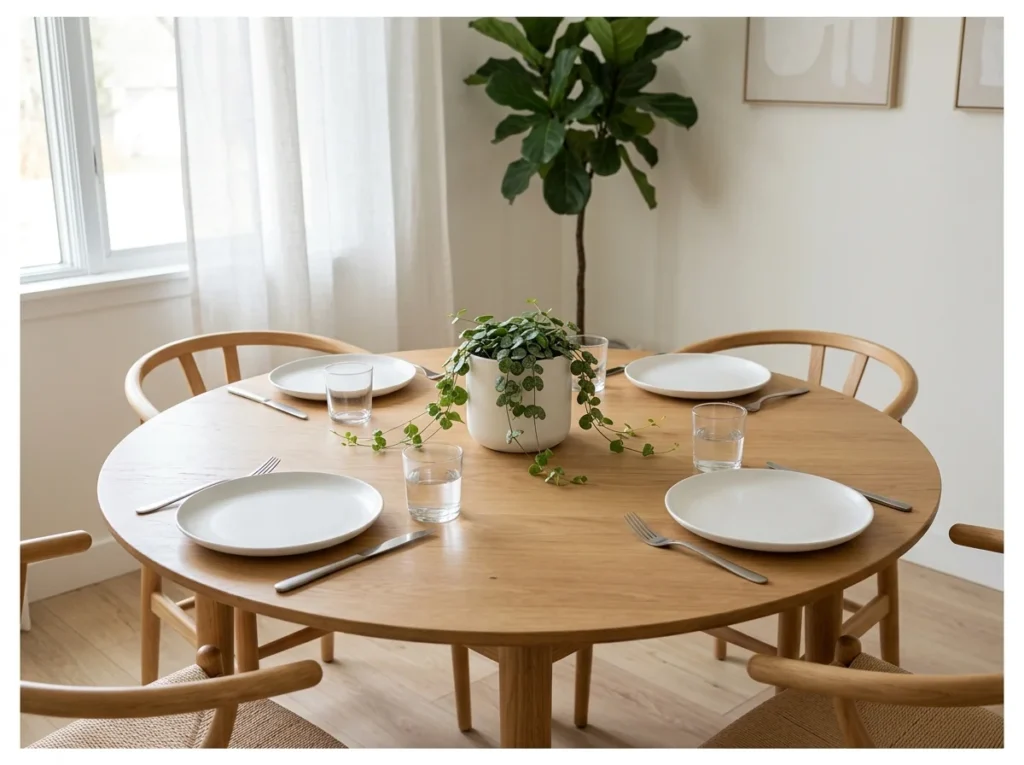
A single small plant in a beautiful ceramic pot at the center of a round dining table creates a living centerpiece that requires minimal maintenance and stays genuinely fresh and vibrant. A trailing pothos, a small ficus, or a compact succulent all suit the dining table position.
The single plant approach suits round dining tables used daily because it requires no refreshing or replacement on a regular basis. The plant grows and becomes more beautiful over time. A ceramic pot in a tone that complements the dining room palette makes the plant feel deliberately chosen rather than randomly placed.
Terracotta and Earthy Toned Styling
Terracotta pots or dishware bring a warm, earthy tone that suits a more rustic table setting. This pairs naturally with dried flowers, wood accents, or woven placemats already on the table. The overall effect feels grounded rather than polished or overly formal.
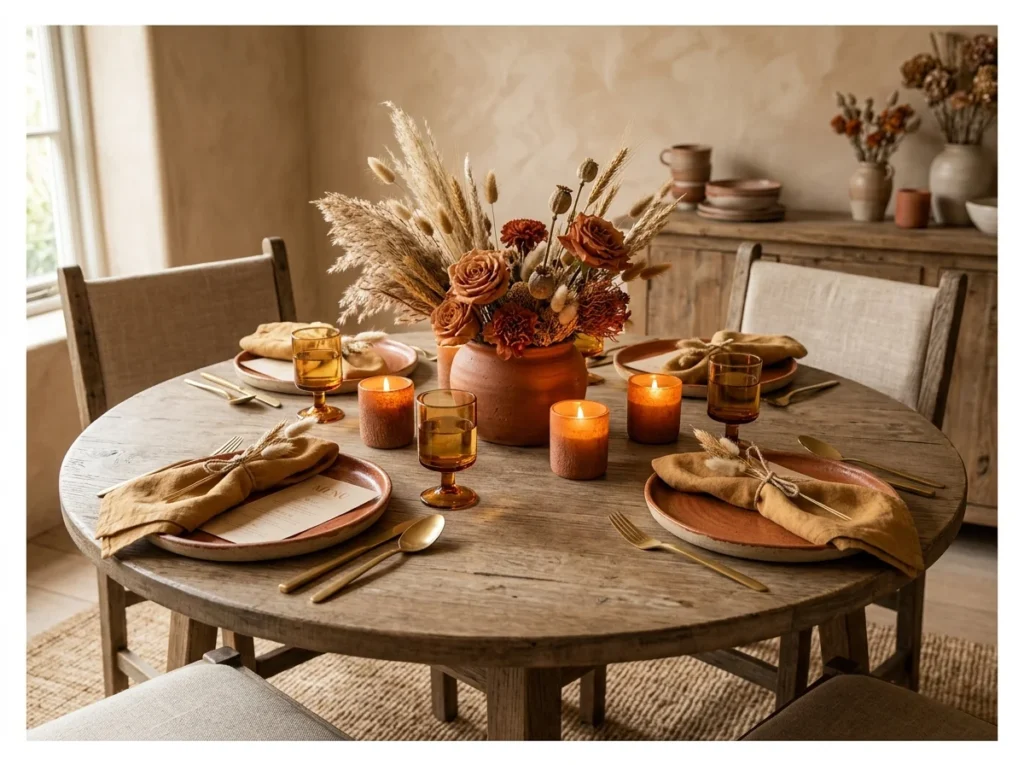
A terracotta and earthy toned round dining table styling uses warm clay, ochre, burnt orange, and dusty brown tones throughout the dinnerware, napkins, centerpiece, and candles to create a cohesive, warm dining table atmosphere. The earthy palette references the natural world and creates an unmistakably warm and inviting table.
Terracotta ceramic dinnerware, undyed linen napkins with a warm tone, and a centerpiece of dried grasses and warm-toned flowers in a terracotta pot creates a completely composed earthy dining table. This styling suits autumn and winter meals particularly well.
Warm, earthy, and deeply inviting.
Minimalist Single Stem in Bud Vase
A single stem in a small bud vase is about as simple as a centerpiece can get. Placing one at each setting, rather than a single large arrangement, spreads the detail across the whole table. This approach suits tables that already have a lot going on through dinnerware or linens.
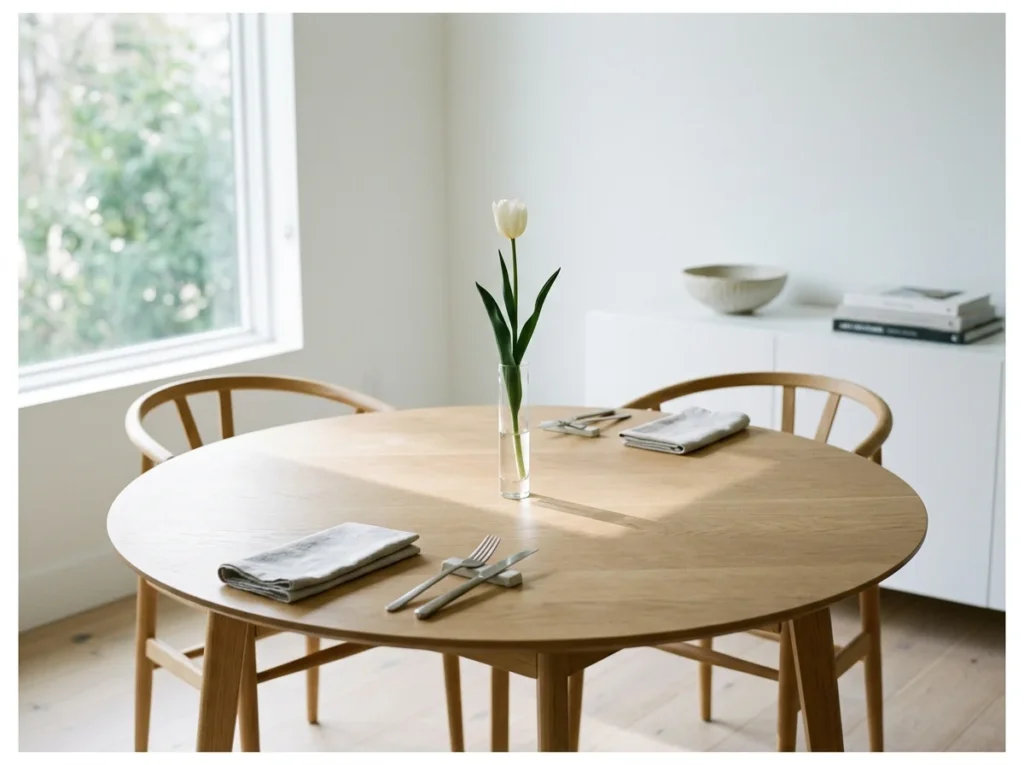
A single perfect flower stem in a slim glass bud vase at the center of a round dining table creates a centerpiece of extraordinary restraint that speaks through simplicity. One white tulip, one garden rose, or one eucalyptus branch is genuinely enough when placed in the right vessel.
This approach suits everyday dining rather than formal occasions and creates a dining table that feels thoughtfully prepared without demanding significant effort or expense. A fresh single stem replaced weekly keeps the dining table alive and seasonal for the cost of almost nothing.
Budget-friendly option with genuine elegance.
Festive Seasonal Table Setting
A festive setting pulls in seasonal colors and small themed details specific to the occasion. This might include anything from autumn leaves in fall to ornaments and pine during the winter holidays. The goal here is usually to mark the occasion clearly rather than keep things understated.
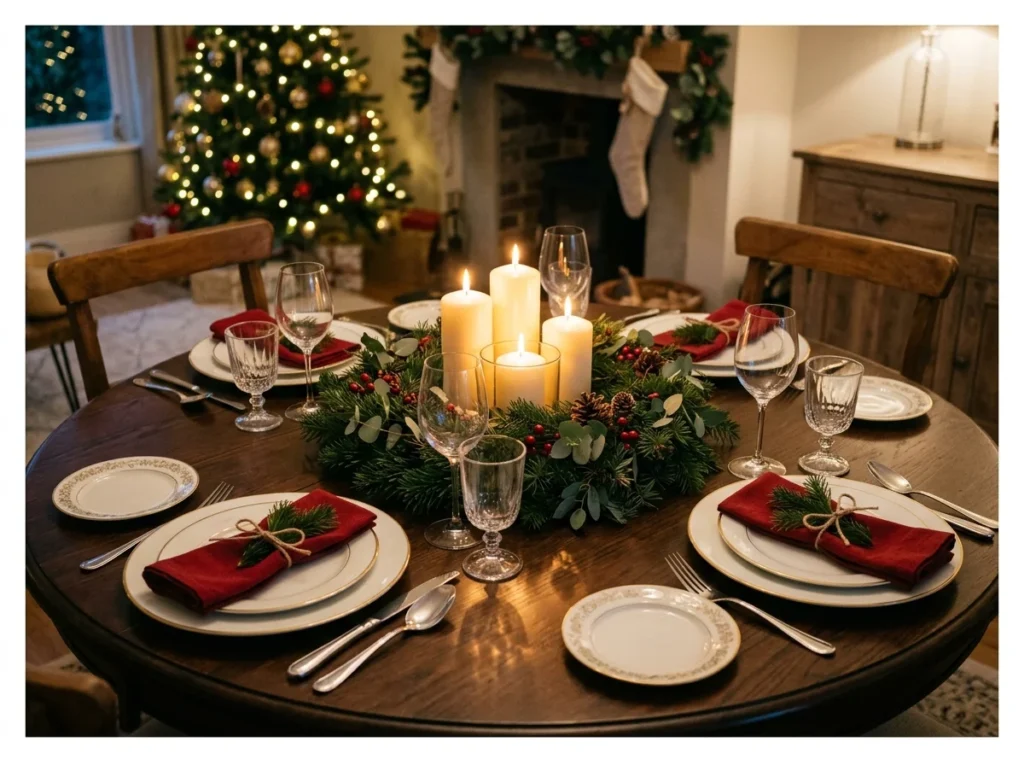
A fully dressed festive round dining table for seasonal occasions creates the most celebratory and memorable dining experience possible. Christmas, Thanksgiving, Easter, and Midsummer all provide different seasonal styling opportunities that transform the round table into a genuinely special gathering destination.
A circular wreath laid flat as the centerpiece with candles positioned within it is the most classically beautiful round dining table festive centerpiece. The circular form of the wreath mirrors the round table perfectly. Add seasonal foliage, berries, and ribbon appropriate to the occasion for a complete and stunning festive table.
The table setting everyone remembers.
Conclusion
A round dining table is one of the most socially beautiful pieces of furniture in any home. Its circular form creates equality and intimacy that no rectangular table can quite match. The right decor amplifies these qualities rather than working against them.
Start with the centerpiece that most naturally suits your dining style and your table’s diameter. Get the scale right first. Then layer in the napkins, the lighting, and the seasonal touches that make the table feel genuinely personal.
The round dining table you love having meals at is one good decor decision away from becoming the gathering place your home has always needed.
And once the table is dressed, a wall worthy of the table below finishes the whole room off nicely.