Most kitchens are white. A blue kitchen is genuinely remembered. The right shade of blue transforms an ordinary kitchen into the most striking room in the home.
These ideas prove that blue cabinets work in every kitchen style, budget, and space.
Let’s explore the ideas.
If blue isn’t quite right for your space, other bold cabinet colors to consider can help you compare directions before committing.
Navy Blue Shaker Cabinets
Navy blue shaker cabinets bring a deep, saturated color into a kitchen without feeling as heavy as pure black. The simple recessed panel design of shaker doors keeps the bold color from overwhelming the space. This combination has become one of the most popular ways to add color to an otherwise neutral kitchen.
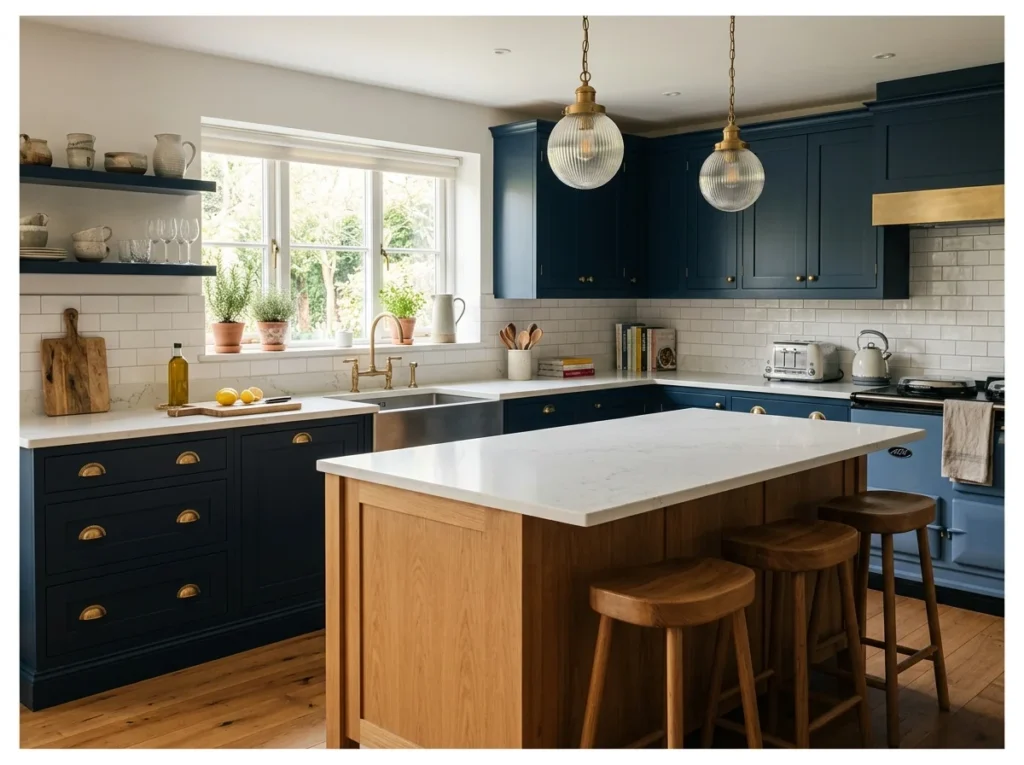
Navy blue shaker cabinets represent the most universally loved blue kitchen combination available. The deep blue tone creates immediate confidence and sophistication while the shaker door profile keeps the design grounded in timeless craftsmanship.
Pair navy shakers with brushed brass or unlacquered brass hardware for the warmest and most elegant combination. A white or cream countertop creates clean contrast that prevents the kitchen from feeling too dark. This combination suits farmhouse, traditional, and transitional kitchen aesthetics equally.
The blue kitchen combination that never looks dated.
Dusty Blue Lower Cabinets Only
Dusty blue lower cabinets paired with lighter uppers keep a kitchen from feeling too dark overall. This two tone approach grounds the room while still letting natural light bounce off the brighter upper cabinets. It works especially well in kitchens with lower ceilings, where an all dark scheme might feel closed in.
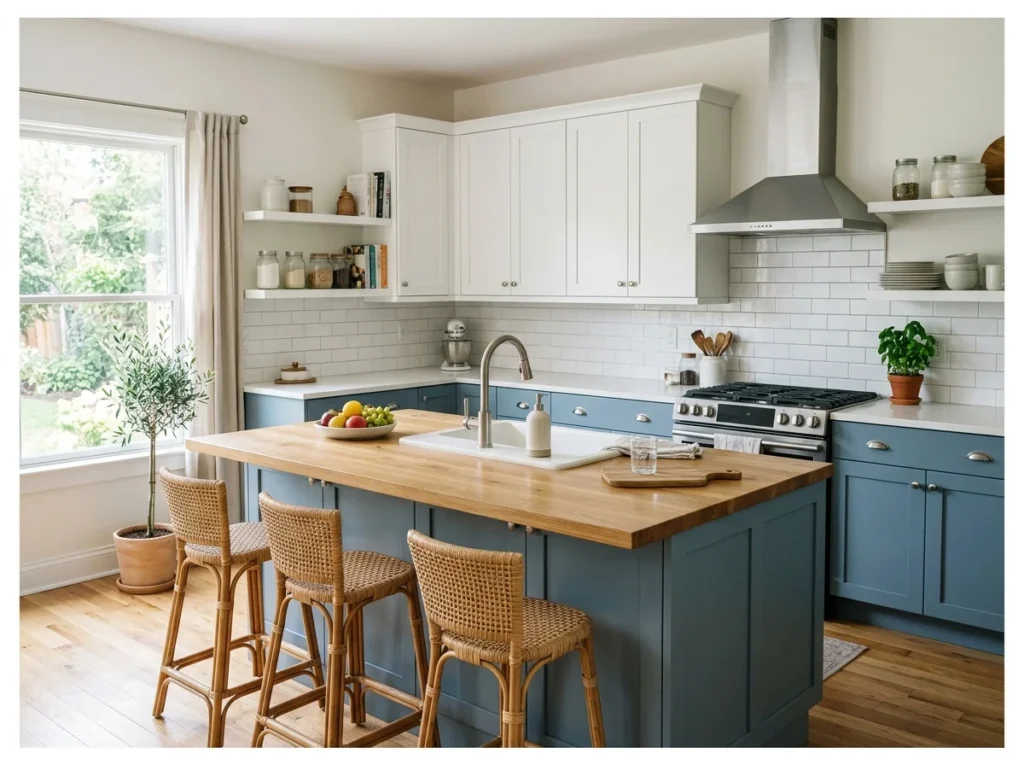
Applying dusty blue only to the lower cabinets while keeping upper cabinets white creates a grounded, confident kitchen that uses color intentionally without committing the entire room to a bold single tone. This approach suits homeowners cautious about all-blue cabinetry.
Dusty blue, with its slight grey undertone, suits warm white upper cabinets without creating harsh visual contrast. This tone works in natural morning light as readily as warm evening light, making it one of the most reliably beautiful kitchen blues available.
Midnight Blue Kitchen with Brass Hardware
A midnight blue kitchen paired with brass hardware creates a rich, moody contrast against warm metallic accents. The brass tones catch light in a way that keeps the deep blue from feeling flat or overly dark. This combination tends to suit kitchens aiming for a more dramatic, upscale feel.
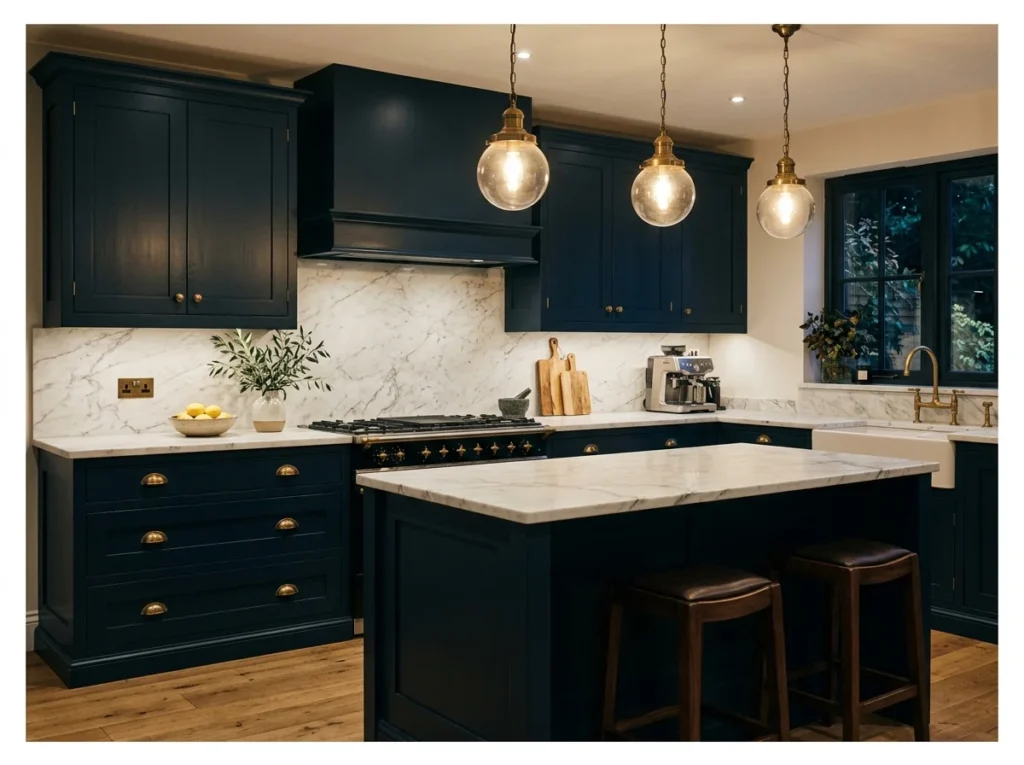
Midnight blue cabinets push the navy concept to its most dramatic extreme, with a depth approaching black that creates an extraordinarily sophisticated kitchen when lit correctly. The near-dark color demands quality in every surrounding material choice.
Unlacquered brass hardware develops its own warm patina against midnight blue cabinetry over time, which only improves the pairing. White marble or cream stone countertops are essential to prevent the kitchen from reading as oppressively dark rather than dramatically luxurious.
The most confident blue kitchen of all.
Powder Blue Cottage Kitchen
A powder blue cottage kitchen leans into a soft, pastel version of blue rather than a deep navy tone. This lighter shade pairs well with white trim and vintage style hardware for a cheerful, cottage feel. It suits kitchens meant to feel bright and welcoming rather than moody or dramatic.
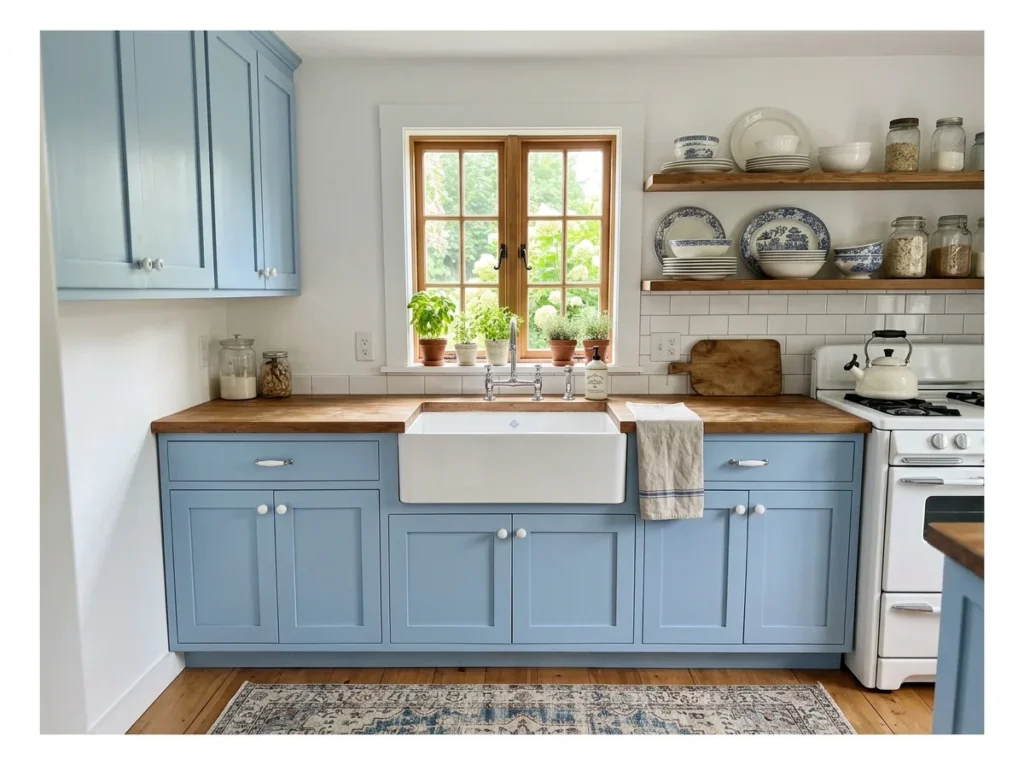
Powder blue cabinets bring a gentle, nostalgic sweetness to a kitchen that suits cottage, beach house, and country home settings naturally. The soft, airy tone references the sky and calm coastal water rather than the more assertive depth of navy or midnight tones.
Simple white ceramic or brushed nickel hardware suits powder blue cabinets better than warm brass, which can make this pale tone appear dated rather than charming. White painted walls and a farmhouse sink complete the cottage blue kitchen look.
Navy Island with White Perimeter Cabinets
A navy island paired with white perimeter cabinets gives the kitchen a clear focal point without darkening the whole room. The contrast keeps the space feeling bright while still introducing a bold color element. This layout has become a popular middle ground for homeowners hesitant to commit to an all blue kitchen.
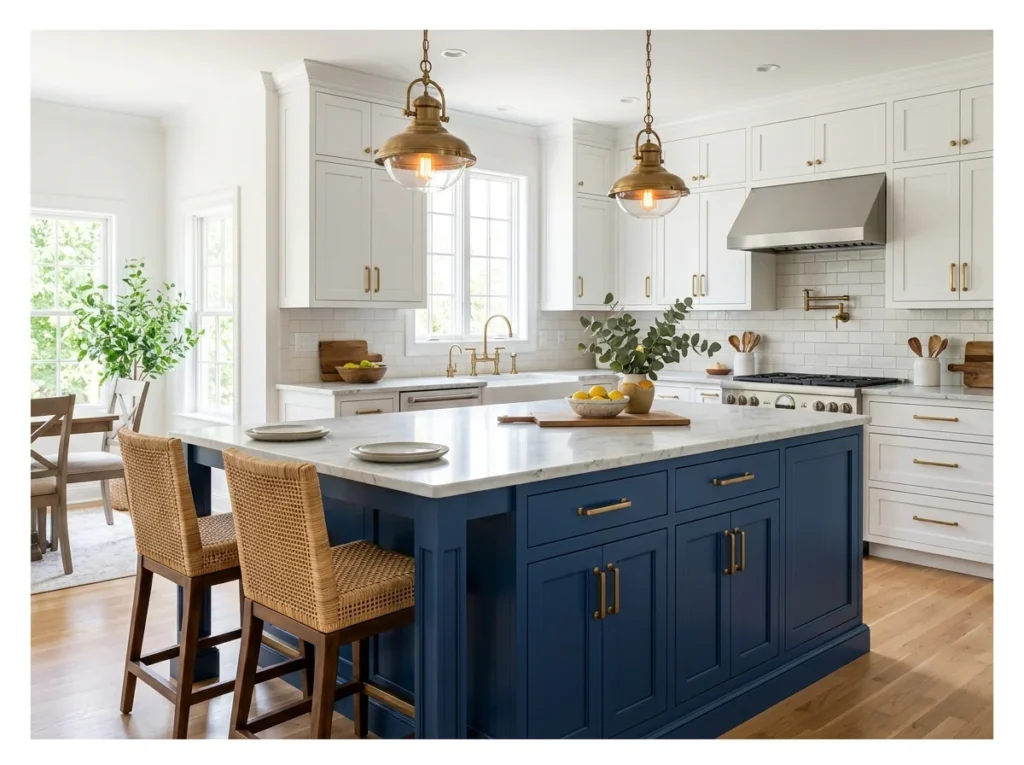
A navy blue island within a fully white kitchen creates the most confident single-element color statement possible, making the island the undeniable focal point of the entire kitchen without committing every cabinet in the room to the bold tone.
This approach suits homeowners who want a blue kitchen statement but prefer to preserve the brightness and openness of a predominantly white kitchen. The island becomes a feature piece of furniture rather than simply part of the cabinet scheme.
If you’re planning the island as a true focal point, an island designed to anchor the room is worth exploring further.
Slate Blue Minimalist Kitchen
A slate blue minimalist kitchen uses a muted, grayish blue tone that feels calmer than a brighter navy. Simple hardware and clean cabinet lines keep the overall look understated rather than bold. This approach suits kitchens that want color without straying too far from a neutral palette.
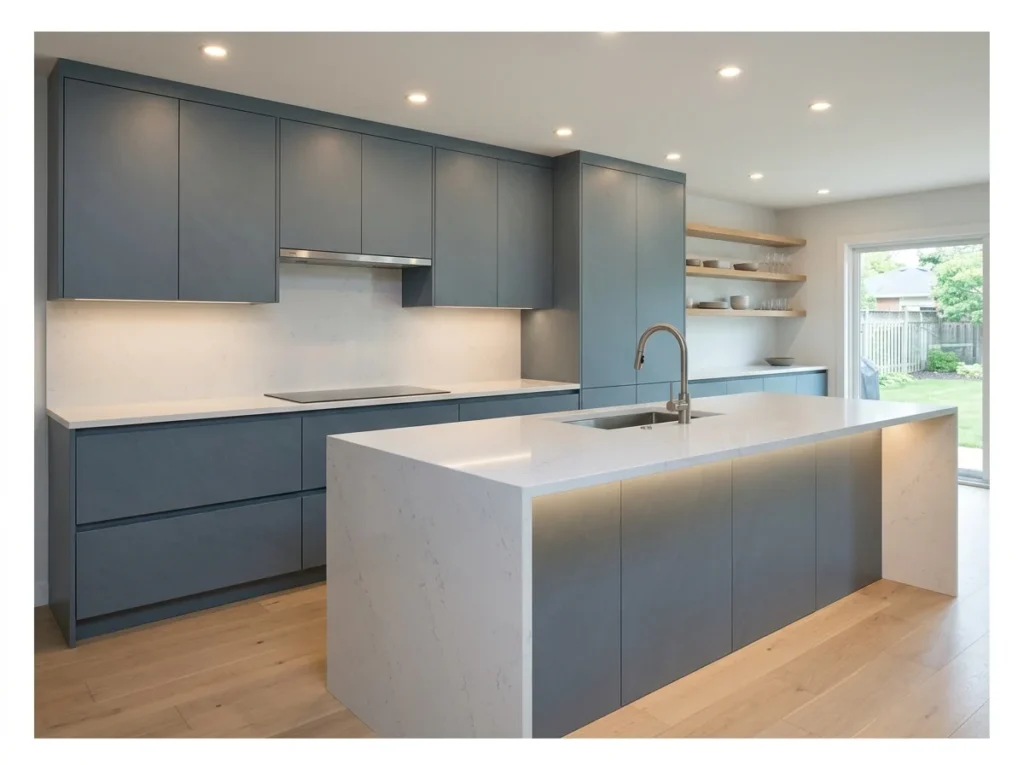
Slate blue cabinets carry a grey undertone that creates a calm, mineral quality unlike warmer or more saturated blues. In a handleless kitchen with clean geometric lines, slate blue reads as architectural and sophisticated rather than colorful.
This tone suits contemporary and minimalist kitchen aesthetics better than traditional styles since its mineral quality aligns with concrete, steel, and stone materials that define modern design. Pair with a white quartz waterfall countertop for the most restrained and resolved result.
Teal Blue Kitchen with Gold Accents
A teal blue kitchen paired with gold accents adds a bit of vibrancy compared to more muted blue tones. Gold hardware or light fixtures catch the eye against the richer, slightly greener blue of teal cabinets. This combination tends to feel more playful and less traditional than a straightforward navy kitchen.
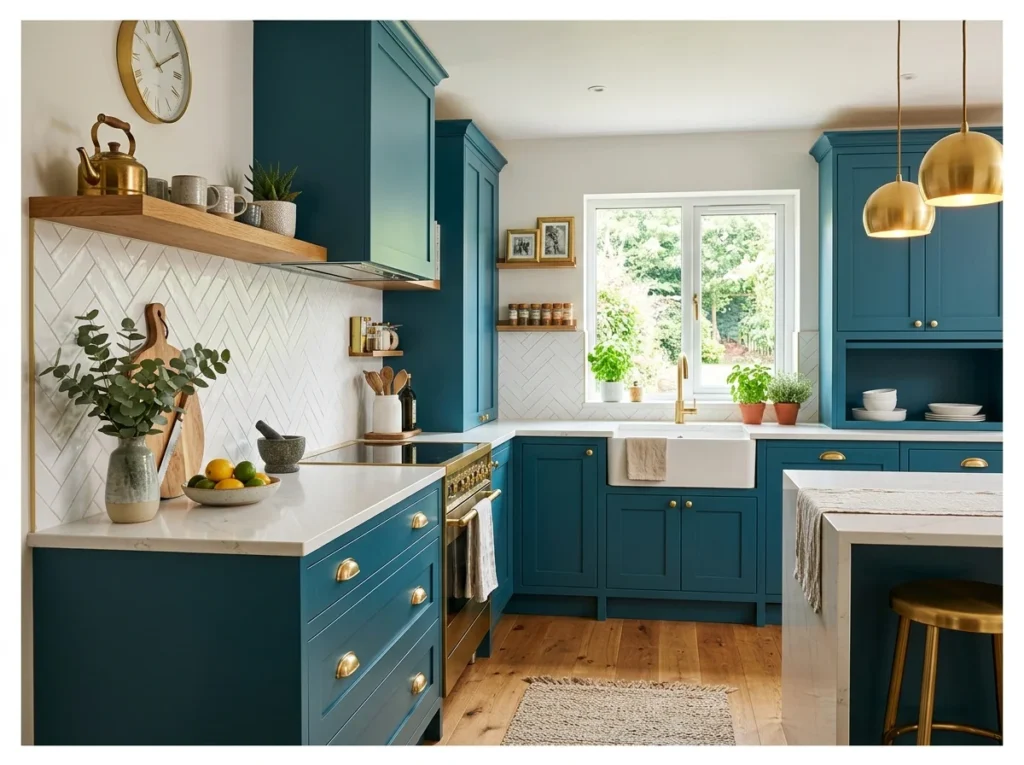
Teal blue sits at the crossover point between blue and green, creating a jewel-toned kitchen with more visual warmth than a standard navy while retaining the depth that makes blue kitchens so compelling. The green quality adds organic freshness to the boldness.
Polished or brushed gold hardware against teal creates one of the richest material pairings in kitchen design. The combination references tropical waters and botanical gardens simultaneously, giving the kitchen an atmosphere that is simultaneously vibrant and genuinely luxurious.
Dark Blue Two-Tone Kitchen
A dark blue two tone kitchen pairs deep blue cabinets with a contrasting lighter material elsewhere in the room. This could mean light countertops, a white backsplash, or pale walls balancing out the darker cabinetry. The contrast keeps the kitchen from feeling too heavy despite the bold color choice.
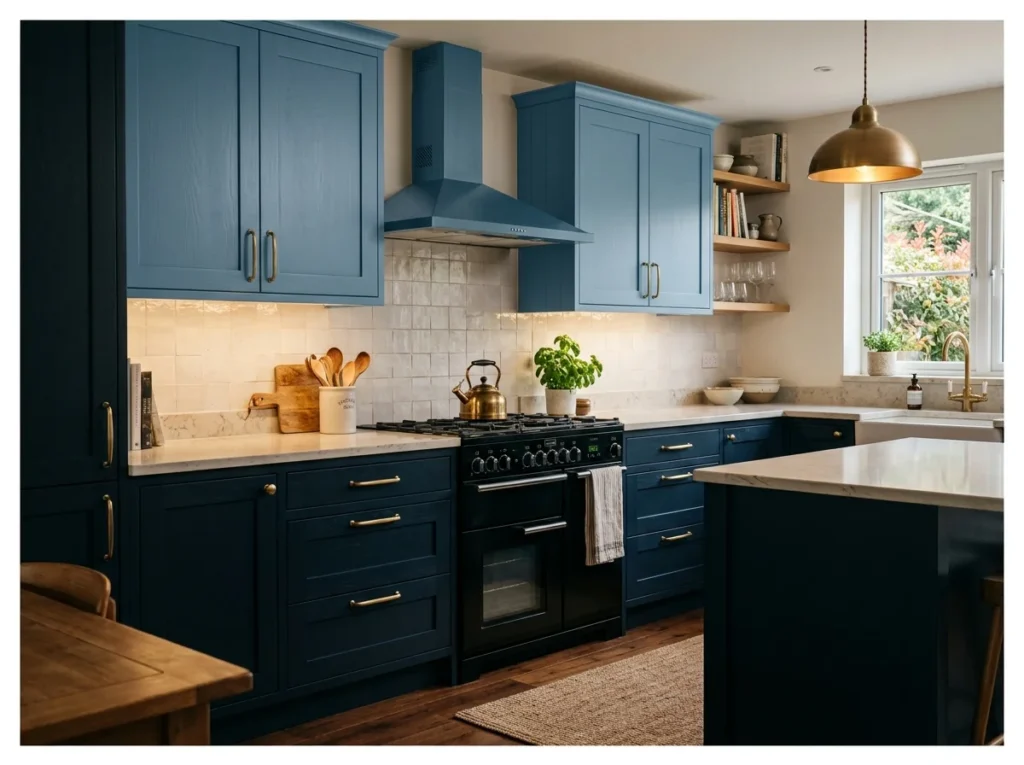
A two-tone kitchen where both upper and lower cabinets are blue but in slightly different depths, darker below and lighter above, creates a tonal sophistication more interesting than a uniform all-same-color kitchen while maintaining the cohesive blue story throughout.
This tonal approach is more demanding than a simple white-and-blue split but creates a genuinely beautiful all-blue kitchen that feels considered and almost painterly. The gradation from dark base to lighter overhead mimics the natural progression from earth to sky.
Soft Cornflower Blue Upper Cabinets
Soft cornflower blue upper cabinets bring a gentle pop of color above eye level without overwhelming the kitchen. Pairing them with white or wood lower cabinets keeps the overall look balanced and light. This shade tends to suit kitchens going for a cheerful, slightly vintage feel.
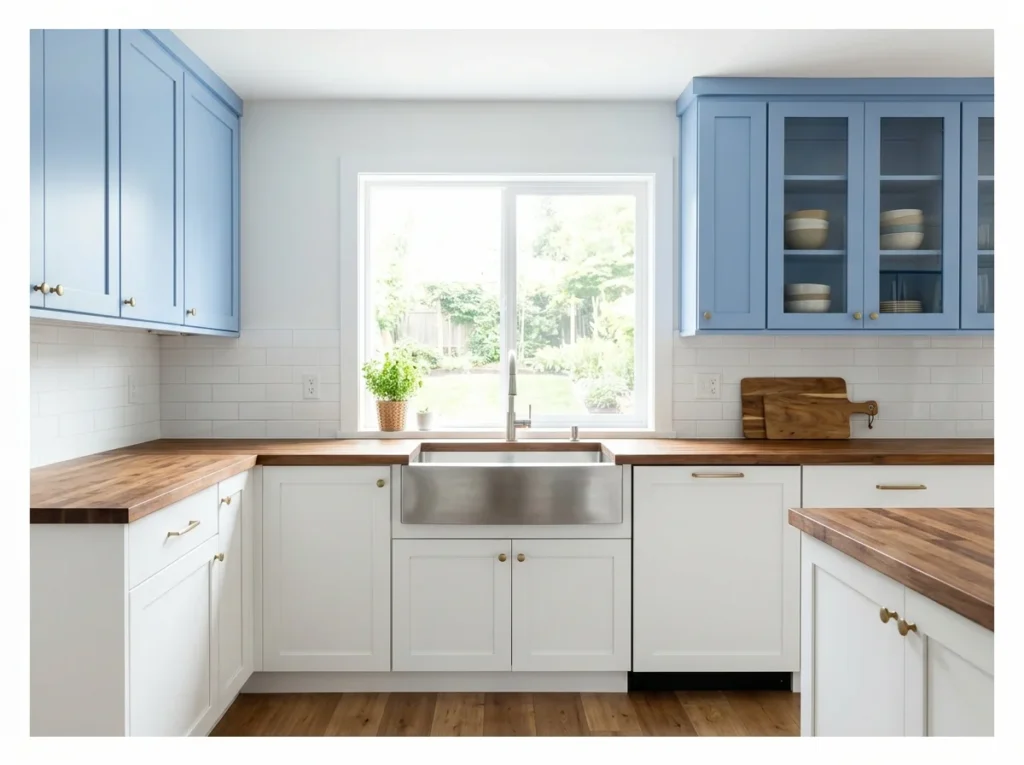
Applying a soft cornflower blue to only the upper cabinets creates a light, airy upper kitchen zone that references the sky and creates a distinctly refreshing kitchen atmosphere without the visual heaviness that dark tones on all cabinets can create.
This reversed approach, blue above and white below, suits kitchens with lower ceiling heights since the lighter ground-level tone prevents the space from feeling compressed. Warm timber countertops add organic warmth to balance the airy cool tone.
Navy Blue Farmhouse Kitchen
A navy blue farmhouse kitchen combines deep blue cabinetry with classic farmhouse details like a apron sink or shiplap. The darker color adds a bit of contrast against the natural wood tones common in this style. This pairing suits kitchens that want farmhouse charm without sticking to an all white palette.
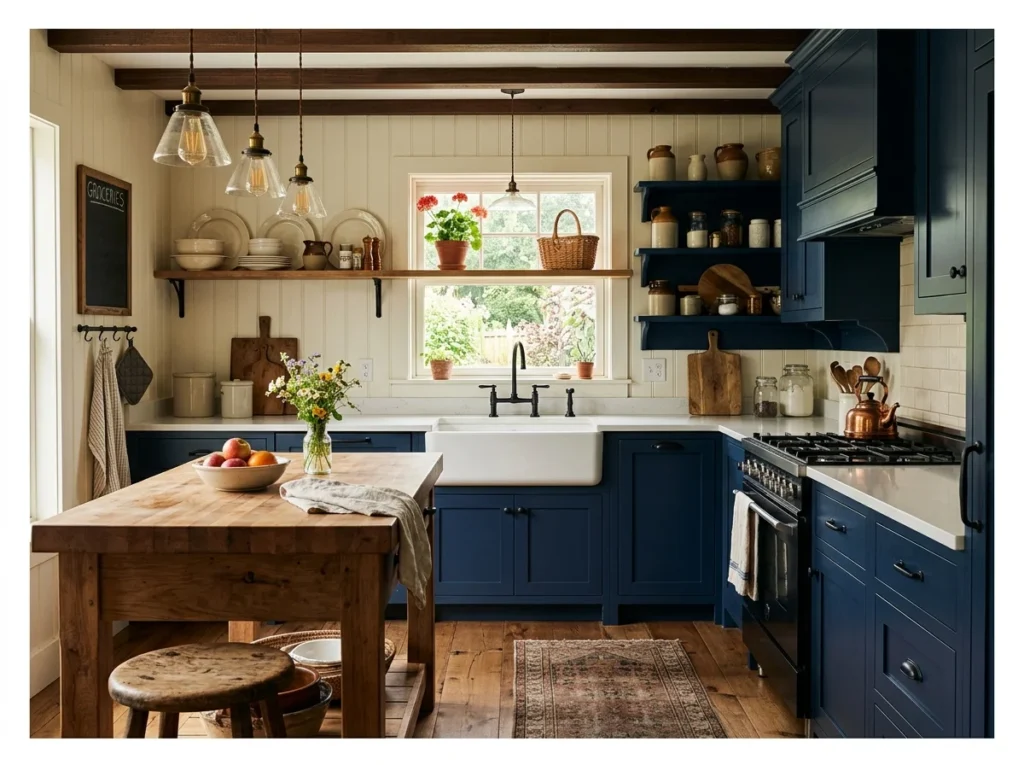
Navy blue in a farmhouse kitchen combines the deep, grounded tone with the honest material palette of farmhouse design, creating a kitchen that feels both bold and genuinely cozy. The deep navy tone suits the darkness of iron hardware and aged timber naturally.
Black iron hardware rather than brass suits a more rugged, less polished farmhouse aesthetic. A butcher block island countertop adds warmth and genuine working kitchen function alongside the bold navy cabinetry throughout the perimeter.
Blue Cabinets with Black Countertops
Blue cabinets paired with black countertops create a bold, high contrast look in the kitchen. The dark countertop grounds the space, keeping the blue cabinetry from feeling too light or airy. This combination suits kitchens aiming for a dramatic, modern aesthetic.
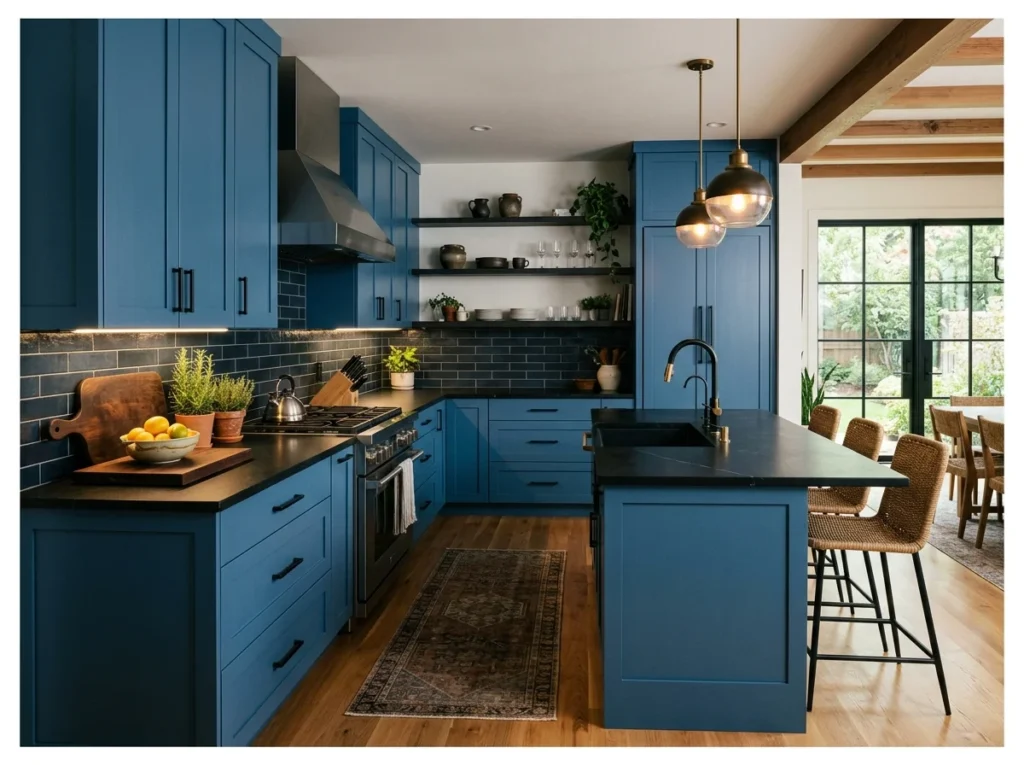
Blue cabinets paired with matte black countertops create a bold, high-contrast kitchen that suits contemporary and industrial aesthetic directions particularly well. The black horizontal surface creates a strong graphic anchoring element against the blue vertical cabinet planes.
Leathered or honed black granite, matte black quartz, and black soapstone all suit this pairing differently. The matte rather than polished finish prevents the black from becoming too reflective and visually competing with the cabinet color for attention.
Once the surfaces are chosen, countertop styling that pairs with color helps the whole kitchen feel finished.
Bright Cobalt Blue Accent Island
A bright cobalt blue accent island introduces a vivid pop of color while the rest of the kitchen stays neutral. This approach lets homeowners experiment with a bolder shade without committing to it across every cabinet. The island naturally becomes the focal point of the room simply through its saturated color.
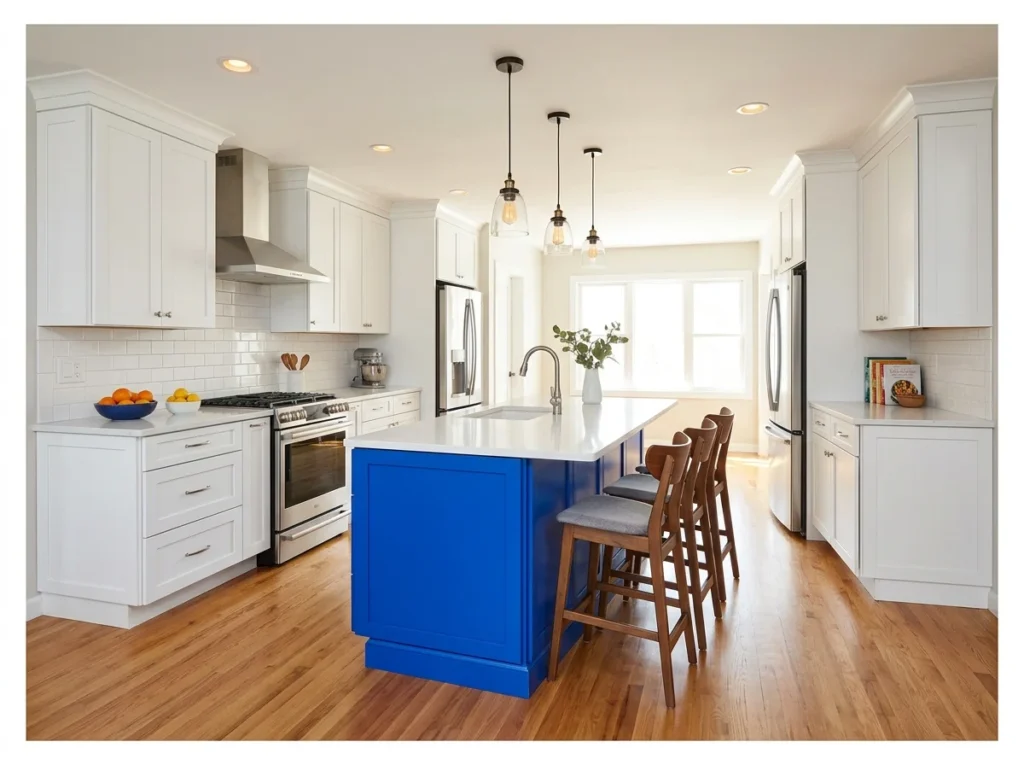
A bright cobalt blue island creates the most vivid and joyful blue kitchen statement available, with the saturated true blue tone immediately commanding attention as the room’s undeniable focal point against surrounding white cabinetry.
Cobalt is more playful and energetic than navy, making this approach suit families with children, social kitchens, and anyone who wants their kitchen to feel genuinely happy rather than simply sophisticated. A simple white countertop keeps the blue the undistracted hero.
The island color that makes every visitor smile.
Blue Gray Kitchen Cabinets
Blue gray kitchen cabinets sit somewhere between a true blue and a neutral gray tone. This in between shade tends to feel versatile, working with both warm and cool toned countertops or flooring. It suits kitchens that want a hint of color without committing to a fully saturated blue.
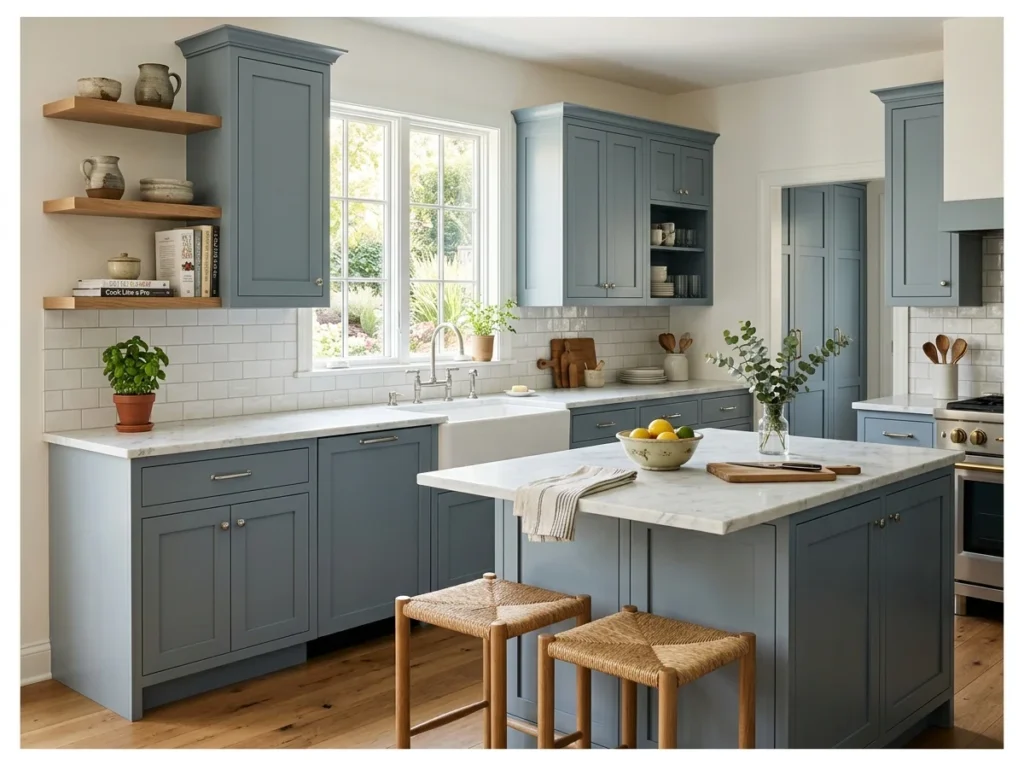
Blue-grey cabinets occupy the most versatile position in the entire blue kitchen palette, with enough grey to suit homeowners cautious about strong color and enough blue to be genuinely interesting to anyone visiting the kitchen for the first time.
This tone suits the widest range of countertop materials: white marble, warm cream quartz, grey concrete, and natural timber all complement blue-grey cabinets naturally. It is also the easiest blue kitchen tone to resell since its closest reading is a sophisticated neutral.
French Blue Country Kitchen
A French blue country kitchen uses a muted, slightly grayish blue often associated with traditional European kitchens. This shade pairs naturally with brass hardware, open shelving, and vintage inspired details. It suits kitchens aiming for a timeless, slightly romantic feel rather than a modern one.
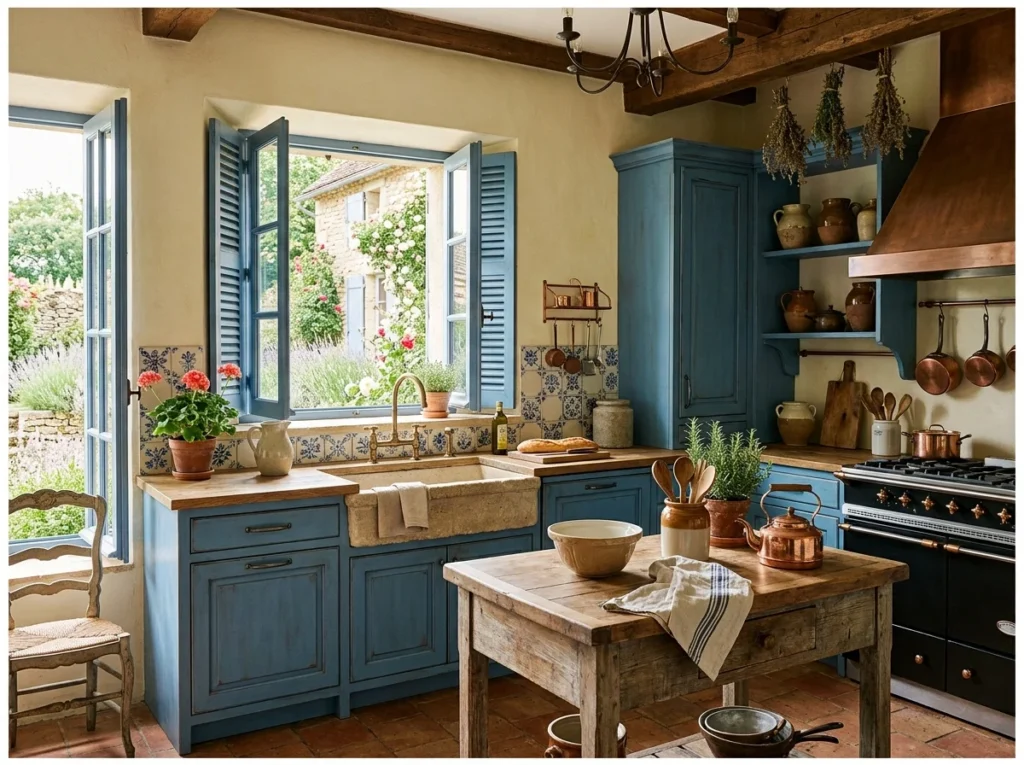
French blue, the warm, slightly greyed blue associated with painted furniture and joinery in Provence and rural France, creates a kitchen with a specifically European country warmth that differs from the more formal quality of navy or the starker quality of cobalt.
A hand-painted ceramic tile backsplash, a farmhouse stone or ceramic sink, and simple iron hardware all suit French blue cabinetry authentically. This style rewards deliberate material imperfection and aged quality over precision manufacturing.
Inky Blue with Unlacquered Brass
Inky blue cabinets paired with unlacquered brass hardware create a rich, moody kitchen with warmth built in. The brass develops a natural patina over time, which softens against the deep, near black blue tone. This combination tends to suit kitchens going for a more dramatic, editorial style look.
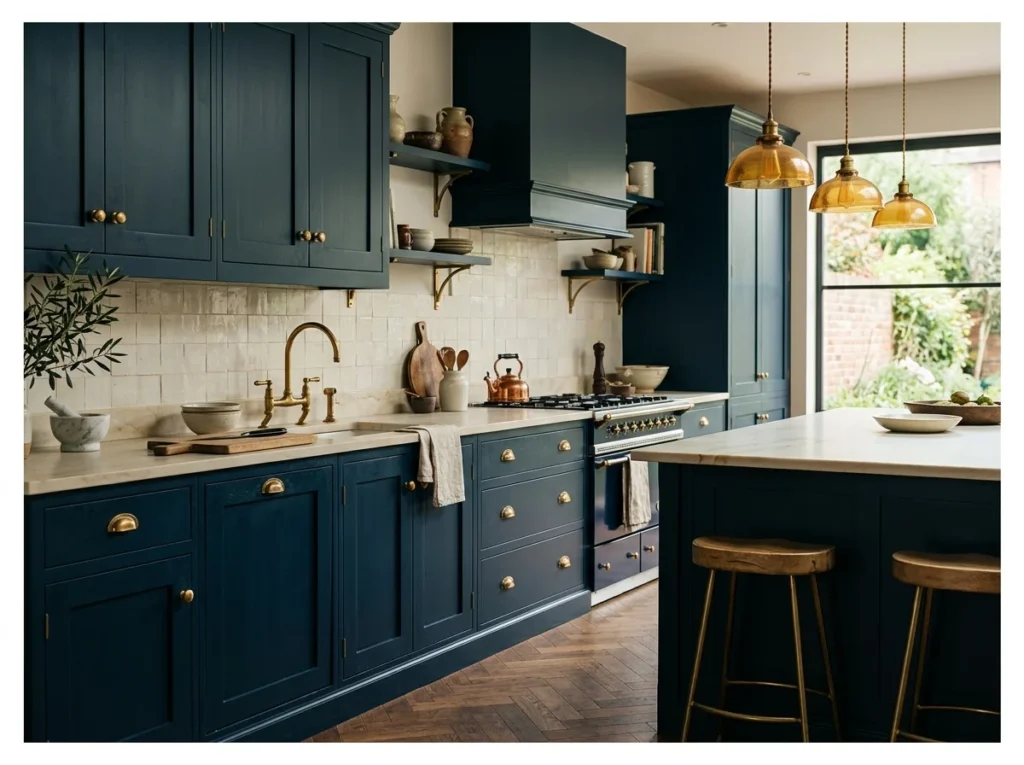
Inky blue with unlacquered brass creates a kitchen whose character genuinely improves over time, as the brass develops a warm natural patina that deepens and enriches against the near-dark blue cabinetry. This is a kitchen designed to age beautifully.
The combination references Georgian and Victorian-era kitchen aesthetics without feeling period-specific, instead creating a timeless quality grounded in material honesty rather than historical reference. This pairing consistently creates the most coveted blue kitchen aesthetic on Pinterest.
Blue Cabinets with Warm Wood Shelves
Blue cabinets paired with warm wood open shelves balance a cool color with natural material warmth. The wood grain adds texture that flat painted cabinetry alone cannot provide. This combination suits kitchens that want color without losing that lived in, organic feel.
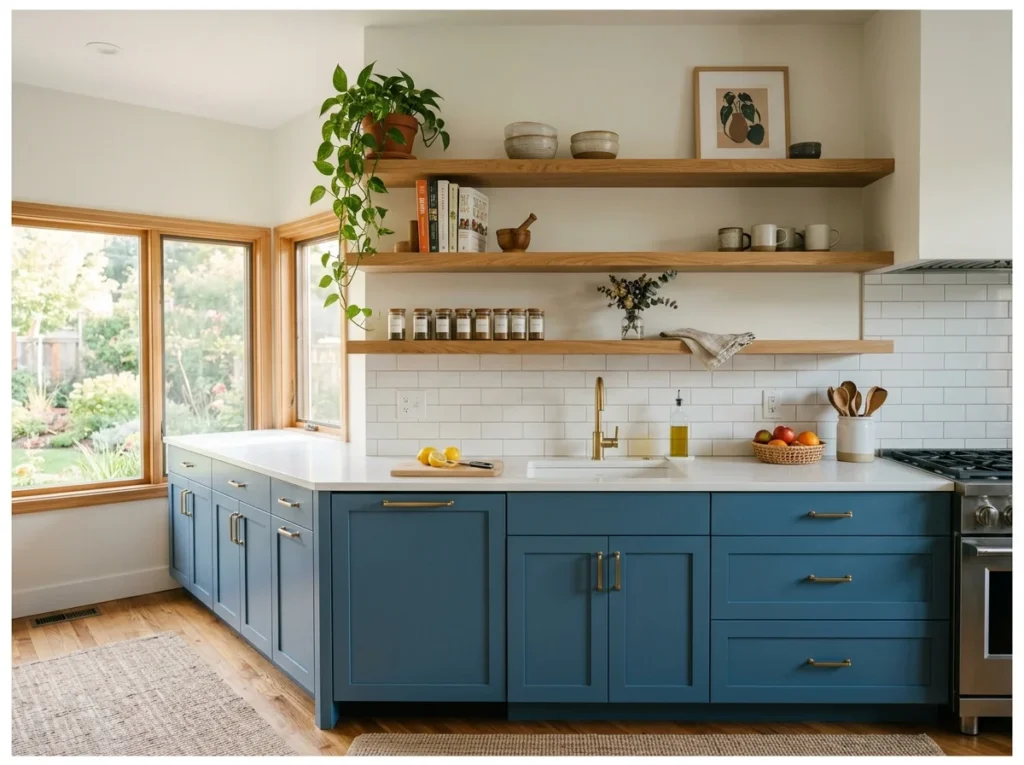
Replacing upper cabinets with warm natural timber floating shelves while keeping bold blue lower cabinets creates a kitchen that feels simultaneously contemporary and organic. The warmth of the wood prevents the blue from creating a cool, clinical atmosphere.
This approach suits contemporary kitchens where the visual weight of full upper cabinetry feels excessive. The open shelves also create an opportunity to display beautiful ceramics and plants that contribute to the kitchen’s atmosphere beyond their functional storage role.
For more inspiration on this approach, open storage that adds warmth is worth browsing.
Pale Blue Kitchen with Marble
A pale blue kitchen paired with marble countertops keeps the overall palette soft and light. The subtle veining in marble echoes the gentle color variation often found in pale blue paint. This combination suits kitchens aiming for an airy, slightly elegant feel.
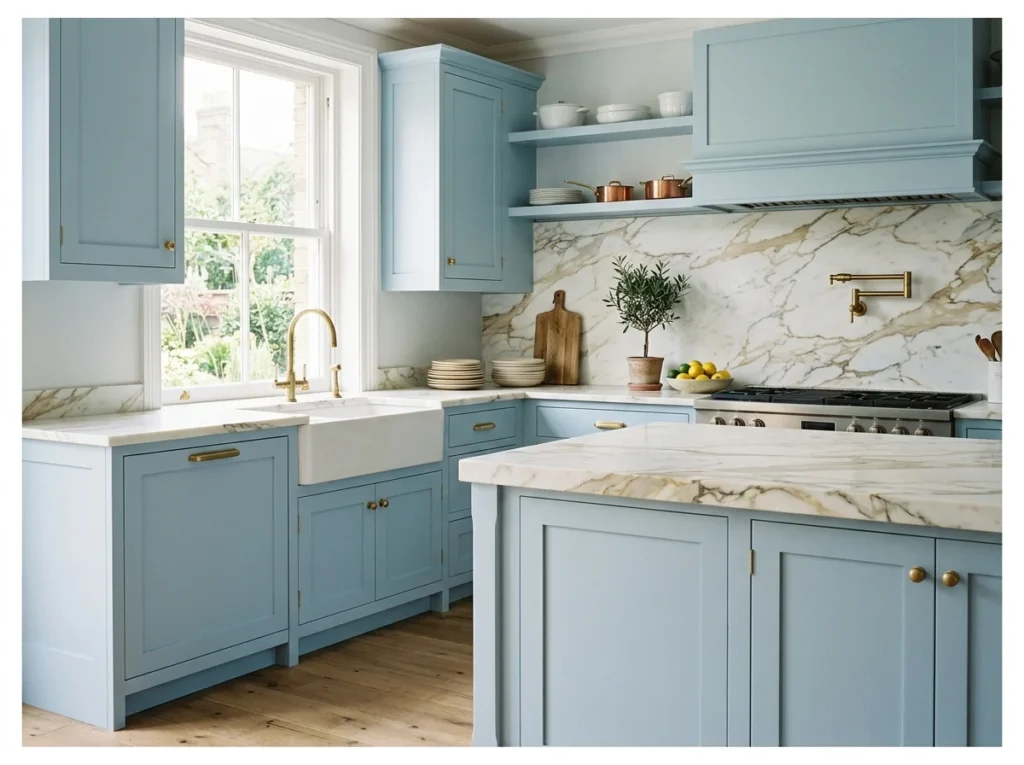
Pale blue cabinets paired with Calacatta or Carrara marble create one of the most genuinely elegant kitchen combinations available, where the softness of the blue tone complements the cream-warm veining of natural marble without either element competing for dominance.
The pale blue recedes enough to let the marble become the primary material statement while still providing meaningful color character. Brushed brass faucets and hardware warm the coolness of both the blue and the white stone simultaneously.
Steel Blue Industrial Kitchen
A steel blue industrial kitchen pairs a cool, muted blue with materials like exposed metal or concrete. This combination leans into a more utilitarian look compared to softer, more traditional blue kitchens. It suits homes that already favor an industrial design direction throughout.
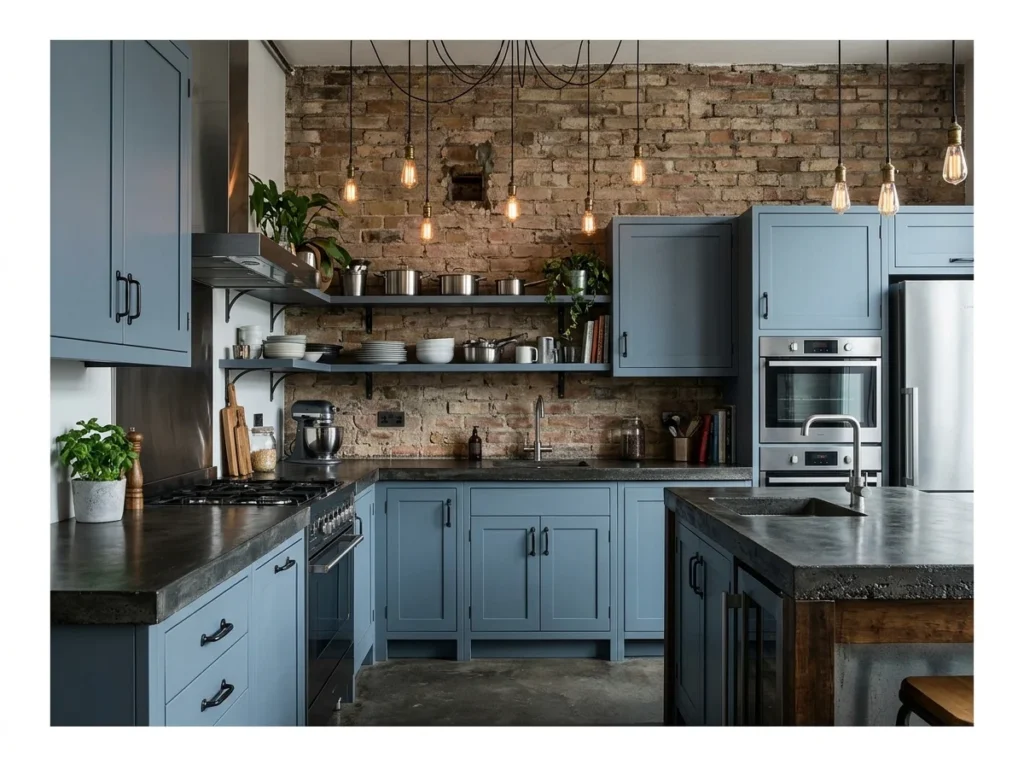
Steel blue, with its cool metallic quality, suits industrial kitchen aesthetics naturally because it references the actual blue tones of painted industrial machinery and factory equipment that define the aesthetic’s heritage. The color feels honest in this material context.
Dark concrete countertops, black powder-coated hardware, and Edison pendant lights complete the industrial steel blue kitchen palette. This approach suits urban apartments, converted industrial spaces, and any homeowner drawn to an honest, non-decorative kitchen aesthetic.
Denim Blue Boho Kitchen
A denim blue boho kitchen uses a slightly faded, worn in shade of blue rather than a crisp navy. Woven textiles, rattan accents, and warm wood tones tend to pair well with this softer color. This combination suits kitchens going for a relaxed, collected over time feel.
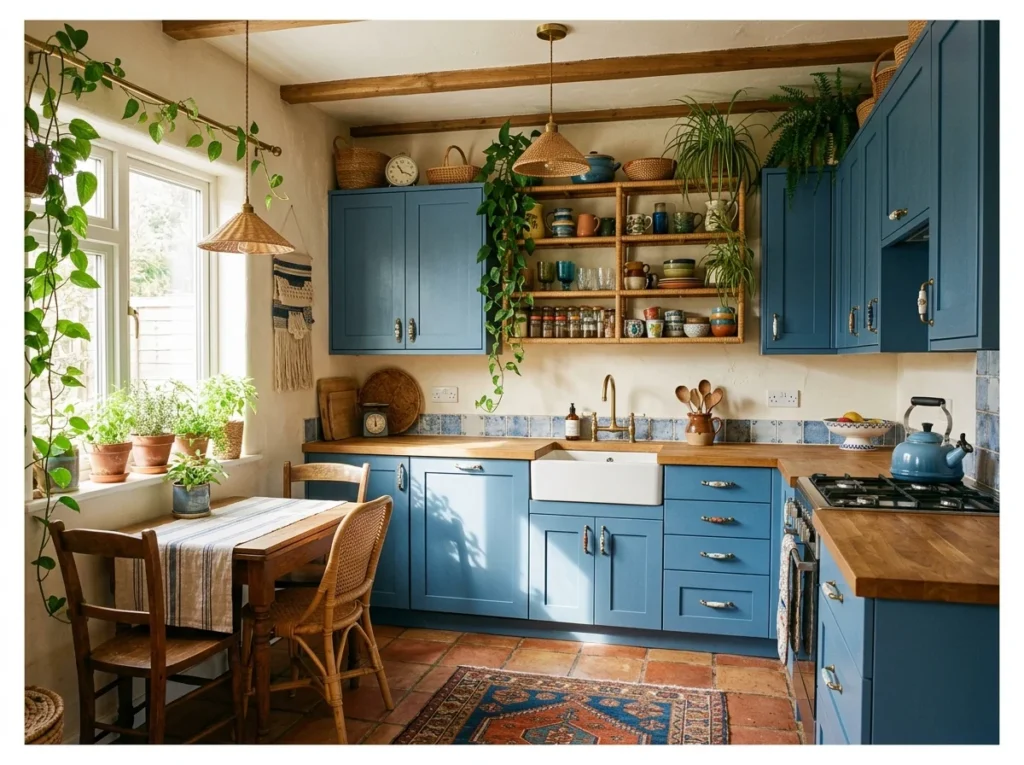
Denim blue, the mid-tone familiar and casual blue of worn jeans, creates a kitchen that feels genuinely approachable and warm rather than formal or assertive. This tone suits bohemian, eclectic, and maximalist kitchen styles that resist the formality of deeper navies.
Mixed ceramic hardware, open rattan shelving, terracotta tile flooring, and trailing plant styling all complement denim blue cabinets naturally within the boho aesthetic. This kitchen tone rewards personal, collected styling more than any other blue shade.
Warm, casual, and genuinely welcoming.
Navy and Natural Oak Combination
Navy cabinets paired with natural oak elements balance a deep, saturated color with warm wood tones. Oak flooring, open shelving, or a wood island top keeps the kitchen from feeling too dark overall. This combination has become popular for its balance between bold and warm.
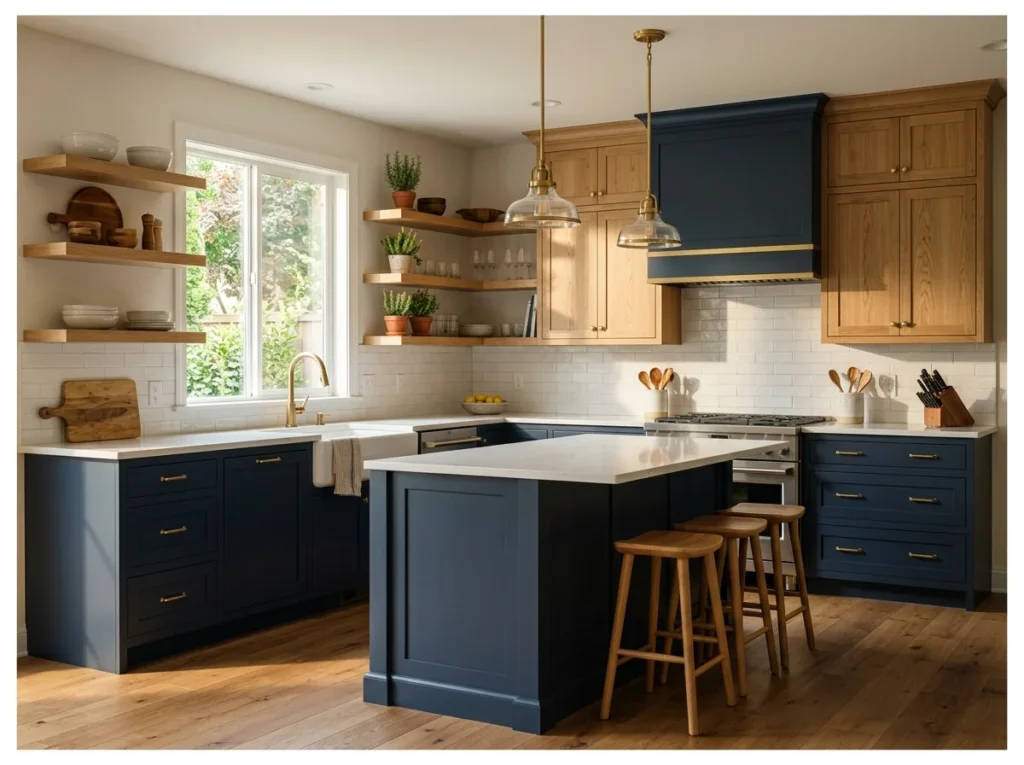
Navy lower cabinets and island combined with natural oak upper cabinets and shelving creates a kitchen with the rich visual contrast of two-tone design and the additional warmth of natural timber’s organic character. The oak prevents the navy from feeling cold.
This combination has emerged as one of the most popular kitchen color directions because it satisfies two apparently opposing desires simultaneously: the warmth and naturalness of a timber kitchen and the boldness and drama of a blue kitchen.
If longevity matters as much as impact, a timeless look that won’t date is worth weighing against a bolder palette.
Blue Cabinets with White Subway Tile Backsplash
Blue cabinets paired with a white subway tile backsplash keep the kitchen feeling classic despite the bold cabinet color. The simple rectangular tile shape does not compete with the saturated blue for attention. This combination suits kitchens that want color without straying too far from a timeless design.
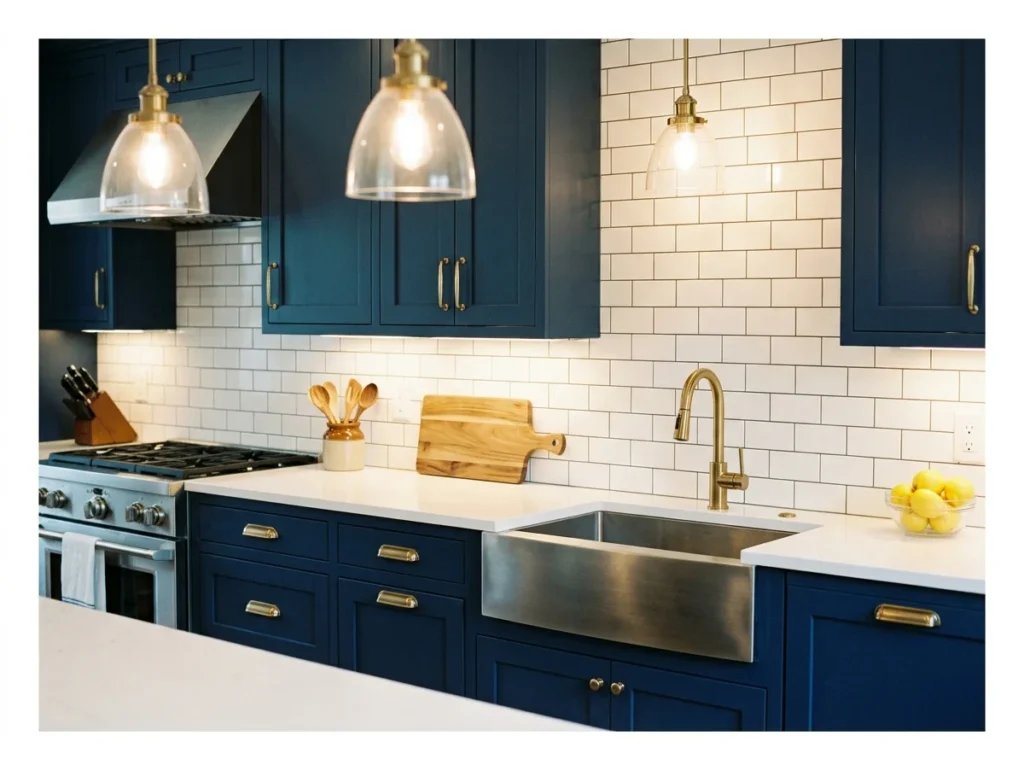
Blue cabinets against a classic white subway tile backsplash create one of the most reliably beautiful and genuinely timeless kitchen combinations, where the clean white grid of subway tile provides maximum brightness and contrast against any shade of blue cabinetry.
The simplicity and affordability of subway tile suits a wide range of budgets while complementing everything from pale powder blue to deep midnight cabinetry. Grey grout creates subtle definition in the tile grid while white grout maintains the brightest possible backdrop.
Blue and Green Kitchen Transition
A blue and green kitchen transition blends the two adjacent colors either through cabinetry or accents. This could mean blue cabinets with green tile, or a gradual shift between the two tones across different elements. This combination suits kitchens wanting more color variety than a single toned blue scheme.
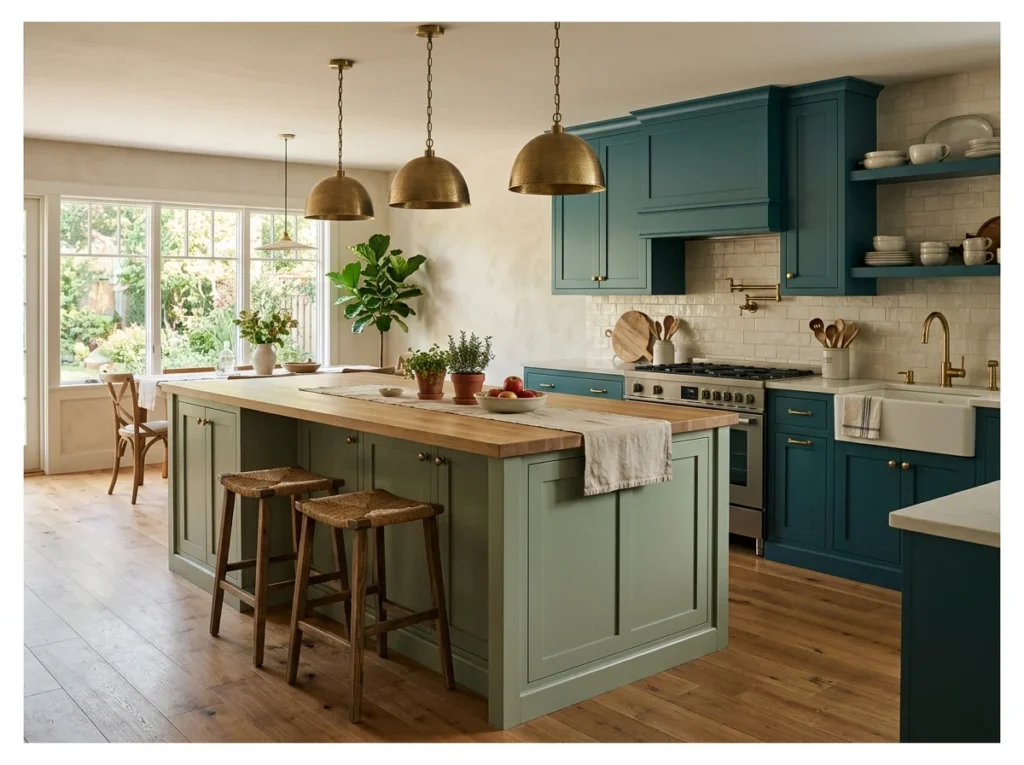
A kitchen where the cabinetry transitions from sage green to teal blue creates a naturalistic color story reminiscent of coastal or botanical landscapes, with each tone complementing rather than competing with its neighbor across the kitchen’s surfaces.
This approach suits open-plan kitchens where different cabinet zones are visible simultaneously from the living and dining areas, since the gradient reads as a deliberate design decision rather than an uncertain choice between two colors.
Monochromatic All-Blue Kitchen
A monochromatic all blue kitchen uses different shades of the same color across cabinets, walls, and sometimes even the ceiling. Varying the tone slightly between elements keeps the room from feeling flat despite sticking to one color family. This approach suits homeowners confident enough to fully commit to a bold, cohesive look.
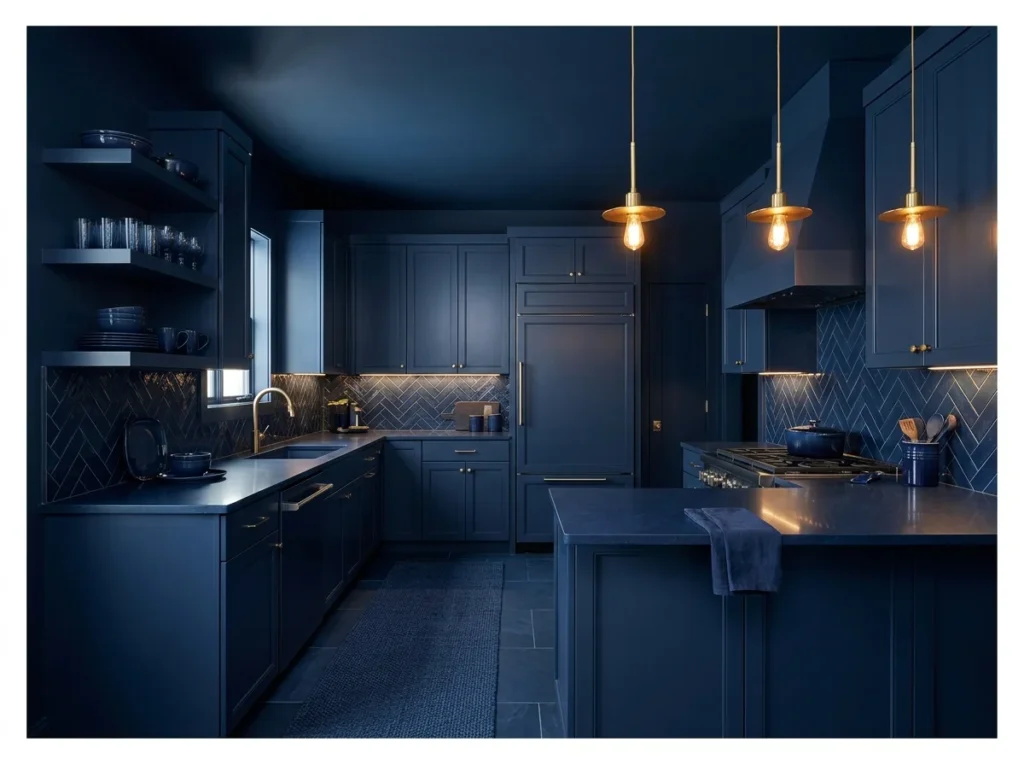
A fully monochromatic kitchen where walls, upper cabinets, lower cabinets, and even the ceiling share the same deep blue tone creates an enveloping atmosphere of extraordinary sophistication that no two-tone kitchen can achieve. The boldness of the commitment becomes the entire design statement.
Varying the sheen, matte walls, satin cabinets, and gloss ceiling, creates depth and interest within the single color story. Warm pendant lighting and natural timber or brass accents provide the only contrasting elements against the all-blue surround.
The most committed and confident blue kitchen choice available.
Blue Kitchen with Terracotta Tile Floor
A blue kitchen paired with terracotta tile flooring balances a cool cabinet color with warm earthy tones underfoot. The contrast between the two colors keeps the kitchen from feeling one dimensional. This combination suits kitchens aiming for a warmer, more Mediterranean inspired feel.
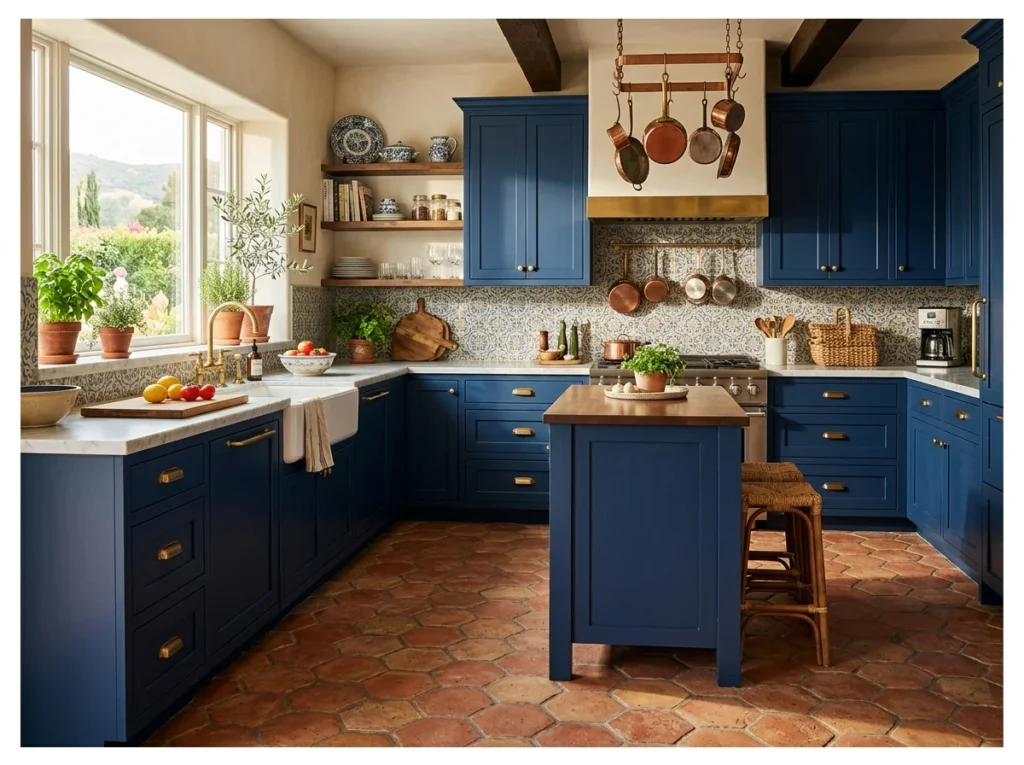
Navy blue cabinets above a terracotta tile floor creates one of the most naturally beautiful and historically rooted color combinations in kitchen design. The warm red-orange earth tone of terracotta creates extraordinary contrast against cool blue that references Mediterranean and Moroccan design traditions.
This combination suits farmhouse, Provençal, and eclectic kitchen aesthetics particularly well. The terracotta floor also warms the perceived atmosphere of a kitchen that might otherwise read as cool-toned with dark blue cabinetry throughout.
Moody Dark Blue Scullery Kitchen
A moody dark blue scullery kitchen tucks a secondary prep space behind the main kitchen in a rich, saturated color. This smaller, more private space allows for a bolder color choice than the main kitchen might use. It suits homes with the layout to support a separate scullery alongside the primary kitchen.
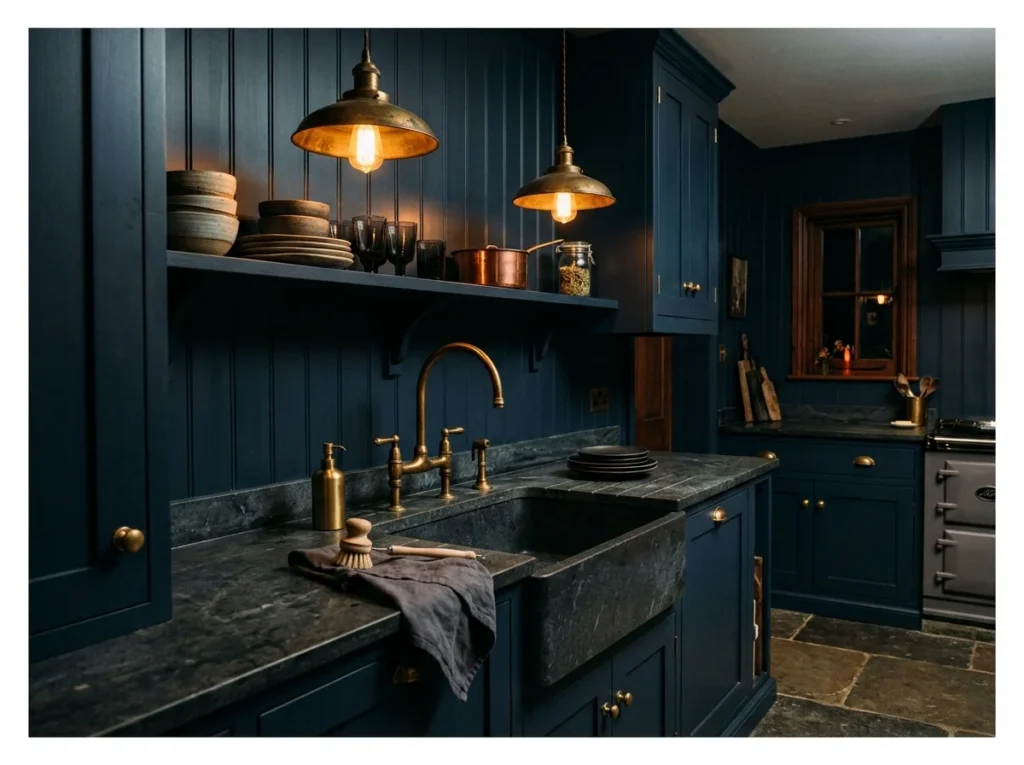
A scullery or butler’s pantry in a moody dark blue creates one of the most atmospheric domestic spaces available, where the enclosed working kitchen benefits from the deep, cocooning quality of dark blue in a way that an open main kitchen sometimes cannot achieve.
This working kitchen can embrace darkness more completely than a family kitchen since its primary function is practical rather than social. The dark blue suits the antique brass fittings, stone sinks, and heavy timber shelving of a traditional scullery aesthetic.
For smaller layouts where every inch counts, cabinetry solutions for compact kitchens can help this same bold approach still feel spacious.
Blue Cabinets with Matte Black Hardware
Blue cabinets paired with matte black hardware create a clean, modern contrast against the cabinet color. The black finish tends to stand out clearly without competing with the blue for attention. This combination suits kitchens going for a more contemporary, understated look.
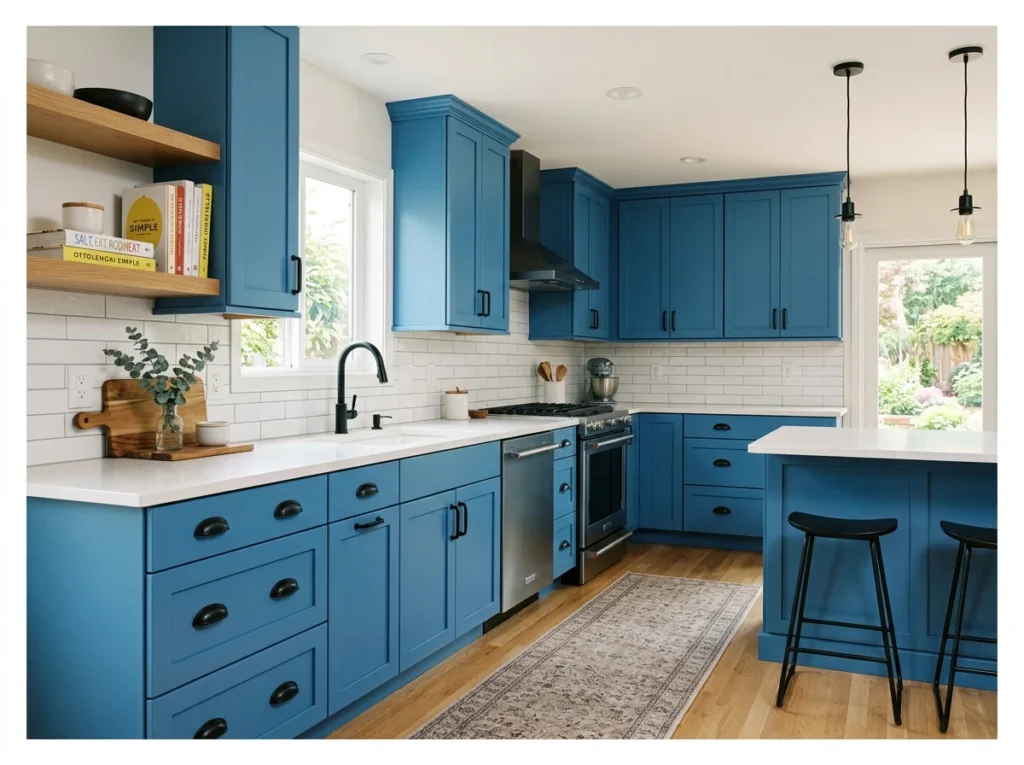
Matte black hardware on blue cabinets creates a sharper, more contemporary contrast than warm brass, suiting homeowners who want their blue kitchen to feel modern and graphic rather than warm and traditional. The black prevents any romance from entering the aesthetic.
This pairing suits navy, slate blue, and steel blue most powerfully since these cooler tones share the matte black’s precision quality. Avoid matte black hardware on warm-toned blues like dusty blue or French blue, where the clash of warm and cool tones creates visual dissonance rather than sophisticated contrast.
Conclusion
A blue kitchen, chosen thoughtfully and executed with appropriate hardware, countertops, and lighting, creates a room with genuine personality and visual staying power that white and grey kitchens rarely achieve. The key is choosing a specific blue that suits the kitchen’s light conditions, scale, and the lifestyle of the people who use it daily.
Start with understanding your kitchen’s light quality at different times of day. Then identify whether you want warmth or crispness, intimacy or openness, quiet sophistication or joyful boldness. Choose the blue shade and hardware pairing that best addresses those genuine priorities.
The blue kitchen you have been looking at on Pinterest for months is one confident decision away from becoming the kitchen you actually cook in every day.
And once the cabinets are settled, pantry storage that matches the palette rounds out the whole kitchen design.