Kitchen shelves are the most visible storage in any home. Leave them random and the whole kitchen looks cluttered. Style them right and they become the room’s most beautiful feature.
These ideas make kitchen shelf styling simple, personal, and consistently impressive.
This same styling logic carries over nicely to shelves elsewhere that deserve the same care throughout the rest of the home.
Let’s explore the ideas.
White Ceramic Dishes as the Foundation
White ceramic pieces work as the base layer since they blend into almost any color scheme without clashing. Starting with plain white bowls or plates gives the rest of the shelf something calm to build around. This foundation keeps a busy shelf from feeling chaotic once other objects get added.
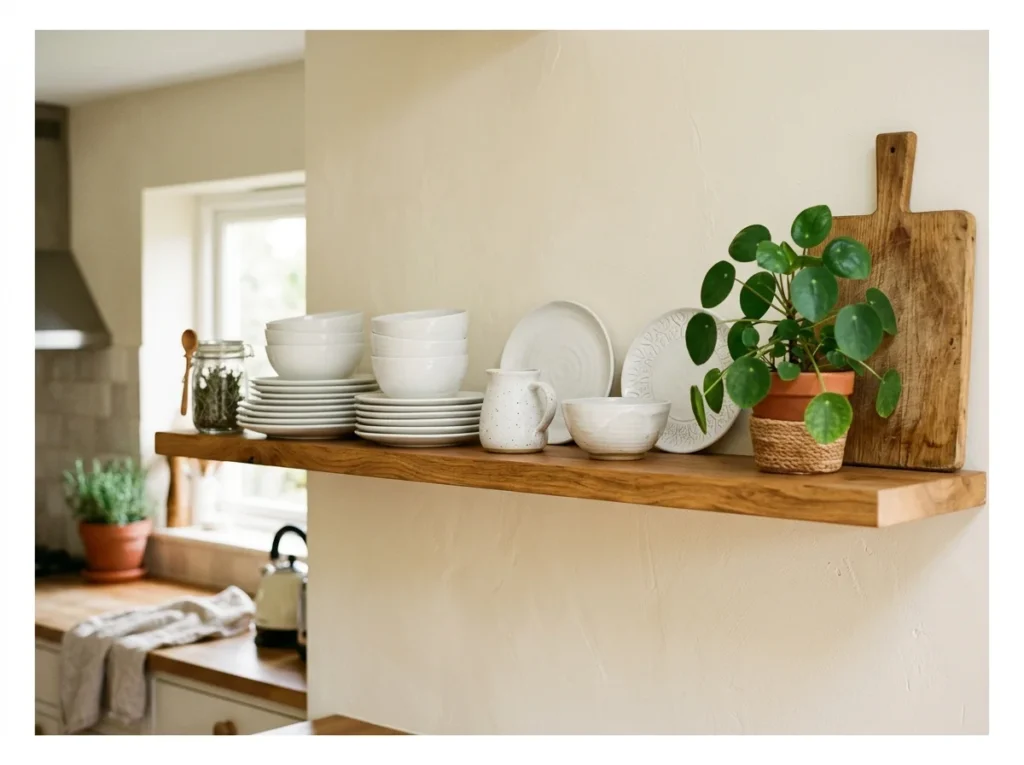
White ceramic dishes, when stacked neatly and displayed prominently on kitchen shelves, create a clean, cohesive foundation that makes any kitchen shelf look instantly organized and beautiful. The uniform color creates visual calm that pulls a disparate collection of kitchen items together.
Mixing textures within the white palette adds depth: a matte ceramic bowl beside a glazed dinner plate beside a textured ramekin creates a sophisticated white ceramic display. Stand one or two plates upright against the back of the shelf using a small plate stand to show the dish form and add height variation.
The most versatile kitchen shelf foundation available.
Labeled Glass Jar Collection
Glass jars with handwritten or printed labels turn pantry storage into part of the display itself. Seeing pasta, flour, or rice through clear glass adds texture that a closed cabinet never shows. Consistent labeling across several jars makes a whole row look more put together.
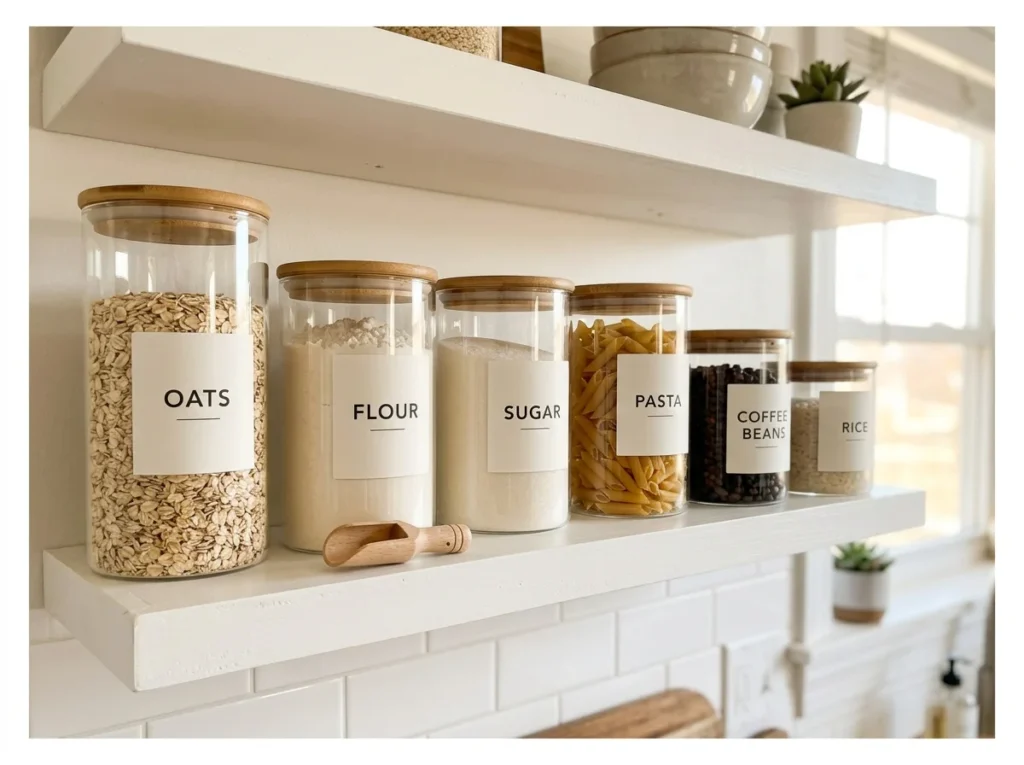
A row of matching labeled glass jars displaying dry goods on the kitchen shelf creates storage that is simultaneously functional and genuinely beautiful. The uniform clear glass with clean printed labels transforms ordinary pantry storage into a composed kitchen display.
Use graduated jar sizes from tallest at the back to shortest at the front. Printed labels in a consistent font create a professional appearance. The contents visible through the clear glass add natural color and texture. This kitchen shelf approach rewards daily use by keeping frequently accessed dry goods organized and visible.
That same labeled-jar system works just as well once you look at a pantry that stays just as tidy behind closed doors.
Budget-friendly option that makes every kitchen look more considered.
Cookbooks Displayed Spine-Out
Cookbooks displayed spine-out create a stylish and functional kitchen feature by turning everyday reading materials into décor. This simple arrangement adds color, personality, and warmth while keeping favorite recipes easily accessible and enhancing open shelves, counters, or kitchen islands.
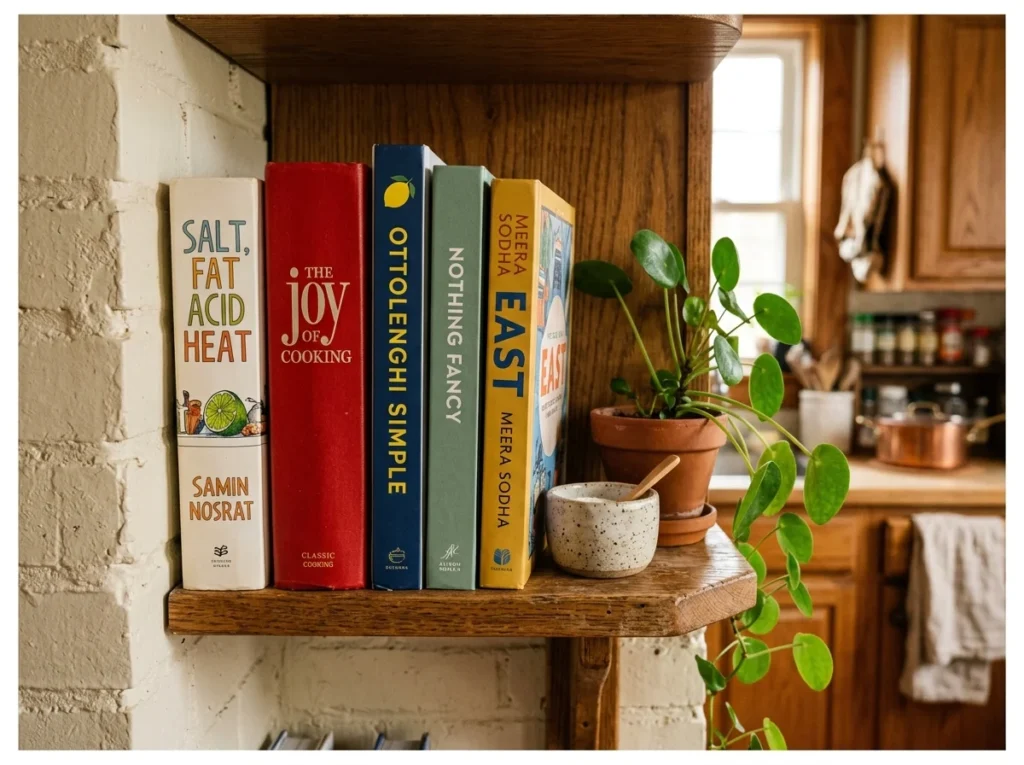
Cookbooks displayed on kitchen shelves with their spines facing outward create a warm, personal shelf element that communicates genuine cooking interest and adds the visual variety of typography, color, and varying heights that purely utilitarian kitchen items cannot provide.
Stand three to five cookbooks vertically together using a decorative bookend to prevent tipping. Choose cookbooks with visually appealing spines in colors that suit the kitchen palette. Removing dust jackets from some books to reveal the plain cloth binding adds a quieter, more composed element within the collection.
Trailing Plant on the Shelf Edge
A trailing plant, like pothos or ivy, spills over the edge of a shelf and softens its straight lines. As the vines grow longer, they add movement that stiffer decor items cannot provide. This works best near a light source, since most trailing plants need decent sun to actually thrive.
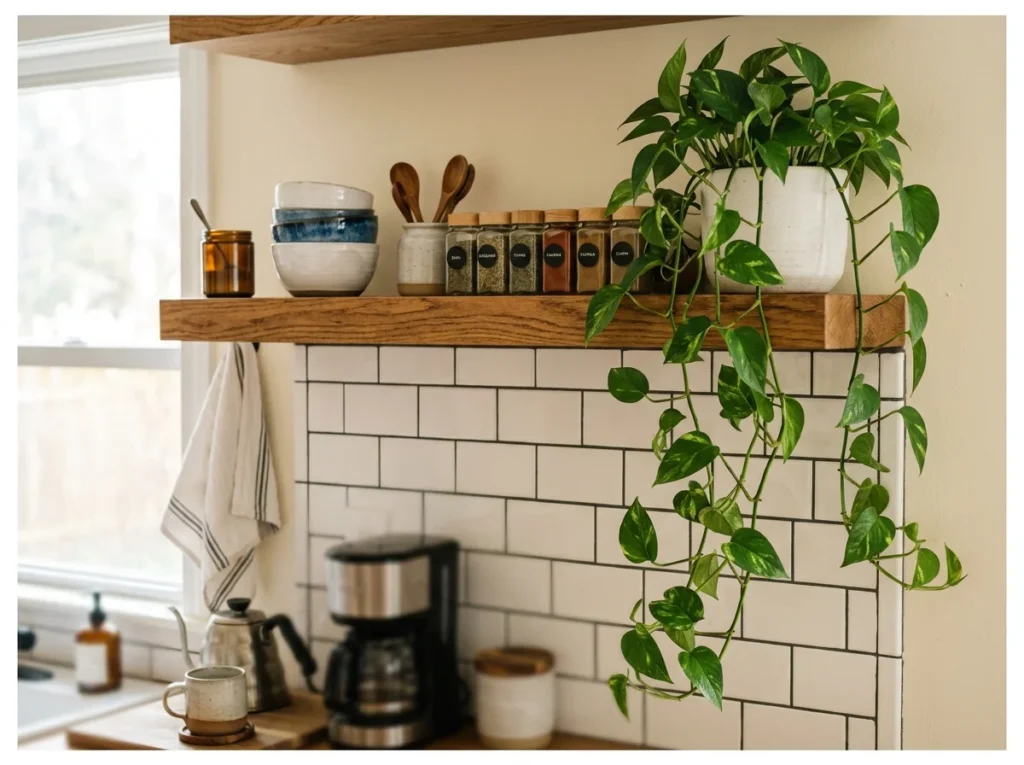
A trailing plant positioned at one end of the kitchen shelf, with its cascading vines falling over the shelf edge, adds a living organic dimension that no manufactured object can replicate. The trailing growth creates dynamic movement and genuine freshness in the kitchen.
Pothos, heartleaf philodendron, and string of pearls all trail beautifully from kitchen shelves. Position the trailing plant at the end of the shelf nearest the shelf edge where the vines can cascade freely without obscuring other displayed items. The plant grows more beautiful over time as it develops longer trailing growth.
That same trailing plant trick works just as well on counters styled with the same restraint nearby.
Fresh, alive, and genuinely beautiful.
Terracotta Pots with Herbs
Terracotta pots bring an earthy, warm tone that pairs naturally with kitchen greenery. Herbs like basil or thyme growing in these pots serve a purpose beyond just decoration. Grouping a few pots together at different heights also adds a bit of visual variety to the shelf.
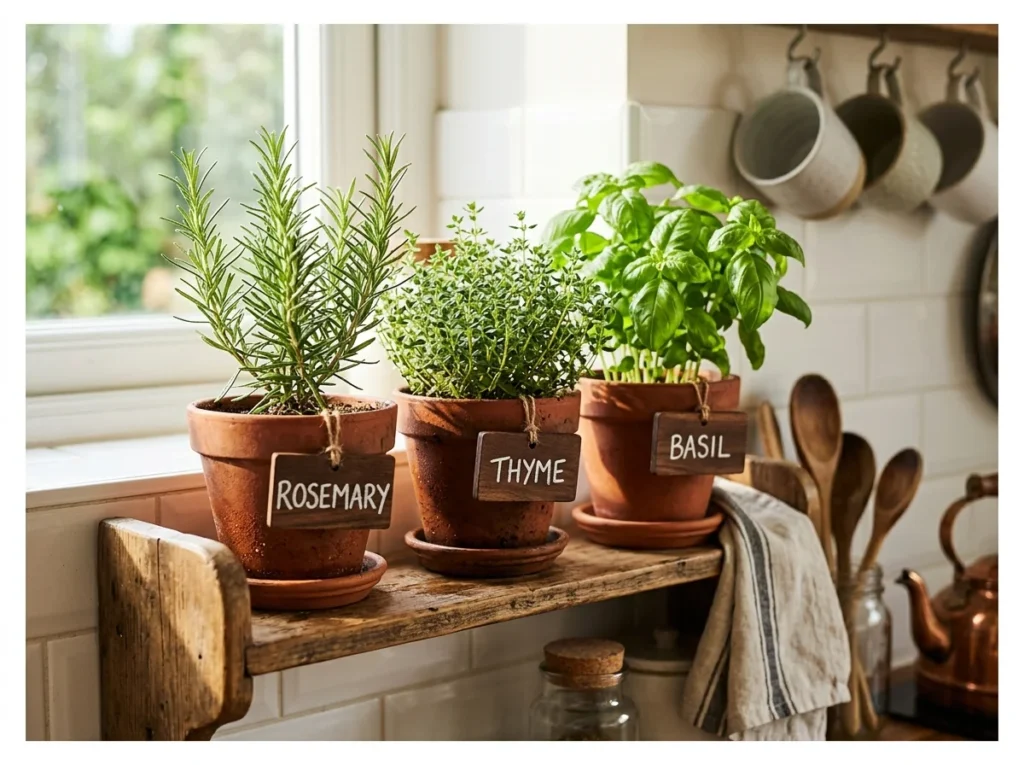
Three small terracotta pots of growing herbs on the kitchen shelf create a display that is both genuinely beautiful and genuinely useful during daily cooking. The warm clay tone of terracotta, combined with the fresh green of growing herbs, creates a shelf accent with natural warmth.
Rosemary, thyme, basil, mint, and chives all suit kitchen shelf positions where they receive good light. Matching terracotta pots in a row create visual cohesion. The herbs grow and develop on the shelf, making the display more abundant and impressive over time rather than static and unchanging.
Vintage Crockery Mix
Mismatched vintage plates and bowls give a shelf a collected, over time kind of look rather than a matched set. Each piece having its own slight imperfection is part of what makes this style feel authentic. Thrift stores and estate sales are common sources for building this kind of mixed collection.
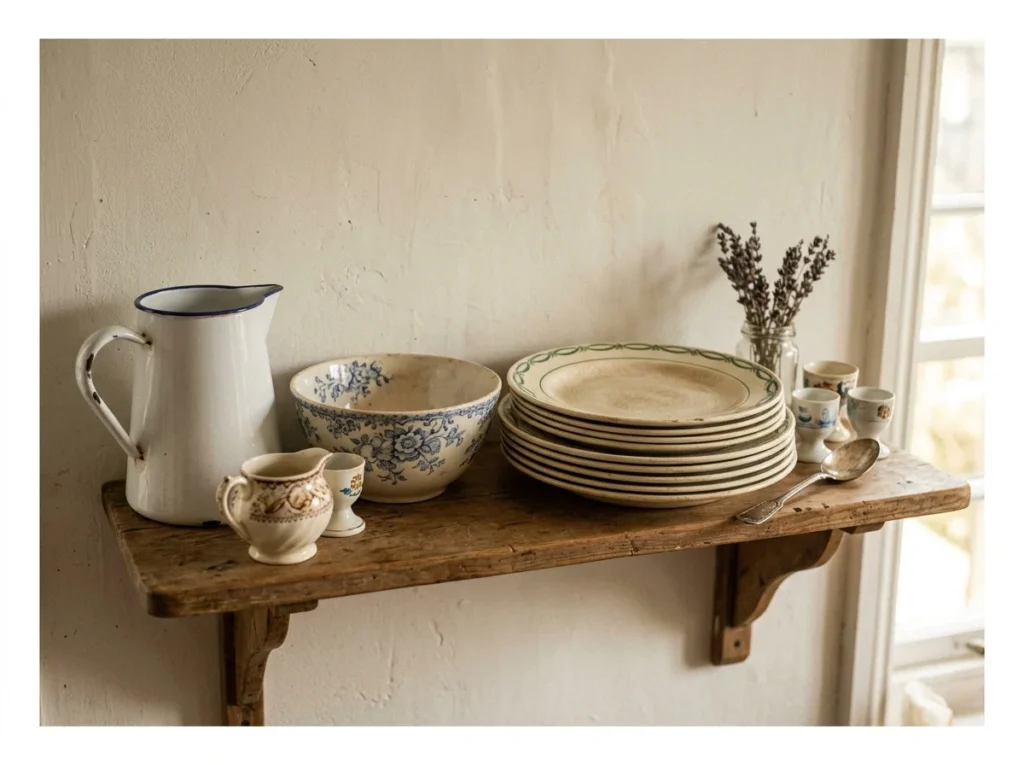
A collection of carefully chosen vintage crockery pieces on kitchen shelves creates a kitchen display with genuine history and character. Enamel jugs, floral-patterned bowls, vintage plates with simple borders, and ceramic cups from different eras create a collected quality.
Limit the vintage collection to pieces within a consistent color family: blue and white, cream and green, or all-white creates cohesion within the variety. The slight imperfections and character marks of vintage pieces create visual richness that new ceramic alternatives consistently lack.
The shelf display that creates genuine personality.
Cutting Boards Leaned Vertically
Leaning cutting boards upright against the wall uses vertical space that flat storage would waste. Different shapes and wood tones create their own bit of visual variety when lined up this way. This also keeps boards easy to grab without digging through a stacked pile in a drawer.
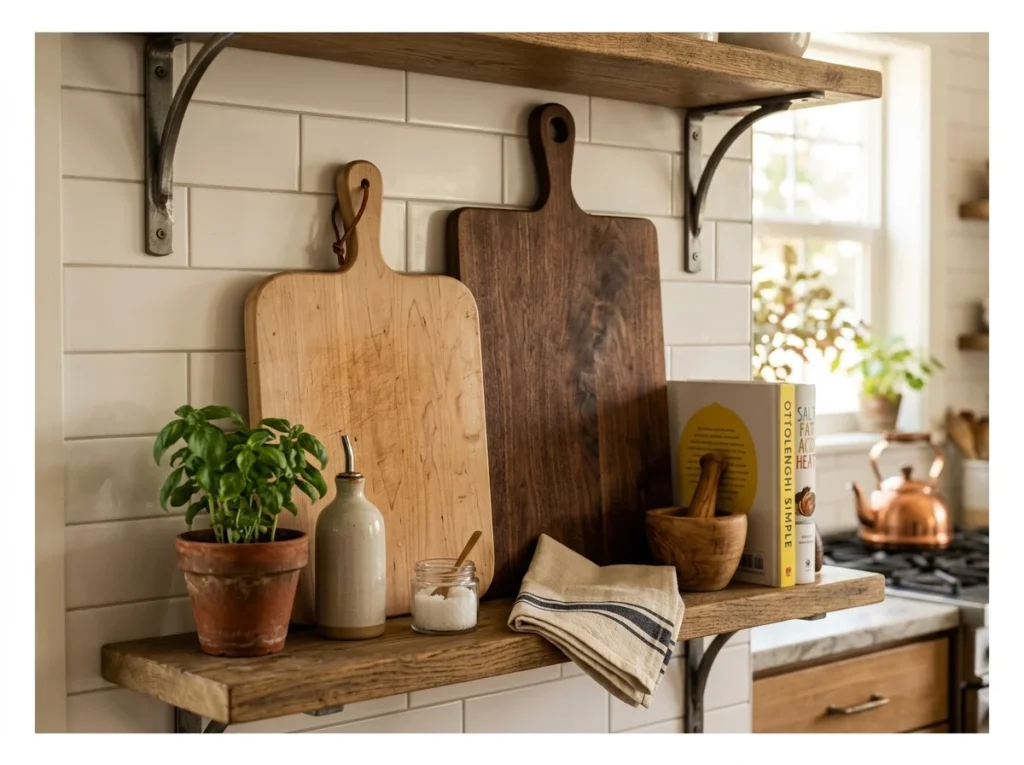
Two or three cutting boards in different materials and sizes leaned vertically against the back wall of the kitchen shelf create a natural, organic backdrop that makes the shelf look styled and composed without requiring additional objects. The boards function as both display elements and practical kitchen tools.
Mix materials for the most visually interesting cutting board display: pale maple beside darker walnut, a round board beside a rectangular one. The boards can be pulled down for use and returned to their leaned position. This dual-use approach is exactly the kitchen shelf principle that makes cooking and styling coexist naturally.
Woven Basket Storage
Woven baskets group smaller items together so a shelf does not look like a pile of loose objects. Their natural texture also adds warmth next to smoother ceramic or glass pieces. This works well for hiding less attractive necessities like napkins or extra dish towels.
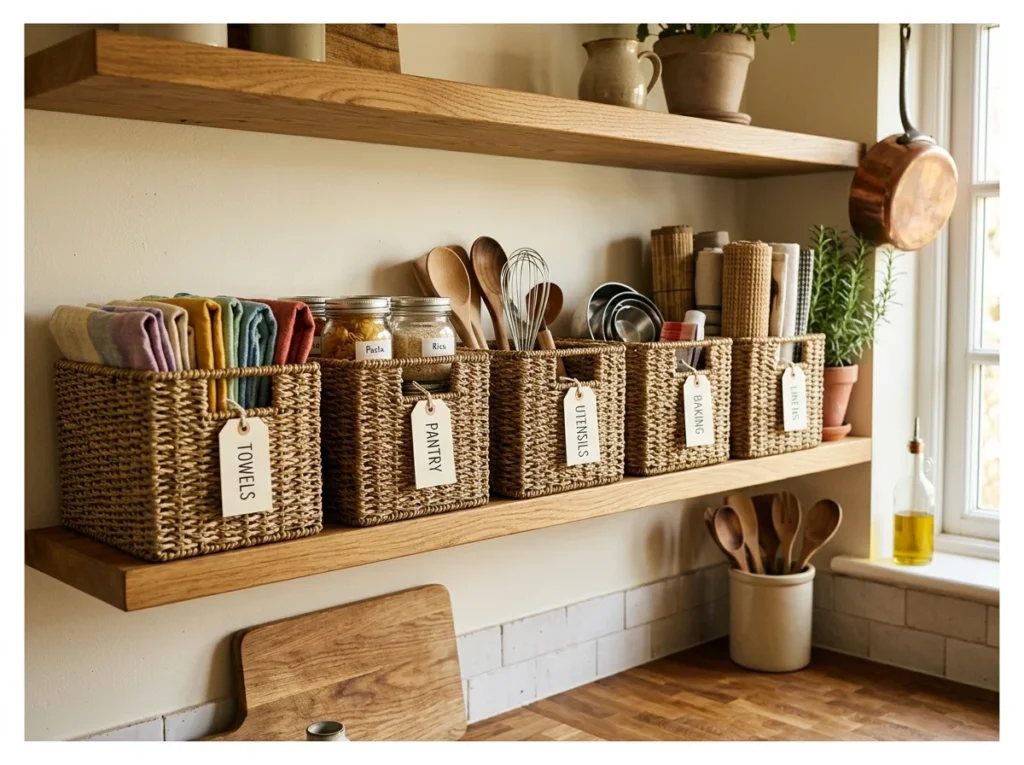
Natural woven baskets on kitchen shelves conceal less attractive kitchen items while adding organic warmth and texture to the shelf display. The natural fiber surface of seagrass or rattan baskets creates warmth and visual interest that no plastic or wire container can replicate.
Use consistently sized baskets on the shelf for the most composed appearance. Print small labels on card and tuck them into each basket front for easy identification. The baskets elevate ordinary storage into organized, attractive kitchen shelf display that suits farmhouse, coastal, and organic modern kitchen aesthetics naturally.
Stacked Bowls and Plates by Color
Stacking dishware by color instead of by type creates a cleaner visual line across the shelf. A gradient from light to dark, or a single tone throughout, tends to look more intentional than a random mix. This approach works particularly well when the dishware itself is already fairly plain.
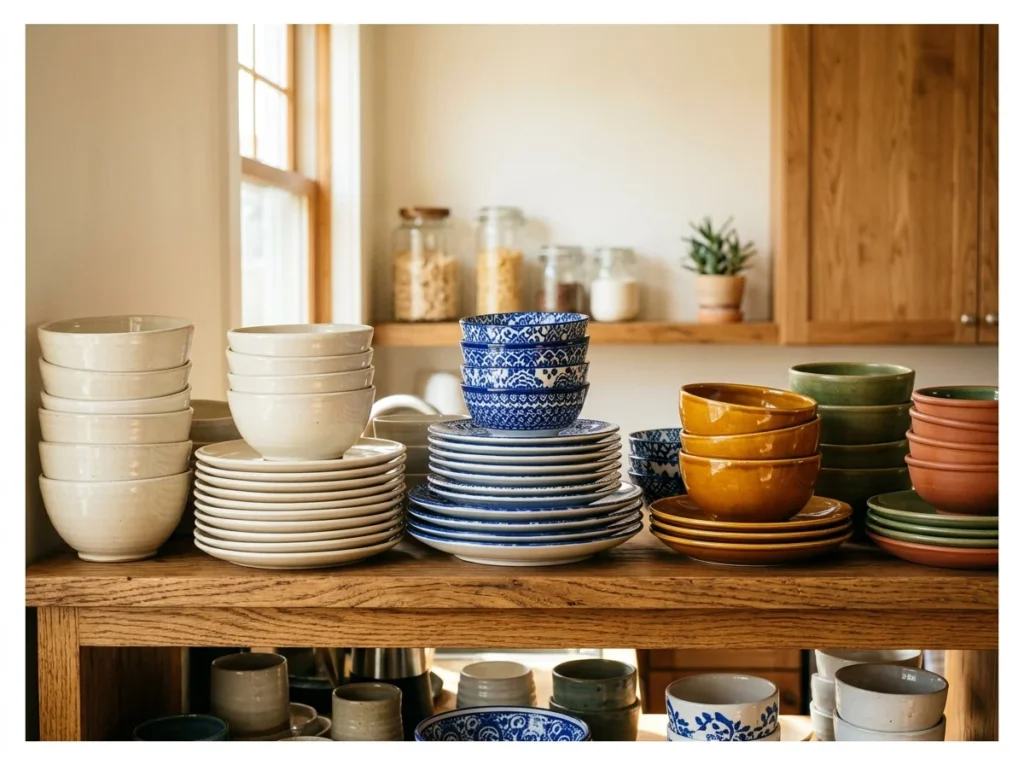
Stacking bowls and plates in color-grouped arrangements on the kitchen shelf creates a display that is visually organized and genuinely inviting. The deliberate color grouping gives what might appear as simple dish storage the quality of an intentional display arrangement.
Group cream and white ceramics together, blue and white patterns together, and terracotta and earthy tones together. Within each color group, alternate heights: a stack of bowls beside a standing plate beside a low ramekin creates height variation that prevents the shelf from looking flat.
Small Plant with Ceramic Object Pairing
Pairing a small plant next to a ceramic vase or bowl balances organic greenery against a solid, still object. This combination is one of the simplest styling tricks since it only needs two items to work. Repeating this pairing at different spots on the shelf helps tie the whole display together.
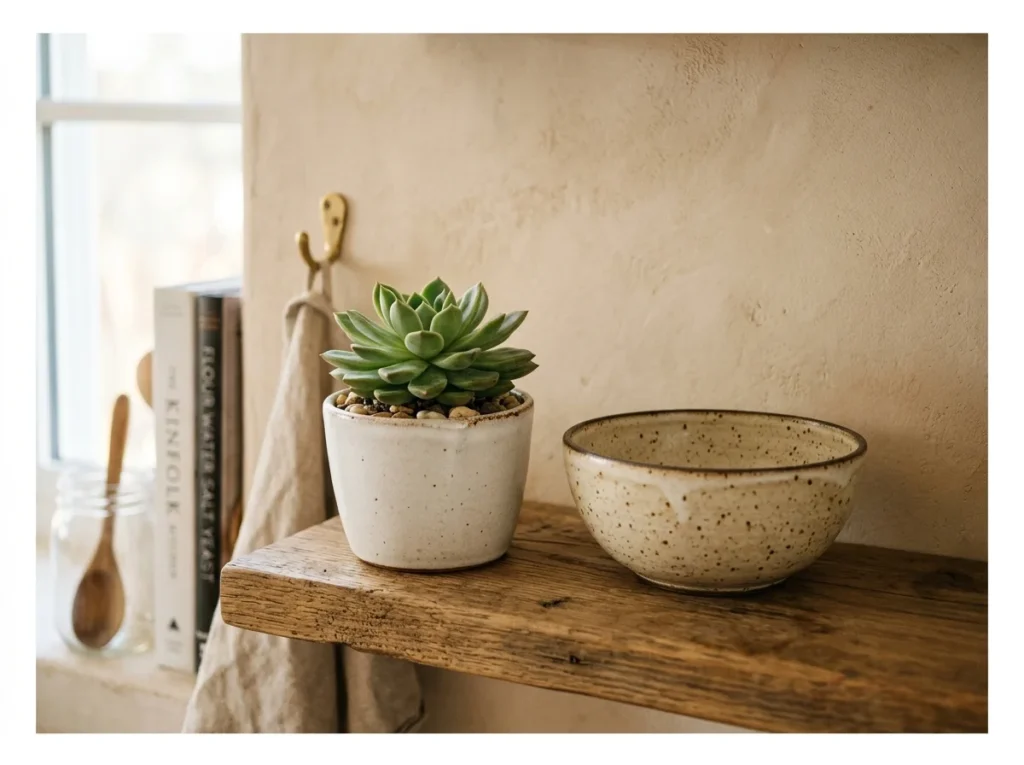
Pairing a small plant with one complementary ceramic object creates the simplest and most reliably beautiful kitchen shelf vignette. The plant provides organic life and the ceramic provides sculptural form, and together they create a complete small composition.
Choose a ceramic object that shares the pot’s material tone: a matte white pot beside a matte white ceramic bowl, a terracotta pot beside a terracotta serving dish. The shared material family creates a natural visual relationship between the two objects that makes the pairing feel deliberate rather than random.
Natural Timber Serving Boards
Wood serving boards bring warm grain and texture that ceramic or glass items do not have. Propping a few boards at different sizes against the wall adds height variation to the shelf. Beyond decoration, these boards get pulled down and actually used for serving on a regular basis.
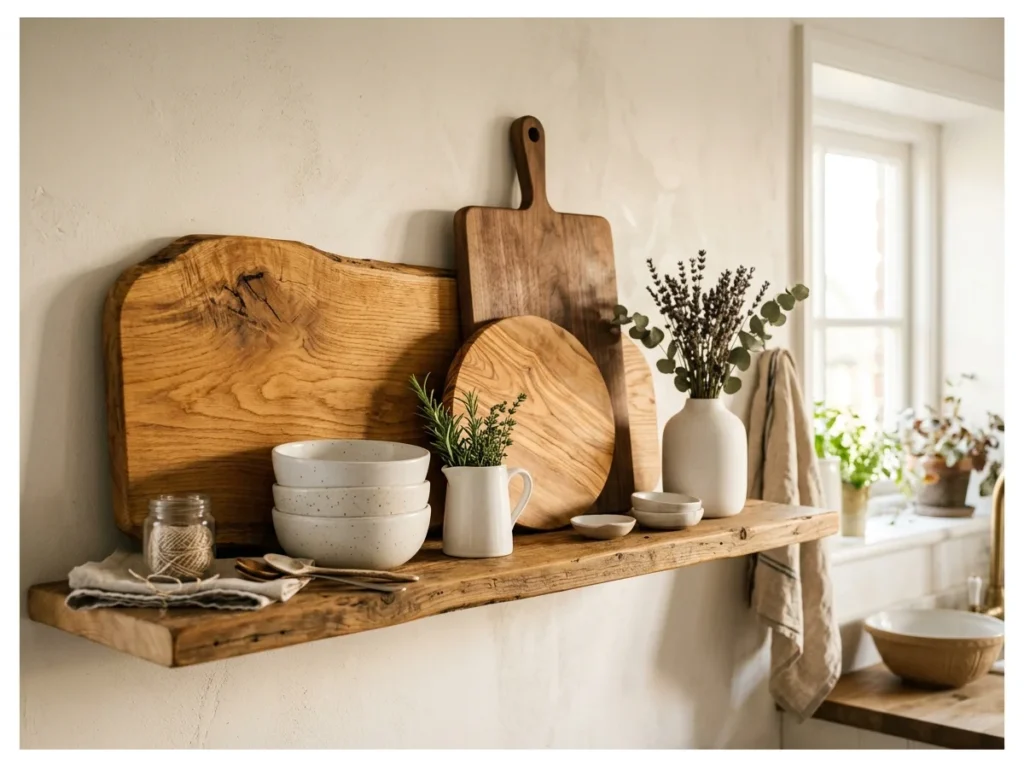
Natural timber serving boards on kitchen shelves introduce warm wood grain that creates the organic contrast needed to prevent an all-white or all-ceramic kitchen shelf display from feeling cold. The warm honey or dark walnut tones of timber suit every kitchen shelf palette.
Stand timber boards vertically for maximum height presence or lay them flat as shelf dividers between ceramic sections. Olive wood boards, maple boards, and walnut boards all create different warm tones within the same natural material family. Small cosmetic imperfections in real timber create authenticity.
Natural warmth on every kitchen shelf.
Clear Glass Jars for Pantry Items
Clear jars let dry goods like grains or pasta double as part of the shelf’s visual texture. Seeing the contents also makes it easier to notice when something is running low. Uniform jar shapes across the collection tend to look neater than a mix of random containers.
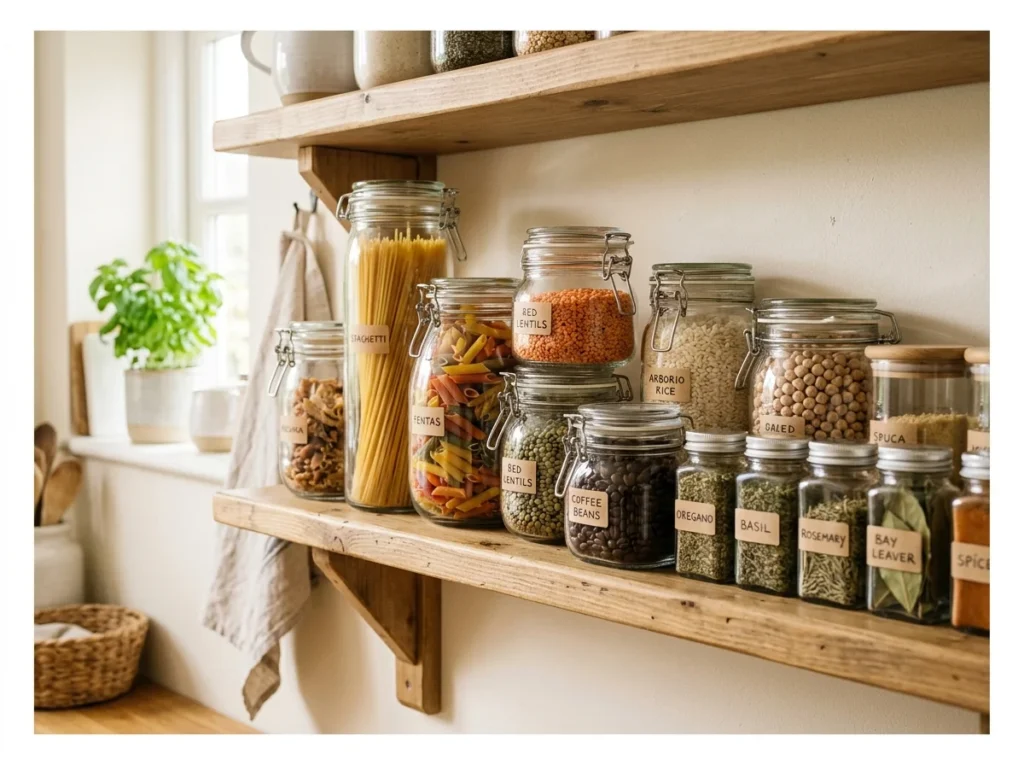
Clear glass storage jars used to display pantry staples on the kitchen shelf create a display where the natural colors and textures of the ingredients themselves become the decorative element. Pasta, dried pulses, coffee beans, and spices all look beautiful through clear glass.
Use a consistent lid style and jar shape for the most composed display: all hinged clip-top lids, or all screw-cap lids, create visual consistency. The natural palette of dry goods, warm amber coffee beside pale pasta beside terracotta lentils, creates a naturally beautiful kitchen shelf color story.
Coffee and Tea Station Shelf
A dedicated shelf for coffee and tea keeps mugs, filters, and canisters all in one easy to reach spot. This setup works well right above a coffee maker or kettle so everything stays within arm’s reach. Keeping the station organized also makes the morning routine noticeably faster.
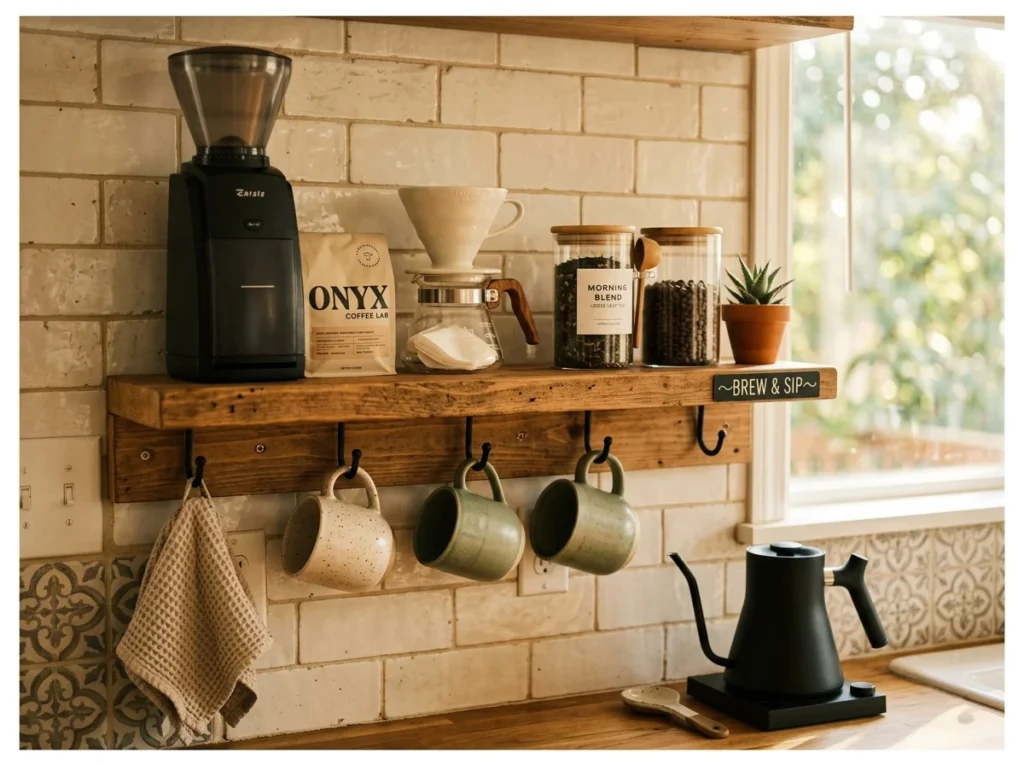
A dedicated coffee and tea station shelf consolidates all beverage preparation equipment and ingredients in one styled zone of the kitchen, making the morning routine faster, more organized, and more enjoyable. The display is both functional and genuinely beautiful.
Style the coffee station shelf with a quality ceramic pour-over or French press, matching mugs displayed on hooks beneath the shelf, a glass jar of coffee beans or loose-leaf tea, and a small plant or candle as a finishing touch. The coffee station shelf creates a ritualized preparation zone that makes every morning feel slightly more considered.
If that morning ritual has you rethinking the whole kitchen layout, an island that ties the room together might be the next project worth tackling.
Seasonal Fruit or Vegetable Display
Displaying fruit or vegetables on the shelf adds real color that changes with the seasons. A bowl of lemons or a small basket of squash brings a natural pop of color without needing decor items. This approach also keeps produce visible enough that it actually gets eaten before it goes bad.
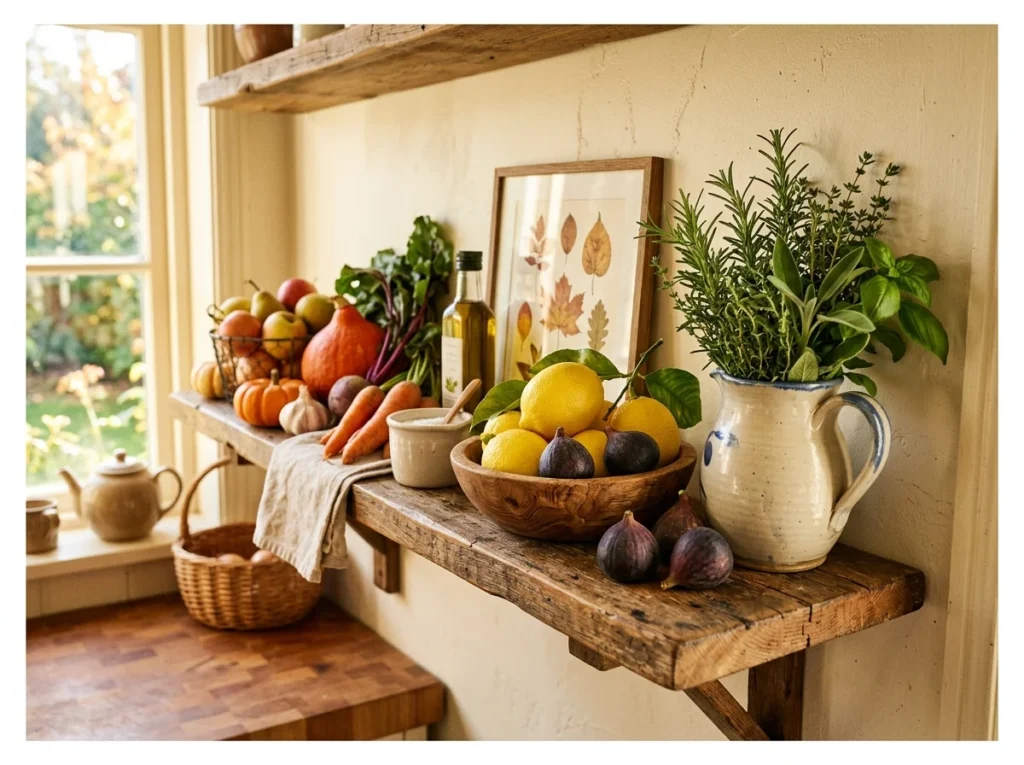
A seasonal produce display on the kitchen shelf using a beautiful bowl filled with seasonal fruits or vegetables creates a kitchen shelf accent that is natural, genuinely useful, and changes with the seasons. Lemons in a timber bowl, figs in a ceramic dish, or pomegranates in a basket all create beautiful seasonal displays.
The seasonal produce display makes the most sense closest to the food preparation zone where the displayed fruits and vegetables are genuinely used during cooking. The natural colors, textures, and fragrance of real produce create a kitchen shelf accent of genuine sensory quality.
Fresh, seasonal, and completely natural.
Framed Recipe Card or Print
A framed recipe card, whether a family recipe or a printed design, adds a personal touch to the shelf. It breaks up the usual mix of dishware and plants with something flat and graphic. This detail works especially well when the recipe actually has some sentimental meaning behind it.
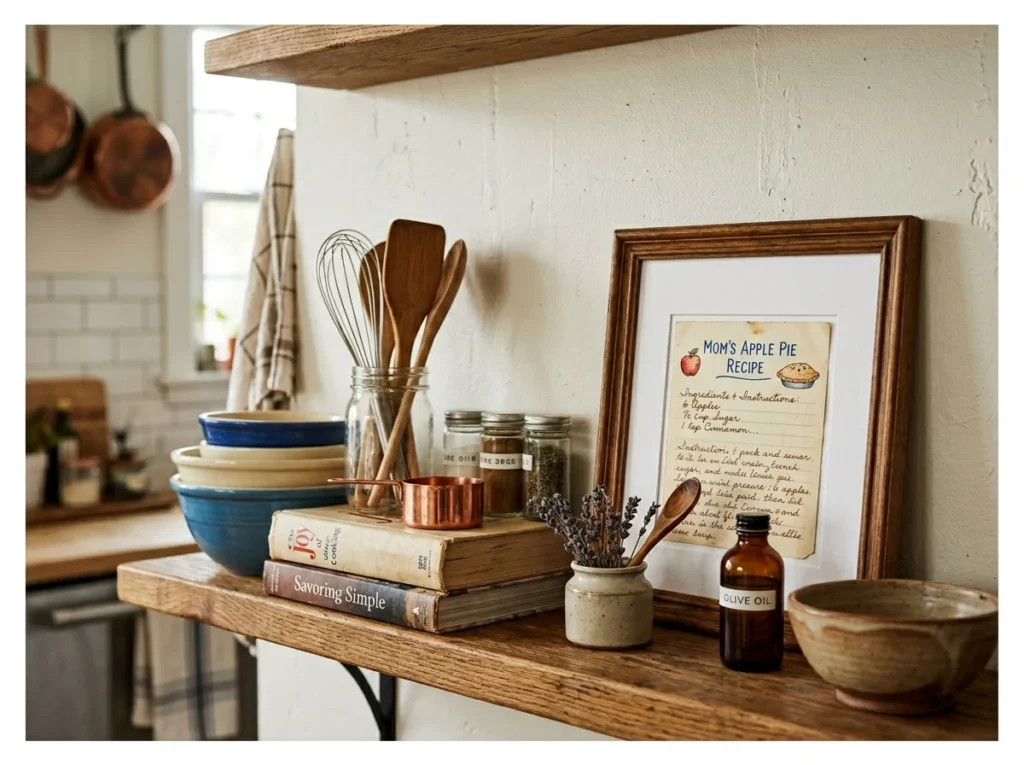
A small framed recipe card, food illustration, or kitchen-related print leaned against the back wall at one end of the kitchen shelf adds a personal, artful element that communicates genuine passion for cooking. The framed piece creates a visual backdrop for the objects positioned in front of it.
A handwritten family recipe in a simple black frame, a vintage botanical botanical food illustration, or a simple typography print of a favorite dish all suit kitchen shelf styling. Keep the frame small, 10 by 15 centimeters is enough, and lean it rather than hanging it for flexibility.
Copper or Brass Kitchen Accents
Copper and brass both catch light in a way that ceramic or wood cannot replicate. A few small pieces, like a mug or a small pot, add shine without overwhelming the shelf. These metals also tend to develop a bit of natural patina over time, which many people like.
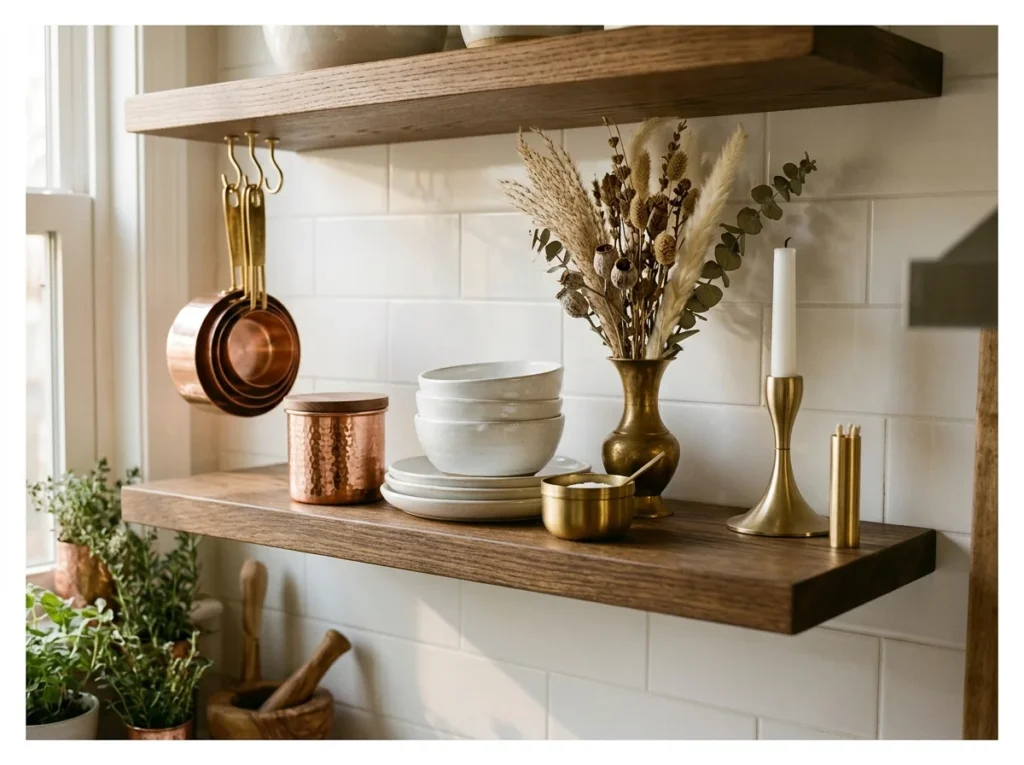
Copper and brass kitchen accent objects placed among white ceramics on kitchen shelves add warm metallic tones that make the display feel genuinely curated and sophisticated. The warm gold and copper tones belong naturally within the kitchen material vocabulary.
Copper measuring cups, a small brass vase, a bronze mortar and pestle, or copper-handled kitchen tools all create beautiful metallic kitchen shelf accents. The warm metallic tones catch kitchen light beautifully throughout the day and create visual richness that purely ceramic displays lack.
Monochromatic All-White Display
A monochromatic all-white display creates a clean, elegant, and timeless kitchen aesthetic. The layered use of white tones, textures, and finishes adds depth while maintaining a bright, sophisticated look that complements modern, minimalist, and classic interior styles.
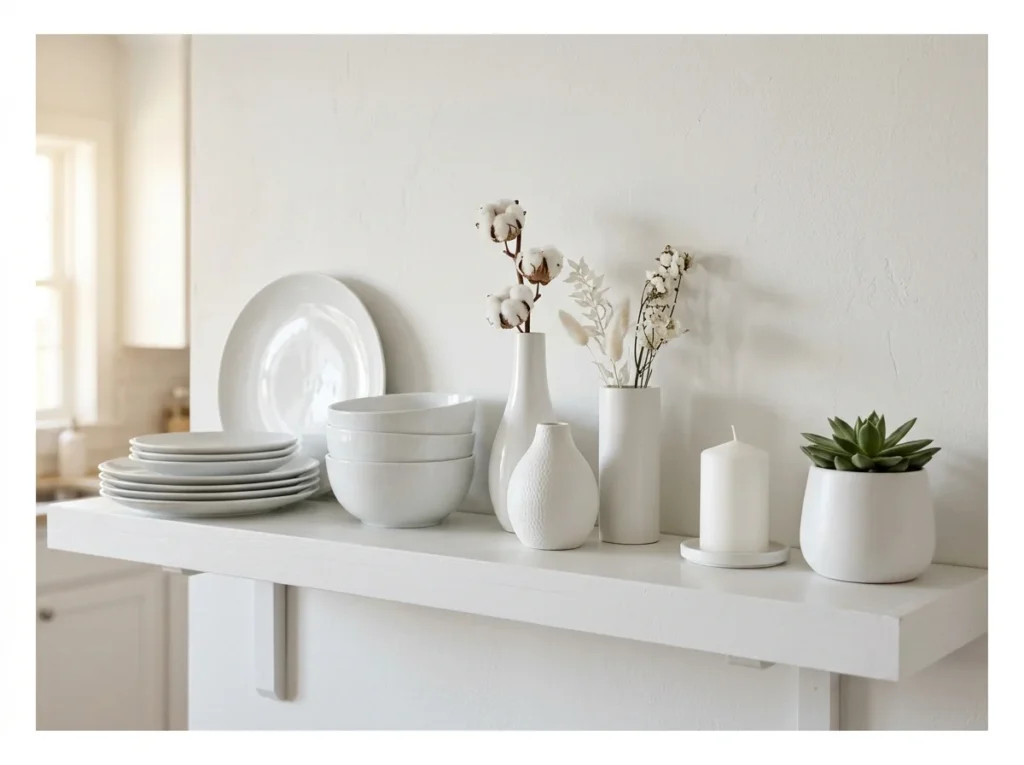
An all-white kitchen shelf display uses objects in the same white and near-white tonal family at different heights and textures to create a shelf that looks composed and deliberately minimal. The variety of form and surface texture within one color creates visual interest through contrast of shape rather than color.
The all-white kitchen shelf approach requires more attention to form and texture than a colorful display. Mix smooth glazed ceramics with matte textured finishes, round forms with angular ones, and tall vessels with low wide bowls. A single trailing green plant provides the only non-white element for contrast.
Farmhouse-Style Shelf Styling
Farmhouse-style shelf styling creates a warm and inviting kitchen display by combining rustic textures, natural materials, and timeless décor pieces. Mixing wooden accents, ceramics, greenery, and everyday essentials adds character while creating a cozy, organized, and lived-in farmhouse feel.
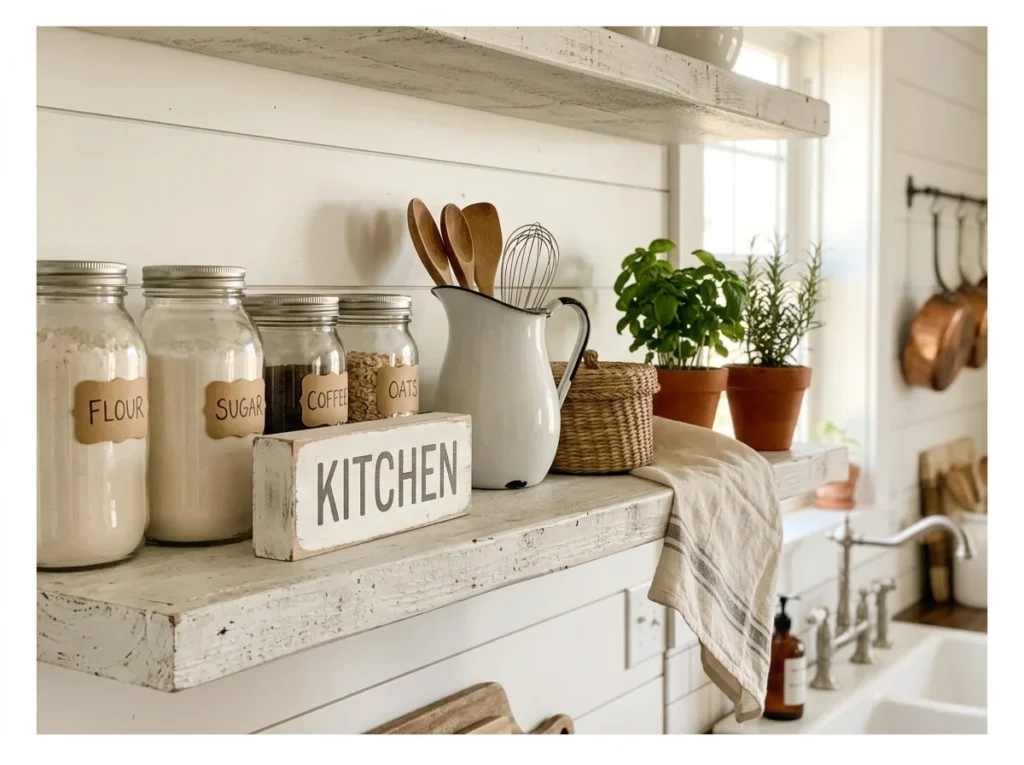
A farmhouse kitchen shelf uses labeled mason jars, white enamel pieces, woven baskets, terracotta herb pots, and natural timber elements to create a kitchen shelf with warm country character. The abundance of natural materials and honest everyday objects creates an authentic lived-in farmhouse aesthetic.
Every element on a farmhouse kitchen shelf should reference the farmhouse material vocabulary: natural fiber, honest ceramic, real timber, clear glass, and aged or patinated metal. Avoid anything that looks precious or formally decorative. The farmhouse kitchen shelf celebrates functional beauty.
If this farmhouse direction is working for you here, a farmhouse mood for the whole kitchen shows how to carry it through the rest of the room.
Minimal Single-Object Statement
A minimal single-object statement creates a refined and intentional design moment by highlighting one standout piece. This simple approach adds elegance, focus, and visual balance while allowing the featured item to become a stylish focal point in any space.
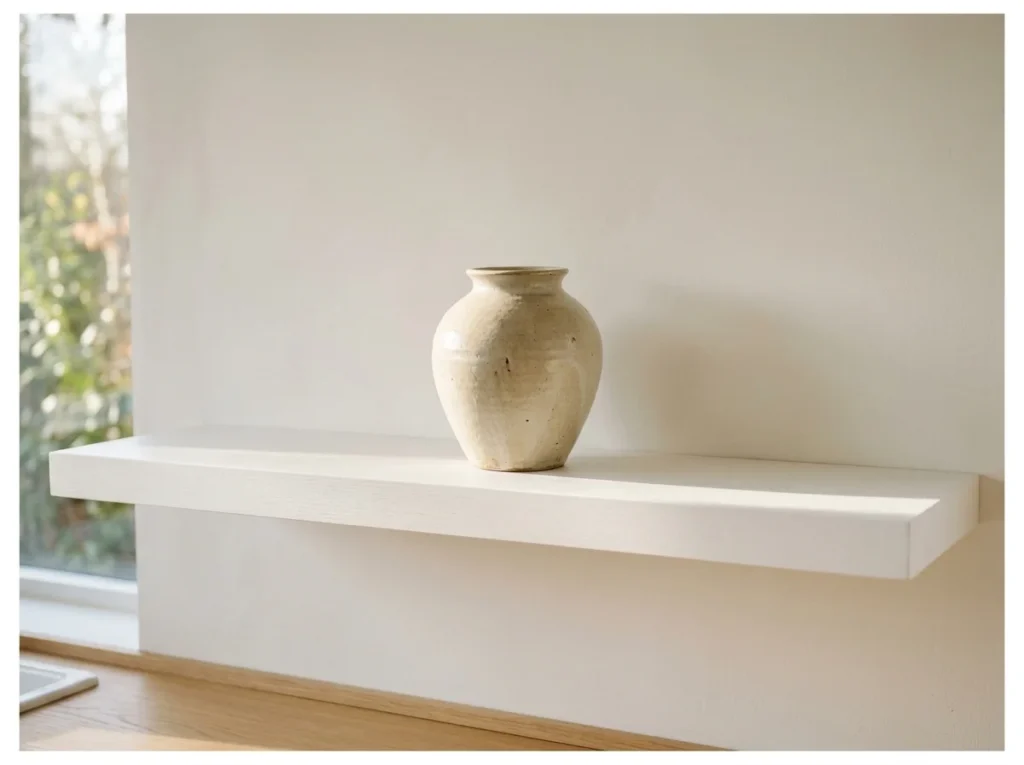
A single beautifully chosen object placed on an otherwise completely clear kitchen shelf creates a display of extraordinary restraint that communicates design confidence. One large ceramic vessel, one perfect timber bowl, or one meaningful kitchen object on a clear shelf speaks louder than seven competing pieces.
This approach works best on a longer shelf where the clear space around the single object reads clearly as intentional negative space rather than an empty surface. The single-object kitchen shelf statement is the most difficult to maintain because the instinct is always to add more.
A warm white base to build the shelf against makes this kind of restraint even easier to pull off.
The most confident kitchen shelf of all.
Conclusion
A well-styled kitchen shelf is one of the most visible and consistently rewarding home decor projects available. It transforms the kitchen from a purely functional cooking space into a room with genuine warmth, personality, and visual beauty that makes cooking more enjoyable every day.
Start with the objects already in the kitchen. Group the most beautiful ceramics together, stand the nicest cutting board vertically, add one small plant, and remove everything that does not add genuine beauty or genuine function.
The kitchen shelves you have always wanted to create are simpler to achieve than you think. One editing session and one or two chosen additions from this list are all you need to start.
And once the kitchen feels resolved, a dining room finished with the same eye is a natural next room to bring this same discipline to.