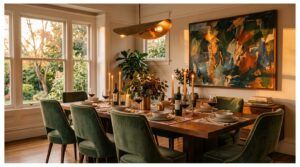
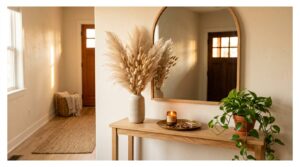
A white kitchen can look cold, clinical, and completely uninviting. A warm white kitchen feels clean and beautiful and genuinely welcoming at the same time.
These ideas show you exactly how to get warm white right in every part of the kitchen.
If lasting appeal matters as much as warmth to you, a timeless approach to build on is worth reading alongside this list.
Let’s get started.
Warm White Shaker Cabinets
Warm white leans slightly toward cream instead of the stark, cool white found in older kitchens. On shaker doors, that warmth softens the simple recessed panel so it feels inviting rather than clinical. This tone has become a common alternative for anyone who finds bright white too harsh under kitchen lighting.
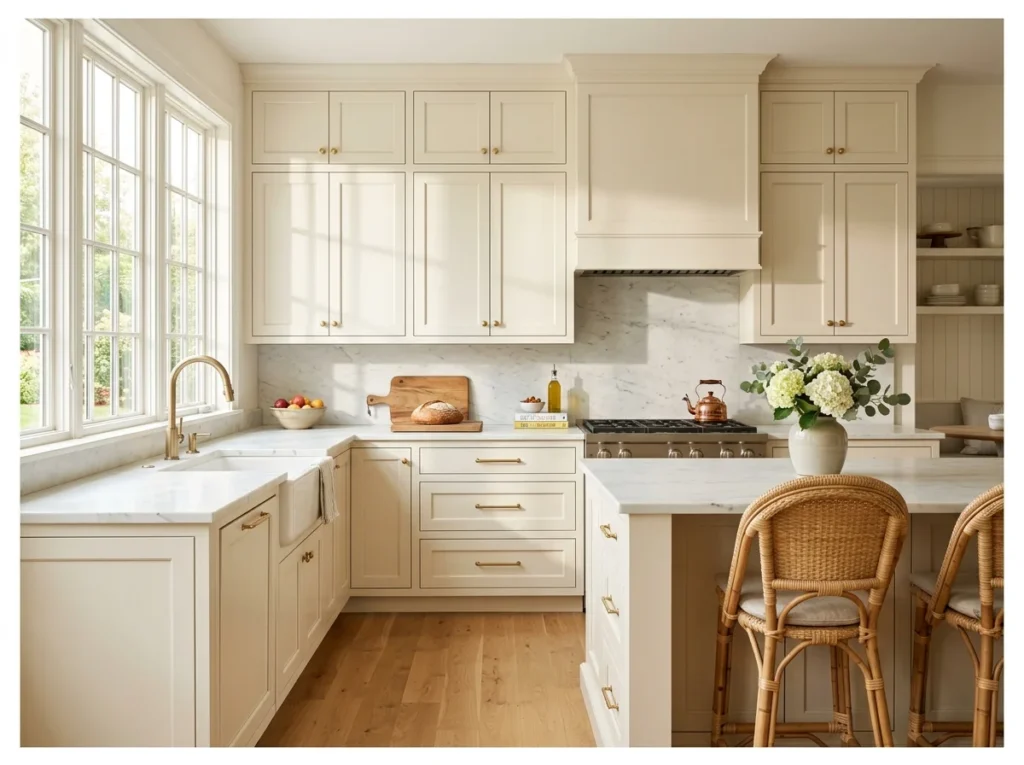
Warm white shaker cabinets with a slight cream or warm ivory undertone create the most consistently beautiful and welcoming kitchen cabinetry aesthetic available. The classic recessed panel profile of shaker doors adds architectural detail while the warm white tone prevents any clinical coldness.
The most important specification is the white’s undertone. Request paint samples in Benjamin Moore White Dove, Chantilly Lace, or Farrow and Ball All White on the actual cabinet material before committing to the full kitchen. Each of these reads differently under different light conditions in different rooms.
The foundation of every beautiful warm white kitchen.
Cream Cabinets with Warm Undertones
Cream cabinets carry a yellow or beige undertone that keeps them from reading as sterile white. This undertone becomes especially noticeable next to brass hardware or warm wood flooring. It is a good choice for kitchens that want brightness without feeling cold.
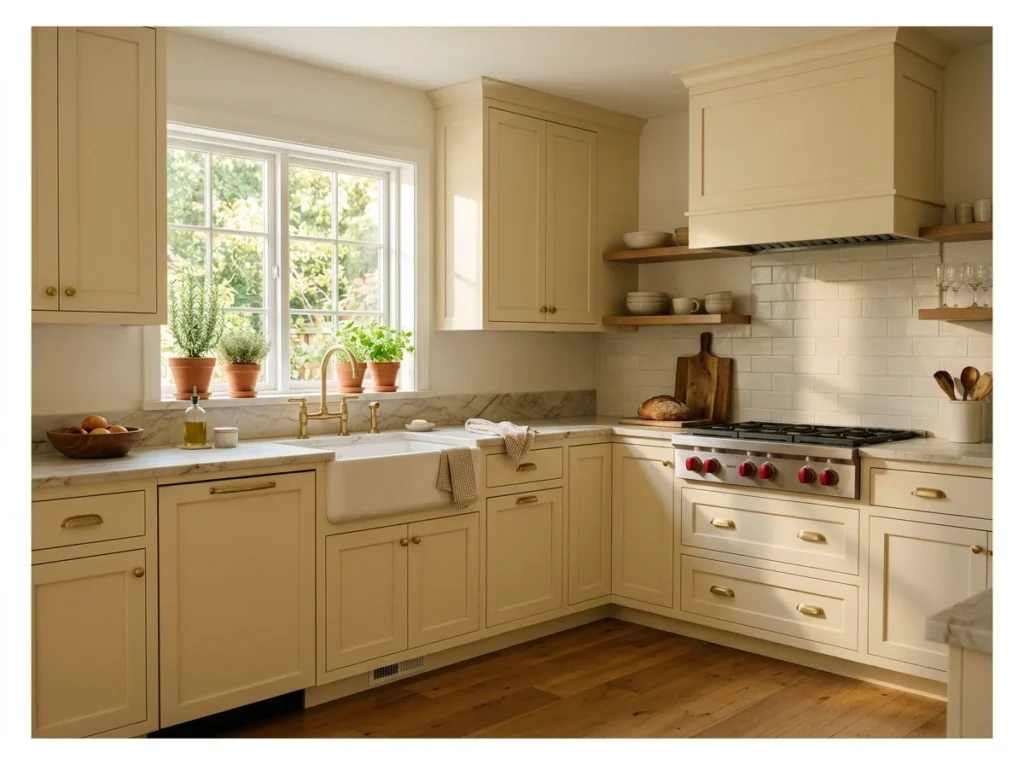
Cream cabinets take the warm white kitchen concept one step further into the yellow-warm spectrum, creating a kitchen with undeniable warmth that pure white cannot achieve. The slight yellow undertone of cream creates a kitchen that photographs warmly and feels genuinely cozy in natural light.
Cream suits farmhouse, transitional, and traditional kitchen aesthetics naturally. Farrow and Ball Pointing and Dulux Natural White are both reliable cream-adjacent cabinet colors that read as warm white rather than yellow in most domestic lighting conditions. Pair with warm timber, stone, and brass for maximum warmth.
Natural Timber Island in a White Kitchen
A timber island breaks up an all white kitchen with a material that has real grain and warmth. Against white cabinets, the wood tends to stand out as the main focal point in the room. Over time it develops small marks that most homeowners consider character rather than damage.
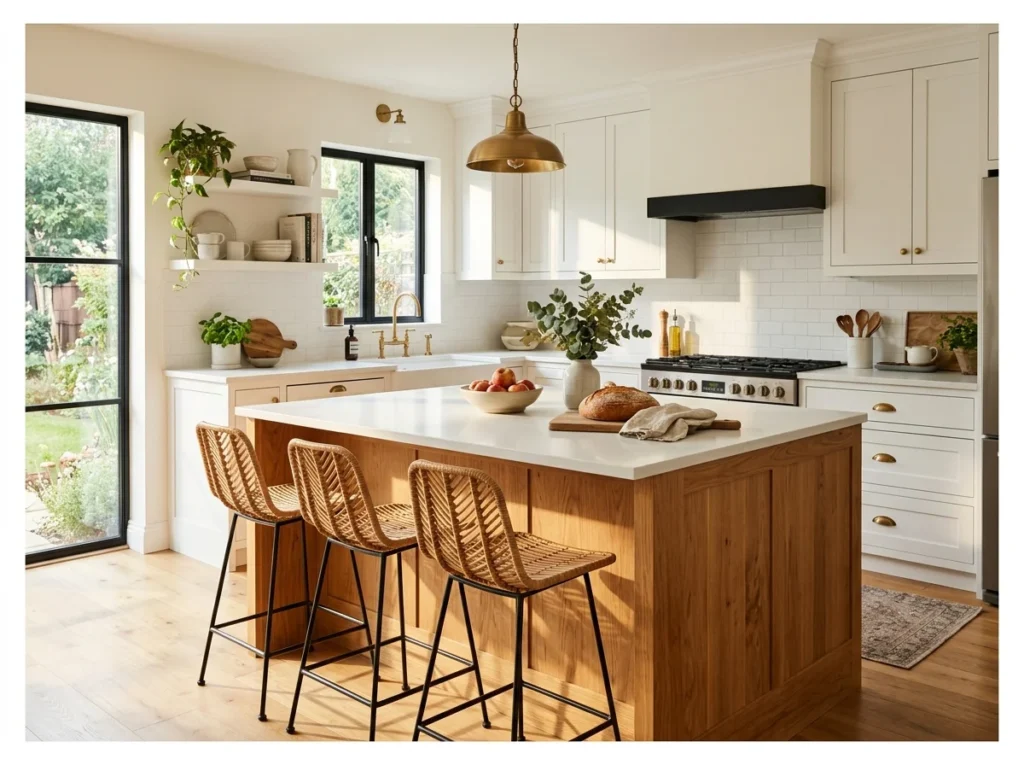
A natural timber kitchen island within a white kitchen creates the essential warm contrast that prevents an all-white kitchen from feeling cold. The honey grain of natural oak or the deeper warmth of walnut creates an organic focal point that makes the surrounding white cabinetry feel fresh rather than stark.
The visual contrast between the white perimeter cabinetry and the natural timber island is one of the most universally appealing kitchen design decisions. It creates warmth without requiring a full color change on any cabinet, which means the investment in the timber island delivers warmth across the entire visible kitchen from a single piece.
Once the timber tone is chosen, an island styled to hold its own is what turns it into a genuine focal point.
The warmth source every white kitchen needs.
Warm White with Brushed Brass Hardware
Brushed brass has a soft, slightly muted shine compared to polished gold or chrome. Against warm white cabinets, it adds a bit of shine without looking too formal or shiny. This pairing has become one of the more common hardware choices in updated white kitchens.
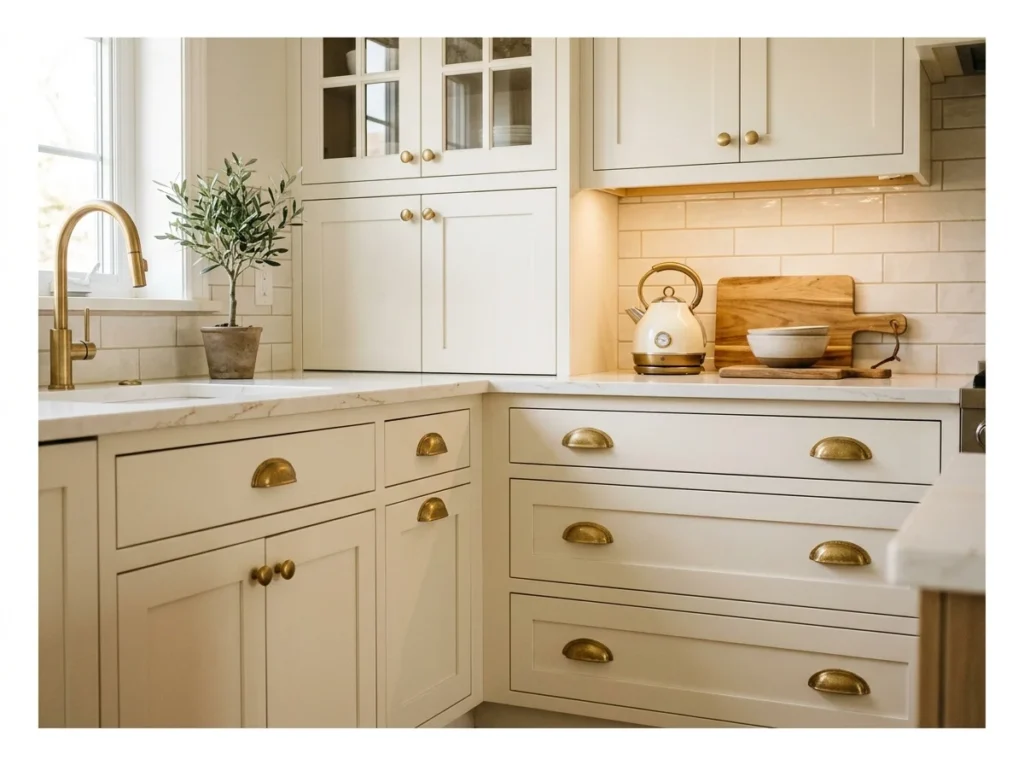
Brushed brass hardware on warm white or cream cabinets creates a warm metallic accent that is simultaneously subtle and genuinely beautiful. The warm gold tone of brushed brass belongs naturally within the warm white kitchen palette in a way that cool chrome or satin nickel does not.
Brushed brass rather than polished brass is the correct specification for a contemporary warm white kitchen. Polished brass creates a high-shine contrast that can feel dated. Brushed brass creates a softer, more sophisticated warm metallic quality. It suits cup pulls, knobs, and any kitchen fixtures including faucets and light fittings.
Honed Marble Countertop
A honed finish removes the high gloss shine that polished marble usually has, leaving a soft, matte surface instead. This finish also tends to hide small scratches and etching better than a polished slab. It gives a white kitchen a quieter, more understated version of marble’s usual drama.
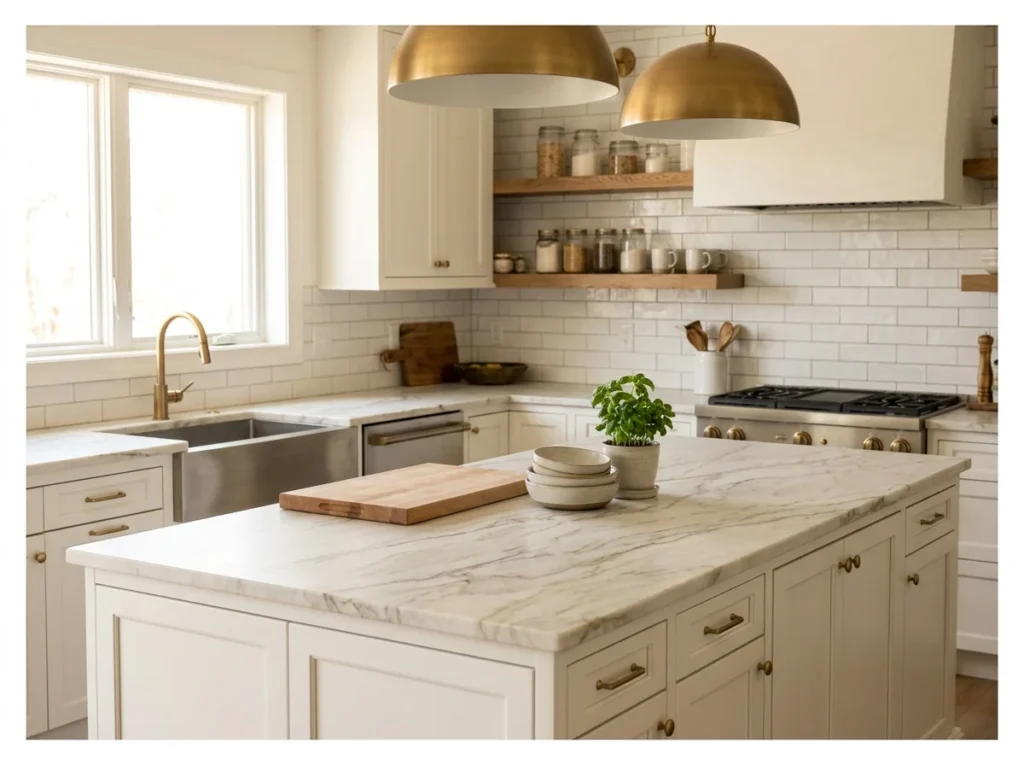
A honed rather than polished marble countertop suits the warm white kitchen more appropriately because the matte surface absorbs rather than reflects light, creating a warmth that polished stone’s mirror-like surface cannot provide. The honed finish also develops a natural patina that improves over time.
Calacatta and Statuario marbles with their warm grey-golden veining on a cream-white background create the most beautiful warm white kitchen countertop. The natural variation in each marble slab means the kitchen countertop is genuinely one-of-a-kind. Seal annually to protect the honed surface.
Once the stone itself is chosen, a countertop dressed to stay warm is what keeps the surface feeling lived-in day to day.
The countertop that gets more beautiful with age.
Warm White with Subway Tile Backsplash
Subway tile keeps its simple rectangular shape no matter what color scheme surrounds it. Against warm white cabinets, a similarly warm toned tile keeps the whole wall feeling cohesive instead of mismatched. This backsplash choice remains one of the safest, most flexible options for a white kitchen.
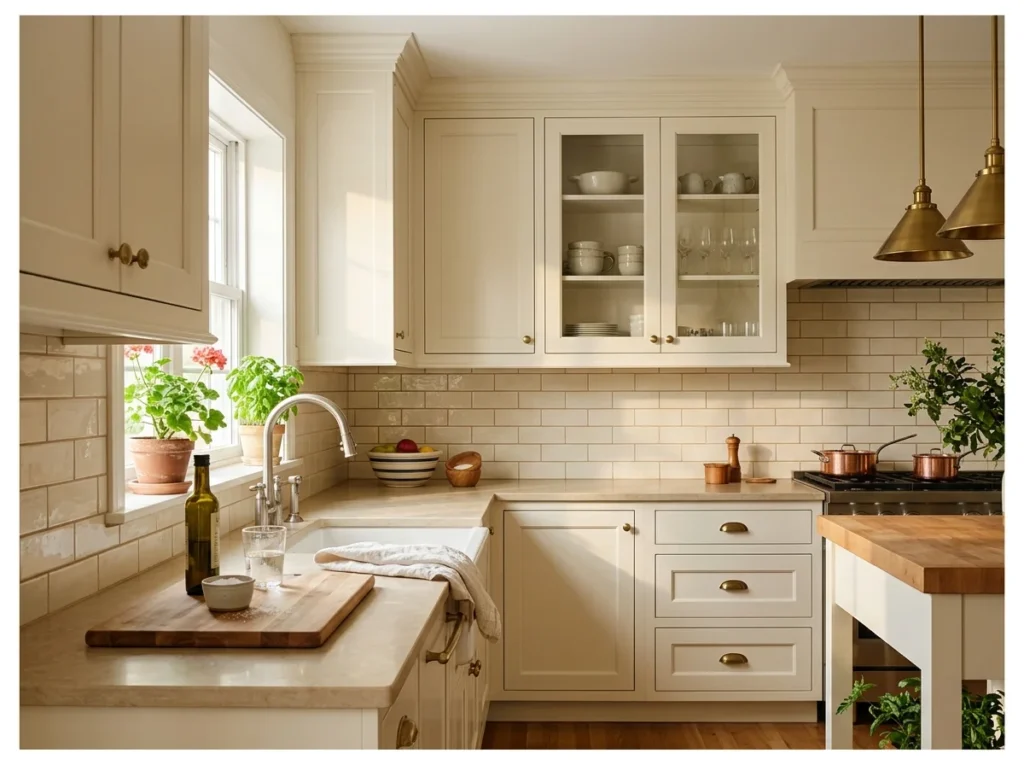
A cream or warm-toned subway tile backsplash rather than a pure bright white tile keeps the warm white kitchen palette consistent from the countertop surface to the wall. Choosing a tile that matches the cabinet undertone rather than contrasting with it creates a kitchen with genuine visual cohesion.
Warm cream subway tiles in a running bond pattern with a matching warm grout create the most seamless and warm backsplash for a cream kitchen. A slightly warmer grout tone rather than stark white prevents the grout lines from creating a cool contrast that would undermine the warmth of the overall kitchen palette.
Sheer Linen Curtains for Soft Light
Sheer linen lets daylight filter through instead of blocking it out like a heavier drape would. In a white kitchen, that filtered light adds a soft glow rather than harsh direct sun. The slightly wrinkled texture of linen also keeps the window from looking too stiff or formal.
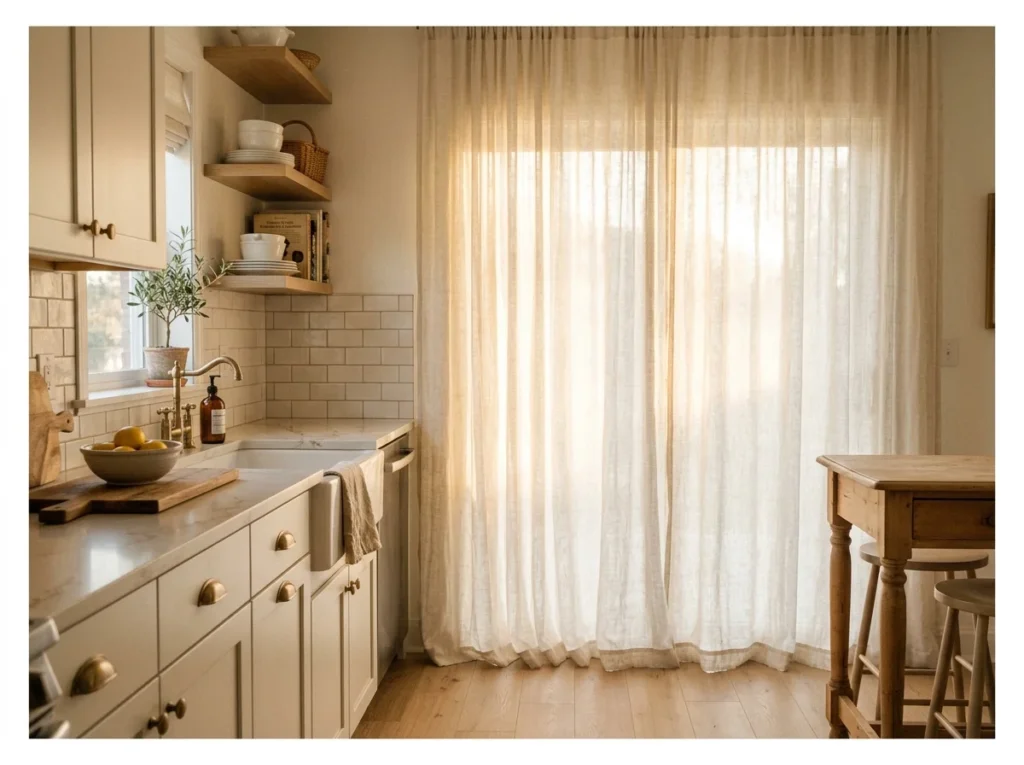
Sheer linen curtains on kitchen windows filter direct sunlight into a warm, diffused glow that transforms how the white kitchen feels throughout the day. Without soft window treatments, direct sunlight creates harsh bright spots and contrasting shadows that make a white kitchen feel clinical.
Natural undyed linen in white or very pale oatmeal creates the most warm and organic filtered light of any curtain fabric. The slight visible texture of linen fabric adds a tactile quality to the window and creates a warmth in the space that the filtered light alone reinforces.
The window treatment that transforms morning light.
Warm Pendant Lights Over the Island
Pendants with a warm toned shade or bulb add a glow that plain white cabinets can sometimes lack on their own. Hanging them at the right height over the island keeps the light focused on where prep work actually happens. This detail also breaks up a lot of white space overhead with a bit of visual interest.
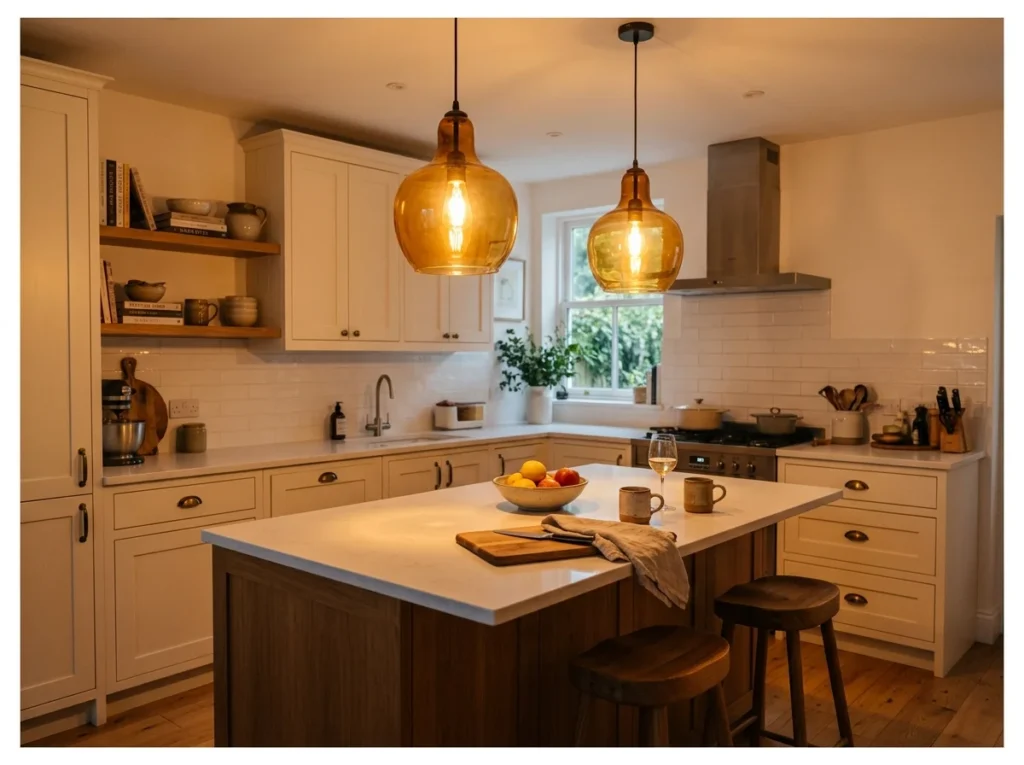
Warm pendant lights with Edison filament bulbs or warm amber shades above the island create the light source that gives a white kitchen its essential evening warmth. The 2700K or lower color temperature of warm lighting makes every white surface appear slightly golden and genuinely welcoming.
Position the pendants at 75 to 85 centimeters above the island countertop surface. Rattan, ceramic, or aged metal shades in warm tones create pendant lights that add material warmth to the kitchen in addition to light warmth. The pendant lights above the island are often the most visible light source in the kitchen and their warmth quality matters enormously.
Open Shelving with Warm-Toned Display
Open shelving with warm-toned displays adds character, texture, and a welcoming feel to the kitchen. By showcasing natural wood accents, ceramics, and everyday essentials, this design creates an organized yet cozy atmosphere while bringing personality and warmth to the space.
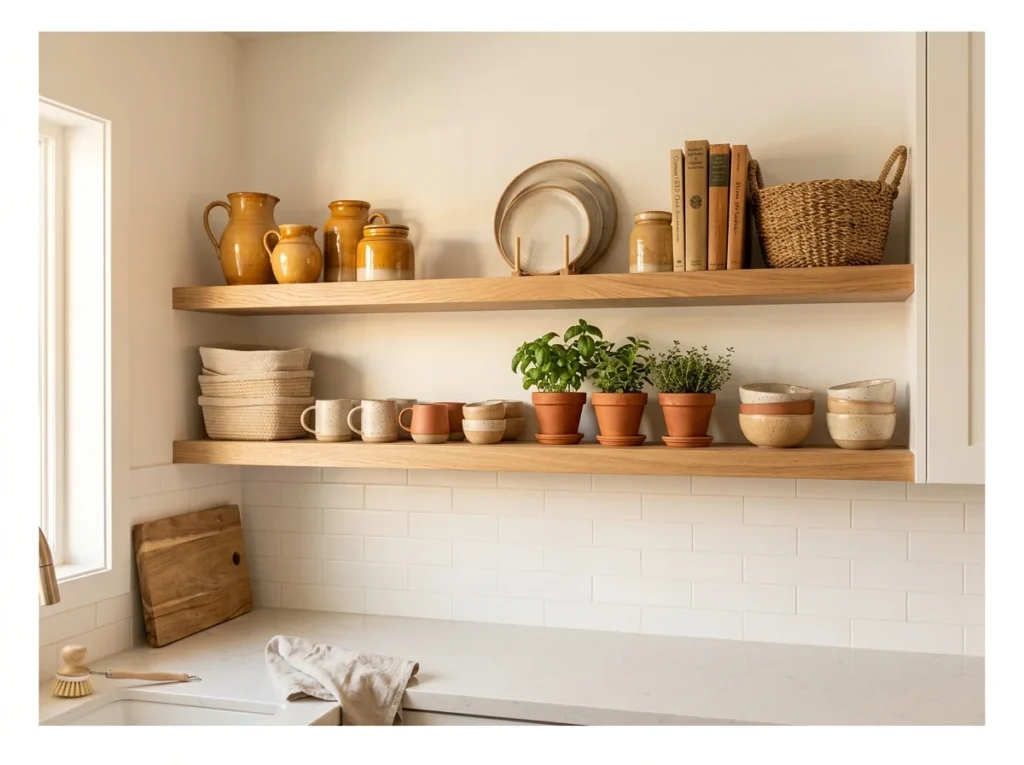
Open shelving in a warm white kitchen provides the opportunity to display objects in warm natural tones that prevent any sterile, clinical quality from developing. Terracotta pots, warm honey ceramics, natural timber boards, and warm linen-toned baskets all belong to the warm kitchen palette.
Natural timber floating shelves rather than painted white shelves add a material warmth layer to the open shelving that suits the overall warm white kitchen direction. Style with plants, terracotta pots, and warm-toned ceramics that create visual warmth within the open shelving zone.
For more on getting that display right, shelving that carries the warmth further has plenty of ideas worth borrowing.
Hardwood Floor in a White Kitchen
A hardwood floor brings warmth underfoot that balances out white cabinets above. Wider planks in particular help ground a bright kitchen so it does not feel too sterile. The natural variation in wood grain also keeps the floor from looking too uniform or manufactured.
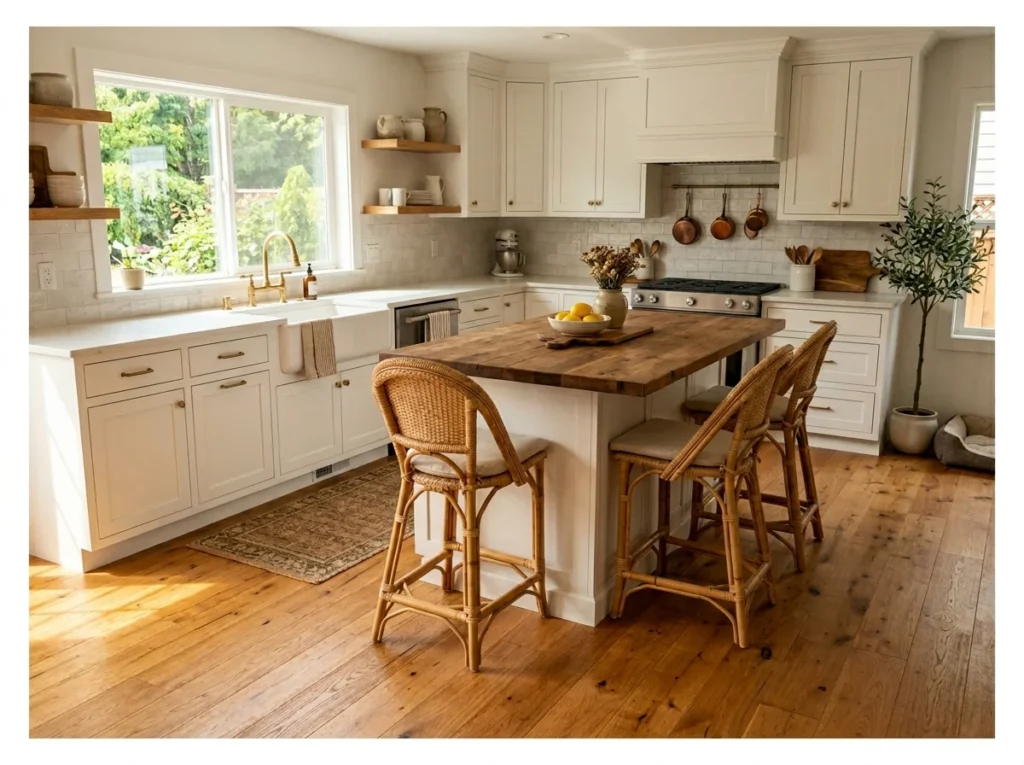
Wide plank hardwood floors in warm oak, walnut, or pine provide the most effective warm foundation for a white kitchen. The natural grain, warm tone, and developing patina of real hardwood underfoot creates a sensory and visual warmth that no tile or laminate alternative consistently matches.
The warmth of the floor travels visually upward through the space, warming the entire kitchen. In a white kitchen this warm foundation is particularly important because without it the white cabinetry and light-colored countertops have no grounding warmth to rest on.
White Kitchen with Sage Green Accents
Sage green sits in that muted, earthy range that pairs easily with white without competing for attention. A small dose, like an island or a row of lower cabinets, is often enough to add color. This combination keeps the kitchen feeling calm rather than overwhelming.
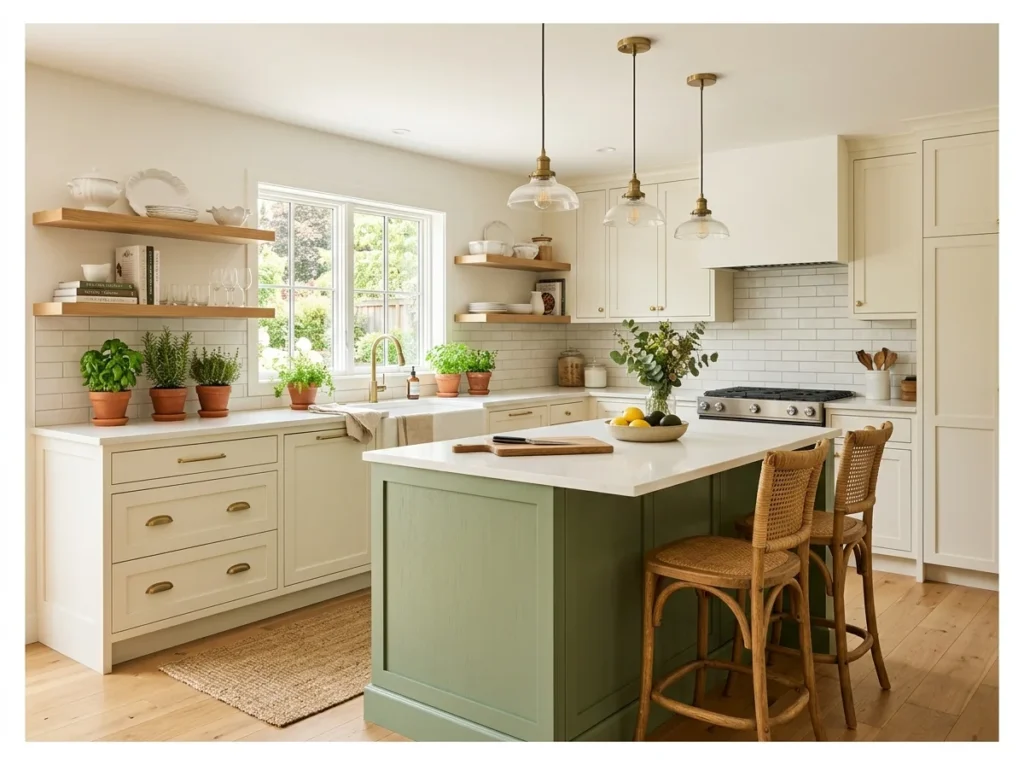
Sage green accents in a warm white kitchen introduce the grey-green tones of nature that complement warm white beautifully. A sage green island, a sage green back wall, or sage green lower cabinets all add a nature-connected warmth that prevents the white kitchen from feeling overly pale.
The grey-green quality of sage reads as simultaneously warm and cool, which makes it uniquely compatible with warm white. It suits the warm white kitchen palette more naturally than bolder greens or mint tones which can create a coolness that works against the warm white direction.
Fresh, natural, and perfectly paired with warm white.
Warm White with Butcher Block Counter
Butcher block adds visible wood grain that contrasts against smooth white cabinetry. It handles direct food prep reasonably well, though it needs regular oiling to stay in good shape. This pairing gives a white kitchen some warmth without changing the cabinet color at all.
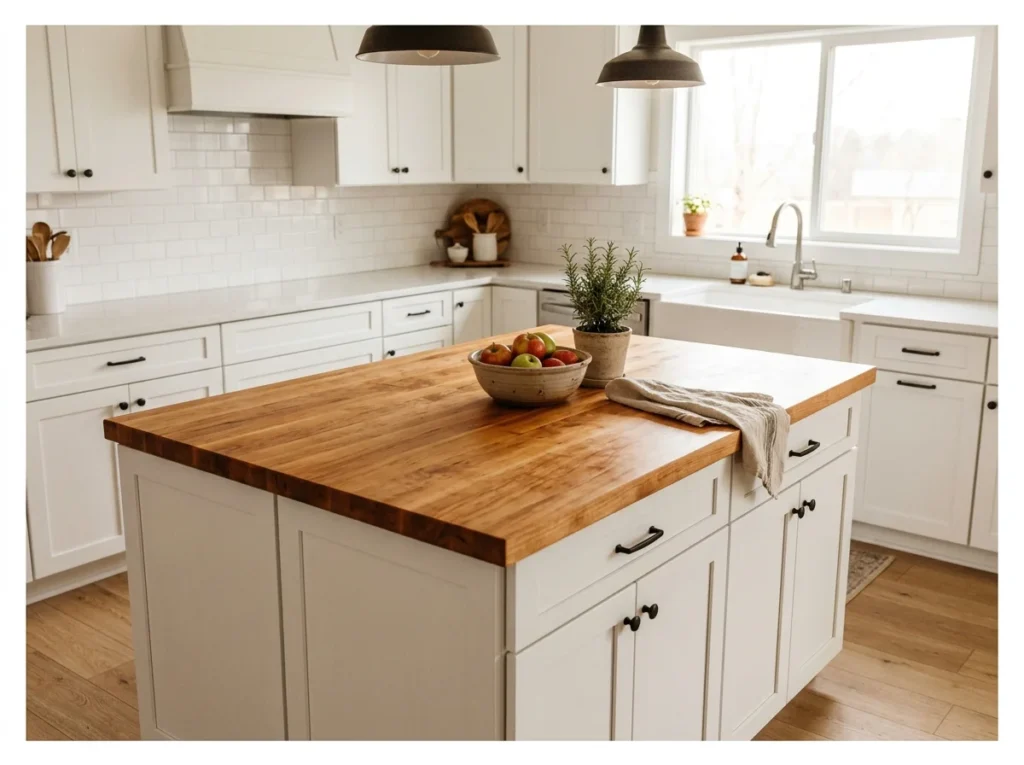
A butcher block countertop in warm honey maple or walnut adds the most immediate and natural warmth to a white kitchen of any countertop material. The end-grain wood construction creates a genuinely warm surface that improves with use and develops beautiful character over time.
Butcher block on the island paired with white quartz or marble on the perimeter countertops creates a warm contrast that suits the warm white kitchen direction perfectly. Seal with food-safe mineral oil monthly for the first three months and the butcher block develops a beautiful natural warmth.
Apron Sink in Warm White Kitchen
An apron sink extends past the edge of the cabinet instead of sitting flush against the counter. Its deep basin handles large pots and baking trays better than a standard undermount sink. Against warm white cabinetry, it often becomes one of the first details people notice in the room.
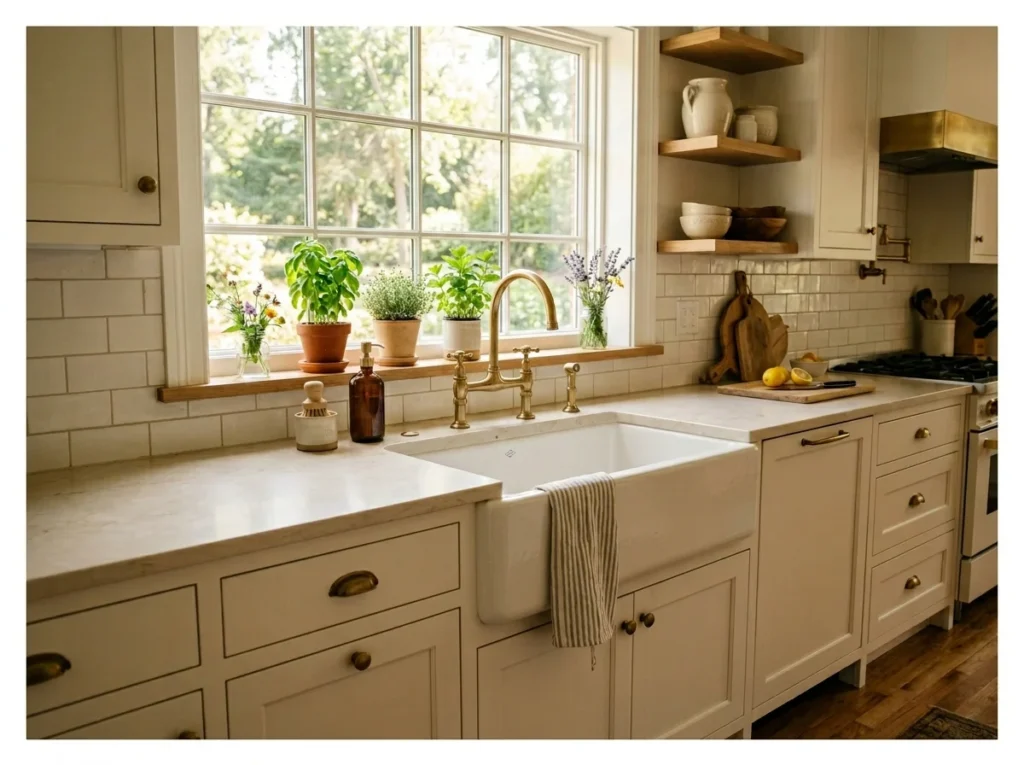
A white fireclay apron-front sink develops a characteristic warm cream quality over time that belongs to the warm white kitchen palette rather than the cool bright white palette. The slight cream warmth of aged fireclay suits the warm white kitchen direction in a way that stainless steel does not.
Position the apron sink below a window where natural light and fresh herbs on the windowsill create the most inviting kitchen work zone. A brushed brass bridge faucet above the white fireclay sink creates a classic warm metallic and warm ceramic combination.
Warm White Cabinets with Beadboard Detail
Beadboard adds narrow vertical grooves to a cabinet door, a detail rarely seen on flat panel styles. On warm white cabinets, this texture adds a bit more depth than a plain shaker front alone. It is often used on an island or lower cabinets to avoid overwhelming the whole kitchen with texture.
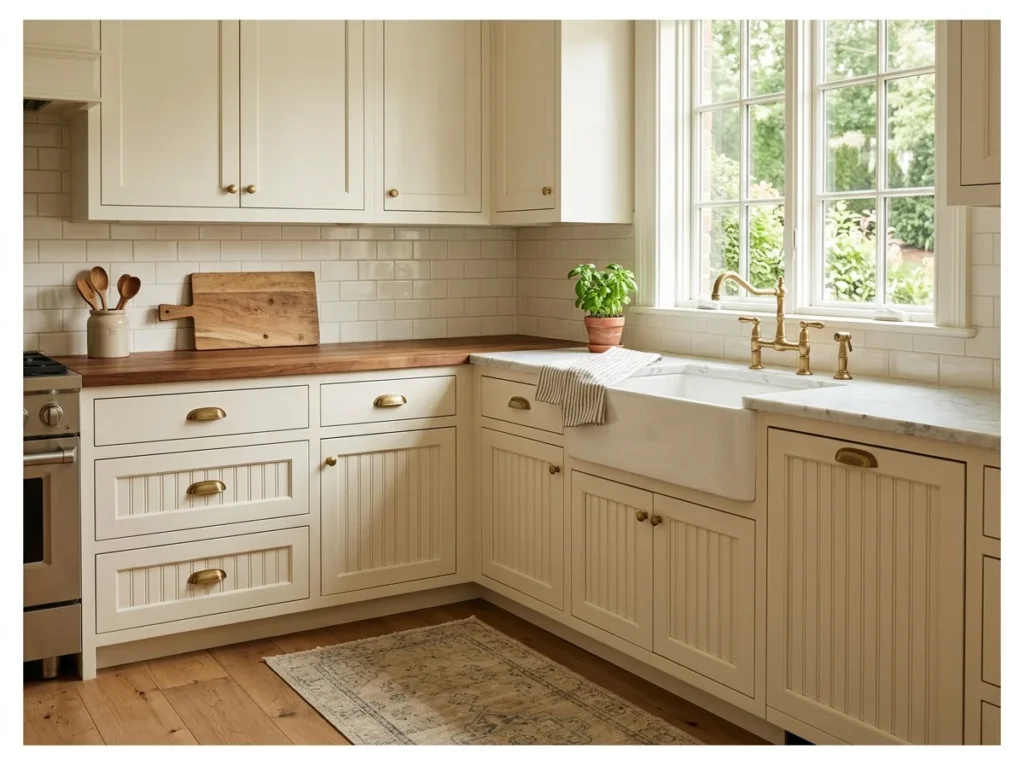
Beadboard cabinet door panels replace the flat recessed center of standard shaker doors with a beadboard pattern of narrow vertical grooves that add texture and traditional craftsmanship detail. The slight shadow created by each groove adds visual warmth to what might otherwise be a flat white surface.
The beadboard detail suits farmhouse, cottage, and transitional warm white kitchen styles naturally. Combined with beadboard wall paneling beneath the countertop as a wainscoting treatment, the beadboard detail creates a kitchen with layered traditional texture throughout.
Stone or Travertine Backsplash
Travertine has natural pitting and variation that gives it more character than a smooth, uniform tile. Used as a backsplash, it adds texture without introducing a bold pattern or color. Its warm undertone fits naturally against warm white or cream cabinetry.
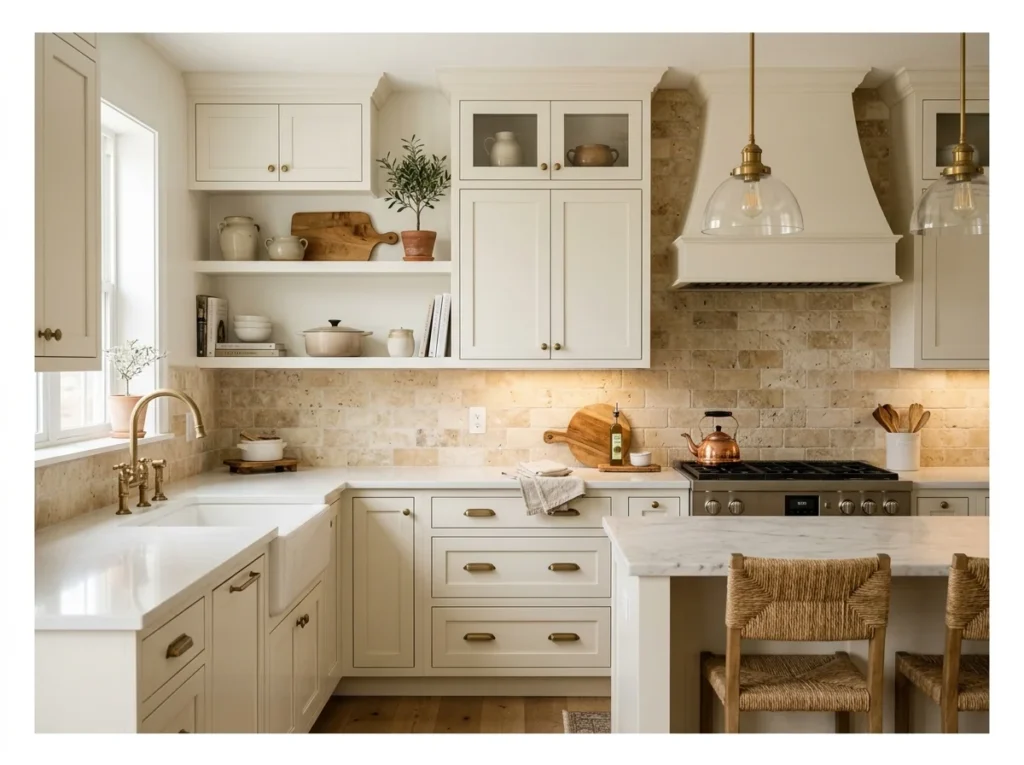
A natural travertine or warm limestone backsplash introduces genuine natural stone material warmth into the white kitchen in the most prominent visual position. The warm cream, honey, and buff tones of travertine suit the warm white kitchen palette completely and create a backsplash with genuine geological character.
Natural stone backsplash tiles in warm tones suit warm white kitchen aesthetics better than cool grey stones. The pitting and natural variation of travertine creates a texture-rich surface that adds visual depth and interest to the kitchen wall zone between countertop and upper cabinets.
Warm White Kitchen with Rattan Accents
Rattan brings a woven, natural texture that plain wood or metal cannot replicate. Barstools or pendant shades made from rattan add warmth against white cabinetry. This material has become a common way to soften an all white kitchen without adding much color.
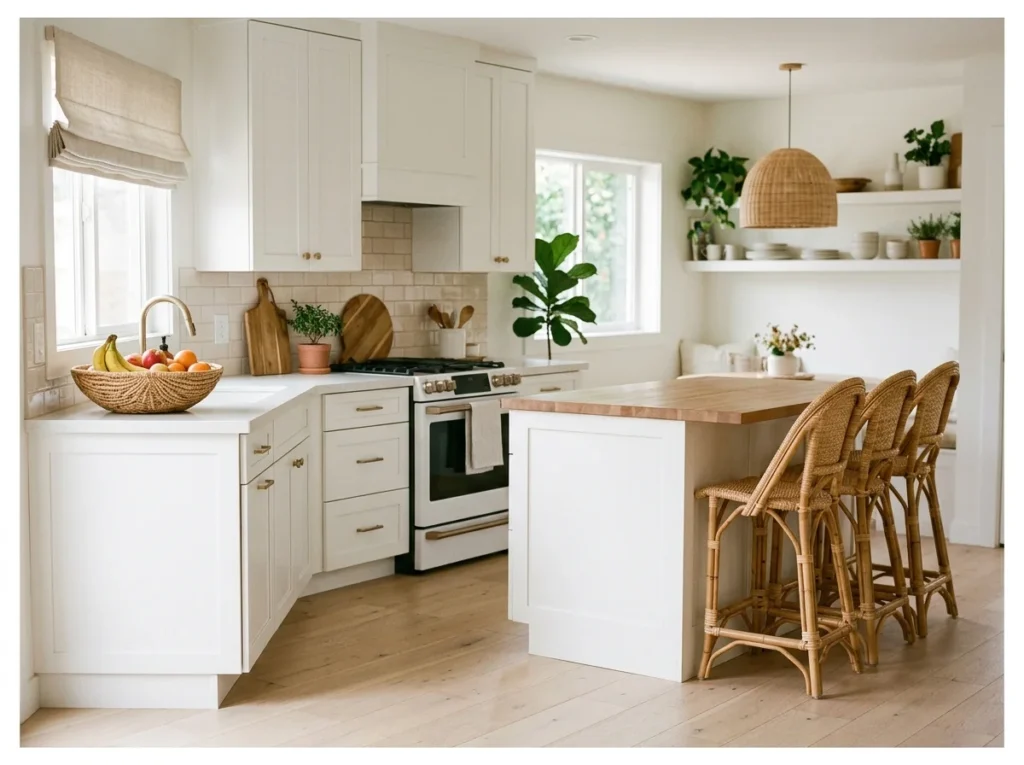
Rattan accents in a warm white kitchen introduce natural woven fiber textures that add organic warmth impossible to achieve through paint and hardware alone. Rattan bar stools at the island are the most visually impactful rattan introduction in a kitchen.
The warm honey tone of natural rattan complements warm white cabinetry naturally. Add a rattan pendant above a kitchen breakfast corner, a woven tray on the open shelves, and a rattan-handled kitchen basket for a complete and cohesive natural fiber accent story throughout the warm white kitchen.
Plants and Fresh Herbs in White Kitchen
A few potted herbs on the windowsill bring color and life into a kitchen that leans mostly white. Beyond decoration, fresh herbs are also genuinely useful for cooking right where they sit. Greenery placed near natural light tends to do best and also looks its healthiest in photos.
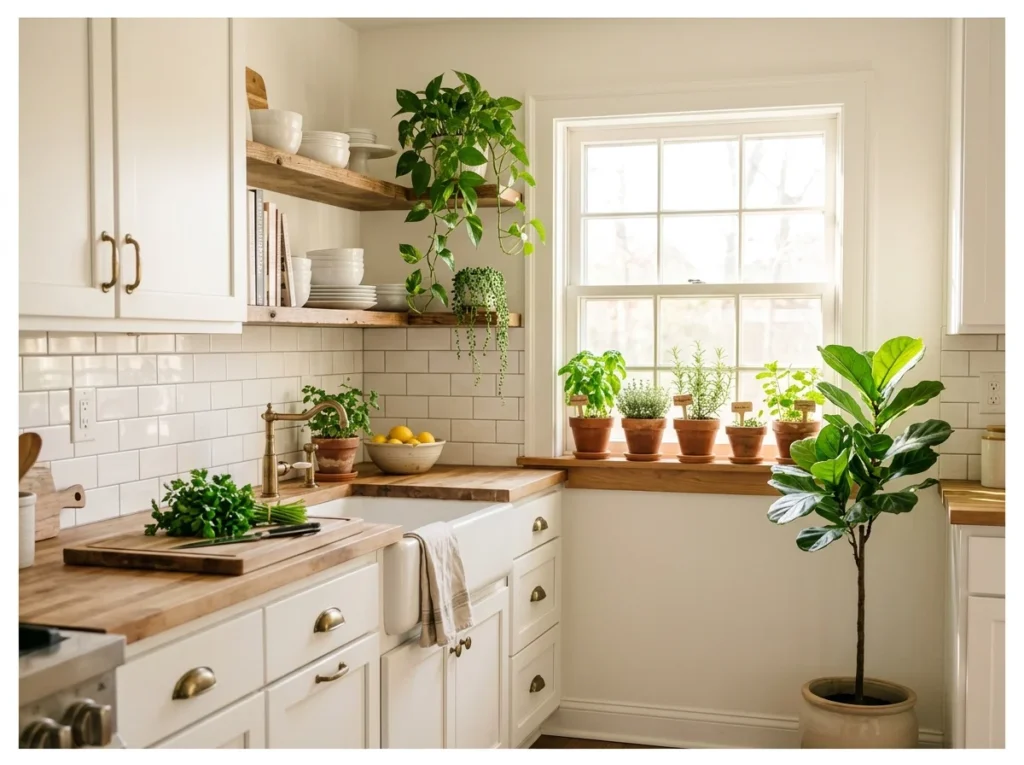
Plants and fresh herbs in a warm white kitchen add living organic warmth and genuine biological freshness that no manufactured decor element can replicate. The deep green of plant foliage against warm white cabinetry creates one of the most naturally beautiful color combinations in interior design.
Position herbs on the kitchen windowsill where they receive natural light and are within reach during cooking. Add one trailing plant to an open shelf where it can cascade over the edge. Place a larger floor plant in an empty kitchen corner. The plants make the white kitchen feel genuinely inhabited and alive.
If you want more plant ideas beyond the kitchen, greenery that makes a kitchen feel alive has plenty of options that work well throughout the home too.
Fresh, alive, and completely natural.
Warm White with Limewash Wall Detail
Limewash paint creates a cloudy, textured finish that flat paint simply cannot achieve. On a warm white wall, that subtle variation adds interest without introducing an actual pattern. It also shifts slightly in appearance depending on how light hits it throughout the day.
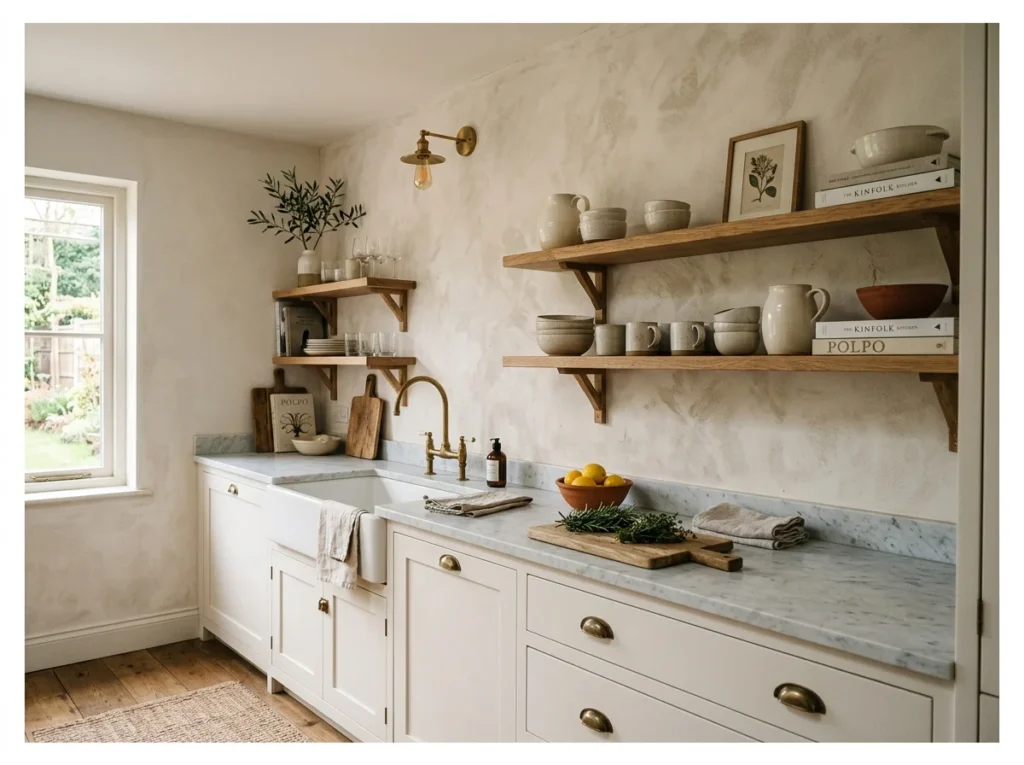
A limewash painted accent wall in the kitchen creates a beautifully mottled, slightly translucent surface with organic depth that adds a warm, ancient quality to the clean white kitchen. The characteristic variation in limewash application prevents any one wall surface from feeling flat.
Warm clay and cream limewash tones suit the warm white kitchen palette. Apply to the wall behind the open shelving or the wall behind the range where the texture creates the most visual interest and contrast with the surrounding white cabinetry.
White Kitchen with Warm Wood Ceiling Beams
Exposed beams across the ceiling add architectural interest that a flat white ceiling lacks on its own. Leaving the wood in a natural or lightly stained finish keeps it warm against white cabinetry below. This works particularly well in kitchens with higher ceilings that have room for the beams to stand out.
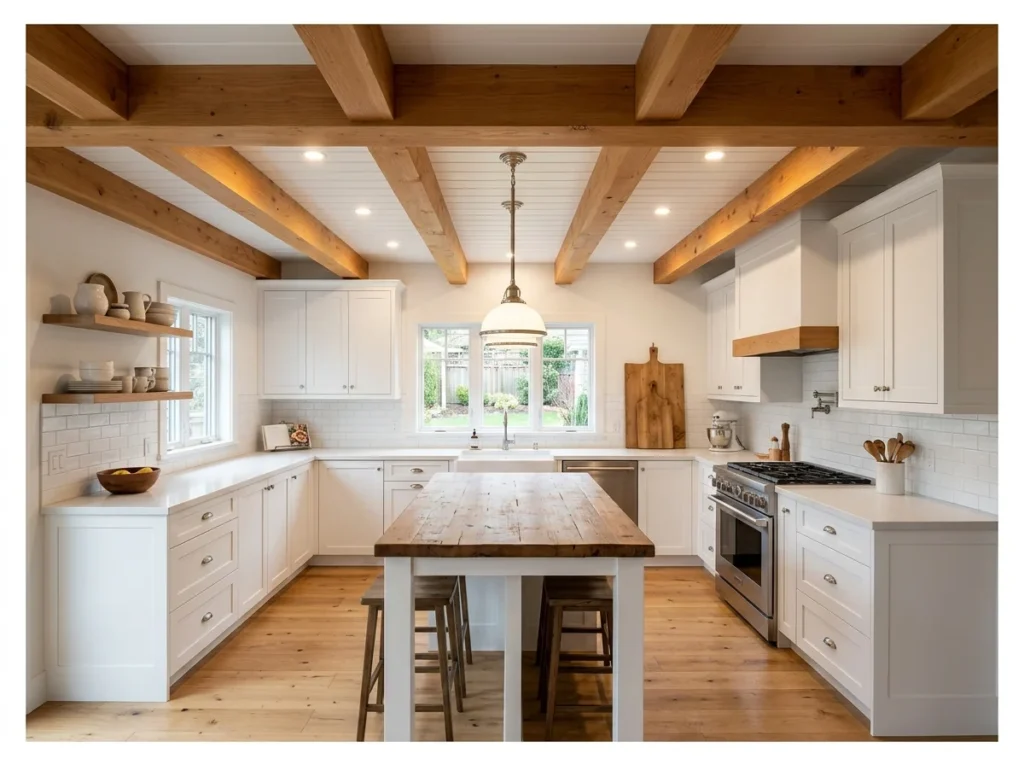
Natural timber ceiling beams in a warm white kitchen add warmth from an unexpected direction: overhead. The warm honey or dark stained timber against a white ceiling creates an architectural warmth layer that prevents the white kitchen from feeling flat and uniform even when viewed from across the room.
Natural or slightly stained beams suit warm white kitchens where the goal is organic warmth. Darker stained beams create a more dramatic contrast that suits larger kitchen spaces with higher ceilings. Recessed lighting installed between the beams provides practical illumination without competing with the beam aesthetic.
Soft Off-White Kitchen with Linen Textiles
A soft off-white kitchen with linen textiles creates a calm, airy, and timeless atmosphere. The gentle neutral palette paired with natural fabrics adds warmth, texture, and effortless elegance while enhancing farmhouse, coastal, and minimalist kitchen designs.
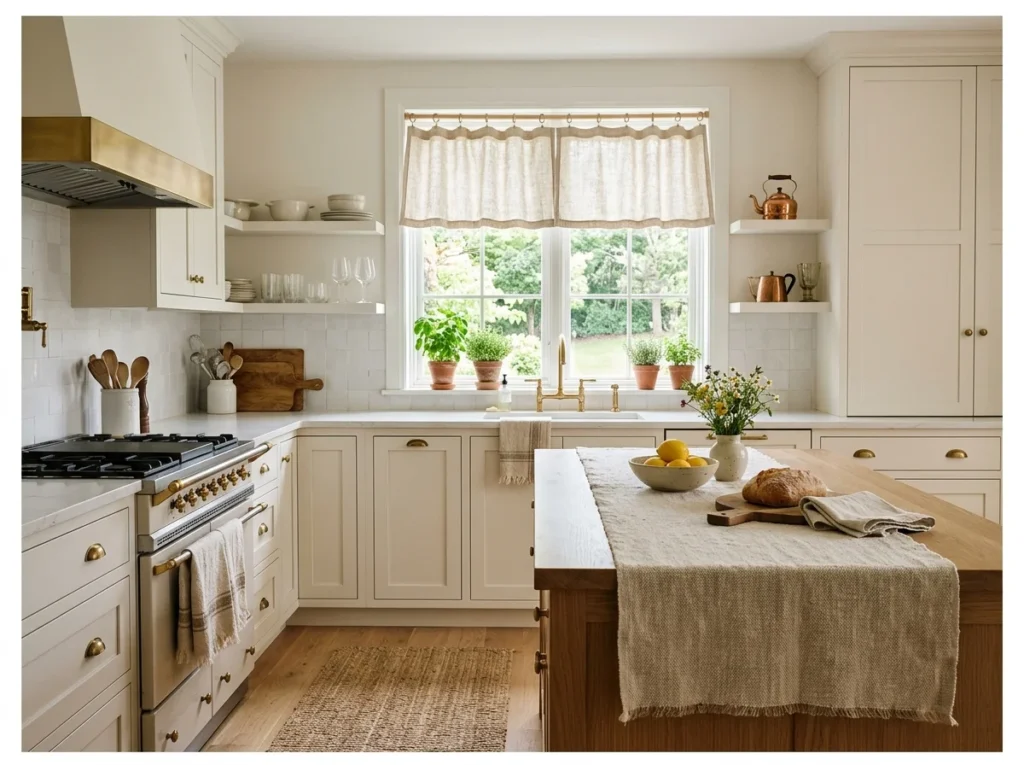
Linen kitchen textiles in natural undyed or warm oatmeal tones add soft organic fabric warmth to a white kitchen at multiple touchpoints simultaneously. Linen cafe curtains at the window, dish towels on the oven handle, and a table runner on the island all introduce warm natural fiber texture.
Natural linen develops a beautifully relaxed quality with every wash and contributes a warmth and softness to the kitchen that no hard material can replicate. The oatmeal-warm tone of undyed linen sits comfortably within the warm white kitchen palette without introducing any visual competition.
White Kitchen with Terracotta Accents
Terracotta brings an earthy, warm orange tone that stands out clearly against white cabinetry. A few terracotta pots or decorative pieces are usually enough to introduce the color without overwhelming the room. This pairing works especially well in kitchens leaning toward a slightly Mediterranean or rustic feel.
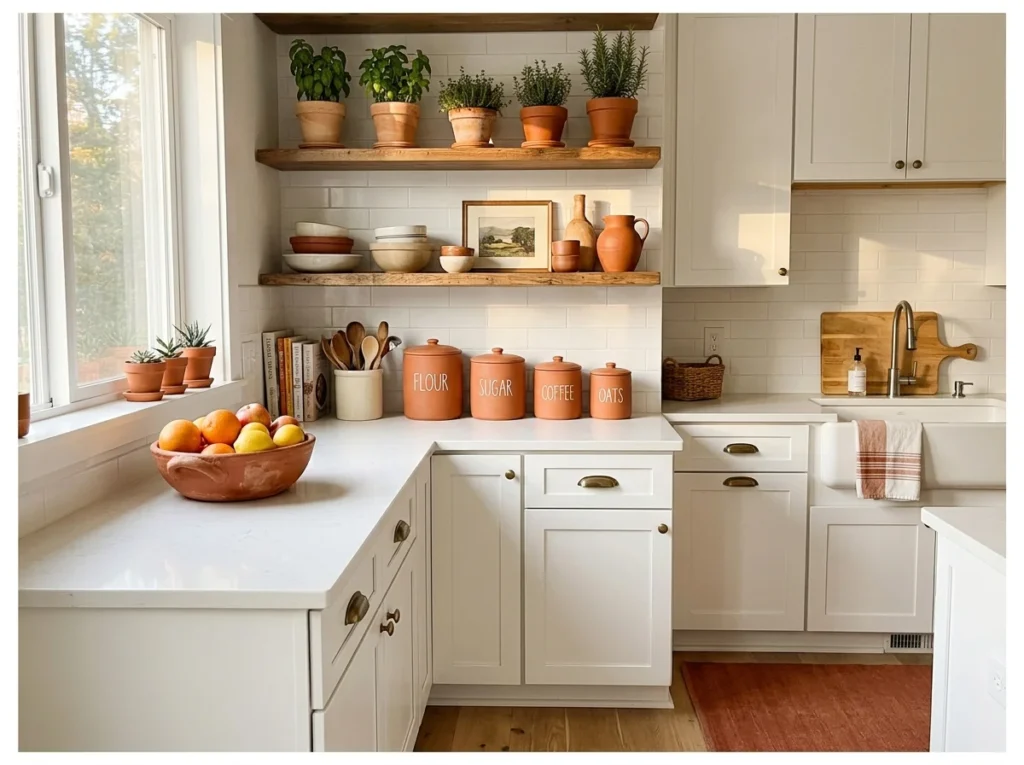
Terracotta accents in a warm white kitchen introduce the most vivid and warm earthy color available within the warm kitchen palette. Terracotta’s warm orange-clay tone creates immediate visual energy against white cabinetry and references the natural earthen quality that suits the warm white kitchen direction.
Use terracotta as an accent rather than a dominant color: a row of terracotta ceramic canisters, terracotta pots for kitchen plants, a terracotta bowl for fruit on the island. The accent quality of the terracotta against the clean white background creates warmth without overwhelming the kitchen’s clean aesthetic.
That same warm, considered styling works just as well once you get to a pantry that keeps the warmth going behind closed doors.
The warm accent that makes white kitchens feel genuinely alive.
Warm White Kitchen with Integrated Range Hood
An integrated range hood is built into the surrounding cabinetry instead of standing out as a separate metal fixture. This keeps the wall above the stove looking cohesive with the rest of the warm white cabinets. It is a detail more people plan for during a full renovation rather than adding it after the fact.
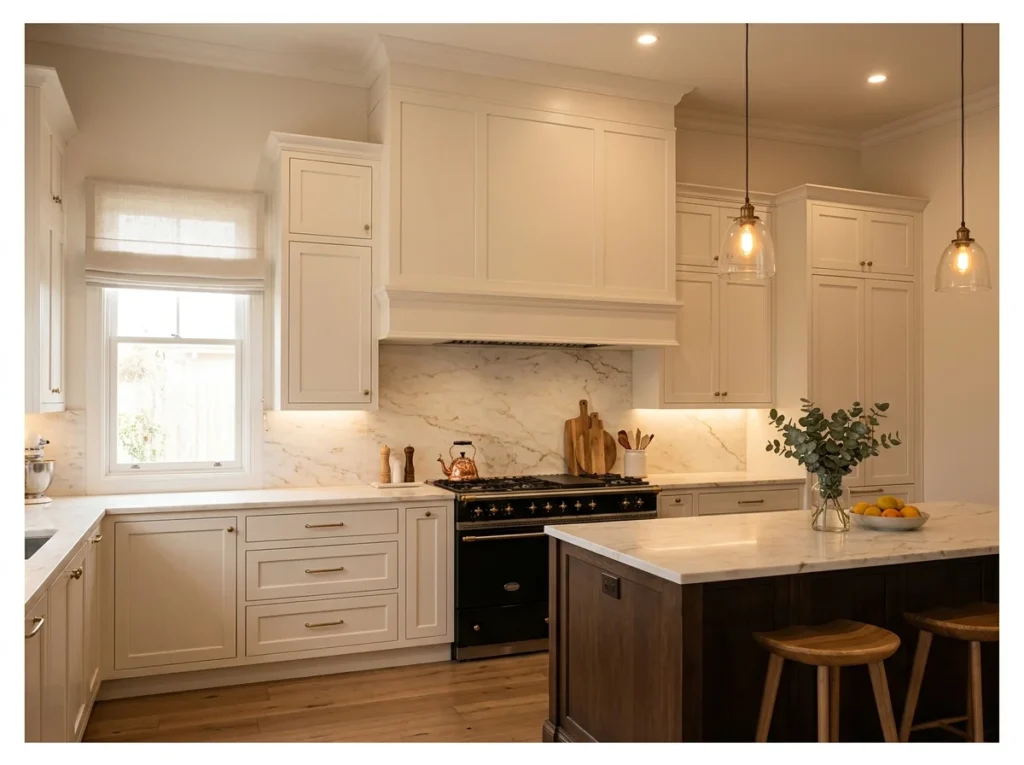
An integrated range hood built from matching cabinet material and painted the same warm white as the surrounding cabinetry creates the kitchen’s primary architectural focal point while maintaining the visual unity of the warm white palette. The hood extends to the ceiling to maximize its architectural presence.
The integrated range hood in warm white creates a kitchen focal point that is unmistakably considered and complete. Corbels at the base of the hood add traditional craftsmanship detail. The integrated approach avoids the material contrast of stainless steel hoods that can create a cool, commercial quality at odds with the warm white kitchen direction.
White Kitchen with Warm Lighting Layers
Relying on just one overhead light tends to leave a white kitchen looking flat and evenly lit in a boring way. Layering in under cabinet lighting, pendants, and a warm toned bulb adds depth throughout the room. This combination also makes the kitchen feel warmer in the evening once natural light fades.
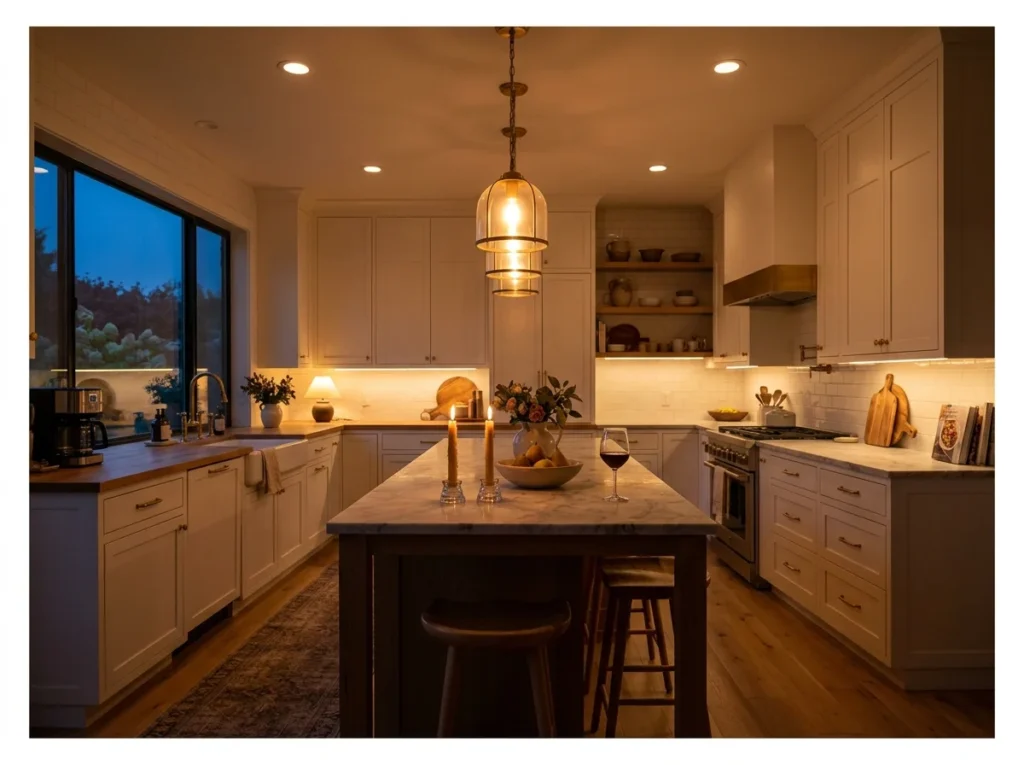
Layered warm lighting at 2700K or lower creates the most important contribution to the warmth of a white kitchen that no material or color selection can replace. Multiple warm light sources at different heights, pendants above the island, under-cabinet strips on the countertop, and warm recessed ceiling lights, create a dimensional, enveloping warmth.
Install dimmer switches on every kitchen lighting circuit so the warm light level can be adjusted from bright functional levels during food preparation to intimate ambient warmth during evening meals and social gatherings. The same white kitchen at 100 percent and 30 percent lighting looks like two entirely different spaces.
The layer that makes warm white kitchens truly magical after dark.
Conclusion
A warm white kitchen done right is one of the most consistently beautiful and practically successful kitchen aesthetics available. It creates the clean visual quality that white kitchens are celebrated for while eliminating the coldness and clinical quality that make many white kitchens genuinely uninviting to spend time in.
Start with the white specification: choose a paint with genuine warm undertones and sample it in the actual room before committing. Then build the warmth through natural materials, warm hardware, amber lighting, organic accents, and living plants.
The warm white kitchen that feels as good as it looks is genuinely within reach.
And if farmhouse charm appeals to you within this same direction, a farmhouse mood in the same warm tones shows how naturally the two pair together.