Trends come and go but a truly timeless kitchen looks just as beautiful in twenty years as it does today. The secret is knowing exactly which design choices age beautifully and which ones date overnight.
These ideas create a kitchen that is permanently beautiful, genuinely functional, and never needs a complete overhaul.
If a warm white palette is calling to you already, a fresh coat that keeps its cool is worth exploring before you pick up a brush.
Let’s explore the ideas.
White Shaker Cabinet Doors
White shaker cabinet doors are one of the most recognizable features of a timeless kitchen. The simple recessed panel design keeps the look clean without feeling overly plain. This style pairs easily with almost any countertop or hardware choice down the line.
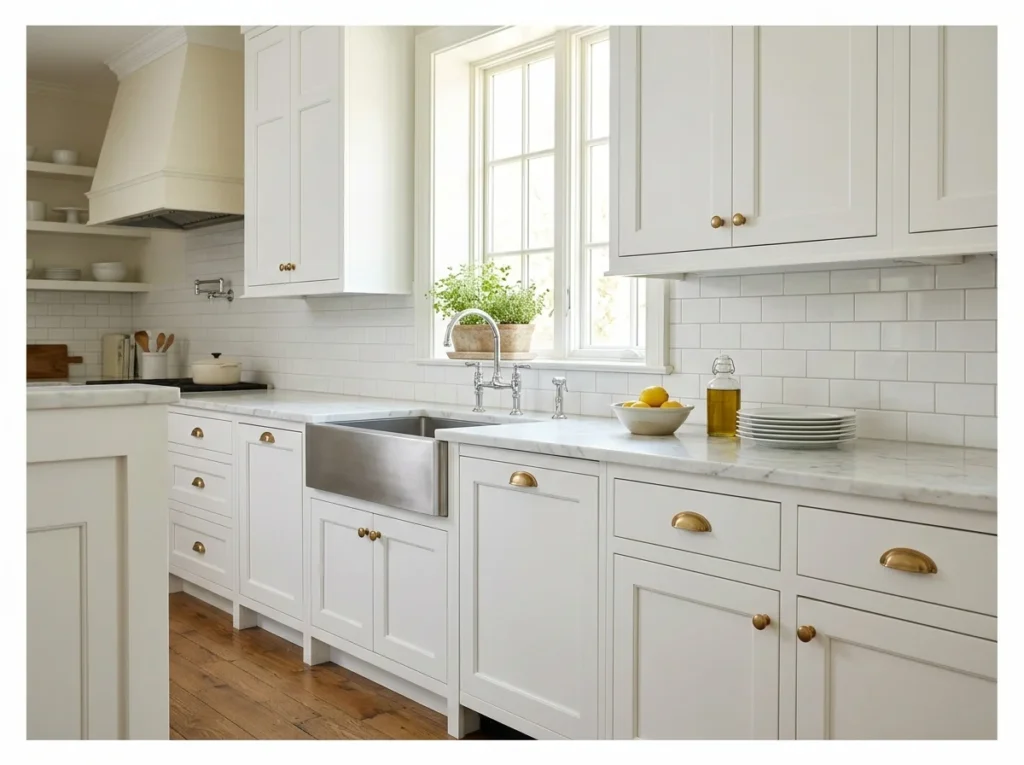
White shaker cabinet doors with their simple recessed panel profile have been a kitchen staple for over a century and show no signs of losing their relevance. The clean geometry of the shaker style suits every interior from traditional farmhouse to contemporary transitional.
The secret to their longevity is in what they do not do. Shaker doors carry no decorative detailing that dates them to a specific design era. They can be paired with almost any countertop material, hardware finish, or backsplash tile and look completely intentional every time. This versatility is what makes them genuinely timeless.
The cabinet door that suits every kitchen, always.
Honed Marble or Stone Countertops
Honed marble or stone countertops have a soft, matte finish instead of a high gloss shine. This lower sheen tends to hide etching and small scratches better than polished marble does. It gives the kitchen a quieter, more understated look compared to shinier surfaces.
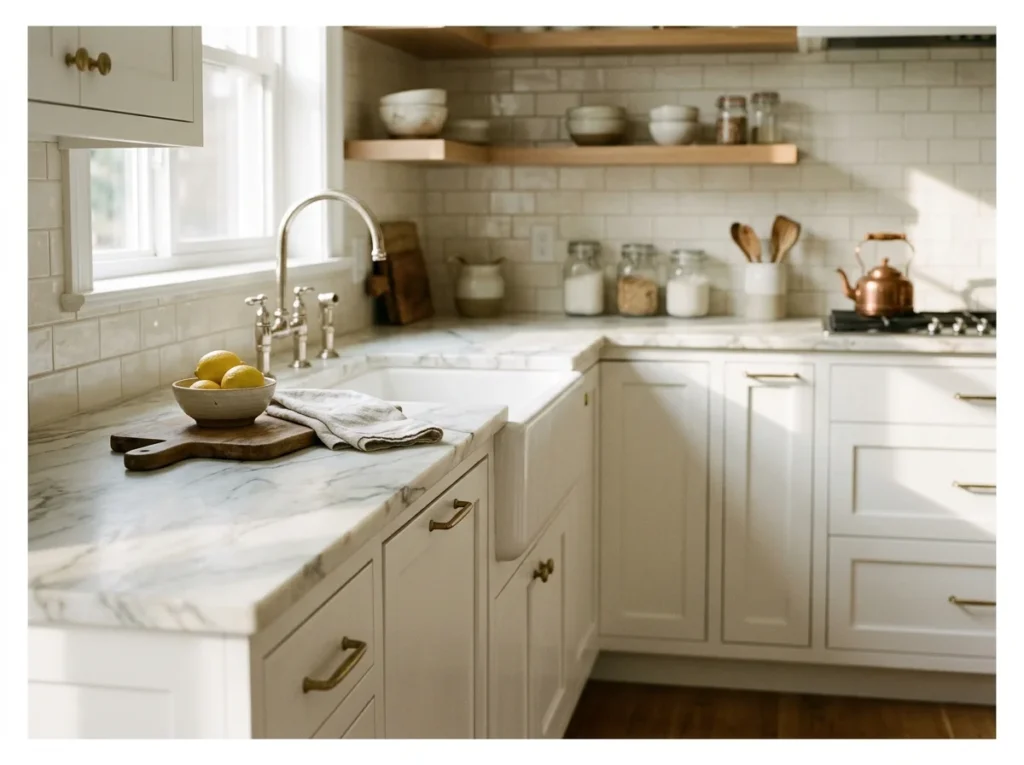
Honed rather than polished marble creates a surface that develops a natural patina over time rather than showing every scratch and etch mark as a flaw. The matte finish looks sophisticated, photographs beautifully, and belongs to the kitchen as much as it does to the era it was installed.
Marble has been used in kitchen surfaces for centuries and remains one of the most coveted materials in high-end kitchen design. The natural veining in each slab means no two marble countertops are identical. Sealed annually, honed marble handles daily kitchen use well while developing a character that improves rather than degrades with age.
The surface that develops more beauty over time.
Farmhouse Apron Sink
A farmhouse apron sink extends past the edge of the cabinetry with its exposed front panel. The deep basin makes it practical for washing large pots or bulky baking sheets. This fixture has stayed popular for decades because it works in both modern and traditional kitchens.
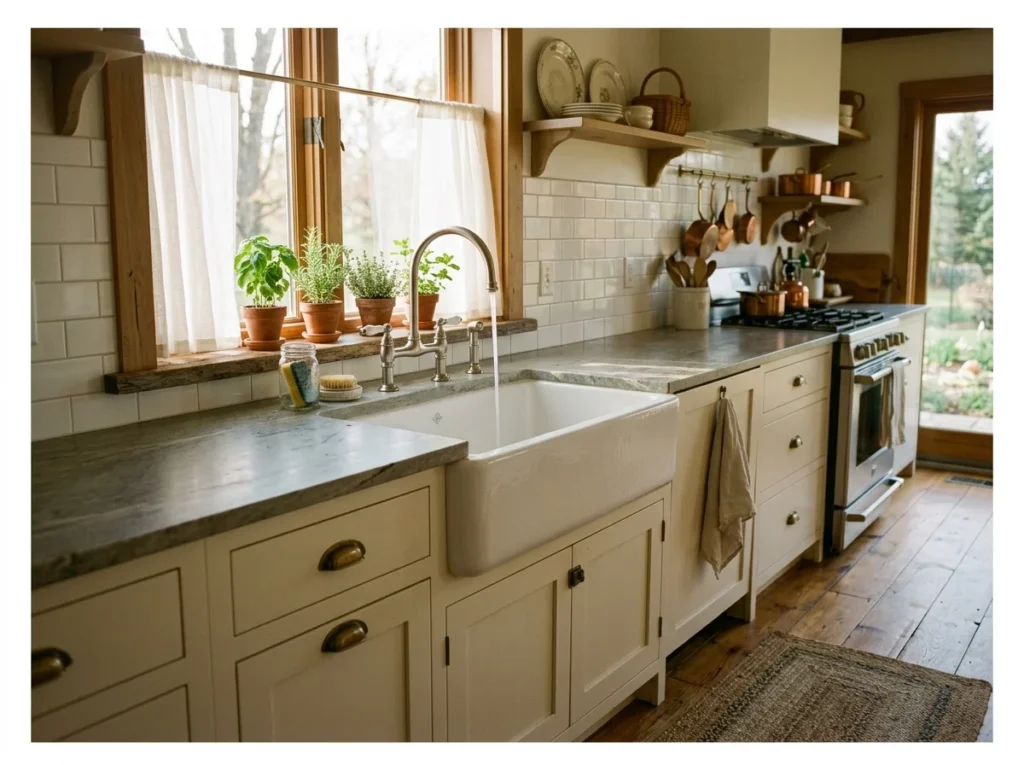
A farmhouse apron-front sink has been a central kitchen feature in working kitchens for well over a century and remains one of the most desired kitchen upgrades available. The deep exposed basin handles large pots, oversized sheet pans, and the demands of a serious cooking kitchen with ease.
White fireclay is the most classic apron sink material because it resists staining, handles thermal shock, and develops a creamy character over time that complements every white kitchen palette. A simple bridge or gooseneck faucet in brushed nickel or unlacquered brass completes the timeless farmhouse sink composition.
The sink that makes every kitchen feel like home.
Natural Timber Kitchen Island
A natural timber kitchen island introduces warm wood tones into an otherwise painted kitchen. Leaving the wood grain visible rather than painting it adds contrast against white or gray cabinetry. This single piece often becomes the focal point that the rest of the kitchen design builds around.
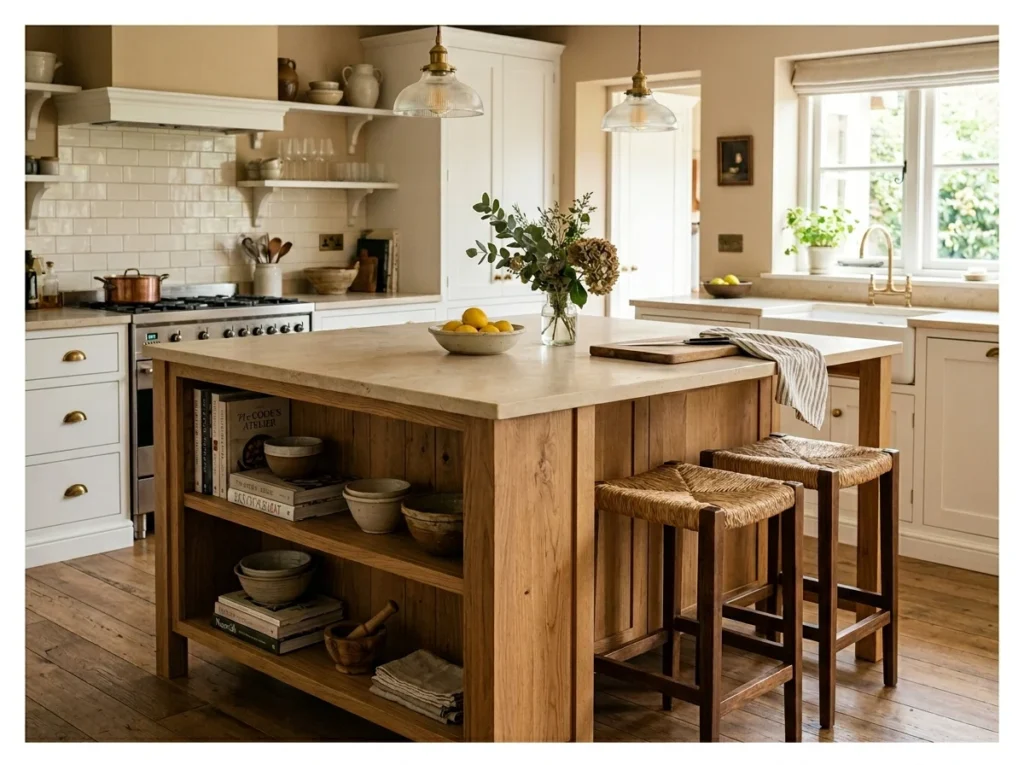
A natural timber kitchen island in warm oak, walnut, or American cherry creates a warm, organic focal point that contrasts beautifully with surrounding painted cabinetry. The island introduces the warmth and natural variation of real wood into a kitchen that might otherwise feel cool and uniform.
Natural timber islands develop more character over time as the wood is used, cleaned, and occasionally oiled. The variation in grain and the subtle changes in tone that come with age make the island look more beautiful at ten years than on installation day. This aging quality is precisely what separates timeless materials from trendy ones.
Getting the island itself right matters just as much as the material, and an island that anchors the whole room can guide that decision.
Subway Tile Backsplash
Subway tile backsplash has remained a kitchen staple thanks to its simple, rectangular shape. A classic white version works with nearly any color scheme, though variations in grout color change the whole feel. Its straightforward pattern also makes it easier to clean compared to more textured tile options.
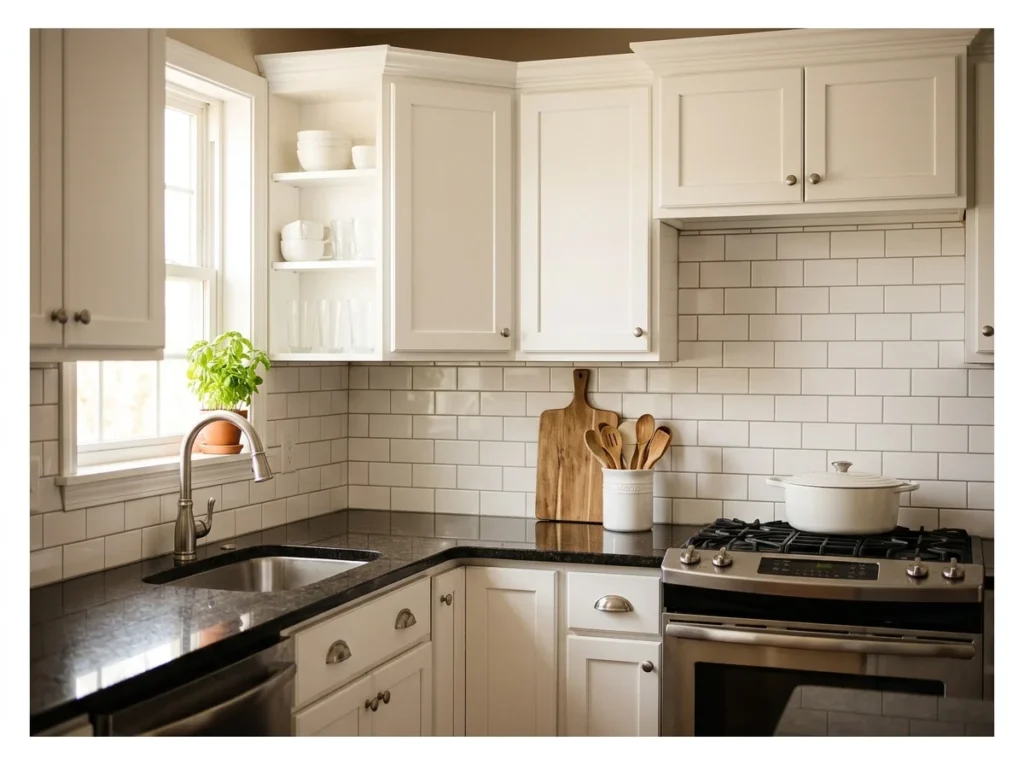
The classic white 3×6 subway tile in a running bond pattern has appeared in kitchens since the early 1900s and remains the most installed backsplash tile today for good reason. Its clean geometry, affordable price point, and universal compatibility with every kitchen style make it genuinely irreplaceable.
The choice of grout color significantly affects the result. White grout creates a seamless, airy appearance. Light grey grout creates subtle definition. Dark grey or charcoal grout makes the grid pattern the visual statement. All three are equally timeless when used consistently and installed with precision.
Classic since 1904 and just as beautiful today.
Brushed Brass or Unlacquered Brass Hardware
Brushed brass or unlacquered brass hardware adds warmth compared to cooler toned metals like chrome or nickel. Unlacquered versions develop a natural patina over time, which many homeowners actually prefer as it ages. This detail on cabinet pulls and faucets ties the whole kitchen together visually.
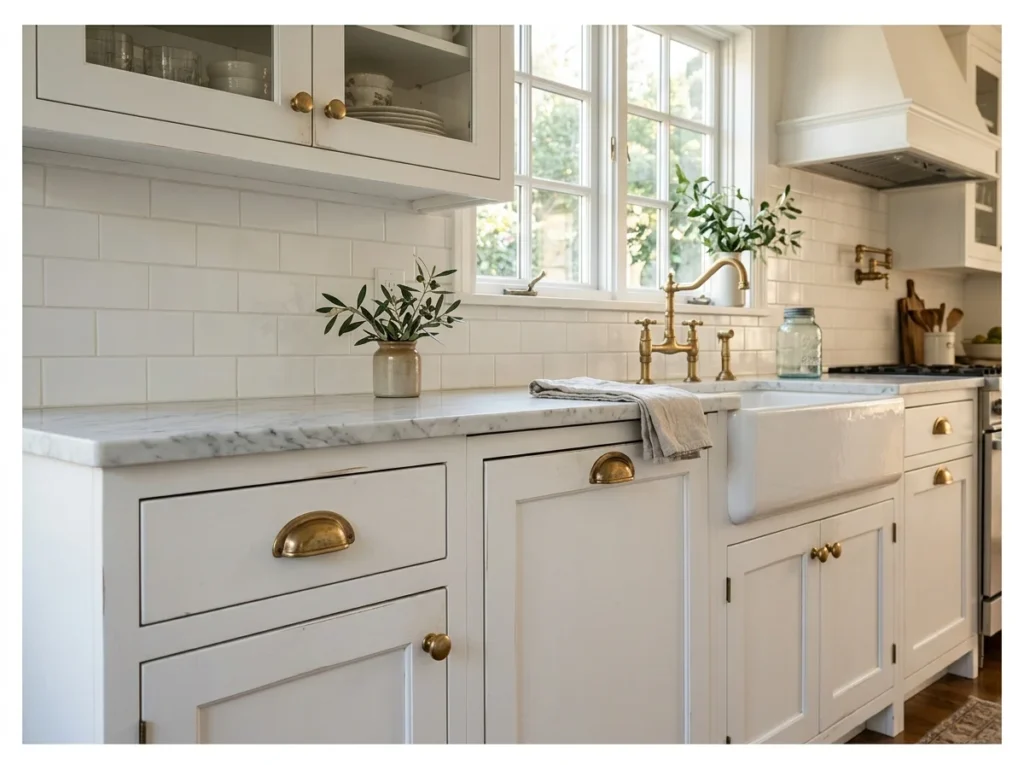
Brushed brass and unlacquered brass hardware have appeared in fine kitchens for centuries and belong as confidently to a contemporary kitchen as to a Georgian one. The warm metallic tone complements white cabinetry, natural stone, and timber surfaces equally well.
Unlacquered brass develops a natural patina over time that deepens and enriches as it ages, making each piece more beautiful with use rather than requiring maintenance to look new. Brushed brass is more uniform but equally warm. Both finishes photograph beautifully and suit the full range of classic kitchen styles.
The hardware finish that improves with every year.
Open Shelving with Ceramic and Glassware Display
Open shelving displaying ceramic and glassware turns everyday dishes into part of the kitchen’s decor. Stacking similar colors or shapes together keeps the display looking organized rather than cluttered. This approach also makes frequently used items easier to grab compared to closed cabinets.
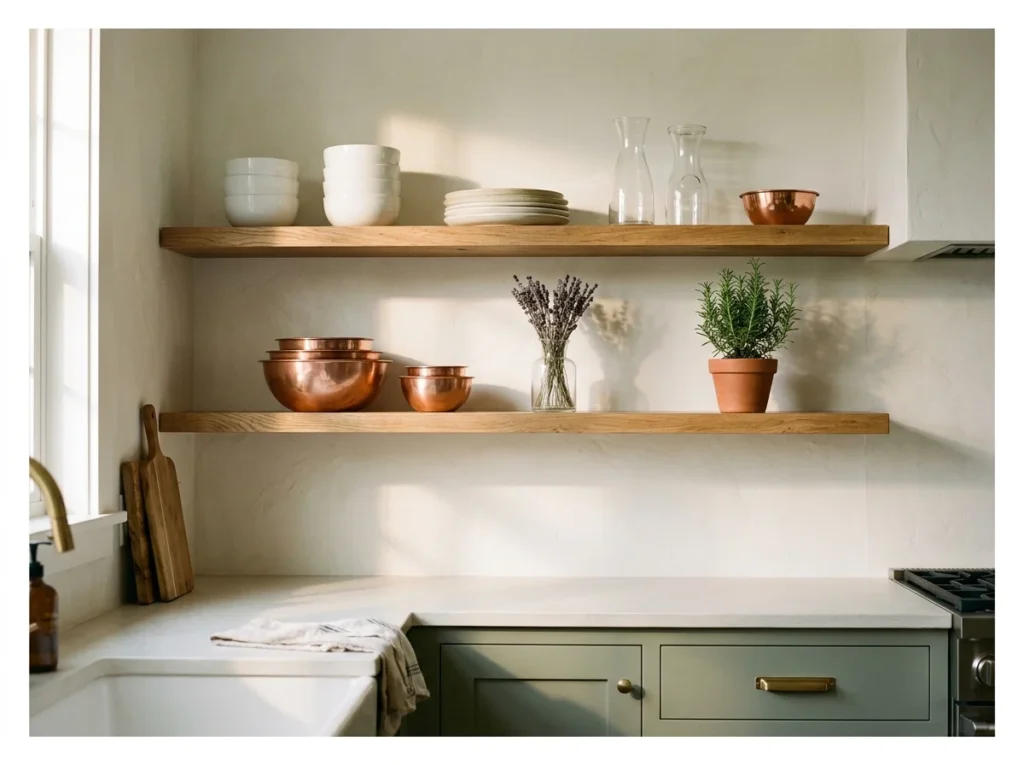
Open shelving in a classic kitchen creates an opportunity to display beautiful ceramics, glassware, and kitchen objects that contribute to the room’s atmosphere beyond their functional purpose. A curated shelf display transforms a utilitarian kitchen into a genuinely personal space.
The key to open shelving that looks timeless is consistent editing. Only display items that are genuinely beautiful or meaningful. White ceramics, clear glass, copper accents, and natural wooden bowls all look beautiful on open kitchen shelves and suit every classic kitchen palette without risk of dating.
If you’re ready to try this yourself, shelving that earns its place on display has plenty more styling ideas to borrow from.
Classic Paneled Range Hood
A classic paneled range hood is built to match the surrounding cabinetry rather than standing out as bare metal. This integration keeps the stove area from feeling like a separate, disconnected element in the kitchen. It is a detail that quietly signals a more custom, considered kitchen design.
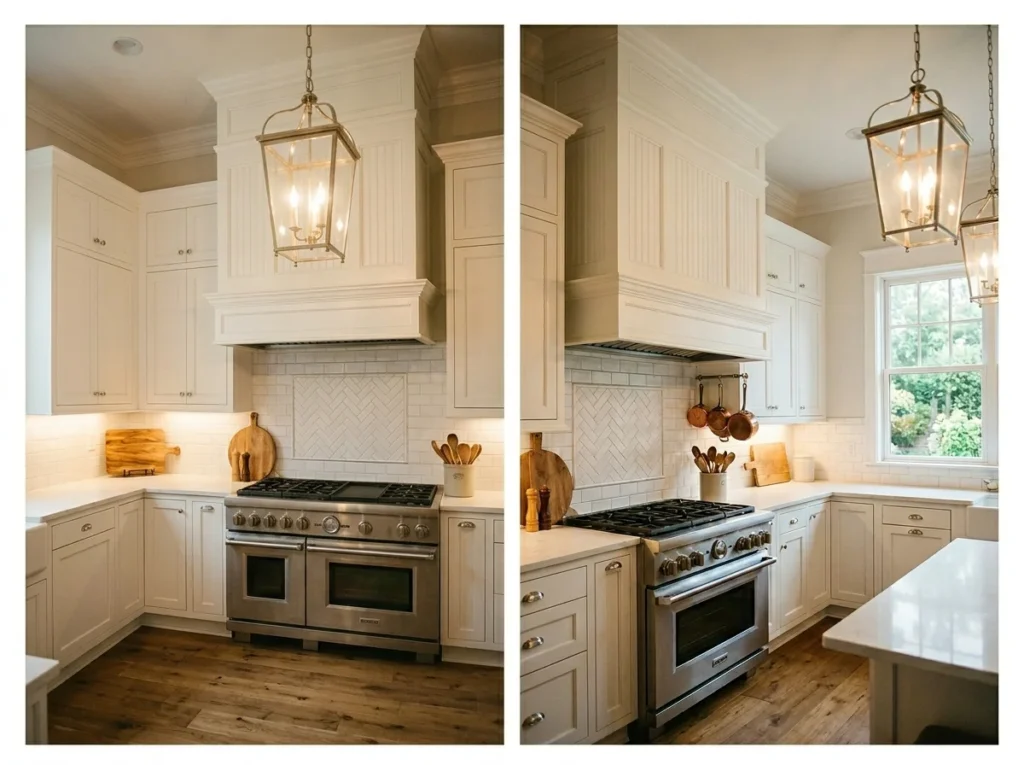
A custom-built painted timber range hood extending to the ceiling creates one of the most architecturally impressive features in any classic kitchen. The hood integrates the ventilation requirement with a genuine design statement that makes the cooking zone the visual center of the room.
Painted white to match the surrounding cabinetry or in a contrasting deeper tone, the paneled range hood suits Georgian, transitional, farmhouse, and contemporary kitchen styles. The proportions should be generous: a hood that is undersized relative to the range below it looks uncertain rather than resolved.
The architectural feature that defines the kitchen.
Warm White or Off-White Paint Palette
A warm white or off white paint palette avoids the stark, clinical feel that pure white sometimes creates. These softer tones tend to look better under both natural daylight and warm evening lighting. This color choice works as a flexible backdrop for wood, brass, or stone accents throughout the kitchen.
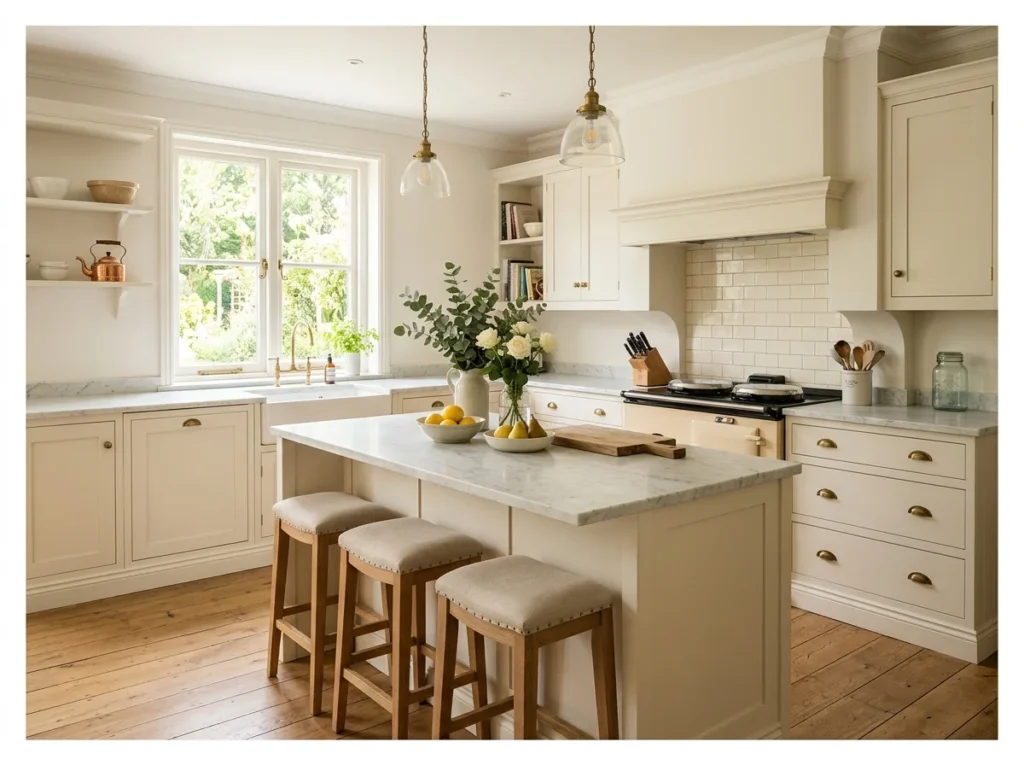
Warm white and off-white kitchen palettes in tones like cream, linen, warm ivory, and soft oyster have remained consistently beautiful across every decade of kitchen design history. The warmth in these whites prevents the clinical coldness of pure bright white while maintaining the light, fresh quality that makes kitchens feel inviting.
Choose whites with yellow or red undertones rather than blue or grey undertones for the warmest result. Benjamin Moore White Dove, Farrow and Ball Pointing, and Dulux Natural White are three consistently popular warm white kitchen choices that read as timeless rather than trendy in any lighting condition.
The palette that never requires an apology.
Integrated Panel-Ready Appliances
Integrated panel ready appliances hide behind cabinet fronts that match the rest of the kitchen. This approach keeps the overall look cohesive rather than interrupted by stainless steel fronts. It works especially well in kitchens designed to feel more like furniture than a row of appliances.
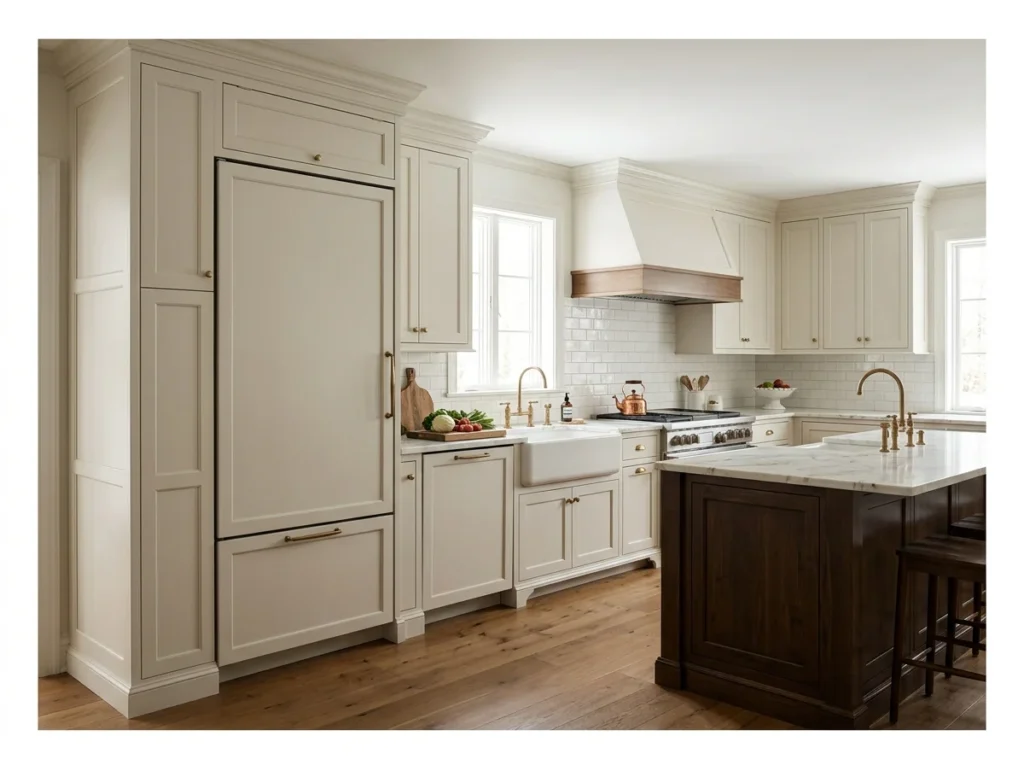
Panel-ready appliances covered with cabinet-matching door fronts create a kitchen where no appliance announces itself visually. The refrigerator, dishwasher, and occasionally the microwave all disappear into the cabinetry and the kitchen reads as a completely unified architectural composition.
This approach is most visually powerful in classic white or painted cabinetry kitchens where the consistency of the cabinet front treatment across every surface, including appliances, creates an immaculate, seamless quality. The integration also prevents the kitchen from dating around visible appliance styling that changes every five to ten years.
Inset Cabinet Construction
Inset cabinet construction sets the doors flush within the frame instead of overlapping it. This detail requires more precise craftsmanship, which is part of why it reads as a more custom, higher end choice. The visible frame around each door also gives the cabinetry a slightly more traditional character.
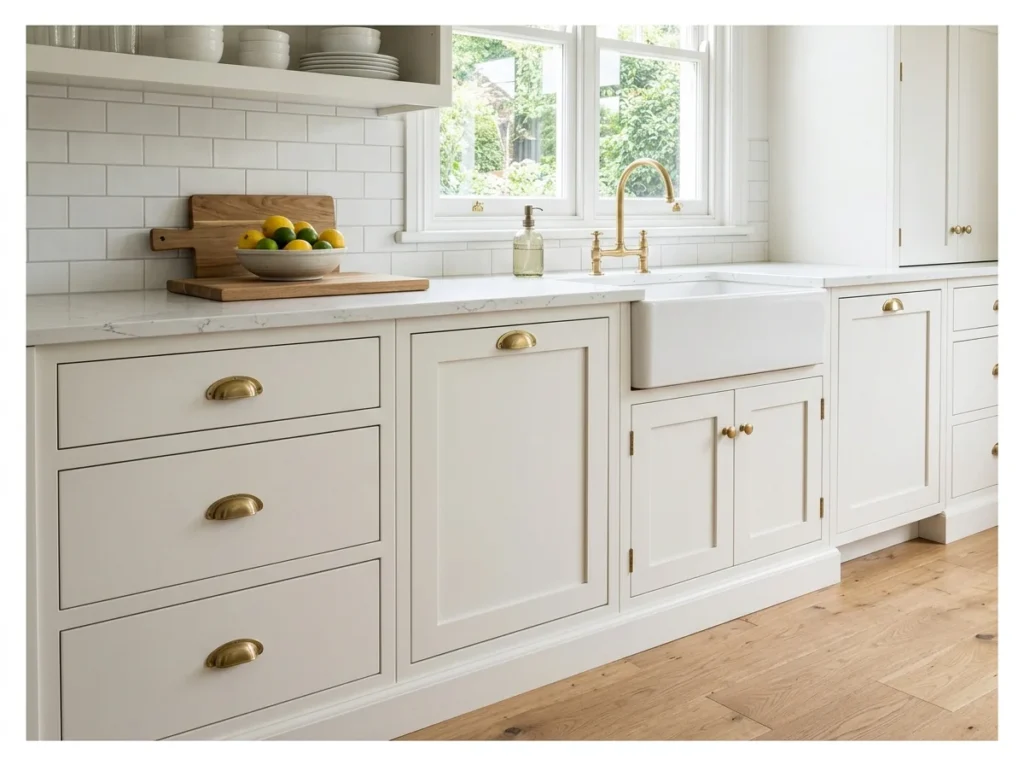
Inset cabinet construction, where the doors sit flush within the cabinet frame rather than overlaying it, represents the highest standard of traditional kitchen cabinetry craftsmanship. The result is a kitchen where every door and drawer sits precisely in its opening, creating a fine furniture quality that overlay cabinets cannot match.
The slight shadow line around each inset door created by the door sitting within the frame adds subtle visual depth that gives inset cabinets their distinctive refined quality. Inset construction requires greater precision in manufacturing and installation, which is why it remains associated with high-quality kitchen design.
The construction detail that separates fine kitchens from ordinary ones.
Hardwood Kitchen Flooring
Hardwood kitchen flooring brings warmth underfoot that tile or vinyl often lacks. Wide plank boards in a natural or lightly stained finish tend to suit a timeless kitchen well. Proper sealing matters here since kitchen floors deal with spills and heavy foot traffic regularly.
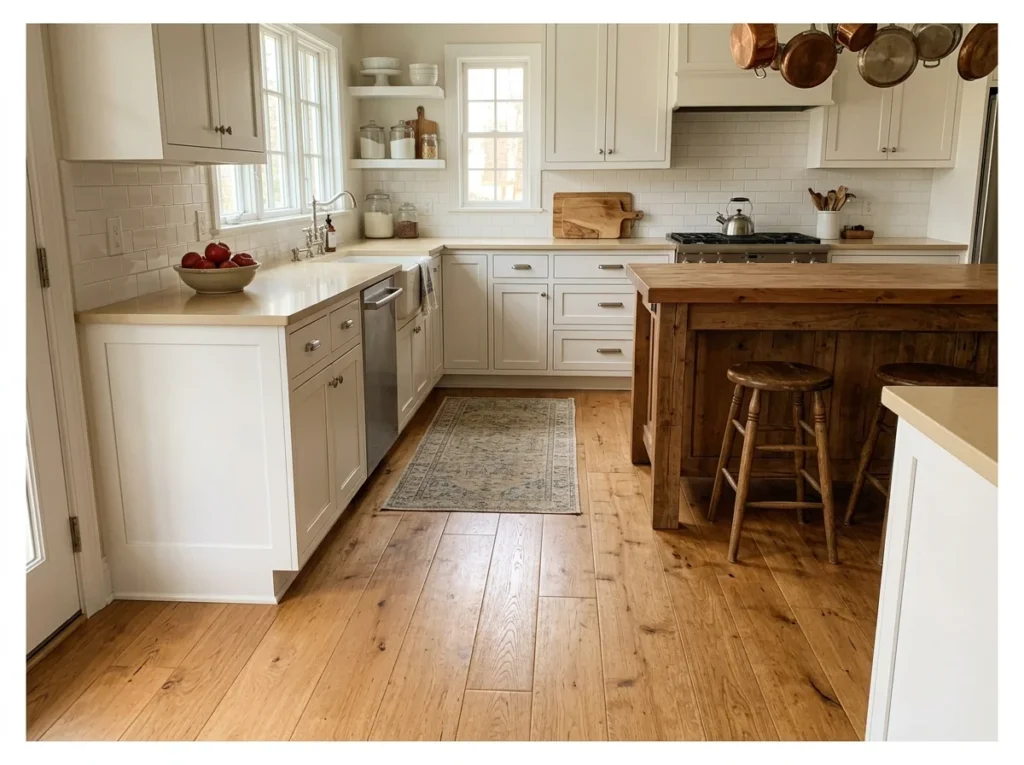
Wide-plank hardwood flooring in the kitchen creates a warm, natural surface that belongs to the room as much as the cabinetry and countertops. Unlike hard tile, hardwood provides warmth underfoot during long cooking sessions and creates a visual connection to the natural material quality that defines timeless interiors.
Oak is the most versatile hardwood kitchen floor species because its warm natural grain and mid-tone color complements every kitchen palette from all-white to natural timber. Apply a quality polyurethane or hardwax oil finish and the floor handles daily kitchen use well for decades before requiring refinishing.
Pendant Lights Over the Island
Pendant lights hung over the island provide focused task lighting right where prep work happens. A pair or trio of matching fixtures also adds symmetry to the overall kitchen layout. Simple glass or metal shades tend to age better than more trend driven designs.
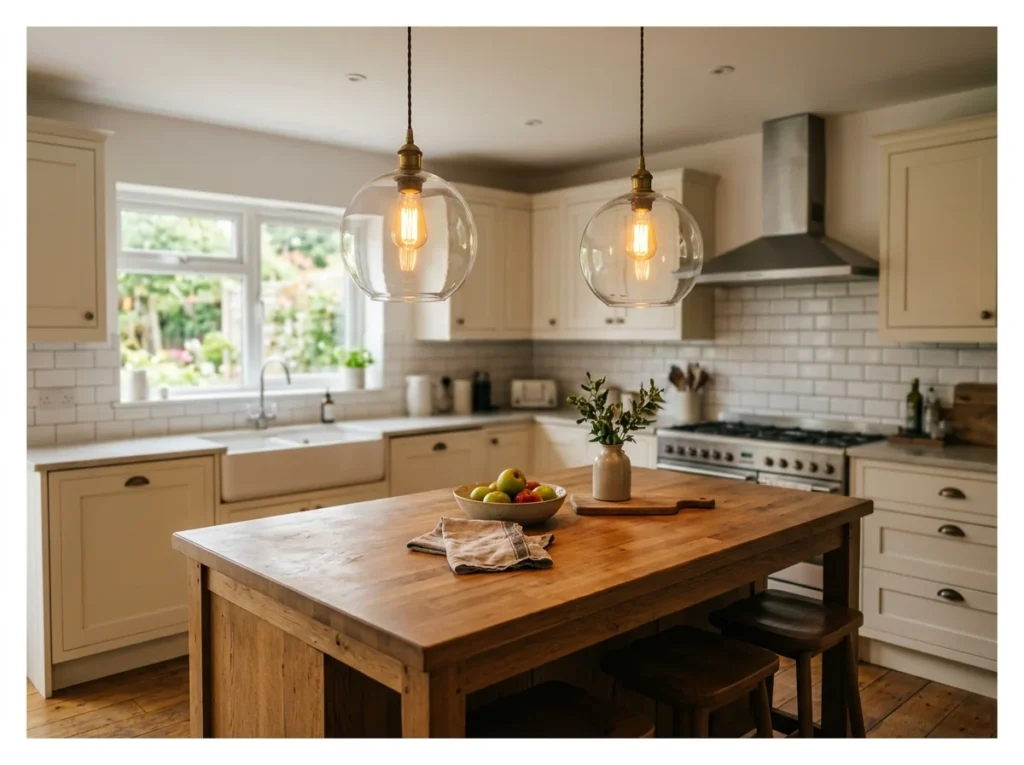
Two or three matching pendant lights hung at the correct height above the kitchen island create the most classically composed island lighting arrangement in any kitchen. The repetition of identical pendants creates visual rhythm while the warm downward light illuminates the work and dining surface below.
Clear glass globe pendants with warm filament bulbs are the most enduringly popular island pendant choice because they suit every kitchen style, provide clear visibility of the bulb for a warm and characterful light source, and look as appropriate in a farmhouse kitchen as in a contemporary one.
Beadboard Kitchen Accents
Beadboard accents add texture to kitchen islands, cabinet ends, or lower walls. The vertical grooved panels bring a slightly traditional, cottage like character to the space. Painted to match the rest of the cabinetry, it blends in as a subtle detail rather than standing out.
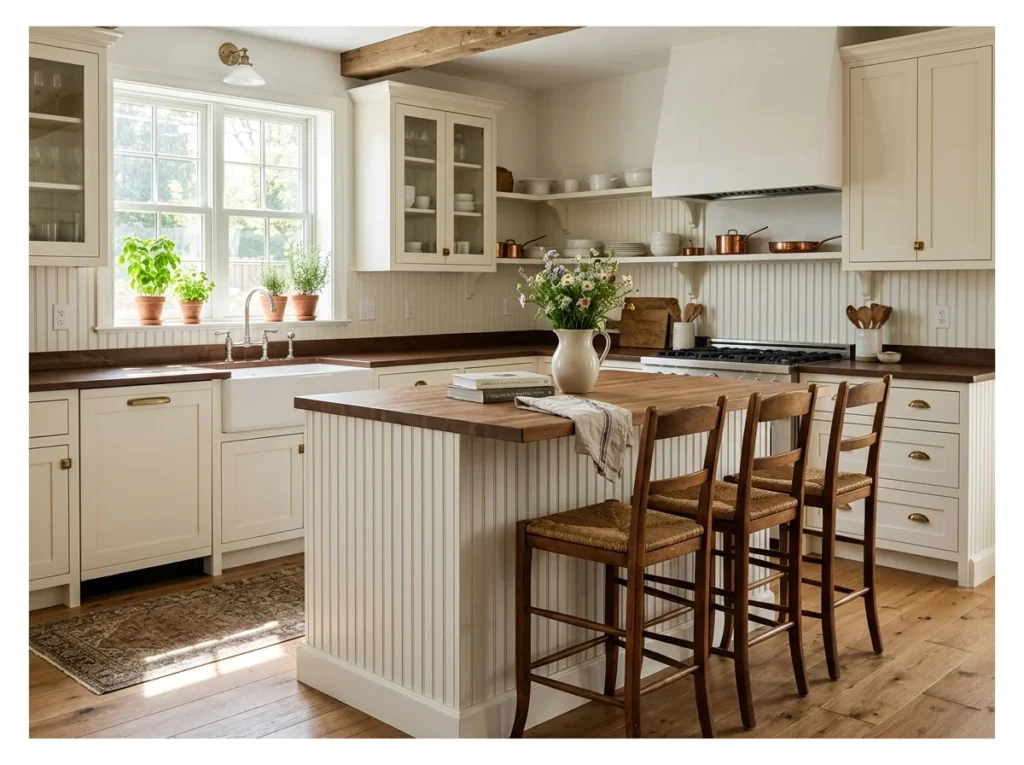
Beadboard paneling used on island sides, as a backsplash wainscoting, or on the lower wall beneath open shelving adds a distinctly traditional architectural texture that suits farmhouse, cottage, and transitional kitchen styles naturally. The narrow vertical groove pattern has appeared in quality kitchens for over a century.
Painted white, beadboard reads as fresh and clean while contributing genuine material texture that flat painted walls cannot provide. On the sides of a kitchen island, beadboard creates a beautifully finished island exterior. As a backsplash alternative below open shelving, it frames the shelves and adds depth to the wall surface.
Traditional charm that photographs beautifully every time.
Classic Black and White Color Scheme
A classic black and white color scheme keeps a kitchen feeling crisp and high contrast. Black often shows up in hardware or lighting, while white dominates cabinetry and walls. This combination has stayed popular for decades because it rarely feels dated.
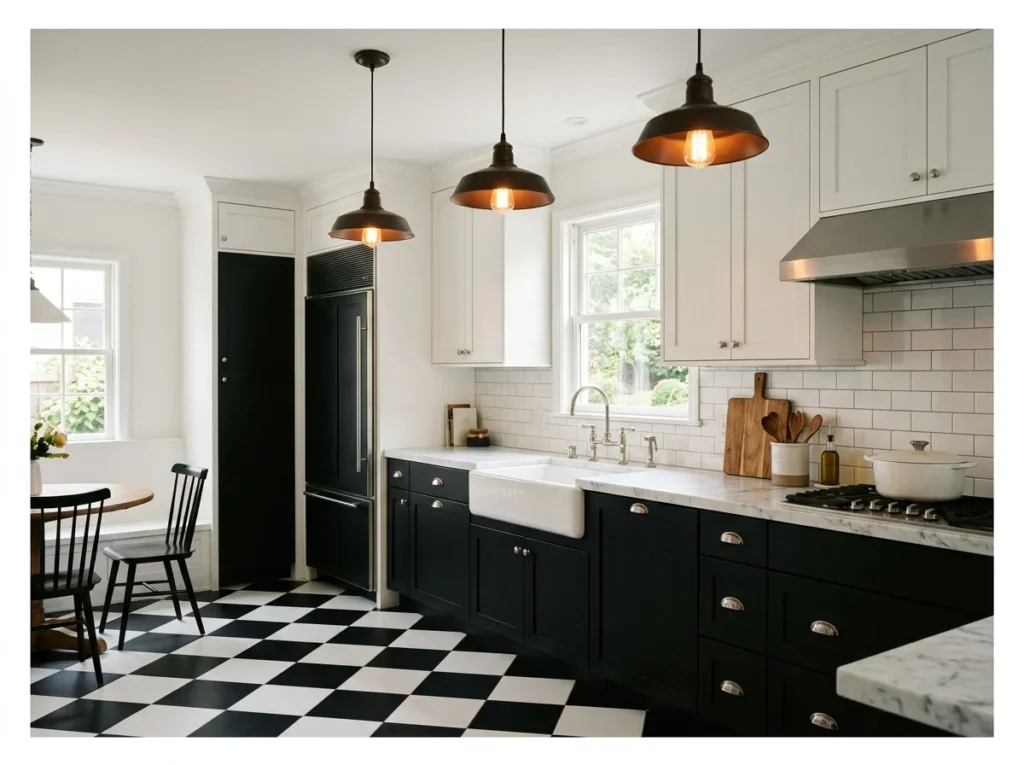
A classic black and white kitchen represents one of the most enduring and consistently beautiful color combinations in interior design history. Whether expressed through black and white checkerboard floor tiles, black lower and white upper cabinets, or a simple white kitchen with black countertops, this pairing never reads as trendy.
The key to a timeless black and white kitchen is proportional balance. Too much black makes the kitchen feel heavy. Too little makes the black element look accidental rather than intentional. A balanced approach, typically more white than black with the darker tone used for grounding elements, creates the most resolved and beautiful result.
Stone or Ceramic Floor Tiles
Stone or ceramic floor tiles offer a durable surface that holds up well against spills and heavy use. Patterns like herringbone or basketweave add visual interest without relying on bold color. This flooring choice also tends to feel cool underfoot, which some homeowners prefer in warmer climates.
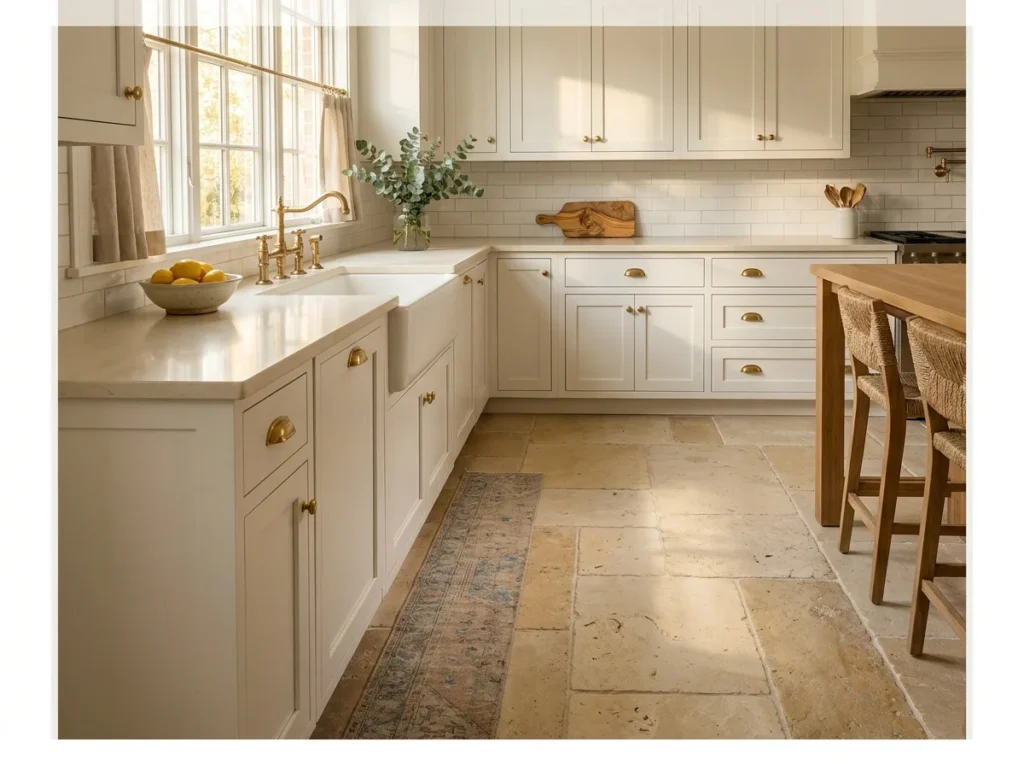
Natural stone tiles in limestone, travertine, or slate create kitchen floors that become more beautiful over time as the stone develops its characteristic patina. Unlike manufactured materials that degrade from their day-one perfection, natural stone floors improve with the marks and polish of daily use.
Large format tiles of 600 by 600 millimeters or larger create the most seamless and sophisticated stone kitchen floor. Fewer grout joints mean a cleaner visual field and easier cleaning. Cream and honey limestone tones suit warm white kitchen palettes. Darker slate or charcoal stone suits more dramatic kitchen color stories.
Deep Single Bowl Kitchen Sink
A deep single bowl kitchen sink offers more usable space than a divided double bowl design. This makes it easier to wash large pots, baking sheets, or stacks of dishes at once. Its simple shape also tends to suit a timeless kitchen better than a more segmented sink.
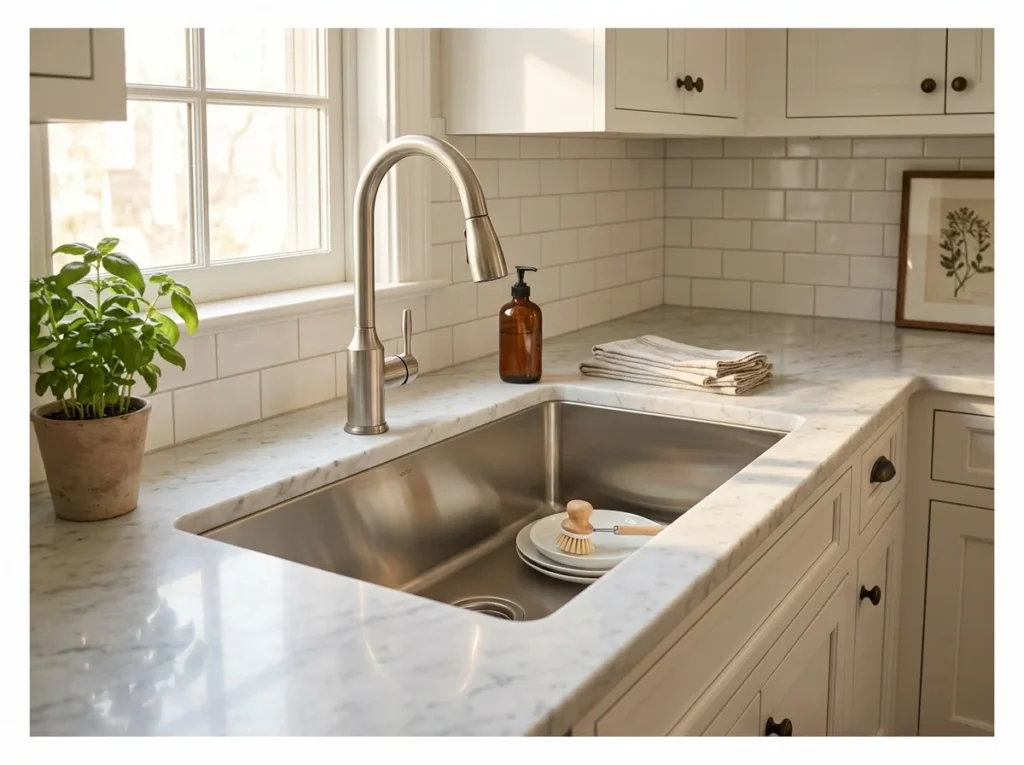
A large deep single bowl undermount sink in stainless steel or white fireclay is the workhorse of any serious cooking kitchen and one of the most consistently beautiful functional kitchen elements. The generous single basin handles every kitchen task from washing oversized pots to rinsing large produce.
Undermount installation creates the most refined and seamless countertop-to-sink transition because there is no rim to collect debris. A high-arc or bridge faucet in brushed nickel or unlacquered brass completes the classic sink composition and provides the height clearance needed for filling tall pots comfortably.
Butcher Block Countertop Section
A butcher block countertop section adds warmth as a contrast to stone or quartz elsewhere in the kitchen. It is often placed on an island or a smaller section rather than covering the whole kitchen. Regular oiling helps keep the wood from drying out or staining over time.
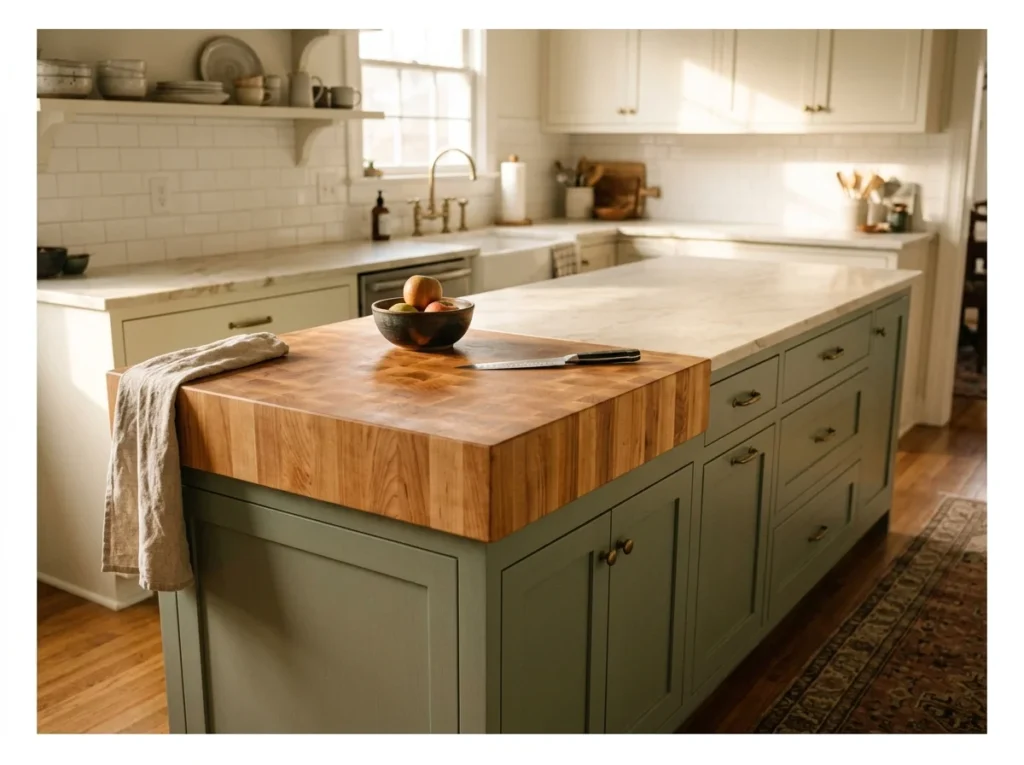
A butcher block countertop section on the kitchen island creates a warm, natural prep surface that suits the knife work and food preparation that islands are primarily used for. The warmth of natural timber breaks the visual uniformity of an all-stone kitchen and adds genuine material variety.
End-grain maple butcher block is the most durable and beautiful option for kitchen use. The end-grain surface is self-healing under knife marks and develops a beautiful lived-in quality. Applied to the island top only, with stone on the perimeter countertops, it creates a mixed-material kitchen that feels intentional and curated.
The warm surface that makes the island truly inviting.
Once the material is chosen, countertop styling that never feels dated is what makes the surface feel complete day to day.
Glass-Front Upper Cabinets
Glass front upper cabinets let you display dishware while still keeping it protected behind a door. This detail adds a bit of visual lightness compared to a kitchen filled entirely with solid cabinet doors. Keeping the contents neatly arranged matters more here, since everything remains at least partially visible.
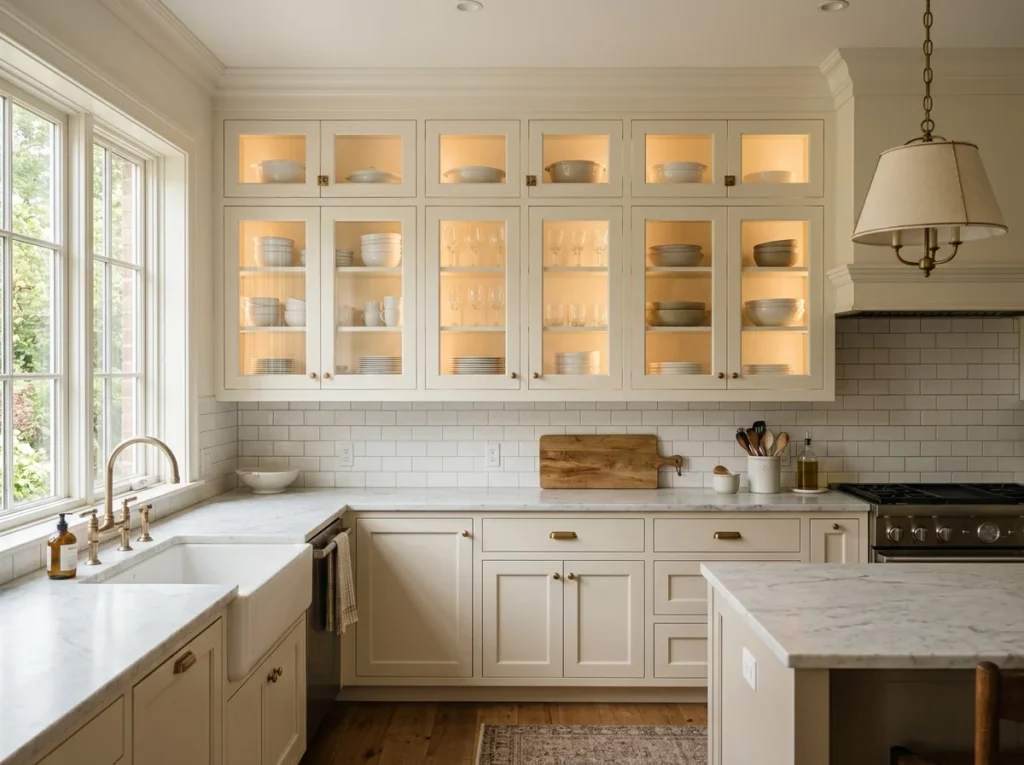
Glass-front upper cabinets allow the kitchen’s most beautiful ceramic and glassware to contribute to the visual character of the room while remaining protected behind a clean glass surface. The glass adds visual depth and lightness to the upper cabinet zone that solid doors cannot achieve.
Single-pane, divided-light, or leaded glass all suit classic kitchen styles depending on the home’s overall architectural character. When the interior shelves are lit with a simple LED strip, the glass-front cabinets create a warm, jewel-box quality after dark that makes the kitchen genuinely beautiful at any hour.
Clipped Corner Details and Beveled Edges
Clipped corner details and beveled edges soften the harder lines found throughout a kitchen’s cabinetry and trim. This small architectural touch tends to show up on island corners or countertop edges. It is a subtle detail, but it adds a bit of custom character that flat, square edges do not.
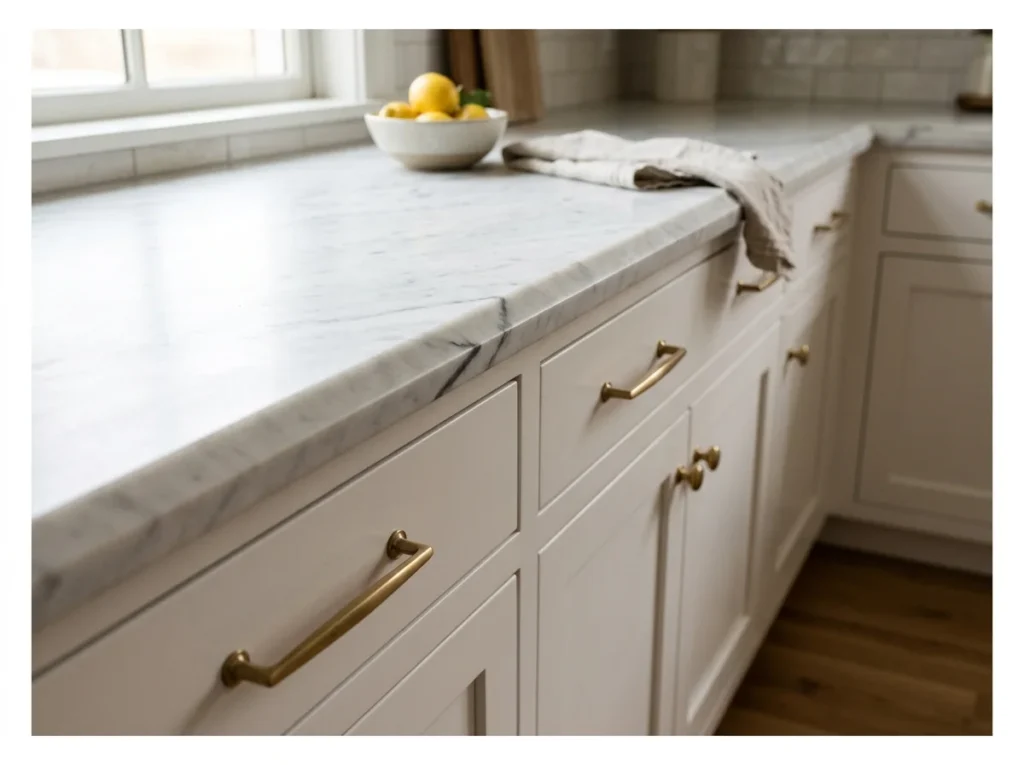
The edge profile of a stone countertop is a detail that communicates quality in a kitchen without announcing itself. A simple beveled or eased edge creates a clean, understated profile that suits every kitchen style. A bullnose edge creates a softer, more traditional quality. Both are genuinely timeless.
Avoid decorative ogee or elaborate edge profiles that read clearly as the products of a specific design era. The most enduring countertop edges are the simplest. A consistent edge profile throughout the kitchen, rather than mixing different profiles on different countertop sections, creates the most refined and resolved appearance.
Built-In Banquette Breakfast Nook
A built in banquette breakfast nook combines bench seating with a table for casual everyday meals. This setup often makes better use of corner space than a full dining table and chairs would. Storage can also be built underneath the bench seats for extra practicality.
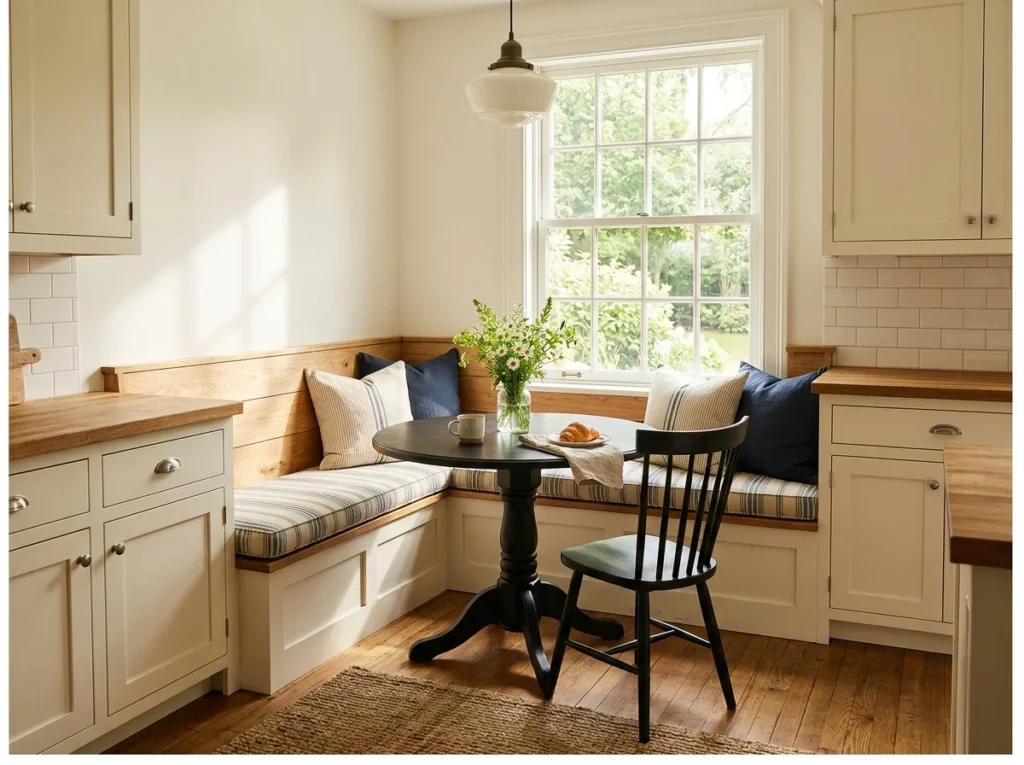
A built-in banquette breakfast nook creates a dedicated kitchen dining zone that feels genuinely permanent and designed rather than improvised with a table and chairs. The built-in quality gives the nook an architectural permanence that makes it feel like it has always been part of the home.
Cushioned bench seating in a classic stripe or durable woven fabric with a small round or rectangular pedestal table creates a comfortable and intimate breakfast setting that works for morning coffee, casual family meals, and weekend brunch equally well. The bench storage beneath is a practical bonus.
That same instinct toward permanent, considered storage extends naturally into a pantry system built to last elsewhere in the kitchen.
The kitchen corner everyone fights to sit in.
Classic Crown Molding on Upper Cabinets
Crown molding along the top of upper cabinets gives them a finished, built in appearance. This detail helps close the gap between cabinetry and ceiling that would otherwise collect dust. It is a small addition that makes cabinets look more custom rather than simply installed.
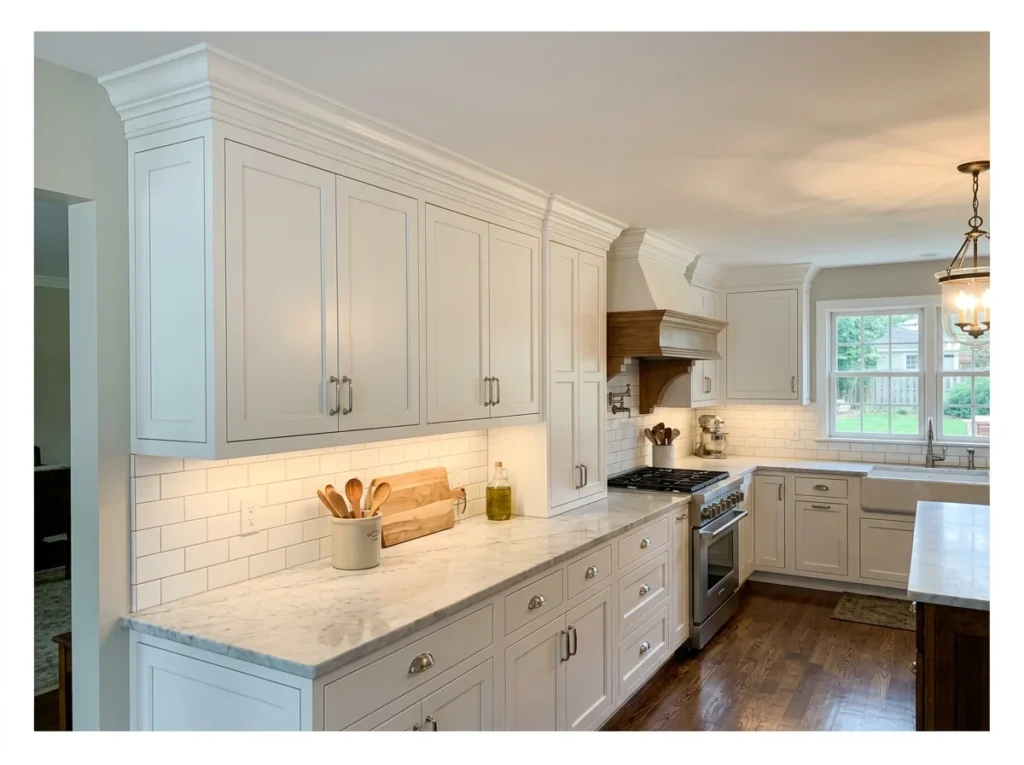
Crown molding on the upper kitchen cabinets bridges the gap between the cabinet top and the ceiling and creates a finished, architectural quality that cabinetry without crown molding simply lacks. The molding signals attention to detail and a commitment to genuinely completed design rather than cost-cut shortcuts.
A simple ogee or cove crown profile suits traditional and transitional kitchens. A more minimal dentil or stepped profile suits contemporary classical kitchens. Either approach creates the resolved appearance of a kitchen that was designed as a whole rather than assembled from parts.
Consistent Hardware Throughout
Consistent hardware throughout the kitchen ties every cabinet and drawer together visually. Mixing metals sparingly is fine, but sticking to one main finish keeps the overall look cohesive. This detail is easy to overlook, but it makes a noticeable difference in how put together the kitchen feels.
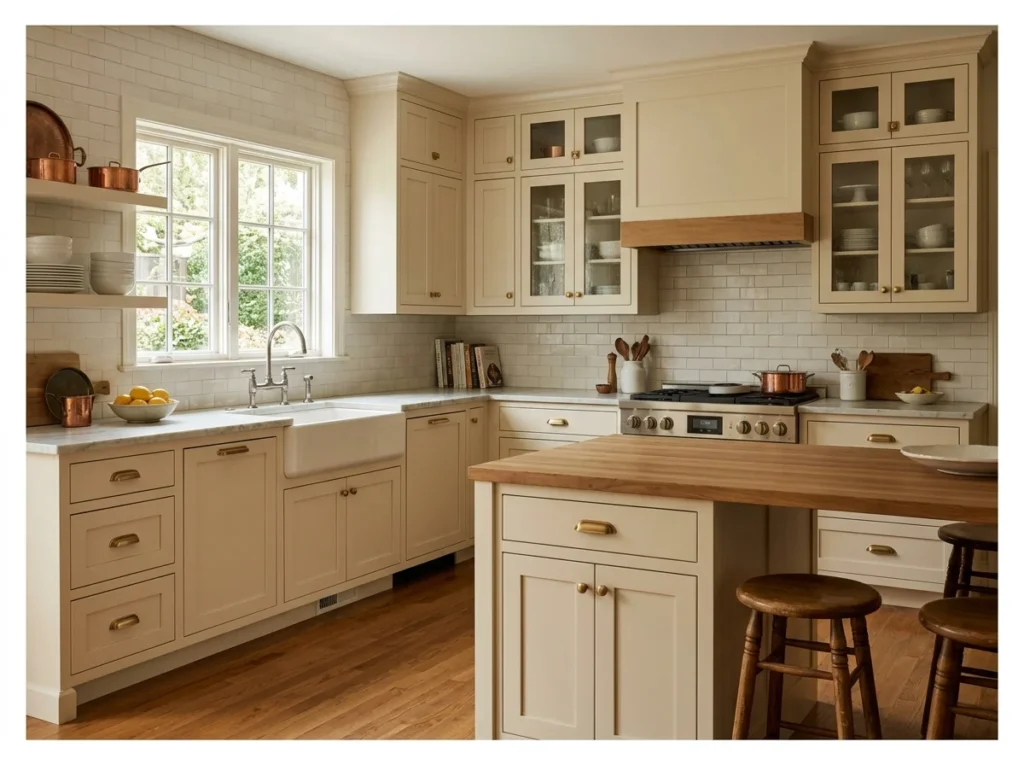
Using identical hardware on every cabinet door and drawer throughout the kitchen creates a visual unity that immediately signals a considered, complete design rather than a kitchen assembled piecemeal over time. Consistency in hardware is one of the most affordable and most impactful refinements available in any kitchen.
Choose one hardware profile and finish and apply it uniformly. Cup pulls on lower cabinets and knobs on upper doors create a traditional variation that looks intentional. All knobs or all pulls creates a more uniform contemporary result. Either approach, applied consistently, elevates the kitchen’s overall quality impression significantly.
The detail that ties the whole kitchen together.
If farmhouse charm appeals to you within this timeless approach, a farmhouse mood that never wavers shows how the two can work together.
Conclusion
A kitchen built on these 23 principles will look as beautiful in twenty years as it does today. It will not need to be completely replaced when a trend passes because none of these choices depend on a trend for their relevance. They depend on quality, proportion, natural material, and genuine craftsmanship.
Start with the decisions that have the most impact and cannot be easily changed later: cabinet door style, countertop material, flooring, and sink. Then layer in the elements that can be updated more affordably: hardware, lighting, and open shelf styling.
The kitchen you build with these ideas will be the one you never regret.
And if outdoor cooking is part of your life too, a kitchen built to be lived in daily extends that same philosophy beyond the back door.