A staircase in darkness is a safety risk and a missed design opportunity at the same time. The right staircase lighting makes it one of the most striking features in the entire home.
These ideas transform every staircase type into a beautifully lit architectural statement.
If lighting has you thinking about the staircase more broadly, a full refresh worth considering too covers plenty of other upgrades worth pairing with it.
Let’s explore the ideas.
LED Step Lighting Under Each Tread
LED strips tucked under the edge of each tread cast a soft glow onto the step below. This works as both a design detail and a practical safety feature at night. Most strips can be dimmed or set to a timer so they only run when actually needed.
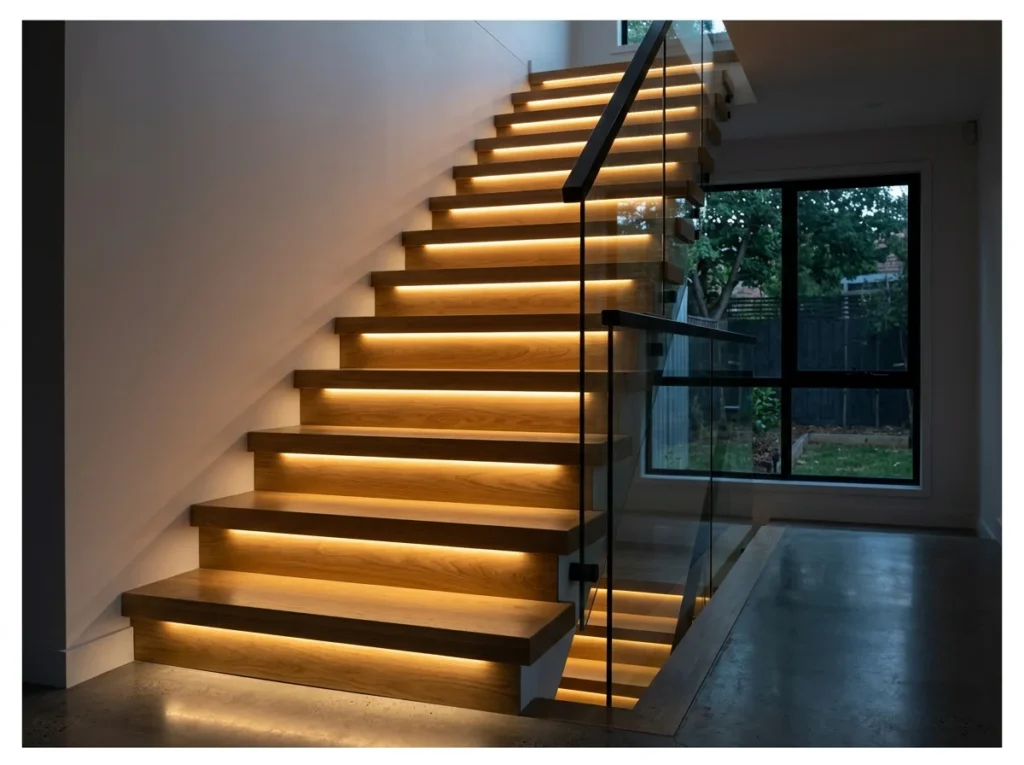
LED strip lights installed in a channel beneath each stair tread create a distinctive horizontal line of warm light at every step edge. The downward wash of light illuminates exactly where each foot lands, creating the most practical and architecturally beautiful staircase safety lighting available.
This approach works most effectively with floating staircase designs where the underside of each tread is visible and accessible for light installation. Warm white 2700K LED strips create the most residential and atmospheric quality. Dimmer-controlled systems allow the intensity to shift from practical bright light to soft ambient glow at different times of day.
The staircase lighting that is equally beautiful and genuinely safe.
Pendant Light in the Stairwell Void
A pendant hung in the open stairwell void takes advantage of vertical space that often goes unused. This fixture becomes visible from multiple floors as people move through the house. It suits a home with a taller stairwell that can accommodate a hanging fixture properly.
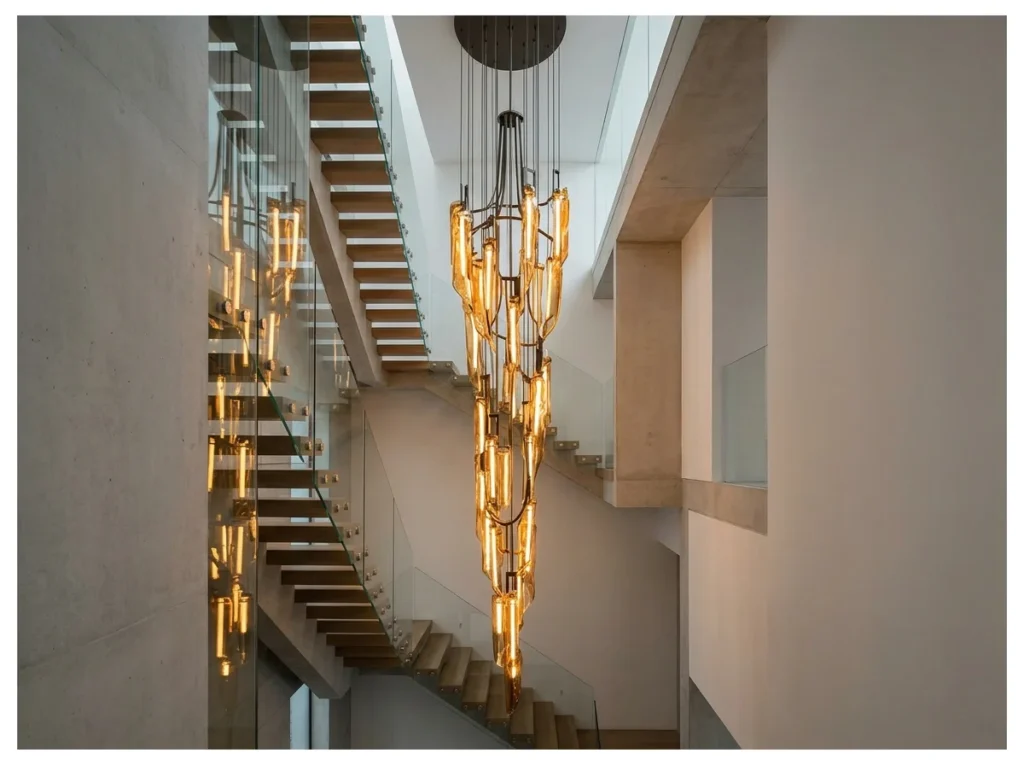
A single large pendant light suspended through the full height of an open stairwell void creates the most dramatically architectural lighting statement in any multi-story home. The pendant descends through the vertical space connecting the floors and creates a visual centerpiece that is visible from multiple levels simultaneously.
The pendant size should be proportional to the stairwell dimensions: a pendant that is too small for the void looks uncertain and underwhelming. For standard residential stairwells, a pendant of 40 to 80 centimeters diameter creates appropriate visual presence. The ceiling attachment point must be structurally adequate for the pendant’s weight.
Once that centerpiece is in place, a wall that carries the same glow can help extend the visual impact along the rest of the stairwell.
The statement light that defines the entire home’s interior character.
Wall-Mounted Step Lights
Small fixtures mounted directly on the wall beside each step add light exactly where it is needed. This setup keeps the staircase safely lit without relying on one overhead source. It suits stairwells that otherwise get very little ambient light.
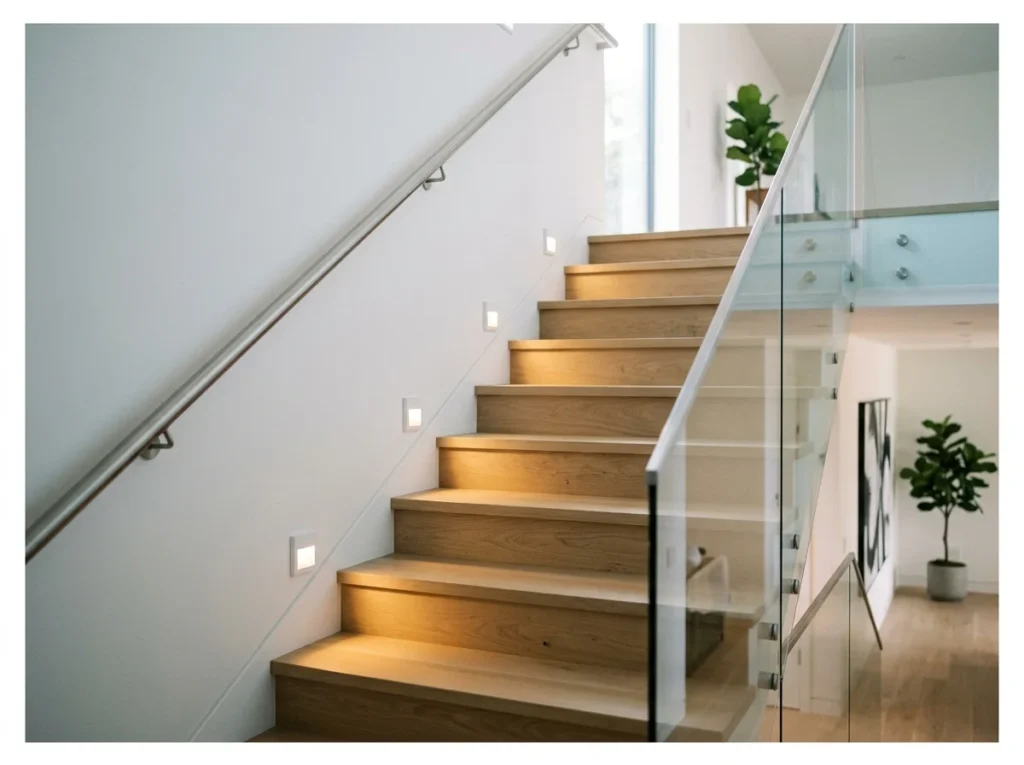
Wall-mounted step lights recessed or surface-mounted into the staircase wall at each tread level create safe, directional illumination that specifically lights the step surface below each fixture. The low-level positioning means the light source is never directly in the eye-line of ascending users.
Small square, circular, or rectangular wall recessed lights at 5 to 10 centimeters above each tread level create a clean, uniform lighting arrangement. A consistent light fitting size and finish creates the most resolved and professionally installed appearance on the staircase wall.
LED Strip Lighting on the Handrail
Running an LED strip along the underside of the handrail adds a subtle glow guests notice right away. This detail also helps outline the staircase shape once the room lights are dimmed. It suits a more modern home wanting a distinct, glowing design feature.
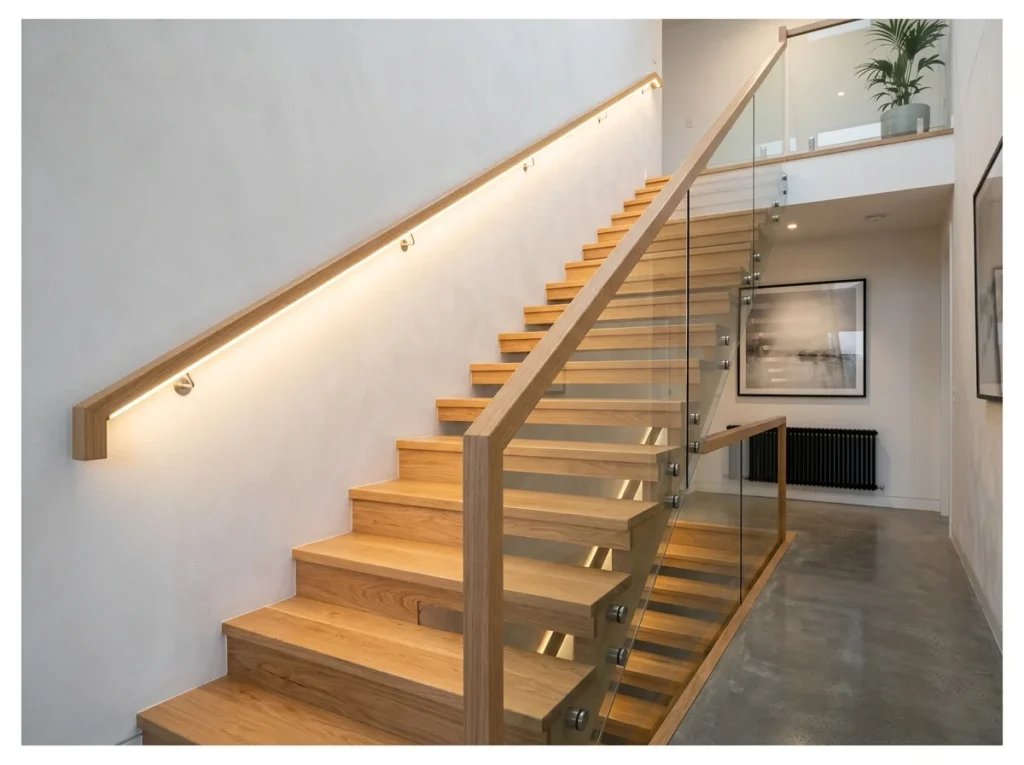
LED strip lighting installed in a channel along the underside of the staircase handrail creates continuous indirect lighting that runs the full length of the stair descent, illuminating the treads below without any visible fixture or direct glare.
This approach suits solid timber or steel handrail profiles where a channel can be routed along the underside for concealed strip installation. The result is a completely invisible light source that creates a beautifully diffused linear glow along the entire staircase length.
Recessed Tread Lighting
Recessed lights built directly into the tread sit flush, avoiding any protruding fixture. This clean installation keeps the staircase looking streamlined during the day. At night, the light appears seamlessly built into the structure itself.
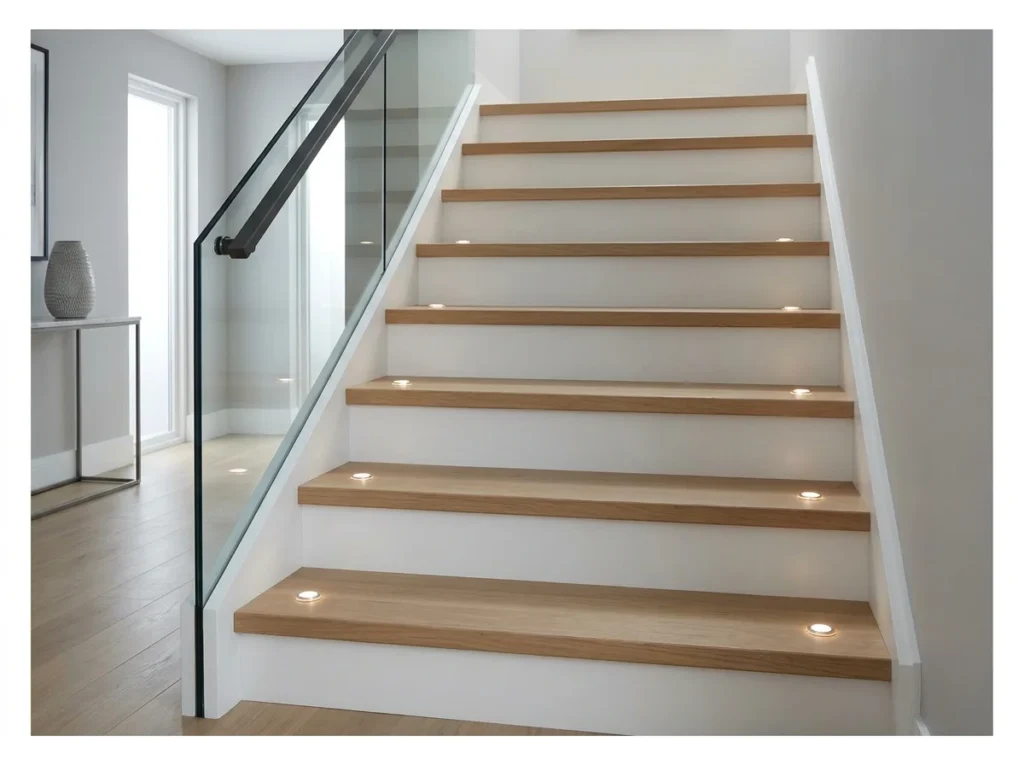
Recessed LED lights installed flush into the surface of each stair tread near the nosing edge create a subtle and elegant step-edge lighting system that is visible from above rather than from the side like wall-mounted alternatives. The lights mark each tread edge clearly without disrupting the staircase’s overall visual composition.
This installation requires appropriate tread material and thickness to accommodate the recessed fixture housing. Stone, timber, and concrete treads of adequate depth all suit this approach. Ensure IP-rated fixtures with appropriate surface protection ratings for tread-mounted positions.
Statement Chandelier Above the Stairwell
A chandelier hung above the stairwell becomes a clear focal point the moment you walk in. This fixture works especially well in homes with double height stairwells that can showcase its full scale. It suits a more formal or traditional home wanting a dramatic lighting feature.
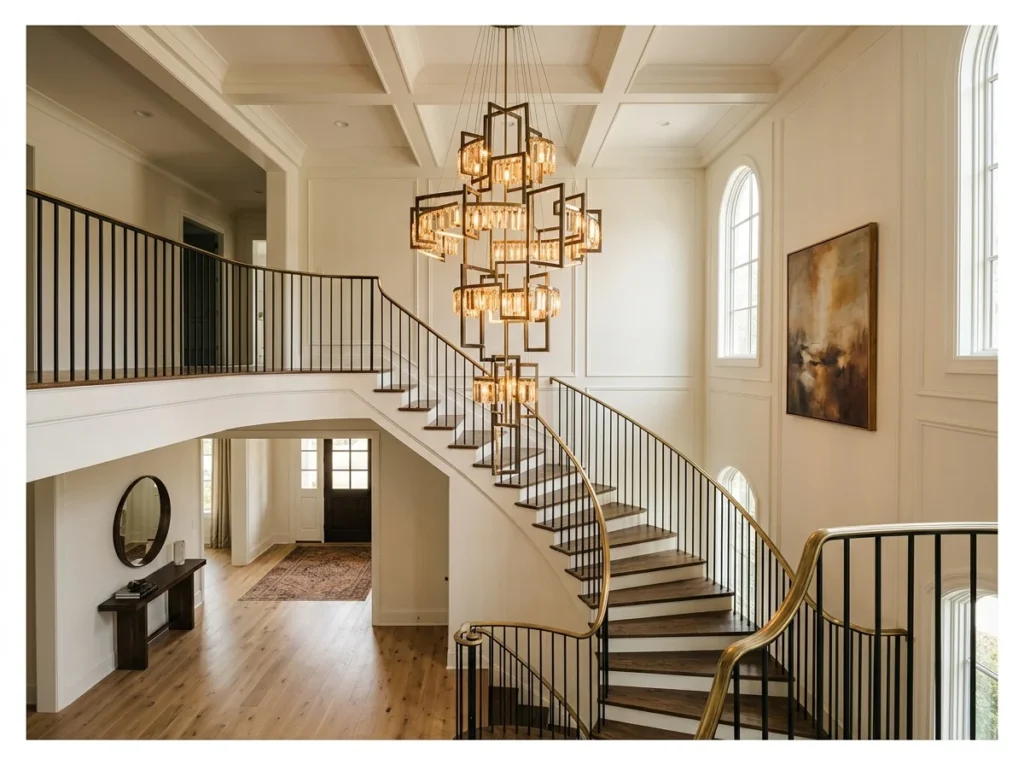
A statement chandelier positioned directly above a staircase in a double-height entry or stairwell creates the most traditionally grand staircase lighting installation available. The chandelier becomes the home’s primary interior focal point and establishes the overall design character of the entrance.
Contemporary chandeliers in geometric, organic, or sculptural forms suit modern homes as powerfully as traditional crystal versions suit classic interiors. The chandelier’s diameter should be at least 50 to 60 percent of the stairwell’s narrowest dimension for proportional visual presence.
The interior feature that defines a home’s entire character.
Sconces on the Staircase Wall
Sconces mounted along the stairwell wall provide steady, even light as you climb. This fixture style also adds a decorative detail beyond just its functional purpose. It suits staircases with wide enough walls to fit fixtures without feeling cramped.
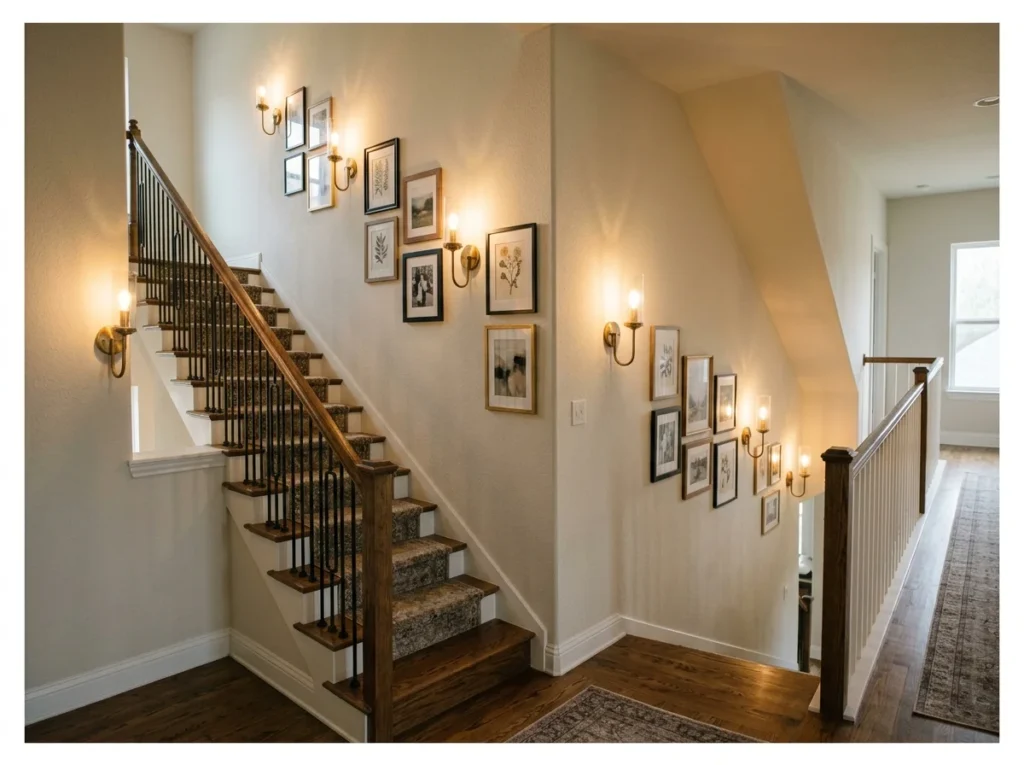
Wall sconces mounted at regular intervals along the staircase wall provide warm, evenly distributed ambient lighting throughout the stair ascent while also creating decorative light fittings that contribute to the wall’s visual character.
Position sconces at consistent heights relative to each other and the staircase architecture: either at a consistent ceiling-level height across all treads or at a consistent mid-wall height that follows the staircase rake. Matching sconce fixtures create a composed, intentional lighting arrangement.
Rope Light Along the Skirting Board
A rope light run along the base of the stairs adds a low, subtle glow near the floor. This detail works well as a nightlight without needing anything bright or harsh. It suits a staircase used often after dark by household members moving quietly.
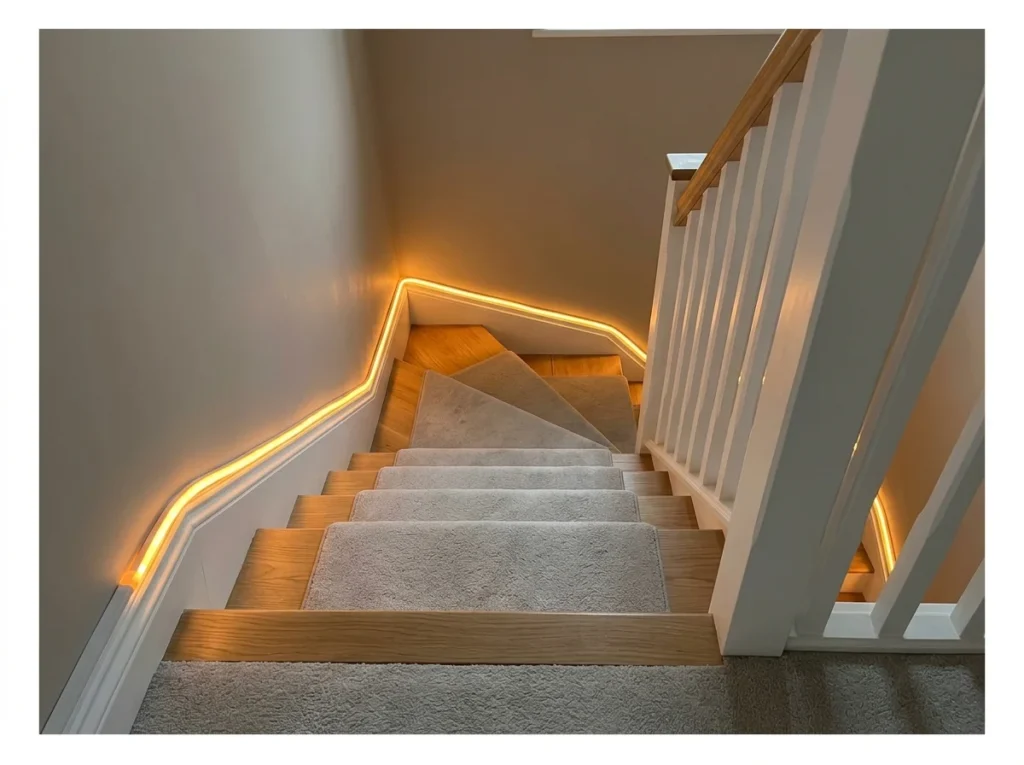
Rope lighting installed along the base of the staircase skirting board creates a continuous low-level glow at foot height that illuminates the step edge zone without any visible fixture or direct glare. The skirting-level positioning is highly effective as a night lighting solution.
This approach is one of the most affordable and accessible staircase lighting installations available, requiring no complex electrical work if battery or plug-in rope lights are used. The skirting channel conceals the rope light body while the light output defines the step edges clearly.
Budget-friendly option that improves safety immediately.
Natural Light Through a Stairwell Skylight
A skylight above the stairwell brings in daylight that artificial fixtures cannot replicate. This feature changes the whole feel of the staircase throughout the day as light shifts. It suits a home with a stairwell that reaches close to the roofline.
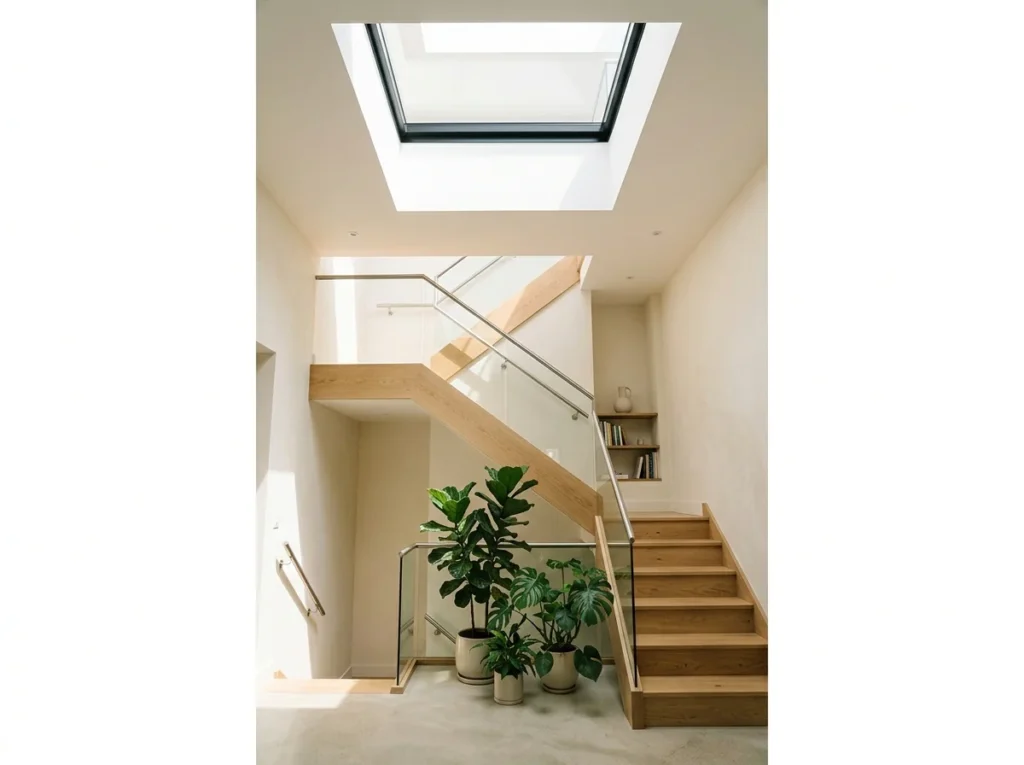
A skylight positioned directly above the stairwell creates the most beautifully organic staircase lighting available during daylight hours. Natural light descending through the full stairwell height illuminates every level simultaneously and creates a constantly changing quality of light throughout the day.
This approach requires planning during construction or renovation as adding a skylight to an existing roof is a significant structural intervention. The result is a stairwell that feels genuinely connected to the sky above and creates the most energizing and natural light quality of any staircase lighting approach.
Picture Light Gallery Wall on the Stairs
Small picture lights mounted above framed art highlight each piece individually as you pass. This detail turns a functional lighting need into part of the overall stairwell decor. It suits a staircase already featuring a gallery wall display.
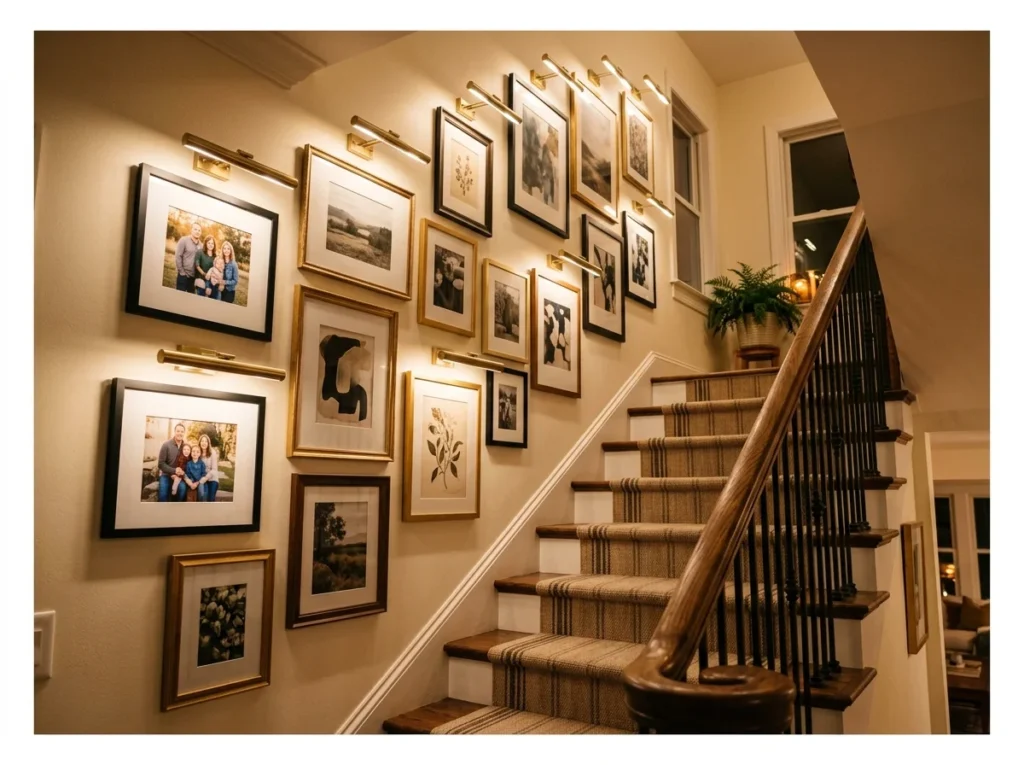
Individual picture lights mounted above framed artworks on the staircase gallery wall create layered, intimate lighting that illuminates both the art and the staircase zone simultaneously. The combination of multiple picture lights at different heights creates a warm, gallery-quality lighting atmosphere.
Battery-powered or hardwired picture lights both suit staircase gallery installations. The warm directed light from each picture light creates focused illumination on the artwork while the combined effect of multiple lights provides general ambient light for the staircase descent.
Neon Strip Accent on the Underside of Stairs
A neon strip tucked under the stair edge adds a bold, colorful glow rather than standard white light. This detail suits a home leaning toward a more playful or modern design style. It works especially well as an accent rather than the main source of light.
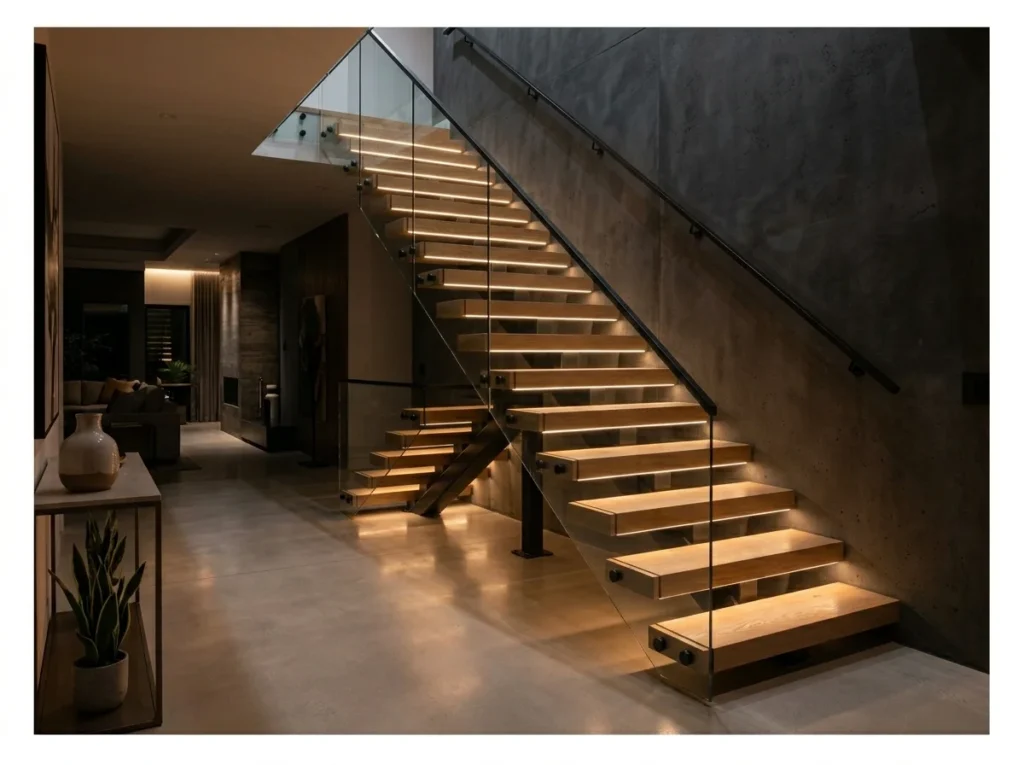
An LED neon strip installed along the underside of a floating staircase structure illuminates the wall and floor beneath the stair with a continuous strip of colored or warm white light that creates a dramatic architectural accent visible from across the room.
This approach suits contemporary and minimalist interior design directions where the staircase is treated as a sculptural architectural element. Color-changing smart LED strips allow the neon accent to shift between warm white for everyday use and colored light for atmospheric occasions.
If you enjoy this kind of atmospheric lighting, an evening glow that carries outdoors shows how the same warmth extends beyond the staircase.
Smart Motion-Sensor Staircase Lighting
Motion sensors trigger the lights automatically as someone approaches the stairs. This feature is especially useful at night, avoiding the need to fumble for a switch. It suits households wanting both convenience and a bit of extra safety.
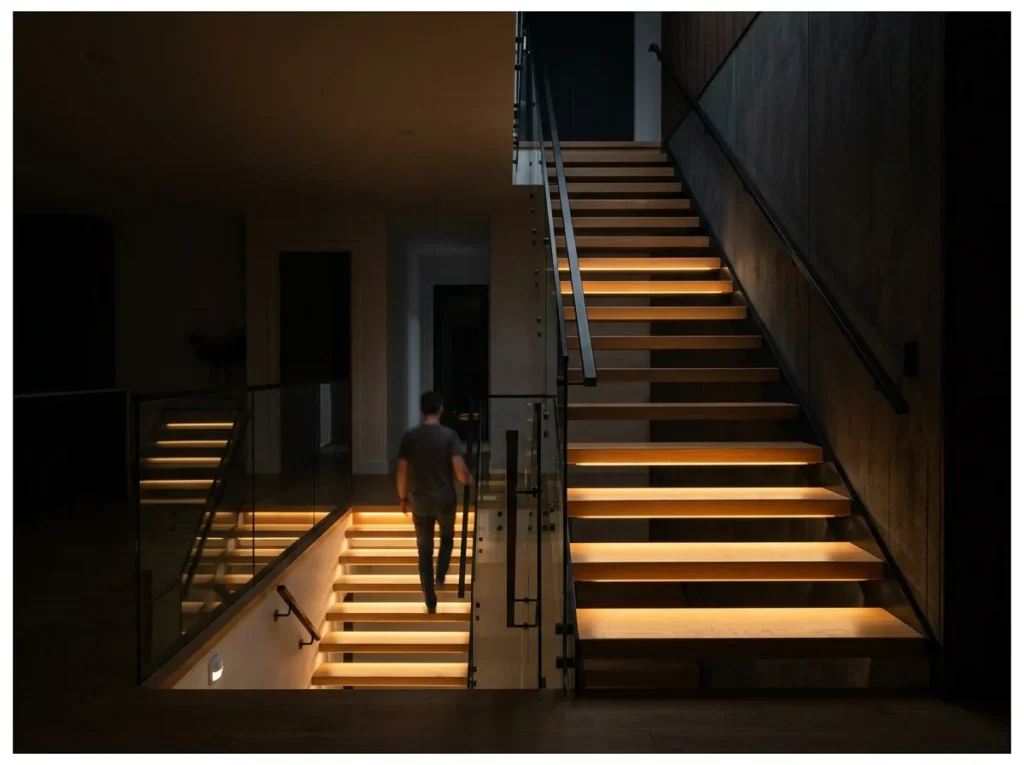
Smart motion-sensor staircase lighting activates automatically when movement is detected at the base or top of the staircase, providing safety illumination precisely when needed without requiring manual switching and without lights remaining on unnecessarily throughout the night.
The most sophisticated smart systems illuminate each step sequentially from bottom to top as someone ascends, creating a wave of light that precedes the user up the staircase. This sequential illumination is both genuinely useful and visually impressive and is particularly valuable for households with children or elderly residents.
If the staircase shares space with the entry, an entryway that sets the same tone can help the two areas feel like one connected impression.
Lantern Pendants in a Row Down the Stairwell
A row of matching lantern pendants creates rhythm as they follow the angle of the stairs. This repetition adds a cohesive, intentional look rather than a single isolated fixture. It suits a home wanting a more traditional or vintage inspired lighting style.
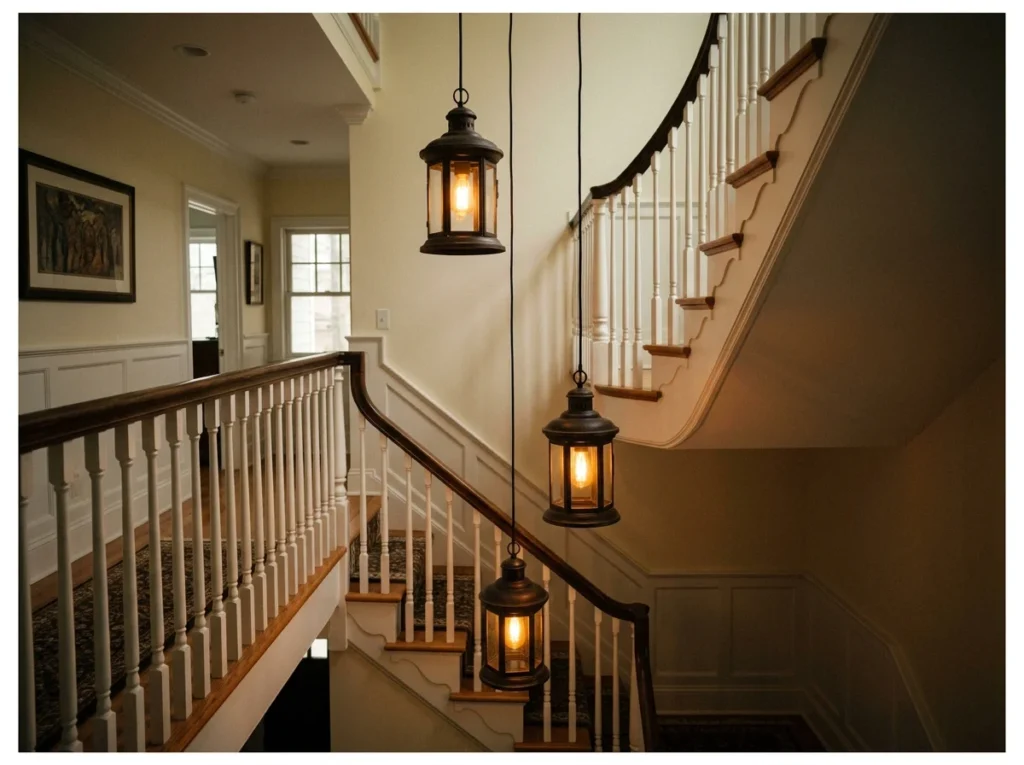
A row of matching lantern pendants hung at staggered heights through the stairwell creates a composed, collected lighting installation that references traditional lantern design while creating a distinctly modern pendant grouping. The staggered heights create visual rhythm and fill the stairwell volume beautifully.
Three pendants at three different cord lengths create the most balanced staggered arrangement. Each pendant should be positioned to avoid eye-level contact for anyone ascending the staircase. The consistent lantern style across all three pendants creates cohesion while the varied heights create visual interest.
Concealed LED Cove Lighting on the Ceiling
Cove lighting hides the actual light source behind a ledge or recess in the ceiling. This creates a soft, indirect glow rather than a direct beam of light. It suits a stairwell wanting ambient lighting without any visible fixtures at all.
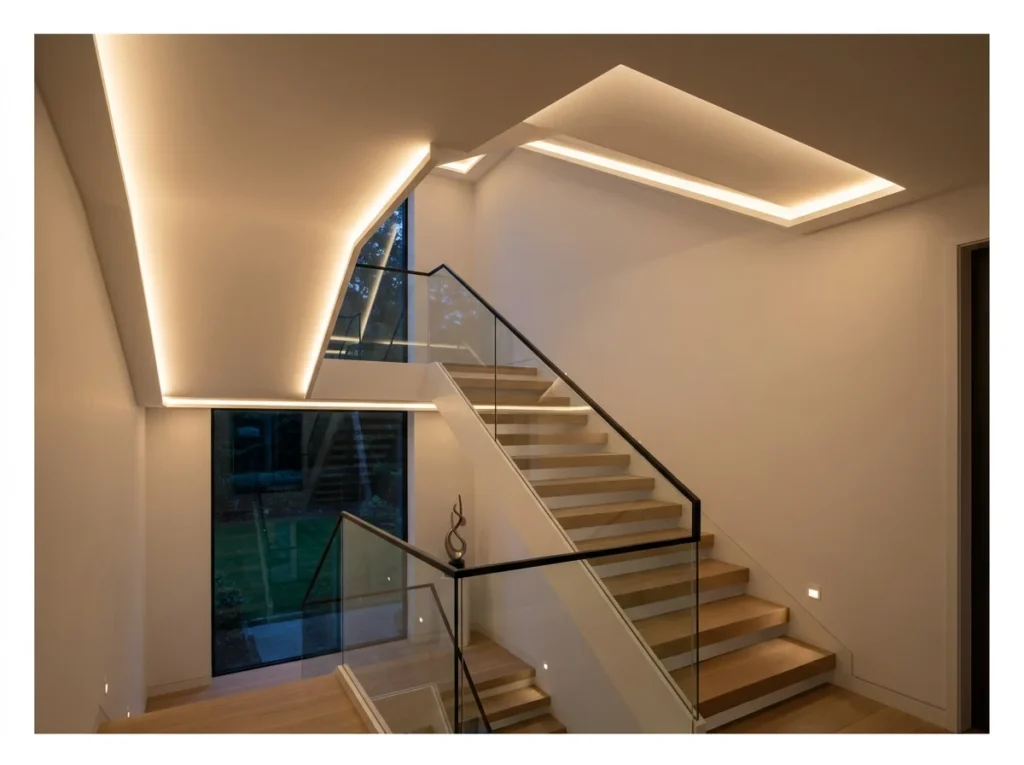
Concealed LED cove lighting installed in a ceiling recess above the stairwell creates warm indirect ambient lighting where the light source is completely hidden and only the light output is visible, washing across the ceiling and upper walls with a soft, even glow.
This approach creates the most sophisticated and architectural indirect lighting effect for stairwells with the ceiling height to accommodate a cove recess. The completely concealed light source creates drama without any visible fixture competing for visual attention with the staircase architecture itself.
Spotlight Downlights Aimed at Treads
Directional downlights can be angled specifically toward each tread for clear, focused illumination. This setup improves visibility and safety while still keeping the fixtures fairly discreet. It suits a staircase wanting function prioritized over decorative flair.
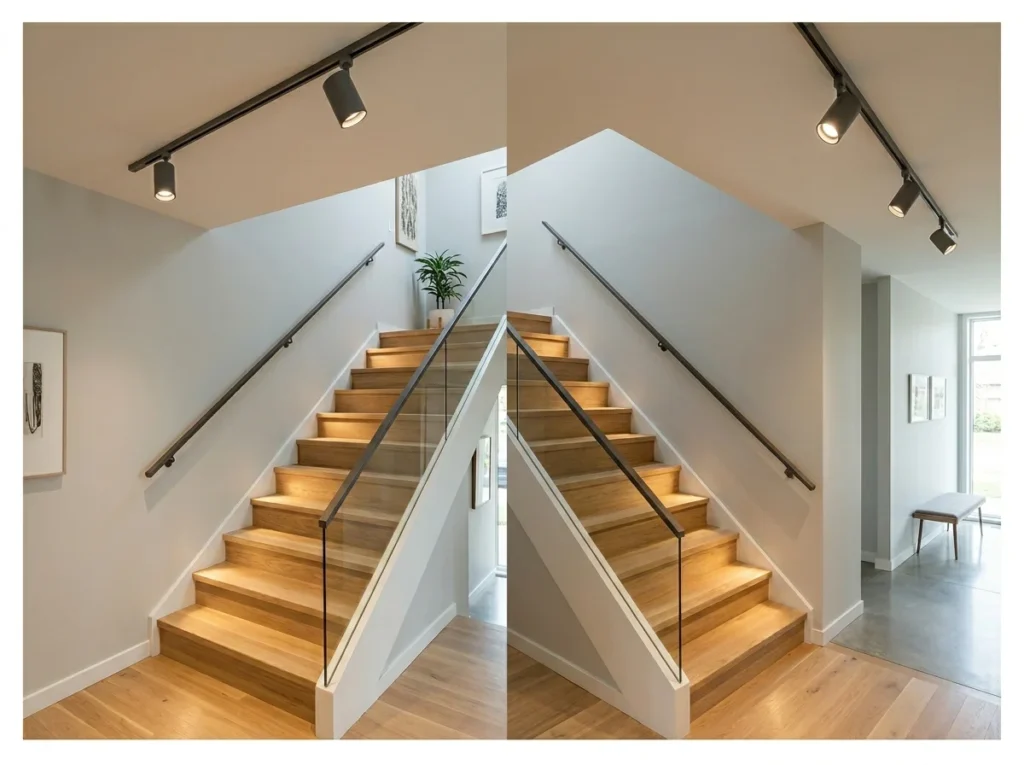
Adjustable ceiling-mounted spotlight downlights positioned above the staircase and aimed at the tread surfaces create targeted, precise illumination at exactly the point where it is most needed. Each spotlight can be directed to cover multiple treads from a single ceiling fixture.
Warm white LED GU10 spotlights in adjustable tilt recessed housings provide the most flexible and energy-efficient solution. Position ceiling fixtures close enough to the staircase that a 30 to 45-degree tilt angle reaches the tread surface clearly without creating harsh glare for ascending users.
Balustrade LED Lighting
LED lighting built into the balustrade itself outlines the staircase shape from top to bottom. This detail adds a modern, almost architectural quality to the stairwell. It suits a home wanting the staircase to feel like a design feature rather than just a passage.
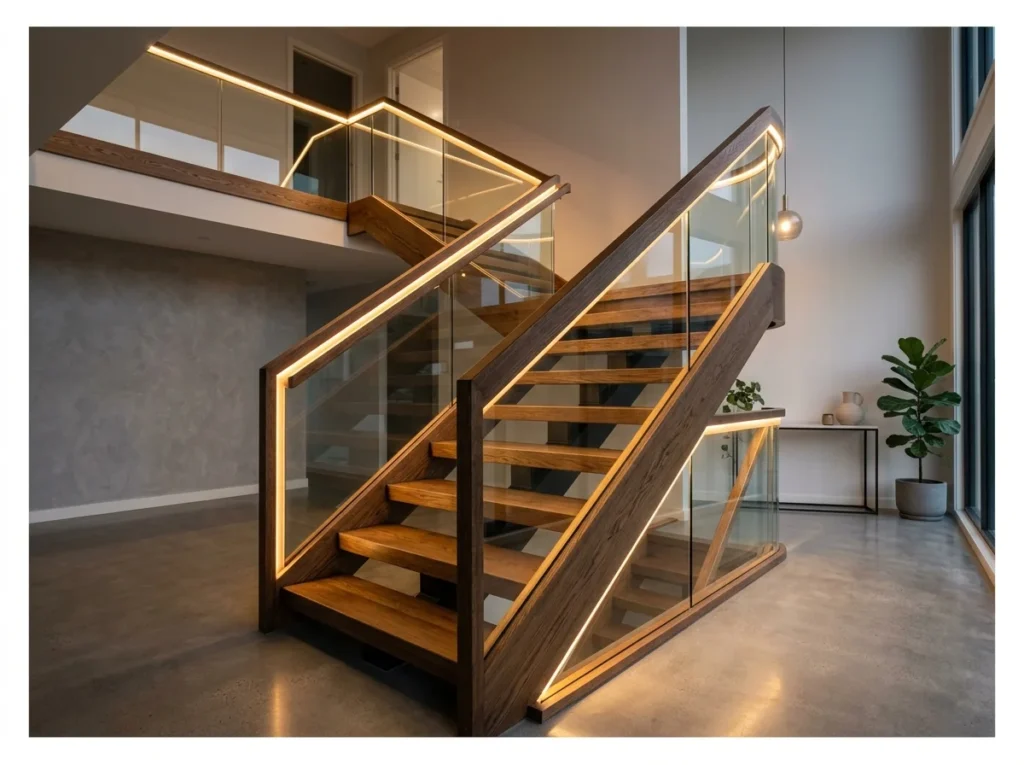
LED lighting integrated into or behind the staircase balustrade structure creates a situation where the balustrade itself becomes a glowing light source that illuminates the staircase from within rather than from a separate fixture. Glass balustrades with backlit LED panels create a particularly dramatic effect.
This integration requires planning during the staircase design phase to create the appropriate channels, diffusers, and fixture positions within the balustrade structure. The resulting effect, where the structural element of the staircase emits warm light, creates one of the most architecturally resolved staircase lighting approaches possible.
Backlit Stair Risers
Backlighting behind each riser creates a glowing effect as light spills out along the edges. This detail works especially well in darker stairwells needing extra illumination. It suits a modern home wanting a striking, almost floating look to the staircase.
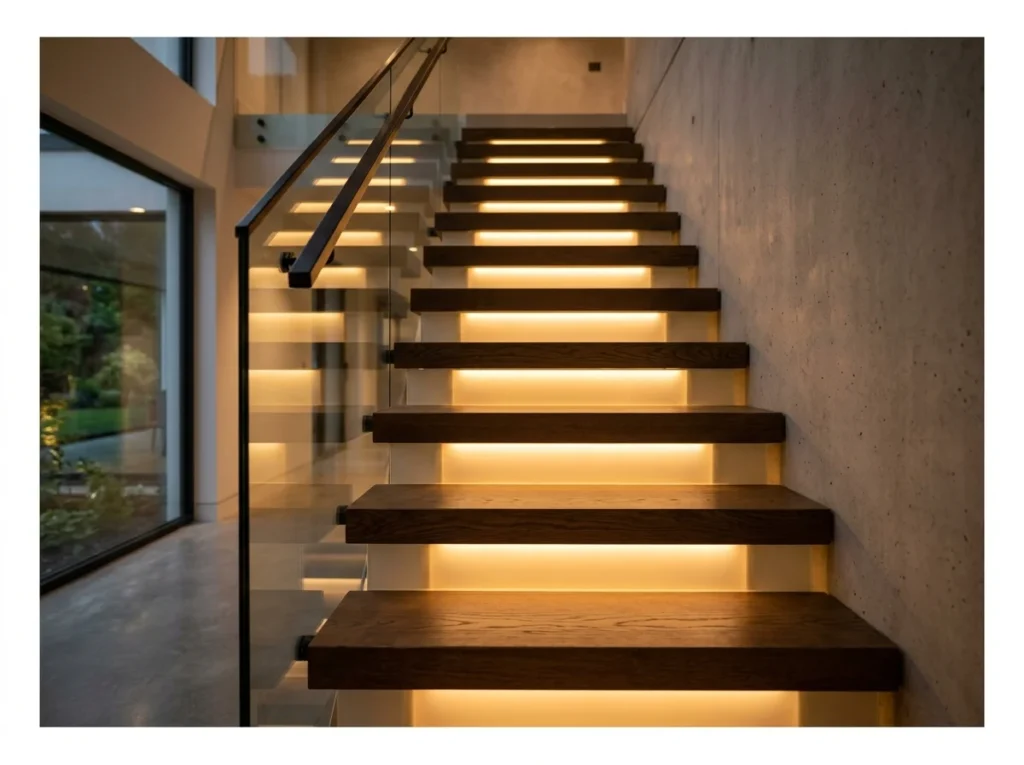
Backlit stair risers use translucent panels, frosted glass, or thin stone slabs with LED lighting behind each riser surface to create a staircase where each step appears to hover above a plane of glowing light. The effect is dramatic, contemporary, and unlike any other staircase lighting approach.
This technique suits staircases designed as architectural features from the outset, where the riser material and lighting integration are planned simultaneously. The warm glow visible through translucent riser panels creates a staircase that is genuinely spectacular at night and provides clear step-edge definition simultaneously.
If your stairs lead down rather than up, a basement stairwell done just as well shows how to bring this same care to that space too.
The most architecturally dramatic staircase lighting available.
Conclusion
A staircase that is well lit is genuinely safer, more beautiful, and more architecturally considered than one that relies on borrowed ambient light from adjacent rooms. The investment in dedicated staircase lighting delivers value in daily safety, visual impression, and the overall quality perception of the home.
Start with the primary safety requirement: clear step-edge illumination through LED step lights, under-tread strips, or wall-mounted step fixtures. Then add the architectural statement element, whether a pendant, chandelier, or gallery wall with picture lights, that makes the staircase genuinely impressive.
The staircase that impresses everyone who sees it and safely guides everyone who uses it is within reach with the right lighting decisions.
And once the stairs are glowing beautifully, a living room lit with the same warmth is a natural next space to bring that same lighting philosophy.