Modern farmhouse kitchens are not about looking like a barn. They are about creating the warmest, most functional, most genuinely welcoming kitchen in the home.
These ideas blend rustic warmth with contemporary practicality for a kitchen you will love cooking in every day.
If bold cabinet color appeals to you more than classic white, this collection on choosing striking cabinet hues is a great place to browse next.
Let’s explore the ideas.
White Shaker Cabinets with Black Hardware
Shaker cabinets have that simple recessed panel that has stayed popular in kitchens for decades. Black hardware against a white door adds sharp contrast so the doors do not blend into one flat surface. This pairing has become the near default starting point for a farmhouse kitchen.
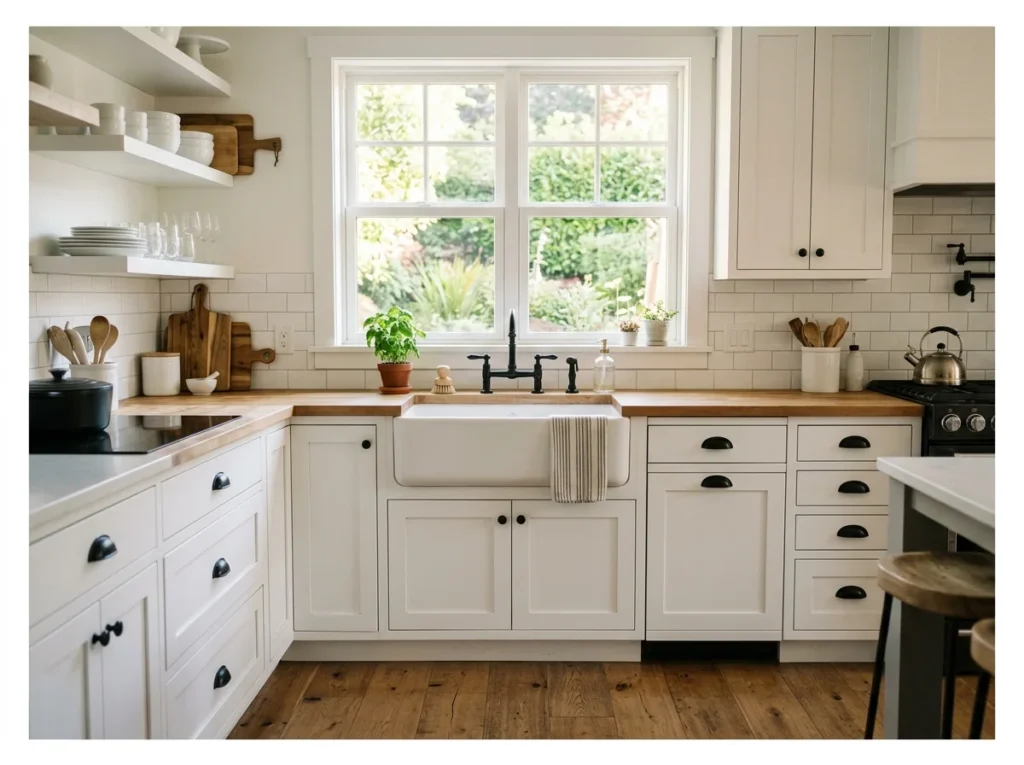
White shaker cabinets with matte black hardware is the most iconic modern farmhouse kitchen combination. The clean recessed panel profile of shaker doors provides the classic craftsmanship detail while the black hardware creates a graphic contrast that grounds the all-white cabinet scheme.
Matte black cup pulls on lower drawers and matte black knobs on upper doors create the most traditional hardware arrangement for a farmhouse kitchen. The black finish suits every shaker cabinet color from bright white to cream to sage green, making it the most versatile hardware choice in this design direction.
The kitchen combination that never looks dated.
Farmhouse Apron-Front Sink
A farmhouse apron-front sink adds timeless charm and practical functionality to the kitchen with its deep basin and distinctive exposed front design. This classic feature creates a warm, inviting focal point while complementing farmhouse, rustic, and modern kitchen styles beautifully.
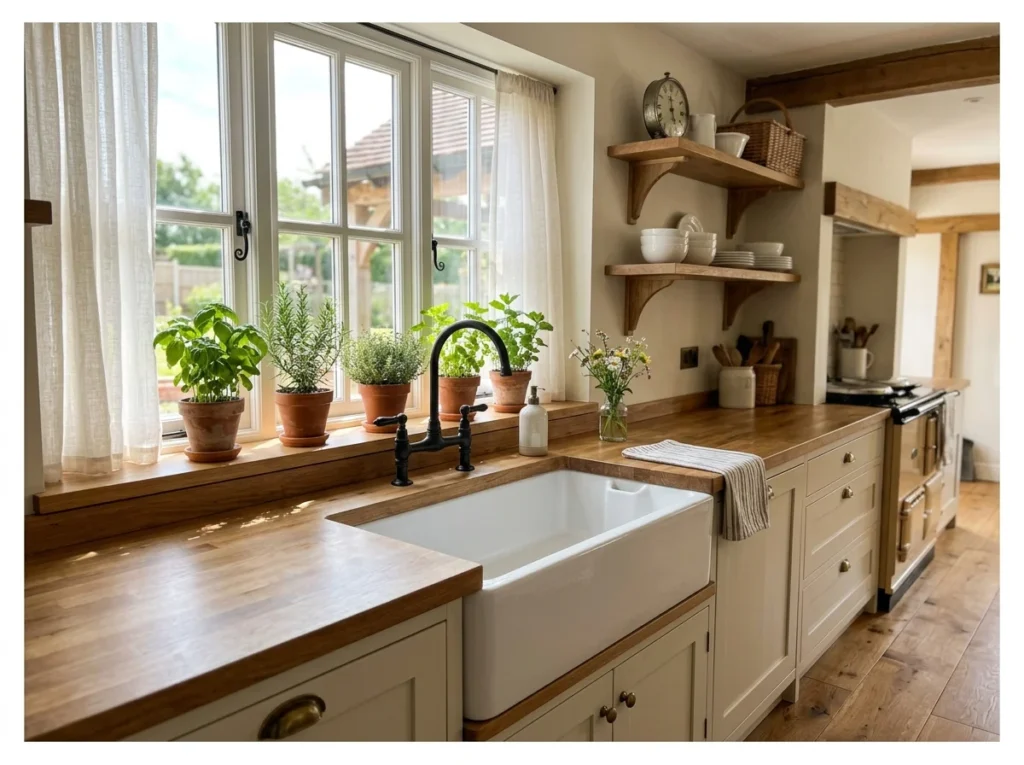
A farmhouse apron-front sink is the single most defining element of any farmhouse kitchen. The large exposed front panel of the sink, which extends beyond the cabinet face below, is immediately recognizable as the signature farmhouse kitchen detail that no other sink style replicates.
White fireclay is the most traditional and beautiful apron sink material because it develops a warm cream quality over time and handles the demands of a working kitchen with genuine resilience. A matte black bridge faucet or gooseneck faucet completes the farmhouse sink composition.
The signature farmhouse kitchen detail.
Natural Timber Kitchen Island
A timber island brings raw wood grain into a kitchen that might otherwise lean heavily on white paint. Its warmth balances out cooler tones from white cabinets and stone counters nearby. Over time the wood picks up small marks that most farmhouse fans treat as character rather than damage.
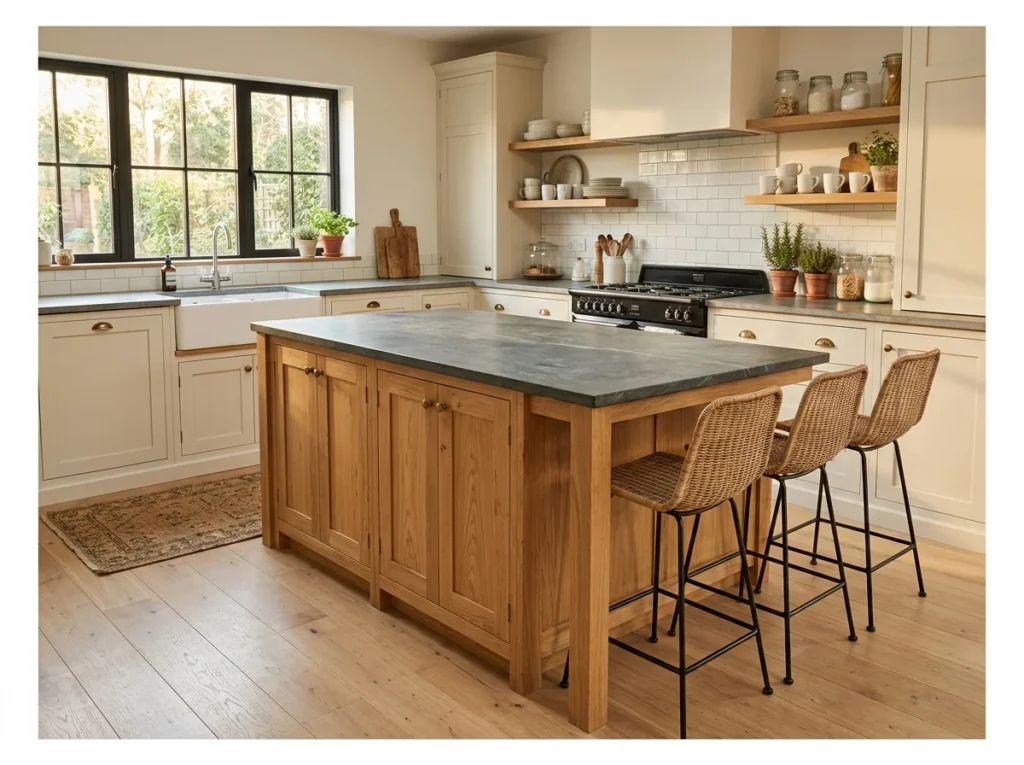
A natural timber kitchen island creates the warm organic focal point that distinguishes a modern farmhouse kitchen from a simple white kitchen. The natural grain variation and developing character of real wood gives the island a furniture-like quality that painted alternatives cannot replicate.
Position the natural timber island as a contrasting element within a white or cream cabinetry kitchen for the most characteristic farmhouse two-tone result. Natural oak and warm walnut both suit the farmhouse aesthetic and pair naturally with black hardware, woven rattan stools, and stone countertops.
Shiplap Accent Wall
Shiplap boards run horizontally across a wall, creating texture that plain drywall cannot offer. This detail is closely tied to farmhouse style because of its association with older barns and cottages. A single shiplap wall behind an island or sink is often enough to set the tone for the whole room.
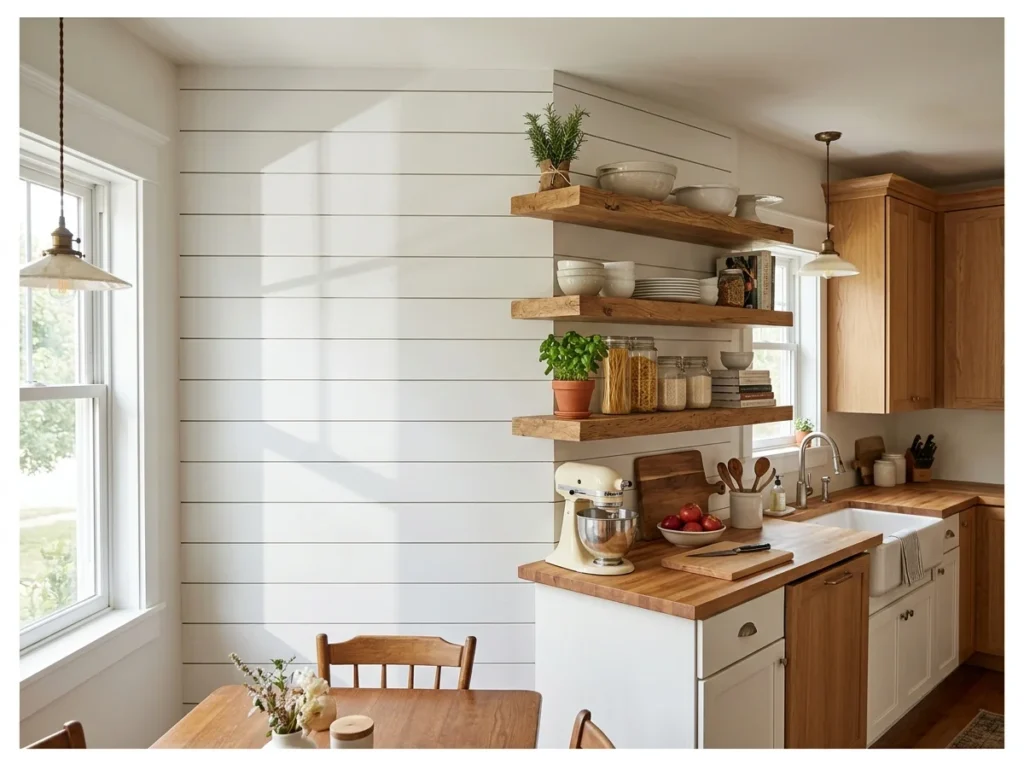
Shiplap on the kitchen accent wall, typically behind the open shelving or on the wall opposite the main cabinetry run, adds the most distinctively farmhouse wall treatment to any kitchen. The horizontal overlapping boards create clean shadow lines that add architectural depth to what would otherwise be a flat painted surface.
Painted white, shiplap creates a clean, fresh backdrop for open shelves, pendant lights, and kitchen accessories. Left in natural timber, it creates a warmer, more rustic farmhouse quality. Either treatment transforms the kitchen wall from a plain background into a genuine design feature.
Open Shelving with Styled Display
Open shelves put everyday dishes and jars on display instead of hiding them behind cabinet doors. This works well in farmhouse kitchens where mismatched vintage pieces actually add to the look. Grouping items by color or size usually makes the shelf feel curated instead of cluttered.
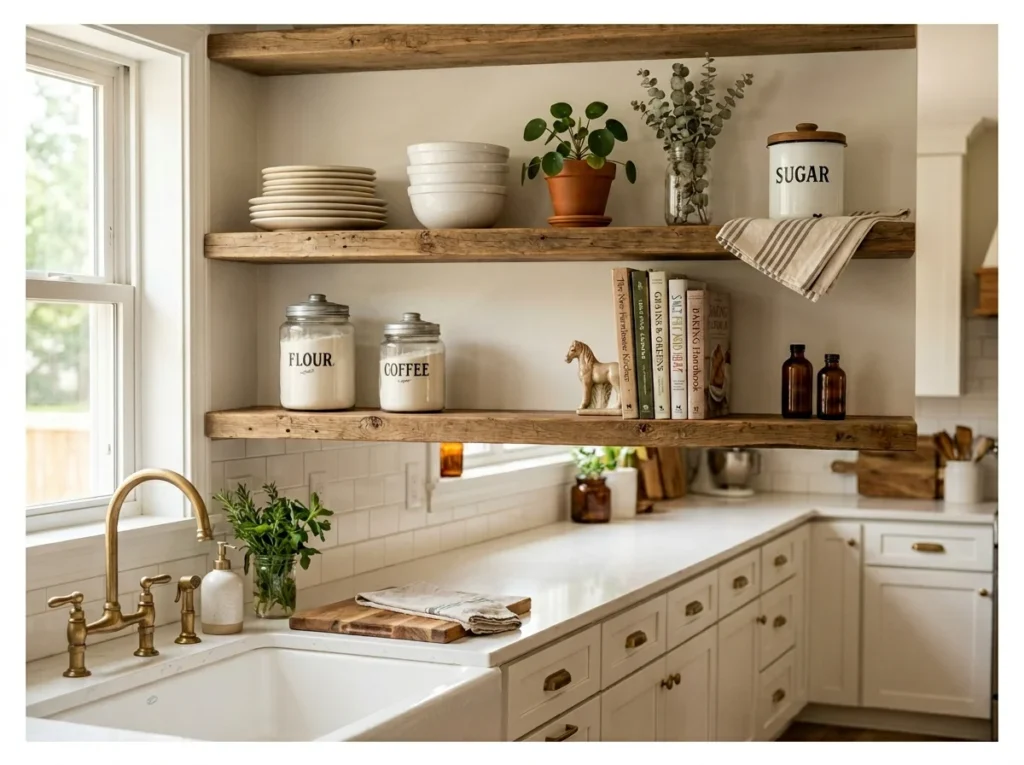
Open shelving in a modern farmhouse kitchen creates both a practical storage surface and an opportunity for the kitchen to express genuine personality through a curated display of ceramics, cookbooks, and meaningful objects. The open shelves turn storage into a decorative statement.
Style farmhouse open shelves with a consistent palette: white ceramics, natural timber objects, small plants in terracotta pots, and woven baskets all belong to the farmhouse material vocabulary. Edit the display regularly and only keep genuinely used and genuinely beautiful items on the open shelves.
The display that makes the farmhouse kitchen personal.
Edison Pendant Lights
Edison bulbs have a visible filament that gives off a warm, slightly amber glow. Hanging them over an island adds a vintage industrial touch that fits naturally into farmhouse design. This lighting choice also works as a decorative feature even when the bulb is switched off.
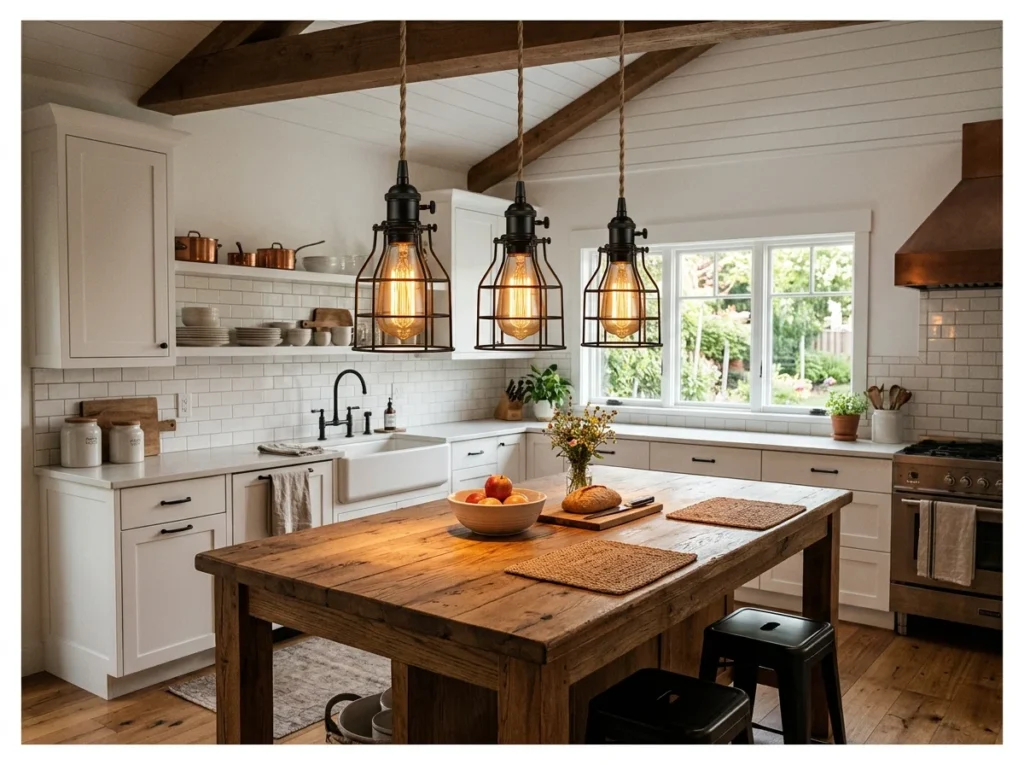
Edison filament bulb pendants above the kitchen island create the warm, amber-toned lighting that is characteristic of the best modern farmhouse kitchens. The visible warm filament of the Edison bulb creates the most characterful and photogenic kitchen island lighting available.
Choose pendant sizes proportional to the island: pendants of 20 to 30 centimeters diameter suit a standard island. Hang them at approximately 75 to 85 centimeters above the countertop surface. Two or three matching pendants spaced evenly along the island create the most balanced and farmhouse-appropriate lighting composition.
The lighting that makes every farmhouse kitchen glow.
Butcher Block Countertop
Butcher block brings visible wood grain to the counter instead of the cool, uniform look of stone. It handles direct food prep reasonably well, though it needs regular oiling to stay protected. This material has long been associated with farmhouse kitchens because of its simple, practical appeal.
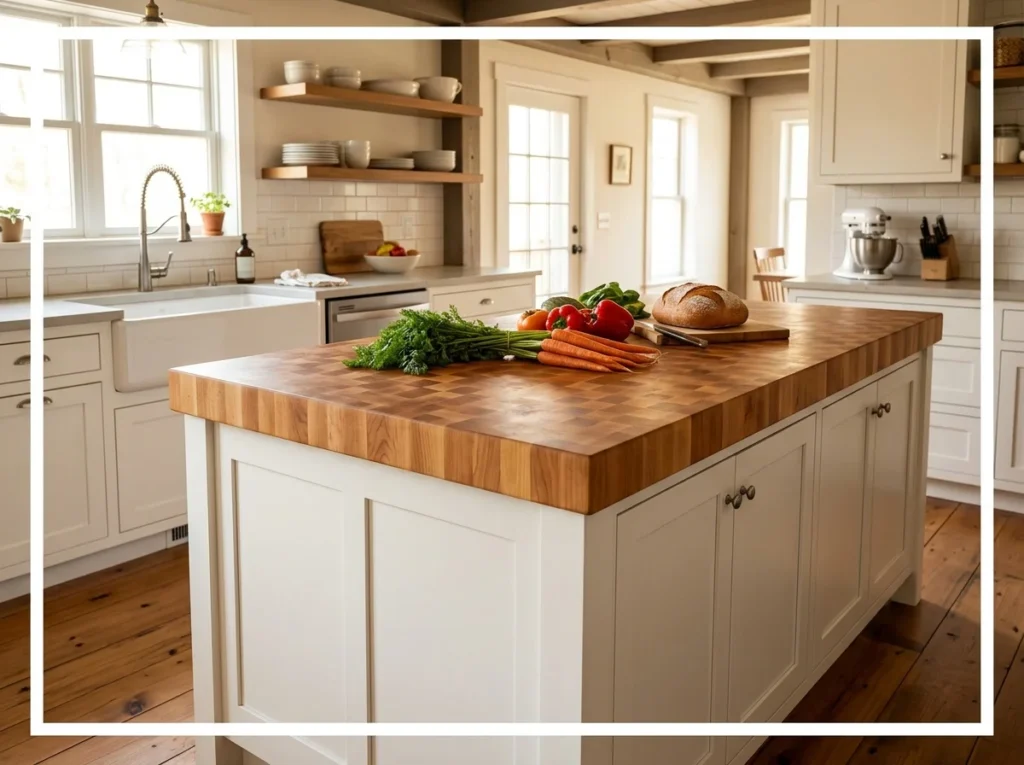
A butcher block countertop brings the warmest and most genuinely functional surface into the modern farmhouse kitchen. The warm honey tone of maple or walnut butcher block creates immediate organic warmth while the end-grain construction provides a self-healing knife surface that improves with use.
Butcher block on the island paired with honed stone or quartz on the perimeter countertops creates a beautiful mixed-material farmhouse kitchen where each surface suits its primary function. Seal with food-safe mineral oil and the butcher block develops a beautiful patina that grows more character over years of daily use.
Beadboard Cabinet Doors
Beadboard adds a series of narrow vertical grooves to a cabinet door, a detail rarely seen on flat panel styles. This texture gives farmhouse cabinets more depth than a plain shaker door alone. It is often used on lower cabinets or an island to keep the upper cabinets from feeling too busy.
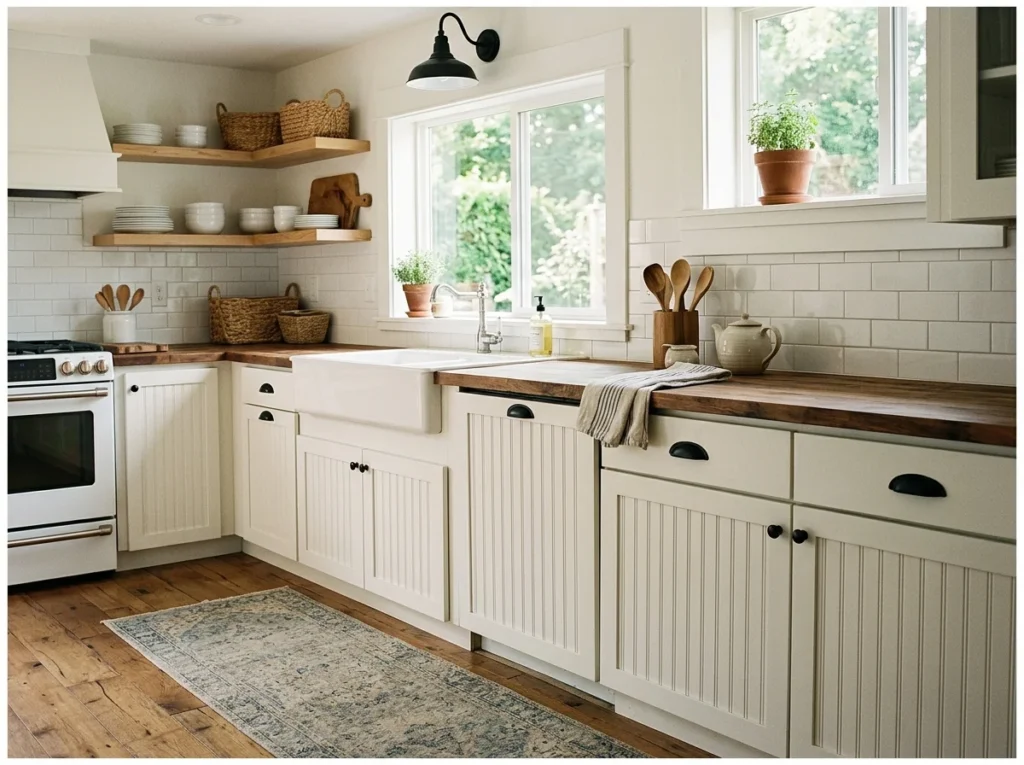
Beadboard cabinet door panels replace the recessed center panel of standard shaker doors with a beadboard pattern of narrow vertical grooves. The beadboard detail adds a layer of traditional texture and craftsmanship character that elevates the cabinet design beyond a simple shaker profile.
Use beadboard doors on lower cabinets and standard shaker doors on upper cabinets for a traditional farmhouse kitchen variation that suits full beadboard on either. Pair with beadboard paneling on the kitchen wall beneath the countertop for a cohesive farmhouse wainscoting effect.
Sliding Barn Door to Pantry
A barn door slides along a track instead of swinging open like a regular door. This saves floor space in front of the pantry that a swinging door would otherwise require. It is one of the more recognizable farmhouse details, borrowed directly from actual barn hardware.
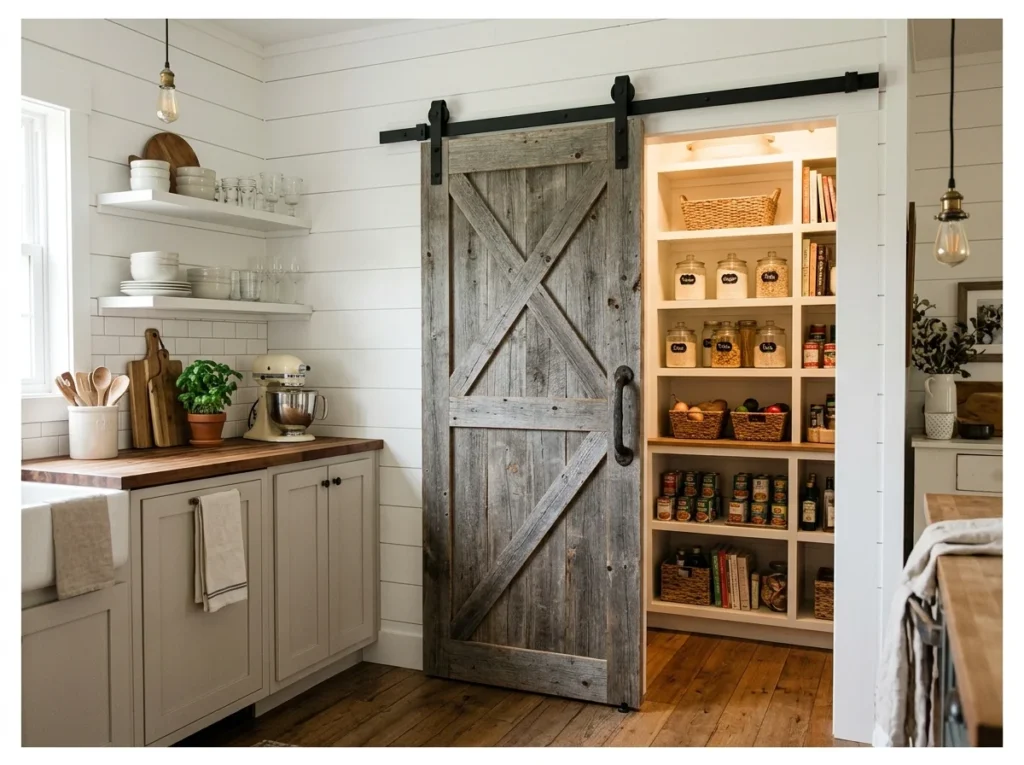
A sliding barn door accessing the kitchen pantry is one of the most visually characterful and practically useful modern farmhouse kitchen details available. The door slides parallel to the wall rather than swinging into the kitchen, saving valuable floor space while adding enormous farmhouse character.
Reclaimed or weathered grey timber creates the most authentic farmhouse barn door. A black iron sliding track and black iron hardware complete the authentic barn door detail. The barn door also frames the pantry entry as a deliberate design feature rather than simply a utilitarian doorway.
Subway Tile Backsplash
Subway tile has a simple rectangular shape that has been used in kitchens for over a century. Its clean lines pair easily with almost any farmhouse cabinet color or countertop material. A classic white subway tile keeps the backsplash from competing with other details in the room.
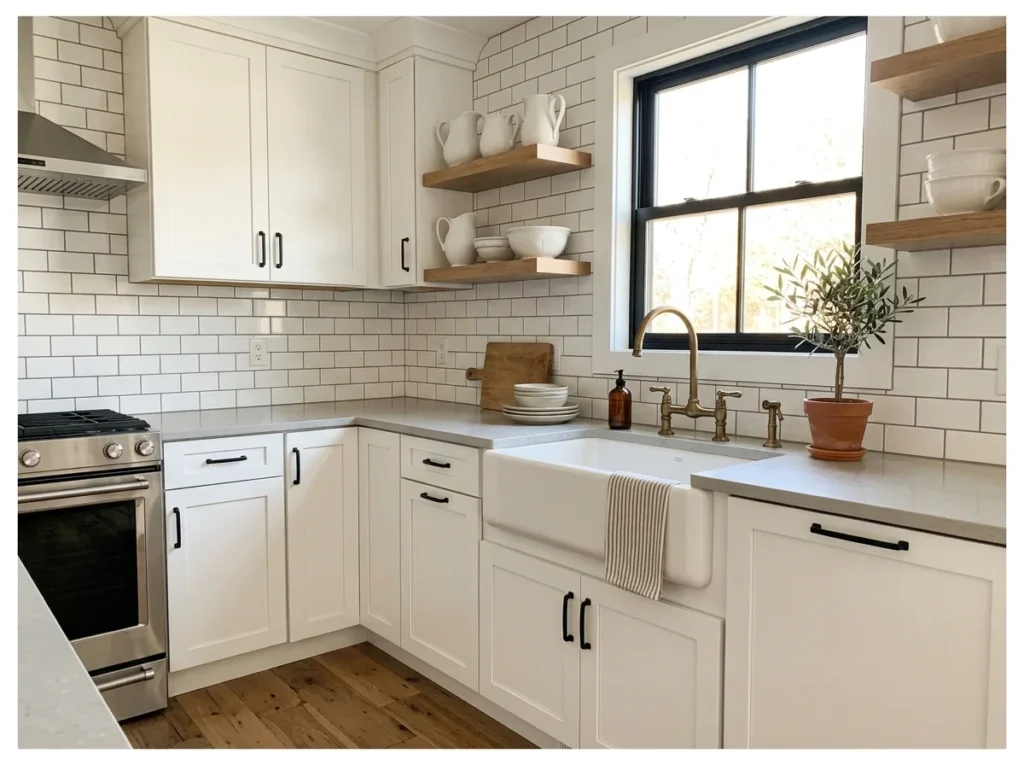
The classic white subway tile backsplash in a running bond pattern is the most consistently used and most universally appropriate farmhouse kitchen backsplash treatment. The clean geometry and honest ceramic quality of subway tile suits the farmhouse aesthetic’s emphasis on simple, functional materials.
Grout color determines the visual outcome: white grout creates a seamless, airy look. Light grey grout creates subtle definition. Dark grey or charcoal grout makes the individual tile grid pattern the visual statement. All three work in a farmhouse kitchen context.
Black and White Color Scheme
Sticking to just black and white removes any guesswork around matching additional colors. White cabinets paired with black fixtures or a black island create strong, clear contrast throughout the room. This scheme also tends to photograph well, which is part of why it shows up so often in farmhouse kitchens.
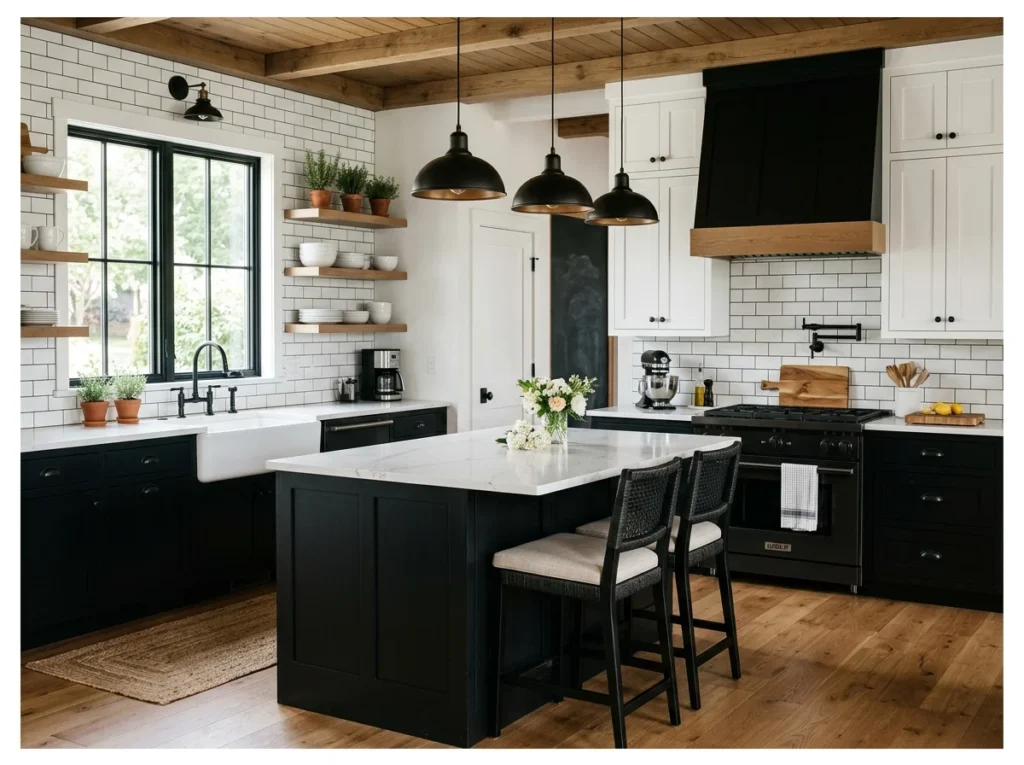
A black and white modern farmhouse kitchen applies the most classic graphic color combination to the farmhouse aesthetic, creating a kitchen that feels simultaneously traditional and completely contemporary. White upper cabinets and black lower cabinets create the most popular two-tone application.
The black and white farmhouse kitchen photographs spectacularly and ages beautifully because neither color is ever out of style. Black hardware, white countertops, and a classic subway tile backsplash complete the palette. Add warm timber accents in the island or flooring to prevent the combination from feeling too stark.
Sage Green Cabinetry
Sage green sits in that muted, earthy range that reads as a neutral rather than a bold color choice. It pairs naturally with brass hardware and warm wood accents common in farmhouse kitchens. This shade has become one of the more popular alternatives to plain white cabinetry in recent years.
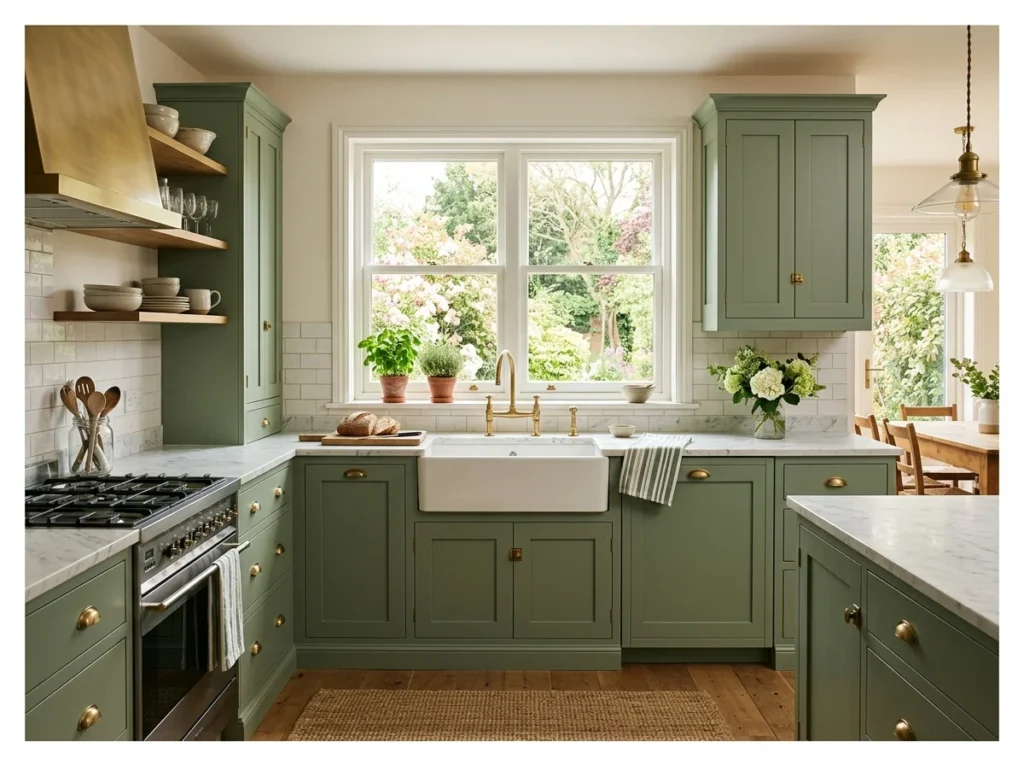
Sage green cabinetry creates a farmhouse kitchen that feels connected to nature, genuinely calm, and completely distinctive from the all-white kitchens that dominate most farmhouse design inspiration. The grey-green mineral quality of sage pairs naturally with every farmhouse material.
Sage green cabinet pairs beautifully with warm brass hardware, white or cream countertops, and natural timber flooring. The color reads differently in different light: warmer and greener in afternoon light, cooler and more grey-green in morning shade. Both qualities suit the farmhouse kitchen.
Fresh, natural, and enduringly beautiful.
Vintage Style Cream
A vintage-style cream kitchen design creates a warm, timeless atmosphere with soft neutral tones and classic details. The elegant cream finish adds brightness, charm, and a cozy feel while blending beautifully with farmhouse, traditional, and cottage-inspired interiors.
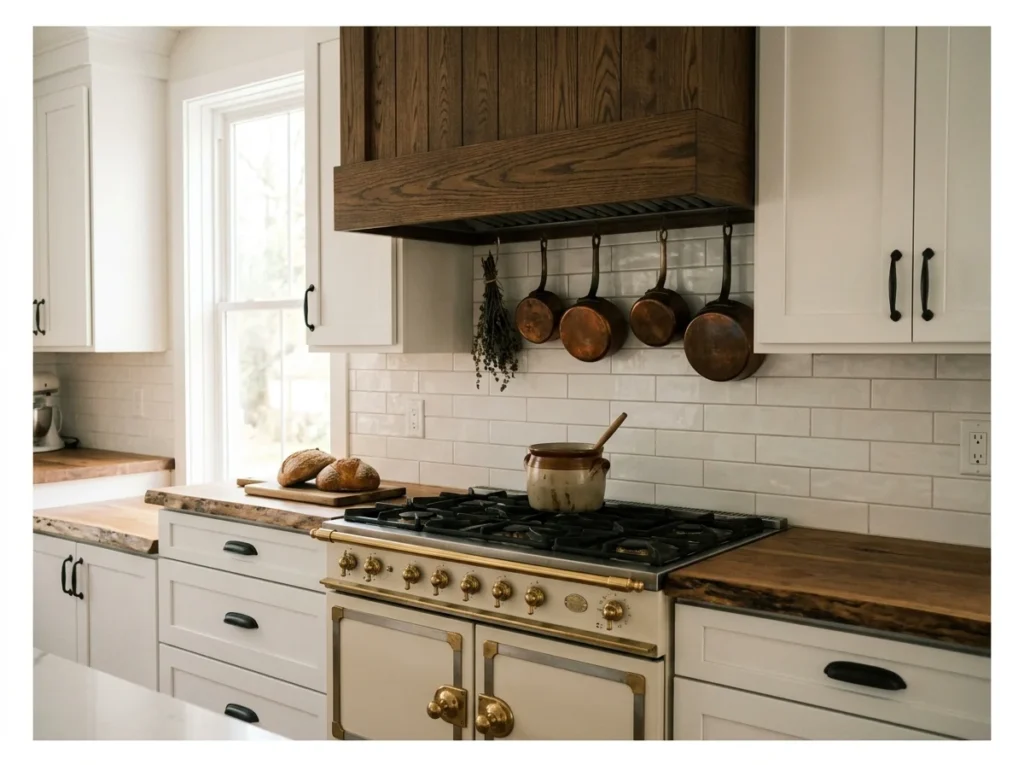
A vintage-style range in cream, powder blue, or deep black creates the most immediate and impactful farmhouse kitchen statement piece. These ranges combine the cooking performance of modern appliances with the visual character of heritage-era kitchen design.
Brands producing vintage-style ranges include AGA, Smeg, Lacanche, and Big Chill. Pair with a custom timber or painted range hood that extends to the ceiling and the range becomes the kitchen’s undisputed focal point. The investment is significant but the visual and functional return is extraordinary.
Exposed Timber Ceiling Beams
Timber beams left visible across the ceiling add height and a more architectural presence to the bathroom. This detail works especially well in bathrooms with vaulted or slightly higher ceilings. The wood grain also ties in naturally with other timber elements used elsewhere in the room.
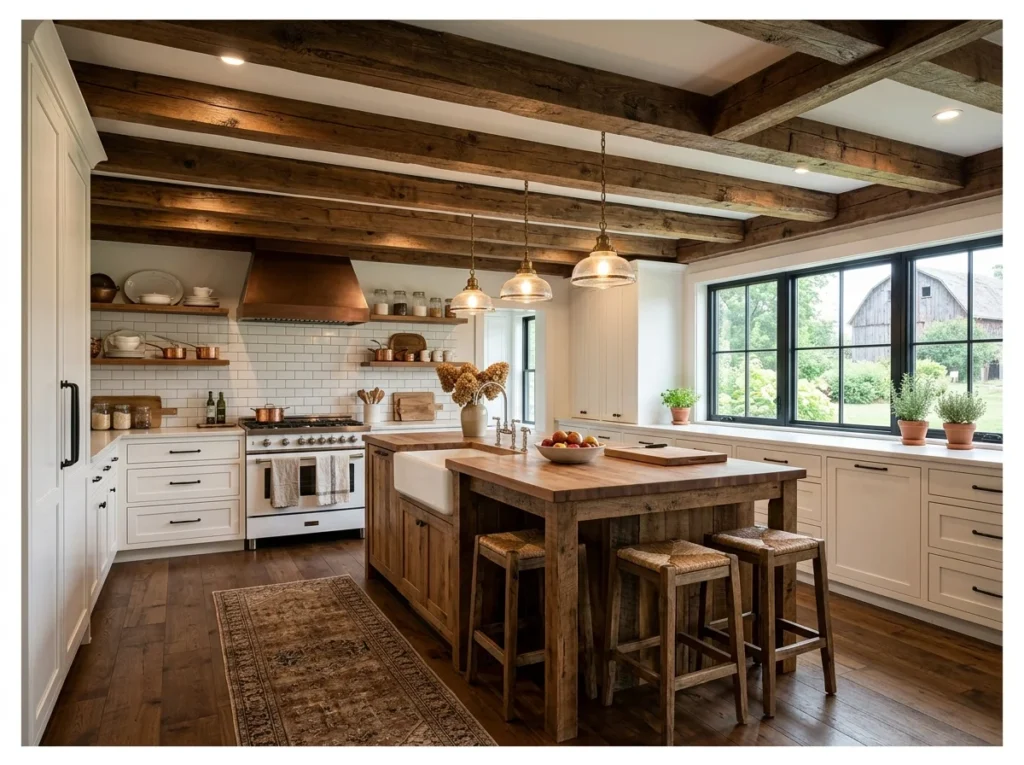
Exposed timber ceiling beams in a farmhouse kitchen add an architectural character that references the heritage of genuine barn and farmhouse construction. Real or decorative box beams create the same visual effect at very different costs depending on which approach is taken.
Dark-stained beams against a white ceiling create the most dramatic contrast. Natural unstained beams create a lighter, cleaner farmhouse character. Position beams to run perpendicular to the main kitchen length for the most expansive visual effect. Recessed lighting between the beams provides practical illumination without compromising the beam aesthetic.
Woven Rattan Barstools
Rattan barstools bring a woven texture that contrasts nicely against a smooth stone or wood island top. Their lighter visual weight also keeps a row of stools from feeling too bulky along the island. This material has become a common pairing in farmhouse kitchens that lean slightly coastal.
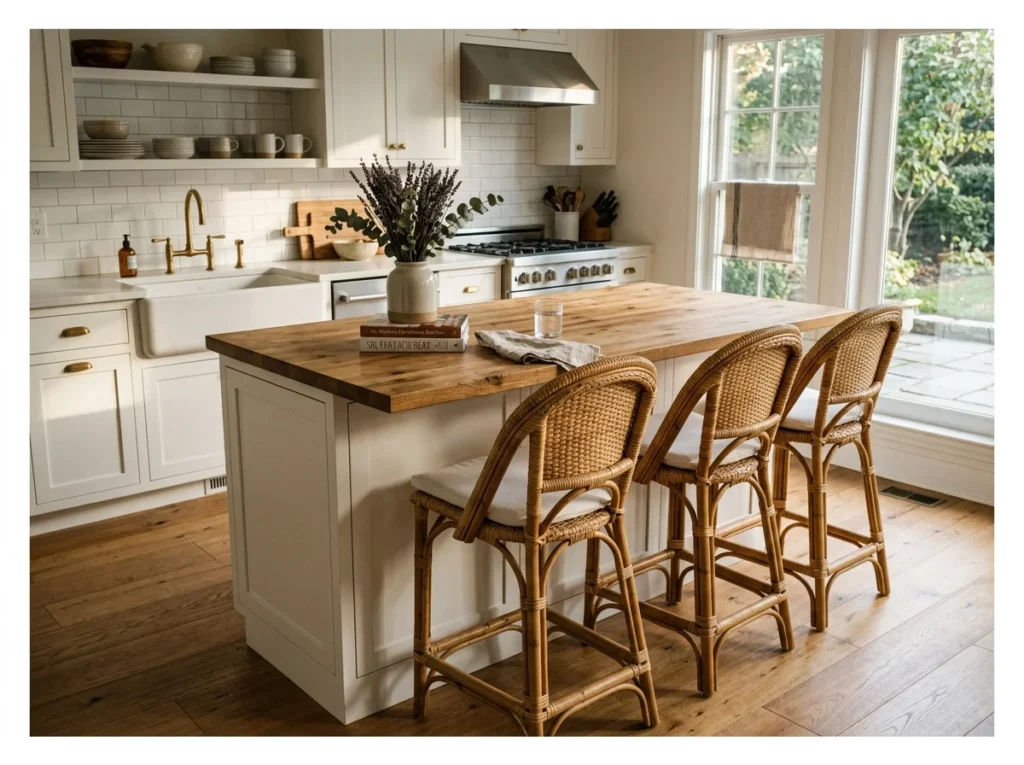
Woven rattan bar stools bring natural organic texture and warmth to the farmhouse kitchen island seating that metal or upholstered stools cannot match. The complex surface of the woven rattan creates visual interest in the kitchen island zone that suits the farmhouse material palette naturally.
Rattan with or without a back rest both suit farmhouse kitchens. Rattan with a black metal or timber leg base suits a more contemporary farmhouse aesthetic. Natural rattan with a simple leg suits a more traditional farmhouse kitchen. Both suit counter height or bar height island configurations.
Corbels on the Kitchen Island
Corbels are decorative brackets placed under a countertop overhang, often where a breakfast bar extends past the island base. Beyond their decorative look, they add a bit of physical support to that overhanging section. This detail is common in farmhouse kitchens that want a slightly more traditional, finished look.
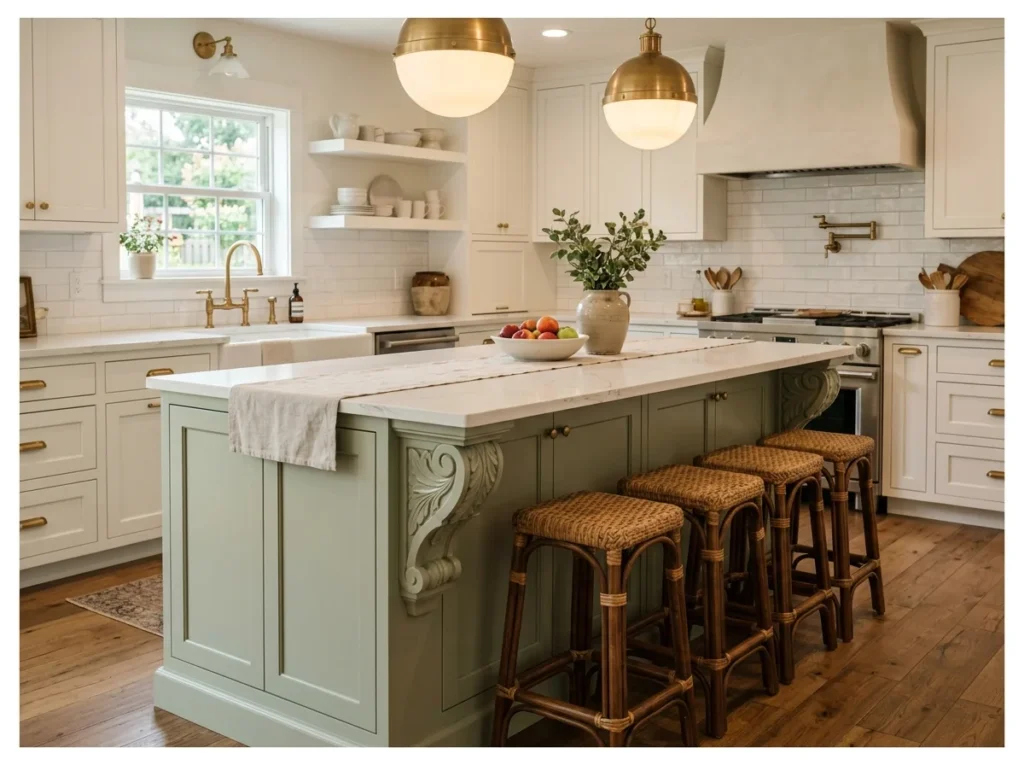
Decorative timber corbels supporting the countertop overhang on the seating side of the kitchen island add a traditional craftsmanship detail that creates a genuinely furniture-like quality. Corbels reference the carved bracket tradition of classic kitchen cabinetry.
Painted in the same color as the island base for a seamless look, corbels create depth through form rather than color contrast. They suit farmhouse, transitional, and traditional kitchen island designs and elevate the visual quality of the island seating zone significantly.
Galvanized Metal Accents
Galvanized metal has a slightly dull, silvery finish that comes from its zinc coating. It shows up in farmhouse kitchens through light fixtures, buckets, or decorative bins. This material adds an industrial, slightly weathered touch without introducing another bold color.
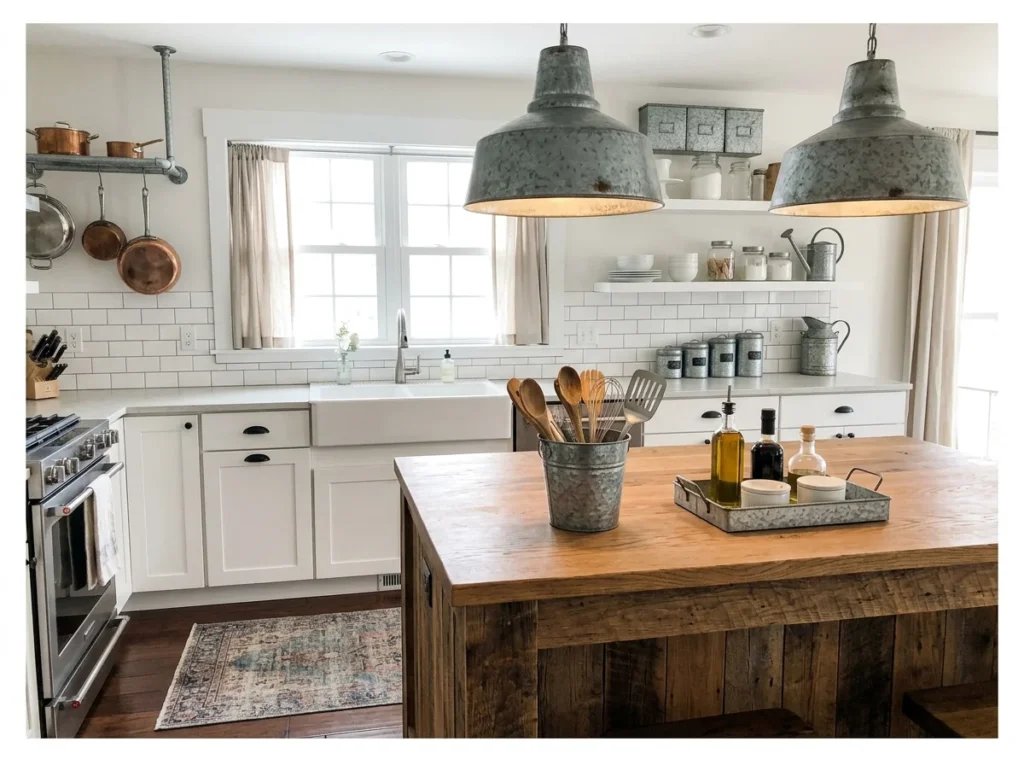
Galvanized metal accents in the form of pendant lights, utensil holders, trays, and accessory containers add the industrial-meets-farmhouse material quality that is particularly characteristic of the modern farmhouse aesthetic. The zinc-grey tone of galvanized metal contrasts beautifully with white cabinetry and warm timber.
Galvanized pendant lights above the island create a particularly authentic farmhouse lighting detail. Galvanized buckets repurposed as utensil holders, planters for kitchen herbs, or organization containers on open shelves complete the farmhouse accessory palette.
Budget-friendly option with genuine farmhouse character.
Farmhouse Kitchen Shelf Styling
Styling a farmhouse shelf usually means mixing everyday dishware with a few decorative pieces like jars or small plants. Leaving some open space between items keeps the shelf from looking overcrowded. A slightly imperfect, collected arrangement tends to look more authentic than one that is too symmetrical.
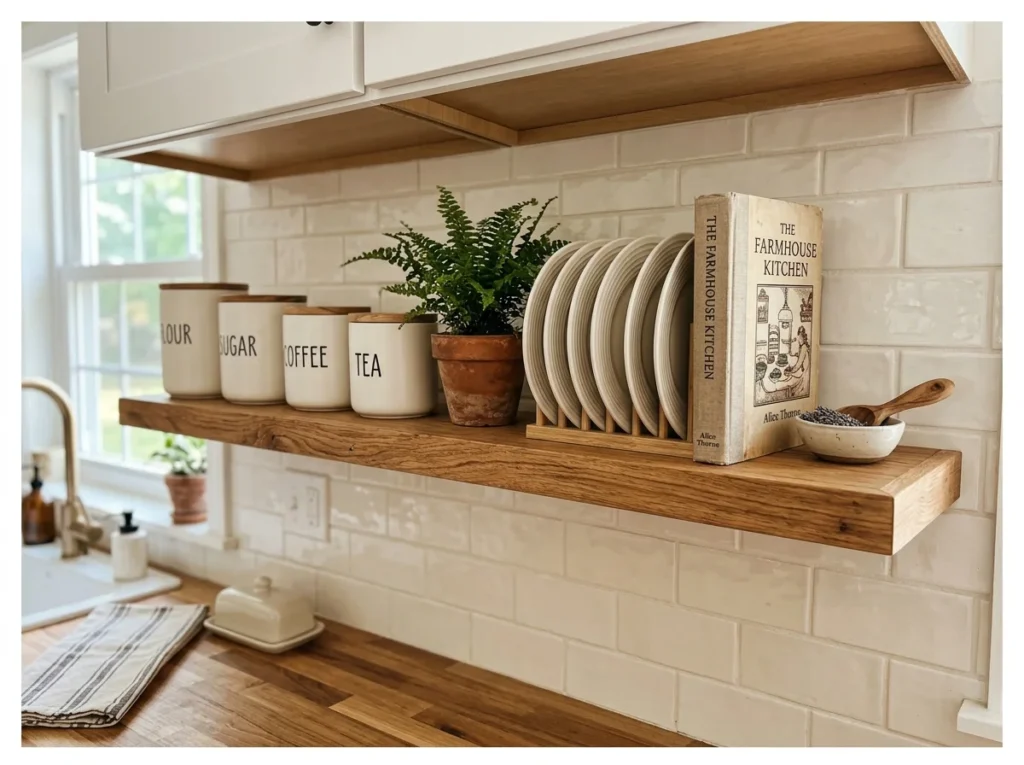
Styling open kitchen shelves in the farmhouse aesthetic uses a curated selection of white ceramics, labeled canisters, vintage crockery, small plants, and meaningful kitchen objects to create a display that communicates the warmth and personal character of a genuinely lived-in farmhouse kitchen.
The farmhouse shelf styling principle is abundance within order: enough objects to feel collected and warm, but consistently organized enough to feel intentional rather than cluttered. Consistent white and cream ceramics with natural timber and terracotta accents create the most cohesive farmhouse shelf palette.
Classic Checkerboard Floor
A checkerboard floor alternates two colors, usually black and white, in a repeating grid pattern. This flooring choice has strong ties to older diners and farmhouse kitchens from past decades. It adds a graphic element to the floor that plain tile or wood planks would not provide.
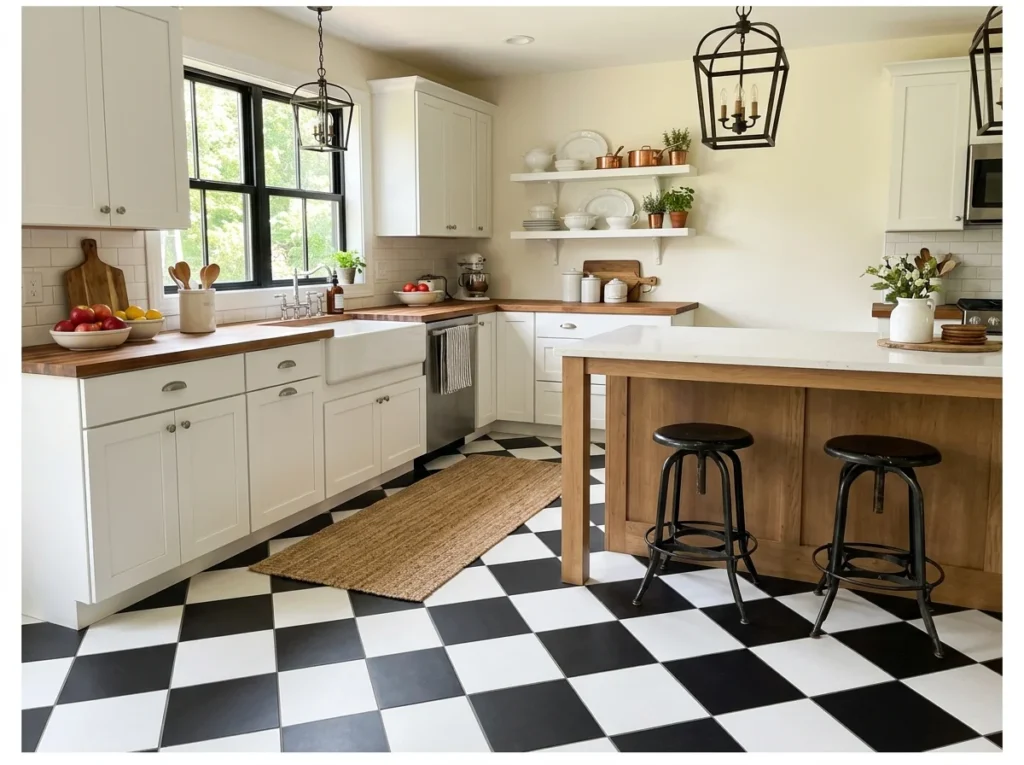
A black and white checkerboard tile floor is one of the most characterful and timeless farmhouse kitchen flooring choices available. The bold graphic pattern references traditional kitchen design traditions that have appeared in beautiful kitchens for well over a century.
Large format checkerboard tiles of 30 by 30 centimeters or larger create a more modern farmhouse version of the classic pattern. Smaller mosaic checkerboards create a more traditional quality. Either treatment creates a kitchen floor with genuine personality that complements white cabinetry beautifully.
Deep Pantry Cabinet
A deep pantry cabinet holds significantly more than a standard kitchen cabinet of the same width. Adjustable shelving inside makes it easier to store everything from bulk pantry goods to small appliances. This feature has become almost expected in larger farmhouse kitchens where storage space matters as much as style.
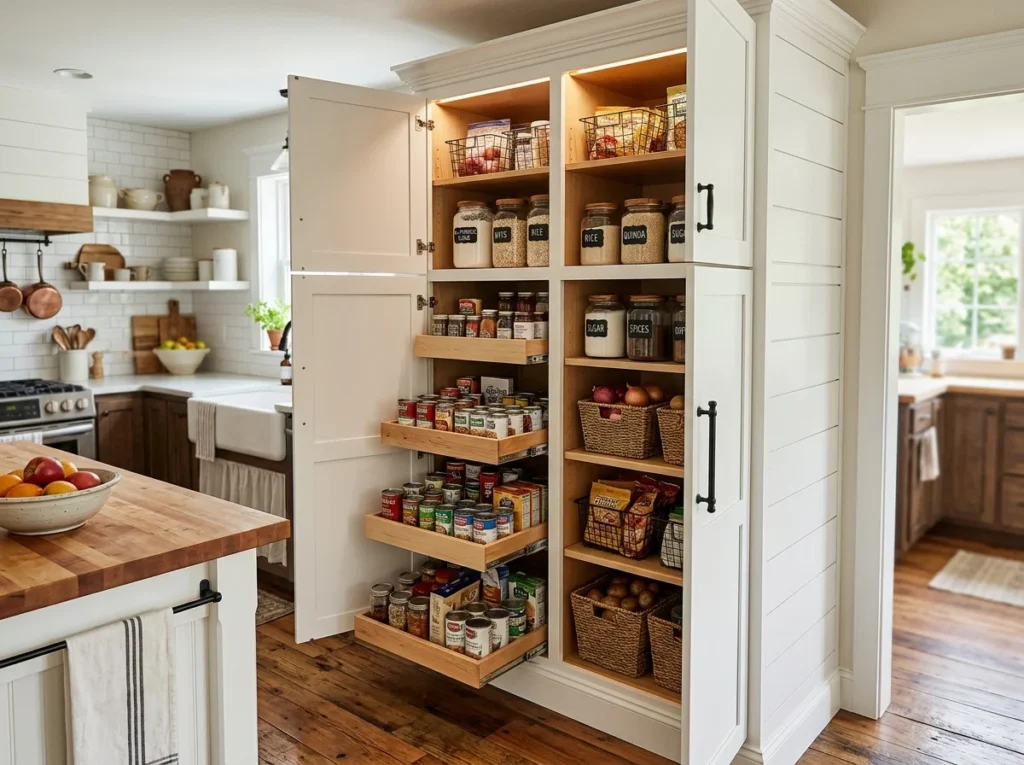
A deep floor-to-ceiling pantry cabinet is the most characteristically farmhouse kitchen storage solution available. The genuine farmhouse kitchen was always a working kitchen with generous food storage, and the modern farmhouse pantry cabinet references this heritage with contemporary organization.
Fitted with pull-out shelves, labeled glass jars, and woven baskets, the farmhouse pantry cabinet becomes the most beautifully organized feature in the kitchen. A pair of tall pantry cabinets flanking the refrigerator creates a symmetrical wall of storage that is classically farmhouse in proportion.
For more ways to keep everything organized behind closed doors, it’s worth browsing these smart pantry layout ideas too.
Brick Backsplash
Exposed or faux brick behind the stove adds a rough, textured surface that plain tile cannot replicate. It is often left in its natural red tone or painted white to match the surrounding cabinetry. This backsplash choice ties directly into the older, rustic feel that defines much of farmhouse style.
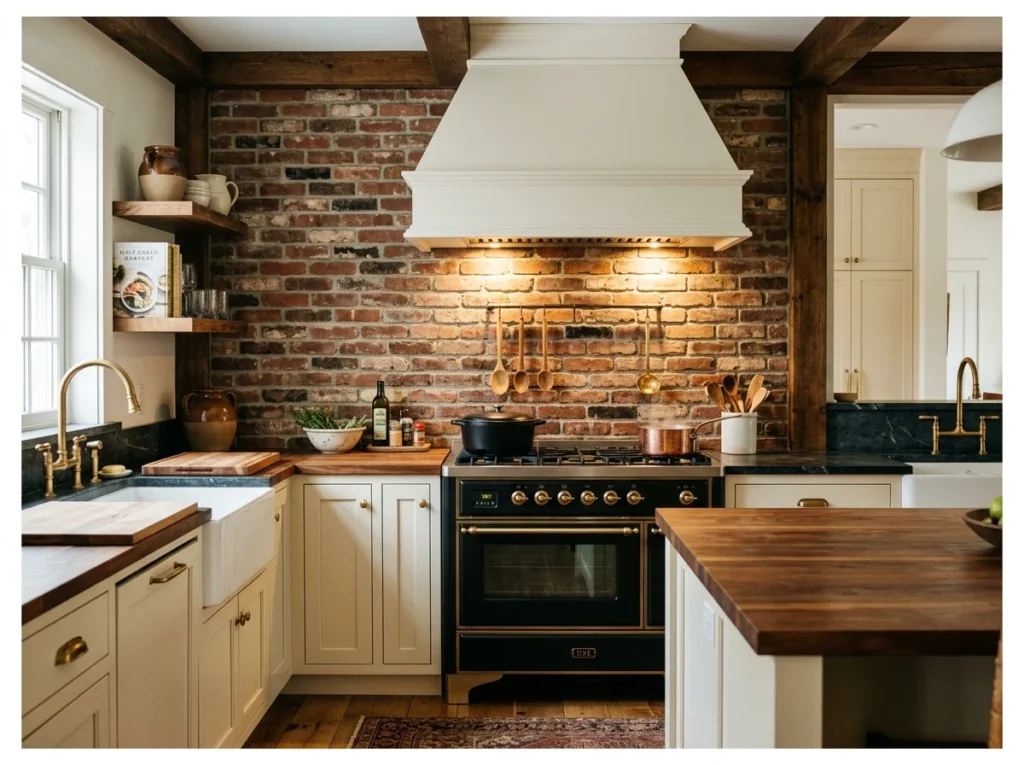
A reclaimed brick backsplash behind the range creates a farmhouse kitchen feature with genuine historical depth and material authenticity. The varied tones of aged brick, from deep red to warm brown to ochre, create a visually rich backdrop that no tile can replicate.
Reclaimed brick slips provide the appearance of genuine brick at a fraction of the structural weight. The brick suits the cooking zone behind the range particularly well because it references the traditional farmhouse cooking fireplace that was historically the heart of the kitchen.
Warm, authentic, and completely unique.
Two-Tone Farmhouse Kitchen
A two-tone farmhouse kitchen combines contrasting colors and finishes to create depth, character, and a personalized look. The balanced mix of tones adds visual interest while maintaining the cozy charm, practicality, and timeless appeal of classic farmhouse design.
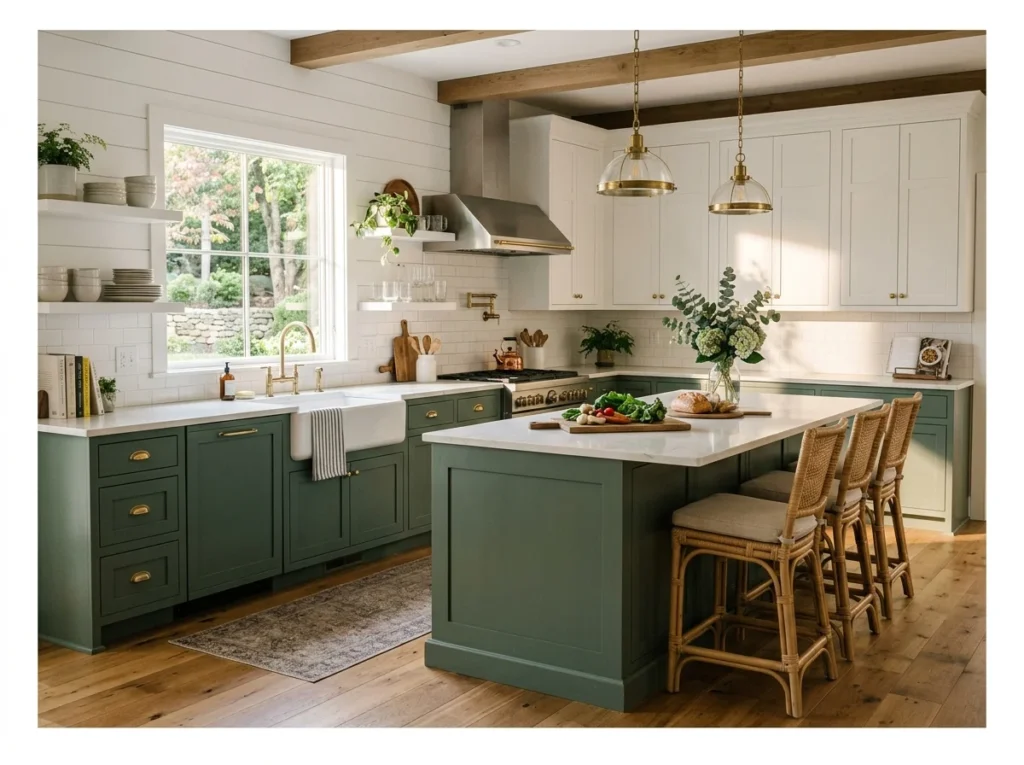
A two-tone farmhouse kitchen uses different colors for the upper and lower cabinetry or for the island versus perimeter cabinets, creating visual depth and furniture-like quality that an all-same-color kitchen cannot achieve. The two-tone approach is now the defining farmhouse kitchen aesthetic.
White upper and sage green lower cabinets create the most popular current farmhouse two-tone combination. Cream upper and navy lower creates a more traditional quality. White perimeter and black island creates the most graphic contrast. All suit the modern farmhouse kitchen when combined with appropriate hardware and countertop finishes.
Farmhouse Kitchen with Warm Wood Floors
Warm wood floors bring a natural tone underfoot that balances out white cabinetry above. Wider planks in particular tend to suit the slightly rustic feel of farmhouse design. Over time these floors develop scuffs and wear that most farmhouse homeowners see as adding character rather than damage.
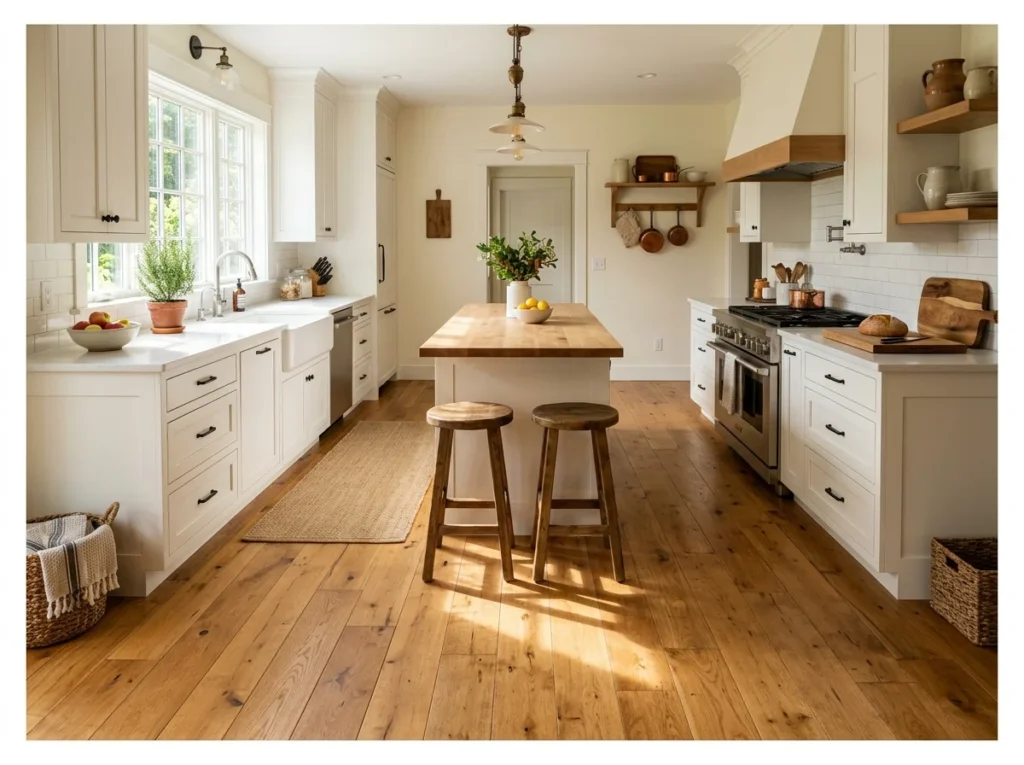
Wide plank hardwood floors in warm oak or pine create the most characteristically farmhouse kitchen floor surface. The natural grain, varied plank widths, and developing patina of real hardwood underfoot creates a warmth and material authenticity that tile and laminate alternatives consistently fail to replicate.
Wide planks of 120 millimeters or broader create the most farmhouse-appropriate floor character. Natural oil or wax finishes preserve the grain and develop a patina over time. Hardwood kitchen floors require prompt attention to water spills but reward that care with a lifetime of beautiful service.
Shaker Cabinet Glass Inserts
Swapping a few shaker cabinet doors for glass panels lets dishes and glassware show through instead of staying hidden. This detail breaks up a long run of solid wood doors with something a bit lighter. Glass front cabinets are often reserved for upper cabinets near a display area rather than used throughout the whole kitchen.
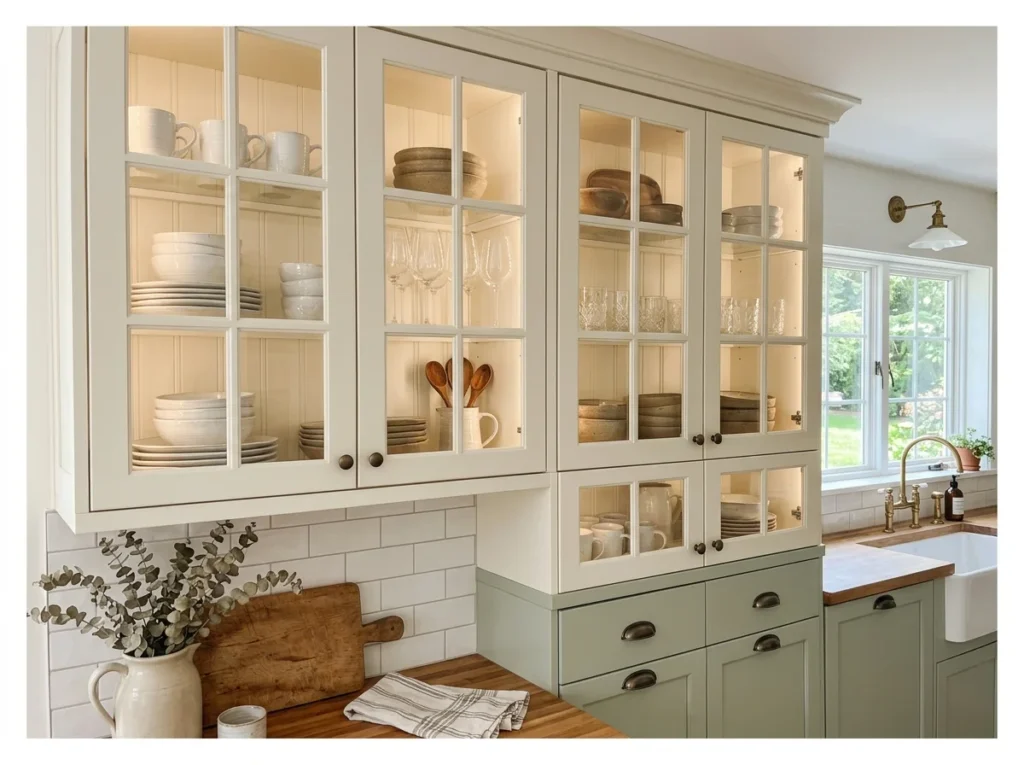
Glass inserts in selected upper shaker cabinet doors allow the kitchen’s most beautiful ceramics and glassware to contribute to the room’s visual character while remaining protected behind a clean surface. The glass adds visual lightness and depth to what might otherwise be a solid cabinet wall.
Apply glass inserts to two to four upper cabinet doors, not all of them, for the most resolved visual result. Wavy or seeded glass creates a vintage quality that suits traditional farmhouse kitchens. Clear glass suits more contemporary farmhouse interpretations.
Farmhouse Kitchen Breakfast Nook
A breakfast nook tucks a small table and bench seating into a corner near a window. This creates a casual spot for everyday meals separate from a more formal dining room. Farmhouse nooks often use a mix of bench seating and simple wood chairs rather than a fully matched dining set.
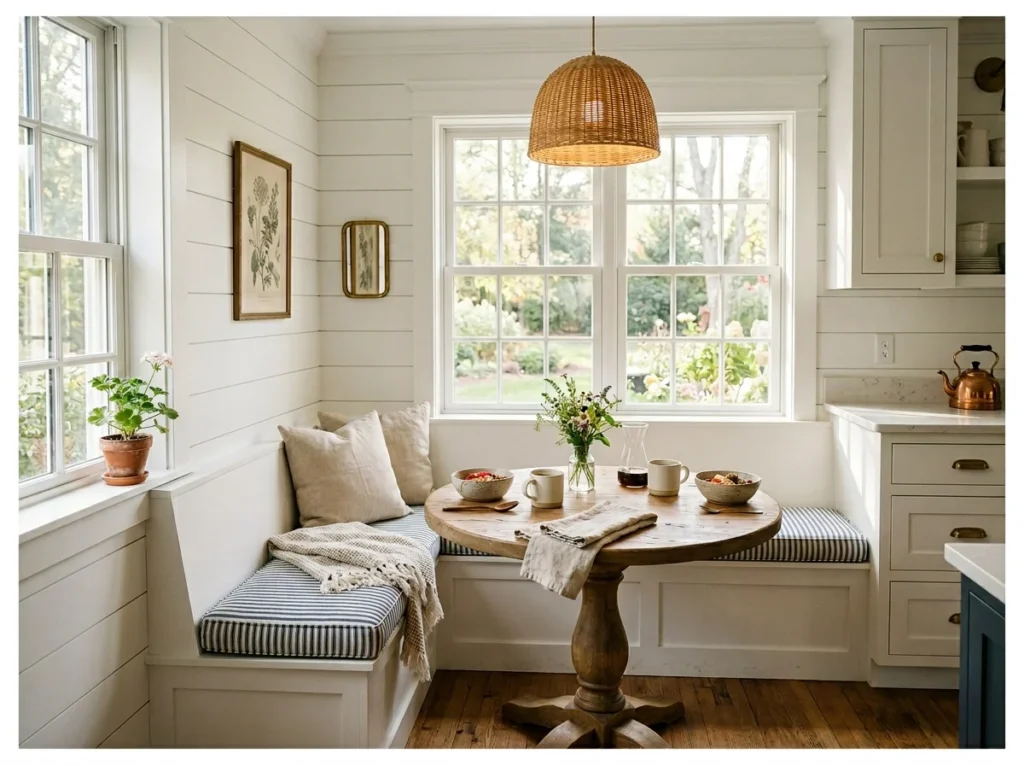
A built-in farmhouse breakfast nook creates a dedicated family dining area within the kitchen itself that has genuine furniture-quality permanence and a cozy, intimate atmosphere. The built-in bench seats, shiplap surroundings, and striped cushions create an unmistakably farmhouse dining vignette.
Position the breakfast nook in a corner that receives morning natural light for the most welcoming daily use. Bench storage beneath the seat provides hidden kitchen storage. A simple pedestal table suits the nook f
Stone Countertop in Warm Tones
A warm toned stone countertop, like a beige or cream marble, softens the look compared to a cooler grey or white slab. This tone pairs naturally with wood floors and brass hardware common in farmhouse kitchens. The natural veining in stone also adds movement to the counter that a solid surface material would not have.
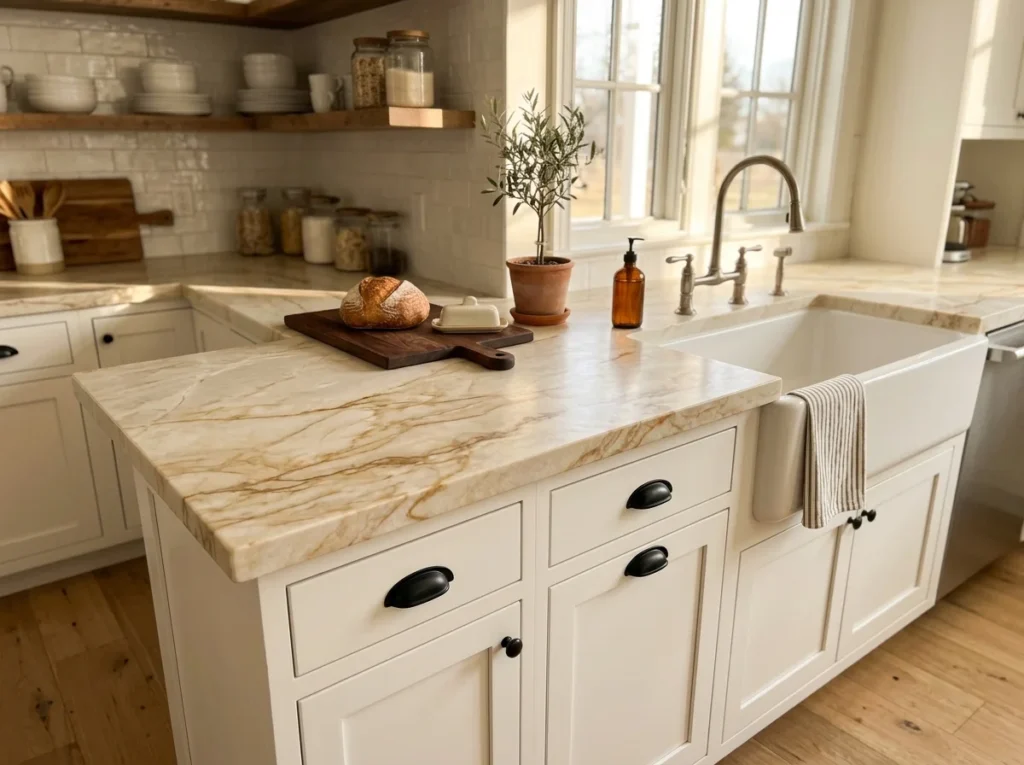
A honed natural stone countertop in warm cream, buff, or honey-veined tones creates a farmhouse kitchen surface with genuine natural material depth and character. The matte honed finish suits the unpretentious, working-kitchen quality of farmhouse design better than a high-gloss polished surface.
Warm cream marble, honed limestone, and travertine all create beautiful farmhouse kitchen countertops. The natural variation in each stone slab creates a countertop that is inherently one-of-a-kind. Seal annually and use a pH-neutral cleaner to maintain the honed surface quality.
Oversized Kitchen Clock
An oversized clock on the wall becomes a decorative statement piece as much as a functional timepiece. Its scale fills wall space that might otherwise stay empty in a larger farmhouse kitchen. A simple black frame or vintage inspired face tends to fit this style best.
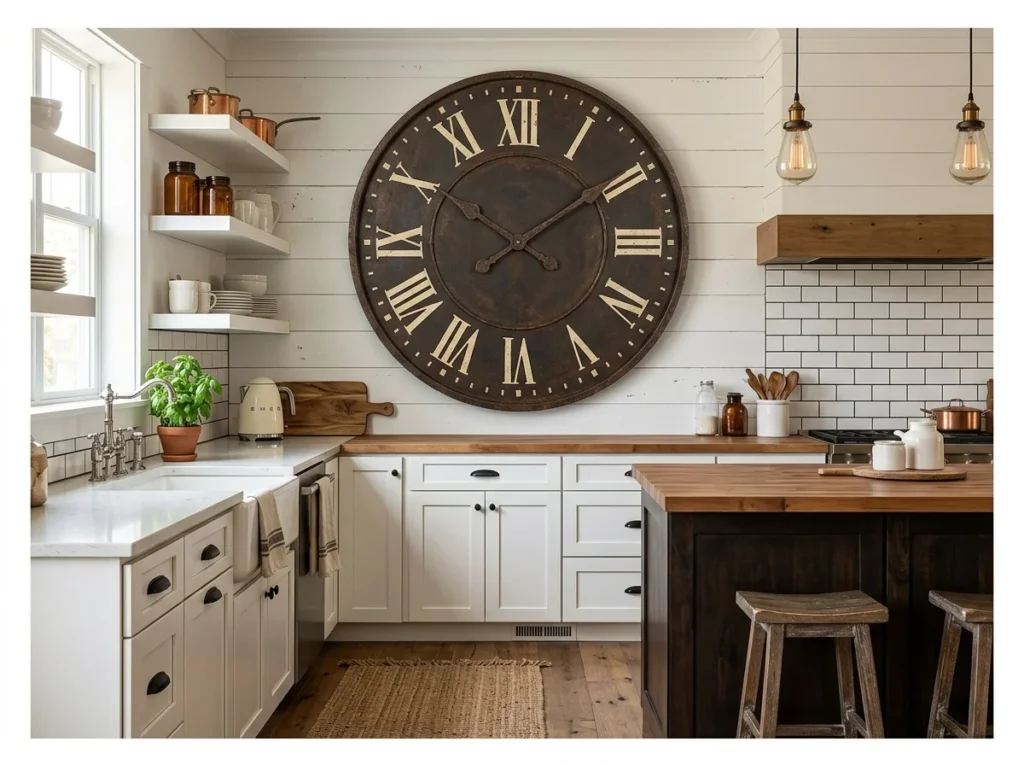
An oversized vintage-style wall clock mounted on the kitchen wall creates a farmhouse decor statement that references the functional-yet-characterful aesthetic of traditional farmhouse design. A clock of 60 to 90 centimeters diameter commands the wall with genuine visual authority.
Aged metal finishes in black iron, dark bronze, or galvanized steel suit the farmhouse kitchen aesthetic. Roman numeral faces create the most traditional quality. The oversized clock serves both a practical timekeeping purpose and a decorative one, which is precisely the farmhouse design principle of everything serving a genuine function.
Vintage Mason Jar Decor
Mason jars get repurposed in farmhouse kitchens for everything from storing dry goods to holding utensils. Their clear glass keeps contents visible while still looking tidy on an open shelf. This detail is inexpensive but instantly recognizable as part of the farmhouse aesthetic.
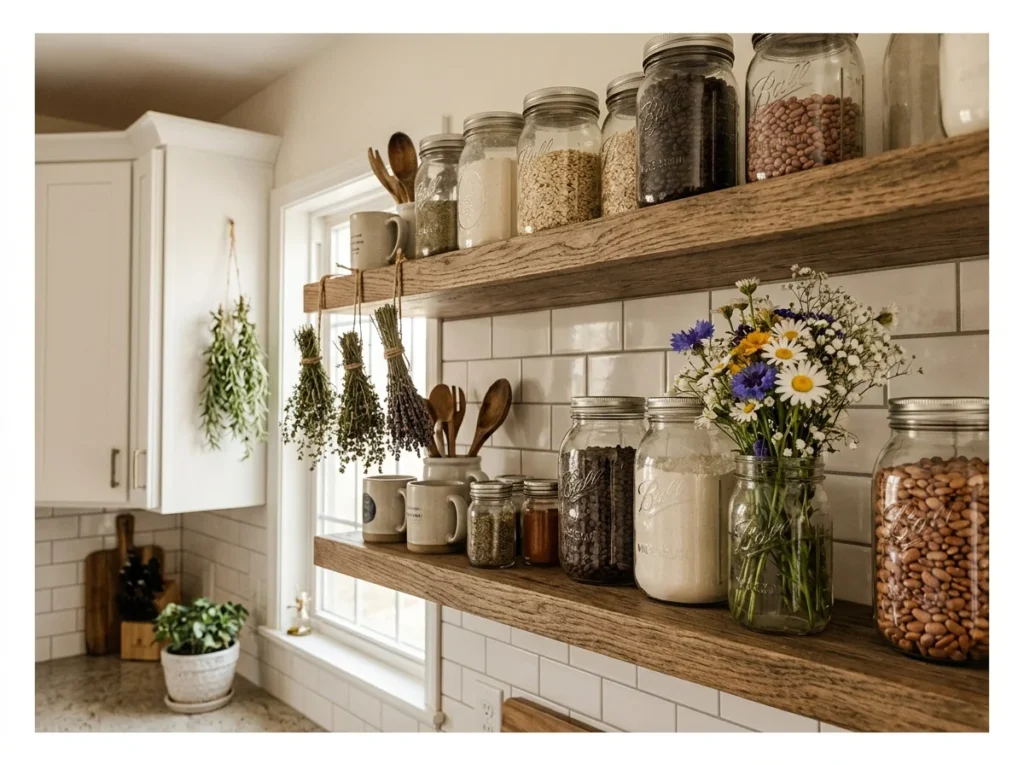
Vintage glass mason jars repurposed as kitchen storage containers, herb vases, and display vessels create one of the most authentically farmhouse kitchen accessory details available. The clear glass and simple metal lid of a mason jar references the tradition of farmhouse food preservation.
Group mason jars of different sizes on open shelves with printed labels for dry goods storage, as vases for cut herbs or small wildflowers, and as drinking glasses. The consistent clear glass and zinc or gold lid tone creates a cohesive and characterful farmhouse kitchen accessory palette.
Budget-friendly option with genuine farmhouse charm.
Farmhouse Kitchen with Chalkboard Wall
A chalkboard wall or panel gives a farmhouse kitchen a spot for handwritten notes, menus, or grocery lists. It adds a personal, ever changing element that fixed decor cannot provide. This detail also works well near a pantry door where quick notes tend to get left anyway.
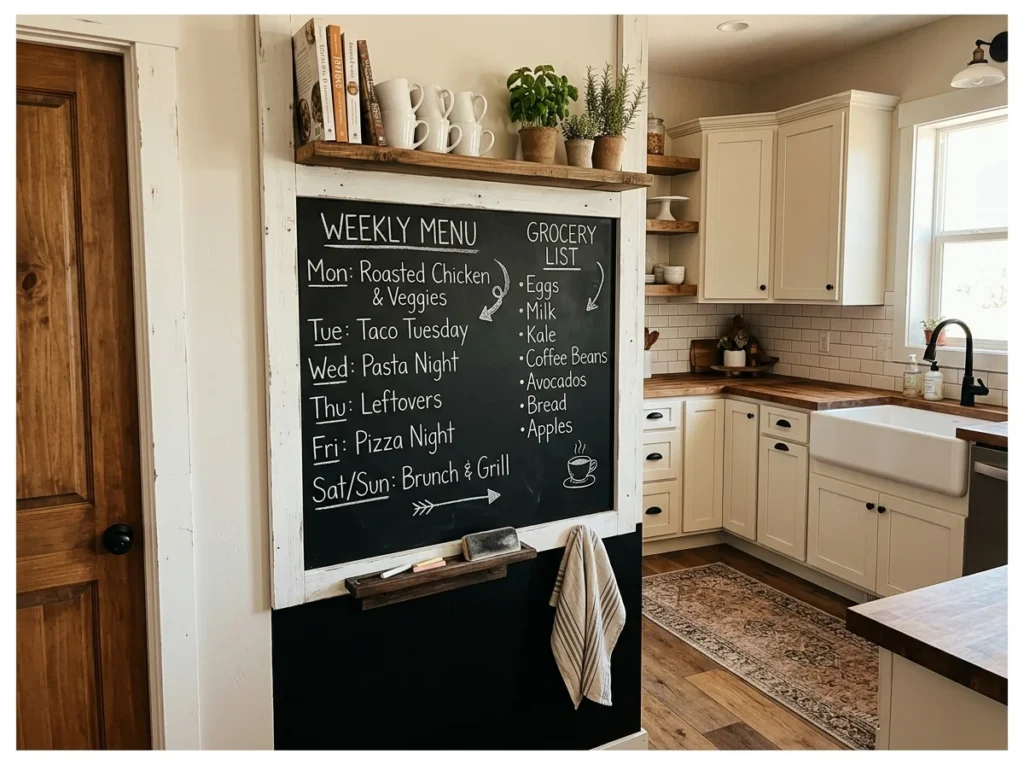
A chalkboard wall in the farmhouse kitchen creates a functional communication surface that fits the farmhouse aesthetic of honest, practical design. Whether a full wall or a smaller section beside the pantry or refrigerator, the chalkboard references the farmhouse tradition of working kitchens with useful surfaces.
Write the weekly dinner menu, grocery list, or a family message on the chalkboard wall. The constantly changing chalkboard content keeps the kitchen wall alive and relevant in a way that fixed decor cannot. The matte black surface also creates a strong graphic contrast against white farmhouse cabinetry.
When it comes to the rest of the counter surface, these countertop styling ideas can help you strike the right balance between function and charm.
Modern Farmhouse with Dark Cabinetry
Dark cabinetry, often in navy or black, gives a farmhouse kitchen a bit more drama than the usual all white look. Pairing it with lighter countertops and brass hardware keeps the room from feeling too heavy. This combination has become a common way to update the classic farmhouse look for a slightly more modern feel.
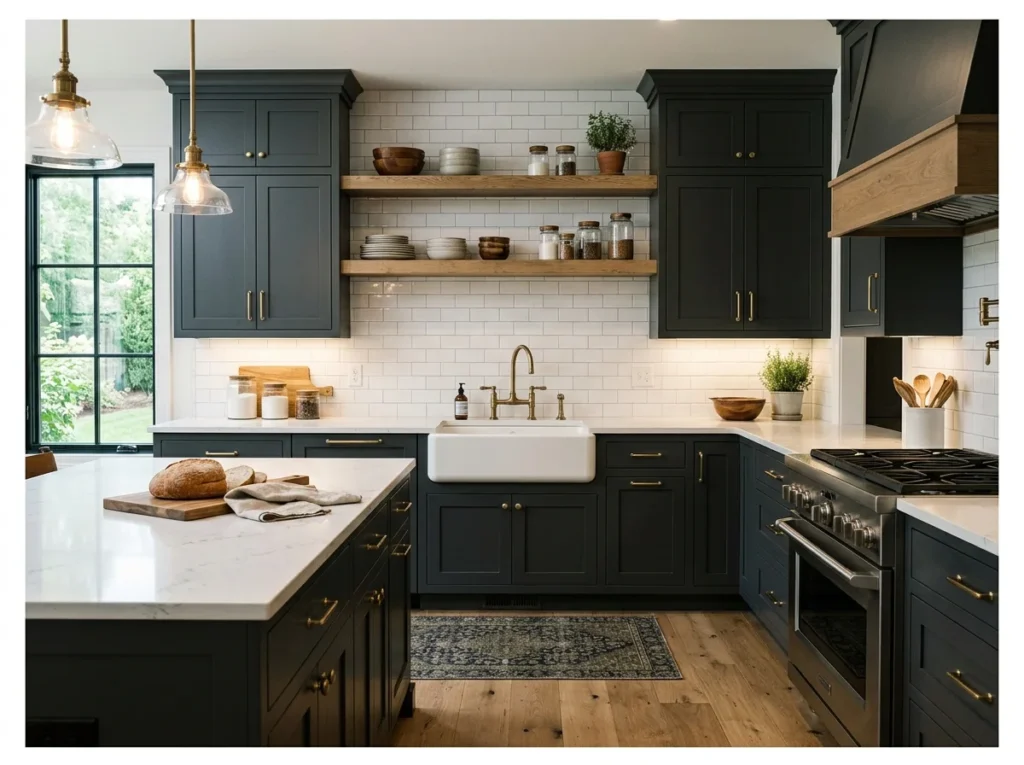
A modern farmhouse kitchen with dark charcoal, navy, or deep forest green cabinetry creates a more sophisticated and dramatic version of the farmhouse aesthetic that suits contemporary homes more naturally than the traditional all-white farmhouse approach.
Dark cabinetry in shaker profile with brass hardware, a white countertop, and open timber shelving maintains every farmhouse design element while creating a kitchen with greater visual weight and contemporary confidence. The dark kitchen suits homeowners who love farmhouse warmth but prefer a bolder, less traditional expression.
Bold farmhouse that is entirely contemporary.
Farmhouse Kitchen Herb Wall
A small wall mounted herb garden brings fresh basil, thyme, or mint within reach of the stove. This feature works well near a window where the herbs can get enough light to actually grow. Beyond its practical use, it also adds a bit of greenery to a kitchen that might otherwise be mostly wood and white.
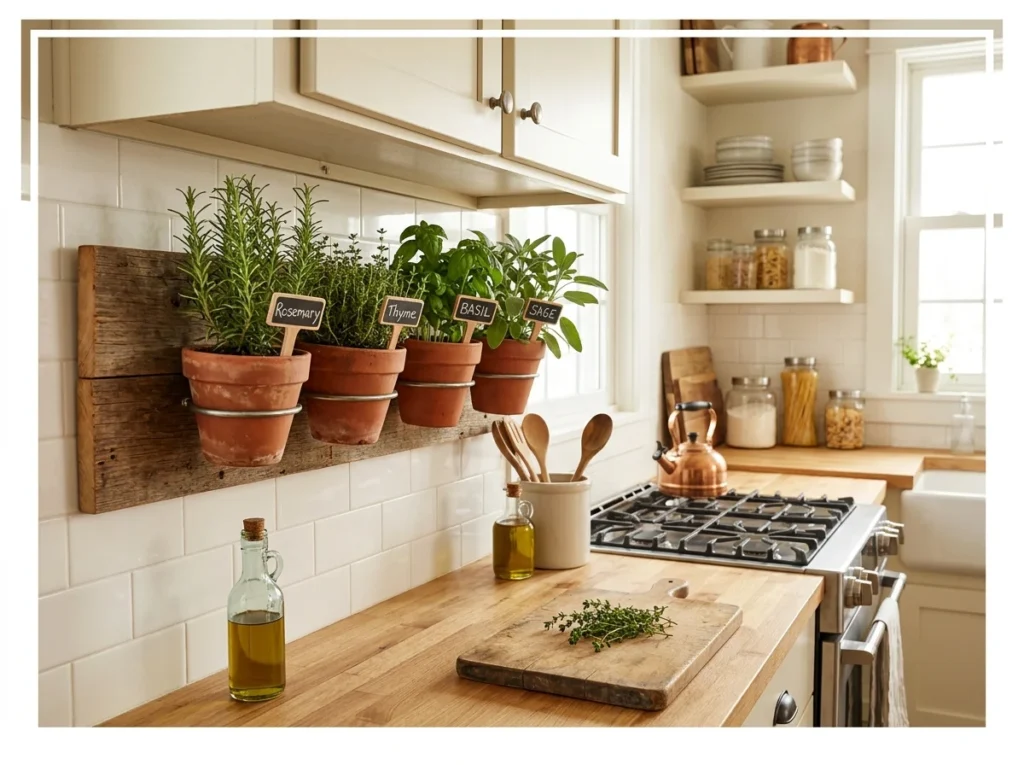
A dedicated kitchen herb wall using terracotta pots mounted on a timber board or shelf beside the cooking zone creates a farmhouse kitchen feature that is simultaneously a living botanical display and a genuinely useful culinary resource. The growing herbs add fresh green color at the most visible kitchen wall height.
Mount the herb wall within arm’s reach of the range so herbs can be harvested mid-cooking without crossing the kitchen. A labeled row of five to seven herb varieties provides a complete culinary herb garden within the kitchen itself.
Lantern-Style Kitchen Lighting
Lantern-style kitchen lighting adds a warm, elegant touch with its classic shape and inviting glow. These statement fixtures create a charming focal point while blending beautifully with farmhouse, rustic, and traditional kitchens through timeless design and ambient illumination.
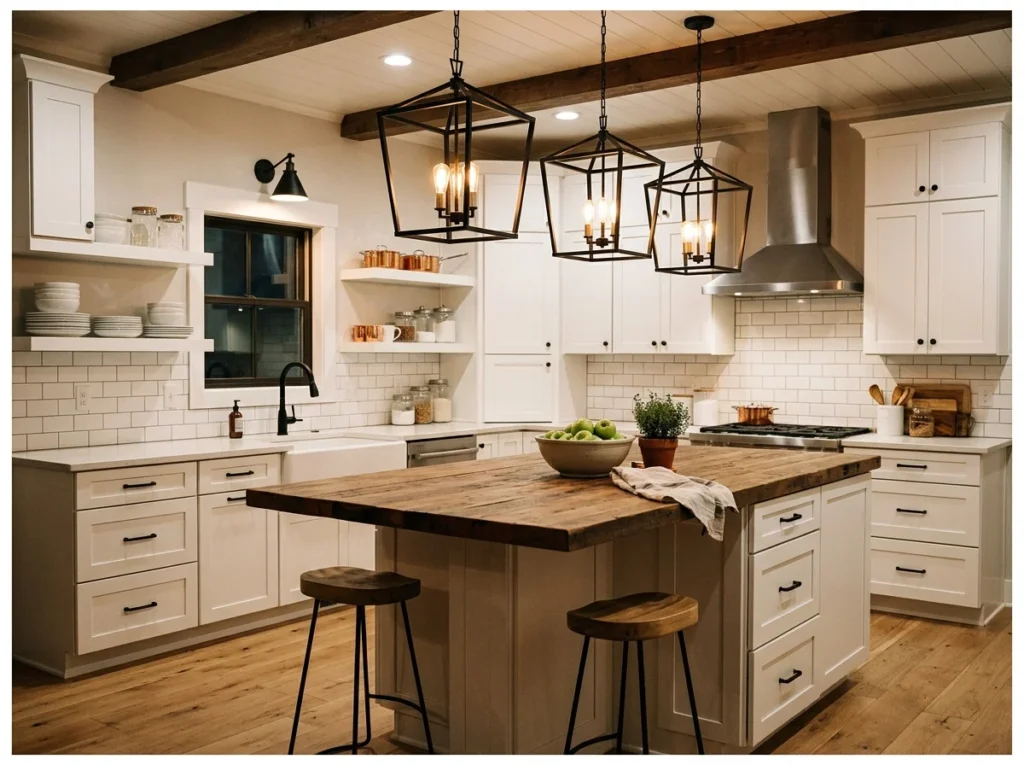
Black iron lantern-style pendant lights combine the industrial material quality of metal cage frames with the warm farmhouse glow of Edison filament bulbs to create kitchen island lighting with genuine character. The lantern pendant references traditional gas and oil lantern forms.
Two lantern pendants flanking the island center create a symmetrical farmhouse island lighting arrangement. Three lanterns in a row suit longer islands. The black iron frame suits white, sage green, and dark cabinetry farmhouse kitchens equally well and complements matte black hardware naturally.
Conclusion
A modern farmhouse kitchen succeeds when every element works together to create a space that feels warm without being twee, functional without being sterile, and genuinely personal without being cluttered. The aesthetic rewards careful material selection, thoughtful restraint, and a genuine commitment to the warmth of natural materials over manufactured alternatives.
Start with the foundation elements: shaker cabinets, a farmhouse sink, warm hardware, and a natural timber or stone surface. Layer in the character elements: open shelving, a barn door, Edison lighting, and the personal styling that makes it yours.
And if your kitchen flows into a dining space, this roundup of farmhouse dining room ideas carries the same warmth right through to where you eat.
And if your kitchen flows into a dining space, this roundup of farmhouse dining room ideas carries the same warmth right through to where you eat.