Your staircase might be the most overlooked space in your entire home but it has serious makeover potential. With the right ideas, you can transform it from dull and dated to a stunning focal point without a full renovation. Let’s explore the best staircase makeover ideas for a fresh, stylish look!
Once the treads and risers are refreshed, there are lighting upgrades worth pairing here to finish the transformation.
Natural Oak Treads with White Painted Risers
Oak treads bring warm, visible grain that pairs cleanly against crisp white risers underneath. This contrast keeps the staircase feeling bright while still showing off real wood texture. It suits a wide range of home styles, from farmhouse to more modern interiors.
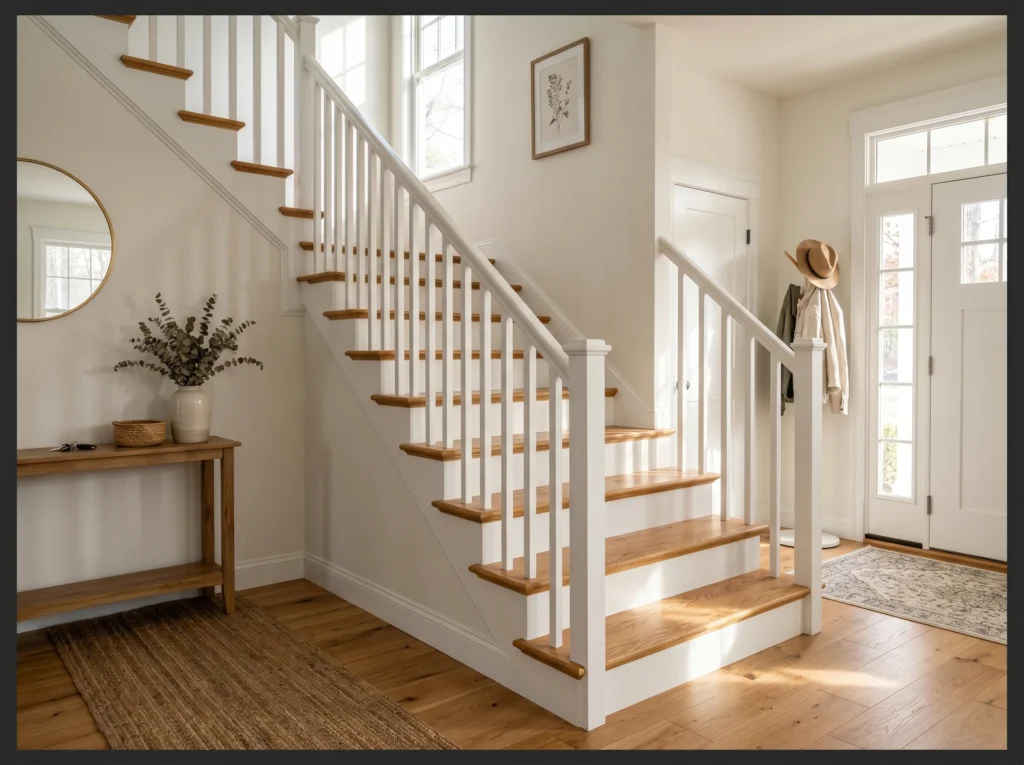
Sanding existing treads back to bare wood and painting the risers white is one of the most impactful staircase makeovers you can do for under $200. The contrast between warm natural wood and crisp white creates a look that feels fresh, timeless, and expensive.
This combination works in traditional, farmhouse, coastal, and transitional homes without any awkward style clashing. Use semi-gloss or gloss paint on the risers for durability since that vertical surface gets kicked and scuffed more than you expect.
Peel-and-Stick Wallpaper on Stair Risers
Applying wallpaper only to the risers adds pattern without committing to a full wall project. Peel and stick versions make this an easy weekend job rather than a major renovation. This approach also makes it simple to swap the design again later.
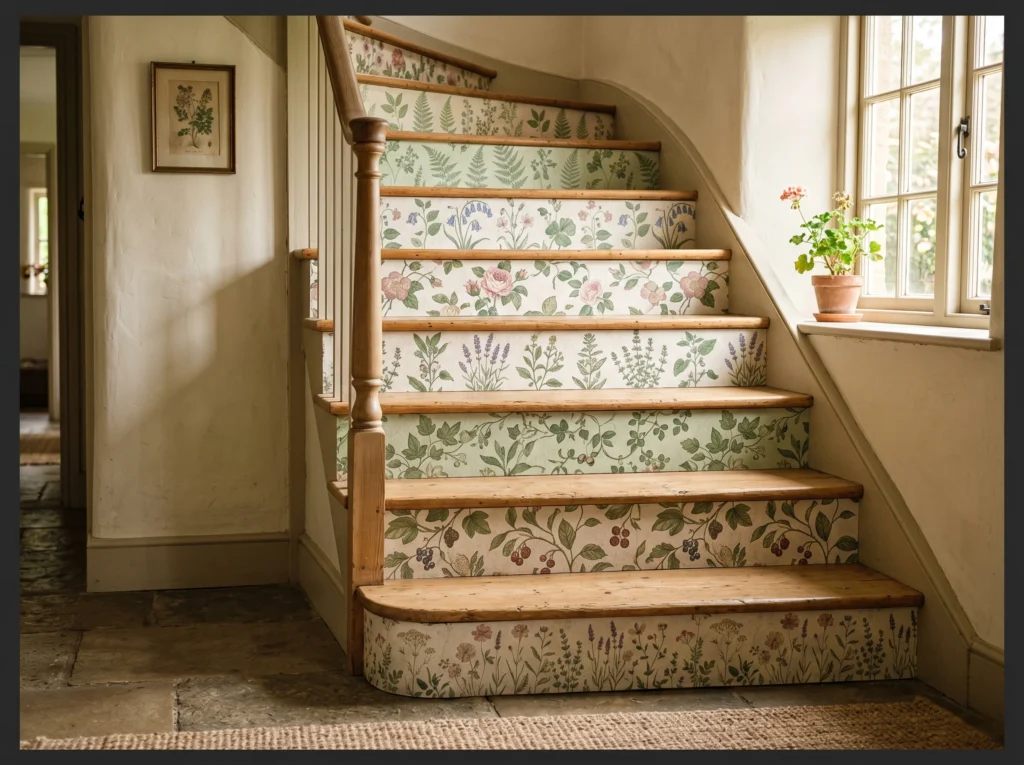
Covering each riser with a different peel-and-stick wallpaper panel turns a plain staircase into a pattern-filled display. You can use the same pattern throughout for cohesion or mix coordinating designs for an eclectic collected look.
Perfect for renters. The panels remove cleanly without damaging the underlying wood. This is genuinely one of the easiest staircase makeover ideas on this list — no paint, no tools, just scissors and a smooth surface.
If you’re already touching the risers, there are wall treatments for the stairwell worth considering at the same time.
Carpet Runner with Brass Stair Rods
A carpet runner softens the sound and feel of walking up bare wood stairs. Brass rods at the base of each step hold the runner in place and add a bit of shine. This combination suits a more traditional or classic staircase design.
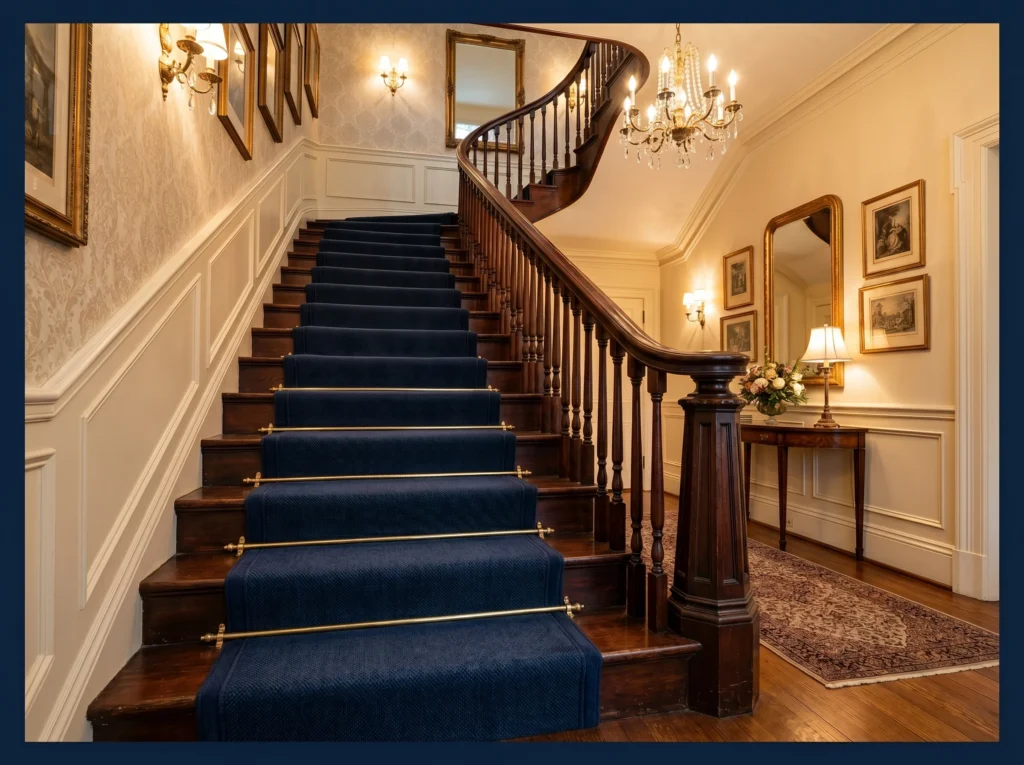
A quality carpet runner with brass stair rods is the upgrade that makes a staircase feel instantly more expensive and more considered. The brass hardware catches the light and adds a jewellery-like detail at the base of every step.
Beyond the look, a runner absorbs sound significantly — no more thundering footsteps on bare wood at night. Choose a flat-weave wool runner for durability in this high-traffic zone rather than a plush pile that compresses and wears unevenly.
Floating Treads with Glass Balustrade
Floating treads appear to hang in the air since the support structure stays hidden from view. A glass balustrade keeps sightlines open, letting light pass through the whole staircase. This style suits a modern home that wants the stairs to feel light rather than heavy.
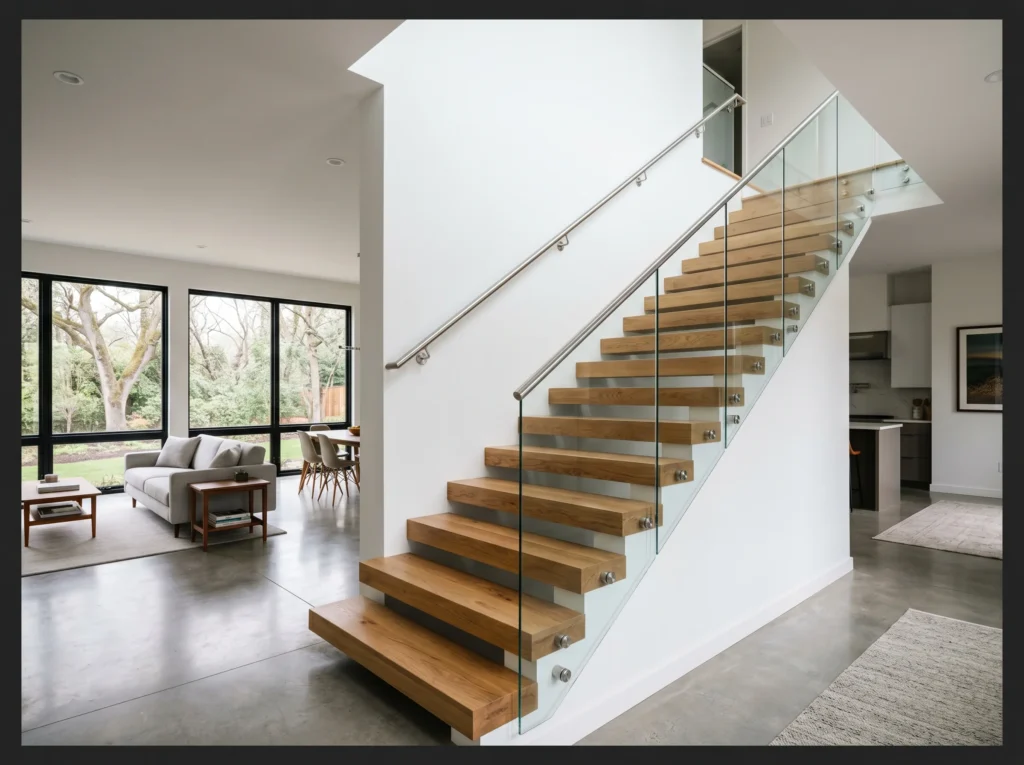
Removing the risers and replacing solid spindles with clear glass panels opens up the entire staircase and makes the room feel dramatically larger. Light passes through the structure rather than being blocked by it.
This is a higher-investment makeover but it adds serious resale value, especially in open-plan homes where the staircase is visible from the main living area. The floating effect works particularly well in contemporary and minimalist interiors.
Shiplap Staircase Wall with Vintage Lanterns
Shiplap paneling along the stair wall adds texture that plain drywall does not offer. Vintage style lanterns mounted alongside bring in a bit of warm, ambient light. This pairing suits a farmhouse style home particularly well.
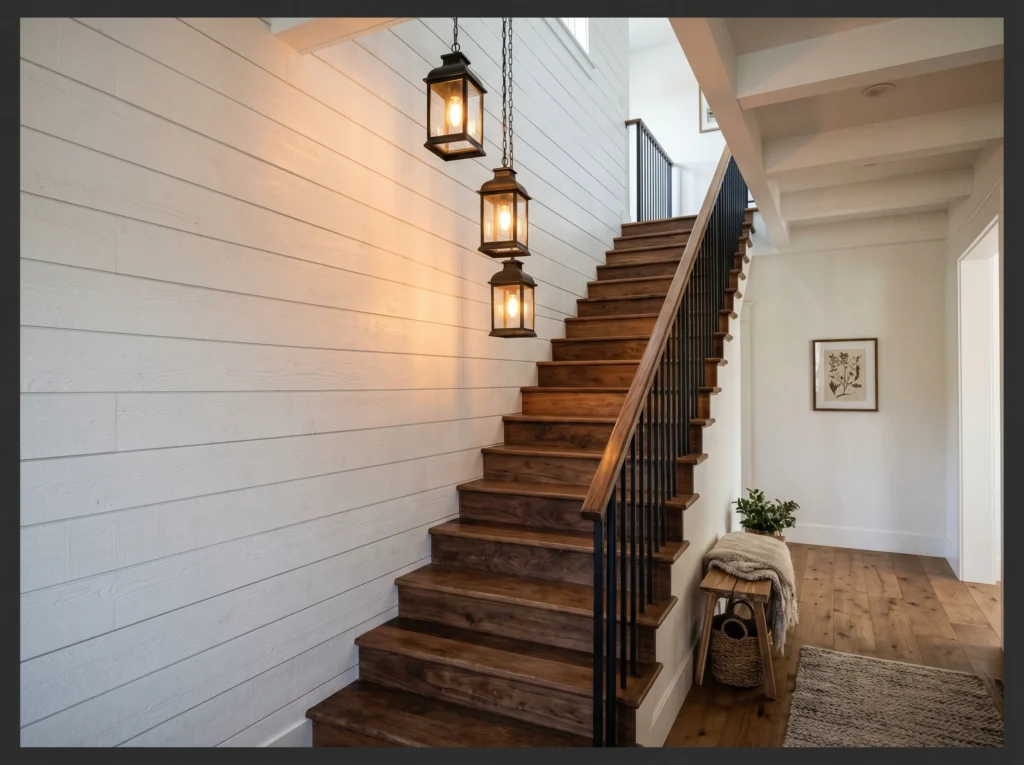
Installing horizontal shiplap along the staircase wall adds texture and warmth that bare drywall simply cannot provide. The clean, overlapping boards create a backdrop that suits both farmhouse and coastal interiors beautifully.
Hang three vintage-style lanterns at staggered heights above the stairwell to replace a single overhead bulb. The varied hanging heights create visual movement that draws the eye upward and makes the ceiling feel taller.
Under-Stair Reading Nook with Built-In Shelves
The space under a staircase often goes unused, making it a natural spot for a small reading nook. Built in shelves along the slanted wall put every bit of that space to actual use. A small seat or cushion tucked inside turns it into a cozy corner rather than dead space.
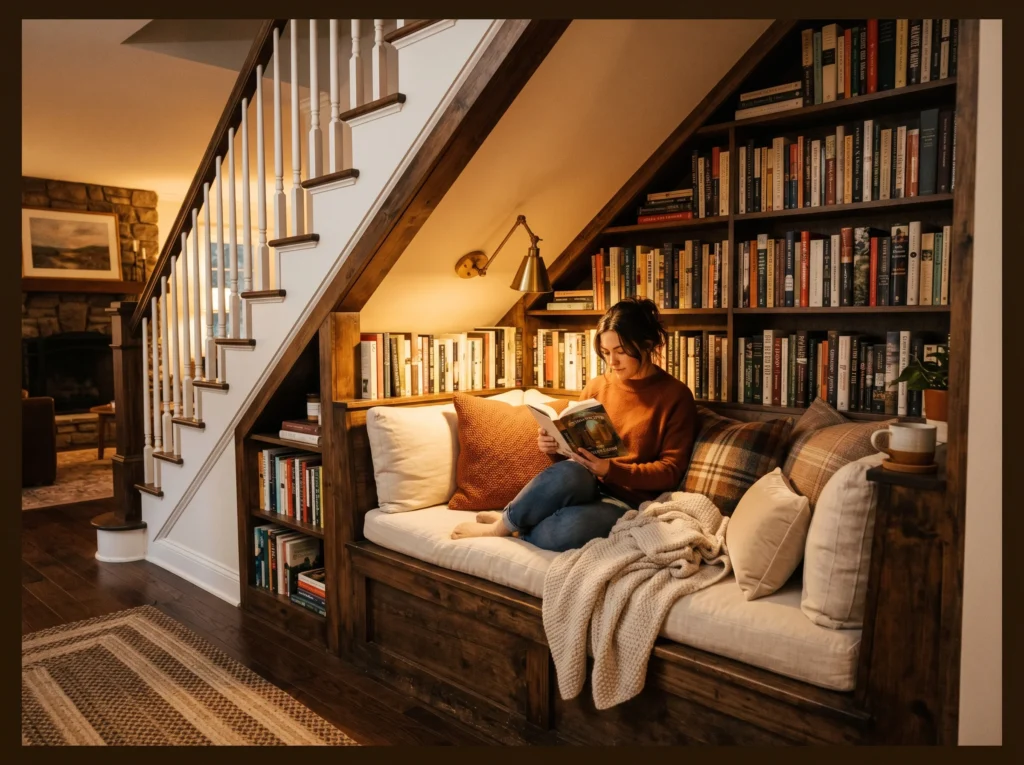
The triangular space under most staircases sits empty and wasted for years. Converting it into a built-in reading nook with flanking bookshelves turns dead square footage into the most used and most photographed corner in the house.
Brilliant for small homes. A custom bench with flip-top storage below the cushion adds even more functionality to the nook. The whole project adds genuine architectural character that feels like it was designed into the home from the beginning.
This same instinct for using dead space shows up in reading corners built into small spaces throughout the rest of the house.
Ombre Painted Risers in Earth Tones
Ombre painting moves gradually from one shade to another as the eye travels up the stairs. Earth tones like terracotta fading into sand keep the effect feeling warm rather than jarring. This technique takes some careful planning but pays off as a real visual statement.
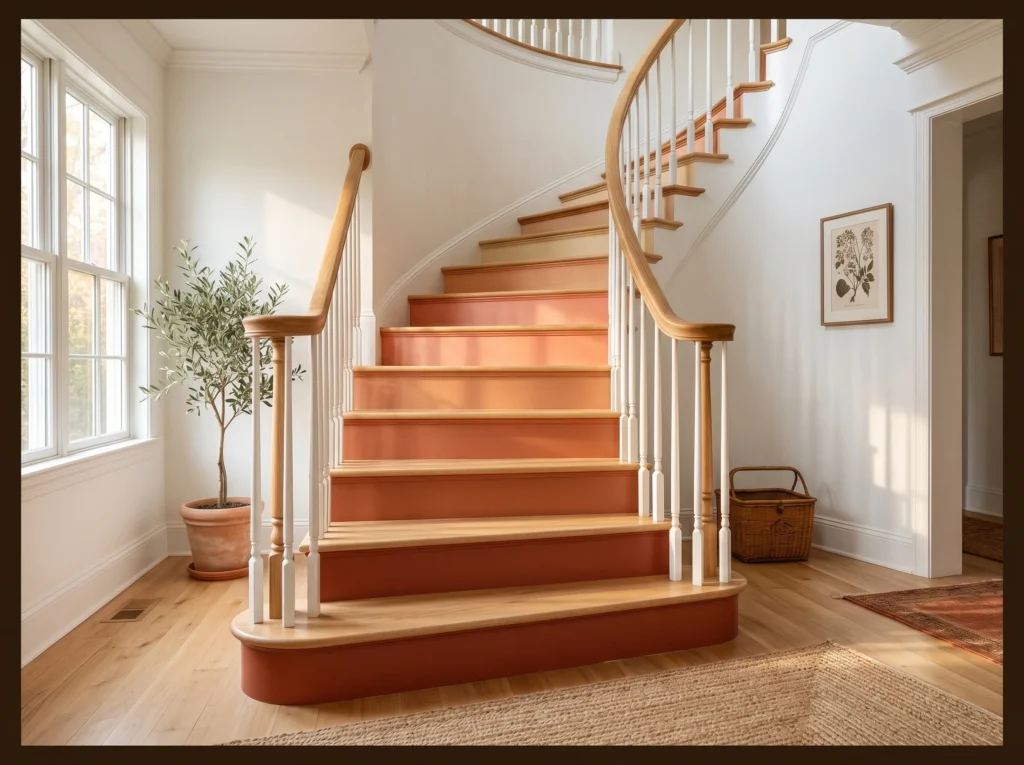
Starting with a deep terracotta at the bottom riser and gradually lightening toward the top creates a visual gradient that makes the staircase look like a work of art. The earth tones feel grounded, warm, and genuinely on-trend for 2026.
This technique works best with a palette of related tones rather than completely different colors. Mix your paint incrementally — start with the darkest shade and add white in small amounts for each progressive step to keep the transition smooth and consistent.
Mediterranean Tile-Pattern Painted Risers
Painting tile inspired patterns directly onto the risers mimics the look of actual Mediterranean tile. This approach costs far less than installing real tile on every step. Blue, white and terracotta tones tend to suit this style particularly well.
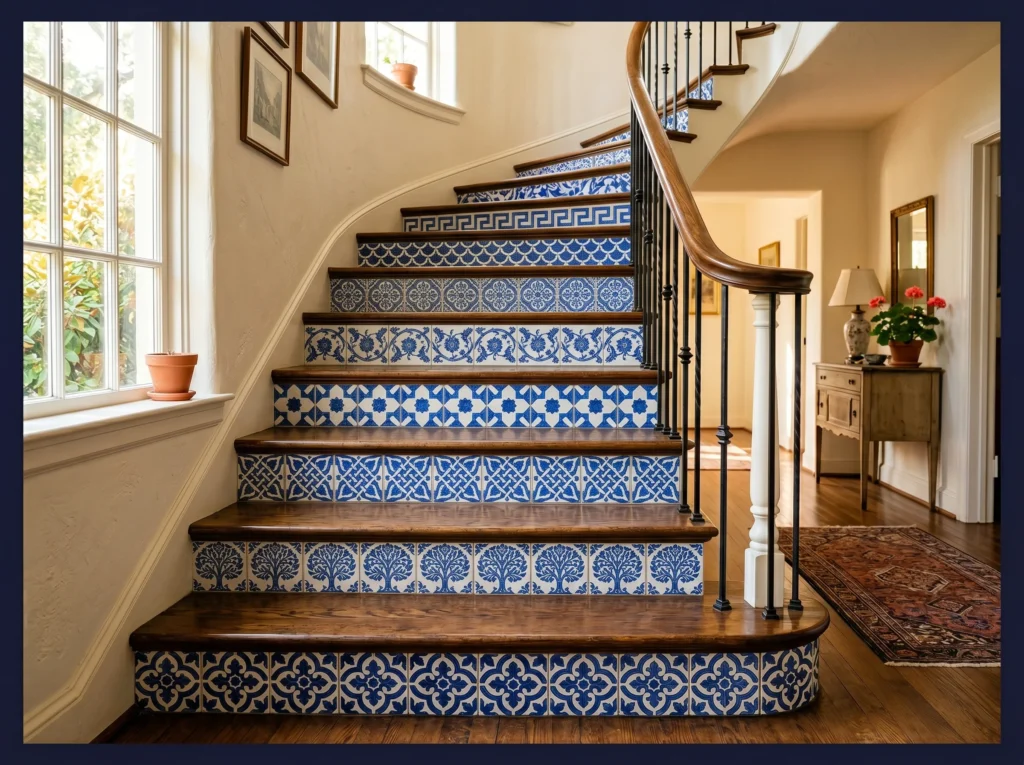
Painting faux tile patterns onto your risers gives you the look of genuine hand-painted Portuguese or Moroccan ceramic tiles without the weight, cost, or installation complexity of actual tile. A stencil and a steady hand are all you need.
Each riser gets its own geometric design, making the climb up the stairs feel like a visual journey. Use exterior-grade craft paint for best durability on these high-contact surfaces, and seal the finished risers with two coats of clear water-based polyurethane.
Industrial Black Steel and Reclaimed Wood
Black steel stringers add a structural, slightly raw look beneath the staircase. Reclaimed wood treads on top bring in grain and history that new lumber cannot match. This combination suits a loft or converted industrial space especially well.
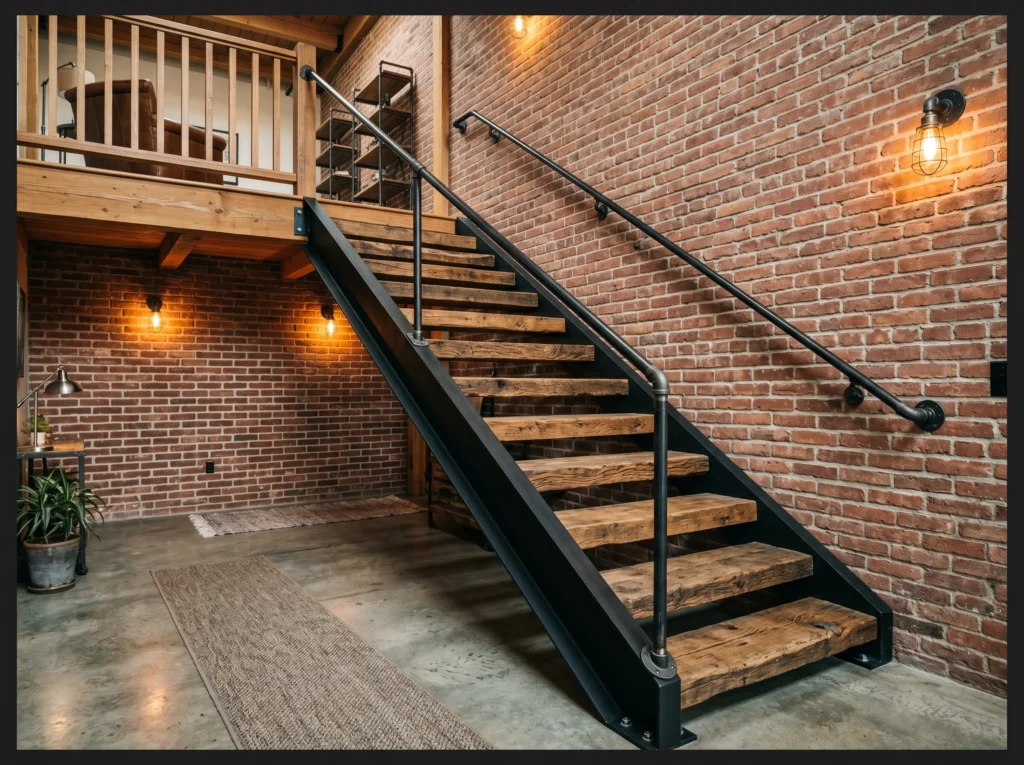
Combining reclaimed timber treads with a black steel frame produces a staircase with real visual weight and material honesty. Every knot and grain line in the old wood tells a story that new lumber simply cannot replicate.
This aesthetic suits converted spaces, industrial-style homes, and anyone who wants their interior to feel genuinely distinctive rather than catalog-perfect. Black pipe railings stay true to the industrial spirit and cost a fraction of custom metalwork.
Checkerboard Painted Steps
A checkerboard pattern painted across the treads turns the staircase into a graphic focal point. Black and white is the classic choice, though softer color pairings work just as well. This kind of paint job can be refreshed every few years as it wears down.
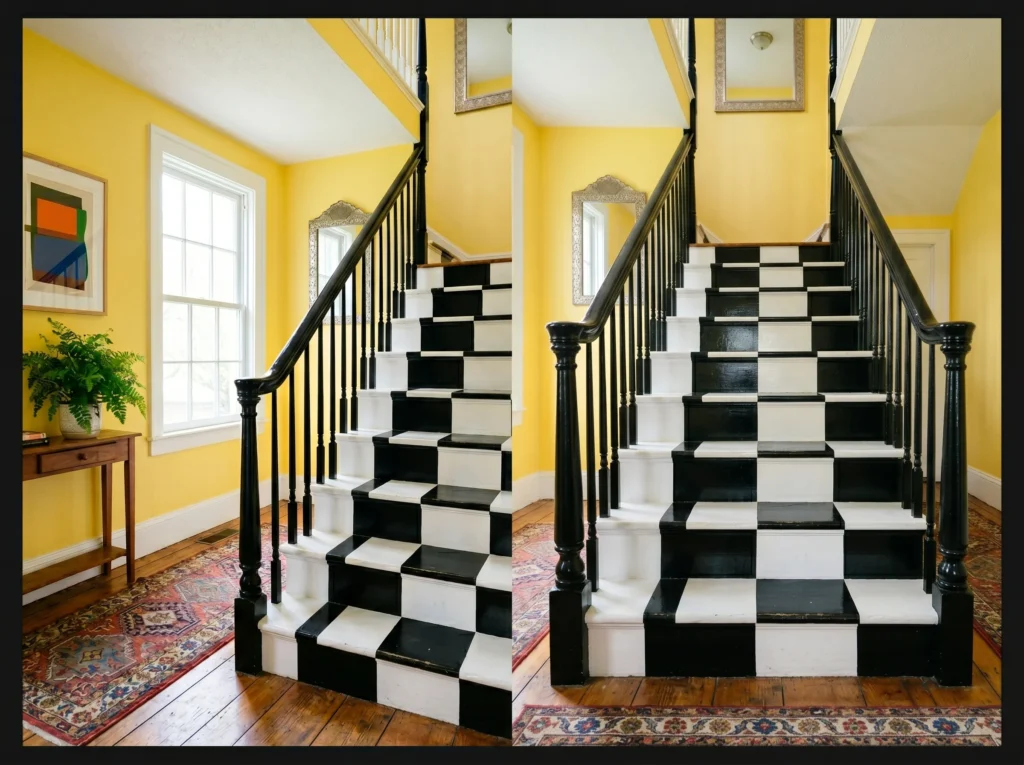
A hand-painted checkerboard pattern on the tread surface turns an ordinary staircase into a proper design feature. It is bold, graphic, and completely unexpected — the kind of detail that makes guests stop and look twice.
Use floor-rated paint and tape each square carefully before painting. Apply two coats of clear polyurethane over the finished checkerboard for protection. This works best in a home that already has some personality — it looks completely at home alongside maximalist, eclectic, or retro interiors.
Boho Patterned Runner with Rattan Pendant
A patterned runner brings in color and texture underfoot without needing to repaint anything. A rattan pendant hanging above the stairwell continues that same relaxed, boho material palette. This pairing suits a home already leaning into natural textures elsewhere.
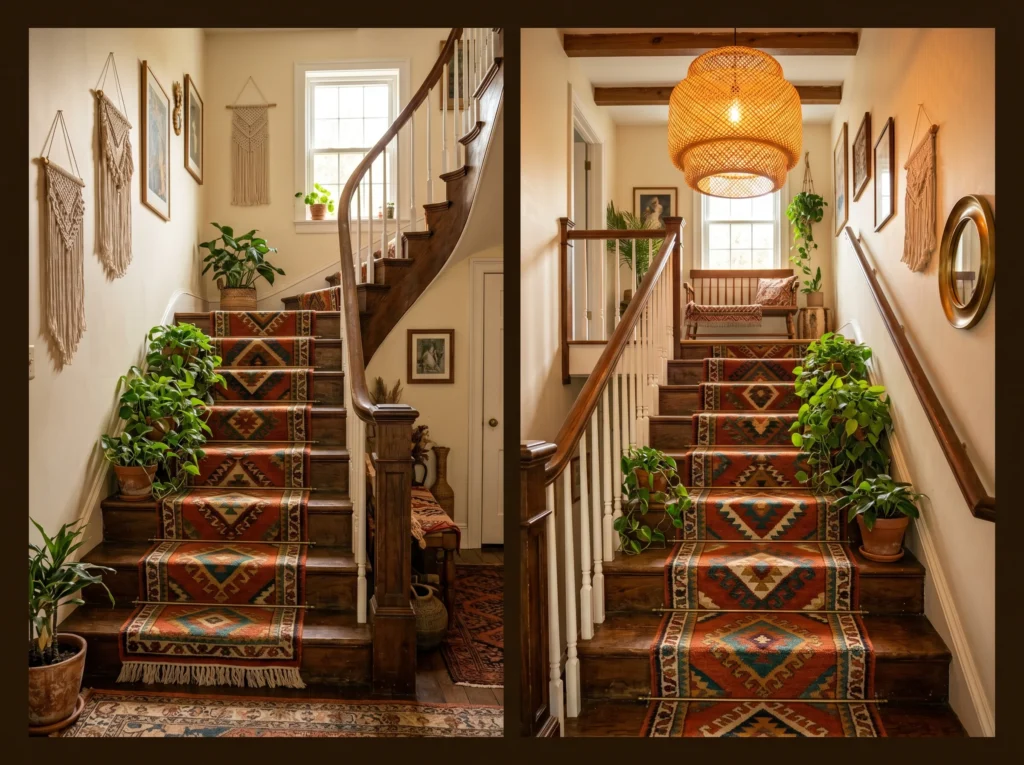
A kilim or ikat-pattern runner brings instant warmth and personality to a plain wood staircase. The layered geometric patterns feel collected and intentional without requiring any other design work on the surrounding walls.
Hang a large woven rattan pendant in the stairwell above the landing to complement the textile’s organic character. The combination of warm pattern underfoot and soft woven light above creates an enveloping atmosphere that turns the staircase into a destination rather than just a route.
Classic Wainscoting Along the Stair Wall
Wainscoting along the stairwell wall adds architectural detail that plain paint alone does not provide. The raised panel design catches light differently depending on the angle you view it from. This style suits older homes or anyone wanting a more traditional staircase look.
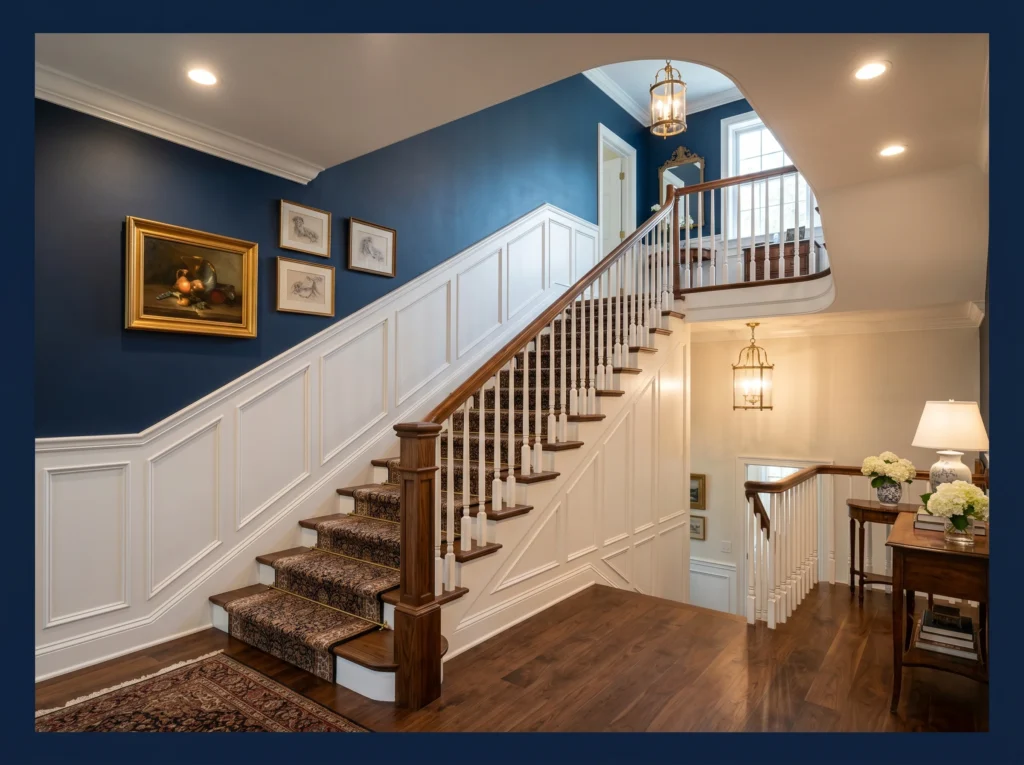
Installing raised-panel wainscoting on the staircase wall adds an architectural depth that transforms a flat, featureless wall into something that looks genuinely custom. The horizontal chair rail divides the wall into two distinct zones for color.
Paint the lower paneled section in white and the upper wall in a rich, saturated color — navy, forest green, or deep burgundy all work beautifully. This two-tone approach with paneled detail below reads as elevated and considered in any architectural style from colonial to transitional.
Staircase Gallery Wall with Black Frames
A gallery wall along the stairs makes use of what is often an overlooked, narrow space. Black frames keep the grouping feeling cohesive even if the artwork inside varies. Staggering the frames to follow the angle of the stairs keeps everything looking intentional.
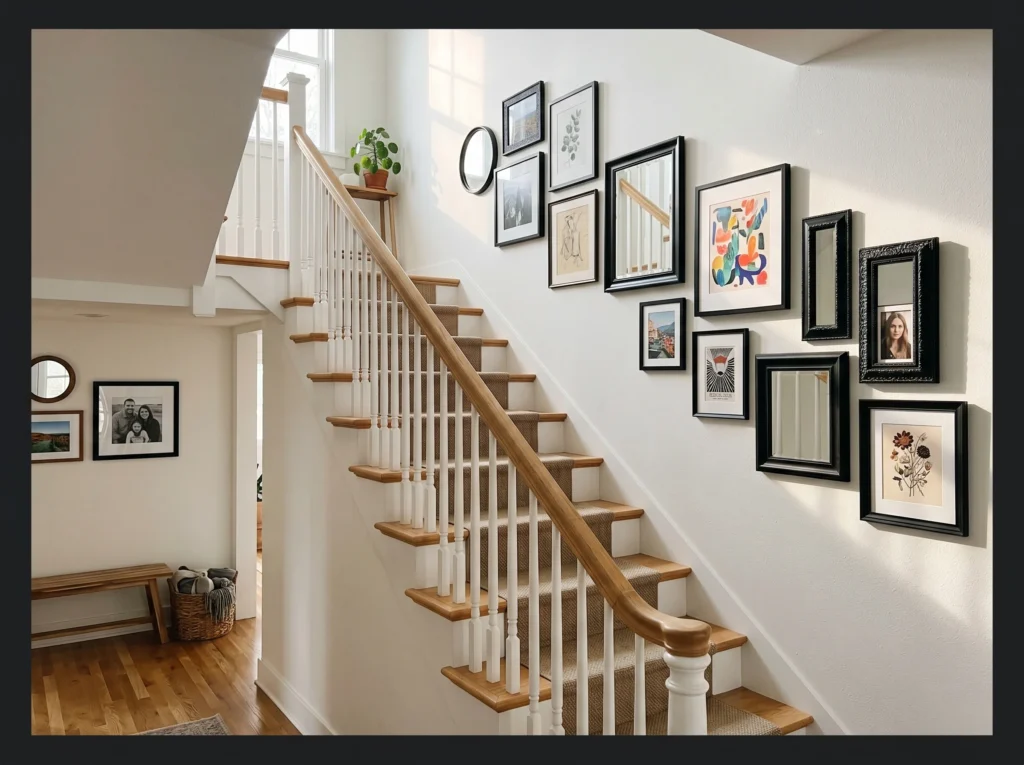
The diagonal wall beside a staircase is one of the best gallery walls in any home because it naturally guides the arrangement — the frames follow the angle of the stairs and create a composition that feels effortless.
Use frames in one consistent finish — all black, all brass, or all natural wood — to unify a mix of different sizes and artwork styles. Start by laying the arrangement on the floor before committing to holes. Leave approximately three inches between each frame for a gallery feel rather than a cluttered one.
That same spacing principle works well for gallery layouts for a hallway wall if you’re extending the display beyond the stairs.
LED Strip Lighting Under Each Tread
LED strips tucked under the edge of each tread cast a soft glow onto the step below. This works as both a design detail and a practical safety feature at night. Most strips can be dimmed or set to a timer so they only run when actually needed.
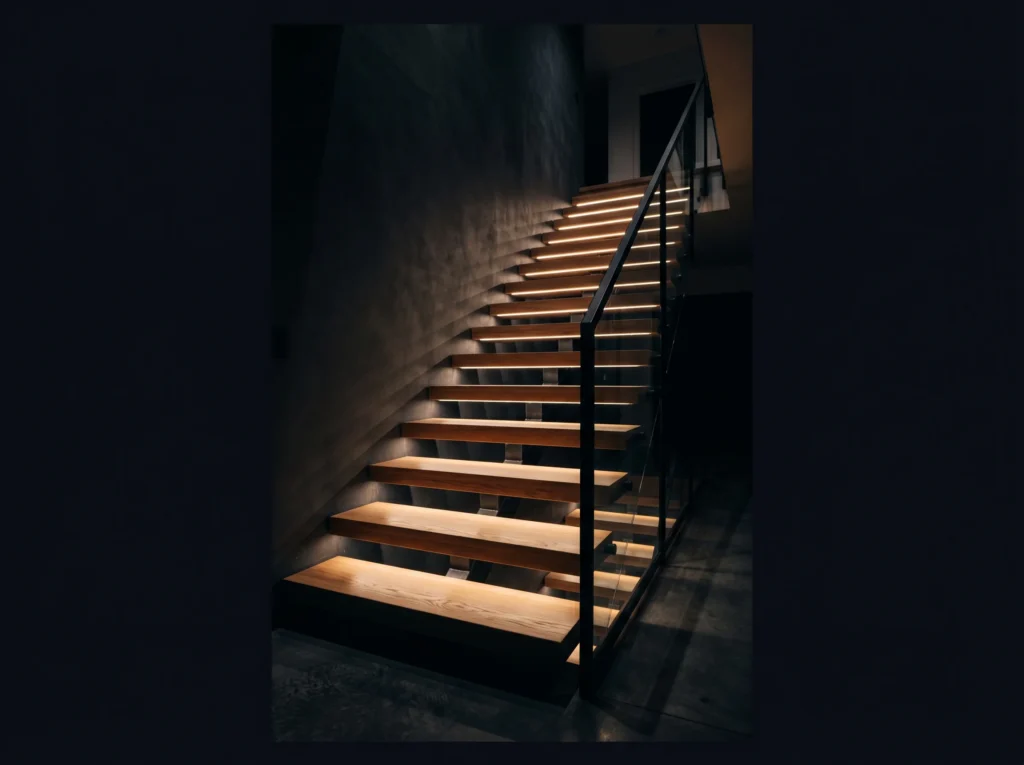
LED strip lights installed beneath each tread cast a soft glow along the riser surface below, making the staircase look like it is floating at night. It is a genuinely theatrical effect that photographs beautifully.
Budget-friendly option. A complete staircase LED strip kit costs under $50 for most standard staircases. The strips run on a simple plug-in transformer and can be set to a timer so they turn on automatically at dusk. Warm white at 2700K produces the most flattering, residential-feeling glow.
That same warm color temperature is worth carrying into evening glow for tricky corners elsewhere in the home.
Scandinavian Pale Wood with Black Rail
Pale wood treads keep the staircase feeling light and airy against most wall colors. A black handrail adds a clear, graphic line that stands out against all that lighter wood. This combination is a common choice in Scandinavian style interiors.
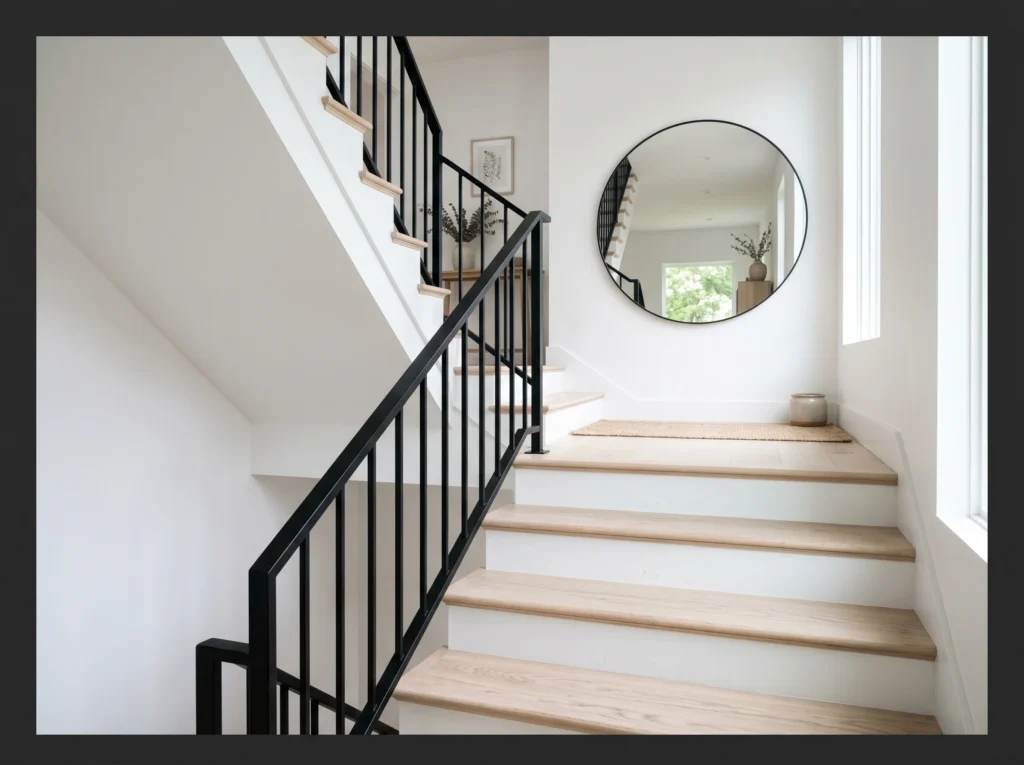
Pale ash or maple treads against white risers and a slim black square-profile handrail is the Scandinavian staircase formula that never gets old. Every element is light, spare, and completely intentional.
A round mirror on the landing bounces natural light back into the stairwell and makes the space feel more open than it actually is. Keep the walls clear — no art, no shelves, no clutter. The restraint is the point and the simplicity is genuinely calming to live with every day.
French Country Distressed Paint and Curved Banister
Distressed paint on the banister gives the staircase an aged, lived in character right away. A curved rather than straight banister adds a softer, more traditional shape to the design. This style suits homes already leaning into a French country aesthetic.
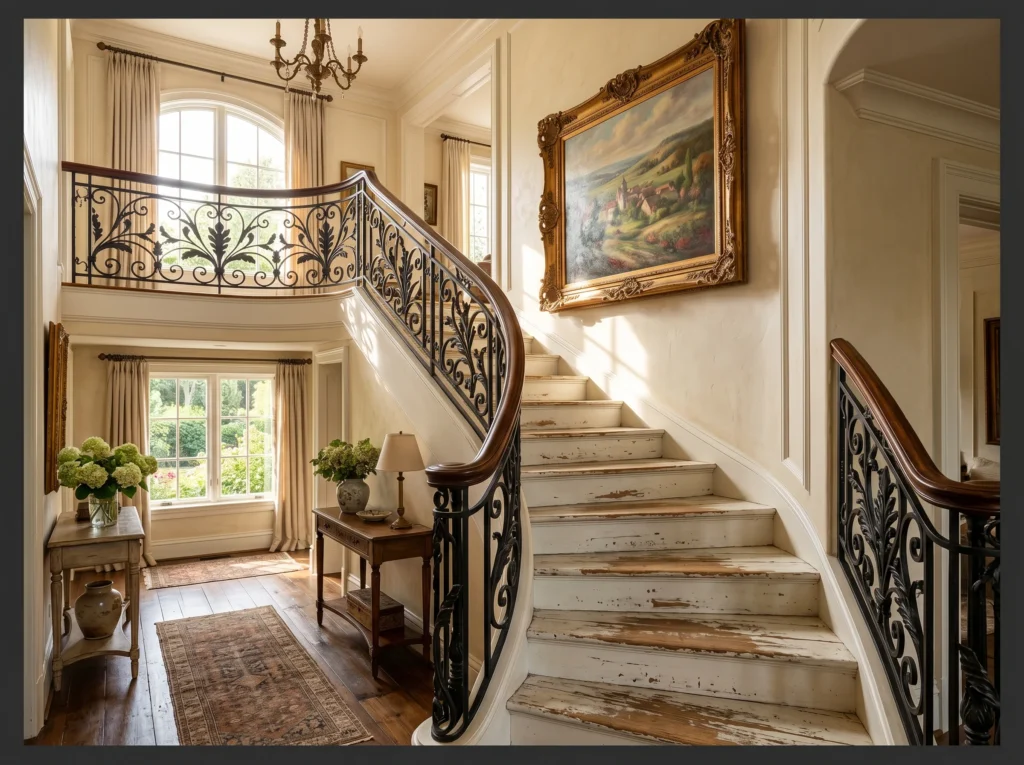
A dry-brush technique over the treads in white or pale blue paint creates a weathered, lived-in surface that looks like it has seen generations of family life. The goal is to let the natural wood grain show through the paint rather than covering it completely.
A curved banister with wrought iron scrollwork at the balusters completes the romantic, Old World feel. This style suits homes with high ceilings, ornate mouldings, and an appreciation for things that look beautifully aged rather than freshly installed.
High-Gloss Lacquered Banister in Jewel Ton
A high gloss finish reflects light in a way that matte paint simply cannot replicate. Deep jewel tones like emerald or sapphire make the banister a clear focal point. This detail works well in a home that already has some bold color elsewhere.
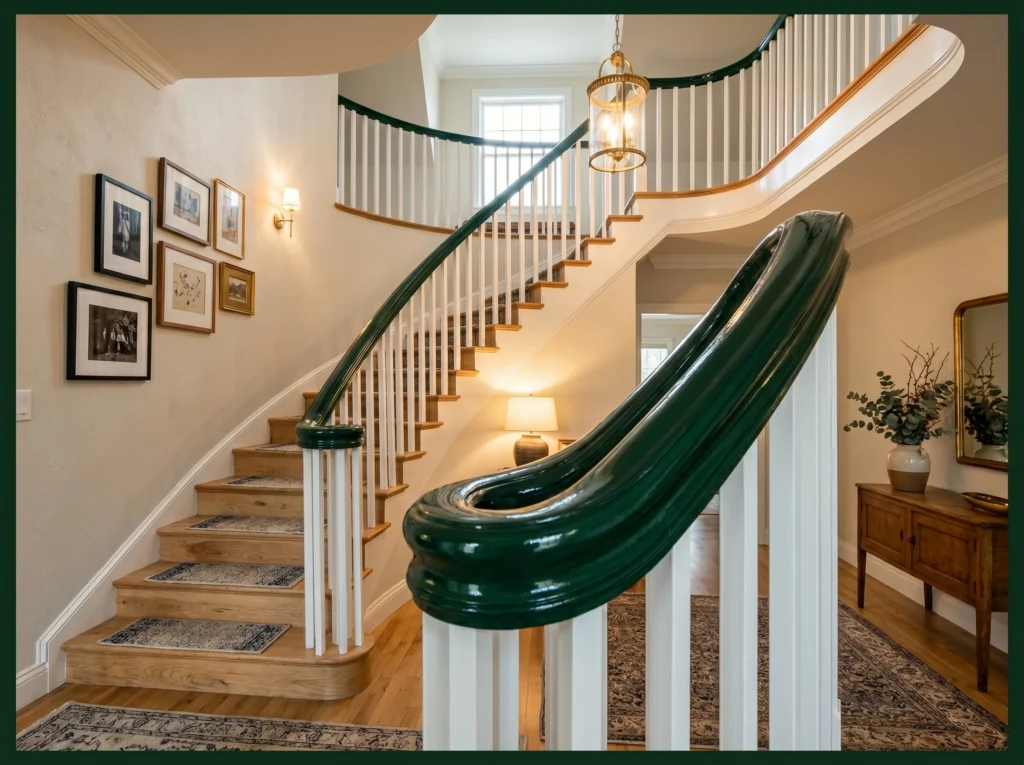
Painting just the banister in a high-gloss jewel tone — emerald green, sapphire blue, deep burgundy — is one of the fastest weekend makeovers on this list. The reflective lacquer finish makes the color feel genuinely luxurious.
Keep every other element on the staircase neutral so the painted banister reads as a deliberate design choice rather than a random experiment. This single change can completely shift the personality of a staircase from forgettable to memorable.
Coastal Driftwood Tones with Rope Handrail
Driftwood colored treads bring a sun bleached, weathered look to the staircase. A rope handrail continues that same coastal reference in place of a typical wood or metal rail. This combination suits a beach house or a home near the water.
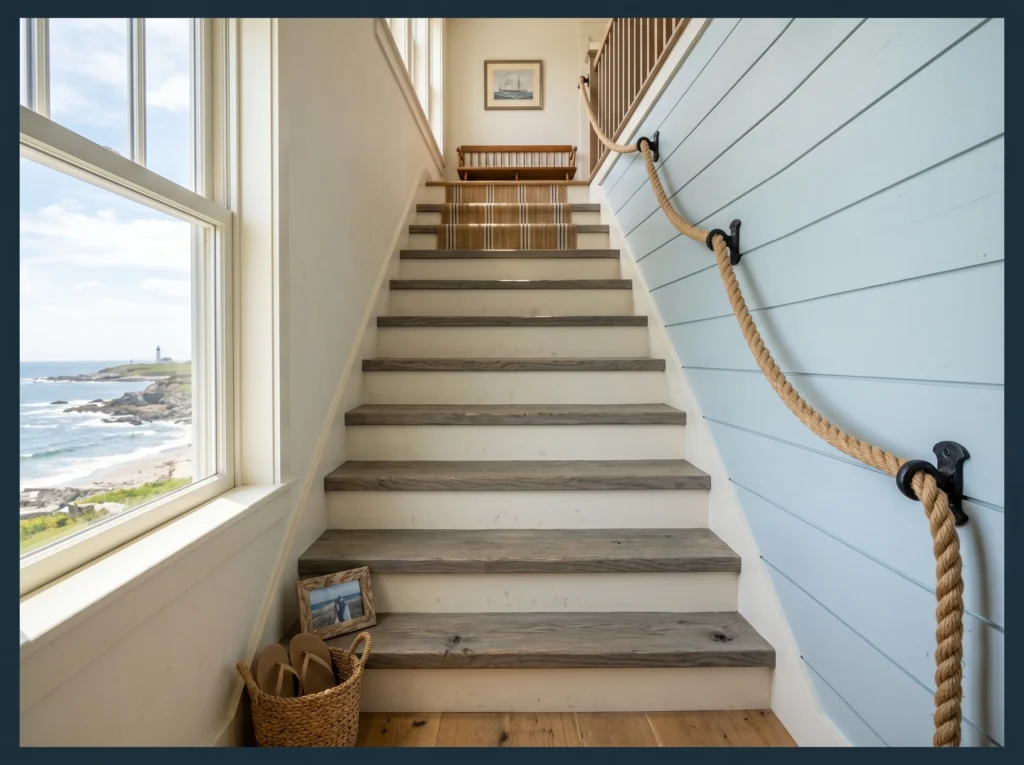
A grey wash stain on the treads mimics the texture and tone of sun-bleached driftwood without needing to source actual beach timber. The colour is naturally calming and works as a neutral that suits both coastal and organic-modern interiors.
Replacing the standard wood or metal handrail with thick manila rope is the detail that really sells this look. The rope runs through iron wall cleats mounted along the stair wall and costs far less than a conventional handrail installation.
Hidden Drawer Storage in Stair Treads
Building drawers into the risers turns unused space under each step into actual storage. This works especially well in smaller homes where every bit of square footage matters. Shoes, books or seasonal items can all be tucked away without taking up closet space.
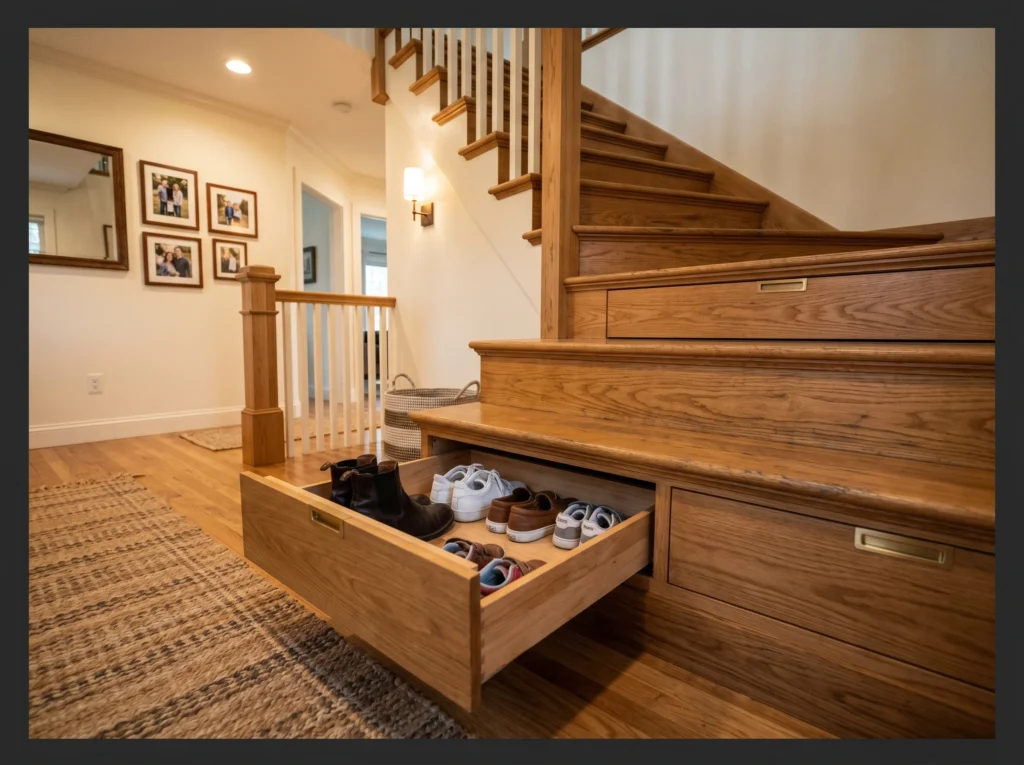
Building pull-out drawers into the base of each riser converts your staircase into a serious storage asset. The space inside a standard stair step is surprisingly deep — enough for shoes, sports equipment, pet supplies, or seasonal items.
Smart solution for small homes. From the outside the staircase looks completely normal. The drawers slide out on soft-close runners without any visible handles — just a gentle push-to-open mechanism. This is one of the highest-value modifications you can make to a main staircase in a home with limited storage.
If hidden storage like this appeals to you, there’s clever storage for tight footprints worth exploring near the entry too.
Brick Veneer Wall with Rustic Wood Steps
Brick veneer along the stairwell wall adds texture that plain drywall cannot match. Rustic wood treads on top continue that same raw, natural material feel. This pairing suits a home with an industrial or farmhouse leaning interior.
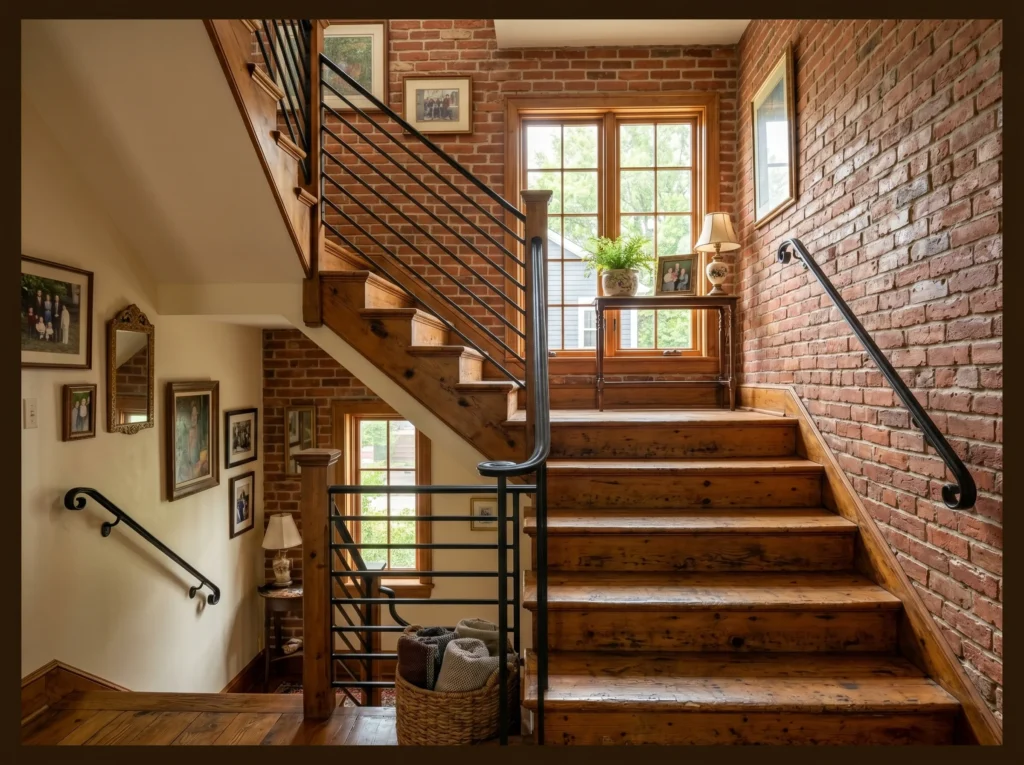
Thin brick veneer panels applied to the staircase wall create the look of genuine exposed brick without the weight or structural implications of real masonry. The deep red-brown texture adds an earthy warmth that no paint color fully replicates.
Pair the brick wall with thick rustic pine treads and a simple black iron handrail to complete the look. This combination suits both industrial and traditional interiors and the brick surface requires almost no maintenance once installed.
Terrazzo-Style Painted Risers
Painting a terrazzo effect onto the risers mimics the speckled look of real stone flooring. This technique costs much less than installing actual terrazzo tile on every step. It suits a home wanting a modern, slightly playful detail on the stairs.
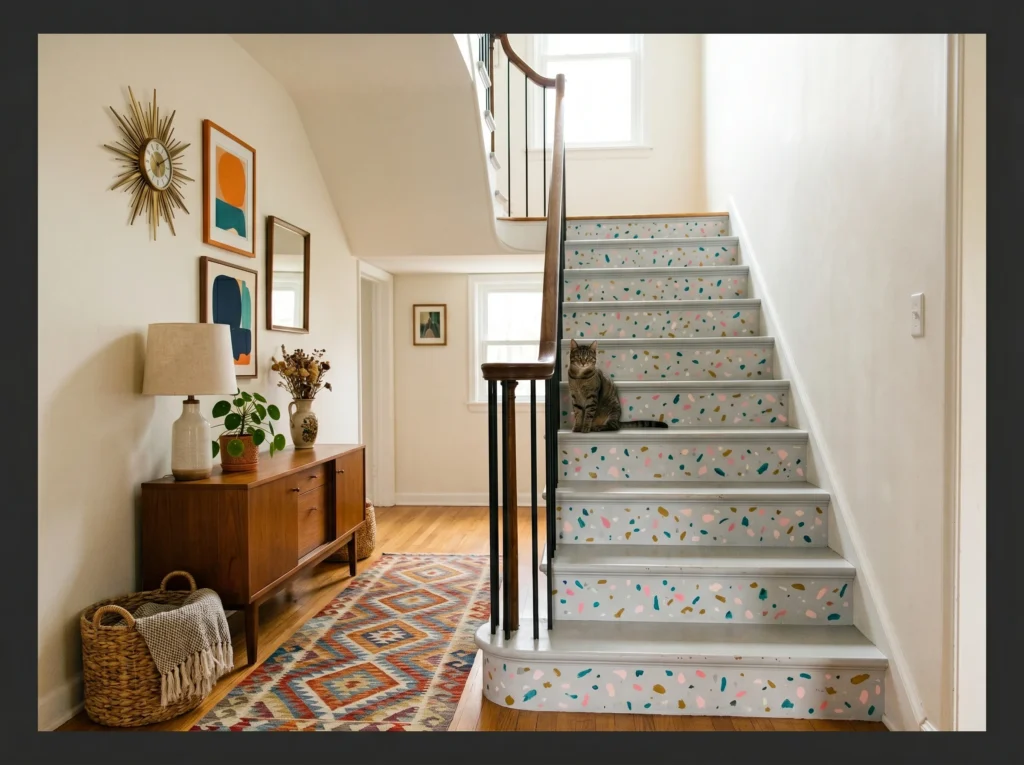
Real terrazzo flooring costs thousands of dollars installed. Painted terrazzo risers achieve a very similar visual effect for the price of a few pots of craft paint and an afternoon of dabbing.
Apply a solid grey base coat and then use a small natural sea sponge to dab flecks of pink, sage, gold, and charcoal across the surface while the base is still slightly tacky. The irregular, random distribution is what makes it look authentic. Seal with clear polyurethane for lasting protection.
Fairy Lights Draped Along the Railing
Fairy lights wound along the handrail add a soft glow without needing any electrical work. This is a low cost, temporary way to change the mood of the staircase for an evening or season. Battery operated strands make it easy to add lights anywhere along the rail.
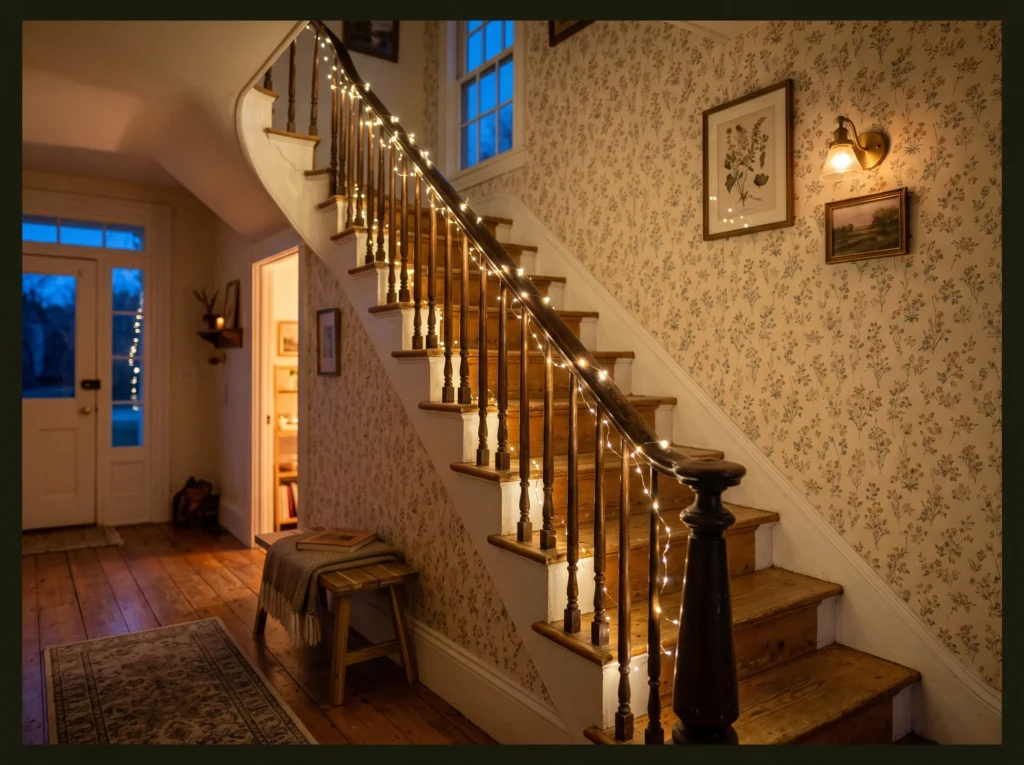
Weaving warm fairy lights along the banister and railing costs under $20 and transforms the staircase atmosphere after dark. The soft glow is warm enough to navigate by without turning on the overhead light at night.
Instant cosy factor. This works especially well in homes with a cottage, boho, or eclectic interior style. Battery-operated LED fairy lights with a timer are the most practical choice — no trailing cords near the steps and they turn on automatically each evening.
Stenciled Geometric Patterns on Risers
Stenciling lets you add a repeating pattern to the risers without freehand painting each one. Geometric designs in particular give the staircase a modern, graphic quality. This project can be done gradually, one step at a time, without much disruption.
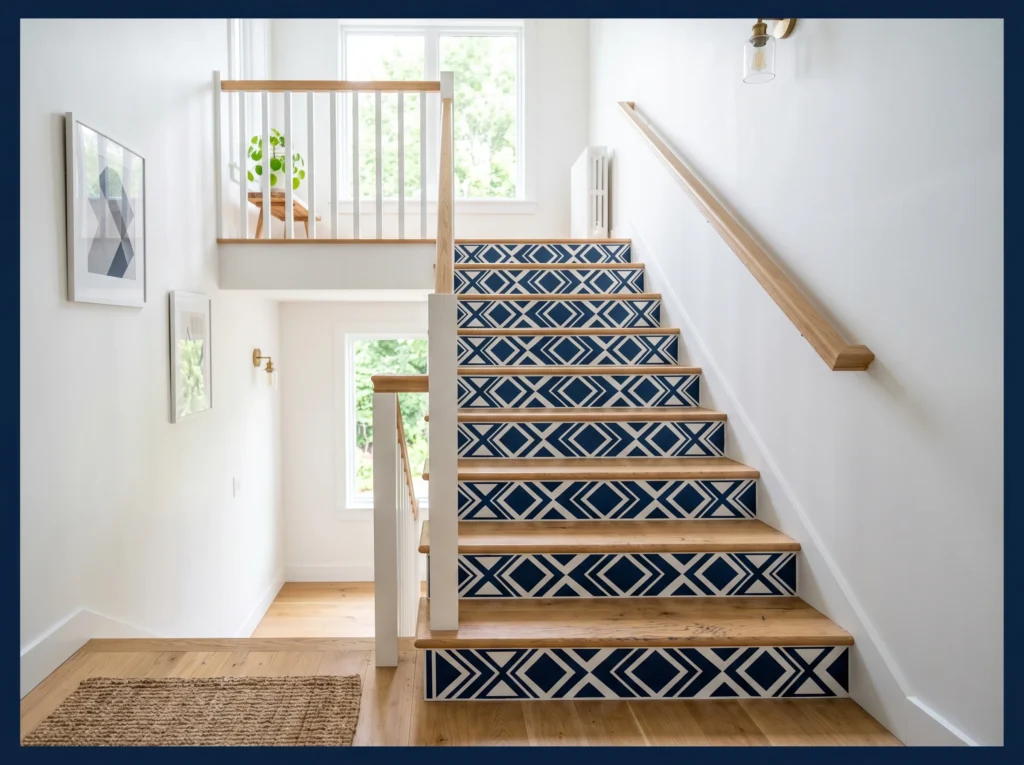
A repeating geometric stencil on each riser gives the staircase a graphic, modern character that hand-painted freehand patterns cannot achieve as consistently. Stencils keep every motif identical from step to step.
Budget-friendly option. A good stencil kit costs under $20 and the project takes one afternoon with two people — one to hold the stencil, one to dab the paint. Deep navy or forest green on a white base produces the sharpest, most Pinterest-worthy result.
Bold Dark Paint on the Staircase Walls
Dark paint on the stairwell walls makes the space feel more dramatic and intentional. This works especially well in stairwells that get decent natural light from a nearby window. Artwork or a runner in a lighter tone helps keep the space from feeling too closed in.
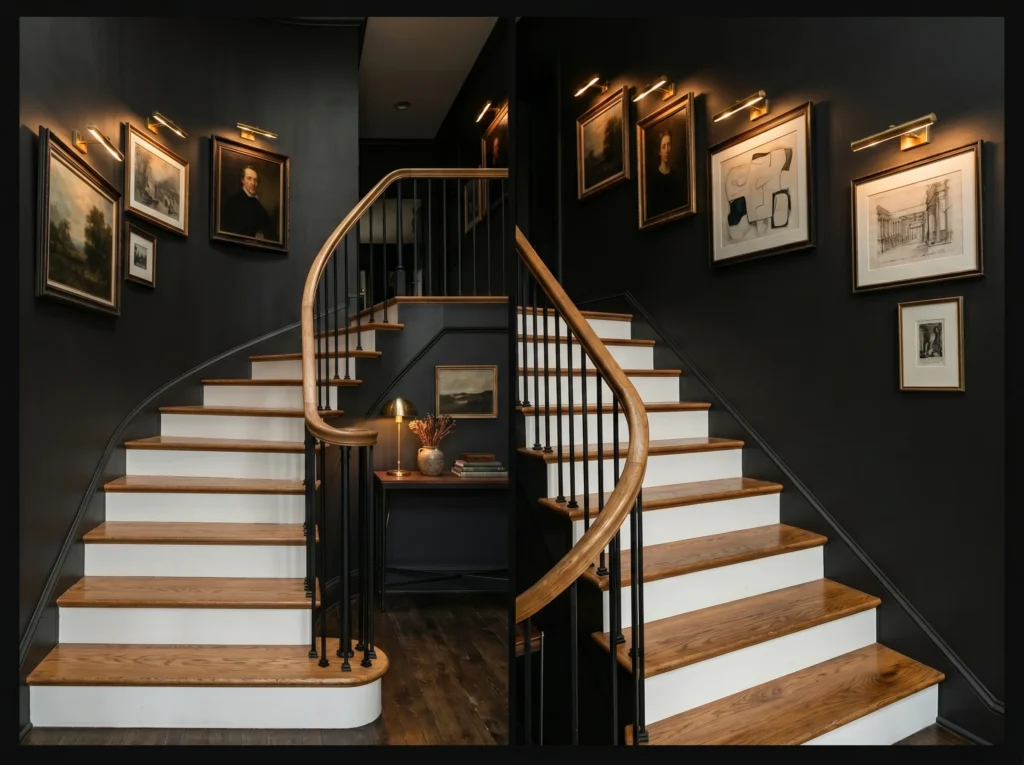
Painting the staircase walls in a very deep tone — near-black, dark forest green, or deep navy — creates a dramatic contrast that makes the light-toned treads and artwork on the walls pop with intensity.
Dark walls in a stairwell feel much more intentional and less claustrophobic than you might expect because the space is transitional rather than a room you sit in. Small brass picture lights or wall sconces prevent the darkness from feeling oppressive and add warm focal points throughout the climb.
Wallpapered Stairwell Ceiling
Wallpaper on the ceiling above the stairs adds a detail that is easy to miss but hard to forget. A bold pattern overhead draws the eye upward as you climb the staircase. This unexpected placement often ends up being the detail guests remember most.
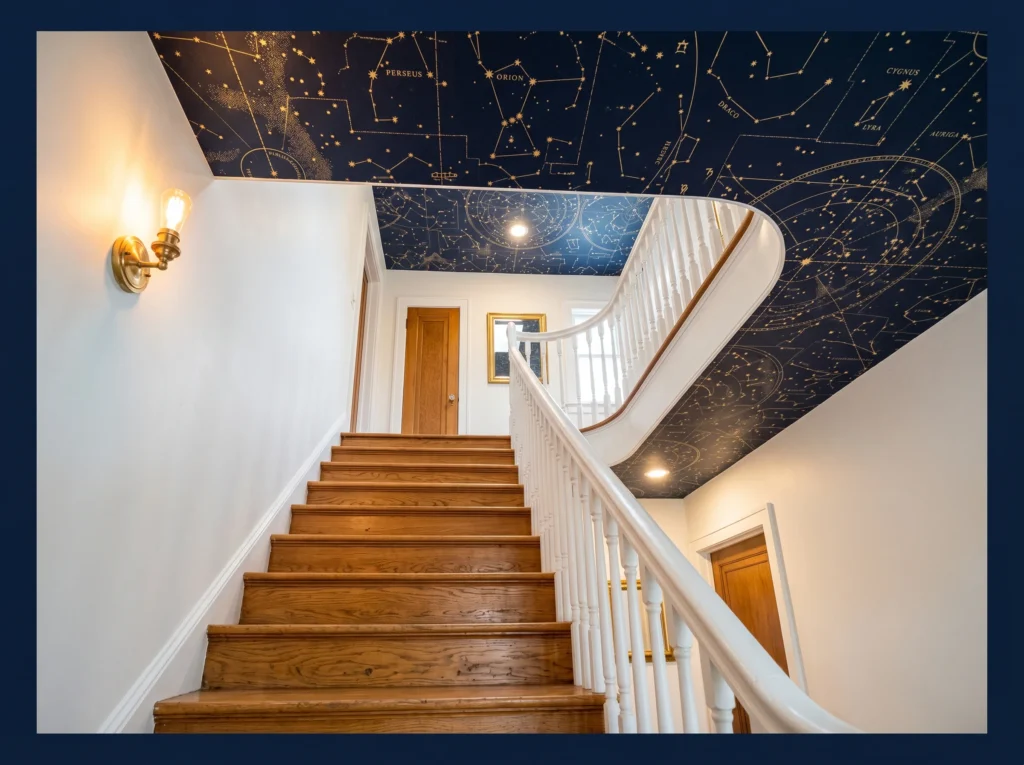
Most people decorate the walls and completely forget the ceiling. Papering the overhead surface directly above the stairwell creates an immersive surprise that guests notice immediately — and nobody else in the neighbourhood has done it.
Choose a bold pattern that you might not be brave enough to use on a full room wall. The stairwell ceiling is a small, contained surface that makes even an intense pattern feel manageable. A celestial motif, a lush botanical print, or a geometric repeat all read beautifully in this unexpected position.
Conclusion
Your staircase handles more daily traffic than any other part of your home. It deserves more than a quick vacuum and a coat of beige paint. Whether you go bold with a Mediterranean tile-painted riser, cozy with a boho runner and rattan pendant, or minimal with pale Scandi wood and a black rail — the right makeover changes how you feel about the whole house every single time you use it.
Start with one idea from this list that fits your budget and your skill level today. The staircase you have right now is two weekends away from being the one you are genuinely proud to show guests.
And if your stairs lead down rather than up, there are basement spaces worth refreshing next to keep the momentum going.