Most round coffee tables end up either completely empty or completely cluttered. Getting the balance right is simpler than you think and the results are genuinely beautiful.
If this kind of restraint appeals to you, a room built around the same calm shows how the same principle extends to the whole space.
Let’s get started.
Round Tray as the Anchor Base
A round tray gives scattered small objects one clear boundary to sit within. This base makes even a random mix of items look intentional rather than cluttered. It works well under candles, a small vase or a stack of books.
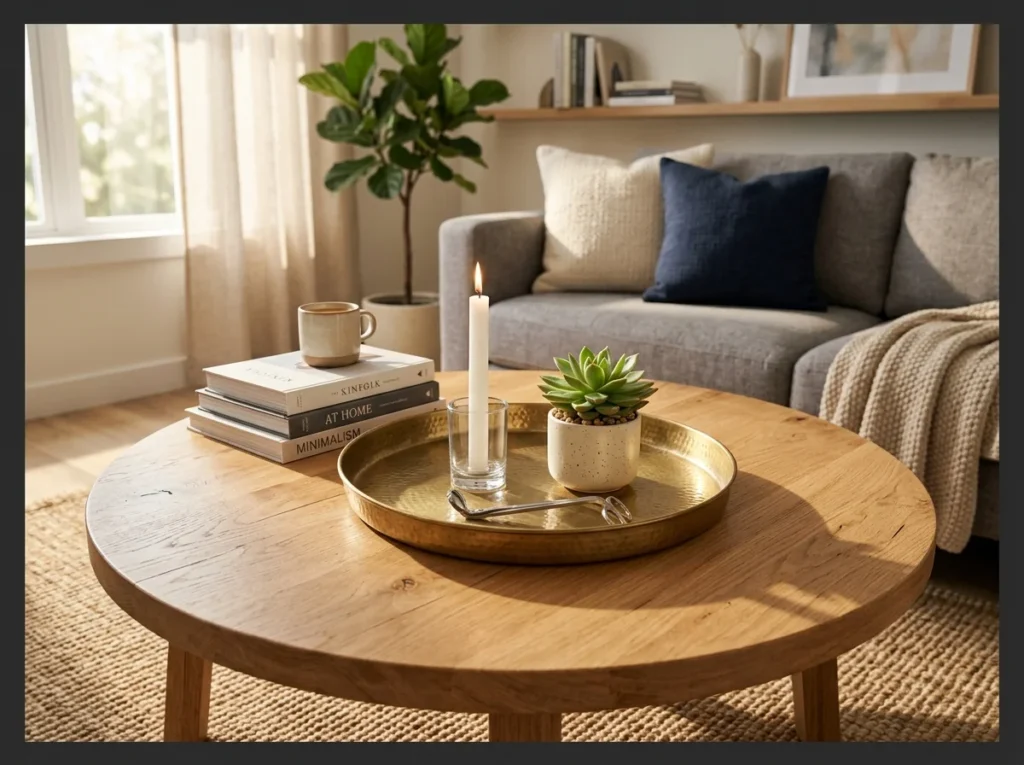
A round tray placed in the center of a round coffee table is the single most effective styling tool available for this type of table. The tray creates a defined zone within the circular surface and everything grouped inside it reads as a single composed arrangement rather than scattered objects.
Choose a tray material that contrasts with your table. A brass tray on a dark walnut table, a woven rattan tray on a white marble table, or a white ceramic tray on a natural oak surface all create visual interest through material contrast. The tray shape echoes the round table and reinforces the circular form beautifully.
That same anchoring idea works just as well on shelves that use the same trick elsewhere in the room.
Stack of Books with One Object on Top
Stacked books add height and act as a pedestal for whatever sits on top of them. A small object, like a candle or figurine, becomes more noticeable once elevated this way. This combination is one of the simplest tricks for styling a coffee table or shelf.
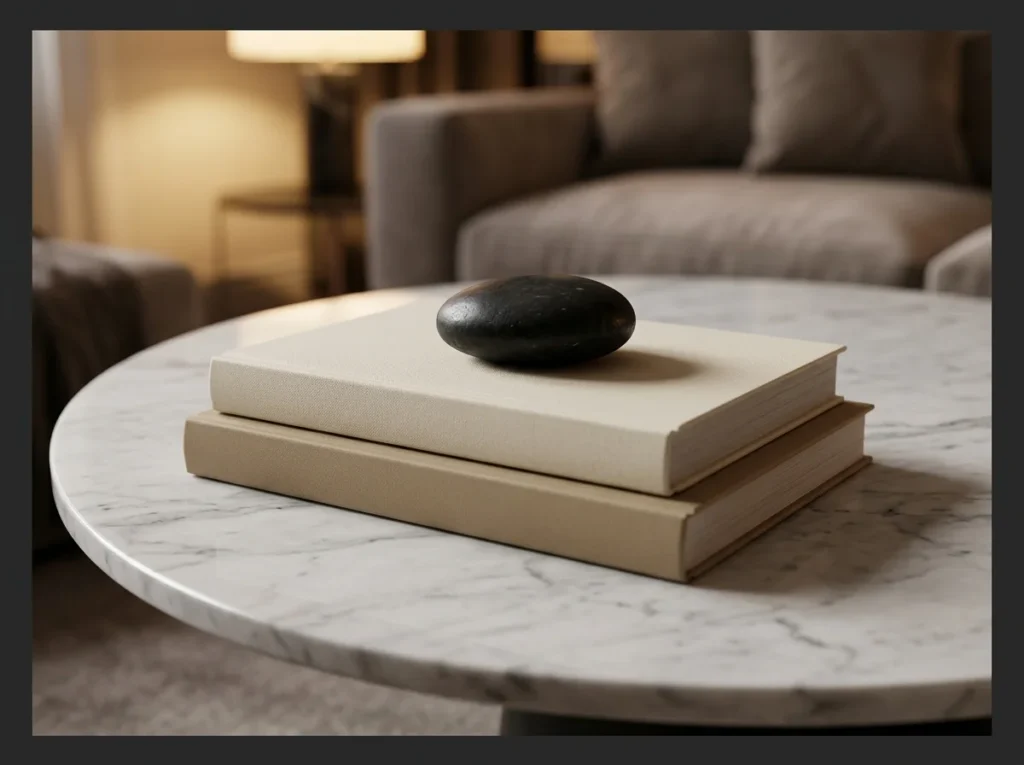
Two hardcover books stacked horizontally with a single object resting on top is one of the most versatile and effortlessly styled coffee table arrangements. The stack creates height variation and the object on top provides a natural focal point that draws the eye directly to the arrangement.
Budget friendly option. The books themselves provide the decorative element choose ones with attractive spines or covers that match your room palette. A smooth stone, a small ceramic object, or a single dried botanical as the top piece keeps the arrangement clean and considered rather than over-styled.
Single Statement Vase with One Stem
A single stem in a striking vase relies on shape rather than a full bouquet to make an impact. This approach works especially well when the vase itself has an interesting form or color. It suits a display wanting simplicity over abundance.
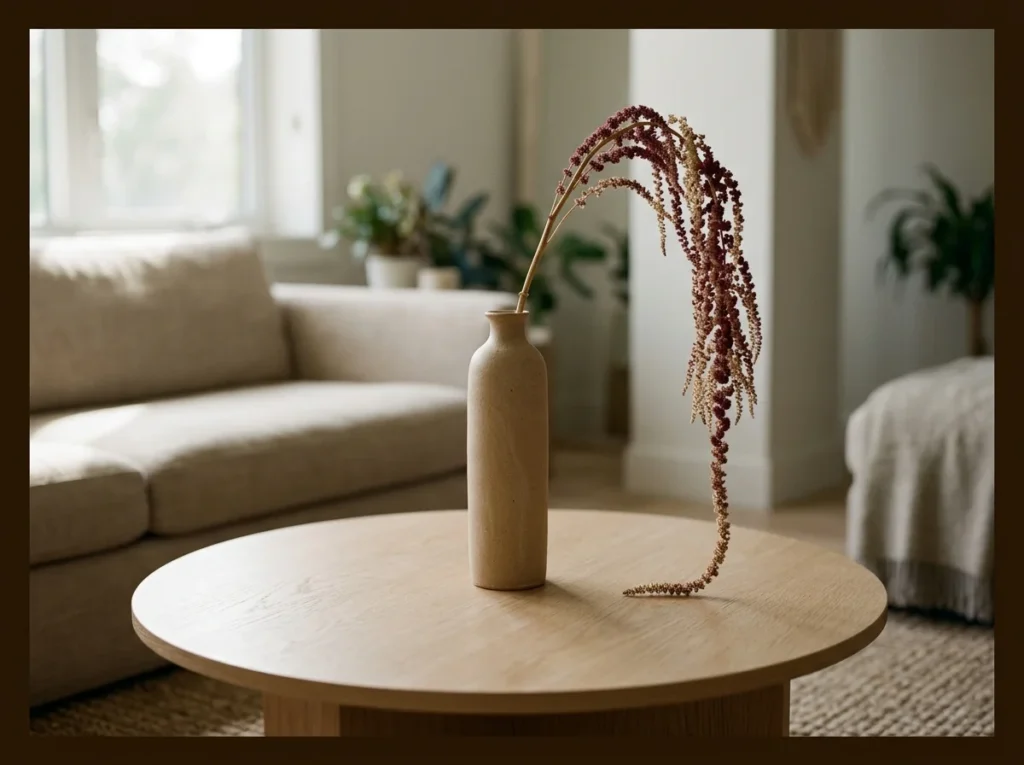
A single tall slim vase holding one dramatic stem is a styling choice that looks far more expensive and considered than a crowded arrangement of multiple objects. The restraint communicates confidence and the negative space around the vase gives it room to be noticed.
Choose a stem that has natural movement and interest dried amaranth drooping gracefully, a single sculptural branch, or one garden rose just beginning to open. The vase and its single occupant should feel like a deliberate artistic decision rather than a minimalist compromise.
Three Object Rule Arrangement
Grouping items in odd numbers, especially three, tends to look more natural than pairs. Varying the height and shape of each object keeps the arrangement from feeling too uniform. This rule shows up constantly in styling because it genuinely works.
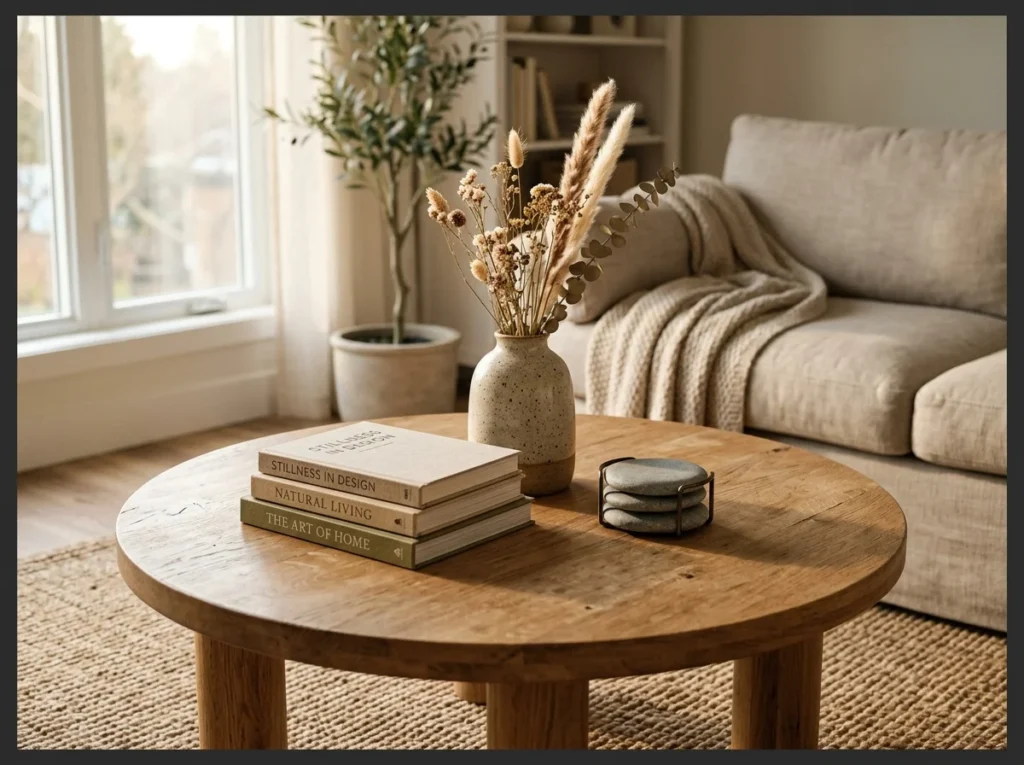
Placing exactly three objects on a round coffee table in a loose triangle arrangement is one of the most reliably beautiful approaches to styling this type of table. Three objects in a triangular formation create visual balance without symmetry, which is always more interesting than a perfectly centered arrangement.
Choose objects at three different heights one tall, one medium, one low. A vase is typically the tallest, a book stack or bowl is medium, and a small coaster set or stone object sits lowest. This height variation creates the three-dimensional quality that makes a coffee table arrangement feel genuinely designed rather than just placed.
Ceramic Bowl with Natural Fillers
A ceramic bowl filled with pinecones, dried citrus or stones adds texture without needing flowers. This approach also lets the filler change easily with the seasons. It suits a coffee table or shelf wanting a low, grounded centerpiece.
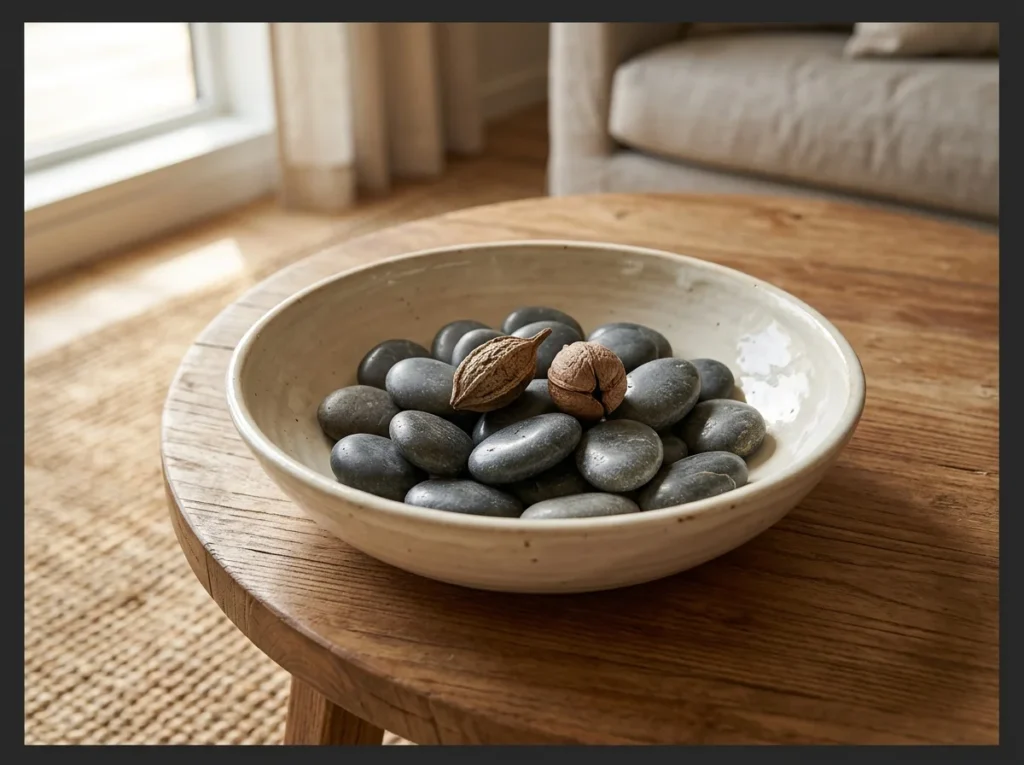
A wide shallow ceramic bowl filled with natural objects smooth river stones, dried seed pods, small pine cones, or sea glass creates a low profile centerpiece that sits at exactly the right height for a coffee table. The bowl contains the arrangement and the natural fillers provide texture and visual depth without color.
The material of the bowl matters as much as the fillers. A handmade ceramic bowl with a slightly irregular rim and an artisan glaze reads as far more considered than a perfect factory-produced piece. Imperfection in the bowl actually makes the whole arrangement feel more authentic and personal.
Cluster of Three Candles at Different Heights
Varying candle heights within a small group adds visual rhythm to the display. This approach works whether the candles are lit or simply sitting unlit as decor. It suits nearly any surface, from a mantel to a dining table.

Three pillar candles grouped together on a small base at deliberately different heights create a sculptural centerpiece that works beautifully in the evening and looks intentional even when unlit during the day. The varied heights create movement within the grouping that a uniform row of candles cannot achieve.
Place all three on a single small marble or slate base so they read as one unified object rather than three separate candles scattered across the table. This one detail transforms a functional collection of candles into a proper coffee table centerpiece. Choose all the same color for a cohesive, graphic result.
Dried Botanical in a Terracotta Vase
Dried stems last for months without wilting, making them a low maintenance centerpiece option. A terracotta vase adds warmth that a plain glass or ceramic vessel does not offer. This pairing suits a display leaning toward an earthy, natural color palette.
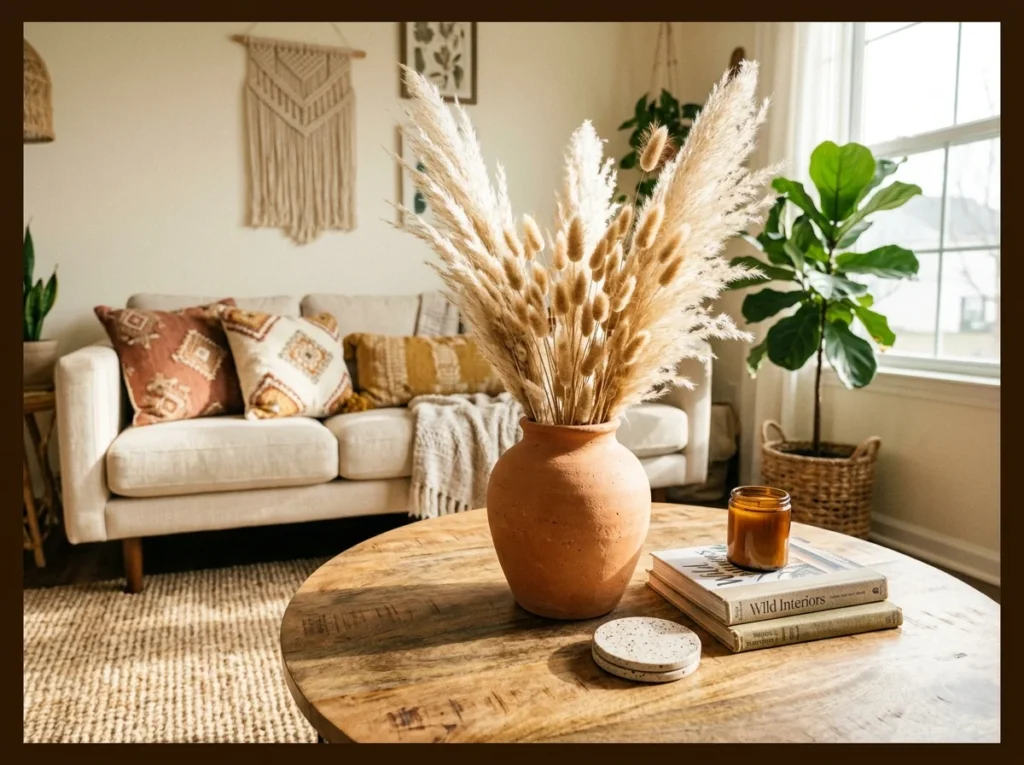
Dried pampas grass or dried bunny tail stems in a terracotta vase create a coffee table centerpiece that looks beautiful from the day you arrange it and continues to look equally beautiful for months without any maintenance at all. The dried botanical requires no water and no care just occasional gentle dusting.
The terracotta vase is the material detail that completes this arrangement. The warm orange clay harmonizes naturally with cream, beige, sand, and sage interiors and adds an earthy grounding quality that a glass or white ceramic vase cannot match in the same way.
Small Succulent Trio in Matching Pots
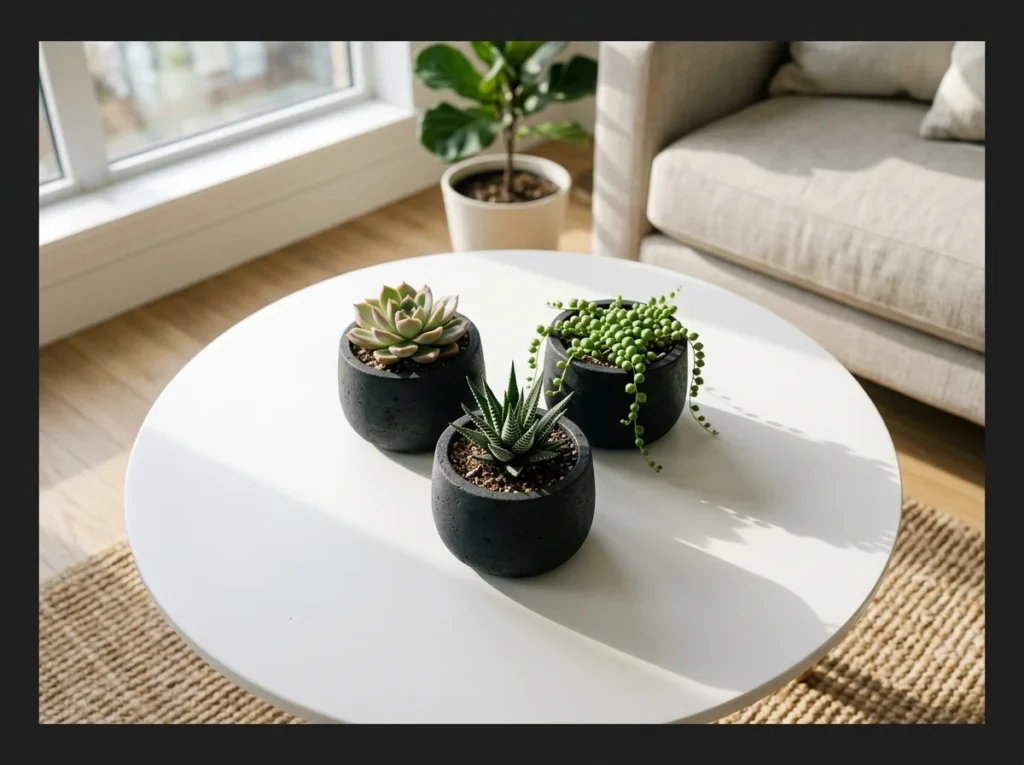
A trio of succulents in matching pots gives a display symmetry without feeling stiff. Succulents also need very little water, which makes this arrangement practical as well as attractive. This grouping suits a windowsill, shelf or small side table.
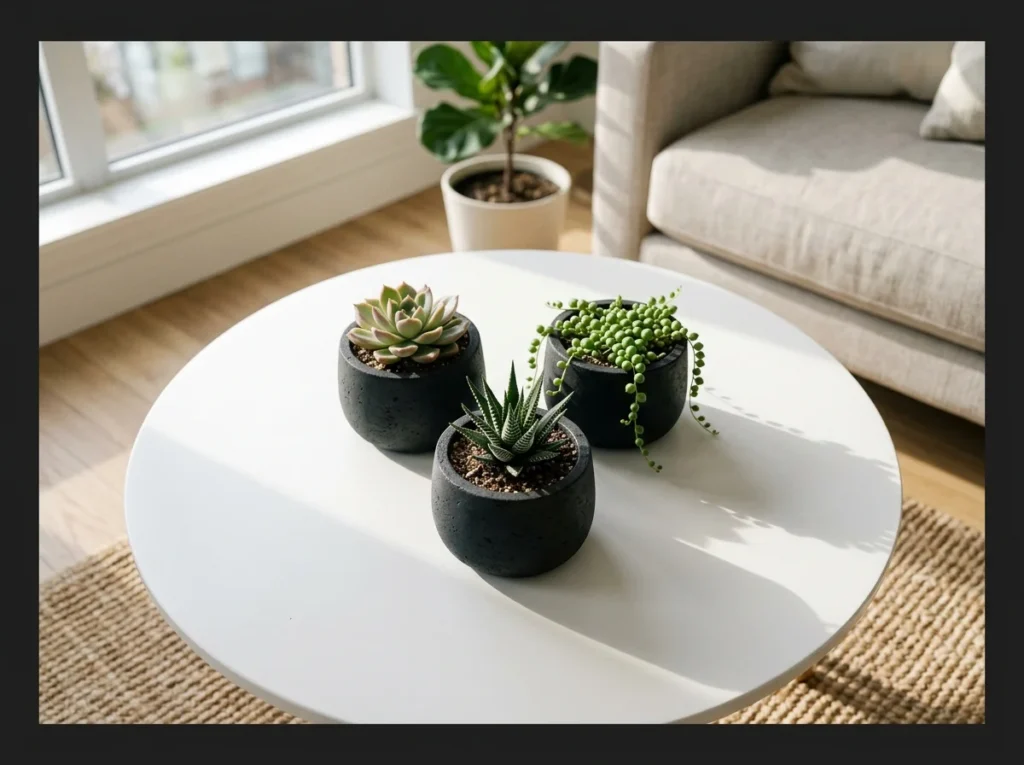
Three small succulents in matching concrete pots arranged in a loose triangle create a living, low-maintenance coffee table centerpiece that adds natural texture without requiring daily attention. Choosing three different succulent varieties keeps the arrangement visually interesting while the matching pots create cohesion.
Perfect for small tables. The low profile of succulent plants keeps the table surface uncluttered and the sightlines across the room completely clear. Water them every two weeks by placing the pots in a shallow dish of water and letting them absorb from the base rather than watering from above.
If this low-maintenance plant idea appeals to you, greenery that fills out a room nicely has plenty of other options worth trying.
Stone or Marble Object as Sculpture
A single stone or marble piece can act as a small sculpture without needing an actual art frame. Its smooth surface and natural variation add a quiet, grounding element to the display. This object works especially well paired with something taller, like a candle or vase.
A single smooth marble or polished stone object placed deliberately off-center on a round coffee table makes a bold and confident styling statement that relies on negative space rather than abundance. The stone reads as art because it occupies the surface alone with room to breathe around it.
This approach works best on a table with a beautiful surface of its own natural wood grain, marble, or glass where the table itself contributes to the visual interest. One well-chosen stone object on a beautiful round table is genuinely more impactful than six competing decorative pieces fighting for attention.
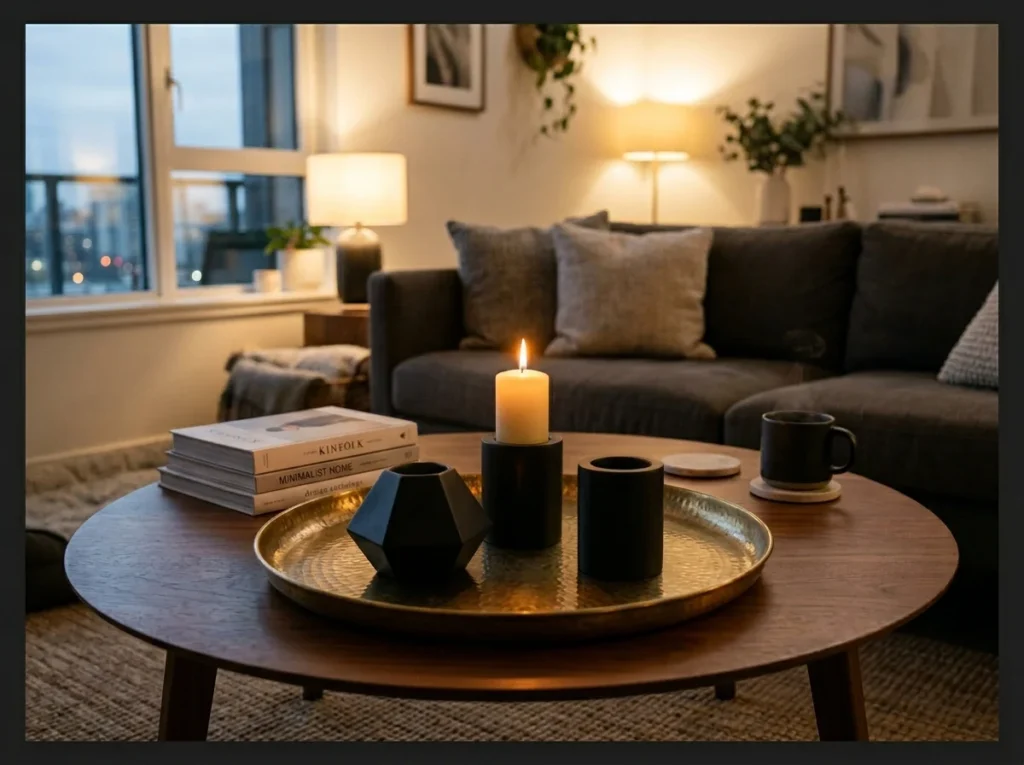
Brass Tray with Geometric Candle Holders
A brass tray adds shine underneath whatever else sits on top of it. Geometric candle holders in particular give the display a more modern, structured look. This combination suits a coffee table wanting a bit of polish and contrast.

A round brass tray holding two or three geometric matte black candle holders creates a coffee table arrangement with genuine style contrast. The warm gold of the brass tray and the cool dark geometry of the holders create a material pairing that looks deliberately designed rather than accidentally assembled.
This arrangement looks equally good lit at night and styled during the day. At night the candlelight reflects off the brass tray surface and creates a warm ambient glow across the table. During the day the graphic shapes of the geometric holders provide visual structure and interest.
Glass Cloche with a Single Treasure
A glass cloche protects and highlights a small object, like a shell or dried flower, placed underneath. This detail also adds a bit of old world charm compared to leaving the object out in the open. It suits a display wanting one clear point of focus.
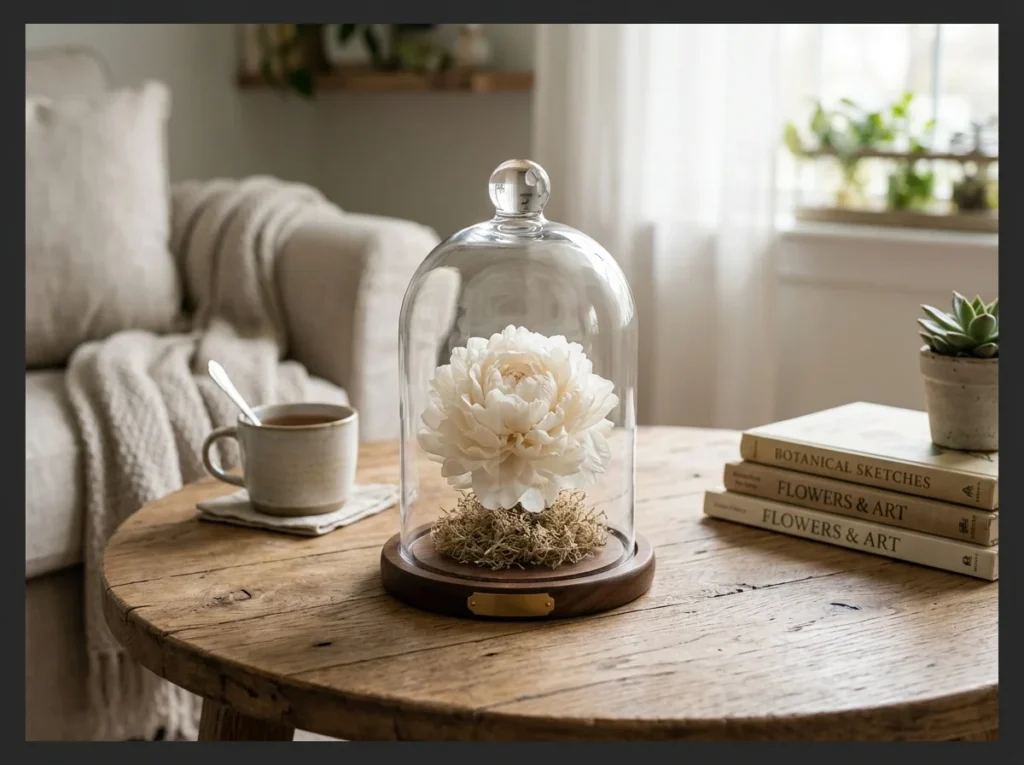
A glass cloche placed over a single meaningful object transforms an ordinary decorative item into a precious display. The bell-shaped glass elevates whatever sits underneath it a preserved flower, a small sculptural piece, a crystal, or a treasured keepsake by framing it as something worth protecting and displaying.
The glass cloche works because it adds both height and a sense of occasion to one small object. It signals that what is inside is genuinely worth looking at. Place it slightly off-center on the round table surface and add one low accompanying object on the opposite side to balance the arrangement.
Seasonal Fruit Bowl as Centerpiece
A bowl of fruit doubles as both decor and something that will actually get eaten. Swapping the fruit by season keeps this arrangement changing naturally throughout the year. This approach suits a kitchen island or dining table more than a purely decorative shelf.
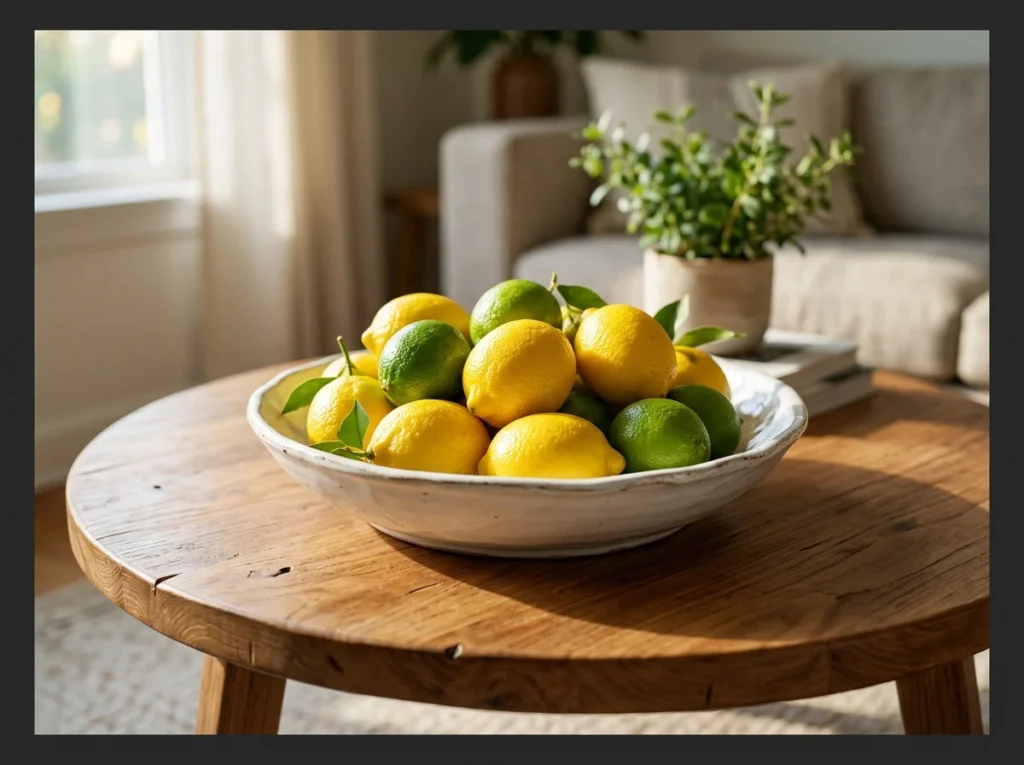
A large handmade ceramic bowl filled with seasonal fruit is one of the most functional and genuinely beautiful coffee table centerpieces available. It looks abundant and deliberately styled while providing actual food that sits within arm’s reach of whoever is on the sofa.
Change the fruit with the season lemons and limes in summer, apples and pears in autumn, pomegranates and oranges in winter. The bowl itself provides the decorative consistency while the fruit inside shifts the color and mood of the table across the year without any additional purchases.
Layered Look with Linen Table Runner
A linen runner gives smaller objects a cohesive base to sit on rather than scattering directly on the table. This detail adds texture underneath the display before anything else is even placed. It suits a longer table or console wanting a slightly more finished, layered look.
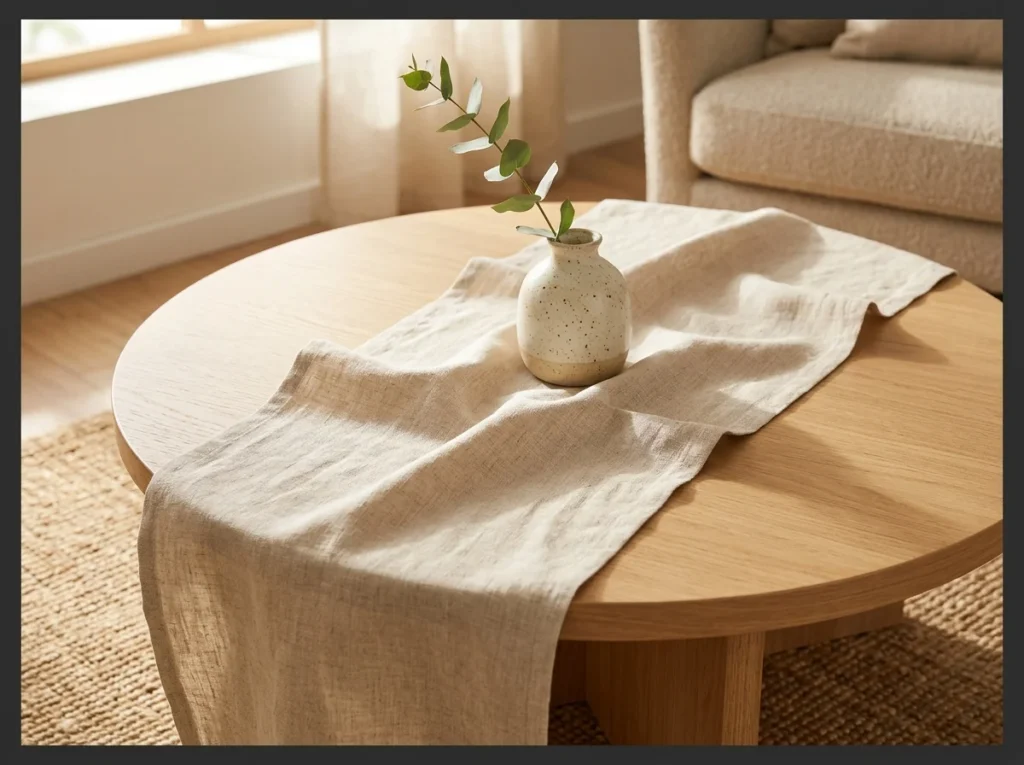
Draping a linen runner loosely across the center of a round coffee table adds soft texture at surface level that creates a foundation for other objects to sit on. Unlike the flat hard surface of a table alone, the linen adds warmth and a layered quality that makes even a simple arrangement feel more considered.
Natural undyed linen is the best choice because the neutral fiber tone works with any interior palette and the natural texture of the weave catches light beautifully. Keep it slightly casual and imperfect in how it drapes rather than perfectly centered that loose, lived-in quality is the point.
Rattan and Wood Object Combination
Mixing rattan and wood brings two natural textures together without needing any bold color. This combination suits a display already leaning toward an earthy or coastal material palette. It works well whether the pieces are baskets, trays or small sculptural objects.
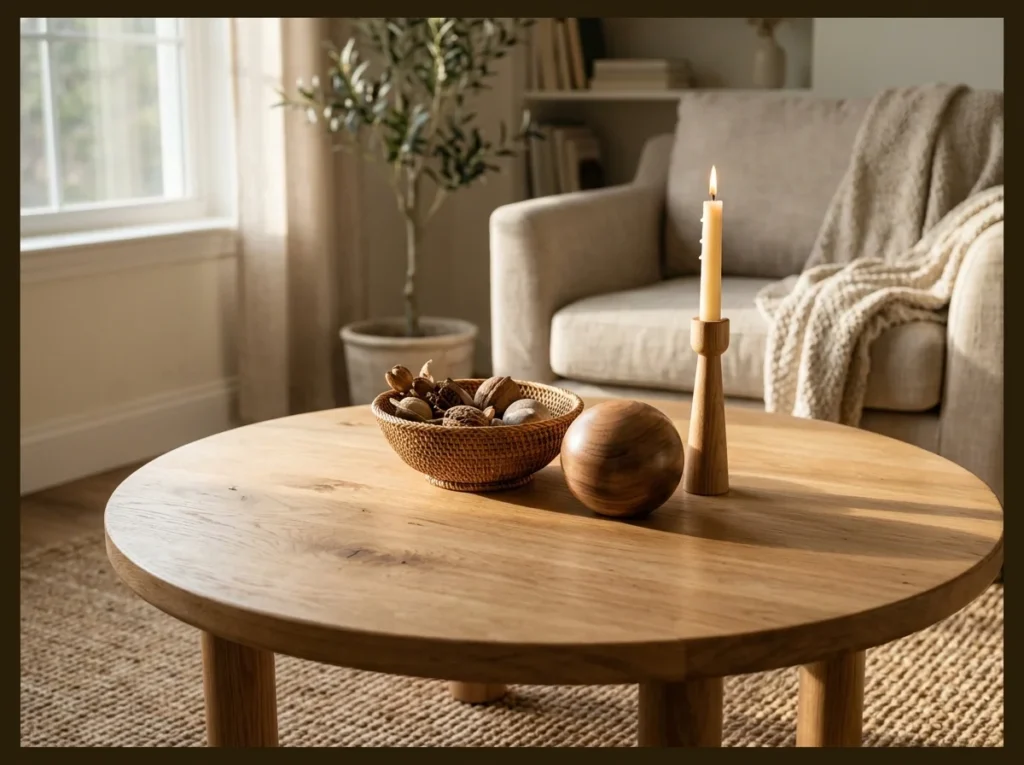
Combining rattan and warm wood objects on a round coffee table creates a cohesive natural materials arrangement that reads as warm, organic, and deliberately earthy. Both materials share golden-to-honey tones that complement each other without competing.
This type of arrangement suits farmhouse, coastal, boho, and Japandi living rooms equally well because natural materials are never style-specific they translate across different aesthetics depending on the surrounding context. Keep the whole arrangement within three objects so the natural texture of each individual piece remains visible and readable.
Fresh Flowers in a Low Wide Vase
A low, wide vase keeps flowers from towering over other items nearby on the same surface. This shape also suits a coffee table where sightlines across the room matter. Simple, loosely arranged stems tend to look more natural than a tightly packed bouquet.
A wide, low vase rather than a tall narrow one is the correct choice for a coffee table because it keeps the floral arrangement below eye line when seated, which means the flowers enhance the conversation zone rather than interrupting it. Cut the stems very short so the blooms sit just above the rim of the vase.
The flowers spread wide and abundant in a low vase in a way that a tall arrangement cannot. This generous, overflowing quality makes the arrangement feel lush and celebratory rather than formal. Change the water daily and recut the stems at an angle each time to maximize the life of any cut flower arrangement.
Coastal Style with Driftwood and Shells
Driftwood and shells bring a distinctly beach inspired feel without needing any flowers at all. This combination works especially well in a home already leaning into a coastal color palette. Each piece varies slightly, which keeps the arrangement from looking too uniform or staged.
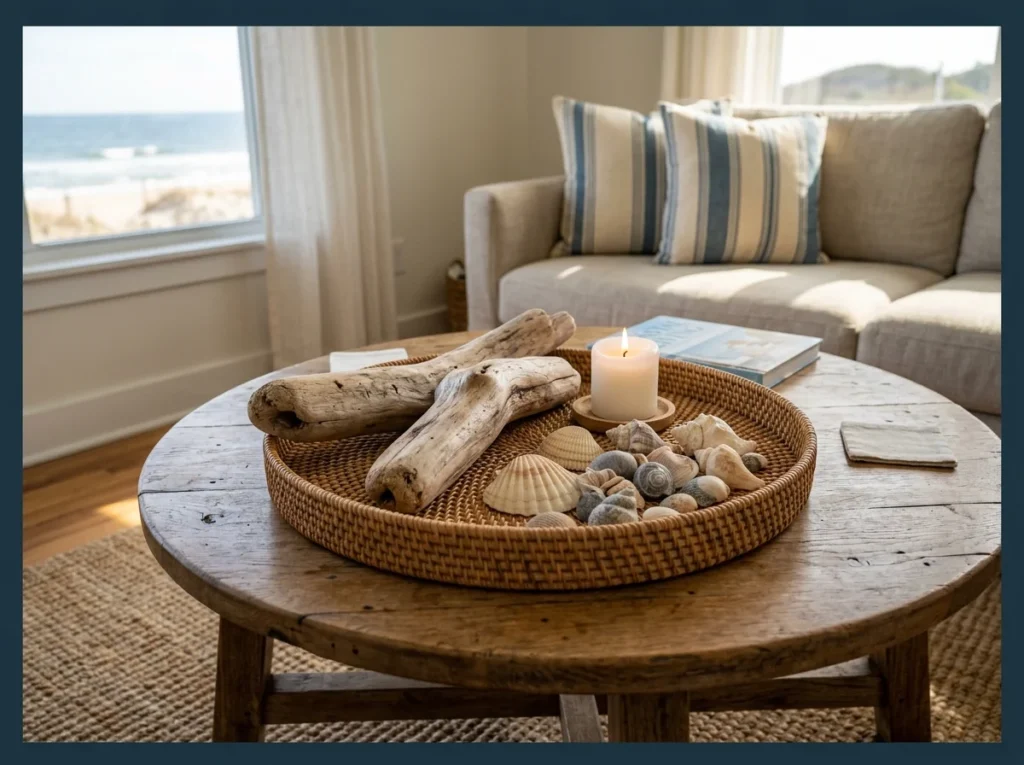
A rattan tray holding smooth driftwood, natural shells, and a small white candle creates a coastal coffee table arrangement that feels genuinely collected from a real shoreline rather than purchased from a decor store. The key is using pieces with natural variation in shape and size rather than perfectly matched sets.
Source the driftwood and shells from actual beaches rather than craft stores whenever possible. The real material has a warmth, weight, and surface quality that manufactured replicas cannot replicate. One piece of real driftwood with interesting shape creates more visual interest than three perfect factory-smooth replicas.
Boho Style with Pampas Grass and Beads
Pampas grass adds height and movement, while wooden beads bring in a bit of texture at the base. This combination suits a display leaning toward a relaxed, bohemian style. It works well in a tall vase paired with a couple of smaller grounding objects nearby.
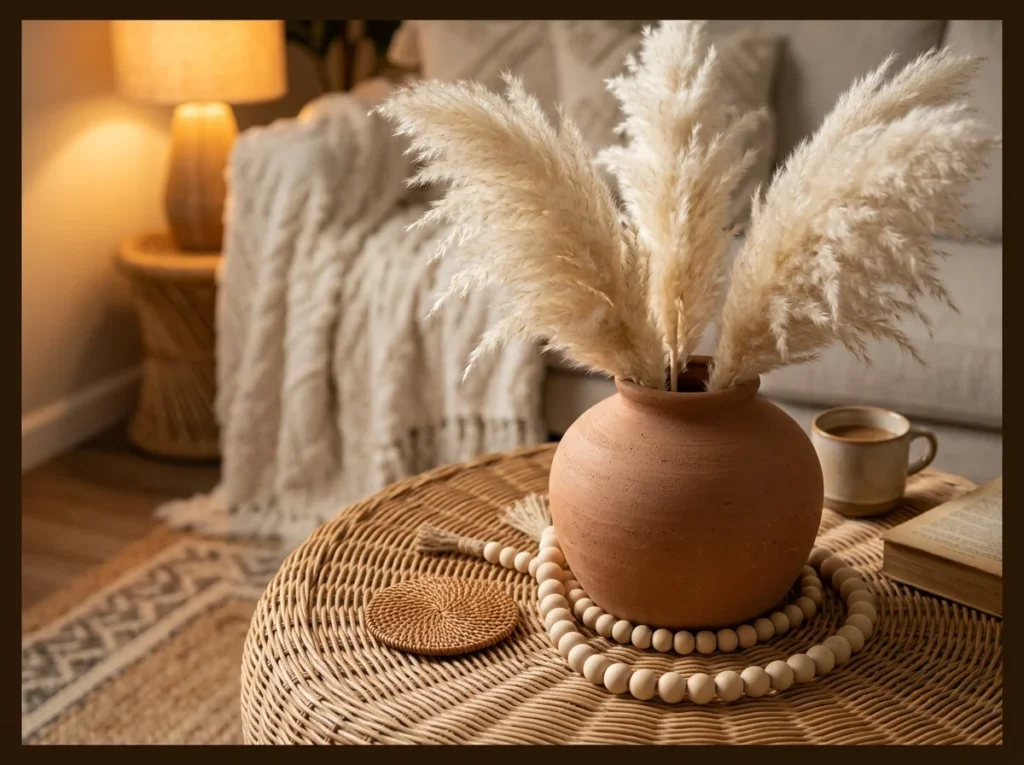
A terracotta vase with cream pampas grass plumes surrounded by a casually draped wooden bead garland at the base creates a coffee table arrangement with the layered, collected quality that defines bohemian interior style. The combination of organic material and natural texture is exactly what this aesthetic celebrates.
The wooden bead garland is the detail that elevates this from a simple dried flower arrangement to a proper boho styled moment. Drape it loosely around the base of the vase rather than laying it flat the gentle loop of the beads adds movement and visual rhythm to the whole arrangement.
Japandi Style with Minimal Ceramic and Stone
Japandi styling favors restraint, using just a ceramic piece and a stone rather than a full grouping. This approach leaves plenty of negative space around the objects themselves. It suits a display wanting calm simplicity over a busier, layered look.
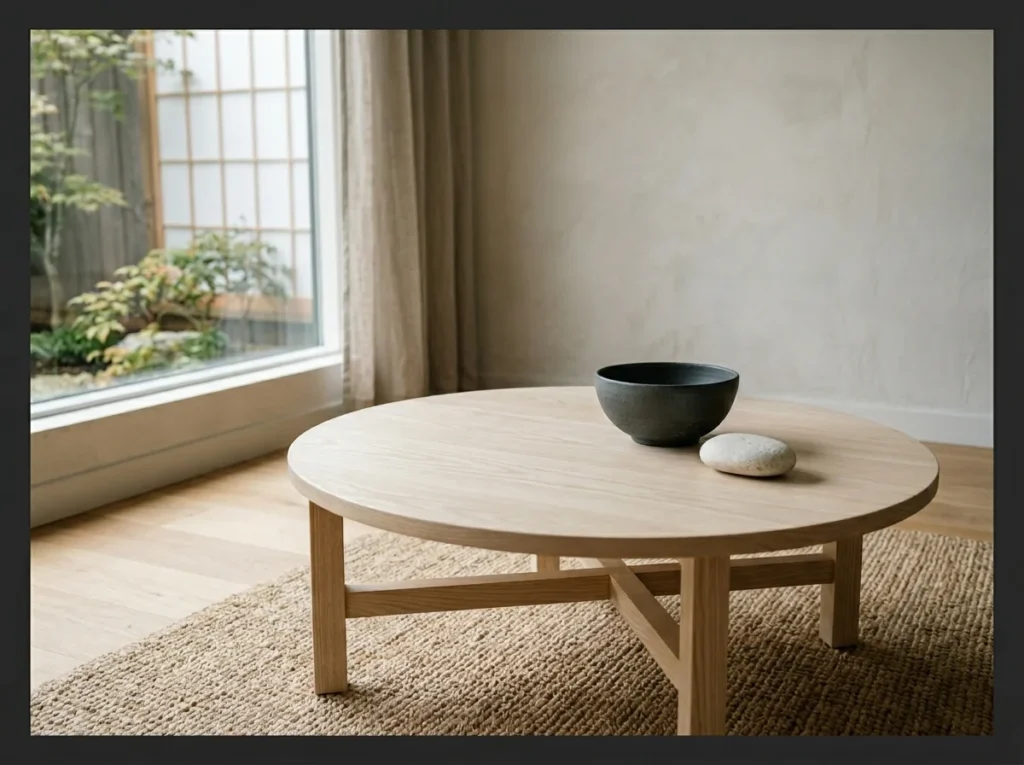
A Japandi coffee table arrangement uses the minimum possible number of objects to create the maximum possible sense of calm. One handmade ceramic bowl and one smooth stone is genuinely enough the discipline of choosing only two objects and placing them with deliberate asymmetry is the entire styling technique.
The empty space around the two objects is as important as the objects themselves in Japandi styling. The negative space creates visual breathing room that makes the room feel slower, quieter, and more intentional. This approach asks the objects to carry all the meaning, which means each object chosen must be genuinely beautiful.
Farmhouse Style with Books and Greenery
Stacked books paired with a small potted plant give this arrangement a lived in, farmhouse feel. Neutral tones throughout keep the display from feeling too styled or precious. This combination suits a shelf or side table in a more casual, everyday living space.
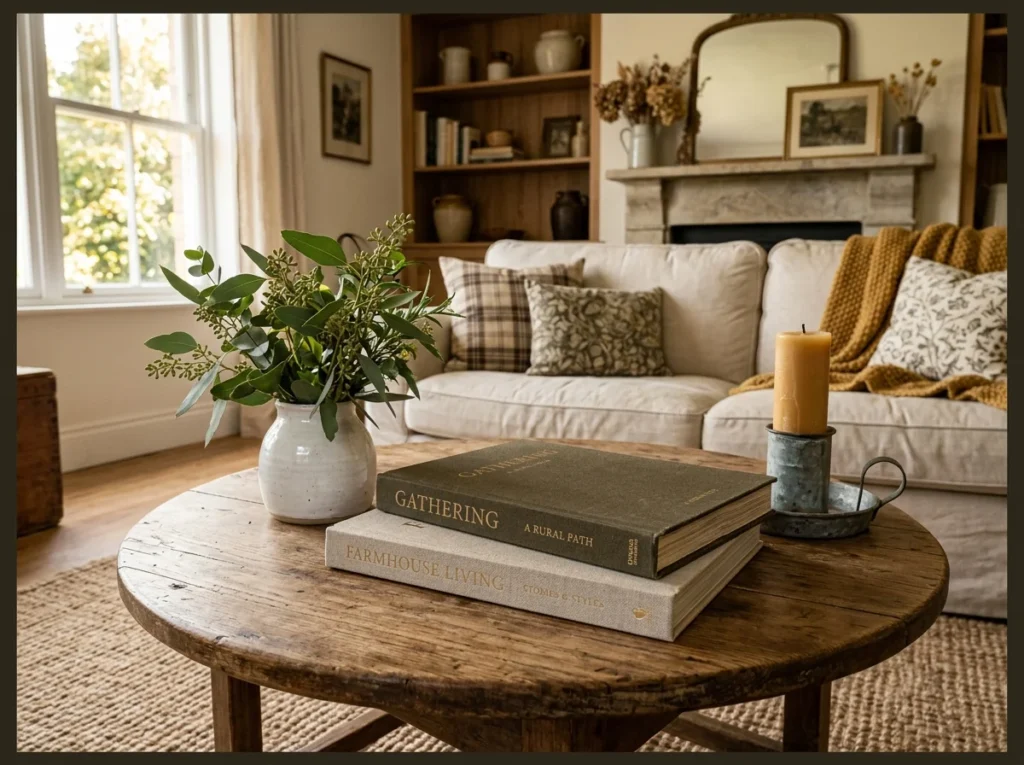
Two linen-covered books, a small ceramic pot with fresh eucalyptus, and one pillar candle in a galvanized metal holder creates a farmhouse coffee table arrangement that feels genuinely lived-in rather than staged. Every object has a practical quality that suits the farmhouse aesthetic’s honest relationship with function.
The fresh eucalyptus is the element that makes this arrangement feel fresh rather than static. Replace it every ten to fourteen days when it begins to look dry. The silvery-green leaf color and the natural fragrance of fresh eucalyptus add a sensory quality to the table that no artificial botanical can replicate.
If this farmhouse styling is working for you here, a farmhouse feel for the whole room shows how naturally it carries into other spaces.
Modern Style with Black Objects and Negative Space
Black objects stand out clearly against most surfaces, especially when surrounded by empty space. This approach relies on restraint, using fewer pieces rather than filling every inch of the surface. It suits a display wanting a clean, contemporary look.
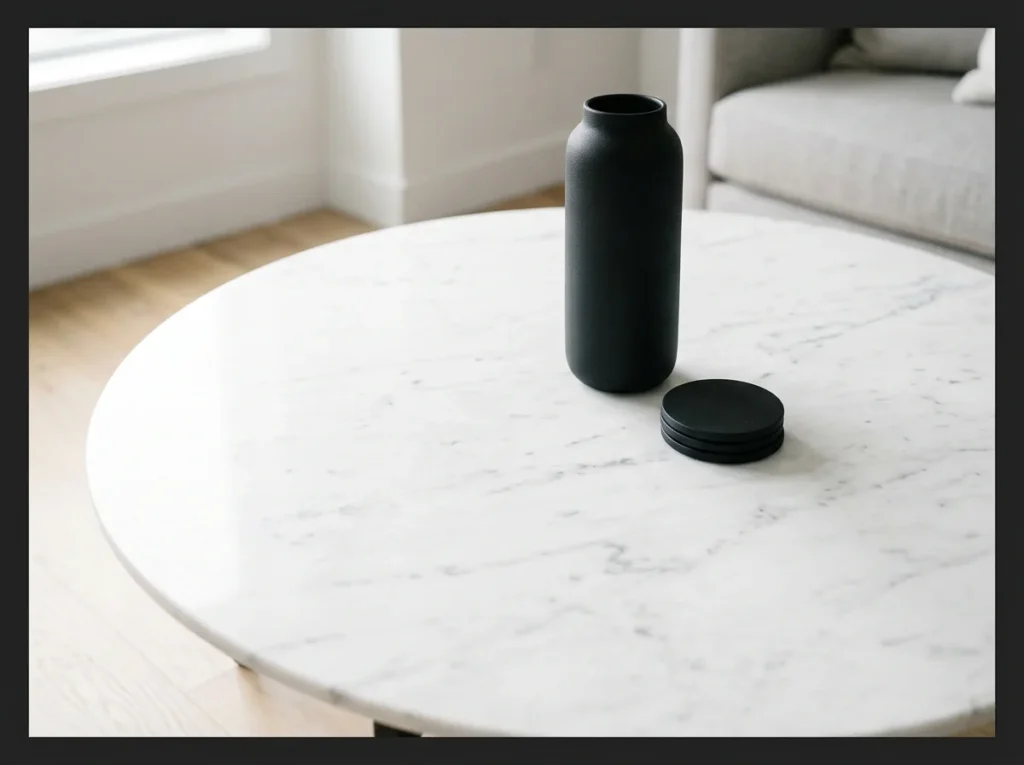
Two matte black objects placed on a white marble or light stone round coffee table with a large amount of empty surface left visible creates the most contemporary and architecturally confident coffee table arrangement on this list. The black objects pop against the light surface and the negative space makes both the table and the objects more visible.
Choose objects with strong geometric silhouettes a tall cylindrical vase, a flat round tray, a cube-shaped box. The geometry is what makes this arrangement feel modern rather than merely minimal. Avoid organic or irregular shapes in a modern styling approach as they soften the graphic quality the style depends on.
If this graphic, modern direction appeals to you, a bolder wall to match this style can carry the same confidence onto a bigger surface.
Scented Candle as Functional Decor
A candle serves as both a decorative object and something with an actual purpose beyond looks. This dual function makes it an easy addition to almost any styled surface. It suits a display wanting decor that also does something useful.
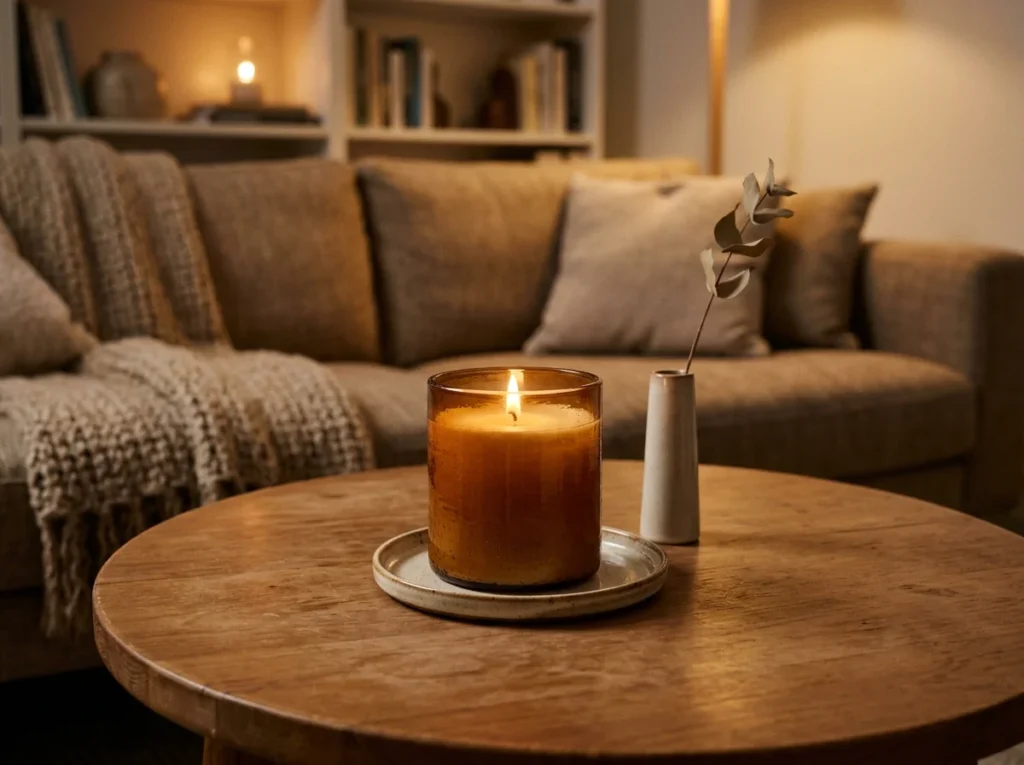
A large quality scented candle in an amber or dark glass vessel is functional decor that adds both visual warmth and fragrance to the living room simultaneously. It does two jobs from one object which is the most space-efficient approach to coffee table styling on a small table.
Choose the scent to match the season citrus and fresh linen in summer, amber and fig in autumn, cedar and spice in winter. The right fragrance changes how the whole living room feels to be in and a candle on the coffee table places that fragrance exactly at sitting height where it has the most impact.
Crystal or Glass Orb as Focal Point
A glass or crystal orb catches and refracts light in a way flat objects cannot. This piece works well as a single, sculptural centerpiece rather than part of a larger grouping. It suits a display wanting one clear, eye catching object.
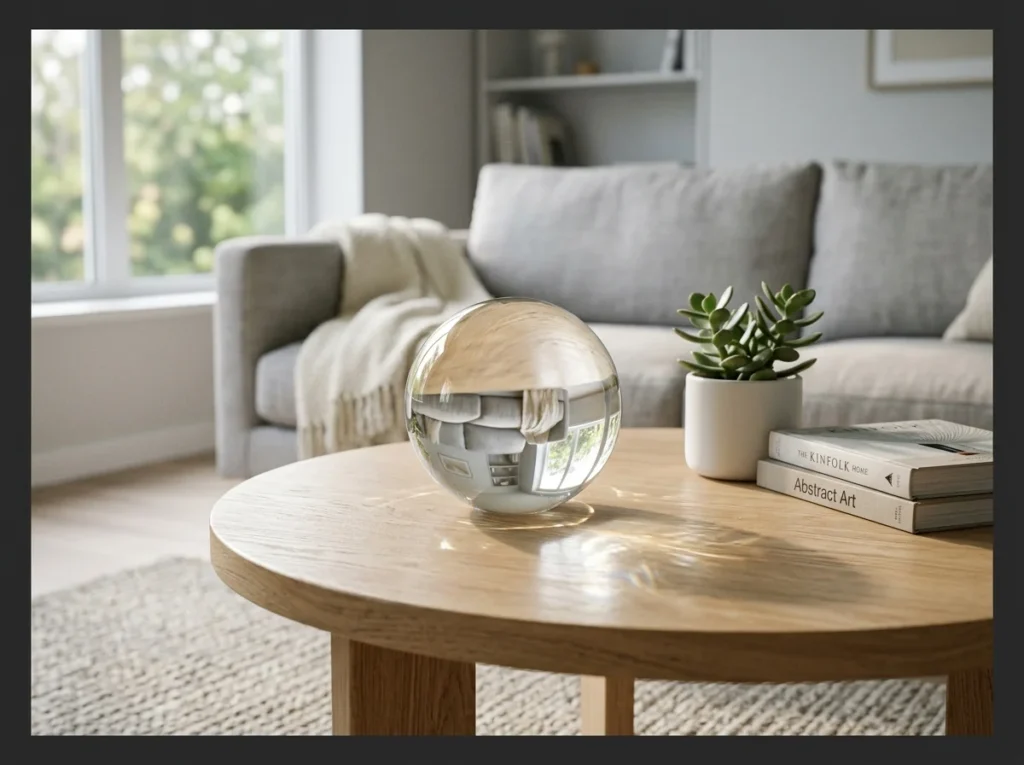
A large clear glass or crystal orb placed in the center of a round coffee table creates an elegant centerpiece that references the circular form of the table itself. The sphere catches and refracts available light throughout the day changing subtly as the light shifts from morning to afternoon to lamp light in the evening.
The orb works best on a round table specifically because the circular form of the sphere and the circular form of the table create a visual conversation between furniture and object that is genuinely pleasing. On a rectangular table the sphere would simply look like a random sphere. Here it feels like it belongs.
This same circular logic applies just as well when a dining table styled the same way is the surface you’re working with.
Personal Mementos in a Collected Arrangement
Personal items, like travel souvenirs or family photos, give a display real meaning beyond just style. This approach makes the arrangement feel specific to the person rather than generic decor. It suits a shelf or side table wanting personality alongside visual appeal.
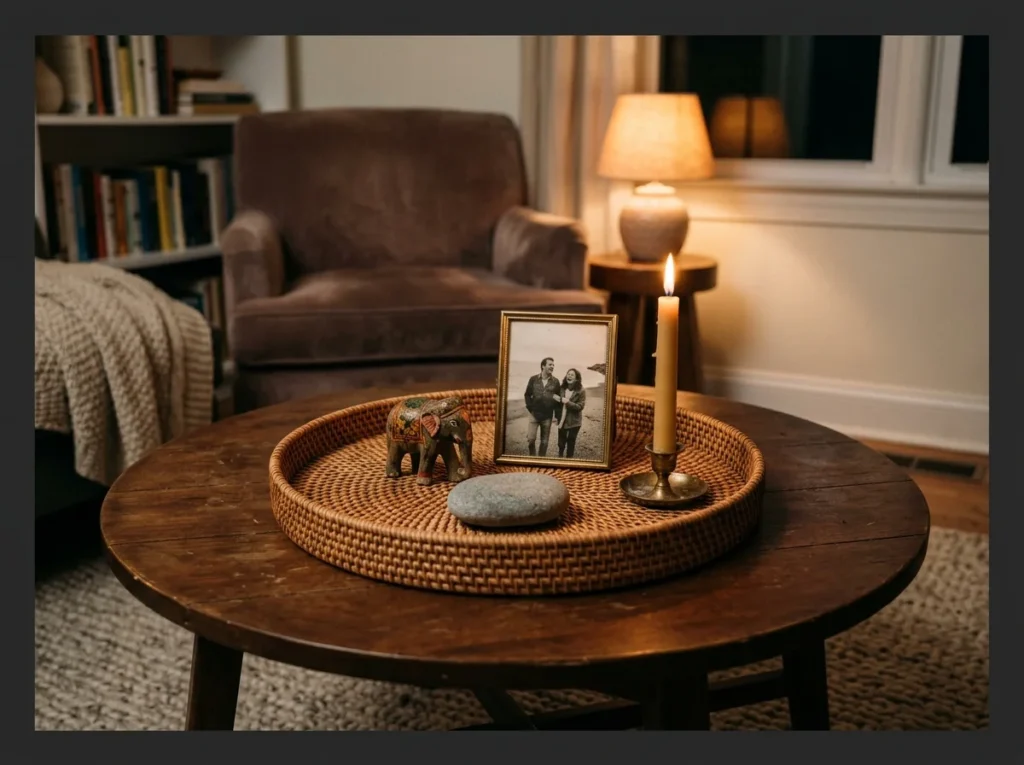
A small collection of genuinely personal objects a meaningful stone, a small souvenir, a tiny framed photograph, and a candle arranged together on a tray creates a coffee table display that no styling guide can fully replicate because it is uniquely yours. The objects tell a story that purely decorative pieces cannot.
Contain the personal collection within a tray so it reads as a curated arrangement rather than a scattered pile of random items. A round rattan or brass tray works best on a round table. The tray gives the personal items a defined home and elevates them from clutter to display in one organizational move.
Conclusion
A round coffee table is one of the most rewarding surfaces to style in any living room because its circular form has a natural elegance that a tray, a bowl, or a grouped arrangement of objects can enhance beautifully. The most important principles are simple: leave empty space, vary the heights, and choose objects that genuinely mean something in the context of your room.
Pick two or three ideas from this list that suit your living room style and your table size. Start with a tray as your anchor and build from there. Three good objects at three different heights in a loose triangle is genuinely all you need to transform a bare round coffee table into the most styled and beautiful surface in the room.
The same principle works just as well the moment guests walk in, so an entryway with its own personal touch is worth applying it to next.