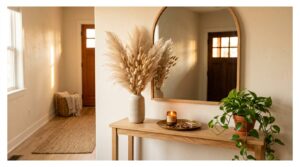
A neutral living room is not boring. Done right it is one of the most beautiful and genuinely relaxing spaces a home can have.These ideas create a neutral living room with real warmth, depth, and personality.
If you want to lean slightly warmer still, a warmer cousin of this same palette explores that direction in more depth.
Let’s explore the ideas.
Warm White Walls with Layered Cream Textiles
Warm white avoids the stark, clinical feel that a cooler white often brings into a room. Layering cream throws, cushions, and rugs on top of that base keeps things from looking flat or empty. The slight variation between each texture is what actually makes the room feel finished.
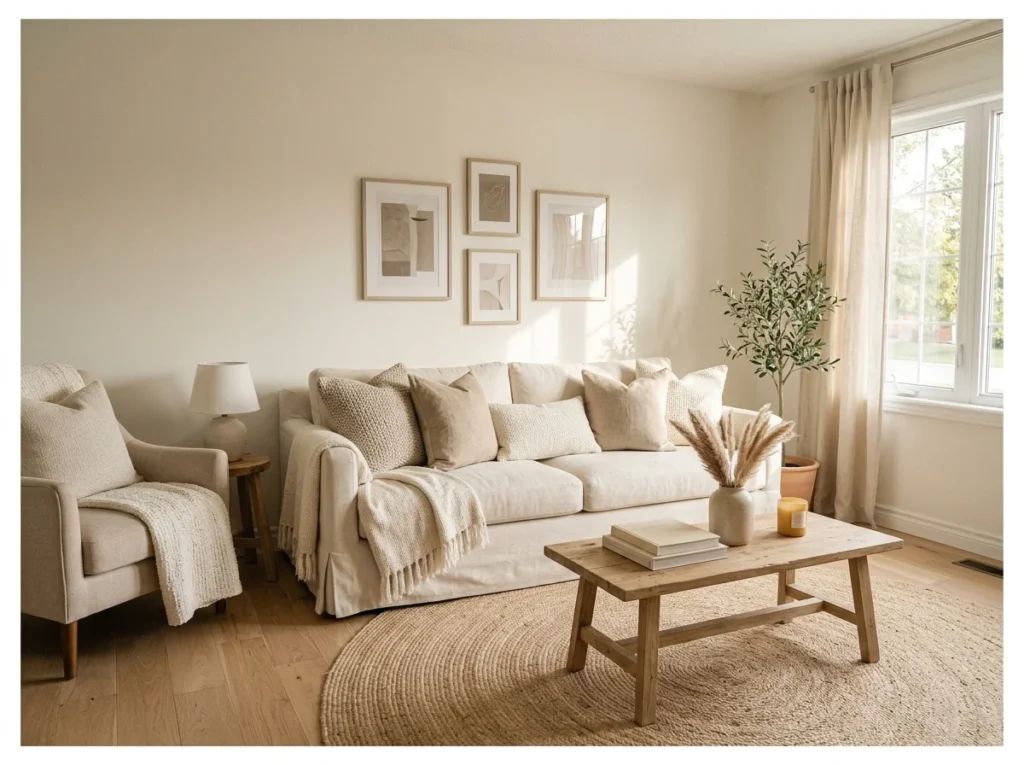
Warm white walls combined with cream and ivory textiles create a tonal neutral living room where the interest comes entirely from the varied textures within a single pale family. The room feels simultaneously calm and visually rich.
The secret is using at least four to five different textures: smooth linen, chunky knit, velvet, woven cotton, and a soft shaggy element. Within the same cream to ivory palette these textures create enough visual variation that the room never feels monotonous. Warm rather than cool white on the walls prevents the clinical quality that neutral rooms sometimes fall into.
Calm, warm, and endlessly beautiful.
Linen Sofa in Natural Oatmeal
An oatmeal linen sofa sits right in that neutral zone between beige and grey. Linen also has a slightly rumpled, lived in look that feels less stiff than a tightly upholstered fabric. It tends to work with almost any other neutral tone placed around it.
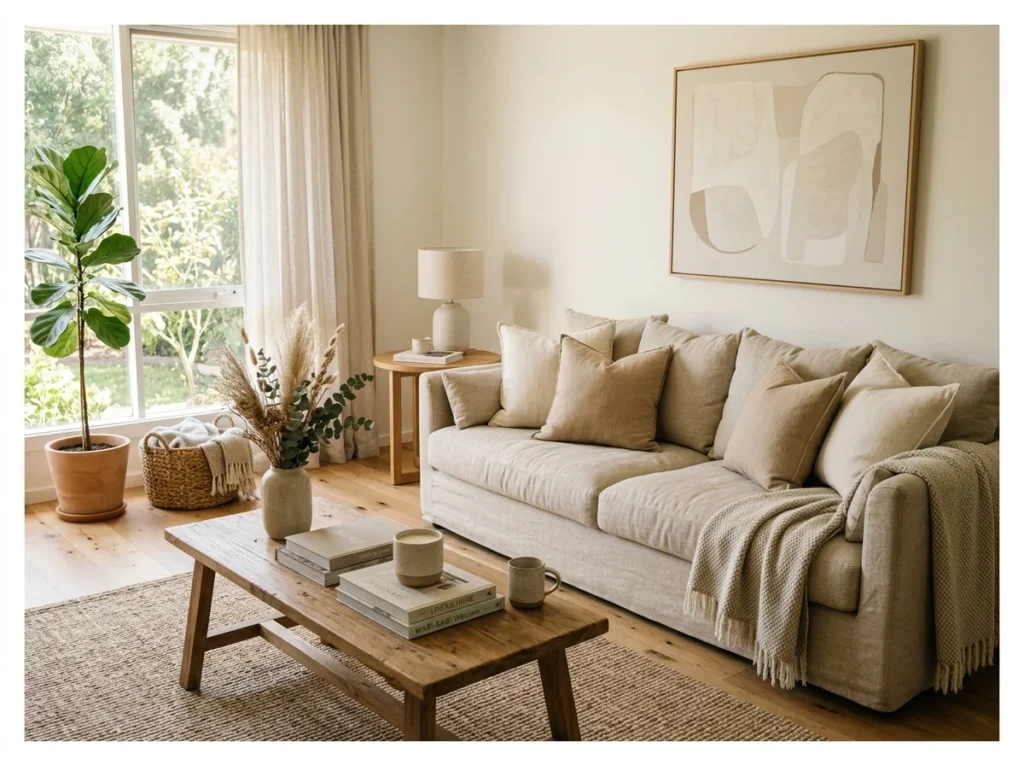
A natural oatmeal linen sofa is the single most important investment in a neutral living room. The unbleached, natural tone of oatmeal linen belongs to the neutral palette completely while the subtle texture of the woven fabric adds visual interest that plain colored upholstery cannot.
Linen softens and develops a beautifully relaxed quality with every wash and year of use, which means the sofa becomes more beautiful over time rather than looking worn. Natural linen in undyed oatmeal suits every other neutral material: timber, stone, jute, and ceramic all complement it without effort.
The foundation piece every neutral living room needs.
Chunky Knit Throws and Textured Cushions
A chunky knit throw adds bulk and texture that a smooth cotton blanket cannot match. Pairing it with a few textured cushions, like boucle or linen, keeps a neutral sofa from looking one dimensional. These pieces are also an easy way to update a room without touching the furniture itself.
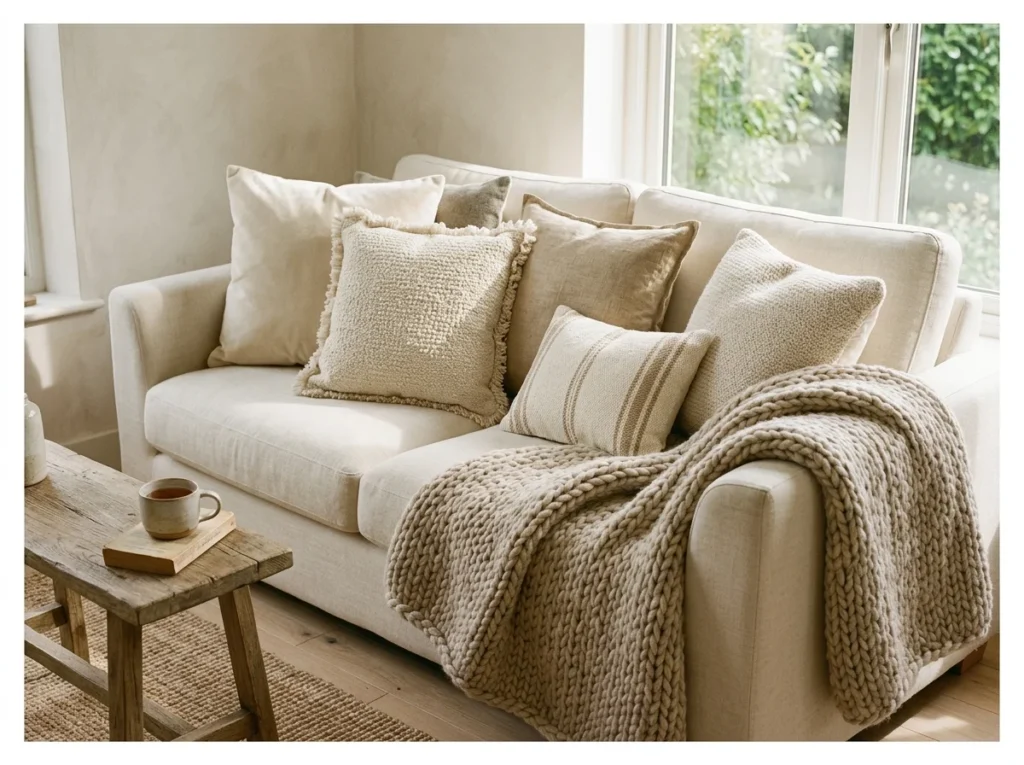
Chunky knit throws and a varied collection of textured cushions provide the tactile warmth and visual depth that prevents a neutral living room from feeling sparse or cold. The varied textures within a consistent neutral palette create complexity without color.
A mix of five to seven cushions in the same cream to sand tonal family but in different fabric textures creates the most naturally beautiful neutral sofa styling. Smooth velvet, nubby bouclé, woven cotton, and fine linen all contribute different surface qualities that catch light differently throughout the day.
The tactile warmth that makes neutral rooms irresistible.
Natural Timber Coffee Table
A timber coffee table brings visible wood grain into a room that might otherwise be dominated by fabric and paint. Its warmth balances out cooler elements like stone or metal placed nearby. Because wood ages well, this piece often becomes the one item that outlasts every other trend in the room.
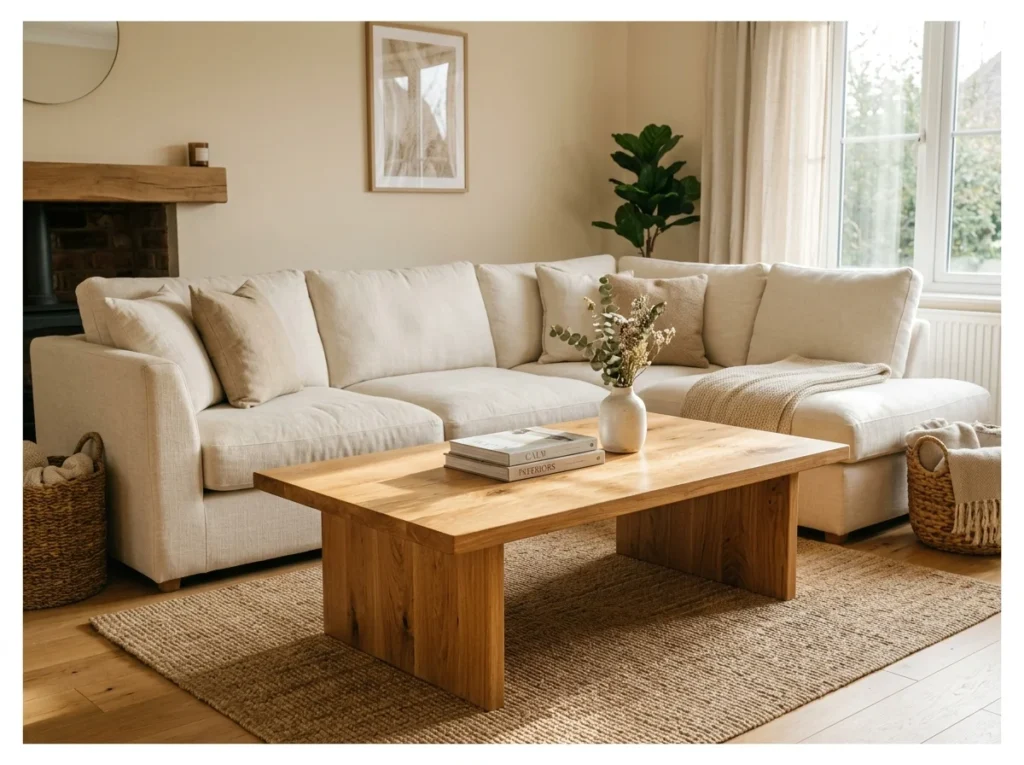
A natural timber coffee table in warm oak, walnut, or bleached pine brings the most important non-neutral element into a neutral living room: warmth. Natural wood grain in honey, amber, or warm blonde tones creates a visual anchor that cream and white textiles cannot provide alone.
The coffee table is the piece that prevents a neutral living room from feeling too pale or washed out. Choose a coffee table with visible grain variation and natural character rather than a heavily lacquered piece that looks manufactured. The natural quality of real timber grounds the neutral palette beautifully.
Once the table itself is chosen, a table styled to hold its own weight is what turns it into a genuine focal point.
Neutral Jute or Sisal Area Rug
Jute and sisal rugs have a rougher, more natural weave than a typical wool or synthetic rug. Their earthy tone grounds a room without introducing another competing color. They do best in lower traffic areas since the fibers can wear down faster underfoot.
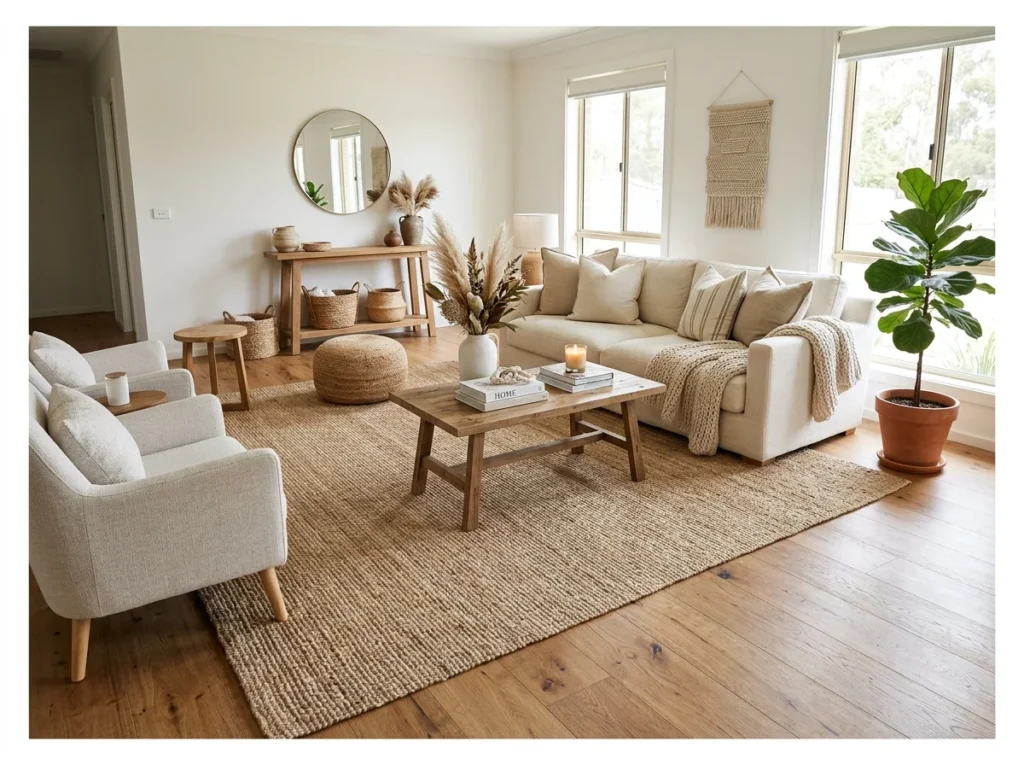
A natural jute or sisal area rug under the seating arrangement grounds the neutral living room with an earthy, organic texture that adds warmth without introducing color. The natural fiber weave creates a visual and tactile layer between the floor and the furniture that hardwood or tile alone cannot provide.
Jute rugs in natural undyed tones suit warm neutral palettes with cream, oatmeal, and timber. Sisal creates a slightly cooler, more refined texture that suits greige and stone-toned rooms. Both fibers improve the acoustic quality of a room by absorbing sound and creating a softer, quieter atmosphere.
The floor layer that makes a room feel complete.
Warm Greige Walls
Greige sits in that space where grey leans just slightly warm instead of cool. It reads differently depending on the light in the room, sometimes looking more grey and sometimes more beige. This makes it a safer choice for rooms with changing light throughout the day.
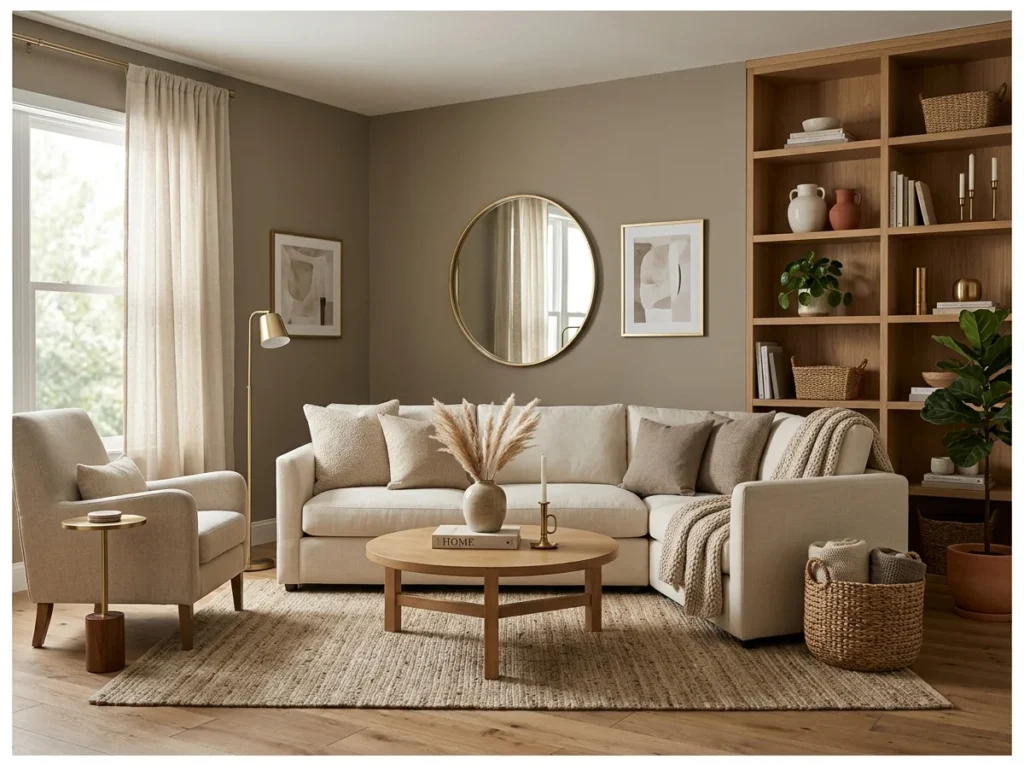
Greige, the warm grey-beige hybrid tone, creates a more complex and sophisticated neutral wall color than either pure grey or pure white. The slight warmth of the beige undertone prevents the coldness that grey walls can create while the grey quality prevents greige from looking too traditional.
Greige walls suit contemporary, transitional, and organic modern living rooms equally well. The tone reads differently in different lighting conditions, warmer in morning light and cooler in afternoon shade, which creates a dynamic wall quality that single-undertone neutrals lack. Benjamin Moore Pale Oak and Dulux Pebble Shore are reliable greige starting points.
Woven Rattan Accent Chairs
Rattan chairs bring a woven, natural texture that upholstered furniture cannot replicate. Their open frame also keeps a room feeling lighter compared to a bulky armchair. This makes them a good option for rooms that are already fairly full of other furniture.
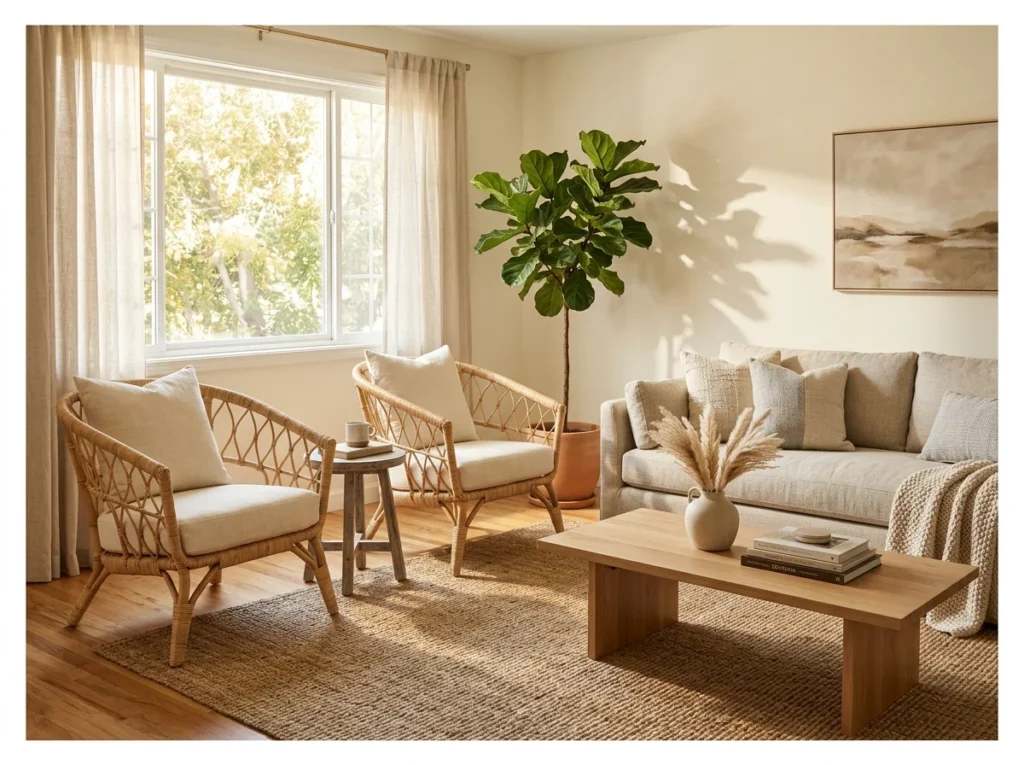
Natural rattan accent chairs introduce the organic warmth of woven fiber to the neutral living room in a form that photographs beautifully and suits the material palette completely. The complex woven surface of rattan creates a visual texture that no painted or upholstered chair can provide.
Two rattan chairs with cream linen cushions positioned across from the main sofa create a conversational seating arrangement that looks relaxed and genuinely considered. The rattan adds a layer of natural material variety to a neutral room that might otherwise be dominated by soft furnishings alone.
Natural, warm, and endlessly Pinterest-worthy.
Gallery Wall in Black and White
Black and white photography or prints keep a gallery wall from clashing with a neutral color scheme. The contrast between the frames and a light wall gives the display a defined, almost graphic quality. Spacing each piece evenly matters more here than in a wall with more colorful, varied art.
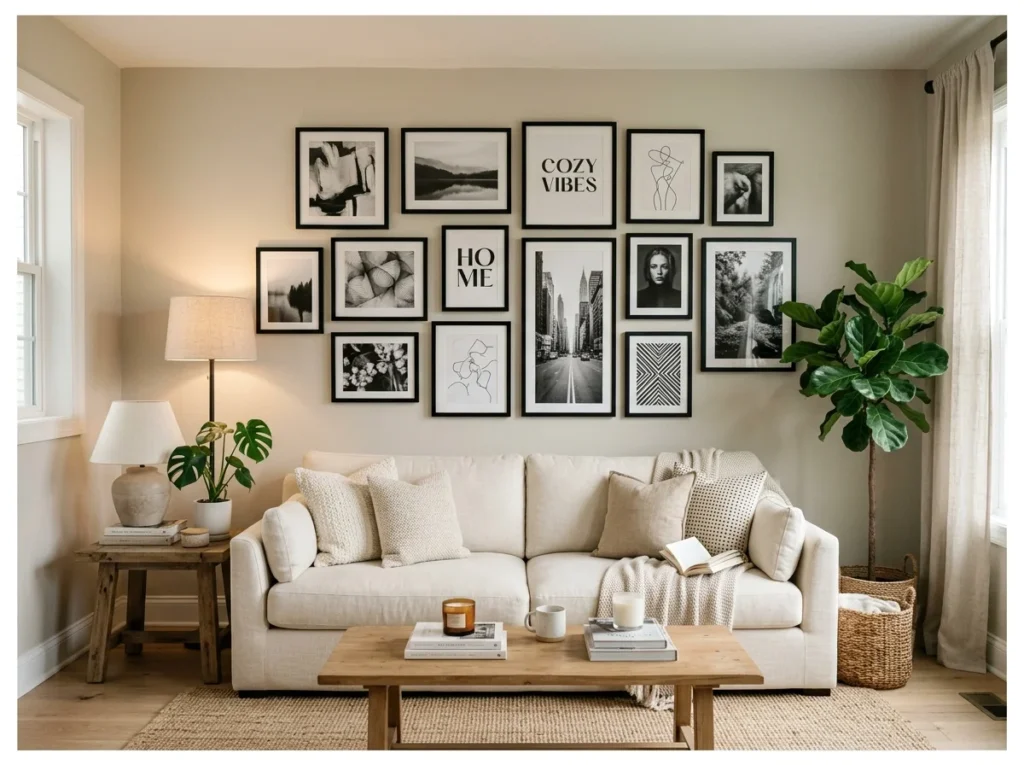
A black and white gallery wall above the sofa in a neutral living room introduces graphic interest, personality, and visual contrast without adding any color to the palette. The monochrome images and consistent black frames create a bold, composed statement that complements every neutral wall tone.
The black frames provide the strongest possible contrast against pale neutral walls and the art subjects can be as varied as botanical prints, abstract works, and photography without losing cohesion. The gallery wall is how a neutral living room gets personality without sacrificing its calm.
Sheer Linen Curtains
Sheer linen lets light filter through instead of blocking it out completely like a heavier drape would. The fabric also moves slightly with airflow, which adds a subtle sense of motion to a still room. This works best in rooms where privacy is less of a concern than natural light.
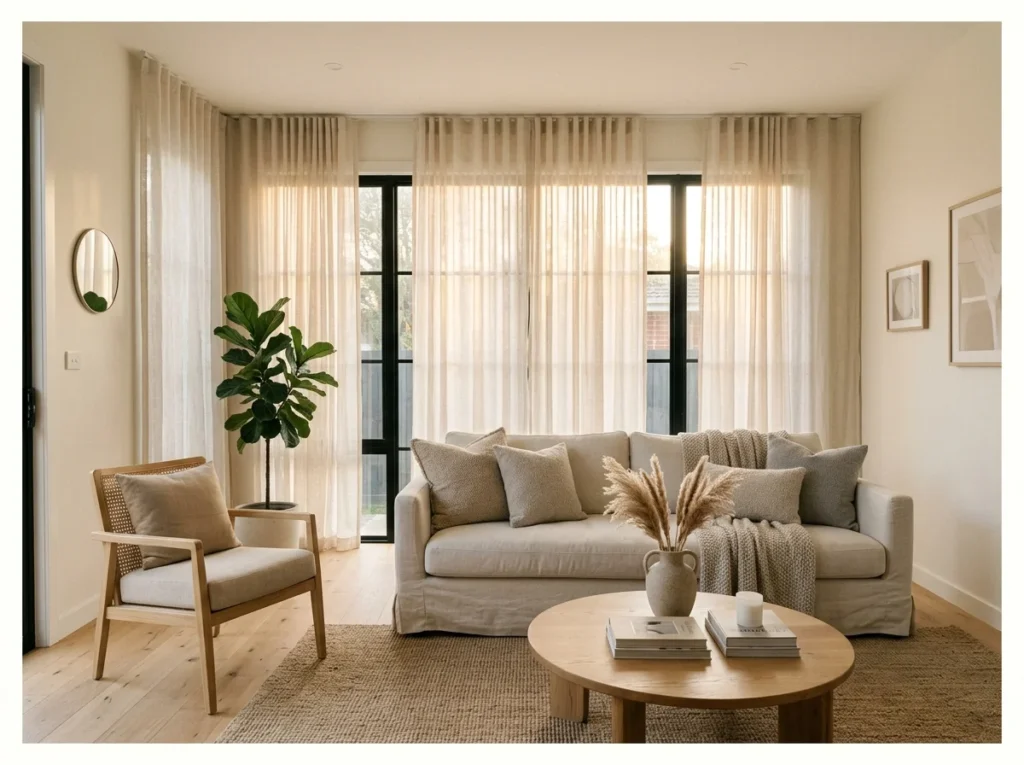
Sheer linen curtains hung floor-to-ceiling filter natural light into the neutral living room with a warm, soft glow that creates the most naturally beautiful daytime atmosphere of any window treatment. The fabric diffuses harsh direct sunlight into an even, warm wash.
Natural undyed sheer linen in white or very pale oatmeal creates the most versatile and beautiful sheer curtain for a neutral room. Hang the curtain rod 10 to 15 centimeters above the window frame and extend 15 to 20 centimeters beyond the window on each side to make the window appear taller and wider.
The window treatment that transforms morning light.
Neutral Living Room with a Single Warm Accent
Keeping almost the entire room neutral makes one warm accent, like a rust cushion or amber vase, stand out immediately. The trick is choosing just one or two spots for that color rather than scattering it around. Too many accents and the room loses the calm that a mostly neutral palette is meant to create.
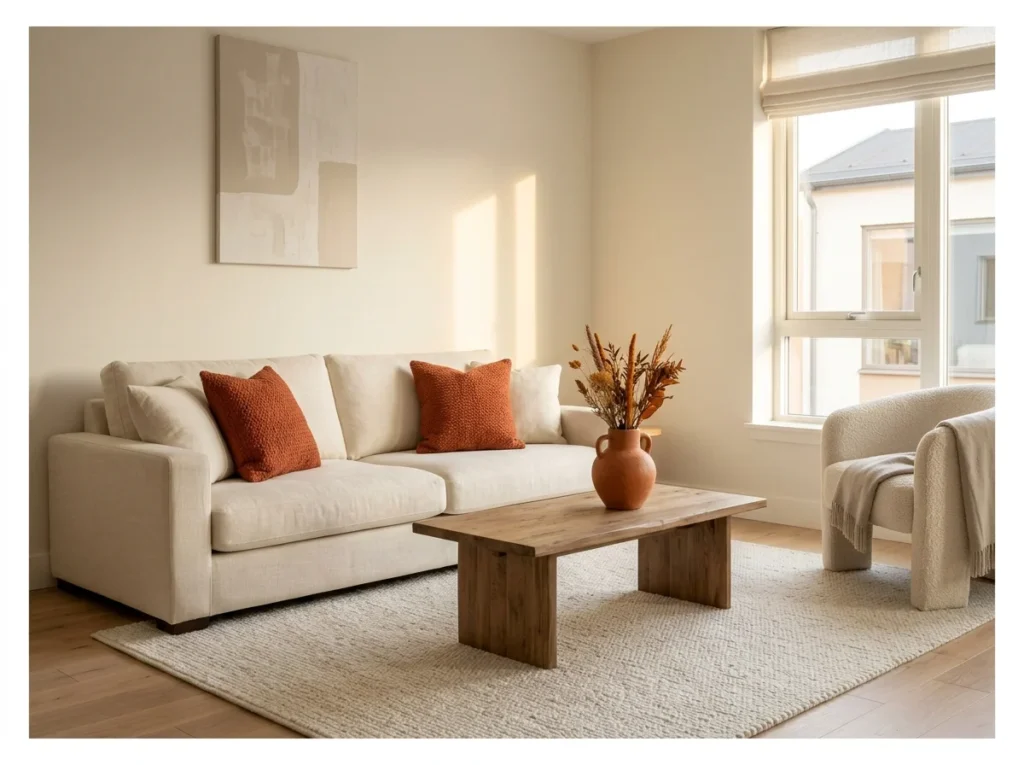
A neutral living room with one carefully chosen warm accent color introduces just enough visual interest to prevent the space from feeling too homogeneous without disrupting the fundamental calm of the neutral palette. One accent, used consistently in two or three places, is enough.
Terracotta, warm sage green, dusty rose, and warm mustard are the accent colors that work most naturally within a neutral living room palette. Use the accent in cushions, a vase, and perhaps a throw for a consistent thread of warmth. The restraint of one accent used consistently reads as more sophisticated than multiple colors competing.
One warm note, all the impact.
Large Statement Plant
A tall plant, like a fiddle leaf fig or an olive tree, fills vertical space that furniture alone often leaves empty. Its green color also becomes one of the only saturated tones in an otherwise neutral room. Placement near a window usually keeps both the plant and the room looking their best.
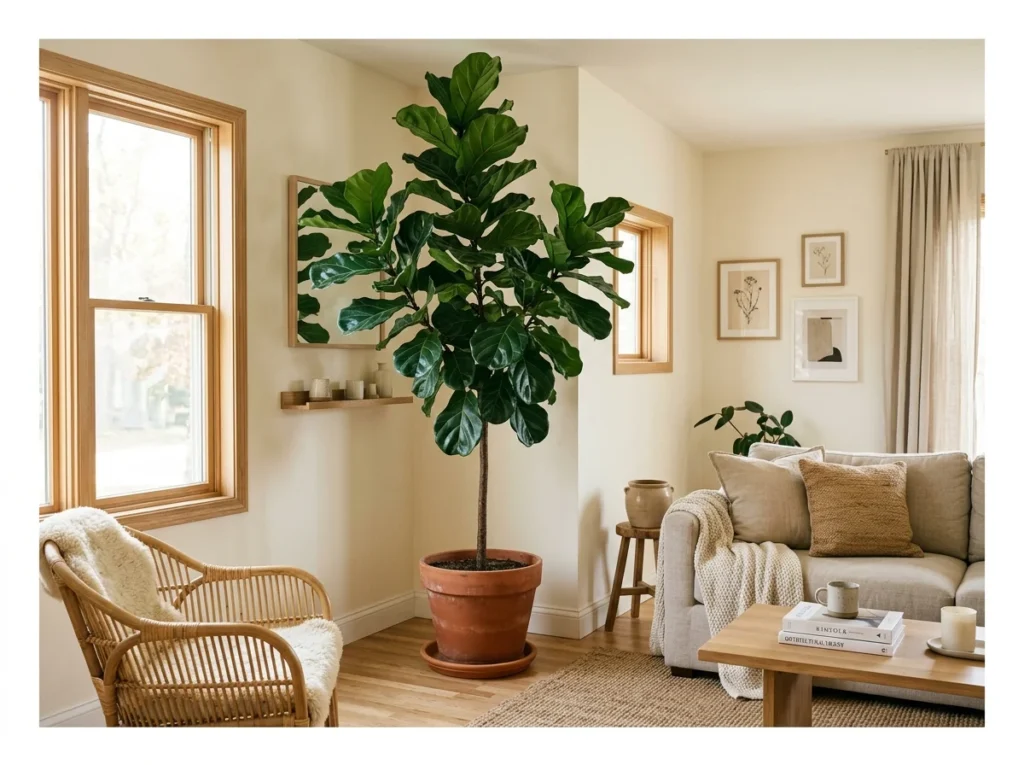
A large statement plant in the neutral living room introduces the only element that can add both color and life without conflicting with the neutral palette. Deep green foliage against cream and white walls creates the most natural and timeless color combination in interior design.
Fiddle leaf figs, monsteras, and olive trees all create the scale of presence that a neutral living room needs as a counterpoint to the soft furnishings and pale walls. Position the plant where it receives appropriate natural light and use a terracotta or ceramic pot that complements the room’s material palette.
The plant that makes a neutral room feel alive.
For more ways to bring this same living quality in, greenery that never competes for attention has plenty of ideas worth trying.
Organic Shaped Furniture
Furniture with curved edges and rounded forms breaks up the straight lines that dominate most living rooms. A curved sofa or an irregularly shaped side table adds visual softness without needing any extra color. This style has become popular alongside the broader shift toward softer, more natural interiors.
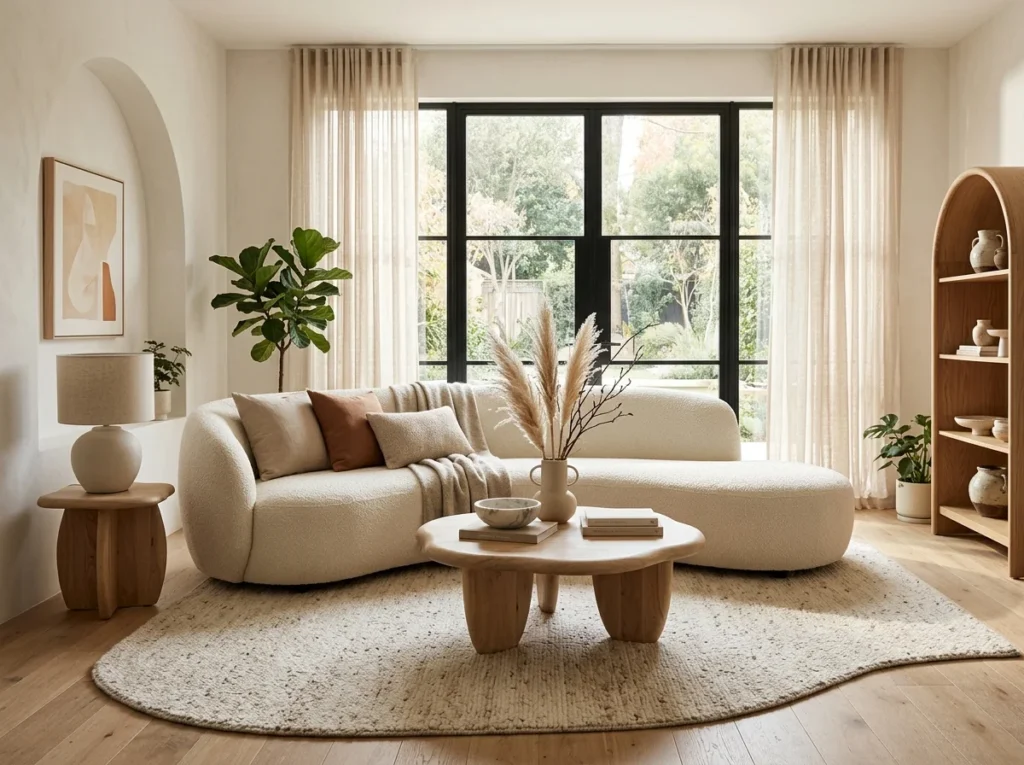
Furniture with organic, curved, and rounded forms creates a softness within a neutral living room that straight-edged contemporary furniture cannot achieve. A curved sofa, round coffee table, and organically shaped accent chair create a room that feels gentle rather than geometric.
The organic form trend suits neutral palettes particularly well because the softness of the shapes reinforces the calm quality of the neutral colors. Bouclé upholstery in cream or oatmeal on curved furniture creates the most coveted neutral living room aesthetic currently on Pinterest.
Soft shapes for a genuinely serene room.
White and Natural Wood Shelving Display
White shelving against a wood frame or wood backing creates contrast without introducing a bold color. Books, ceramics, and small decor pieces displayed here look more curated than crowded. Keeping some open space between items usually makes the whole shelf look more intentional.
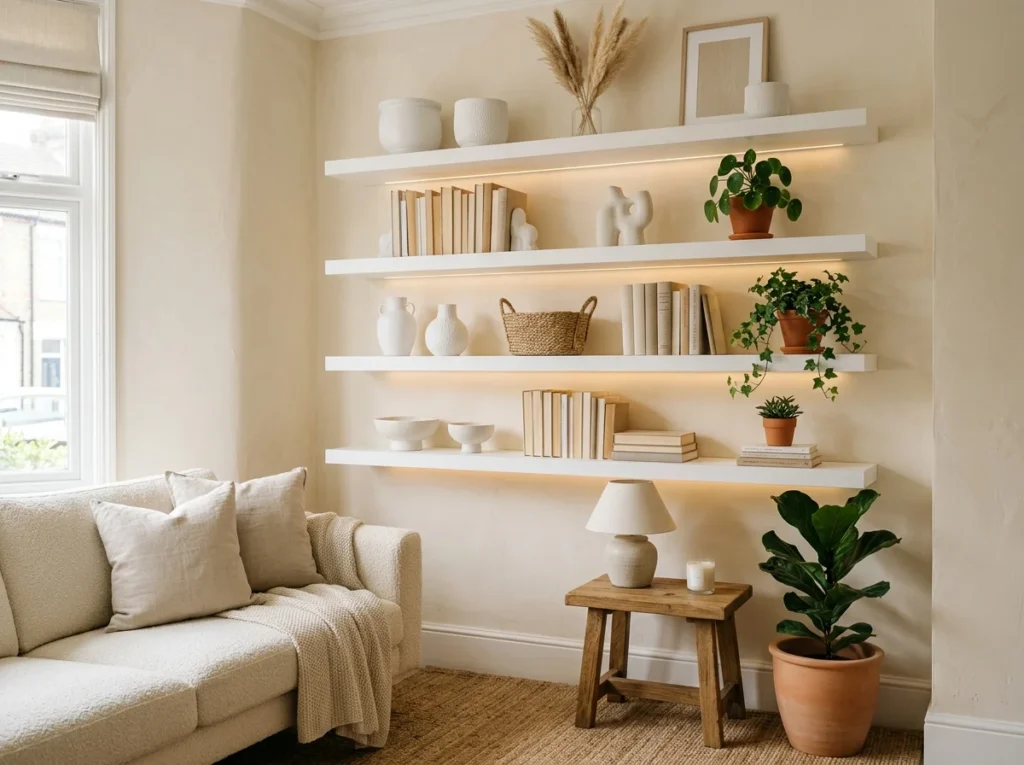
White floating shelves styled with a consistent neutral palette of white ceramics, natural timber objects, green plants, and woven baskets create a shelf display that contributes to the neutral room’s visual character without introducing disruptive colors.
Edit the shelf display to include only items within the neutral material family: white, cream, natural timber, terracotta, and green. Remove anything that falls outside this palette. The cohesive editing creates shelf displays that look curated and contribute to the overall calm rather than creating visual noise.
That same editing discipline pays off nicely once you get to shelves that stay quiet but interesting elsewhere in the room.
Stone or Concrete Coffee Table
A stone or concrete coffee table adds weight and texture that a wood or glass table cannot provide. Its cool, solid surface contrasts nicely against soft textiles like a linen sofa or wool rug. Because these materials are heavy, they also tend to anchor a room visually more than lighter furniture.
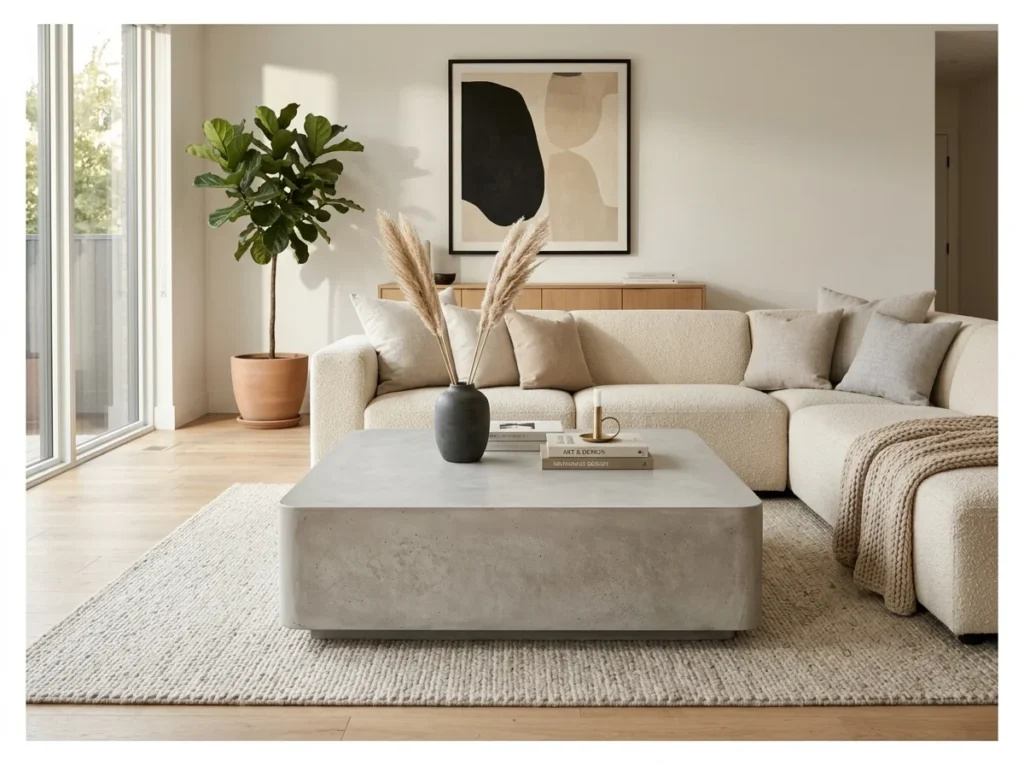
A stone or concrete coffee table introduces a cool, mineral-quality neutral into a living room that might otherwise be dominated by warm soft tones. The contrast between the hard, cool stone surface and the surrounding warm textiles creates a tension that prevents the neutral room from feeling too uniform.
Travertine in warm cream and honey tones, concrete in grey, and limestone in warm buff all create beautiful neutral coffee table surfaces. Each material develops its own patina and character over time, improving rather than degrading with use. Natural stone and concrete are genuinely timeless material choices.
Travertine and Natural Stone Accents
Travertine has natural pitting and variation that gives it more character than a smooth, uniform stone. Using it in small doses, like a side table or a lamp base, keeps the room from feeling too heavy. Its warm undertone also fits naturally into a beige or cream color scheme.
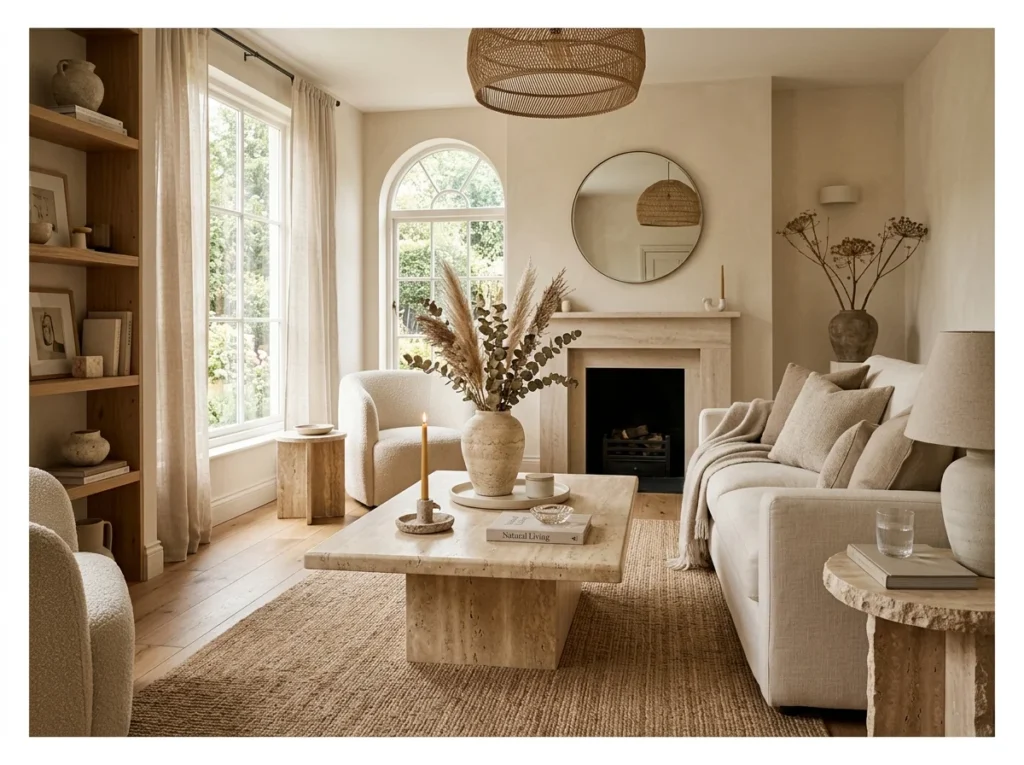
Travertine and natural stone accent pieces in a neutral living room add a warm, mineral quality that references the earth and creates genuine material depth. The natural variation in travertine’s surface, with its characteristic pitting and veining, creates visual interest within a completely neutral tone.
Travertine side tables, vases, candle holders, and decorative objects are widely available and suit the neutral living room aesthetic beautifully. The warm cream, honey, and ivory tones of travertine sit within the neutral palette while adding a material authenticity that ceramic substitutes lack.
Natural stone warmth in a neutral setting.
Layered Rug Styling
Layering a smaller patterned or textured rug over a larger neutral one adds depth to the floor. This technique works especially well when the room otherwise has very little color or pattern elsewhere. The key is choosing rugs with a similar tone so the layering looks deliberate rather than mismatched.
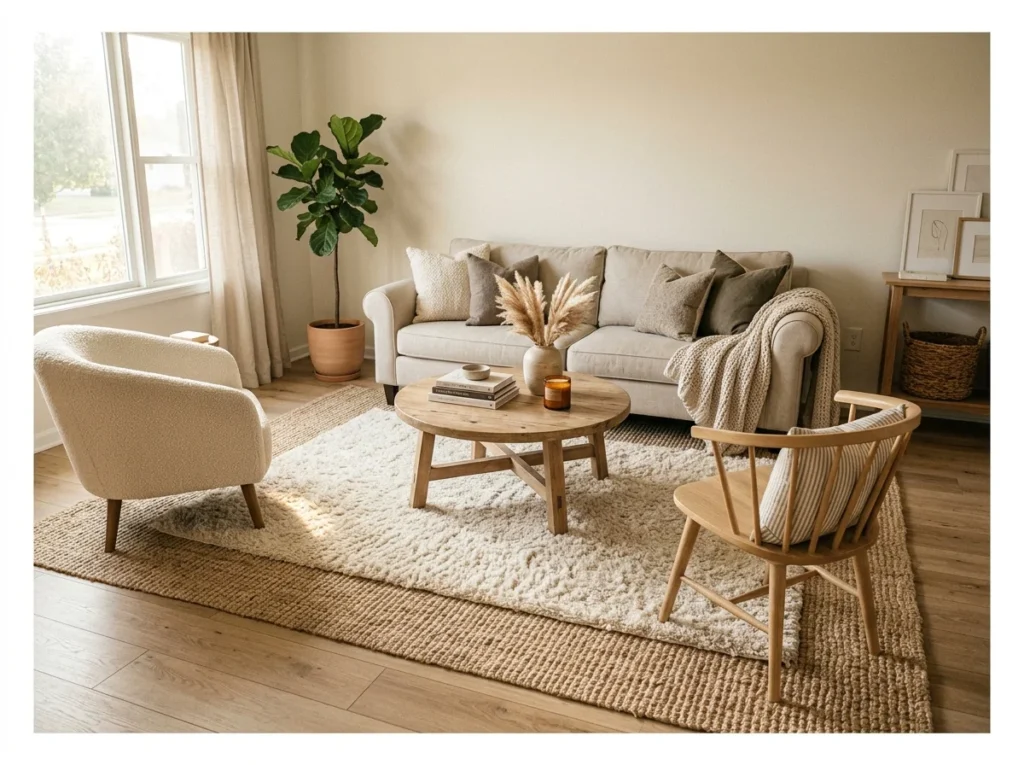
Layering two rugs of different textures and scales within the neutral palette creates floor depth and visual richness that a single rug cannot achieve. A large natural jute base rug with a smaller shag or woven rug placed on top creates a composed floor layering that looks deliberately styled.
Both rugs must remain within the neutral tonal family: jute or sisal beneath, cream or oatmeal textured rug above. The scale contrast between the two creates visual interest while the consistent neutral palette keeps the overall room calm. This approach also makes a living room floor look more expensive.
Warm Amber Lighting
Amber toned bulbs give off a warmer glow than the cooler white light many fixtures come with by default. This warmth makes a neutral room feel cozier once the sun goes down. Table lamps and floor lamps placed at different heights also help the light spread more evenly across the room.
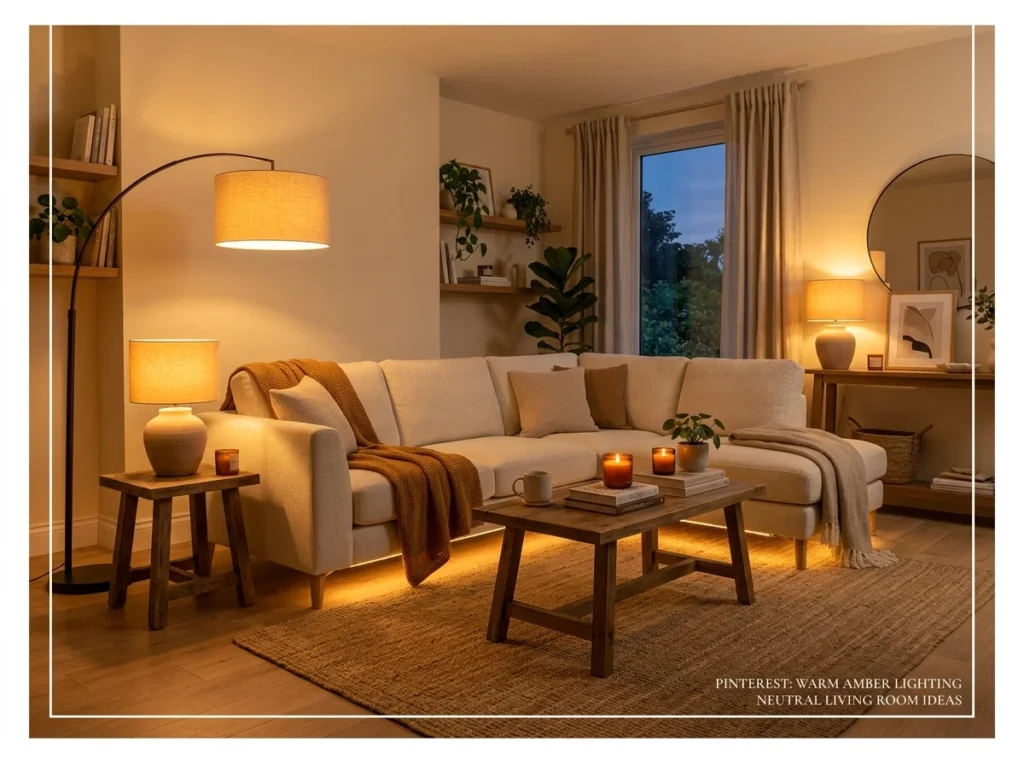
Warm amber lighting at 2200K to 2700K color temperature transforms a neutral living room from a pleasant daytime space into a genuinely atmospheric evening room. The warm light enriches every cream and oatmeal surface, making them appear more golden and luxurious.
Multiple warm light sources at different heights create the most beautiful evening neutral living room: a floor lamp, two table lamps, and perhaps LED strips beneath a console or behind the sofa. The layered light approach creates depth and warmth that overhead lighting alone cannot produce.
The lighting that makes neutral rooms magical after dark.
Ceramic and Sculptural Decor Objects
A few ceramic vases or sculptural objects give a neutral shelf or table something to focus on. Their shapes add visual interest without relying on color or pattern to do the work. Keeping the collection small tends to look more curated than filling every surface with objects.
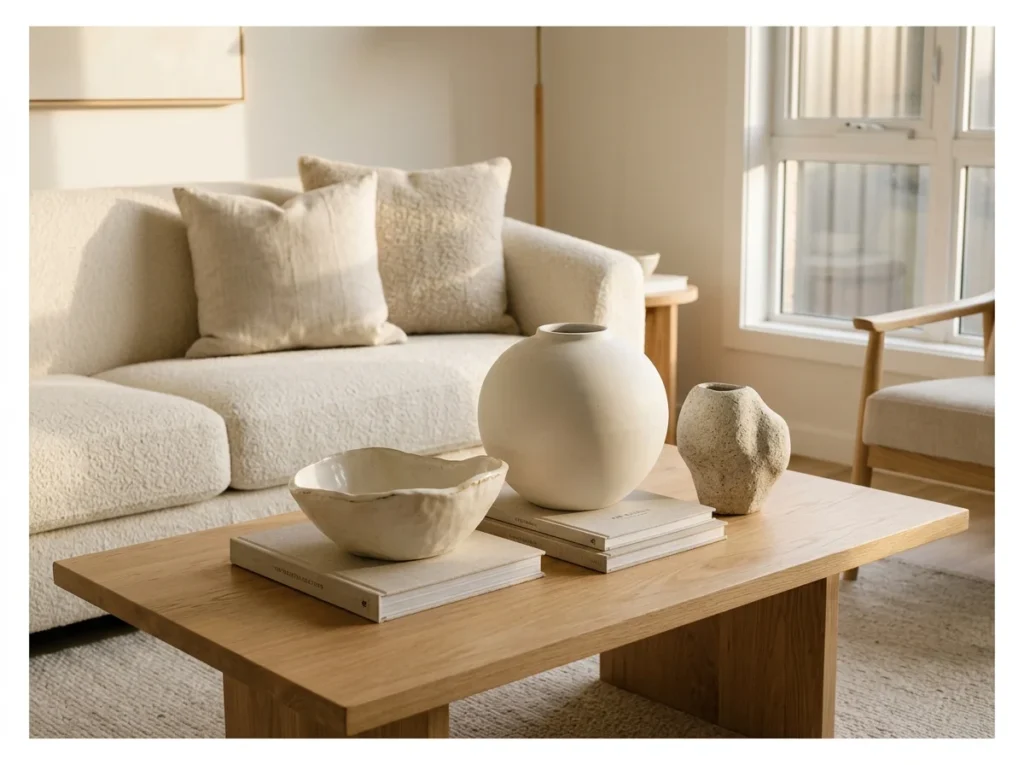
White and cream ceramic objects and small sculptural pieces provide the artisanal, handcrafted quality that makes a neutral living room feel genuinely curated rather than just pale. The varied forms of sculptural ceramics create visual interest within a completely neutral tonal palette.
Group ceramic objects in odd numbers of three or five with varied heights within a consistent tonal family of white, cream, and warm beige. Each piece should have genuine sculptural interest. Handmade ceramics with slight surface variation add more character than perfectly uniform manufactured pieces.
Floor-to-Ceiling Linen Curtains
Floor-to-ceiling linen curtains add softness, warmth, and effortless elegance to any room. Their flowing texture creates a sense of height while allowing natural light to filter through, making spaces feel brighter, more spacious, and beautifully styled with a relaxed, timeless look.
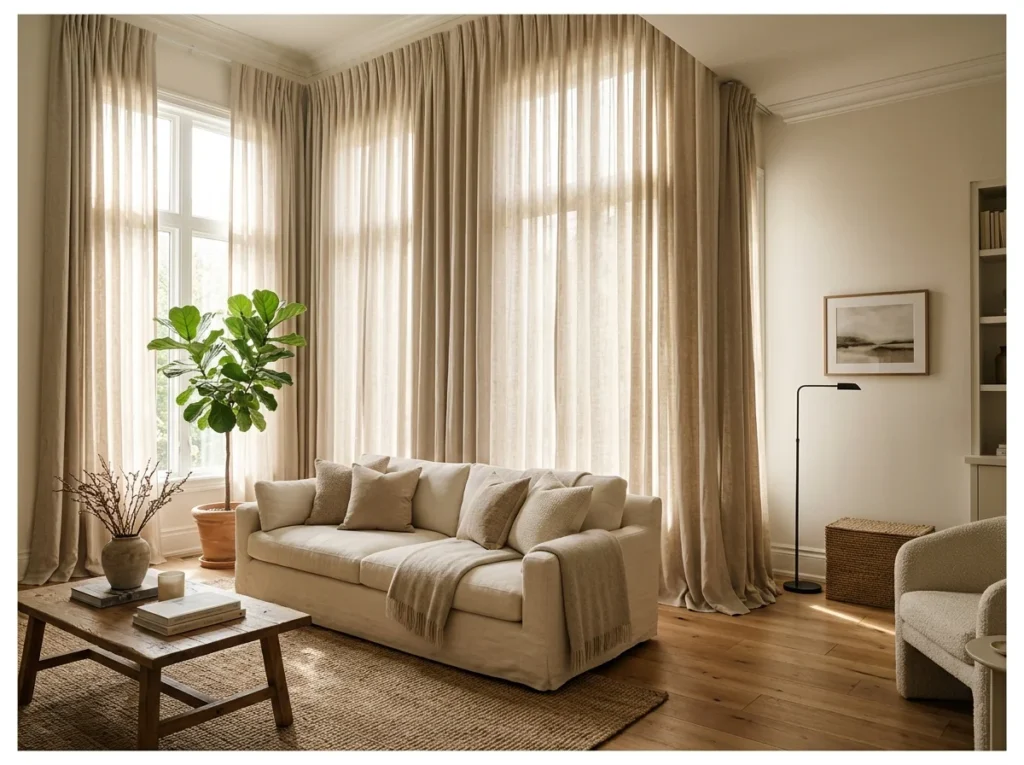
Full-height linen curtains hung from ceiling to floor on the window wall create a soft, enveloping quality that immediately elevates a neutral living room. The height makes the ceiling appear taller and the room more spacious while the gathered fabric creates a gentle, organic texture.
Natural linen in undyed or very lightly toned cream creates the most universally beautiful floor-to-ceiling curtain for a neutral room. Hang the curtain rod as close to the ceiling as possible and allow the fabric to pool slightly on the floor for the most luxurious drape quality.
The window treatment that transforms the entire room.
Minimalist Neutral Fireplace Wall
A fireplace wall kept in one neutral tone lets the fireplace itself become the focal point without extra distraction. Skipping bold tile or a heavily detailed mantel keeps the whole wall feeling calm. This works particularly well when the fireplace is flanked by simple, low profile shelving.
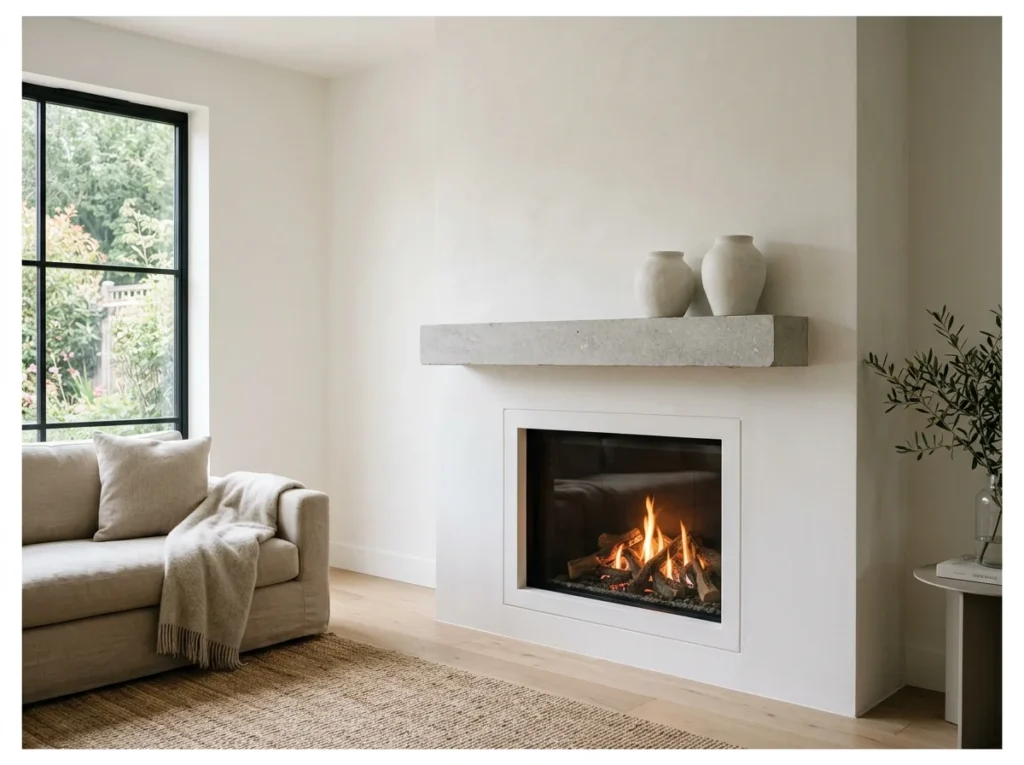
A minimalist neutral fireplace wall uses smooth white plaster or natural stone surround, a clean-lined mantel with minimal decor, and the warm light of a fire or candles to create the most peaceful and architecturally refined focal point in a neutral living room.
Resist the urge to heavily decorate the mantel. One or two objects of genuine quality and scale are enough. Two matching tall ceramic vessels in white or cream, or a single large piece of meaningful art above, create a composed mantel display that reinforces the neutral room’s calm rather than disrupting it.
If a seasonal refresh is also on your mind, a mantel styled with genuine restraint can carry that same calm through the year.
Neutral Living Room Adjacent Bedroom Feel
Some living rooms borrow the same soft, calm qualities usually reserved for a bedroom. Low lighting, soft textiles, and a muted color palette all contribute to that feel. This approach suits smaller apartments where the living room sometimes doubles as a relaxation space.
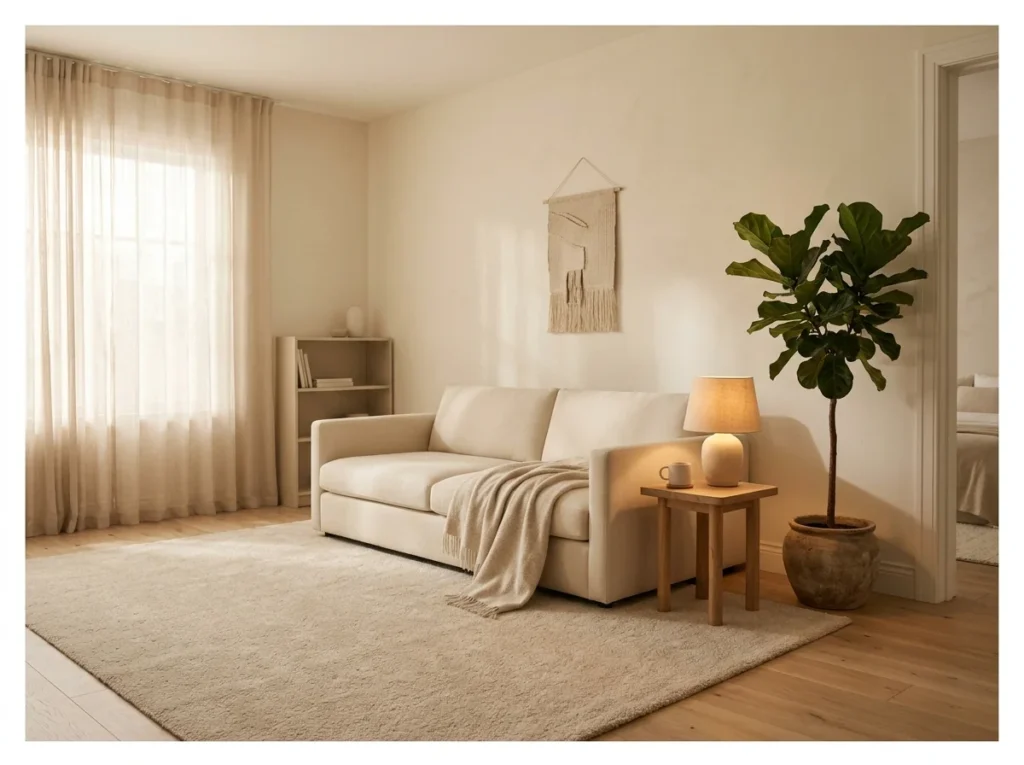
Creating a neutral living room with the softness, comfort, and intimacy of a bedroom rather than a formal entertaining space produces the most genuinely restful and personal version of this design direction. Lower furniture, softer textiles, and dimmer warm lighting all contribute.
This approach suits homeowners who use the living room primarily for relaxation, reading, and personal restoration rather than formal entertaining. A daybed sofa, a cashmere throw, and warm lamp lighting create a living room that competes with any bedroom for the quality of rest it provides.
If a television needs a home in a room this restrained, a screen that fades into the palette shows how to keep it from disrupting the calm.
The living room you actually want to spend time in.
Neutral Living Room with Warm Metals
Brass, gold, or bronze fixtures add a bit of shine to an otherwise matte, neutral room. These metals warm up the space in a way that chrome or stainless steel typically cannot. Using them sparingly, on lamp bases or door handles, keeps the look from feeling overdone.
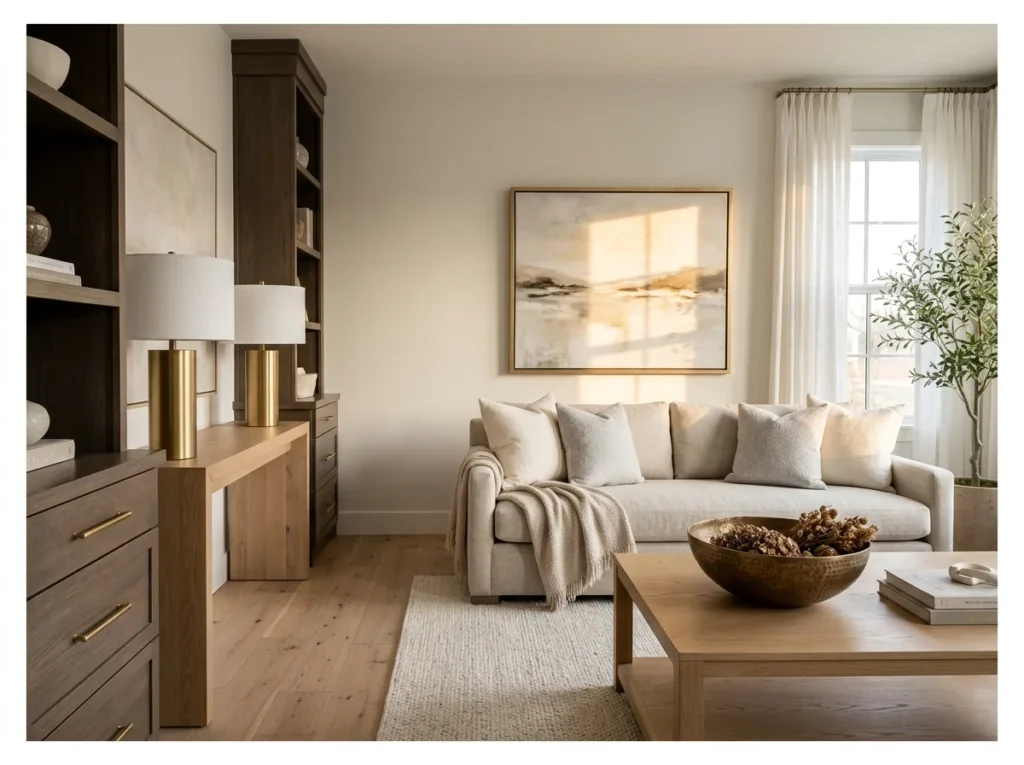
Warm metallic accents in brushed brass, bronze, and unlacquered gold introduce a layer of understated luxury into the neutral living room without introducing any competing color. Warm metals read as a neutral material in the same way that natural timber does.
Use warm metals consistently throughout the room: lamp bases, picture frames, candle holders, hardware on furniture, and decorative objects all in the same warm metallic family. The consistency of the metal tone across multiple objects creates a sophisticated thread of luxury throughout the neutral palette.
Understated luxury through warm metal.
Monochromatic Neutral Room in One Tone
Sticking to a single tone, like beige or grey, across walls, furniture, and textiles removes almost all visual contrast from the room. The variation instead comes from texture, since matte, glossy, and woven surfaces all reflect light differently. This approach tends to feel calm and cohesive, though it takes some care to avoid looking flat.
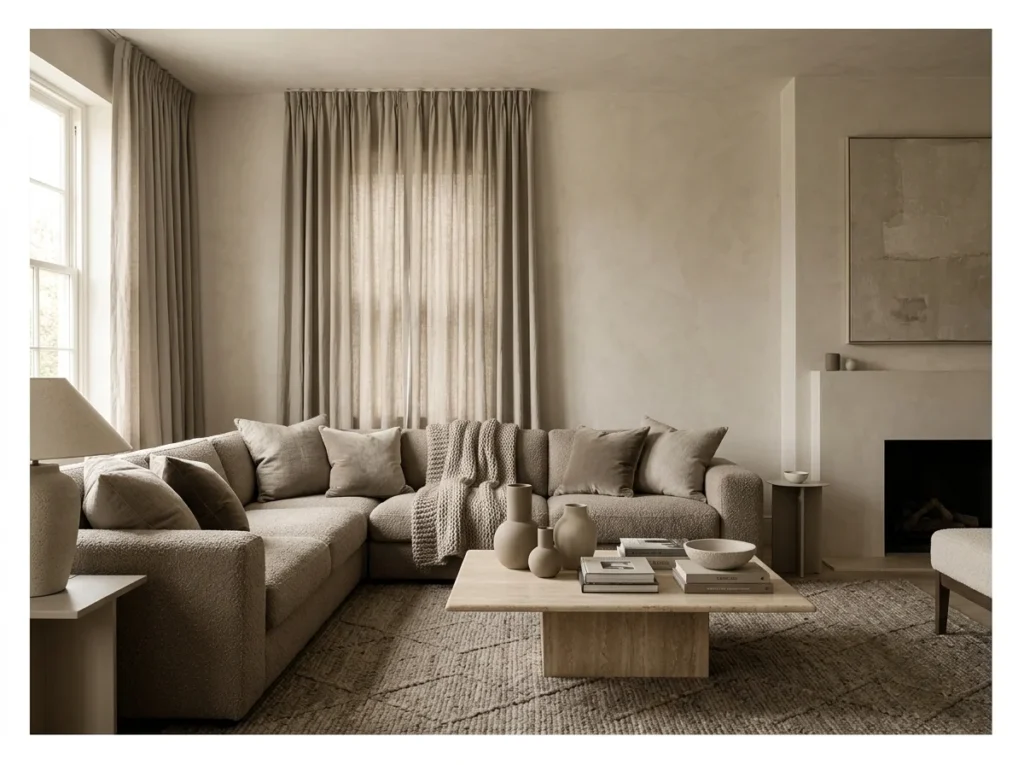
A fully monochromatic neutral living room applies one color in multiple tones and textures across every visible surface from walls to ceiling to floor to furniture to textiles. The visual depth comes entirely from the variation in texture and the way different surfaces catch and absorb light.
This is the most sophisticated and demanding neutral living room approach because it requires complete commitment to one tonal family. When executed with genuine quality of materials across all surfaces, a monochromatic neutral room creates an atmosphere of extraordinary calm and considered design that no other approach matches.
The most sophisticated neutral room of all.
Conclusion
A beautifully executed neutral living room is one of the most genuinely calming and personally restorative spaces any home can offer. It requires neither bold choices nor expensive renovation. It requires thoughtful material selection, careful textural layering, warm lighting, and the discipline to edit rather than accumulate.
Start with warm walls in a genuine neutral tone. Choose a quality linen sofa in natural oatmeal. Add a natural timber coffee table. Layer textures through cushions, throws, and rugs. Add warm lighting and one large plant.
The neutral living room you want to come home to every evening is simpler to create than you think.
And if this level of calm appeals to you, a bedroom that shares this same calm proves the same principles work just as well there.