Your front garden is the first thing anyone sees about your home. A well-designed landscape transforms that first impression from forgettable to genuinely stunning.
These ideas work for every home style, garden size, and budget.
If you want a broader sense of what’s possible before diving in, curb appeal that starts at the street is a great place to gather more inspiration.
Let’s explore the ideas.
Layered Planting Border Along the Facade
A layered planting border along the house facade uses different plant heights to build visual depth. Taller shrubs typically go in the back, with mid sized plants and low ground cover filling in toward the front. This layering technique makes even a narrow bed look fuller and more established.
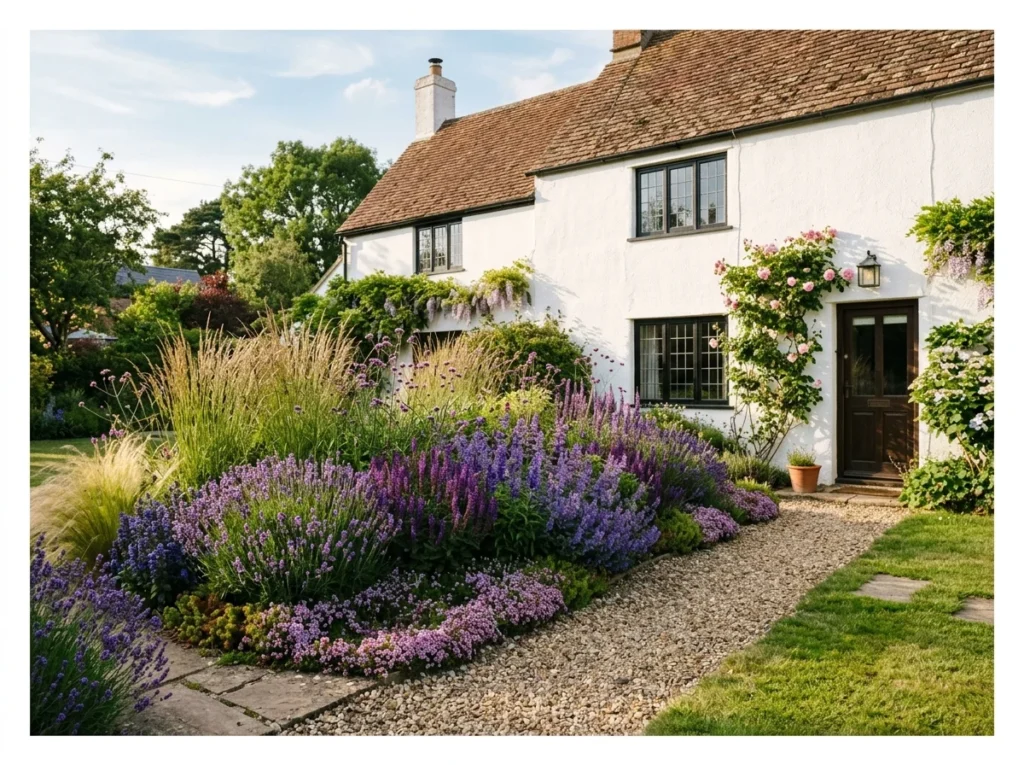
A layered planting border uses plants of varying heights from tall at the back against the wall to low at the front edge, creating depth and abundance that a single row of plants can never achieve. The graduated heights create a naturalistic effect that looks professionally designed.
Three clear height tiers are all you need. Tall ornamental grasses or shrubs at the back, medium flowering perennials in the middle, and low groundcovers at the front edge. This creates a front garden that looks lush and considered across every season while requiring relatively modest maintenance once established.
One design principle, endlessly beautiful results.
Statement Specimen Tree
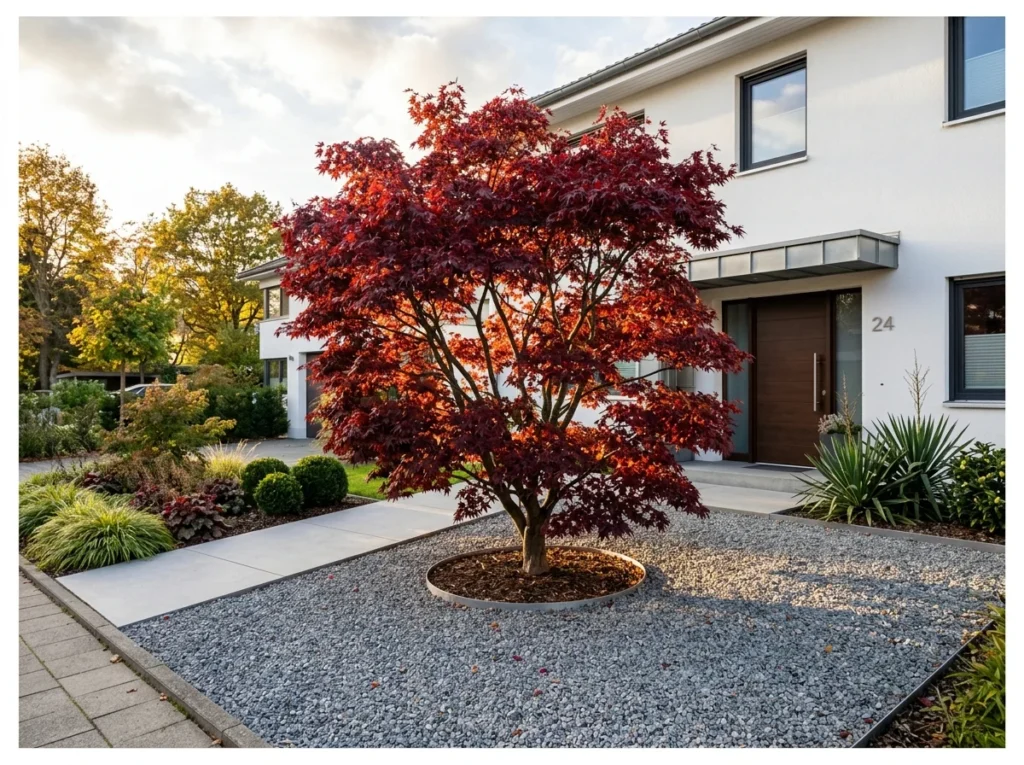
A single specimen tree can anchor the entire front yard design around it. Trees with a distinct shape, like a Japanese maple or olive tree, work particularly well for this purpose. With one tree as the focal point, the rest of the planting can stay simple without feeling bare.
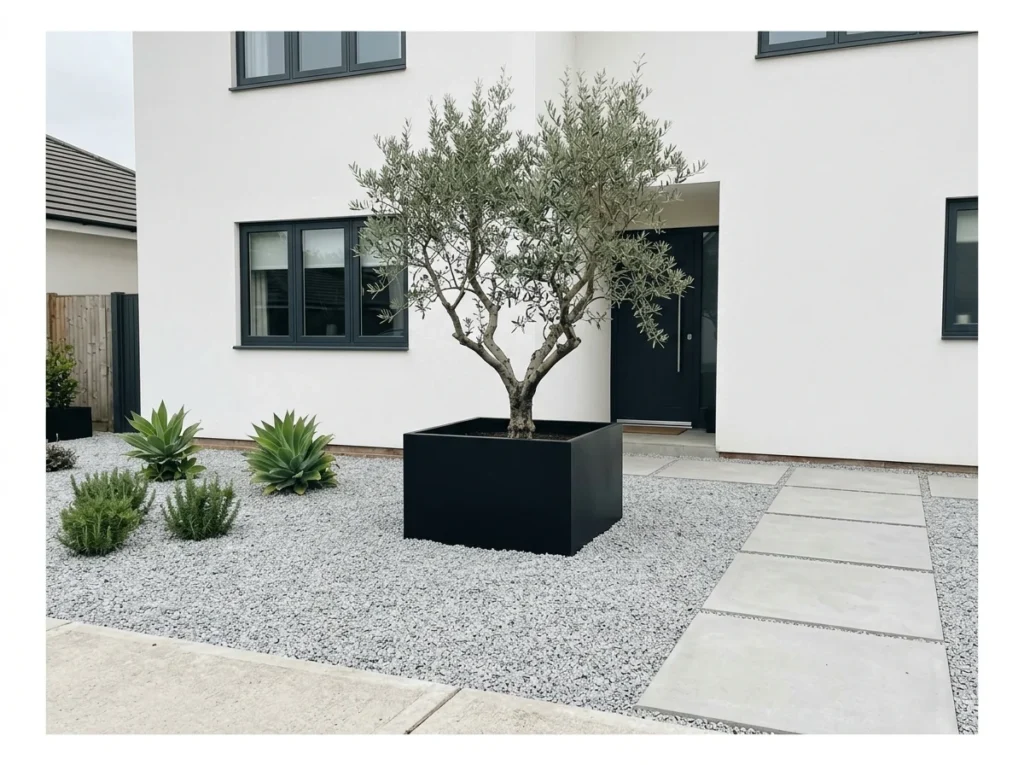
A single well-chosen specimen tree planted in the front garden creates a focal point that anchors the entire exterior design. One beautiful tree in the right position does more for curb appeal than a dozen ordinary plants scattered across the garden.
Japanese maples, ornamental pears, olive trees, and Magnolia grandiflora all suit residential front gardens because of their manageable mature size and distinctive seasonal interest. Choose based on your climate and the mature size relative to your garden proportions. A correctly scaled tree improves every year and becomes the defining feature of the home’s exterior.
One great tree changes the whole garden.
Clean Edged Lawn with Planting Borders
A clean edged lawn keeps grass neatly separated from the surrounding planting beds. Sharp edging, whether cut by hand or defined with metal strips, gives the whole yard a tidy appearance. Regular upkeep of these lines is really what makes this simple detail stand out over time.
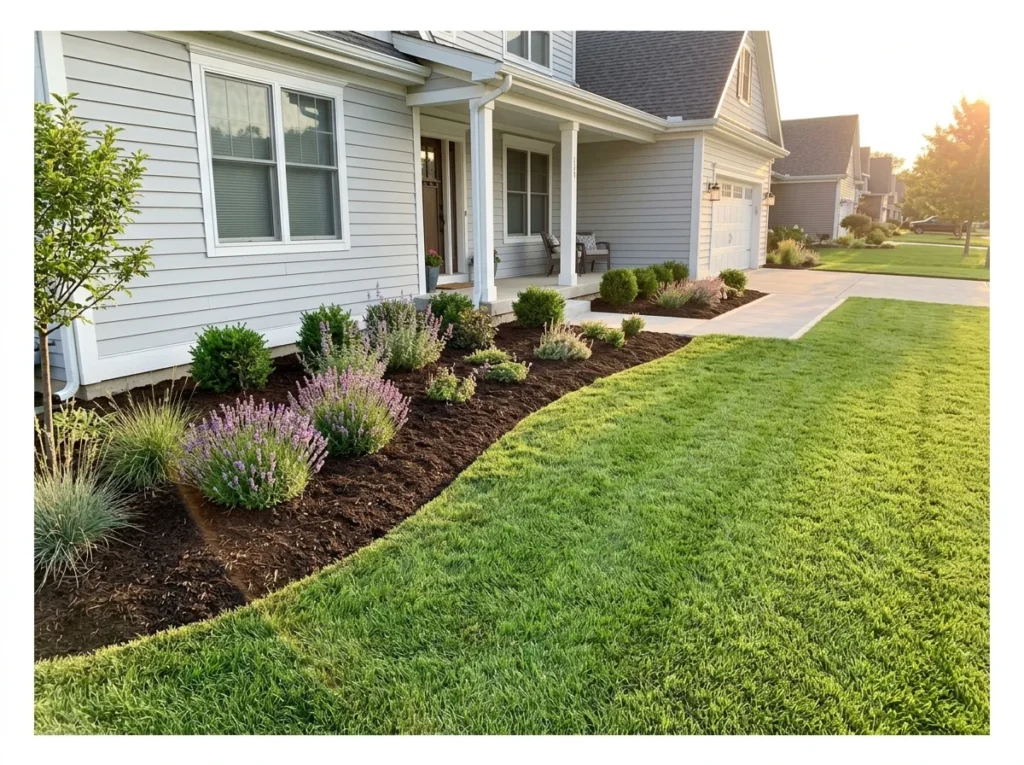
A neatly edged lawn with generous planting borders is one of the most universally effective front garden designs. The combination of clean grass and lush planting suits every home style and creates a classic curb appeal that property buyers and passersby consistently respond to.
The edging is the most important detail. Clean, precisely cut edges between the lawn and garden beds communicate care and attention immediately. Use a half-moon edger every three to four weeks during the growing season and install permanent steel edging strips for a maintenance-free boundary between lawn and garden bed.
Drought-Tolerant Front Garden
A drought tolerant front garden relies on plants that can handle long stretches without regular watering. Succulents, lavender, and ornamental grasses are common choices since they thrive in dry conditions. This approach cuts down significantly on water bills, especially in regions with hot, dry summers.
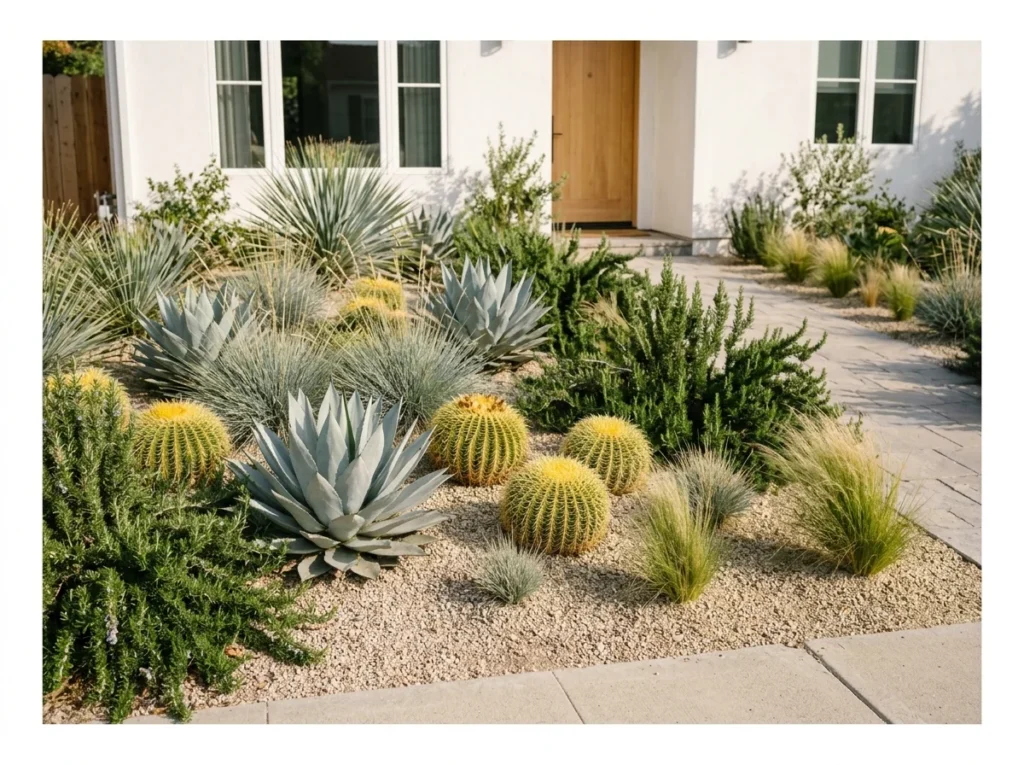
A drought-tolerant front garden replaces water-hungry lawn with succulents, native grasses, and Mediterranean plants that thrive with minimal irrigation once established. The result looks intentional, contemporary, and genuinely beautiful while eliminating weekly watering costs and lawn maintenance.
Agaves, ornamental grasses, lavender, rosemary, and drought-hardy groundcovers create a front garden palette with varied textures and tones. The silver and grey-green foliage colors complement natural stone and pale concrete surfaces beautifully. Once established after the first season, the garden requires almost no ongoing maintenance.
Pairing this approach with a low-water look that still feels lush can push the water savings even further.
Water-wise, low-maintenance, and genuinely contemporary.
Gravel Front Garden with Bold Planting
A gravel front garden replaces grass with a low maintenance surface of crushed stone. Bold plants like agave or ornamental grasses stand out clearly against the neutral gravel background. This style suits homes that want a modern look without the upkeep a traditional lawn requires.
A gravel front garden replaces lawn with a layer of crushed stone or decomposed granite, creating a low-maintenance front garden that looks deliberately designed rather than neglected. The key is choosing a gravel tone that complements the home’s exterior palette.
Pale grey gravel suits white, charcoal, and contemporary homes. Warm buff gravel suits brick and traditional exteriors. Lay geotextile landscape fabric beneath the gravel to permanently suppress weeds and use clean steel edging to contain the gravel within precise geometric borders. The result is a front garden that stays neat with minimal effort.
Budget-friendly option that never needs mowing.
Symmetrical Formal Landscape Design
A symmetrical formal landscape mirrors plants, pathways, or hedges on either side of the entrance. This balance draws the eye directly toward the front door, creating a sense of order. It is a classic approach that works particularly well on homes with a centered entryway.
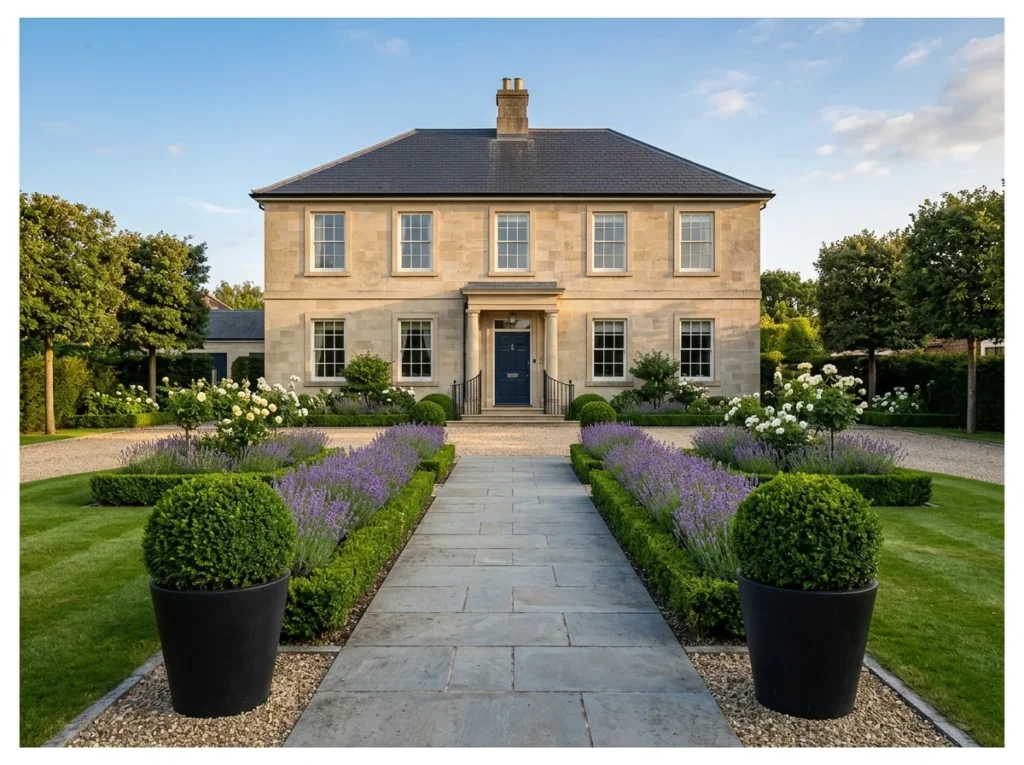
A symmetrical formal landscape places identical elements on each side of the central axis from the street to the front door. Matching planters, identical garden beds, and balanced planting create a front garden that reads as deliberately designed and confidently precise from the street.
Symmetry communicates care and intention more clearly than any other landscape design approach. It suits Georgian, colonial, and contemporary homes with centered front doors. Even a simple symmetrical arrangement of two matching topiary balls flanking the entry path creates an immediate sense of quality and formality.
That same precision translates beautifully if you’re leaning toward a modern take on the whole yard rather than a formal one.
Cottage Garden Front Landscape
A cottage garden front landscape leans into a full, slightly wild mix of flowering perennials. Plants are often packed closely together rather than spaced out with visible gaps between them. The result feels warm and inviting, closer to a lived in garden than a manicured lawn.
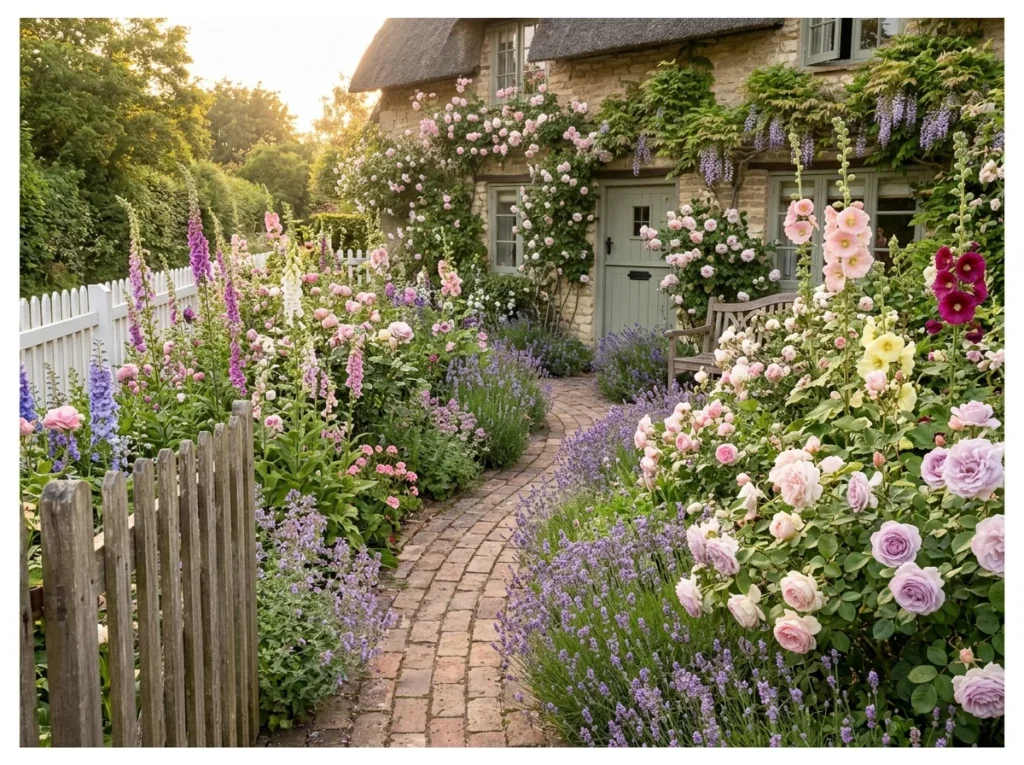
A cottage garden front landscape uses abundant flowering plants in soft pastel tones that spill and layer over each other in a way that looks simultaneously wild and completely intentional. Roses, foxgloves, lavender, hollyhocks, and sweet peas define this beloved style.
Plant in generous drifts rather than individual specimens and allow plants to self-seed naturally in subsequent years. The garden becomes richer and more abundant over time with very little intervention. A clean path and a defined fence edge keep the abundant planting from looking unkempt.
More beautiful every single year.
Japanese-Inspired Front Garden
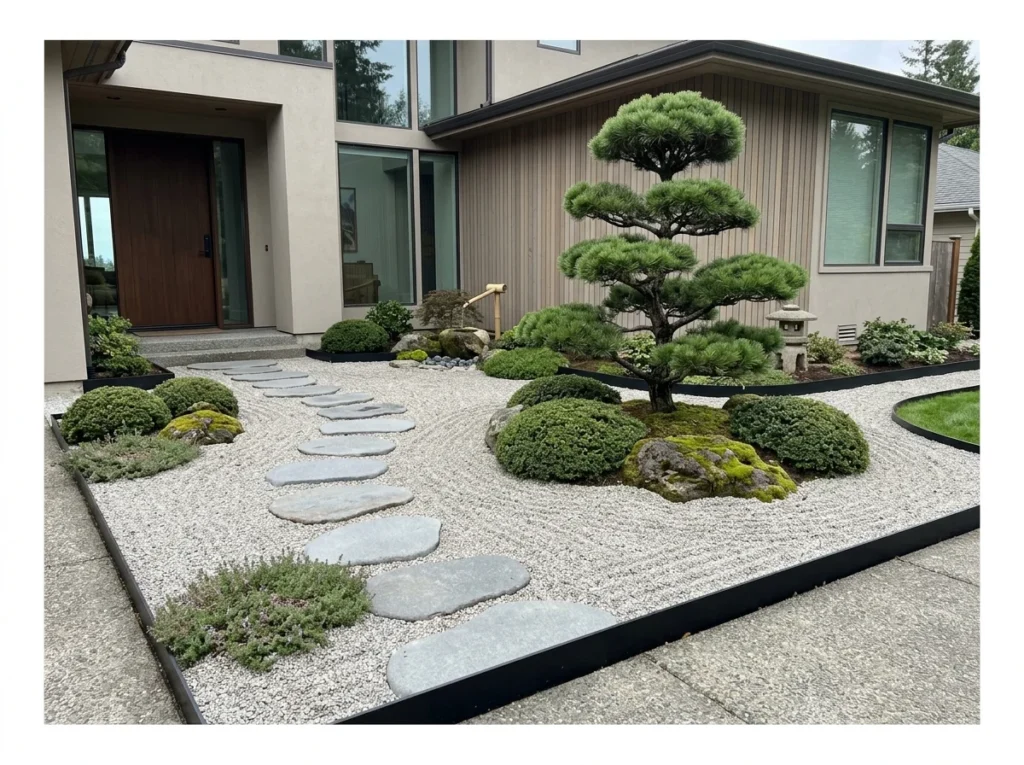
A Japanese inspired front garden brings in elements like manicured shrubs, gravel, and carefully placed stones. The design favors calm, balanced compositions over bold or colorful planting. This style suits front yards meant to feel more like a quiet retreat than a lively display.
A Japanese-inspired front garden applies the principles of restraint, intentionality, and natural beauty that define Japanese garden design. Raked gravel representing water, carefully placed stepping stones, one or two precisely shaped specimen plants, and clean edging create a composition of extraordinary calm.
Every element in a Japanese front garden earns its place. Remove anything that does not contribute directly to the composition. The resulting restraint is what gives this style its distinctive quality. Even a small front garden executed with genuine Japanese design principles creates a landscape that stands completely apart from every other property on the street.
Natural Stone Front Path
A natural stone front path replaces poured concrete with irregular shaped stones set into the ground. The uneven edges give the walkway a more organic, less uniform look. Plants filling the gaps between stones help the whole path blend naturally into the surrounding yard.
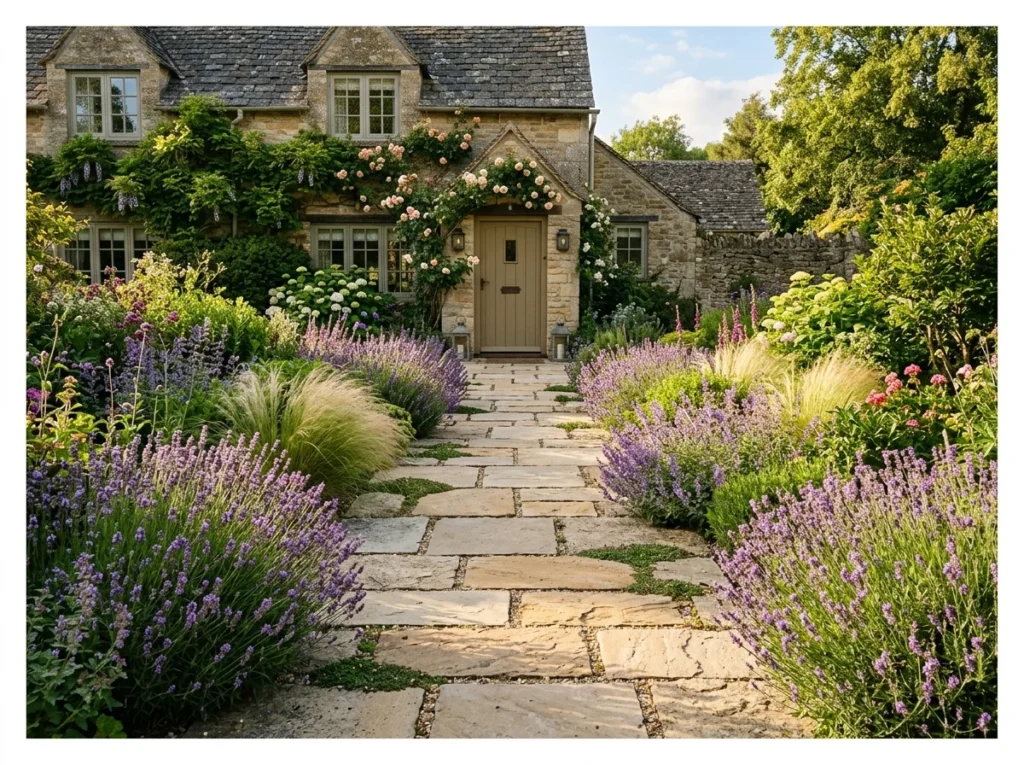
A natural stone path in flagstone, bluestone, or sandstone creates an entry sequence that communicates quality and intention from the street. The material texture and natural color variation of real stone creates a warmth that concrete and manufactured pavers cannot replicate.
The path width matters enormously: a path of 90 centimeters feels generous and welcoming. Narrower paths feel mean and slightly unwelcoming regardless of the stone quality. Allow planting to slightly overhang the path edges for a natural, settled quality that makes the path feel like it has been there for years.
Boxwood Hedges and Topiary
Boxwood hedges and topiary give a front yard a neat, structured appearance year round. Their dense, evergreen leaves hold their shape well, even through colder months when other plants die back. Regular trimming keeps the shapes looking crisp and intentional rather than overgrown.
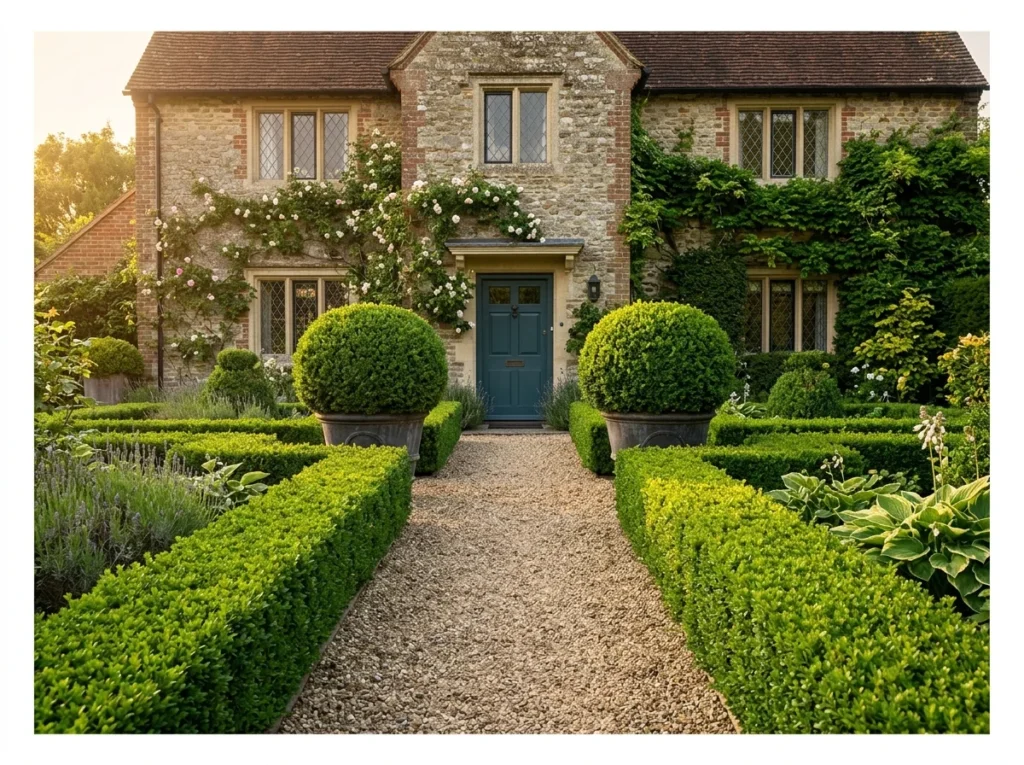
Boxwood hedges and clipped topiaries in the front garden bring formal precision and year-round evergreen structure that seasonal flowering plants alone cannot provide. A well-maintained boxwood hedge or a pair of clipped spheres flanking the door communicates care and attention from the street instantly.
Boxwood responds beautifully to clipping into spheres, cones, and hedge forms and maintains its shape reliably year-round. Low hedges of 30 to 60 centimeters suit modern homes best. Clip once or twice a year to maintain the form. The structured quality of clipped boxwood makes a front garden look considered in every season.
Year-round structure that never looks bare.
Flowering Perennial Border
A flowering perennial border brings color that returns every year without needing to be replanted from scratch. Different bloom times among the plants keep something flowering across most of the growing season. This approach also tends to be lower maintenance than beds filled entirely with annuals.
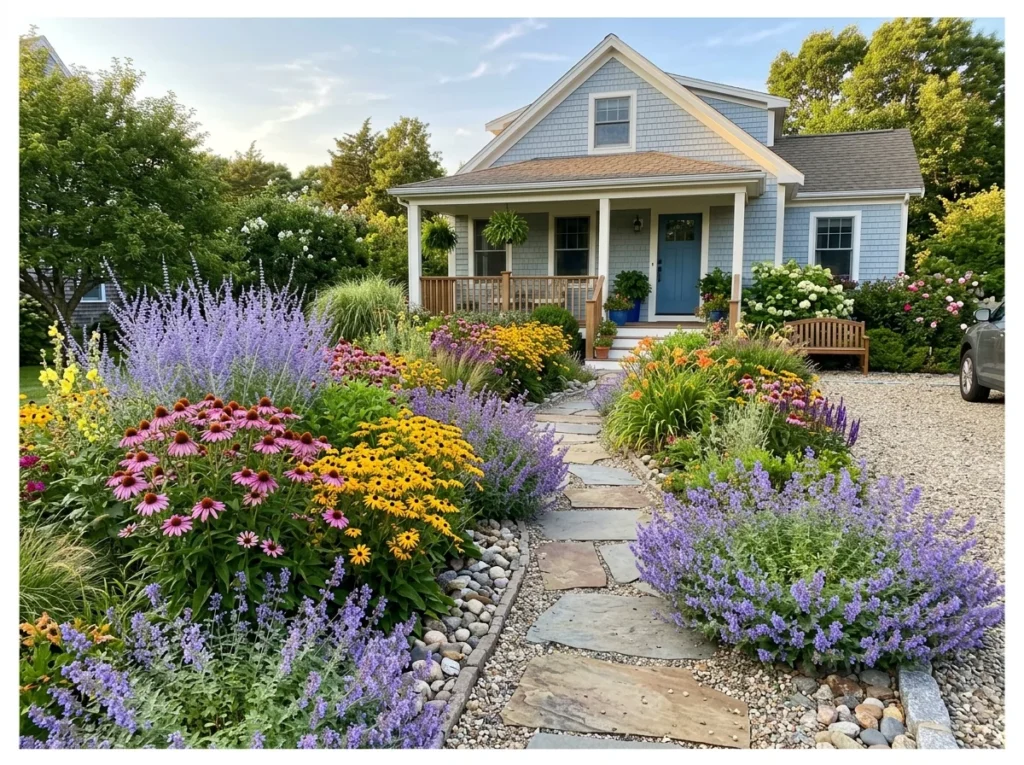
A flowering perennial border in the front garden creates a display that changes through the seasons, with different plants taking center stage from early spring through late autumn. Unlike annual plantings that need replacing each season, perennials return and typically increase in size each year.
Choose perennials with a long combined flowering season: spring bulbs, early summer roses and catmint, mid-summer echinacea and Russian sage, and late summer rudbeckia and asters. This succession of bloom creates a front garden that is never without color from April through October in most temperate climates.
Native Plant Landscape
A native plant landscape relies on species already adapted to the local climate and soil. This approach cuts down considerably on watering and fertilizing compared to non native plants. It also tends to attract local birds and pollinators that thrive around familiar vegetation.
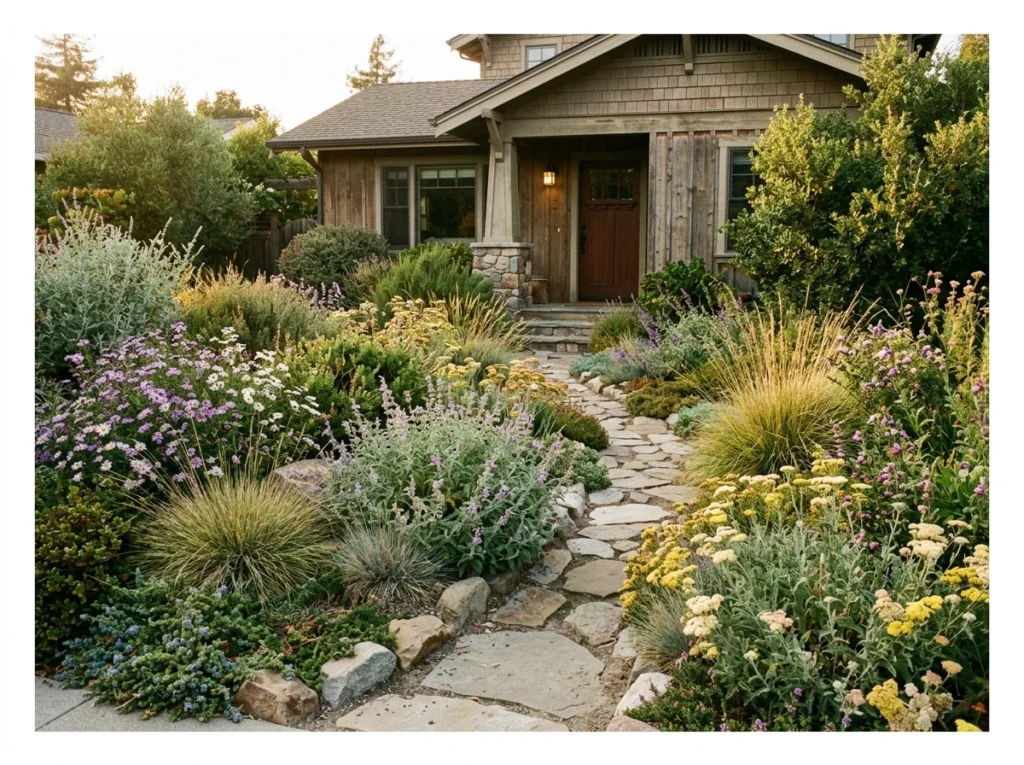
A native plant front garden uses plants indigenous to your specific region that evolved alongside local climate, rainfall, and soil conditions. They establish quickly, require minimal irrigation once settled, and support local birds, bees, and beneficial insects in ways that exotic ornamental plants cannot.
The look is naturalistic and organic rather than formally controlled, which suits informal homes and anyone who wants their front garden to feel genuinely connected to the broader landscape. Native gardens require less ongoing maintenance than conventional ornamental gardens because the plants work with their environment rather than against it.
Beautiful, ecological, and completely self-sufficient.
Front Garden with Ornamental Grasses
Ornamental grasses in a front garden add movement and texture that most yards lack. Varieties like feather reed or fountain grass sway gently in the wind, softening harder landscaping elements nearby. They also tend to need very little water once established.
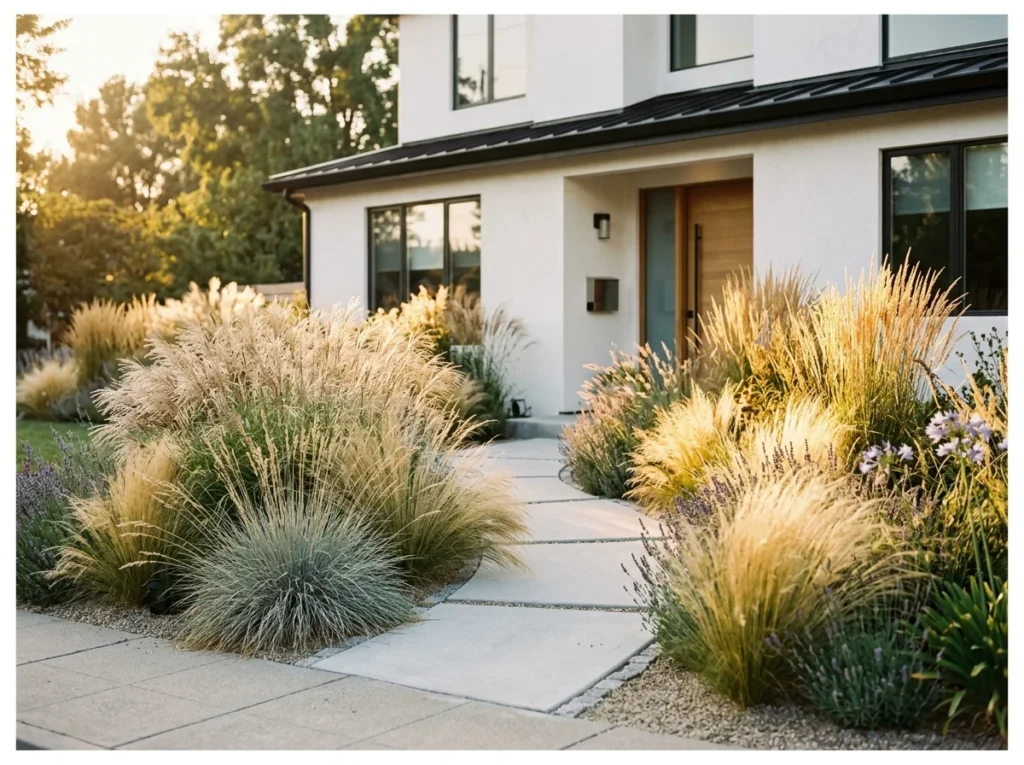
Ornamental grasses as the primary front garden design element create a contemporary, low-maintenance landscape that is genuinely beautiful across every season. Spring brings fresh green growth, summer produces tall airy seed plumes, autumn turns them golden, and winter reveals structural form.
Choose three or four grass species of different heights and foliage colors for maximum variety within a cohesive palette. Karl Foerster, blue oat grass, Mexican feather grass, and Pennisetum all combine beautifully. Cut back once annually in late winter and the garden essentially maintains itself throughout the year.
Fresh, structural, and almost zero-maintenance.
Rock Garden Front Landscape
A rock garden front landscape arranges boulders and smaller stones alongside low growing, drought tolerant plants. This style works particularly well on sloped yards where a traditional lawn would be difficult to maintain. The mix of textures between rock and plant gives the yard a rugged, natural character.
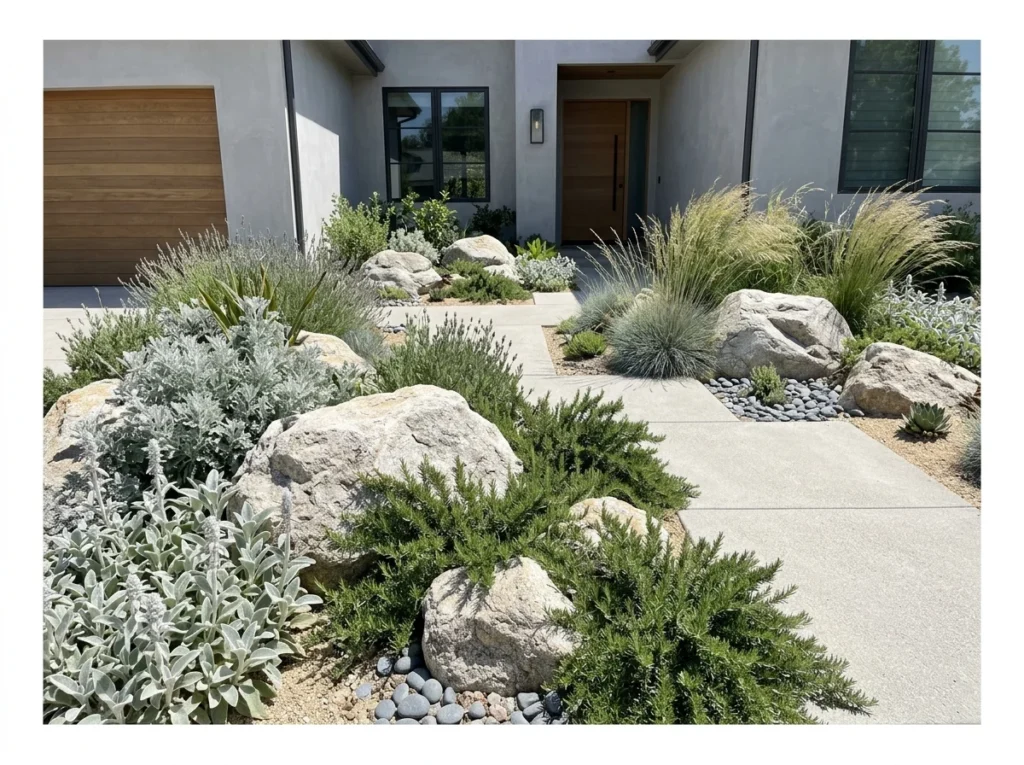
A rock garden front landscape combines large boulders with drought-tolerant planting to create a garden that looks designed, requires almost no ongoing maintenance, and solves the mowing, watering, and fertilizing costs of a conventional lawn permanently.
The most important rule for natural-looking rock garden design is choosing boulders large enough to look genuinely substantial rather than decorative. Rocks smaller than a football look placed rather than natural. Boulders the size of a large basket and larger create the naturalistic impression that makes rock gardens genuinely beautiful rather than rocky.
Zero mowing, zero watering, maximum curb appeal.
Foundation Planting Refresh
A foundation planting refresh updates the overgrown or outdated shrubs that often sit directly against a house. Swapping in properly scaled plants keeps them from blocking windows or hiding architectural details. This update alone can noticeably change how a whole front yard looks without touching anything else.
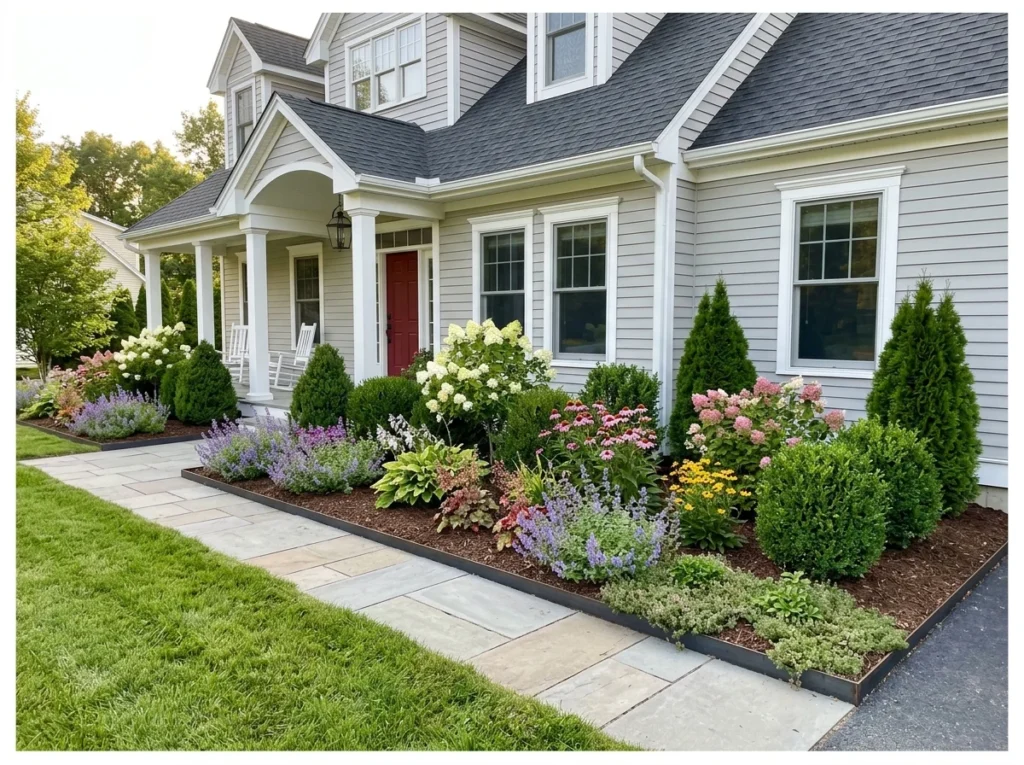
Foundation planting along the base of the home connects the house to the ground and prevents the structure from looking like it is floating above the garden. A well-planned foundation planting refresh replaces overgrown or dated shrubs with a layered combination suited to the light conditions on each side of the house.
Choose plants that remain in scale with the facade at maturity. Plants that grow taller than the window sill block light and create a maintenance burden. Evergreen shrubs for structure, flowering perennials for seasonal color, and low groundcovers for the front edge create a complete planting scheme that frames the home beautifully.
Climbing Plants on the Facade
Climbing plants trained along a house facade soften hard exterior surfaces like brick or stucco. Ivy, climbing roses, or jasmine are common choices depending on the climate and desired look. It takes a couple of seasons for the plants to fill in, but the result is a naturally green, layered exterior.
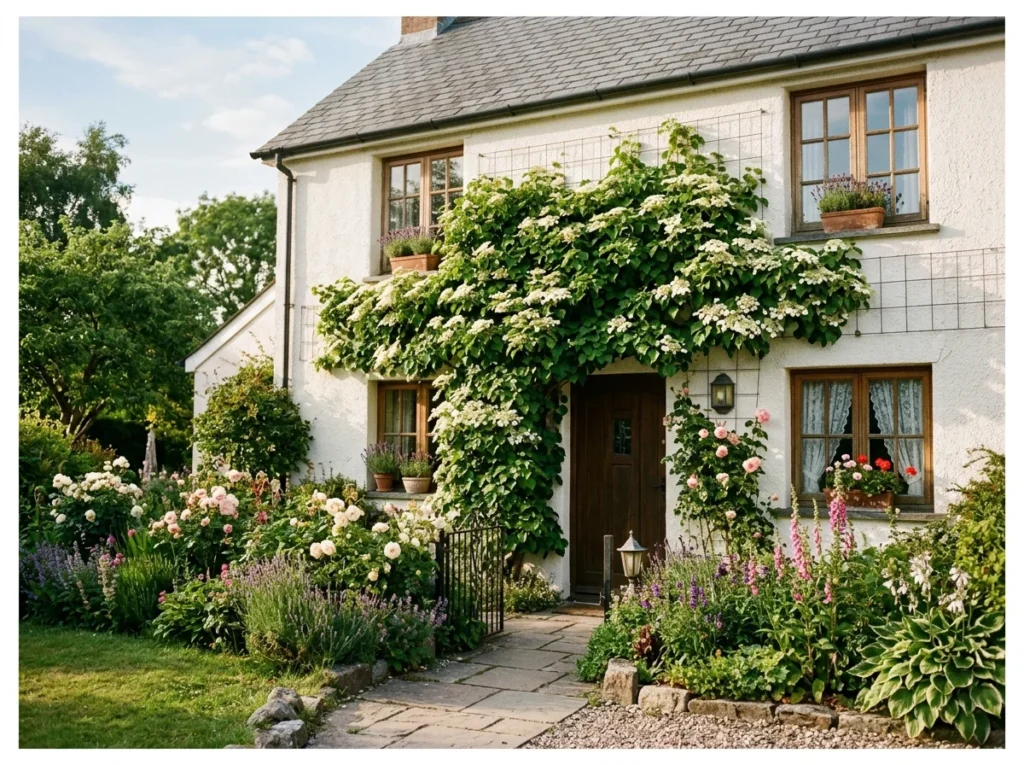
Training a climbing plant along a wire trellis system attached to the home facade adds a softness and living texture that transforms a flat wall into something beautiful and organic. The plant grows in a controlled pattern along the wire guides and covers the wall gradually.
Star jasmine, Boston ivy, climbing hydrangea, and wisteria all suit facade climbing. Wire trellis systems with standoff fixings allow air to circulate between the plant and wall, protecting the wall surface from moisture damage. The result is a facade that looks genuinely enchanting and completely unique on the street.
The facade detail that makes a house look like a home.
Front Garden with Evening Lighting
Evening lighting in a front garden extends how the landscaping gets enjoyed after the sun goes down. Uplights aimed at trees or plants create shadows and highlights invisible during the day. This addition gives the whole front of the house a more dimensional, finished appearance at night.
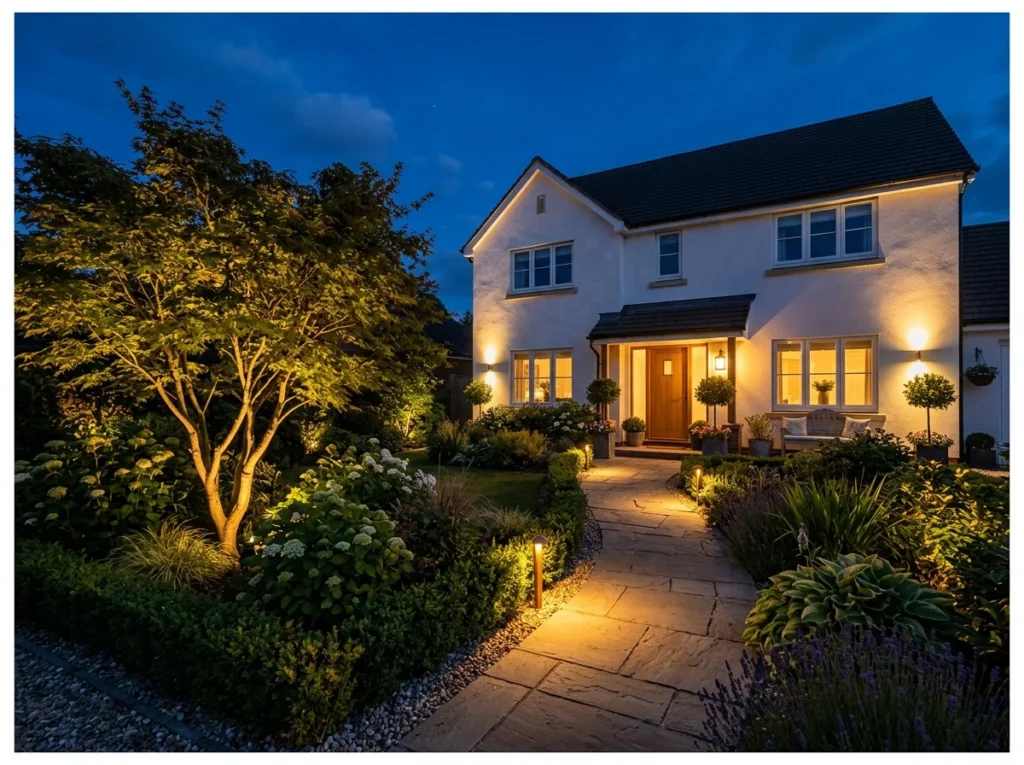
Uplighting installed at the base of trees and plants, combined with pathway lights along the entry walk, transforms a front garden’s nighttime appearance completely. The upward wash of warm light across the facade and through the tree canopy creates an evening curb appeal as strong as the daytime version.
LED spike uplights at tree bases and shrub groupings highlight the garden structure. Pathway lights guide visitors safely toward the front door while adding defining light along the garden edges. Together these layers create a front garden that looks genuinely professional after dark and photographs beautifully.
For more ways to get this right, lighting that carries the look after dark is worth exploring in depth.
Your front garden deserves to look good at night too.
Low-Maintenance Mulched Garden Beds
Mulched garden beds keep weeds down while giving the front yard a clean, finished look between plants. A fresh layer of mulch also helps retain soil moisture, which cuts down on watering needs. This approach is one of the simplest ways to make planting beds look tidy with minimal ongoing effort.
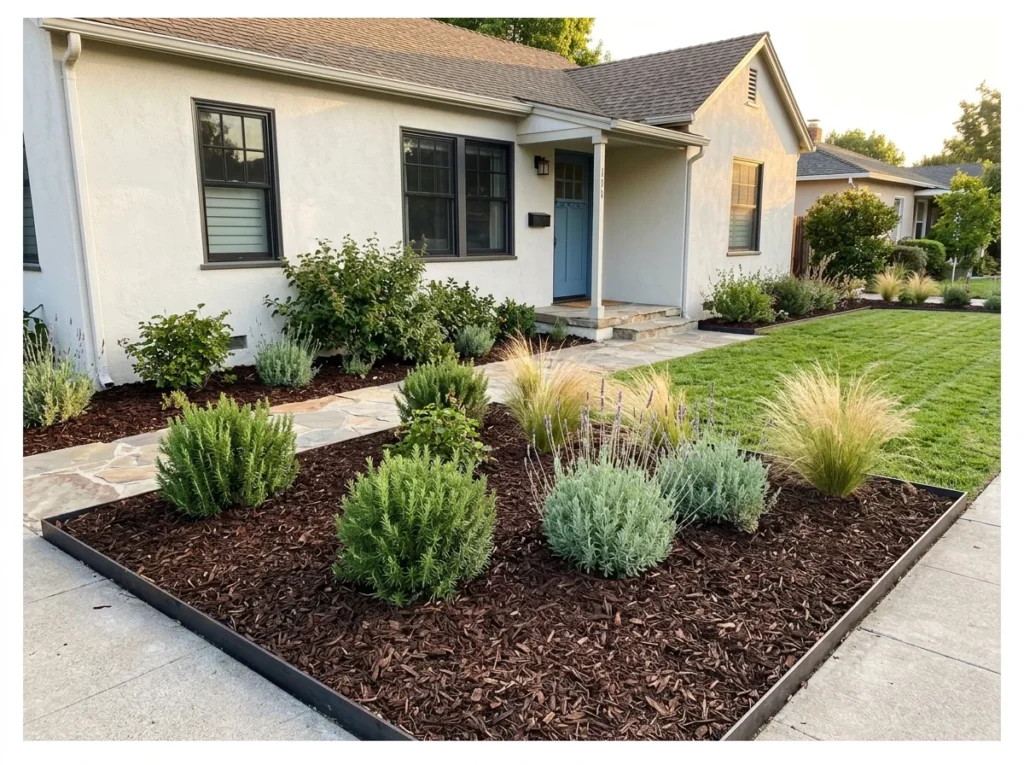
Fresh dark mulch in front garden beds creates instant visual impact by providing a clean, dark contrast that makes all plant foliage appear brighter and more vibrant against it. A 7 to 10 centimeter layer of organic mulch also suppresses weeds for the entire growing season.
Apply fresh mulch each spring before weeds emerge for the lowest-maintenance front garden management system available. The combination of clean steel edging and dark mulch creates a neat, professional appearance that requires very little ongoing work to maintain throughout the season.
Budget-friendly option with immediate visual impact.
Wildflower Meadow Front Garden
A wildflower meadow front garden replaces a traditional lawn with a mix of native flowering plants. The informal, slightly untamed look attracts bees and butterflies far more than a mowed lawn would. This style suits homeowners looking to cut down on mowing while still keeping color in the yard.
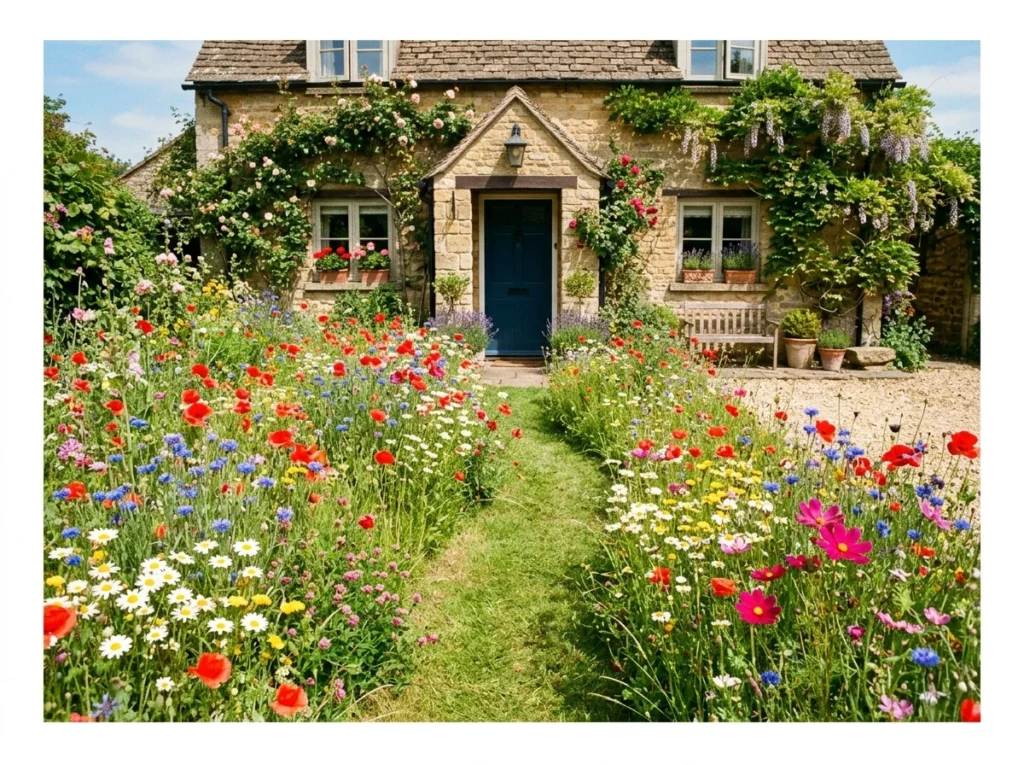
A wildflower meadow front garden sows a diverse mix of annual and perennial wildflower seeds in place of conventional lawn or garden beds. The resulting planting looks joyfully wild while supporting pollinators and reducing maintenance compared to a conventional lawn.
A mown path from the street to the front door through the meadow signals that the wild planting is intentional rather than neglected. A clearly defined mown edge along the boundary reinforces the same message. Without these structural elements, even a beautiful wildflower meadow can read as an unmaintained lawn to a passing observer.
Getting that balance of wild and intentional right is easier when garden design built around the whole plot guides your bigger decisions.
Wild, joyful, and genuinely ecological.
Black Mailbox and Bold House Numbers
A black mailbox paired with bold house numbers creates a small but noticeable detail near the curb. The dark color contrasts sharply against lighter siding, brick, or surrounding landscaping. This detail is inexpensive to add but still gives the front yard a more finished, intentional look.
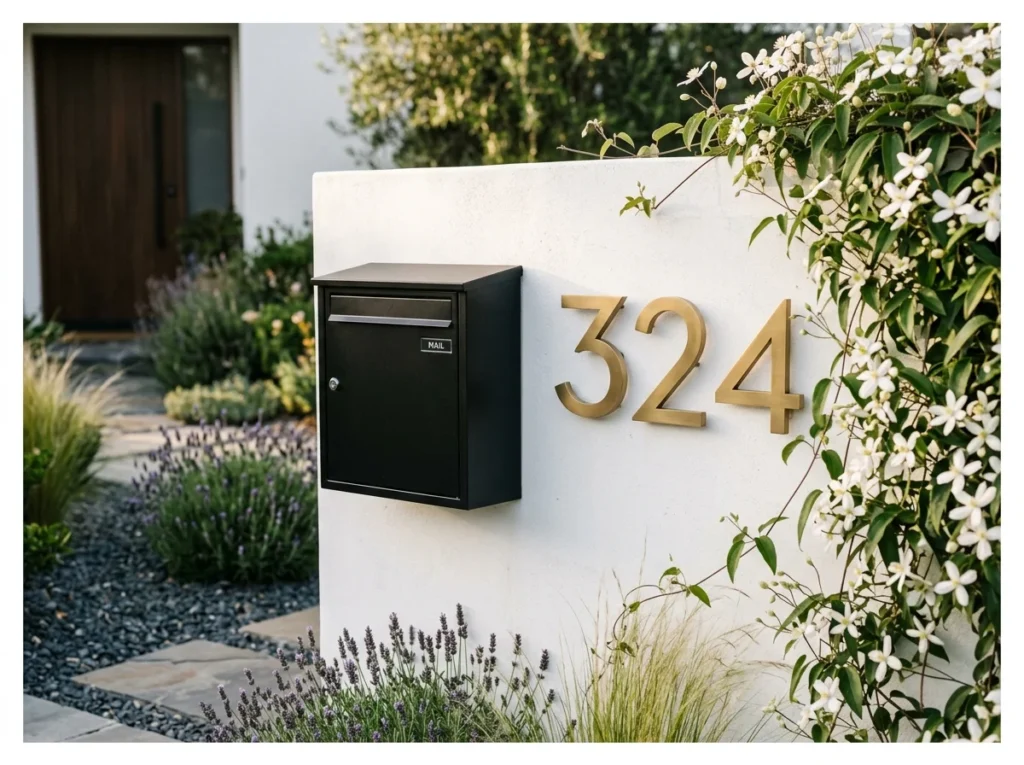
Replacing a tired plastic mailbox and faded house numbers with a matte black wall-mounted letterbox and oversized brass or black house numbers is one of the quickest and most affordable front of house improvements possible. These details signal design quality before a visitor reaches the door.
Bold oversized house numbers are especially effective on rendered or timber-clad facades. The contrast between the number material and the wall surface reads clearly from the street and adds a purposeful quality to the whole exterior. This entire upgrade can be completed in an afternoon for minimal cost.
Small details like these add up quickly, and a facade that welcomes you home often comes down to just a few thoughtful touches like this.
Budget-friendly option with immediate curb appeal impact.
Driveway Lined with Planting
Planting along the edges of a driveway softens what is otherwise a large, hard surface. Low shrubs or grasses are common choices since they will not overhang and block vehicles. This approach also helps tie the driveway visually into the rest of the front yard landscaping.
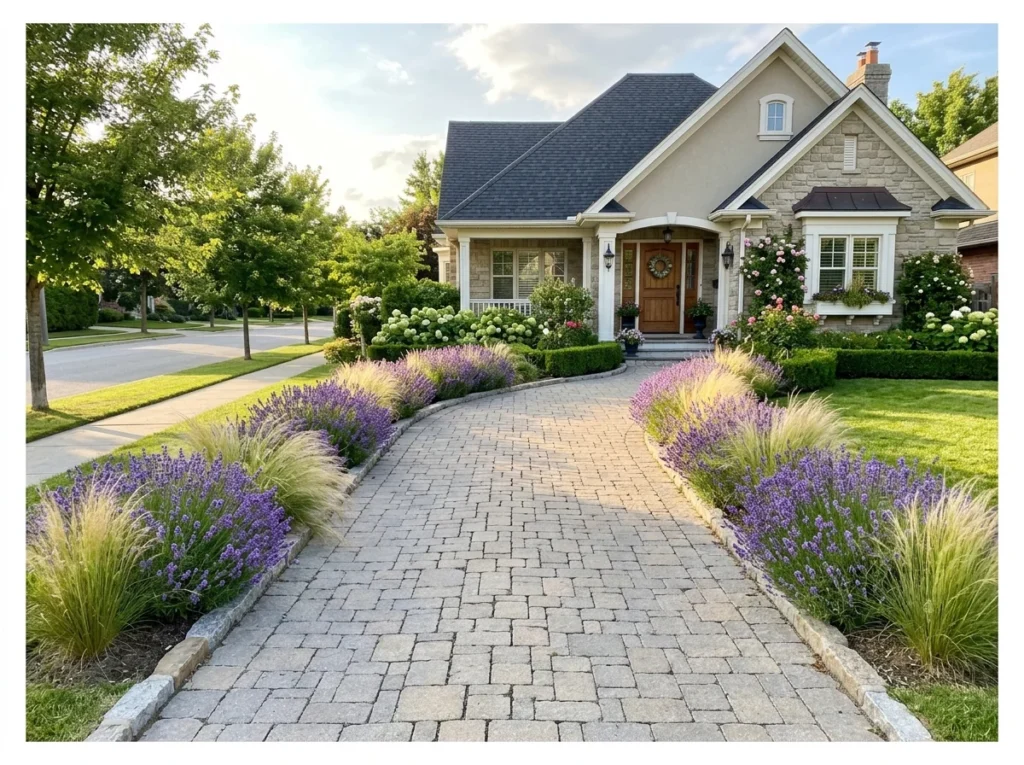
Planting borders along each side of a front driveway create an arrival sequence that transforms a functional asphalt or paved surface into a beautifully framed entry. The planting should be consistent on both sides for the most resolved and intentional appearance.
Lavender, low rosemary, ornamental grasses, and low agapanthus are all excellent driveway border plants because they handle reflected heat from the paving surface, stay in scale with the border width, and look attractive across multiple seasons. Avoid plants that spread into the driveway or drop significant leaf or flower debris.
Pollinator Garden
A pollinator garden is planted specifically to attract bees, butterflies, and other beneficial insects. Flowering natives like coneflower or milkweed are common choices for this type of planting. Beyond looking good, this garden also plays a small role in supporting the local ecosystem.
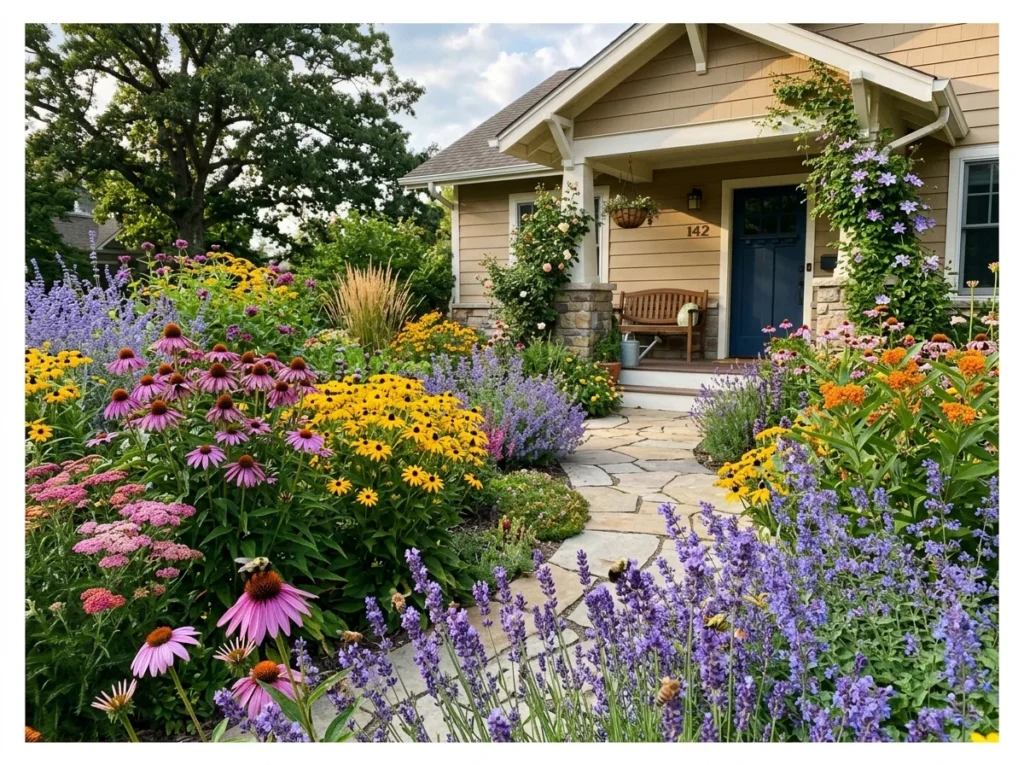
A pollinator front garden plants flowering perennials chosen specifically to attract and support bees, butterflies, and beneficial insects. Echinacea, lavender, catmint, black-eyed Susans, salvia, and alliums all provide nectar and pollen through different seasons.
Beyond the ecological benefit, a pollinator front garden is genuinely beautiful throughout its long flowering season. The constant activity of bees and butterflies visiting the flowers adds a living, dynamic quality that conventional planting lacks. It is also one of the most low-maintenance garden approaches because the plants establish naturally and self-seed over time.
A front garden that gives back to the environment.
Seasonal Container Planting at the Door
Seasonal container planting near the front door lets homeowners swap out flowers as the seasons change. Pots filled with mums in fall or tulips in spring keep the entrance looking fresh year round. This approach is far easier to update than digging up and replanting an entire garden bed.
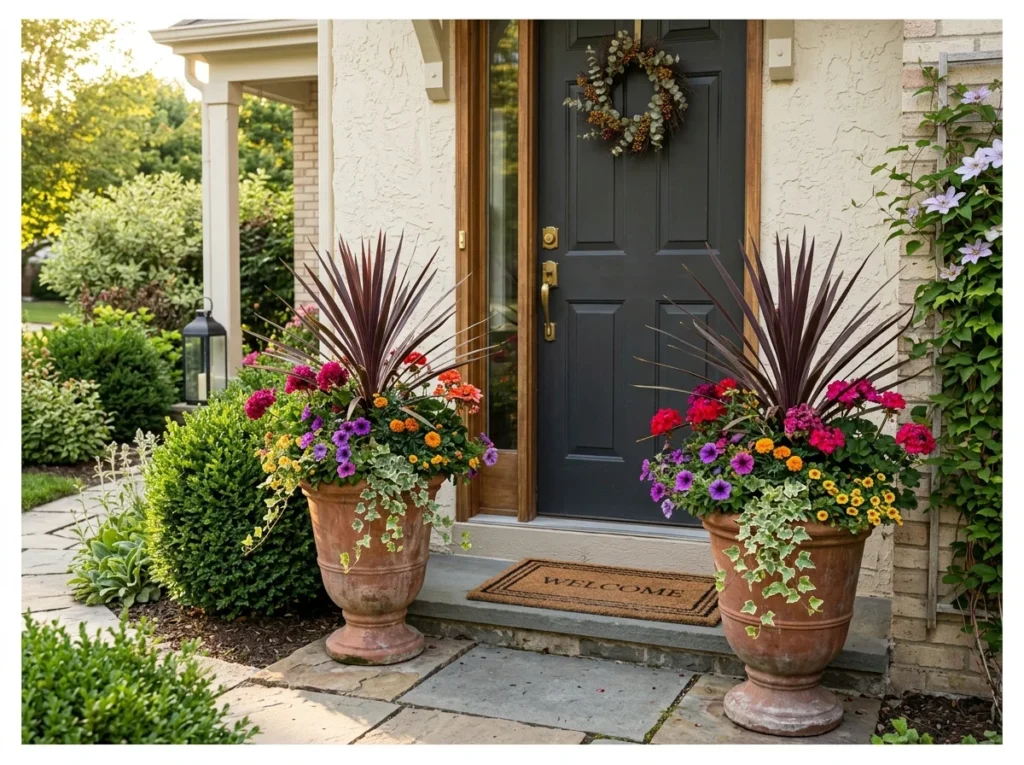
Large planted containers flanking the front door create an immediate sense of welcome and can be replanted seasonally to keep the front garden looking fresh throughout the year. A consistent pair of matching large containers creates formal balance that elevates even the most modest front garden.
Two identical large urns or planters with matching seasonal planting communicate care and attention at the precise point where every visitor and resident crosses into the home. Choose a tall thriller plant at the center, a mid-height filler, and a trailing spiller at the edge of each container for the fullest, most professional-looking container planting.
Privacy Hedge Along the Boundary
A privacy hedge along the property boundary blocks views from the street or neighboring yards. Evergreen varieties like arborvitae or holly keep their leaves year round, so privacy holds up in every season. Regular trimming keeps the hedge looking neat rather than overgrown and wild.
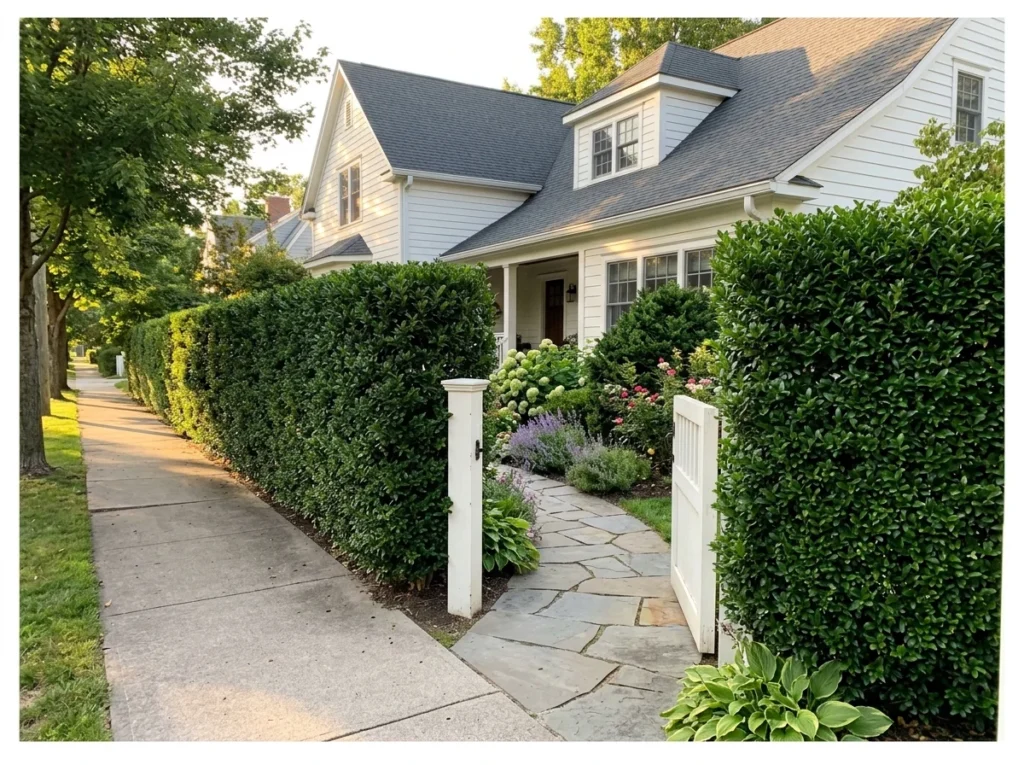
A well-maintained privacy hedge along the front boundary creates natural enclosure that frames the front garden and provides privacy without the visual hardness of a solid fence. A green hedge also adds to the street’s overall landscape quality in a way that fences and walls cannot.
Photinia, English laurel, hornbeam, and beech all make excellent front boundary hedges. Allow three to five seasons for the hedge to reach full screening height and then clip once or twice a year to maintain the desired form. A single opening in the hedge with a simple gate creates a defined entry point that makes the front garden feel properly enclosed and designed.
Rain Garden for Sustainable Drainage
A rain garden is a shallow planted depression designed to capture and filter rainwater runoff. Plants chosen for this area typically tolerate both wet conditions after rain and drier periods in between. This feature helps reduce water pooling in the yard while also supporting local water quality.
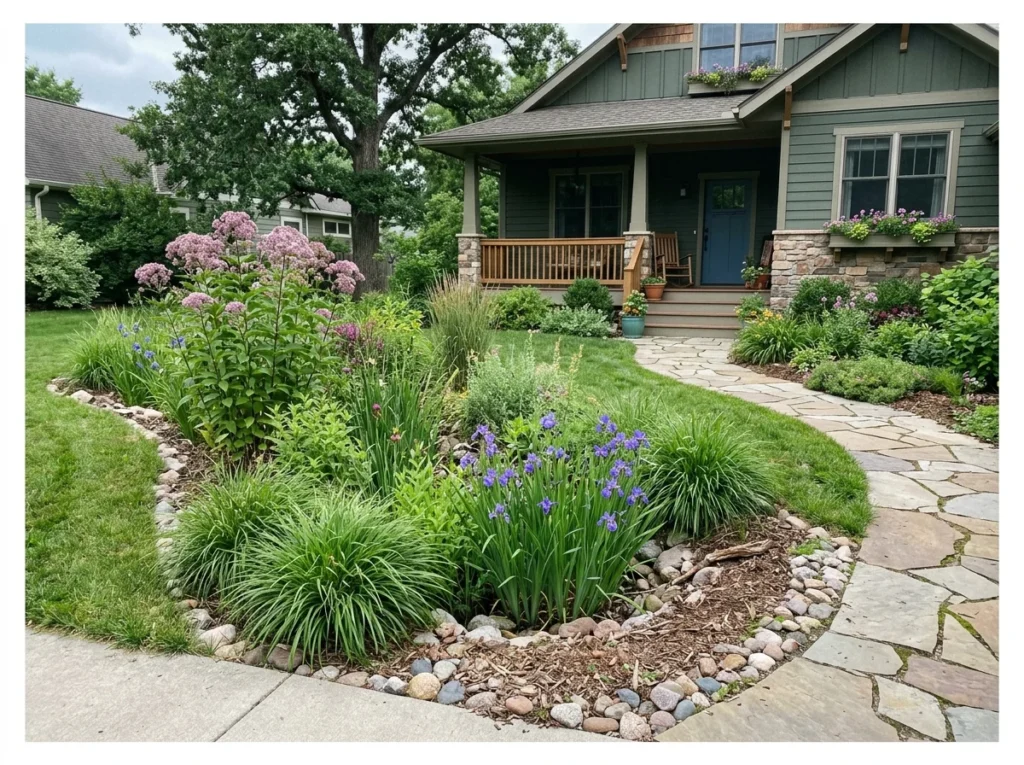
A front garden rain garden is a shallow planted depression designed to capture rainwater runoff from the driveway, roof, and surrounding surfaces. Rather than overwhelming storm drains, the rain garden filters water slowly through the soil while supporting moisture-tolerant native plants.
Rain gardens suit front gardens in areas with heavy rainfall and limited drainage. They reduce flooding risk, improve water quality, and create habitat. Planting with native sedges, rushes, native irises, and moisture-tolerant perennials creates a front garden that looks naturalistic and functions as a genuine ecological contribution.
Where beauty and sustainable function combine perfectly.
Conclusion
A beautifully designed front garden is one of the most rewarding investments a homeowner can make because it improves the daily experience of arriving home, creates a positive first impression for every visitor, and adds real, measurable value to the property.
Start with the idea from this list that most genuinely excites you and suits your home’s architectural character. Choose plants for your actual climate and light conditions. Build the framework of edging, paths, and structure first. Then add the planting and let it develop over time.
Your home’s best first impression is genuinely within reach.
And once the front is sorted, a garden that keeps giving back around the back of the house might be the next project worth tackling.



Pingback: 17 Garage Door Ideas for Stunning Curb Appeal