Tired of mowing, watering, and replanting the same garden every season? A rock garden gives you year-round beauty with almost zero ongoing work.
These ideas are practical, beautiful, and built to last without constant attention.
Let’s get started.
If you’re drawn to a quieter garden style, there are secluded garden retreats worth exploring alongside these low-maintenance ideas.
Sloped Hillside Rock Garden
Slopes are tricky for regular lawns since soil just washes away with heavy rain. Rocks placed strategically across a hillside help hold everything in place naturally. This approach turns a tough landscaping problem into one of the more interesting features in a yard.
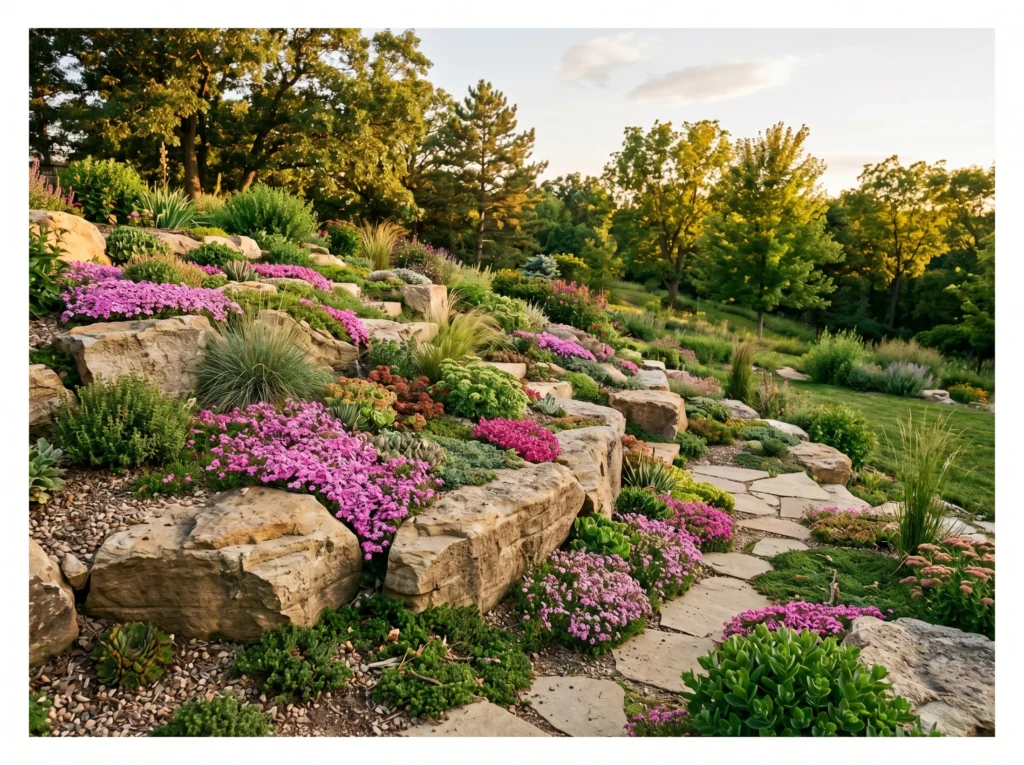
A sloped hillside is one of the most naturally suited sites for a rock garden. Large boulders placed strategically across the slope prevent soil erosion while creating planting pockets between them for drought-tolerant groundcovers, sedums, and ornamental grasses.
Slopes are notoriously difficult to maintain as conventional lawn because mowing is awkward, dangerous, and time-consuming. Replacing a slope with a rock garden eliminates that problem entirely. The rocks hold the soil, the plants cover the ground, and the maintenance drops to almost nothing after the first season.
This same principle of turning a difficult area into a feature applies to front yard curb appeal worth studying too.
Turns your most difficult area into your most beautiful one.
Dry Creek Bed Rock Garden
This design mimics a natural stream bed using smooth river rocks instead of actual water. It’s often used to solve drainage issues in yards where water tends to pool after rain. Even without water flowing through it, the winding shape adds a lot of visual movement.
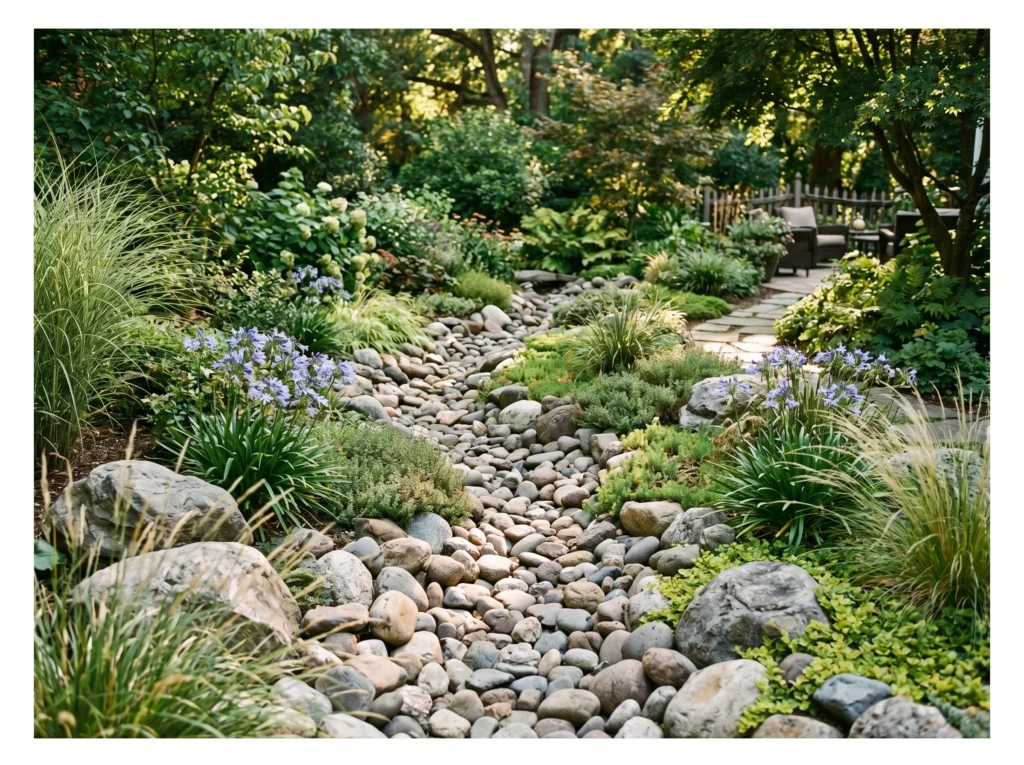
A dry creek bed is a carefully arranged channel of smooth river rocks that mimics the look of a natural stream bed without any water. The rocks are laid in a meandering path using larger boulders at the edges and progressively smaller smooth stones toward the center of the channel.
Beyond looking beautiful, a dry creek bed serves a genuine practical function. It channels rainwater runoff across the garden in a controlled direction, preventing pooling and erosion during heavy rainfall. It is one of the most functional and visually natural rock garden styles available.
Form and function working perfectly together.
Alpine Rock Garden
Alpine gardens are built to recreate mountain terrain using gravel, small rocks, and low growing plants. These plants are chosen specifically because they can survive thin soil and cold exposure. Sedums and saxifrages are common picks since they thrive in these rocky, exposed conditions.
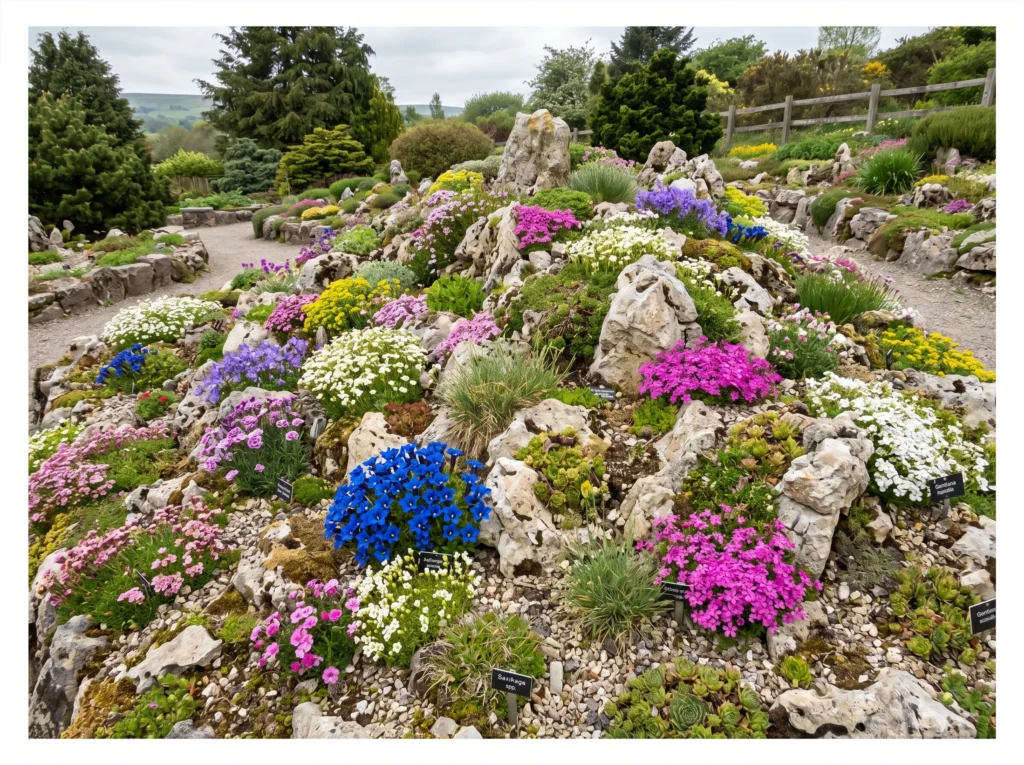
An alpine rock garden replicates the plant communities found on mountain slopes, where tough low-growing plants thrive in the gaps between exposed rocks. Shallow rocky soil, excellent drainage, and full sun exposure are the conditions alpine plants.
The appeal of an alpine garden is the incredible diversity of tiny flowering plants it supports in a compact space. Saxifrages, sempervivums, gentians, aubrieta, and creeping phlox all bloom at different times and create a constantly changing tapestry of color and texture across the rock surface.
Desert Succulent Rock Garden
Succulents and cacti pair naturally with rocks since both thrive in dry, well drained conditions. This combination needs very little water once it’s established, which makes upkeep fairly minimal. Gravel mulch is often added around the base to help with drainage even further.
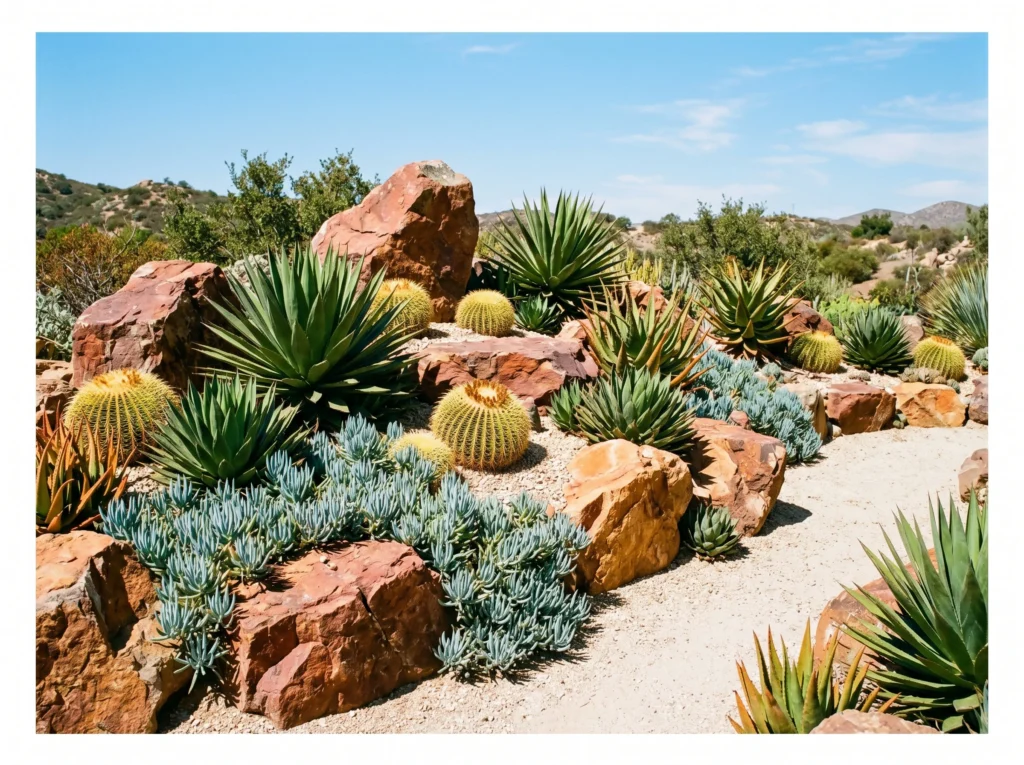
A desert succulent rock garden combines large angular boulders with architectural succulent plants to create a landscape that looks dramatic and deliberate with virtually zero ongoing care. Once established, this style survives on rainfall alone in most warm climates.
Agaves, aloes, golden barrel cacti, and blue chalk sticks all provide strong sculptural forms that contrast beautifully with rough rock textures. The combination of silvery blue, deep green, and warm rust-orange tones creates a color palette that looks sophisticated and intentional in every season.
Essentially zero maintenance after the first year.
Japanese Zen Rock Garden
Traditional zen gardens use carefully raked gravel alongside a few large, deliberately placed stones. Every rock in this style is chosen and positioned with a specific meaning in mind. The overall goal is a calm, meditative space rather than a busy planted garden.
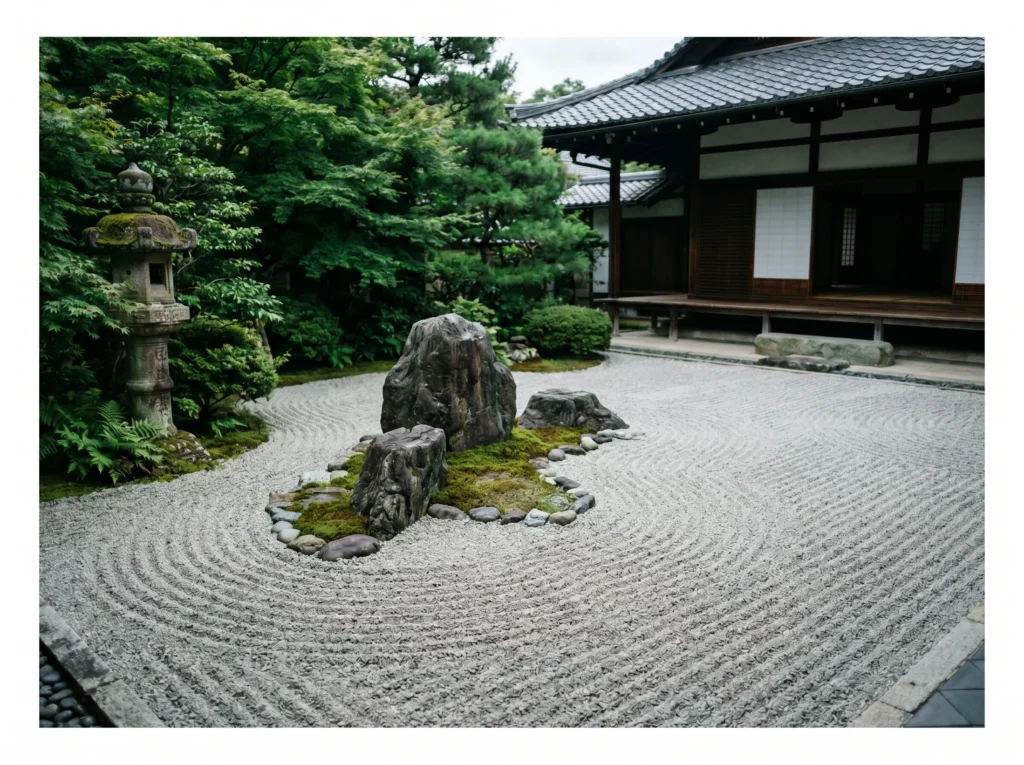
A Japanese zen rock garden, or karesansui, uses raked gravel to represent water and precisely placed boulders to represent islands or mountains. The raking patterns create a meditative visual rhythm and the act of raking itself is considered a contemplative practice.
This style is the most minimal and restrained rock garden design available. It suits small courtyard spaces, formal gardens, and anyone who values calm simplicity over plant abundance. The maintenance is simply re-raking the gravel patterns periodically, which takes minutes and is deeply satisfying to do.
For more gravel and stone paths worth trying, it helps to see how other minimal gardens use raked textures like this.
The ultimate low-plant, high-impact garden design.
Rock Garden with Ornamental Grasses
Tall grasses like feather reed or blue fescue add height and movement among the rocks. Wind passing through the blades gives the whole space a bit of motion that stone alone can’t provide. This pairing also works well in fall when the grasses turn golden and dry.
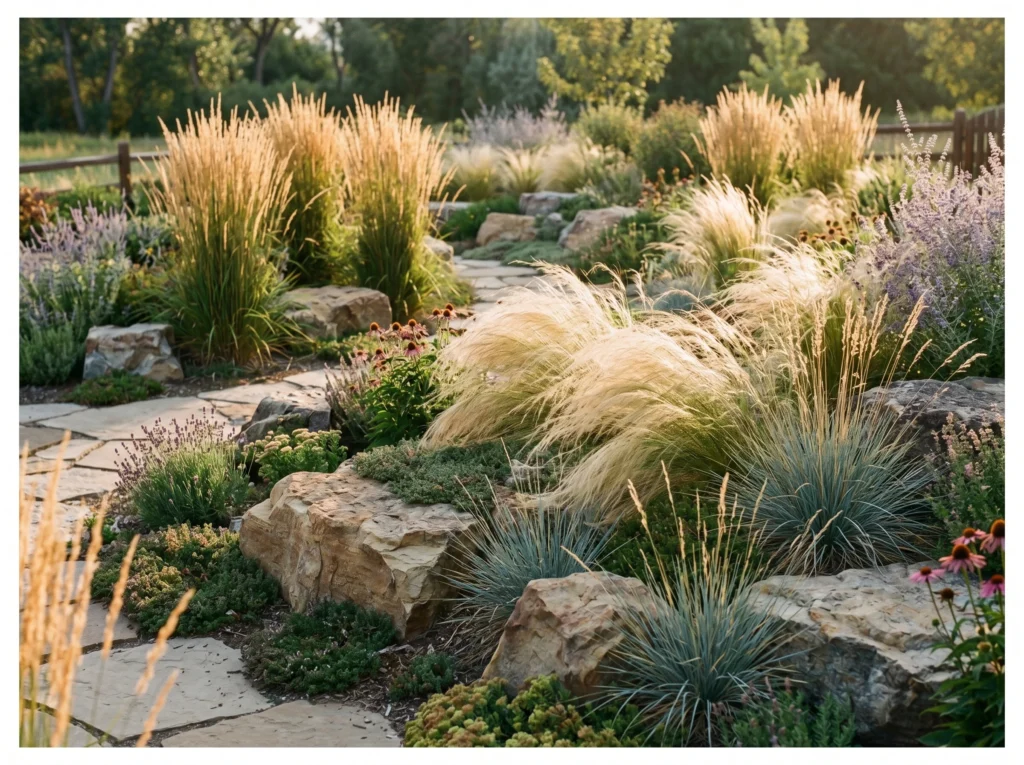
Planting ornamental grasses among boulders in a rock garden creates a combination of hard permanent structure and soft seasonal movement that no other planting style can match. The grasses sway gently in the breeze while the rocks stay anchored and solid beneath them.
This pairing suits contemporary, naturalistic, and prairie-style gardens equally well. Karl Foerster feather reed grass, blue oat grass, and Mexican feather grass all establish quickly, require one cut-back per year, and look genuinely beautiful across every season from spring flush to winter seed heads.
Cottage Rock Garden with Creeping Plants
Creeping thyme or sedum spreads over and around the rocks, softening their hard edges. This style leans into a slightly wild, overgrown look rather than a neat manicured one. Over a couple seasons, the plants will fill in gaps and spill over stone edges on their own.
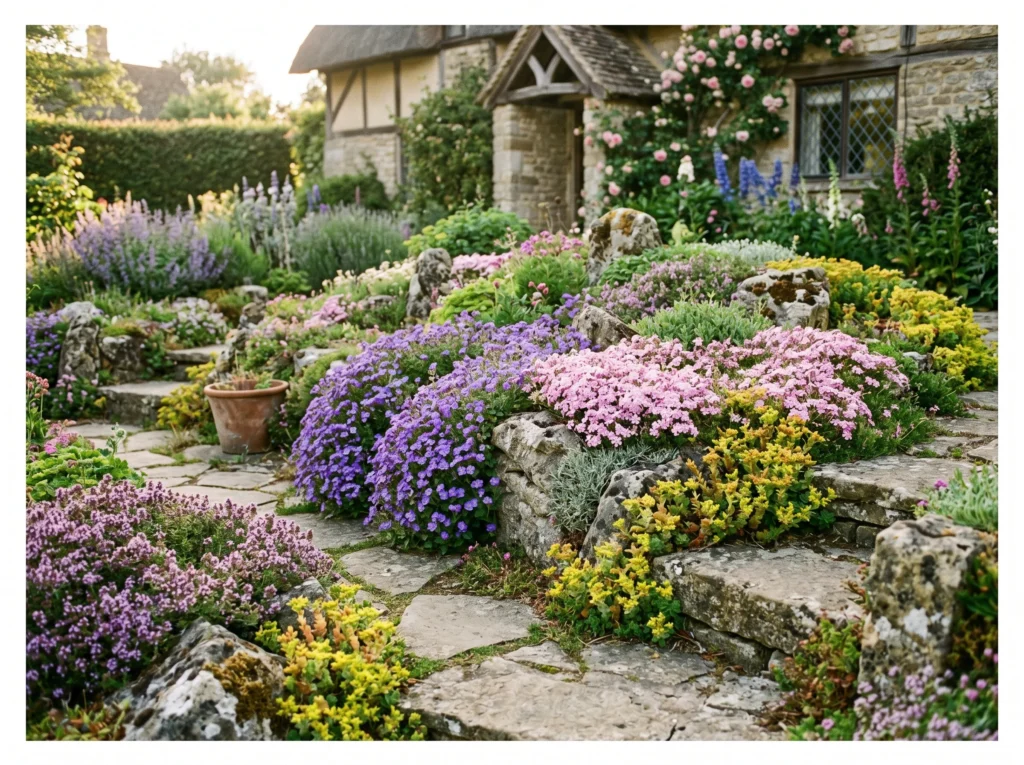
A cottage rock garden uses weathered, moss-covered rocks as anchors for an abundant planting of low creeping perennials that fill every gap and eventually soften the stone edges completely. The plants spill over the rocks and between them in a way that looks like it has been growing undisturbed for decades.
Creeping thyme, aubrieta, creeping phlox, sedum, and stonecrop all suit this style beautifully. They bloom at different times through spring and summer, creating a continuously changing display of color. Between blooms the foliage remains attractive and completely weed-suppressive.
Rock Garden with Raised Boulder Beds
Large boulders are used to build raised sections instead of traditional retaining walls. This adds depth and varying heights that a flat rock garden usually lacks. It also gives plants better drainage since the beds sit above the surrounding ground level.
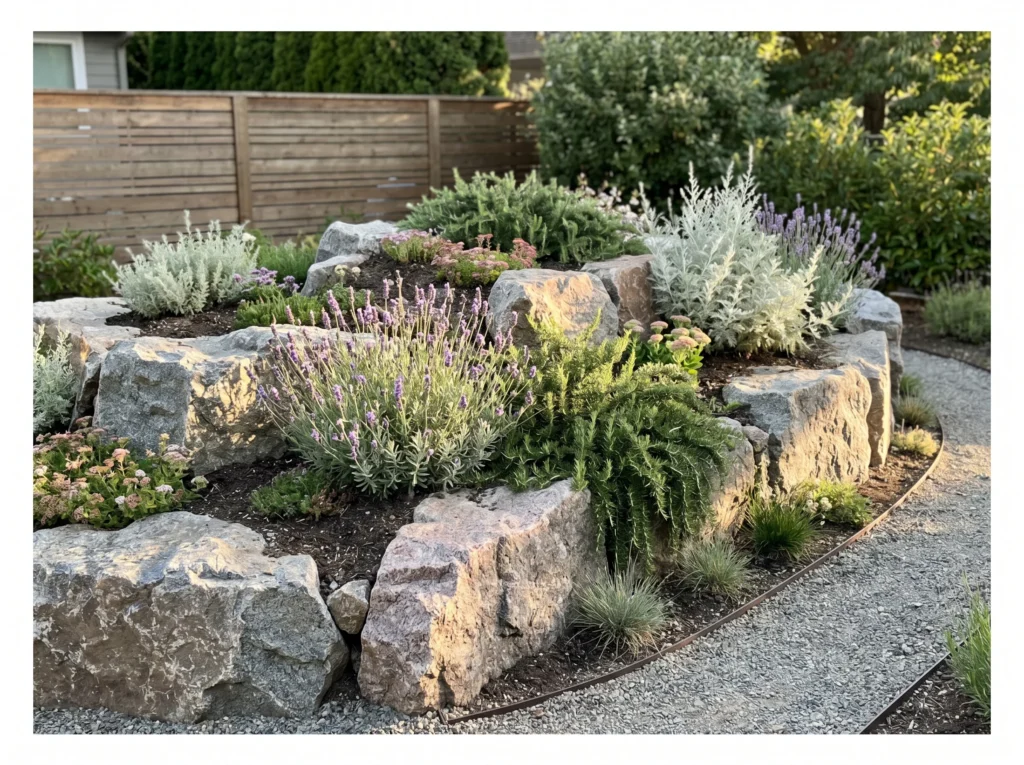
Arranging large boulders in groupings to create natural raised planting pockets gives a rock garden a three-dimensional quality that flat rock mulch beds cannot achieve. Each pocket between boulders becomes its own miniature garden with its own microclimate and plant selection.
The raised areas created by boulder groupings also improve drainage significantly, which benefits most rock garden plants that struggle in heavy wet soils. The boulders themselves absorb heat during the day and release it slowly at night, creating slightly warmer root zone temperatures that drought-tolerant plants appreciate.
Rock Garden Pathway
Flat stepping stones or gravel paths wind through the rock garden, guiding foot traffic naturally. This keeps people from walking directly on planted areas and compacting the soil. Irregularly spaced stones tend to look more natural than a perfectly straight path.
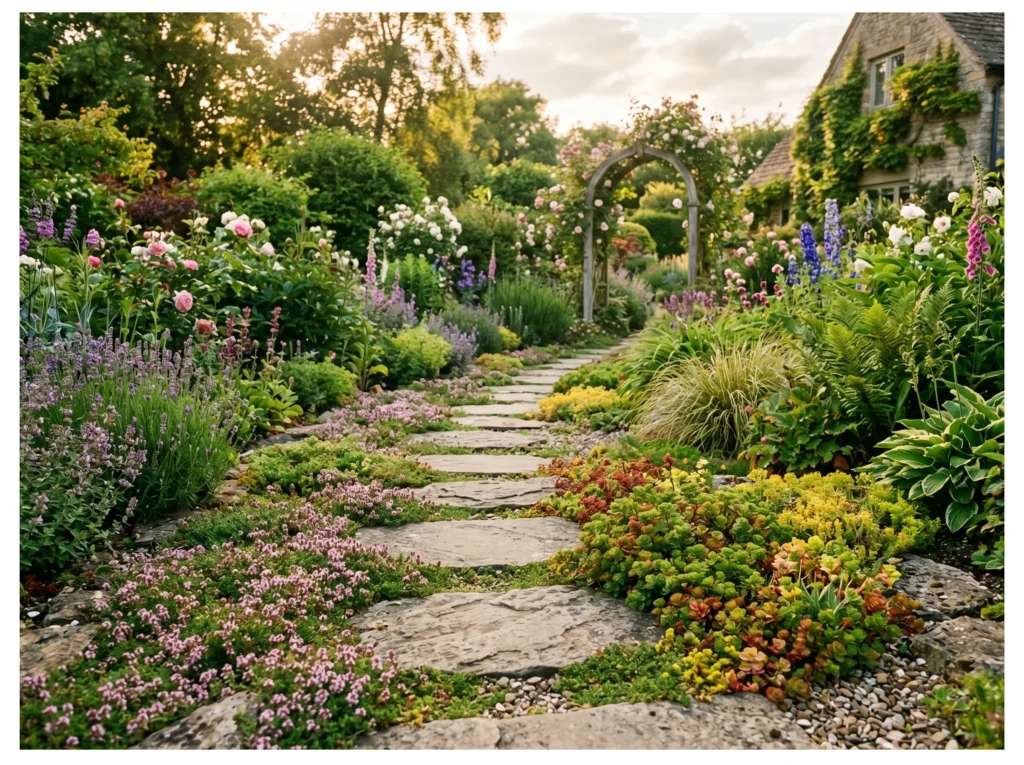
A rock garden pathway uses large flat stepping stones set into a ground-level rock garden, with creeping groundcovers planted between and around the stones to create a living surface that looks completely natural and intentional.
Creeping thyme is the most popular choice for planting between stepping stones because it releases a fresh herbal fragrance when stepped on lightly, handles occasional foot traffic well, stays evergreen through most winters, and produces a mass of tiny pink flowers in late spring. It transforms a simple path into a genuinely sensory garden experience.
Fresh fragrance underfoot with every step.
Rock Garden with Water Feature
A small pond, waterfall, or fountain adds sound and movement to an otherwise still rock garden. Rocks are usually stacked around the water’s edge to make it look like a natural formation. The combination of running water and stone tends to attract birds too.
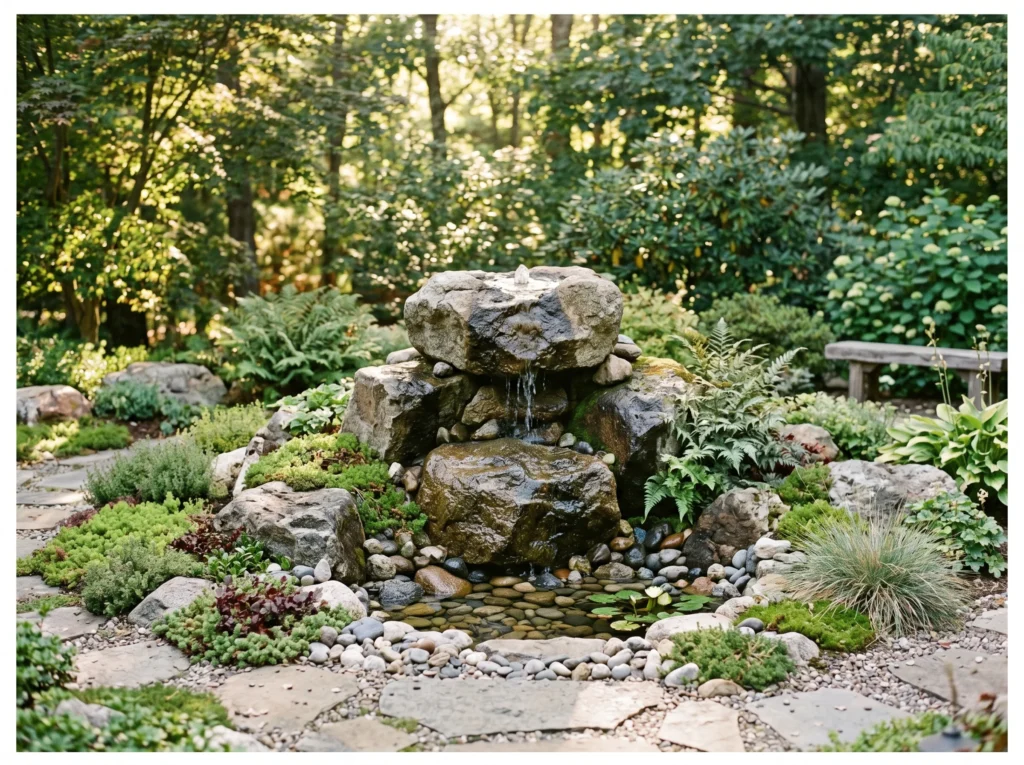
A boulder water feature placed within a rock garden creates both visual and auditory interest that makes the space feel significantly more alive. Water trickling through a stack of natural rocks into a shallow pebble basin looks completely at home in a rock garden setting.
The pump is hidden inside the boulder stack and the reservoir is buried beneath the pebble basin, making the whole feature appear completely natural. Solar-powered pump kits require no electrical installation. The sound of moving water masks neighboring noise and creates a calm that transforms the garden into a genuine retreat.
Front Yard Rock Garden
Front yard rock gardens work well as an alternative to grass, especially in dry climates. They cut down significantly on mowing and watering compared to a traditional lawn. A mix of rocks, gravel, and low maintenance plants can still look polished from the street.
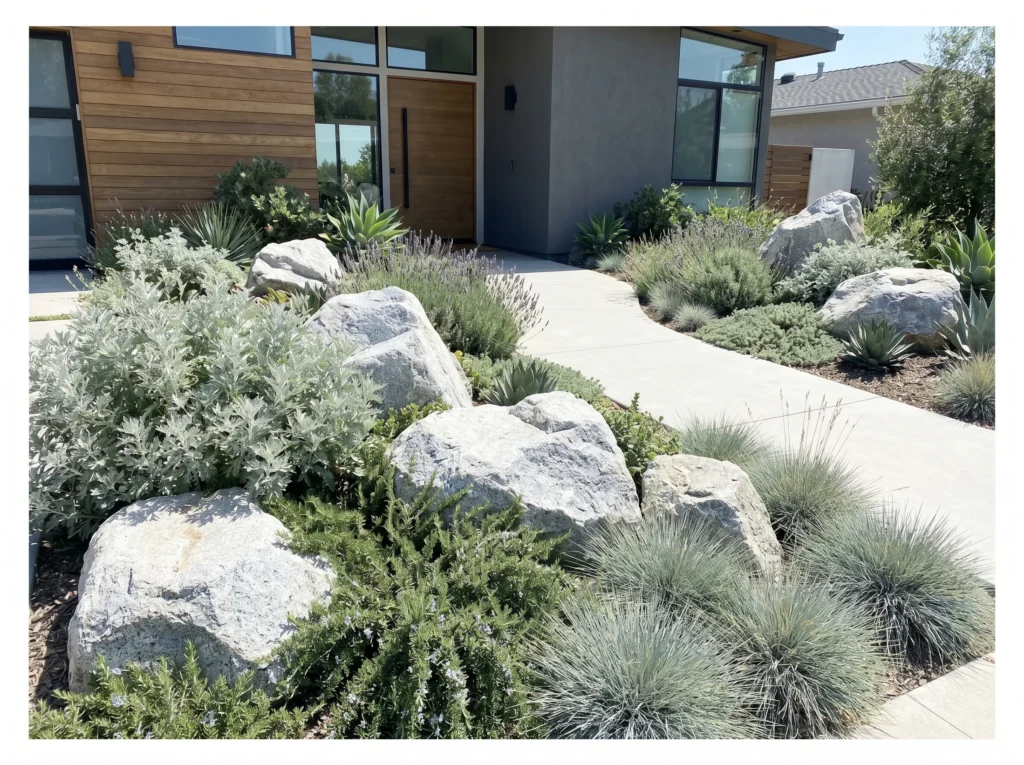
Replacing a front lawn with a rock garden creates immediate curb appeal while eliminating weekly mowing, seasonal fertilizing, and irrigation costs permanently. Large boulders, gravel ground cover, and drought-tolerant planting create a front yard that looks designed and cared for without requiring any ongoing effort.
The key to a successful front yard rock garden is choosing boulders large enough to look genuinely substantial rather than decorative. Rocks smaller than a volleyball look placed rather than natural. Boulders the size of a basketball and larger create the naturalistic impression that makes rock gardens look genuinely beautiful.
For front-of-house designs worth a look, it’s worth seeing how other properties scale their boulders for maximum impact.
Curb appeal plus zero ongoing lawn maintenance.
Rock Garden with Native Plants
Using native species means the plants are already adapted to local rainfall and soil conditions. This usually means less watering, less fertilizer, and fewer pest problems overall. It also tends to attract local pollinators like bees and butterflies more reliably than exotic species.
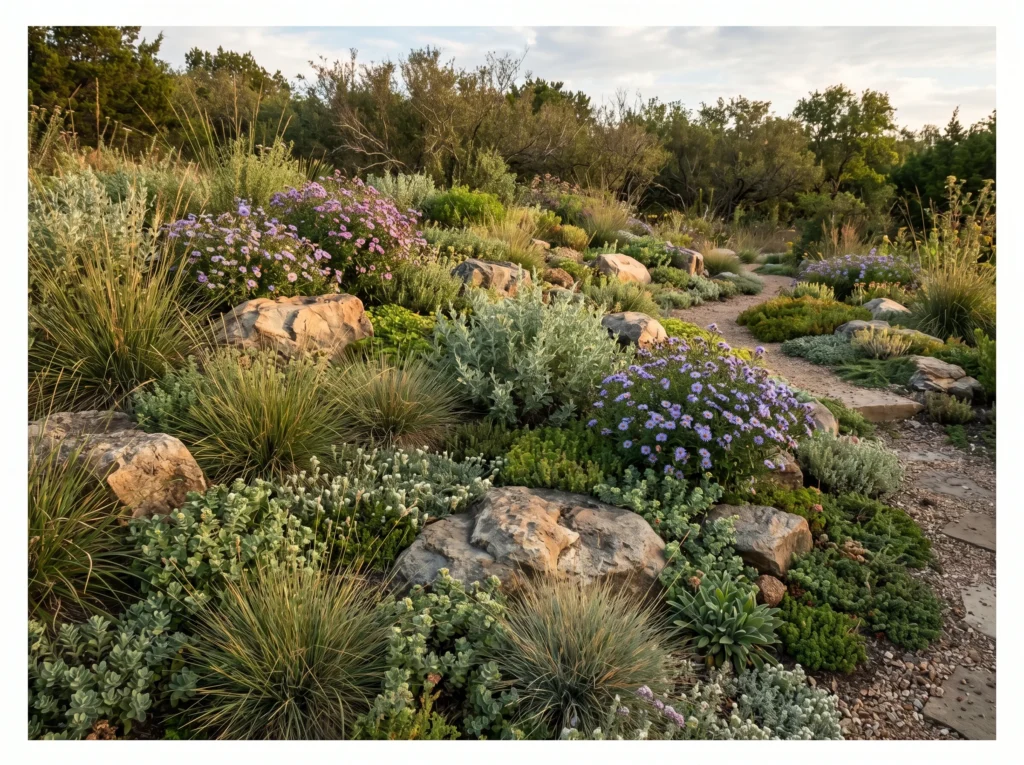
Combining native plants with a rock garden creates a landscape that belongs to its environment rather than fighting against it. Native plants evolved alongside the local rocks, soils, and rainfall patterns, which means they establish quickly, require no supplemental irrigation once settled, and support local birds, bees, and insects.
The look is naturalistic rather than manicured, which suits informal gardens, wildlife gardens, and anyone who wants their outdoor space to feel genuinely connected to the broader landscape. Native bunch grasses, flowering asters, wild salvias, and low groundcovers all suit rock garden settings naturally.
Shaded Rock Garden with Ferns
Ferns do well in rocky spots that don’t get much direct sun, like under trees. Moss often grows on the rocks themselves in these damp, shaded conditions. This combination creates a cooler, more woodland feel compared to sun drenched rock gardens.
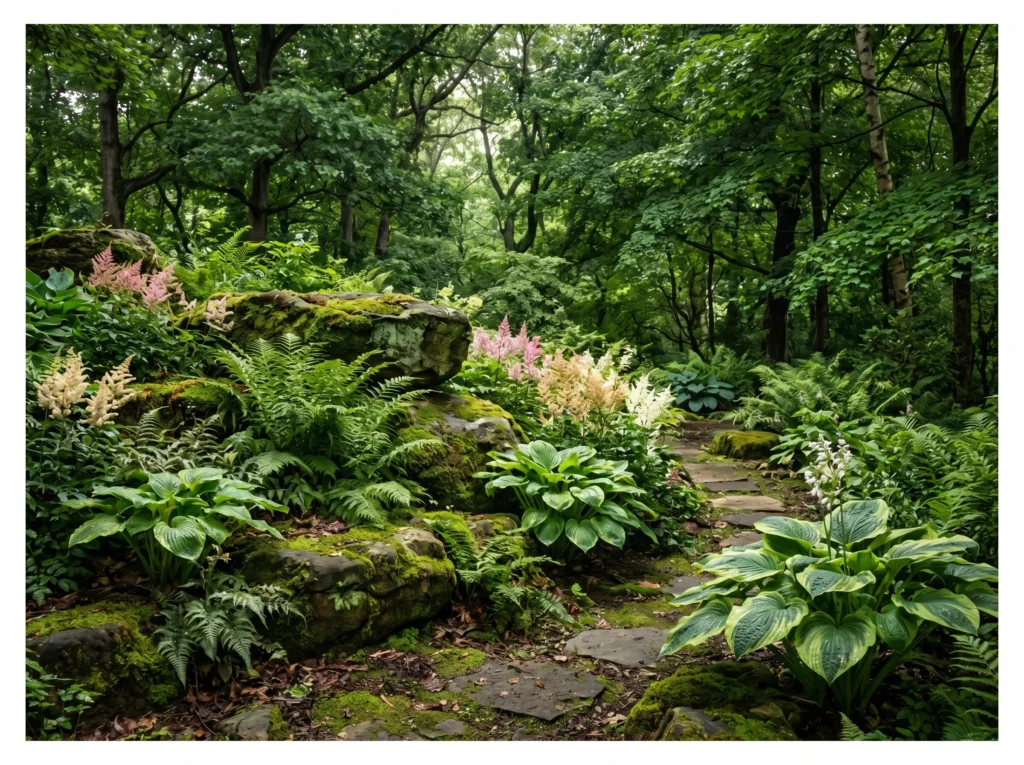
Most rock garden guides focus on sun-loving plants, but a shaded rock garden under a tree canopy creates something equally beautiful and genuinely low-maintenance. Shade-tolerant ferns, hostas, astilbes, and mosses all thrive between rocks in cool, damp conditions.
Moss growing naturally over rock surfaces is one of the most beautiful effects a shaded rock garden develops over time. It gives the rocks an aged, established quality that takes years to achieve but requires absolutely no effort to encourage once the conditions are right. Water the rocks in dry periods and the moss establishes itself.
The beautiful shaded corner solution nobody talks about.
Rock Garden with Lavender
Lavender’s silvery foliage and purple blooms stand out nicely against gray or tan rocks. It also happens to prefer the same dry, well drained conditions that rock gardens provide. The scent is an added bonus when the plant is placed near a walkway or seating spot.
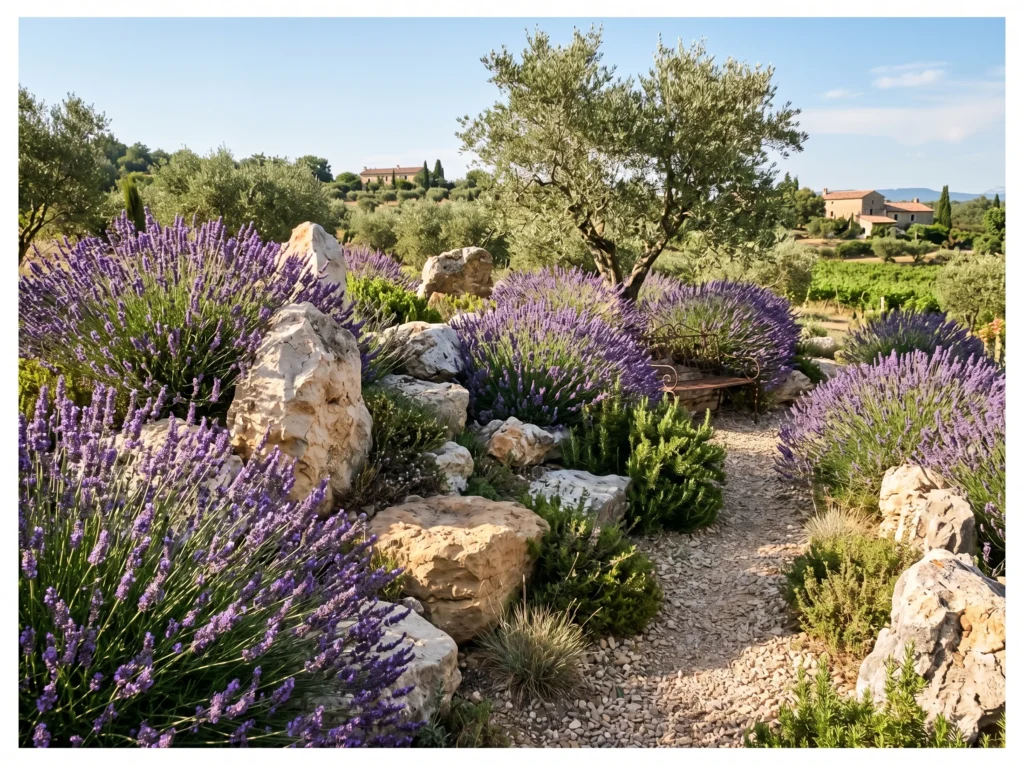
Lavender planted among pale limestone or sandstone rocks creates one of the most classically beautiful and sensory rock garden combinations available. The purple flower spikes against warm stone, combined with the fragrance that intensifies in the sun, creates a garden experience that engages every sense simultaneously.
Lavender requires excellent drainage, which rocky soil naturally provides. It thrives in exactly the lean, dry conditions that most plants struggle with, which makes it a perfect rock garden plant. Cut it back by a third after flowering to keep plants compact and encourage fresh growth and repeat blooming.
Fragrant, beautiful, and completely drought-tolerant.
Modern Minimalist Rock Garden
This style relies on a limited color palette and clean geometric shapes rather than dense planting. Large single stones are often used as focal points instead of clusters of smaller rocks. Negative space plays a big role here, similar to how it works in minimalist interior design.
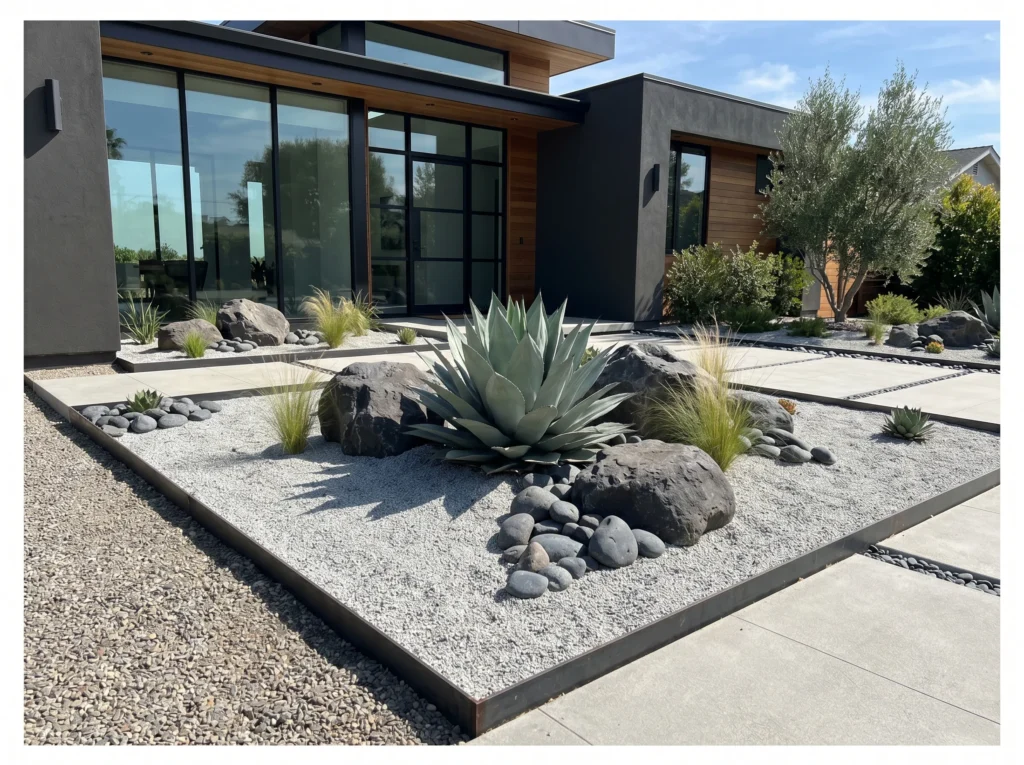
A modern minimalist rock garden uses a very limited material palette, typically one gravel type, one boulder species, and one or two plant species, to create a composition that feels architectural rather than naturalistic. Every element is chosen deliberately and placed with precision.
Dark basalt boulders on pale grey gravel, or pale limestone boulders on warm decomposed granite, create strong tonal contrasts that read clearly from a distance. One statement plant like an agave or ornamental grass provides the vertical accent. The restraint is what gives this style its quiet confidence.
Rock Garden with Seating Area
A bench or a couple of flat stones can turn part of the rock garden into a place to sit. This works especially well near a water feature or a shaded corner of the yard. It shifts the garden from something purely visual into a spot people actually use.
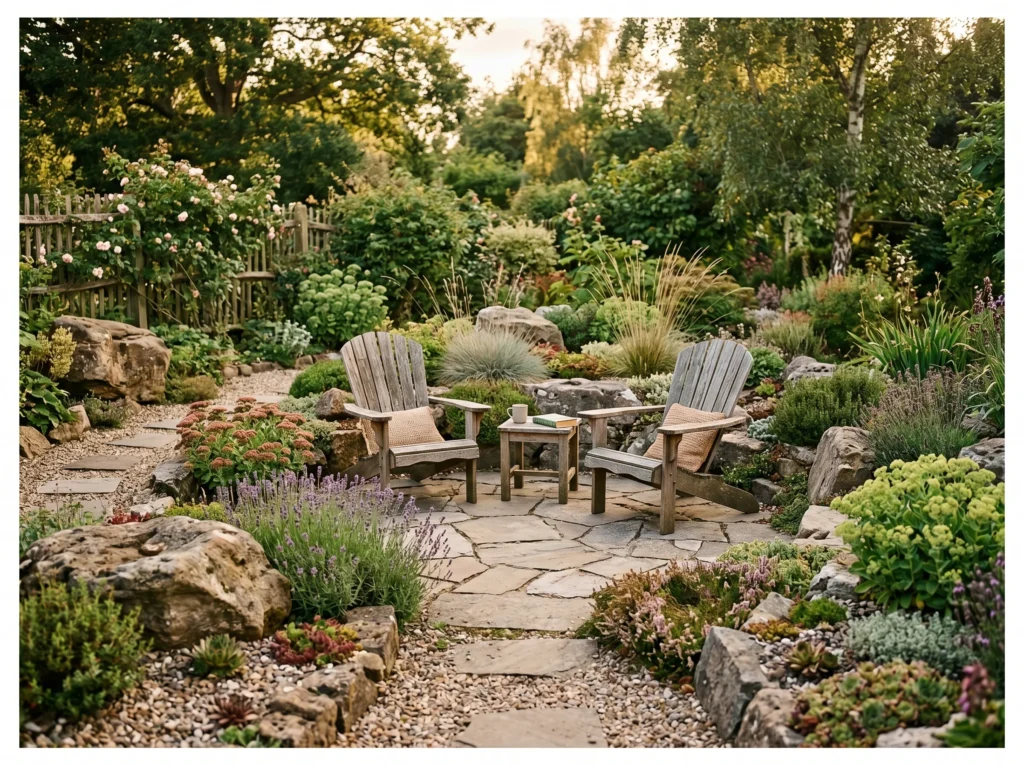
Incorporating a flat stone paving area within a rock garden creates a destination inside the garden rather than just a view from outside it. Two chairs placed on the paved section, completely surrounded by boulders and plants, create an outdoor room that feels genuinely private and immersive.
The paving area can be created from large irregular flagstones set directly into the rock garden surface. The transition from planted rock garden to paved sitting area feels completely natural when the paving material matches or complements the surrounding rocks. This transforms a decorative garden into a genuinely usable outdoor retreat.
If a garden seating spot appeals to you, there are seating nooks worth adding outdoors that build on this same idea.
A destination inside the garden itself.
Rock Garden Retaining Wall
Stacked stone walls double as both a structural retaining feature and a planting bed. Gaps between the stones can be filled with small trailing plants for extra texture. This approach is especially useful on properties with uneven or sloped terrain.
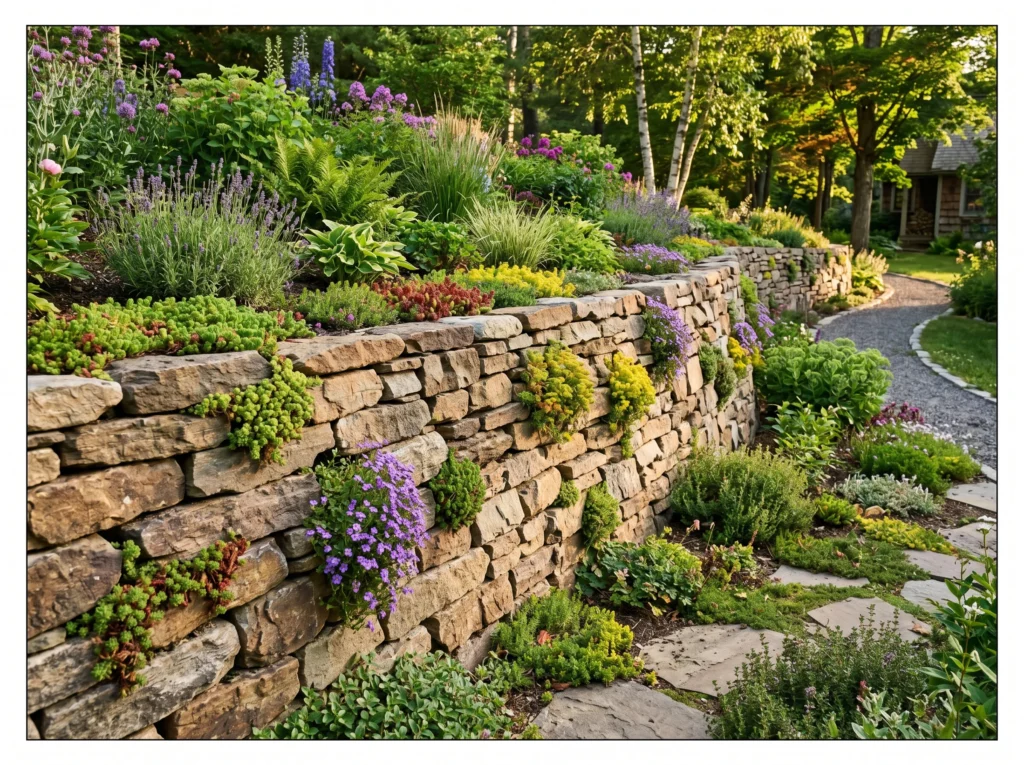
A dry-stacked natural stone retaining wall serves both a structural purpose and a garden design function simultaneously. The wall terraces a slope to create flat usable planting areas while the wall face itself becomes a planting opportunity for low creeping plants that root into the gaps between the stones.
Sedum, aubrieta, stonecrop, and creeping thyme all establish readily in the gaps of a dry-stacked stone wall. Over two to three seasons the plants spread across the wall face and soften the stone edges completely. The result looks ancient and organic despite being a relatively recent installation.
Coastal Rock Garden
Coastal rock gardens are built to handle salt spray and sandy, fast draining soil. Ornamental grasses and hardy succulents tend to hold up better here than delicate flowering plants. Rounded beach stones are often used instead of sharp edged rocks to match the setting.
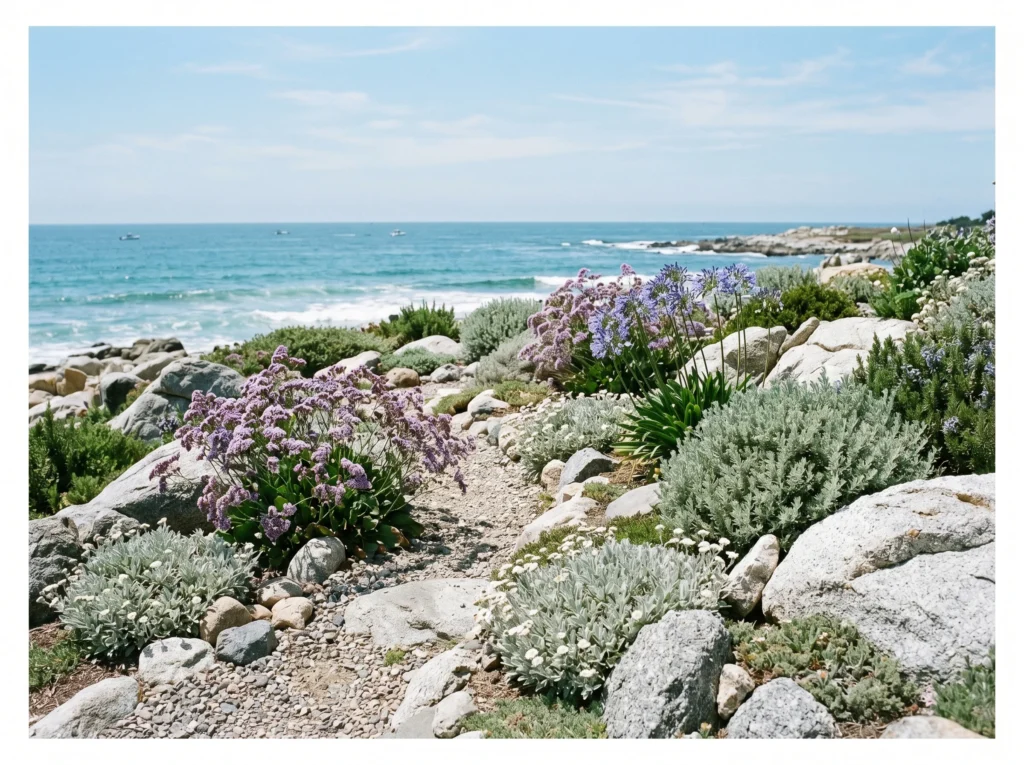
A coastal rock garden uses the naturally weathered, smooth boulders found near shorelines paired with salt-tolerant plants that thrive in exposed conditions with sandy soil and salt-laden air. The result looks completely at home in a coastal or beach-adjacent property.
Sea lavender, agapanthus, coastal rosemary, and silvery coastal daisy bush all handle salt wind and poor sandy soil admirably. Their silvery foliage tones echo the colors of coastal rocks and driftwood naturally. This is one of the few garden styles that actually looks better in a coastal location than it does anywhere else.
Rock Garden with Dwarf Conifers
Dwarf conifers add year round structure since they don’t lose their shape or color in winter. Their slow growth rate means they won’t overwhelm the rocks around them for years. Different varieties come in shades of blue, green, and gold, which adds contrast without needing flowers.
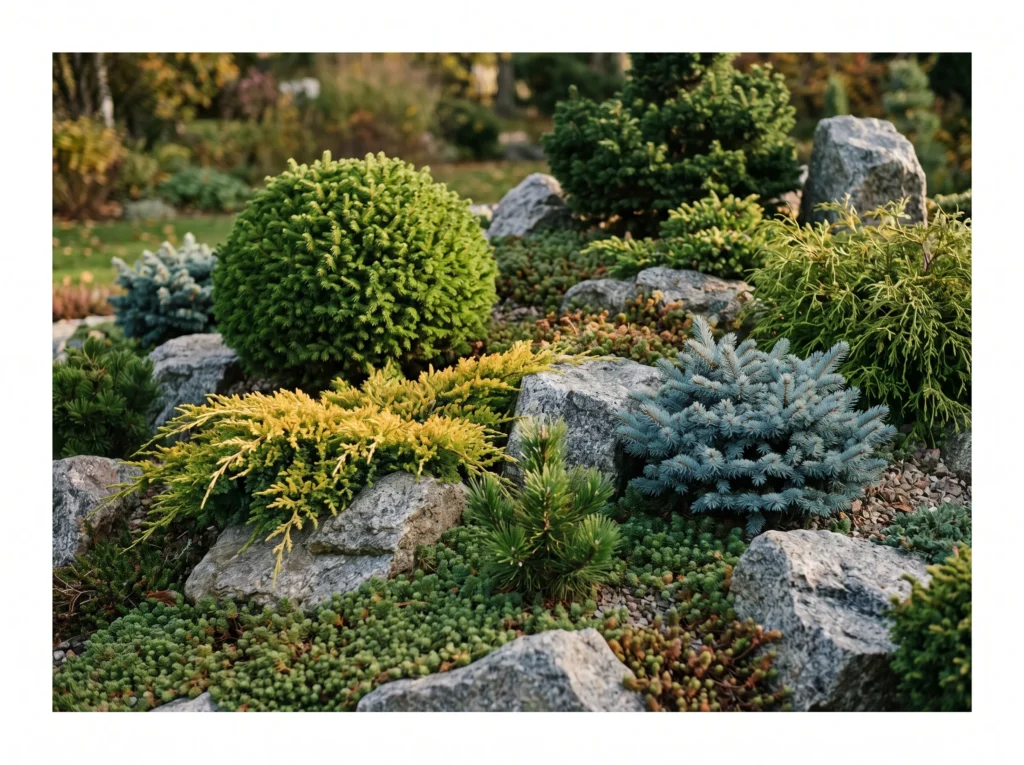
Dwarf conifers planted among rocks create a miniature landscape quality that feels like looking at a mountain environment in a compressed scale. Each conifer grows extremely slowly, maintaining its compact form for years without any pruning, while providing year-round color and structure.
A collection of three to five dwarf conifers in contrasting forms and colors, globe, pyramidal, spreading, and weeping, creates enormous visual variety in a small space. Pair blue spruce forms with golden junipers for a color contrast that looks genuinely stunning throughout all four seasons.
Year-round color without a single pruning cut.
Rock Garden with Groundcover Carpet
Low growing plants like creeping phlox spread across the ground, filling gaps between stones. Over time this creates a carpet like effect that ties the whole rock garden together. It also helps suppress weeds by leaving less bare soil exposed.
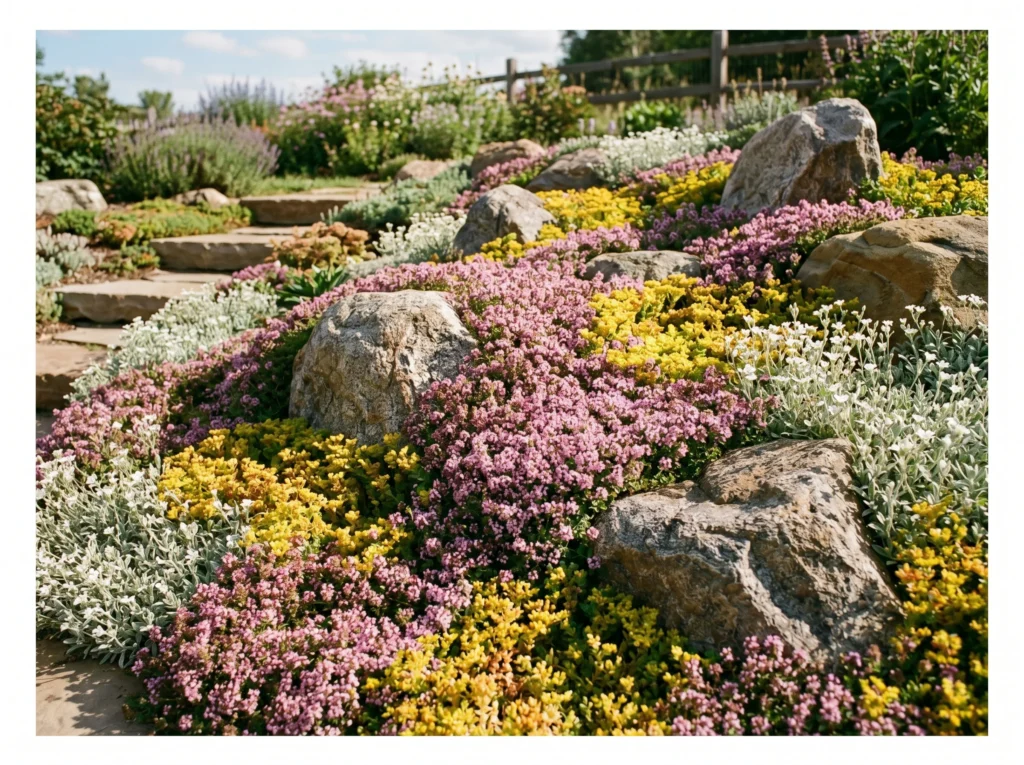
A groundcover carpet rock garden lets low spreading plants fill every gap between the rocks until the ground surface becomes a continuous woven tapestry of foliage and flower. The rocks rise from the planting like natural outcrops emerging from a meadow.
Creeping thyme, stonecrop, snow-in-summer, creeping jenny, and ajuga all spread reliably to form dense weed-suppressing mats. Plant them generously in the first season and they knit together within one growing season. Once established, weeds cannot penetrate the dense coverage and the garden genuinely maintains itself.
Plant once, weed never.
Conclusion
A well-designed rock garden is one of the most genuinely rewarding landscape investments a homeowner can make. It solves real problems, whether that is a difficult slope, a dry corner, or a maintenance load that has become genuinely exhausting, while creating something that looks more beautiful and more natural over time rather than less.
Choose the idea from this list that fits your specific site conditions and aesthetic preferences first. Build it with the right drainage foundation, use one consistent rock type, bury the boulders properly, and plant generously in the first season. Everything else follows naturally from those four decisions.
The garden that takes care of itself is not a fantasy. It is a rock garden built the right way.
And once the rock garden is in place, there are cozy backyard ideas worth trying next to round out the rest of the yard.