Your balcony could be a gorgeous garden in the sky all it needs is the right flowers and a little creative planting. These 25 balcony flower ideas are bursting with color, texture, and easy-to-grow blooms that work beautifully in pots, railing planters, and hanging baskets no garden required. Here are the best balcony flower ideas for a beautifully blooming outdoor space!
Cascading Petunias in Railing Window Boxes
Cascading petunias in railing window boxes add vibrant color and softness to balconies and outdoor spaces. Their trailing blooms spill beautifully over the edges, creating a lush and eye-catching display throughout the growing season. This charming arrangement also enhances curb appeal and brings a cheerful, garden-inspired feel to the area.
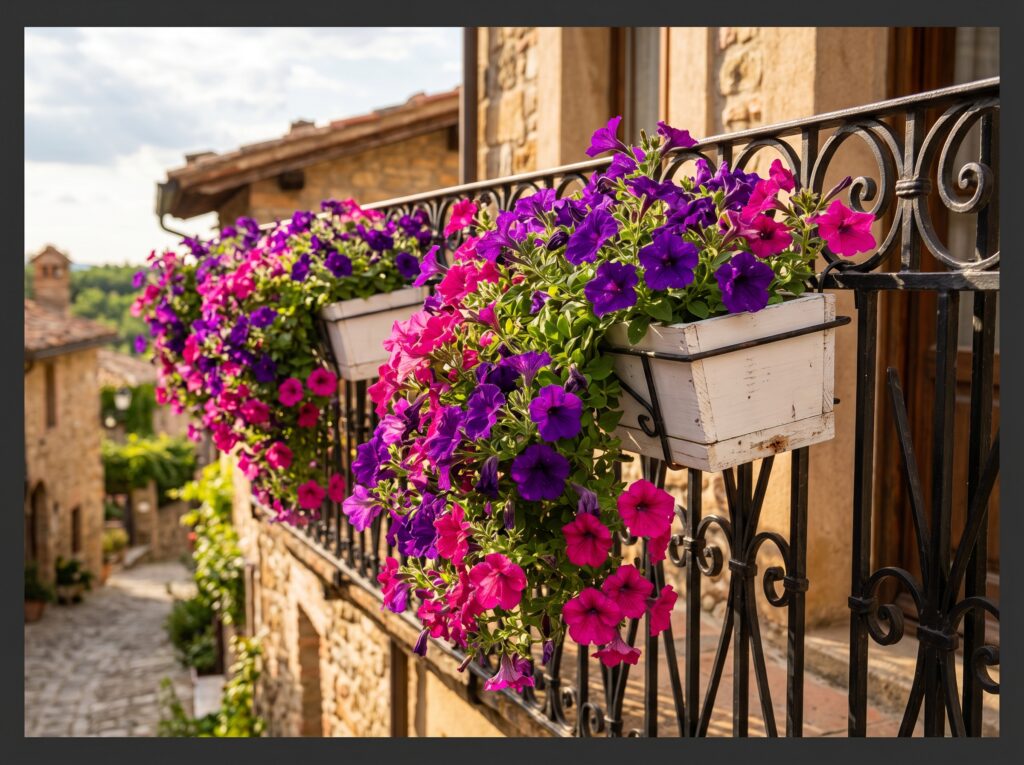
Petunias are the undisputed queens of railing window boxes and they earn that title every single growing season. No other flower produces as continuous and as voluminous a cascade of color with as little effort. A single window box planted with three to four trailing petunia plants in late spring will have completely overflowed its container by July, covering the entire railing face in a dense curtain of blooms that stops passersby on the street below. The color range is extraordinary deep violet, coral, pure white, candy stripe, and everything between.
Choose wave or superwave varieties for the most vigorous trailing habit these are bred specifically for hanging and cascading applications and will easily produce 24-inch-long trailing stems in a single season. Feed them with a liquid bloom fertilizer every two weeks throughout summer petunias are heavy feeders and will stop flowering without regular nutrition. Deadhead the spent blooms every few days to keep the flower production constant. In a self-watering window box, they can survive a week without attention, which is a genuine practical advantage for busy apartment dwellers.
If you’re also rethinking the railing itself, railing styles that pair well with plants can help the whole balcony feel cohesive.
Tiered Wooden Ladder Stand with Mixed Geraniums
A tiered wooden ladder stand with mixed geraniums creates a charming and colorful garden display. The multi-level design allows different varieties of geraniums to be showcased beautifully, adding depth and visual interest to the space. This decorative arrangement brings warmth, cottage-style charm, and a vibrant touch to patios, balconies, and outdoor corners.
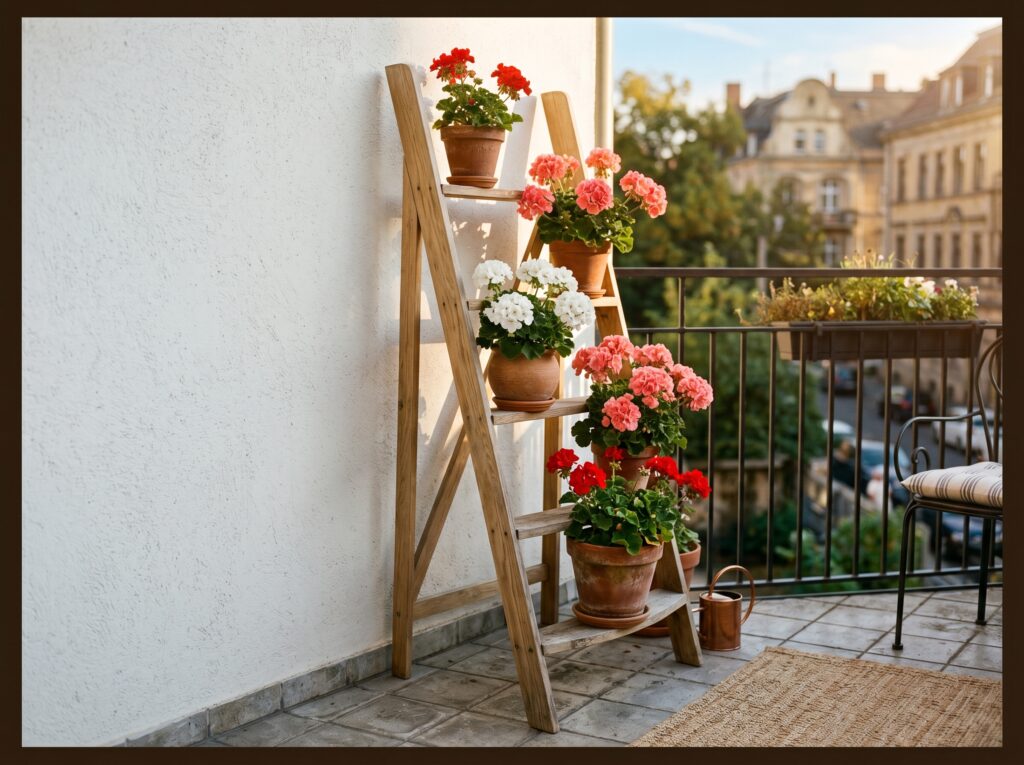
A tiered wooden ladder stand is the vertical gardening solution that works hardest for the smallest floor footprint. Leaned against the wall, it occupies roughly four square feet of floor space while displaying five or six pots at different heights creating a layered, lush flower display that looks like it belongs in a professional garden center. For small balconies where floor space is genuinely limited, the ladder stand is one of the most impactful additions you can make in terms of flower volume relative to footprint.
For more strategies on making the most of a tiny footprint, it’s worth looking beyond just the plant stand.
Geraniums are the ideal flower for this arrangement because they come in a consistent compact mounded form that fits neatly into individual terracotta pots without outgrowing them over a single season. The red and salmon tones read as classic and cheerful in warm terracotta a combination with a long and popular history for good reason. Mix red, salmon, and white varieties across the different pot levels for a layered, coordinated arrangement rather than a single repeated color. Geraniums also tolerate some drying out between waterings, which makes them forgiving on the upper shelves of the ladder that dry out faster than the floor-level pots.
Fragrant Lavender in Minimalist White Ceramic Pots
Fragrant lavender in minimalist white ceramic pots creates a beautiful balance between natural charm and modern simplicity. The soft purple blooms and soothing fragrance bring a calming atmosphere, while the clean white pots add an elegant and contemporary touch. This combination works perfectly on patios, balconies, and entryways, adding both visual appeal and a refreshing sensory experience.
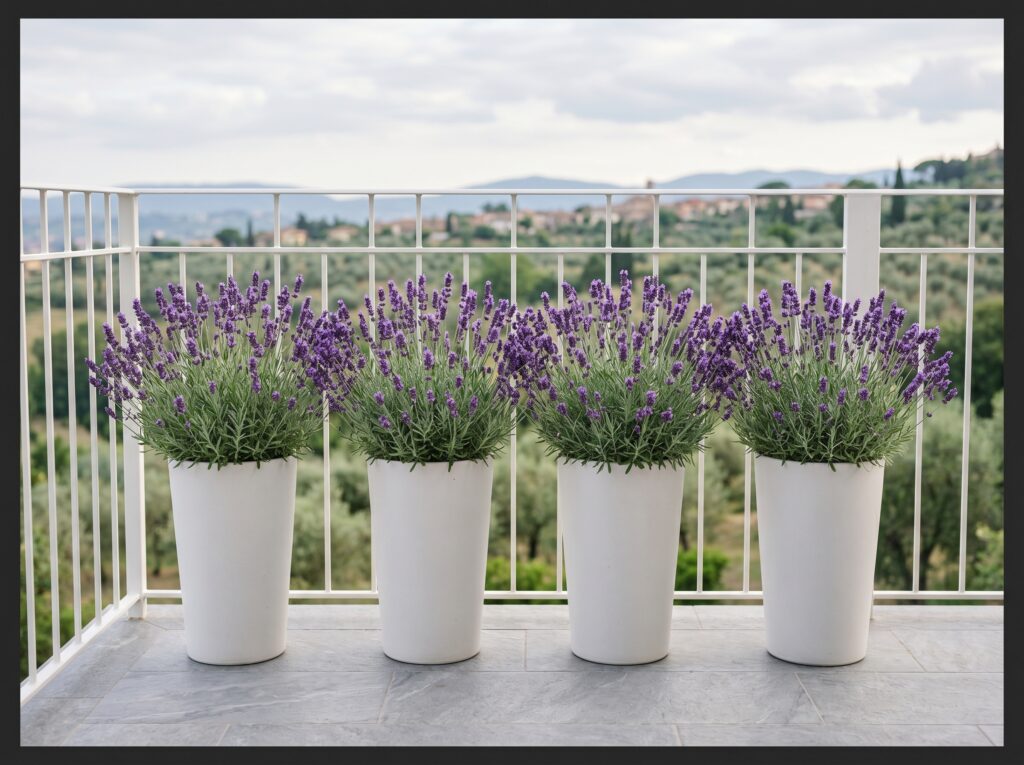
Lavender does something that very few other balcony flowers can it engages two senses simultaneously. The visual impact of those silvery-green stems topped with purple flower spikes is beautiful. But the fragrance that drifts through an open balcony door on a warm afternoon is extraordinary. It is the flower that makes your balcony smell like a Provence hillside rather than a city street below. For anyone who uses their balcony as a relaxation space, fragrant lavender is arguably the single most rewarding planting choice available.
Pair the fragrance with seating that suits a compact space and the balcony becomes a genuine retreat.
English lavender varieties Hidcote and Munstead in particular are the most fragrant and most compact choices for container growing. Plant in a well-draining potting mix with added coarse sand or perlite lavender’s number one killer in containers is root rot from poorly draining soil. Use terracotta or unglazed ceramic pots that allow moisture to evaporate through the walls, keeping the root zone drier. Full sun is non-negotiable: lavender needs at least six hours of direct sunlight daily. Without sufficient sun, it produces little fragrance and eventually declines. Trim the spent flower spikes after each flush of blooming to encourage a second round of flowers the same season.
Shade-Loving Begonias in Gold Geometric Hanging Pots
Shade-loving begonias in gold geometric hanging pots create a sophisticated and eye-catching display for covered outdoor spaces. The lush foliage and colorful blooms add softness and vibrancy, while the metallic geometric planters introduce a modern and elegant accent. This stylish combination enhances patios, balconies, and shaded corners with texture, color, and contemporary charm.
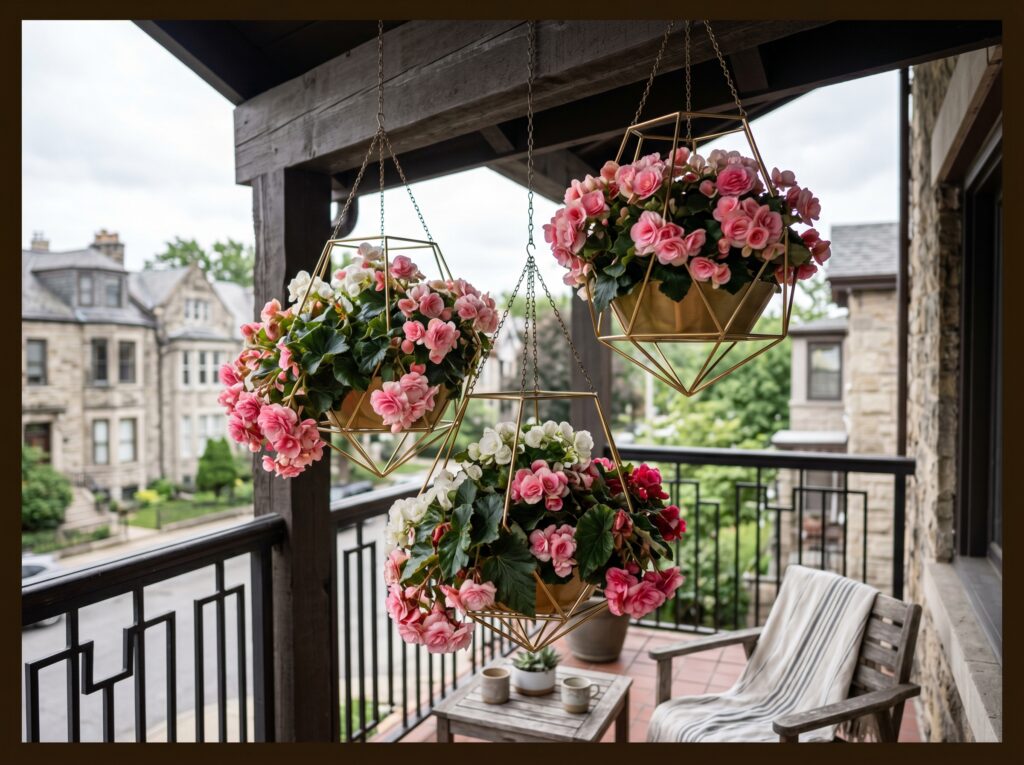
If your balcony faces north or sits in permanent shade from a building above, tuberous begonias are the flower that answers every frustrated gardener’s prayers. They bloom generously large, rose-like flowers in coral, peach, red, white, and yellow in conditions where sun-loving flowers simply refuse to perform. Their waxy, glossy leaves handle low light beautifully and the whole plant stays compact and manageable all season without growing leggy or unkempt the way some shade annuals do in containers.
Gold geometric metal hanging planters provide exactly the right visual contrast for begonias the warm metallic frame against the rich pink blooms creates a deliberately styled look rather than a purely botanical one. In a shaded balcony setting where color can feel difficult to achieve, the geometric frames add an architectural detail that makes the space feel designed rather than simply planted. Keep the soil consistently moist but not soggy begonias hate both extremes. Feed monthly with a balanced liquid fertilizer through summer. Bring the tubers inside before the first frost and store in a cool, dry place to replant next spring.
Trailing Fuchsia on Victorian Cast Iron Wall Brackets
Trailing fuchsia on Victorian cast iron wall brackets creates a timeless and elegant garden display. The cascading blooms add vibrant color and graceful movement, while the decorative cast iron brackets bring vintage charm and architectural detail. This beautiful combination enhances porches, balconies, and cottage-style exteriors with a romantic and inviting atmosphere.
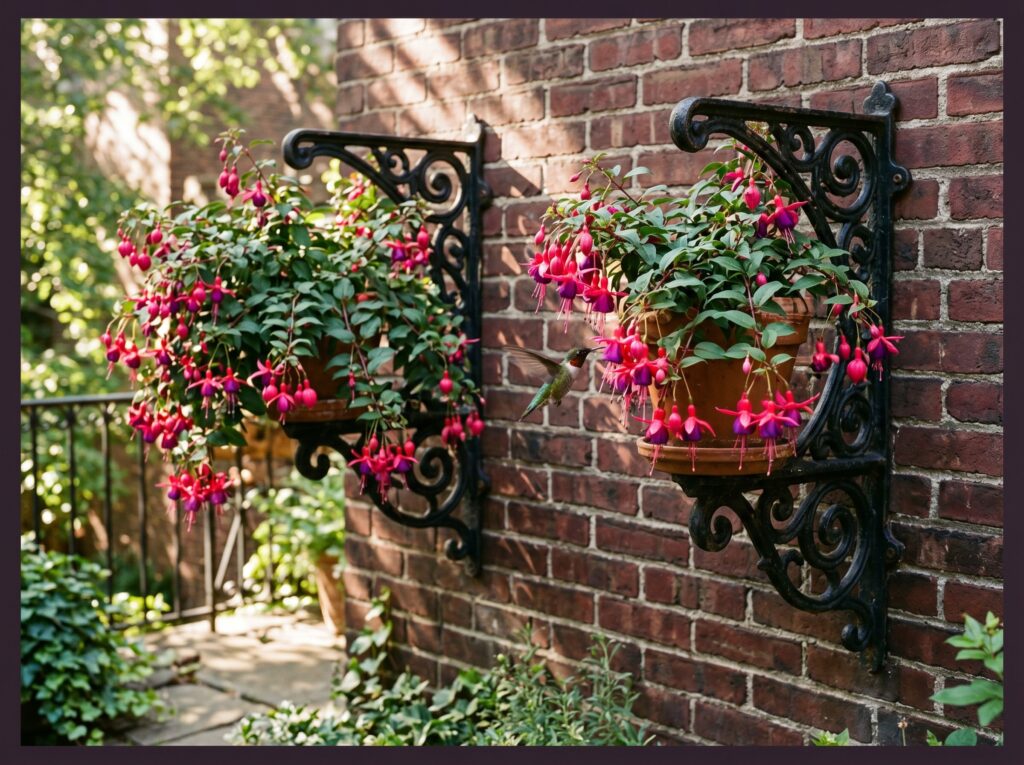
Trailing fuchsia in a hanging basket or wall-mounted bracket is one of the most naturally theatrical balcony flower arrangements possible. The pendulous, two-toned flowers typically a rich outer skirt in one color and a contrasting inner corolla in another hang in dense clusters that genuinely resemble tiny colorful lanterns. In a well-established hanging basket by midsummer, you will have dozens of these blooms at once, creating a display that attracts hummingbirds and swallowtail butterflies as reliably as a garden twice the size.
Ornate black cast iron wall brackets mounted at eye height display trailing fuchsia at exactly the right position the flowers hang at the perfect angle to see the intricate petal structure rather than looking up into the bottom of a basket from below. Fuchsia performs best in partial to full shade with consistently moist soil hot afternoon sun scorches the delicate petals quickly. Water daily in warm weather and feed every ten days with a high-potassium liquid feed through the blooming season. Remove spent flowers regularly to prevent seed set and keep the flowering period continuous from June through October.
Succulent and Sedum Collection in Stone Troughs
A succulent and sedum collection in stone troughs creates a beautiful blend of texture, color, and natural elegance. The drought-tolerant plants offer a variety of shapes and tones, while the stone containers add a rustic and timeless appeal. This low-maintenance arrangement works perfectly in modern, Mediterranean, and rock garden-inspired outdoor spaces.
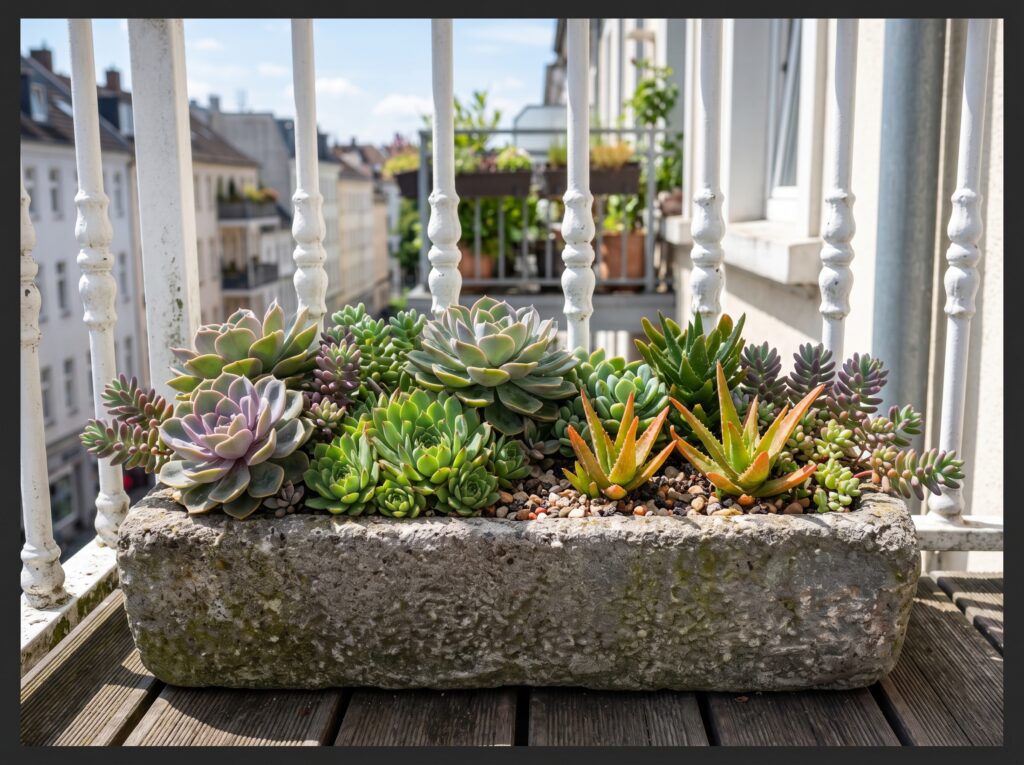
For the truly time-strapped or genuinely forgetful balcony gardener, a succulent collection in a shallow stone trough is the answer. These plants evolved to store water in their thick leaves and can survive two to three weeks without watering once established longer in cooler weather. In a long stone trough, a carefully curated arrangement of different succulent species creates a living tapestry of textures, forms, and subtle colors that is genuinely beautiful and requires almost nothing of you after the initial planting and positioning.
The key to a successful balcony succulent arrangement is the soil and the sun. Use a specialized succulent and cactus potting mix never standard potting compost, which holds far too much moisture and causes root rot within weeks. The trough must have drainage holes and should sit in a position that receives at minimum four hours of direct sun daily. Succulents that do not get enough light will etiolate stretch toward the light source, lose their compact rosette form, and become leggy and unattractive. Good species choices for a mixed trough include echeveria, sedum, sempervivum (hens and chicks), and haworthia.
Climbing Star Jasmine on a Bamboo Trellis
Climbing star jasmine on a bamboo trellis creates a fragrant and visually stunning garden feature. The lush green vines and delicate white flowers add softness and natural beauty, while the bamboo trellis provides support and enhances the organic appeal. This elegant combination also brings privacy, texture, and a refreshing scent to patios, balconies, and outdoor seating areas.
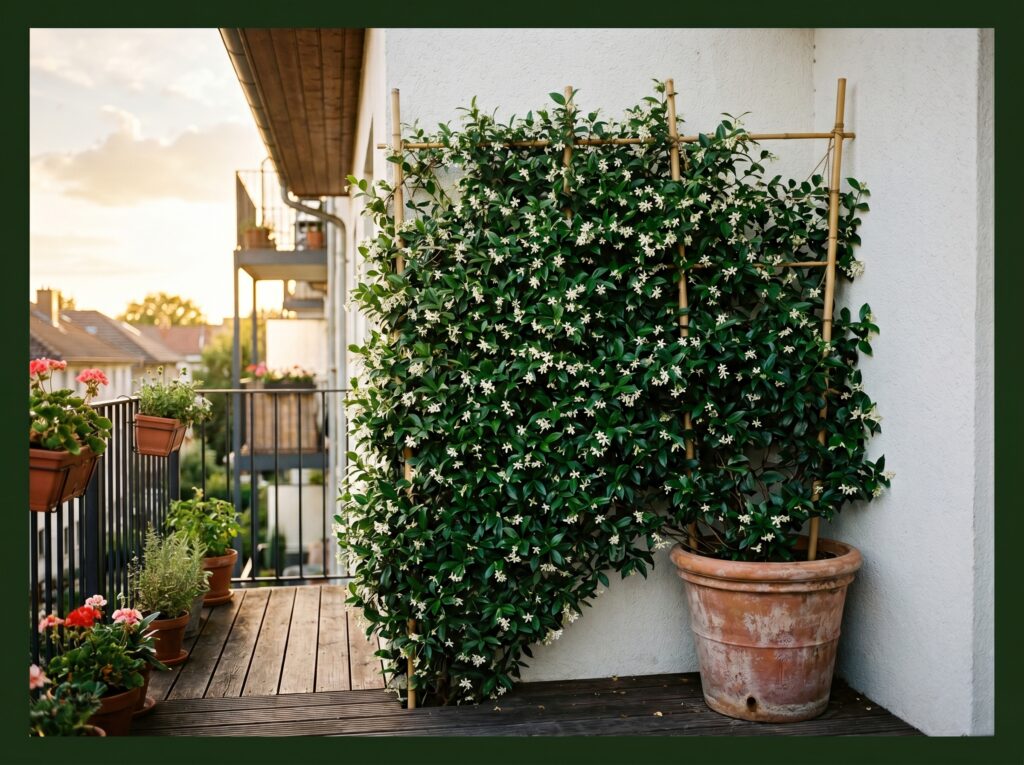
Climbing jasmine on a bamboo trellis achieves three things simultaneously it provides privacy screening, produces stunning white star-shaped flowers, and fills the entire balcony with one of the most beautiful fragrances in the plant kingdom. Star jasmine (Trachelospermum jasminoides) is an evergreen climber that reaches six to eight feet on a trellis in a single season in warm climates and blooms prolifically in late spring and early summer. The small, intensely scented white flowers against glossy dark green leaves create a display that looks like something from a luxury hotel garden.
Plant in a large container minimum 15 gallons with a rich, well-draining potting mix. Star jasmine needs at least four hours of direct sun to flower well. Train the new growth stems onto the bamboo frame as they extend left untrained, the plant becomes a tangled mass rather than a tidy climbing screen. Water deeply once or twice per week and feed monthly with a balanced liquid fertilizer through the growing season. In USDA zones 8 and warmer, star jasmine is evergreen and keeps its glossy leaves through winter, maintaining your balcony privacy year-round not just during the blooming season.
If you’re also planning to cook outside, grill setups sized for a balcony are worth considering alongside the greenery.
Bright Marigolds in Galvanized Metal Buckets
Bright marigolds in galvanized metal buckets create a cheerful and rustic outdoor display. The vibrant yellow and orange blooms add a burst of color, while the weathered metal containers bring farmhouse charm and character. This simple yet eye-catching arrangement is perfect for porches, patios, and garden entrances, adding warmth and seasonal appeal to the space.
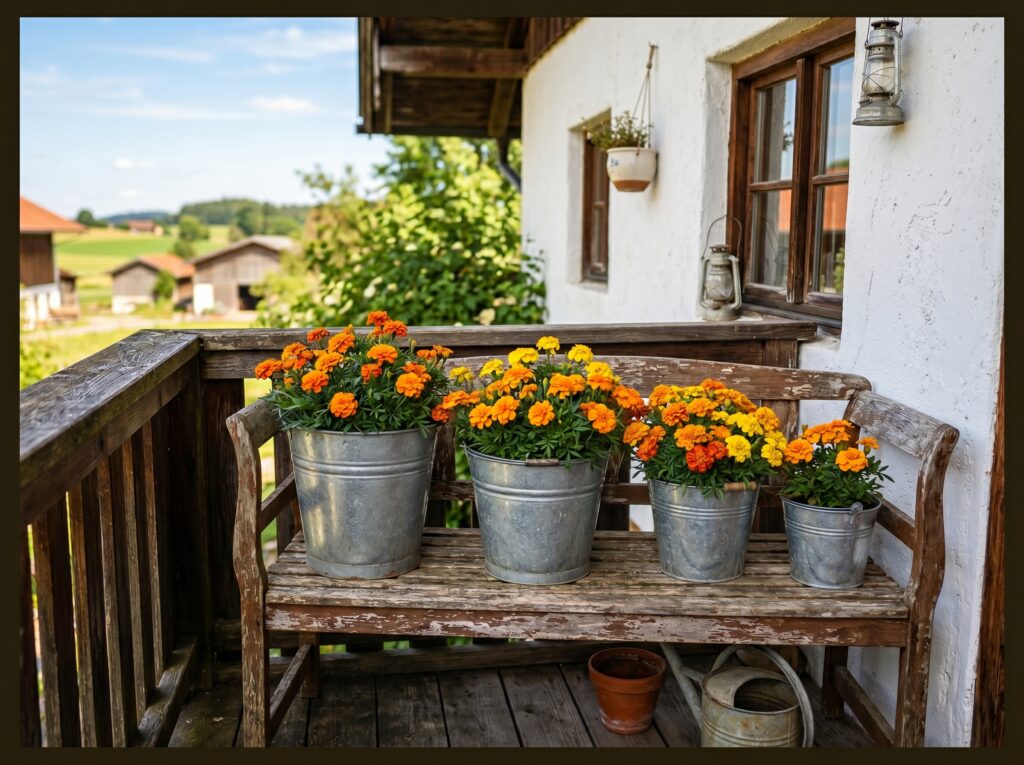
Marigolds are the most unflappable, cheerful, and low-demand balcony flower available and they deserve far more credit than they typically receive among gardeners who think of them as a “basic” choice. French marigolds bloom continuously from late spring until the first hard frost without deadheading, without regular feeding, and without constant watering attention. They shrug off heat waves that collapse more delicate flowers. They handle the strong winds of an exposed upper-floor balcony better than most. And their chrysanthemum-like orange and yellow blooms provide a punch of warm color that photographs beautifully in every season from summer through autumn.
Galvanized metal buckets of different sizes grouped together on a wooden bench create a farmhouse display that looks curated and intentional. Drill drainage holes in the base of each bucket before planting metal containers with no drainage lead to waterlogged roots and rapid plant death. The reflective silver metal surface keeps root temperatures cooler in hot sun than dark-colored containers, which matters for plant health on south-facing balconies in peak summer. As a bonus that most gardening articles mention briefly but underemphasize marigolds contain pyrethrin compounds that naturally deter aphids, whitefly, and spider mites from surrounding plants.
Blue Hydrangeas in Classic Stone Urns
Blue hydrangeas in classic stone urns create an elegant and timeless garden display. The large, lush blooms add softness and rich color, while the stone urns introduce a sense of grandeur and traditional charm. This sophisticated combination beautifully enhances entryways, patios, and formal garden settings with a refined and welcoming appearance.
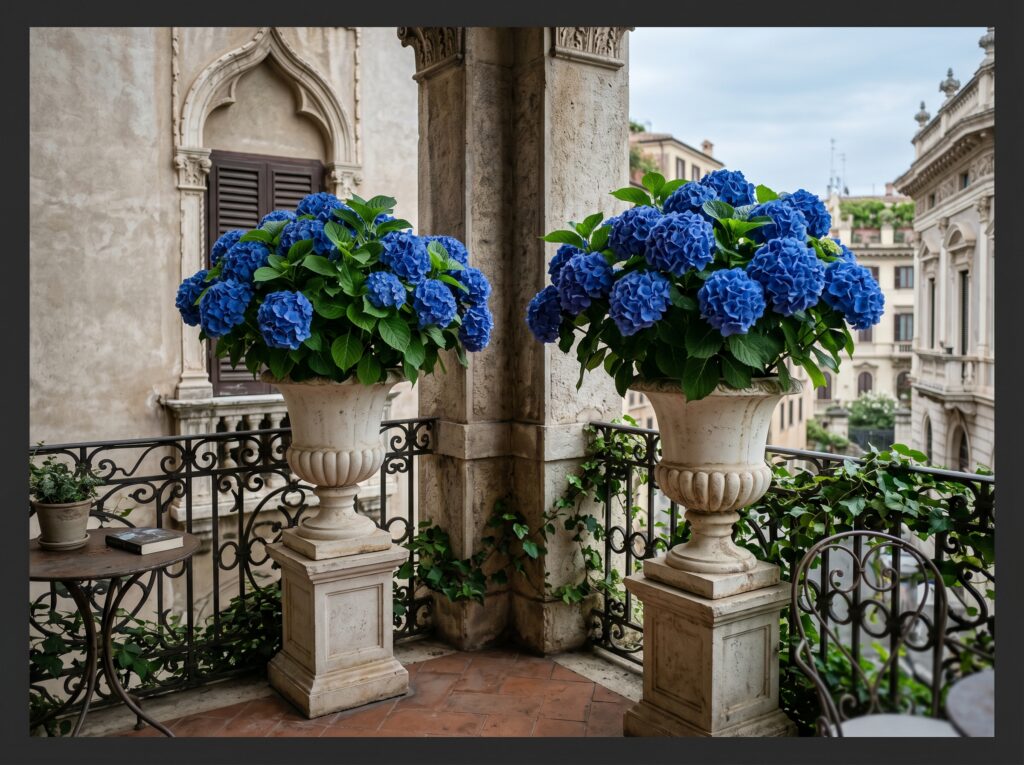
Hydrangeas make an immediate statement that no other balcony flower quite matches. A single mophead hydrangea in full bloom bears flower heads the size of softballs sometimes larger in colors ranging from pale ice blue to deep cobalt, rich violet, blush pink, and pure white. In a classic stone urn on a balcony, a well-grown hydrangea looks like the focal point of an elaborate formal garden compressed into a single container. The scale and drama are genuinely unmatched among annual and perennial container plants.
The blue flower color that most people find most stunning is pH-dependent acidic soil (pH below 6) produces blue, alkaline soil (pH above 7) produces pink. Add aluminum sulfate to your potting mix at planting time to encourage and maintain the blue tone in containers. Hydrangeas are thirsty plants in warm weather a large container will need deep watering every day or every other day. They prefer morning sun and afternoon shade rather than full day sun, making them an excellent choice for east-facing balconies. Choose compact varieties like Incrediball Blush or Little Quick Fire for container growing standard garden varieties grow too large for long-term balcony use.
Colorful Pansies in Railing-Mounted Window Boxes
Colorful pansies in railing-mounted window boxes bring vibrant charm and seasonal beauty to balconies and outdoor spaces. Their cheerful blooms create a lively display of color, while the elevated planters maximize space and enhance visual appeal. This delightful arrangement adds warmth, freshness, and a welcoming touch to railings, patios, and garden areas.
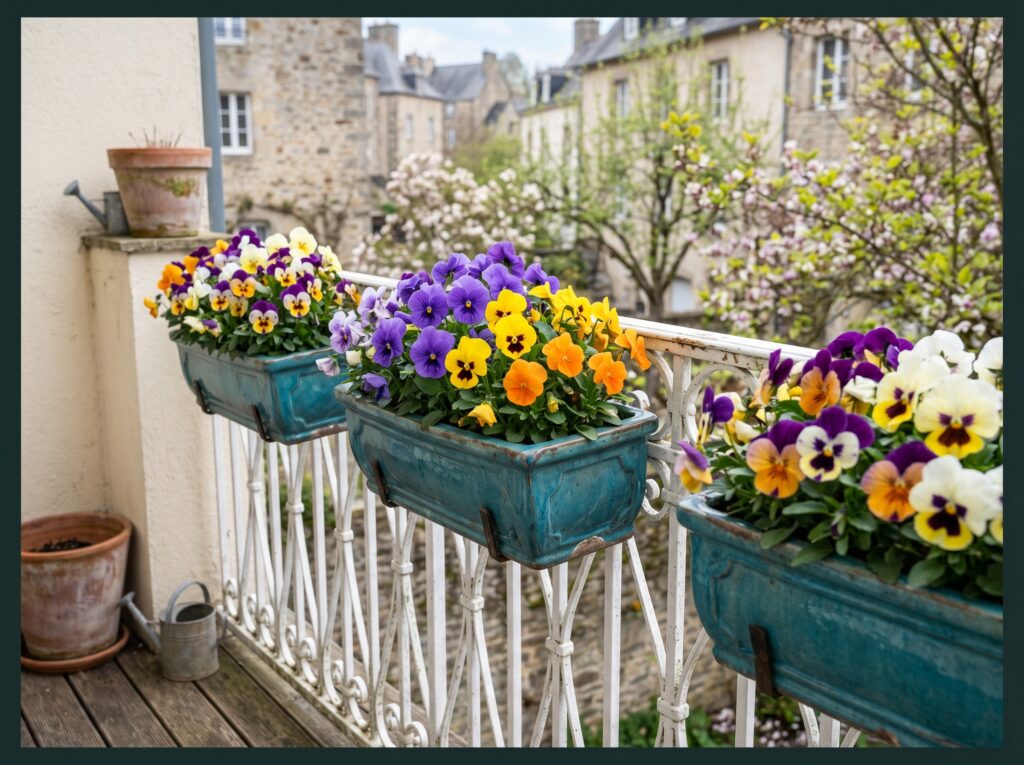
Pansies are the balcony flower for early spring when everything else is still dormant and your outdoor space desperately needs color after a grey winter. They start blooming in late winter in mild climates and early spring everywhere else, often pushing through light frosts without damage. Their distinctive face-like markings — the dark central blotch on each petal give them a personality that no other flower has and makes them endlessly popular on Pinterest and Instagram for their inherently joyful visual character.
Teal or cobalt blue ceramic window boxes mounted directly on the railing display pansies at exactly the right height for appreciation from both inside the apartment through the glass door and from the balcony itself when sitting outside. Keep the soil consistently moist pansies wilt quickly in dry conditions and do not always recover fully from severe wilting. Feed with a liquid bloom fertilizer every two weeks to prolong the blooming season. When summer heat arrives and pansy performance declines, pull them out and replace with heat-tolerant summer annuals like zinnias, portulaca, or calibrachoa in the same window boxes. One investment in quality window boxes pays dividends across multiple seasons and flower types.
Boston Ferns in Hanging Woven Seagrass Baskets
Boston ferns in hanging woven seagrass baskets create a lush and relaxing outdoor display filled with natural texture and greenery. The cascading fern fronds add softness and movement, while the woven baskets introduce warmth and an organic, handcrafted feel. This timeless combination works beautifully in porches, patios, and bohemian or coastal-inspired spaces, creating a fresh and inviting atmosphere.
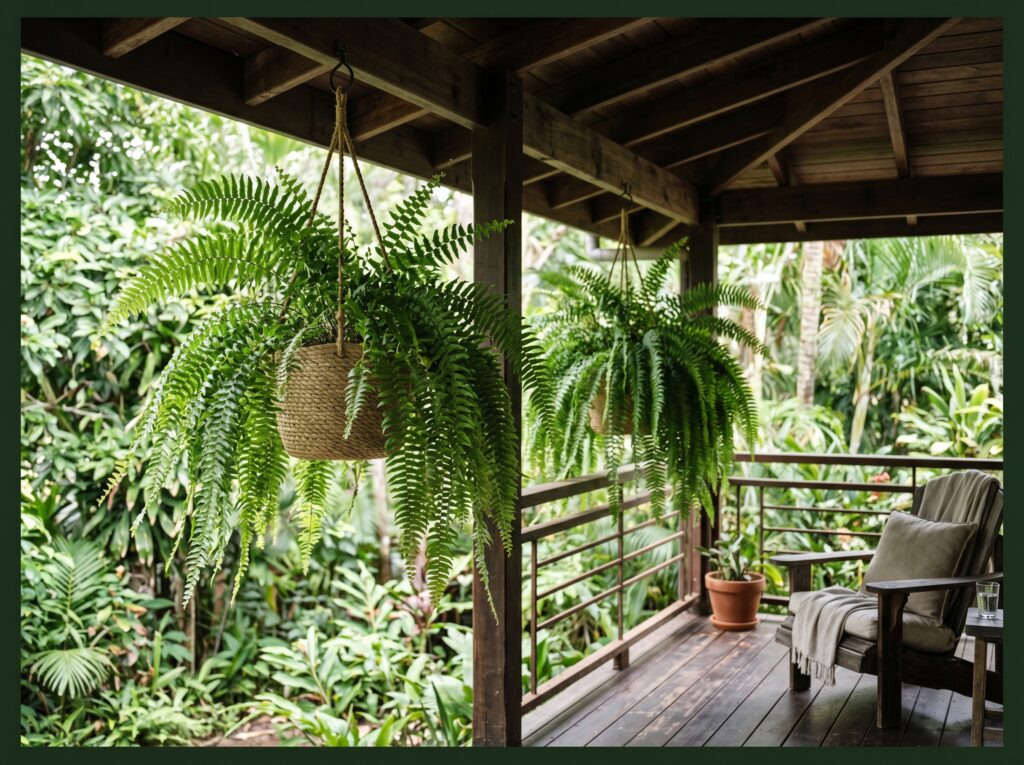
Boston ferns in hanging baskets bring a deep, tropical lushness to a balcony that is impossible to achieve with flowering annuals alone. The long, arching fronds reaching 24 to 36 inches in a well-established specimen — cascade downward in sweeping curves that add movement and volume to any balcony setting. They are the go-to plant for shaded and partially shaded balconies where flowering options are limited, and in those conditions they genuinely thrive rather than merely surviving. A well-grown Boston fern in a woven seagrass basket is one of the most naturally beautiful plant displays possible.
Boston ferns need consistent moisture and high humidity to look their best dry conditions cause the fronds to brown and shed quickly. In hot, dry climates or during air-conditioned summers, mist the fronds daily with a spray bottle or set the basket over a tray of pebbles and water to maintain humidity around the foliage. Woven seagrass baskets are the most beautiful container option but they do not retain moisture always use a plastic liner inside the seagrass to hold water. Feed monthly with a diluted balanced liquid fertilizer. Bring the plant inside before the first frost Boston ferns are tropical plants and will die in freezing temperatures.
Vibrant Zinnias in Bright Ceramic Pots
Vibrant zinnias in bright ceramic pots create a cheerful and eye-catching display for outdoor spaces. Their bold, colorful blooms add energy and seasonal charm, while the decorative ceramic containers introduce personality and visual interest. This lively arrangement is perfect for patios, balconies, and garden entrances, bringing warmth and a welcoming touch to the surroundings.
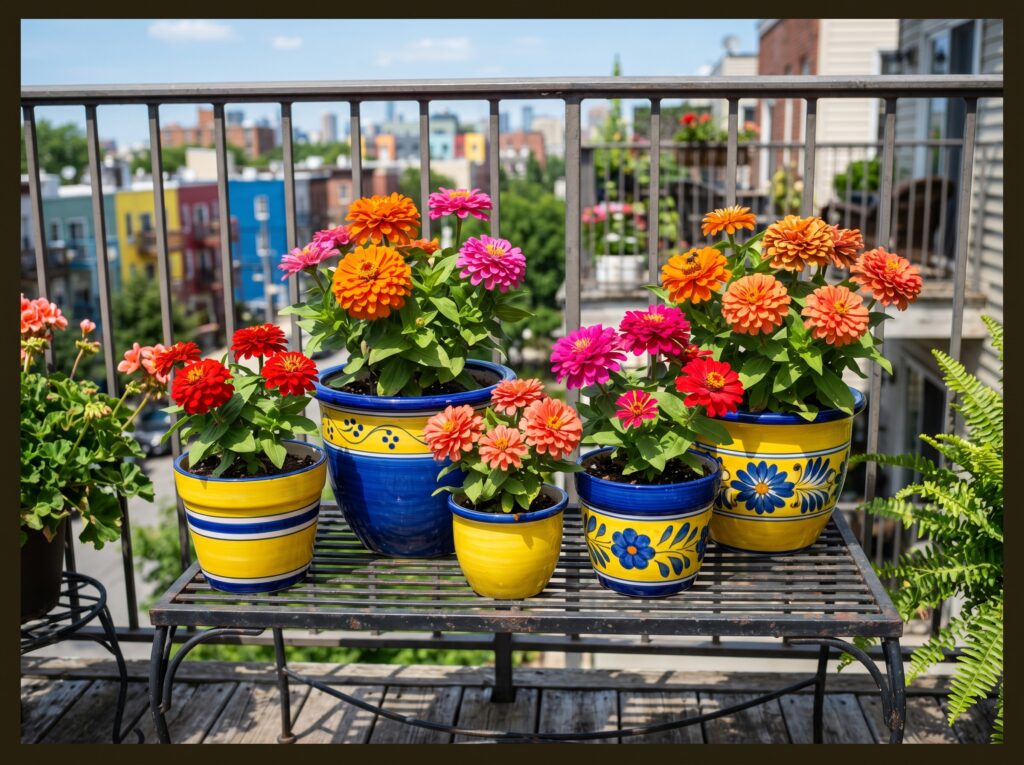
Zinnias are the perfect high-summer balcony flower for anyone who wants maximum color with minimal fuss in hot weather. When other flowers are struggling in peak July heat, zinnias are in their absolute element the hotter and sunnier it gets, the better they bloom. Their stiff, upright stems and perfectly symmetrical petite flowers in eye-popping oranges, corals, hot pinks, and reds photograph beautifully and hold their form in the wind better than most other summer annuals. They are also among the very best flowers for cutting snip stems for a vase inside and the plant produces new blooms within days.
Plant zinnias in the largest pots your balcony allows they develop significant root systems and produce far more flowers in a 12-inch pot than a 6-inch one. Use a rich, well-draining container potting mix and water consistently zinnias in containers dry out quickly in hot weather and will stop flowering if the soil becomes completely dry for extended periods. Space plants well and ensure good air circulation because powdery mildew is their most common disease in humid conditions. Look for disease-resistant varieties like Profusion or Zahara if mildew has been a problem for you in previous seasons.
Trailing Lobelia in Glazed Ceramic Hanging Bowls
Trailing lobelia in glazed ceramic hanging bowls creates a delicate and elegant display filled with cascading color. The soft blue, purple, or white blooms spill gracefully over the edges, adding movement and visual charm to outdoor spaces. Paired with glossy ceramic bowls, this arrangement brings a refined and refreshing touch to porches, balconies, and garden seating areas.
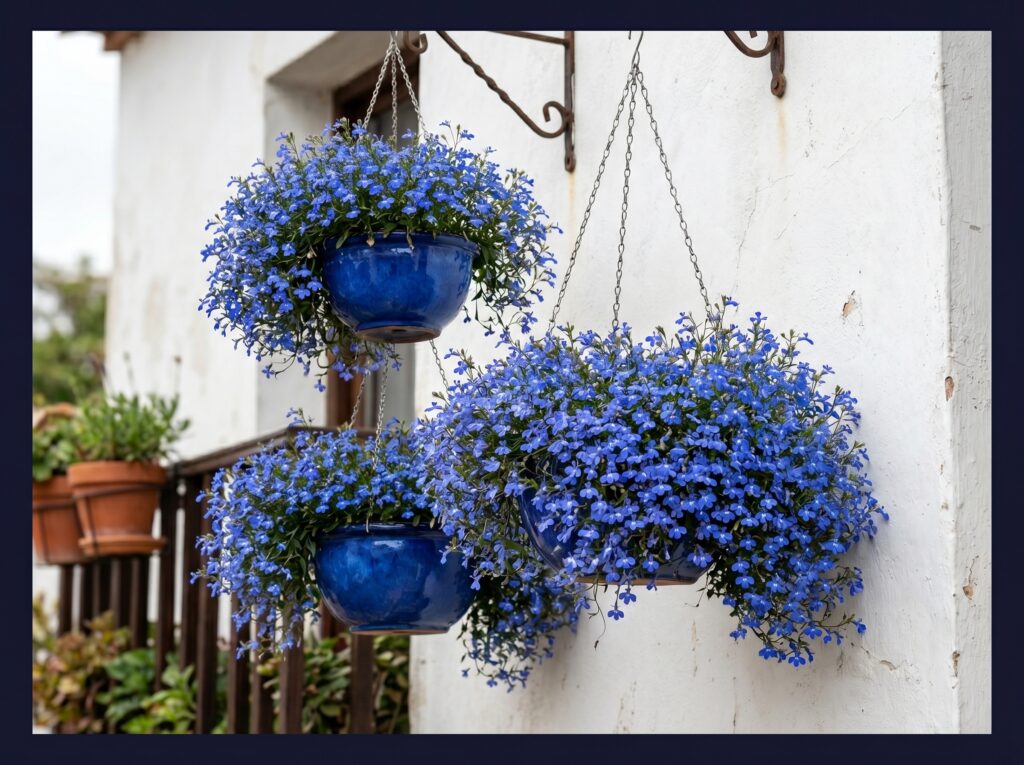
Trailing lobelia produces a density and intensity of blue that very few other plants in the entire flower world can match. At its peak, a well-grown lobelia hanging basket becomes a cascade of pure blue so dense that the foliage beneath is almost completely hidden. The individual flowers are tiny barely the size of a fingernail but they grow in such extraordinary numbers that the overall effect is of a solid mass of color rather than individual blooms. For anyone who loves blue flowers on their balcony, lobelia is an absolute must.
Deep cobalt blue glazed ceramic bowls create a monochromatic blue-on-blue display that looks deliberately styled and genuinely striking. Hang two bowls at different heights for a layered effect that creates visual depth. Lobelia performs best in partial sun too much harsh afternoon sun in peak summer causes the plants to pause flowering temporarily. Keep the soil consistently moist as lobelia does not recover well from wilting the way more robust plants do. Feed every ten days with a high-potassium liquid fertilizer to support continuous flower production. If the plant looks exhausted in midsummer, cut it back by one third and it will regenerate and bloom again through autumn.
Compact Patio Roses in Tall Black Planters
Compact patio roses in tall black planters create a sophisticated and stylish outdoor display. The vibrant rose blooms provide beautiful color and fragrance, while the sleek black planters add a modern contrast and elevate the overall appearance. This elegant combination is perfect for patios, entryways, and balconies, bringing timeless charm and refined beauty to the space.
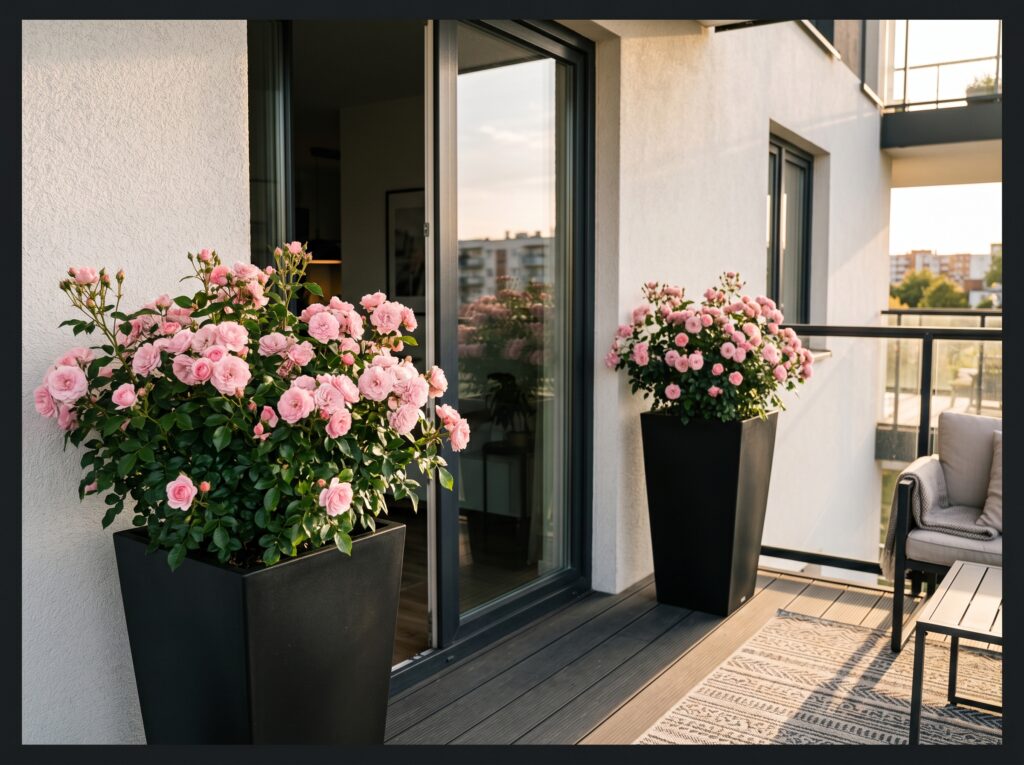
Growing roses on a balcony is entirely achievable the key is choosing the right variety. Standard garden roses grow too large and require too much root space for container growing. Compact patio roses and miniature roses, however, are specifically bred for exactly this application. They reach 18 to 24 inches in height, produce fully formed, beautifully scented flowers all summer, and thrive in containers with the same quality of care you would give any other balcony plant. In a tall black tapered planter beside the balcony door, a patio rose looks genuinely elegant and architectural.
Choose a minimum 15-inch diameter container per plant roses are greedy feeders with substantial root systems. Use a premium potting compost enriched with slow-release granular rose fertilizer at planting time. Water deeply and consistently roses in containers should never be allowed to dry out completely because they drop their flower buds when severely water-stressed. Feed with a liquid high-potassium rose fertilizer every two weeks through summer. Inspect regularly for aphids on new growth these small green or pink insects cluster on flower buds and can be dislodged with a strong jet of water from a spray bottle. Deadhead spent roses promptly to keep the new flowers coming continuously.
Snapdragons in Rustic Wooden Crates
Snapdragons in rustic wooden crates create a charming blend of vibrant color and farmhouse appeal. The tall, colorful flower spikes add height and visual interest, while the weathered wooden crates bring warmth and natural texture to the arrangement. This beautiful combination enhances porches, patios, and garden spaces with a cozy and inviting cottage-style atmosphere.
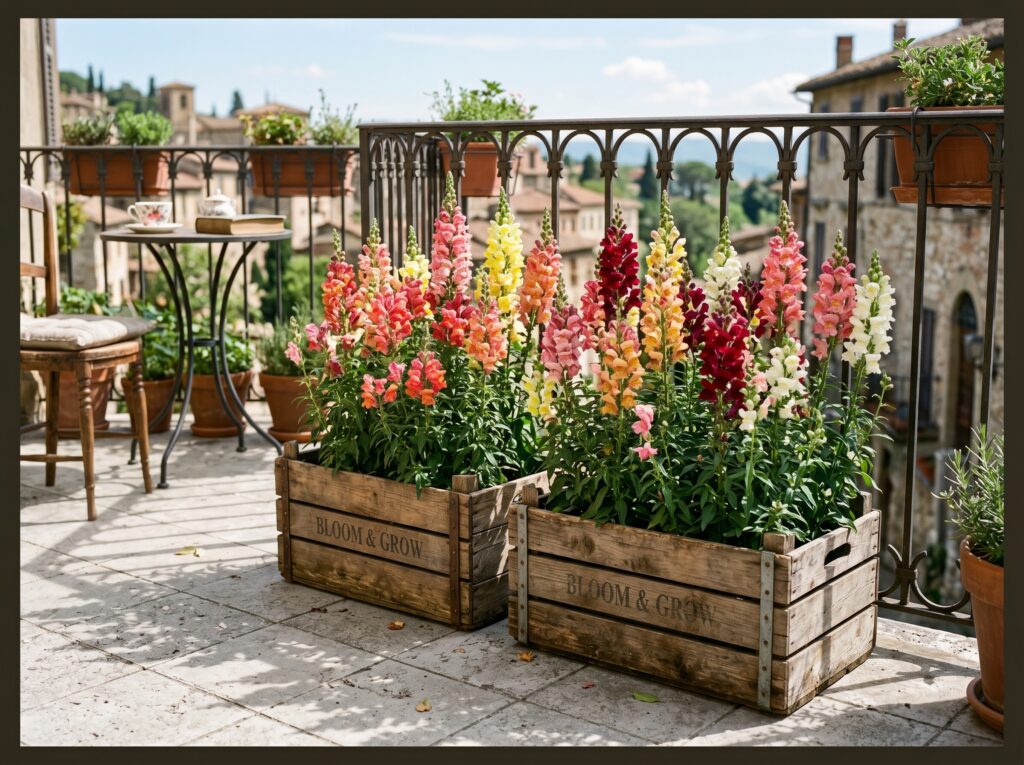
Snapdragons bring something most balcony flowers cannot vertical structure and height in a compact plant. Their upright flower spikes, densely packed with individual tubular blooms in layers from base to tip, add a distinct architectural quality to any container arrangement. They look particularly beautiful when several varieties in different colors are planted together in a shared container the mixing of coral, pink, yellow, and burgundy in a single crate creates a lush, painterly arrangement that looks professionally composed without requiring any design expertise.
Rustic wooden crates create a cottage-garden aesthetic that suits snapdragons perfectly and the combination photographs beautifully for social media. Line each crate with a thick plastic liner before filling with potting compost — this protects the wood from moisture and prevents the bottom from rotting out within a season. Snapdragons are cool-season performers that thrive in spring and autumn but decline in peak summer heat. Pinch out the growing tips when plants are young to encourage bushy, multi-stemmed growth rather than a single tall spike. When summer heat causes them to fade, replace with heat-tolerant petunias or zinnias in the same crates, then return to snapdragons again in September for an autumn display.
Mandevilla Vine on a Black Metal Obelisk
A mandevilla vine on a black metal obelisk creates a striking and elegant vertical garden feature. The lush green foliage and vibrant trumpet-shaped blooms beautifully climb the structure, adding height and dramatic color to outdoor spaces. The sleek black obelisk provides a modern contrast, making this arrangement a stunning focal point for patios, balconies, and garden corners.
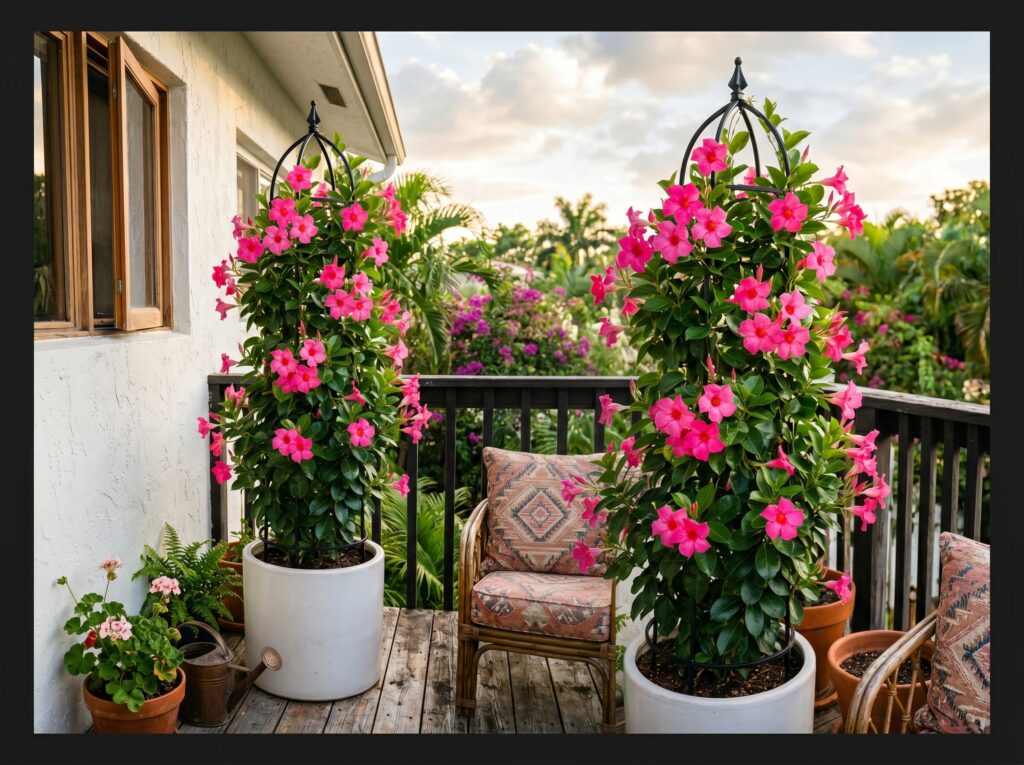
Mandevilla is the balcony plant for anyone who wants a genuinely tropical, resort-quality flower display. Its large trumpet-shaped flowers four to five inches across in vivid pink, red, or white appear continuously from late spring through autumn without deadheading and without demanding excessive attention. In a tall pot with an obelisk trellis, mandevilla spirals upward to create a living tower of flowers that adds impressive height and drama to even a small balcony space. Nothing else creates that same combination of size, color intensity, and continuous flowering in a single container.
Mandevilla demands full sun at least six hours of direct sunlight daily and warmth. It will not flower in shade and it will die in temperatures below 50°F, so it is strictly a summer balcony plant in most of the US except zones 9 and above. Plant in a rich potting mix with excellent drainage and feed with a high-phosphorus fertilizer every two weeks to support the prolific flowering. The vines grow quickly and need gentle guidance onto the obelisk structure as they extend they do not self-cling and will not attach themselves without occasional tying with soft twine. Bring the pot indoors before the first cold snap if you want to overwinter the plant and replant it next season.
Gerbera Daisies in Cobalt Blue Ceramic Pots
Gerbera daisies in cobalt blue ceramic pots create a vibrant and eye-catching outdoor display. The bold, colorful blooms stand out beautifully against the rich blue containers, adding energy and visual contrast to the space. This cheerful arrangement brings freshness, charm, and a lively decorative touch to patios, balconies, and garden entrances.
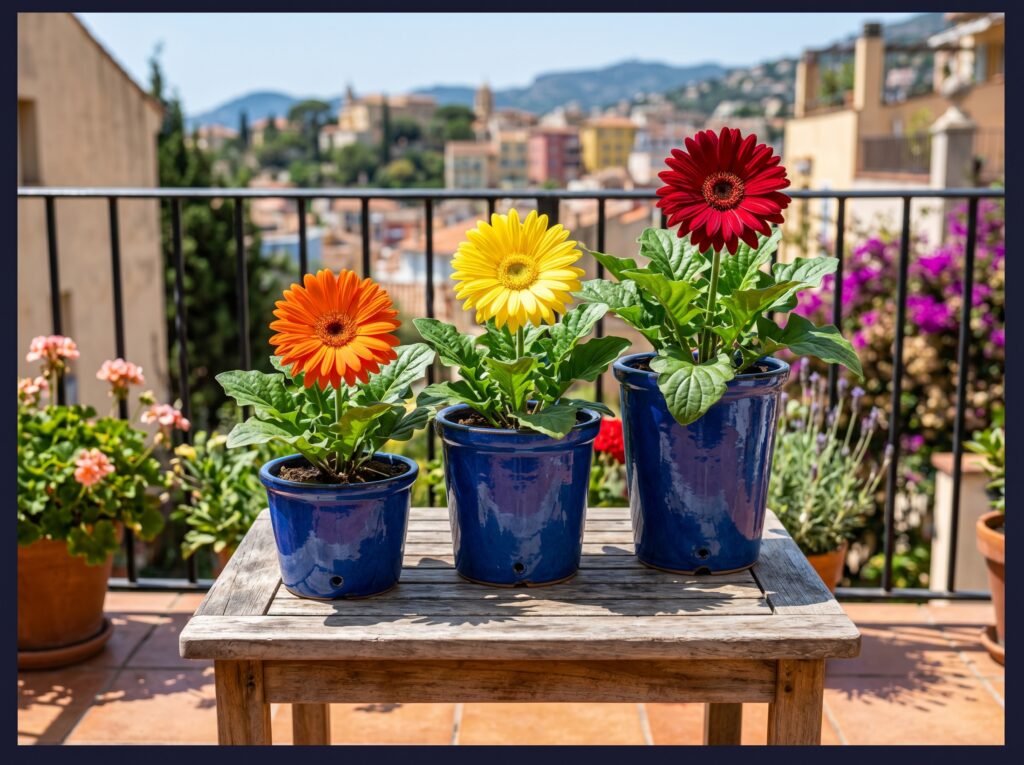
Gerbera daisies look almost artificially perfect their thick stems, geometrically precise petals, and bold saturated colors give them a quality that makes people ask if they are real. That extraordinary visual presence makes them one of the most impactful flowers per plant you can grow on a balcony. A single gerbera plant in a cobalt blue pot is a complete, confident statement on its own. Three of them together in contrasting colors on a small table create a display that looks like it was professionally arranged for a photo shoot.
The color contrast between warm flower tones orange, red, yellow and cool cobalt blue ceramic is one of the most visually effective plant-and-pot pairings in balcony gardening. Gerberas need full sun and are surprisingly thirsty check the soil daily in hot weather and water whenever the top inch feels dry. They are prone to crown rot if water sits in the center of the plant, so water at the base rather than over the foliage and flowers. Feed every two weeks with a balanced liquid fertilizer. Remove spent flowers by twisting and pulling the stem cleanly from the base cutting leaves a stub that often rots and introduces disease.Trailing.
Calibrachoa (Million Bells) in Hanging Baskets
Calibrachoa, commonly known as Million Bells, creates a stunning cascading display when planted in hanging baskets. The abundant, petunia-like blooms spill gracefully over the edges, filling outdoor spaces with vibrant color throughout the season. This low-maintenance arrangement is perfect for porches, balconies, and patios, adding a cheerful and inviting touch to the surroundings.
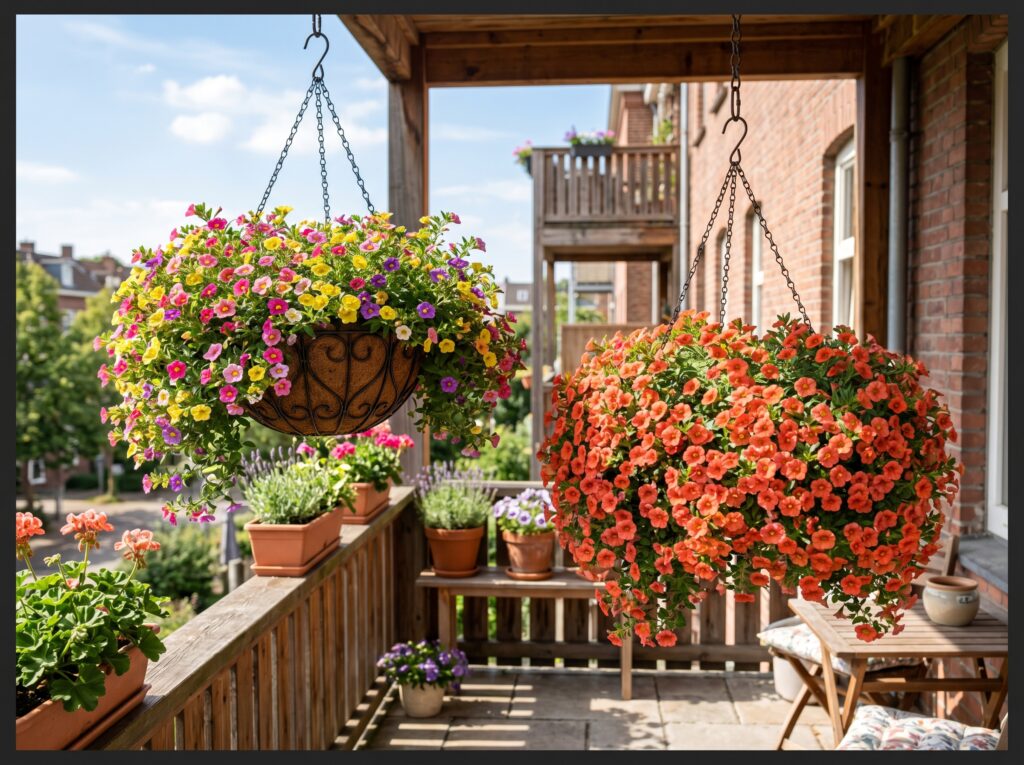
Calibrachoa, commonly called Million Bells, may be the single most reliable and lowest-maintenance trailing balcony flower available. The common name tells the story these plants produce an almost unbelievable quantity of tiny petunia-like bells from spring to frost without ever needing deadheading. The old flowers fall cleanly on their own, the new ones open continuously behind them, and the plant maintains its trailing, floriferous appearance for the entire season without any intervention beyond watering and occasional feeding. For balcony gardeners who want maximum impact for minimum effort, calibrachoa is the answer.
The trailing stems reach 18 to 24 inches in a full season, creating a spectacular cascade from a hanging basket that covers the entire exterior of the container. Choose a basket at least 12 inches in diameter and plant three calibrachoa plants per basket for the densest coverage. Self-watering hanging baskets are particularly well-suited to calibrachoa because they are genuinely thirsty plants that decline quickly if allowed to dry out completely. Feed every two weeks with a high-potassium liquid fertilizer the enormous flower load demands consistent nutrition. In cool, wet summers, calibrachoa can develop powdery mildew; choose disease-resistant varieties like Superbells if this has been a problem previously.
Tall Purple Salvia Spikes in Long Stone Troughs
Tall purple salvia spikes in long stone troughs create a sophisticated and architectural garden display. The upright blooms add height, texture, and rich color, while the stone containers introduce a timeless and natural elegance. This striking combination works beautifully in modern, cottage, and Mediterranean-inspired landscapes, bringing depth and visual interest to patios and outdoor spaces.
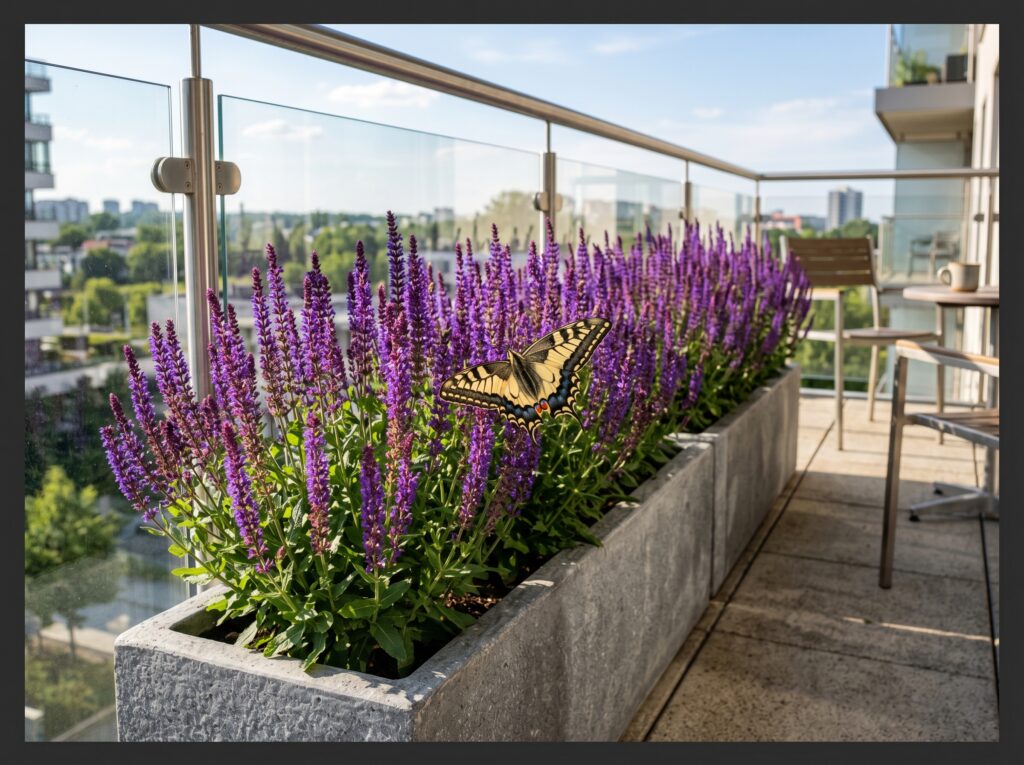
Purple salvia is the balcony flower for gardeners who want something that actively gives back to the natural world while looking beautiful. The tall, upright purple flower spikes are among the most attractive nectar sources for bees, butterflies, and hummingbirds of any commonly available balcony plant. In a sunny, exposed balcony position, a well-grown salvia container will become a landing zone for pollinators throughout the entire blooming season an extraordinary thing to watch from a balcony chair on a summer afternoon. Few other balcony flowers create this quality of daily wildlife engagement.
Salvia is also one of the most heat and drought-tolerant balcony flowers available, making it ideal for south-facing balconies that bake in direct sun for most of the day. It needs very good drainage consistently wet soil causes root rot quickly. Planted in a long stone trough along the railing, a row of salvia creates an architectural border effect that gives the balcony a designed, formal quality. Deadhead the spent spikes regularly cutting back to the next set of leaves below the finished flower spike and the plant produces new flowering shoots throughout the season. Salvia is perennial in zones 7 and warmer and will return larger and more floriferous each year.
On a south-facing balcony that bakes in sun, a shaded structure for hot afternoons can make the space far more comfortable.
Impatiens in Tiered Corner Planter Stands
Impatiens in tiered corner planter stands create a vibrant and space-efficient floral display for shaded outdoor areas. The colorful blooms brighten empty corners, while the multi-level arrangement adds height and visual dimension to the space. This charming setup is perfect for patios, balconies, and garden nooks, bringing a cheerful and inviting atmosphere to the surroundings.
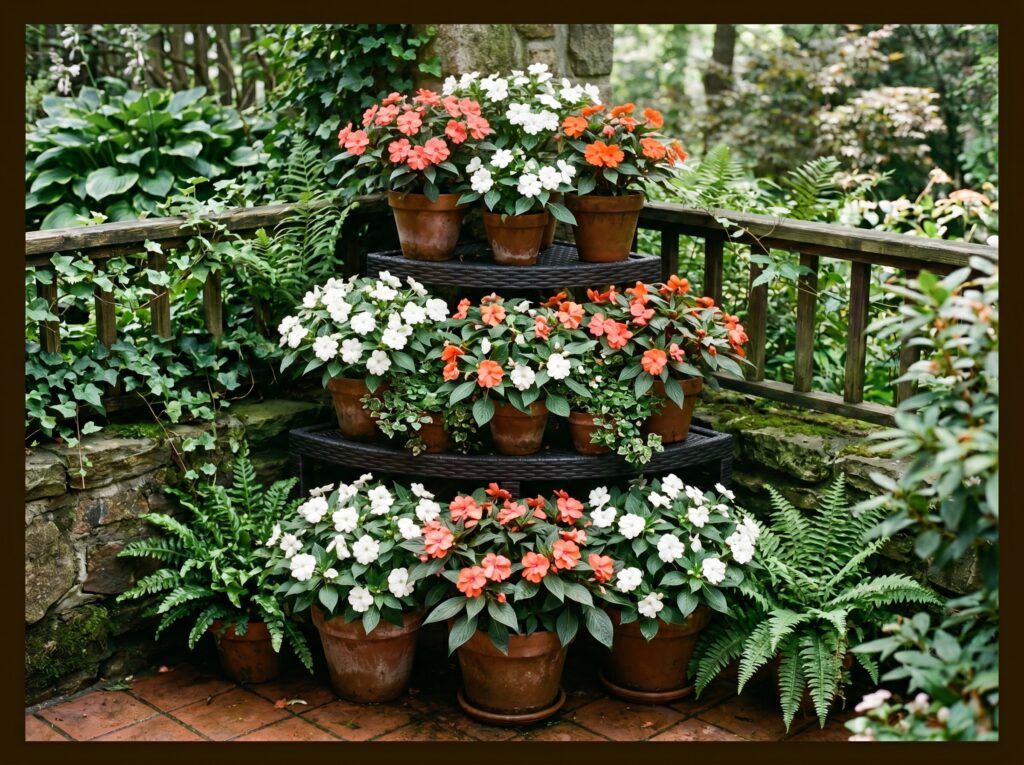
Impatiens are the definitive shade balcony flower nothing else produces as much continuous color in a low-light environment with as little fuss. Standard impatiens and the larger-flowered New Guinea impatiens both thrive in partial to full shade, producing mounded plants covered in cheerful, simple flowers from planting time until the first frost. For north-facing balconies or balconies under heavy overhead shade from higher floors, impatiens often represent the only way to achieve genuinely abundant flower color, making them an essential choice rather than a second-best one.
New Guinea impatiens are the superior choice for balcony containers they are significantly larger-flowered, more sun-tolerant than standard impatiens, and available in more vivid color ranges including deep coral, salmon, bright white, and rich red. They also have more attractive, bronze-tinted foliage that adds ornamental value even when the flowers are not at their peak. Plant in a rich, moisture-retentive potting compost and water consistently impatiens are highly communicative about their water needs and will wilt dramatically when dry, though they recover quickly after watering. Feed every two weeks with a balanced liquid fertilizer for continuous, dense flowering.
Edible Nasturtiums in Terracotta Pots
Edible nasturtiums in terracotta pots create a beautiful combination of ornamental charm and practical gardening. Their vibrant flowers and rounded green leaves add cheerful color, while the warm terracotta containers enhance the natural, rustic appeal. This attractive arrangement is perfect for patios, balconies, and kitchen gardens, offering both decorative beauty and edible blooms for culinary use.
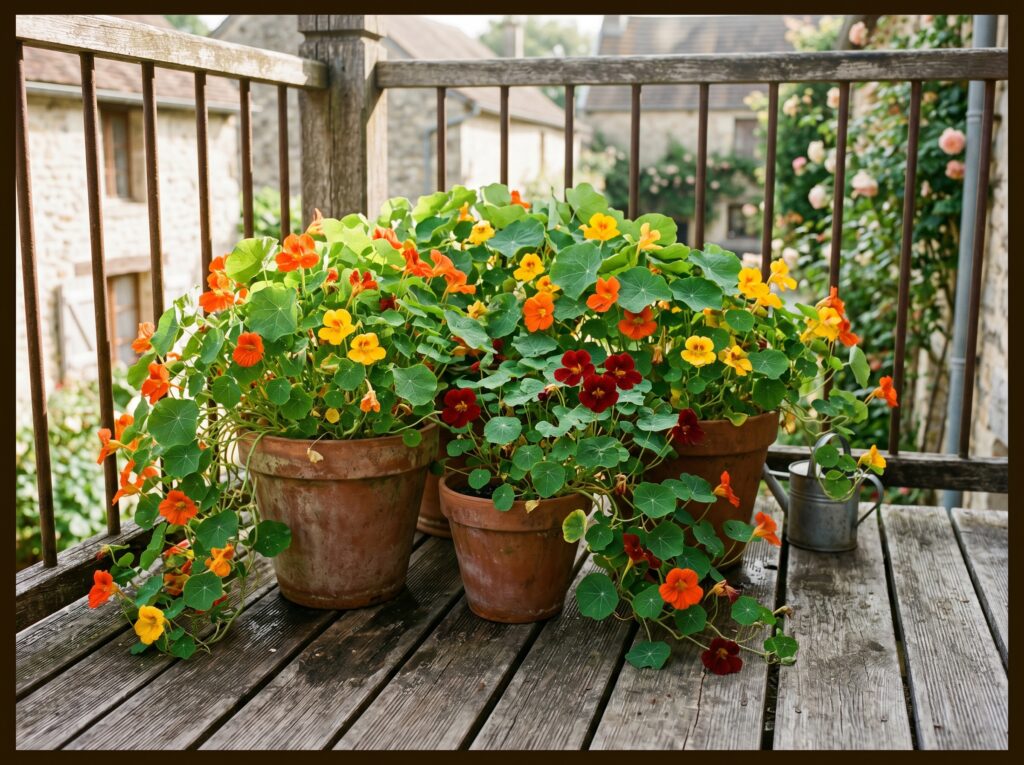
Nasturtiums deserve a prominent place on every balcony flower list because they uniquely bridge the gap between ornamental flower display and productive kitchen garden. Every part of the nasturtium plant is edible the peppery, watercress-like flowers, the round lily-pad leaves, and the unripe seed pods (which can be pickled as a caper substitute). You grow a beautiful, colorful flower display for your balcony and simultaneously harvest fresh, peppery ingredients for your salads, garnishes, and appetizers. No other common balcony flower is edible, productive, and visually beautiful in equal measure.
Nasturtiums are also among the easiest flowers to grow from seed directly in their final container sow three seeds per 8-inch pot in spring after the last frost, thin to the strongest plant, and they will flower within six to eight weeks with almost no additional attention. They thrive in full sun and actually prefer poor, low-fertility soil rich soil produces abundant lush foliage but fewer flowers. This counterintuitive care requirement means they genuinely perform better in basic potting compost without added fertilizer. The trailing varieties such as Jewel Mix cascade beautifully over pot edges and railing tops. The compact bush varieties stay neat and tidy in smaller containers.
Dahlias in Gray Concrete-Style Cylindrical Planters
Dahlias in gray concrete-style cylindrical planters create a bold and sophisticated garden display. The large, vibrant blooms provide dramatic color and texture, while the sleek concrete-inspired containers add a modern and understated elegance. This stylish combination beautifully enhances patios, entryways, and outdoor seating areas with a perfect balance of contemporary design and natural beauty.
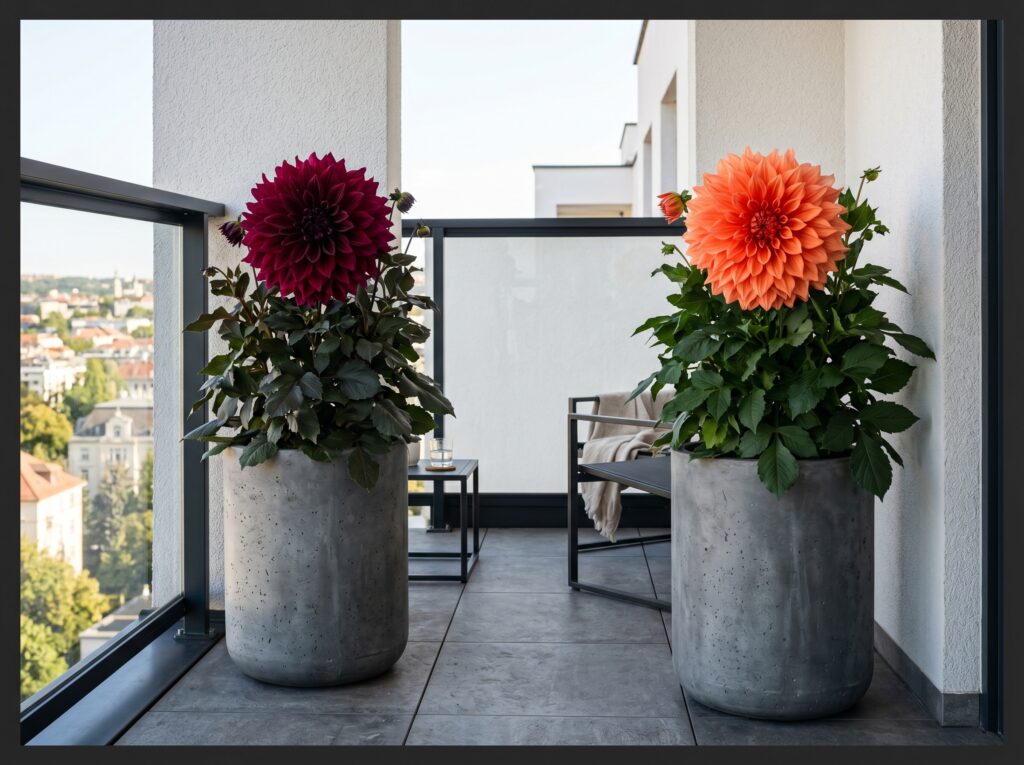
Dinner-plate dahlias are the most dramatically beautiful flower you can grow in a balcony container full stop. Their enormous, complex flower heads reach 10 to 12 inches across in the best-performing varieties, with hundreds of precisely arranged petals in colors ranging from pure white to near-black burgundy, with every shade of coral, orange, pink, red, and yellow in between. A single dinner-plate dahlia in full bloom is a spectacle that makes every other balcony flower look modest by comparison. In a matching pair of concrete-style planters, two dahlias in contrasting colors create a balanced, intentional display.
Plant dahlia tubers in early spring after the last frost risk has passed, or buy established plants in late spring from a garden center. Use large containers at minimum 15 gallons per plant as dahlias develop substantial root and tuber systems that need space. Stake plants early with a sturdy bamboo cane tied loosely with soft twine the massive flower heads become genuinely heavy on tall stems and will collapse in wind without support. Feed fortnightly with a high-potassium fertilizer once the flower buds appear. At the end of the season, lift the tubers, dry them in a frost-free space, and store over winter for replanting the following spring.
Chrysanthemums in Orange Ceramic Pots for Autumn
Chrysanthemums in orange ceramic pots create a warm and festive display that perfectly captures the beauty of autumn. The rich seasonal blooms add vibrant color and texture, while the orange containers enhance the cozy fall atmosphere. This charming arrangement is ideal for porches, patios, and entryways, bringing seasonal warmth and inviting curb appeal to outdoor spaces.
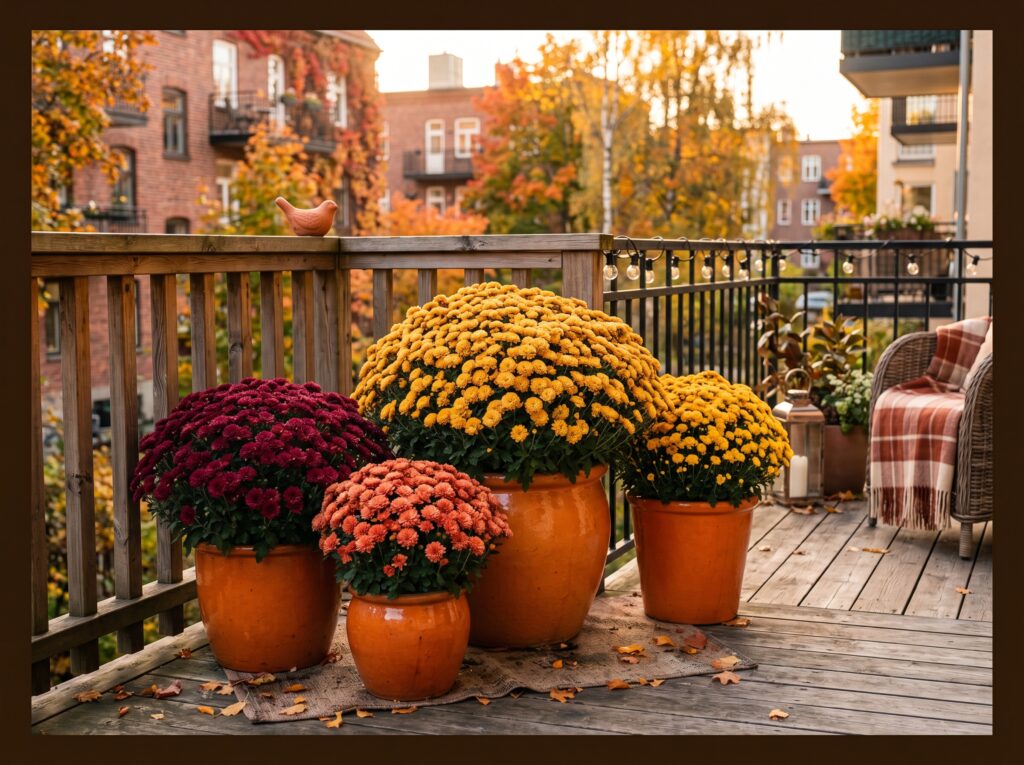
Chrysanthemums are the flowers that keep your balcony looking beautiful when everything else has finished for the year. While summer annuals decline and are pulled in September, a fresh planting of autumn chrysanthemums takes the balcony straight from summer into a rich, warm fall display that lasts well into October and November, surviving light frosts that would collapse any summer flower. Their rounded, mounded form is naturally neat and compact, they need no staking, no deadheading, and very little care beyond regular watering during their short balcony display season.
Orange ceramic pots in varying sizes create a harvest-themed display that doubles down on the warm seasonal palette — the pot color and the flower colors tell a coherent autumn story rather than looking like a random assortment of leftover summer planters. Mix burgundy, golden yellow, and warm coral chrysanthemum varieties together in the group for a layered, rich arrangement. Buy garden mums the hardy outdoor varieties rather than florist mums, which are bred for indoor use only and collapse quickly in outdoor conditions. Water consistently and keep in a sunny position for the longest possible display. In mild-winter zones, hardy garden mums can be left in their pots to overwinter and regrow the following autumn.
Once the blooms are in place, a few cozy touches that finish the space bring the whole balcony together.
Colorful Portulaca (Moss Rose) in Shallow Terracotta Dishes
Colorful portulaca, also known as moss rose, creates a vibrant and cheerful display when planted in shallow terracotta dishes. The bright, rose-like blooms and succulent foliage thrive in sunny conditions, adding lively color and texture to outdoor spaces. Paired with natural terracotta containers, this low-maintenance arrangement brings a warm, Mediterranean-inspired charm to patios, balconies, and garden areas.
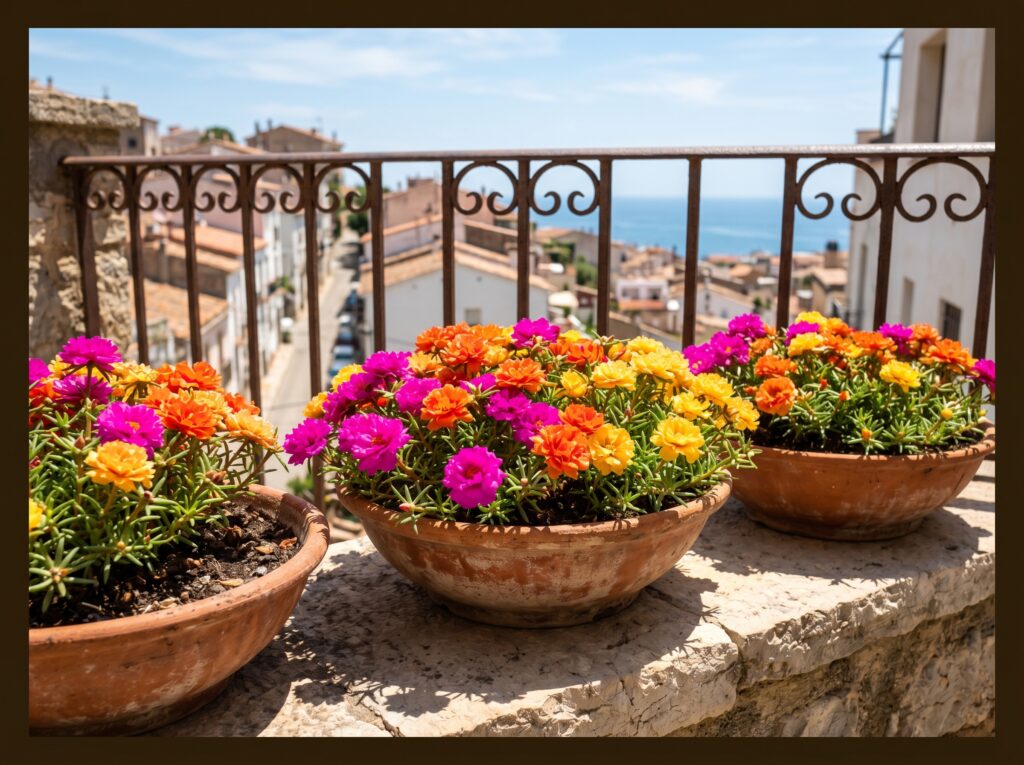
Portulaca, commonly called moss rose, is the ultimate balcony flower for the hottest, driest, most challenging south-facing balcony positions where other flowers simply refuse to perform. It is essentially a succulent its thick, needle-like leaves store water and it thrives in baking heat and full sun that would wilt a petunia within hours. The semi-double flowers in vivid magenta, orange, yellow, pink, and white open in full sun and close in the evening and on cloudy days, which gives the plant a slightly magical quality. They spread into wide, low mounds that look beautiful in shallow terracotta dish planters on a railing ledge.
Plant portulaca in the shallowest, most free-draining container you can find standard deep pots with rich potting compost hold too much moisture and cause the succulent roots to rot. Use a mix of standard potting compost and coarse sand or perlite in a ratio of roughly 50:50. Water once or twice per week and then let the soil dry completely before watering again overwatering is the most common mistake with this plant. Portulaca is self-cleaning, meaning spent flowers fall on their own without deadheading. For the most vigorous, colorful display, plant in a position that receives at least eight hours of direct sun daily it performs directly in proportion to the amount of sunlight it receives.
Mixed Pollinator Window Boxes with Wildflower Mix
Mixed pollinator window boxes filled with a wildflower mix create a vibrant and eco-friendly display that supports bees, butterflies, and other beneficial insects. The variety of colors, textures, and bloom shapes adds natural beauty and seasonal interest to windows, railings, and balconies. This charming arrangement not only enhances curb appeal but also helps promote biodiversity and a healthier garden environment.
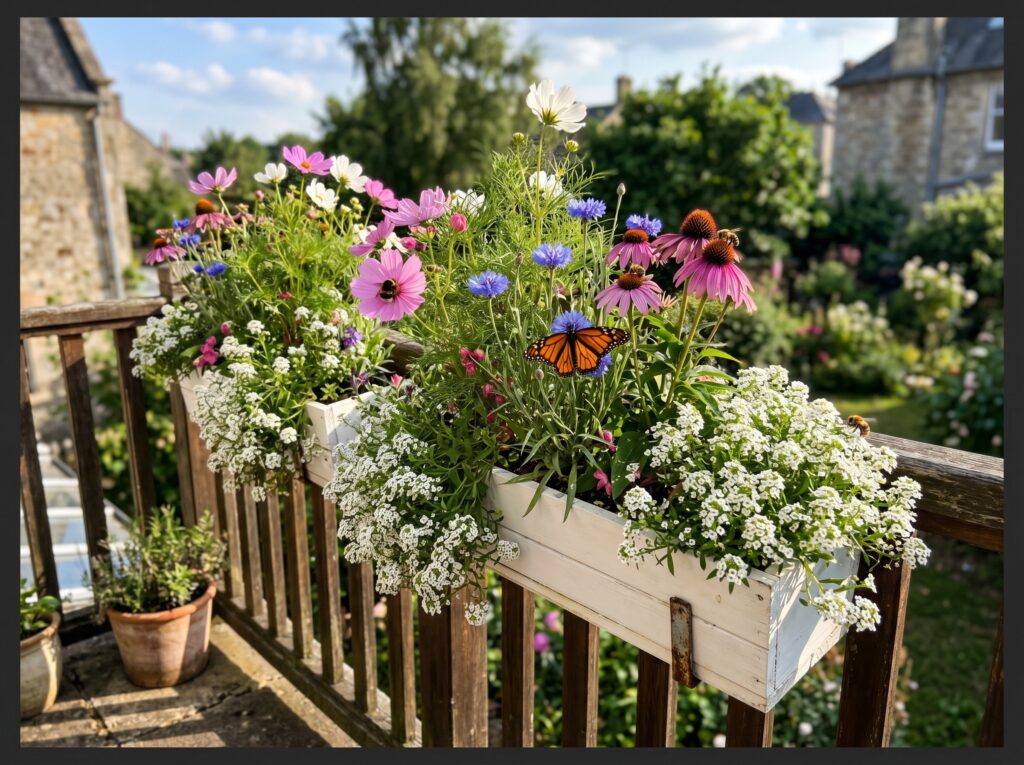
A mixed pollinator window box planted with a curated wildflower selection is one of the most joyful and ecologically meaningful balcony flower ideas on this entire list. Cosmos, bachelor’s buttons, echinacea, sweet alyssum, and borage planted together in a large window box create a naturalistic, meadow-like display that looks beautifully effortless and draws bees, butterflies, and hoverflies to your balcony throughout the entire growing season. Watching pollinator activity on a balcony window box is one of the most genuinely relaxing and rewarding things you can do in an urban apartment setting.
Sow directly in the window box in mid-spring after frost risk has passed most meadow wildflower species germinate reliably from direct sowing and do not need starting indoors. Thin seedlings to prevent overcrowding and allow the remaining plants to bush out and fill the box. Use a basic potting compost without added slow-release fertilizer too much nitrogen produces lush foliage at the expense of flowers in many wildflower species. Water regularly and allow spent flower heads to remain on the plant occasionally the seed heads provide food for birds in late summer and autumn and add their own textural beauty to the arrangement. This window box idea requires almost no design skill to look wonderful nature does the composition work for you.
Conclusion
A blooming balcony is one of the simplest, most satisfying home improvements available to anyone with outdoor space even a tiny one. You do not need a large budget, advanced gardening knowledge, or hours of daily attention. You need a clear understanding of your sun conditions, the right plants for those conditions, and a consistent watering routine.
Pick two or three ideas from this list that genuinely excite you and suit your balcony’s light situation. Start there. Add more as your confidence grows. Within one season you will have a blooming outdoor space that you actually want to spend time in and that is the entire point of every flower on this list.
And if you want the color to carry inside as well, planning a season of color indoors too is a natural next step.