Who says you need a built-in pool to have the ultimate summer backyard experience inflatable pools have seriously leveled up. These 25 backyard inflatable pool ideas are fun, affordable, and perfect for kids and adults alike from dreamy lounge setups to cool splash zones the whole family will love. Let’s dive into these backyard inflatable pool ideas for the best summer fun!
Classic Round Family Splash Pool on Grass
A classic round family splash pool on grass creates a simple and enjoyable outdoor retreat for all ages. The soft grassy surroundings provide a natural setting that feels comfortable and inviting. This setup is perfect for cooling off, family activities, and casual summer gatherings.
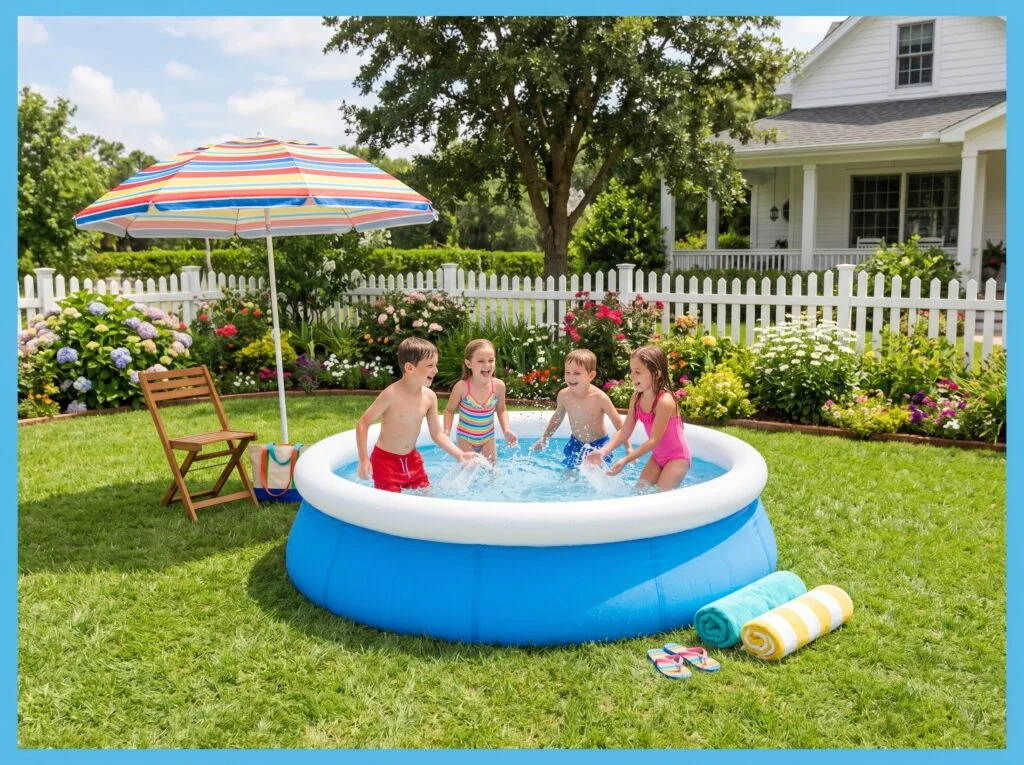
A classic round inflatable family pool on a flat lawn is the most traditional and most loved backyard summer setup and it works because simplicity is genuinely effective. A 10 to 12-foot round pool on a well-prepared grass base gives a family of four to five plenty of room to splash, float, and cool off without any complicated setup or specialized equipment.
For the grass underneath, lay a heavy-duty ground cloth first this protects both the pool floor from grass and sharp soil objects, and protects the lawn from the extended shade and moisture compression that a pool sitting for the summer creates. An 8-foot UV-resistant tarp cut a foot larger than the pool diameter on all sides works well.
Once the base is prepped, styling touches for the yard around it can turn a simple setup into a real destination.
For more ways to dress up the space around your pool, outdoor upgrades that handle extra weight and comfort are worth a look.
Boho Aesthetic Pool on Pea Gravel Base
A boho aesthetic pool on a pea gravel base brings a stylish and relaxed vibe to backyard spaces. Natural textures, woven décor, and neutral tones create a cozy resort-inspired atmosphere. This setup combines comfort and visual charm for a unique summer escape.
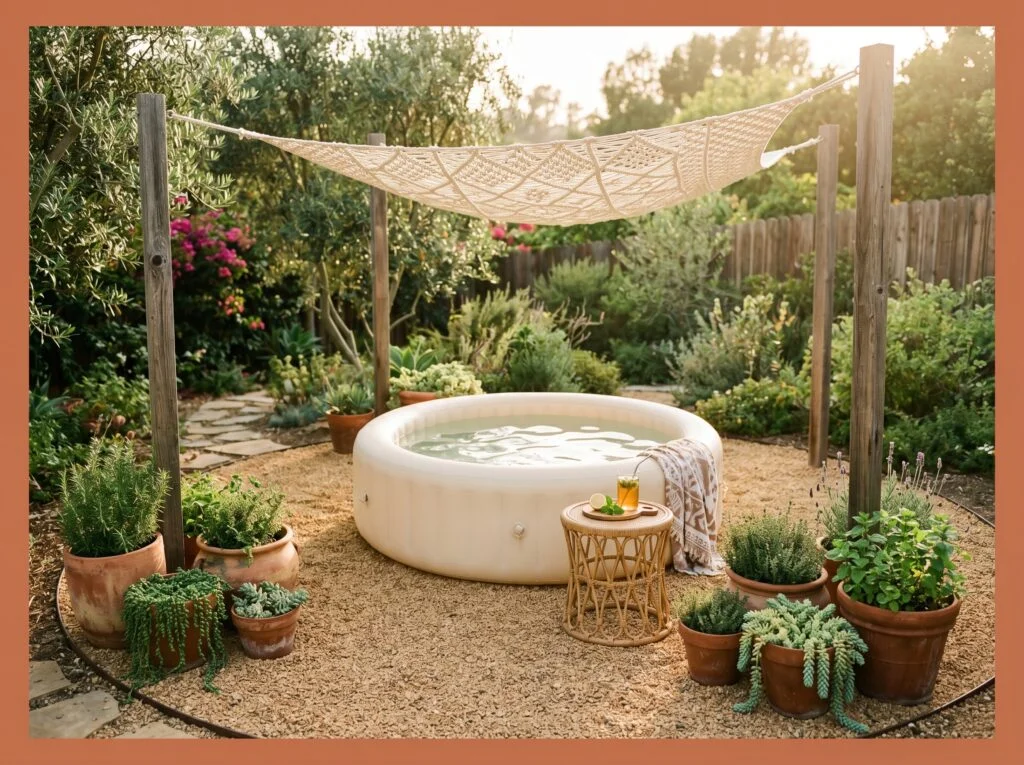
A pea gravel base instead of grass is the single landscaping decision that transforms an inflatable pool from a temporary summer toy into a styled outdoor feature.
Choose washed pea gravel in a 3/8-inch to 5/8-inch size small enough to be comfortable underfoot but large enough to not scatter excessively with foot traffic. Lay a weed barrier fabric beneath the gravel before placing the pool to prevent weeds from growing up through the stones over the summer season.
If you’re rethinking the whole surface, hardscaping that upgrades a basic lawn is worth considering alongside the gravel.
Tropical Tiki Pool Setup with Floats and Accessories
A tropical tiki pool setup transforms the backyard into a vacation-inspired paradise. Colorful floats, bamboo accents, and tropical décor create a fun and lively environment. This cheerful arrangement is ideal for entertaining guests and enjoying summer relaxation.
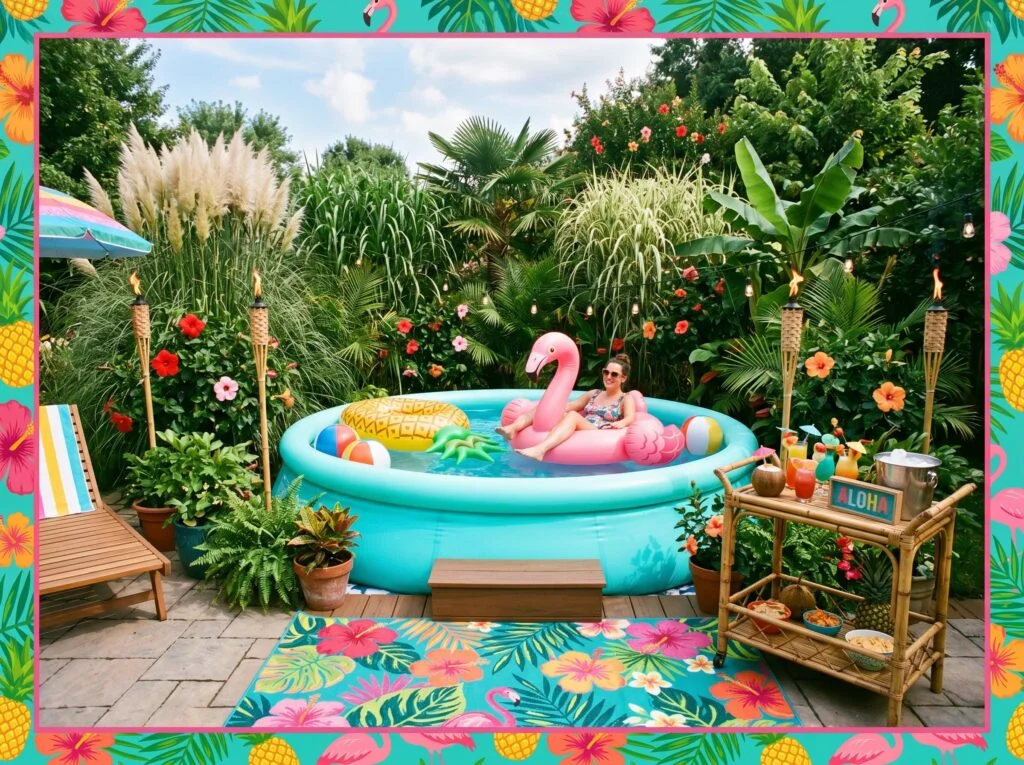
A tropical tiki theme transforms a basic inflatable pool into a complete backyard summer experience and the accessories do most of the heavy lifting. The pool itself can be any solid aqua, blue, or bright green model.
Choose floats sized appropriately for your pool dimensions a 10-foot pool can comfortably accommodate two or three medium floats, but oversizing floats relative to pool size means swimmers spend more time wrestling inflatables than actually swimming.
Minimalist Clear-Walled Inflatable Pool for Adults
A minimalist clear-walled inflatable pool offers a modern and sophisticated approach to outdoor leisure. The transparent design creates an open and elegant appearance that complements contemporary landscapes. This stylish pool setup is perfect for relaxing and unwinding during warm weather.
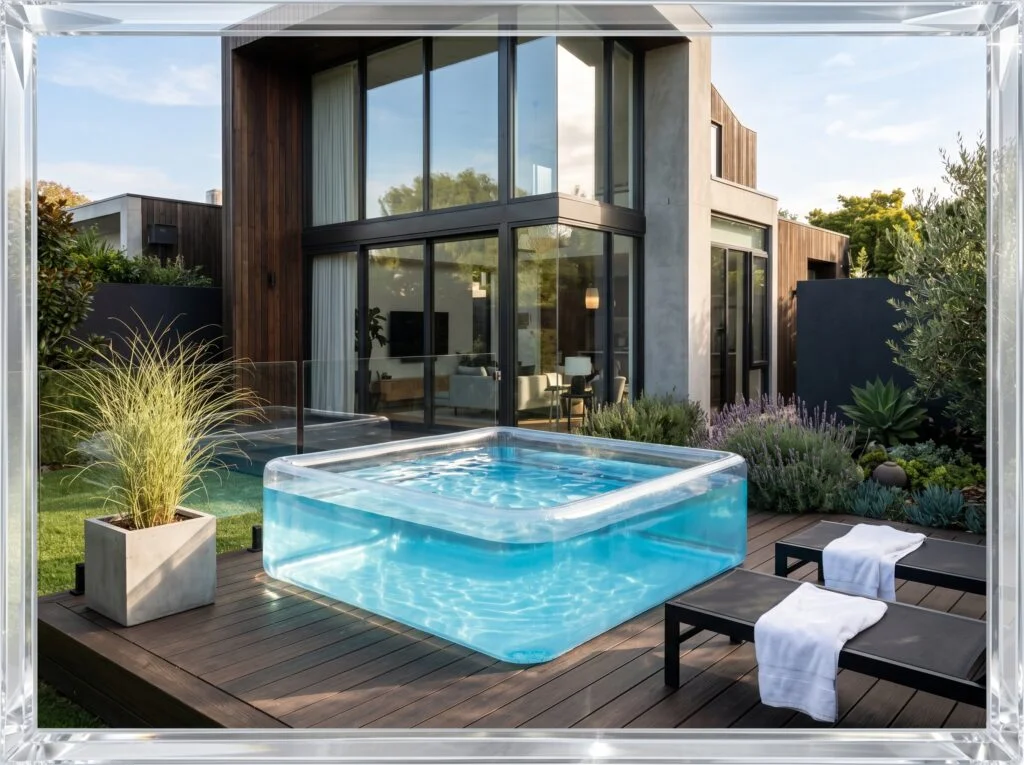
Clear-walled transparent inflatable pools are the architectural pool choice they look more like a design object than a summer toy, and in a contemporary or minimalist backyard, they fit the aesthetic with surprising success. The transparent PVC walls create a see-through pool effect where the water and its contents are visible from outside the pool, which looks genuinely impressive and allows easy water clarity monitoring without reaching over the side.
Clear inflatable pools require more visible cleanliness management than opaque-walled options any cloudiness, algae tint, or floating debris is immediately visible through the transparent walls. Maintain crystal clear water with a small floating chlorine dispenser and a fine-mesh skimmer net used daily.
Deep Soaking Pool for Adults
A deep soaking pool for adults provides a luxurious and spa-like experience in the comfort of home. The extra depth allows for greater relaxation and comfortable immersion in the water. This design creates a peaceful retreat for quiet evenings and stress relief.
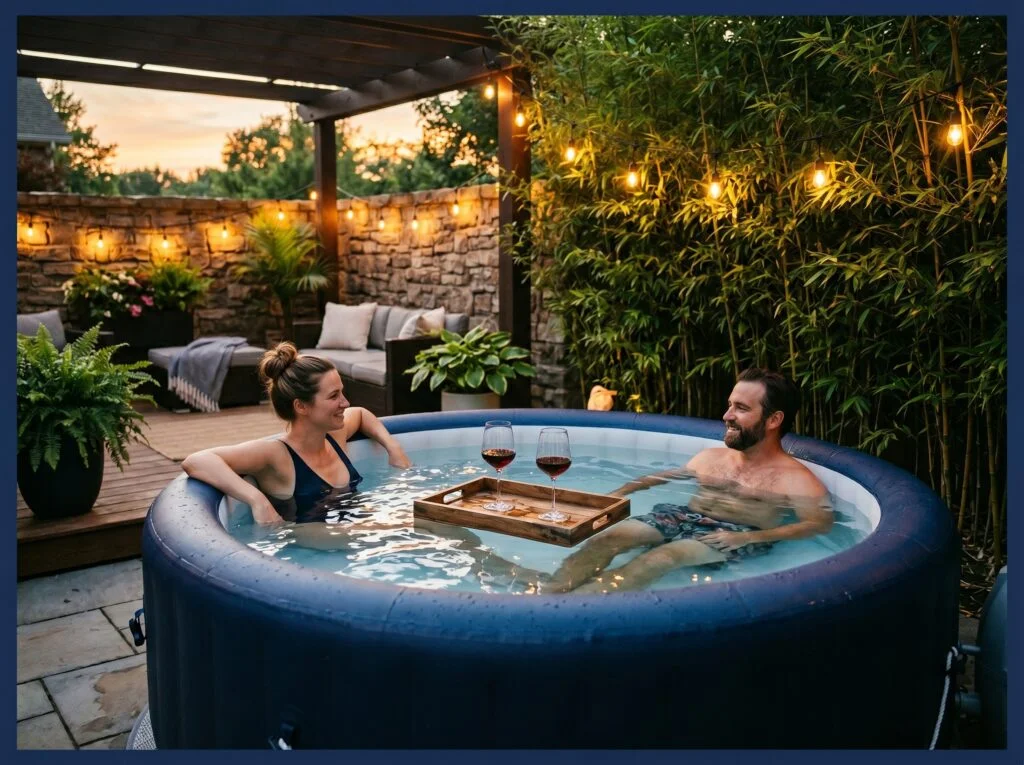
Deep-walled inflatable pools designed for adult soaking are a genuinely different product from standard family splash pools and they’re among the most satisfying summer purchases a backyard can receive.
Look for deep soaking pools with double or triple air chamber wall construction single-chamber walls at deep pool heights flex and bulge under water pressure, eventually causing visible leaning and potential collapse on larger diameter models.
Kiddie Splash Ring for Toddlers
A kiddie splash ring for toddlers creates a safe and enjoyable water play area for young children. The shallow design allows little ones to play comfortably under supervision. Bright colors and playful features make it a fun addition to family outdoor spaces.
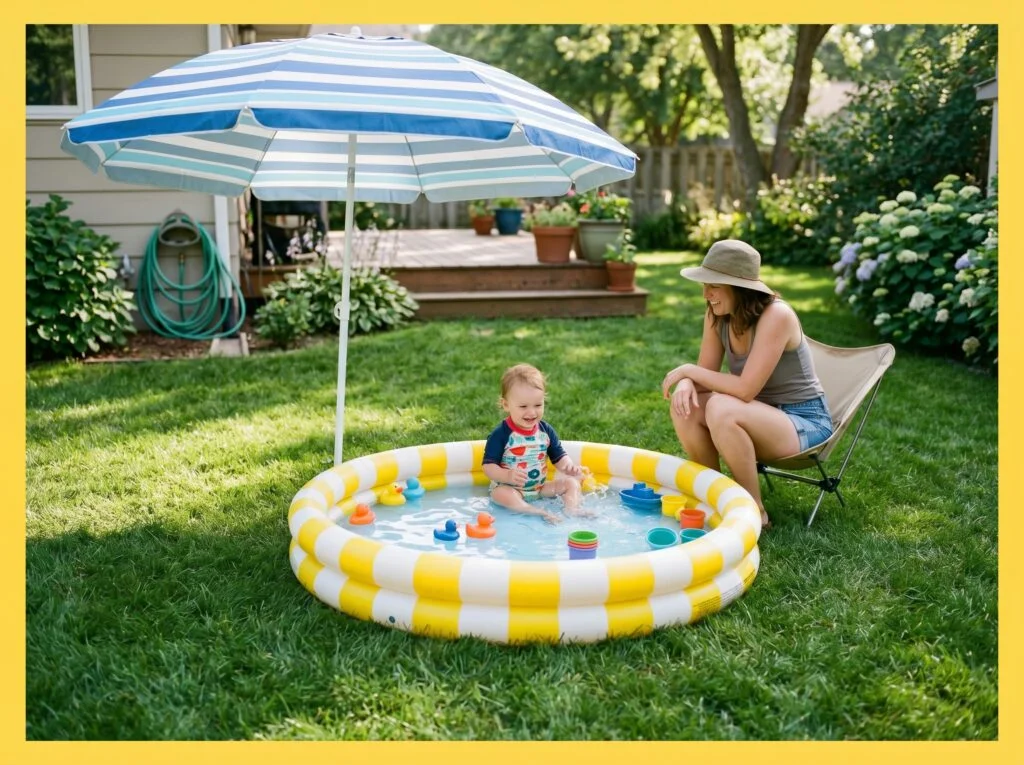
A simple kiddie splash ring for toddlers is the safest and most appropriate inflatable pool for children under three, and the right setup makes the biggest difference in how much the child enjoys it. The shallow depth typically 6 to 10 inches keeps toddlers safe while providing enough water to splash and play without any risk of submersion.
Empty and rinse a kiddie splash ring daily the shallow water warms quickly in summer heat and small water volumes without any chemical treatment develop bacteria within 24 hours. This daily drainage is not a burden a toddler-sized splash ring holds 15 to 30 gallons and drains in minutes.
Rectangular Family Pool with Built-In Shade Canopy
A rectangular family pool with a built-in shade canopy combines functionality and comfort for summer activities. The shaded section provides protection from direct sunlight while allowing extended pool enjoyment. This practical design is ideal for families with children and outdoor gatherings.
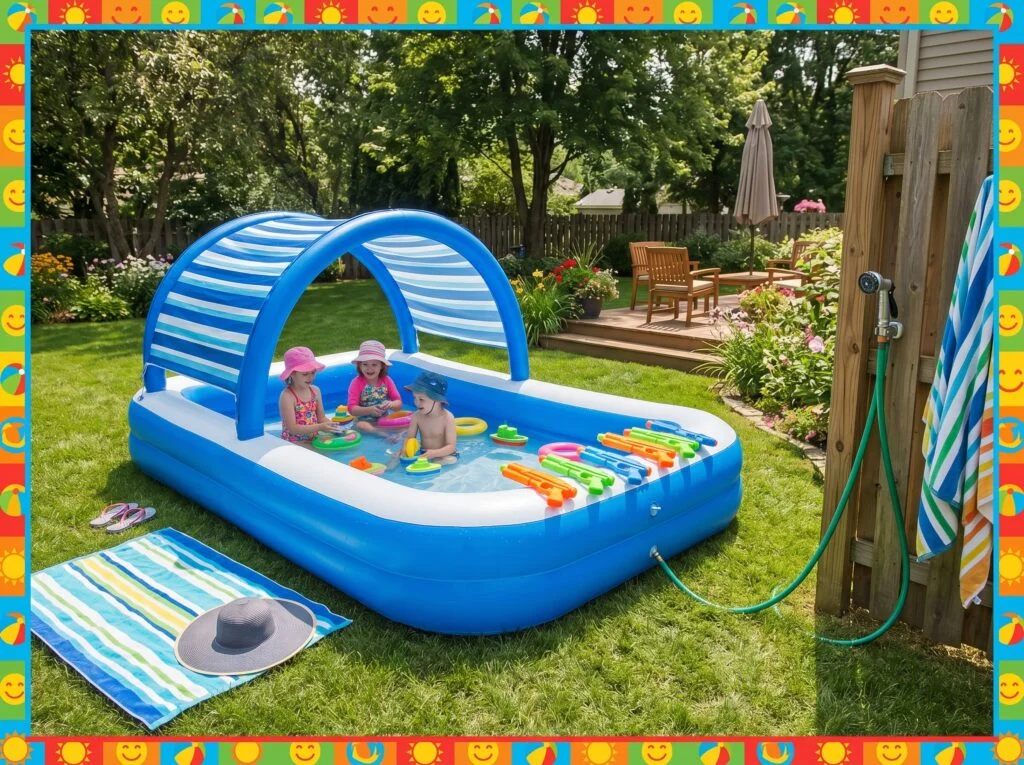
Inflatable pools with integrated shade canopies are one of the best product innovations in the inflatable pool category they solve the sun exposure problem directly rather than requiring a separate umbrella setup that tips over, needs repositioning throughout the day, and never covers the entire pool surface.
Position the pool so the shade canopy faces the direction of peak afternoon sun typically southwest in the northern hemisphere for maximum protective coverage during the hottest part of the day. Even with a built-in canopy, apply sunscreen on all swimmers before entry and reapply after 80 minutes in the water canopy coverage isn’t complete UV protection.
For even more consistent shade over the pool area, a shaded spot for the whole setup can make hot afternoons much more comfortable.
Pool on a Wooden Deck Setup
A pool on a wooden deck setup creates a polished and elevated outdoor living experience. The surrounding deck provides convenient space for seating, lounging, and entertaining guests. This arrangement enhances both the functionality and visual appeal of the backyard.
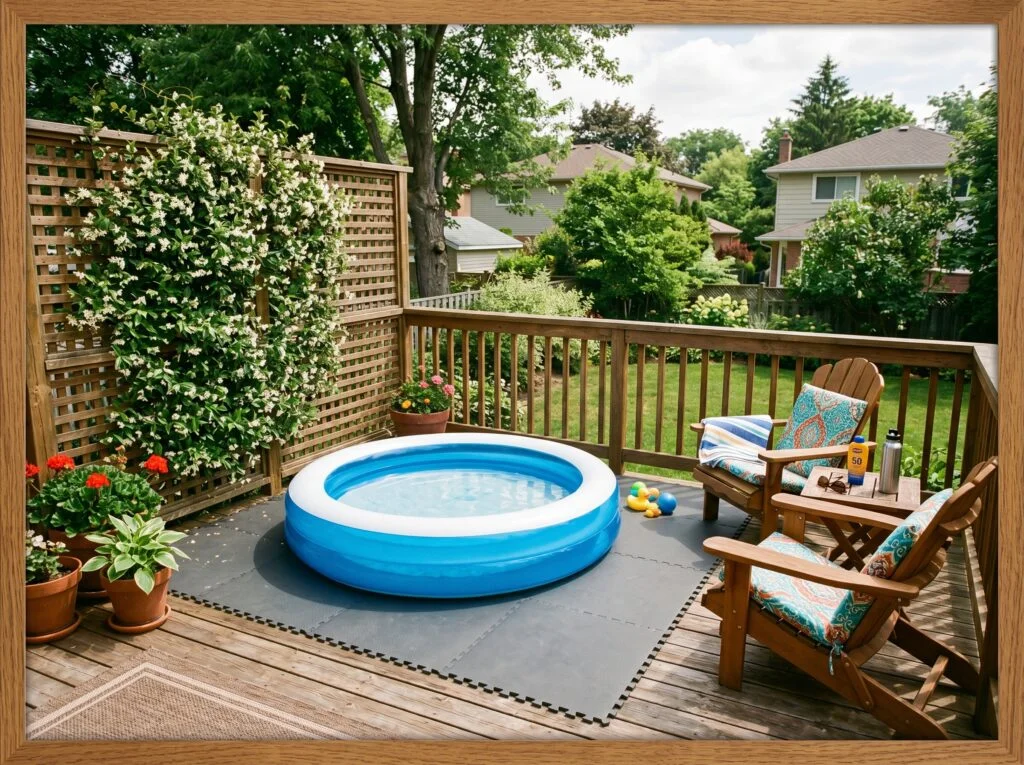
Setting an inflatable pool on a wooden deck is completely achievable with the right preparation and it opens up inflatable pool placement for homeowners whose best level ground is their deck rather than their lawn. The critical preparation step is protecting the deck surface from the constant moisture exposure a pool creates.
Keep the pool to a size that doesn’t overload the deck’s weight capacity a 10-foot round inflatable pool filled with water weighs approximately 5,000 to 6,000 pounds. Most residential decks are designed for 40 to 50 pounds per square foot of live load, which a 10-foot pool distributes reasonably across the pool footprint.
If your deck is on the smaller side, deck upgrades that handle extra weight are worth reviewing before you commit to a spot.
Pool with Inflatable Slide Attachment
A pool with an inflatable slide attachment adds excitement and entertainment to outdoor family activities. The playful feature creates endless fun for children and encourages active water play. This setup transforms a simple pool into a lively summer destination.
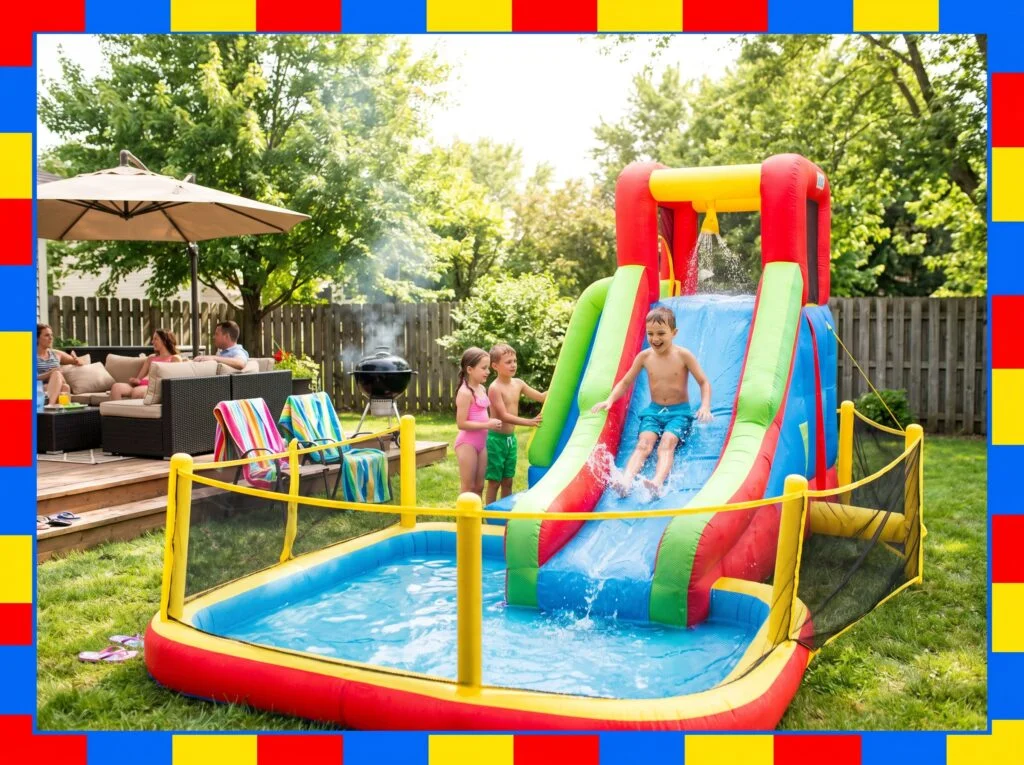
An inflatable pool with an attached water slide is the setup that children talk about all school year and count down the days to all spring. The slide attachment anchors to the pool’s inflation structure at the connection point and uses continuous water flow from a garden hose connection to keep the slide surface wet and fast.
Safety considerations for inflatable slides are specific and important. The slide entry must drop the child into water deep enough to prevent bottoming out at least 24 inches of water depth at the slide exit point is the minimum. Always supervise actively when children are using a slide one at a time on the slide, no one standing at the base.
Elegant Oval Inflatable Pool with Lounge Floats
An elegant oval inflatable pool with lounge floats offers a refined and relaxing outdoor experience. The spacious shape and comfortable floating accessories create a resort-like atmosphere in the backyard. This stylish setup is perfect for leisurely afternoons and peaceful summer gatherings.
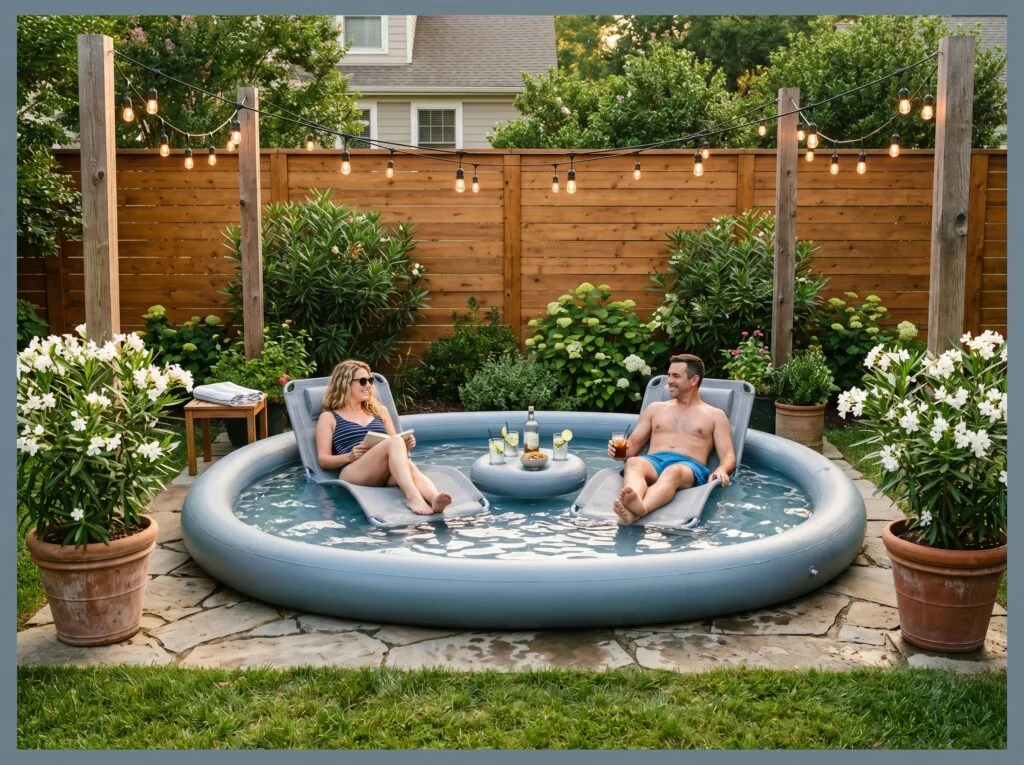
An oval inflatable pool styled with adult lounge floats and evening lighting creates one of the most unexpected and genuinely impressive backyard pool setups available at this price point.
String lights above the pool area are the single addition that most dramatically elevates an inflatable pool setup from daytime activity to evening experience. Run them between two wooden posts set at each end of the pool, 8 to 10 feet above the water surface, with a warm 2200K Edison bulb style for the most flattering, atmospheric glow.
For more inspiration on outdoor evening ambiance, string lights that set an evening mood work well beyond just the pool too.
Obstacle Course Inflatable Pool Combo
An obstacle course inflatable pool combo brings excitement and interactive fun to outdoor spaces. Features such as climbing sections, slides, and splash zones create an engaging experience for children and families. This setup transforms the backyard into an entertaining summer play destination.
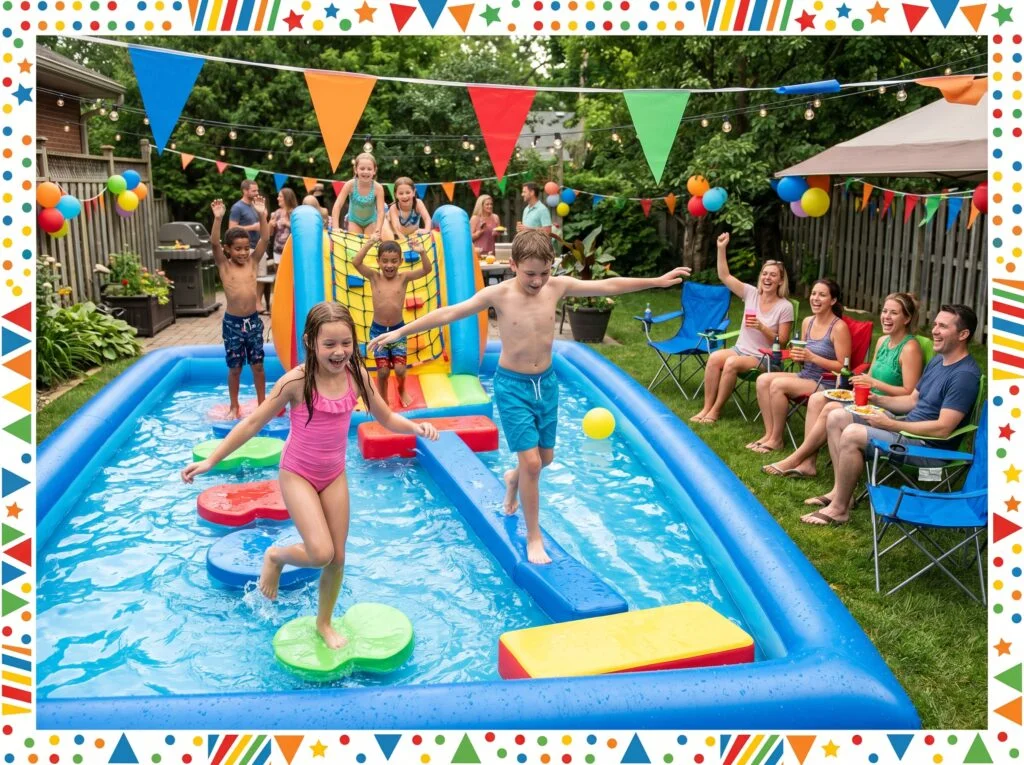
Inflatable pool obstacle courses floating lily pads, balance beams, climbing frames, and ring toss targets anchored within the pool transform a standard pool into an active play zone that keeps kids entertained for hours rather than minutes. The physical challenge of maintaining balance on floating elements, navigating from one pad to the next, and competing against siblings or friends adds a genuine athletic dimension to pool time.
Choose obstacle elements sized appropriately for your pool dimensions the individual foam pads and balance elements should leave at least 2 feet of clear water between each element and the pool wall so children falling off an obstacle land in water rather than against the pool wall.
Spa-Style Inflatable Hot Tub Pool
A spa-style inflatable hot tub pool offers a relaxing and luxurious retreat at home. The soothing warm water and comfortable seating create a peaceful environment for unwinding after a long day. This portable setup provides a spa-inspired experience with convenience and affordability.
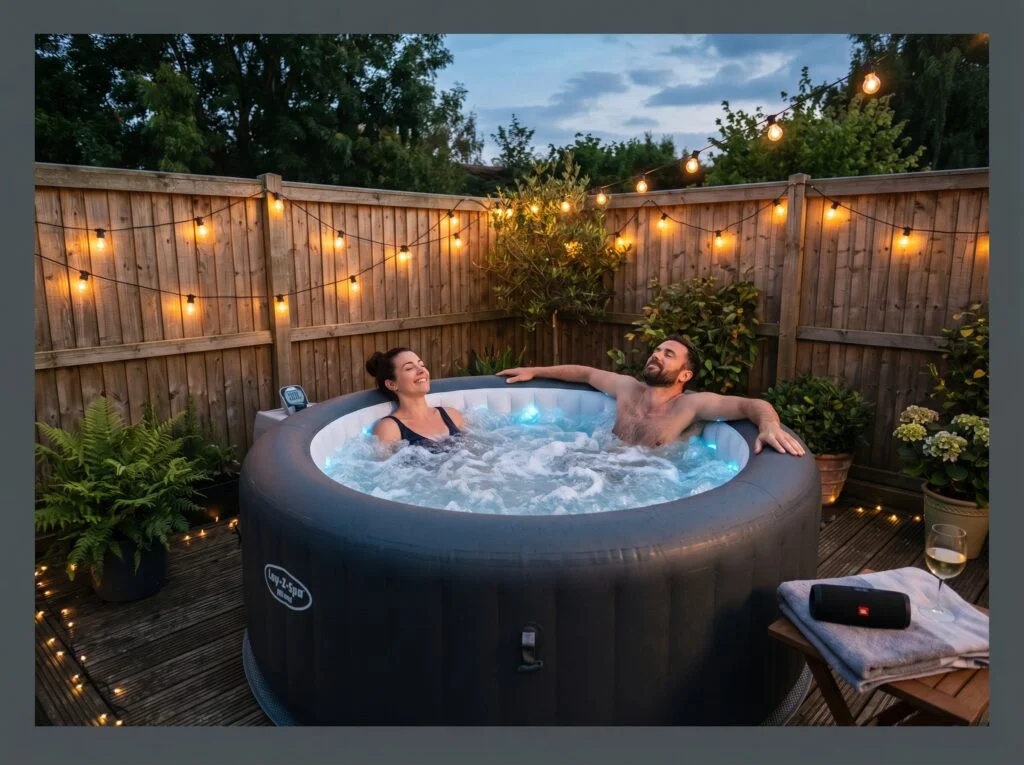
Inflatable spa hot tubs are a genuinely distinct product from standard inflatable pools they include an integrated air bubble jet system and a water heating element that can warm the water to 104°F, delivering a genuine hot tub experience at $300 to $600 rather than $5,000 to $15,000.
The heating system requires an electrical connection and runs on standard 120-volt household current plug into an outdoor GFCI outlet, not an extension cord. Heating a typical 210-gallon inflatable spa from ambient temperature to 100°F takes 10 to 24 hours depending on starting water temperature and ambient air temperature plan ahead rather than expecting to heat on demand.
Kiddie Pool with Splash Pad Mat Combo
A kiddie pool with a splash pad mat combo creates a safe and enjoyable water play area for young children. The combination of shallow water and gentle spray features encourages active and refreshing play. This setup is perfect for keeping toddlers entertained during warm weather.
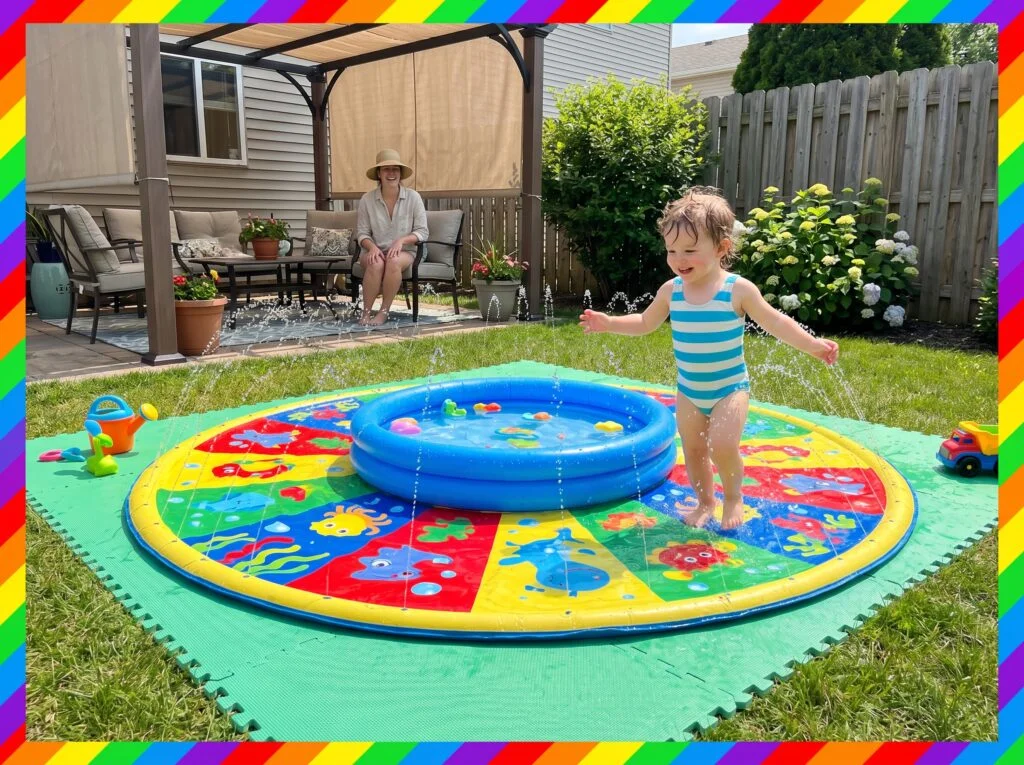
Combining a small kiddie inflatable pool with a surrounding splash pad mat creates the most complete water play zone for toddlers and preschoolers it gives children who aren’t comfortable in even shallow pool water a wet play area at the mat’s misting level, while the pool in the center provides a deeper splash option for children ready for it.
Place interlocking foam tiles or a thick rubber outdoor play mat underneath the splash pad before water connects wet vinyl on grass or concrete becomes dangerously slippery the moment children start running across it, and non-slip padding underneath eliminates this hazard.
Rectangular Pool with Volleyball Net
A rectangular pool with a volleyball net adds a fun and competitive element to outdoor gatherings. The spacious design allows family and friends to enjoy interactive games and physical activity. This setup creates an energetic and social atmosphere during summer events.
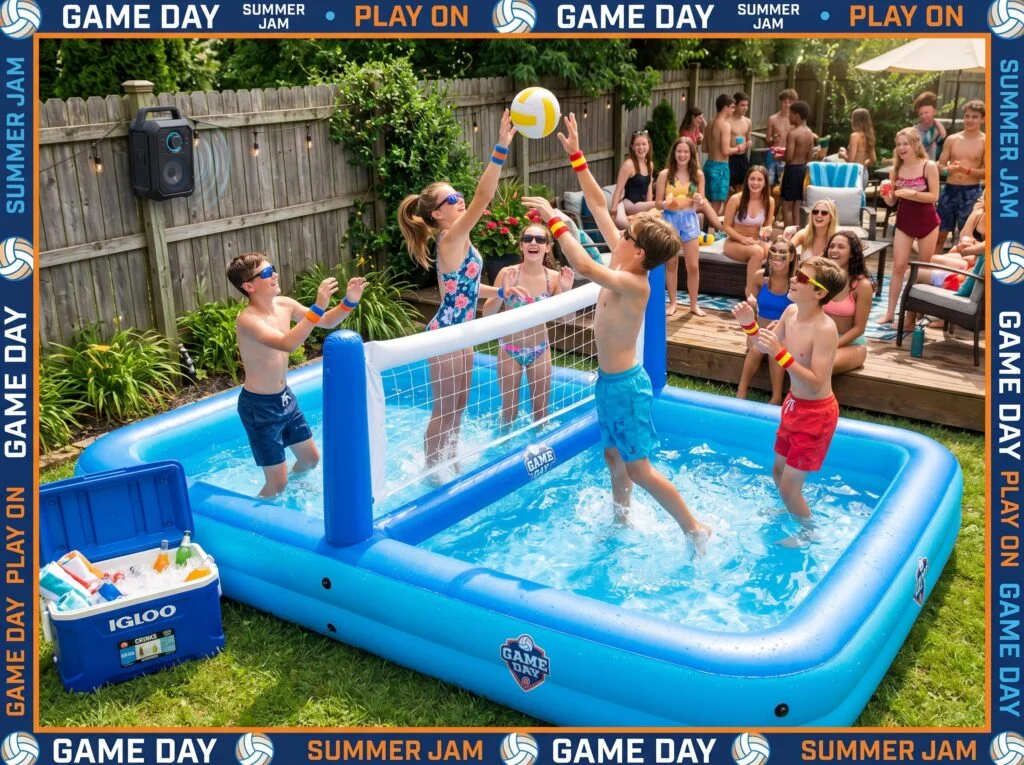
A large rectangular inflatable pool with a volleyball net stretched across the center is the perfect party pool setup for teenagers and young adults it transforms passive lounging into active competition and gives groups a reason to stay engaged and enthusiastic in the water for hours.
The best pool size for a volleyball setup is at least 13 feet in length shorter pools constrict the play area enough that every rally ends immediately against the pool wall. Ensure the pool inflation is firm and even before starting play active jumping, lunging, and weight shifting during the game stresses the pool wall structure more than passive lounging, and a partially deflated pool wall collapses under lateral impact load.
Natural Wood Deck Frame Around an Inflatable Pool
A natural wood deck frame around an inflatable pool enhances both appearance and functionality. The surrounding deck creates a built-in look while providing convenient space for seating and relaxation. This design transforms a simple pool into an elegant backyard feature.
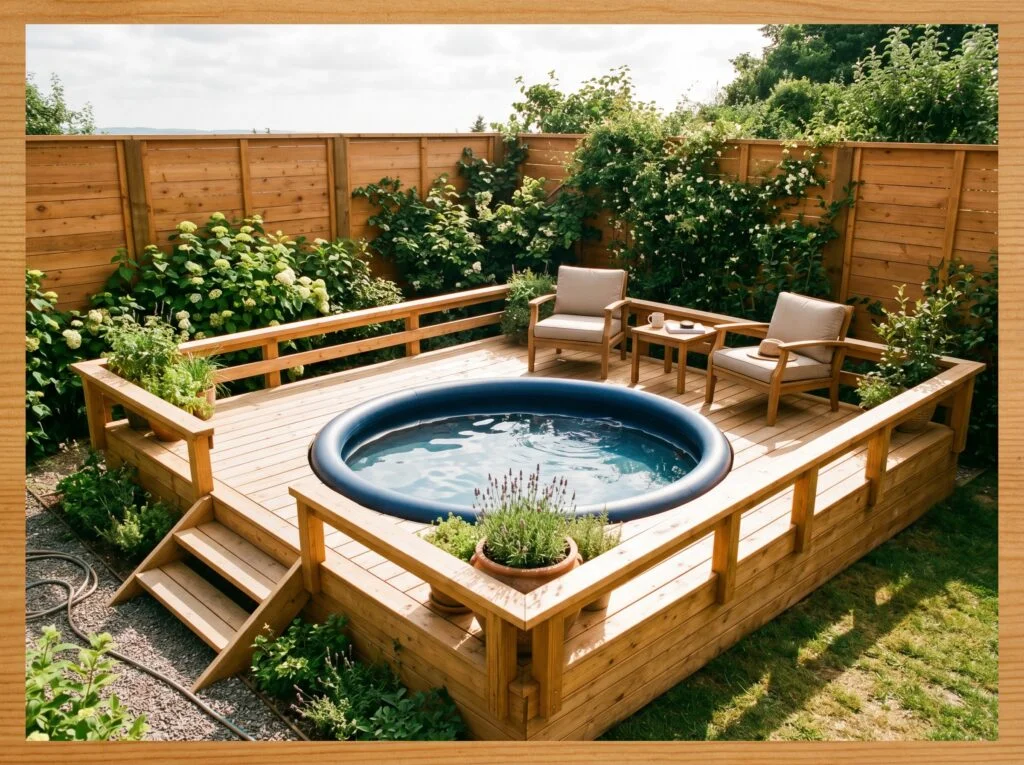
Building a simple square wood deck frame around a large round inflatable pool is one of the most creative DIY projects in the backyard inflatable pool world it transforms the pool from a temporary plastic circle on the lawn into a permanent-looking pool and deck installation.
Build the frame from pressure-treated pine or cedar for moisture resistance the deck boards will be constantly wet from splash and foot traffic. Use deck screws and joist hangers for all connections to ensure the frame is structurally solid enough to bear the weight of people sitting on its edges.
Inflatable Pool with DIY Poolside Bar
An inflatable pool with a DIY poolside bar creates a resort-inspired setting for entertaining and relaxation. The nearby bar area offers a convenient space for drinks, snacks, and social gatherings. This setup adds a fun and luxurious touch to outdoor summer living.
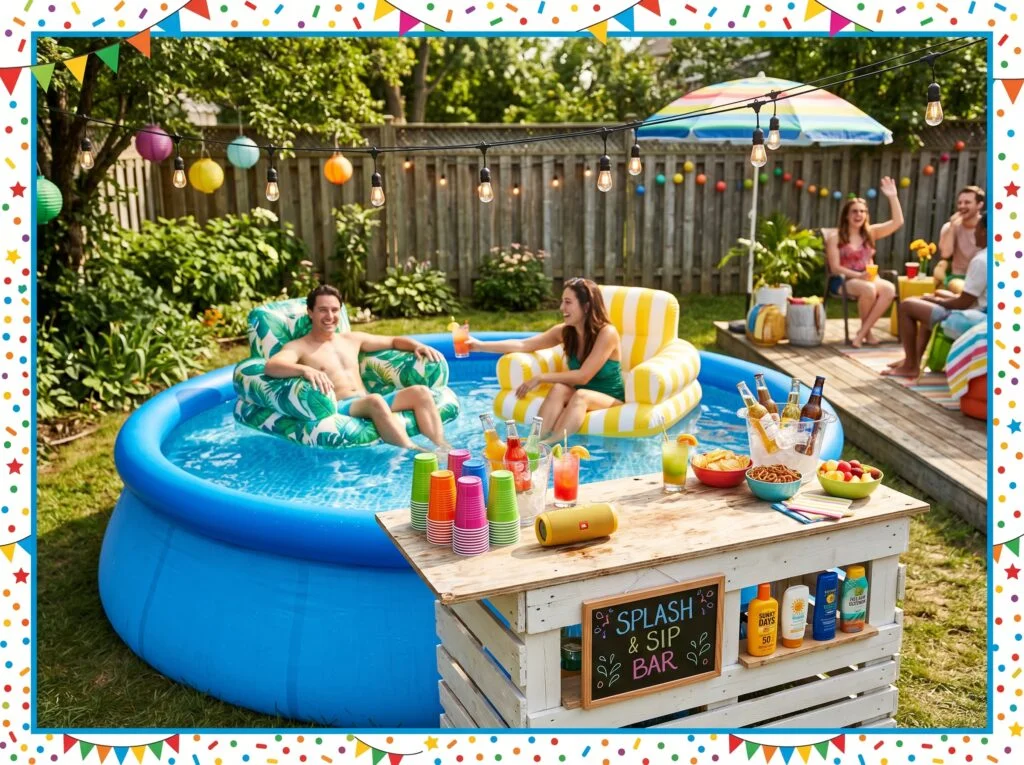
A DIY poolside bar positioned at the pool wall rim height is the creative addition that makes an inflatable pool setup genuinely social and adult-entertaining. The concept is simple: build or repurpose a surface at the same height as the pool wall so drinks, snacks, and pool accessories are reachable from inside the water without having to exit the pool.
Stock the poolside bar with practical pool-session necessities: waterproof sunscreen, pool toys and small inflatable games, a portable Bluetooth speaker (keep it elevated from any splash-level surface), snacks in a waterproof container, and a cooler with drinks directly accessible.
If entertaining is the goal, a bar setup built for hosting can take the poolside experience even further.
Pool Surrounded by Tropical Container Plants
A pool surrounded by tropical container plants creates a lush and vacation-like atmosphere in the backyard. Palms, ferns, and colorful foliage soften the pool area and add natural beauty. This arrangement transforms outdoor spaces into a relaxing tropical retreat.
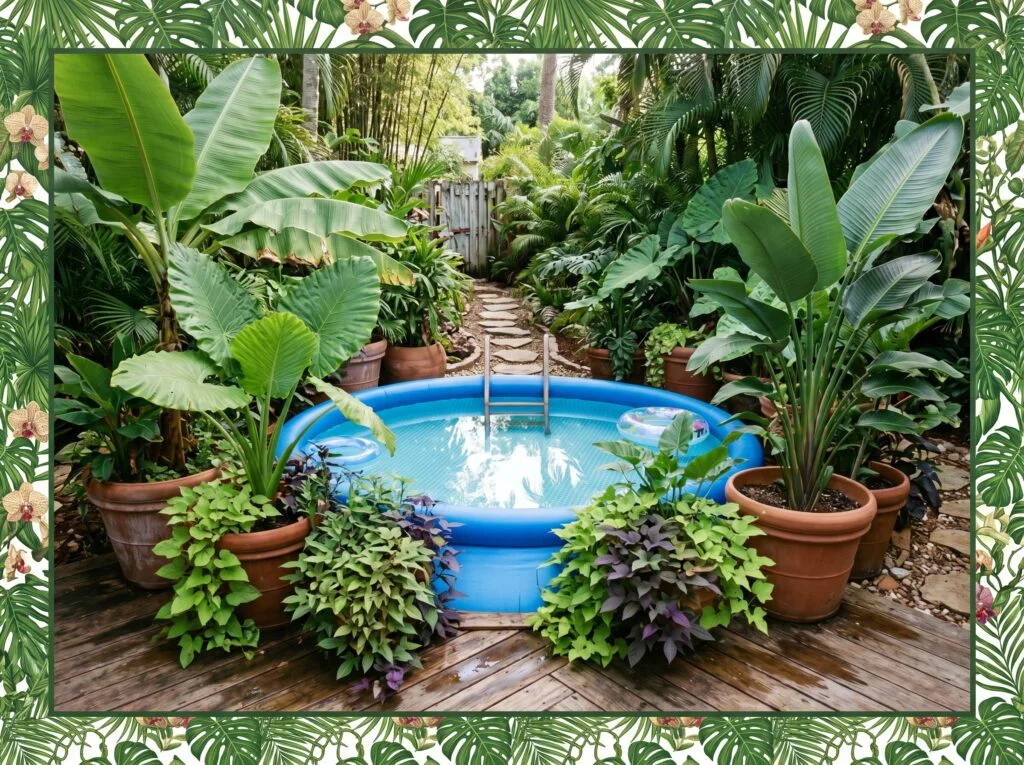
Surrounding an inflatable pool with large tropical container plants creates an immersive living environment that makes the pool feel like a hidden garden feature rather than a backyard installation. The principle is simple: use large pots with large-leaved tropical plants at varying heights to create a loose enclosure of green foliage around the pool perimeter.
Choose containers large enough to support rapid summer growth plants that will reach 4 to 6 feet by mid-summer need at least a 15 to 20-gallon pot to avoid becoming root-bound and stress-stunted.
Glow-in-the-Dark Night Pool Experience
A glow-in-the-dark night pool experience adds a magical and playful ambiance to evening gatherings. Floating lights and illuminated accessories create a visually stunning atmosphere after sunset. This setup enhances nighttime entertainment and creates memorable outdoor experiences.
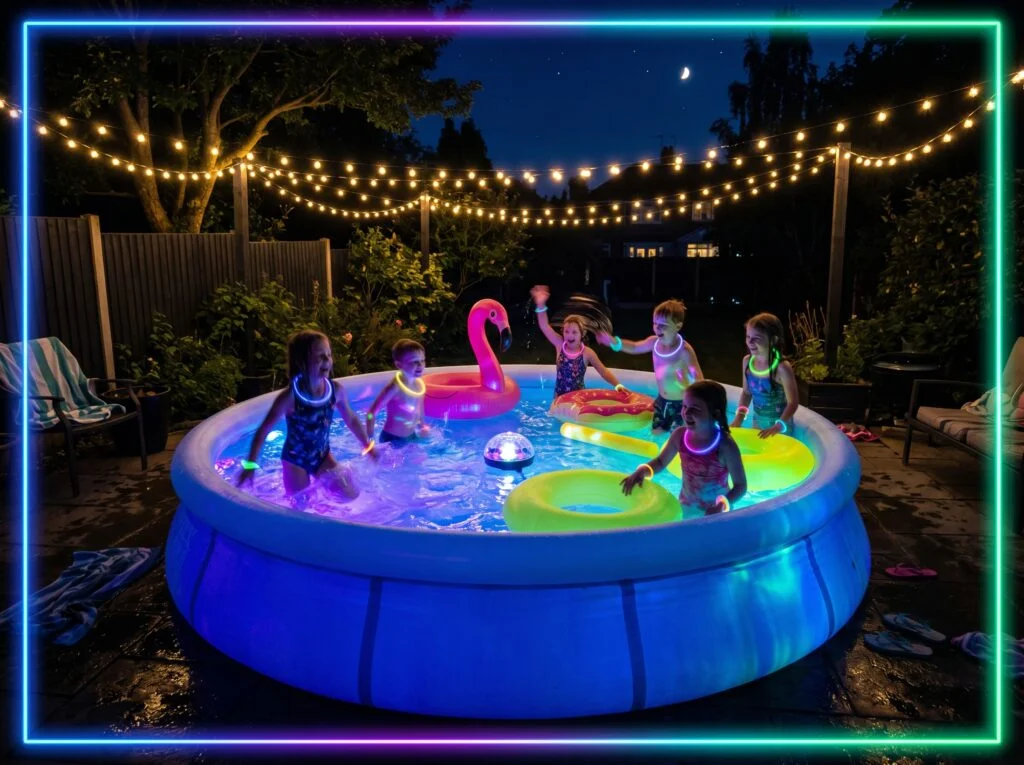
A glow pool night experience is one of the most memorable backyard inflatable pool setups you can create it costs almost nothing beyond the pool itself and creates a genuinely magical visual effect that children and adults both genuinely love.
Add glow stick bracelets, necklaces, and pool rings for swimmers to wear in the water they glow independently of the LED lights and add an interactive, personal glow element to the night swim experience. Keep the surrounding yard lights off to maximize the contrast between the glowing pool and the dark environment this contrast is what makes the effect truly dramatic rather than simply pretty.
Pool with Floating Movie Night Projection Setup
A pool with a floating movie night projection setup combines relaxation and entertainment in a unique way. Comfortable floats and an outdoor screen create a cozy cinema experience under the stars. This creative arrangement is perfect for family nights and social events.
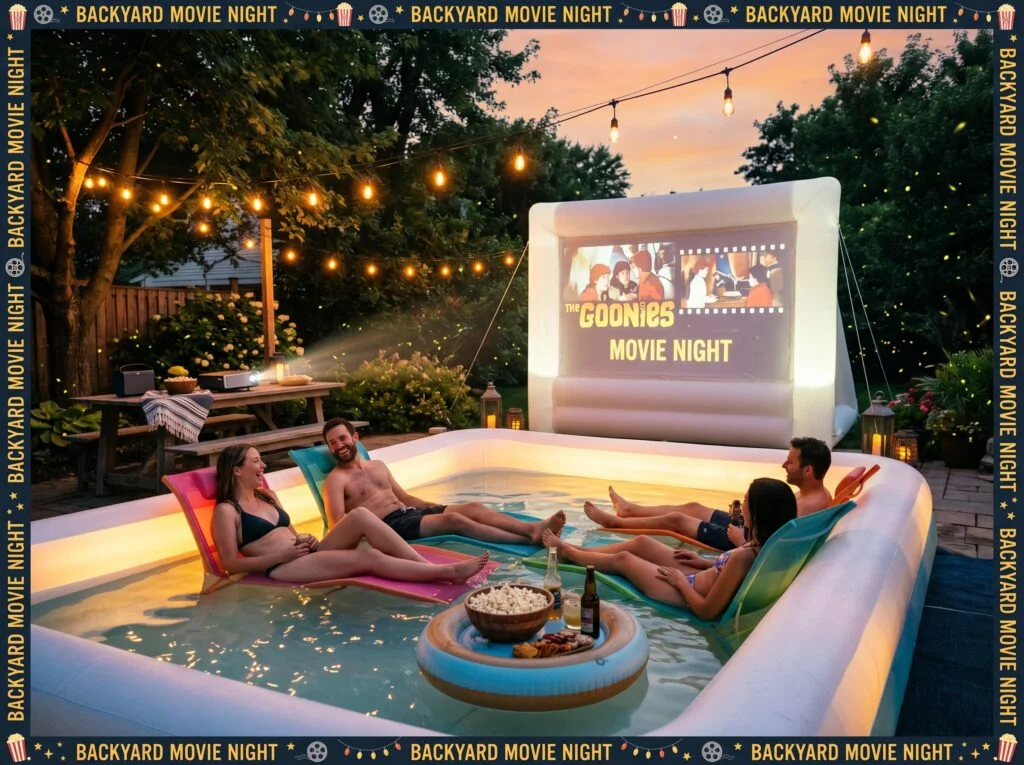
A floating movie night in an inflatable pool is one of the most creative and genuinely impressive summer entertaining ideas available it requires only a projector, an inflatable screen, a large rectangular pool, and comfortable floating loungers.
Choose a pool at least 12 feet in length to allow enough floating distance between the screen and the audience for comfortable viewing angle. Use a projector with at least 4,000 lumens output evening ambient light, even after dusk, significantly reduces image visibility with lower-output projectors.
Pool with Sun Sail Shade System
A pool with a sun sail shade system provides stylish protection from direct sunlight during hot days. The fabric sails create attractive architectural lines while improving comfort around the pool area. This practical feature enhances usability and adds a modern touch to outdoor spaces.
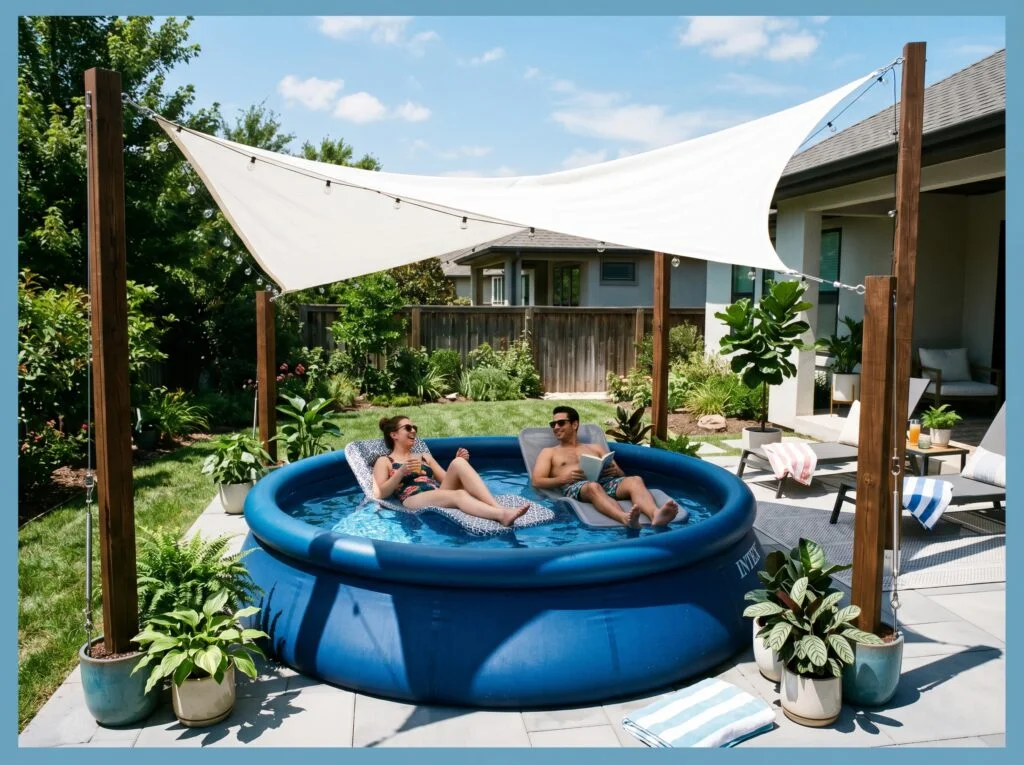
A sun sail shade system over an inflatable pool solves the most underestimated problem with any outdoor pool sustained UV exposure. Extended pool sessions in direct summer sun cause sunburn, heat exhaustion, and accelerated material degradation of the pool vinyl itself.
Install shade sail posts in concrete footings at least 18 inches deep for stability under wind loading a large shade sail on a windy day generates significant lateral force that will pull lightweight posts out of soft ground without proper anchoring.
Flower Crown Floats and Stylized Girls’ Pool Party
A flower crown floats and stylized girls’ pool party creates a fun, colorful, and Instagram-worthy summer setting. Floral inflatables, pastel décor, and themed accessories add a playful and elegant atmosphere to the celebration. This charming setup is perfect for birthdays, casual gatherings, and memorable outdoor events.
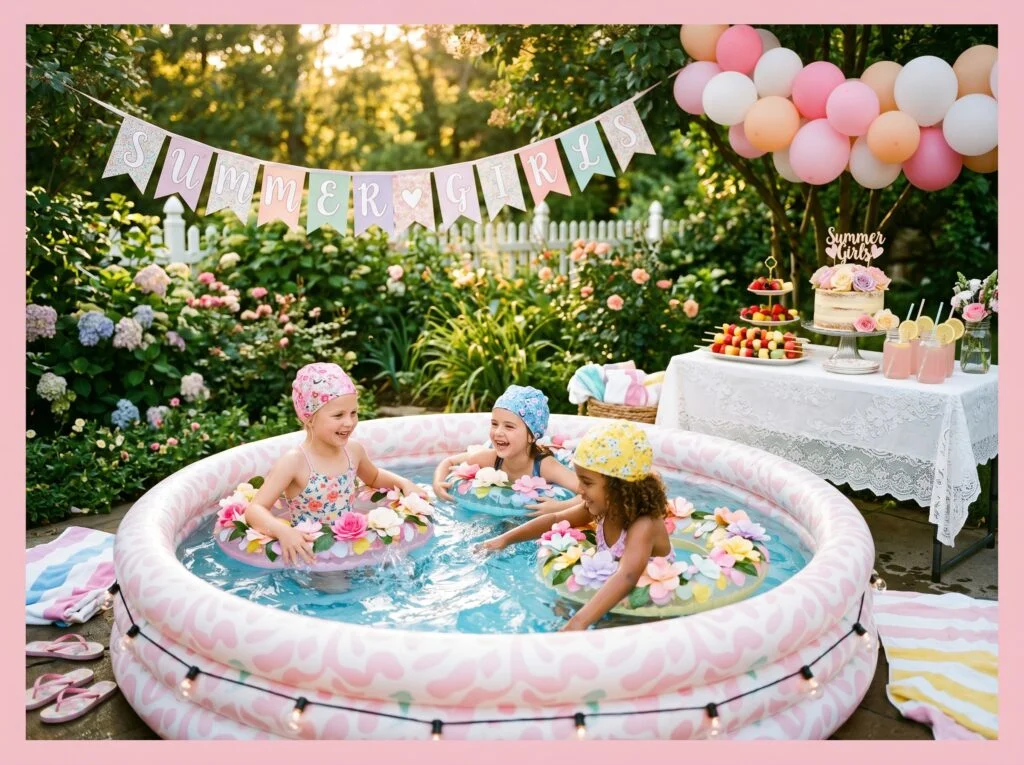
A styled girls’ pool party around an inflatable pool is the Pinterest-perfect summer celebration that requires only simple planning and deliberate accessory choices to execute beautifully. The pool serves as the event venue a pastel pink, white, or lavender inflatable model sets the color palette.
Styling the inflatable pool area for a party is primarily a question of deliberate color coordination choose two or three colors and apply them consistently across the pool, the floats, the table decor, and the accessories. Pastel pink and white with greenery accents is the most popular current palette for a girls’ summer party.
Dog-Friendly Shallow Splash Pool
A dog-friendly shallow splash pool provides a refreshing and safe space for pets to cool off during hot weather. The shallow water depth allows dogs to play comfortably while minimizing safety concerns. This setup creates an enjoyable outdoor environment for both pets and their owners.
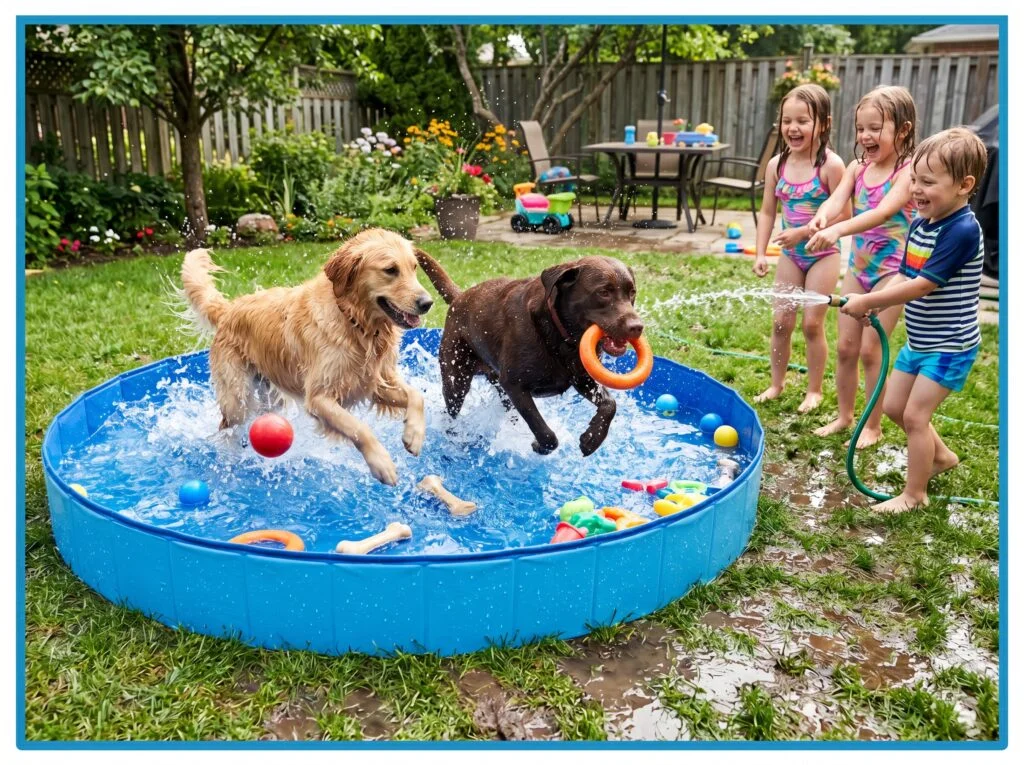
A dedicated inflatable pool for dogs is one of the most useful and entertaining backyard setups for dog owners during summer heat and it’s important to use a separate pool from the family swimming pool rather than sharing.
Choose a rigid inflatable model with reinforced walls standard thin-walled vinyl pool sides are no match for enthusiastic dogs who scratch and dig at the pool entry points. Reinforced PVC or the low-profile hard plastic wading pool style (which is technically not inflatable but often grouped with inflatable pool accessories) holds up to dog nails significantly better.
Inflatable Pool on a Balcony or Small Space
An inflatable pool on a balcony or in a small space offers a practical way to enjoy summer relaxation in limited areas. Compact designs make it possible to create a refreshing retreat even in urban environments. This solution transforms small outdoor spaces into comfortable and enjoyable mini escapes.
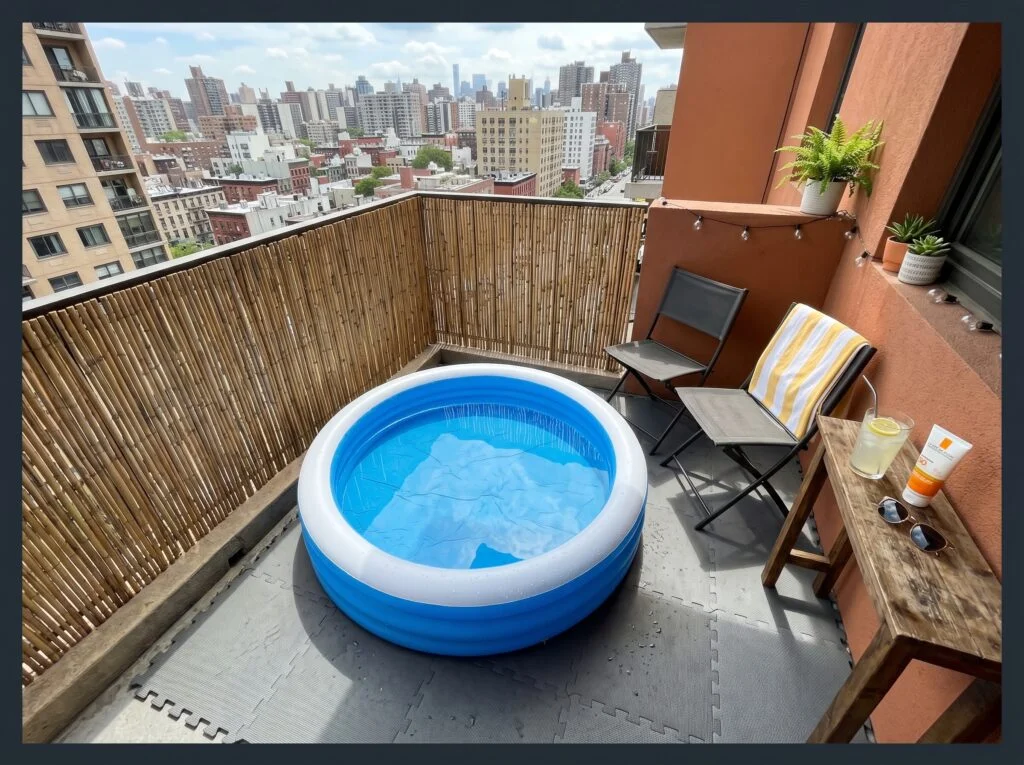
An inflatable pool on a balcony or small urban outdoor space is completely achievable with careful sizing and structural planning and it delivers city apartment dwellers the summer water experience that no other urban setup can replicate.
For a balcony pool installation, contact the building’s structural engineer or management company to verify load capacity before filling. Many urban balcony pool enthusiasts successfully use very shallow pools 12 inches deep rather than 24 inches which reduces the water weight to approximately 50 to 60 percent of a full-depth fill while still providing a refreshing soak in hot weather.
Inflatable Pool Storage and Off-Season Care Guide
Proper inflatable pool storage and off-season care help extend the life and performance of the pool. Cleaning, thoroughly drying, and storing the pool in a cool, dry location prevent mold and material damage. Routine maintenance ensures that the pool remains in excellent condition for future use.
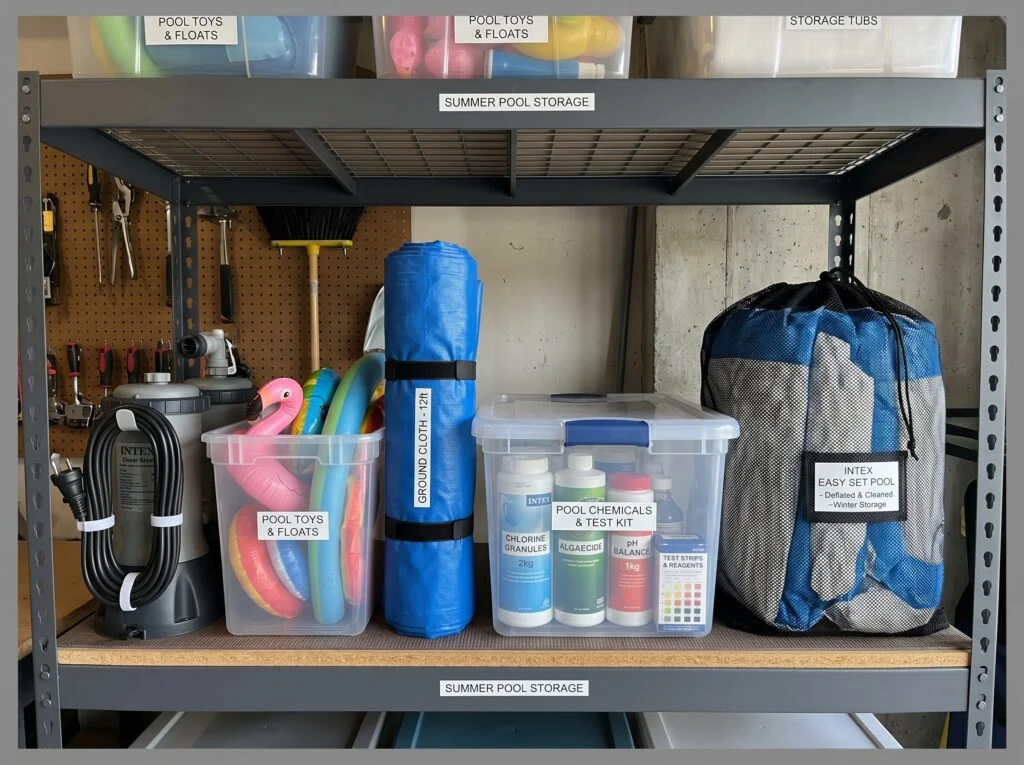
Proper end-of-season storage is the step that determines whether your inflatable pool lasts one summer or five and most people skip it completely, leading to cracked vinyl, mildew, and a pool that’s trash-worthy by the following June. The correct storage sequence matters significantly. Drain the pool completely.
Once completely dry, fold the pool gently rather than crumpling it creasing vinyl in the same fold lines repeatedly creates stress cracks over multiple storage cycles. Store in a breathable mesh bag rather than an airtight plastic bag, which traps any residual moisture. Store in a temperature-stable location extreme cold (below freezing) makes vinyl brittle and causes cracking; extreme heat in a sealed garage in summer accelerates vinyl degradation.
Budget Breakdown: What to Spend at Every Level
A budget breakdown helps homeowners choose a pool setup that matches their needs and financial plans. Entry-level budgets focus on simple inflatable pools and basic accessories, while mid-range options include decking, shade systems, and decorative elements. Higher budgets allow for luxury additions such as lighting, landscaping, entertainment features, and premium accessories.
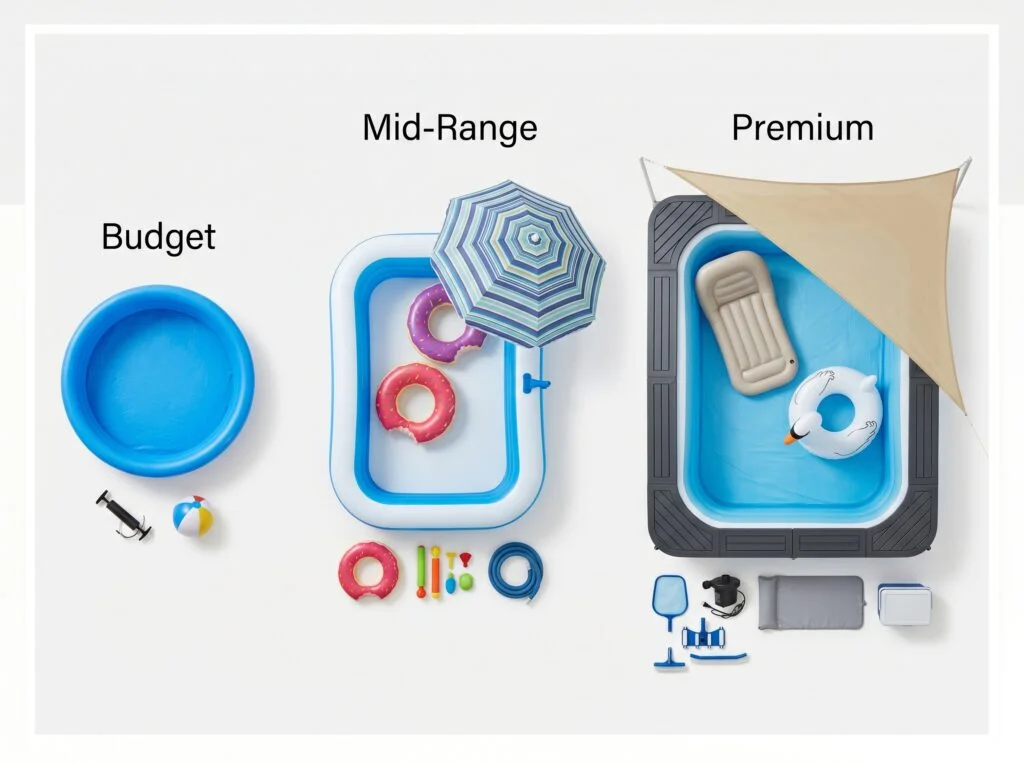
Most backyard inflatable pool articles show beautiful setups without addressing what things actually cost and that disconnect between inspiration and reality leaves people either overspending on things they don’t need or underspending on the quality components that determine long-term satisfaction.
A mid-range setup ($250 to $500 total) adds a quality pump with filter for cleaner water, a shade umbrella or small sun sail, two to four quality pool floats, an outdoor mat at the entry point, and a few decorative planters with seasonal plants. This level delivers a genuinely attractive and comfortable pool experience that photographs well and gets used consistently.
Conclusion
An inflatable pool is genuinely one of the highest-value summer purchases available at any budget level. The gap between a basic plastic pool and a beautifully styled inflatable pool setup is almost entirely creative the pool itself is affordable; it’s the preparation, the styling choices, the accessories, and the surrounding landscaping that transforms a summer toy into a summer destination.
Start with the setup that fits your budget and your backyard reality. Prepare the ground correctly before filling. Add one or two styling elements that make the space feel intentional a shade structure, a few container plants, or string lights overhead. Maintain the water properly so the pool stays inviting all season.
Do those things and your backyard inflatable pool will be the most-used feature in your outdoor space from the first hot day of June to the last warm evening of September.
From there, a backyard styled for the whole season keeps the fun going well beyond just pool days.