A simple bench can turn your front porch from a walk-through space into a place you actually want to linger. These 21 front porch bench ideas blend cozy charm with practical seating from rustic wood styles to classic painted finishes that welcome guests in style. Let’s explore these front porch bench ideas for the coziest entryways yet!
If you’re weighing more than just a bench, other cozy seating setups to browse might round out the space nicely.
Classic White Slatted Wood Bench
A classic white slatted wood bench adds timeless style and practical seating to the entryway. The clean white finish creates a bright and welcoming feel, while the slatted design adds texture and allows for a light, airy appearance. It pairs beautifully with farmhouse, coastal, and traditional interiors.
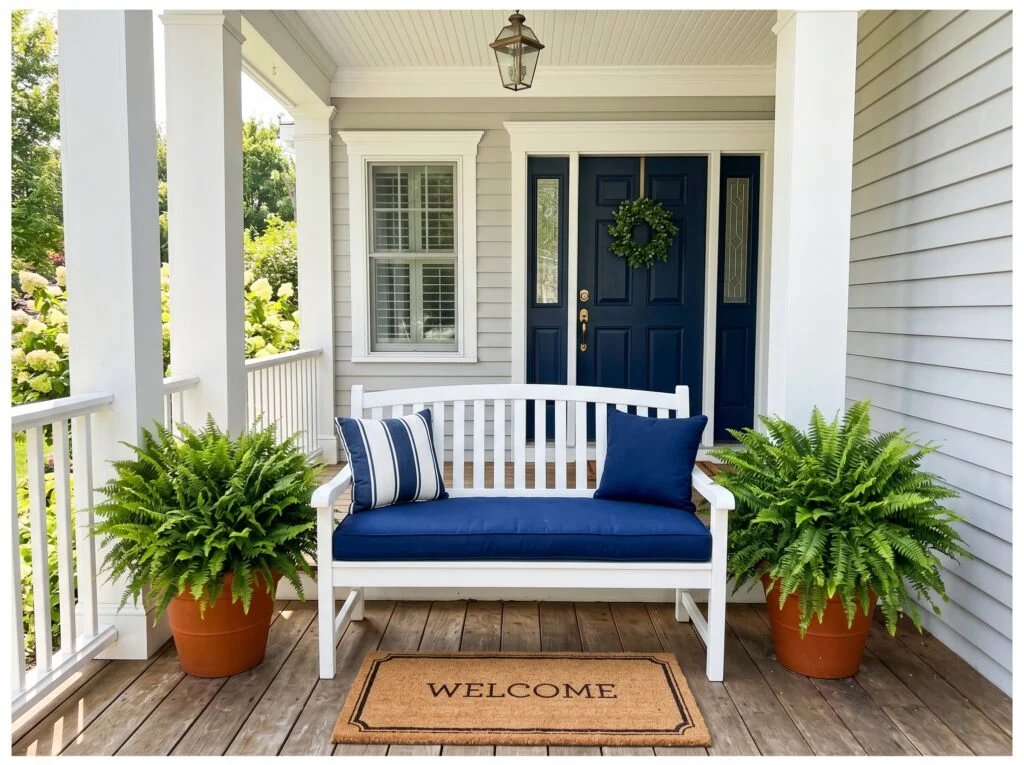
A classic white slatted wood bench is the most universally appealing front porch bench choice because it works with virtually every home style and color palette. The clean white paint brightens a shaded porch, creates a sharp contrast against dark exterior paint, and complements red brick, gray stone, cedar shakes, and white clapboard siding with equal ease. The slatted design allows rainwater to drain off the seat naturally rather than pooling a genuinely practical feature for a piece that lives outdoors year-round. It’s a simple, honest design that never goes out of style.
Pine, cedar, and pressure-treated lumber are the most common wood choices for painted porch benches. Cedar is the best of the three it’s naturally rot-resistant, holds paint well, and stays dimensionally stable through seasonal temperature changes without warping. Apply a good exterior primer before your top coat and use a 100% acrylic exterior paint for maximum weather resistance and longevity. Recoat every two to three years to keep the white crisp and the wood protected. A navy, sage green, or deep terracotta cushion adds the color and comfort that makes the bench an actual destination rather than just a decorative prop.
If you’re furnishing the whole porch, a full furniture lineup for the porch can help you plan around the bench.
Weathered Teak Bench for Natural Elegance
A weathered teak bench brings natural elegance and warmth to the entryway with its rich texture and timeless appeal. The aged wood finish adds character, while the durable teak construction ensures long-lasting beauty. This versatile piece complements both rustic and modern interiors, creating a cozy and inviting atmosphere.
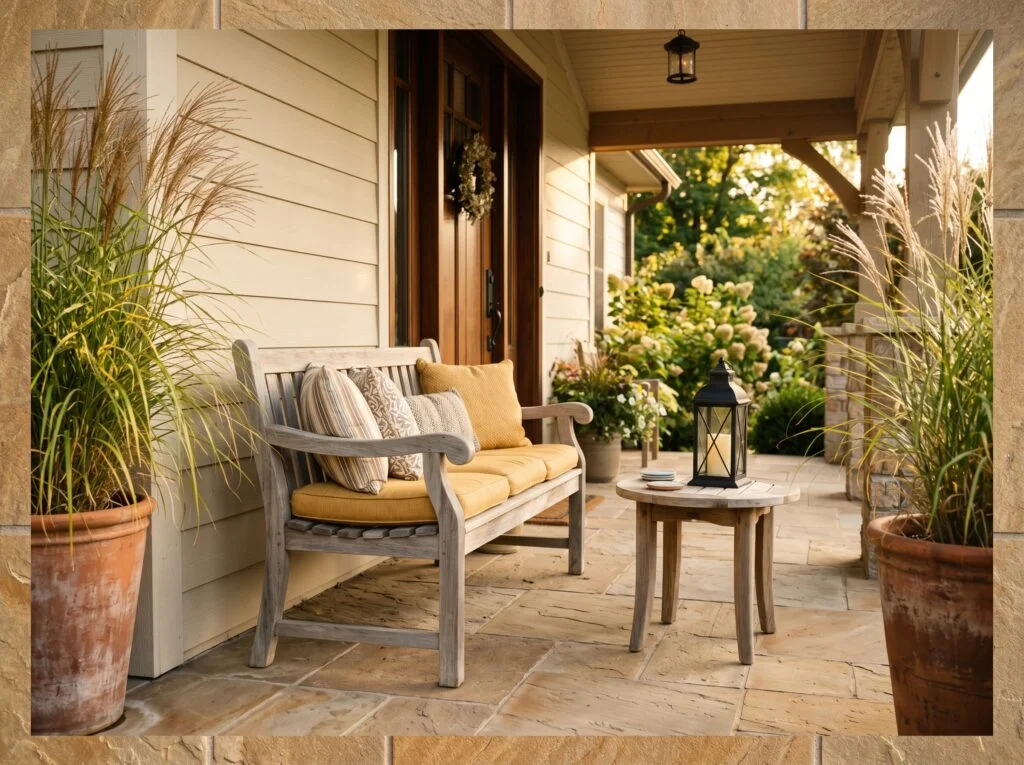
Teak is the gold standard of outdoor wood furniture and for very good reason. The wood’s naturally high oil content makes it inherently resistant to rot, moisture, insects, and UV degradation without any treatment required. Left to weather naturally outdoors, teak transitions from its original warm honey tone to a beautiful silver-gray patina over one to two seasons. That aged silver finish has become one of the most sought-after looks in outdoor furniture precisely because it looks like something carefully curated over years rather than purchased from a catalog last month.
If you prefer to maintain the original warm honey color, apply teak oil or teak sealer once a year before the outdoor season begins. Clean the bench with a soft brush and mild soap before oiling to remove any surface grayness and restore the warm brown tone. For a more relaxed maintenance approach, simply let it weather the silver patina actually requires zero upkeep and looks increasingly beautiful over time. Teak benches represent a higher upfront investment than pine or acacia, but they routinely last 25 to 50 years with basic care. On a cost-per-year basis, they’re often the most economical choice in the long run.
Farmhouse X-Frame Bench
A farmhouse X-frame bench adds rustic charm and timeless character to the entryway. The distinctive cross-frame design creates visual interest, while the sturdy construction provides practical seating for everyday use. Its warm and welcoming style pairs beautifully with farmhouse, cottage, and traditional interiors.
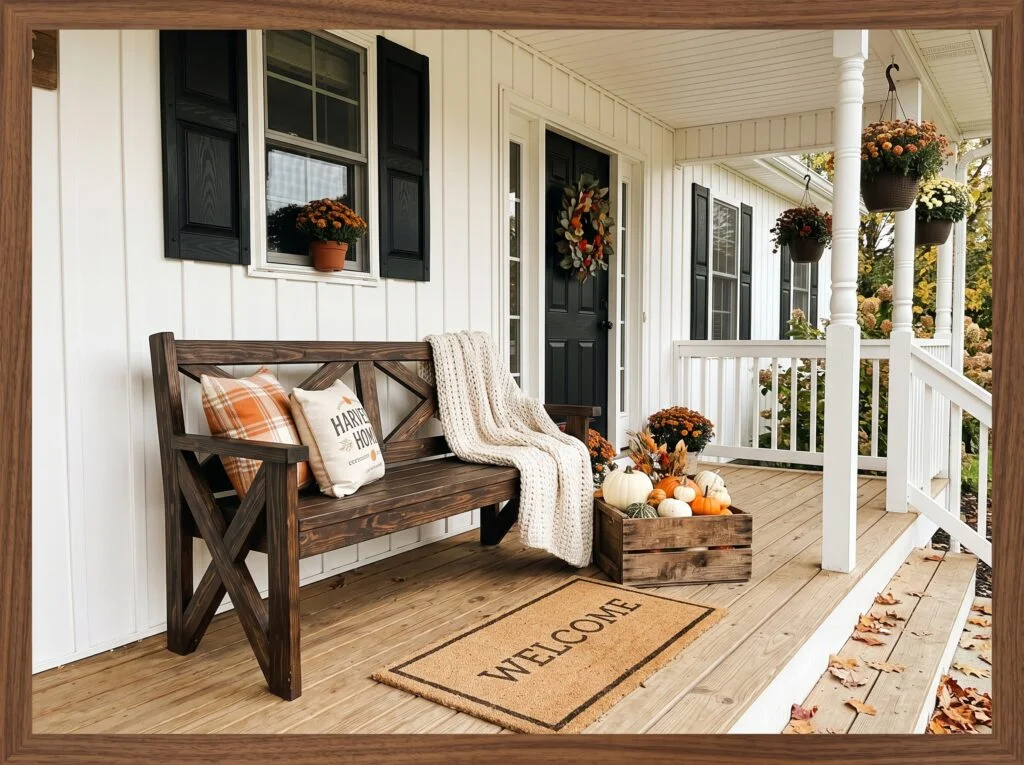
The X-frame bench is the defining piece of farmhouse porch style, and the X detail is both structural and beautiful simultaneously. The crossed legs add triangular support that makes the bench significantly more rigid than simple straight-leg construction, while the visual pattern creates the handcrafted, workshop-built quality that farmhouse design celebrates. In dark walnut stain against white or gray siding, the X-frame bench creates a striking curb appeal that photographs beautifully and looks equally good in person. It’s one of the most popular DIY porch bench builds for good reason it’s structurally logical and requires only basic carpentry skills.
For a farmhouse X-frame bench, cedar or pine are both appropriate wood choices. Cedar will hold up better to the elements without protective finish, making it the better long-term option if you prefer a natural wood look. Pine stained in dark walnut or ebony and sealed with exterior spar urethane is equally beautiful and slightly more affordable. Style the bench seasonally to maximize its farmhouse charm pumpkins and corn stalks in fall, a wreath and evergreen stems in winter, potted herbs and linen cushions in spring, sunflowers and striped cotton throw in summer. The X-frame bench’s neutral, natural aesthetic adapts to every seasonal swap effortlessly.
Modern Slatted Acacia Bench for Contemporary Homes
A modern slatted acacia bench brings warmth and sophistication to contemporary entryways. The sleek slatted design adds texture and visual interest, while the rich acacia wood provides durability and natural beauty. This stylish piece offers practical seating while complementing modern and minimalist home interiors.
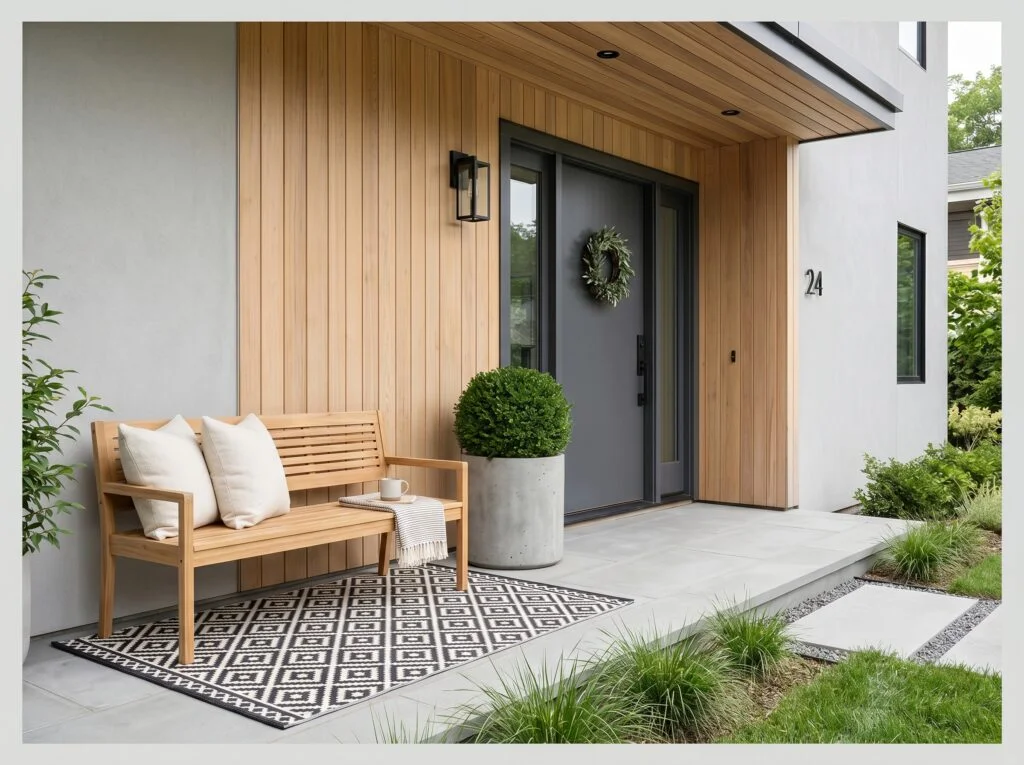
Modern farmhouse and contemporary homes need a bench that matches their clean-lined, minimal aesthetic and a slatted acacia bench in its natural finish does exactly that. The straight horizontal slats, simple rectangular frame, and absence of ornate detail create a profile that’s quiet, confident, and sophisticated without trying too hard. Natural acacia’s warm grain and subtle color variation add enough visual interest to prevent the bench from looking cold or corporate. It reads as designed rather than just functional, which is exactly the right note for a contemporary entryway.
Acacia is a dense hardwood that performs reasonably well outdoors, but it benefits more from regular maintenance than teak or cedar. Apply a penetrating exterior wood oil every season to prevent drying, cracking, and color loss. Avoid positioning an acacia bench in a spot that receives full direct sun and direct rain simultaneously the combination of intense UV and repeated wetting and drying cycles will accelerate aging and checking (surface cracking) faster than a covered porch position. Under a porch overhang, acacia can look excellent for five to ten years with regular oiling. Pair with concrete planters and geometric accents for the most cohesive modern porch composition.
Built-In Bench with Storage Underneath
A built-in bench with storage underneath combines comfort and functionality in one smart design. The hidden storage space is perfect for keeping shoes, baskets, and everyday essentials neatly organized and out of sight. This practical feature also creates a clean, customized look that works well in both small and spacious entryways.
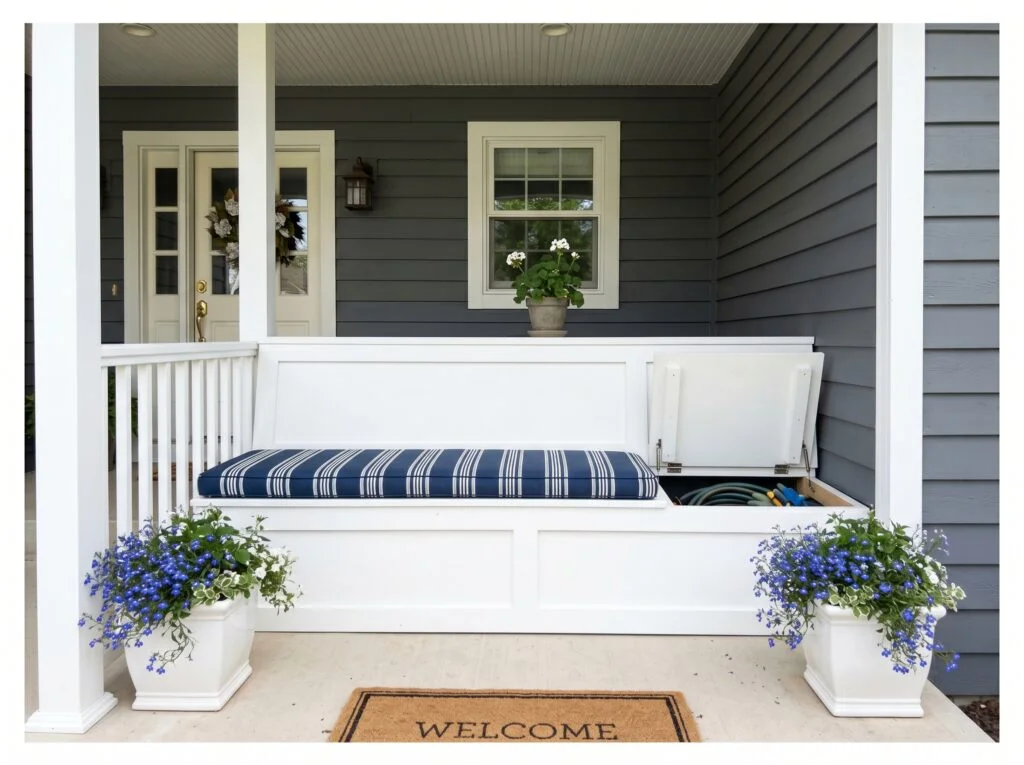
A built-in bench with hidden storage underneath is one of the most practical front porch upgrades you can make and it’s the idea most porch bench articles completely skip. The storage compartment inside a lift-top built-in bench is the perfect home for outdoor cushions, small gardening tools, sports equipment, outdoor toys, and seasonal decorations. Everything lives right on the porch where it’s needed, out of sight, weatherproofed under the bench lid. No more dragging cushions in and out of the house. No more shed trips for gardening gloves. It eliminates the porch clutter problem at its source.
Build the bench box from pressure-treated lumber for maximum moisture resistance, then finish with an exterior primer and paint that matches the house trim. A piano hinge along the back edge of the lid allows smooth, full opening. Add a simple rope or leather pull on the front face for easy one-handed opening. Use a lid support hardware piece so the lid stays open safely while you retrieve items without it, the lid will slam on fingers. Line the interior with a coat of exterior paint or a simple waterproof liner to protect stored items from any moisture that enters. A 48 to 60-inch built-in bench holds an impressive volume of seasonal accessories and dramatically reduces porch clutter.
Hanging Porch Swing Bench
A hanging porch swing bench creates a relaxing and inviting outdoor space with its charming and timeless appeal. It provides a comfortable spot to unwind while adding movement and character to the porch. This stylish seating option pairs beautifully with farmhouse, coastal, and cottage-style homes.
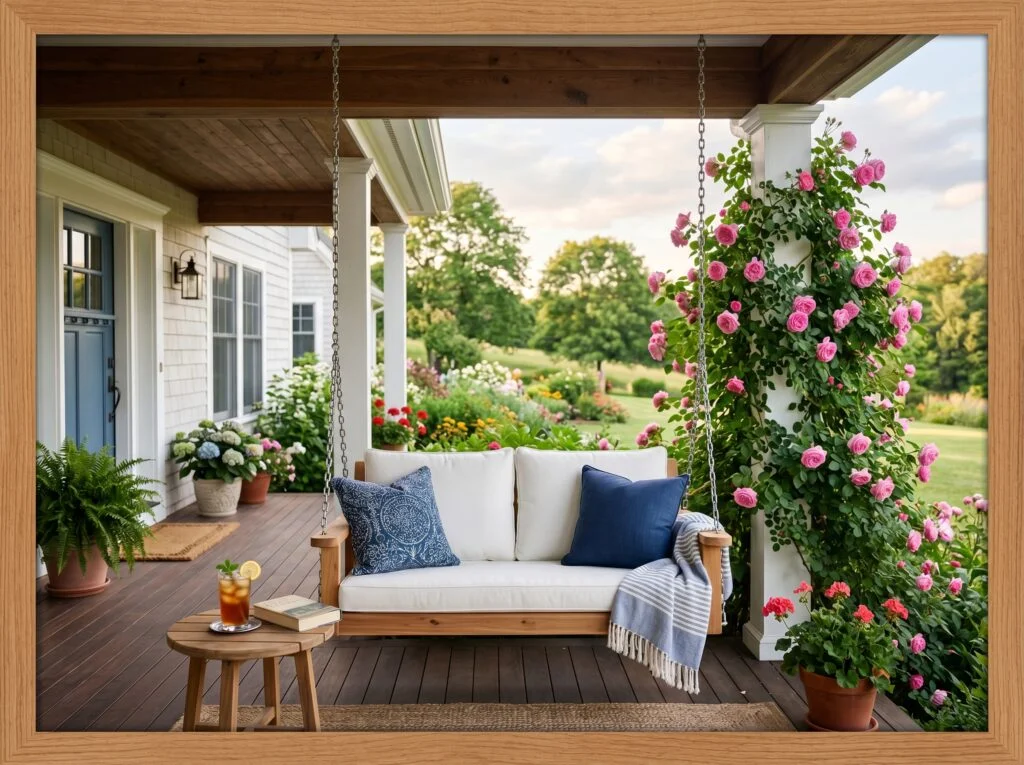
A hanging porch swing bench is the front porch upgrade with the highest ratio of impact to investment. For curb appeal, a swing bench makes a statement that says the people who live here actually use and enjoy their porch rather than simply staging it. It’s the single most Pinterest-searched front porch element for good reason it’s genuinely aspirational.
Before installing a hanging swing bench, you must verify that your porch ceiling beams or joists can support the load. A swing loaded with two adults exerts dynamic (moving) forces significantly greater than the simple static weight you need solid wood beams of at least 2×8 inches and hardware rated for at least 500 to 800 pounds. Use heavy-duty eye bolts driven into solid wood (not just ceiling drywall) and rated stainless steel chains or heavy-duty rope rated well above the expected load. Hang the swing so the seat is 17 to 19 inches above the floor, and position it at least 3 feet from walls and columns to allow safe swinging motion in both directions.
For more inspiration on this style, it helps to see other swings that add gentle motion to a porch.
Cast Iron Victorian Bench for Traditional Homes
A cast iron Victorian bench adds elegance and classic charm to traditional homes. The ornate detailing and decorative patterns create a timeless look, while the sturdy cast iron construction ensures durability. This beautiful bench serves as both a functional seating area and a striking decorative feature for porches, gardens, or entryways.
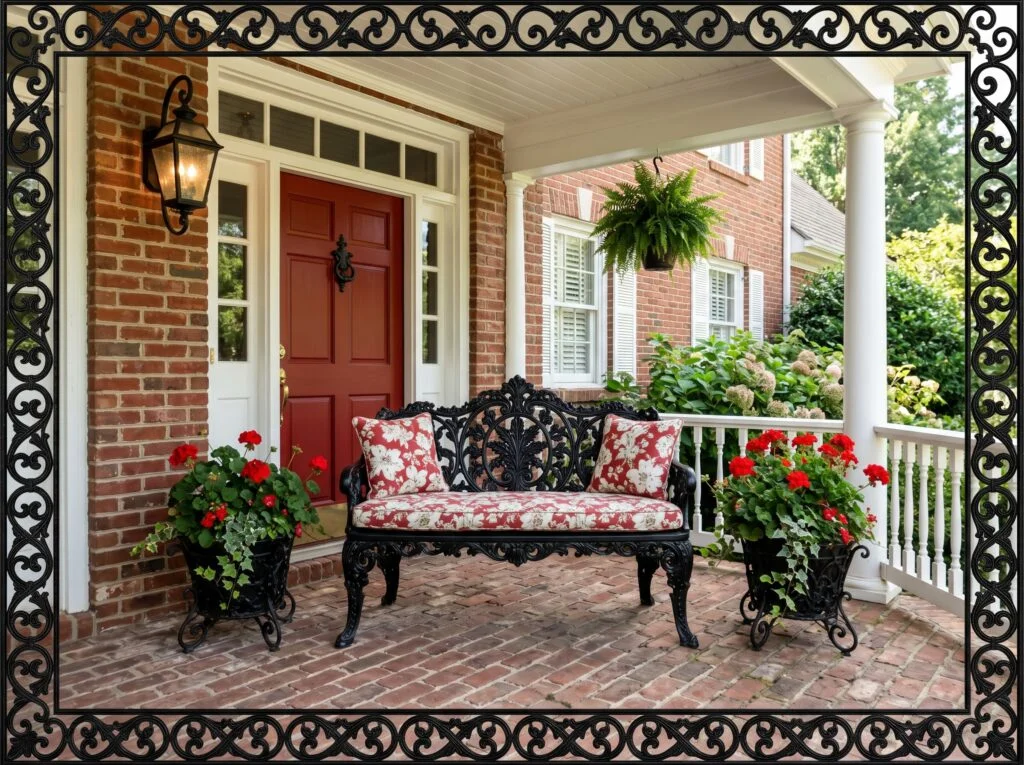
Cast iron benches carry a weight and permanence that no other porch bench material can replicate. In the context of a traditional, colonial, Victorian, or craftsman-style home, an ornate cast iron bench with scrollwork details and a classical profile looks absolutely right like it has been there for generations and belongs to the architecture of the house rather than having been added as an afterthought. The weight (cast iron benches typically weigh 60 to 120 pounds) also means they stay exactly where you put them regardless of wind or weather, which is a genuine practical advantage on exposed porches.
The maintenance requirement for cast iron is its one real drawback iron will rust if the paint or coating is damaged and moisture reaches the bare metal. Inspect the bench annually for any chips or scratches in the paint and touch up immediately with a rust-inhibiting metal primer followed by an exterior metal paint in flat or satin black. In humid coastal climates, rust can spread faster than expected a full repaint every three to four years keeps the bench looking sharp and the iron protected. Avoid wrought iron (which is lighter and more decorative) for fully exposed, unprotected porches cast iron’s greater density handles outdoor exposure significantly better over the long term.
HDPE Poly Lumber Bench Best for Low Maintenance
An HDPE poly lumber bench is an excellent choice for homeowners looking for a low-maintenance seating option. It is highly durable, weather-resistant, and does not require regular painting or sealing like natural wood. Its clean appearance and long-lasting performance make it ideal for porches, patios, and outdoor entry spaces.
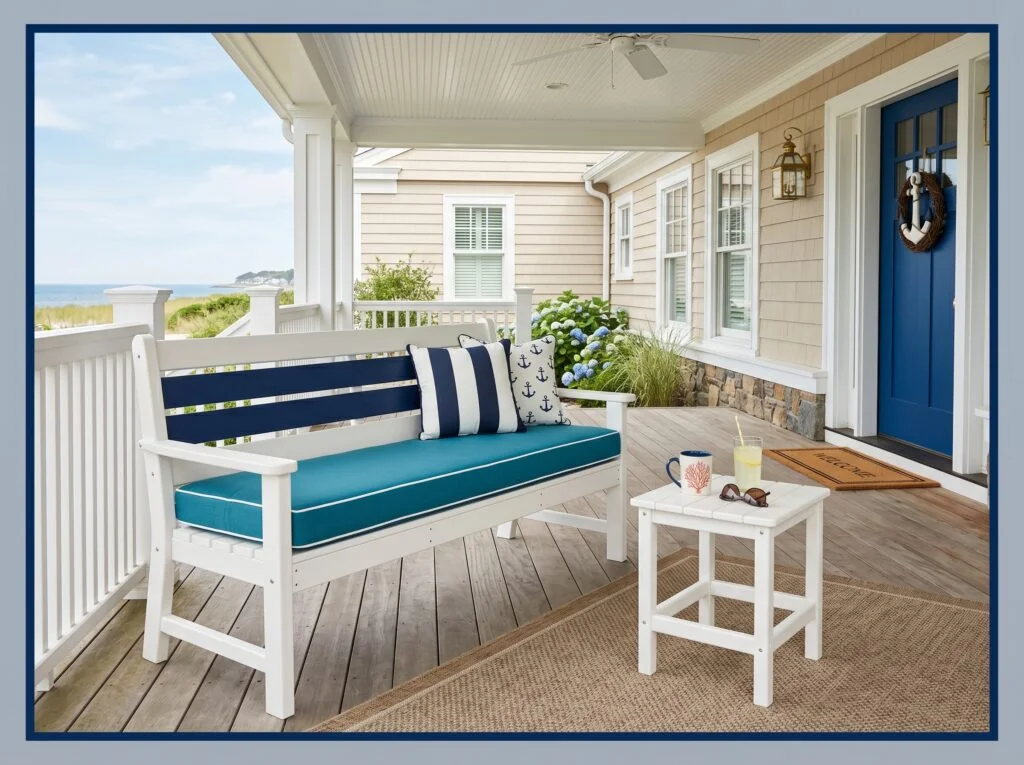
High-density polyethylene (HDPE) poly lumber is the material most porch bench articles never mention and it’s arguably the best outdoor bench material available for homeowners who want zero maintenance and maximum durability. Made from recycled plastic bottles and other HDPE material, poly lumber looks convincingly like painted wood from any normal viewing distance. It’s completely impervious to moisture, rot, insects, salt air, UV fading, and the freeze-thaw cycling that cracks and splits real wood over time. It requires no sealing, no painting, no oiling ever. Hose it off when dirty and it looks new.
Poly lumber is the correct material choice for waterfront properties, coastal homes in salt air, and any exposed porch in a high-rainfall climate where real wood maintenance is genuinely challenging. It’s also the right choice for anyone who simply doesn’t want the seasonal maintenance routine that wood furniture requires. The color is molded through the entire material rather than applied as a surface coat, which means scratches don’t show through to a different color underneath. It’s significantly heavier than wood a typical 5-foot poly lumber bench weighs 45 to 65 pounds which actually helps on exposed porches where lighter furniture can be lifted and blown by strong winds.
Painted Bench as a Color Statement
A painted bench can instantly become a bold color statement in the entryway or outdoor space. Vibrant or contrasting colors add personality and visual interest, helping the bench stand out as a decorative focal point. This simple design choice also brings warmth, charm, and a customized touch to the overall space.
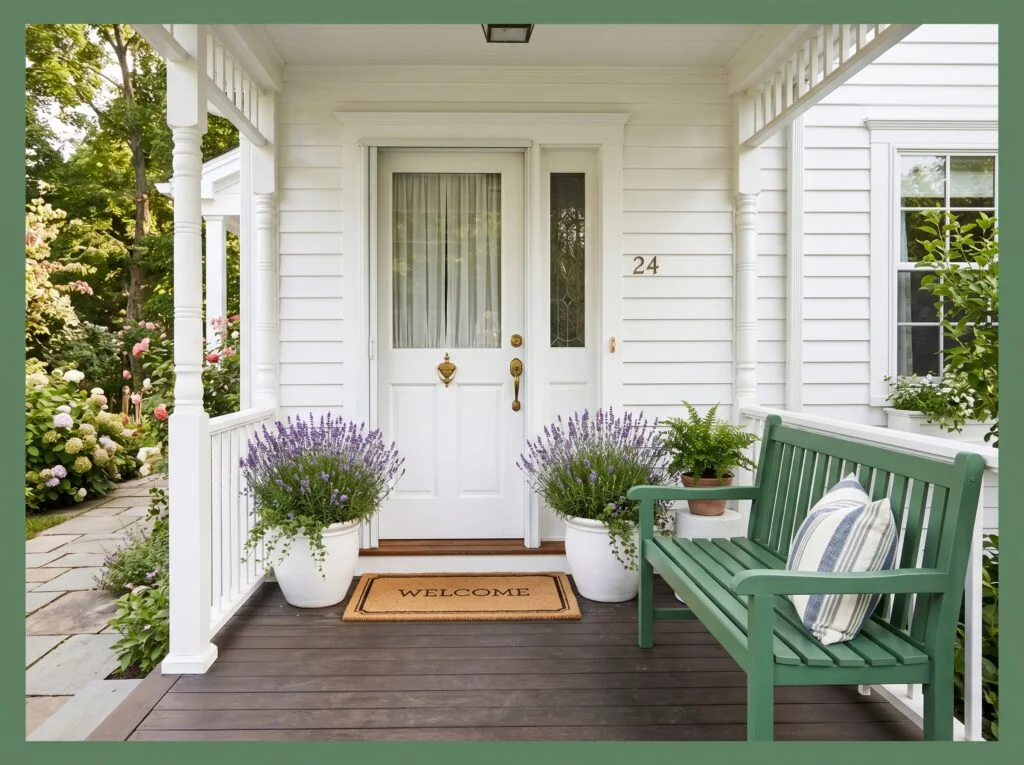
Painting a porch bench in a bold, saturated color is one of the fastest and most affordable ways to dramatically improve front porch curb appeal. A bench in sage green, navy blue, deep terracotta, or classic black makes an immediate color statement before anyone reaches the door and signals that the homeowner has a clear design point of view. On a neutral or white house exterior, a colored bench is the accent note that pulls the whole porch composition together — similar to how a front door in a bold color anchors the entire facade. The bench becomes a destination, not just a surface.
Pairing the bench with columns that frame the whole entry makes the composition feel even more intentional.
Use a high-quality exterior paint in a satin or semi-gloss sheen for a painted porch bench flat paint holds moisture and mold on an outdoor surface, while gloss is too reflective and shows every imperfection. Apply a dedicated exterior primer first, especially over bare or previously unpainted wood. Sand lightly between coats for the smoothest finish. For a bench that sits in full sun for extended hours, darker colors absorb more heat and can fade faster choose a UV-resistant paint or plan to touch up every two seasons. Sage green, navy, and black are currently the most popular and most durable-looking colors for front porch benches in the Pinterest and home design community.
Rattan or Wicker Bench for a Bohemian Coastal Look
A rattan or wicker bench brings a relaxed bohemian coastal feel to the space with its natural texture and airy appearance. The woven design adds warmth and visual interest while creating a light, inviting atmosphere. It pairs beautifully with neutral tones, soft textiles, and coastal-inspired décor.
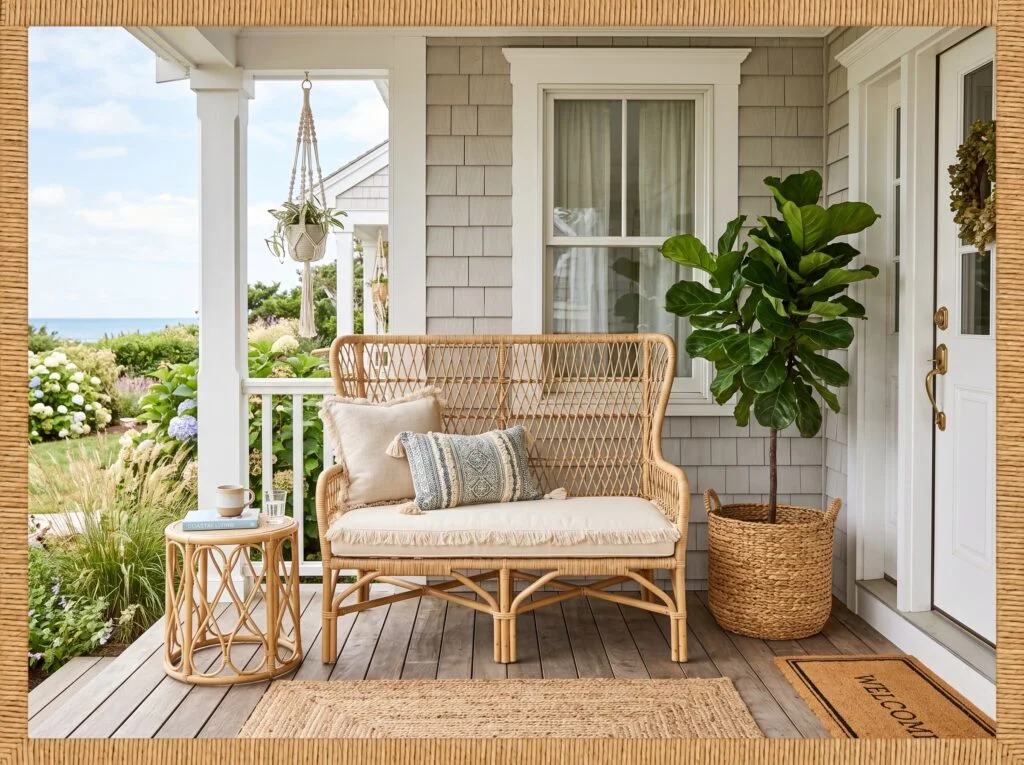
Synthetic rattan and wicker benches bring a warmth and organic texture to a front porch that no wood or metal bench quite replicates. The woven material is visual richness complex, textural, and warm and in the right setting (a coastal cottage, a bohemian bungalow, a craftsman with natural material detailing), it looks completely right and genuinely beautiful. The key word is synthetic natural rattan and wicker deteriorate quickly in outdoor conditions, splitting, bleaching, and breaking down from UV exposure and rain within a season or two. Synthetic resin wicker is specifically engineered for outdoor use and handles weather exposure dramatically better.
Look for a bench with an aluminum or steel inner frame rather than a wood frame aluminum won’t rust and doesn’t add unwanted weight, while steel frames provide extra rigidity. High-quality synthetic wicker uses UV-resistant resin that prevents bleaching and fading for years of outdoor exposure. Lower quality options show color fading and brittleness within one to two years of full sun exposure. Position a wicker bench in a covered or semi-shaded porch position for maximum longevity sustained direct sunlight is the factor that degrades synthetic wicker fastest. Use thick, weatherproof seat cushions in a natural linen or outdoor canvas fabric for the most cohesive bohemian look.
Concrete and Wood Industrial Bench
A concrete and wood industrial bench creates a bold blend of raw texture and natural warmth. The combination of sturdy concrete and rich wood adds a modern industrial character while maintaining a balanced and inviting look. This durable design works especially well in contemporary, loft-style, and urban-inspired spaces.
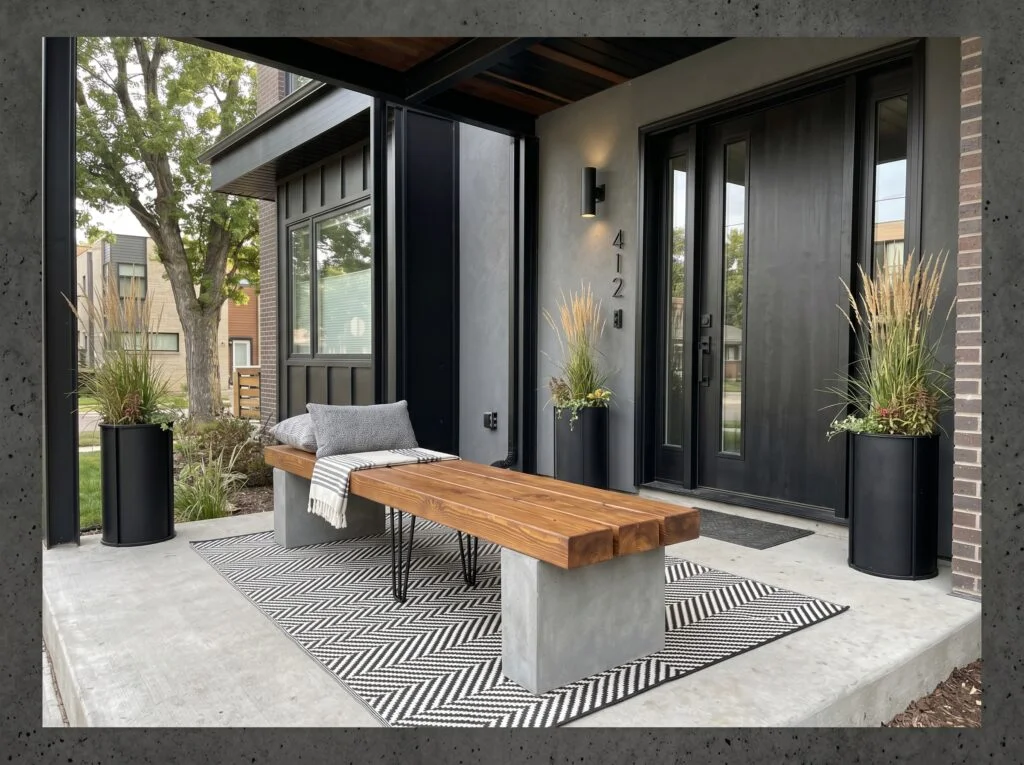
A concrete-and-wood bench is the industrial-modern front porch statement that no mass-market furniture retailer offers which is exactly what makes it interesting. The contrast between the cold, heavy mass of concrete supports and the warm linear grain of a wood plank seat is deeply visually satisfying. This combination communicates architectural confidence and a willingness to use unexpected materials in unconventional ways. It fits perfectly on the porch of a modern home, an urban townhouse, a loft conversion, or any contemporary residence where standard wood bench styles would feel too traditional or too casual.
Building a concrete-and-wood bench is a genuine weekend DIY project accessible to a motivated beginner. The simplest version uses standard cinder blocks (available at any home improvement store for $2 to $3 each) stacked two high on each end, with a thick 4-inch or 6-inch dimensional lumber plank spanning between them. Use construction adhesive between the cinder block courses for stability. Sand and seal the lumber with exterior spar urethane for weather protection. For a more refined look, pour smooth concrete supports in a simple rectangular mold and embed anchor bolts to attach the wood plank securely. The total material cost for a basic version runs $40 to $100 a fraction of what a comparable store-bought piece would cost.
Wooden Bench with Built-In Planters at Each End
A wooden bench with built-in planters at each end combines seating and greenery in one functional design. The integrated planters add natural beauty and a refreshing touch, while the wooden bench creates a warm and inviting atmosphere. This charming feature works well in entryways, patios, and garden spaces.
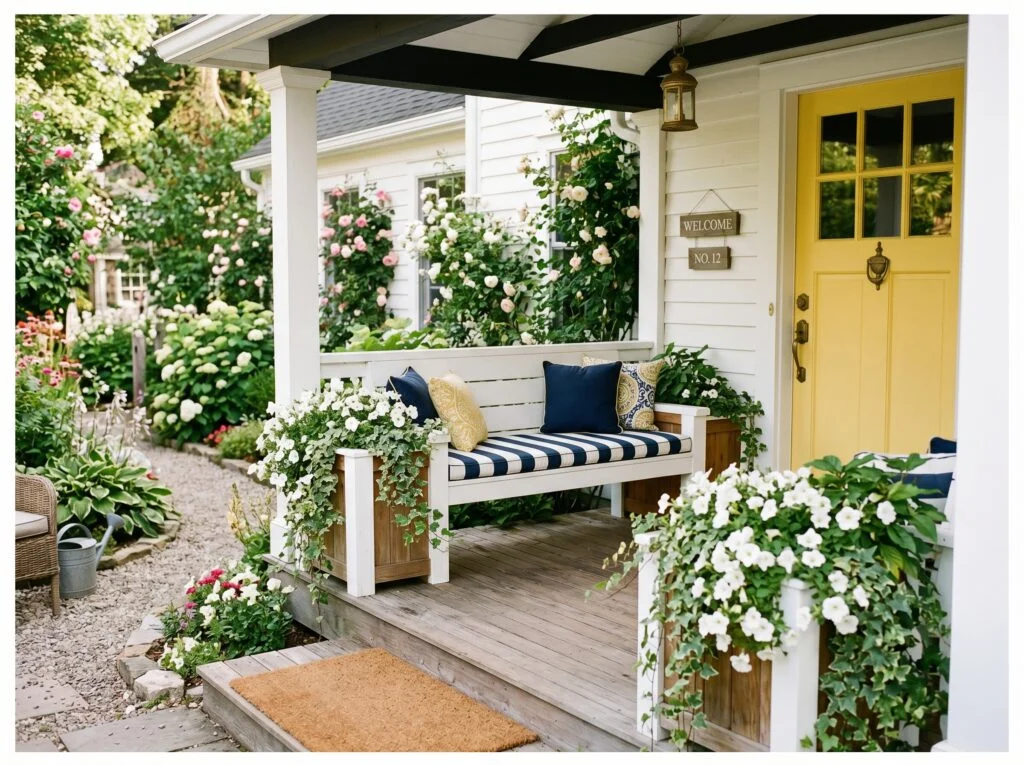
A bench with integrated planter boxes at each end is one of the most charming and functional front porch bench designs available and it’s consistently underrepresented in standard porch bench inspiration content. The planters transform the bench from a seating piece into a complete porch composition: one furniture item that provides seating, flanking greenery, and defined porch boundaries all at once. From the street, the combination of overflowing flowers and the bench creates a lush, welcoming focal point that a standard bench without the planters never quite achieves.
Choose plants for the integrated planters based on your porch’s sun exposure. Full sun porches do beautifully with petunias, geraniums, zinnias, and lantana all prolific bloomers that cascade attractively over planter edges. Partially shaded porches favor impatiens, begonias, sweet potato vine, and ferns. Line the planter boxes with a heavy-duty liner before adding soil to prevent moisture from deteriorating the wood from the inside. Drill drainage holes in the liner base to prevent waterlogging. Water integrated planters more frequently than ground-level pots since they dry out faster with sun exposure on multiple sides and no insulating ground contact.
Glider Bench for Gentle Motion
A glider bench offers a smooth, gentle motion that creates a relaxing and comfortable seating experience. Its soothing movement makes it perfect for porches, patios, and garden spaces where you can unwind and enjoy the outdoors. This timeless seating option also adds charm and a welcoming feel to any home exterior.
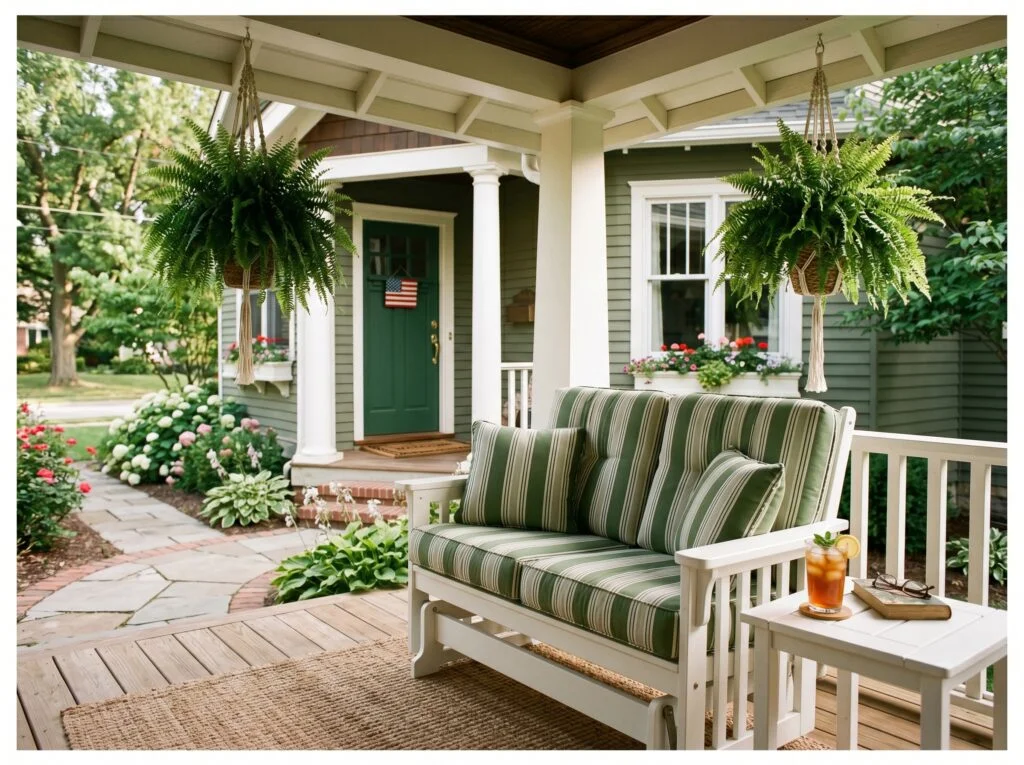
A glider bench is the stationary alternative to a hanging swing it provides the same soothing back-and-forth motion through a floor-mounted mechanism that requires no ceiling mounting hardware and no structural ceiling assessment. The glider mechanism uses two fixed base rails with the bench frame sliding forward and back on them, creating a smooth gliding motion that’s different from a swing’s arc but equally relaxing. For porches without the structural ceiling support for a hanging swing, or for anyone who prefers the stability of a floor-mounted piece, a glider bench is the right solution.
Gliders come in wood, metal, and resin construction. Cedar and teak gliders are the most durable and most weather-resistant of the wood options. Metal (usually powder-coated steel) gliders are sturdier and lower maintenance than wood but can feel warmer to the touch in direct sun. Resin gliders are the most weather-resistant and maintenance-free but tend to look less refined than wood or metal. The gliding mechanism itself should be lubricated annually with silicone spray to prevent squeaking and ensure smooth operation. Thick seat and back cushions in weatherproof outdoor fabric are essential for a glider the repetitive motion of the seat means inadequate cushioning makes the gliding experience uncomfortable rather than relaxing.
Adirondack-Style Double Bench
An Adirondack-style double bench combines classic outdoor charm with comfortable seating for two. Its wide armrests, angled back, and sturdy design create a relaxed and inviting atmosphere. This timeless bench style works beautifully on porches, patios, and garden spaces, adding both comfort and rustic appeal.
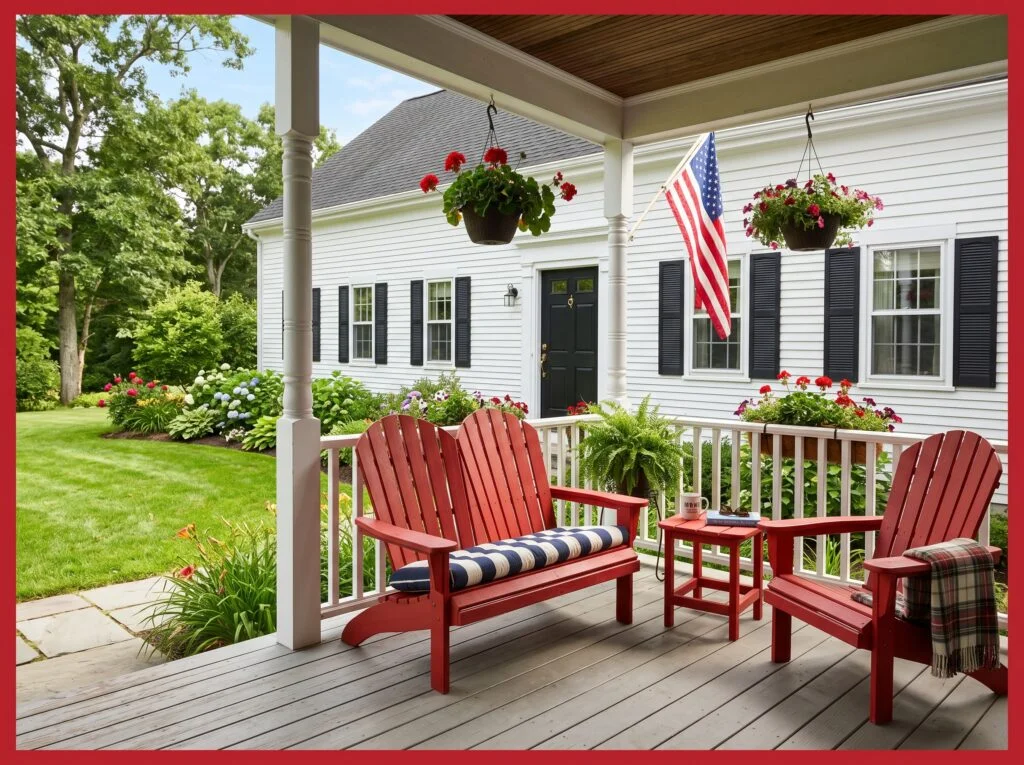
The Adirondack bench a two-seat version of the iconic Adirondack chair brings that uniquely American combination of relaxed comfort and nostalgic charm to a front porch. The wide, angled back slats, the deep seat, the broad flat arms (perfectly designed to hold a drink), and the slight backward recline all come together to create the most comfortable outdoor seating position possible. It communicates leisure and warmth in a way that more upright, formal bench styles simply don’t. When you see an Adirondack bench on a front porch, you know the people inside love their porch.
Adirondack furniture is available in the full range of outdoor materials pine (stain and seal for outdoor use), cedar (the classic authentic choice), teak, aluminum, HDPE poly lumber, and polywood. For a low-maintenance version that holds its color beautifully and never requires painting or sealing, HDPE polywood Adirondack pieces are the current gold standard — they come in a wide range of classic colors, hold up flawlessly in all weather, and look virtually identical to painted wood from the street. Red, classic white, navy, hunter green, and natural cedar-look are all popular Adirondack colorways for front porches. Red specifically is the most photographed and most iconic — it reads as confident and cheerful from the street.
Rustic Log or Cedar Slice Bench
A rustic log or cedar slice bench brings natural beauty and woodland charm to outdoor spaces. The raw wood textures and organic shapes create a warm, handcrafted look that blends perfectly with cabins, gardens, and farmhouse-style homes. Its sturdy construction and timeless appeal make it both a functional seating option and a striking decorative feature.
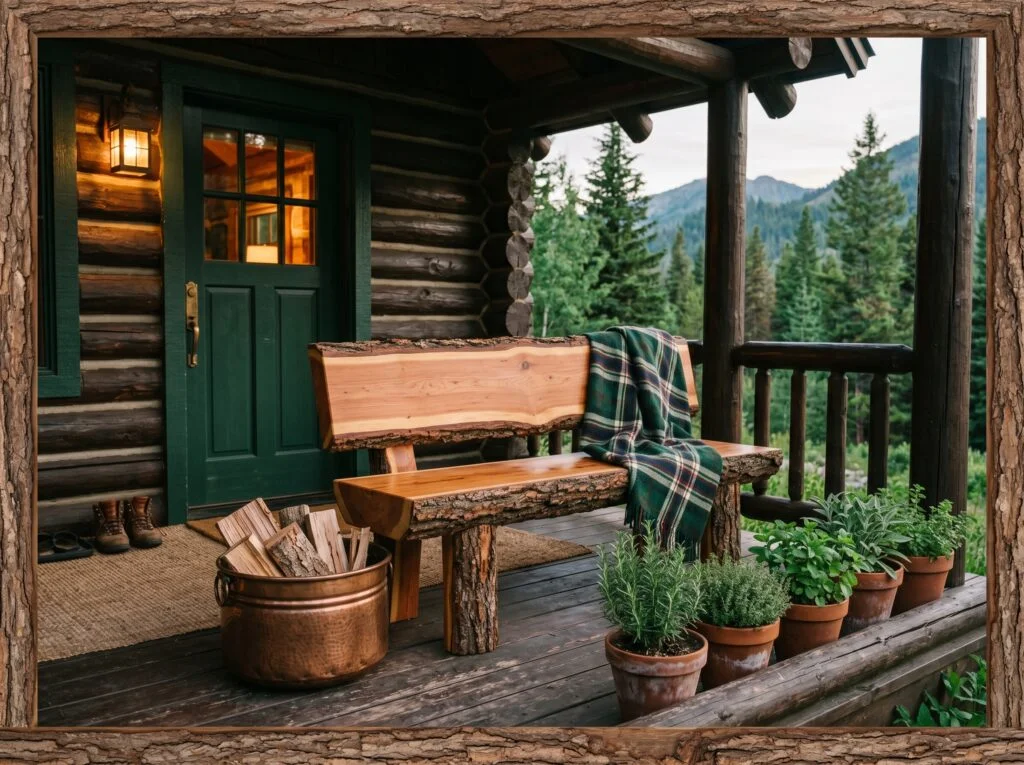
A rustic log bench is the front porch choice that communicates the most direct connection to natural materials, and in the right home context a cabin, a log home, a rustic farmhouse, a craftsman bungalow in a wooded setting it looks absolutely authentic and completely at home. The rough-hewn bark-on edges, the visible grain, and the natural irregularities of a log bench tell a story about honest materials and hand-craftsmanship that no manufactured piece can match. It also ages beautifully outdoors the weathering of the wood deepens rather than damages the rustic quality.
Cedar is the best wood choice for a log bench because its natural oils provide significant rot and insect resistance without treatment. Split-log benches with a flat sawn upper surface and bark-on lower edges are the most visually striking option. Seal the flat upper surface with exterior spar urethane to prevent moisture penetration and checking (cracking) from the repeated wetting and drying of the exposed grain. Leave the bark edges unsealed for authenticity the bark will naturally weather and age without structural deterioration. Position the bench in a covered section of the porch if possible, as exposed bark-on edges hold moisture longer than finished wood and will gray faster in full weather exposure.
Minimalist Black Steel Bench
A minimalist black steel bench adds a sleek and modern touch to any entryway or outdoor space. Its clean lines and simple design create a sophisticated look without overwhelming the area. The durable steel construction also ensures long-lasting performance while complementing contemporary and industrial-style interiors.
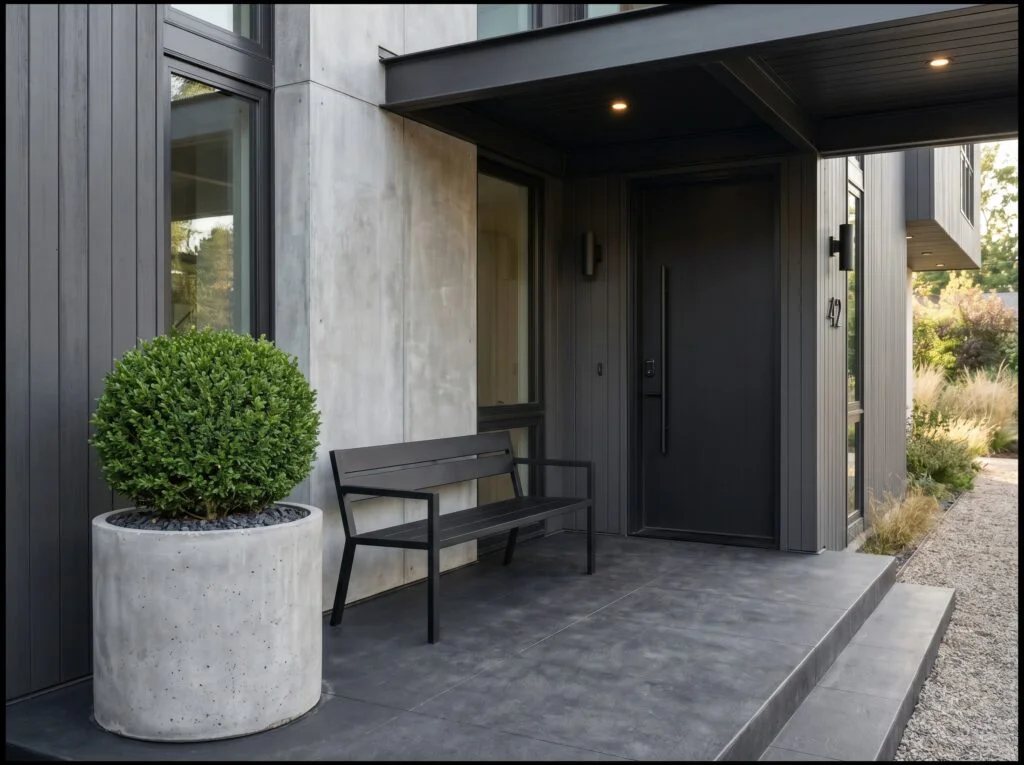
A matte black powder-coated steel bench is the front porch choice for minimalist, contemporary, or industrial-modern homes where clean lines, dark palettes, and material restraint are the design language. Just a beautifully proportioned, precisely made bench in flat black that complements the architecture rather than decorating over it. In front of a dark gray, charcoal, or black house exterior a design direction that’s increasingly popular in contemporary residential architecture a black steel bench reads as an intentional architectural element rather than a piece of furniture.
Powder-coated steel is extremely durable outdoors but requires attention to any chips or scratches in the coating, which can allow rust to develop on the exposed metal below. Inspect annually and touch up with a rust-inhibiting metal paint in flat black to maintain protection. This style of bench is most suitable for a covered porch where direct rain exposure is minimal sustained weather exposure will eventually compromise the powder coat more quickly than it would on a covered piece. On a fully exposed porch, a similar aesthetic can be achieved with an aluminum bench in a similar profile aluminum doesn’t rust, handles full weather exposure flawlessly, and can be powder-coated in the same flat black finish.
Two-Bench Symmetrical Porch Arrangement
A two-bench symmetrical porch arrangement creates a balanced and visually appealing outdoor setting. Placing matching benches on each side of the entrance adds structure, enhances curb appeal, and provides ample seating. This classic layout gives the porch a welcoming and well-designed appearance.
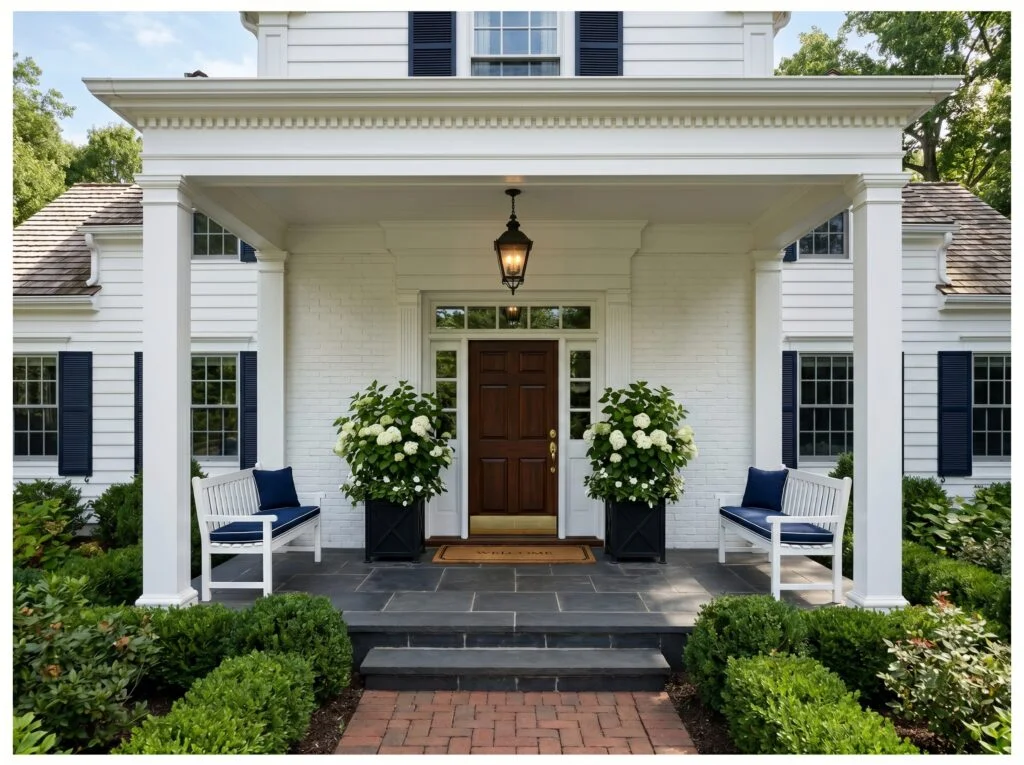
Two matching benches placed symmetrically on either side of a front door create a formal, balanced porch composition that makes a powerful curb appeal statement particularly on traditional, colonial, Georgian, and craftsman-style homes where symmetry is a core architectural principle. The visual balance communicates order and confidence. It makes the entry look larger and more intentional than a single off-center bench. When paired with matching planters between the benches and the door columns, the symmetrical arrangement creates a complete porch composition that reads as professionally designed from the street
For a symmetrical two-bench arrangement to work well, the porch needs to be wide enough to accommodate both benches with comfortable clearance between them and the door at least 10 to 12 feet of porch width is ideal. Choose benches in the same style, color, and size so the symmetry is precise. Identical cushions and identical planters at each bench anchor the symmetry at the detail level. Keep the decor accessories on each side mirror-identical same plants, same cushion colors, same side table or lantern style if included. Any deviation from the symmetry in the accessories reads as a mistake rather than a deliberate design choice in a formally balanced composition.
Bench with Overhead Pergola or Trellis
A bench with an overhead pergola or trellis creates a charming and inviting outdoor retreat. The structure adds height and visual interest while providing partial shade and support for climbing plants or hanging décor. This combination enhances comfort and brings a cozy, garden-inspired feel to porches and outdoor spaces.
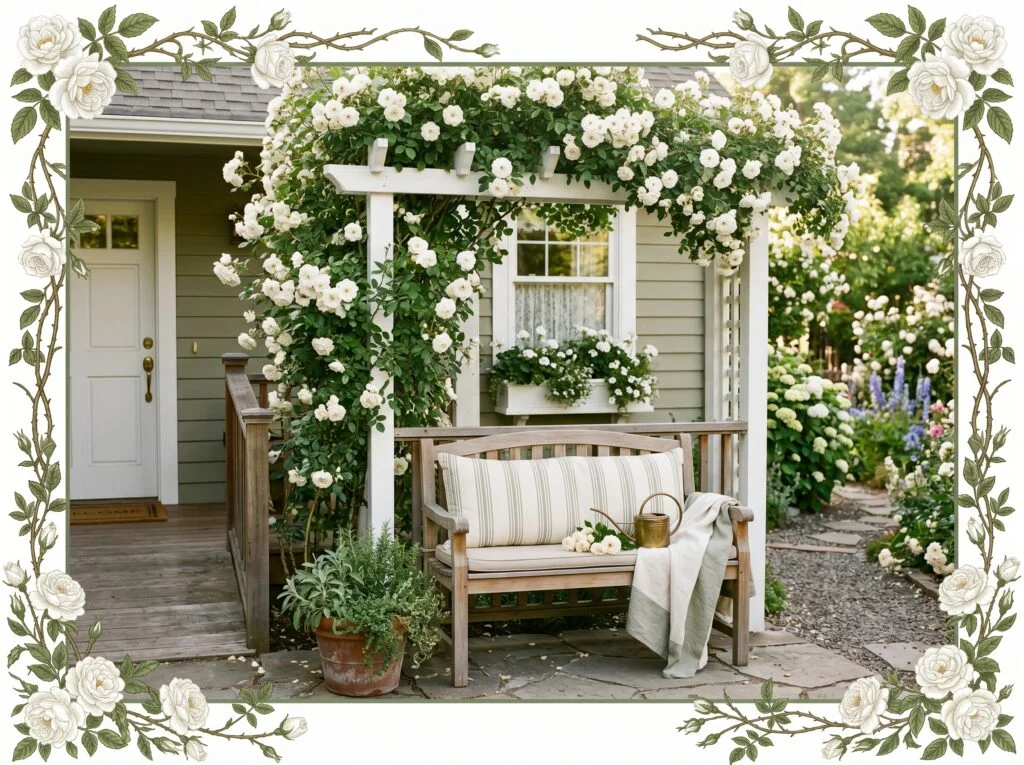
A bench positioned under a small overhead trellis or pergola section is one of the most romantic and visually striking front porch compositions possible and it creates a true outdoor room feel rather than simply a piece of furniture sitting on a flat surface. The overhead structure frames the bench seating area, defines it as a dedicated destination, and provides the support for climbing plants roses, clematis, jasmine, or wisteria that transform the bench from a furniture piece into a living garden feature. From the street, a bench tucked under a bloom-covered trellis creates a focal point that draws the eye and elevates the entire home’s curb appeal.
A basic bench trellis can be built from cedar lumber in a single weekend with basic carpentry skills four vertical posts anchored to the porch deck, horizontal top rails, and a simple lattice or spaced-bar ceiling panel above. The structure needs to be anchored securely to the porch deck with post base hardware rather than simply resting on the surface climbing plants add significant wind-sail area that exerts lateral force on the structure. Choose climbing plants based on your climate hardiness zone and your porch’s sun exposure. Climbing roses bloom once or twice per season and require annual pruning. Clematis is faster growing and more prolific. Jasmine is fragrant and fast. All three are spectacular over a porch bench trellis when established.
In the evening, lighting that flatters the seating area makes the trellis and bench feel even more inviting.
Bench Styled for Seasonal Decoration
A bench styled for seasonal decoration adds charm and personality to the entryway or porch throughout the year. Decorative pillows, throws, pumpkins, wreaths, or festive accents can easily refresh the look for each season. This versatile setup creates a warm and welcoming atmosphere while making the space feel more inviting and personalized.
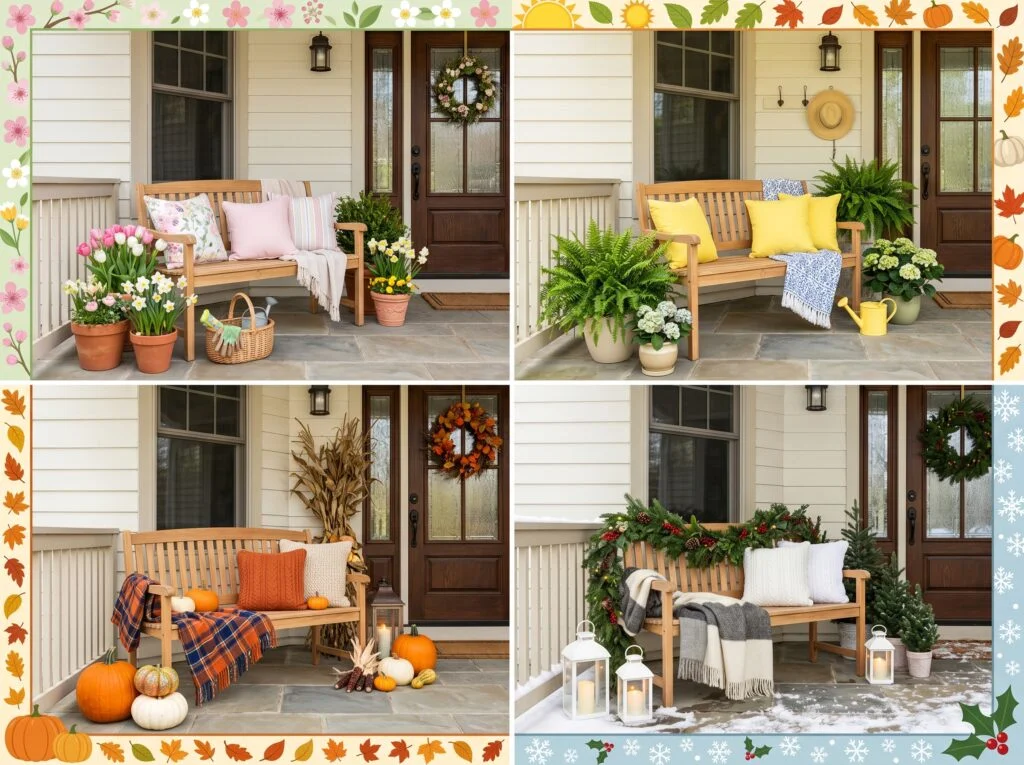
A front porch bench is the easiest piece of outdoor furniture to style seasonally and doing so transforms your home’s curb appeal from something static to something that feels alive and engaged with the time of year. The bench itself stays constant. Only the cushions, the flanking planters, and a few small accessories change. The seasonal styling cost is minimal after the first year because you’re building a collection of accessories that rotate rather than replacing everything each season. Done well, a seasonally styled bench creates the impression of a home that’s genuinely cared for and lived in throughout the entire year.
Spring: soft linen cushions in blush or sage, tulips or hyacinths in the flanking planters, a simple wreath on the door above. Summer: bright striped cushions in bold colors, overflowing petunias and zinnias, an outdoor throw in a cheerful print. Autumn: plaid or buffalo check cushion in warm tones, mini pumpkins grouped at the bench base, potted mums in rust and yellow, a small lantern with a battery candle. Winter: cream or charcoal wool-look cushion, evergreen garland draped along the bench back or railing above, white lanterns with flameless candles, a simple wreath of dried cotton or eucalyptus. Store off-season accessories in a weatherproof bin or the built-in bench storage compartment for easy swap-out.
For more porch decor to rotate through the year, there’s plenty of seasonal inspiration to keep things fresh.
Vintage Painted Metal Bench for Cottage Style
A vintage painted metal bench adds timeless charm and character to cottage-style spaces. Its decorative details and softly aged finish create a cozy, nostalgic feel, while the painted surface introduces a touch of color and personality. This charming piece pairs beautifully with flowers, soft textiles, and traditional cottage décor.
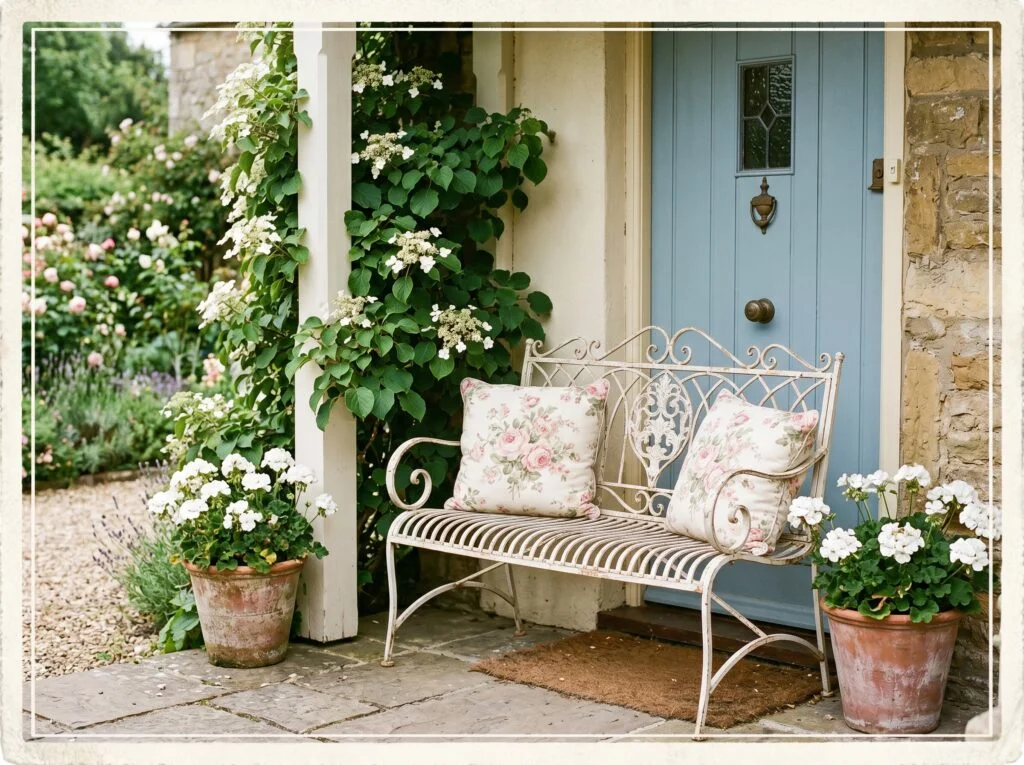
A vintage-style painted metal bench the kind with decorative scrollwork in the backrest, a slightly curved seat, and an ornate silhouette that references Victorian garden furniture is perfect for cottage, English garden, French country, and romantic farmhouse home styles. It’s lighter and more delicate looking than cast iron, making it feel more appropriate for cottage-scale porches where heavy furniture would overpower the architecture. Painted in white, soft cream, or a muted sage green, the ornate metal bench looks genuinely antique while being entirely new and functional. The decorative backrest creates visual interest even when the bench is unoccupied and viewed from the street.
Look for benches with welded rather than bolted construction welded joints are significantly stronger and more durable in outdoor conditions where repeated thermal expansion and contraction can loosen bolted hardware over time. A powder-coat finish is more durable than standard spray paint on an ornate metal bench because the coating flows into the decorative details of the scrollwork and protects them completely. Cushions for a vintage-style metal bench should be soft and plump with a floral, toile, or botanical print a simple stripe or solid fabric on an ornate bench undercuts the romantic aesthetic. Choose cushions with tie-on straps rather than loose pads so they stay in place on the slightly curved seat.
DIY Pallet Wood Bench for Budget Curb Appeal
A DIY pallet wood bench is an affordable way to enhance curb appeal without spending a lot. The natural wood texture adds rustic charm and warmth, while the simple design can be customized to suit different styles. It provides practical seating and creates a welcoming look for porches, patios, and entryways.
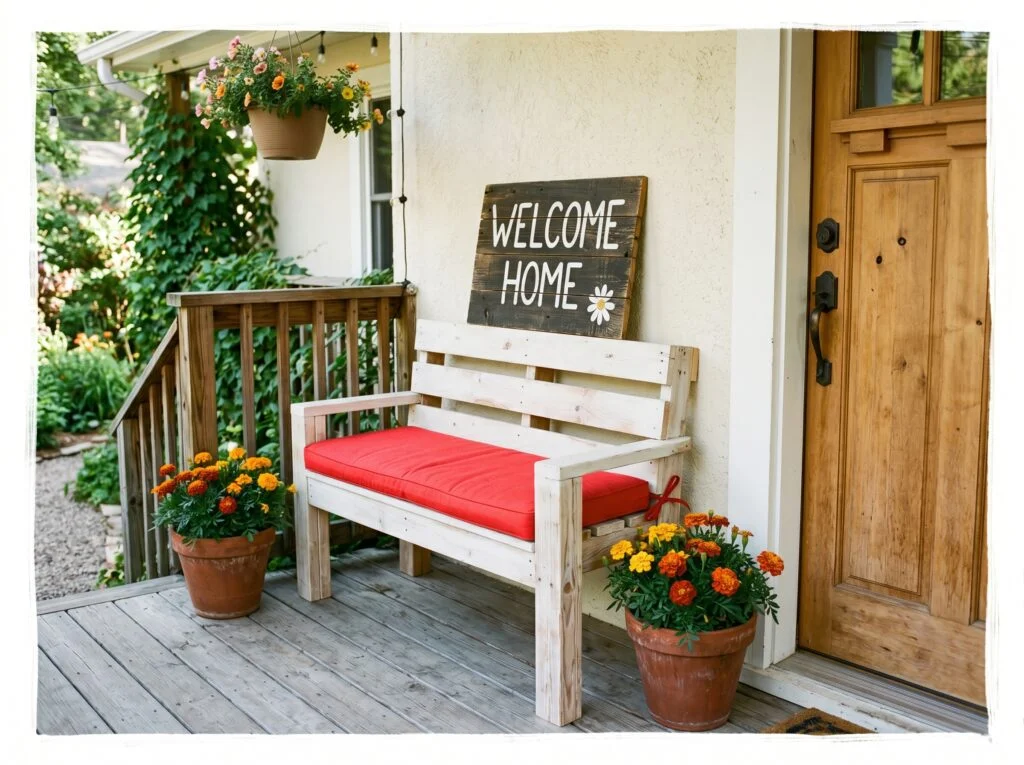
A DIY pallet wood bench is the most budget-conscious front porch bench idea on this list and when built and finished well, it looks genuinely attractive rather than obviously makeshift. Wooden pallets are widely available for free from hardware stores, garden centers, and warehouses. The rough, varied texture of pallet lumber sanded smooth and painted has an honest, handmade quality that complements rustic, farmhouse, bohemian, and cottage-style homes beautifully. A well-built pallet bench on a tidy, well-decorated porch doesn’t look like a budget solution it looks like a conscious design choice.
The key to a good-looking pallet bench is the preparation and finish. Sand every surface thoroughly at least 80-grit followed by 120-grit to remove splinters, rough spots, and any pallet treatment markings. Fill large gaps or cracks with exterior wood filler and sand again before painting. Use a dedicated exterior primer followed by two coats of exterior paint in your chosen color. Reinforce the pallet-to-pallet joints with construction screws (not nails nails will pull out under seating load) for structural integrity. A finished and painted pallet bench with a quality outdoor cushion and well-styled flanking plants is genuinely difficult to distinguish from a store-bought bench at any normal viewing distance.
Conclusion
A well-chosen front porch bench is one of the highest-return investments in curb appeal you can make. It costs a fraction of landscaping, exterior paint, or architectural upgrades but it delivers an outsized improvement in how welcoming, lived-in, and considered the front of your home looks and feels.
Start with the practical decisions: what size fits your porch, what material suits your climate, and whether you want a static bench, a swing, or a glider. Then choose the style that genuinely reflects how you want your home to feel to the people who approach it.
From a simple white painted cedar bench with navy cushions to a hanging cedar swing covered in climbing roses, every idea on this list creates the same fundamental thing a front porch that says “slow down, you’re welcome here.” That’s the whole point of a front porch, and the bench is the piece that says it loudest.
Beyond the bench itself, a welcoming feel from the street comes together with just a few more thoughtful touches.

Pingback: 21 Entryway Rug Ideas to Elevate Your Space