A pool without landscaping is just a hole filled with water. The planting, paving, and design around it is what turns it into something that genuinely looks and feels like a luxury resort.
These ideas transform any backyard pool area into the outdoor space you have always pictured.
Getting there starts with thinking beyond the pool itself and building a backyard retreat worth relaxing in from every angle.
Let’s get started.
Tropical Landscaping with Tall Palms
Tall palms planted around a pool instantly bring in a resort like, vacation feel. Their height also provides some natural shade without blocking the open sky above the water. Species like queen palms or areca palms are common picks since they handle poolside heat well.
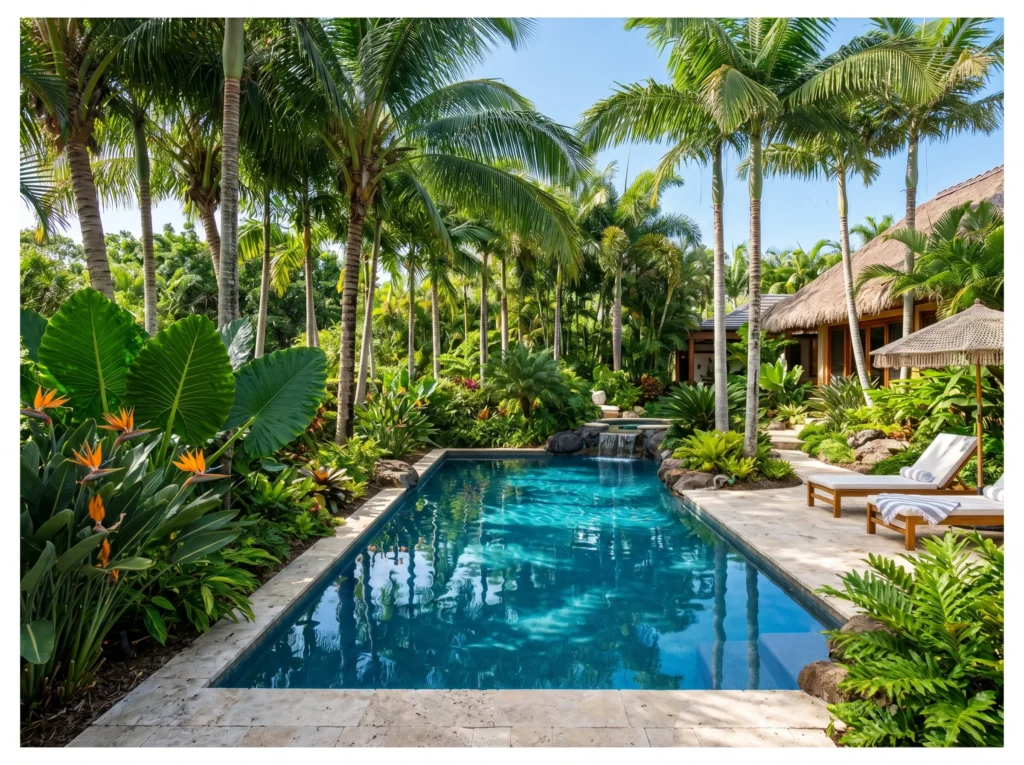
Tall palms planted around a backyard pool instantly create the visual language of a tropical resort. Slender varieties like Bismarck palms, Queen palms, and Foxtail palms suit residential backyards because their root systems are less invasive than spreading species and their canopy height provides a sense of enclosure without dropping significant leaf litter into the pool.
Layer the planting beneath the palms with bird of paradise, elephant ears, and lush groundcovers to create the density and depth that makes tropical pool landscaping so immersive. The goal is to create the feeling of being surrounded by a living canopy that makes the pool feel genuinely private and completely unlike an ordinary suburban backyard.
The fastest way to create a genuine resort atmosphere.
Natural Stone Pool Deck with Garden Borders
A natural stone pool deck paired with garden borders softens the hard edges of the pool area. Irregular stone shapes give the deck a more organic look compared to poured concrete. Plants along the border also help the pool blend more naturally into the surrounding yard.
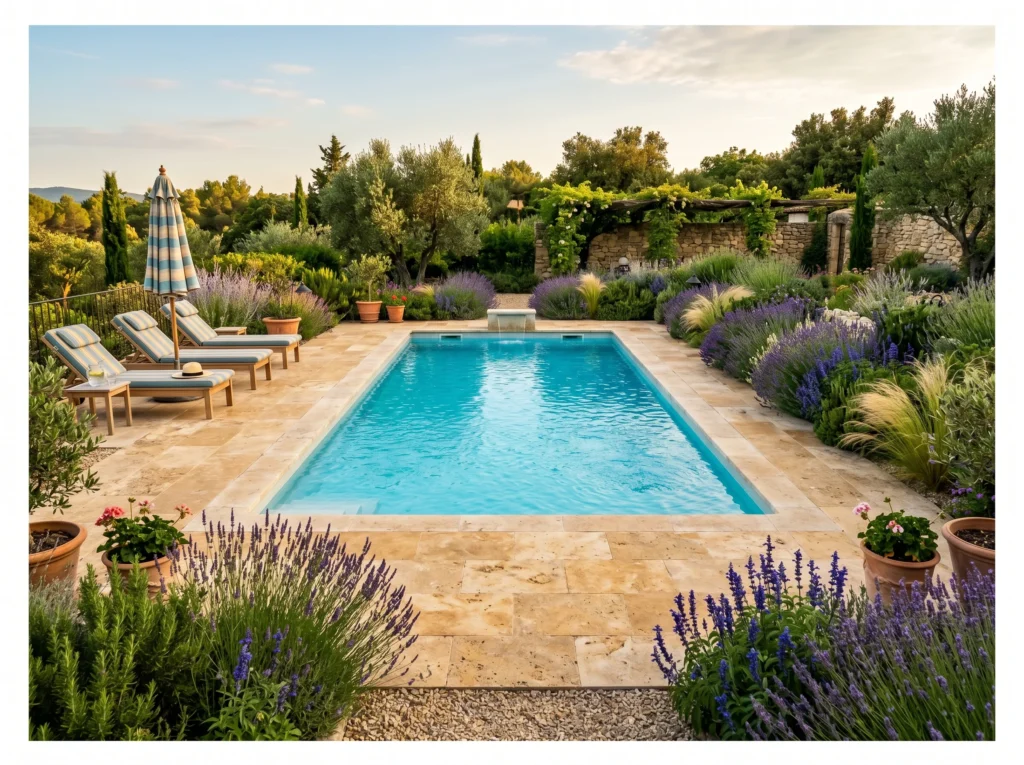
Natural stone pool decking paired with generous planting borders creates the most beautiful and timeless pool landscaping aesthetic available. Travertine, bluestone, and sandstone all suit pool environments beautifully and develop a warm, natural patina over years of outdoor use.
The planting borders along the outer edges of the pool deck are what soften the hard material palette and connect the pool area to the broader garden. Lavender, rosemary, ornamental grasses, and low sedums planted in generous sweeping drifts create the kind of lush, fragrant poolside environment that makes every swim feel like a holiday.
Pool with Lush Hedge Privacy Screening
A lush hedge planted around a pool blocks the view from neighbors without needing a solid fence. Evergreen options like podocarpus or ligustrum keep their leaves year round, so privacy holds up in every season. Regular trimming keeps the hedge looking neat rather than overgrown and wild.
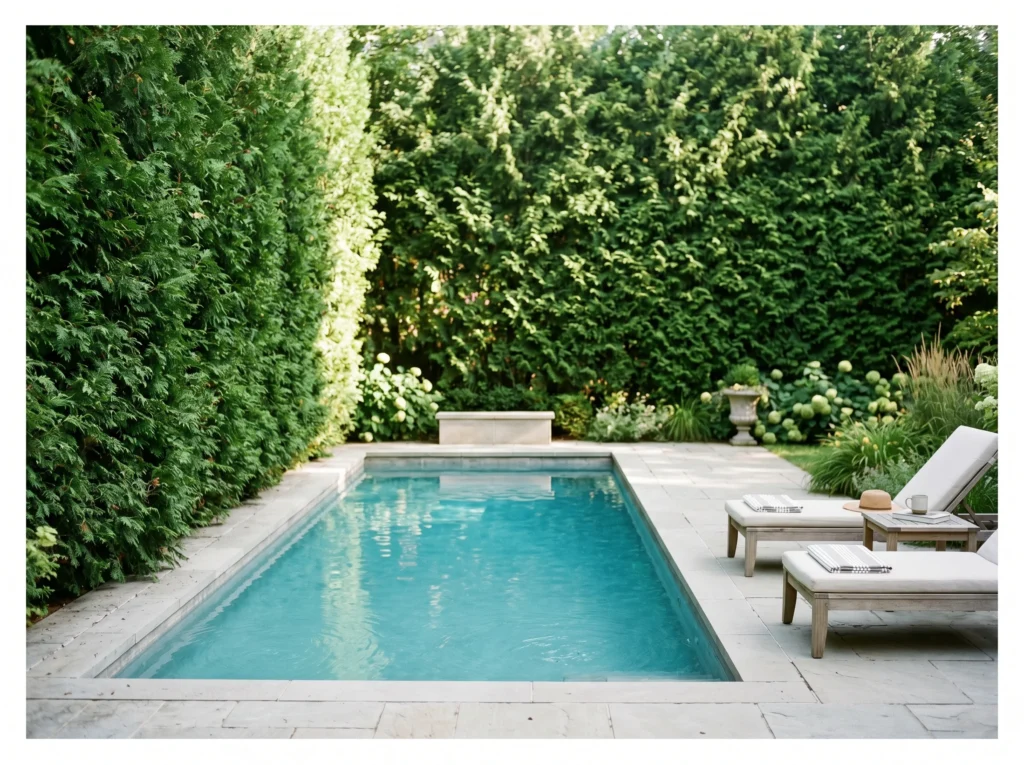
A dense evergreen hedge on two or three sides of a pool area creates complete privacy without the harshness of solid fencing. The natural green wall softens the boundary, provides a beautiful backdrop for the pool, and creates a sense of enclosure that makes the space feel like a private outdoor room.
Photinia, laurel, Leyland cypress, and bamboo all reach screening height within three to five seasons of planting. Allow hedges to reach at least 1.8 to 2.4 meters for effective privacy. The green wall also acts as a windbreak, significantly improving comfort on breezy afternoons.
Just be sure any greenery works alongside fencing that keeps swimmers safe, especially if young kids use the pool.
Natural, green, and deeply private.
Pool Landscaping with Ornamental Grasses
Ornamental grasses around a pool add movement and texture that still surfaces often lack. Varieties like pampas or fountain grass sway gently in the wind, softening the hard lines of the pool deck. They also tend to need very little water once established, which suits a poolside setting.
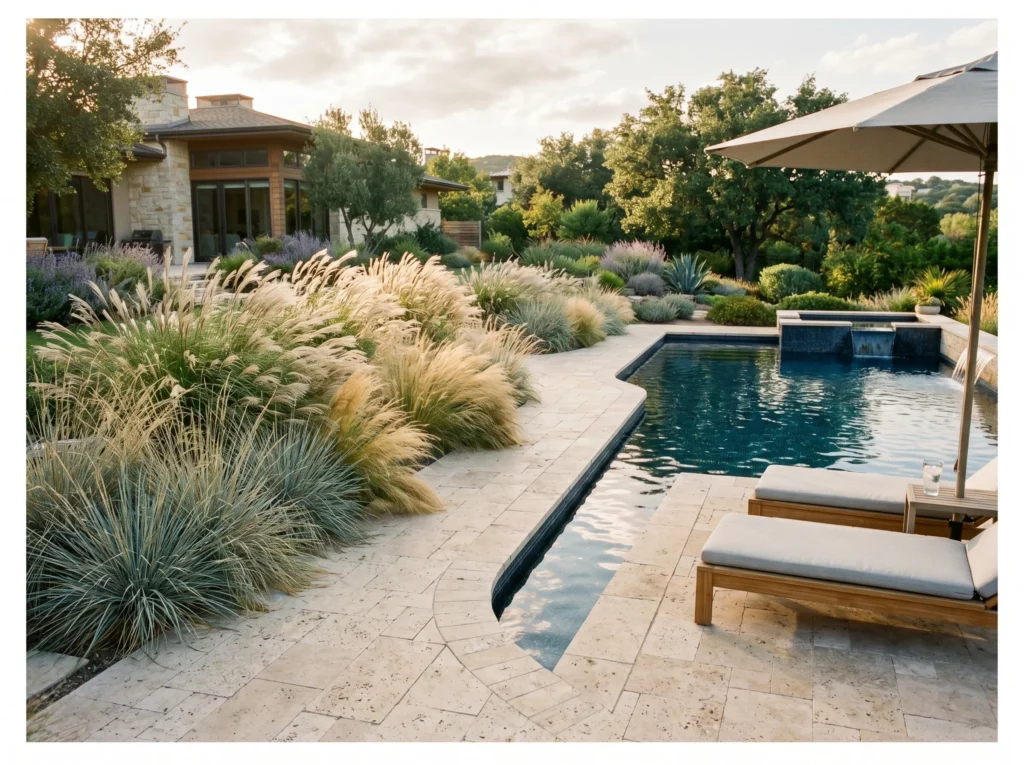
Ornamental grasses planted along pool deck borders create a landscape that feels naturalistic, contemporary, and genuinely low maintenance. Blue oat grass, Mexican feather grass, Karl Foerster, and Pennisetum all provide year-round interest with changing seasonal textures from spring flush to autumn seed heads.
Grasses suit pool landscaping particularly well because they do not drop significant debris into the water, they move beautifully in the breeze creating visual dynamism, and they require only one annual cut-back to maintain their appearance across every season. The soft, fluid quality of grass planting contrasts perfectly with the hard geometry of a pool shell.
Pool with Raised Planting Beds
Raised planting beds near a pool add greenery without eating into the deck’s usable space. Built in edges keep soil and mulch from washing onto the pool deck during rain. This setup also makes it easier to plant taller flowers or shrubs right at the pool’s edge.
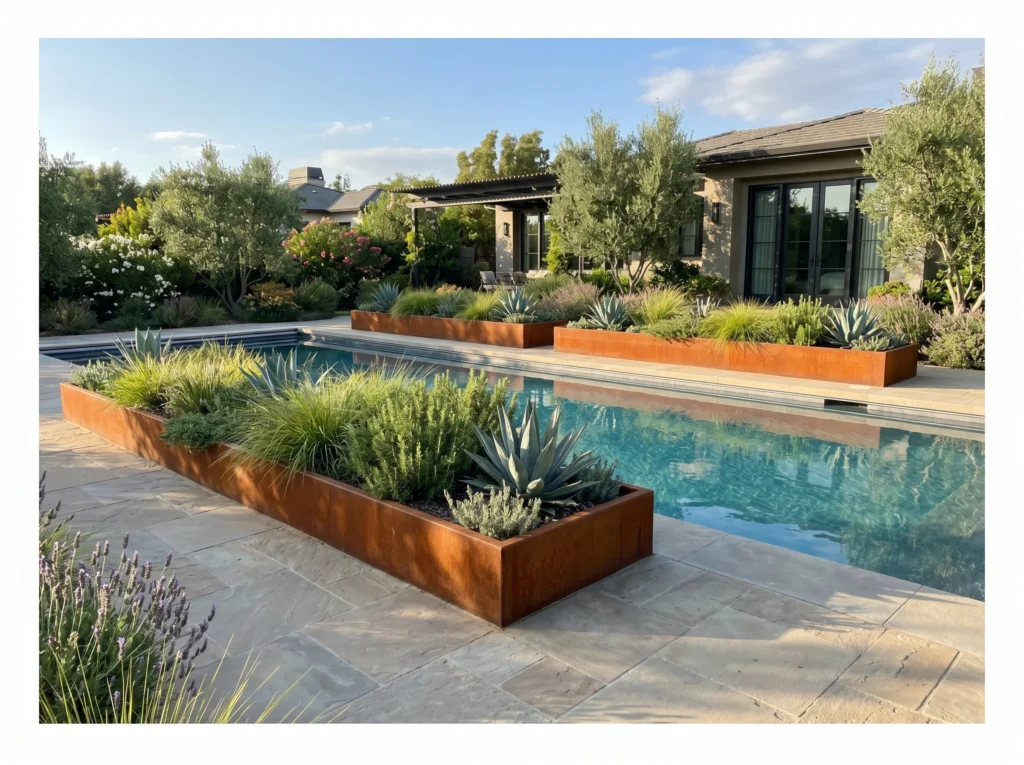
Raised planting beds built into the pool deck area bring planting up to a more visible and prominent position rather than keeping it at ground level at the perimeter. Low Corten steel, concrete, or masonry raised beds along the pool deck edges add vertical interest to the horizontal landscape.
Raised beds also improve drainage for plants, which is important in pool environments where chemical splash and water runoff can affect soil quality. Architectural plants that suit dry, well-drained conditions, including agaves, ornamental grasses, and lavender, all establish readily in raised beds and require minimal maintenance.
Poolside Pergola with Climbing Plants
A poolside pergola covered in climbing plants gives swimmers a shaded spot to relax between dips. Vines like jasmine or bougainvillea slowly fill in the structure, adding color and fragrance over time. It takes a season or two to fill out fully, but the result is a naturally green shaded retreat.
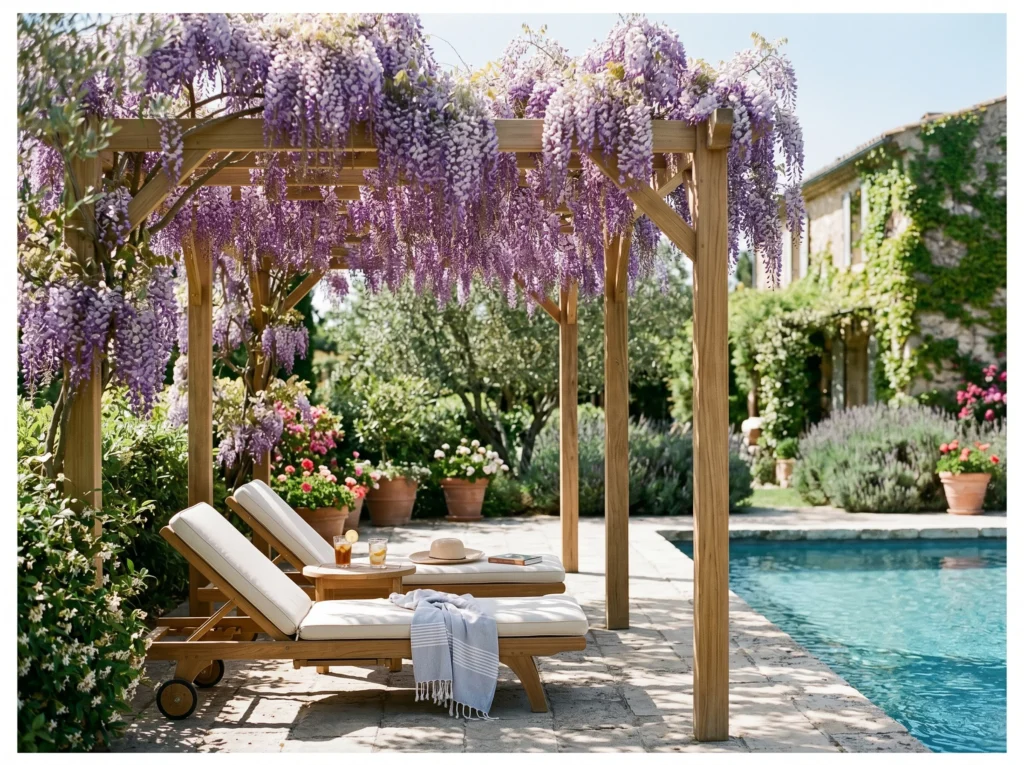
A pergola positioned at one end of the pool with climbing plants trained across the roof beams creates a shaded destination that makes the pool area usable even during the hottest parts of summer. The living canopy of flowering plants adds a beauty and fragrance that no manufactured shade structure can replicate.
Wisteria, star jasmine, and climbing roses all establish readily on pool pergola beams and create a flowering canopy that improves year after year. Choose plants that do not drop heavy leaf or petal litter directly over the pool. Position the pergola at the pool’s end rather than directly over the water for practical maintenance.
Even a simple structure can become a shaded spot to unwind poolside once the climbers fill in.
More beautiful every single year.
Pool with Drought-Tolerant Mediterranean Plants
Mediterranean plants like lavender, rosemary, and olive trees suit poolside landscaping in hot, dry climates. These plants require very little watering once established, which pairs well with a pool area that already needs upkeep. The silvery green tones also give the space a relaxed, sun drenched feel.
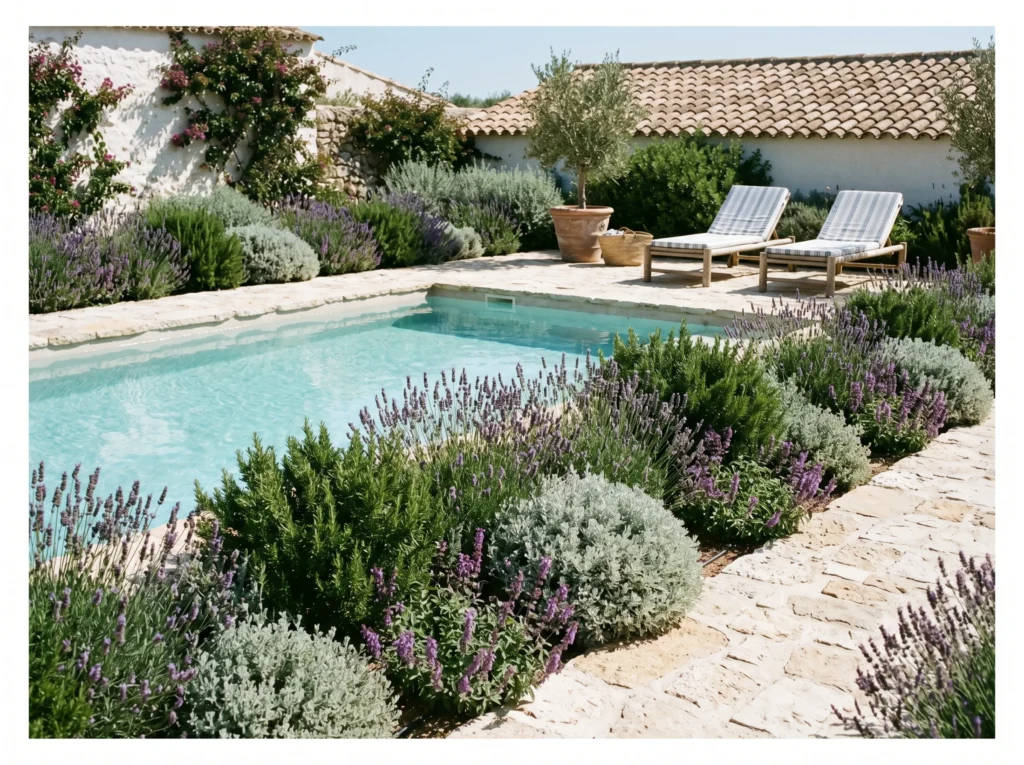
Mediterranean pool landscaping uses drought-tolerant plants native to southern Europe that thrive in exactly the hot, dry conditions that most pool areas experience. Lavender, rosemary, sage, artemisia, and low-growing cistus all handle reflected heat, minimal irrigation, and occasional chemical splash better than most plants.
The silver and grey-green foliage tones of Mediterranean plants create a refined, cohesive color palette that complements natural stone and pale concrete pool decks beautifully. The planting releases natural fragrance in warm weather and requires only occasional pruning to maintain its form. Very little weekly maintenance is needed once established.
Fragrant, beautiful, and practically self-sufficient.
Pool with Native Planting
Native planting around a pool relies on species already adapted to the local climate and soil. This approach cuts down significantly on watering and fertilizing compared to non native plants. It also tends to attract local birds and pollinators that thrive around familiar vegetation.
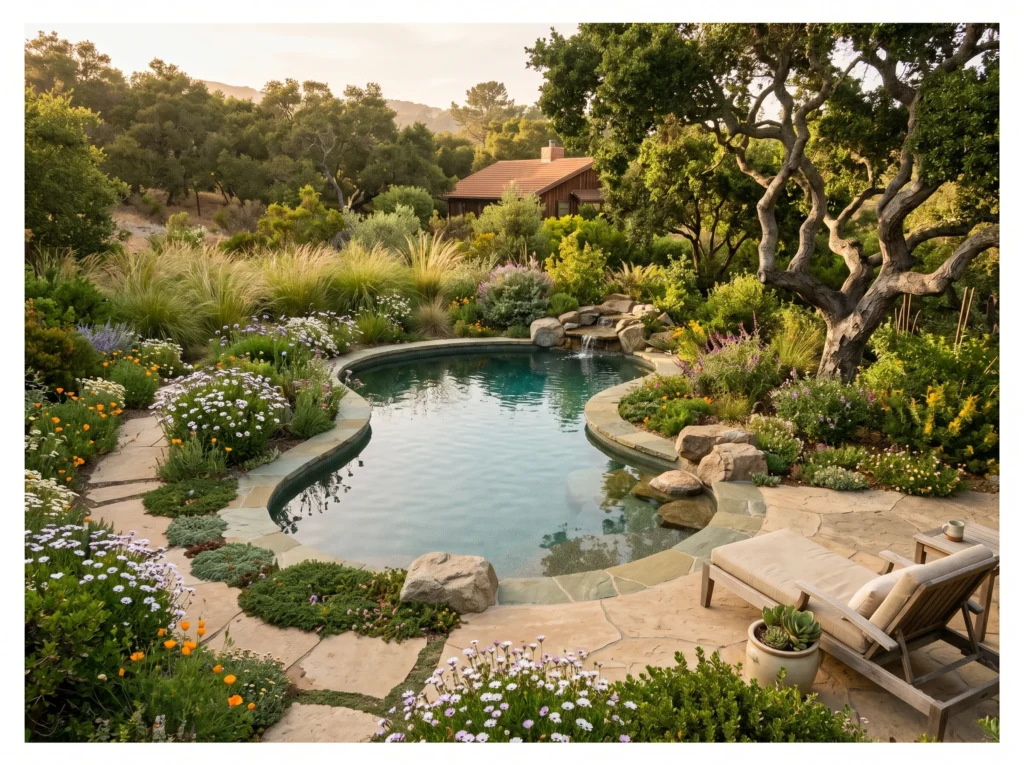
Native plants around a backyard pool create a landscape that feels genuinely connected to its environment rather than imported from somewhere else. Plants that evolved in your local climate, rainfall pattern, and soil conditions establish quickly, require minimal supplemental irrigation once settled, and support local birds and pollinators.
The visual quality of native pool landscaping is naturalistic and organic rather than manicured. Native bunch grasses, coastal daisies, low groundcovers, and carefully chosen small native trees create a poolside environment that feels wilder and more alive than conventional formal pool planting.
Minimalist Pool Landscaping
Minimalist pool landscaping keeps the plant selection simple, often relying on just one or two species repeated throughout. Clean lines and a limited color palette help the pool itself stay the visual focus. This approach suits modern homes where the rest of the yard already favors a pared back design.
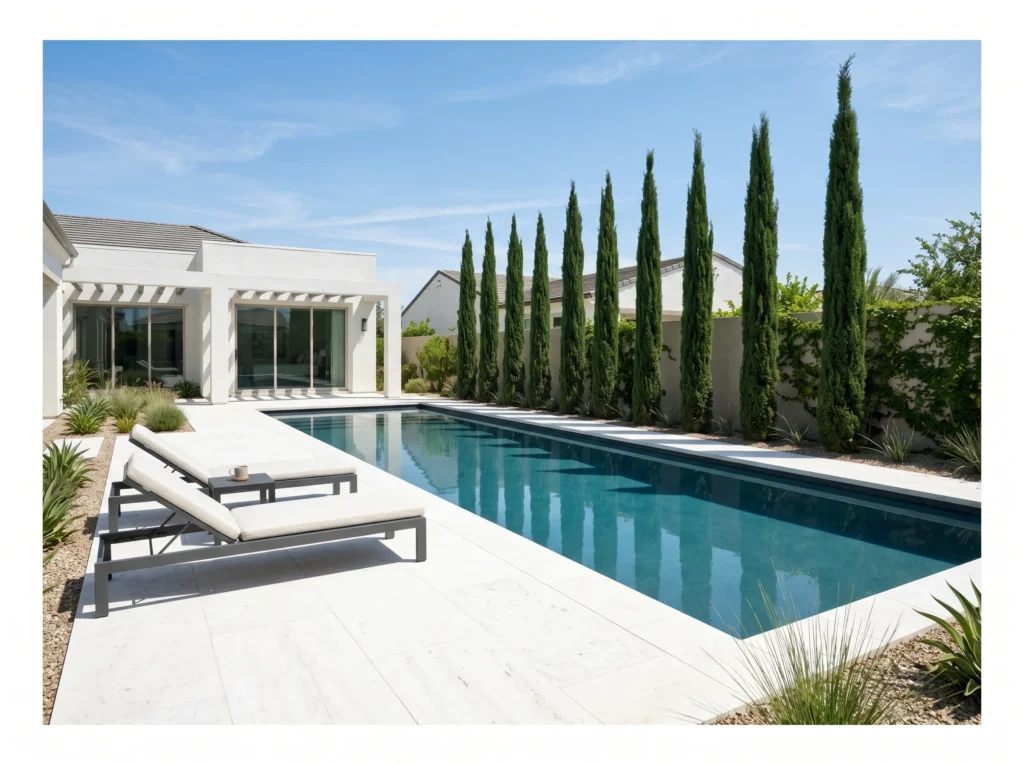
Minimalist pool landscaping uses very few plant species placed with deliberate precision to create a strong, resolved composition that feels architectural rather than decorative. One species of tree or tall shrub repeated at regular intervals along one pool edge creates more visual impact than a mixed planting of many different species.
Pencil cypress, clipped box columns, or slim ornamental pears planted in a single row at consistent spacing create a rhythm that frames the pool perfectly. The discipline of using only one or two plant types is what gives minimalist pool landscaping its quiet confidence and sophisticated character.
Restraint as a design strategy.
Pool Landscaping with Feature Tree
A single feature tree planted near a pool can anchor the entire landscaping design around it. Trees with a distinct silhouette, like a Japanese maple or olive tree, work particularly well for this. With one tree as the focal point, the rest of the planting can stay simple without feeling bare.
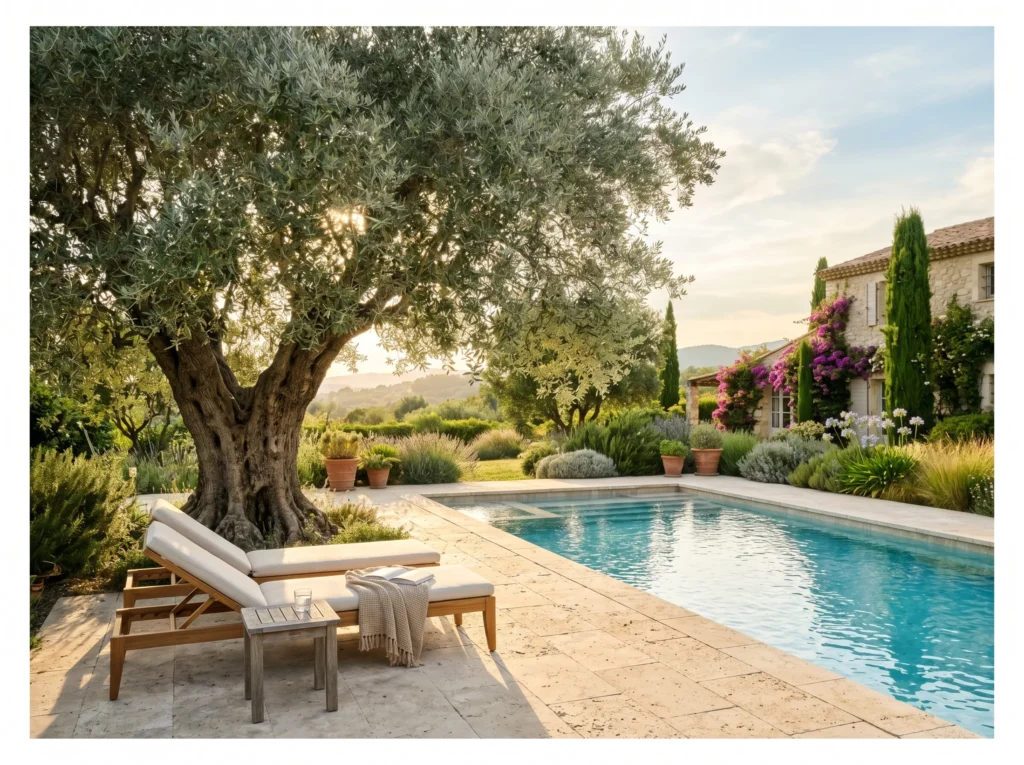
A single well-chosen feature tree planted beside a backyard pool creates a focal point that anchors the entire outdoor design. One beautiful specimen tree does more for the atmosphere of a pool area than a dozen smaller plants scattered around the perimeter.
Olive trees, Japanese maples, ornamental pears, and Magnolia grandiflora all suit pool landscaping because of their manageable root systems, distinctive form, and seasonal visual interest. Position the tree where its canopy provides afternoon shade for the lounging zone while keeping it away from direct overhang of the pool water.
One great tree transforms everything around it.
Pool with Vertical Garden Wall
A vertical garden wall next to a pool adds greenery without taking up any deck space. This works especially well in smaller yards where a traditional planting bed would not fit. The wall of plants also creates a natural backdrop that makes pool photos look far more lush.
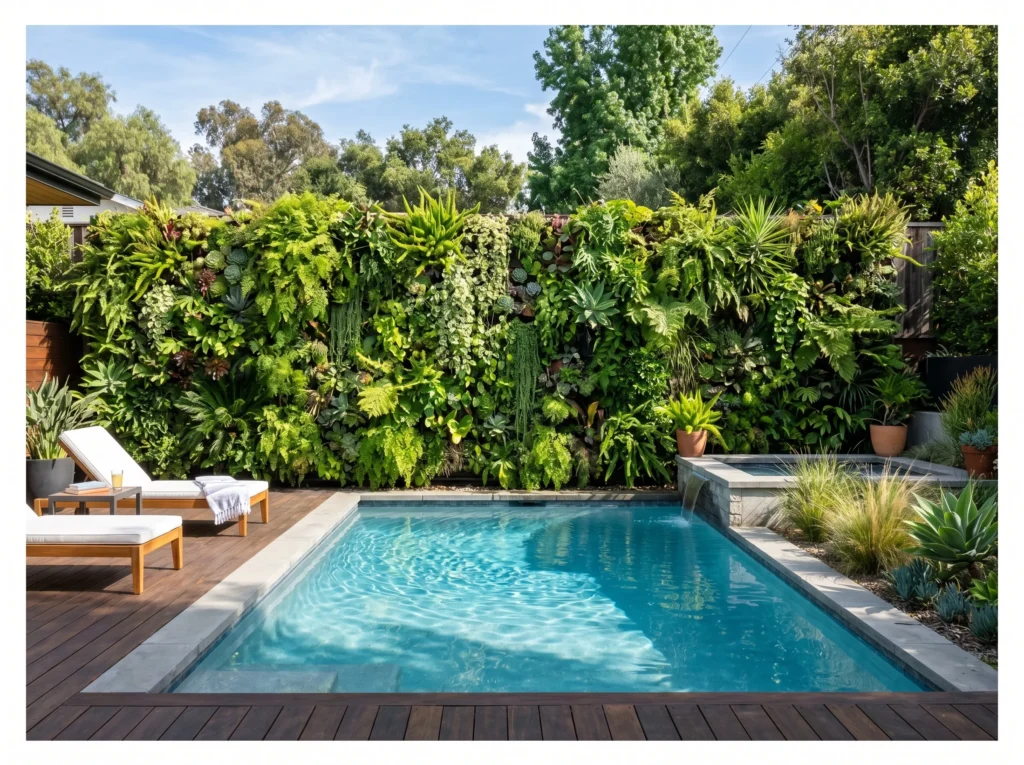
A vertical garden wall installed on the fence or boundary wall behind a pool creates a lush green backdrop that makes the pool area feel like a private garden sanctuary. The wall of living plants dramatically improves the visual quality of the space from every angle.
Vertical garden systems using modular pocket planters or wire mesh frames allow a wide variety of plants to grow across the wall surface. Ferns, trailing pothos, succulents, and native groundcovers all work in vertical garden applications depending on sun exposure. The green wall also provides excellent privacy and a natural cooling effect on hot summer days.
Pool with Waterfall and Rock Garden
A pool paired with a waterfall and rock garden brings in the sound and movement of falling water. Boulders and smaller stones arranged around the waterfall give the whole area a more natural, lagoon like feel. This combination often becomes the visual centerpiece of the entire backyard.
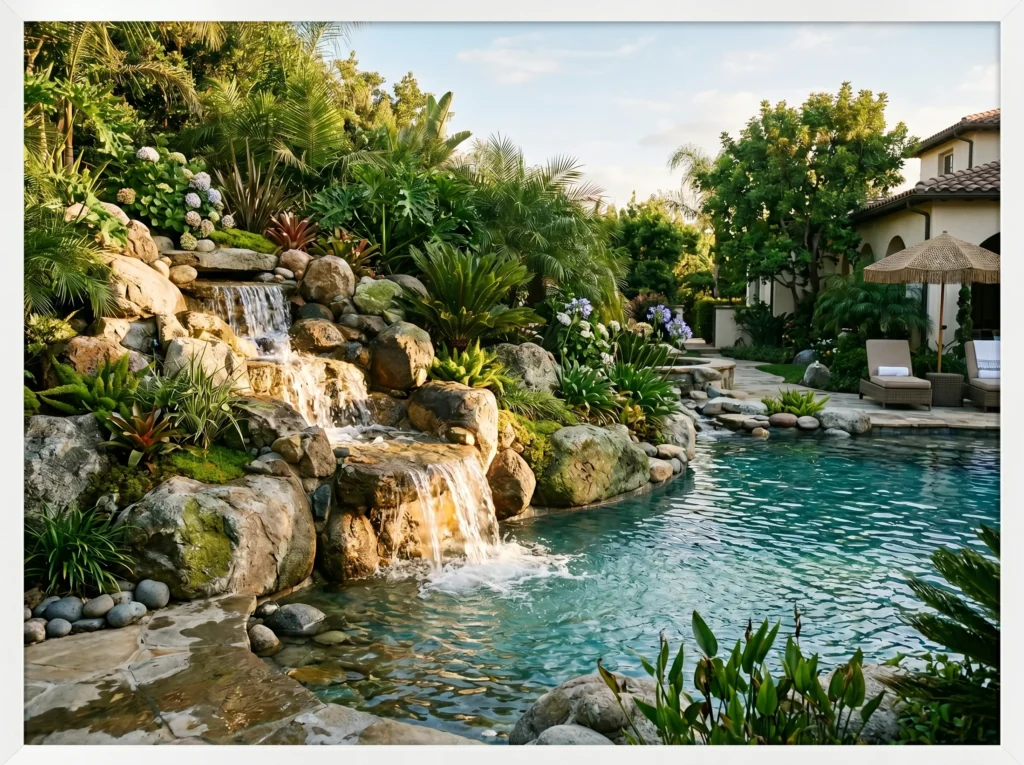
A waterfall feature rising from a rock garden planted with lush greenery creates a naturalistic pool landscaping composition that makes the pool feel like a natural swimming hole rather than a constructed pool. The sound of falling water transforms the acoustic environment of the entire pool area.
The rock garden surrounding the waterfall provides a planting opportunity for moisture-loving ferns, dwarf palms, and tropical groundcovers that thrive in the humidity created by the falling water nearby. The combination of rock, water, and lush planting creates a genuinely immersive pool environment.
Poolside Cabana with Tropical Planting
A poolside cabana surrounded by tropical planting gives swimmers a shaded, private spot to dry off. Broad leafed plants like banana trees or elephant ears reinforce the tropical, resort style feel. This pairing works especially well in warmer climates where tropical plants thrive naturally.
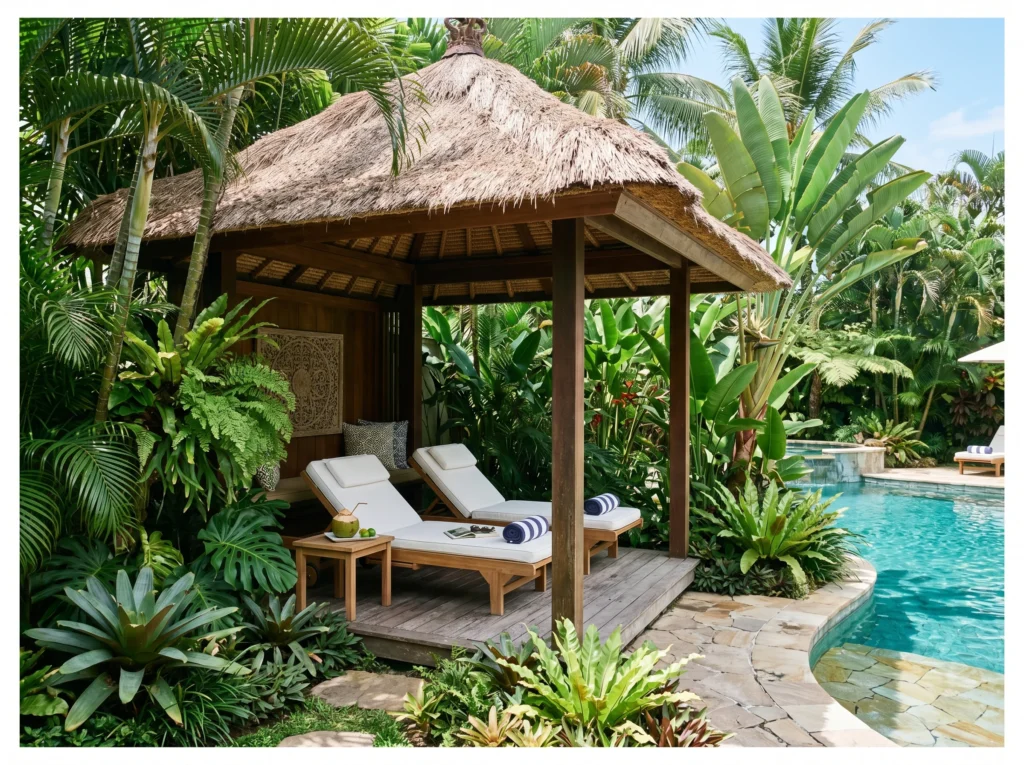
A poolside cabana set within tropical pool landscaping creates the most resort-like backyard environment possible. The combination of a shaded retreat structure and dense tropical planting surrounding it on all sides makes the pool area feel genuinely immersive and luxurious.
Plant the densest and tallest tropical specimens immediately around and behind the cabana rather than spreading them evenly across the entire pool area. Concentrating the planting around the cabana creates a sense of being nestled within a tropical garden that thin, evenly distributed planting can never achieve.
The most resort-like pool landscaping combination available.
Pool with Lavender and Rosemary Borders
Lavender and rosemary planted along a pool border add fragrance that drifts across the water on warm days. Both herbs handle heat and dry soil well, which suits the reflected sun near a pool deck. Their purple and green tones also add soft color without looking overly manicured.
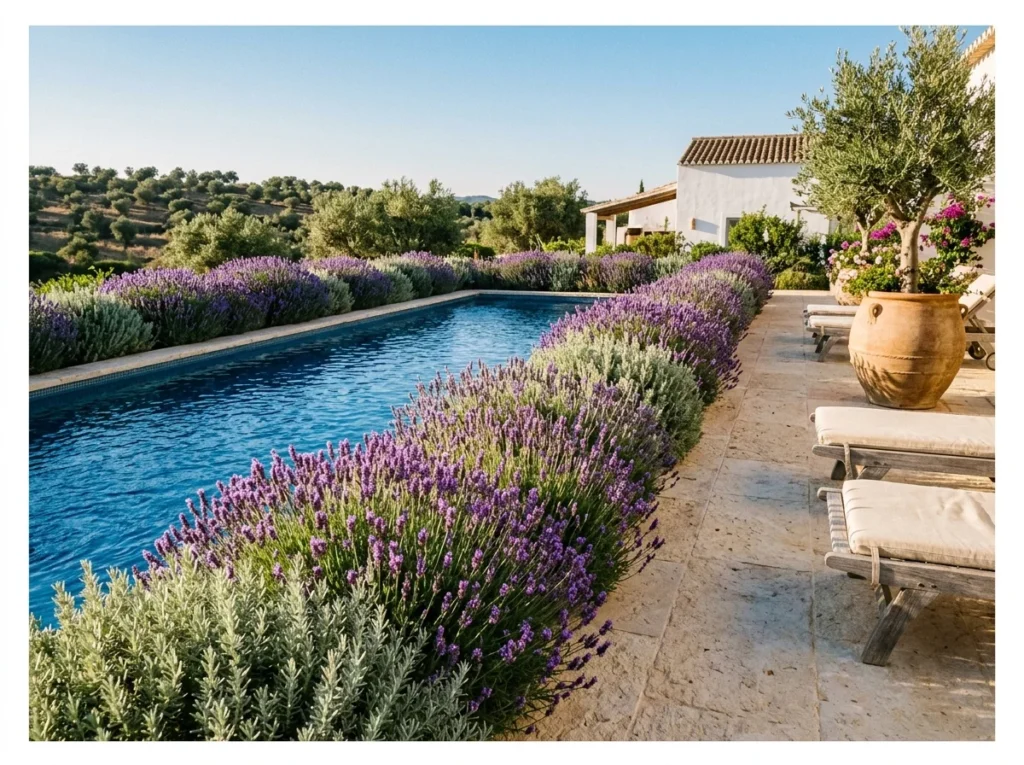
Planting lavender and rosemary in generous sweeping borders along the pool deck edge creates a sensory pool experience that goes beyond visual beauty. The fragrance of both plants intensifies in summer heat and drifts across the pool area in the warm breeze.
Both plants are exceptionally pool-friendly. They do not drop significant debris into the water, tolerate reflected heat from the pool deck, require minimal water once established, and need only light trimming after flowering to stay looking their best. The silvery-grey foliage of rosemary and the purple flower spikes of lavender create a color combination that photographs beautifully in every season.
Pool with Ornamental Fruit Trees
Ornamental fruit trees like citrus or fig add both visual interest and a bit of seasonal fruit near the pool. Their canopy also offers a bit of dappled shade without fully blocking sunlight over the water. Some varieties need occasional netting to keep dropped fruit from ending up in the pool itself.
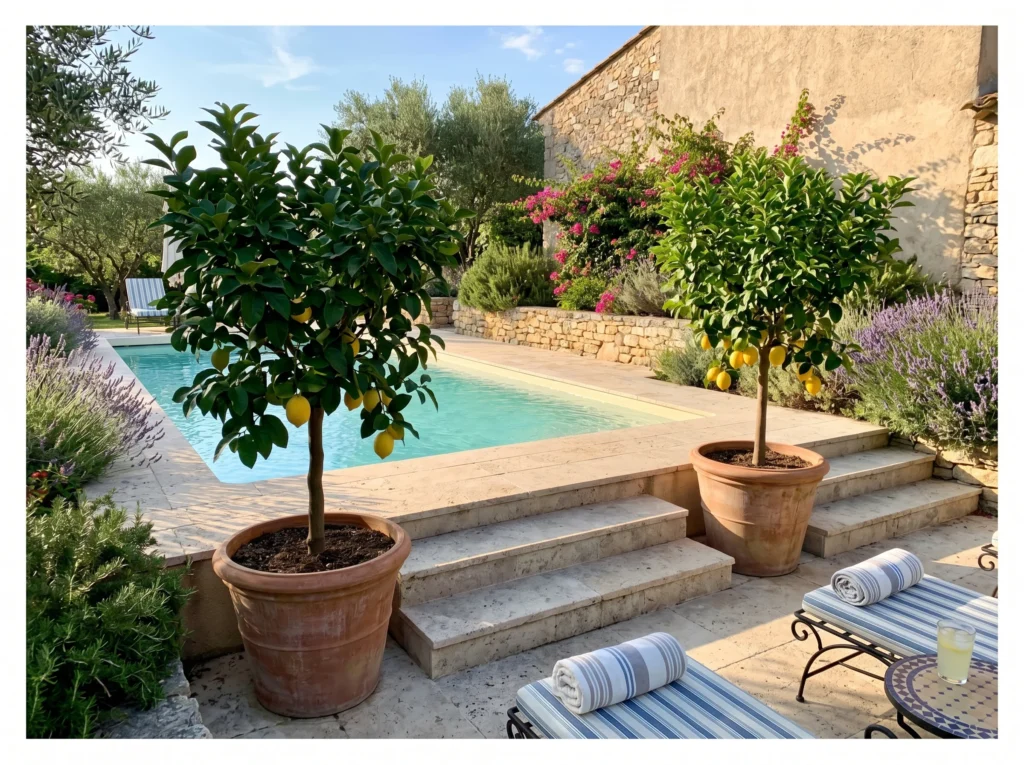
Dwarf citrus trees in large terracotta or concrete pots positioned at pool entry points, patio corners, or along the pool deck perimeter add color, glossy foliage, fragrant blossom, and actual fruit to the pool landscape. Lemon, lime, and dwarf orange trees all suit this application beautifully.
Container growing keeps the roots contained and manageable, preventing any concern about root intrusion near the pool shell. The pots can be moved to adjust the composition seasonally. Dwarf citrus are genuinely low maintenance, requiring only regular watering, annual fertilizing, and occasional light pruning.
Fragrant, fruitful, and completely poolside-friendly.
Pool Landscaping with Lighting
Lighting placed throughout pool landscaping extends how long the area stays usable after sunset. Uplights aimed at trees or plants create shadows and highlights that are invisible during the day. Underwater pool lights combined with garden lighting give the whole space a dramatic nighttime glow.
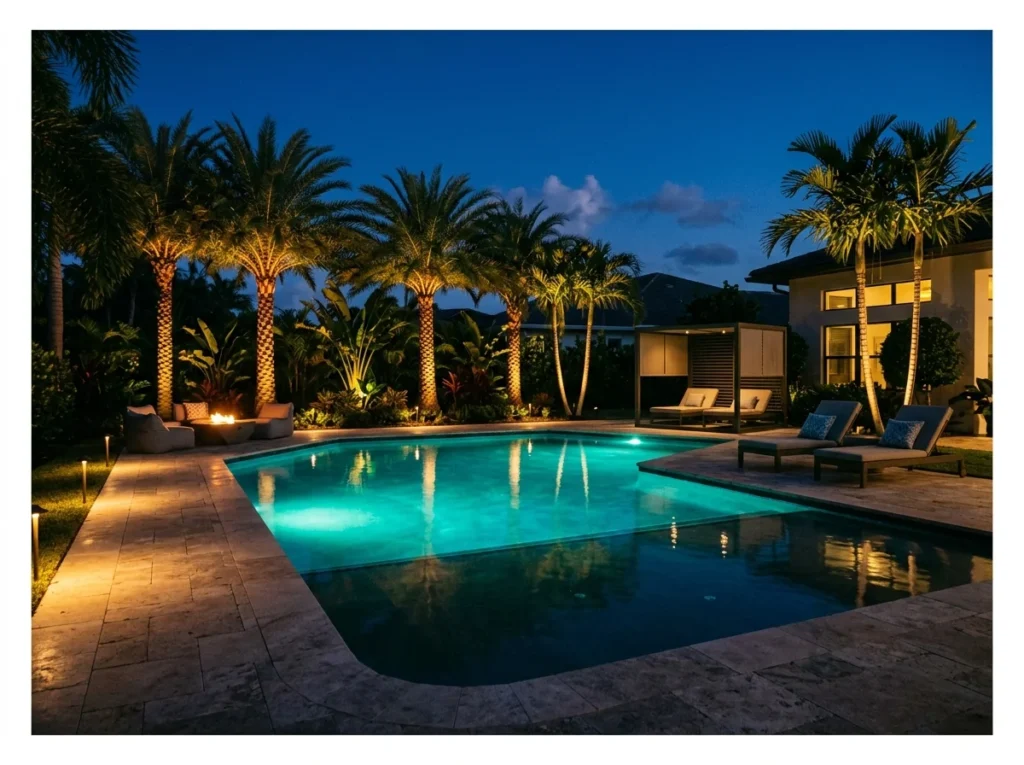
Pool landscaping lighting creates a completely different outdoor experience after dark that is often more spectacular than the daytime version. Uplighting trees and feature plants from below, underwater pool lighting, and path lighting along the deck edge together create a layered nighttime landscape of extraordinary beauty.
LED spike uplights installed at the base of palms and feature trees cast dramatic light up through the canopy. Underwater LED pool lights in warm white or teal illuminate the water from below. Path lights along the deck edge create safety and definition. Together these three lighting layers transform the pool area completely after sunset.
Your pool’s most beautiful hours may be at night.
If you want to extend the season further, a hot tub for cooler evenings pairs beautifully with the same landscaping.
Pool with Grass to Edge Design
A grass to edge pool design lets lawn run right up to the water without a hard deck border in between. This creates a softer, more natural transition compared to a traditional paved pool deck. It works best with durable grass varieties that can handle occasional splashing and foot traffic.
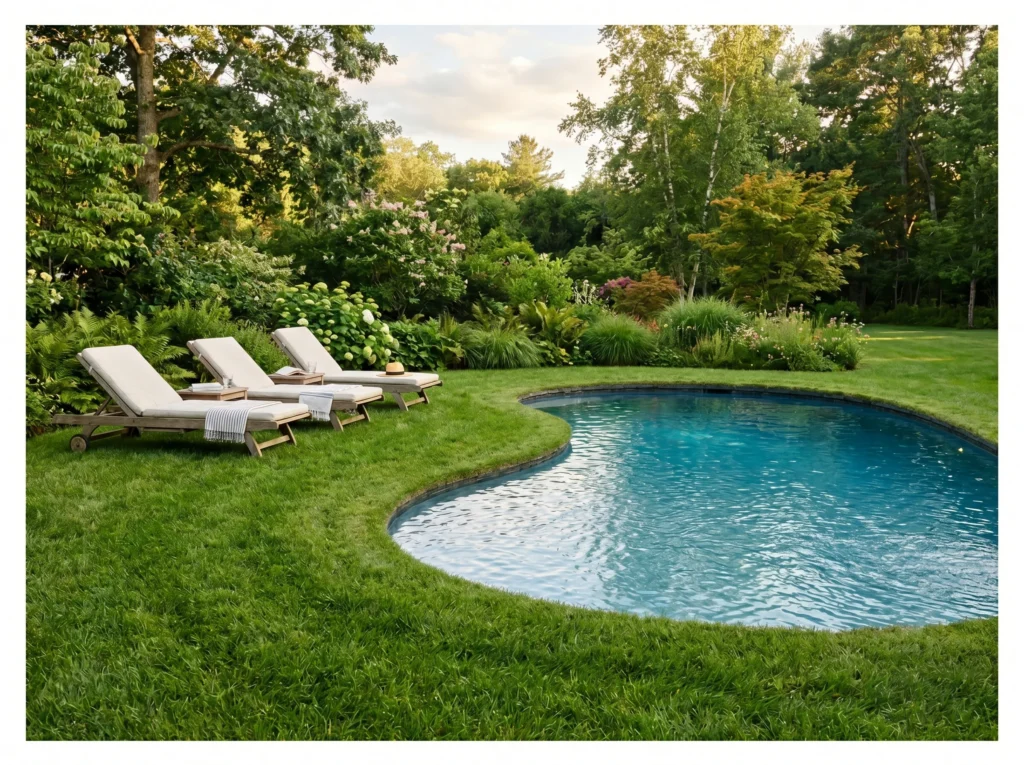
Allowing lawn grass to grow right up to the pool coping edge instead of using a traditional hard paved surround creates a dramatically different aesthetic that is softer, more naturalistic, and more connected to the garden than any stone or concrete pool deck.
This approach works best with a raised pool coping that creates a clear barrier between the grass and the water. The lawn around a grass-to-edge pool must be kept well maintained since patchy or weedy grass at the pool edge looks worse than no grass at all. A freshly edged, dense green lawn meeting a bright blue pool is one of the most visually striking pool landscaping combinations available.
Pool with Japanese Garden Landscaping
Japanese garden landscaping around a pool brings in elements like manicured shrubs, gravel, and carefully placed stones. The design tends to favor calm, balanced compositions over bold or colorful planting. This style suits pools meant to feel more like a tranquil retreat than a lively entertaining space.
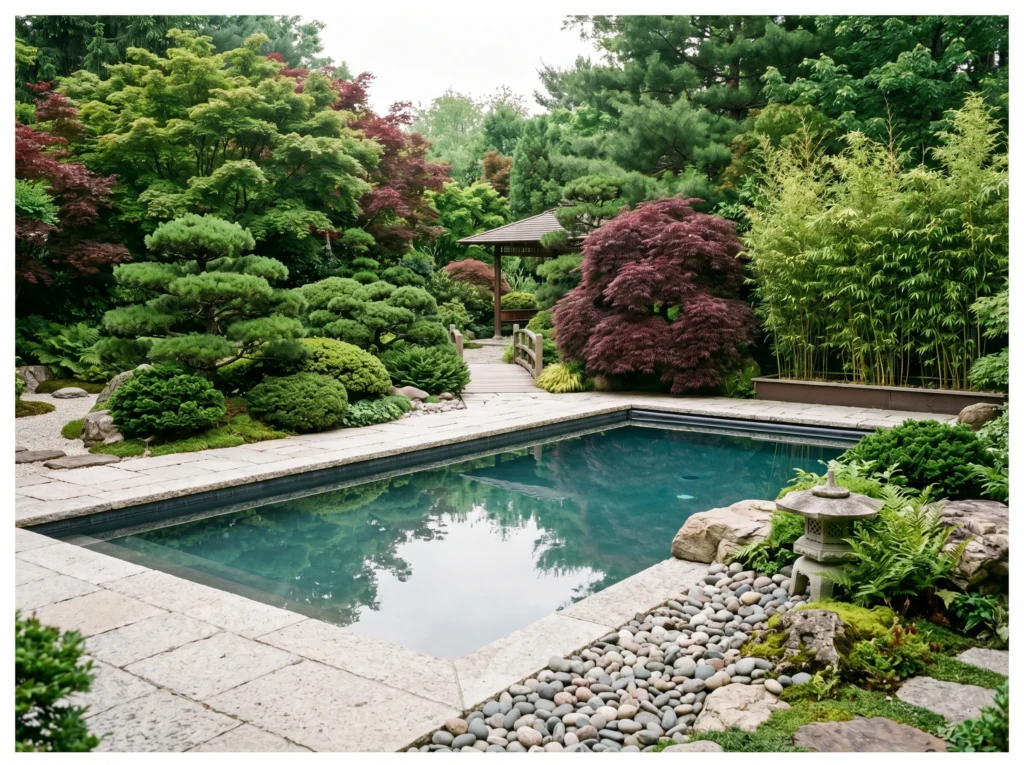
Japanese garden principles applied to pool landscaping create an environment of extraordinary calm and deliberate beauty. Carefully shaped cloud-pruned shrubs, smooth pebble borders between planting zones, a sculpted specimen tree, and contained bamboo accents all define this distinctive aesthetic.
The Japanese garden approach suits rectangular and geometric pool shapes best because the precision of the planting complements the clean lines of the pool. Every plant is chosen for its form and placed with intention. The result has a meditative quality that makes the pool area feel genuinely restorative rather than purely recreational.
Deeply calm, deeply beautiful.
Pool with Timber Deck and Planting
A timber deck around a pool adds warmth that concrete or tile decking often lacks. Planting beds built into the deck layout break up the wood with pockets of greenery. Proper sealing is important since timber near a pool faces constant exposure to water and sun.
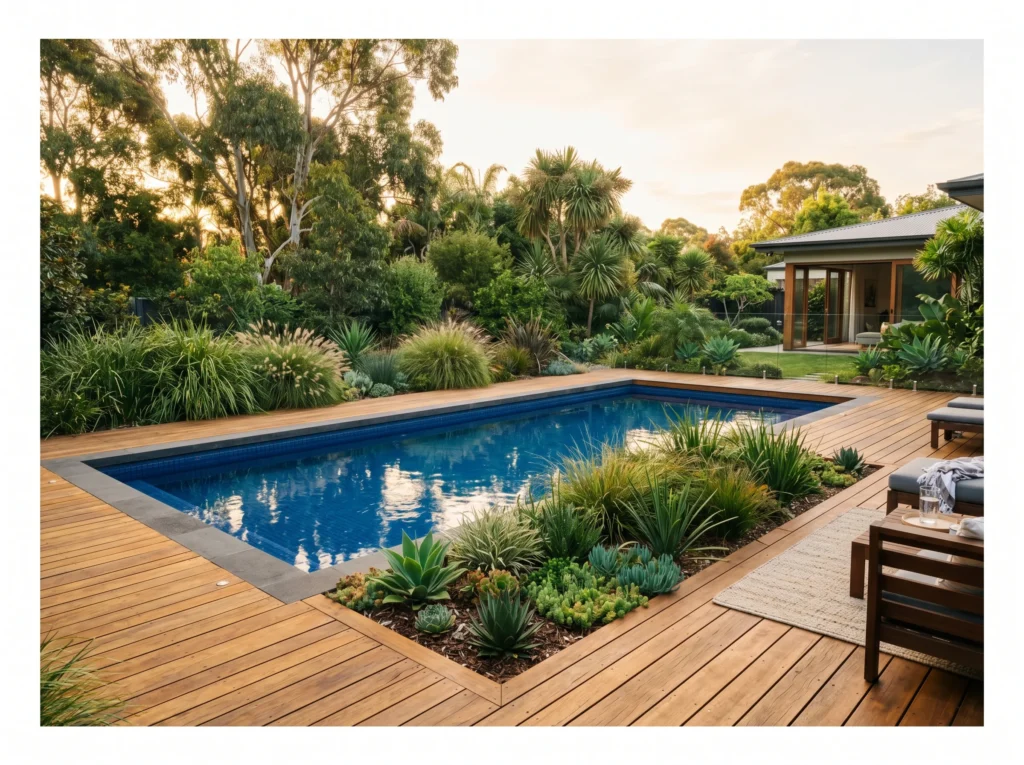
A timber pool deck with planting pockets integrated into the deck design creates a seamless blend of hard and soft materials that makes the pool area feel genuinely luxurious. The warm honey or grey tones of hardwood decking complement pool water color more warmly than grey concrete or stone.
Building planting pockets directly into the deck structure, open sections in the decking board layout where plants grow up through the deck surface, creates an effect where the planting feels integral to the design rather than added around the edges afterward. This technique is particularly effective at the entry points of the deck.
Pool Landscaping with Water Plants
Water plants like lilies or lotus can be grown in a connected pond or water feature near the pool. This adds a different kind of greenery that a regular planting bed cannot replicate. It works particularly well when the pool design already includes a separate water feature nearby.
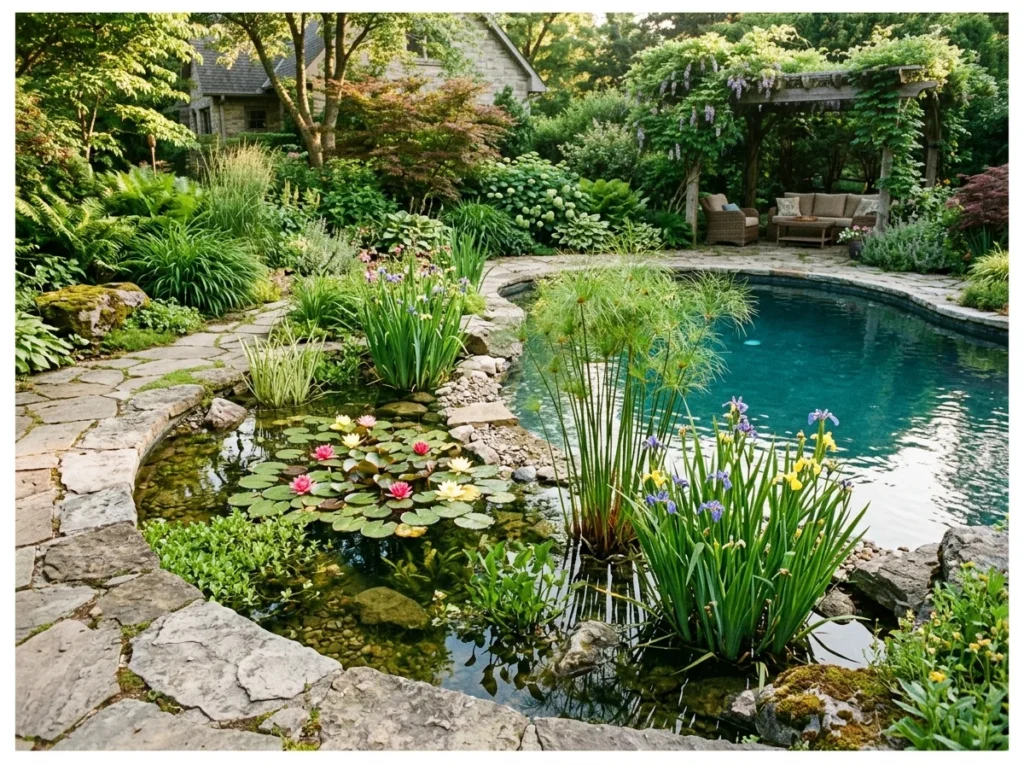
Adding a shallow water garden section connected to the main pool but separated by a low edge creates an aquatic planting zone where water lilies, papyrus, aquatic irises, and marginal plants grow at the pool edge. The planted water garden adds a completely different visual texture and ecological richness to the pool environment.
Water plants filter and oxygenate the adjacent water naturally, attract dragonflies and beneficial insects, and create a layered naturalistic edge to the pool that hard coping alone cannot provide. The transition from formal swimming pool to naturalistic water garden creates a visual complexity that makes the whole pool area more interesting to look at from every angle.
Courtyard Pool with Walled Garden
A courtyard pool enclosed by a walled garden feels private and sheltered compared to an open backyard pool. Walls or tall hedges around the space block wind and outside views at the same time. This layout suits smaller properties where a fully open pool area is not really an option.
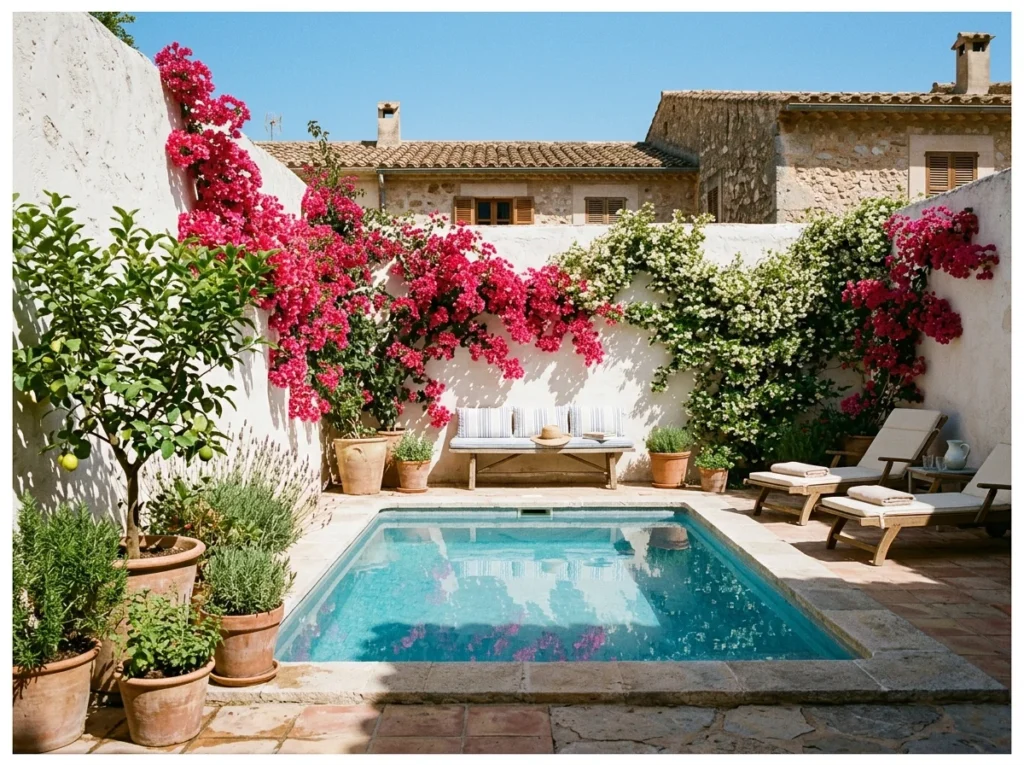
A courtyard pool enclosed by rendered walls covered with climbing plants creates the most private and intimate pool landscaping environment possible. The enclosing walls become a living surface for jasmine, bougainvillea, and climbing roses that frame the pool with cascading color and fragrance.
The enclosed courtyard retains warmth, amplifies fragrance, and creates a sense of complete separation from the outside world that open backyard pools cannot achieve. Terracotta pots at each corner with herbs, dwarf citrus, or clipped box spheres add structure and planting depth without taking up the limited floor space within the courtyard.
The most private pool landscaping environment possible.
Round it out with furniture that suits a resort feel and the courtyard becomes a true private escape.
Conclusion
A pool is a significant investment and the landscaping around it determines whether that investment looks and feels like a luxury retreat or an unfinished project. The planting, paving, privacy, lighting, and structural features around the pool contribute as much to the overall experience as the pool itself.
Start with the ideas from this list that address your most pressing current limitations. If the pool area lacks privacy, start there.Each improvement compounds the effect of the others and the cumulative result always exceeds what any single change alone can achieve.
Once privacy is sorted, outdoor lighting that sets the mood is usually the next upgrade worth making.
Your pool deserves landscaping that makes it look as beautiful from inside the house as it feels to swim in.
And once the landscaping is in place, seating made for outdoor gatherings turns the pool into the place everyone wants to be.