Most backyards sit empty because they lack one thing: a patio that actually invites you to stay. The right design changes that completely.
These ideas turn any backyard into an outdoor living space you genuinely cannot wait to use.
Let’s explore the ideas.
Once you’ve picked a direction, there’s more outdoor living inspiration here to help fill in the rest of the details.
Flagstone Patio with Garden Border
A flagstone patio with a garden border blends natural stone with soft, planted edges around it. The irregular shapes of flagstone give the surface a more organic, less uniform look than poured concrete. Plants along the border help the hard surface blend gently into the rest of the yard.
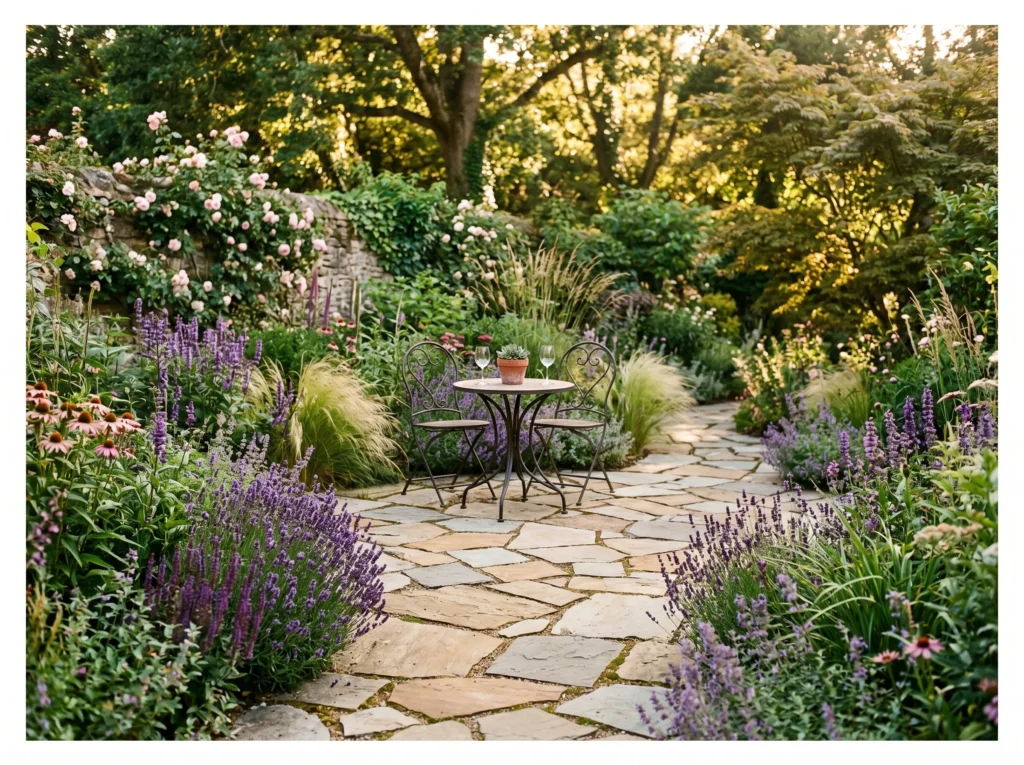
A flagstone patio uses large irregular natural stone pavers laid in a random pattern with planting between the gaps. The organic quality of the irregular shapes gives the patio a natural, lived-in feeling that no manufactured paver can replicate.
Surrounding the flagstone patio with generous planting borders transforms it from a hard surface into a garden room. Lavender, ornamental grasses, salvia, and low groundcovers planted along every edge soften the transition between stone and garden and create the sense that the patio grew from the landscape rather than being imposed upon it.
Natural, organic, and endlessly charming.
Concrete Patio with Fire Pit
A concrete patio built around a fire pit creates a natural gathering spot for cooler evenings. The smooth, durable surface holds up well against heat and sparks compared to wood decking nearby. Seating is usually arranged in a circle to keep everyone close to the warmth.
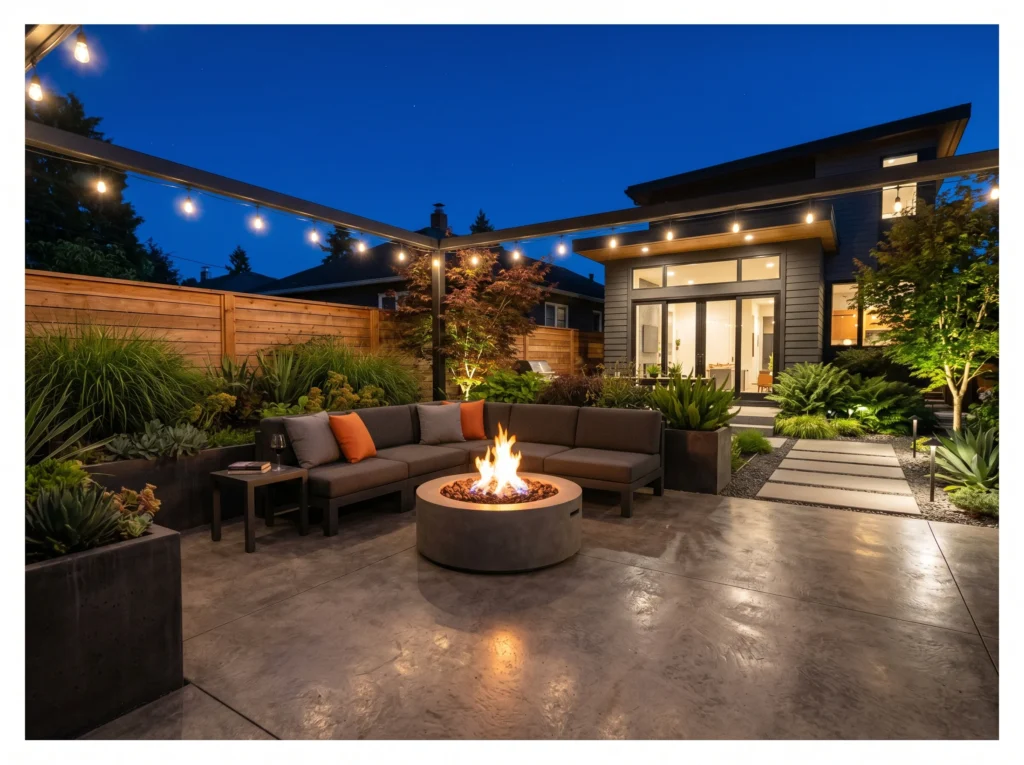
A poured concrete patio with a central fire pit creates an outdoor space that feels both contemporary and genuinely welcoming. The clean geometry of the concrete surface suits modern homes perfectly and ages beautifully with minimal maintenance required.
Fire pits create a gravitational center in any patio design. Every seat faces the fire naturally and conversations flow more easily when everyone shares a common focal point. A built-in concrete fire pit that matches the patio surface material reads as architectural rather than decorative and adds significant visual weight to the overall design.
If a fire pit is part of your plan, there are fire feature ideas worth browsing to help it blend with the surrounding landscape.
Patio with Pergola and String Lights
Adding a pergola with string lights turns a plain patio into a favorite evening hangout. The pergola provides some shade during the day while giving the lights something to hang from at night. Warm white bulbs strung across the beams create a soft, relaxed glow once the sun goes down.
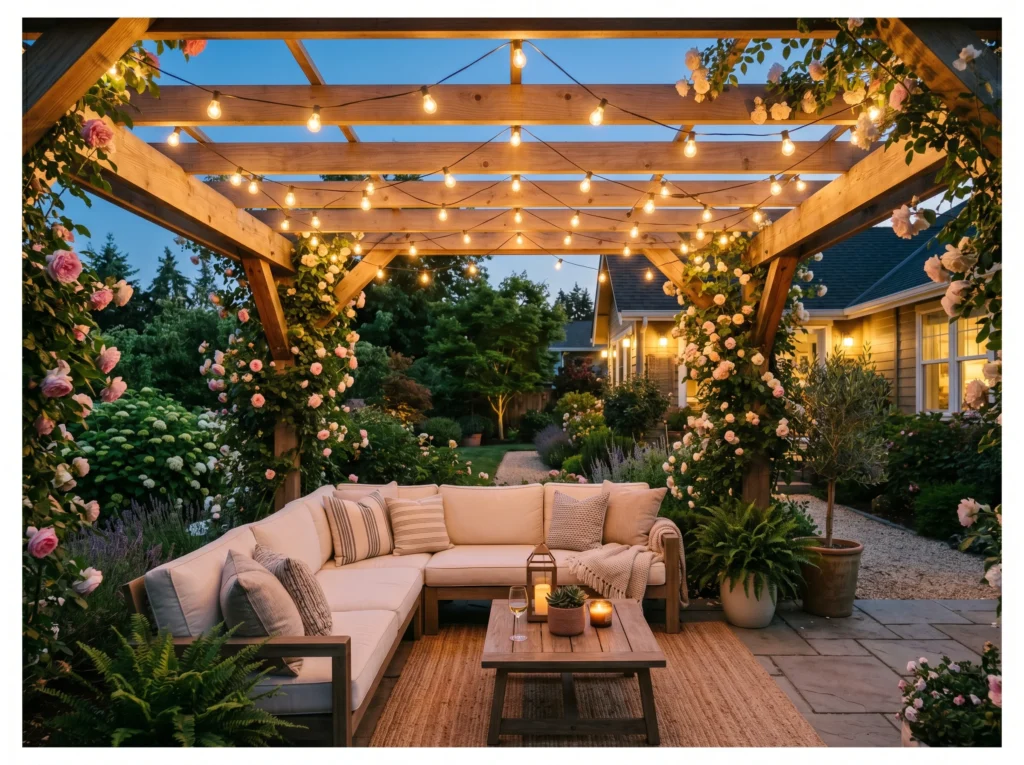
A pergola over a backyard patio instantly creates a defined outdoor room with a ceiling reference that no open sky patio can match. The structure frames the space, supports string lights, and gives climbing plants something beautiful to grow across.
String lights draped across the pergola beams transform the patio completely after dark. The warm amber glow flatters everything beneath it and creates the kind of atmosphere that makes guests linger well past the point when they planned to leave. This combination of pergola and string lights is one of the most consistently popular backyard patio upgrades on Pinterest for good reason.
Magical at night, beautiful during the day.
Brick Patio with Built-In Seating
A brick patio with built in seating combines flooring and furniture into one connected design. Low brick walls doubling as benches save space while keeping the whole layout cohesive. This setup works particularly well for smaller yards where separate furniture would feel cramped.
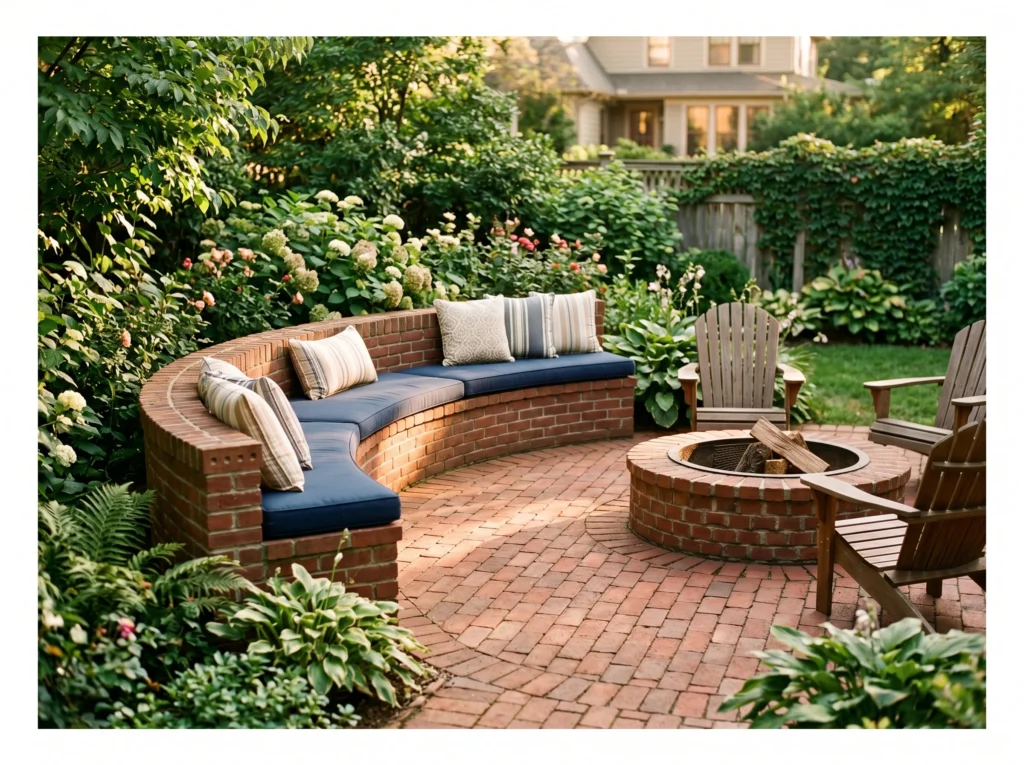
A brick patio with built-in masonry bench seating along one or more edges creates a permanent outdoor living structure that becomes more beautiful as it ages. The built-in benches are made from the same brick as the patio surface, which creates a cohesive and grounded design language.
Built-in seating eliminates the need to drag chairs in and out of storage and gives the patio a defined sense of enclosure without walls. A thick outdoor cushion on each bench seat adds the comfort required for long outdoor gatherings. The bench cavities below can be left open or finished with a hinged door for storage.
Modern Porcelain Tile Patio
A modern porcelain tile patio offers a sleek, uniform surface that resists staining and fading over time. Large format tiles in gray or beige tones are popular for their clean, contemporary appearance. Unlike natural stone, porcelain requires very little sealing or upkeep year to year.
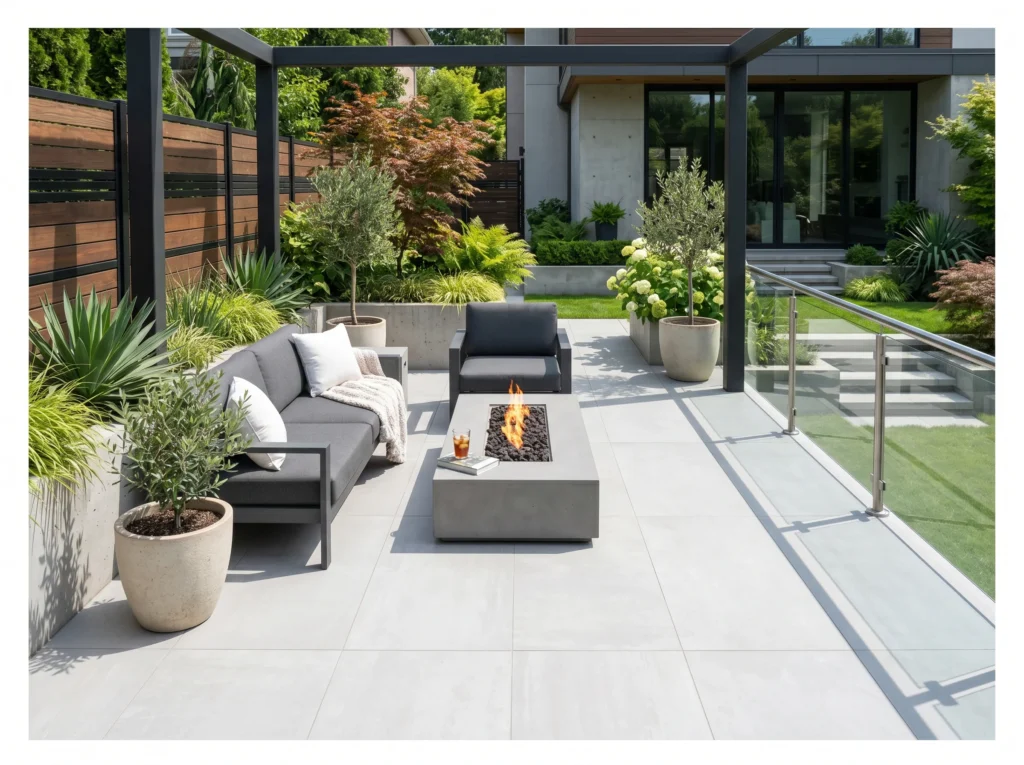
Large format porcelain tiles create the most refined and contemporary patio surface available. A 600×600 or 900×900 millimeter tile laid with minimal grout joints reads as one continuous surface rather than a collection of individual pavers, giving the patio a seamless and sophisticated quality.
Porcelain is frost-resistant, stain-resistant, and requires only occasional sweeping and washing to maintain its appearance over decades. Stone-look porcelain finishes in light grey, warm buff, and charcoal suit contemporary homes beautifully and look equally impressive in every season and every lighting condition.
The lowest maintenance patio surface that always looks expensive.
Patio with Outdoor Kitchen
A patio built around an outdoor kitchen turns the backyard into a functional space for cooking and entertaining. Counters, a grill, and sometimes a sink are commonly built directly into the patio layout. This setup keeps cooking smells and mess outside while still staying close to the dining area.
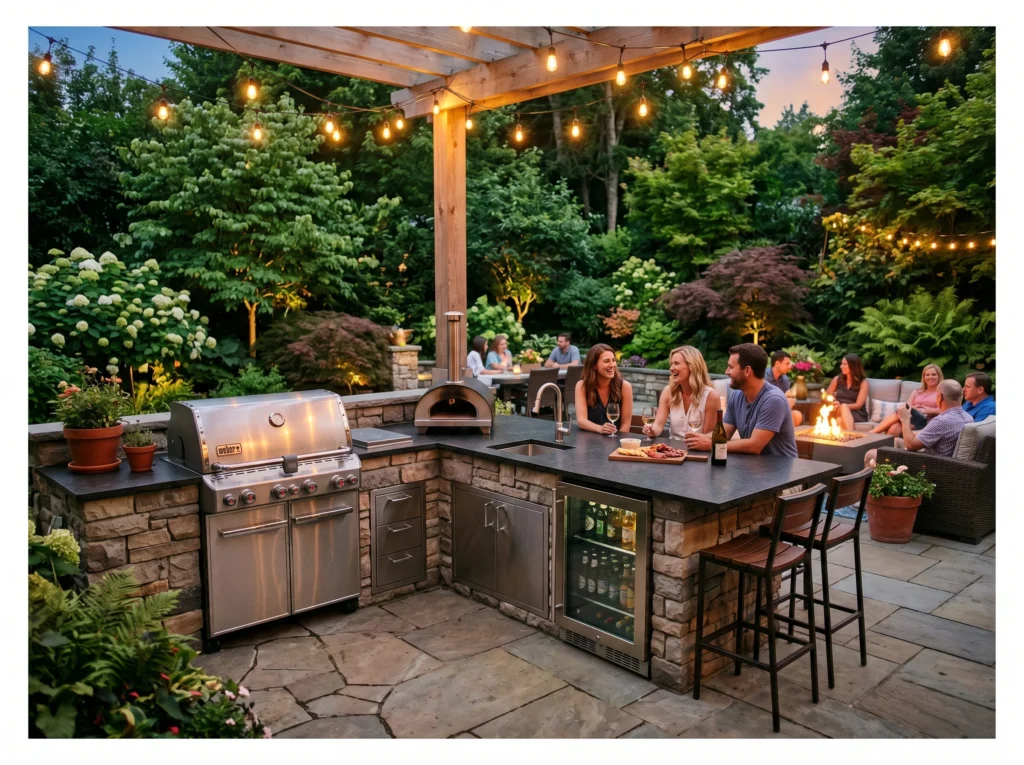
An outdoor kitchen integrated into a backyard patio design changes how you use the entire outdoor space. Instead of running back inside to cook and prepare, everything happens on the patio. The host stays present with guests and the whole backyard becomes a connected social environment.
Even a simple outdoor kitchen with a built-in grill, stone prep counter, and underbench fridge creates this effect. More elaborate setups add sinks, pizza ovens, smokers, and refrigerated drawers. The investment in outdoor kitchen infrastructure consistently delivers the highest daily use return of any patio upgrade.
If a built-in kitchen appeals to you, there are outdoor cooking setups worth exploring to help plan the layout.
Boho Patio with Layered Rugs
A boho patio uses layered outdoor rugs to add pattern and warmth to an otherwise hard surface. Mixing different textures and colors gives the space a relaxed, collected over time feeling. Rattan furniture and floor cushions often complete the look alongside the rugs.
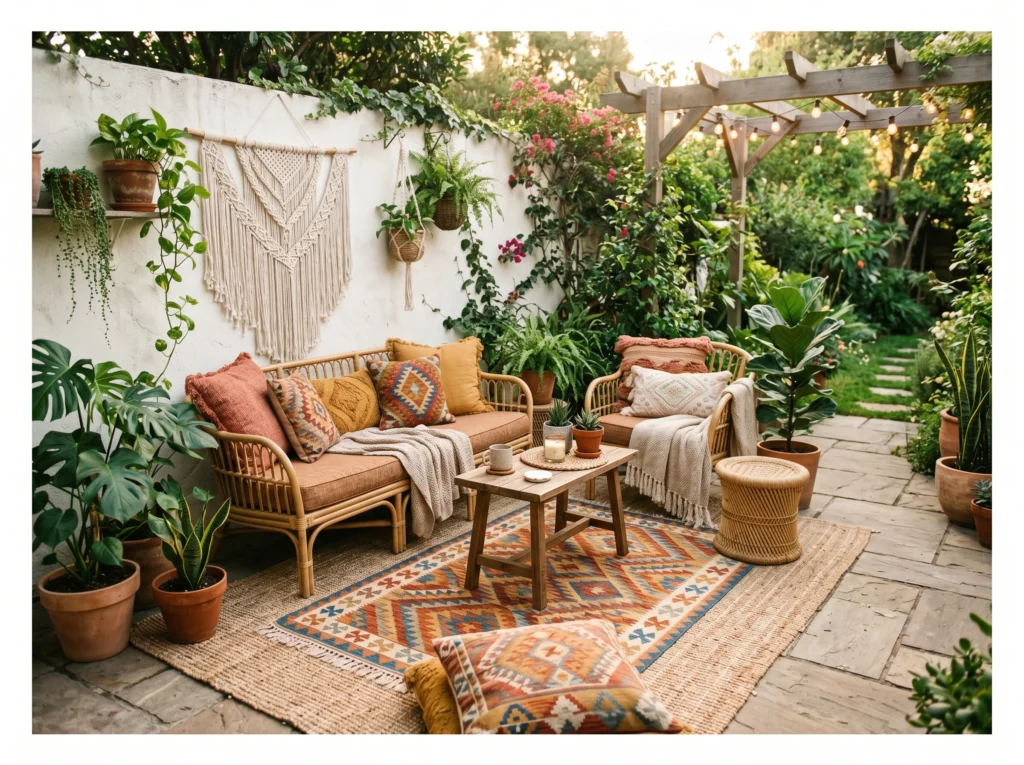
A boho patio design layers outdoor rugs, natural materials, and abundant planting to create a backyard space that feels rich, personal, and completely relaxed. Two rugs layered with complementary patterns, rattan or wicker furniture, and terracotta pots overflowing with plants define this style immediately.
The boho patio is the most forgiving outdoor design style available because mismatched pieces and imperfect combinations add to the character rather than detracting from it. Start with a large outdoor rug and build outward from there. Every new piece simply adds to the layered, collected quality that makes this style so appealing and so widely shared on Pinterest.
Warm, rich, and endlessly full of personality.
Patio with Water Feature
A patio with a water feature adds the sound of moving water to an otherwise quiet outdoor space. Small fountains or bubbling urns are common choices since they do not require much room. The gentle background noise also helps mask sounds from nearby streets or neighbors.
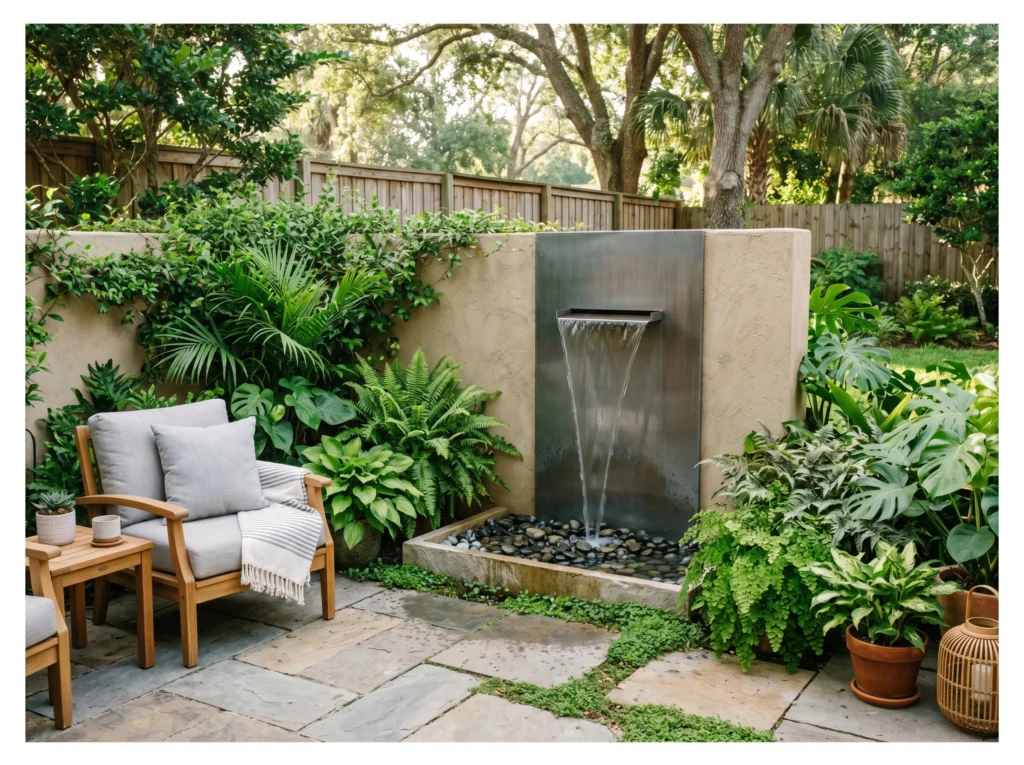
A water feature brings a sensory dimension to a backyard patio that no furniture or planting can replicate. The gentle sound of moving water creates a sense of privacy, masks street noise, and makes the entire patio feel significantly more calming from the moment you sit down.
Wall-mounted water features work brilliantly on patios where floor space is limited. Even a simple self-contained bubbling stone or ceramic bowl fountain introduces the sound and movement of water without requiring plumbing or significant installation. The effect on the atmosphere of a patio is always disproportionate to the cost and effort involved.
Patio with Privacy Wall
A privacy wall built along one side of a patio blocks the view from close neighbors or a busy street. Materials like wood slats, concrete, or even living green walls are all common options. This addition turns an otherwise open patio into a more secluded, private corner of the yard.
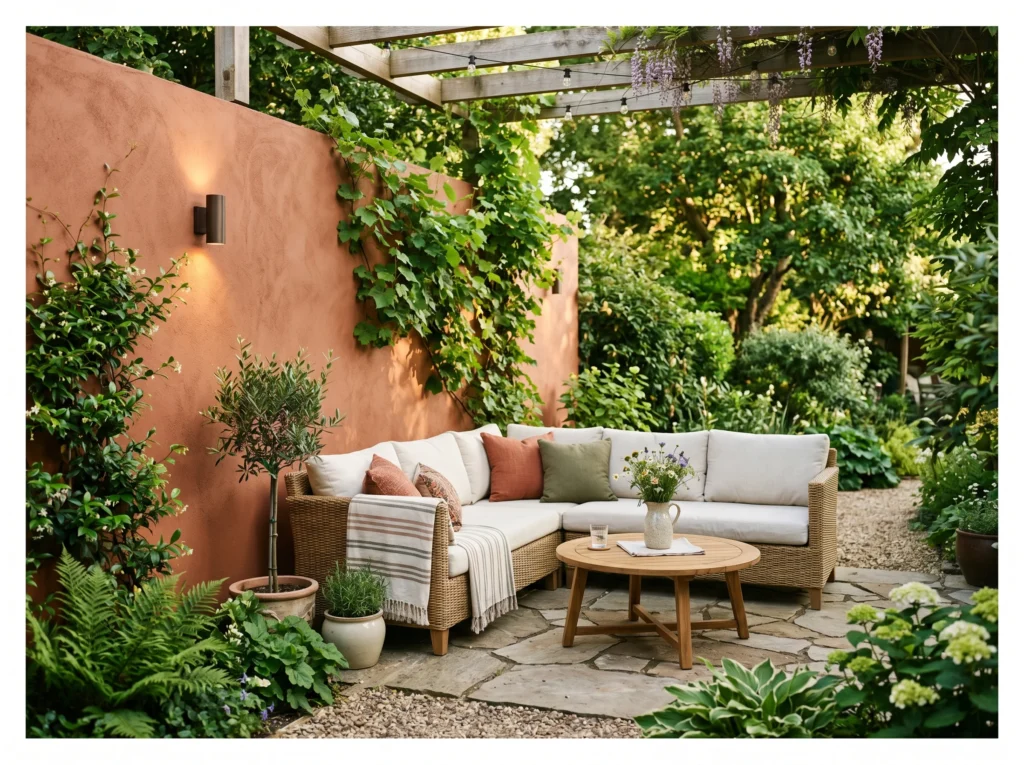
A privacy wall along one or two sides of a backyard patio transforms an exposed outdoor surface into an intimate outdoor room. The wall defines the space, blocks wind and neighboring sightlines, and creates a backdrop for planting, art, and lighting that an open patio boundary cannot provide.
Rendered masonry walls, timber screen walls, Corten steel panels, and gabion baskets filled with stone all create privacy with different aesthetic results. A rendered wall painted in a warm color becomes a design feature in its own right. Train climbing plants up the face and within two seasons the wall becomes a living green backdrop.
For more privacy screening worth adding, it’s worth seeing how other structures pair walls with living greenery like this.
Covered Patio with Ceiling Fan
A covered patio with a ceiling fan stays comfortable even during warmer months when the air feels still. The fan keeps air circulating underneath the roof, which makes a real difference on humid days. This combination extends how often the patio actually gets used throughout the year.
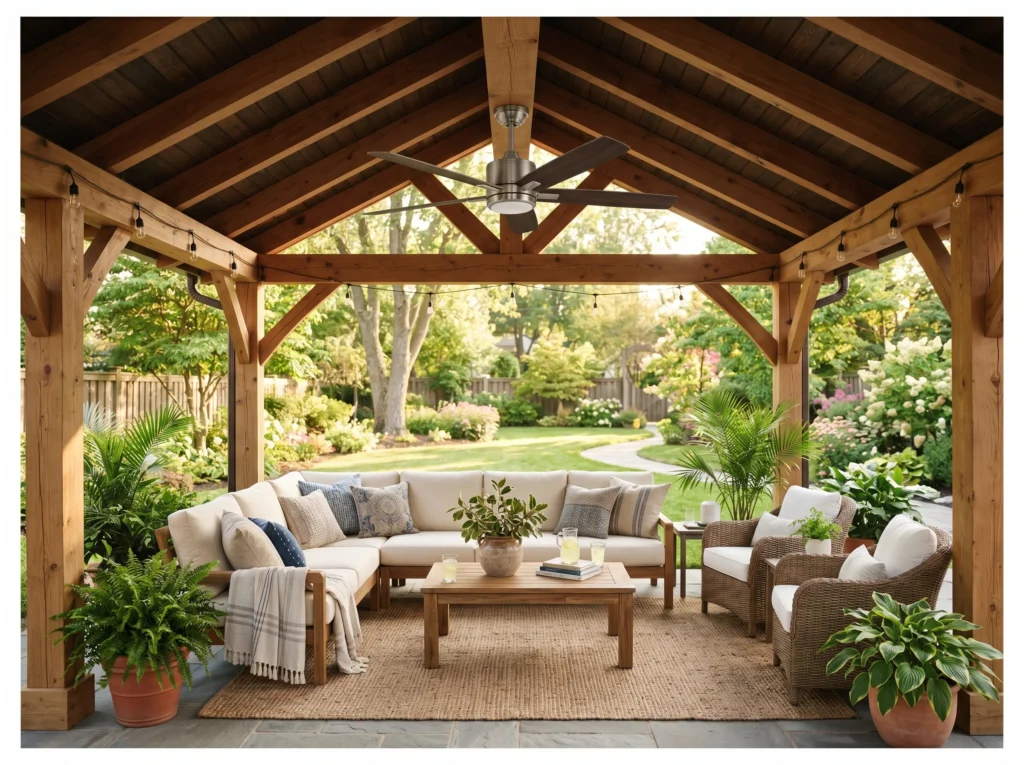
A covered patio with a ceiling fan creates a genuinely usable outdoor space in warm climates where direct sun and heat would otherwise limit how long and how comfortably the patio can be used. The ceiling fan moves air continuously and makes the temperature beneath the cover feel several degrees cooler.
Outdoor-rated ceiling fans are specifically designed to handle moisture and humidity. They come in sizes from 120 to 180 centimeters in diameter and suit covered patio spans from small to very large. Choose a fan with a reversible motor so the same unit can provide cooling airflow in summer and circulate warm air downward in cooler months.
Comfortable outdoor living in any temperature.
Patio with Raised Planters
Raised planters built into a patio layout add greenery without taking up much floor space. Herbs, flowers, or small shrubs are commonly grown in these built in beds. The raised height also makes it easier to tend to plants without bending down too far.
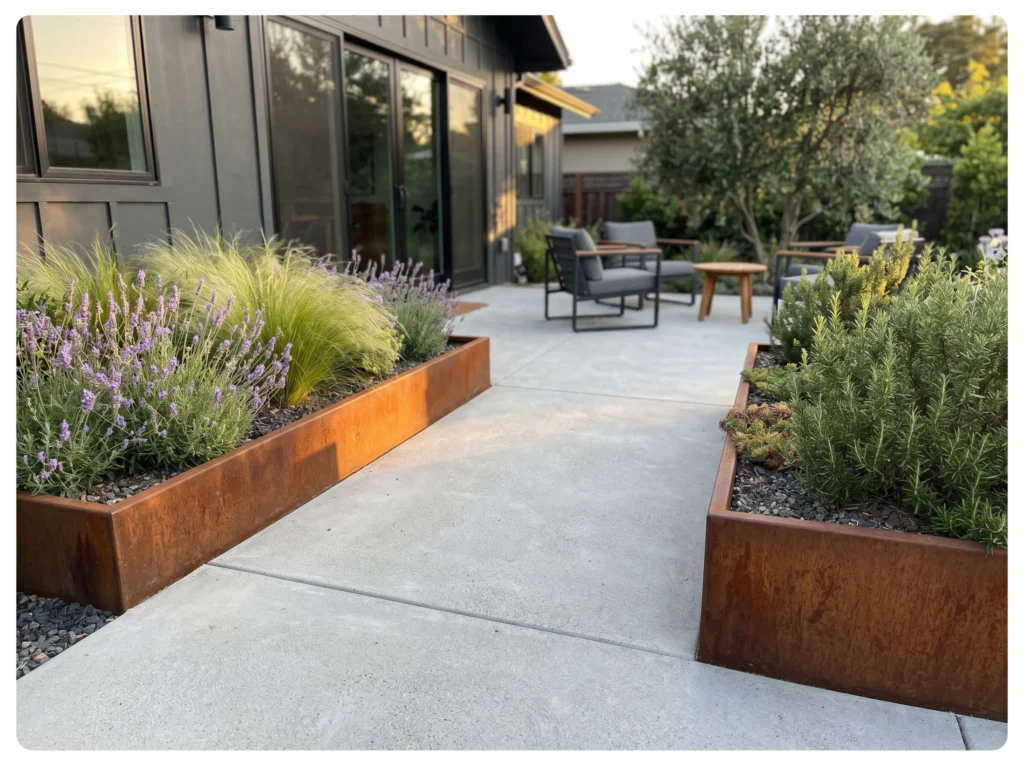
Raised planters integrated into a backyard patio design bring the garden up off the ground and into the patio space itself rather than keeping it at the perimeter. Planters flanking the patio edges define the boundaries and create a sense of enclosure without solid walls.
Corten steel planters develop a rich rust-orange patina outdoors that looks genuinely stunning against concrete, porcelain, and pale stone patio surfaces. Concrete block planters suit minimalist and contemporary patios. Timber-framed raised beds suit farmhouse and natural garden styles. All three bring planting into the patio composition in a structured and intentional way.
Farmhouse Patio with Reclaimed Wood
A farmhouse patio using reclaimed wood brings a weathered, rustic character to the outdoor space. Old barn boards or salvaged timber are often used for decking, furniture, or accent walls. This approach also tends to be more sustainable since it reuses materials instead of buying new.
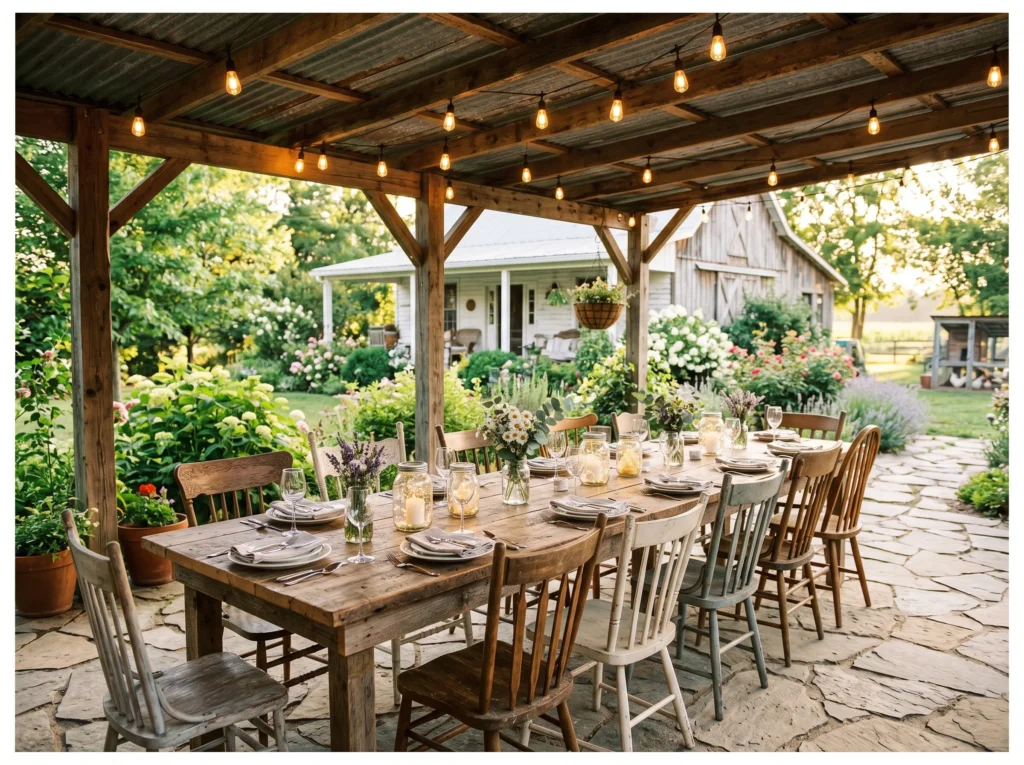
A farmhouse backyard patio centers around natural, honest materials and a relaxed sense of comfort that never feels precious or overdone. Reclaimed timber, corrugated metal accents, galvanized metal details, and Edison bulb lighting all contribute to the warm, unpretentious aesthetic.
The farmhouse patio works especially well as a dining destination. A long reclaimed timber table that seats eight to ten creates the kind of gathering space where family dinners and casual entertaining feel genuinely special. The slightly rough-edged material quality is exactly what gives it warmth and character that manufactured surfaces cannot replicate.
Patio with Sectional Sofa and Daybed
A patio furnished with a sectional sofa and daybed feels closer to an outdoor living room than a typical backyard space. The daybed adds a spot for lounging or napping that a regular sofa cannot really offer. Weatherproof fabric covers are worth choosing since cushions left outside face sun and rain often.
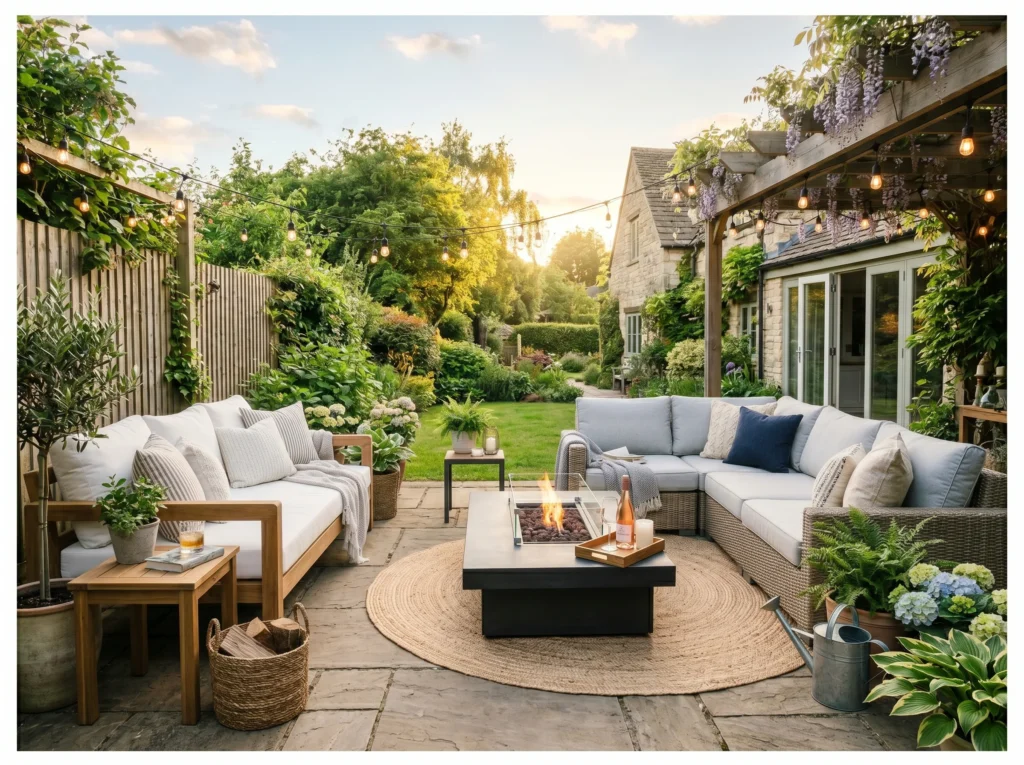
A backyard patio with two seating zones, a sectional sofa for group lounging and a daybed for individual rest creates an outdoor living space with genuine depth and flexibility. The two zones serve different moods and uses without requiring more than one unified patio area.
The daybed adds a dimension of proper rest that upright seating cannot provide. Wide enough to lie down comfortably, positioned to catch the afternoon breeze, and draped with a linen throw, a patio daybed becomes the most competed-for spot in the entire backyard during warm months.
Furniture built for lounging outdoors like this daybed is worth exploring further to round out the whole seating plan.
Pure outdoor luxury on your own patio.
Courtyard Patio Design
A courtyard patio is usually enclosed on multiple sides, giving it a more private and sheltered feel. Walls or fencing around the space help block wind and create a quieter atmosphere than an open backyard. This layout works particularly well for townhomes or properties with limited outdoor space.
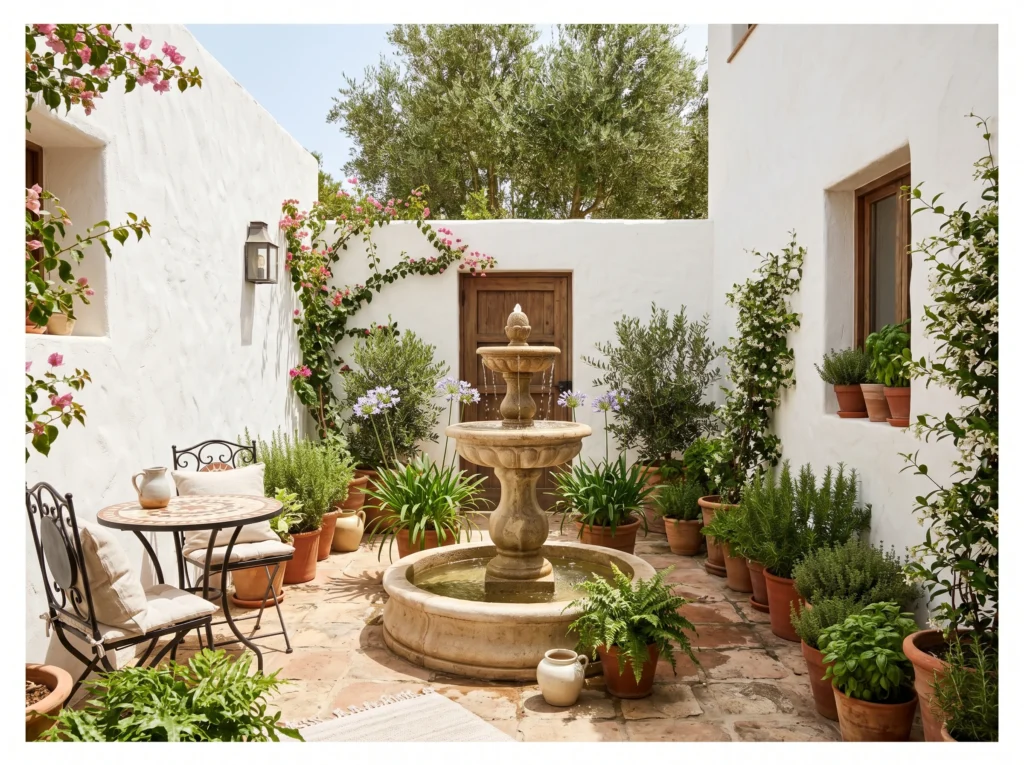
A courtyard patio uses the enclosing walls on multiple sides to create a private outdoor room that feels completely separate from the street and neighboring properties. The defined enclosure amplifies sound from a water feature, retains warmth in cooler weather, and creates a genuinely intimate atmosphere.
Courtyard patios suit homes with an internal courtyard opening or homes where a walled garden can be created off a main living area. The walls become part of the design, planted with climbers, hung with wall sconces, or painted in a warm plaster tone that bounces afternoon light beautifully across the space.
Complete privacy in your own backyard.
Patio with Shade Sail
A patio with a shade sail uses stretched fabric panels instead of a solid roof for coverage. The sail can be angled to block sun at specific times of day depending on how it is anchored. This gives a more casual look compared to a traditional pergola or covered structure.
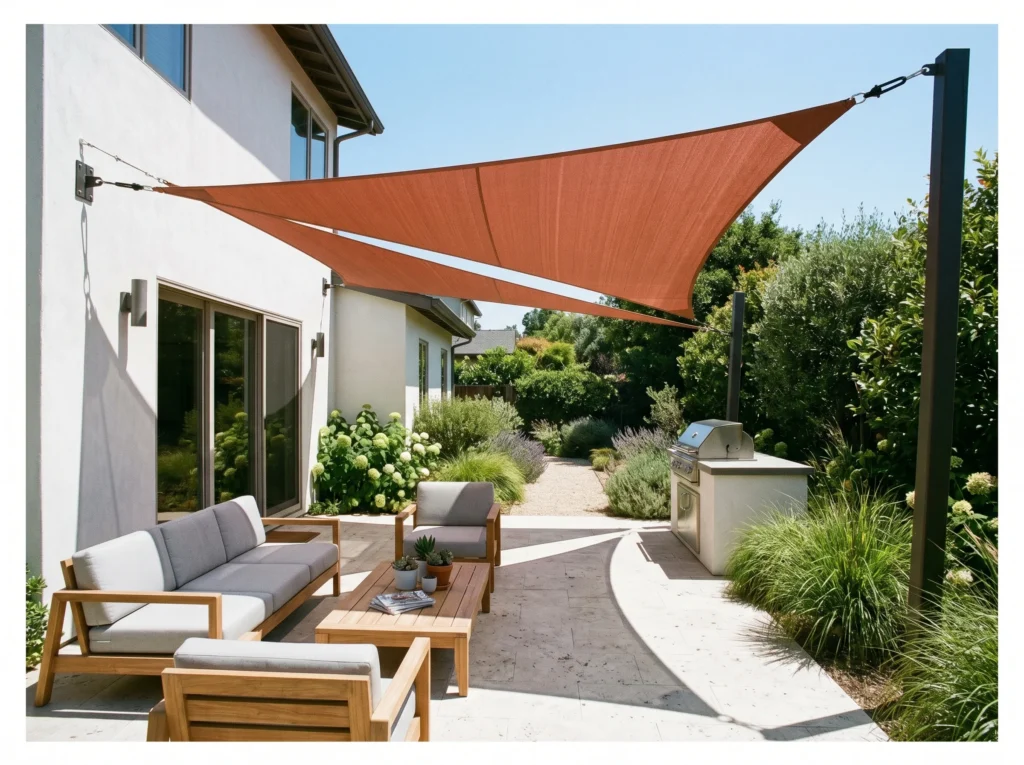
A shade sail provides overhead sun protection without requiring a permanent solid structure. The tensioned fabric creates a geometric overhead plane that defines the patio space visually and delivers significant UV and temperature reduction beneath it.
Installing the sail at an angle between posts of different heights creates better rain runoff and a more dynamic overhead composition than a horizontal installation. Terracotta, charcoal, navy, and sand are the most popular shade sail colors and all complement natural outdoor furniture and paving tones without competing with the garden planting.
Instant shade without permanent construction.
Patio with Gravel and Stepping Stones
A patio combining gravel and stepping stones creates a more casual, garden like walking surface. The gravel allows for natural drainage while the stepping stones guide foot traffic in a clear path. This combination also tends to be more budget friendly than a fully paved patio.
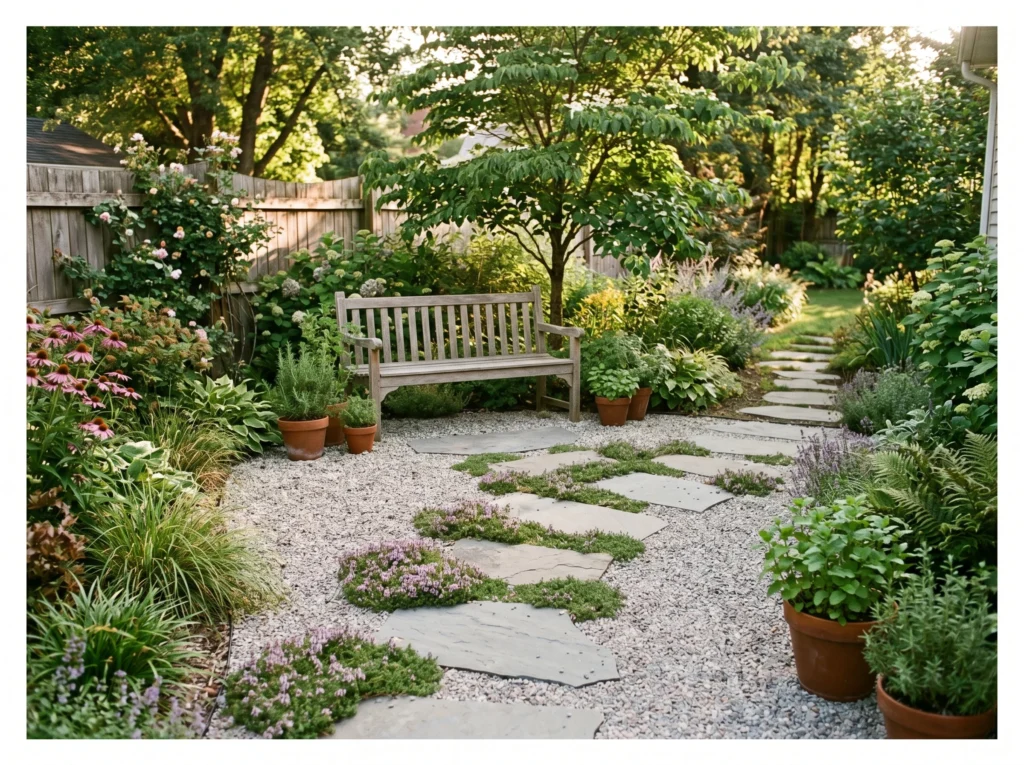
A gravel patio with large stepping stones creates one of the most naturalistic and lowest-cost patio surfaces available. The gravel drains perfectly after rain, stays cool underfoot, and looks completely at home in cottage, Mediterranean, and naturalistic garden styles.
Planting low creeping groundcovers like thyme or chamomile between and around the stepping stones takes the look from simple to genuinely beautiful. The plants soften the hard edges of the stones, release fragrance when lightly brushed, and create a patio surface that looks like it has been there for decades.
Budget-friendly option that looks completely natural.
Japandi-Inspired Backyard Patio
A Japandi inspired patio blends Japanese minimalism with Scandinavian simplicity in its furniture and layout. Natural wood tones, neutral colors, and a limited plant selection are typical features of this style. The result feels calm and uncluttered rather than busy or overly decorated.
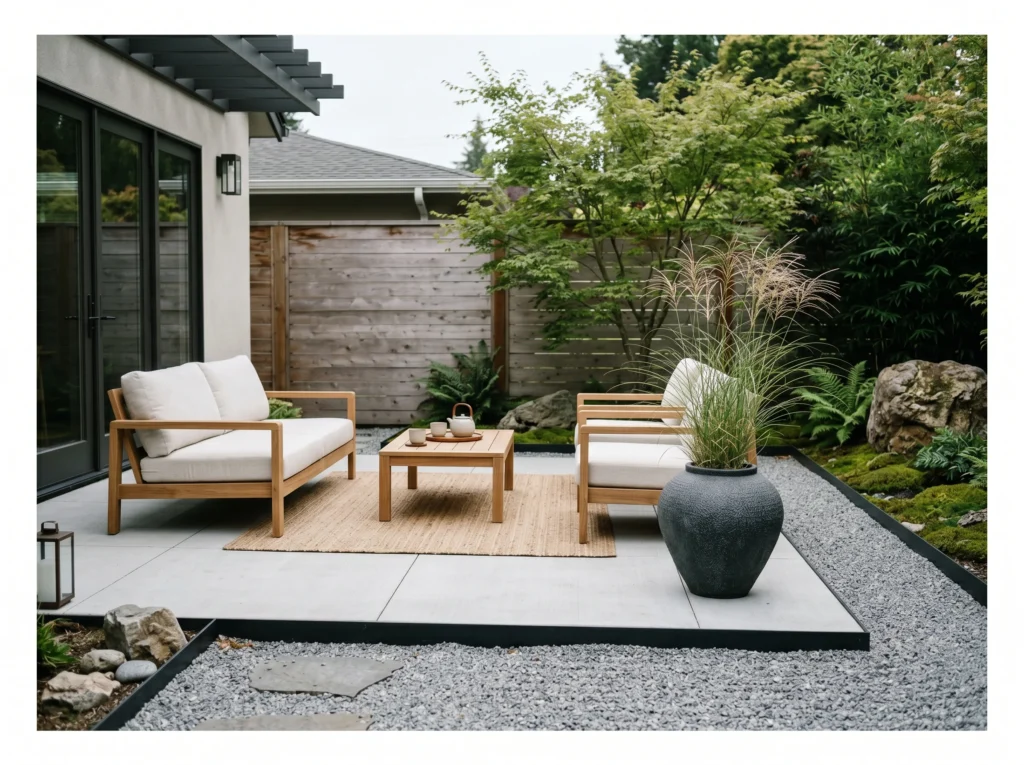
A Japandi backyard patio applies the principles of Japanese minimalism and Scandinavian material warmth to create an outdoor space that feels deeply calm, carefully edited, and unlike any other backyard on the street. Every material, plant, and furniture piece is chosen with intention.
Clean-lined teak furniture, smooth paving with no visual noise, a single sculptural specimen plant, and matte black architectural details in the edging and hardware create the Japandi palette outdoors. Resist the urge to add more once the composition feels balanced. The restraint is what makes it genuinely extraordinary.
Less is genuinely more with this approach.
Patio with Outdoor Dining Room
A patio set up as an outdoor dining room usually centers around a large table with proper seating. Overhead coverage, whether a pergola or simple canopy, helps define the space like a ceiling. This works well for families who eat outside often rather than just occasionally.
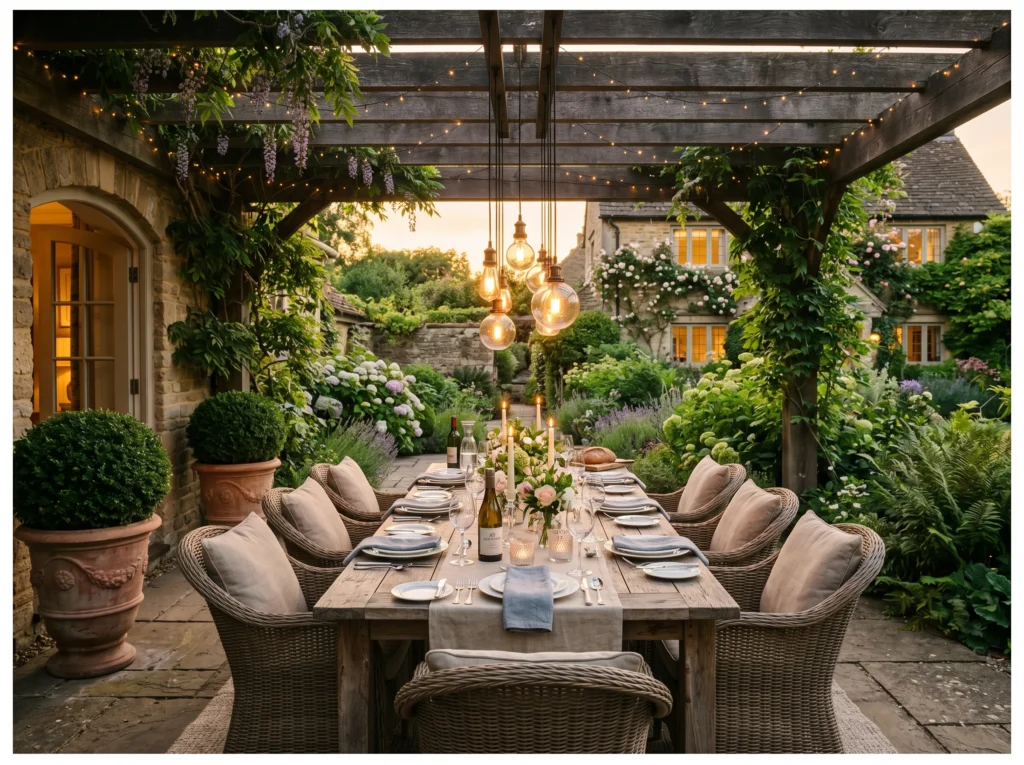
Dedicating a section of the backyard patio specifically to a permanent dining table and chairs creates an outdoor dining room that elevates every meal shared there. The defined dining zone has its own overhead lighting, its own furniture scale, and its own clear purpose.
Pendant lights hung from the pergola or overhead structure at table height provide intimate, warm dining light that makes every meal feel like a special occasion. A long table that seats eight or more encourages the kind of long, lingering dinners that become the most memorable evenings of the year.
Patio with Garden Lighting
Garden lighting around a patio highlights nearby plants and pathways once the sun goes down. Soft spotlights or string lights are common choices that do not overpower the seating area itself. This addition makes the patio feel connected to the rest of the yard even after dark.
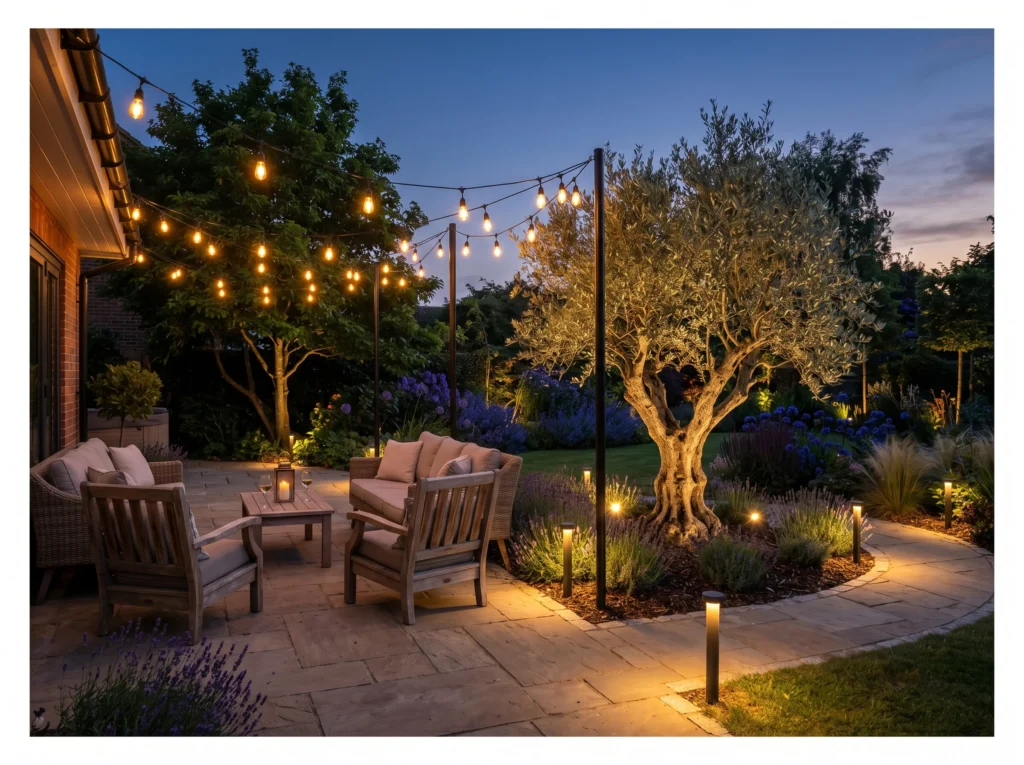
A backyard patio with layered garden lighting becomes a completely different space after dark. Ground-level path lights, tree uplights, overhead string lights, and candles on surfaces together create a depth and warmth that daytime light cannot replicate.
The key is using multiple light sources at different heights rather than relying on a single overhead fixture. Uplighting trees and plants creates drama and depth. Path lighting adds safety and definition. Overhead string lights create intimacy. Candles add a flickering warmth that no electric fitting can fully replicate.
Your patio’s best hours might be after sunset.
Small Patio for Compact Backyard
A small patio designed for a compact backyard makes the most of limited square footage. Compact furniture and multi purpose pieces help avoid a cramped or cluttered feeling. Even at a smaller size, it can still function as a proper spot for sitting or dining outside.
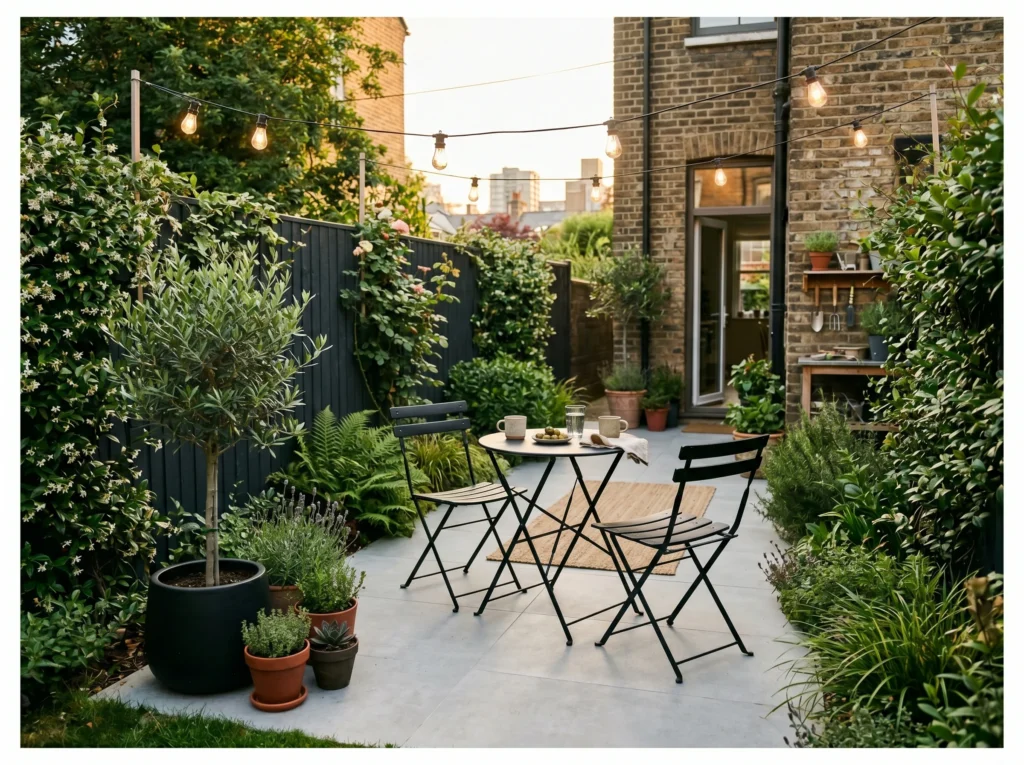
A small backyard patio works beautifully when the design is scaled correctly to the space. One round table and two chairs, a single statement plant in a quality pot, and good overhead lighting is genuinely all you need to create a small patio that feels intentional and genuinely enjoyable to spend time in.
The most common mistake in small patios is using furniture that is too large for the space. A round table always works better than a rectangular one in tight spaces because it takes up less visual room and allows people to sit closer together naturally. Keep the paving material simple and consistent to avoid visual noise that makes the space feel even smaller.
For more small-space patio layouts worth trying, it helps to see how other tight backyards solve this same scale challenge.
Perfect for small spaces.
Multi-Level Patio Design
A multi level patio uses different elevations to separate distinct areas like dining, lounging, or a fire pit. Steps or low walls typically mark the transition between each level. This layout works especially well on sloped yards where a single flat patio would not be practical.
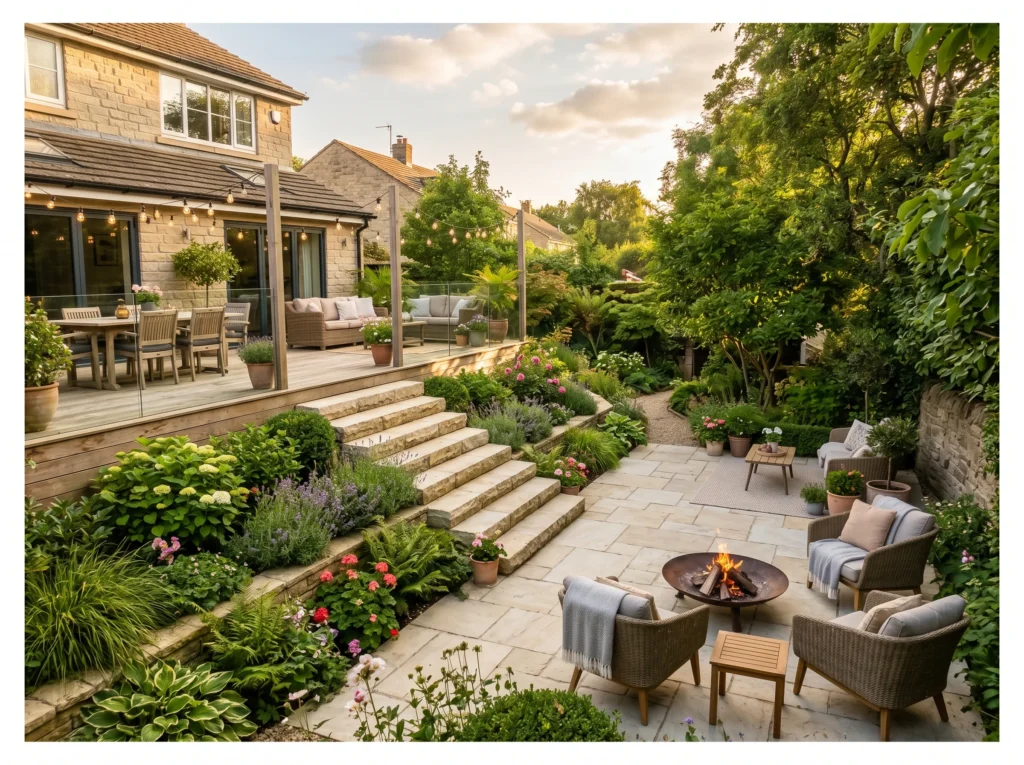
A multi-level patio design creates distinct zones at different heights connected by steps or ramps, giving a sloped backyard a purpose and structure that flat paving cannot achieve. The upper level typically serves dining and cooking while the lower level becomes the lounge and fire pit zone.
The change in level between zones creates a natural sense of separation and privacy between different activities happening simultaneously. Planting along the retaining walls between levels softens the transition and creates a tiered garden effect that looks genuinely luxurious. Wide generous steps rather than narrow ones invite movement between the levels and become usable seating surfaces themselves.
Transforms a sloped backyard into a design asset.
Conclusion
A genuinely great backyard patio does not happen by accident. It comes from understanding how you want to use the space, what mood you want it to create, and which specific ideas excite you enough to see through from planning to completion.
Start with the one idea from this list that solves your current backyard’s biggest limitation. Whether that is shade, privacy, seating, a lack of purpose, or simply a surface that finally looks finished and intentional. Each improvement leads naturally to the next.
The backyard patio you have always pictured is built one good decision at a time.
And once the patio is chosen, there are backyard designs worth building around it to bring the whole space together.