A hot tub alone is relaxing but a hot tub tucked inside a gorgeous gazebo? That’s a backyard escape you’ll never want to leave. These 19 hot tub gazebo ideas range from rustic wood structures to sleek modern builds giving you privacy, shelter, and serious spa-level style right in your own backyard. Let’s explore these hot tub gazebo ideas for the ultimate relaxing backyard escape!
Before settling on a structure, the soaking spot itself worth exploring can help you plan the whole setup around the tub.
Classic Cedar Pavilion with Open Sides
A classic cedar pavilion with open sides creates a warm and inviting outdoor retreat. The natural cedar wood adds timeless beauty and durability, while the open design encourages airflow and unobstructed views of the surrounding landscape.
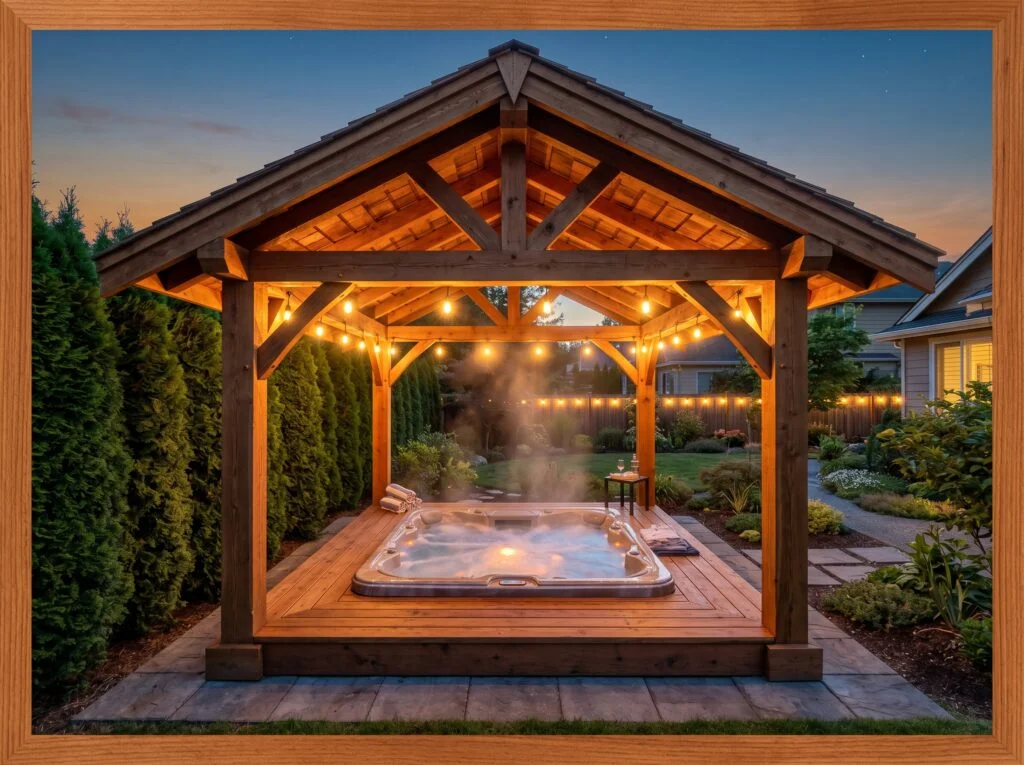
A classic cedar pavilion is the most universally beloved hot tub gazebo style and it earns that reputation by being genuinely excellent at every aspect of the job. Open sides provide the ventilation that a hot tub absolutely requires to prevent moisture damage to the structure.
Cedar pavilions for hot tubs are sized from 12×12 feet on the small end to 16×16 or 16×20 feet for larger setups with surrounding seating. Four-by-four posts work for smaller structures under 12 feet tall; six-by-six posts are recommended for larger pavilions and give a more proportionally substantial look.
If cedar pavilions appeal to you, other backyard structures with similar charm are worth browsing too.
Modern Aluminum Louvered Roof Gazebo
A modern aluminum louvered roof gazebo combines sleek contemporary style with adjustable functionality. The movable louvers allow you to control sunlight and ventilation, creating a comfortable outdoor living space in various weather conditions.
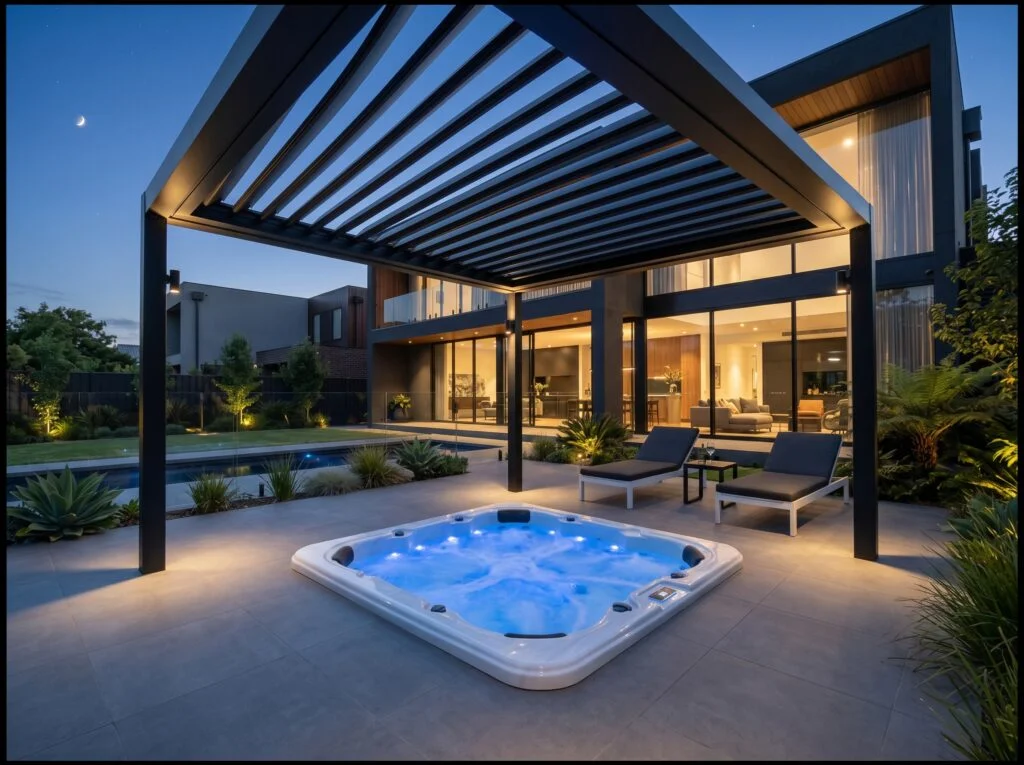
A motorized aluminum louvered roof gazebo is the most technologically sophisticated hot tub gazebo solution available and for homeowners who want genuine all-weather control without sacrificing the open-air experience, it’s unmatched.
The aluminum construction requires virtually zero maintenance no painting, no sealing, no seasonal treatment. Powder-coated aluminum in matte black or anthracite gray handles UV exposure, coastal salt air, and repeated rain-and-dry cycles for decades without deteriorating.
Rustic Log Cabin Shelter
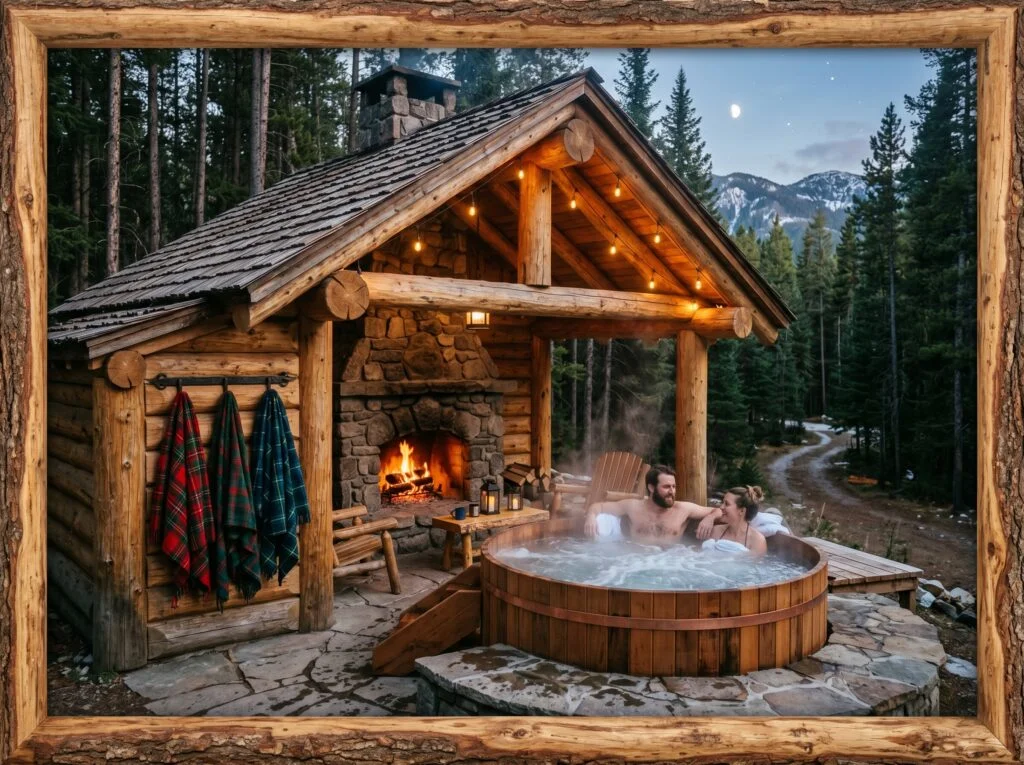
A rustic log cabin shelter brings a cozy, woodland-inspired charm to outdoor settings. The natural log construction adds warmth and character, making it an ideal gathering place for cabins, gardens, and countryside landscapes.
A log cabin-style hot tub shelter creates the most immersive mountain resort atmosphere achievable in a residential backyard. The thick, textured log rounds used as structural posts and beams communicate permanence, craftsmanship, and a deep connection to natural materials in a way that milled lumber or metal framing never can.
Adding a stone fireplace or a wood-burning stove on one side of the log hot tub shelter is one of the most practical and luxurious upgrades you can make to this style. The fireplace warms the air temperature around the tub, making cold-season soaking genuinely comfortable without the hot tub having to compensate entirely on its own.
Pergola with Privacy Curtain Panels
A pergola with privacy curtain panels creates a relaxing and resort-like atmosphere. The flowing curtains provide shade and seclusion while adding softness and elegance to patios and outdoor seating areas.
A pergola with outdoor privacy curtains is the most versatile and cost-effective hot tub gazebo concept it gives you the open, airy quality of a pergola on clear days and the privacy and wind protection of a more enclosed structure when needed.
Use outdoor-rated linen-look or canvas curtain fabric solution-dyed acrylic is the most UV and moisture-resistant choice. The curtain panels should be weighted at the hem with a sewn-in rod pocket or curtain weights to prevent billowing in the wind when partially open.
If a fully enclosed gazebo feels like too much, an overhead structure with a lighter feel might suit your yard better.
Japanese Zen Tea House Style
A Japanese Zen tea house-style structure offers a peaceful and minimalist retreat. Clean lines, natural materials, and a harmonious design create a serene space perfect for meditation, relaxation, and quiet gatherings.
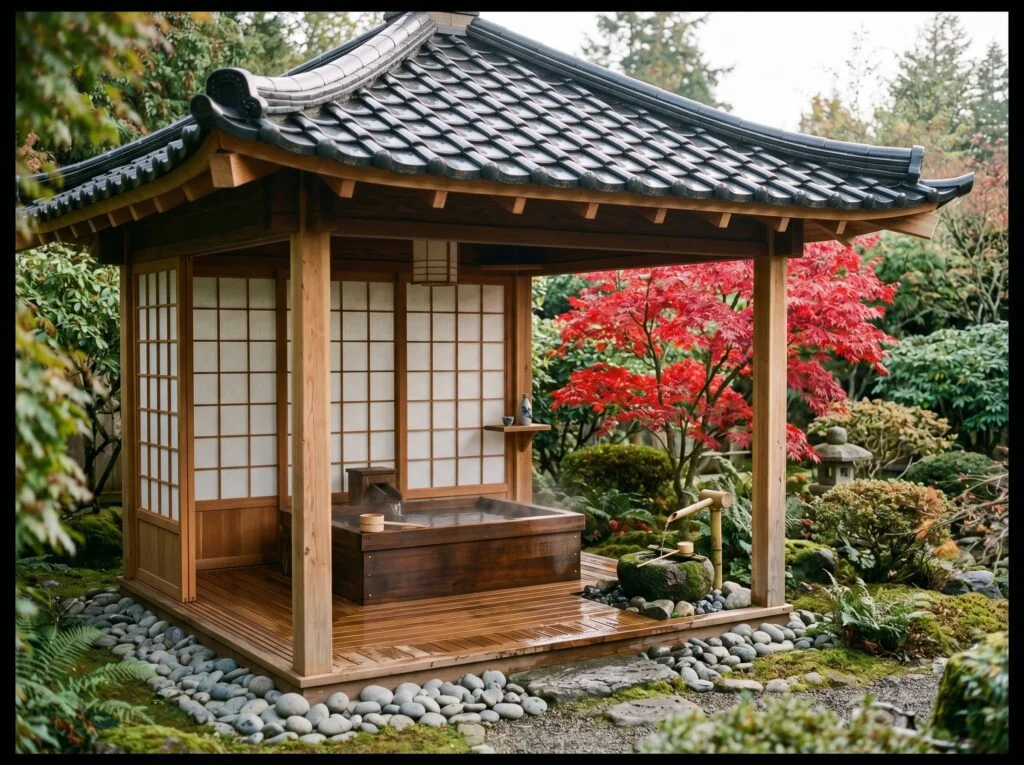
A Japanese tea house-inspired hot tub gazebo is the design choice that prioritizes atmosphere above everything else and it creates an atmosphere that’s genuinely unlike any other outdoor structure.
The deep wooden soaking tub (ofuro-style) is the most authentic hot tub choice for this aesthetic a cedar or hinoki wood tub is both beautiful and functional, and the wood’s natural properties add a faint, clean timber scent to the steam that enhances the sensory experience significantly.
White Painted Octagonal Gazebo with Cupola
A white painted octagonal gazebo with a cupola brings classic elegance and timeless curb appeal to gardens and landscapes. The unique shape and decorative cupola create a charming focal point that enhances traditional outdoor settings.
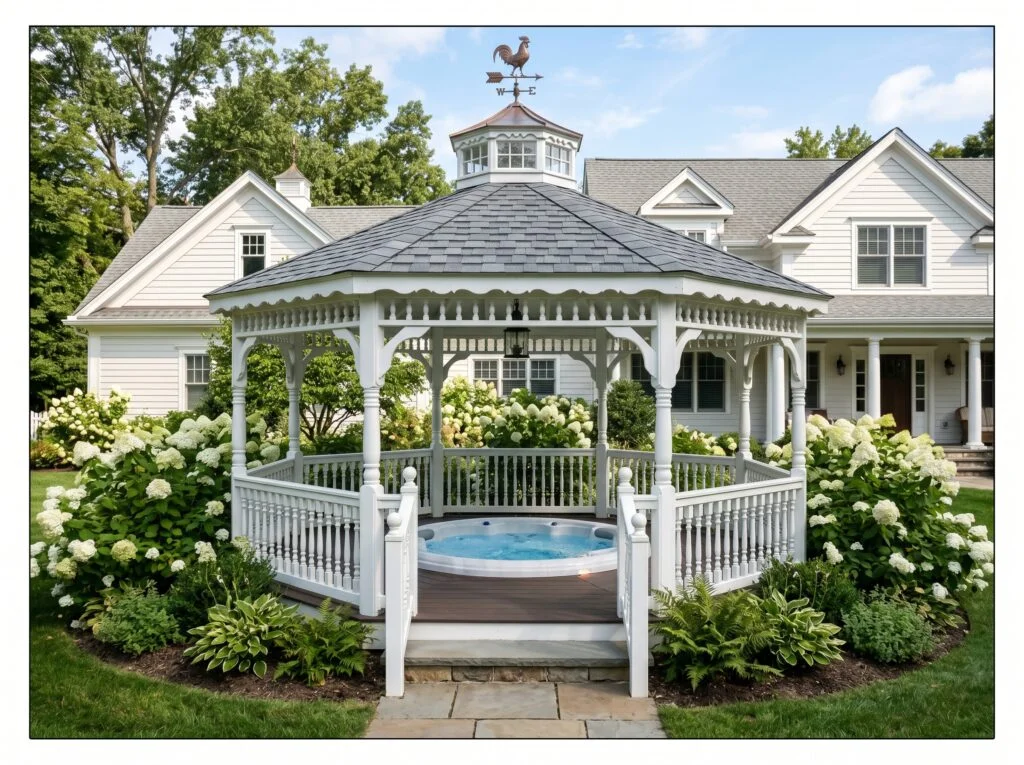
A white-painted octagonal gazebo with a shingle roof and cupola is the most classically beautiful hot tub gazebo style for a traditional or colonial-style home it looks like it was always supposed to be there. The octagonal shape provides efficient spatial geometry that accommodates a round or square hot tub comfortably while creating visually interesting eight-sided architecture.
Paint the gazebo in a white or cream that matches your home’s trim color exactly this connection between the house and the outbuilding is what makes the gazebo look designed-as-part-of-the-property rather than added as an afterthought. Dark composite decking inside the gazebo provides a strong visual contrast with the white structure that makes the hot tub the clear focal point of the space.
For a tighter yard layout, shade options for a corner retreat can make the same idea work in less space.
Trellis and Living Wall Gazebo
A trellis and living wall gazebo beautifully integrates greenery into the structure. Climbing plants and vertical gardens add texture, privacy, and a lush natural feel, transforming the gazebo into a vibrant outdoor sanctuary.
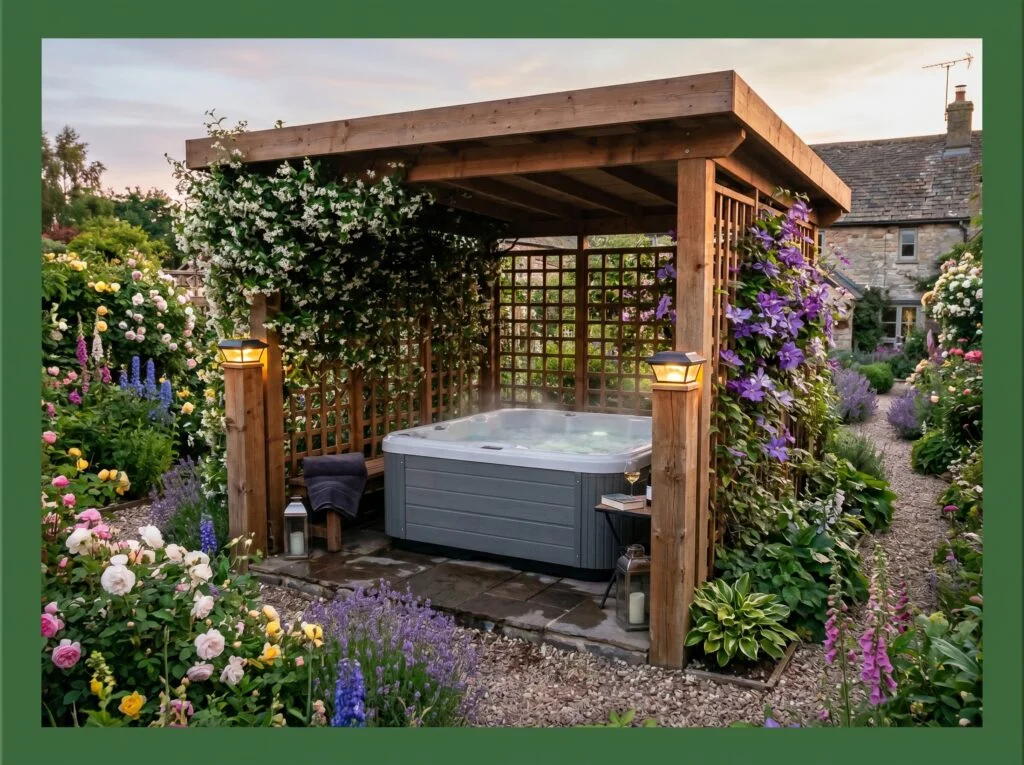
A trellis and living wall hot tub gazebo is one of the most beautiful and most unique ideas on this list it creates a hot tub space surrounded by living green walls of flowering vines rather than wood, metal, or fabric.
Choose climbing plant species based on your climate hardiness zone and your desired bloom time. Clematis blooms in late spring to early summer, climbing roses in summer, jasmine in late summer with fragrance through autumn.
Sleek Dark Cedar Slatted Cube
A sleek dark cedar slatted cube offers a bold and contemporary architectural statement. The clean geometric form and rich wood tones create a sophisticated outdoor structure that complements modern landscape designs.
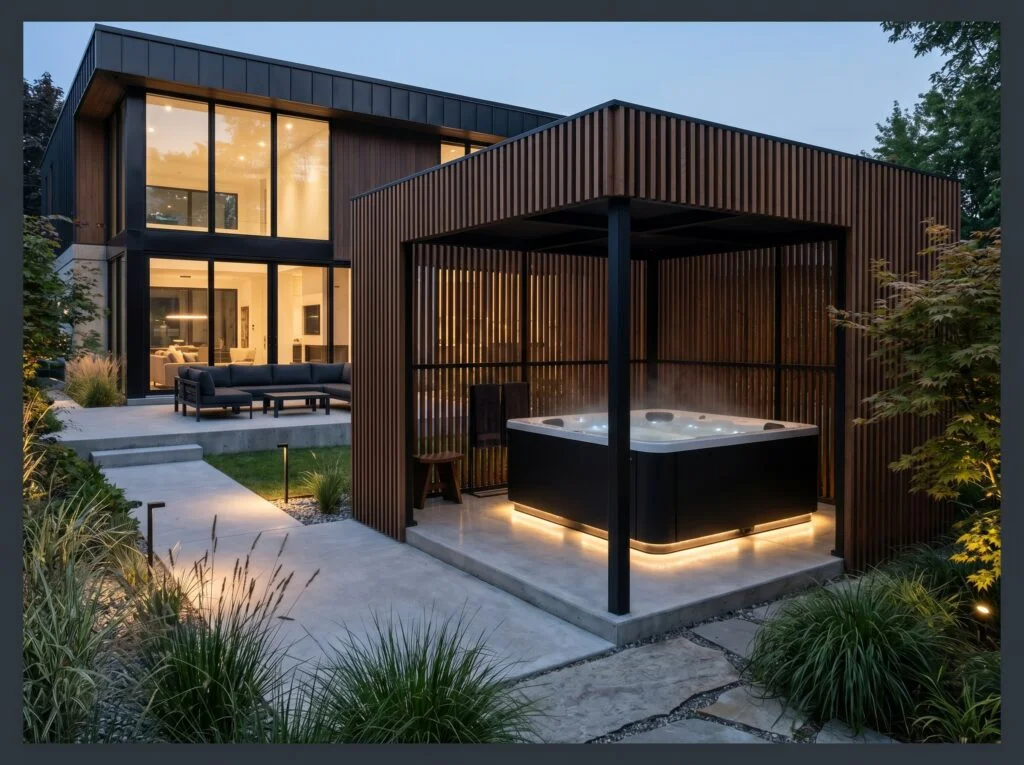
A dark-stained cedar slatted cube is the hot tub gazebo for the minimalist contemporary backyard where clean geometry, dark tones, and architectural discipline are the design language. The vertical slatted walls create semi-privacy through the spacing between the slats enough visual screening to make the space feel private from typical backyard viewing angles, but not so enclosed that ventilation is compromised.
The slatted wall construction is a genuinely practical ventilation solution for a hot tub gazebo the consistent gaps between the cedar slats allow steam and moisture to escape naturally in every direction rather than being directed specifically upward.
Integrated Deck-Level Gazebo
An integrated deck-level gazebo creates a seamless transition between indoor and outdoor living spaces. Built directly into the deck, it provides a cohesive and functional area for dining, entertaining, and relaxation.
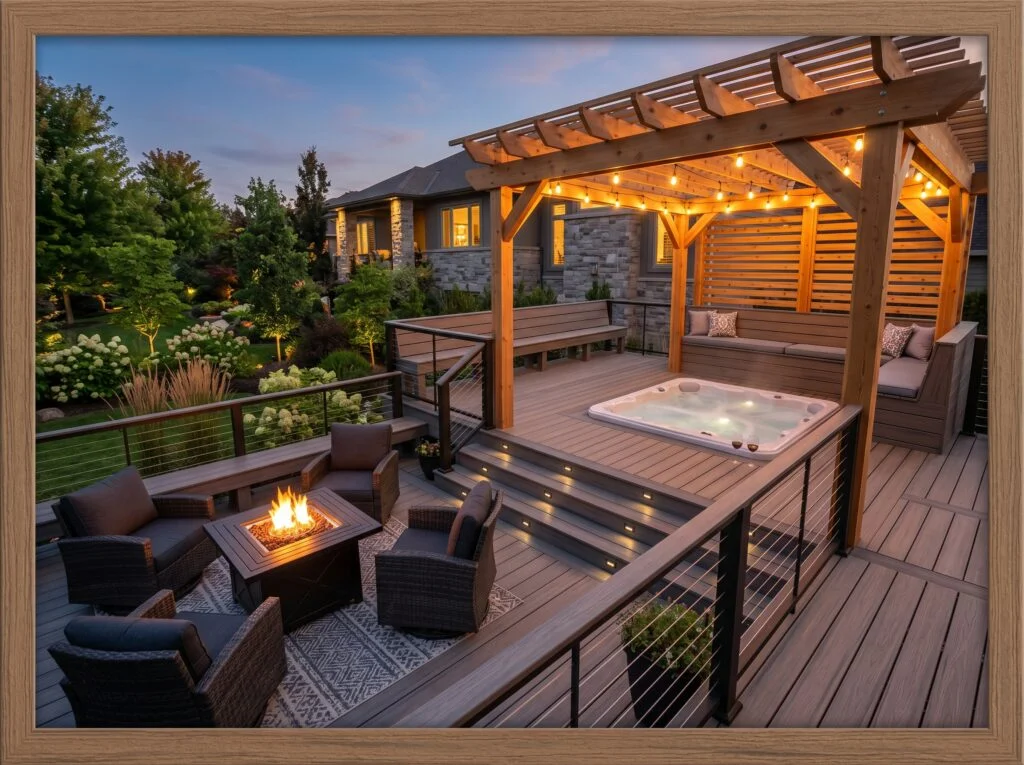
Building a hot tub gazebo as an integrated extension of an existing deck where the roof structure, decking material, and railing design all match the main deck creates the most cohesive backyard appearance of any gazebo approach.
A recessed hot tub set so the tub rim is flush or near-flush with the deck surface is the most elegant choice for an integrated deck gazebo. Access is easier, the appearance is cleaner, and the visual integration of the tub into the deck surface makes the whole composition look custom-built rather than placed.
Victorian Wrought Iron Pavilion
A Victorian wrought iron pavilion adds timeless elegance and intricate detailing to outdoor spaces. Its decorative metalwork and graceful design evoke old-world charm, making it a stunning centerpiece for formal gardens and classic landscapes.
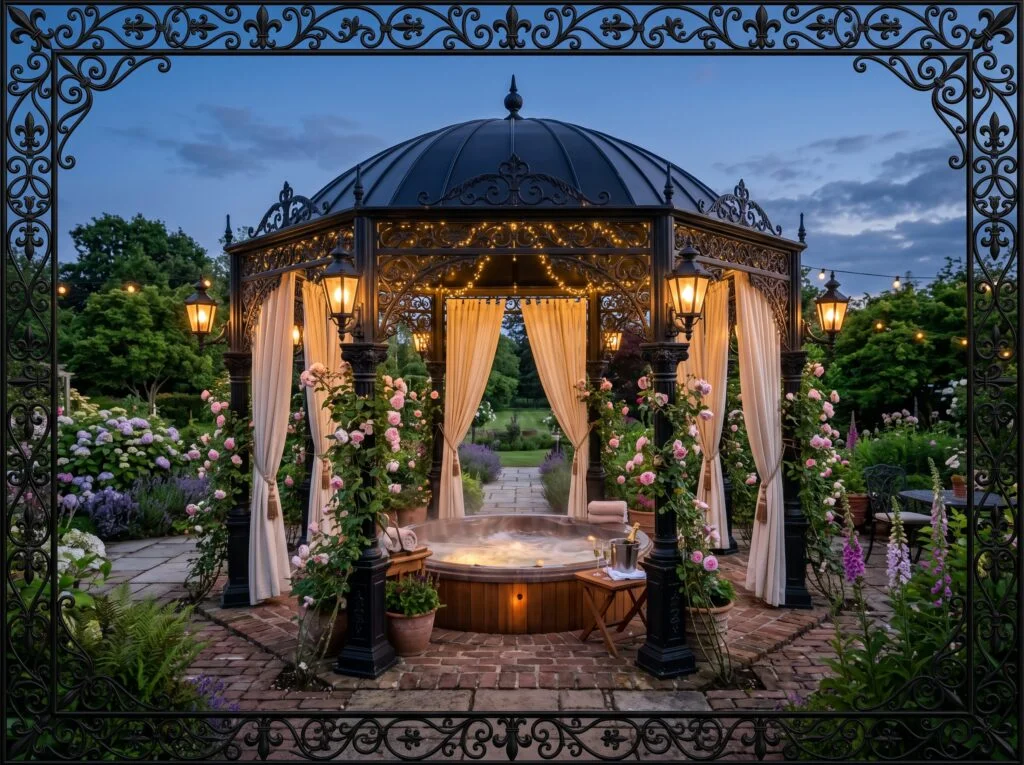
A Victorian wrought iron pavilion around a hot tub is the most formally elegant choice on this list it brings the grandeur of a botanical garden or a historic estate garden directly into a residential backyard. The ornate scrollwork columns, the domed or arched metal roof, and the intricate decorative details communicate a level of craft and permanence that no wood or aluminum structure achieves.
Outdoor curtains hung from the iron frame on three or four sides solve the pavilion’s only real limitation open metalwork provides minimal rain protection and no wind barrier on its own. Marine-grade or solution-dyed acrylic curtains in cream, ivory, or white coordinate beautifully with the black ironwork and provide the weather protection and privacy that the metal structure alone doesn’t offer.
Farmhouse Style Cedar Pergola with Corrugated Metal Roof
A farmhouse style cedar pergola with a corrugated metal roof combines rustic charm with practical durability. The warm cedar wood adds natural beauty, while the metal roofing provides reliable protection from sun and rain. This inviting structure creates a cozy outdoor space that complements farmhouse, country, and cottage-inspired landscapes.
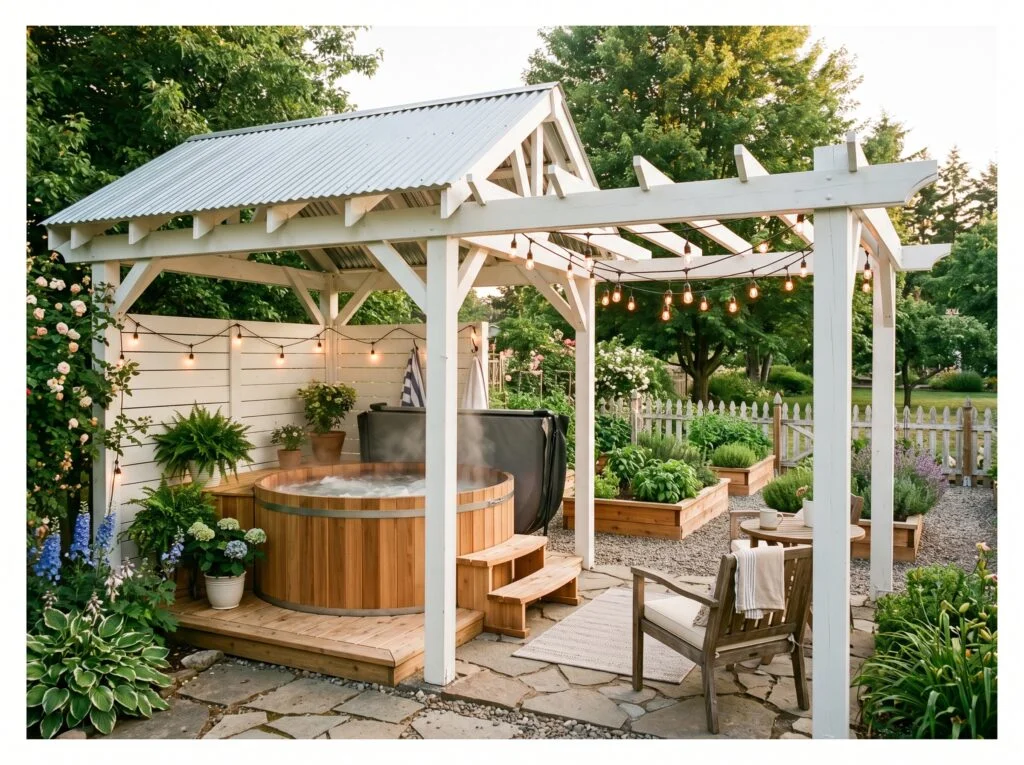
A farmhouse-style cedar pergola with a corrugated galvanized metal roof panel is one of the most charming and cost-effective hot tub gazebo ideas available and it’s become a genuinely popular choice in the modern farmhouse design community for good reason. The white-painted cedar framing, the corrugated metal roof, and the Edison string lights overhead create exactly the warm, relaxed agricultural aesthetic that farmhouse style celebrates.
Use a slight roof pitch of at least 2:12 so rain runs off the corrugated metal effectively and doesn’t pool in the valleys of the corrugation profile. Galvanized steel corrugated panels are the most affordable option; pre-painted steel in a rustic brown or soft green is a step up in visual refinement.
Fully Enclosed Four-Season Hot Tub Room
A fully enclosed four-season hot tub room provides year-round comfort and protection from changing weather conditions. Large windows and insulated construction create a cozy retreat while maintaining beautiful outdoor views. This design transforms the hot tub area into a luxurious private spa that can be enjoyed in every season.
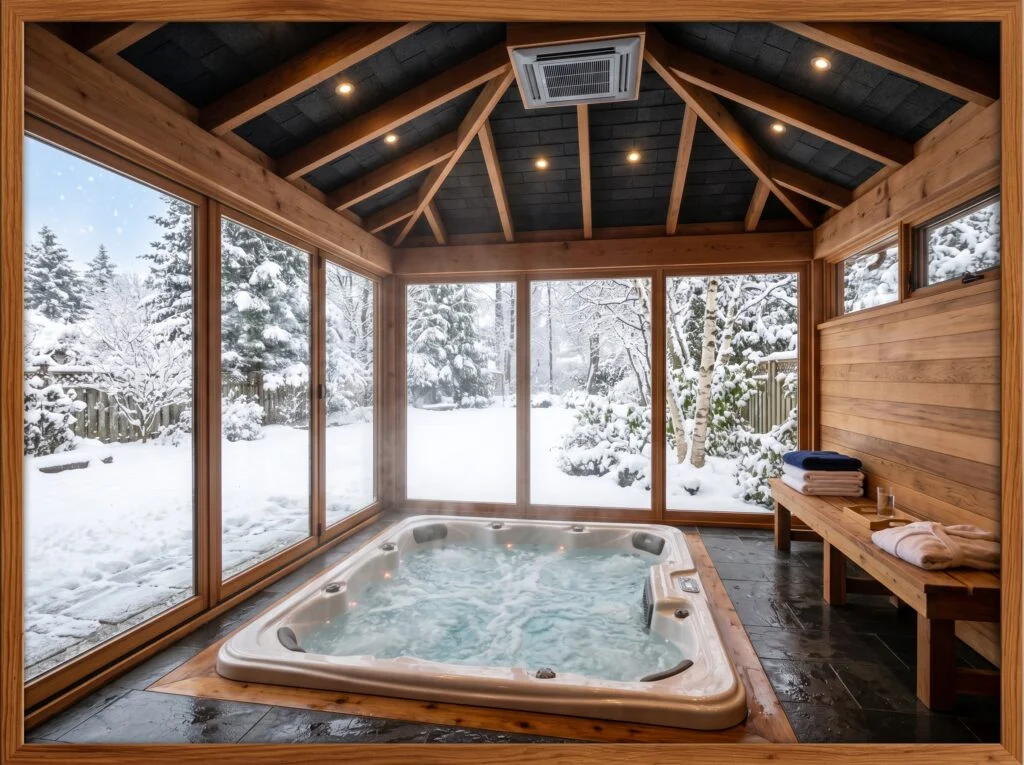
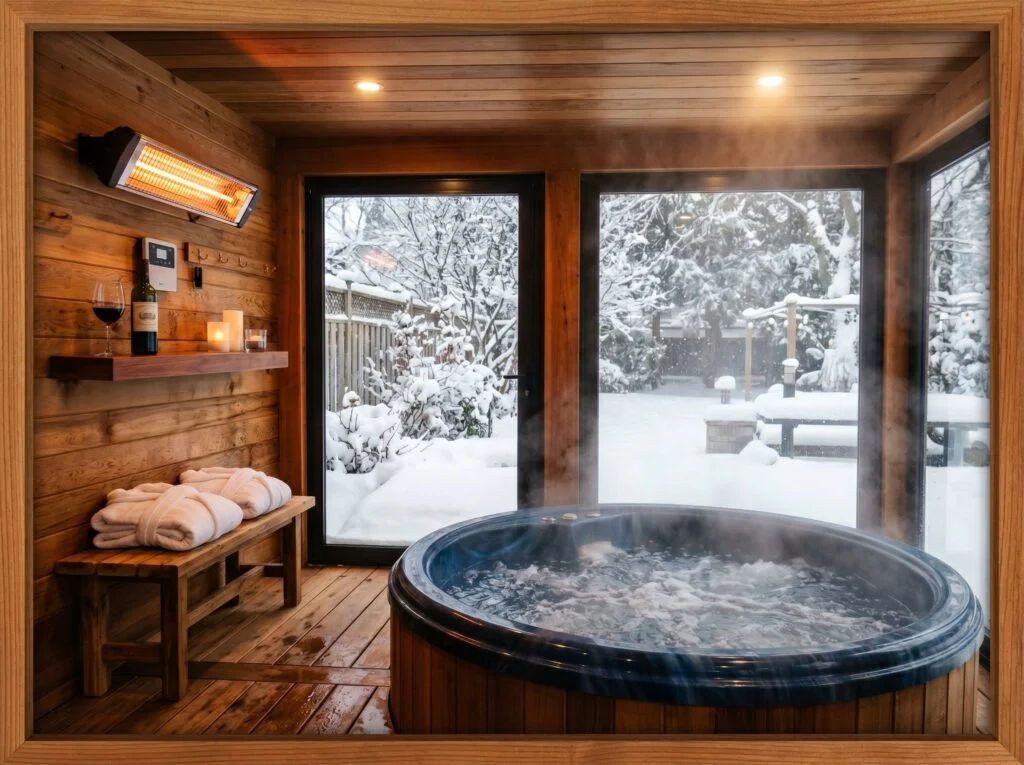
A fully enclosed four-season hot tub room is the premium option for homeowners in cold climates who want to use their hot tub year-round in genuine comfort not just heroically in the cold, but actually comfortably in a warm, protected space.
Ventilation is the critical engineering challenge in a fully enclosed hot tub room. Without mechanical ventilation, the enormous moisture output of a hot tub operating in an enclosed space will cause wood rot, mold growth, and structural damage within a single winter season.
Slatted Privacy Screen Pergola
A slatted privacy screen pergola offers a perfect balance between openness and seclusion in outdoor spaces. The horizontal or vertical slats provide filtered light while enhancing privacy and architectural appeal. This modern structure creates a comfortable and stylish setting for relaxation and entertaining.
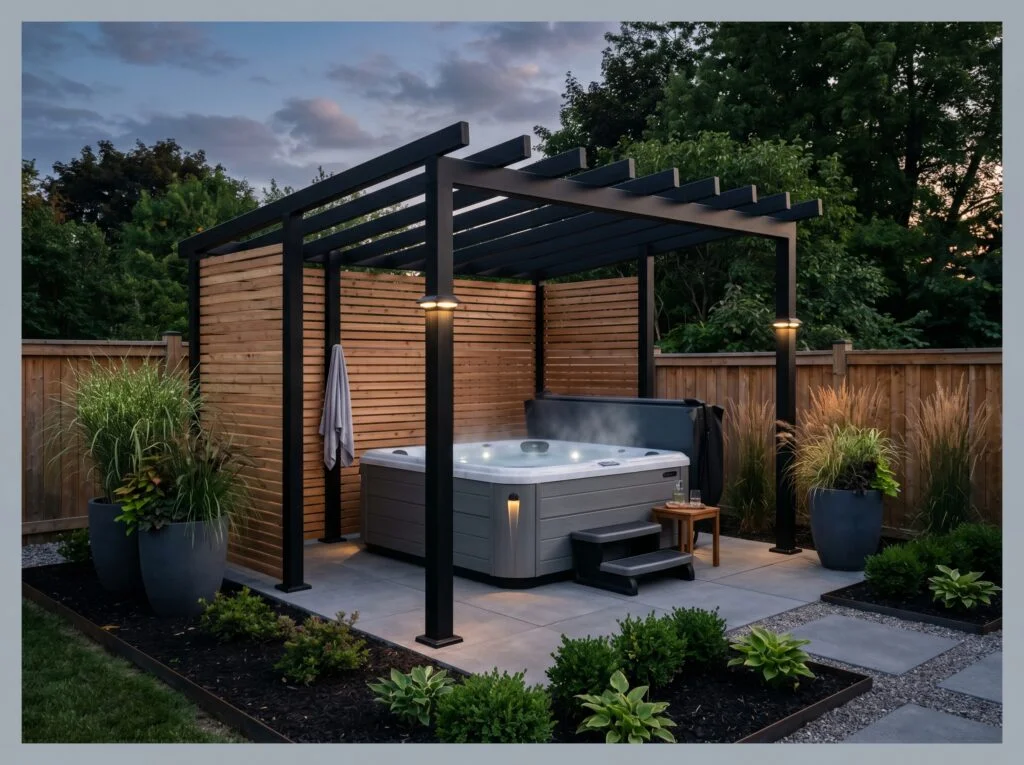
A pergola with horizontal cedar privacy screen panels on the two sides facing neighboring properties and open on the other two sides for views and airflow is the most practical configuration for most residential backyards.
Horizontal slat spacing of 1.5 to 2.5 inches provides privacy from a standard eye-level viewing angle while allowing good airflow and a filtered, dappled light quality inside the pergola.
For more inspiration on this balance, screening that still lets air through is worth a closer look.
Hot Tub Gazebo with Outdoor Kitchen Integration
A hot tub gazebo with outdoor kitchen integration creates a complete outdoor entertainment destination. The combination of cooking, dining, and relaxation areas enhances functionality and convenience for gatherings. This thoughtful design encourages seamless indoor-outdoor living and year-round enjoyment.
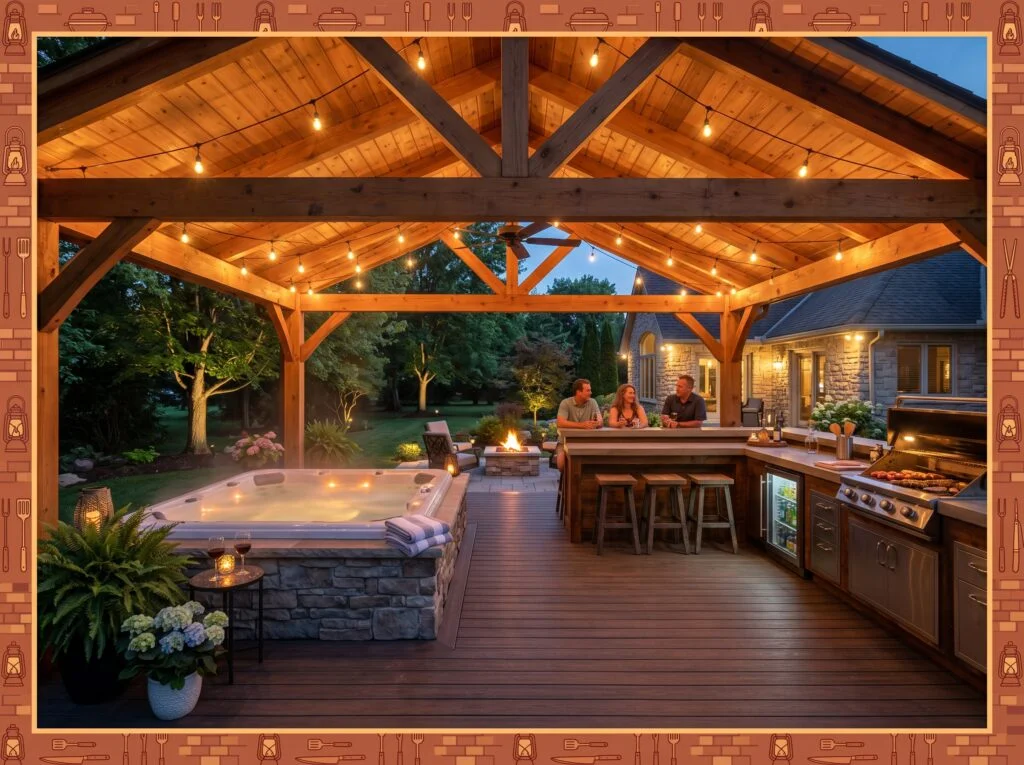
Combining a hot tub gazebo with an integrated outdoor kitchen under the same roof structure is one of the most impressive and functional backyard upgrades imaginable. The setup creates a complete outdoor entertainment zone where guests can move between the hot tub, the bar counter, and the grill area all within one covered, defined space.
If you’re building out the whole entertaining zone, cooking space to pair with the setup rounds out the experience nicely.
Bamboo and Thatch Tropical Tiki Gazebo
A bamboo and thatch tropical tiki gazebo brings a resort-inspired atmosphere to the backyard. Natural materials and tropical textures create a relaxed, vacation-like setting filled with warmth and character. This charming structure is perfect for poolside lounging and casual outdoor entertaining.
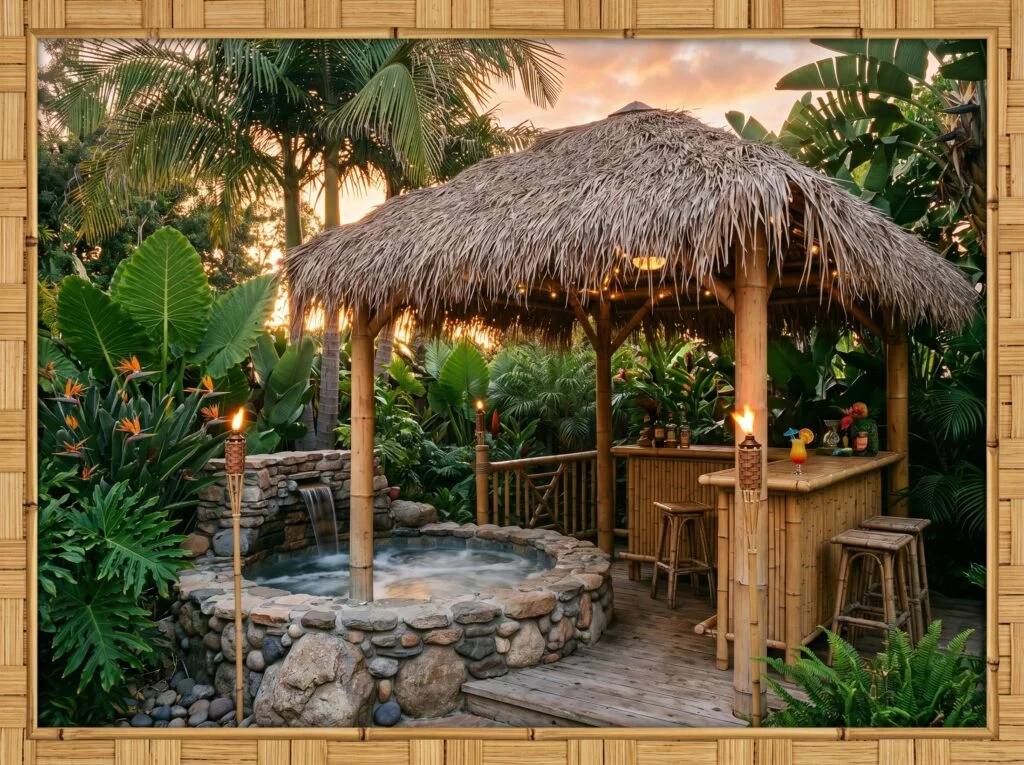
A bamboo and palm thatch tiki gazebo around a hot tub creates the most dramatic and fully immersive tropical backyard atmosphere of any style on this list. The combination of bamboo structural posts, a thick thatch roof, tropical plantings, tiki torches, and a hot tub with a waterfall feature creates a complete environmental experience every sensory detail communicates relaxation, warmth, and tropical escape.
Natural bamboo and palm thatch are not permanent outdoor materials in most North American climates they require annual thatch replacement and bamboo treatment to remain functional and attractive.
Stone and Timber Mountain Lodge Gazebo
A stone and timber mountain lodge gazebo offers rustic elegance and timeless appeal. The combination of natural stone and heavy timber creates a sturdy, cozy structure inspired by mountain retreats. This design blends beautifully with woodland landscapes and creates an inviting gathering space.
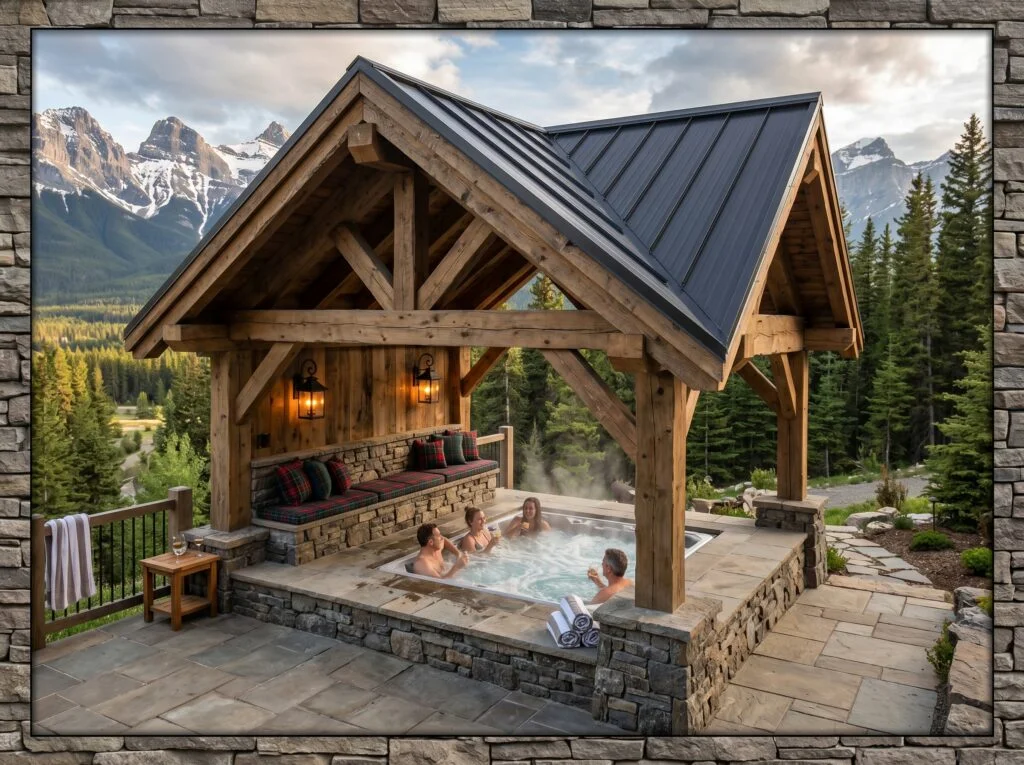
A stone and timber hot tub gazebo is the most substantial and architecturally impressive design on this list it carries the visual weight of a permanent building rather than an outdoor structure, and in a backyard with the right natural setting, it looks absolutely magnificent.
Stone and timber construction requires professional design and skilled tradespeople for both the stone foundation work and the timber frame assembly.
Gazebo with Integrated Lighting Plan
A gazebo with an integrated lighting plan enhances both functionality and ambiance during evening hours. Recessed lights, pendant fixtures, and accent lighting create a warm and welcoming atmosphere. Thoughtful illumination also improves safety while extending the usability of outdoor spaces after sunset.
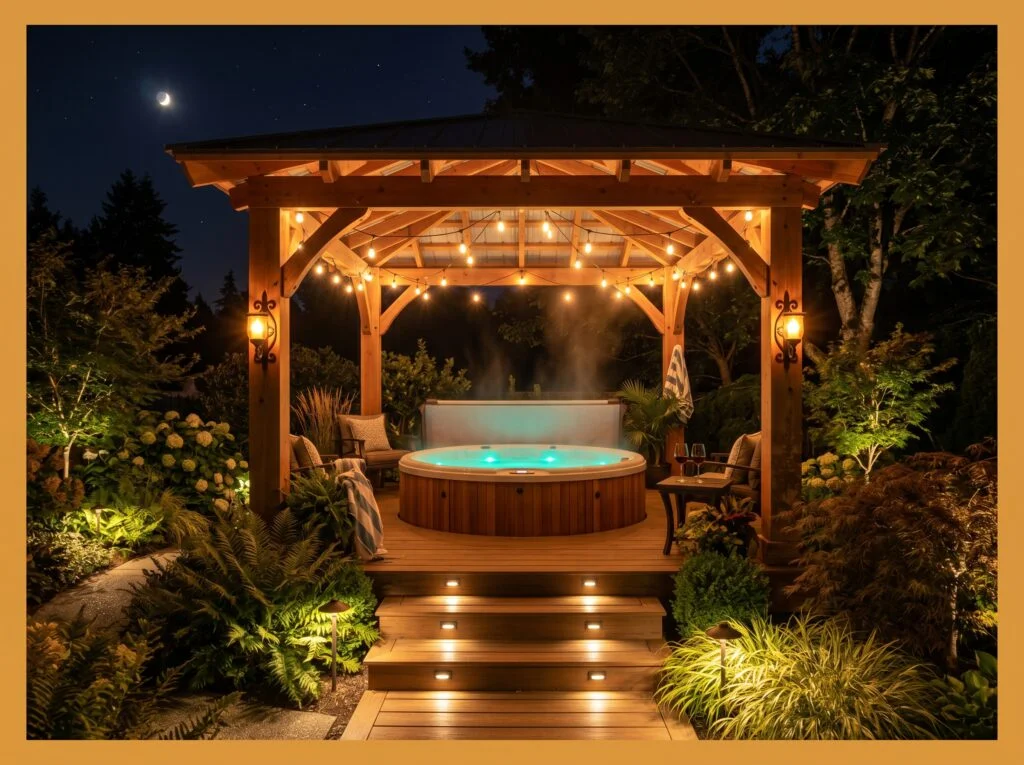
Good lighting in a hot tub gazebo is the difference between a space you want to use after dark and one that feels uninviting the moment the sun goes down. Most hot tub gazebo projects focus entirely on the structure and the tub, then add a single overhead light as an afterthought.
Plan the lighting in three zones: overhead ambient (Edison string lights or recessed LED fixtures in the roof structure for general illumination), accent and safety (step lights at deck stair edges, path lights along the approach, wall sconces at the structure posts at mid-height), and decorative (underwater LED color-changing lights in the hot tub, landscape spotlights aimed at surrounding plantings from the ground up).
Budget-Friendly DIY Pergola with Sail Shade
A budget-friendly DIY pergola with a sail shade provides an affordable way to create shade and style outdoors. The simple pergola structure paired with fabric sails adds visual interest and flexible sun protection. This practical design transforms patios and gardens into comfortable and inviting retreats.
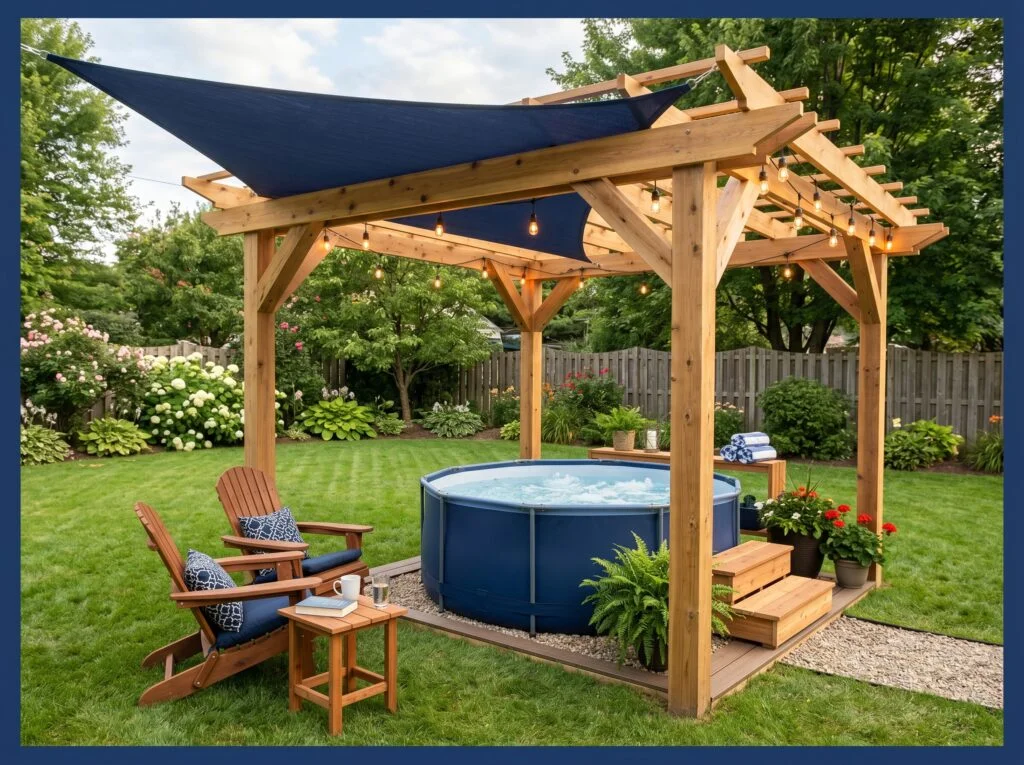
A four-post cedar pergola with a stretch sail shade is the most budget-accessible hot tub gazebo idea that still genuinely transforms the hot tub experience.
Hot Tub Gazebo with Year-Round Heating Strategy
A hot tub gazebo with a year-round heating strategy ensures comfort and usability throughout every season. Features such as outdoor heaters, insulated panels, and weather-resistant enclosures help maintain a cozy environment. This design creates a luxurious outdoor spa experience regardless of temperature or weather conditions.
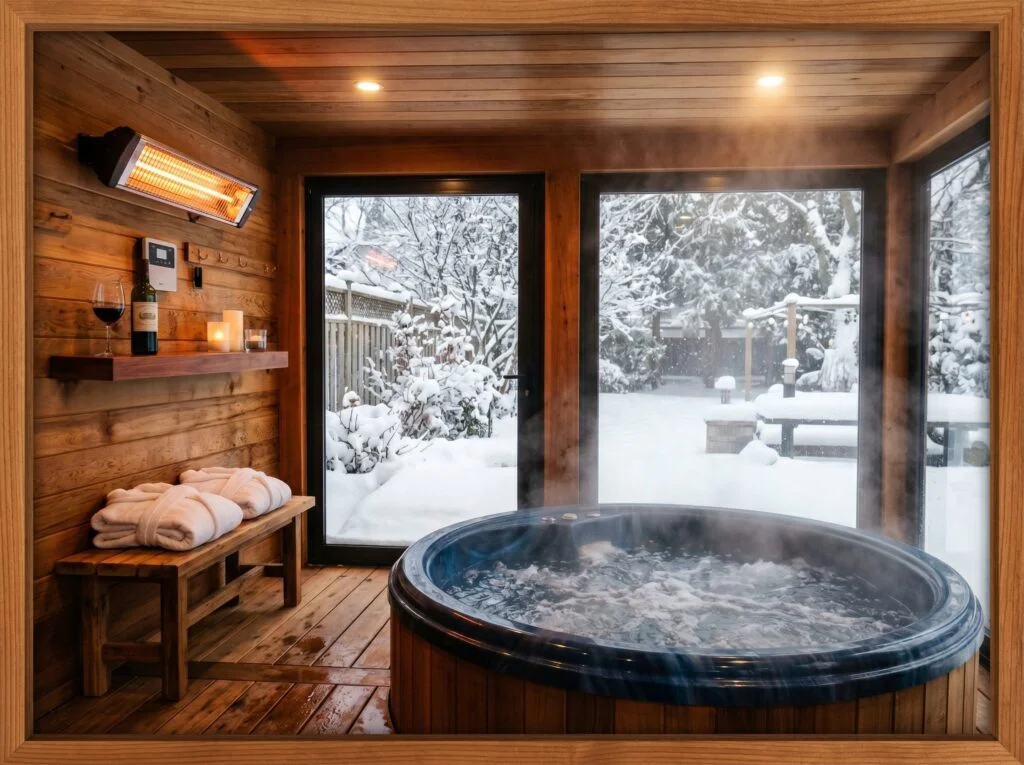
A hot tub gazebo that works comfortably year-round in cold climates requires a deliberate heating strategy not just the hot tub’s own heat output, but supplemental air heating that makes the space around the tub comfortable during cold winter evenings.
Infrared electric wall heaters are the most effective and most practical supplemental heat source for a hot tub gazebo they heat surfaces and bodies directly rather than trying to heat the air in a semi-open space (which is inefficient and ineffective).
Conclusion
A hot tub without a gazebo is a piece of equipment. A hot tub inside a well-designed gazebo is a destination one of the best investments you can make in your outdoor living quality and your home’s overall appeal.
Start with the three decisions that determine everything else: your budget, your climate requirements (seasonal or year-round use), and the architectural style of your home. Choose a gazebo style that genuinely connects to your home’s design language and materials, size it generously for the hot tub plus comfortable surroundings, and plan the ventilation, lighting, and heating from the beginning rather than adding them as afterthoughts.
Do those things, and the gazebo becomes something you use far more than you expected not just in summer but through autumn evenings, winter nights, and all the shoulder-season moments that make outdoor living genuinely valuable.
From there, a backyard designed for slowing down brings the same relaxed spirit to the rest of your outdoor space.