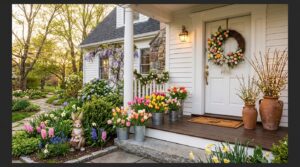
If you can’t fully relax on your own patio because of prying neighbors, you’re missing out on the outdoor sanctuary your backyard could be. These 23 patio privacy ideas use lush screens, stylish fencing, pergolas, and greenery to create a secluded retreat that feels like your own private escape right in your backyard. Let’s explore these patio privacy ideas for a beautifully secluded retreat!
Once your patio feels enclosed and secluded, there are creative ways to unwind outdoors that make the space even more inviting.
Natural Bamboo Roll-Up Blinds on a Pergola
Natural bamboo roll-up blinds on a pergola provide adjustable shade while adding warmth and organic texture to outdoor living spaces. Their woven design filters sunlight, enhances privacy, and complements coastal, bohemian, and tropical-inspired patios with a relaxed, natural look.
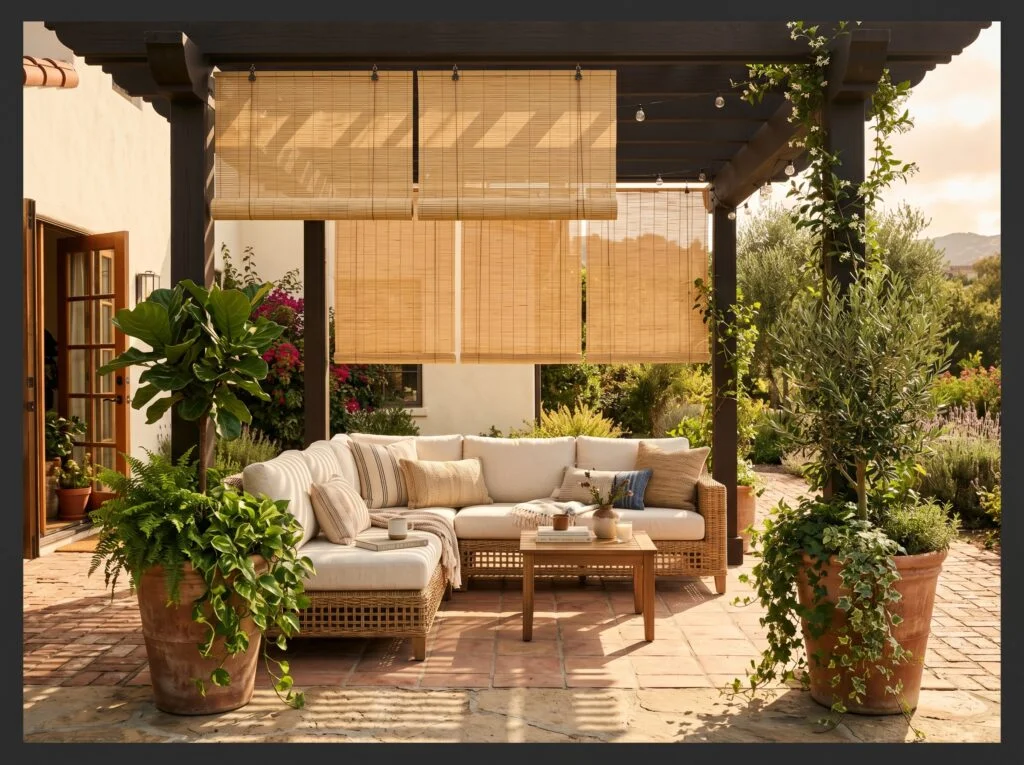
Bamboo roll-up blinds are one of the most popular patio privacy solutions for good reason they are affordable, attractive, easy to install, and completely adjustable. You lower them when the neighbors are in their yard and roll them up when you want the full open view. The natural texture of the bamboo adds warmth and an organic, tropical quality to any patio setting that plastic or fabric alternatives simply cannot match. They look equally at home on a coastal cottage porch and a modern urban rooftop.
Most bamboo blinds attach to a pergola beam or porch ceiling in under fifteen minutes using basic screw-in hooks. For best durability, choose blinds treated with a UV and moisture-resistant finish untreated bamboo will become brittle and gray quickly in direct sun and rain. If your pergola has no existing beam, a tension wire system stretched between two posts creates a simple mounting track. Replace them every three to four years depending on your climate. At the price point most bamboo blinds sell for, this is still one of the best cost-per-year privacy solutions available.
Freestanding Laser-Cut Metal Privacy Screens
Freestanding laser-cut metal privacy screens add modern style and functional seclusion to outdoor spaces with their intricate decorative patterns. They define patios, decks, and gardens while allowing light and airflow to pass through, creating an elegant balance of privacy and visual interest.
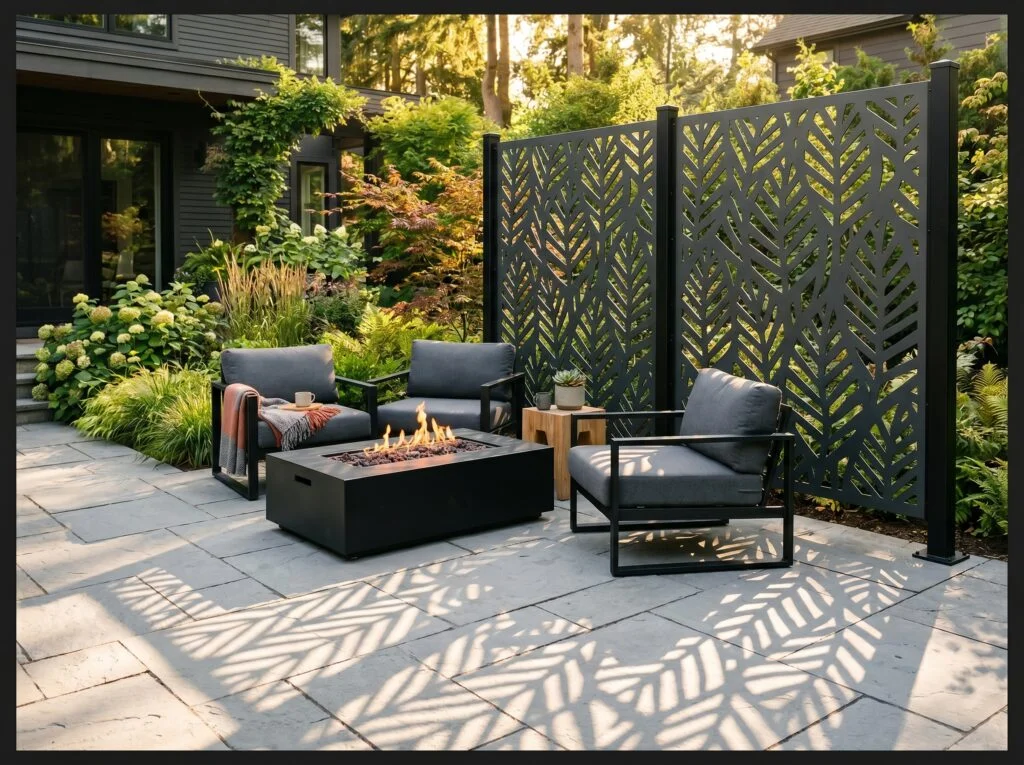
Laser-cut metal privacy screens are where function meets genuine artistry. The perforated pattern whether geometric, floral, or abstract provides visual privacy from any angle while still allowing air to pass through freely. As the sun moves throughout the day, the pattern casts shifting shadow art across your pavers and furniture that changes hour by hour. No other privacy solution creates that kind of dynamic, living visual effect. For anyone who cares about how their outdoor space looks as well as how it functions, this is one of the most rewarding choices on this list.
Powder-coated steel screens are the most durable option the coating resists rust, UV fading, and physical impact far better than painted finishes. Look for screens with a ground stake or heavy base plate so they stay upright in wind without needing to be anchored to a wall or fence. Freestanding screens can be repositioned whenever you rearrange furniture, which is a genuine advantage over fixed panels. Use two or three panels in a staggered arrangement for layered coverage that eliminates side-angle sightlines while keeping the composition visually interesting from inside the patio.
Tiered Cedar Planter Privacy Wall
A tiered cedar planter privacy wall combines lush greenery with natural wood to create a beautiful and functional outdoor divider. The layered planter design adds depth, privacy, and rustic charm while providing space for flowers, herbs, or climbing plants in patios and backyards.
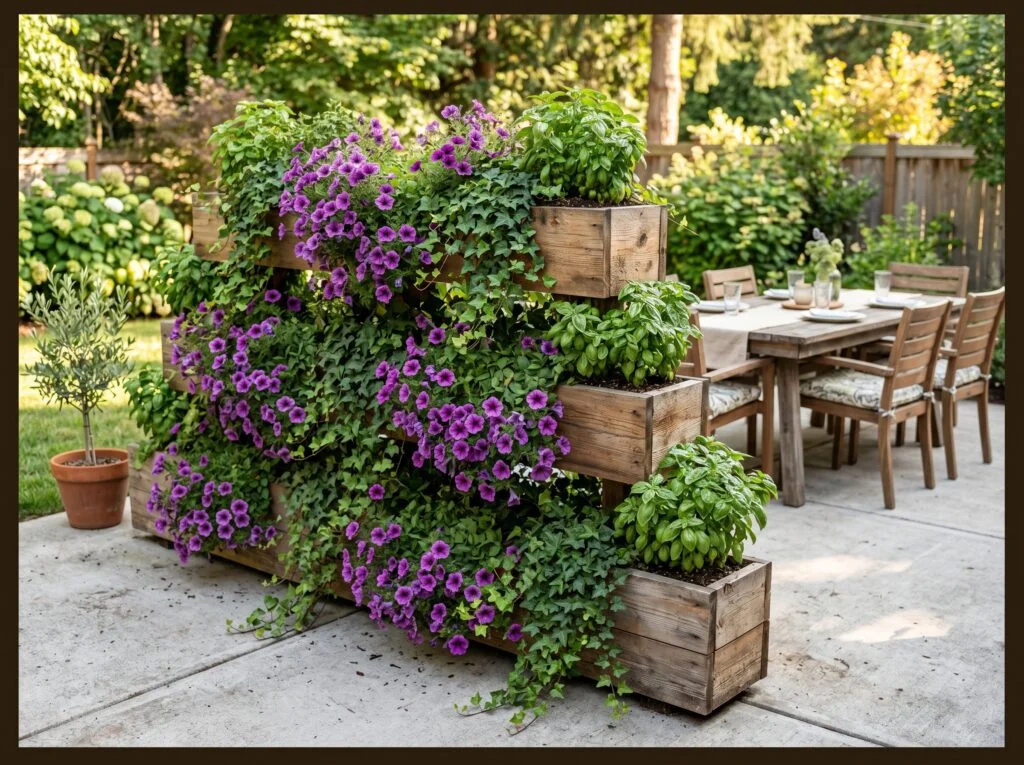
A tiered cedar planter wall solves two problems at once it gives you a visual privacy screen and a vertical garden in the same footprint. Stack three planter boxes at ascending heights and fill them with a combination of tall structural plants at the top and trailing, cascading plants below. The trailing plants fill the visual gaps between boxes and create a continuous green surface rather than three separate objects sitting near each other. Cedar is the ideal wood for this because it naturally resists rot and insects without chemical treatment, smells beautiful after rain, and develops an attractive silver-gray patina as it ages.
hout chemical treatment, smells beautiful after rain, and develops an attractive silver-gray patina as it ages.For best privacy results, choose the right plant combination for your top tier: upright columnar plants like dwarf Italian cypress, rosemary topiaries, or tall ornamental grasses provide the height and density needed for real screening. Fill middle tiers with herbs, compact flowering plants, or trailing nasturtium. This gives you culinary herbs within arm’s reach of an outdoor kitchen and a beautiful layered display that looks professionally landscaped. The whole structure is moveable place it on a wheeled platform if you want flexibility to reposition it for different occasions or seasons.
If you’re leaning into a lush look, greenery that softens a garden border pairs beautifully with tiered planters like these.
Flowing Outdoor Curtains on a Pergola
Flowing outdoor curtains on a pergola create a soft, elegant retreat while adding shade, privacy, and a touch of resort-style comfort. Their lightweight fabric moves gently with the breeze, enhancing the ambiance and making patios and outdoor living spaces feel cozy and inviting.
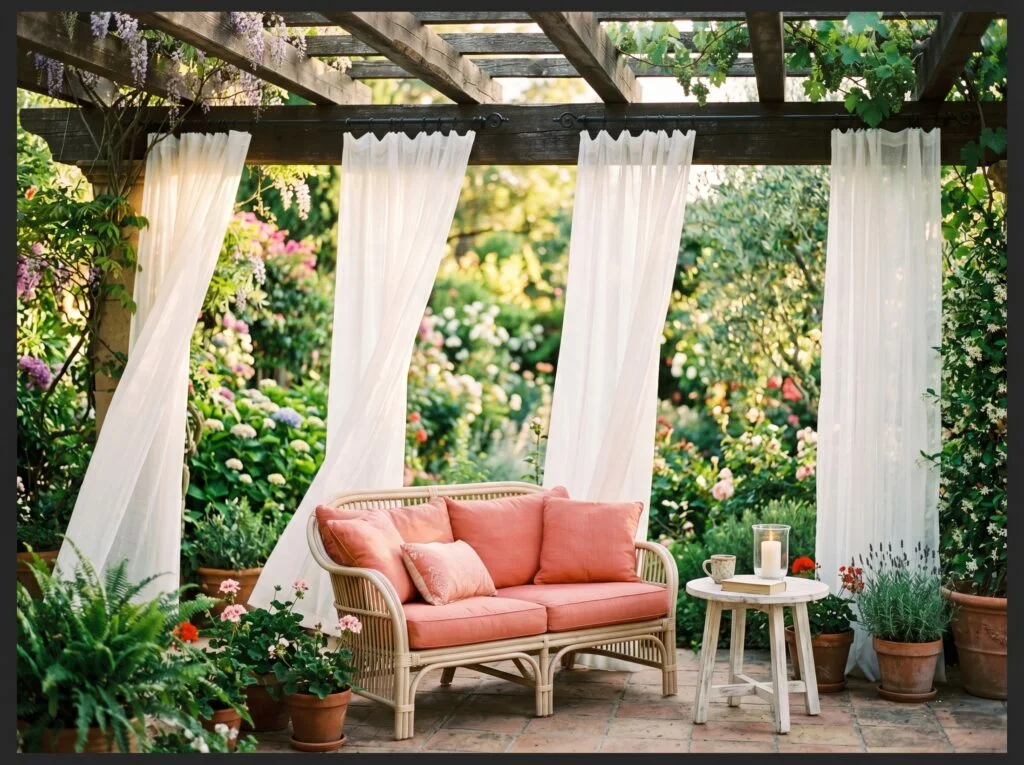
Outdoor curtains create the most romantic and resort-like patio privacy atmosphere of any solution on this list. Long panels of weather-resistant fabric hanging from a pergola beam or ceiling-mounted rod instantly evoke a high-end hotel cabana or a Santorini terrace. The soft movement of the fabric in the breeze adds a sensory dimension that solid screens and fences cannot provide it makes the space feel alive and gentle rather than enclosed and defended. Tie them back during the day for an open, airy feel and release them in the evening for complete seclusion.
Choose fabrics specifically rated for outdoor use standard indoor curtains will mildew, fade, and deteriorate within one season of outdoor exposure. Sunbrella and similar solution-dyed acrylic fabrics are the gold standard for outdoor textiles because the color is embedded throughout the fiber rather than applied to the surface, meaning they resist fading for years even in direct sun. Weight the hem of the curtains with a curtain hem weighting tape or metal drapery weights so they hang straight and do not blow up in the wind and expose rather than conceal. For maximum privacy, use blackout-rated outdoor curtain panels rather than sheers when the primary goal is blocking views rather than filtering light.
Horizontal Cedar Slat Privacy Fence
A horizontal cedar slat privacy fence offers a clean, contemporary look while providing privacy and natural warmth to outdoor spaces. The sleek horizontal lines create a modern architectural feel, while the cedar wood adds durability, rich texture, and timeless appeal to patios and backyards.
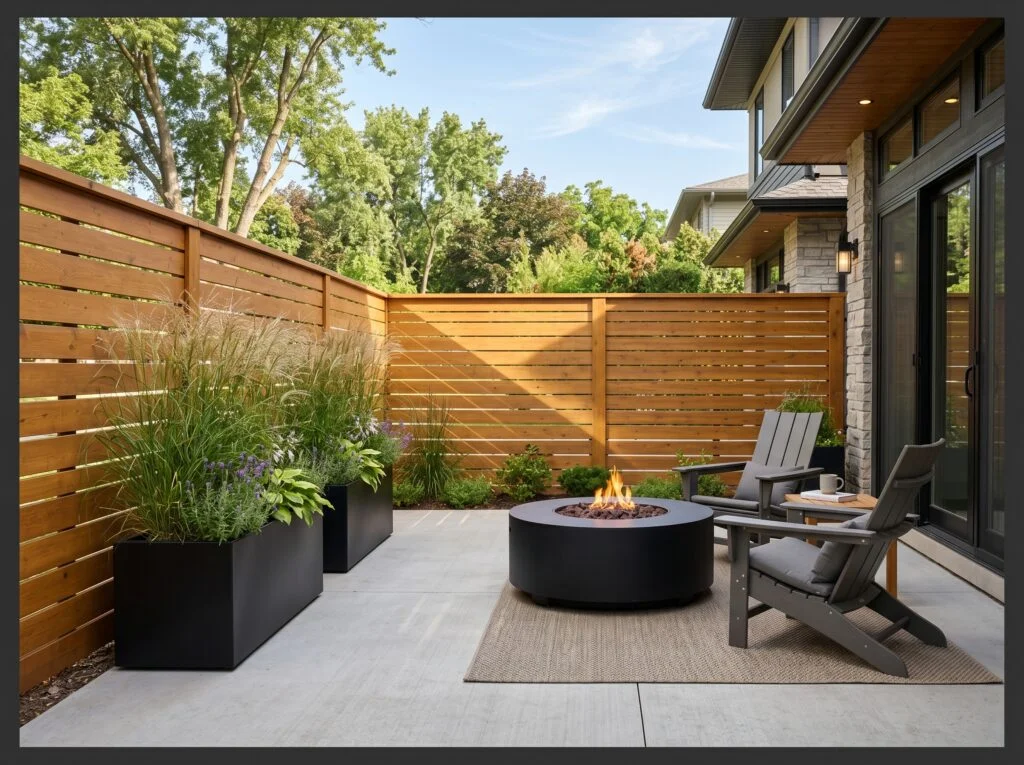
Horizontal cedar slat fencing is one of the most popular permanent patio privacy ideas right now and it deserves every bit of that popularity. The clean, contemporary horizontal lines visually widen the space a particularly valuable effect for narrow side patios or compact urban yards. The slight spacing between slats allows airflow and a filtered glimpse of the landscape beyond, which prevents the enclosed feeling that solid walls can create. You get genuine privacy without the claustrophobia. In a warm honey or cedar tone stain, this fence doubles as a beautiful design feature rather than a purely functional barrier.
Cedar is the correct wood choice for this application because it is dimensionally stable it does not warp, twist, or crack with moisture changes the way pine and spruce do. Treat it with a penetrating exterior oil every two to three years to maintain the warm color tone. If you prefer a more contemporary palette, a charcoal gray or near-black exterior stain on cedar slats creates a dramatic, moody privacy wall that pairs beautifully with concrete, stone, and black steel furniture. For areas with HOA height restrictions, check the maximum allowed fence height in your jurisdiction before installation six feet is the most common limit on property lines.
If safety and structure are also on your mind, fencing styles worth comparing can help you weigh the options.
Potted Arborvitae Evergreen Privacy Wall
A potted arborvitae evergreen privacy wall creates a lush, natural screen that adds year-round greenery and seclusion to outdoor spaces. The tall evergreens provide an elegant living barrier while enhancing patios, decks, and gardens with texture, privacy, and timeless landscape appeal.
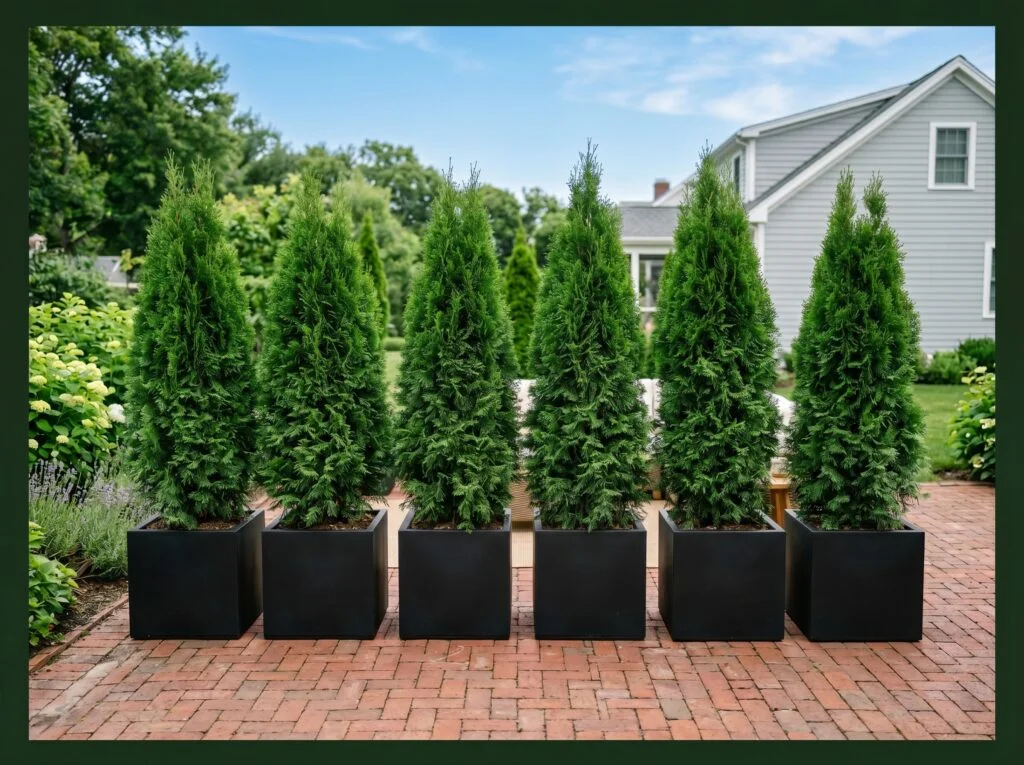
Potted arborvitae trees are the fastest way to create a living green privacy wall without planting anything in the ground. These evergreen trees grow in a dense, narrow, upright column that is naturally designed for exactly this application. They stay green all year long no bare winter exposure, no leaf cleanup in autumn. A row of six emerald green arborvitae in large square planters creates a privacy wall that looks like a formal clipped hedge while being entirely portable, repositionable, and renter-friendly.
Use planters that are at least 24 inches wide and 24 inches deep for each tree arborvitae have substantial root systems and they will not thrive long-term in undersized containers. A well-draining potting mix designed for trees and shrubs prevents root rot during wet weather. Water once or twice per week during hot, dry conditions container-grown trees dry out much faster than in-ground plantings. Fertilize once each spring with a slow-release granular fertilizer rated for evergreens. With proper care, potted arborvitae can live and grow in containers for many years, providing increasingly dense screening as they mature.
Living Green Wall with Climbing Plants
A living green wall with climbing plants transforms outdoor spaces into lush, vibrant retreats filled with natural beauty and texture. The vertical greenery adds privacy, improves the atmosphere, and creates a refreshing focal point while blending seamlessly with patios, pergolas, and garden designs.
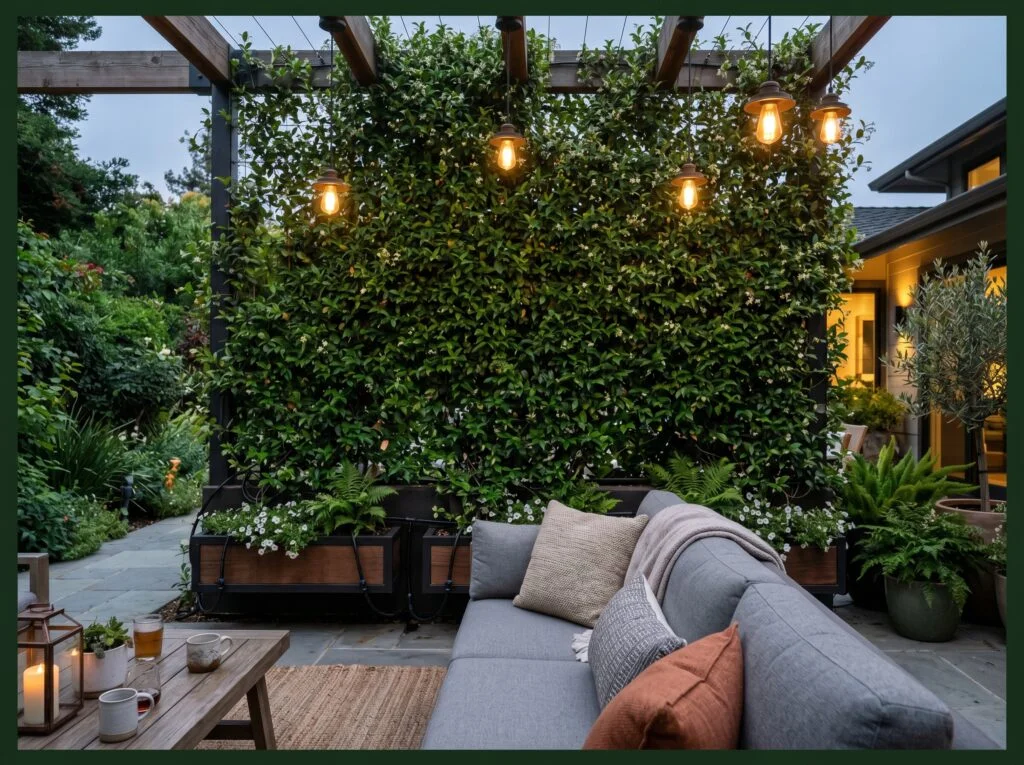
A living green wall of climbing plants is the most beautiful and environmentally valuable patio privacy solution you can create. A steel cable wire trellis system fixed to a fence or freestanding frame gives climbing plants the structure they need to cover a full wall surface in one to three seasons, depending on the species. Star jasmine covers densely and smells extraordinary on warm evenings. English ivy covers aggressively and stays evergreen year-round. Climbing hydrangea produces stunning white flowers. Wisteria is breathtaking in bloom but needs very strong support and annual pruning to stay manageable.
Wire cable trellis systems are the cleanest and most modern-looking support option stainless steel cables on wall-mounted standoff brackets create an almost invisible framework that lets the plants take center stage. Install drip irrigation at the base of the planter or wall opening to keep the plants consistently watered without daily attention. Living walls also provide genuine ecological benefits they support pollinators, reduce the ambient temperature of the wall surface by up to 10 degrees through transpiration, and absorb some airborne noise. For a patio that feels like a garden sanctuary, this is the single most impactful privacy investment you can make.
Cantilever Umbrella for Overhead Privacy
A cantilever umbrella for overhead privacy provides flexible shade and a sense of seclusion without obstructing valuable floor space. Its offset design creates a comfortable outdoor retreat while adding modern style, sun protection, and a cozy atmosphere to patios and seating areas.
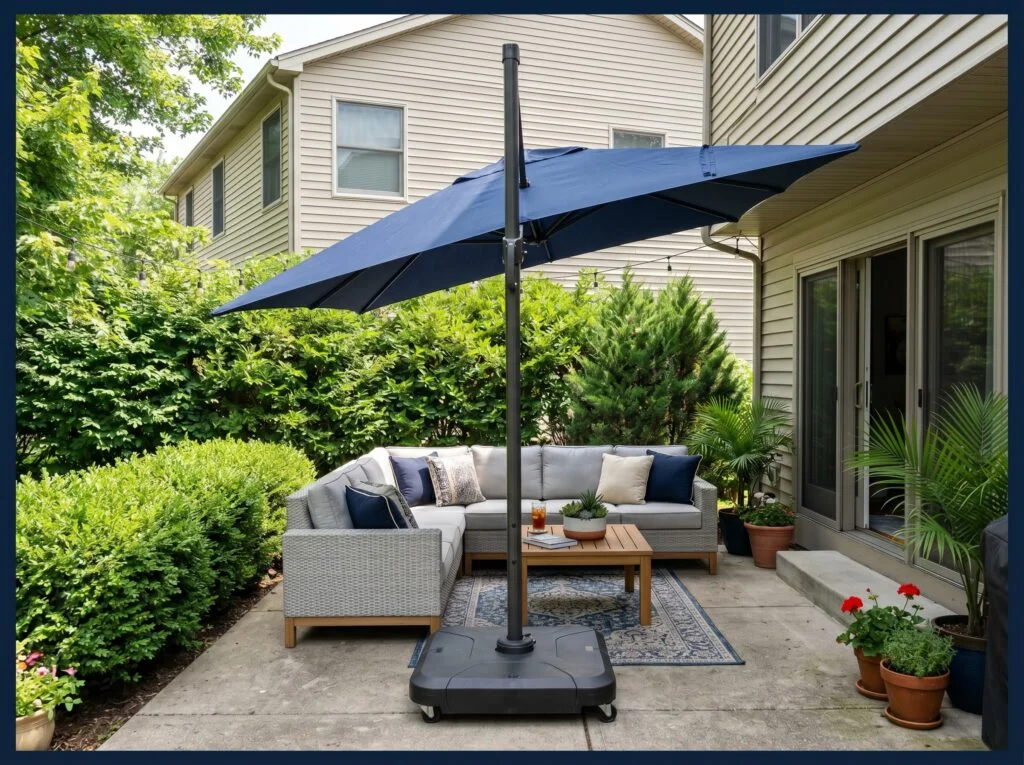
Most patio privacy articles focus exclusively on side-to-side sightlines and completely miss one of the most common real-world problems the overlooking neighbor with a second-floor window or elevated deck that looks directly down onto your patio. No fence or side screen solves that. You need overhead coverage. A large rectangular cantilever umbrella is the most practical, portable, and affordable solution for this specific situation. The offset arm allows you to tilt the canopy at an angle that blocks the view from above while still keeping your seating area open and accessible.
Choose a cantilever umbrella with a minimum canopy size of 10 by 13 feet for a standard sectional sofa smaller umbrellas simply do not provide enough overhead coverage to block an angled sightline. The base weight is critical look for bases that accept at least 100 pounds of ballast plates, or use a filled sand bag base that anchors deeply. A crank-lift and 360-degree rotation mechanism makes daily angle adjustment effortless. UV-protective fabric rated at UPF 50+ simultaneously blocks harmful sun exposure while providing overhead seclusion. Deep navy, charcoal, or forest green canopy colors provide the densest shade and the most visual coverage from above.
For overhead coverage beyond a single umbrella, shade structures for the whole patio are worth exploring too.
Faux Ivy Privacy Screen on Existing Fencing
A faux ivy privacy screen on existing fencing offers an instant way to increase privacy while adding lush greenery without ongoing maintenance. The realistic foliage softens plain fences, enhances outdoor aesthetics, and creates a cozy, garden-inspired backdrop for patios and backyards.
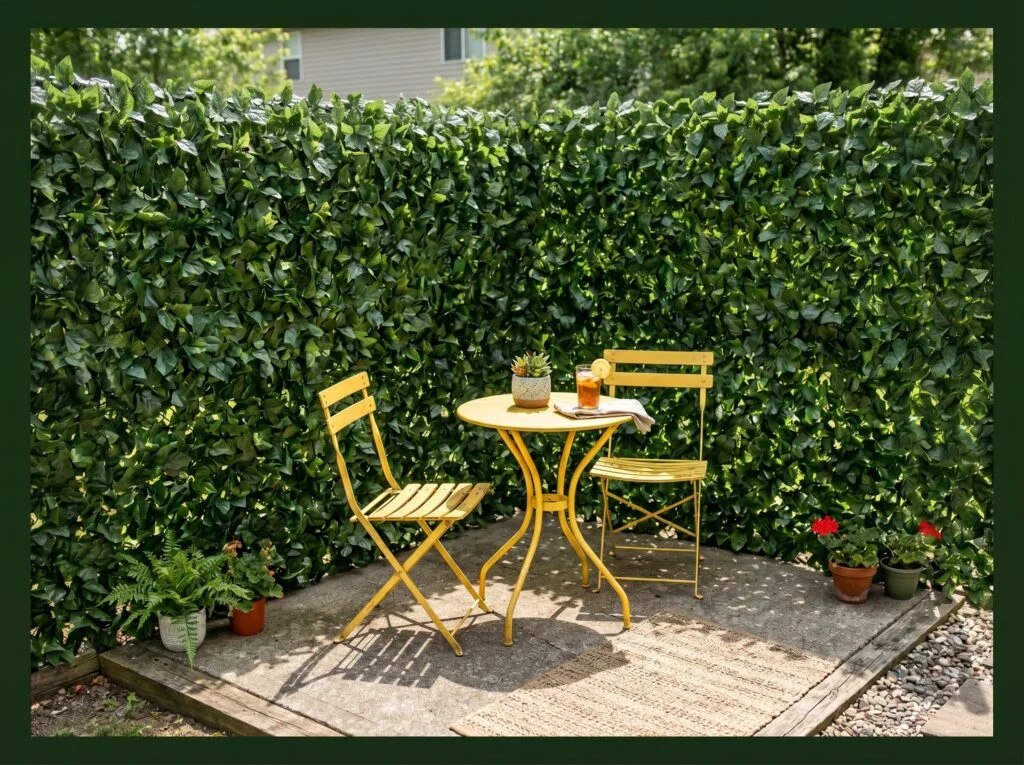
For homeowners with an existing but visually transparent fence chain link, wire mesh, or a sparse aging wood fence — a faux ivy privacy screen roll is the fastest, cheapest transformation available. These panels consist of realistic-looking artificial leaf mesh that attaches directly to your existing fence with zip ties in under an hour. The result looks remarkably like a well-established real ivy hedge from a distance of ten feet or more, providing full visual coverage without any of the maintenance, growth time, or watering that real ivy requires.
The best faux ivy panels use UV-stabilized polyethylene leaves that resist fading for five to seven years in direct sun without developing that telltale bleached yellow color that low-quality artificial plants develop within a single summer. Look for double-layer panels with leaves on both sides of the mesh for a more convincing, full appearance. This solution is particularly effective for renters because it attaches without permanent modification to the fence and removes completely in minutes. It also works brilliantly as an instant privacy fix while a real planted hedge establishes itself over the next few years behind it.
Lattice Trellis with Climbing Roses
A lattice trellis with climbing roses creates a romantic and elegant privacy feature that adds beauty, fragrance, and vertical interest to outdoor spaces. The blooming vines soften hard surfaces while transforming patios, gardens, and walkways into charming, cottage-inspired retreats.
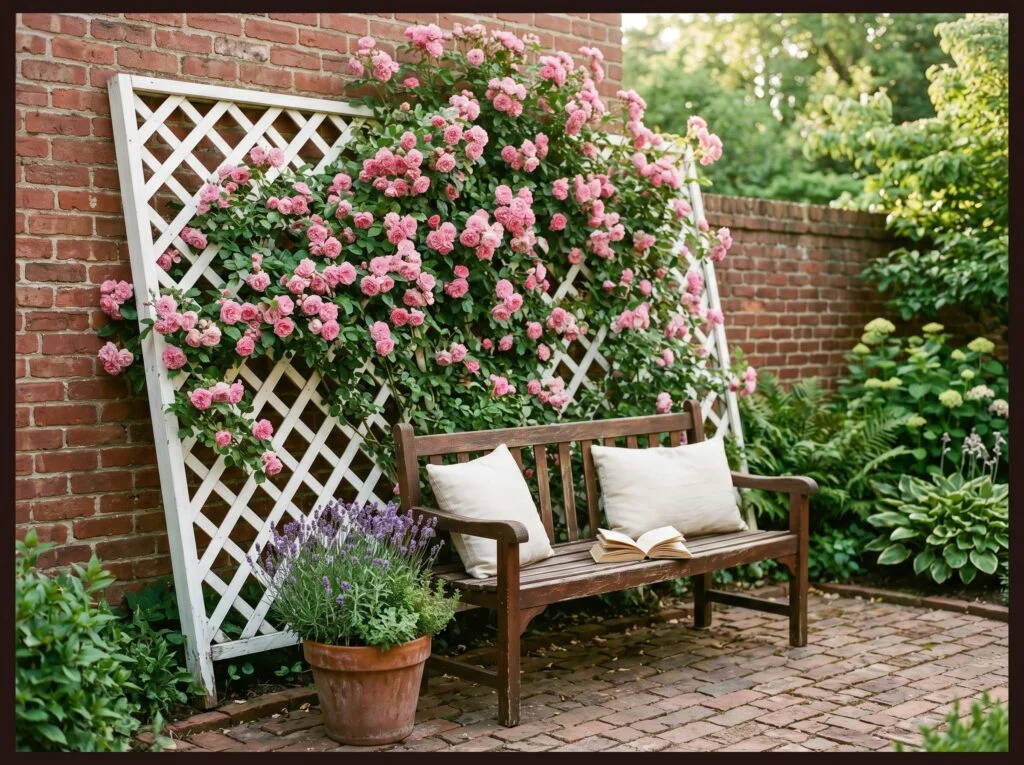
A lattice trellis with climbing roses is the most romantically beautiful patio privacy solution on this list and it genuinely never goes out of style. The crisscross diamond pattern of the lattice provides immediate screening from day one — even before the roses establish themselves, the structure alone breaks up sightlines effectively. As the roses fill in over two to three seasons, the trellis disappears beneath a dense wall of leaves and blooms that provides full visual privacy for six to eight months of the year.
For year-round privacy, combine the climbing roses with a fast-growing evergreen clematis the clematis provides winter coverage while the roses rest dormant. White-painted wood lattice suits traditional and cottage-style homes beautifully. Black metal lattice panels read as more contemporary and pair well with modern architecture. Anchor the trellis panel securely to wall-mounted brackets or heavy freestanding feet a lattice fully loaded with mature rose canes can catch significant wind and topple an inadequately anchored structure. Train the new rose canes horizontally along the trellis wires rather than letting them grow vertically for a denser, wider coverage pattern.
Tall Ornamental Grasses in Row Planters
Tall ornamental grasses in row planters add movement, texture, and natural beauty to outdoor spaces. Their soft, flowing appearance creates a sense of privacy while bringing height and visual interest to patios, balconies, and garden areas. This low-maintenance planting option also complements both modern and natural landscape designs.
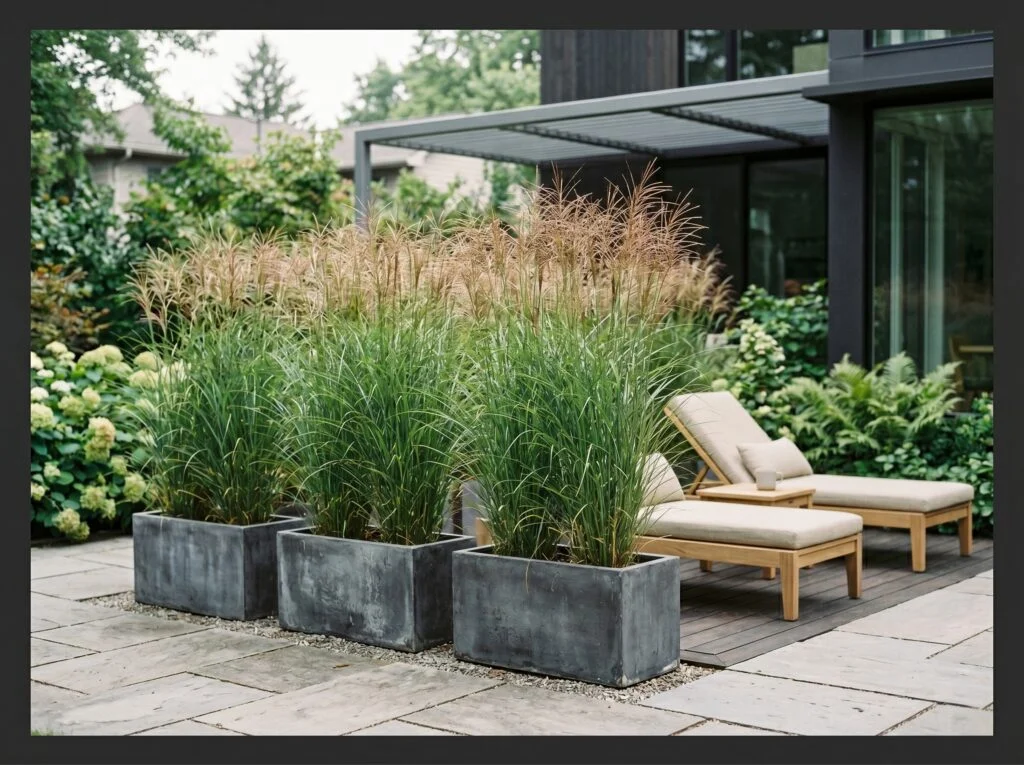
Ornamental grasses in row planters create a patio privacy screen with movement, sound, and a lightness that solid fences and screens cannot replicate. The grasses sway gently in any breeze and produce a soft, continuous rustling sound that simultaneously masks neighborhood noise and creates a calming sonic atmosphere. For anyone who finds solid walls oppressive or wants privacy that feels natural rather than constructed, a row of tall grasses is genuinely the most pleasant-feeling solution available.
The best ornamental grass species for tall privacy screening include Miscanthus sinensis (maiden grass), which reaches six to eight feet and produces beautiful feathery plumes in late summer. Karl Foerster feather reed grass reaches five feet in a tidy upright column. Pampas grass is the most dramatic option at eight to twelve feet but spreads aggressively and is invasive in some US states check your local regulations before planting. Container-grown grasses are easy to keep in bounds and allow precise positioning. Cut them back hard to six inches above the pot surface every late winter and they will return fuller and denser each spring.
Retractable Side Awning
A retractable side awning provides flexible shade and privacy for patios, balconies, and outdoor seating areas. It can be easily extended when needed and retracted to maintain an open feel. This practical feature also helps block wind and sunlight while adding a clean and modern touch to outdoor spaces.
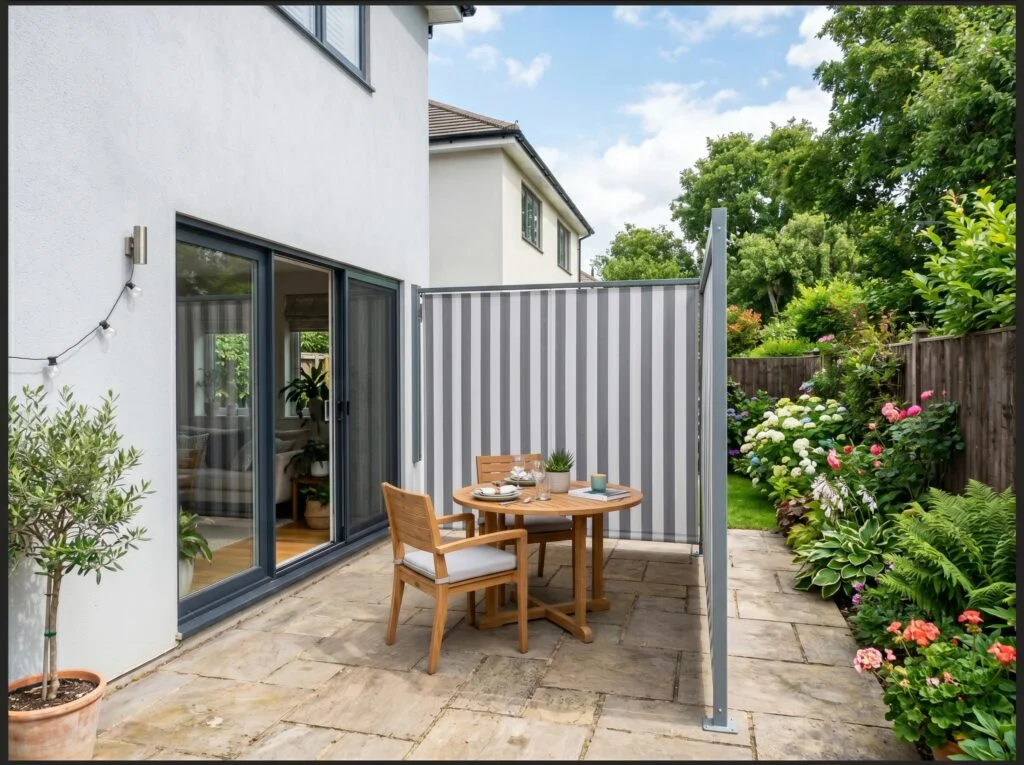
Retractable side awnings are one of the most underrated patio privacy tools available and they solve a very specific problem beautifully the open side of a covered patio that is exposed to a neighbor’s direct view. Where a top awning provides shade, a side-mounted retractable awning extends outward horizontally to create a vertical privacy panel exactly where you need it. When you want the open view, you retract it completely into a compact housing mounted flush to the wall. It takes five seconds to operate and leaves no visual trace when stored.
This solution is especially effective for patios that share a side boundary with a neighbor whose yard is at the same level neither a fence nor raised planters are as immediately useful as a targeted retractable panel in exactly the right position. Solution-dyed acrylic fabrics in neutral stripes or solid tones handle UV, rain, and wind without degrading. Most retractable systems have a maximum extension of six to ten feet, making them ideal for covering a specific seating zone rather than an entire patio perimeter. Install a motor-operated version if you want one-button operation from your phone or a wall switch.
Woven Resin Wicker Room Dividers
Woven resin wicker room dividers add texture, privacy, and a relaxed outdoor feel to patios and seating areas. Their lightweight yet durable design makes them easy to reposition, while the woven pattern creates visual interest and a cozy atmosphere. This stylish option works especially well in coastal, bohemian, and contemporary outdoor settings.
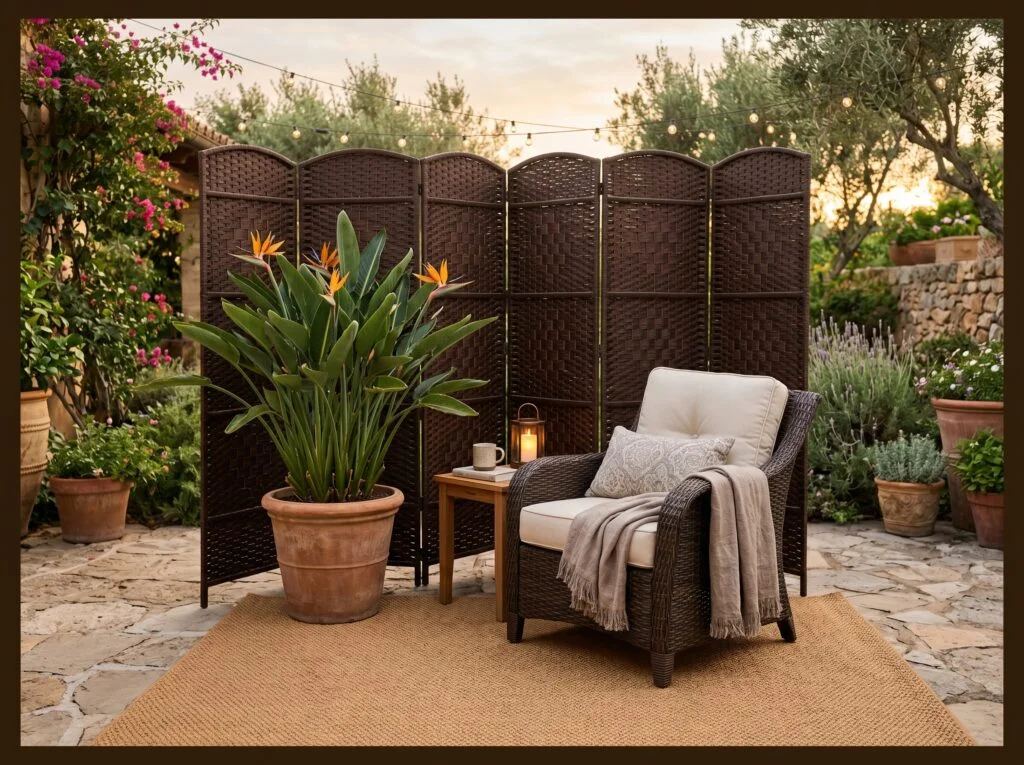
Woven resin wicker room dividers are the most furniture-like patio privacy solution available they look like intentional decor rather than a privacy screen, and that distinction matters enormously in a carefully designed outdoor space. Arrange two or three panels in a shallow V or U-shape around a seating area and you create a sheltered nook that feels genuinely cosy and deliberate. The wicker weave texture adds warmth and organic character that cold metal screens cannot provide. For a boho, coastal, or eclectic patio aesthetic, this is the privacy solution that fits most naturally.
Once the screening is in place, furniture that fits a secluded nook completes the whole seating arrangement.
Resin wicker is the practical outdoor version of natural rattan it looks almost identical but handles rain, humidity, and UV exposure without cracking, fading, or developing mold the way natural wicker does. The panels fold flat for easy winter storage inside a garage or shed and reassemble in minutes each spring. Chocolate brown, cream, and gray are the most versatile color choices across different patio furniture palettes. Use weighted planter pots at the base of each panel if your patio gets strong wind the wicker construction is lighter than metal screens and needs anchoring in exposed positions.
Fabric Sail Shades for Overhead Privacy
Fabric sail shades provide both overhead privacy and protection from direct sunlight in outdoor spaces. Their modern, floating design adds visual interest while creating a cooler and more comfortable environment. These versatile shades are ideal for patios, decks, and garden seating areas, enhancing both style and functionality.
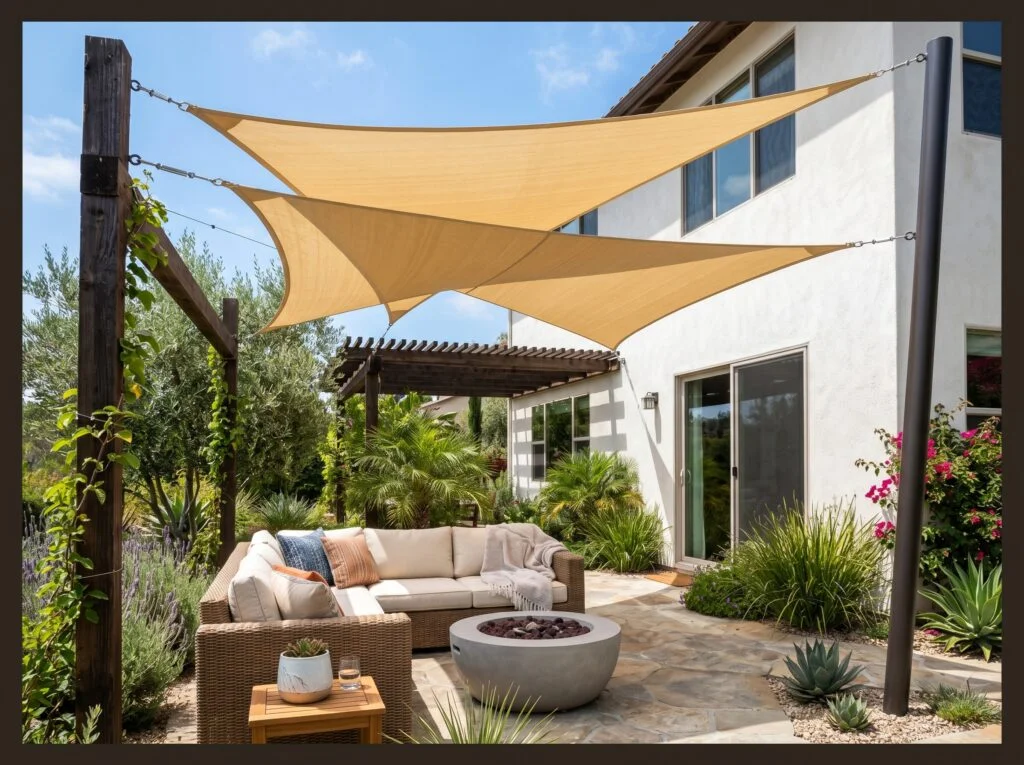
Overlapping sail shades are the most architectural and design-forward approach to overhead patio privacy. Two or three triangular panels stretched at different heights and angles create a dynamic, layered canopy that looks genuinely modern and considered rather than utilitarian. This is the overhead privacy solution for homeowners who want their patio to look like a designed outdoor room rather than a shaded box. The overlapping arrangement also provides more complete coverage than a single shade because each triangle’s shadow fills the gaps left by the others.
Sail shade fabric should be high-density polyethylene (HDPE) with a UV block rating of at least 90 percent lower quality fabrics transmit significantly more heat and UV radiation, defeating the comfort purpose. Anchor points need to be genuinely strong each anchor takes a substantial tension load, especially in wind. Use stainless steel eye bolts set into wall studs or dedicated galvanized steel anchor posts cemented into the ground. Loosen or remove the sails during heavy wind events or when not in use for extended periods sustained high wind loads can tear fabric or pull anchor points from the wall. A quick-release clip system on the sail corners makes this a two-minute task.
Reed Fencing Rolls on a Balcony Railing
Reed fencing rolls on a balcony railing offer an easy and natural way to increase privacy outdoors. The organic texture adds warmth and a relaxed feel, while helping block unwanted views and reduce wind exposure. This affordable solution also blends beautifully with bohemian, tropical, and nature-inspired décor styles.
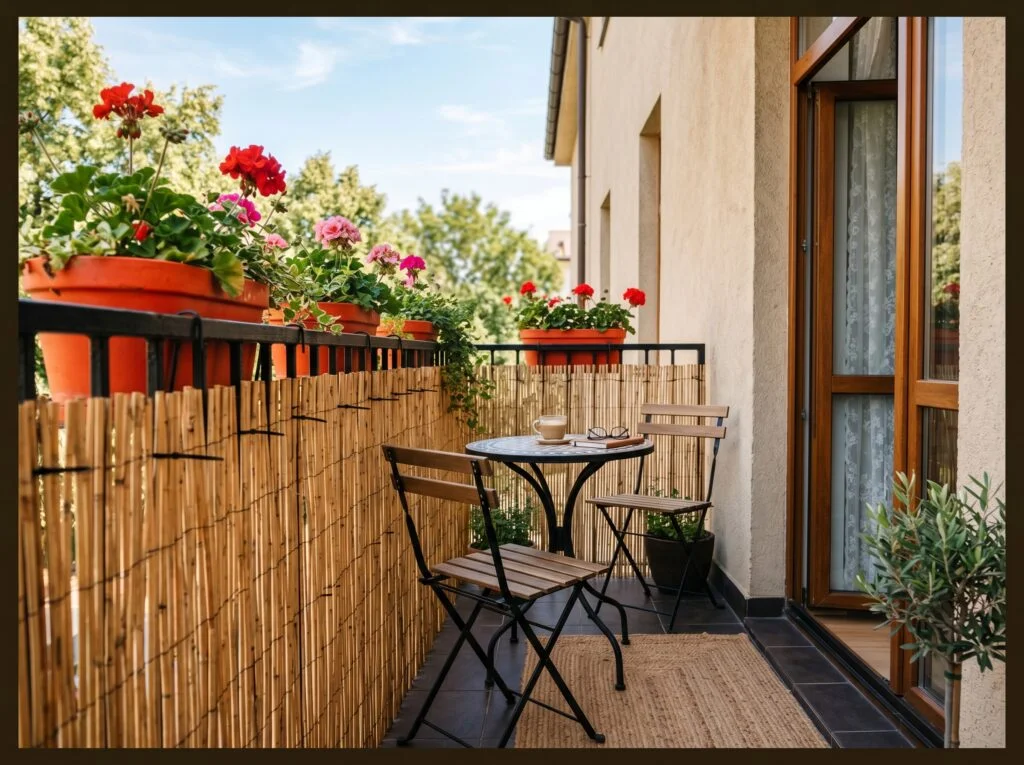
Reed fencing rolls are the most budget-friendly instant privacy solution for any balcony railing or existing fence rail. A standard roll covers 13 linear feet of fence at a height of six feet for under $30, making this the least expensive privacy solution on this entire list by a significant margin. The thin natural reeds tied together with galvanized wire create a light, beachy visual texture that feels relaxed and organic never harsh or industrial. It attaches to any existing railing or fence post with simple zip ties in under thirty minutes.
Reed fencing works best in sheltered or semi-sheltered positions because it is lighter than bamboo and can rattle in strong sustained winds, which some people find distracting. In very exposed or coastal positions, opt for a heavier bamboo roll instead. Reed fencing typically lasts two to four years before the natural material becomes brittle and the ties loosen at this price point, simple annual replacement is entirely reasonable. The warm neutral tan color pairs naturally with terracotta pots, wood furniture, and bright flowering plants in a way that creates a complete, coordinated balcony look without any interior design experience required.
Gabion Stone Wall Privacy Barrier
A gabion stone wall privacy barrier combines modern design with natural texture to create a durable and stylish outdoor screen. The wire cages filled with stones provide excellent privacy while adding depth and visual interest to the landscape. This low-maintenance feature works beautifully in contemporary, rustic, and industrial-inspired outdoor spaces.
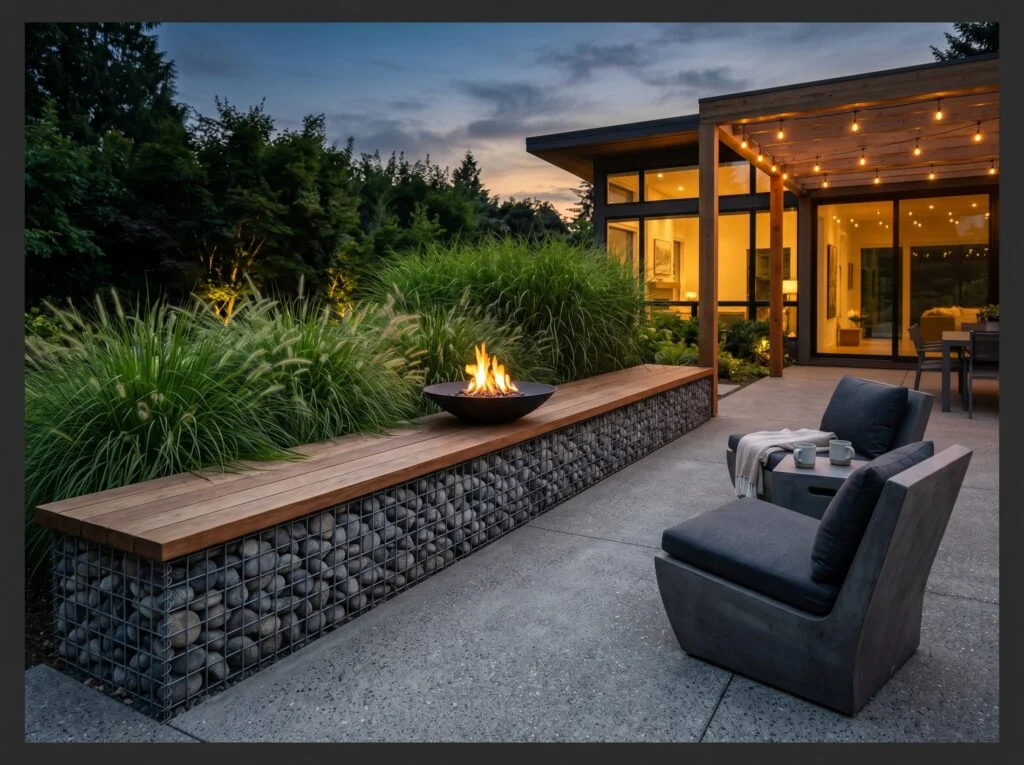
A gabion stone wall is one of the most architecturally distinctive and permanently satisfying patio privacy ideas available. Wire mesh baskets filled with smooth river stones create a structure that looks like it cost ten times what it actually did the raw, honest combination of steel and stone is simultaneously rugged and refined. A gabion wall at seating height (approximately 36 to 42 inches) provides visual privacy for anyone seated on the patio without completely walling off the space. Top the wall with a flat hardwood timber cap for a seating ledge that doubles the function of the structure.
Gabion walls are completely DIY-buildable on a weekend with no masonry skills required. Purchase pre-made wire basket forms in standard sizes, fill them with your chosen stone, and close the wire lid. River rock, granite cobbles, slate shards, and recycled brick all work well as fill materials choose based on your aesthetic preference and what is readily available locally. Gabion structures are also incredibly strong and completely frost-proof the stones allow water to drain freely through the mesh rather than accumulating and cracking the structure in freezing weather. This is a genuinely long-lasting privacy solution that will look better with age rather than deteriorating.
Pergola with Privacy Lattice Side Panels
A pergola with privacy lattice side panels creates a comfortable and secluded outdoor retreat. The lattice design provides partial screening while still allowing light and airflow to pass through. It also offers the perfect structure for climbing plants, adding greenery and enhancing the overall charm of patios and garden seating areas.
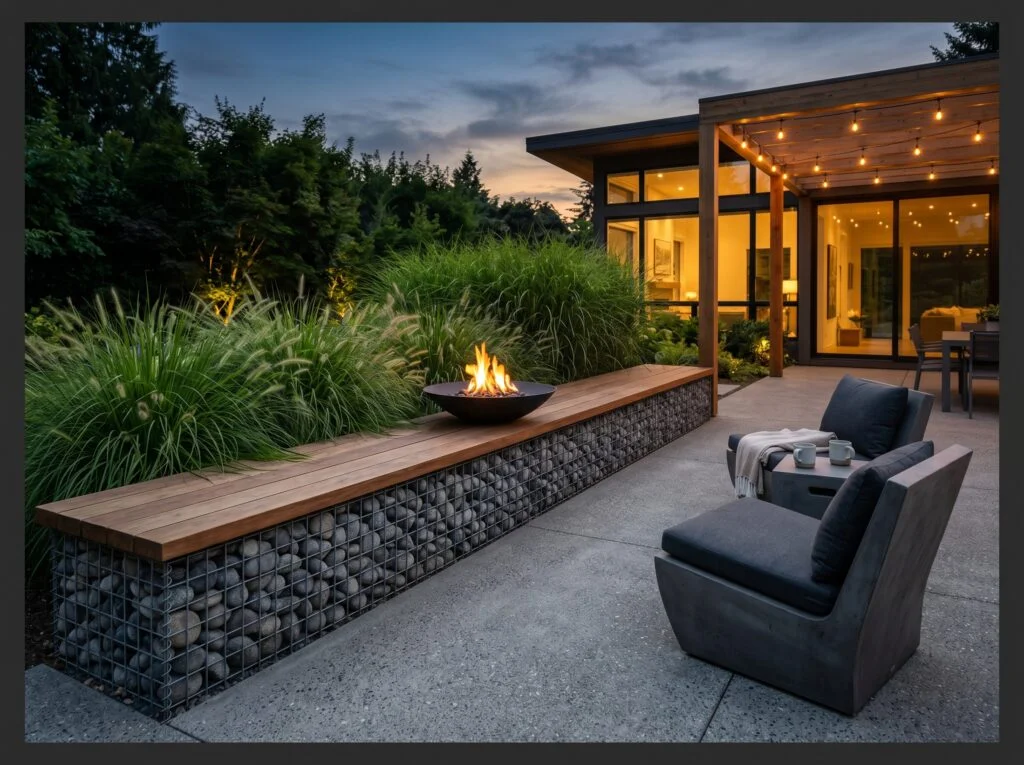
A pergola with lattice side panels creates a complete outdoor room overhead structure plus partial side screening in one integrated design. The overhead beams of the pergola define the ceiling, the lattice panels define two or three of the walls, and the open entry side keeps the space accessible and welcoming. This combination is the closest thing to building an actual outdoor room without constructing solid walls, and it delivers a level of spatial definition that single-element solutions simply cannot replicate. The lattice panels provide immediate privacy from day one and become even more effective as climbing plants fill in the gaps over the following seasons.
For best results, match the lattice material to the pergola structure painted white wood lattice in a white pergola, dark steel lattice in a black metal pergola. The visual continuity of the same material and finish throughout makes the whole structure read as one designed piece rather than an assembled collection of separate elements. A hanging daybed or swing suspended from the pergola overhead beams completes the secluded retreat atmosphere perfectly. Add outdoor string lights woven through the lattice panels for evening illumination that turns the whole structure into a glowing lantern as darkness falls.
If you want to take the structure further, a full outdoor room built around it can turn the pergola into a true destination.
Vertical Succulent Living Wall Frame
A vertical succulent living wall frame adds greenery and artistic appeal to outdoor spaces without taking up much floor space. The mix of colors, shapes, and textures creates a striking focal point while bringing a fresh and natural feel to patios, balconies, and garden areas. This low-maintenance feature is perfect for modern and contemporary landscapes.
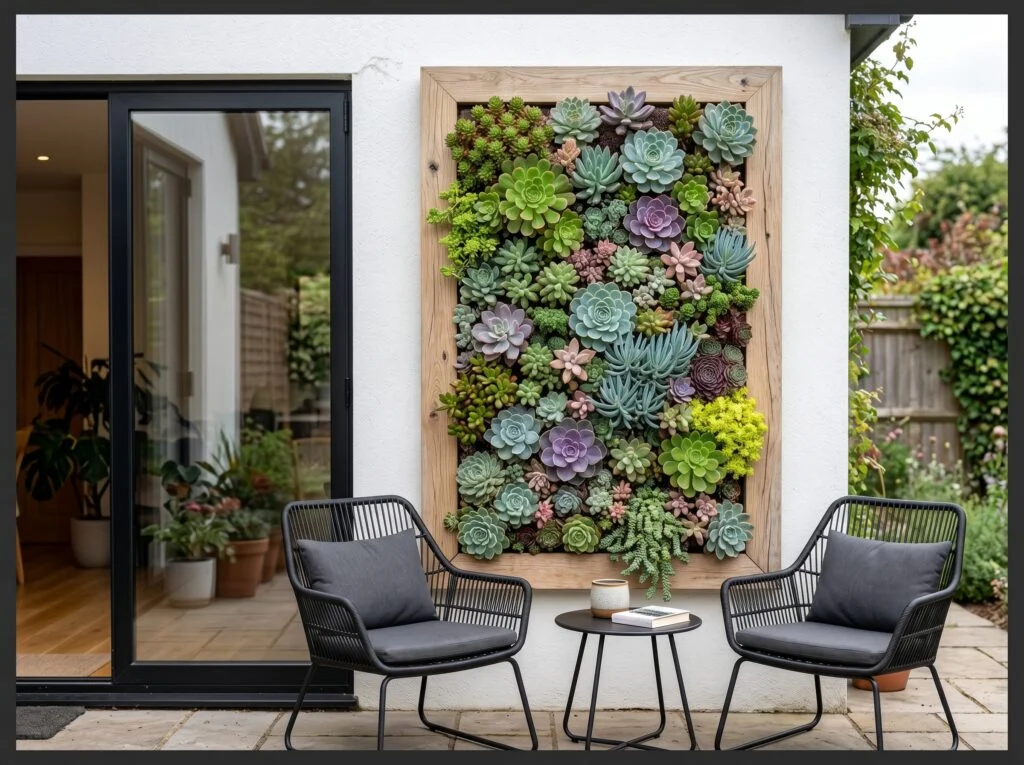
A vertical succulent wall frame turns your patio privacy screen into a genuine living artwork that guests will photograph and talk about long after the party ends. The dense mosaic of succulent rosettes — in every tone from pale blue-green to deep burgundy creates a textural, colorful surface that no painted fence or manufactured panel can come close to replicating. As a privacy solution it is most effective in a medium-sized frame used as a visual anchor or partial screen rather than a full perimeter barrier, but combined with other elements in a layered privacy strategy it is extraordinarily beautiful.
other elements in a layered privacy strategy it is extraordinarily beautiful.
Succulents are the ideal living wall plant because they store water in their leaves and can go two to three weeks between waterings once established no drip irrigation required in most climates. Use a specialized succulent wall frame with a coir fiber or sphagnum moss backing that retains just enough moisture at the roots without waterlogging. Hang the frame in a position that receives at minimum four hours of direct sunlight per day succulents will survive in less but etiolate (stretch toward the light) and lose their compact, dense growth form. Replenish any dead or bare sections each spring with fresh succulent plugs available at most garden centers.
Staggered Privacy Planter Boxes at Different Heights
Staggered privacy planter boxes at different heights create a layered and visually appealing outdoor screen. The varying heights add depth and dimension while providing natural privacy and space for a mix of plants and greenery. This flexible design makes patios and seating areas feel more private, stylish, and connected to nature.
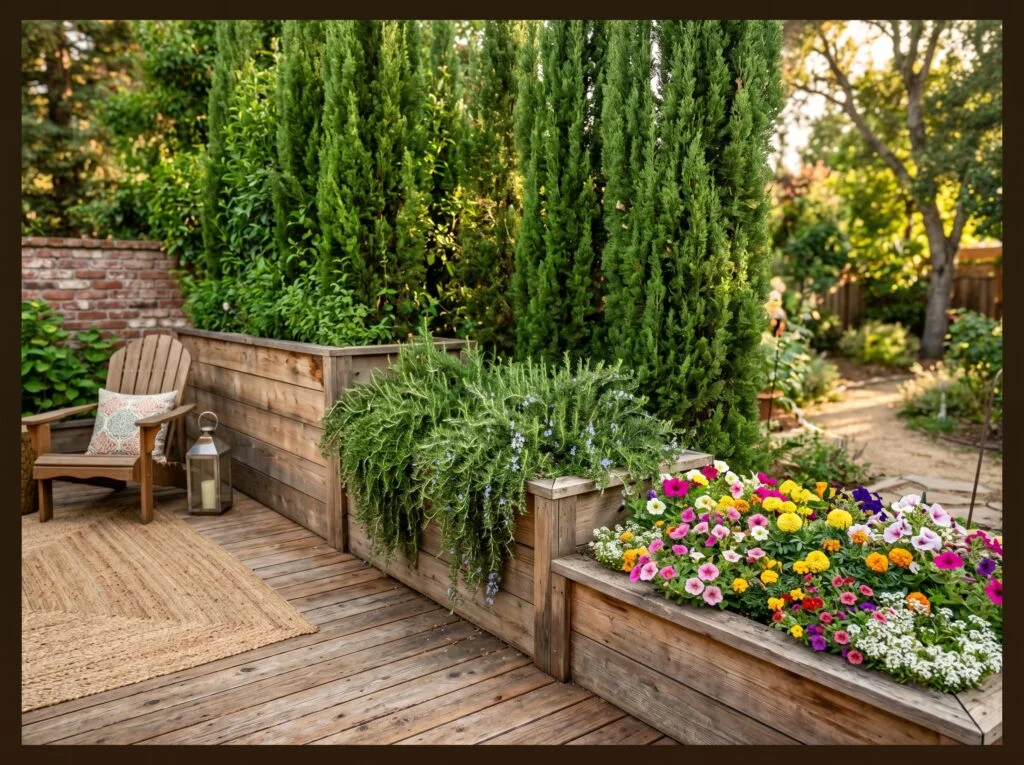
Staggered planter boxes at three different heights create a layered privacy screen that is more visually interesting, more spatially effective, and more versatile than a single row of uniform planters. The tall back layer provides the actual overhead screening. The medium middle layer fills in the mid-level visual gap. The low front layer softens the base and creates a completed, designed look rather than a utilitarian barrier. This three-layer arrangement is the same logic that professional landscape designers use in garden borders thriller, filler, spiller applied to a vertical privacy screen.
Build the boxes from cedar or treated pine in graduating heights: back box at 48 to 60 inches tall, middle box at 36 inches, front box at 18 to 24 inches. Connect them on a shared platform or shallow rolling dolly if portability matters. Fill the back box with evergreen columnar plants for year-round coverage. The middle box gets structural flowering shrubs lavender, rosemary, compact hydrangea that add seasonal color. The front box holds colorful annuals or trailing plants that you can swap seasonally. This whole setup photographs beautifully and is one of the most Pinnable patio privacy arrangements because it looks like a curated garden rather than a privacy installation.
Canvas Drop Cloth Privacy Curtains
Canvas drop cloth privacy curtains offer an affordable and stylish way to create a more secluded outdoor space. The soft fabric adds warmth and texture while helping block sunlight, wind, and unwanted views. These versatile curtains also bring a relaxed, resort-inspired feel to patios, pergolas, and outdoor seating areas.
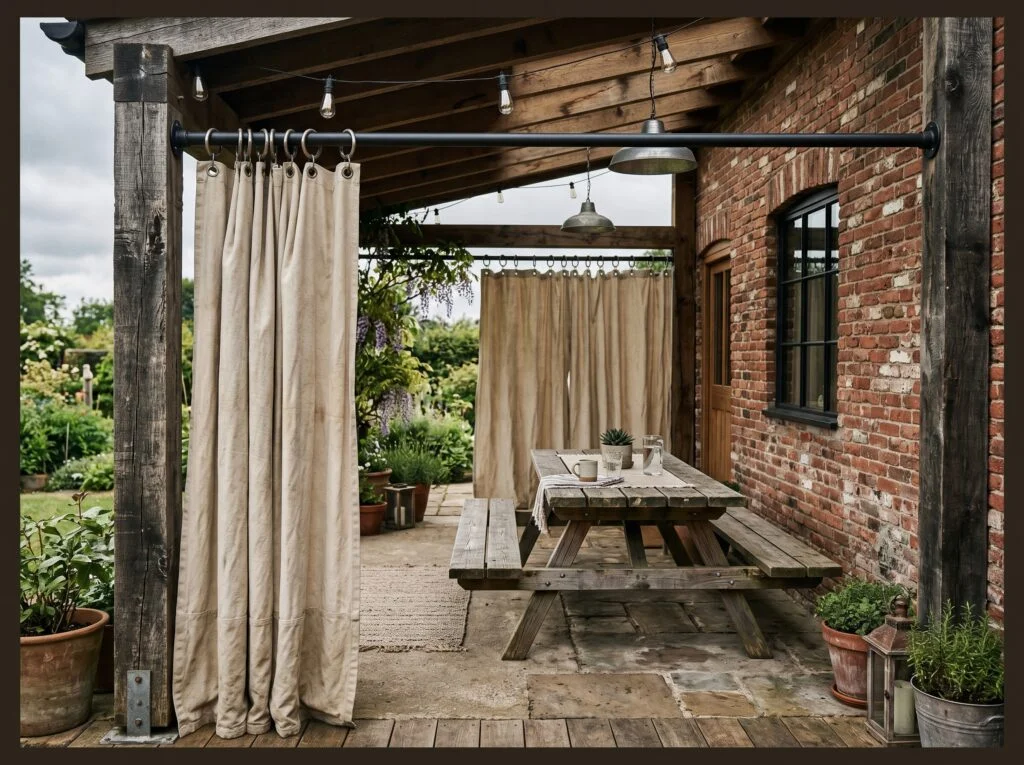
Canvas drop cloths from a hardware store are one of the best-kept secrets in budget patio privacy. A standard 9-by-12-foot drop cloth costs a fraction of purpose-made outdoor curtains and is made of heavy, dense cotton canvas that blocks light and sightlines completely more effectively than any sheer outdoor curtain panel. Hung on a black steel pipe rod with oversized silver curtain rings, a row of three or four drop cloths creates a substantial, industrial-chic privacy curtain wall that looks completely intentional and even stylish in a farmhouse or urban loft-style outdoor setting.
The canvas handles dirt, rain, and sun reasonably well and can be machine washed on a heavy-duty cycle when it gets grimy. It will not last as long as purpose-rated outdoor fabrics plan to replace every two to three seasons but at the price point, this is still an exceptional value per year of use. Hem the bottom of each panel with iron-on hem tape and insert a length of steel chain in the hem to add weight that keeps the panels hanging straight and prevents wind from billowing them up dramatically. Tie them back to the post uprights with a simple jute rope loop for an open, welcoming look when full seclusion is not needed.
Prefab Modular Privacy Wall Panels
Prefab modular privacy wall panels provide a quick and stylish solution for creating secluded outdoor spaces. Their versatile design allows for easy installation and customization, making them ideal for patios, decks, and garden areas. These panels also add modern structure and visual interest while enhancing comfort and privacy.
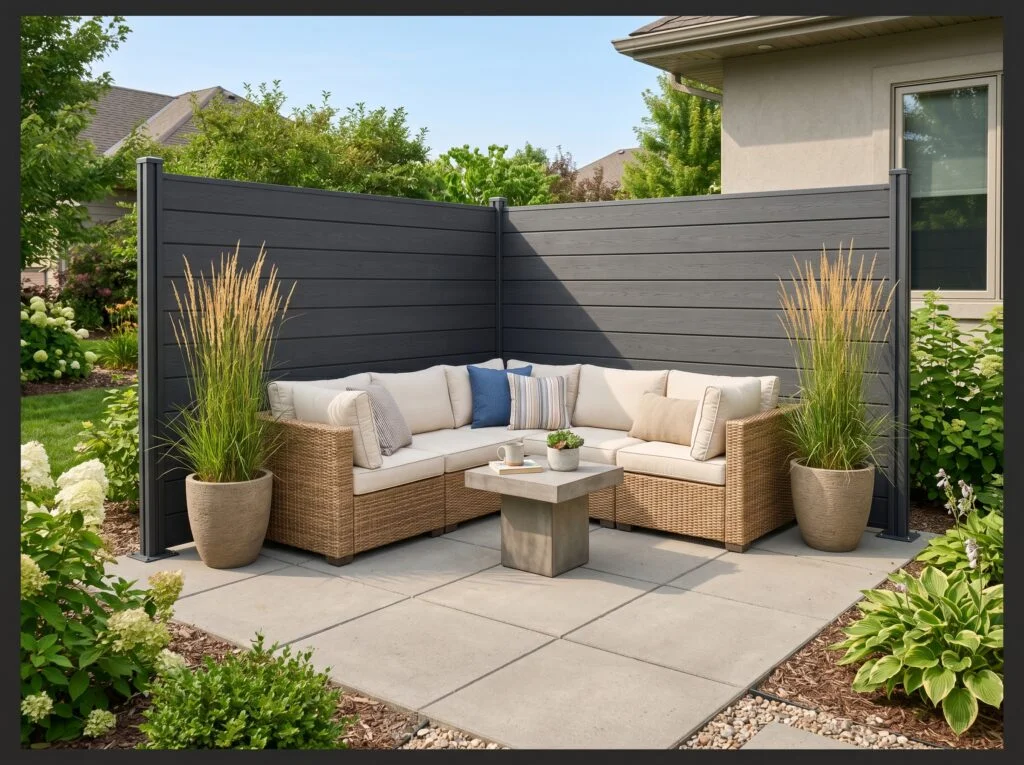
Prefab modular privacy wall panels are the fastest permanent-looking patio privacy solution available they arrive flat-packed, interlock on ground stakes or weighted feet, and create a solid, finished-looking wall in under an hour with no tools required beyond a mallet. They are available in composite wood-look finishes, concrete-look panels, brushed aluminum, and woven patterns in a wide range of heights from 36 inches to over 6 feet. The modular nature means you can buy exactly the number of panels you need for your specific space and add more sections later if your needs change.
Composite panels are the best material choice for long-term outdoor exposure they will not rot, warp, crack, or require painting the way real wood panels do, and they maintain their finished appearance for fifteen years or more with minimal maintenance. Look for panels that include a through-bolt connecting system rather than just interlocking clips bolt connections are significantly more wind-resistant. For a rented property, choose a freestanding weighted-base system rather than ground-stake models. These panels can be reconfigured into any shape straight line, L-shape, U-shape making them adaptable to changing furniture arrangements and entertaining needs.
Outdoor String Lights with Privacy Hedge for Evening Seclusion
An outdoor string light setup paired with a privacy hedge creates a cozy and secluded atmosphere for evening relaxation. The soft lighting adds warmth and ambiance, while the hedge provides natural screening and a sense of enclosure. This combination transforms patios and garden spaces into inviting retreats for entertaining or unwinding after sunset.
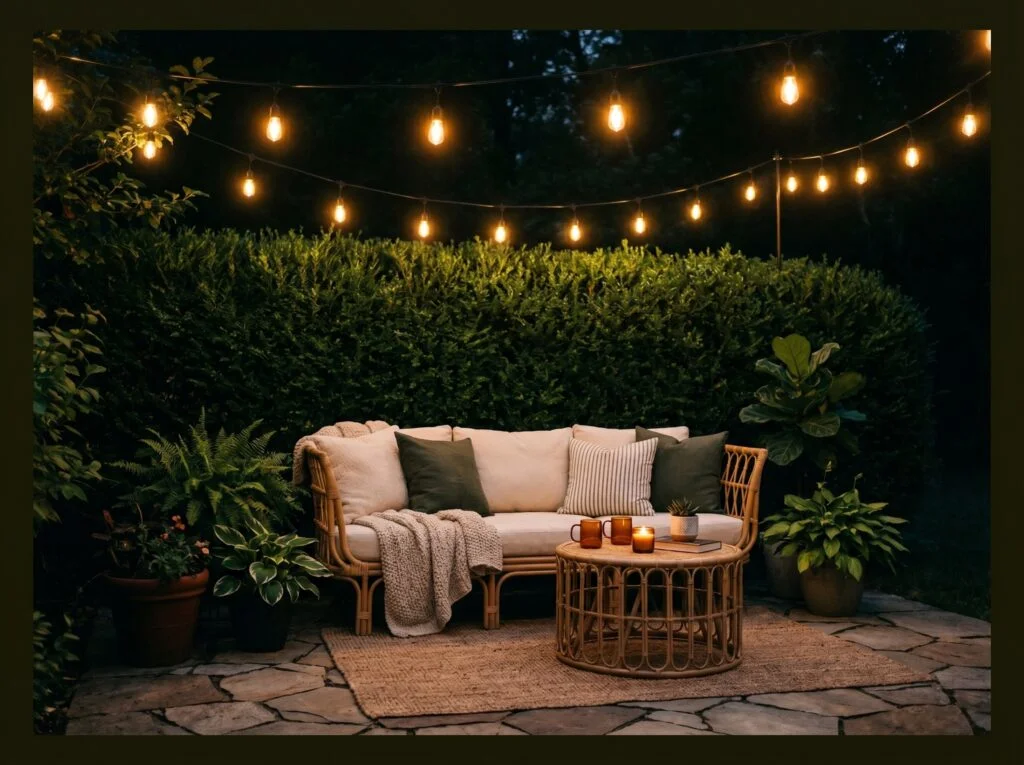
Evening privacy is a specific and consistently overlooked problem in patio privacy planning. During the day, a screen or planting provides effective visual privacy. But at night, if your patio is brightly lit and the surrounding areas are dark, you create a spotlight effect you can see nothing outside your lit zone, and anyone in the surrounding darkness can see you perfectly, like an actor on a stage with the house lights down. The solution is strategic lighting design that creates a glowing, self-contained atmosphere rather than a bright island in the dark.
String lights hung at two overlapping heights above the patio one at head height and one at canopy height create a warm ambient glow that envelops the space rather than spotlighting it from above. The soft, omnidirectional Edison bulb light illuminates the seating area from within the space rather than from a directional overhead fixture, which dramatically reduces the spotlight effect. Pair this lighting strategy with a dense planted hedge or tall planter row along the perimeter that blocks the outside view inward even after dark. The result is a patio that feels genuinely intimate and private after sundown the most magical time to use it.
Folding Bamboo Screen Panels
Folding bamboo screen panels offer a flexible and natural way to add privacy to outdoor spaces. Their lightweight design makes them easy to move and rearrange, while the bamboo texture brings warmth and a relaxed, tropical feel. These versatile panels work beautifully on patios, balconies, and garden seating areas, creating a cozy and inviting atmosphere.
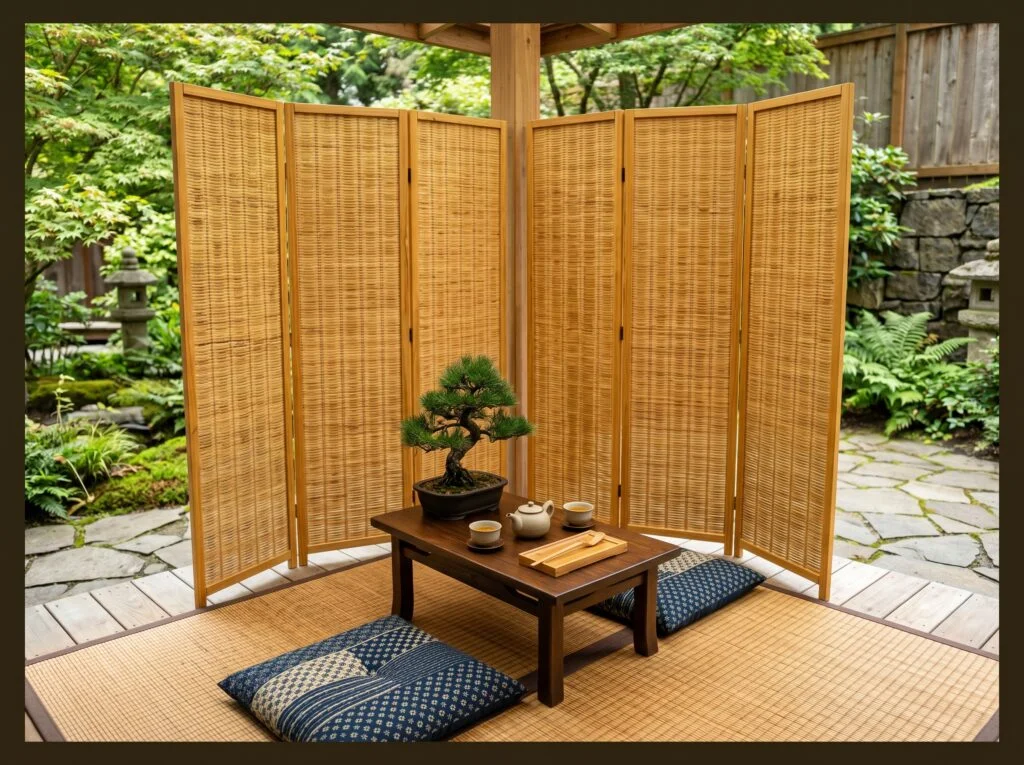
Folding bamboo screen panels are the most portable, versatile, and zen-influenced patio privacy solution on this list. Each panel consists of close-set bamboo poles bound together on a hinged frame that folds for storage and opens to any angle you need. Arrange two panels in a V-shape to create a sheltered nook around a single seating area. Use three panels in a U-shape for a more enclosed sitting alcove. Lay two flat for a wind break along one side. The flexibility to change the configuration in under two minutes means this solution adapts to different activities, different sized gatherings, and different wind conditions throughout the season.
Natural bamboo panels have a warmth and organic serenity that suits Japanese-inspired, coastal, boho, and minimalist patio aesthetics particularly well. Apply a coat of exterior bamboo oil once per season to maintain the honey-gold color and prevent the bamboo from drying, cracking, or turning gray with UV exposure. These panels are completely portable carry them inside during heavy storms or in winter to significantly extend their useful life. For maximum stability in position, weigh the base of each panel with a heavy potted plant or stone planter on either side of the outer edges. This prevents tipping in moderate wind without any permanent anchoring at all.
Conclusion
A private patio is not a luxury it is what transforms an outdoor space from somewhere you occasionally step into to a place where you genuinely live your life outdoors. Whether you spend $30 on a reed fencing roll or $3,000 on a horizontal cedar slat fence, the fundamental outcome is the same: a corner of the world that feels like yours, where you can eat breakfast in your pajamas, read without an audience, and host dinner without performing for the
Start by identifying exactly where your privacy problem comes from. Then pick one or two solutions from this list that match your budget, your style, and your specific situation. Layer them if you ca
n. And then go outside and actually enjoy the space you spent all that time creating. That is the entire point.
From there, everyday hosting made easier outside is the natural next step once your private patio is ready.