An outdoor kitchen transforms backyard entertaining from moving food in and out of the house into a genuinely seamless cooking experience where the host never has to leave the guests.
These ideas cover every outdoor kitchen style, size, budget, and feature so you can build the backyard cooking setup you have always wanted.
Before diving into layouts, it’s worth thinking about seating that pulls double duty outside since it shapes how the whole kitchen gets used.
Let’s explore the ideas.
L-Shaped Outdoor Kitchen
An L shaped layout wraps the grill, counter, and storage around a corner instead of running everything in a straight line. This shape works especially well against a patio corner or where two walls already meet. It gives you two separate work zones without needing a huge amount of space.
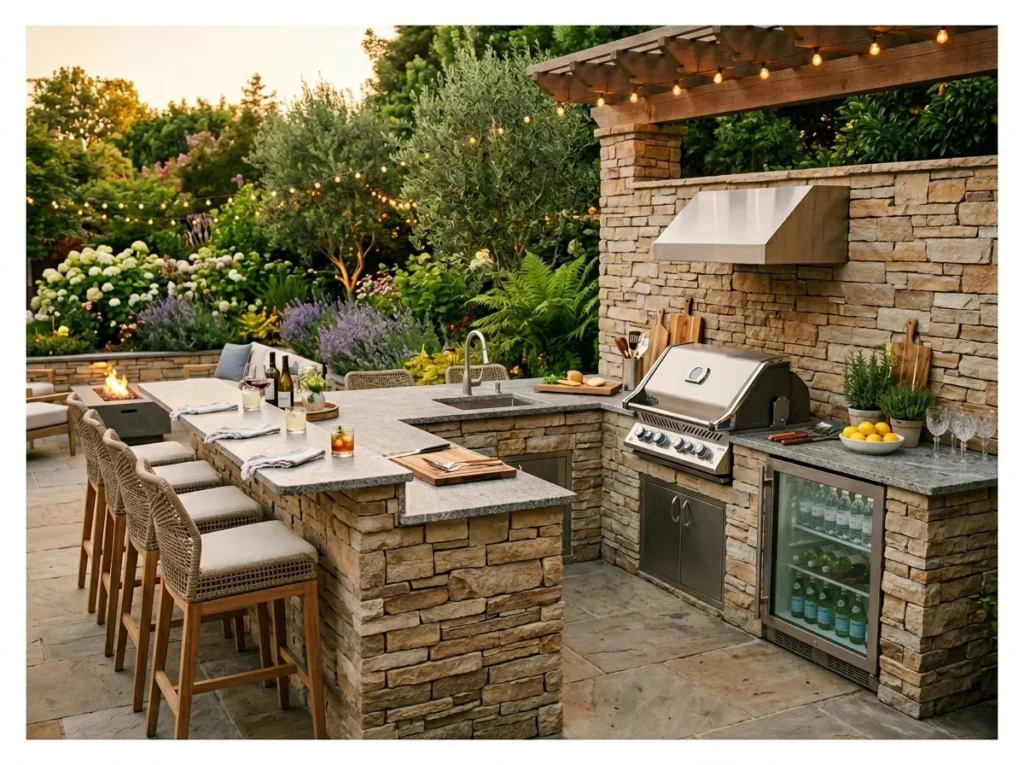
An L-shaped outdoor kitchen uses two connected counter runs at right angles to each other, creating a natural workflow triangle between the grill, prep area, and serving zone. The L-configuration maximizes counter space while defining a clear cooking zone separate from the dining area.
The corner junction of an L-shaped kitchen creates a natural position for the primary grill or pizza oven where both counter runs are accessible from the cooking position. Bar stools along the longer run create an informal social seating arrangement that keeps guests close to the action without interfering with the cooking workflow.
U-Shaped Outdoor Kitchen
A U shaped kitchen surrounds the cook on three sides, which means grilling, prep, and serving can all happen within arm’s reach. This layout usually needs a bigger patio footprint than most other shapes. Families who host often tend to like this one because it naturally creates a gathering spot in the open middle.
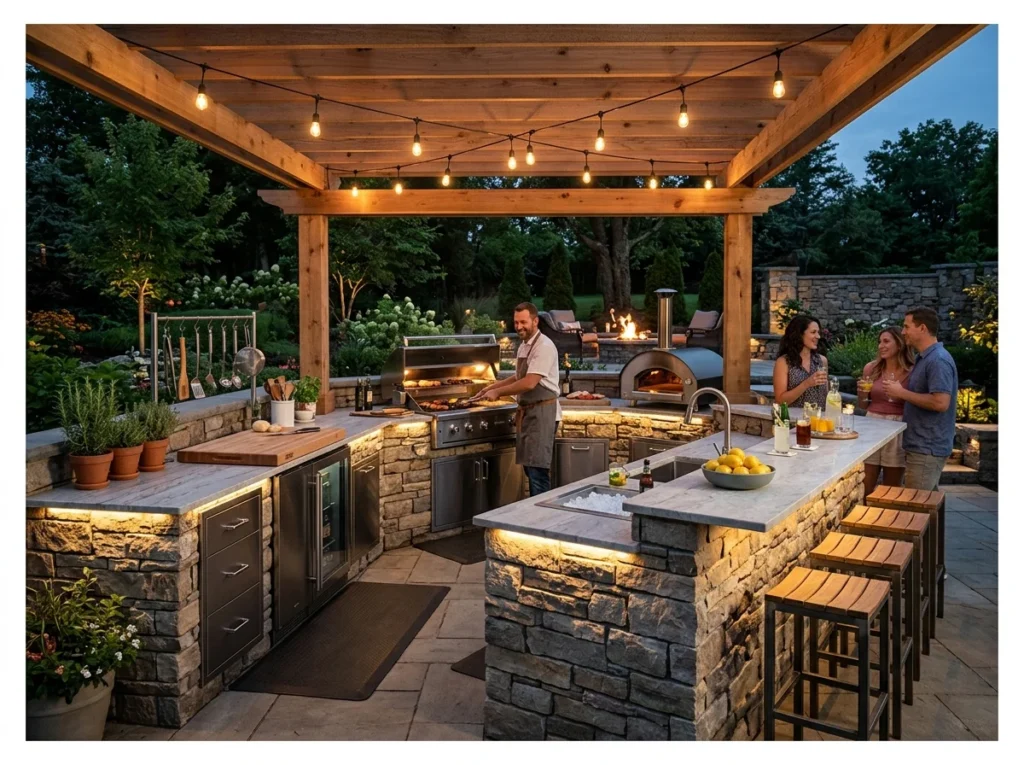
A U-shaped outdoor kitchen creates the most complete and self-contained outdoor cooking station available, with three connected counter sections enclosing the chef on three sides. Every cooking, prep, and serving function has dedicated counter space within arm’s reach.
The U-shaped configuration works best in larger outdoor spaces where sufficient clearance exists on the open side for comfortable access. Position the primary grill on the back run for the most ergonomic cooking position. The side runs accommodate prep surfaces, sinks, refrigeration, and serving areas.
Straight Linear Outdoor Kitchen
A straight linear kitchen lines up the grill, counter, and cabinets along one single wall or edge. This is often the easiest layout to build against an existing house wall or fence line. It suits narrower patios where a corner or island design simply would not fit.
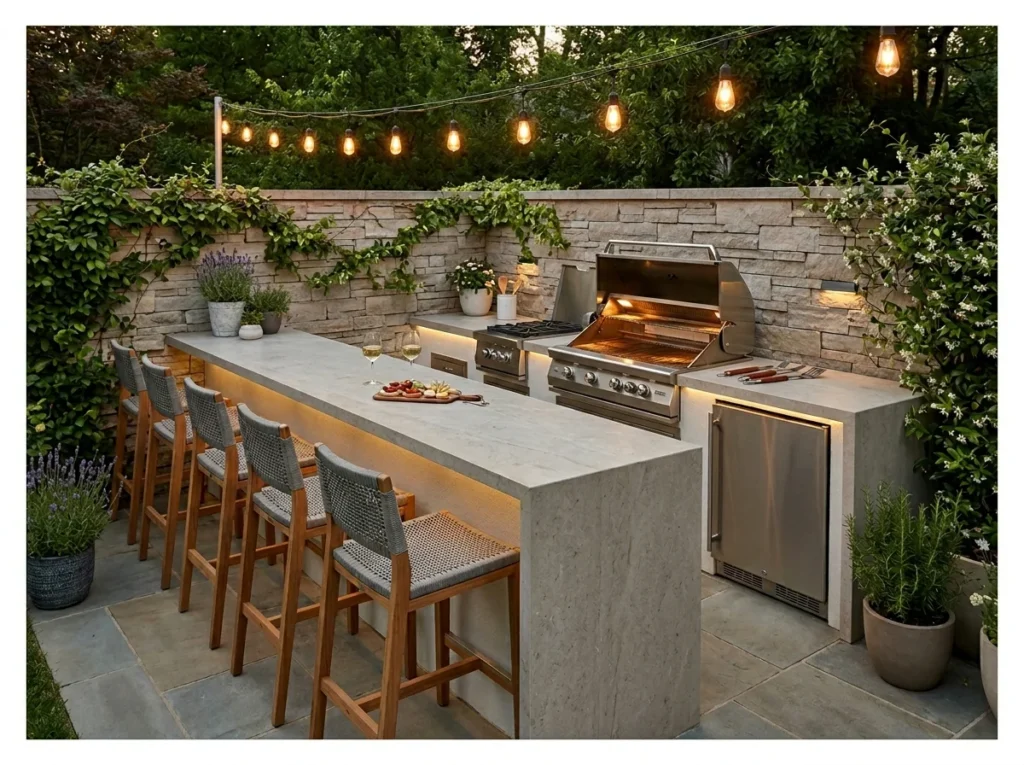
A straight linear outdoor kitchen places all cooking equipment and counter surface along a single run of cabinetry against a wall or fence, creating the most space-efficient outdoor kitchen configuration. The single line keeps the backyard floor plan open while providing a complete cooking station.
A linear outdoor kitchen of 2.4 to 3.6 meters provides enough length to accommodate a grill, a side burner, a small refrigerator, and a prep area in a sequential arrangement. Bar stools along the front edge create an informal dining bar that faces the chef during cooking.
Perfect for small spaces.
Island-Style Outdoor Kitchen
An island style kitchen sits freestanding in the middle of the patio, open on all sides for cooking and mingling at once. Guests can pull up stools on the opposite side while the cook works, which keeps conversation going. This layout does need more open floor space around it compared to a wall mounted design.
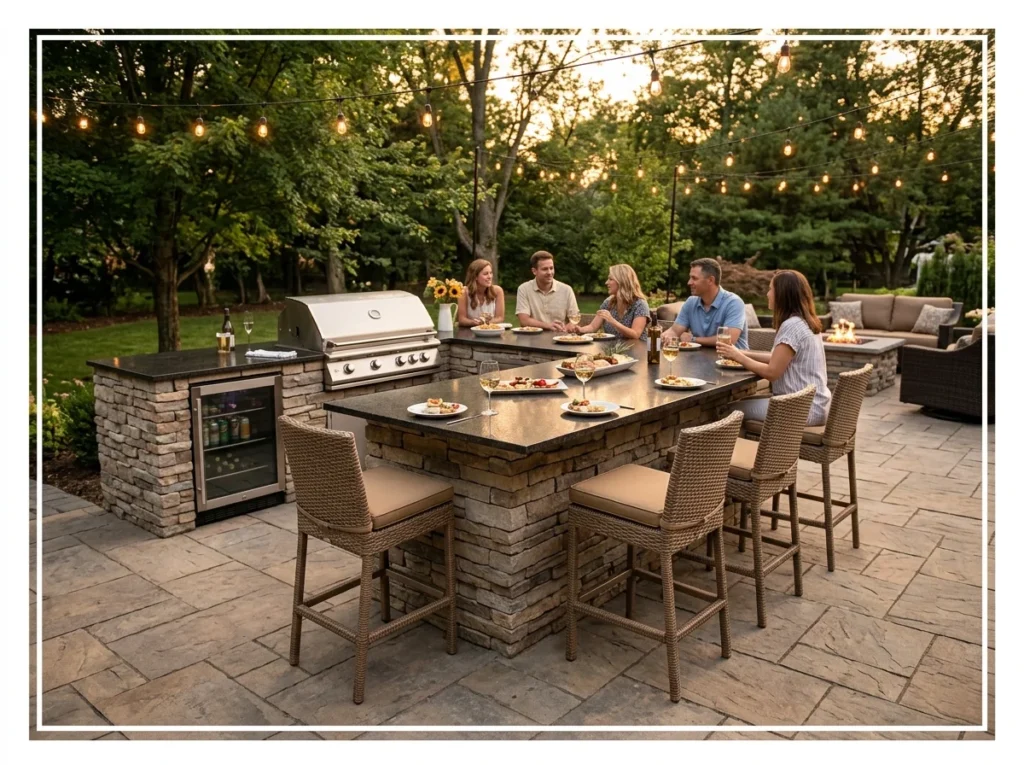
An island-style outdoor kitchen positions the cooking station as a freestanding structure in the center of the outdoor entertaining area, surrounded by seating on multiple sides. The 360-degree accessibility creates the most social cooking experience possible.
The island configuration works best when the outdoor space is large enough to maintain comfortable circulation around all four sides. A minimum clearance of 120 centimeters on all sides allows comfortable movement even during active parties. The island’s central position makes the chef the natural center of every outdoor gathering.
Attached to the House Outdoor Kitchen
Building the outdoor kitchen right against the house wall means power, water, and gas lines are shorter and cheaper to run. It also puts the space just steps from the indoor kitchen, which makes carrying dishes back and forth easier. The tradeoff is that smoke and grill heat sit closer to windows and doors than a freestanding setup.
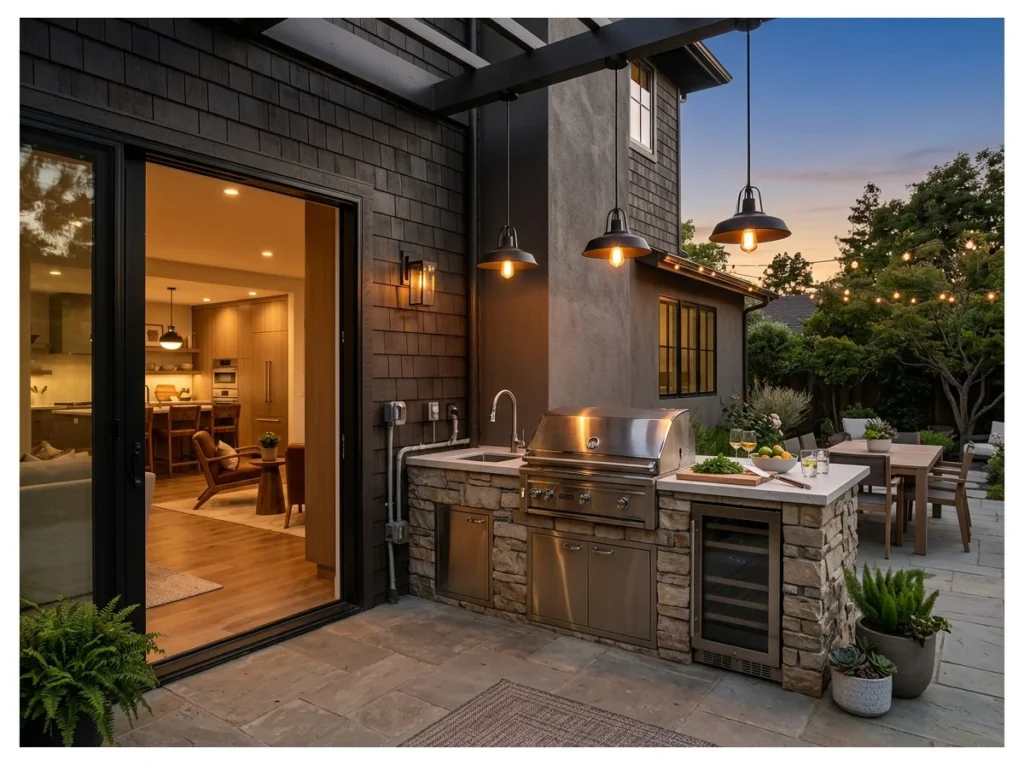
An outdoor kitchen attached directly to the house wall shares access to existing electrical, plumbing, and gas connections from the home interior, significantly reducing installation cost and complexity compared to a freestanding outdoor kitchen at distance from the house.
The attached configuration also creates the most seamless indoor-outdoor entertaining flow. Food can be passed through an adjacent window or door from the indoor kitchen. Utility connections are simpler and more affordable. The structural connection to the house also means one wall of the outdoor kitchen already exists.
Freestanding Outdoor Kitchen
A freestanding kitchen stands apart from the house, often positioned near the pool or at the edge of the yard. This placement keeps smoke and cooking smells away from indoor living spaces. Utility lines usually cost more to install since they have to travel further from the main house.
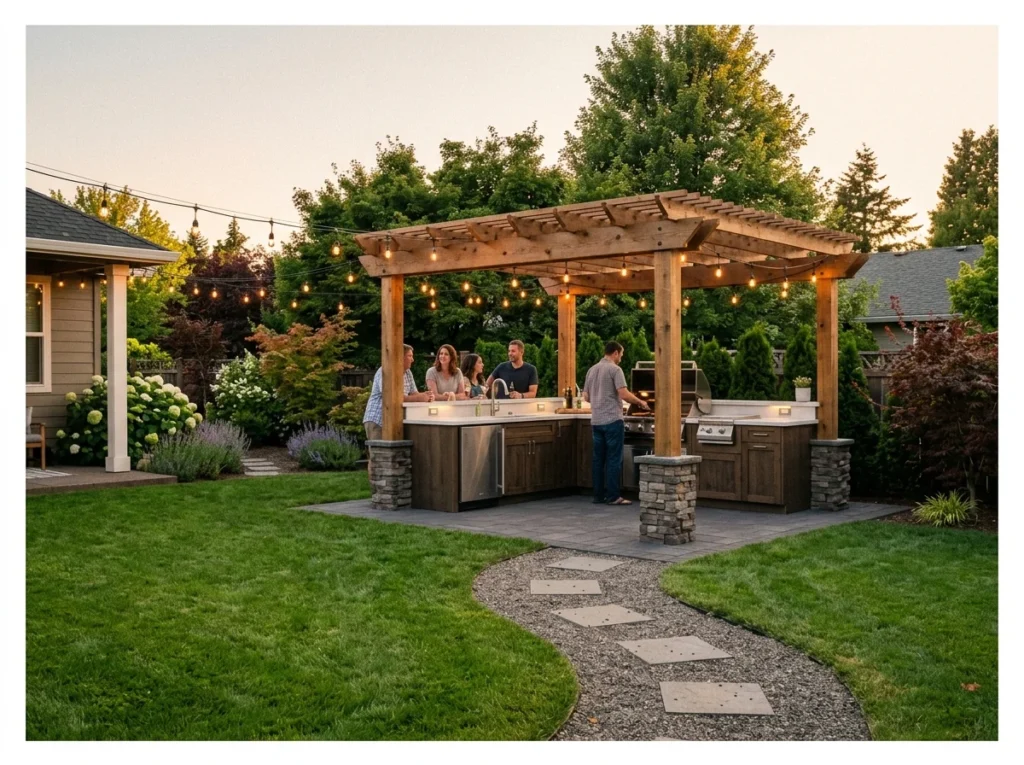
A freestanding outdoor kitchen positioned away from the house creates a dedicated outdoor cooking and entertaining destination that feels completely separate from the indoor living environment. The journey across the backyard to the outdoor kitchen creates a sense of arrival and occasion.
Freestanding outdoor kitchens require independent utility connections for gas, electricity, and water, which adds installation cost but provides complete design freedom in positioning. The freestanding configuration suits large backyards where a kitchen near the house would occupy prime outdoor living space.
Corner Outdoor Kitchen
Tucking the kitchen into a corner of the yard or patio makes use of a spot that would otherwise sit empty. Two sides of the layout get natural support from existing fencing or walls, which can lower construction costs. This setup works particularly well for smaller backyards trying to fit a full kitchen without losing lawn space.
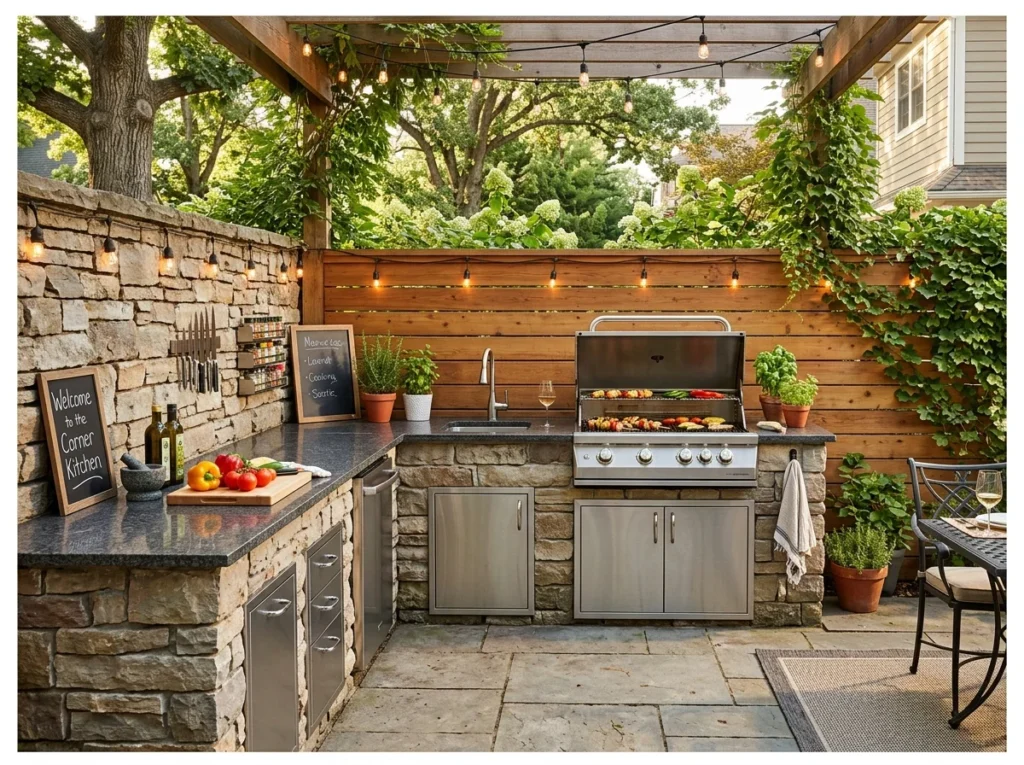
A corner outdoor kitchen builds into the junction of two existing backyard walls or fences, creating an L-shaped cooking station that uses space that most backyards leave completely empty. The walls provide structural support and a natural three-sided enclosure.
Corner outdoor kitchens work effectively in smaller backyards where a freestanding kitchen would consume too much of the available outdoor floor area. The existing wall junction provides two sides of shelter and often existing utility access from the house side.
Outdoor Kitchen with Pergola Cover
A pergola overhead gives partial shade while still letting light and air move through the slats. Climbing vines or string lights woven through the beams add character without blocking too much sun. This cover style suits people who want shade without the fully enclosed feel of a solid roof.
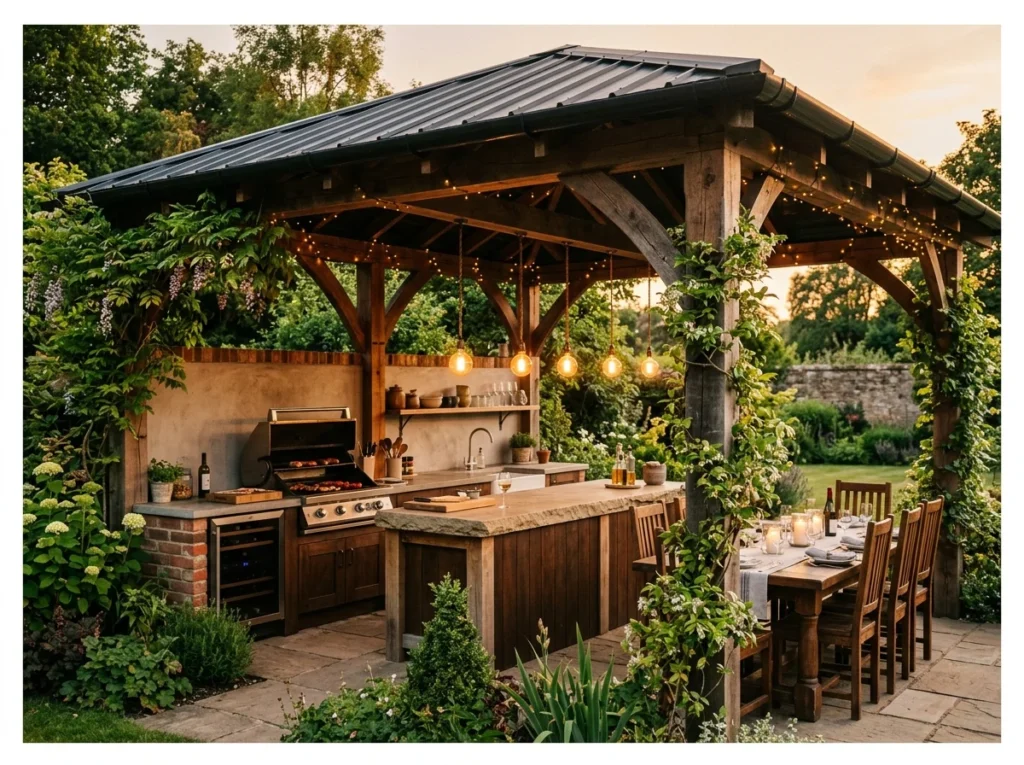
A pergola built over the outdoor kitchen creates a defined outdoor room with overhead structure that provides shade, supports lighting, and frames the cooking and entertaining space as a deliberately designed destination. The pergola transforms an outdoor kitchen from a structure into a complete outdoor room.
Timber pergola beams support pendant lights directly above the cooking counter for practical task illumination. Climbing plants on the pergola posts create natural screening and fragrance. The overall combination of cooking, dining, and overhead structure creates an outdoor kitchen that functions like an open-air room.
If you’re leaning toward this kind of overhead structure, a covered structure worth building around has plenty of design directions to consider.
Covered Patio Outdoor Kitchen
A solid patio roof keeps rain and direct sun off the grill and counters year round. This kind of cover also protects appliances like refrigerators and ice makers from weather damage over time. Ceiling fans are a common addition here since the enclosed roof can trap heat in summer.
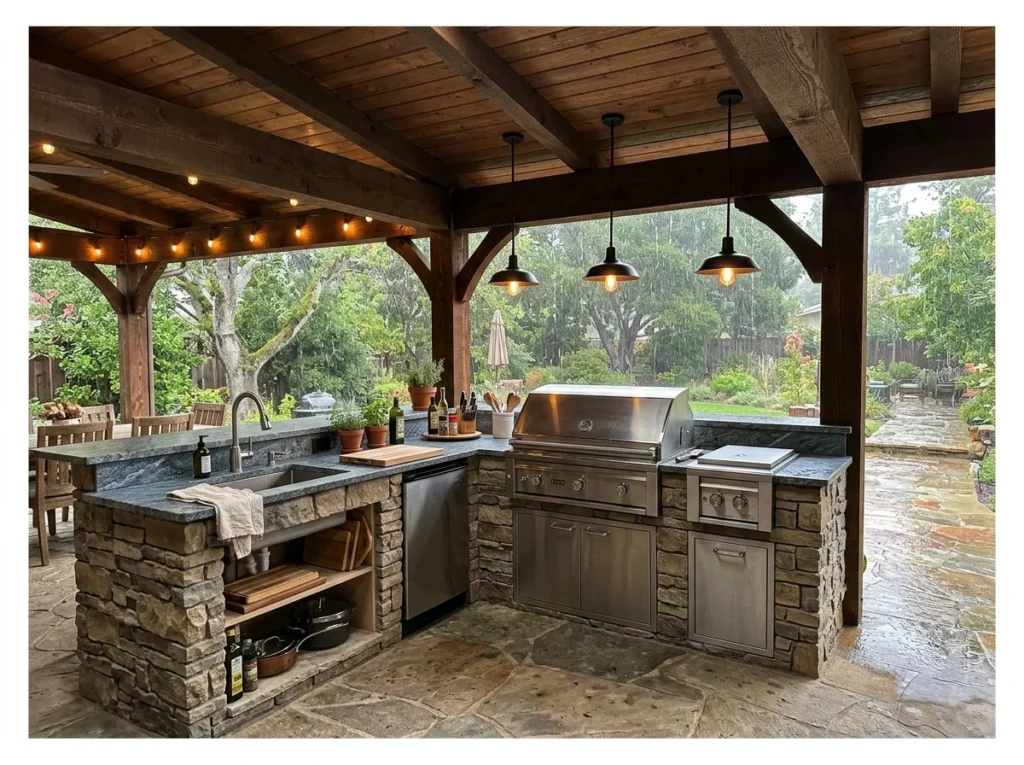
A covered patio outdoor kitchen built beneath an existing solid roof creates an all-weather cooking and entertaining space that remains usable regardless of rain, direct sun, or light cold weather. The permanent overhead cover enables the most complete kitchen installation including electrical and lighting.
A solid covered patio also allows the outdoor kitchen to include features that uncovered outdoor kitchens cannot, including paper and card-based storage, wooden accessories, and electronics that would deteriorate in rain. The covered position creates the most genuinely functional outdoor kitchen environment.
Outdoor Kitchen Under a Gazebo
A gazebo adds a defined roofline and often a bit more architectural detail than a plain patio cover. The open sides still let breeze through while the roof handles rain and harsh midday sun. This structure works well when the kitchen is set apart from the house as its own destination in the yard.
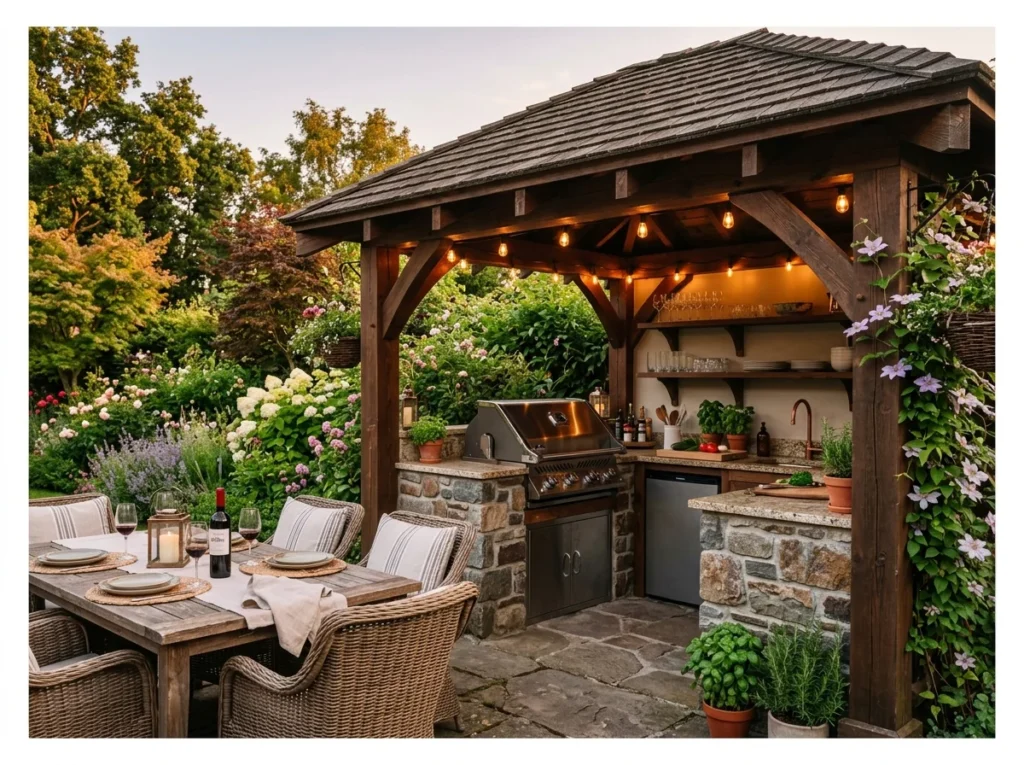
An outdoor kitchen positioned beneath or adjacent to a gazebo creates a covered cooking space with the architectural character and enclosure quality that pergola structures and open patios cannot match. The gazebo’s roof and walls create a sheltered outdoor cooking room.
A compact linear outdoor kitchen against one interior wall of a large gazebo leaves adequate floor space for dining furniture within the same covered structure. This creates a complete outdoor dining and cooking room within a single gazebo footprint.
For more on getting that structure right, a gazebo styled for outdoor living covers the idea in more depth.
Built-In Gas Grill
A built in gas grill sits flush within the counter instead of standing alone on wheels. Most models connect to a natural gas line or a larger propane tank hidden in the cabinet below. This setup gives instant heat control, which matters a lot when cooking for a crowd.
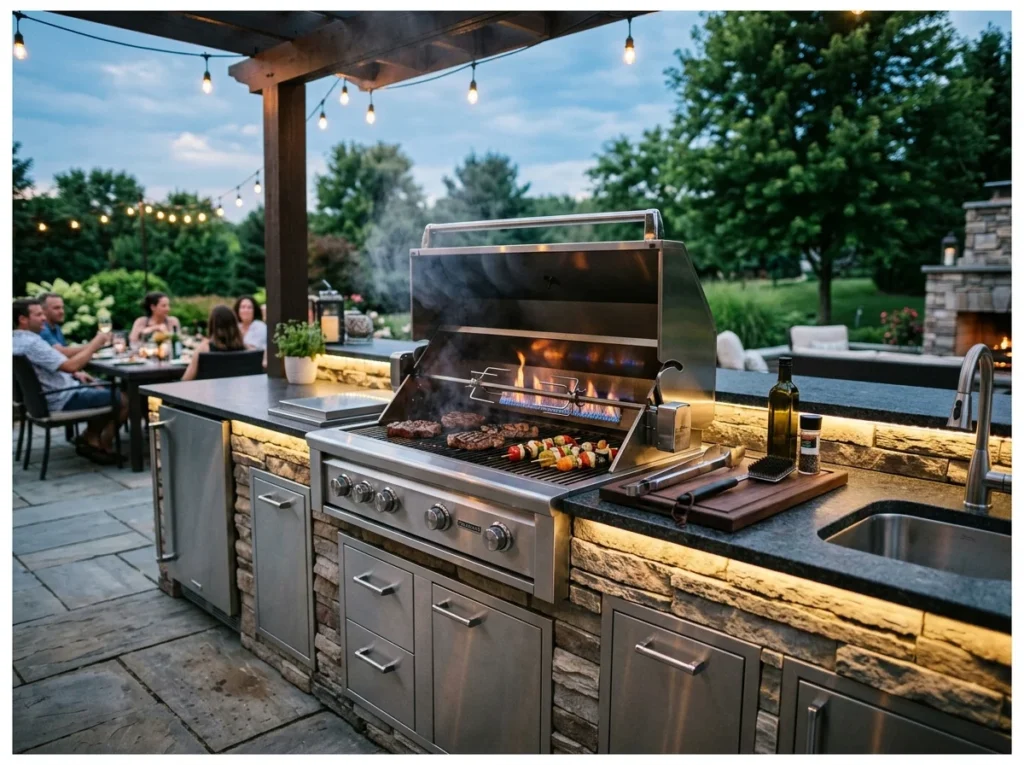
A built-in gas grill integrated flush into the outdoor kitchen countertop is the most popular and practical primary outdoor cooking appliance. The gas supply, either natural gas plumbed from the home or propane from a tank, provides instant, controllable heat without the setup of charcoal.
Choose a grill with a minimum 60 centimeter grilling width for a serious outdoor kitchen. Features including infrared rear burners for rotisserie cooking, a sear zone, and a warming rack increase cooking versatility significantly. Stainless steel grade 304 is the minimum specification for outdoor kitchen grills.
Outdoor Pizza Oven
A wood fired or gas pizza oven can hit temperatures well over six hundred degrees, cooking a pizza in just a few minutes. Dome shaped ovens retain heat longer, which also makes them useful for roasting vegetables or bread after the pizza is done. This feature tends to become the centerpiece that guests gather around during a cookout.
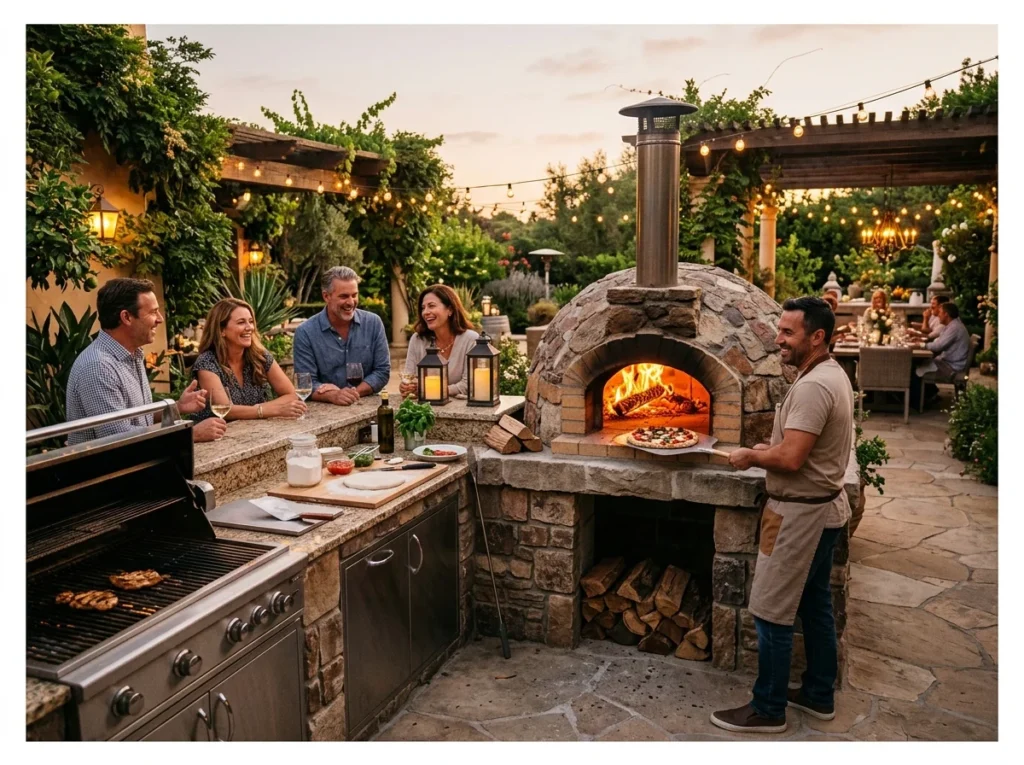
A wood-fired pizza oven in the outdoor kitchen creates a social cooking destination where guests participate in the meal preparation. The high heat of a wood-fired oven, reaching 400 to 500 degrees Celsius, creates a genuinely authentic pizza experience impossible to replicate in a conventional oven.
Position the pizza oven at counter height for comfortable loading and unloading without bending. Allow 45 to 60 minutes for the oven to reach full temperature before the first pizza. A dome oven of 80 to 100 centimeters internal diameter accommodates one or two pizzas simultaneously.
The outdoor kitchen feature that makes every dinner a social event.
Kamado Grill Station
A kamado grill, shaped like a thick ceramic egg, handles everything from low slow smoking to high heat searing. The heavy ceramic walls hold temperature steady even in windy or cold weather. Building it into a dedicated station keeps the round shape from looking out of place among straight cabinet lines.
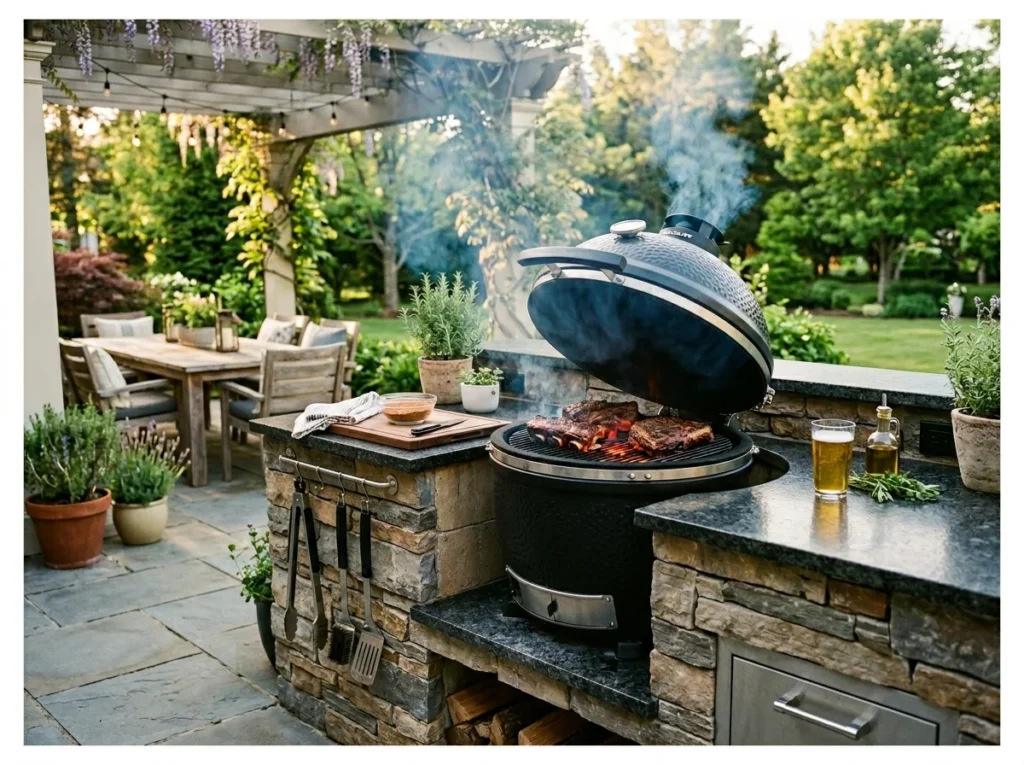
A kamado ceramic grill built into the outdoor kitchen creates an exceptionally versatile outdoor cooking appliance that handles smoking at low temperatures, conventional grilling at medium heat, and high-temperature searing and pizza baking at the same unit. The insulated ceramic construction provides outstanding heat retention.
Custom stone or concrete surrounds hold the kamado grill at ergonomic counter height and create side counter surfaces for food preparation and plating adjacent to the kamado. This combined setup creates the most complete single-appliance outdoor cooking station available.
Flat Top Griddle
A flat top griddle gives an even, wide cooking surface that works well for pancakes, smash burgers, or a big batch of stir fried vegetables. Unlike grill grates, there are no gaps for smaller foods to fall through. Many outdoor kitchens now pair a griddle right next to the main grill for more cooking flexibility.
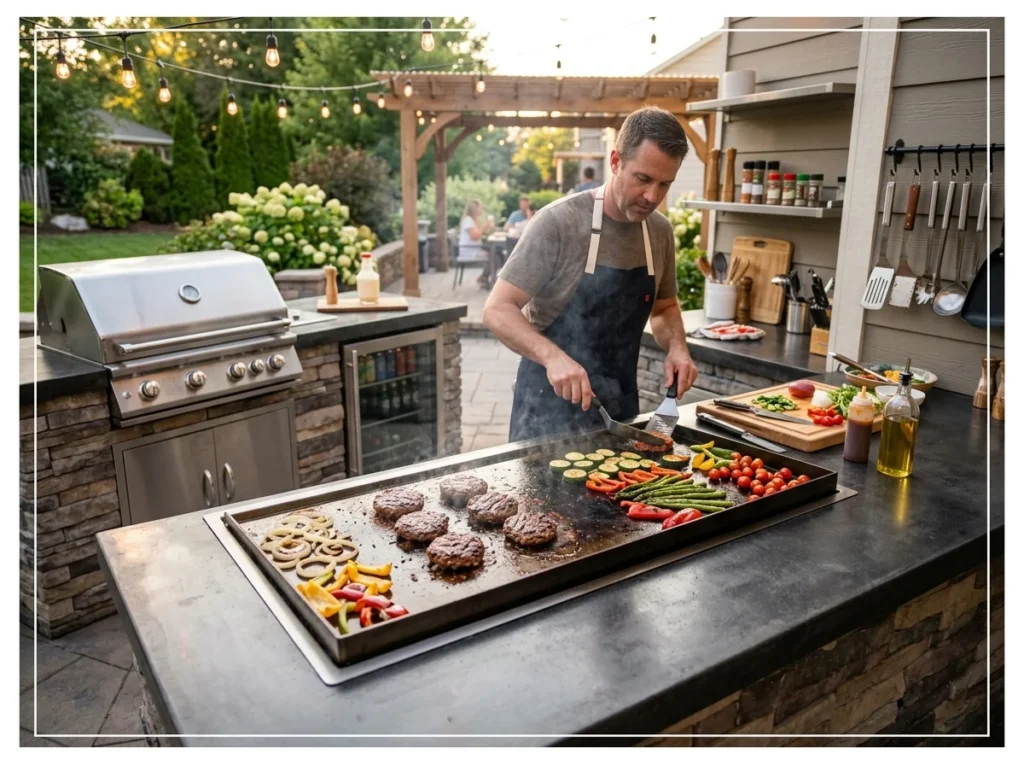
A flat top griddle integrated into the outdoor kitchen counter provides a large flat cooking surface ideal for breakfast foods, burgers, smash patties, stir-fry, and any food that benefits from direct contact with a hot flat metal surface rather than grill grates.
A 60 to 90 centimeter flat top griddle beside the main grill creates an outdoor kitchen with the cooking versatility of a commercial kitchen. The flat surface handles foods that fall through grill grates and allows multiple items to cook simultaneously at different temperatures across different zones.
Smoker Integration
Adding a smoker means low and slow cooking, sometimes over six or eight hours for something like brisket or pulled pork. Offset smokers need extra clearance for the firebox, so they take more planning to fit into a layout. Pellet smokers are a popular alternative since they need less babysitting throughout a long cook.
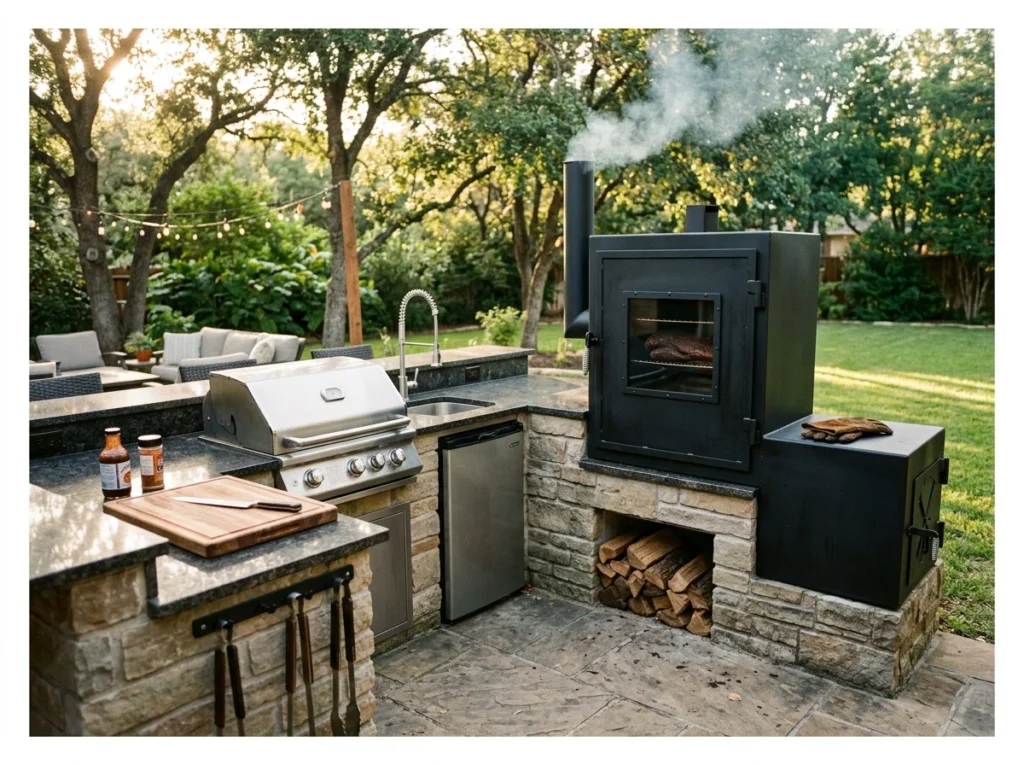
A built-in offset smoker integrated into the outdoor kitchen creates a dedicated low-and-slow cooking capability that transforms backyard cooking from quick grilling into genuine barbecue culture. The smoker adds a cooking dimension, smoke-infused slow-cooked meats, that no other appliance provides.
Position the smoker at the downwind end of the outdoor kitchen to keep smoke away from the primary cooking and seating zones. The firebox of an offset smoker requires regular attention during long cooks, so position it where the cook can monitor it without crossing the main kitchen counter.
Outdoor Rotisserie
A rotisserie attachment slowly rotates a whole chicken or roast over the heat, which bastes the meat in its own juices as it turns. This attachment usually mounts onto an existing grill rather than needing its own separate station. It is a favorite for anyone who wants restaurant style roasted meat without much hands on effort.
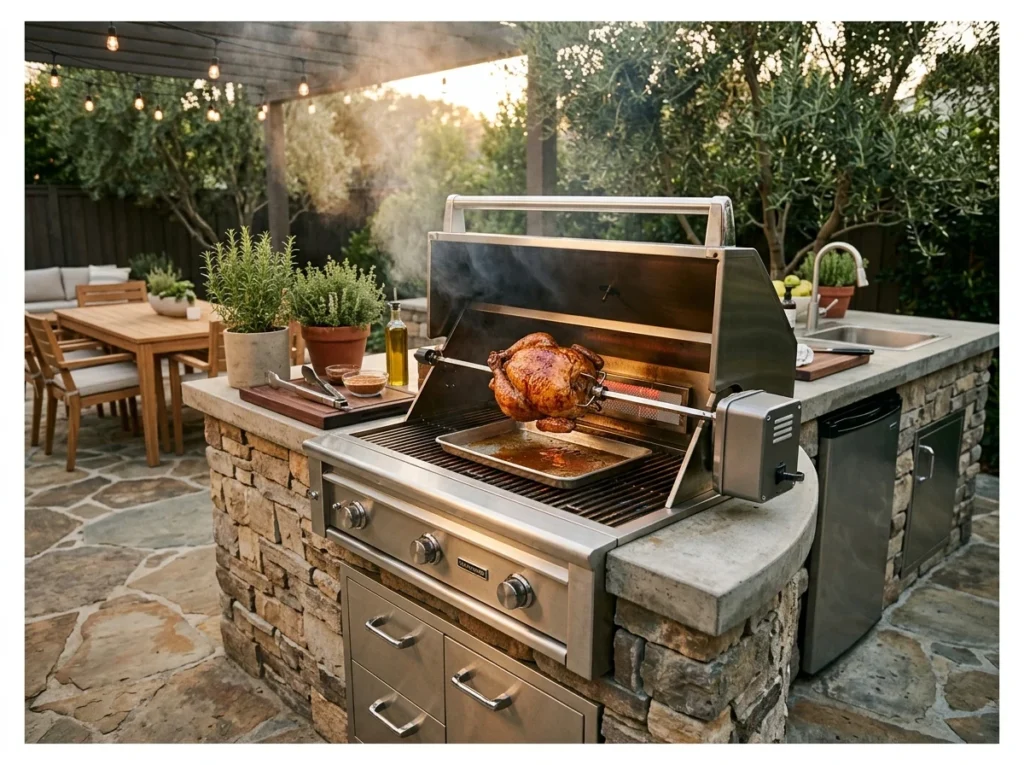
A rotisserie motor and spit rod attachment on the outdoor kitchen grill enables whole-bird roasting, leg of lamb cooking, and any large roast that benefits from the self-basting rotation that a spit provides. The rotating action bastes the meat continuously in its own juices.
Most quality built-in gas grills include a rotisserie burner at the rear of the firebox specifically designed for spit roasting. A separate infrared rear burner for the rotisserie provides the most effective heat for this cooking method. The visual spectacle of a whole bird rotating on the spit creates one of the most impressive outdoor cooking displays possible.
Side Burner Station
A side burner works like a stovetop, letting you simmer a sauce or boil corn without going back inside. Most outdoor kitchens fit one or two burners into the counter right next to the main grill. This small addition ends up covering a surprising amount of everyday cooking tasks.
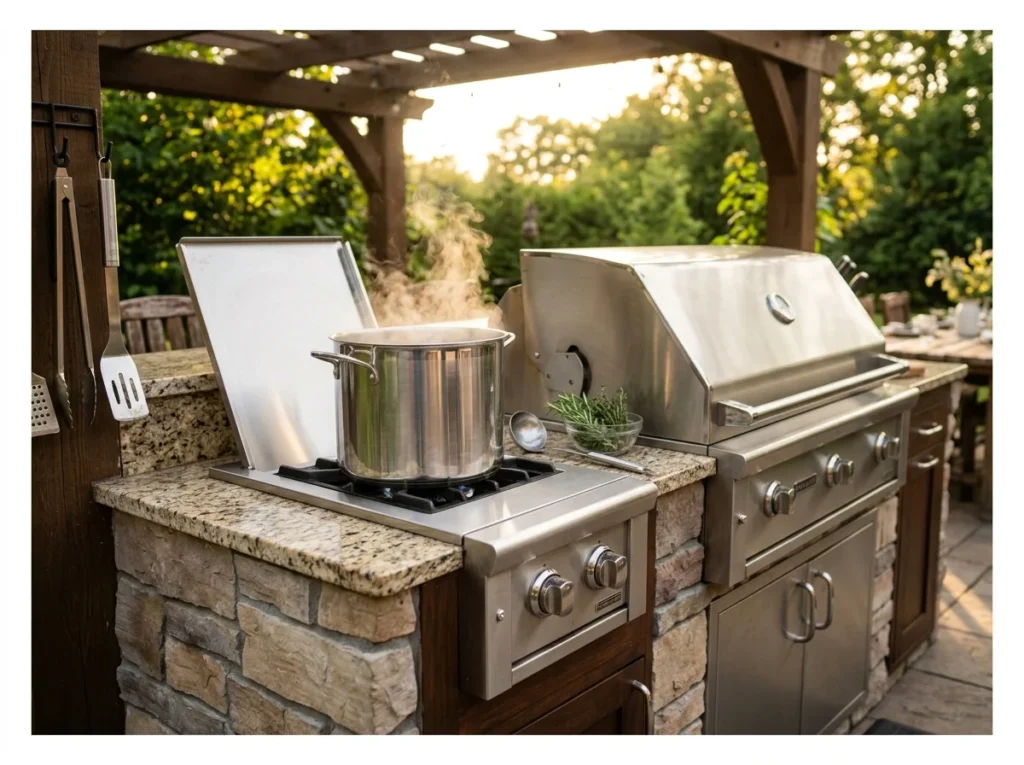
A high-BTU side burner integrated into the outdoor kitchen counter provides a separate conventional burner for boiling pasta, making sauces, heating stocks, and cooking side dishes simultaneously with the grill, eliminating the need to return to the indoor kitchen for any part of the meal.
A minimum 15,000 BTU single burner handles most outdoor cooking tasks. A double side burner unit of two burners at 12,000 BTU each creates maximum cooking flexibility. Cast iron grate surfaces on side burners handle cast iron cookware and heavy pots better than lighter grate alternatives.
Built-In Wok Burner
A wok burner puts out significantly more heat than a standard side burner, which is exactly what stir frying needs. The recessed, bowl shaped base holds a wok steady while high flames wrap up around its curved sides. This station is worth adding for anyone who cooks Asian style dishes regularly outdoors.
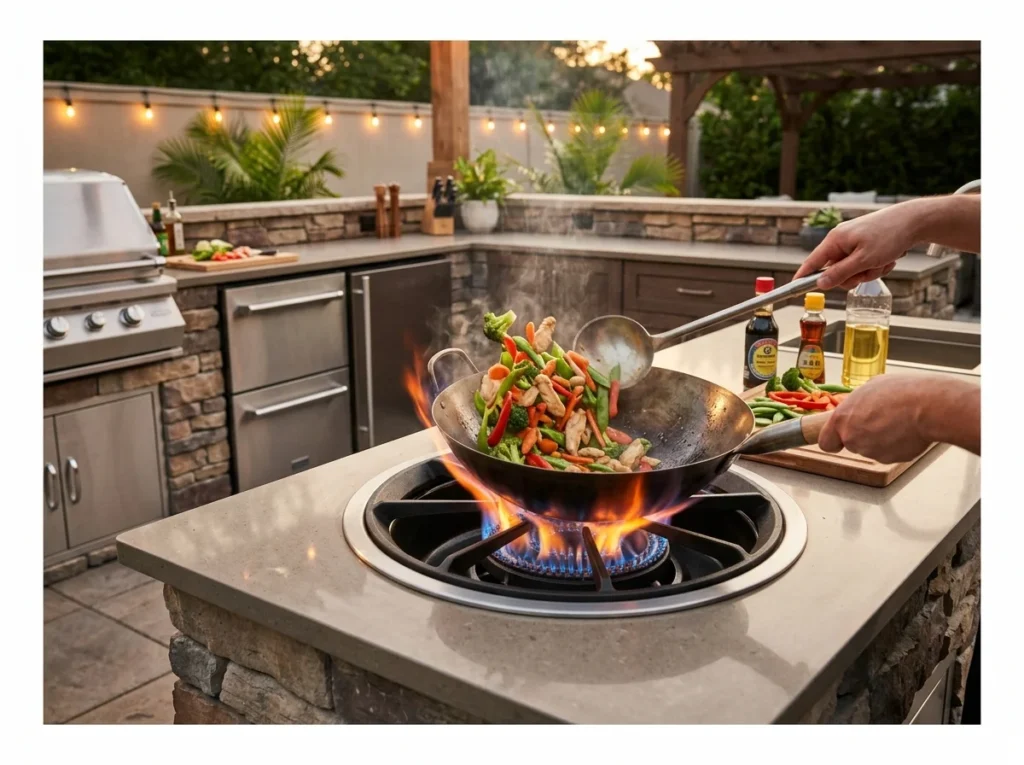
A built-in wok burner with circular grate and high BTU output creates the most powerful and heat-intensive outdoor cooking station available. The 60,000 to 100,000 BTU output of a commercial-style wok burner produces the wok hei characteristic of restaurant stir-fry cooking that domestic indoor burners cannot achieve.
The outdoor location of a wok burner is genuinely ideal because the high-heat, high-smoke output of proper wok cooking suits an outdoor cooking environment far better than any indoor kitchen. The powerful flame also handles large stock pots and seafood boils with ease.
Outdoor Deep Fryer
A built in deep fryer lets you fry fish, chicken, or even a whole turkey without the smell filling up the kitchen indoors. Oil temperature control matters a lot here, since undercooked or overly greasy food usually comes down to inconsistent heat. This appliance is less common than a grill but becomes a big draw for anyone who loves fried food at gatherings.
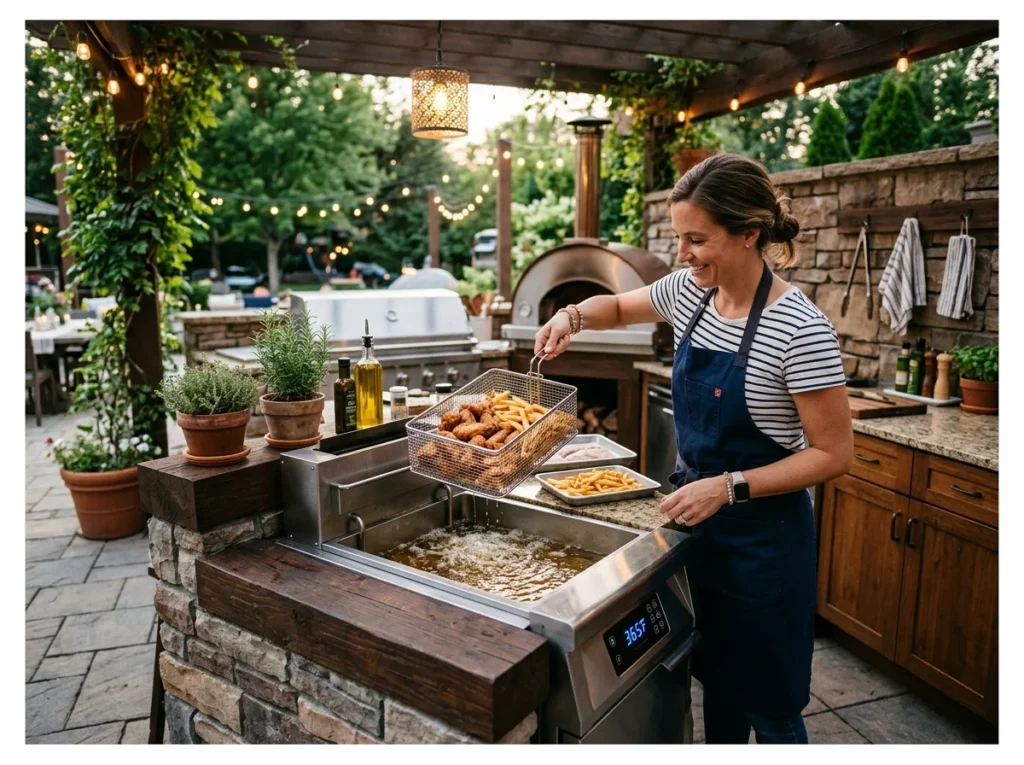
A built-in outdoor deep fryer creates the ability to fry turkeys, seafood, chips, and any deep-fried food in a safe outdoor environment where the fire risk and oil splatter of indoor frying are non-issues. The outdoor location is genuinely the safest and most appropriate place for serious deep frying.
Built-in outdoor fryer units with temperature control and drain valves provide the most practical outdoor frying setup. Propane turkey fryers at 30 quarts handle whole turkey frying. The outdoor kitchen fryer expands the cooking repertoire to include the complete range of deep-fried foods.
Dual Zone Cooking Setup
A dual zone setup lets you run high heat on one side of the grill and a gentler, indirect zone on the other at the same time. This makes it possible to sear a steak while keeping vegetables warm without burning them. It is one of the more practical upgrades for anyone who cooks different foods together often.
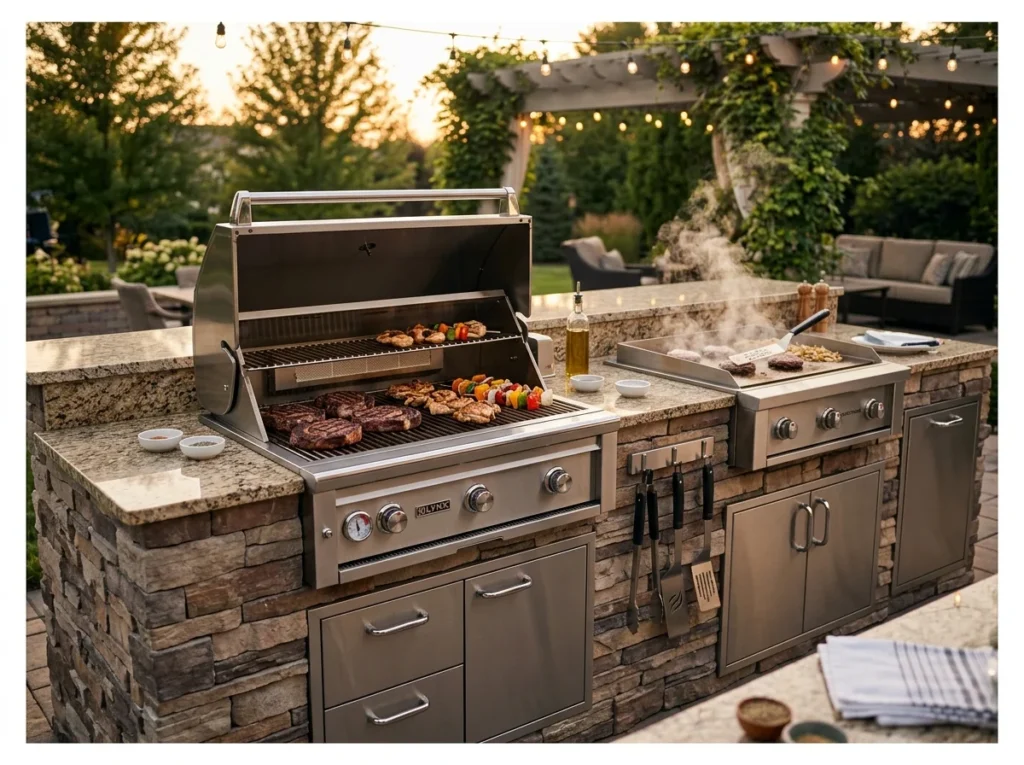
A dual zone outdoor kitchen cooking setup uses independently controlled heating zones on the grill, allowing different foods to cook simultaneously at different temperatures. One zone on high heat for searing, the other on low for gentle cooking or warming.
The dual zone setup transforms outdoor kitchen cooking from a sequential process into the simultaneous multi-element cooking that professional kitchens use. Combined with a flat top griddle or side burner as a third cooking element, a dual zone setup creates the most complete outdoor kitchen cooking capability.
Natural Stone Countertop
Natural stone counters, like granite or bluestone, handle direct sun and rain far better than most manmade materials. Each slab has its own veining and color variation, so no two countertops look quite the same. Sealing the stone every year or two keeps it resistant to staining from grease and food.
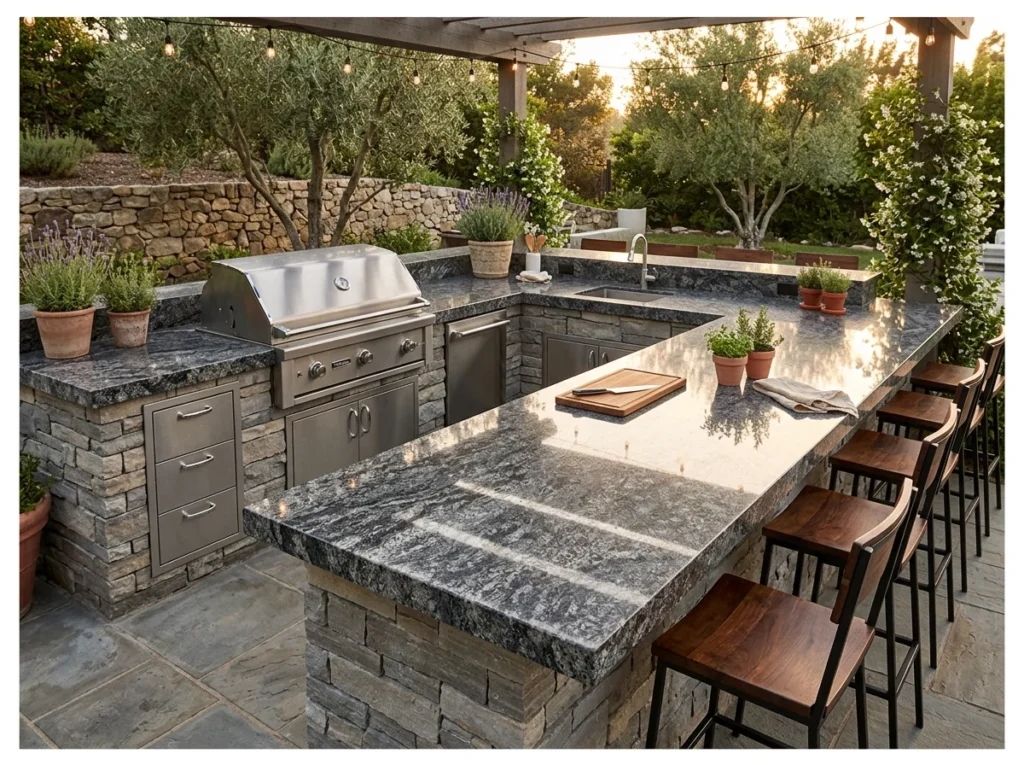
Natural stone countertops in granite, bluestone, or quartzite create the most premium and permanently beautiful outdoor kitchen surface available. Natural stone handles direct heat, UV exposure, rain, and temperature extremes with excellent durability and develops more character with age.
Seal natural stone outdoor countertops with a penetrating stone sealer annually to prevent staining and moisture penetration. Polished granite provides the most stain-resistant surface. Honed or brushed finishes provide better grip and less visible water marks in a wet outdoor environment.
Concrete Countertop
Poured concrete counters can be shaped into almost any size or edge profile, which gives a lot of design freedom. Pigments and stamped textures let concrete mimic the look of stone at a lower cost. Sealing is essential here too, since raw concrete absorbs oil and moisture quickly without it.
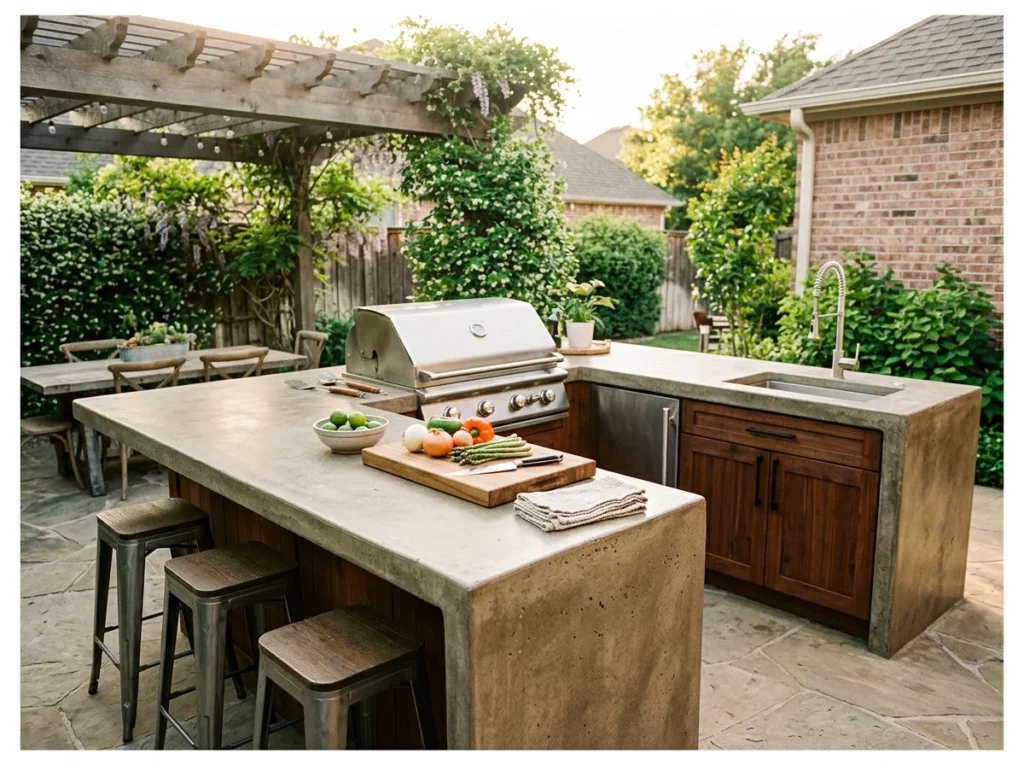
A poured concrete outdoor kitchen countertop creates a custom surface that can be formed into any shape and finished in any color to suit the specific outdoor kitchen design. The smooth mineral quality of concrete creates an architectural outdoor kitchen aesthetic that natural stone cannot replicate.
Seal concrete outdoor countertops with a penetrating concrete sealer and a clear topcoat rated for food contact and UV exposure. Concrete is susceptible to staining without proper sealing. The weight and structural requirements of cast concrete countertops require a robust cabinet base capable of supporting the load.
That same concrete material works beautifully underfoot too, and a patio surface that can take the heat shows how to extend it across the whole space.
Porcelain Tile Outdoor Counter
Porcelain tile resists fading and scratching even under constant sun exposure, which is why it holds up well outdoors. Large format slabs reduce the number of grout lines, making the surface easier to wipe clean after cooking. It also comes in finishes that closely resemble marble or wood without either material’s maintenance needs.
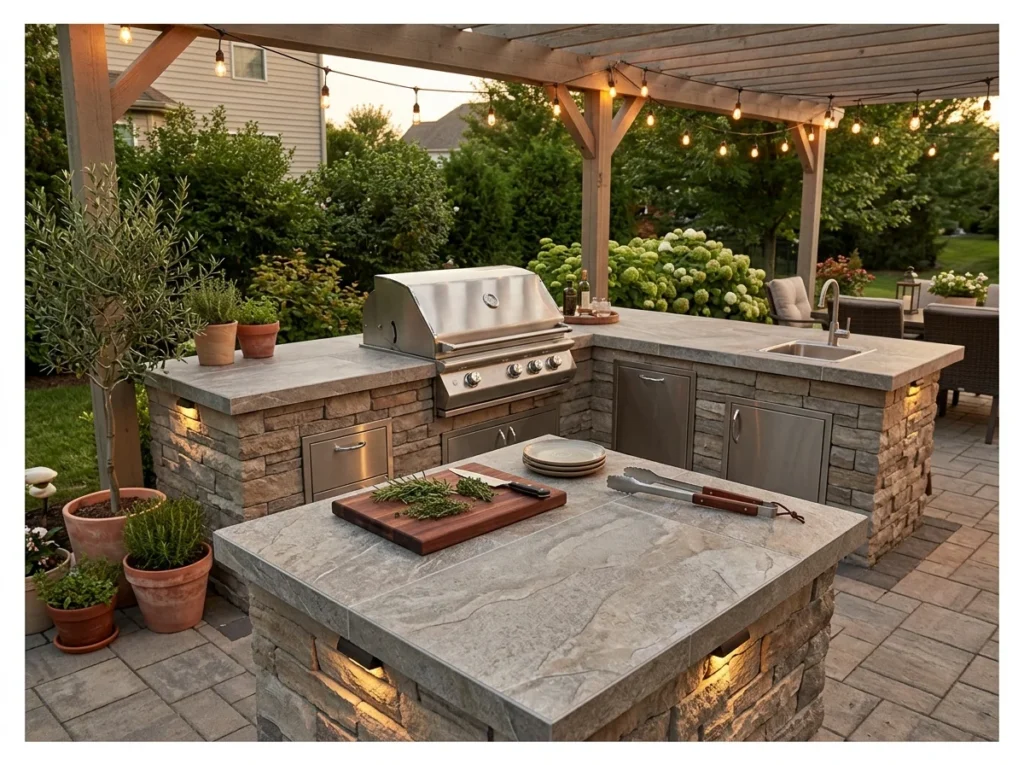
Large format porcelain tile in a stone or concrete-look finish creates the most maintenance-free outdoor kitchen countertop surface. Outdoor-rated porcelain is completely non-porous, UV-stable, stain-resistant, and handles temperature extremes without cracking or fading.
Choose a porcelain tile specifically rated for outdoor exterior use with adequate frost resistance and a surface hardness rating suitable for countertop applications. Rectified large format tiles of 600 by 600 millimeters or larger create the most seamless countertop appearance with minimal grout lines.
Granite Countertop
Granite is one of the most heat resistant countertop materials, so setting a hot pan directly on it rarely causes damage. Its natural speckled pattern gives outdoor kitchens a high end look that still feels durable. Once sealed properly, granite handles years of weather without much upkeep beyond occasional resealing.
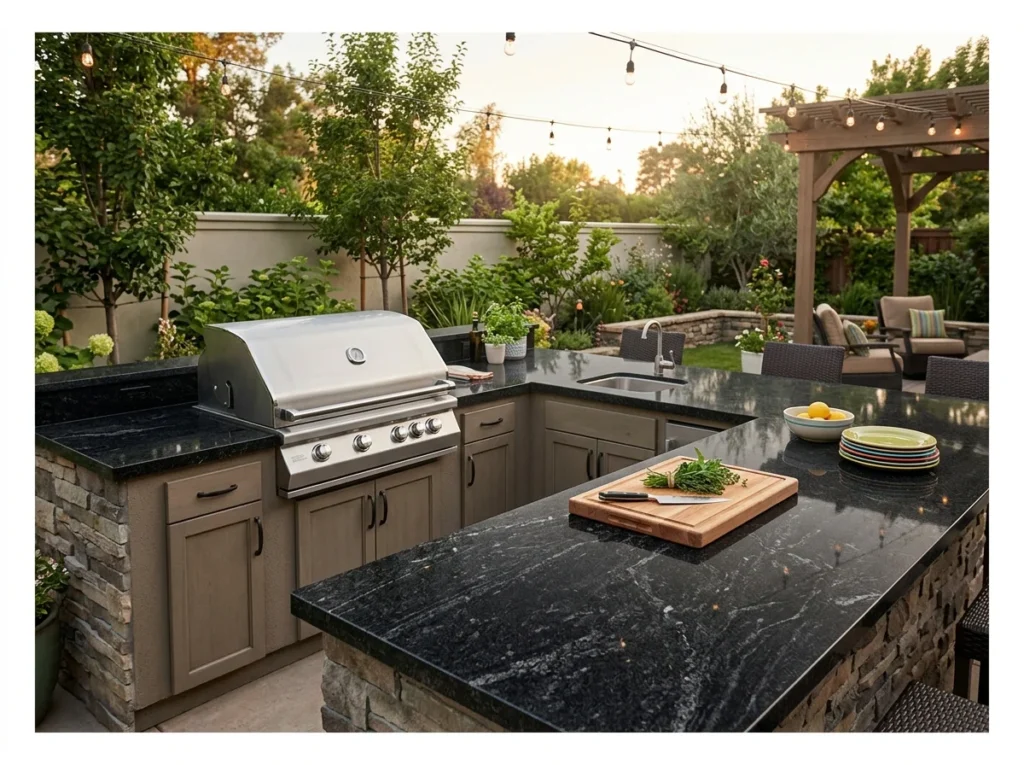
Granite is one of the most consistently durable and beautiful natural stone outdoor kitchen countertop materials. Its hardness resists scratching, its density handles heat well, and its natural crystal structure creates a countertop surface with genuine visual depth.
Black absolute granite and dark grey granites suit modern and contemporary outdoor kitchen aesthetics. Lighter beige and cream granites suit traditional and Mediterranean outdoor kitchen styles. Seal granite annually for best long-term performance in outdoor environments.
Stainless Steel Counter
Stainless steel counters match the look of most built in grills and appliances, creating a clean, unified surface. They resist rust and are simple to sanitize after handling raw meat or fish. One downside is that scratches and fingerprints show up more easily than they do on stone.
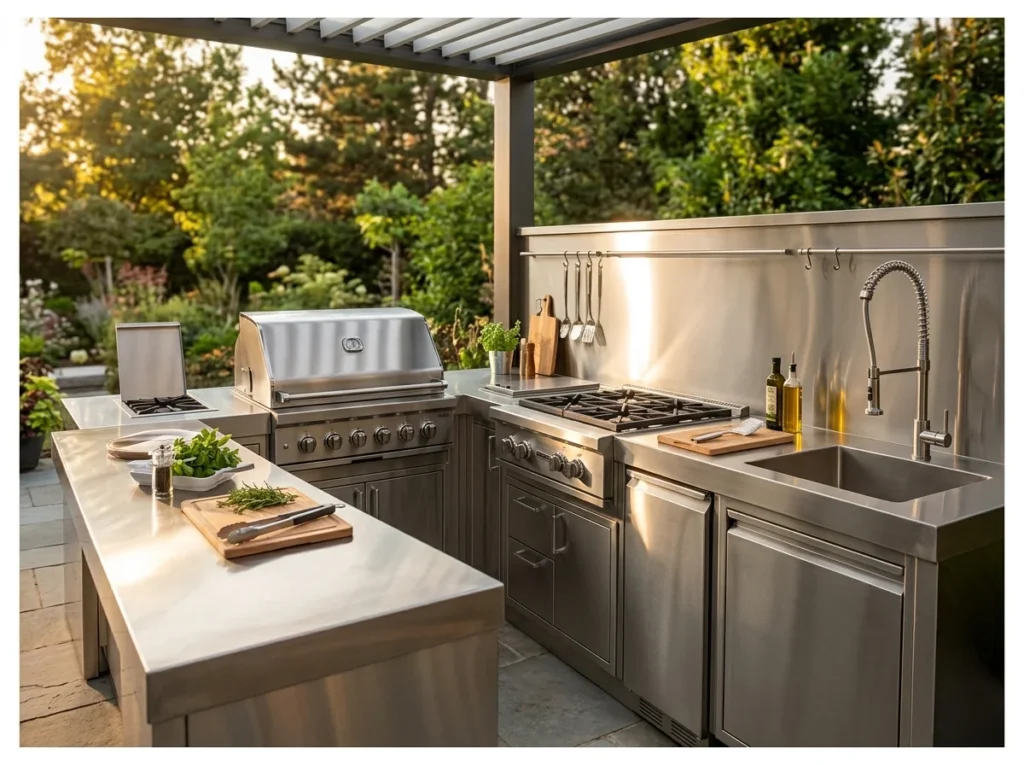
A stainless steel outdoor kitchen countertop creates a professional, commercial-quality cooking environment that handles heat, moisture, and cleaning chemicals with the same resilience as a restaurant kitchen. Marine grade 316 stainless steel handles coastal salt-air environments best.
Stainless steel countertops suit outdoor kitchens where professional cooking performance and practical cleaning are the primary priorities over decorative aesthetic. Brushed stainless steel shows fewer scratches and fingerprints than polished alternatives. The professional quality of stainless steel suits industrial and contemporary outdoor kitchen design directions.
Marble-Look Porcelain Counter
This material gives the elegant veining of real marble without marble’s tendency to stain from acidic foods and grease. Porcelain slabs are also lighter and easier to install than solid marble sections. For anyone who loves the marble aesthetic but cooks outdoors often, this is usually the more practical choice.
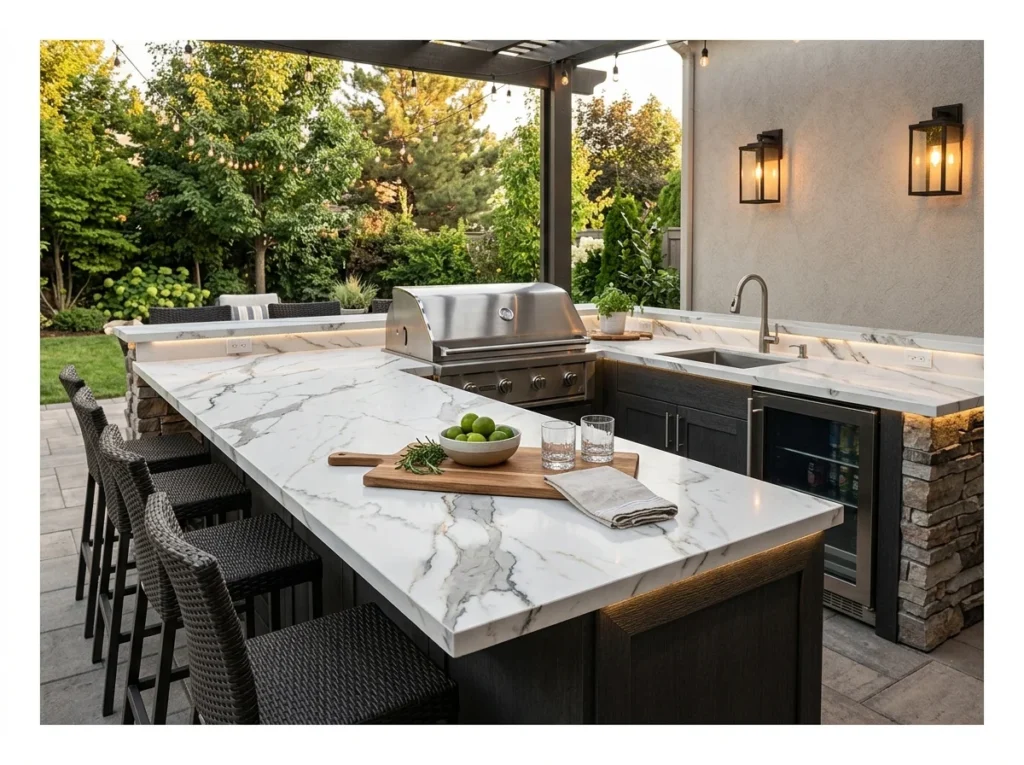
Marble-look porcelain provides the dramatic veined appearance of natural marble with the practical durability and maintenance-free quality of outdoor-rated porcelain. Natural marble is too porous and maintenance-intensive for outdoor kitchen use but marble-effect porcelain delivers the visual quality without the practical limitations.
Choose marble-look porcelain with a realistic variation in veining and a surface texture that references stone rather than appearing flat and printed. The most convincing marble-effect porcelains use multi-layer digital printing to create unique variation across each tile surface.
Teak Wood Counter Section
Teak holds up outdoors far better than most other woods thanks to its natural oils, which resist water damage and rot. A small teak counter section adds warmth next to harder materials like stone or steel. Regular oiling keeps the wood’s rich color from fading under constant sun exposure.
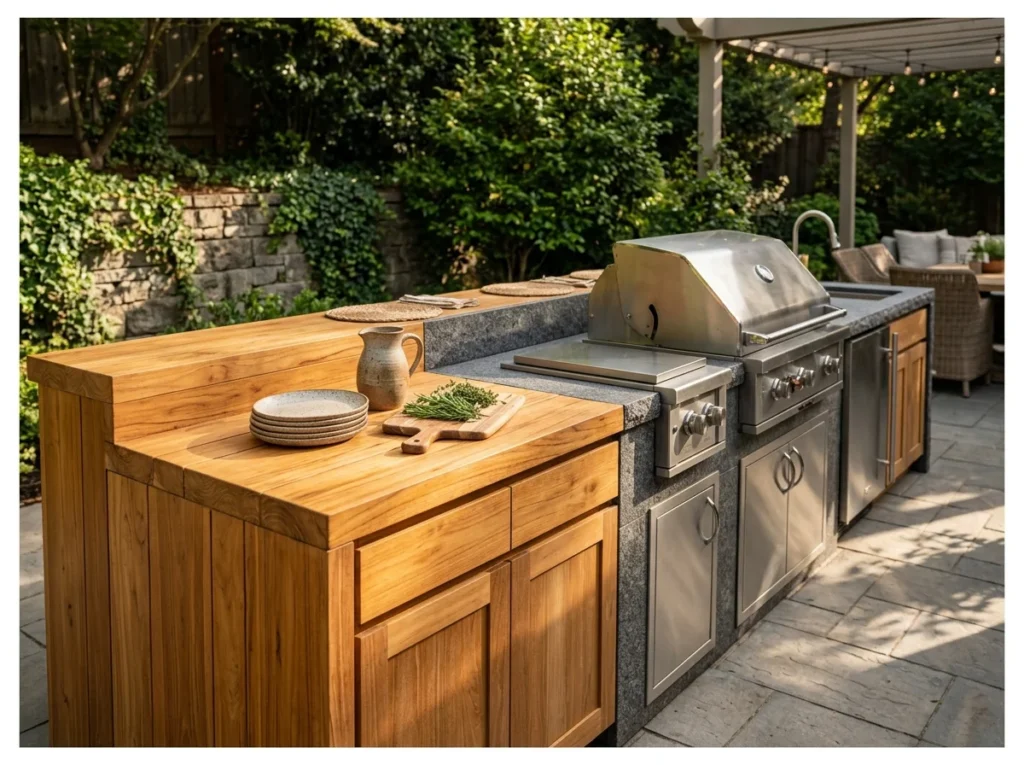
A teak wood counter section on the serving or food preparation end of the outdoor kitchen creates warmth and natural material quality that stone and steel alternatives cannot provide. Teak’s natural oil content makes it inherently moisture-resistant and suitable for outdoor kitchen applications.
Position the teak section away from the direct heat of the grill where it serves as a serving, carving, and cold food preparation surface. Oil the teak section annually with teak oil to maintain the warm honey tone. Left untreated, teak weathers to a beautiful silver-grey.
Mixed Material Countertop
Combining materials, like granite around the grill and teak for a bar section, lets each surface do the job it handles best. This approach also breaks up a large kitchen visually instead of one long uniform slab. Planning the transitions carefully matters here, since mismatched heights or edges can look unfinished if rushed.
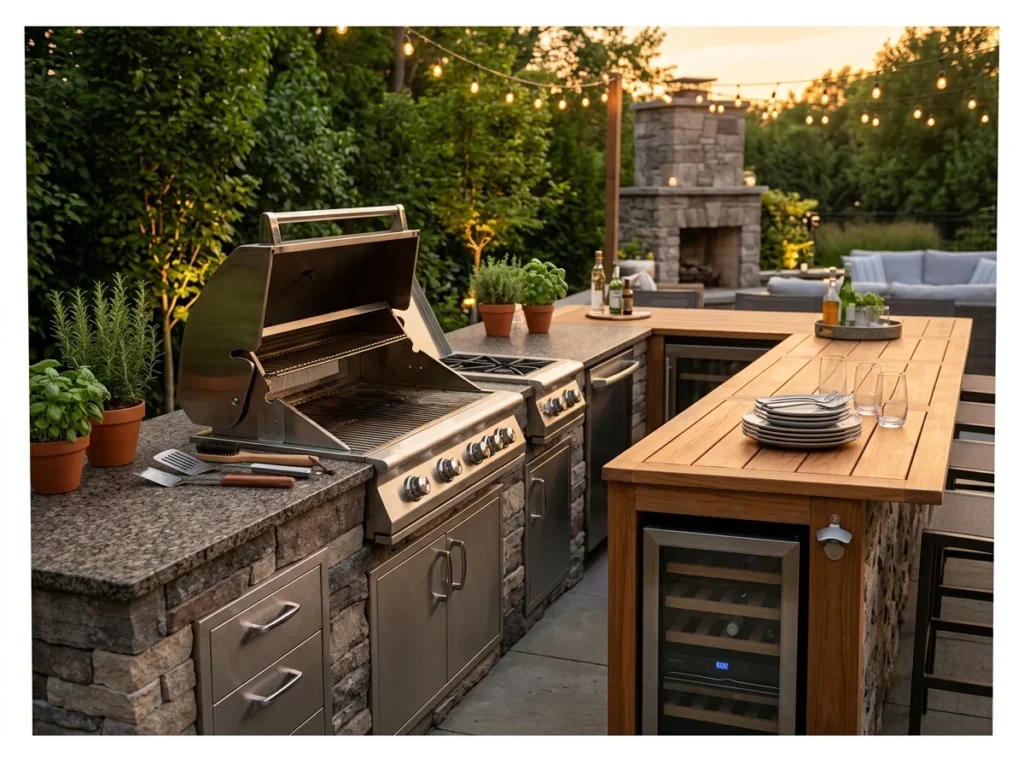
A mixed material outdoor kitchen countertop uses the most appropriate material for each specific counter zone: heat-resistant stone adjacent to the grill, natural timber for the serving and prep section, and stainless steel around the sink. Each material serves its specific functional zone optimally.
The visual contrast between different counter materials also creates visual interest within the outdoor kitchen design. The key to successful mixed material countertops is using transitions and edge details that create clean boundaries between materials rather than awkward unresolved junctions.
Stainless Steel Cabinet Drawers
Stainless steel drawers resist rust and warping in a way that wood or particleboard cabinets simply cannot outdoors. Marine grade stainless is worth the extra cost for anyone living near the coast, since regular steel corrodes faster in salt air. These drawers typically hold utensils, tools, and grilling accessories close to where they get used.
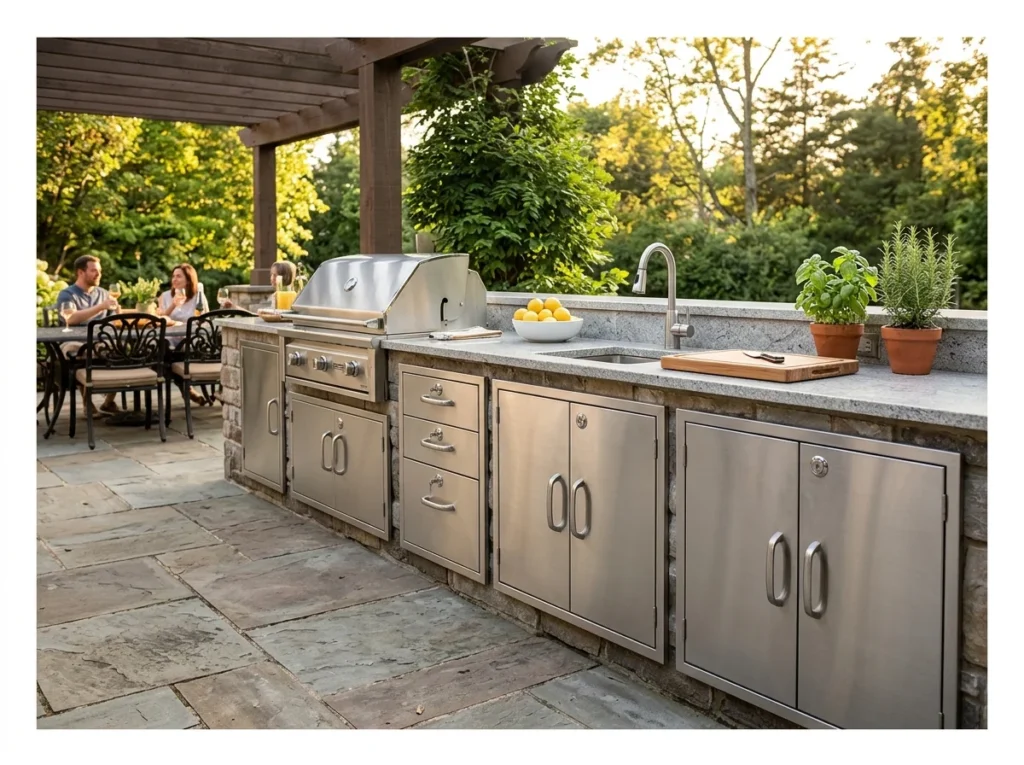
Stainless steel access doors and drawers in the outdoor kitchen cabinet base create the most weatherproof, durable, and professionally appropriate storage solution for outdoor environments. Marine grade 316 stainless steel handles coastal environments and daily moisture exposure without rusting.
Locking drawer and door mechanisms prevent unauthorized access to gas connections, electrical components, and stored equipment. Self-closing hinges prevent door damage in wind. The consistent stainless steel cabinet front creates a commercial kitchen quality that suits professional outdoor cooking setups.
Concrete Block Cabinet Base
Concrete block bases are one of the more budget friendly ways to build the structure of an outdoor kitchen. Once stacked and mortared, the blocks get covered with stucco, stone veneer, or tile for a finished look. This method is common in DIY builds since the blocks are easy to source and work with.
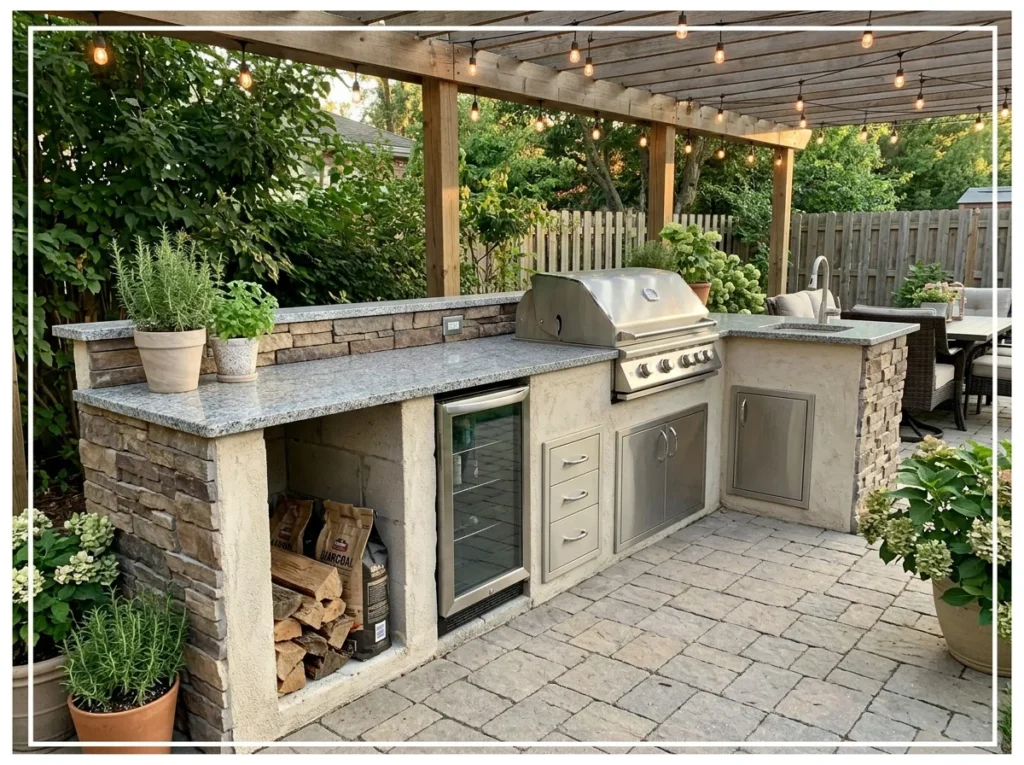
Concrete block construction creates the most affordable permanent outdoor kitchen base structure. Standard concrete blocks are stacked in the kitchen outline, reinforced with rebar, and finished with stone veneer, tile, or stucco render to create the desired aesthetic.
The concrete block base creates a permanent, weather-resistant kitchen structure at significantly lower cost than natural stone or custom cabinetry. The stucco, stone veneer, or tile applied over the blocks creates the finished aesthetic and protects the blocks from moisture over time.
Budget-friendly option for a permanent outdoor kitchen.
Brick Cabinet Facade
A brick facade gives the cabinet base a classic, traditional look that pairs naturally with older homes. Brick also holds up well against heat, rain, and general wear over many years outdoors. Matching the brick to the house exterior helps the kitchen feel like it was always part of the property.
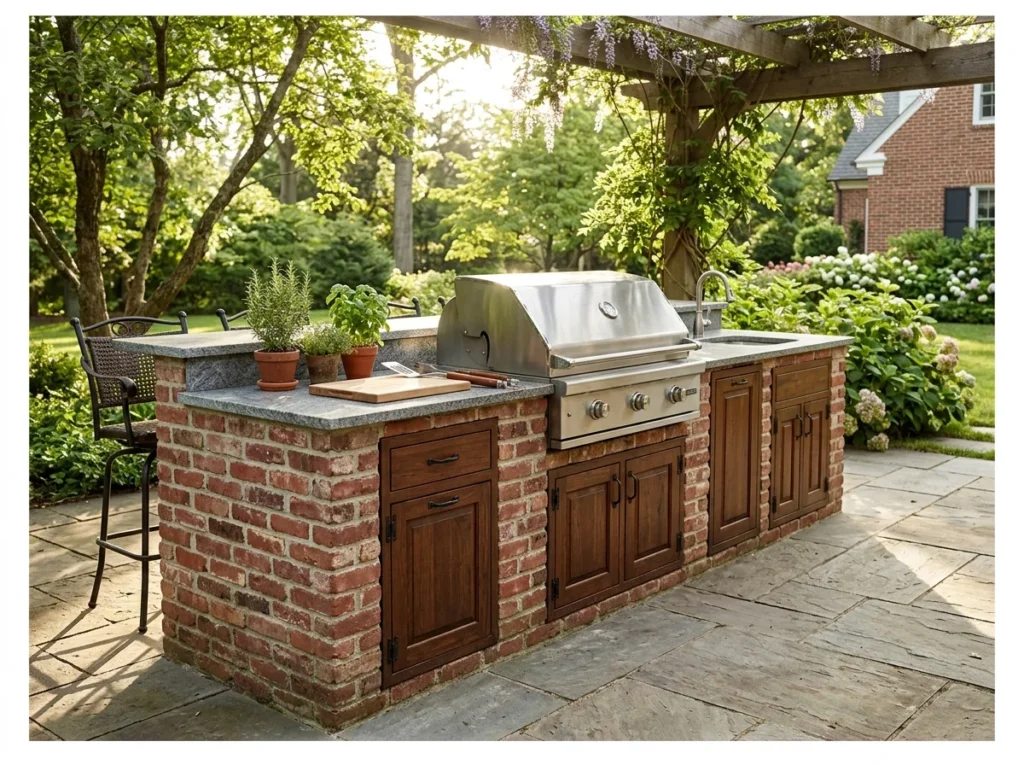
A brick facade on the outdoor kitchen cabinet base creates the most traditionally authentic and permanently beautiful outdoor kitchen structure. Brick handles outdoor weather conditions with exceptional durability and becomes more characterful over time as the mortar weathers.
Traditional red brick suits farmhouse and traditional outdoor kitchen styles. Painted white or grey brick suits contemporary and coastal outdoor kitchen aesthetics. The thermal mass of brick construction also retains heat and moderates temperature fluctuations around the cooking and storage zones.
Stone Veneer Cabinet Exterior
Stone veneer is a thin layer of natural or manufactured stone applied over a plain block or frame base. It gives the appearance of a solid stone structure at a fraction of the weight and cost. This finish blends particularly well with natural stone countertops for a cohesive overall look.
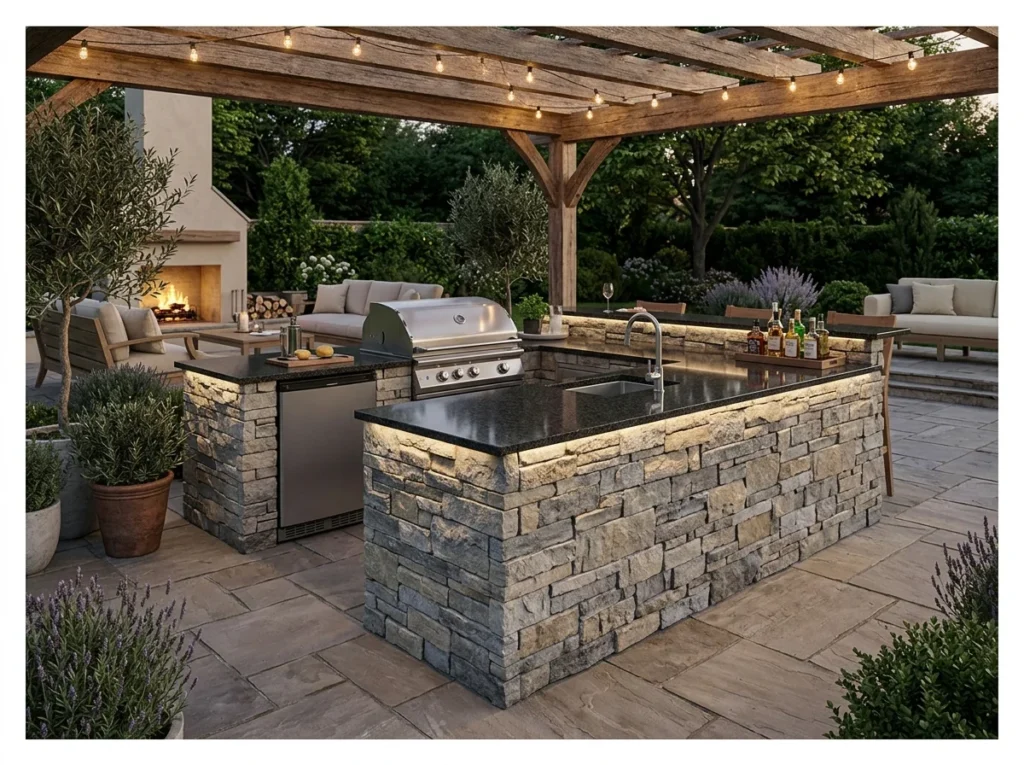
Natural stone veneer applied to the outdoor kitchen cabinet exterior creates a premium, genuinely organic material finish that matches natural stone countertops and surrounding landscape elements naturally. Stone veneer is 2 to 4 centimeters thick and applies to any structural base.
Choose a stone veneer in tones that complement the countertop material and the surrounding garden and patio palette. Fieldstone, slate, limestone, and travertine veneer all create different outdoor kitchen characters ranging from rustic to refined.
Undercounter Refrigerator
An undercounter refrigerator keeps drinks and ingredients cold right at the cooking station, cutting down trips back to the house. These units are built to handle outdoor humidity and temperature swings, unlike a standard indoor fridge. Most fit into a standard cabinet cutout, so they slot into existing designs fairly easily.
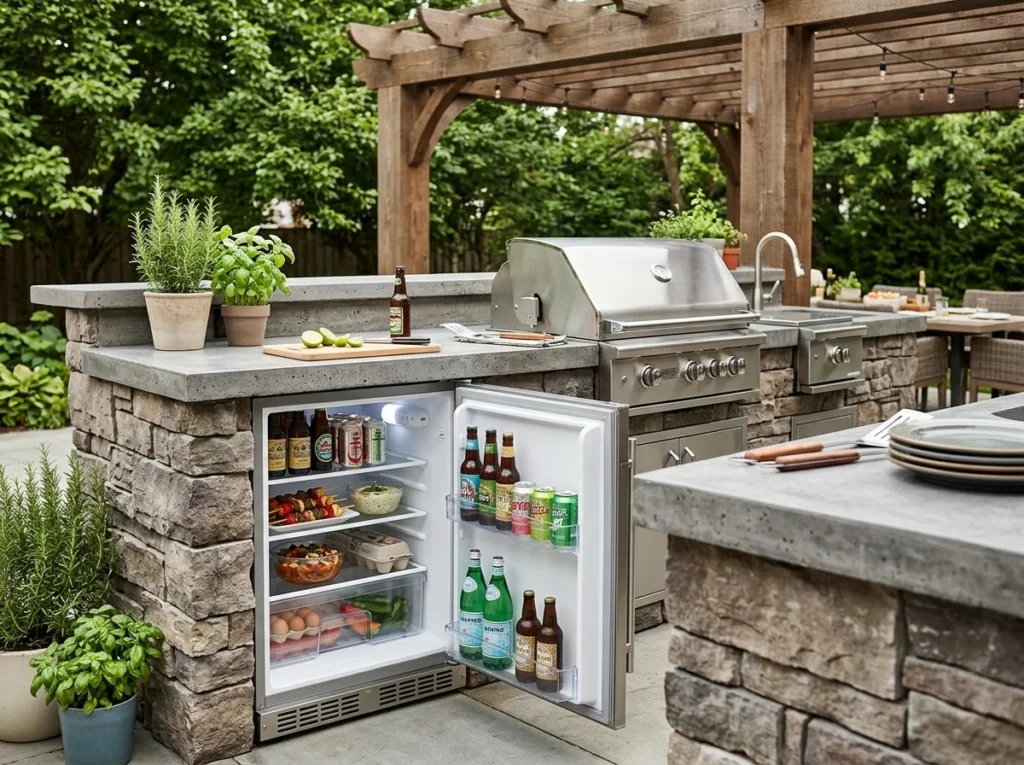
An outdoor-rated undercounter refrigerator built into the outdoor kitchen base keeps drinks cold, ingredients fresh, and condiments organized throughout an entire day of outdoor entertaining without any trips to the indoor kitchen refrigerator.
Outdoor refrigerators are specifically engineered for temperature fluctuations, direct sun exposure, humidity, and outdoor operating conditions that indoor refrigerators cannot handle outdoors. Choose a unit with at least 50 liters of capacity for typical family entertaining or 80 to 100 liters for larger gatherings.
Built-In Ice Maker
A built in ice maker can produce a steady supply of ice throughout a party without anyone running inside to refill a cooler. Most residential units make between twenty and thirty pounds of ice per day, which covers a fairly large gathering. Placing it near the drink station keeps the whole beverage setup within a few steps.
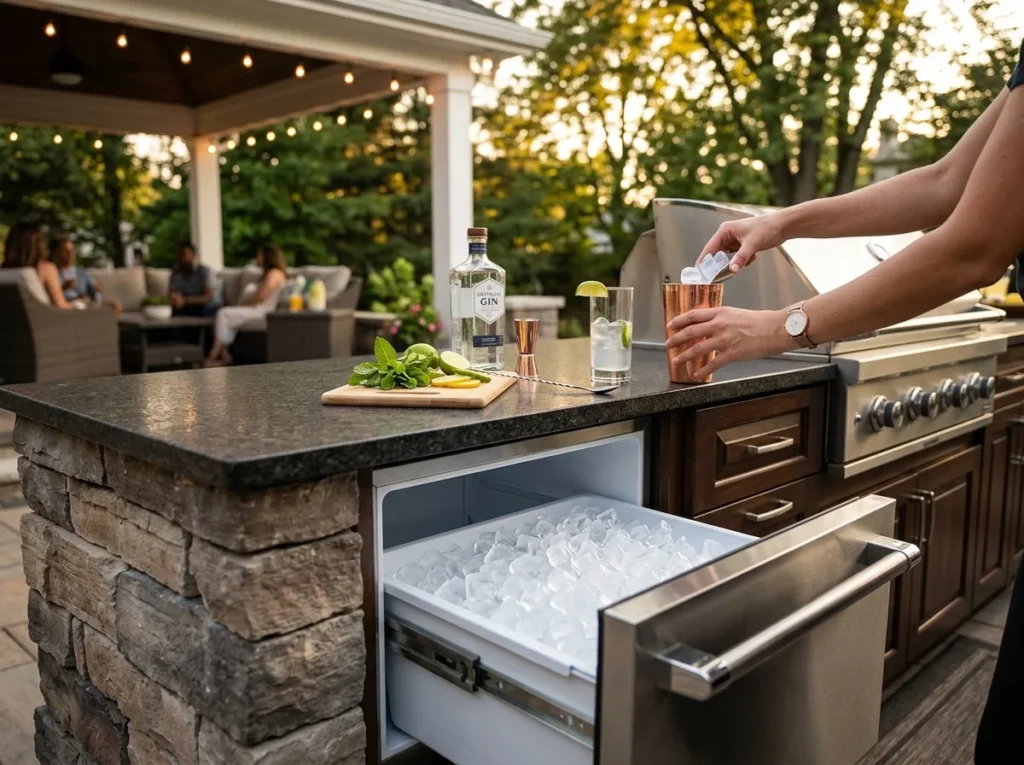
A built-in outdoor ice maker eliminates the need to carry ice from the indoor freezer throughout an entire day of outdoor entertaining. An outdoor-rated ice maker produces 15 to 25 kilograms of ice daily and stores it in an insulated bin within the unit.
Outdoor ice makers require a water line connection and a drain. Position the ice maker adjacent to the beverage station or cocktail bar within the outdoor kitchen for the most logical and convenient workflow. An ice maker combined with a beverage refrigerator creates a fully self-sufficient outdoor bar setup.
Outdoor Wine Cooler
An outdoor wine cooler holds bottles at a steady temperature, which matters more than people expect since heat and vibration both affect flavor over time. Dual zone models let reds and whites sit at their own ideal temperatures at once. Building it into the counter keeps the kitchen looking finished instead of hauling bottles out from indoors each time.
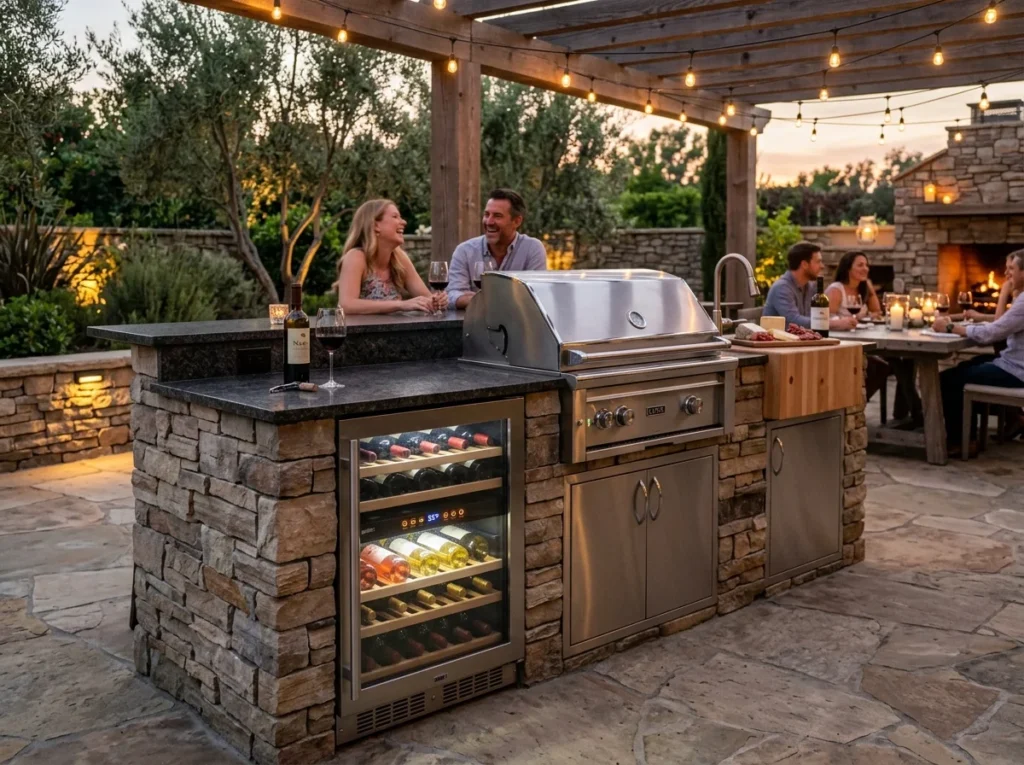
An outdoor wine cooler built into the kitchen cabinet base keeps white wine and sparkling wine at the ideal serving temperature throughout outdoor entertaining without any indoor trips. Outdoor-rated wine coolers handle the temperature fluctuations and environmental exposure that indoor units cannot manage.
A dual-zone outdoor wine cooler allows simultaneous storage of white and red wines at different optimal temperatures. Choose a unit with a UV-resistant glass door that prevents light damage to stored wine. A 24-bottle capacity suits most residential outdoor kitchen wine storage needs.
Pull-Out Trash and Recycling
A pull out bin keeps trash and recycling hidden behind a cabinet door instead of sitting out in the open. Separate compartments for trash and recyclables make cleanup after a cookout much faster. This small addition often gets overlooked in planning, but it makes a noticeable difference during actual use.
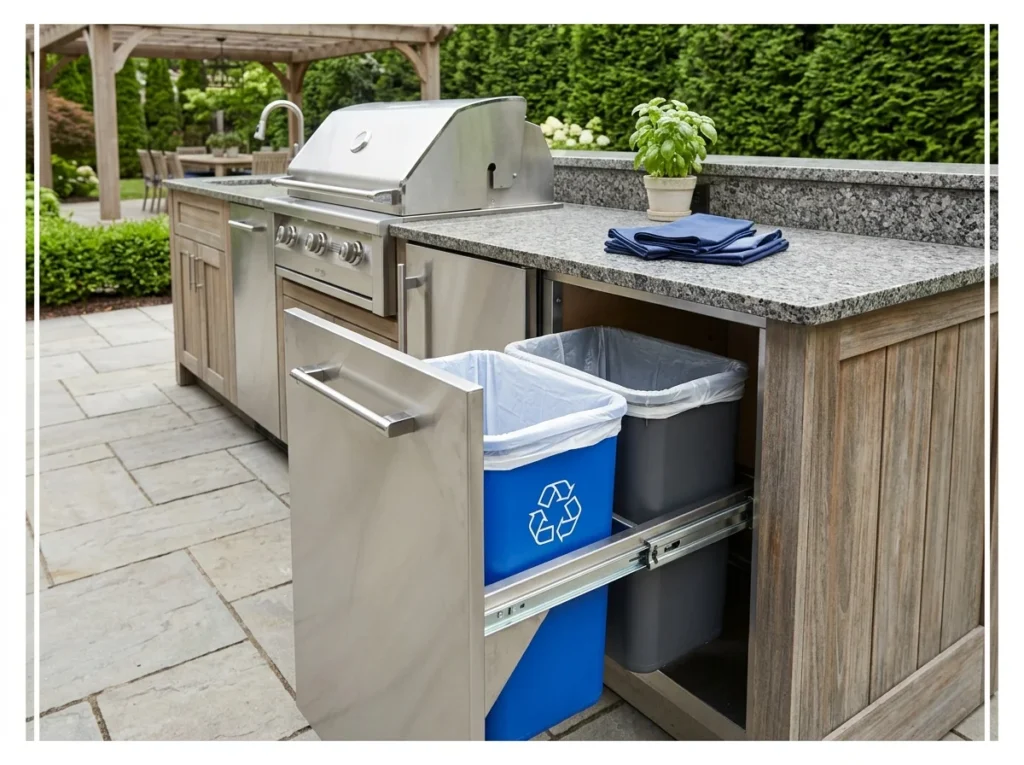
A pull-out trash and recycling unit built into the outdoor kitchen cabinet base creates a discreet and organized waste management solution that keeps the outdoor entertaining area clean and tidy throughout cooking and dining without visible bins cluttering the space.
Two-bin pull-out systems accommodate general waste and recycling simultaneously. Position the pull-out trash unit at the most convenient point in the kitchen workflow, typically adjacent to the food preparation area. The drawer mechanism keeps the bin concealed when not in use.
Modern Minimalist Outdoor Kitchen
A modern minimalist kitchen leans on clean lines, flat surfaces, and a limited color palette, usually just black, white, or gray. Stainless steel appliances and smooth concrete counters fit naturally into this style. Less visual clutter tends to make even a small kitchen feel more spacious.
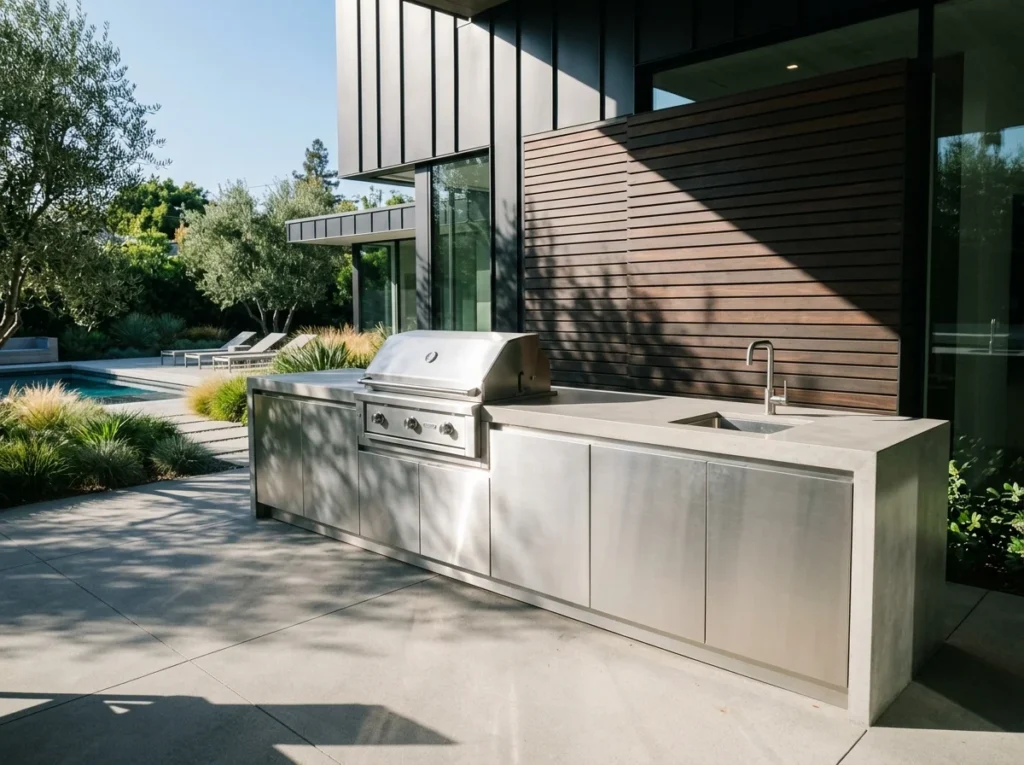
A modern minimalist outdoor kitchen reduces the design to its essential functional elements: a seamless countertop, flush cabinet fronts with no visible hardware, one quality cooking appliance, and a single sink. Every element serves a purpose and nothing decorative is added.
Handleless push-to-open cabinet drawers and a continuous concrete or porcelain countertop create the most seamlessly minimalist outdoor kitchen surface. Position the built-in grill flush with the countertop edge for a continuous counter plane. The minimalist outdoor kitchen suits contemporary homes where the outdoor design language extends the architectural character of the building.
Mediterranean Outdoor Kitchen
A Mediterranean style kitchen often features warm terracotta tones, arched openings, and natural stone counters. Wrought iron accents and a pergola covered in vines complete the look many people associate with coastal Italy or Greece. This style tends to suit warmer climates where outdoor cooking happens most of the year.
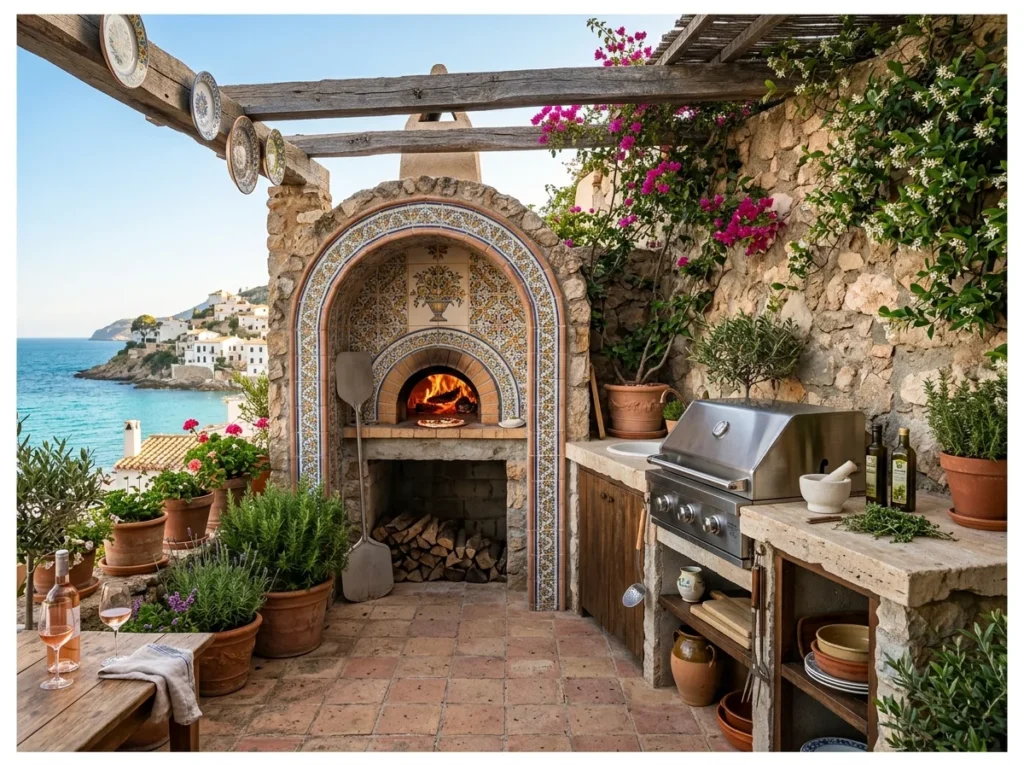
A Mediterranean outdoor kitchen uses terracotta tiles, arched alcoves, hand-painted ceramic details, and natural stone to create an outdoor cooking space that references the outdoor kitchen traditions of Greece, Italy, and Spain. The style celebrates cooking as a communal cultural activity.
Position a wood-fired oven as the centerpiece of the Mediterranean outdoor kitchen. Terracotta pot plants, hanging dried herbs and garlic, and hand-painted tile inserts complete the Mediterranean character. Warm ochre, terracotta, and blue-white color combinations suit this kitchen style naturally.
Rustic Timber Outdoor Kitchen
Rustic timber kitchens use rough hewn wood beams and stone in a way that feels pulled straight from a cabin or farmhouse. Exposed wood framing around the cooking area adds texture that manufactured materials rarely match. This style works especially well in wooded or mountain settings where the surroundings already lean natural.
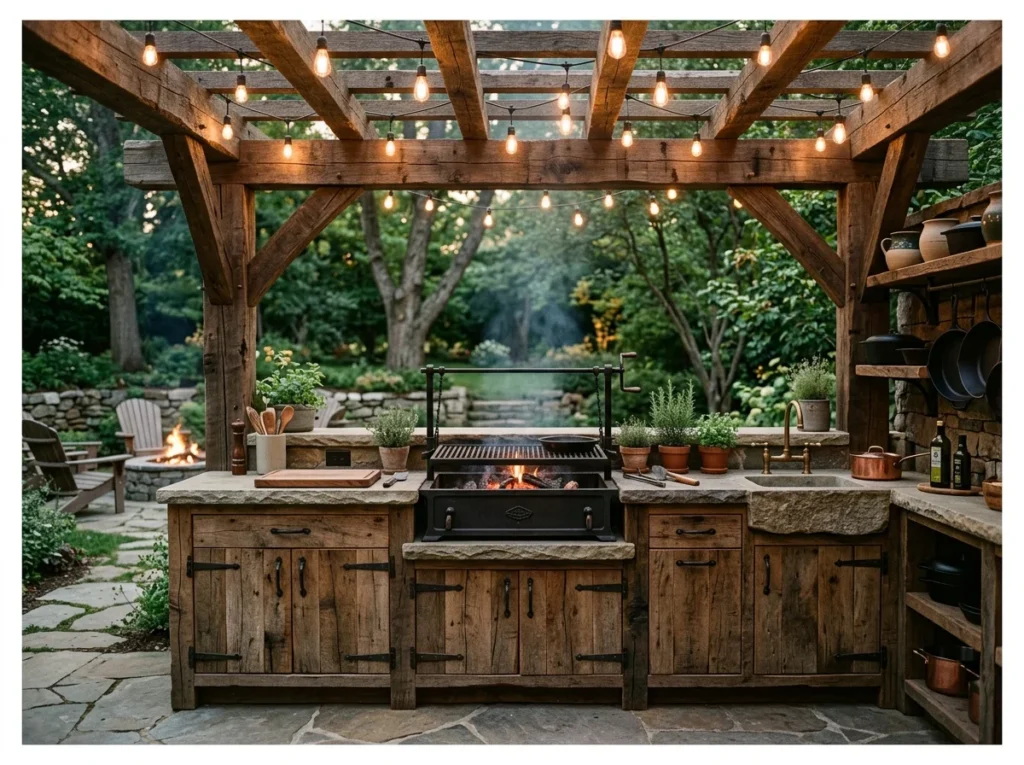
A rustic timber outdoor kitchen uses rough-sawn or reclaimed timber for the structural frame and cabinet facades, creating a warm, honest material character that suits woodland and rural garden settings naturally. The visible grain, texture, and natural imperfections of rough timber create genuine rustic warmth.
Seal all timber elements with a penetrating exterior oil or clear sealant to protect against weather deterioration while preserving the natural timber character. Reclaimed barn wood and rough-sawn hardwood both create the most authentic rustic outdoor kitchen aesthetic.
Industrial Outdoor Kitchen
An industrial style kitchen leans on raw materials like exposed steel, concrete, and dark metal finishes. Open shelving and visible hardware give it a slightly unfinished, warehouse inspired look on purpose. This style tends to suit modern homes with similar industrial touches already used indoors.
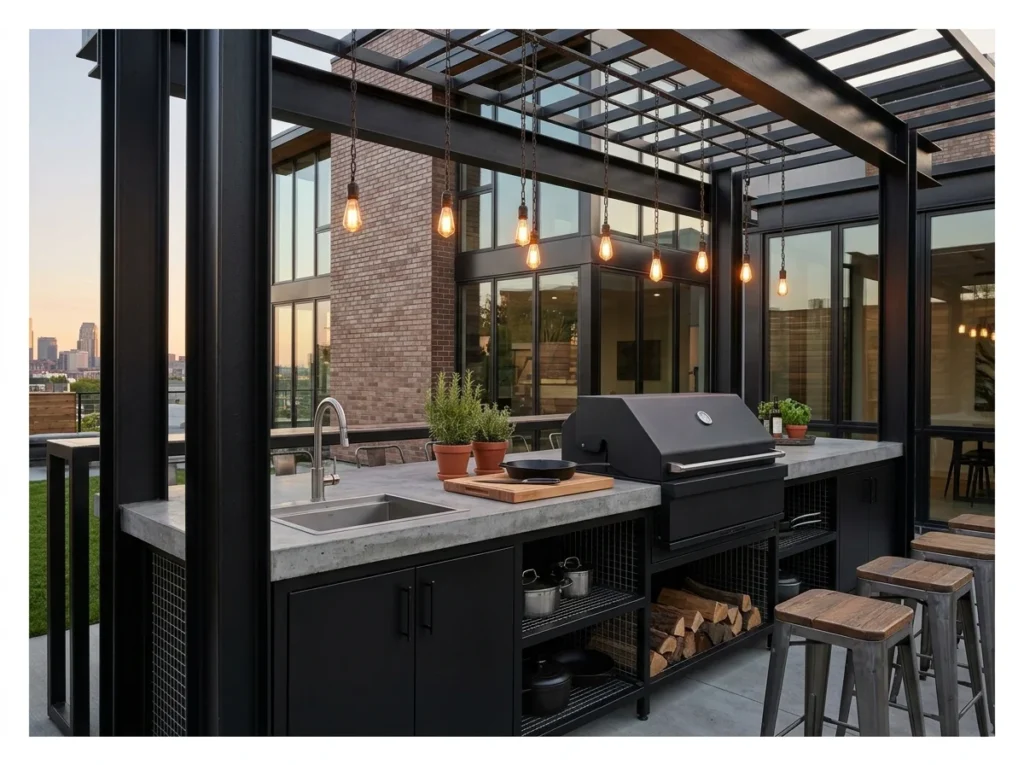
An industrial outdoor kitchen uses exposed structural steel, concrete surfaces, powder-coated metal cabinet doors, and Edison bulb lighting to create an outdoor cooking space with the authentic material character of urban industrial design. The honest, undecorated quality of the materials creates genuine visual interest.
Black powder-coated steel framing, concrete countertops, and raw metal cabinet hardware create the core industrial outdoor kitchen material palette. Industrial-style pendant lights above the counter complete the look. The industrial aesthetic suits contemporary homes, converted properties, and urban garden settings.
Tropical Outdoor Kitchen
A tropical style kitchen pairs bamboo or teak with a thatched or palm covered roof for shade. Bright accent colors and lush surrounding plants complete the resort like feel many people go for. This style holds up best in warm, humid climates where the materials suit the environment naturally.
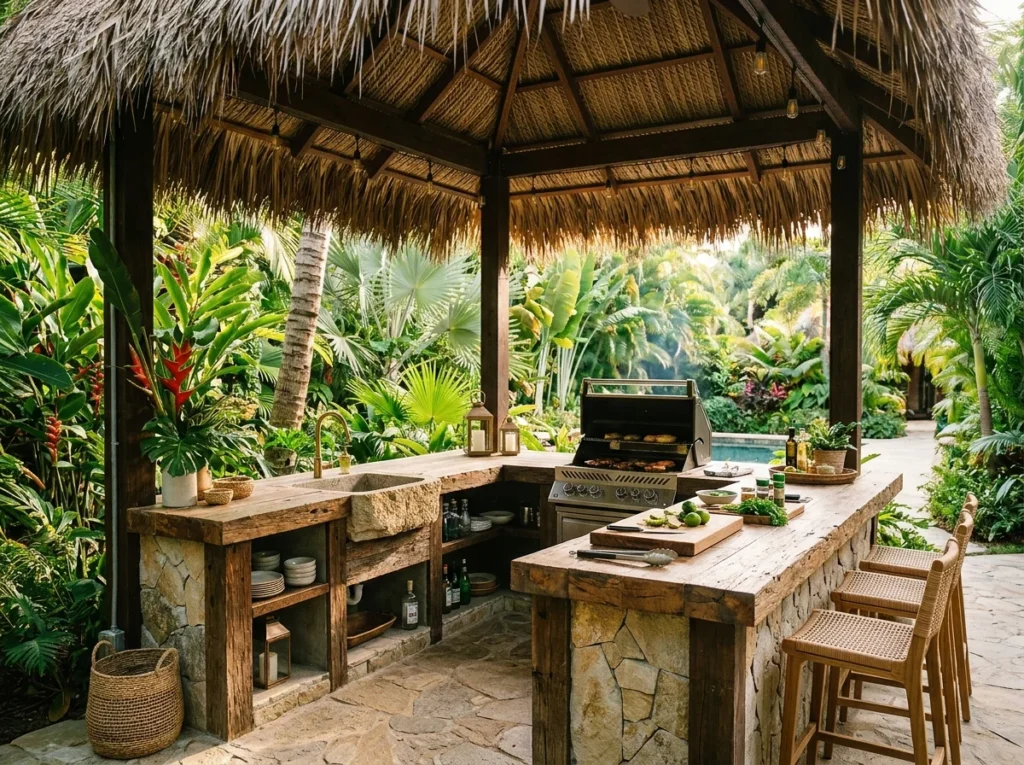
A tropical outdoor kitchen positions the cooking station within a deliberately lush tropical planting environment, creating an outdoor cooking experience that feels genuinely immersive in the natural world. The combination of thatched roof, natural timber, and stone countertop suits warm and tropical climate zones.
Dense surrounding planting of palms, bird of paradise, banana plants, and tropical groundcovers creates the lush tropical backdrop. A thatched alang-alang grass roof provides shade and genuine tropical character. The tropical outdoor kitchen suits Bali-influenced and resort-style backyard designs.
Traditional Brick Outdoor Kitchen
A traditional brick kitchen relies on classic red or tan brick for both structure and finish. This style often includes an arched opening around the grill, echoing old world outdoor ovens. It pairs especially well with homes that already use brick on their exterior walls.
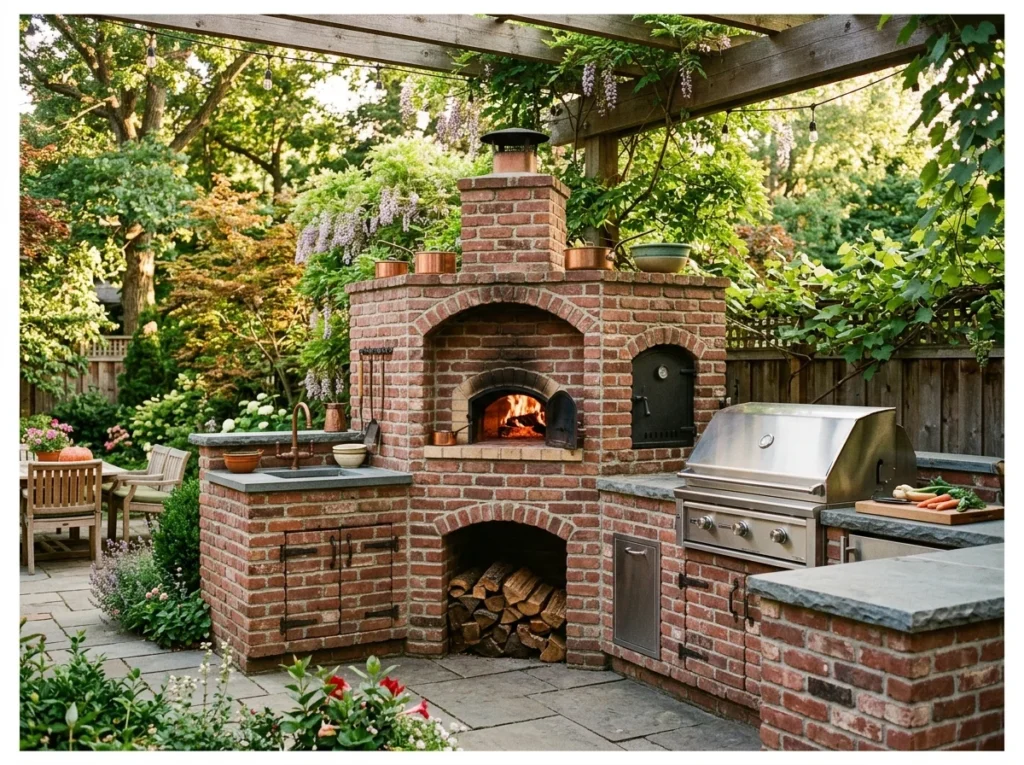
A traditional brick outdoor kitchen built from full-size structural bricks creates the most permanent and authentically traditional outdoor cooking installation available. The thermal mass of brick construction provides excellent heat retention around the cooking zones and the brick structure becomes more attractive over time.
Traditional brick outdoor kitchens suit heritage, colonial, and classic architectural homes where the outdoor kitchen material palette needs to complement existing masonry construction on the home itself. Arched alcoves for pizza ovens and smokers within brick structures create the most classically beautiful outdoor kitchen compositions.
Coastal Outdoor Kitchen
A coastal kitchen leans on light colors like white, sand, and soft blue, echoing the beach environment around it. Materials here need to resist salt air, so stainless steel and sealed stone are common choices. Weathered wood accents and simple, breezy furniture round out the relaxed feel of this style.
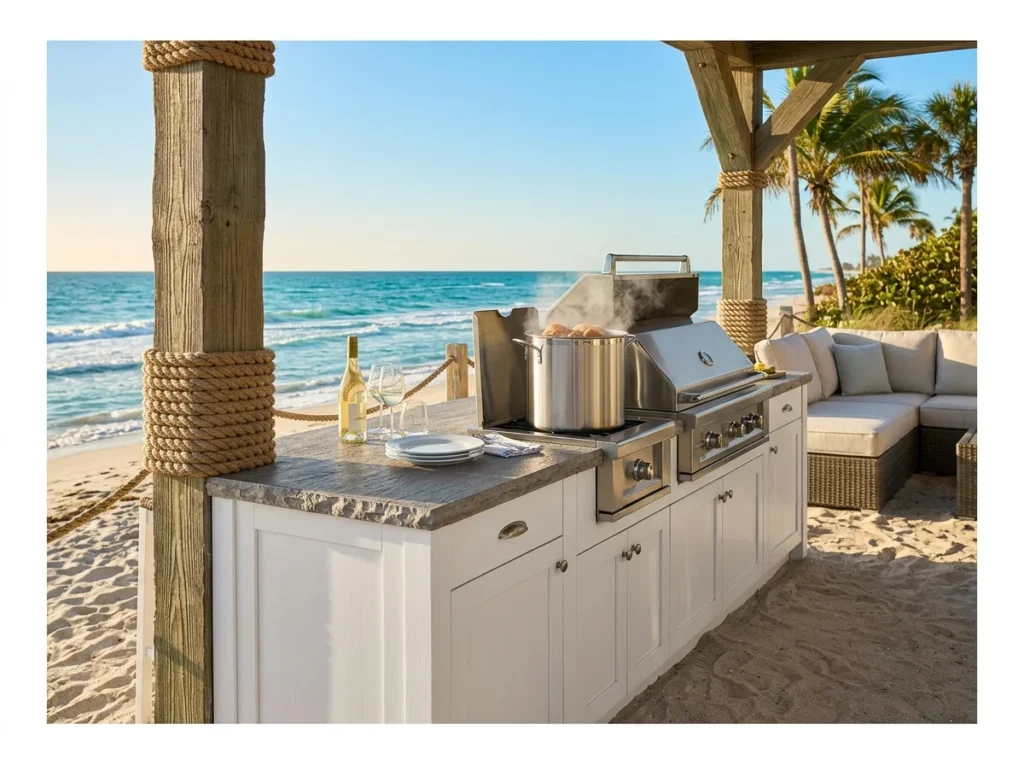
A coastal outdoor kitchen uses pale stone or weathered grey surfaces, white-painted cabinet facades, and nautical material references to create an outdoor cooking space that suits beachside, lakefront, and coastal property settings. The palette references the bleached, weather-worn quality of coastal environments.
Marine grade 316 stainless steel for all appliances and hardware is essential in coastal outdoor kitchens where salt air rapidly corrodes standard steel. Powder-coated aluminum for cabinet doors handles coastal conditions better than standard painted steel. The coastal outdoor kitchen suits seafood-focused cooking and relaxed casual entertaining.
Farmhouse Outdoor Kitchen
A farmhouse style kitchen often uses white shiplap paneling, black hardware, and a mix of wood and stone. Open shelving displaying mason jars or simple pottery adds to the cozy, homey feel. This style pairs naturally with a large farmhouse table for outdoor dining nearby.
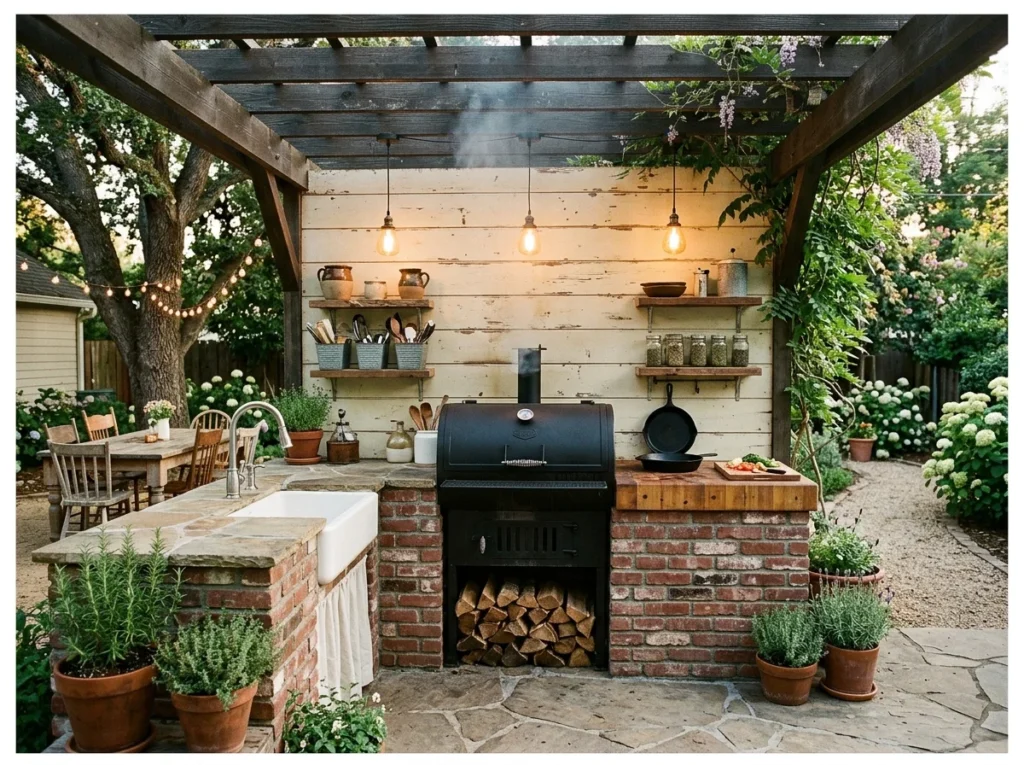
A farmhouse outdoor kitchen combines shiplap, brick, butcher block, and cast iron to create a backyard cooking space with warmth, character, and honest material quality. The farmhouse aesthetic celebrates working kitchens and honest materials over polished perfection.
A shiplap backdrop wall behind the cooking station, a brick cabinet base, and a butcher block countertop section create the primary farmhouse kitchen material story. Black iron hardware, an apron-front outdoor sink, and Edison pendant lights complete the farmhouse outdoor kitchen character.
Outdoor Kitchen with Bar Seating
Adding a raised counter section with stools turns the kitchen into a spot where guests can sit and chat while food cooks. Bar height counters typically sit around forty two inches, taller than a standard dining table. This setup works especially well for casual entertaining where people move around rather than sit down for a formal meal.
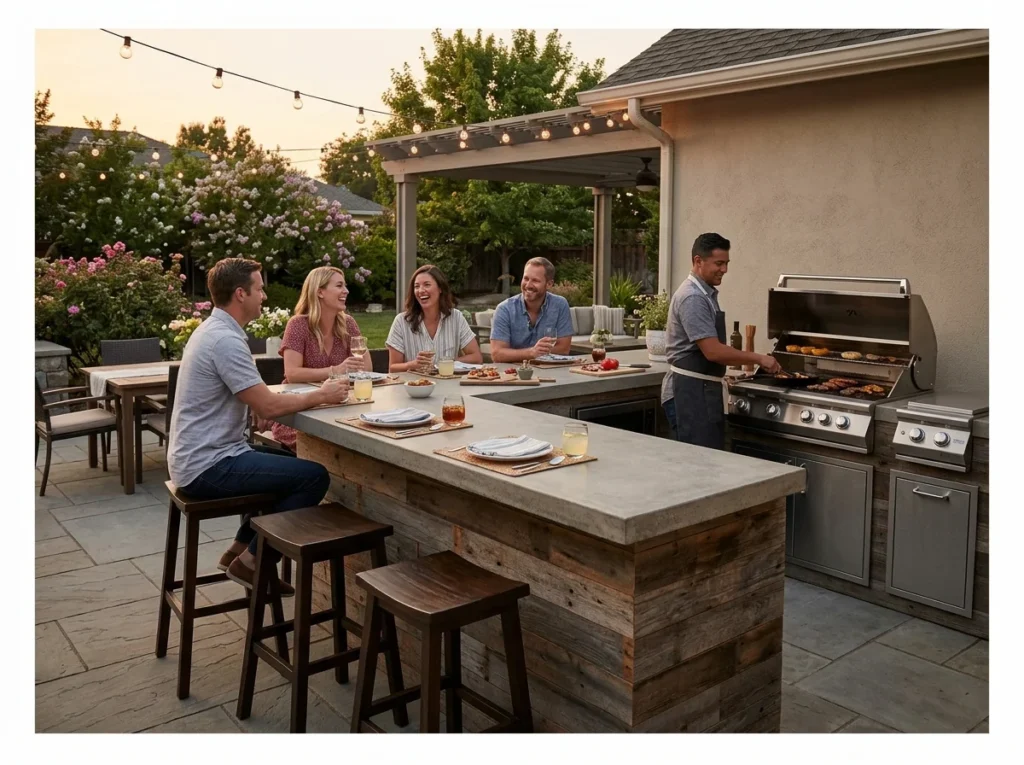
Bar seating along the front edge of the outdoor kitchen counter creates the most social outdoor cooking and entertaining configuration. Guests sit at the counter while the host cooks, creating a shared experience that indoor kitchens approximate and outdoor kitchens achieve perfectly.
A counter overhang of 30 to 38 centimeters provides knee clearance for bar stools. The overhang height at 90 to 95 centimeters suits counter-height bar stools at 63 to 66 centimeters seat height. Three to five bar stools along the counter edge create a social bar that suits most outdoor kitchen widths.
Outdoor Kitchen with Dining Area
Placing a table and chairs near the kitchen means food goes straight from the grill to the plate without a long walk. Shade from a pergola or umbrella over the dining area keeps meals comfortable during peak sun hours. This layout suits families who eat outside regularly rather than just for special occasions.
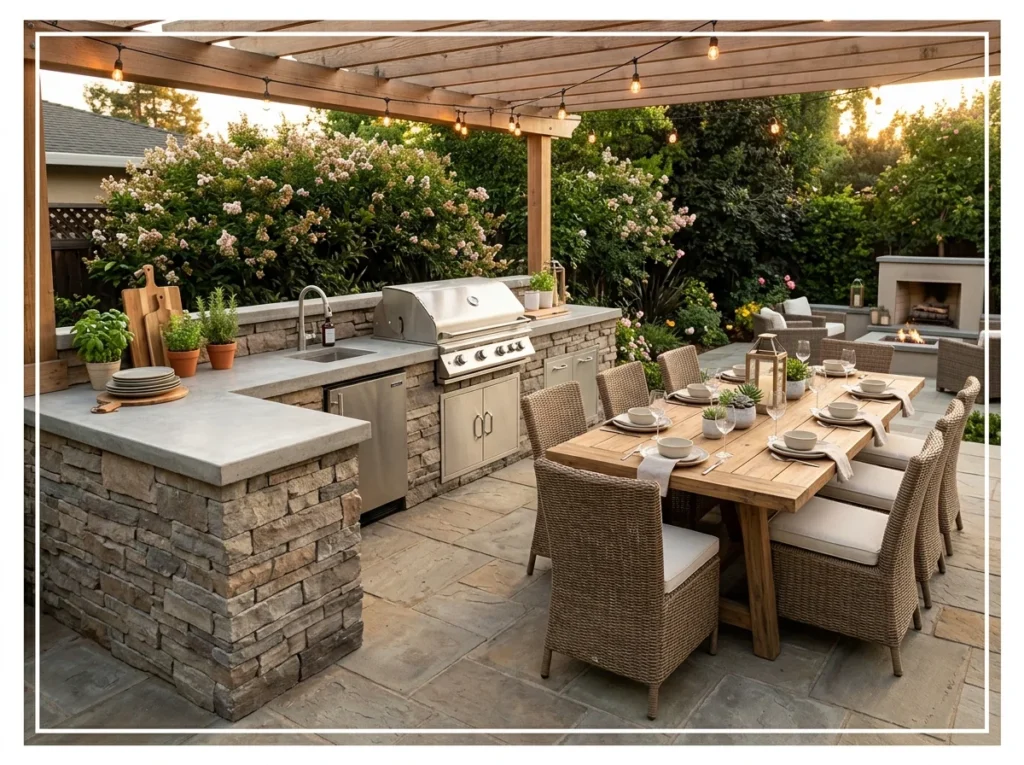
An outdoor kitchen positioned adjacent to a dedicated outdoor dining table and chairs creates a complete outdoor room where cooking, serving, and dining all occur within the same outdoor space. The cooking zone and dining zone should be connected by proximity but clearly distinct in function.
Position the dining table within three to five meters of the outdoor kitchen counter for the most practical serving workflow. The dining area should be positioned downwind of the grill to avoid smoke direction toward diners. A shared overhead structure unifies the cooking and dining zones visually.
Outdoor Kitchen with Fire Feature
A fire pit or fireplace nearby extends the usable hours of the kitchen well past sunset. Guests naturally gather around fire once the cooking is done, which keeps the evening going longer. Gas fire features are easier to control and cleaner to maintain than a traditional wood burning pit.
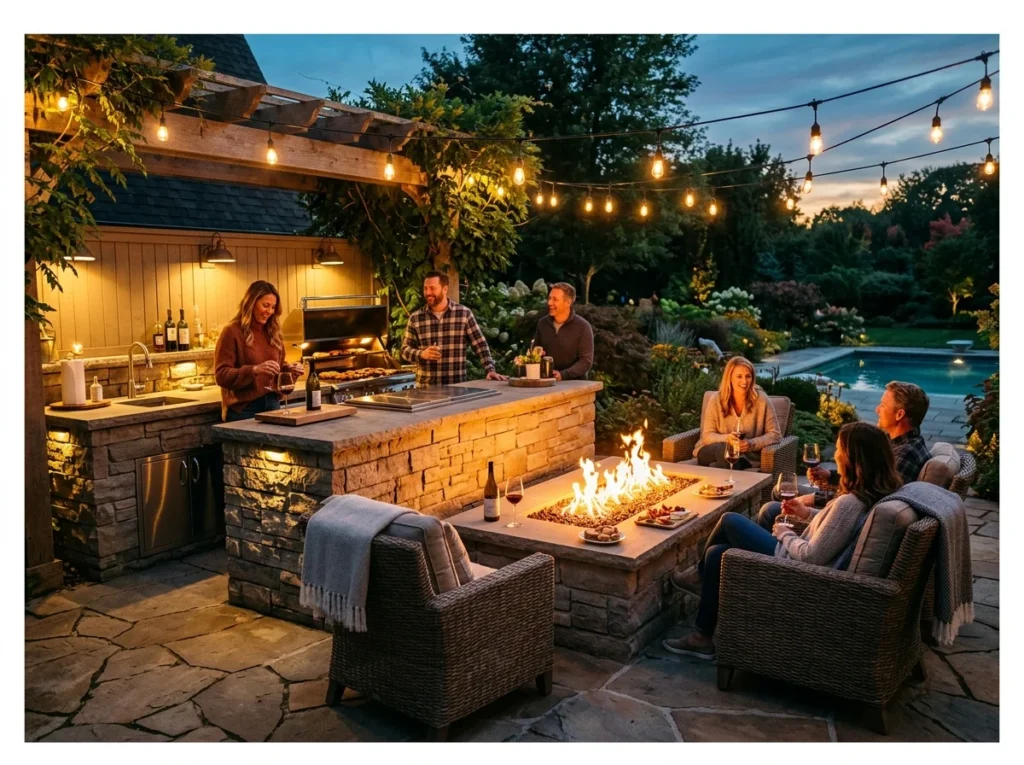
A fire pit or fire table positioned adjacent to the outdoor kitchen creates a natural post-dinner gathering destination where guests move from the kitchen bar seating to the fire lounge after the meal. The fire feature extends the outdoor entertaining evening significantly.
Position the fire feature three to five meters from the outdoor kitchen for the most comfortable flow from cooking to relaxation. The visual connection between the kitchen glow and the fire feature creates a complete outdoor entertaining environment that draws guests outdoors from dinner through to late evening.
Outdoor Kitchen with Outdoor TV
A weatherproof outdoor TV turns the kitchen area into a spot for watching a game while food is on the grill. These screens are built with higher brightness and moisture resistance than a standard indoor television. Mounting it under a covered roof section helps protect it from direct rain and sun exposure.
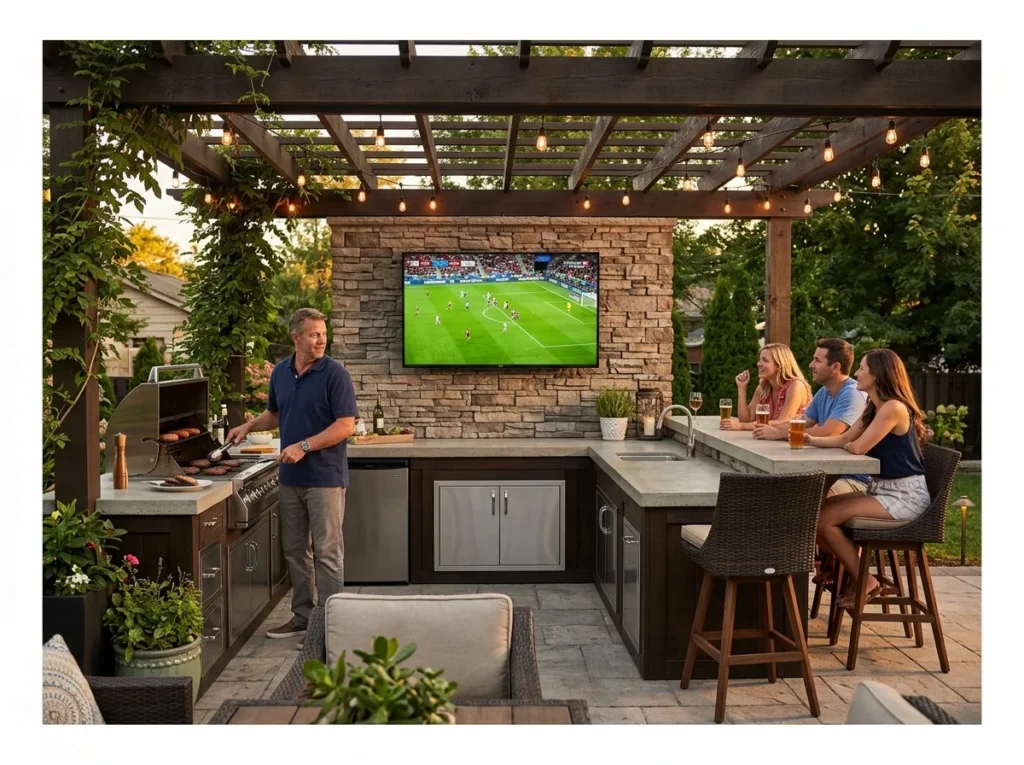
A weatherproof outdoor television mounted above or beside the outdoor kitchen counter transforms the cooking and bar area into a complete outdoor entertainment destination for sport watching, streaming, and outdoor movie dining. Weatherproof outdoor TVs handle UV, humidity, and temperature extremes.
Mount the outdoor TV at a height and angle that is comfortable to view from both the bar seating position and from the cooking position. A swing-out bracket allows the angle to be adjusted toward different seating areas as required. The outdoor kitchen TV setup is most popular for sport-watching events.
Outdoor Kitchen with Sink
A sink lets you rinse vegetables, wash hands, or clean tools without walking back into the house mid cook. Most outdoor sinks connect to the same water line already run for an ice maker or fridge. This addition alone often ends up being one of the most used features in the whole kitchen.
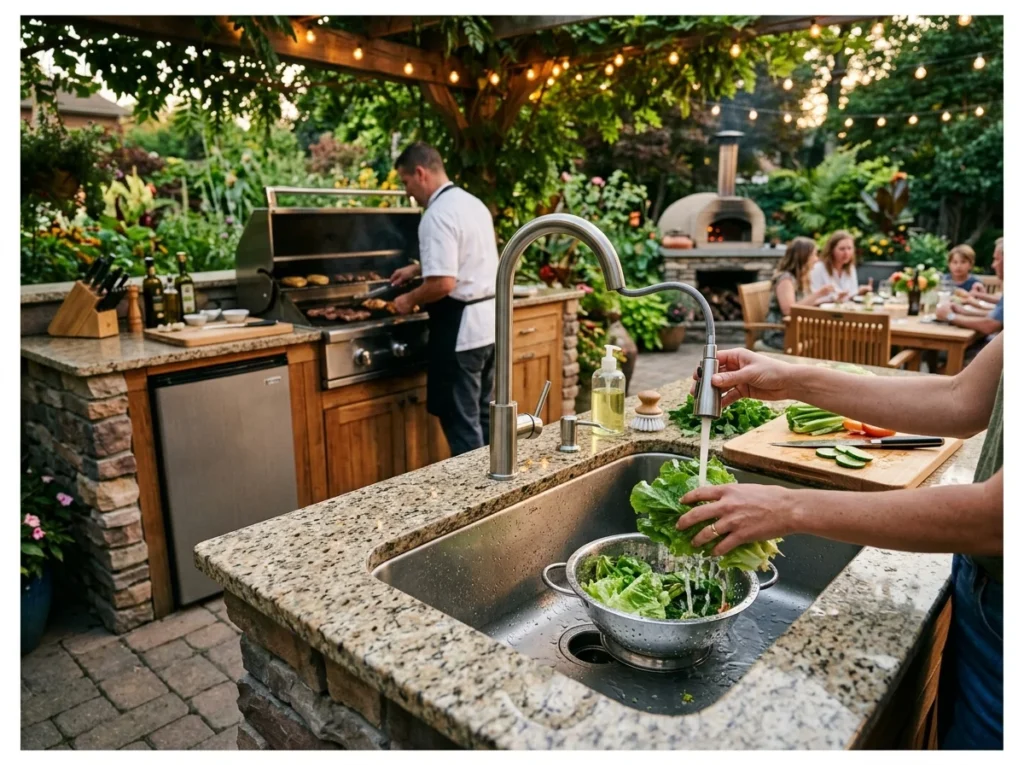
A stainless steel undermount sink in the outdoor kitchen countertop creates the single most significant improvement to the kitchen’s practical functionality. An outdoor kitchen sink allows food preparation, hand washing, and limited cleaning without any trips to the indoor kitchen.
A 45 to 60 centimeter single bowl sink suits most outdoor kitchen applications. Connect to the home’s water supply via a dedicated outdoor water line. A cold-only supply is simplest to install. Hot and cold provides more washing flexibility. Ensure adequate drainage is in place before installation.
Outdoor Kitchen with Dishwasher
An outdoor dishwasher handles cleanup right at the party instead of stacking dishes to carry inside later. These units are built specifically to handle outdoor humidity and temperature changes, unlike a standard indoor model. This feature is less common but genuinely useful for anyone who entertains large groups often.
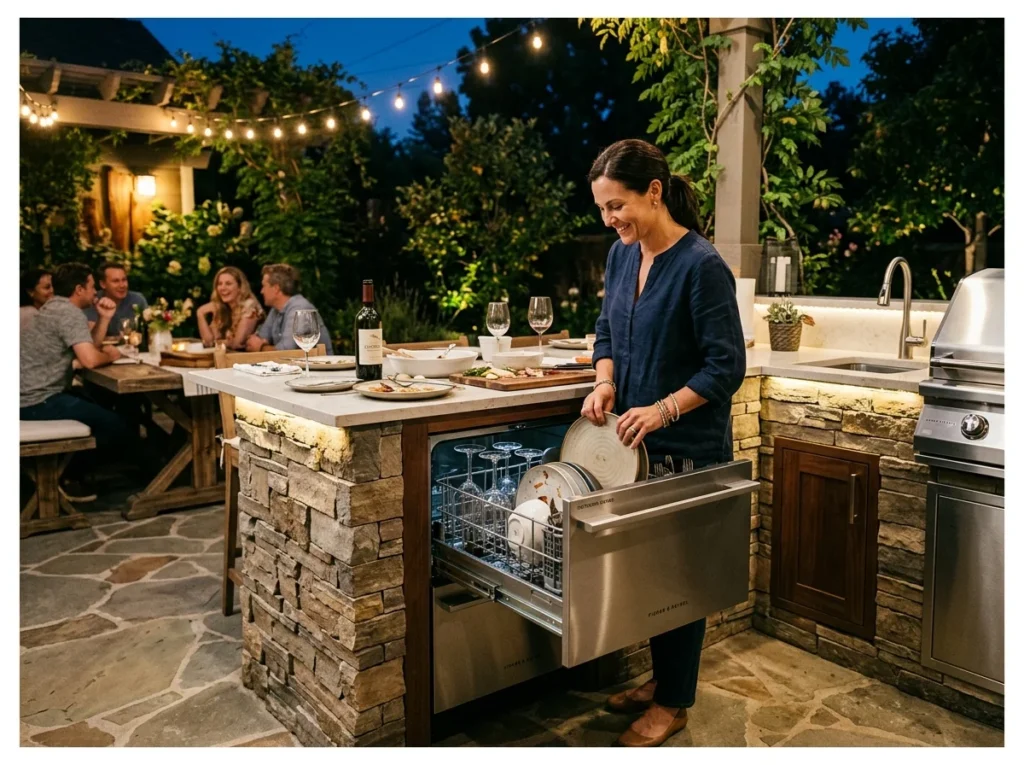
An outdoor-rated dishwasher built into the outdoor kitchen base creates a completely self-contained outdoor entertaining space where post-meal cleanup happens in the outdoor kitchen rather than requiring everything to be carried indoors. This genuinely transforms how outdoor entertaining functions.
Outdoor-rated dishwashers handle UV exposure and temperature fluctuations that indoor units cannot manage outdoors. A 45-centimeter width dishwasher suits most outdoor kitchen cabinet configurations. Install with a water supply line and drain that connects to the home’s drainage system.
Outdoor Kitchen with Cocktail Bar
A dedicated cocktail station with a small sink, ice bin, and bottle storage keeps drink making separate from the main cooking area. This setup lets someone mix drinks without getting in the way of whoever is running the grill. A small overhead light here also makes late evening cocktails easier to prepare.
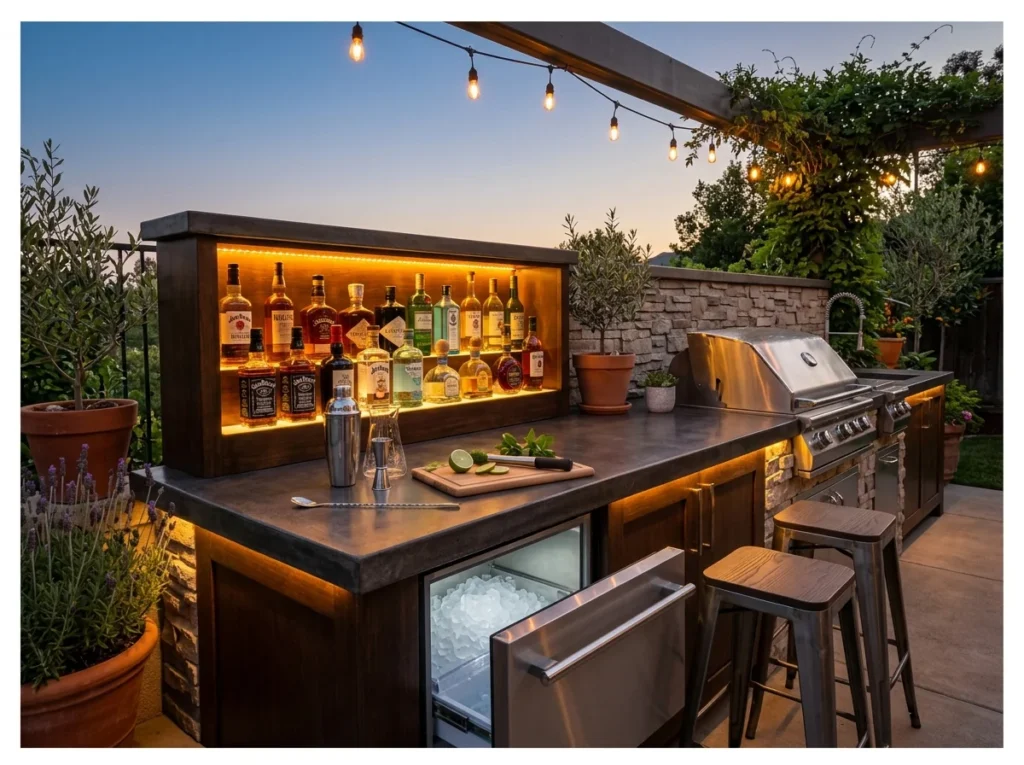
A dedicated cocktail bar section within the outdoor kitchen creates a self-sufficient beverage preparation station with backlit bottle display, ice maker access, a designated mixing surface, and bar tool storage. The bar section functions independently from the cooking zone.
A backlit shelving unit behind the bar counter displays spirits bottles with warm amber lighting that creates a dramatic evening bar atmosphere. The cocktail bar combined with an ice maker, beverage refrigerator, and bar stools creates the most complete outdoor entertainment setup possible.
Once the bar is sorted, a backyard built for entertaining rounds out everything else guests will want nearby.
The outdoor kitchen feature that makes every evening special.
Outdoor Kitchen with Herb Garden
A small herb garden built right into the counter or nearby bed puts fresh basil, mint, or rosemary within reach while cooking. This setup cuts down on last minute trips to the store for a garnish or seasoning. Placing it near the grill also means the plants get plenty of sun throughout the day.
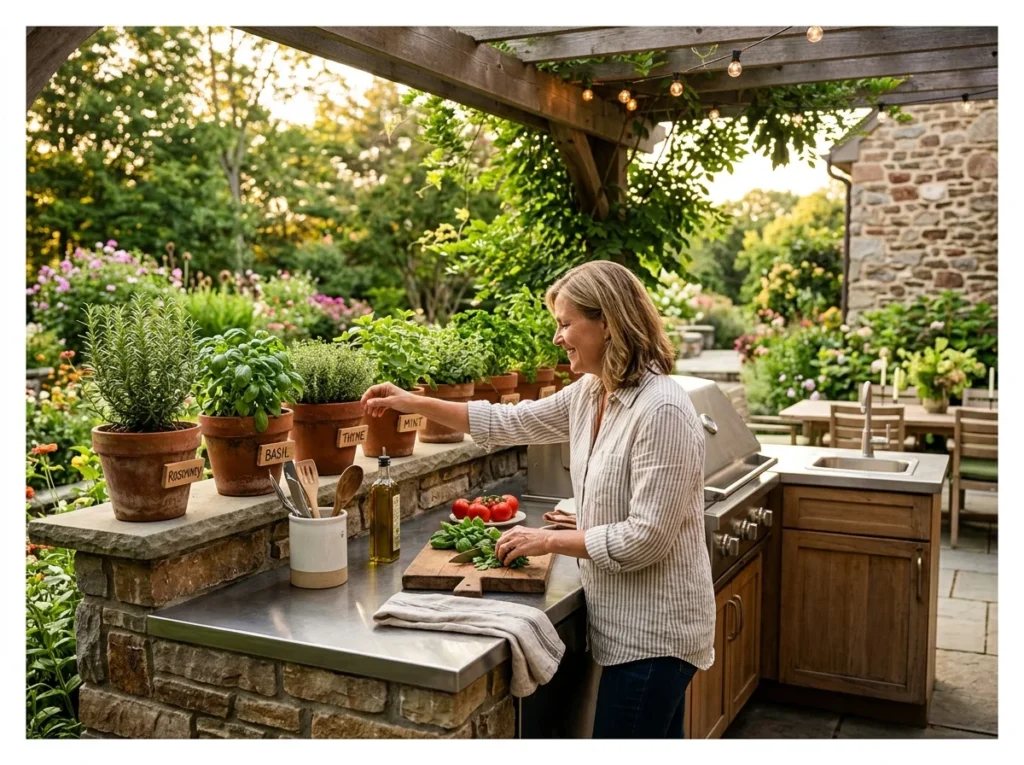
A dedicated herb garden integrated into or adjacent to the outdoor kitchen creates a genuine culinary herb supply within reach during cooking. Fresh herbs from the garden transferred directly to the grill or preparation surface require zero effort and deliver maximum flavor.
A built-in planter box along one side of the outdoor kitchen counter or a row of terracotta pots on a low wall beside the kitchen creates the most convenient herb garden position. Rosemary, thyme, basil, mint, chives, and sage all suit outdoor kitchen herb garden positions.
Outdoor Kitchen with Warming Drawer
A warming drawer keeps finished food at serving temperature while the rest of the meal finishes cooking. This is especially useful when grilling multiple items that do not all finish at the same time. Most warming drawers fit under the main counter, close to the grill for easy transfer.
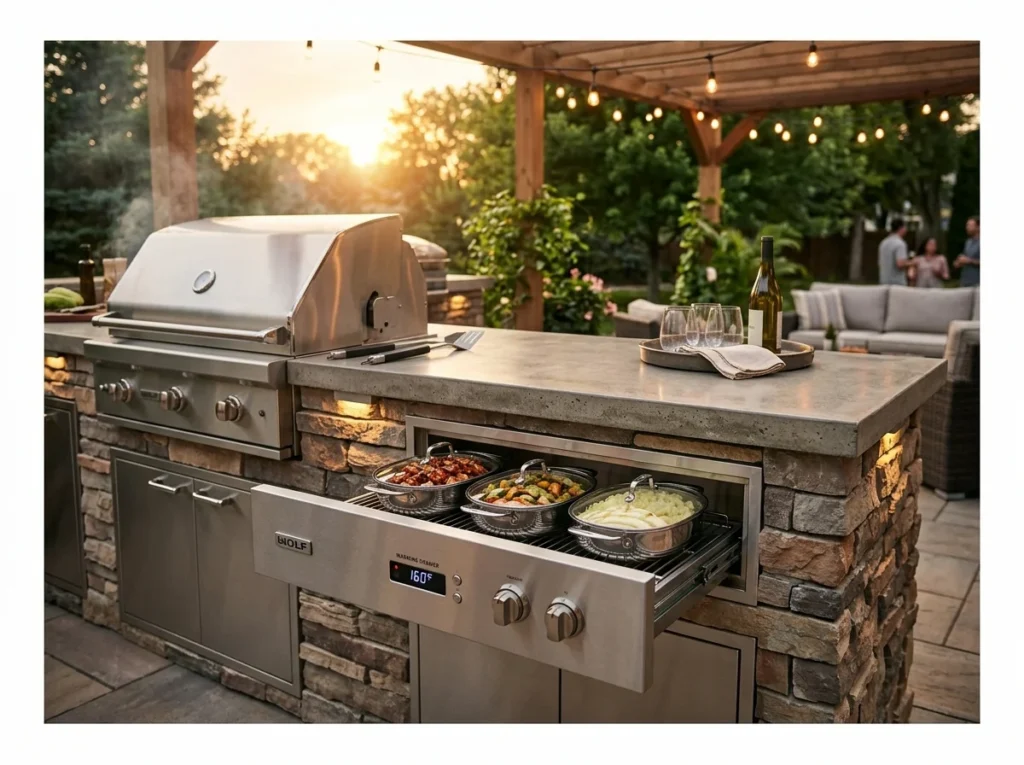
A warming drawer built into the outdoor kitchen cabinet base maintains cooked food at the correct serving temperature while other dishes finish cooking. This solves the most common outdoor cooking timing challenge: keeping the first items hot while the last items complete.
Commercial-quality warming drawers maintain temperatures of 60 to 80 degrees Celsius indefinitely without further cooking the food. A 45-centimeter warming drawer holds multiple covered dishes. Position the warming drawer adjacent to the serving area rather than beside the grill for the most logical kitchen workflow.
Outdoor Kitchen with Beverage Center
A beverage center combines a small fridge, ice storage, and sometimes a tap system into one dedicated station. Keeping drinks separate from food storage means the main fridge does not get opened as often during a party. This setup works well positioned near the seating area rather than right next to the grill.
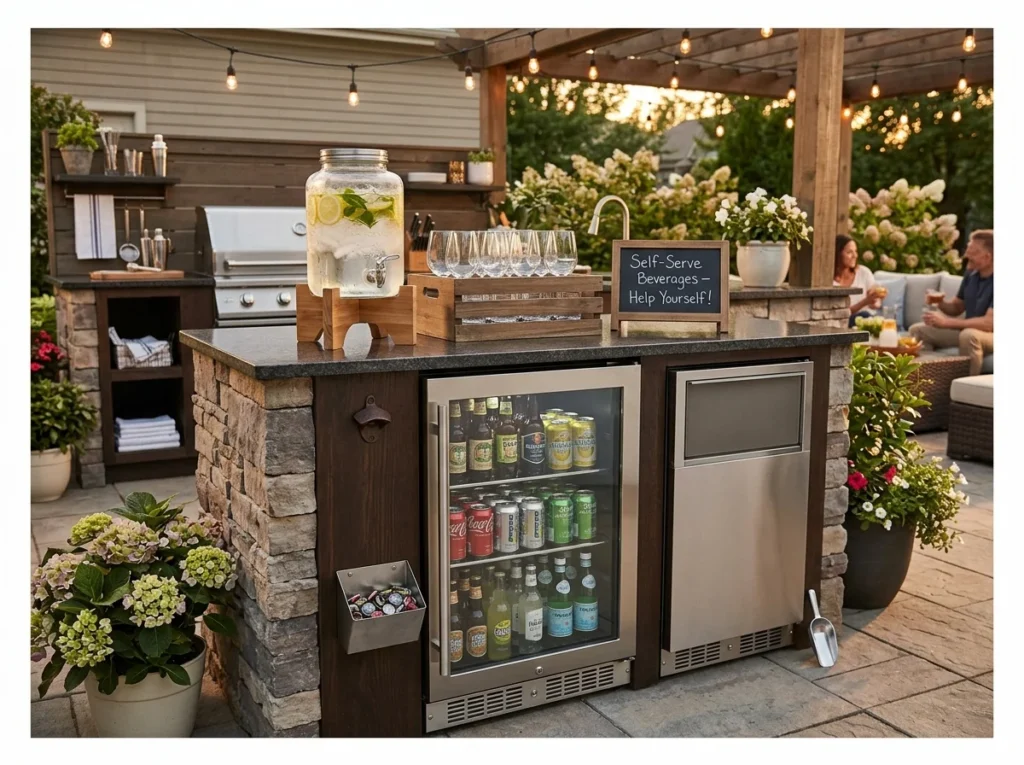
A dedicated beverage center section within the outdoor kitchen creates a self-service drinks station where guests can access cold drinks, ice, and bar accessories independently without requiring the host’s attention during cooking. The self-service quality keeps the host focused on cooking.
A beverage refrigerator, ice maker, and bottle opener at one end of the outdoor kitchen counter with bar stools positioned in front creates a natural gathering zone that functions independently from the cooking zone. Stock the refrigerator before guests arrive for genuinely effortless outdoor entertaining.
Small Outdoor Kitchen for Compact Yards
A compact outdoor kitchen can fit into a space as small as six or eight feet, focusing on just a grill, small counter, and storage below. Choosing a linear or corner layout makes the most of limited square footage. Even a small setup like this covers most everyday grilling needs without requiring a large patio.
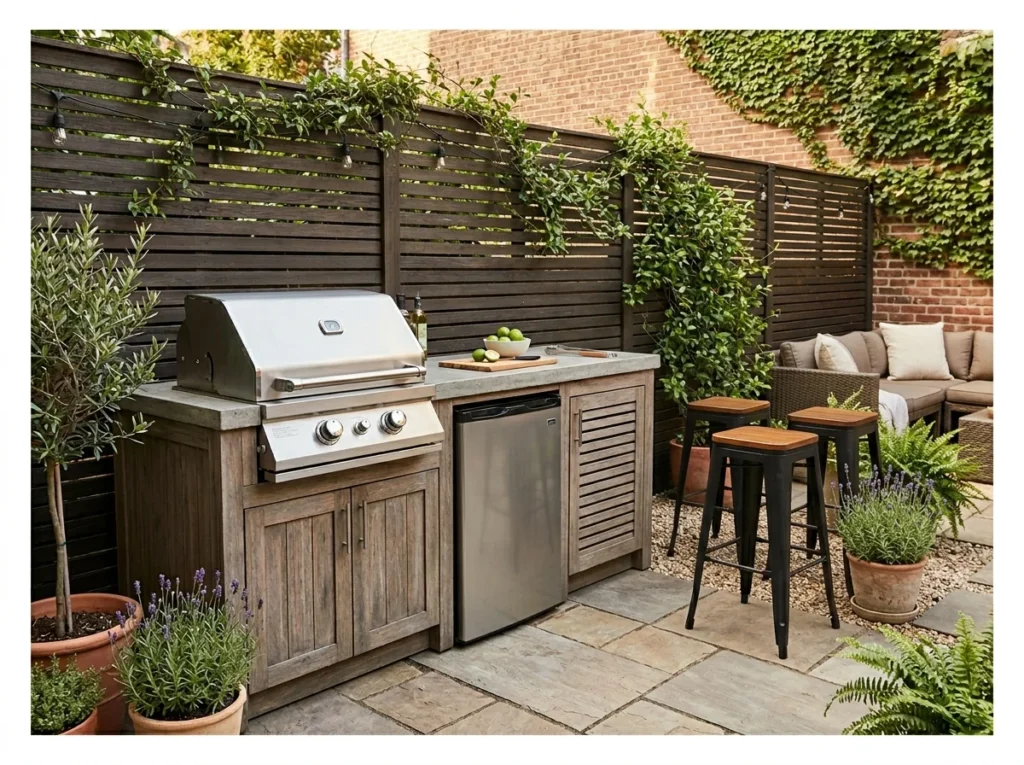
A compact outdoor kitchen of 1.2 to 1.8 meters total counter length accommodates a two or three-burner grill, a small undercounter refrigerator, and a prep and serving surface within a footprint that suits even the smallest backyard or courtyard. Scale the kitchen to the available space.
A compact kitchen requires careful prioritization of the essential features: grill, refrigerator, and prep surface are the minimum for a functional outdoor kitchen. A side burner and sink add significant functionality within a small additional footprint. Choose compact versions of each appliance to maintain proportion.
Perfect for small spaces.
Budget Outdoor Kitchen with Concrete Blocks
Concrete blocks are one of the cheapest ways to build the frame of an outdoor kitchen, often costing a fraction of custom masonry. A simple stucco or paint finish over the blocks can still look polished without a big budget. This approach lets homeowners build in phases, adding appliances and finishes over time as funds allow.
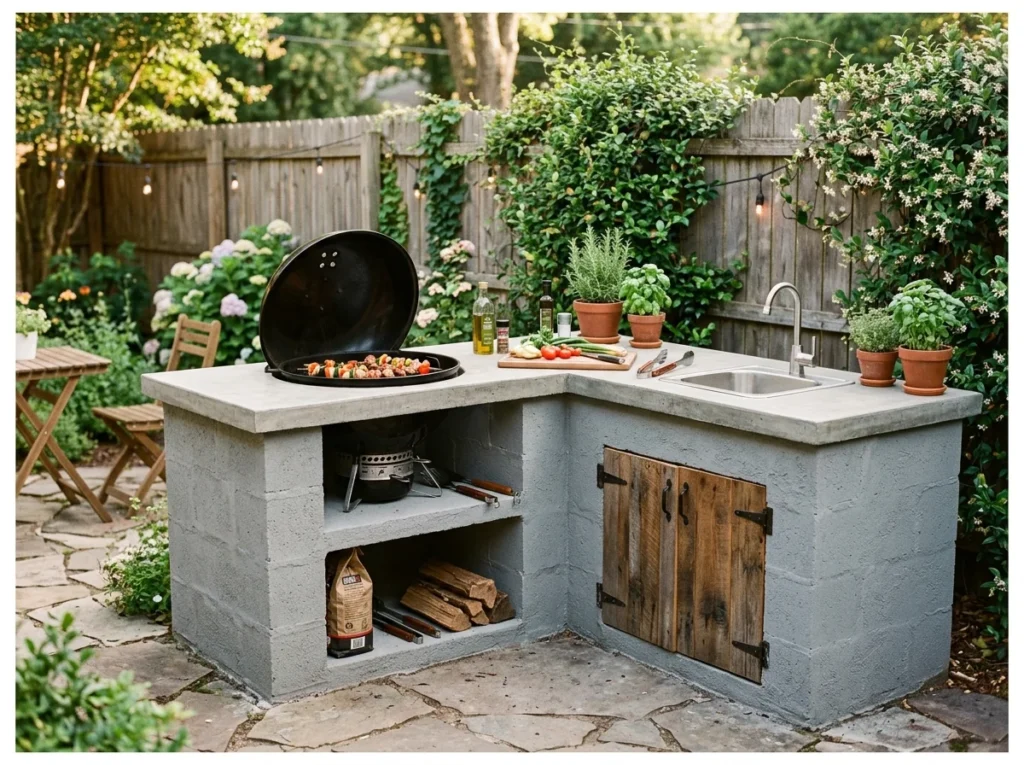
A concrete block outdoor kitchen provides a genuinely affordable path to a permanent outdoor cooking structure. Standard concrete blocks cost very little, stack without specialist skills, and create a structural base that supports stone or concrete countertops and built-in appliances.
Cover the block structure with grey stucco render, stone tile, or brick veneer for a finished appearance. The material and construction cost of a concrete block outdoor kitchen is typically 40 to 60 percent less than a timber-framed or custom masonry alternative of the same size.
DIY Outdoor Kitchen with Pavers
Pavers can build both the flooring and, when stacked, the structure of a simple outdoor kitchen without needing poured concrete. Interlocking paver systems are designed specifically for this kind of project and come with instructions for stacking a stable base. This method suits homeowners comfortable with a weekend project rather than hiring a full contractor.
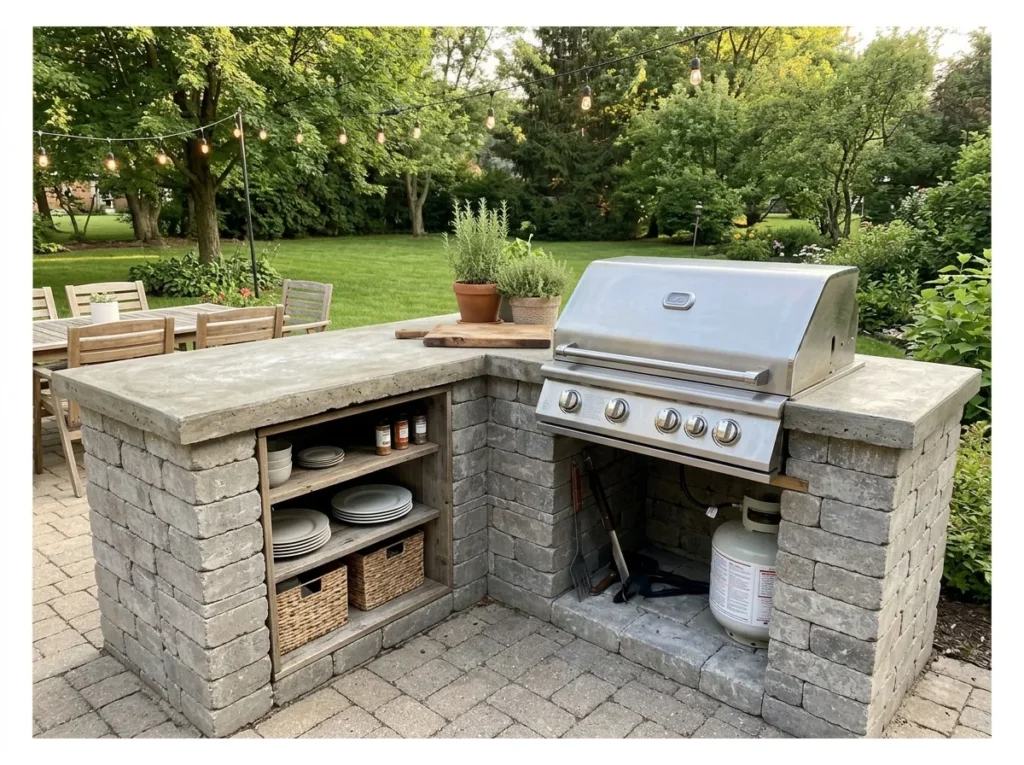
Large concrete pavers stacked and mortared together create a DIY outdoor kitchen base structure that most homeowners can build themselves over a weekend. The heavy mass of stacked pavers creates a stable, weather-resistant base that supports countertops and appliances.
Lay the pavers in overlapping courses for structural stability with mortar between each course. Cap with a concrete poured countertop or large format stone tile. The paver outdoor kitchen construction method requires no specialist skills, no formwork, and produces a permanently durable structure.
Portable Outdoor Kitchen Cart
A portable kitchen cart on wheels gives most of the function of a built in setup without any permanent construction. These carts usually include a small grill, side burner, and storage shelves all in one compact unit. This option suits renters or anyone not ready to commit to a permanent outdoor structure.
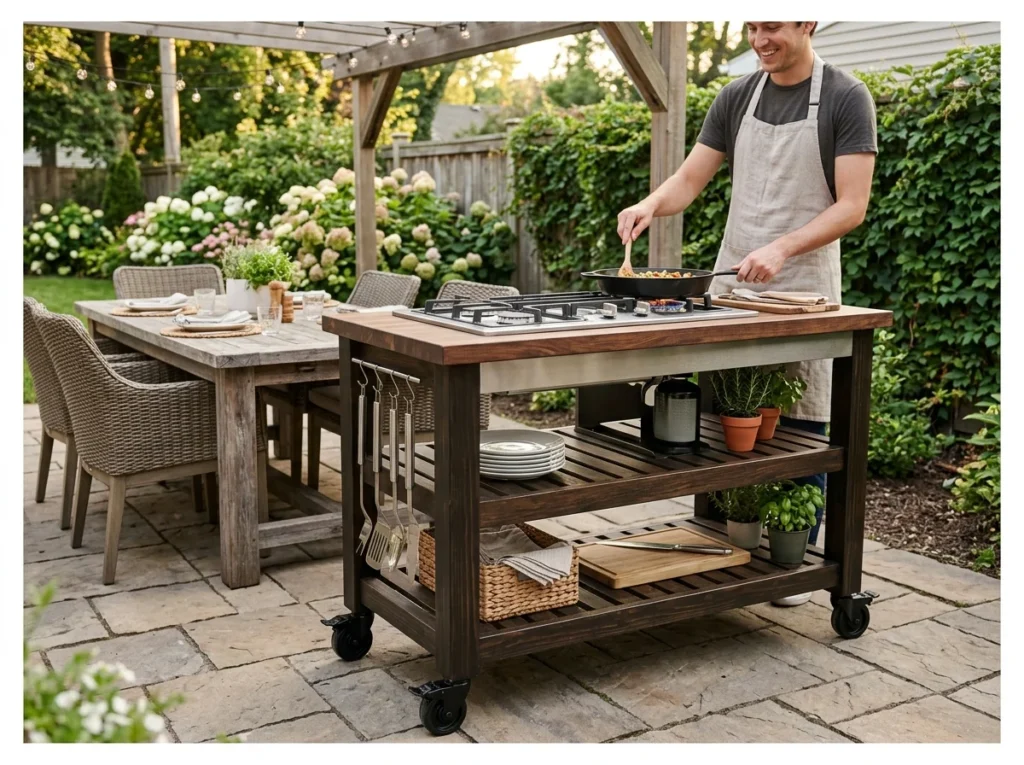
A portable outdoor kitchen cart on lockable casters provides the cooking functions and storage of a fixed outdoor kitchen with the flexibility to be repositioned, stored in a garage during winter, or used in different outdoor areas as required. No installation or permits are typically required.
Quality portable outdoor kitchen carts in stainless steel or powder-coated steel with integrated burners, refrigerators, and counter space create a genuinely functional outdoor kitchen in a single mobile unit. The casters lock securely in position during use.
Modular Outdoor Kitchen System
Modular systems come as individual, prebuilt sections, like a grill module or a sink module, that connect together on site. This approach cuts down construction time significantly compared to building cabinets from scratch. Homeowners can also start with just one or two modules and add more sections later as budget allows.
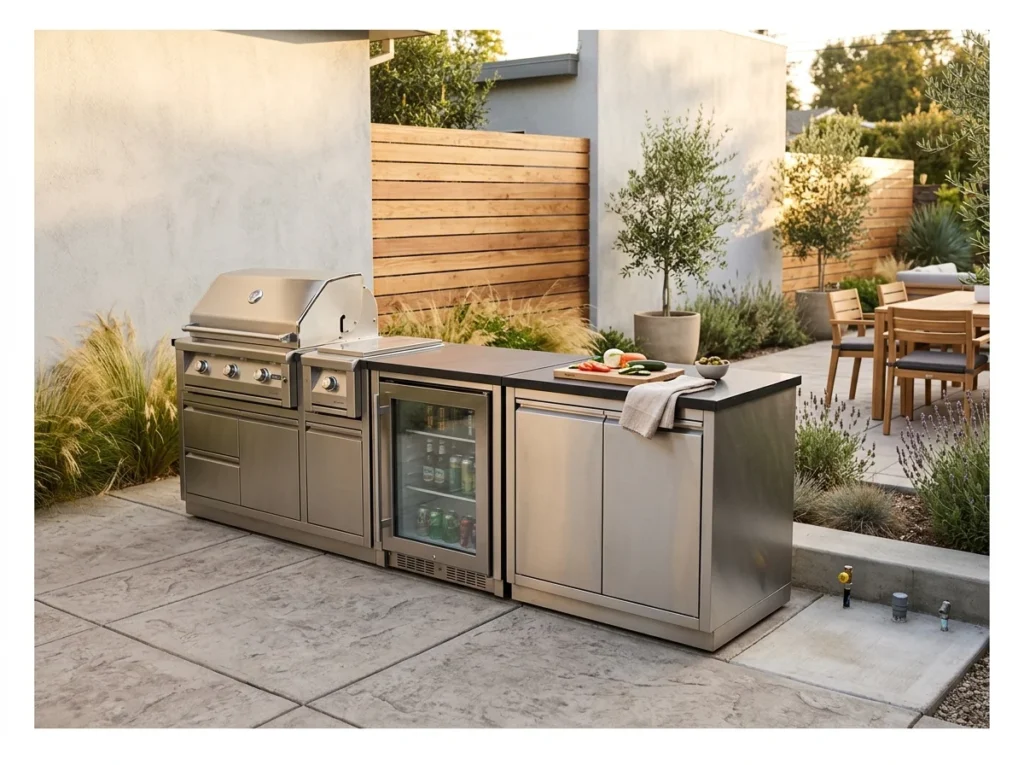
A modular outdoor kitchen system uses independently functioning cabinet modules that align and connect to create a complete outdoor kitchen of any size. Individual modules for grill, refrigerator, sink, storage, and prep surface snap together in any configuration.
The modular approach allows the outdoor kitchen to be built in stages: start with the grill module and refrigerator module, then add the sink, storage, and side burner modules as budget allows. Modules from quality manufacturers are designed to function independently and integrate visually.
Apartment Balcony Outdoor Kitchen
A balcony sized setup usually means a small grill, a fold down prep surface, and minimal storage due to space and weight limits. Many apartment buildings restrict propane or charcoal grills, so checking building rules matters before buying anything. Electric grills are often the safest choice here since most balconies allow them without restriction.
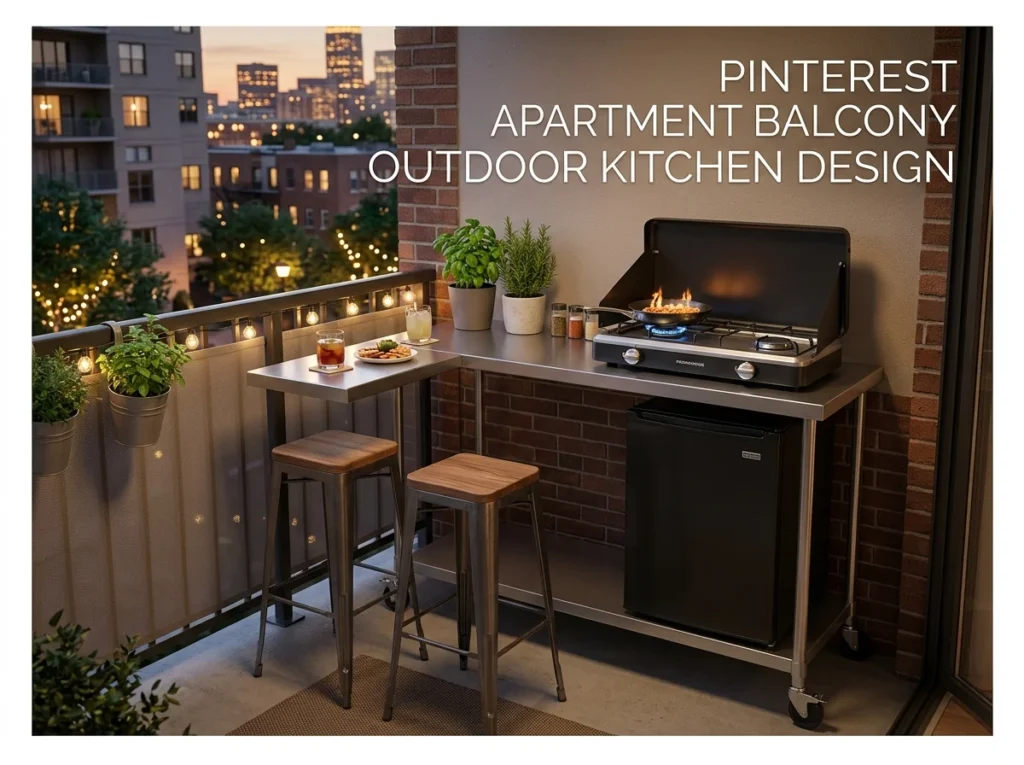
An apartment balcony outdoor kitchen uses compact, portable, and propane-powered equipment to create outdoor cooking capabilities within a small balcony footprint without requiring any permanent installation or building management approval for fixed structures.
A compact two-burner propane cooktop, a portable mini fridge, and a small folding counter surface create a complete balcony outdoor kitchen within two square meters. Check building regulations for propane use on apartment balconies before installing any gas-powered appliance.
Outdoor Kitchen with Pendant Lighting
Pendant lights hung over a bar or counter section add focused light exactly where it is needed for prep and serving. Weatherproof fixtures are essential here since standard indoor pendants will not hold up against rain or humidity. This lighting style also adds a decorative element that plain overhead lighting does not provide.
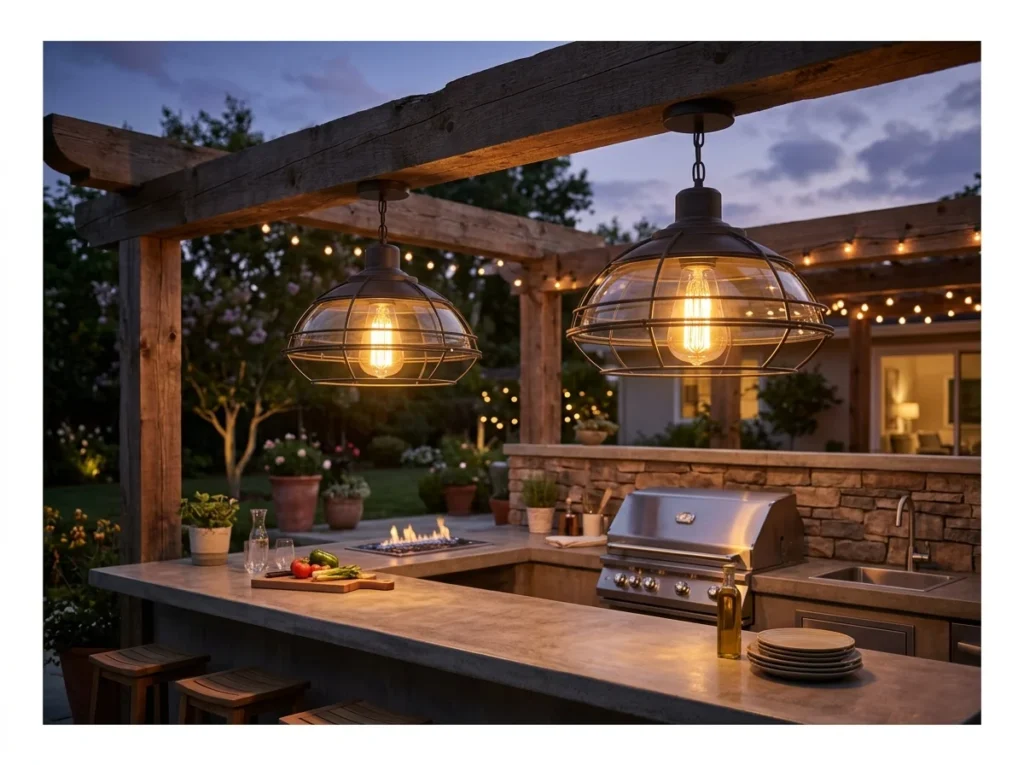
Pendant lights hung above the outdoor kitchen counter from a pergola beam or overhead structure provide warm task lighting directly over the cooking and preparation surface while creating the atmospheric overhead glow that makes the outdoor kitchen beautiful and inviting after dark.
Two or three pendant lights spaced evenly above the outdoor kitchen counter at 75 to 90 centimeters above the countertop surface create the most practical and aesthetically pleasing overhead lighting arrangement. Weatherproof rated pendant fixtures are essential for any outdoor installation.
Outdoor Kitchen with LED Strip Lighting
LED strips tucked under cabinet edges or counter lips light up the work surface without any visible fixture. This kind of lighting is especially useful for prep work once the sun goes down. Many strips come with dimmers or color options, letting the mood shift from bright task lighting to something softer for evening gatherings.
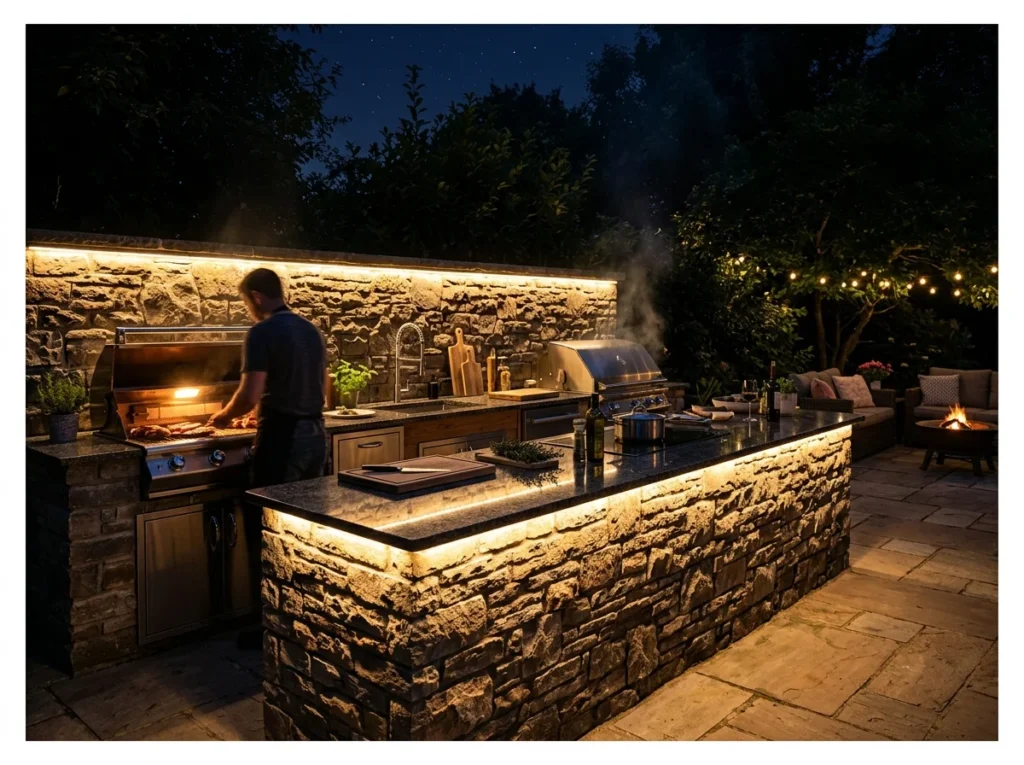
LED strip lighting installed beneath the counter overhang provides practical under-counter task illumination that makes the outdoor kitchen usable after dark. LED strips behind the backsplash create an indirect glow that highlights the texture of the backsplash material.
Weatherproof IP65-rated LED strips are essential for outdoor kitchen installation. Warm white 2700K LED strips create the most inviting outdoor kitchen atmosphere. Smart LED systems allow color and brightness adjustment from a phone app, enabling the outdoor kitchen lighting to shift from functional cooking light to ambient entertaining atmosphere.
Outdoor Kitchen with String Lights
String lights strung overhead between posts or a pergola add a relaxed, party ready atmosphere with very little installation effort. Warm white bulbs tend to suit most outdoor kitchen styles better than cooler toned LEDs. This is one of the easiest and cheapest lighting upgrades to add to almost any layout.
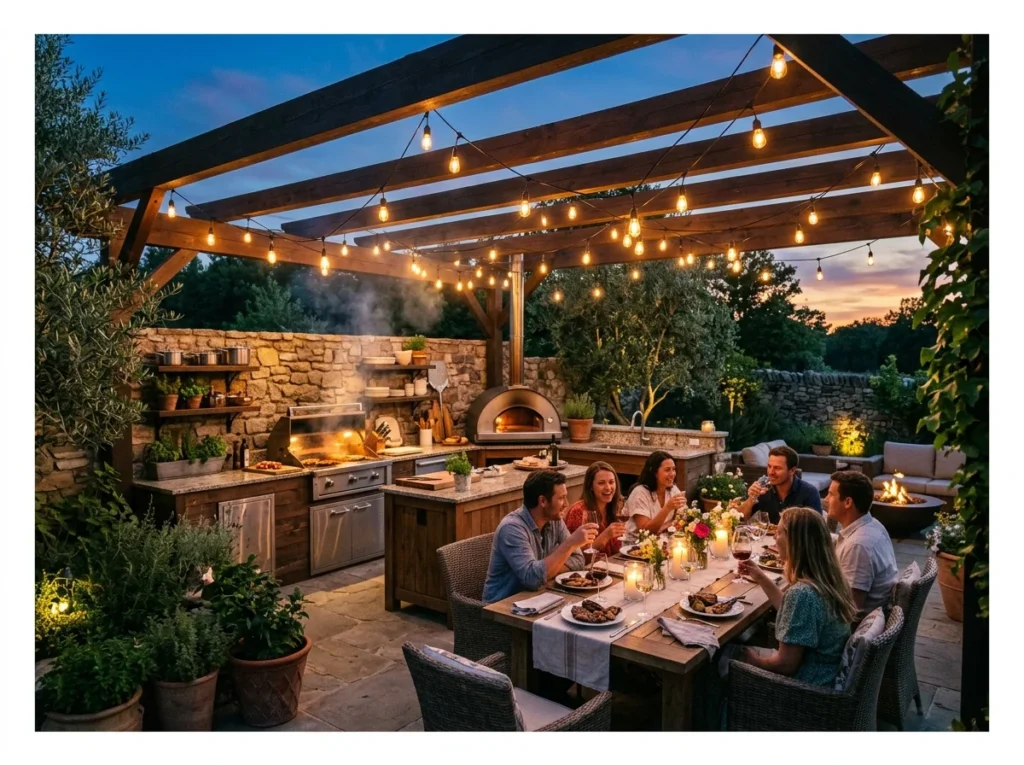
String lights draped across the outdoor kitchen pergola or canopy structure create the most atmospheric and photographically beautiful outdoor kitchen lighting. The warm amber glow of Edison string lights creates an enveloping overhead light canopy that makes evening outdoor entertaining genuinely magical.
Solar-powered string lights on a timer eliminate the need for electrical wiring to the pergola. Plug-in LED string lights on a timer switch provide the most reliable and consistent evening illumination. Drape loosely in a relaxed grid pattern rather than pulling taut for the most natural and atmospheric effect.
Outdoor Kitchen with Task Lighting
Task lighting focuses directly on the grill and prep counter, which matters a lot once natural light fades in the evening. Under cabinet lights or a mounted fixture above the grill are the most common choices for this purpose. Good task lighting reduces the guesswork of checking whether food is actually done cooking after dark.
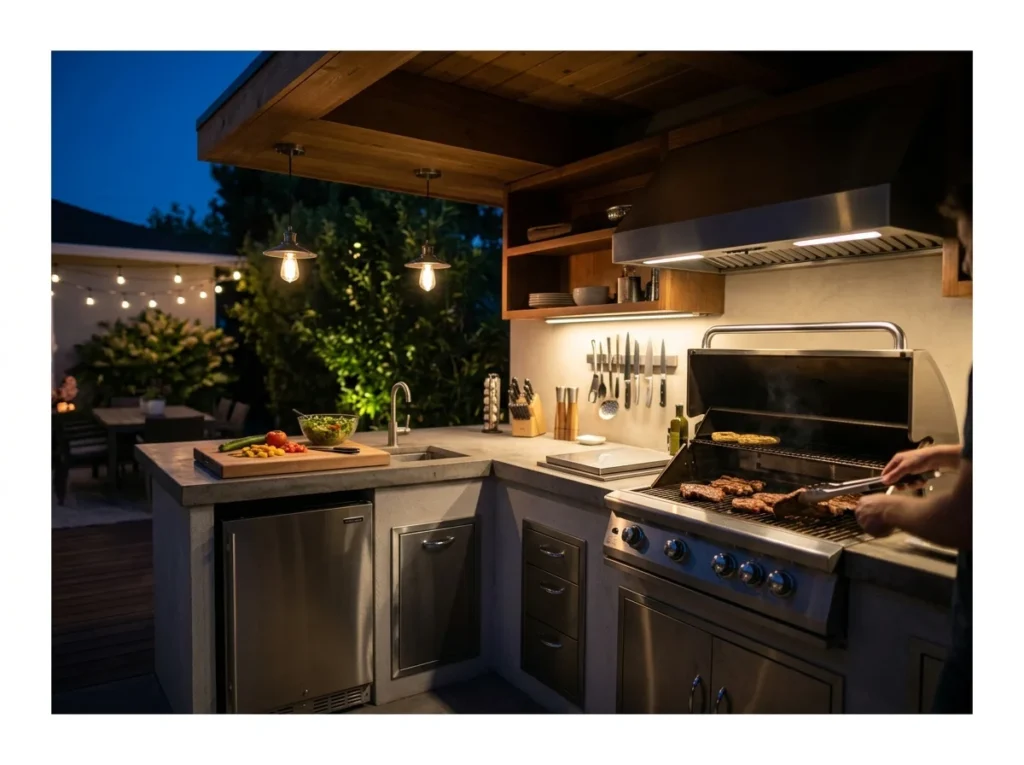
Dedicated task lighting positioned to illuminate the outdoor kitchen work surfaces, particularly the grill and food preparation areas, makes the outdoor kitchen safe and fully functional after dark. Under-cabinet LED fixtures, overhead pendant spots, and grill-mounted lights all provide task illumination.
LED task lights with a color temperature of 4000K provide the most accurate color rendering for evaluating food doneness and preparation. Install task lighting in addition to ambient lighting rather than as a replacement for it. The combination of warm ambient light and focused task light creates the most practical and atmospheric outdoor kitchen.
Outdoor Kitchen with Fire Pit Integration
Building a fire pit directly into the kitchen layout, rather than as a separate feature, keeps the whole space feeling connected. A nearby fire pit also gives guests somewhere to sit once cooking wraps up for the night. Gas fire pits integrate more easily into a paved kitchen area than a wood burning version would.
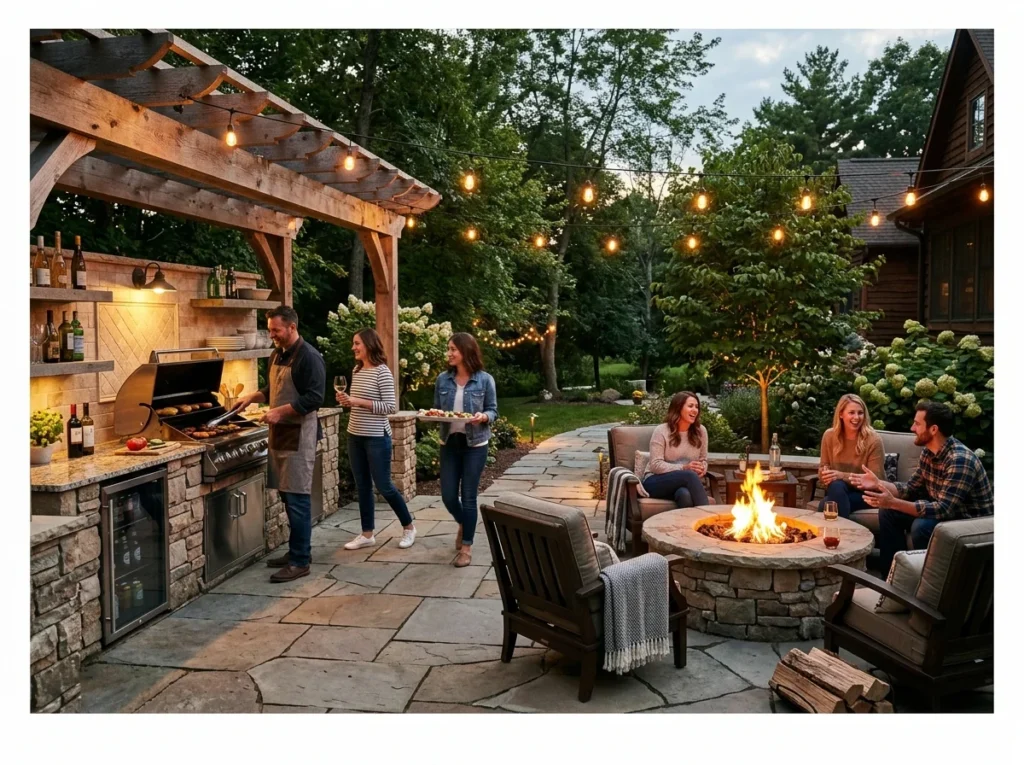
Integrating a fire pit lounge into the outdoor kitchen zone creates a complete outdoor entertaining destination where guests cook, eat, and then gather around the fire without leaving the outdoor kitchen area. The fire pit extends the outdoor entertaining evening significantly.
Design the outdoor kitchen and fire pit as a single connected outdoor room with clear zones for each function. The kitchen and fire pit should be close enough to feel connected but far enough apart to keep smoke from the fire away from food preparation and dining.
If you’re planning that fire zone now, a fire feature worth gathering around has plenty of layout ideas worth considering alongside the kitchen.
Outdoor Kitchen with Night Landscape Lighting
Landscape lighting placed around plants, pathways, and the kitchen structure extends how the whole space feels after sunset. Low voltage fixtures are affordable to run and safe to place near walkways without much risk. This kind of lighting also helps highlight the kitchen’s architecture at night rather than leaving it in shadow.
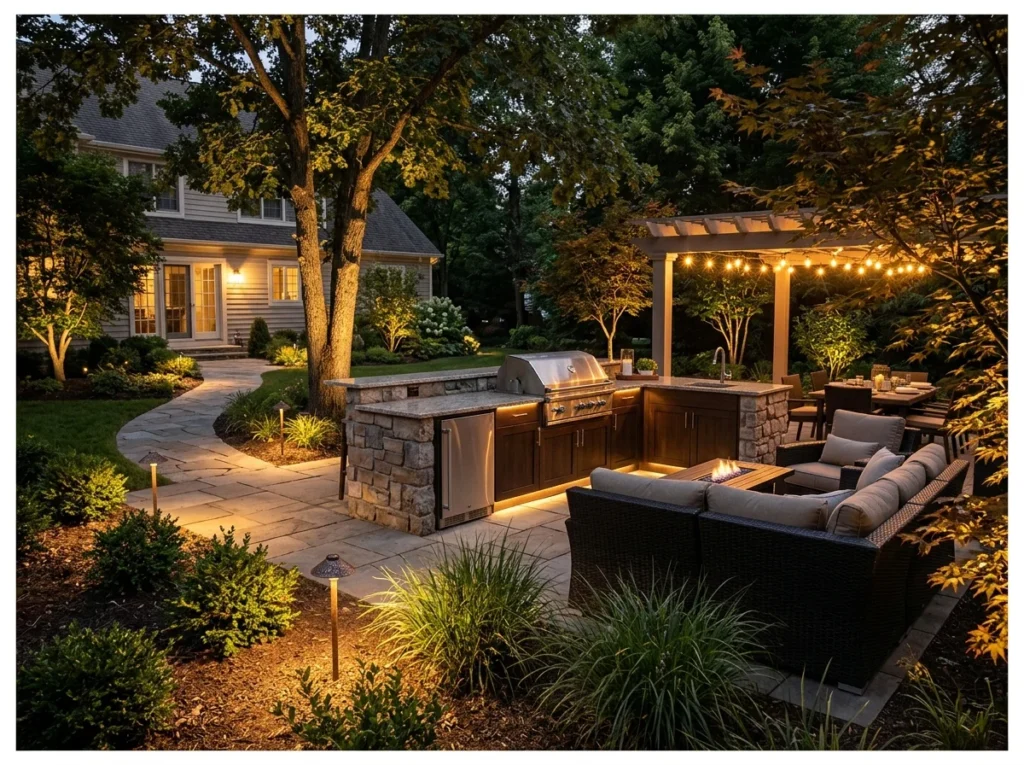
Professional landscape lighting surrounding the outdoor kitchen illuminates the garden setting and creates a beautifully framed outdoor cooking environment after dark. Uplights at tree bases, path lights along routes to the kitchen, and downlights on surrounding plants create a layered outdoor lighting composition.
The landscape lighting makes the outdoor kitchen visually impressive from inside the house looking out, creates a beautiful approach experience when walking to the kitchen after dark, and establishes the outdoor kitchen as a deliberately designed destination within the broader garden rather than simply a cooking appliance placed outside.
Conclusion
An outdoor kitchen done right is one of the most genuinely transformative backyard investments available. It changes how the household uses the outdoor space throughout the cooking season, creates a social environment where entertaining becomes genuinely effortless, and adds real, measurable property value.
Start with the layout that suits your backyard size and your primary use case. Choose the cooking equipment that matches how you actually cook. Specify materials appropriate for your climate and maintenance preference. Then add the features that deliver the most value for your specific household.
The outdoor kitchen you have always wanted to build is within reach with the right plan.
And once the cooking side is settled, a backyard designed around relaxing helps you finish the rest of the space with the same care.