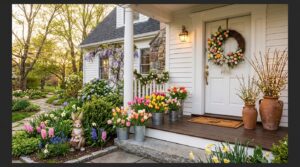
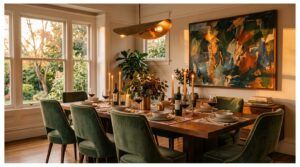
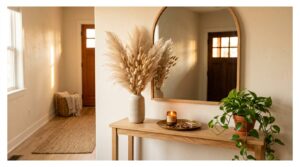
A bare entryway floor is a missed first impression the right rug can pull the whole space together in seconds. These 21 entryway rug ideas feature bold patterns, durable materials, and stylish layouts that add warmth, color, and personality the moment you walk in. Let’s explore these entryway rug ideas to elevate your space!
Once the rug is in place, other small details that finish a room can help pull the whole entry together.
Classic Jute Rug for a Natural Farmhouse Entry
A classic jute rug for a natural farmhouse entry adds warmth, texture, and rustic charm while creating a welcoming first impression. Its durable woven fibers complement wood tones, neutral colors, and farmhouse décor, making the entryway feel cozy and thoughtfully styled.
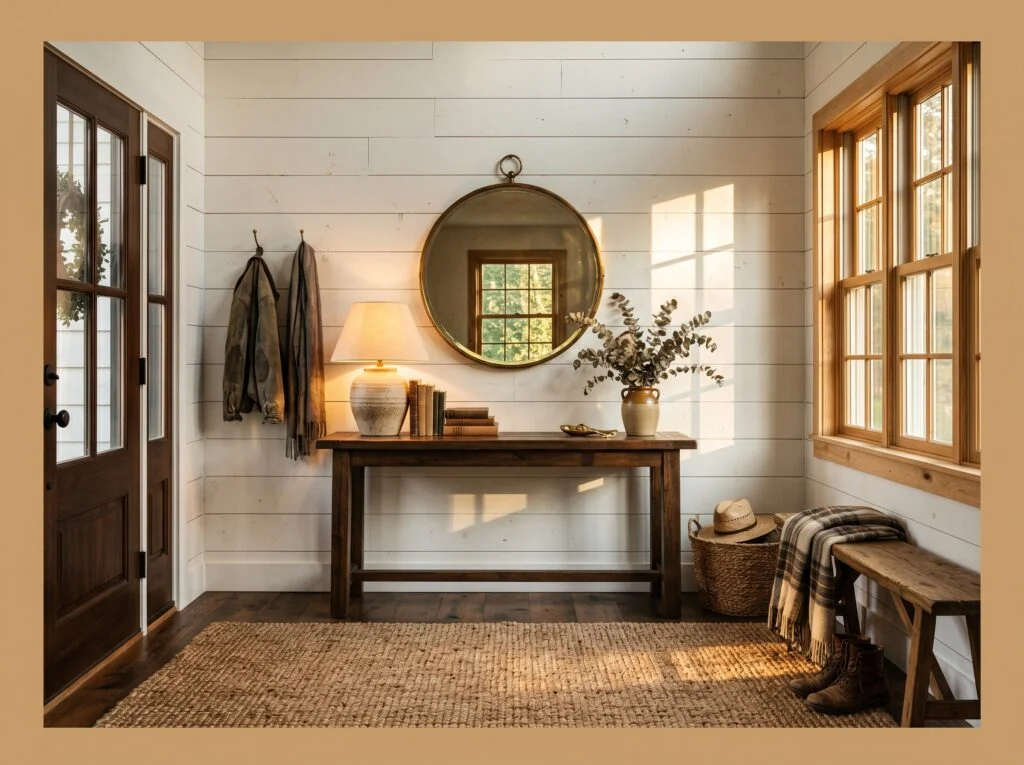
A natural jute rug is the most versatile entryway rug you can own. The earthy tan tone works with virtually every wall color, floor type, and furniture style rustic farmhouse, modern, bohemian, coastal, and transitional all embrace jute equally well. The woven texture catches light in a way that adds warmth and dimension to the floor without competing with anything else in the space. It’s the neutral foundation that makes everything around it look more considered and put-together.
Jute performs best in dry entryways away from direct rain or heavy moisture exposure. If your front door opens directly to the outdoors with no covered porch, jute will absorb water and develop mildew over time polypropylene or sisal is the better choice in that case. For an attached garage entry, a mudroom entry, or any covered entrance, jute is excellent and durable. Pair it with a round brass mirror and a ceramic lamp on the console table above it for the classic farmhouse entryway look that consistently performs on Pinterest. A 4×6 or 5×7 size fills a standard entry beautifully without overpowering it.
If you’re building out the rest of the wall, a mirror to brighten the space above it makes a natural next step.
Persian-Style Rug for Instant Character
A Persian-style rug for instant character brings timeless elegance, rich patterns, and visual warmth to any space. Its detailed designs and vintage-inspired appeal create a sophisticated focal point while adding texture and personality to farmhouse, traditional, and eclectic interiors.
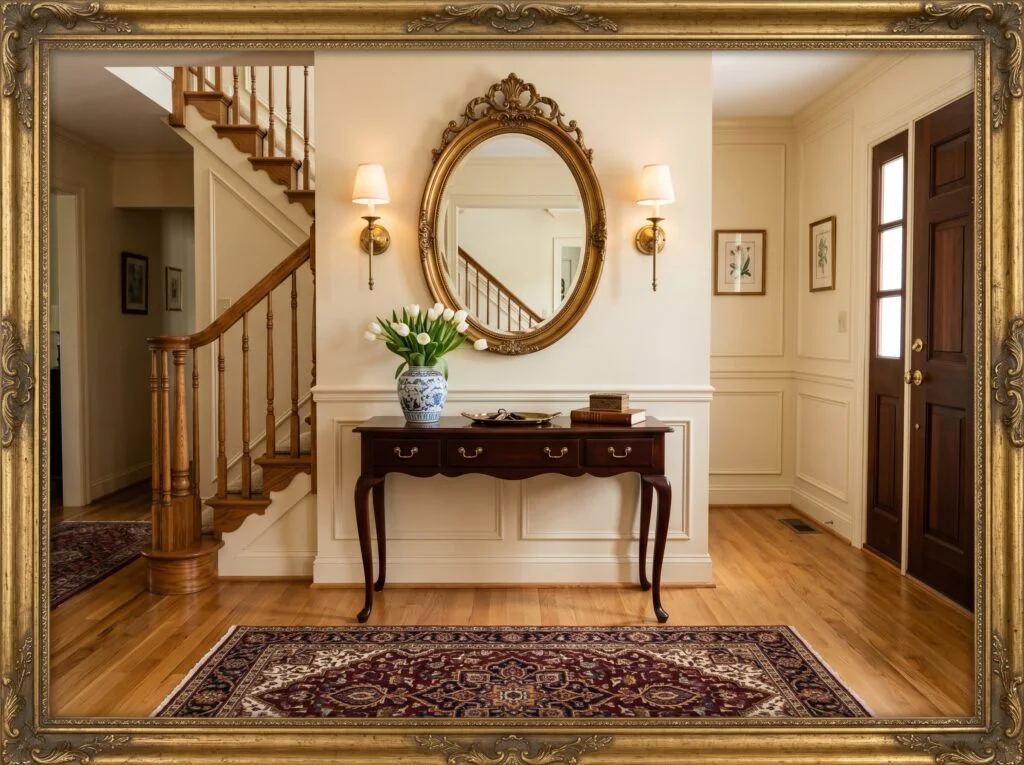
A Persian-style rug in a entry does something no other rug can it makes the space feel like it has history. The intricate geometric or floral patterns, the rich jewel-tone colors, and the layered visual complexity instantly communicate warmth and sophistication. Even a machine-made Persian-style rug from a mainstream retailer looks genuinely luxurious in an entryway because the pattern does all the visual heavy lifting. One piece transforms a plain entry into a space that gets noticed and commented on.
The practical advantage of a Persian-style rug in a busy entryway is its exceptional ability to hide dirt, dust, and footprints. The complex pattern means small messes simply disappear visually between cleanings. Choose a rug with a pile height of at least 0.3 inches for comfort underfoot, and avoid very pale colorways for this application deeper tones in burgundy, navy, forest green, and charcoal are far more forgiving of daily traffic. Vintage and distressed Persian-style rugs are currently the most searched variation the faded, worn appearance looks intentional and adds age and depth that a new rug simply can’t replicate.
Bold Black and White Geometric Rug
A bold black and white geometric rug adds modern contrast and a striking visual element to interior spaces. Its clean patterns create a stylish foundation while balancing farmhouse, contemporary, and minimalist décor with a fresh, eye-catching design.
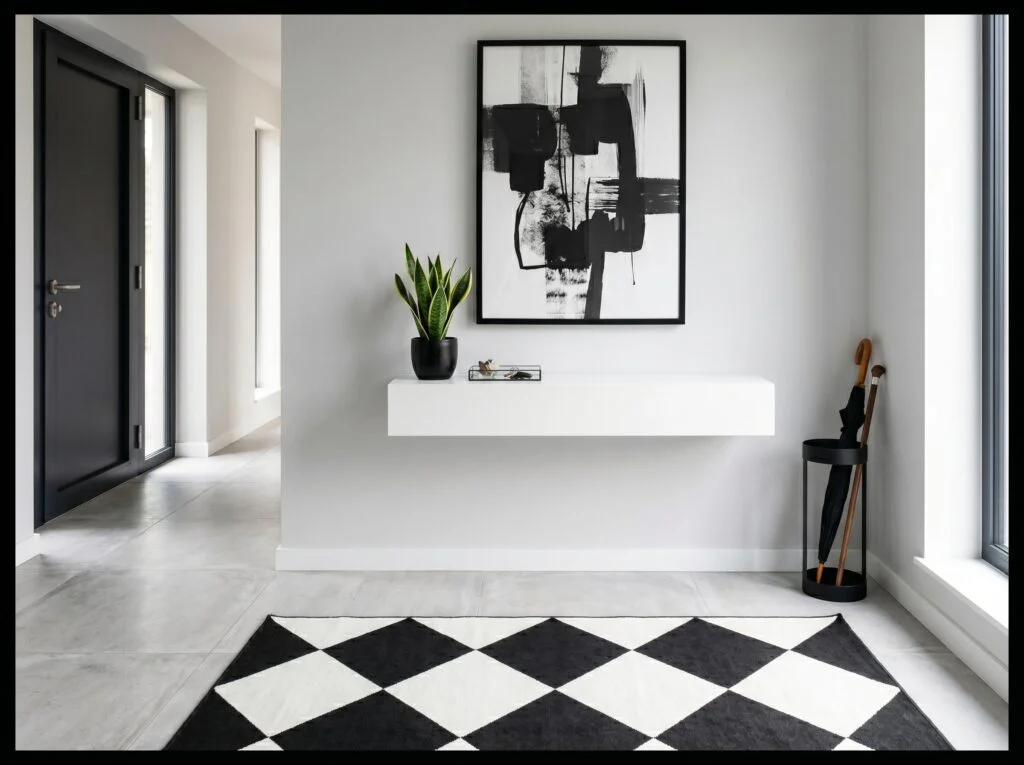
Black and white geometric rugs are the designer’s shortcut for making a plain entryway look intentional and modern. The high contrast pattern creates a visual anchor that the eye goes to immediately, making the space feel designed from the floor up. Diamond patterns, chevron, Greek key, and trellis designs all work beautifully in an entryway context because they read clearly even from a distance and under the feet of anyone walking across them. The pattern communicates confidence and style without requiring any other bold design choices in the room.
The key to making a geometric rug work in an entryway is keeping everything else restrained. Let the rug do the talking. White walls, a slim console, a single piece of framed art the simpler the surroundings, the more dramatic the rug’s impact. Polypropylene is the best material for a black and white geometric entryway rug because it’s extremely durable, cleans easily with a damp cloth, and holds its color contrast without fading even in sun-exposed entries. Avoid wool in a very high-contrast pattern for high-traffic areas wool’s soft pile can trap dirt and make the white sections look gray faster than a flat-weave synthetic.
Layered Rug Look: Jute Base with Patterned Accent
A layered rug look with a jute base and patterned accent rug creates depth, texture, and a cozy designer feel. The natural foundation adds warmth while the decorative top layer introduces color and personality, making the space feel stylish and thoughtfully curated.
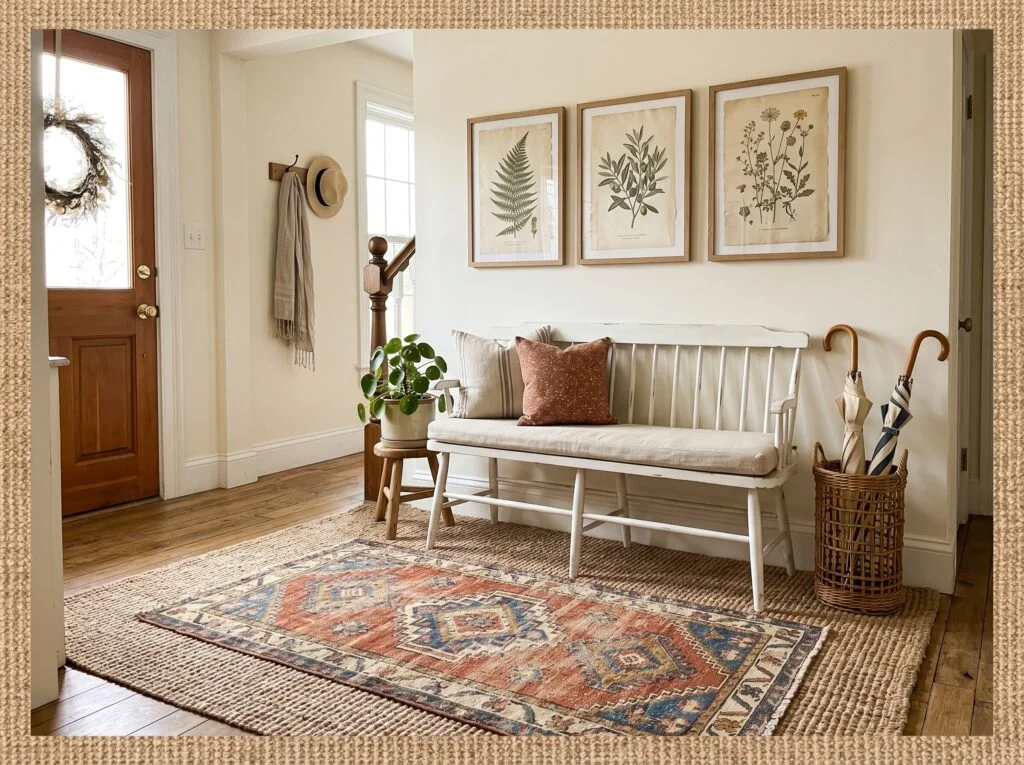
Layering rugs in an entryway is the styling technique that makes a floor look like it was put together by a professional decorator — and it’s genuinely accessible for any budget. The principle is simple: lay a large neutral flat-weave rug (jute, sisal, or cotton) as the base, then layer a smaller, patterned rug on top at a slight angle or centered. The base adds warmth and coverage; the top layer adds personality and color. The combination is richer and more interesting than either rug would be alone.
For the base layer, choose a rug that’s at least 12 to 18 inches larger on all sides than the top layer this visible border of neutral texture is what makes the layering look intentional. The top layer should be a contrasting material (a flatweave kilim or vintage-style Persian over a textured jute looks particularly good) and a contrasting scale (a medium pattern over a neutral texture). Keep the top layer placed straight or at a very slight angle avoid extreme diagonal placements, which look chaotic rather than curated. Change the top layer seasonally while the base stays constant for an easy, low-cost refresh.
Long Hallway Runner in Distressed Vintage Style
A long hallway runner in a distressed vintage style adds warmth, character, and visual interest to narrow spaces. Its aged patterns and soft textures create a welcoming pathway while enhancing farmhouse, rustic, and traditional interiors with timeless charm.
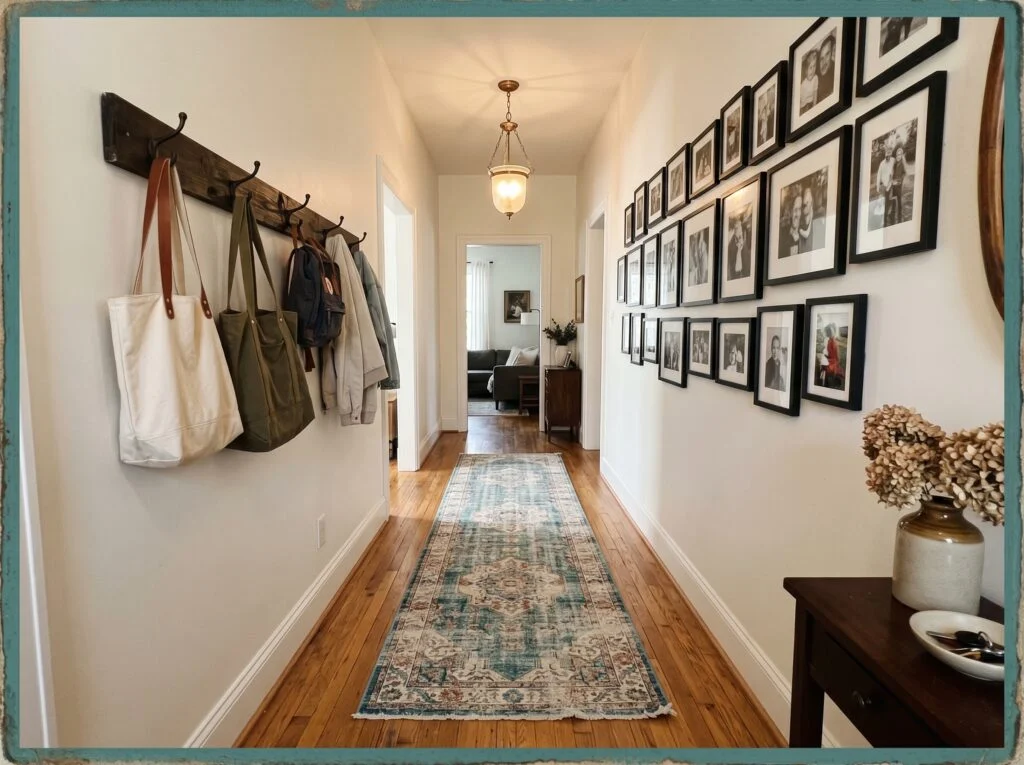
A long hallway without a runner feels cold, echoing, and uninviting like a hotel corridor rather than a home. A runner rug solves all three problems simultaneously. It adds warmth underfoot, absorbs sound, and guides the eye down the length of the space while creating the visual impression of a room rather than a transit corridor. A distressed vintage-style runner colors that look slightly faded and worn adds the most character because it reads as both curated and relaxed at the same time. The worn quality suggests the hallway has lived-in history.
For a long narrow hallway, size the runner to leave 4 to 6 inches of hardwood or tile visible on each long side. A too-wide runner looks like wall-to-wall carpet; a too-narrow runner looks like a strip of tape on the floor. For a 36-inch-wide hallway, a 24 to 27-inch wide runner is ideal. Use runner rug pads specifically designed for corridors they come in custom lengths and prevent the runner from bunching and creating a trip hazard. Anchor the end of the runner with a small accent table or bench to keep it from curling at the terminus of the hallway.
Natural Sisal Rug for High-Traffic Durability
A natural sisal rug for high-traffic durability offers a practical and stylish flooring solution with its strong woven fibers and organic texture. It adds warmth to busy entryways and living spaces while providing a timeless look that complements farmhouse, coastal, and modern interiors.
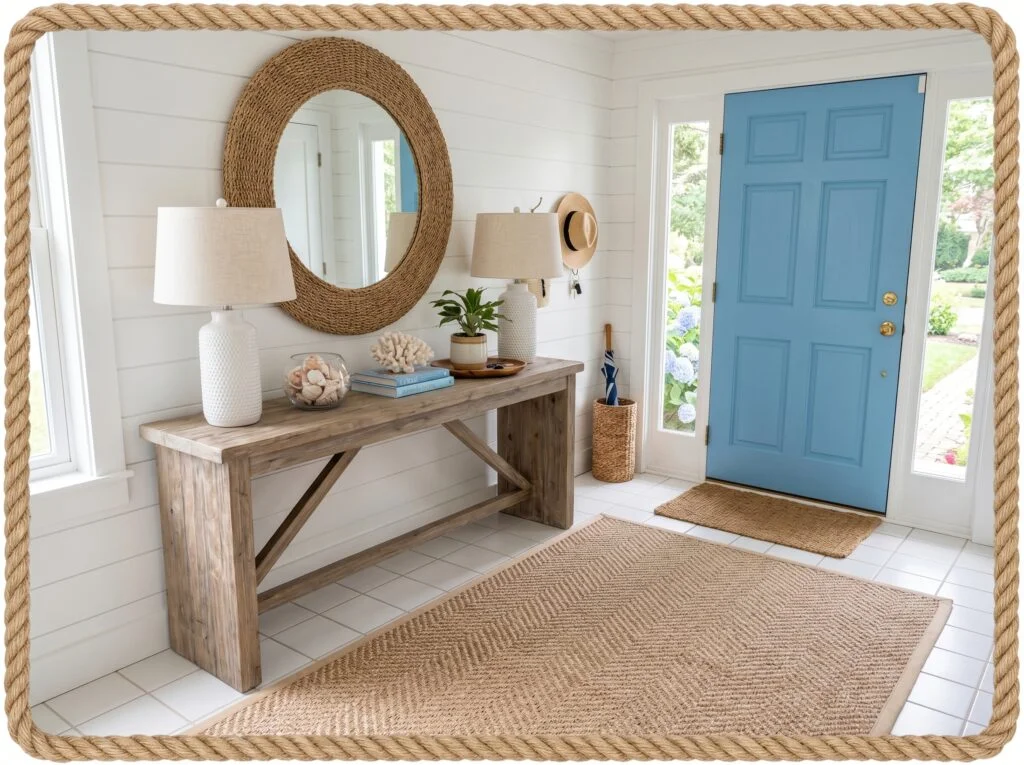
Sisal is the most durable natural fiber rug material available, and it’s the right choice for entryways that see genuine heavy traffic families with multiple kids, households with large dogs, or entries that connect directly to the outdoors. Sisal fibers are harder than jute and significantly more resistant to crushing and flattening under foot traffic. They hold their texture and appearance for years under conditions that would visibly wear other materials. The natural straw-like coloring works beautifully in coastal, farmhouse, and Scandinavian-influenced home styles.
The one real limitation of sisal is moisture sensitivity it should not be used directly at an exterior door without a covered porch, and it shouldn’t be placed where wet umbrellas or dripping raincoats regularly land on the rug. For those applications, an indoor-outdoor polypropylene rug with a natural sisal look gives you the same aesthetic with full moisture resistance. For an interior-facing entry garage to mudroom, mudroom to kitchen, or any indoor-only transition sisal is an excellent long-term investment that’s significantly more affordable than wool while outlasting most synthetic alternatives.
If the space connects to a busier utility zone, sturdy mudroom flooring for wet days is worth planning around too.
Round Rug for a Square Entryway
A round rug for a square entryway adds softness and visual balance by breaking up sharp lines and creating a welcoming focal point. Its curved shape brings movement to the space while complementing farmhouse, modern, and traditional décor styles with effortless charm.
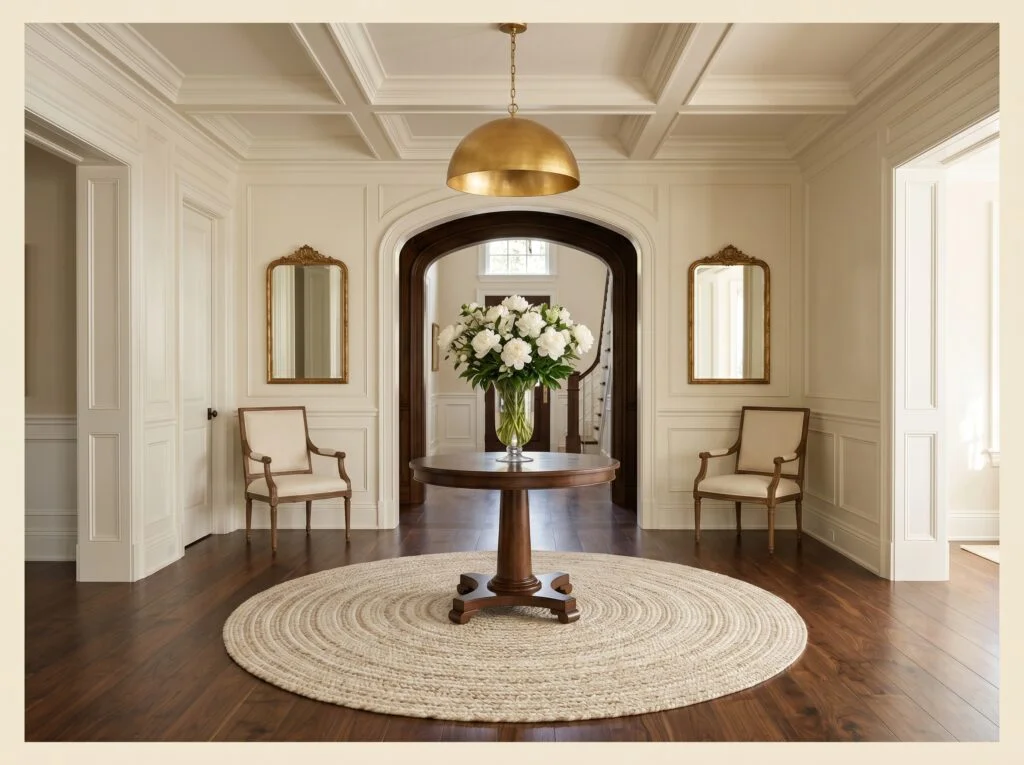
A square or near-square entryway foyer is one of the most commonly mishandled entryway shapes, and the solution is surprisingly simple: use a round rug. Round rugs in square rooms are a classic interior design principle because the circle softens the hard right angles of the walls and creates a visual harmony that a rectangular rug in the same space simply cannot achieve. In a square foyer especially, a large round rug centered in the space and paired with a round pedestal table above it creates a formal, elegant composition that reads as intentionally designed.
Size the round rug generously for a 10×10-foot foyer, a 6 or 8-foot diameter round rug is appropriate. The rug should be large enough that anyone standing in the center of the room is clearly on the rug, not on the bare floor beside it. Braided, flatweave, and low-pile construction work best for round entryway rugs because they lie flat without the edges curling a curled edge on a round rug in a high-traffic area is both an aesthetic problem and a genuine trip hazard. Use a round non-slip pad cut to match the rug’s exact diameter.
Plush Faux Sheepskin for a Cozy Scandinavian Entry
A plush faux sheepskin rug for a cozy Scandinavian entry adds softness, warmth, and a luxurious touch to the space. Its fluffy texture creates an inviting first impression while pairing beautifully with minimalist décor, natural wood, and neutral color palettes.
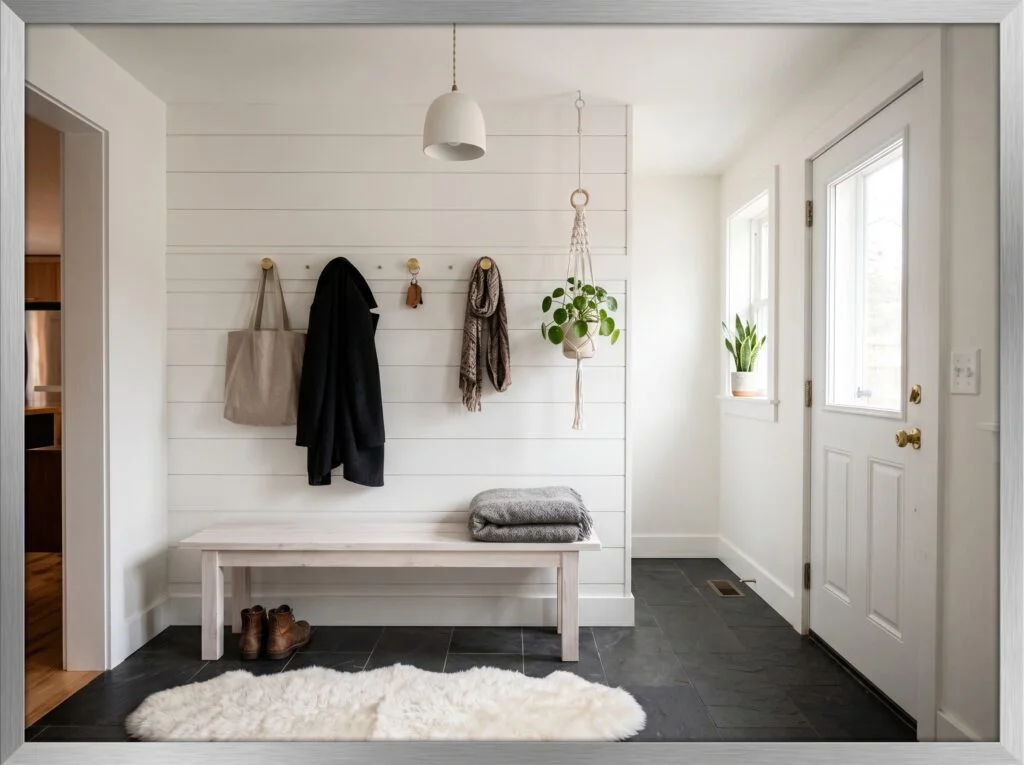
A faux sheepskin rug in an entryway is an unexpected choice that consistently looks better in person than it does in theory. The soft, fluffy texture creates an immediate warmth and tactile welcome that harder rugs simply can’t deliver. It works especially well in Scandinavian-influenced interiors where white walls, natural wood, simple furniture, and minimal decoration are the design language. The sheepskin adds the one element those clean, spare spaces sometimes lack: genuine sensory warmth that makes you want to stop and stay rather than pass straight through.
Modern faux sheepskin rugs clean up remarkably well despite their luxurious appearance. Machine-washable versions on a gentle cold cycle come out looking almost new. For an entryway, place the faux sheepskin on top of a harder surface slate, concrete, or dark hardwood where the textural contrast between the soft pile and the hard floor below maximizes the visual impact. Avoid using sheepskin as the only rug in a very high-traffic entry it’s best suited for smaller entryways with moderate traffic or as a layered accent over a more durable base. A 2×3-foot version beside a bench where shoes come off is particularly perfect.
Pairing the rug with a bench for taking shoes off adds function right where guests first step in.
Kilim Flatweave Rug for Bohemian Color
A Kilim flatweave rug for bohemian color adds vibrant patterns, handcrafted charm, and artistic character to entryways and living spaces. Its lightweight texture and rich designs create a warm, layered look while bringing personality and global-inspired style to the décor.
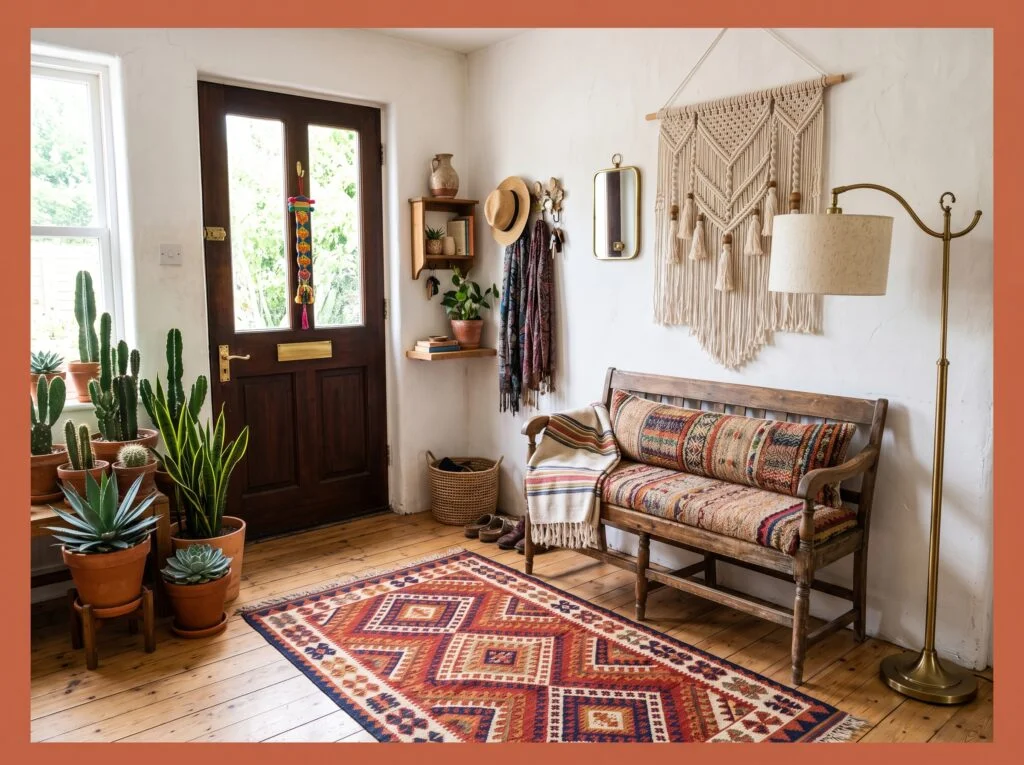
A kilim rug brings color, pattern, and cultural richness to an entryway in a way no other rug style does. Traditional kilim designs geometric diamonds, medallions, and tribal-inspired motifs in bold reds, oranges, blues, and creams create an immediate sense of warmth and adventure. Every kilim tells a visual story, and in an entryway where you want your home to make a strong first impression, that storytelling quality is powerful. The flatweave construction is also highly practical for entryways: no pile to trap dirt, easy to vacuum, and slim enough to lie flat under doors.
Kilim rugs work in far more home styles than people expect. Yes, they’re ideal for bohemian and eclectic interiors. But a kilim rug also works beautifully in a modern farmhouse entry where it adds the one dose of color and pattern that keeps the room from feeling too sterile. In a neutral-walled entry with white or greige walls and natural wood floors, a kilim rug’s bold pattern becomes the focal point that everything else in the room quietly supports. Vintage and antique kilims found at estate sales and online marketplaces are often the most beautiful and most affordable options genuine age gives the colors a depth and subtlety that new versions rarely match.
Washable Cotton Rug for Families with Kids
A washable cotton rug for families with kids offers a practical and stylish solution for busy homes. Its easy-care design makes cleaning simple while adding soft texture, comfort, and a cozy layer of style to entryways, playrooms, and living spaces.
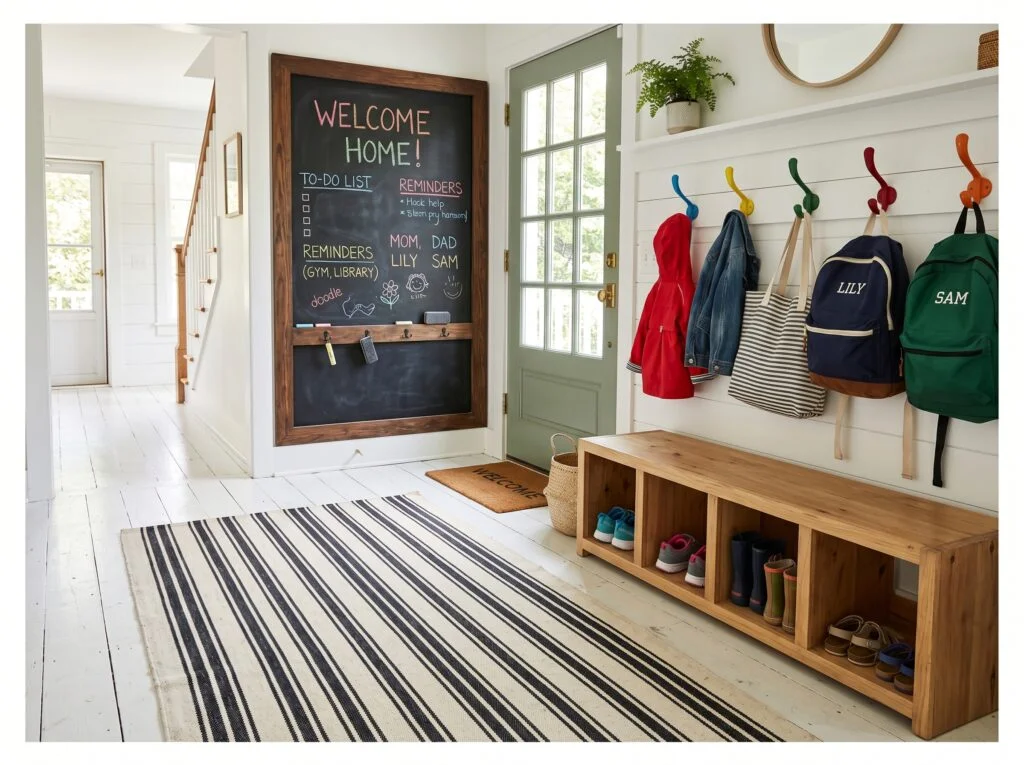
If you have young children, a washable cotton rug in the entryway is one of the most practical decisions you can make. Kids drag in mud, drop snacks, spill drinks, and wipe their hands on whatever surface is closest to the door. An entryway rug in a family home takes daily punishment that would ruin a delicate wool or viscose piece within months. Machine-washable cotton rugs handle all of this without complaint pull it off the floor, wash on a gentle cycle with cold water, hang to dry, and it’s back down the same day looking clean and fresh.
The ticking stripe pattern is particularly smart for a family entryway because the linear design doesn’t show footprints or minor soiling between wash cycles. Solid cotton rugs in light colors show every mark; patterns provide visual camouflage between laundry days. Keep two washable rugs in rotation so there’s always a clean one ready when the other is in the wash especially useful with kids in sports or during muddy weather seasons. Avoid cotton rugs with a latex backing in this application the latex cracks and flakes with repeated machine washing. Choose rugs with fabric-only construction and use a separate non-slip pad beneath.
Indoor-Outdoor Polypropylene Rug for Direct Exterior Entries
An indoor-outdoor polypropylene rug for direct exterior entries provides durability, easy maintenance, and style in high-traffic areas. Its weather-resistant design handles moisture and daily wear while adding a welcoming layer of texture to porches, mudrooms, and entryways.
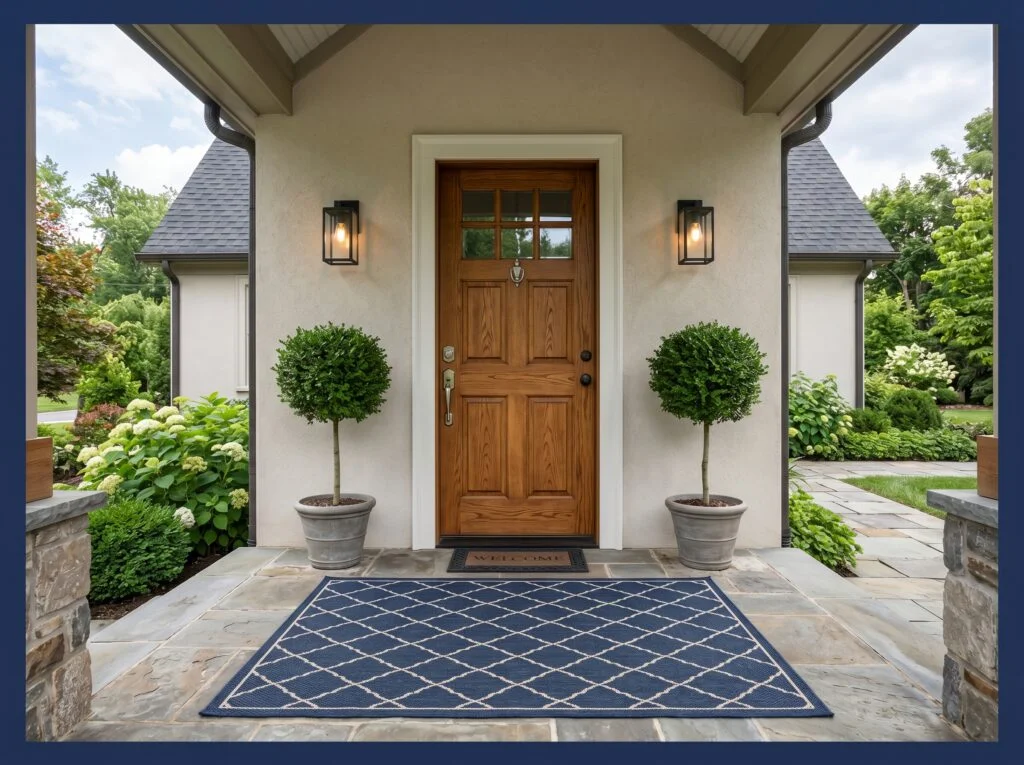
If your front door opens directly to the outdoors without a covered porch or overhang, an indoor-outdoor polypropylene rug is the only material that makes real sense. Every other rug type — jute, sisal, wool, cotton, viscose — will absorb water, develop mildew, break down from UV exposure, and deteriorate quickly in a fully exposed outdoor position. Polypropylene is completely water-resistant, UV-stabilized for fade resistance, extremely easy to clean (a garden hose rinse is sufficient for most dirt), and durable enough for continuous outdoor use. It functions in conditions that would destroy any other rug material.
The visual quality of polypropylene rugs has improved dramatically in recent years. Current indoor-outdoor options convincingly mimic flatweave wool, dhurrie, kilim, and natural fiber textures from a standing distance, many are indistinguishable from their natural counterparts. For a covered porch or sheltered entry, any rug material works. For an uncovered, fully exposed entry that gets rain and direct sun, polypropylene is a non-negotiable. Choose a pattern and colorway that complements your door color and exterior trim navy, black, dark olive, and warm terra cotta are all currently popular and very practical for outdoor entries since they conceal the weathered grime that inevitably accumulates near a frequently used door.
Vintage Distressed Rug for a Modern-Traditional Mix
A vintage distressed rug for a modern-traditional mix blends timeless character with contemporary style, creating a balanced and inviting space. Its faded patterns add warmth, texture, and visual interest while complementing both classic furnishings and modern décor elements.
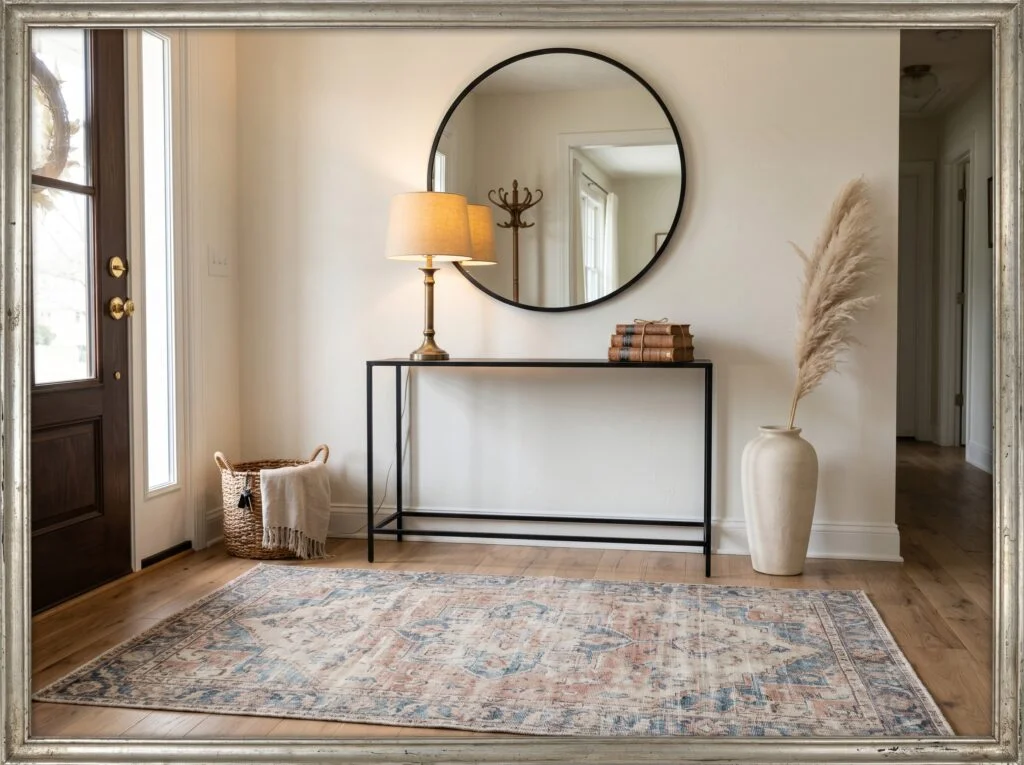
Vintage and distressed rugs are the single most popular entryway rug style right now and the reason is simple. A distressed rug looks like it has been carefully collected and lived with for years. It brings authenticity, depth, and the sense that the home has history. Machine-made distressed rugs achieve this through a washing and chemical treatment process that fades the colors slightly and softens the pile to mimic genuine age. The result is a rug that looks like a treasured antique at a fraction of antique pricing. In an entryway, that quality of collected warmth is exactly the first impression most homeowners want to create.
The most useful color palette for a distressed entryway rug combines a neutral background (cream, ivory, or pale gray) with faded tones of blue, rose, or sage. These palettes are warm enough to be welcoming, neutral enough to coordinate with almost any interior color scheme, and the faded, muted tones are far more forgiving of real-world dirt and traffic than brighter colors. A distressed rug also improves visually with use as it wears slightly more in traffic zones over time, it simply looks more authentically aged rather than looking damaged. That aging-forward quality makes it one of the most low-maintenance choices for a busy entry.
Striped Cotton Runner for a Modern Coastal Entry
A striped cotton runner for a modern coastal entry adds a fresh, airy feel with its simple pattern and soft texture. Its relaxed design creates a welcoming pathway while complementing coastal, farmhouse, and contemporary interiors with effortless style and comfort.
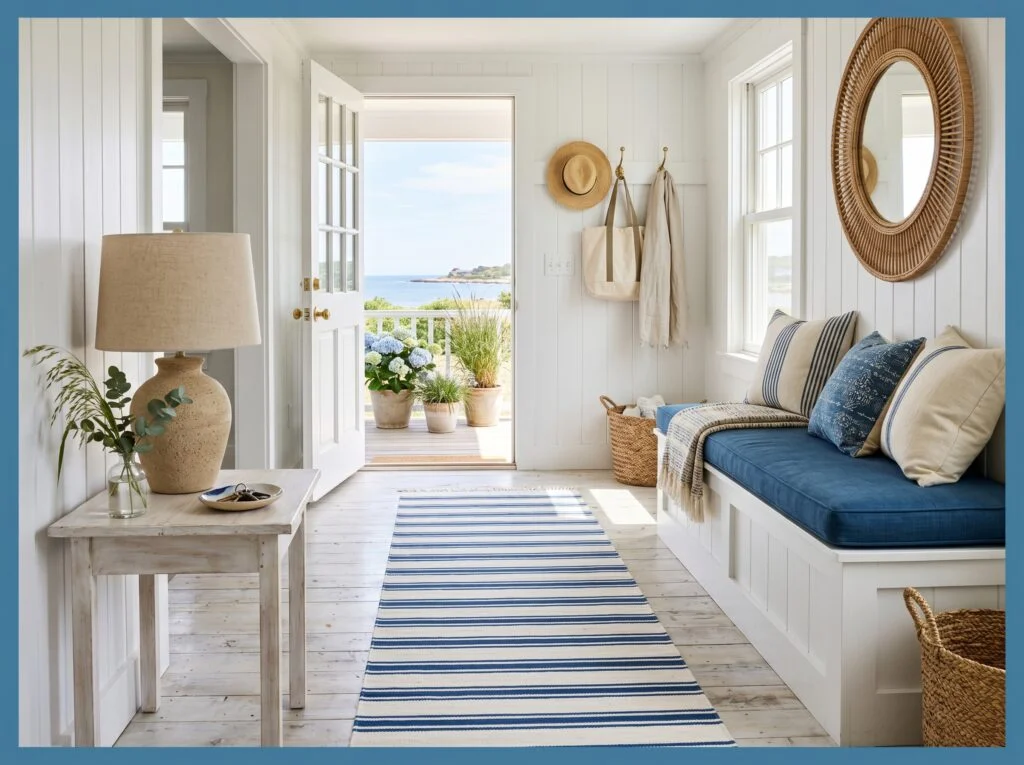
A classic blue and white striped runner in an entryway is one of those design choices that works in almost every context coastal, farmhouse, traditional, Hamptons-style, and casual contemporary all embrace the stripe with equal enthusiasm. The pattern is clean and cheerful without being loud. It directs the eye down the length of the hallway, creating visual movement that makes a corridor feel intentional and designed. And practically, stripes in alternating tones hide footprints and regular dirt far better than solid runners in similar colors.
Horizontal stripes on a runner make a narrow hallway feel slightly wider; vertical stripes (running in the direction of travel) elongate the space visually. Most striped runners are oriented so the stripes run perpendicular to the direction of travel horizontal across the width which is the most visually interesting orientation and the most common. For a genuinely coastal look, pair navy and white or blue and white stripes with natural wood, whitewashed surfaces, woven textures, and ceramic accessories in sandy or ocean tones. The combination communicates seaside relaxation from the moment the front door opens.
Dark Moody Rug for a Dramatic Entry Statement
A dark moody rug for a dramatic entry statement creates a bold foundation with rich tones, depth, and sophisticated character. Its deep colors add elegance and contrast while transforming the entryway into a stylish, welcoming space with a luxurious atmosphere.
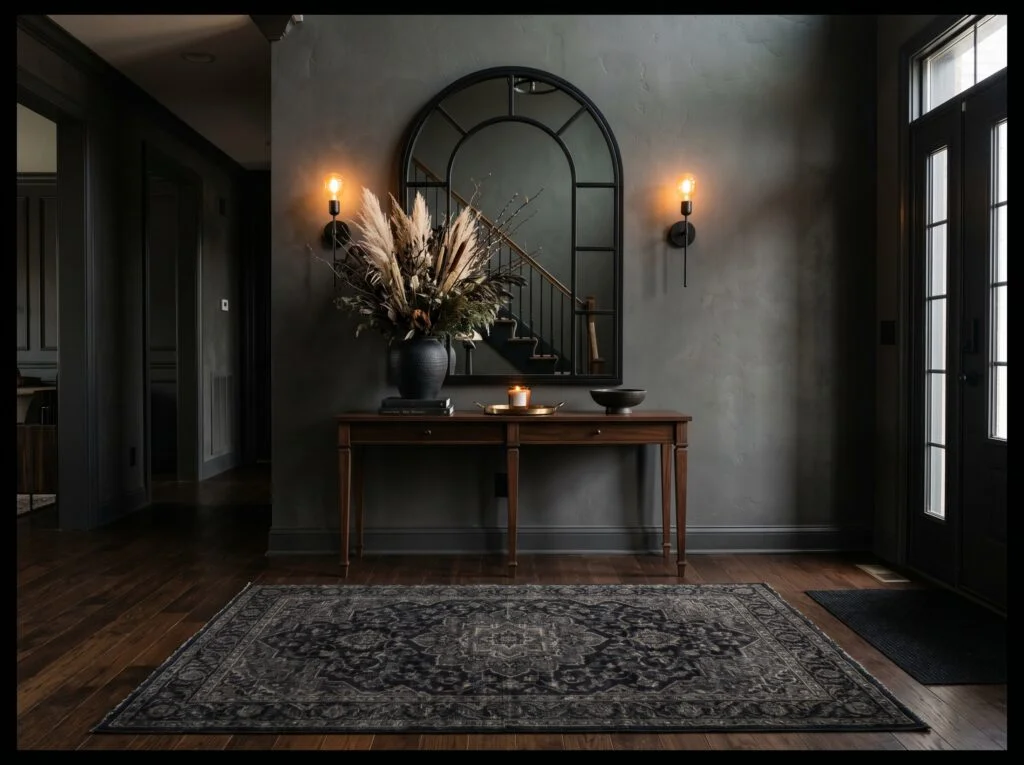
Dark rugs in entryways are dramatically underused most people default to light and neutral without considering what a deep, rich rug can do to a space. A charcoal, deep navy, forest green, or black-toned rug makes an entryway feel intentional, sophisticated, and genuinely dramatic. It also has a deeply practical advantage: dark rugs are the absolute best for hiding dirt, mud, and daily traffic marks. Between cleanings, a dark rug looks clean in a way that light rugs simply cannot. It’s the honest choice for anyone who doesn’t want to vacuum the entryway every single day.
The key to making a dark entryway rug work without making the space feel heavy and cave-like is balancing it with light walls and bright accents. White or pale gray walls with dark trim, or a medium-toned wall with a large mirror that reflects light, prevents a dark rug from making the space feel small and closed in. A medallion or geometric pattern within the dark rug adds visual interest so the floor doesn’t feel like a dark void it reads as rich and layered rather than simply dim.
Sage Green Rug for a Nature-Inspired Entry
A sage green rug for a nature-inspired entry brings a calming, organic feel with its soft earthy tones and natural appeal. It adds warmth, texture, and a refreshing touch while creating a welcoming atmosphere that connects beautifully with farmhouse, rustic, and botanical décor.
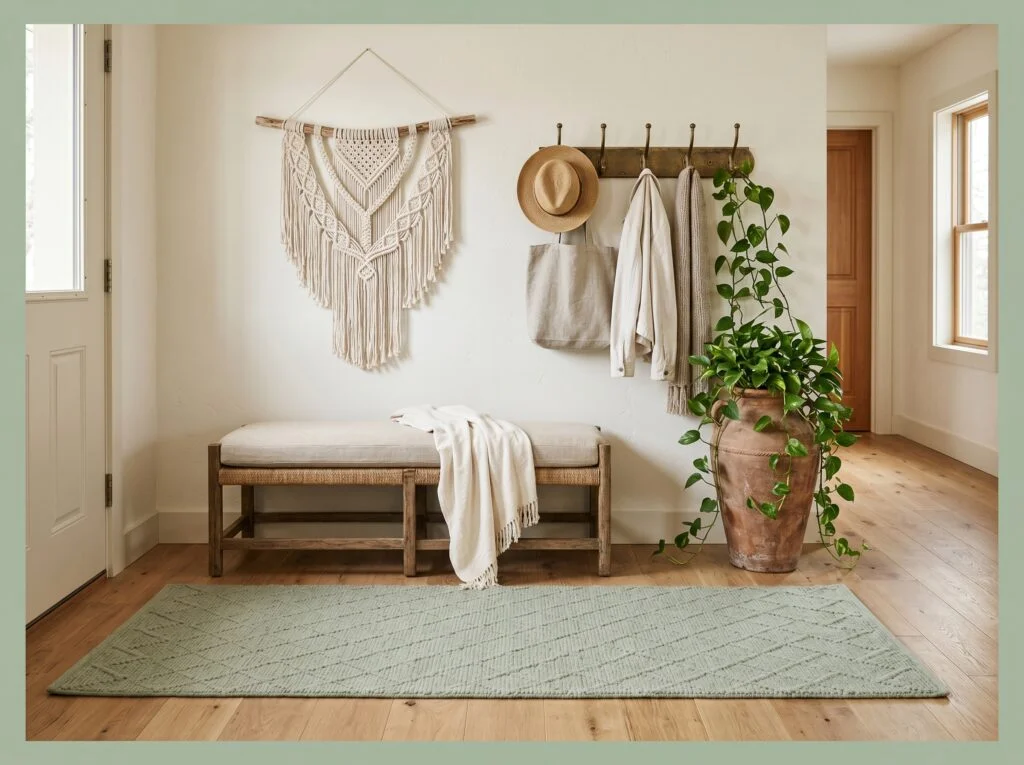
Sage green is one of the most searched interior paint and decor colors right now, and a sage green entryway rug is the most accessible way to bring this calming, nature-forward tone into your home without committing to a wall color. Green in an entryway makes particular sense because green is the color of the natural world just outside the door — it creates a transition between outdoors and indoors that feels seamless and intentional. Sage, specifically, is muted and dusty enough to work as a genuine neutral rather than a statement color, which means it coordinates broadly with beige, cream, white, walnut, black iron, and brass without clashing.
A textured wool rug in sage green adds both color and tactile warmth to an entryway. The texture of a diamond or trellis weave catches light at different angles throughout the day, making the color shift subtly between a silvery gray-green in morning light and a warmer, richer sage in afternoon warmth. Pair with natural materials rattan, terracotta, linen, and unlacquered brass for the most cohesive nature-inspired aesthetic. If a full sage green rug feels like too much commitment, a sage-bordered natural jute rug is an excellent middle ground that introduces the color while keeping the center of the rug neutral.
Moroccan Trellis Pattern for a Global-Inspired Entry
A Moroccan trellis pattern rug for a global-inspired entry adds elegant geometry, texture, and worldly charm to the space. Its timeless design creates a stylish focal point while blending beautifully with bohemian, modern, and eclectic interiors through its unique artistic appeal.
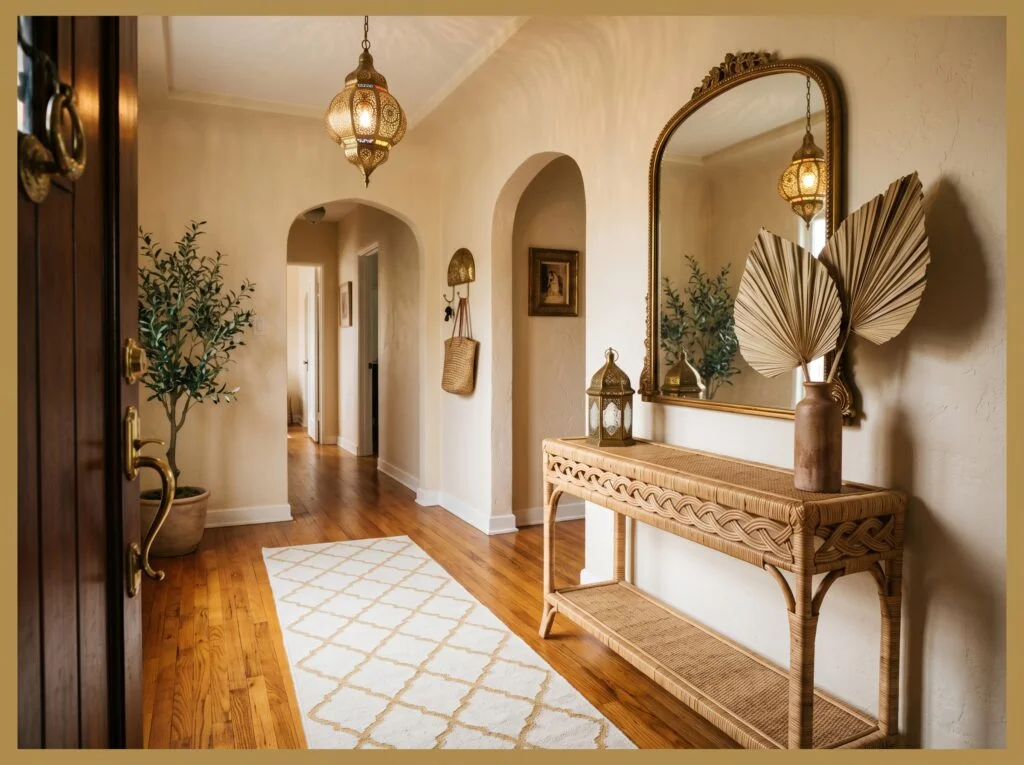
The Moroccan trellis pattern an interlocking lattice or ogee design, most commonly in white or cream on a colored background is one of the most enduringly popular rug patterns for entryways. The geometric repeat is visually interesting without being overwhelming, works in every scale from a small 2×3-foot mat to a large 6×9-foot area rug, and coordinates with an enormous range of interior styles. Modern farmhouse, global eclectic, transitional, and boho-contemporary all embrace the Moroccan trellis with equal enthusiasm. It’s the rare pattern that feels both timeless and current at the same time.
White Moroccan trellis rugs on a navy, charcoal, or black background are particularly dramatic in an entryway and especially good at hiding the scuffs and footprints that a white-background rug would show immediately. The reverse white or cream background with a darker pattern creates a lighter, brighter effect that works well in smaller or darker entries where more light is needed. For the most authentic look, pair a Moroccan trellis rug with brass, gold, or aged metal accents lanterns, mirrors with gilded frames, or hardware in warm tones. The Moroccan aesthetic is built on warmth and glow, and the right lighting accessories amplify the effect beautifully.
Buffalo Check Pattern for a Modern Farmhouse Entry
A buffalo check pattern rug for a modern farmhouse entry adds classic charm and bold visual texture to the space. Its timeless grid design creates a cozy, welcoming feel while pairing beautifully with rustic wood, neutral tones, and farmhouse-inspired décor.
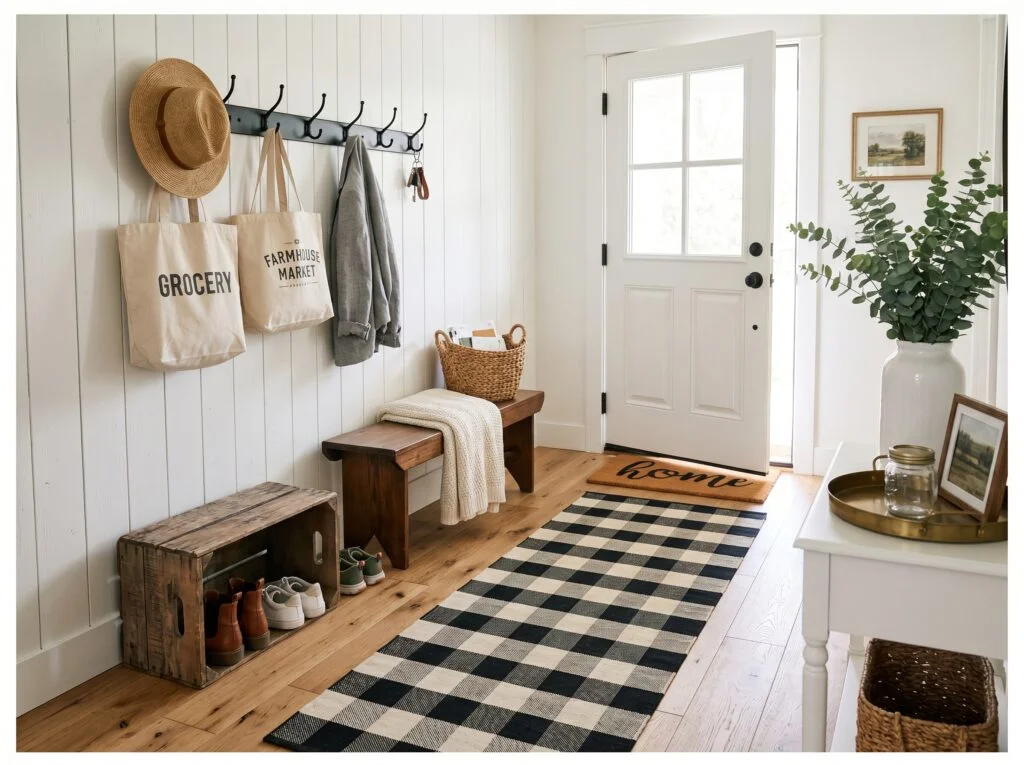
Buffalo check the oversized two-tone plaid pattern originally associated with lumberjack shirts and country living has become one of the most versatile patterns in modern home design. In an entryway rug, the classic black and cream or navy and cream buffalo check immediately communicates the relaxed, unpretentious quality that defines modern farmhouse style. It’s a pattern that says “this is a real home where real people live” without sacrificing visual intention or design skill. The large-scale repeat is bold enough to hold its own against architectural features like shiplap, board and batten, or open shelving nearby.
Buffalo check works best at a scale appropriate to the rug size for a large 5×7 or 6×9 entry rug, the checks should be at least 4 to 6 inches per square so the pattern reads clearly from a standing distance. Tiny buffalo check on a large rug looks like a solid color from across the room. For a runner, medium-scale checks work best. Black and white or black and cream is the classic combination. Navy and cream feels slightly softer and more coastal. Red and black leans more traditional and rustic. All three work beautifully in a farmhouse entryway the choice comes down to what matches the rest of your home’s color palette.
Woven Seagrass Rug for a Natural Coastal Feel
A woven seagrass rug for a natural coastal feel adds organic texture, warmth, and relaxed elegance to entryways. Its durable fibers and earthy appearance create a welcoming foundation while complementing coastal, farmhouse, and nature-inspired interiors with effortless style.
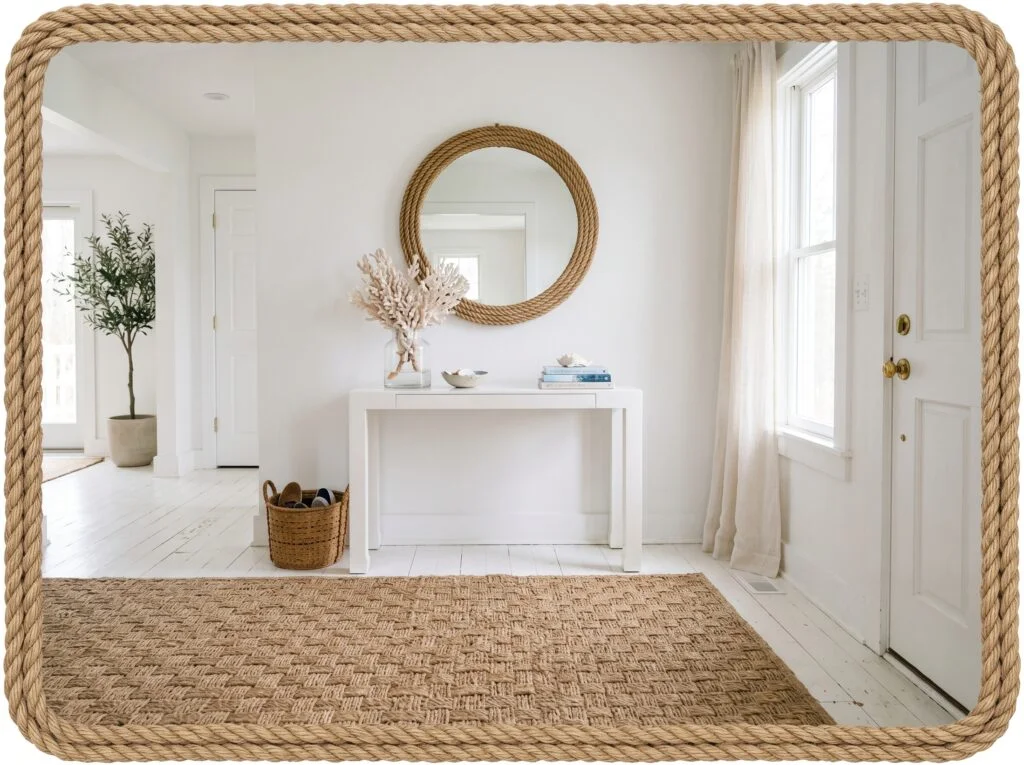
Seagrass rugs are the most naturally coastal of all entryway rug options, and they bring a texture and earthiness that’s genuinely impossible to replicate with synthetic materials. The tight, dense weave of seagrass fibers creates a surface that’s highly durable, resistant to staining (seagrass naturally repels liquids to some degree), and deeply visually interesting the basket-weave or herringbone patterns within the rug catch light in a way that gives the floor genuine dimension. In a coastal or nature-inspired home, a seagrass rug feels like it belongs in a way that a synthetic alternative never quite achieves.
Like sisal and jute, seagrass performs best away from consistent moisture and direct outdoor exposure. The natural oils in seagrass fibers make them more resistant to liquid absorption than jute, but prolonged moisture exposure will still cause deterioration. For an interior entryway in a coastal-style home, seagrass is an outstanding choice that holds up to traffic, looks better with slight age and wear, and coordinates naturally with white walls, warm wood tones, linen, rattan, and the full palette of coastal-inspired furniture.
Bold Solid Color Rug to Make the Floor a Feature
A bold solid color rug to make the floor a feature adds a striking design element that instantly transforms the space. Its rich hue creates a strong focal point while bringing personality, warmth, and a stylish foundation to entryways and interiors.
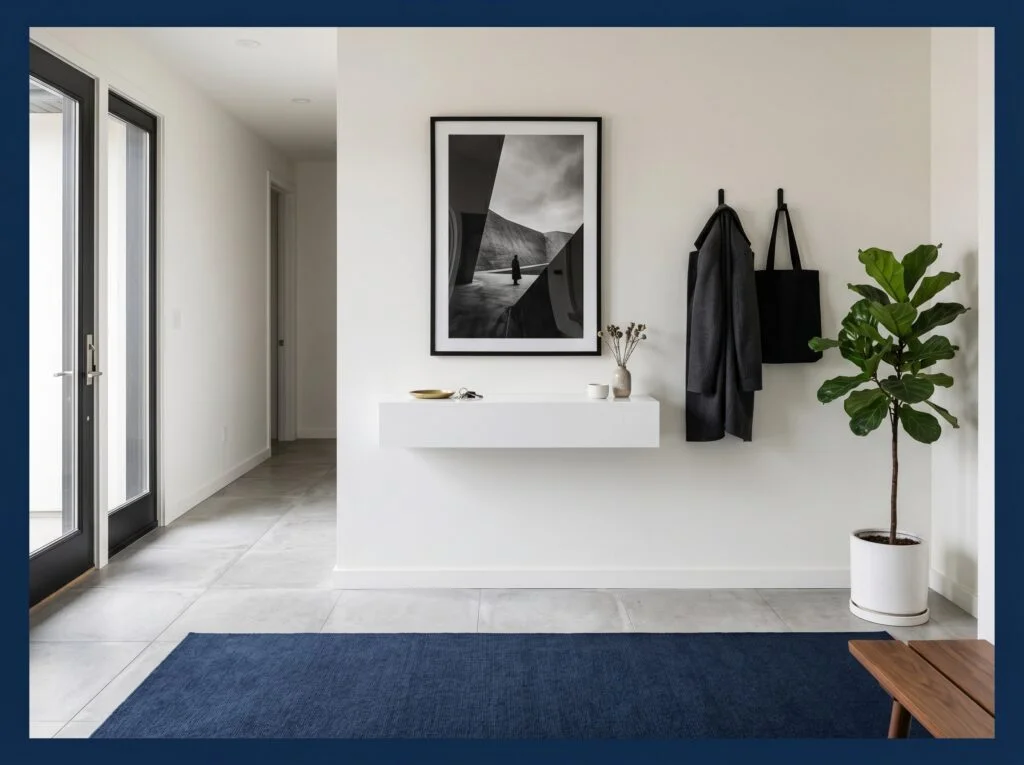
A solid, deeply saturated color rug in an entryway is the choice for anyone who wants the floor to be genuinely bold and the walls and furniture to take a supporting role. Most entryway rug advice defaults toward pattern Persian, geometric, striped but a large solid-color rug in a rich navy, deep forest green, warm terracotta, or saturated mustard creates an equally powerful first impression through color alone. The absence of pattern is itself a design decision, and when executed well in a minimal or contemporary home, it looks extraordinarily confident and refined.
Choose a low-pile or flatweave construction for a solid color entryway rug a high-pile solid rug in an entryway shows vacuum tracks and footprint indentations immediately, making it look perpetually unkempt. Low-pile polypropylene or flatweave wool in a saturated color maintains its appearance between cleanings and holds its color vibrancy for years. The rug color should connect to at least one other element in the entry the front door color, a throw pillow on a bench, a piece of wall art, or a planter. This color echo, even in a minimal space, is what makes the solid color rug feel designed rather than simply chosen.
Layered Rug with a Cowhide Accent
A layered rug with a cowhide accent adds texture, contrast, and a unique designer touch to any space. The combination of natural fibers and organic patterns creates a warm, stylish look while blending rustic, farmhouse, and modern décor elements beautifully.
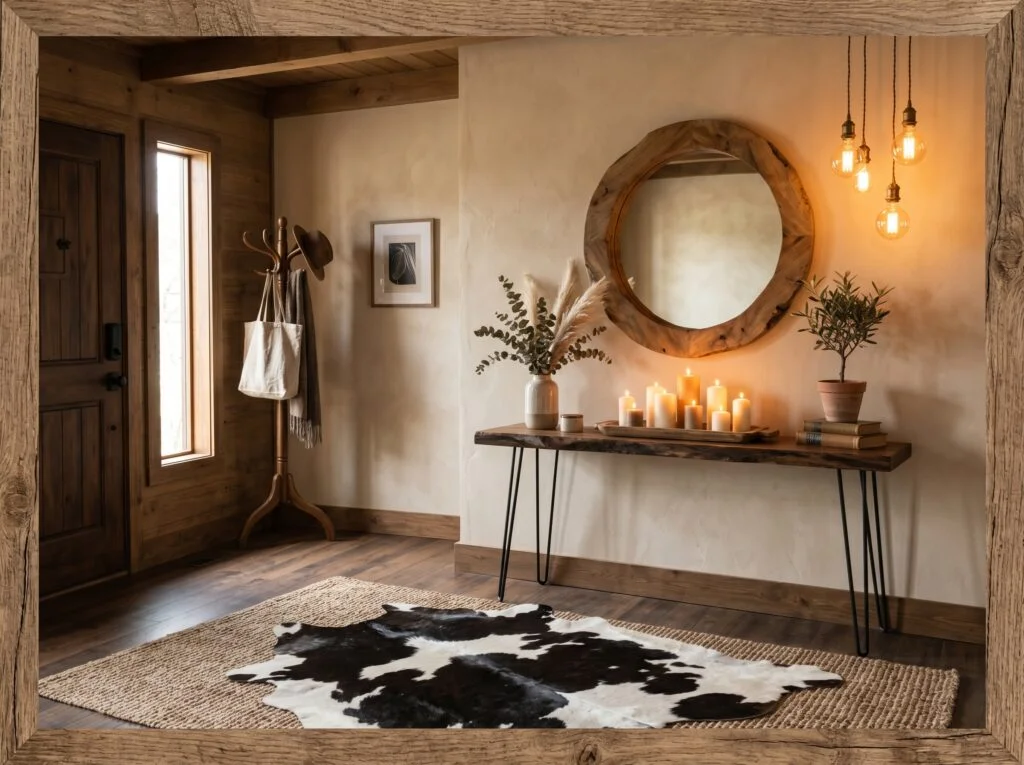
A cowhide layered over a flat natural fiber rug is one of the most striking entryway floor compositions available the contrast between the flat, woven texture of the base rug and the soft, organic shape of the cowhide creates a rich visual tension that instantly makes the space feel like it was designed with intention. The irregular shape of a cowhide is also part of its appeal no two are exactly the same size or silhouette, which gives the layered look a one-of-a-kind quality. Both genuine cowhides and high-quality faux alternatives work equally well in this application.
Place the cowhide slightly off-center on the base rug rather than perfectly centered — an asymmetric placement looks more organic and intentional. The base rug should extend generously beyond the cowhide on all sides (at least 8 to 12 inches) so both textures are clearly visible. Natural sisal, jute, or a neutral flatweave work best as the base because they contrast effectively with the cowhide’s softness. This layered combination works in rustic, industrial, modern, and western-inspired interiors. Faux cowhide options are genuinely convincing and significantly more affordable a good faux version at $80 to $150 is visually equivalent to a genuine cowhide at 4 to 10 times the price.
If you’re rethinking the whole entrance, front door colors worth pairing it with can help tie the exterior in too.
Seasonal Entryway Rug Strategy: One Base, Four Looks
A seasonal entryway rug strategy with one base and four looks makes decorating simple and versatile throughout the year. By keeping a timeless foundation and changing accent layers, colors, and textures, you can refresh your entryway style for every season.
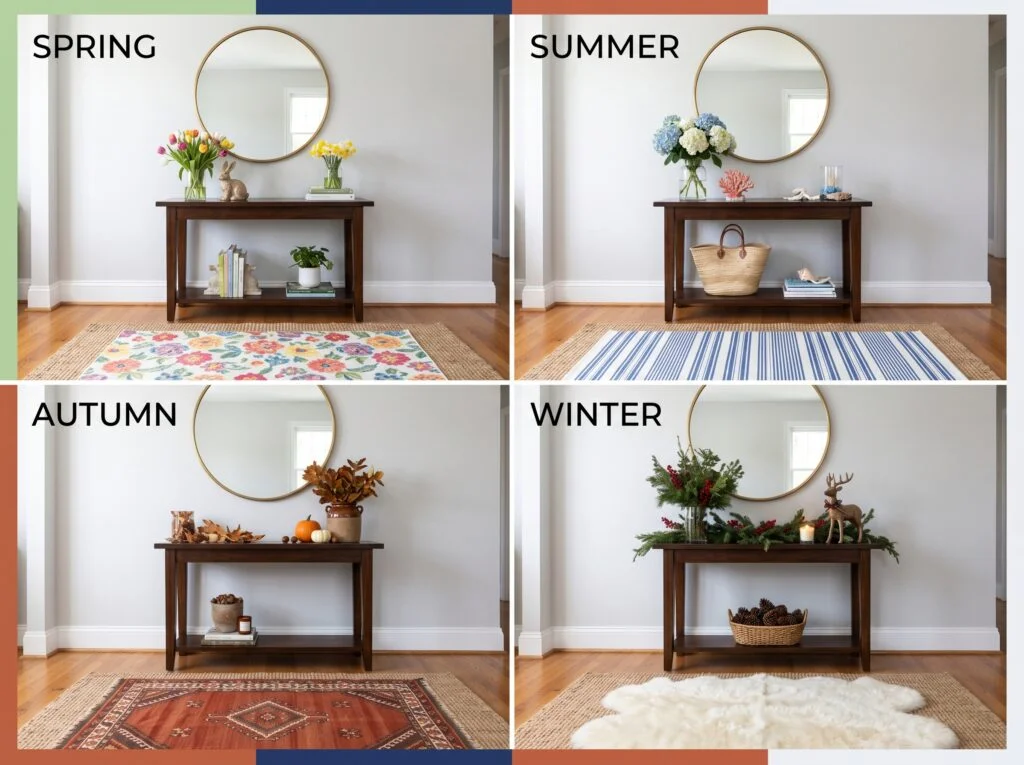
The smartest long-term entryway rug strategy and one almost no article discusses is the base-and-accent rotation system. Invest in one high-quality large neutral base rug (a 5×7 or 6×9 natural sisal or jute) that stays down year-round. Then collect four smaller, less expensive accent rugs one for each season that layer on top of the base for a regular refresh. The base rug takes the daily traffic and protects the floor. The accent layer provides seasonal color, pattern, and mood that makes the entryway feel freshly styled throughout the year without requiring any furniture moves or significant spending.
Spring accent rugs: lightweight cotton in floral or soft geometric patterns, pale green or blush tones. Summer: blue and white stripe or bright coral, indoor-outdoor materials that handle sandals and damp feet. Autumn: warm kilim patterns in terracotta, mustard, and rust, or a plaid in deep warm tones. Winter: faux sheepskin, a thick wool in cream or charcoal, or a deep jewel-toned flatweave. Each seasonal accent rug costs $30 to $80 when chosen thoughtfully from discount home stores. The base rug costs $100 to $200 once and lasts for years. The total investment delivers a home that looks seasonally decorated at the door level the most noticed and photographed point of any home.
Conclusion
The right entryway rug doesn’t just look good in a photo. It makes your home feel genuinely welcoming every single day to you, to your family, and to everyone who walks through the door.
Start with size and material based on your specific entry’s conditions. Get the rug pad. Then choose the style that matches both your home’s design direction and your real daily life. A beautiful rug that shows every footprint and needs weekly professional cleaning isn’t the right rug for a household with kids and dogs, no matter how good it looks on Instagram.
The 21 ideas in this article cover every home style, every budget, and every traffic level. Pick the one that solves your specific entryway’s biggest challenge whether that’s scale, color, durability, or simply finally having a rug that makes the space feel finished and the whole home will feel better for it from the moment you open the front door.
From there, building out a fully finished welcoming entry outside the door completes the whole first impression.