Plants make a living room feel alive in a way that no furniture piece or wall art ever can. One well chosen plant in the right spot can completely change the mood of a room.These 23 living room plants decor ideas will help you bring nature indoors. From statement trees to tiny terrariums, you’ll find something perfect for your space.
A calm neutral base to grow against makes every one of these greens pop even more.
Let’s get started.
Tall Fiddle Leaf Fig in a Corner
A fiddle leaf fig can grow tall enough to fill an empty corner that furniture alone can’t quite address. Its large glossy leaves add a sculptural quality that smaller plants don’t really achieve. This plant does best near a window with bright but indirect light rather than direct sun.
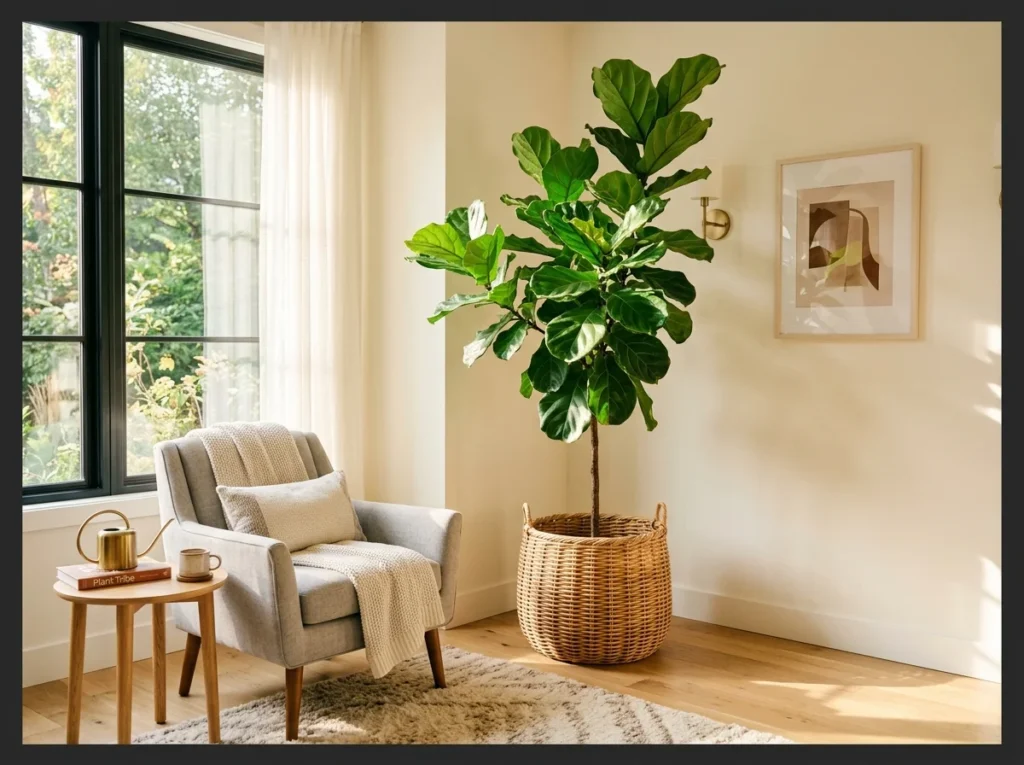
A tall fiddle leaf fig placed in a corner with good natural light is one of the most dramatic living room plant decor moves available. The large glossy leaves draw the eye upward and make the ceiling feel higher than it actually is.
Place it near a south or east facing window where it gets bright indirect light rather than harsh direct afternoon sun. Water once a week in summer and every two weeks in winter. Wipe the leaves monthly with a damp cloth to keep them glossy and dust free.
Cascading Pothos on Floating Shelves
Pothos vines naturally trail downward, which makes them a good fit for shelves placed higher up on a wall. Over time the vines can grow long enough to spill several feet below the shelf itself. This plant also tolerates lower light fairly well compared to many other trailing varieties.
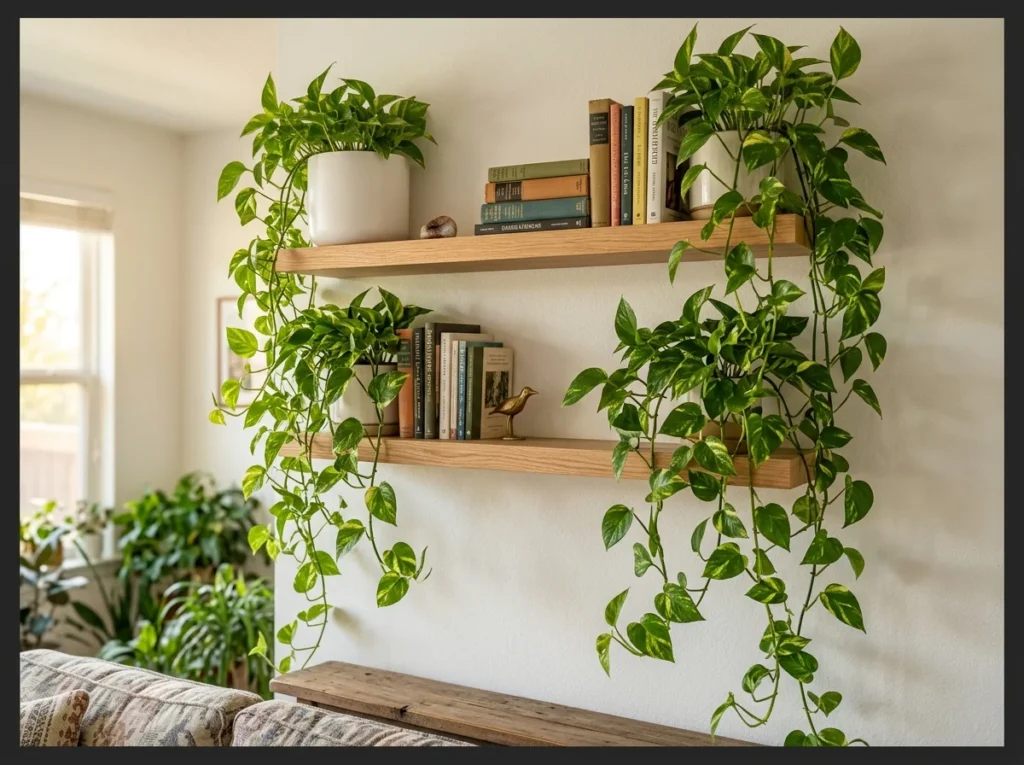
Golden pothos placed on floating shelves and left to trail downward creates a living green curtain that softens the hard edges of any shelving unit. The trailing vines grow quickly and the effect becomes more stunning with every passing month.
If you’re rethinking the shelves themselves, shelves that hold more than books can help the whole display feel more intentional.
Pothos is genuinely one of the easiest plants alive. It tolerates low light, irregular watering, and neglect better than almost any other houseplant. If you have killed every plant you have ever owned, pothos is where to start again.
Coffee Table Succulent Cluster
A small grouping of succulents on a coffee table adds greenery without taking up much surface space. Mixing pot sizes and succulent shapes gives the cluster more visual interest than a single matching set. This is a low maintenance option for anyone who doesn’t want to worry about frequent watering.
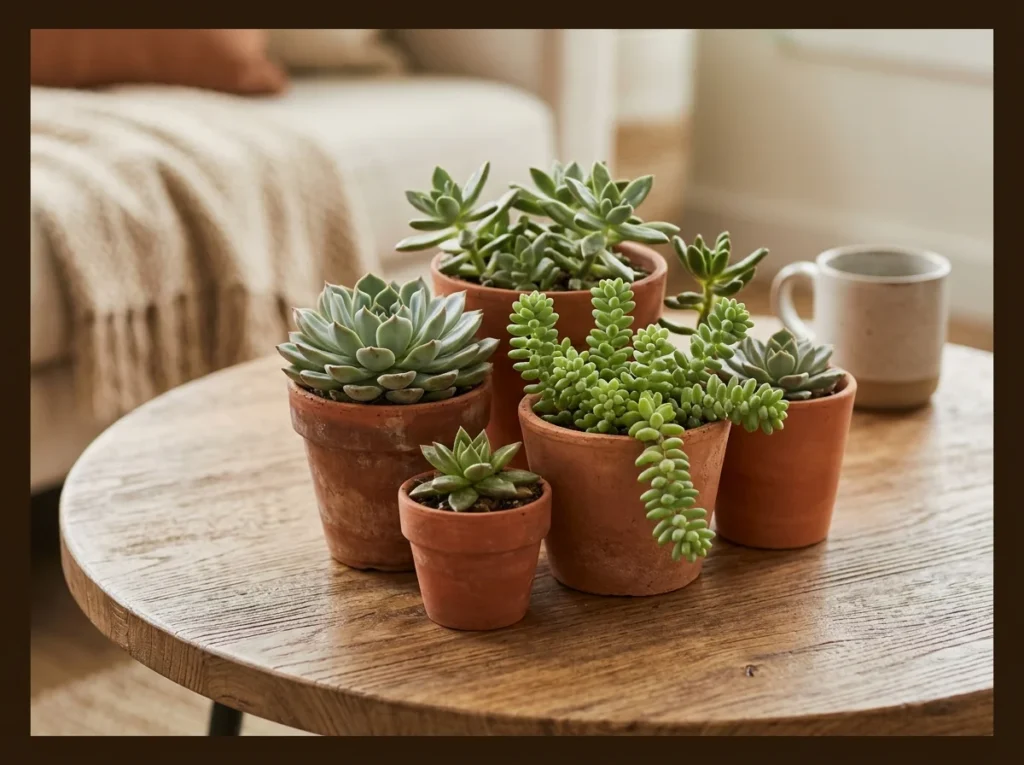
Grouping five small succulents in terracotta pots of different sizes on the coffee table creates an instant living centerpiece that costs very little and requires almost no care at all. The varying heights and plant shapes create natural visual interest.
Perfect for small spaces. This arrangement stays low enough to maintain eye contact across the table during conversation. Rotate the pots quarterly so all sides of each plant receive equal light and grow evenly.
A table styled around one strong piece can make this succulent cluster feel like part of a bigger design moment.
Macrame Plant Hangers by the Window
Macrame hangers lift plants off surfaces entirely, which frees up shelf and table space nearby. This works especially well near a window where the plant can get consistent natural light. The hand knotted texture also adds a bit of handmade character to the display itself.
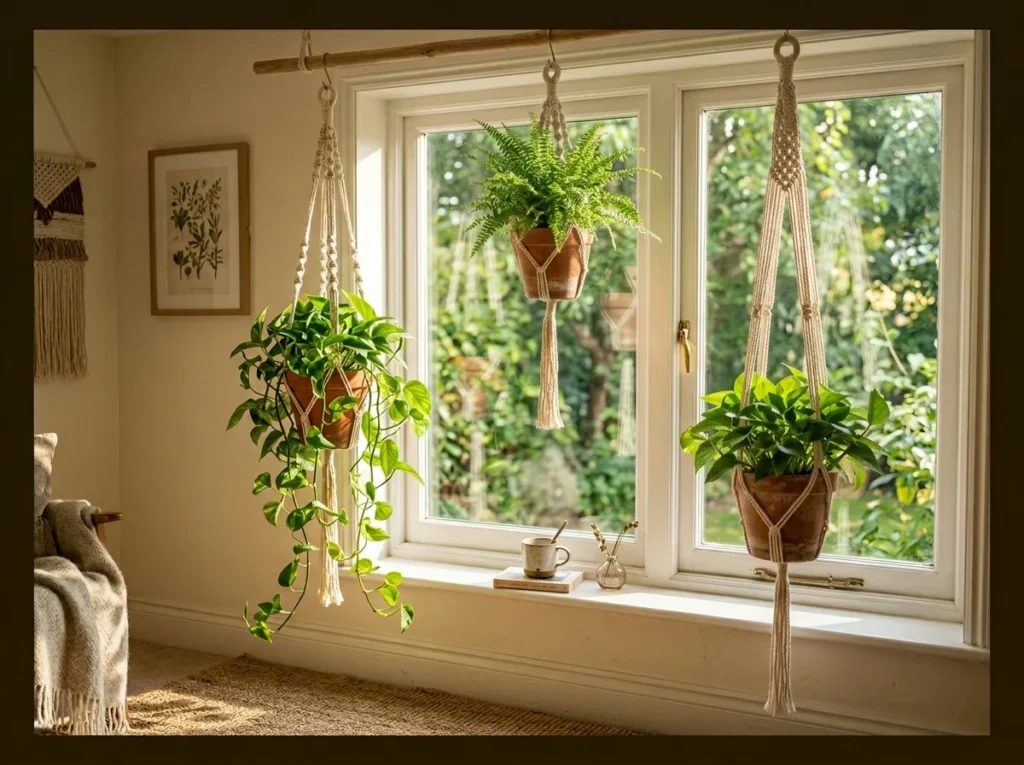
Hanging macrame plant holders at staggered heights beside a living room window uses vertical space that would otherwise be completely empty. The woven cotton texture adds warmth and bohemian character that suits natural and eclectic interiors beautifully.
Budget friendly option. A macrame plant hanger costs very little and transforms a plain window area into a layered green display. Trail a pothos or a small fern in each hanger for the fullest, most dramatic cascading effect.
Statement Monstera as a Focal Point
A monstera’s large split leaves make it one of the more recognizable statement plants for a living room. Placed in an open area, it can become the room’s main focal point without needing much else around it. This plant does need occasional dusting on its leaves to keep them looking their best.
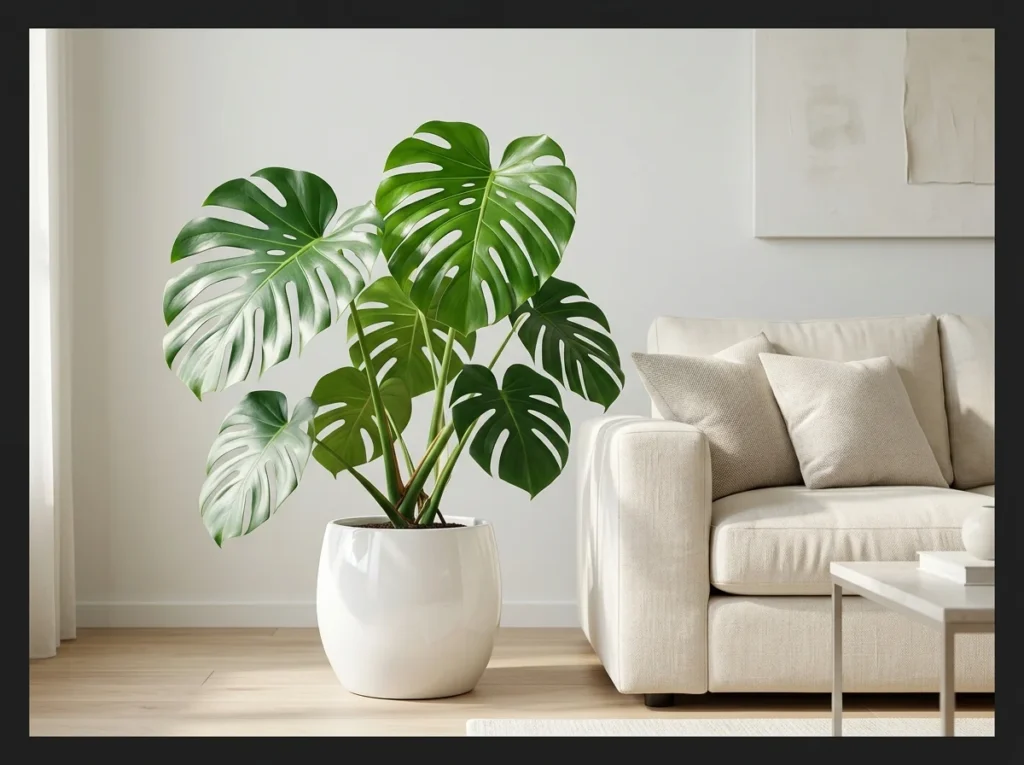
A large monstera with its distinctive split and fenestrated leaves is the plant that makes non plant people stop and say they want one. The architectural leaf shape is genuinely unlike anything else in the plant world and it photographs beautifully from every angle.
Give it a spot with bright indirect light and a pot that is one size larger than its root ball. Water when the top two inches of soil feel dry. Within a year a healthy monstera in a good spot will produce leaves significantly larger than the ones it had when you brought it home.
Snake Plant as a Floor Accent
Snake plants have upright, stiff leaves that give them a more structured look than most trailing plants. This plant tolerates low light and irregular watering better than almost anything else on this list. Its vertical shape makes it a good option for narrow floor spaces where a wider plant wouldn’t fit.
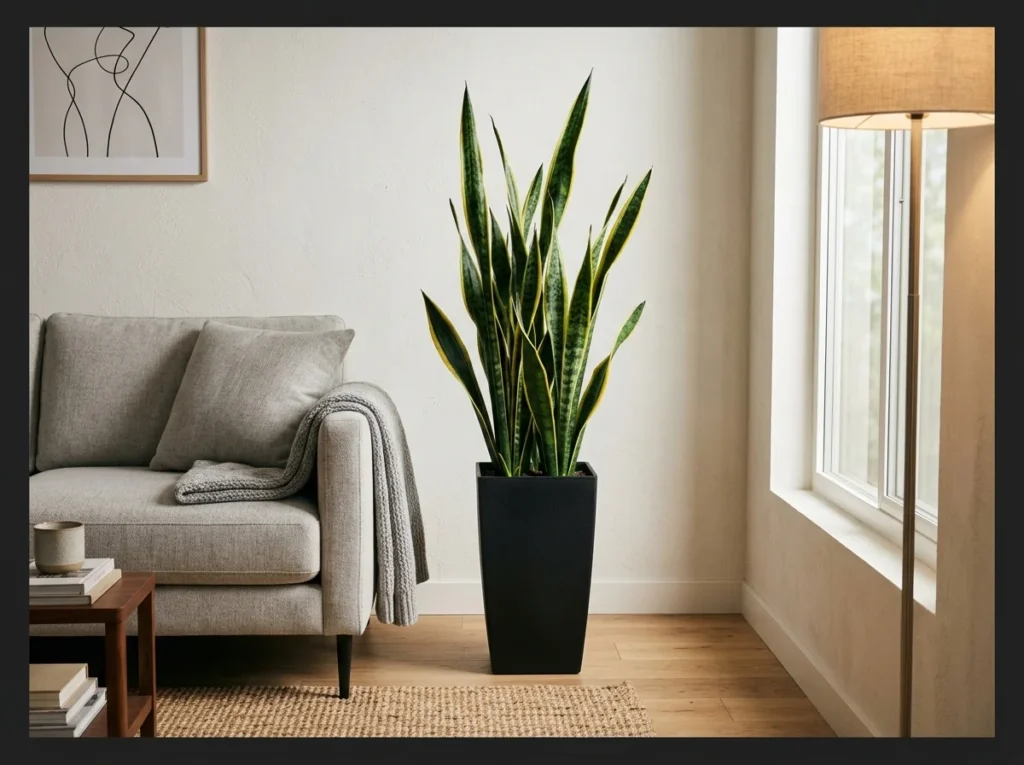
The snake plant earns its place in a living room through sheer reliability. It grows upright in a clean architectural form, suits both modern and traditional interiors, and asks almost nothing of its owner in return for months of beautiful display.
It thrives in low light conditions, making it genuinely useful for the darker corners of a living room where most plants would struggle within weeks. Water it once every two to three weeks and it will outlast every other plant in the room.
Trailing Ivy on a Bookshelf
Ivy planted on a bookshelf will eventually weave itself between books and other objects as it grows. This creates a slightly wild, overgrown look that feels different from a plant kept neatly contained. Regular trimming keeps the vines from taking over the entire shelf if a more controlled look is preferred.
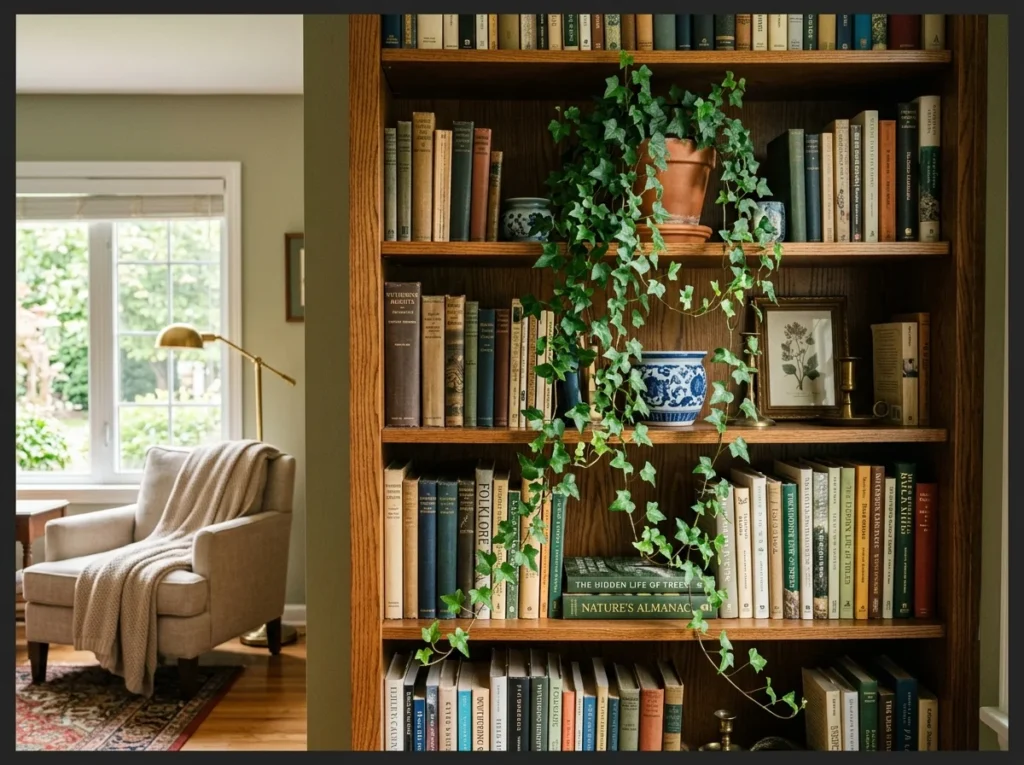
English ivy placed on the top shelf of a bookcase and left to grow downward weaves between the books and decorative objects in a way that looks completely natural and unplanned. It gives any bookshelf a lived in, layered quality that purely decorative objects cannot replicate.
Ivy is one of the few trailing plants that genuinely tolerates lower light conditions. Keep it on the cooler side of the room if possible as it prefers temperatures below 70 degrees Fahrenheit and tends to dry out faster in warm direct sun positions.
Air Plants in Glass Globe Hangers
Air plants don’t need soil at all, which makes glass globes a natural way to display them. These hangers can be clustered together or spaced out individually along a window or wall. This setup requires only occasional misting rather than regular watering like most other houseplants.
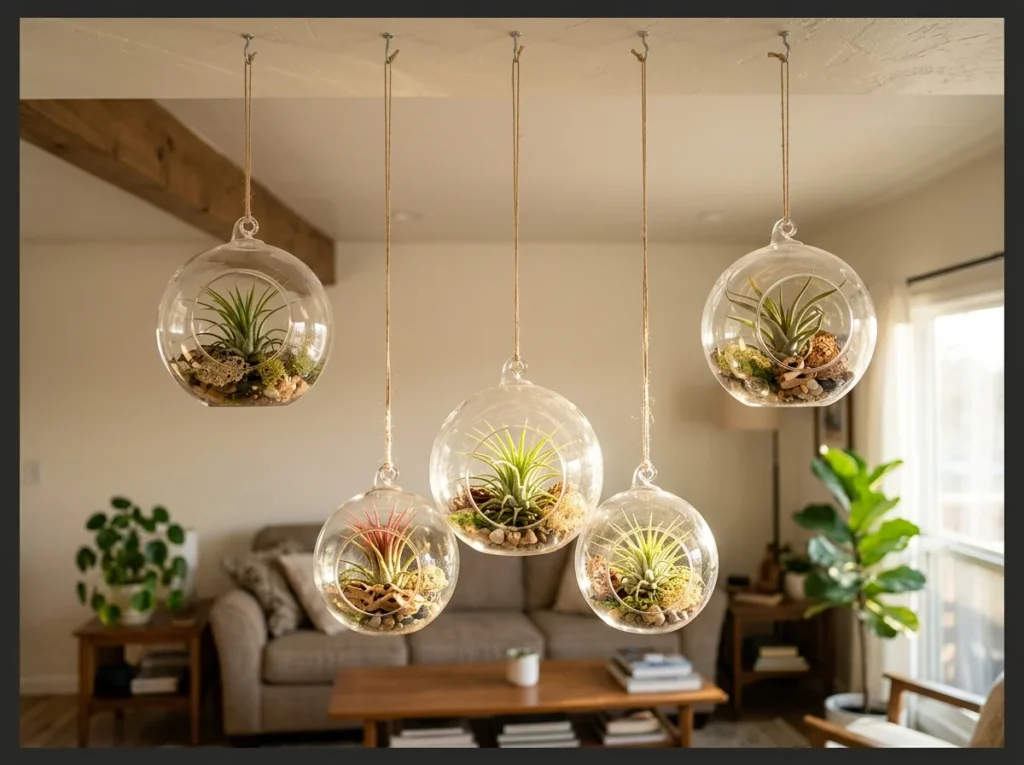
Tillandsia air plants suspended in clear glass globe terrariums create a floating garden effect that is unlike anything you can achieve with a standard potted plant arrangement. The glass magnifies the plant inside and the whole display looks almost sculptural.
Air plants need no soil at all. Remove them from the globes once a week and mist them thoroughly, or soak them in a bowl of water for twenty minutes then shake off the excess and return them to the globe once fully dry. They are genuinely one of the most low effort plant options available.
Indoor Herb Garden Near the Sofa
A small herb garden near the sofa brings a bit of function into what’s usually a purely decorative space. Basil, mint, and thyme are common choices since they tend to do well in bright indoor spots. This setup works best near a window that gets several hours of direct sunlight each day.
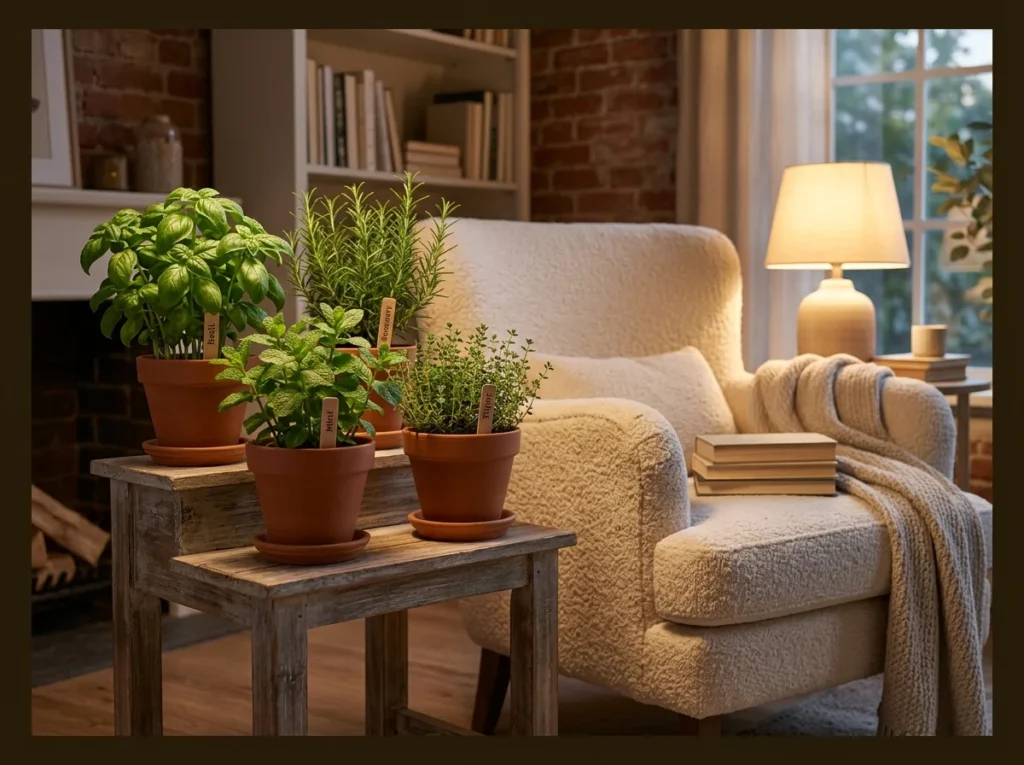
A small collection of herb pots on a wooden stand near the sofa adds fresh fragrance to the living room every time someone sits down nearby. Mint and basil release their scent with the slightest brush of a hand or passing sleeve.
Position the stand near the brightest available light source in the room. Herbs need more direct sun than most decorative houseplants, so a window facing south or west gives them the energy to stay bushy and productive rather than going leggy and thin.
Vertical Plant Wall Feature
A vertical plant wall uses modular planters to grow multiple plants in a single upright surface. This approach adds a lot of greenery without using any floor space at all. It tends to work best in living rooms with enough natural light to support several plants at once.
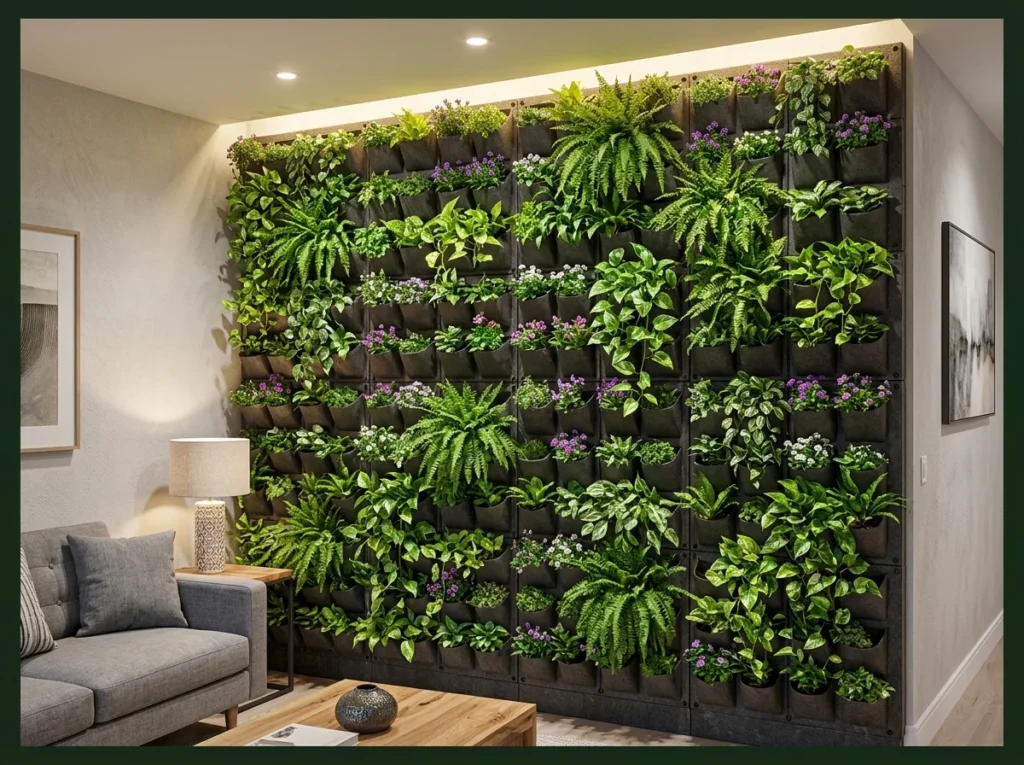
A vertical plant wall converts a flat, underused living room wall into a living green installation that genuinely stops people in their tracks when they enter the room. The scale and density of greenery creates an impact that no single large plant can match.
This works best on an interior wall where a drip irrigation line can run discreetly along the top to water all the pockets automatically. Use a mix of trailing plants like pothos and string of hearts alongside compact upright ferns and peace lilies for the fullest, most layered appearance.
Terracotta Pot Collection with Mixed Plants
Terracotta pots in varying sizes give a collection of plants a cohesive look even when the plant types differ. The natural clay color also tends to complement almost any living room palette. Grouping these pots together on a shelf or table creates a small indoor garden feel.
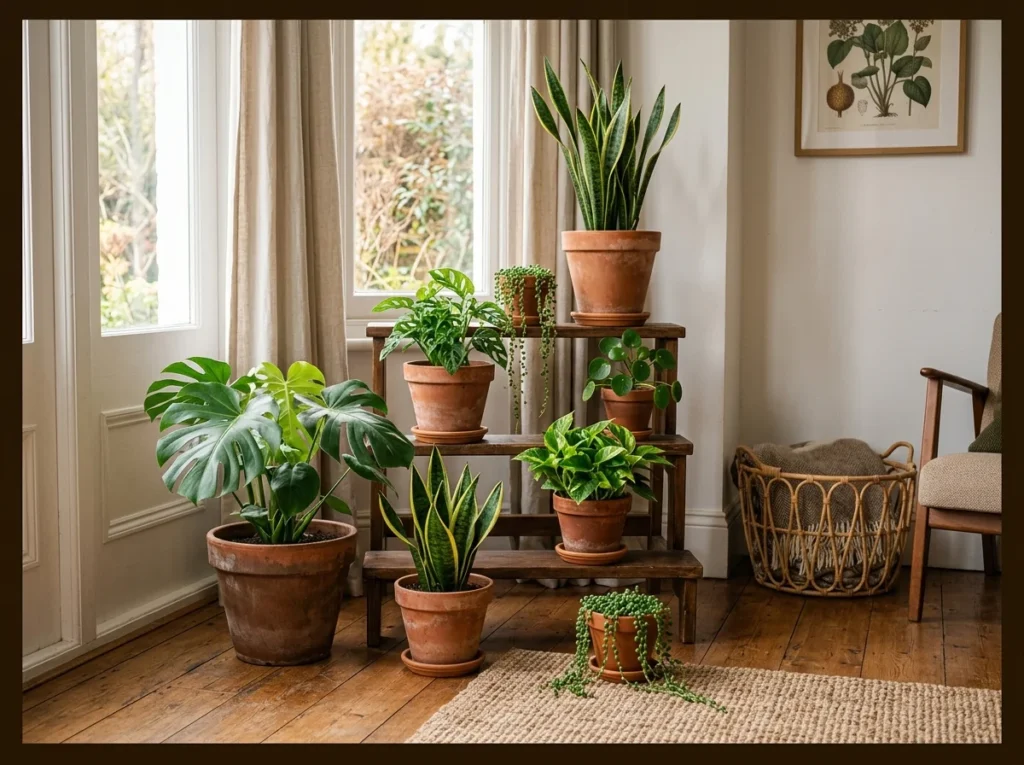
A collection of terracotta pots in various sizes holding different plant species creates a cohesive display through the shared material rather than through matching plants. The warm orange clay color unifies even very different plant shapes and leaf colors into one coordinated arrangement.
Start with three pots and add one new plant every few months as your confidence grows. The collection expands naturally and each new addition strengthens the overall display. Terracotta is also one of the most forgiving pot materials because the clay allows soil to breathe and dry between waterings.
Room Divider Plant Row
A row of tall plants placed side by side can loosely separate one part of a room from another. This works as a softer alternative to a solid wall or furniture based divider. Ficus trees or large palms are common choices since their height makes the separation more effective.
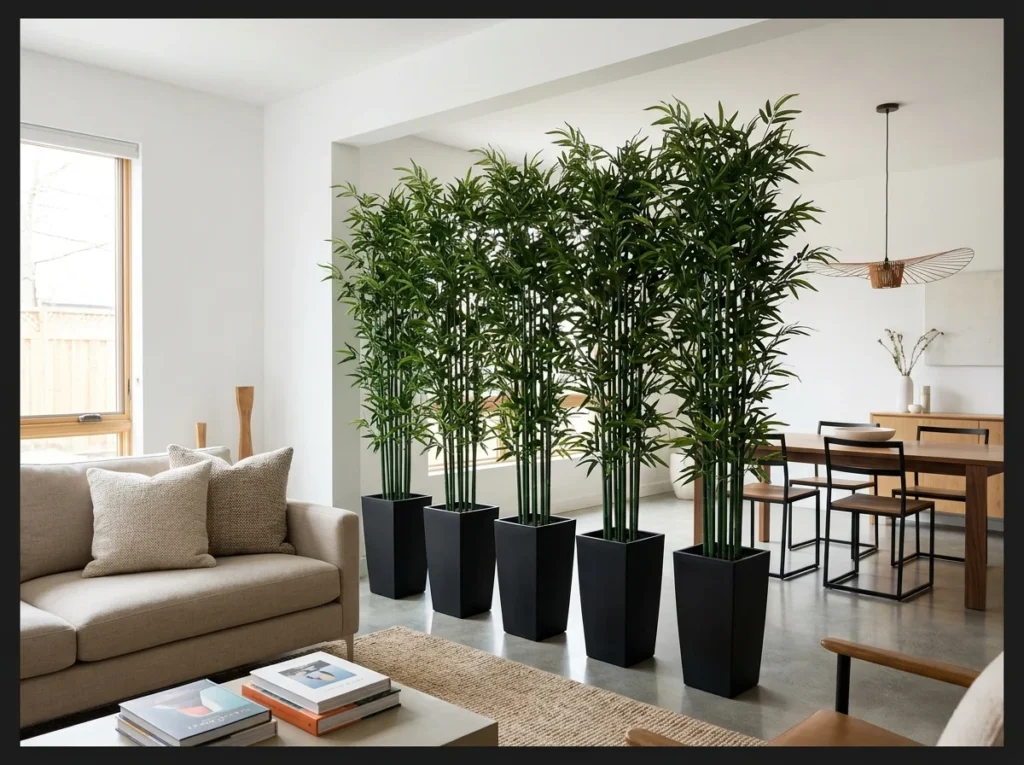
Placing a row of tall matching plants between the living and dining area of an open plan space creates a natural visual boundary without any construction or fixed partition. The plants define each zone while keeping the floor plan completely open and the light flowing between areas.
Tall bamboo, large areca palms, and mature snake plants all work well for this purpose because they grow densely enough to create a genuine visual barrier while remaining narrow enough to fit comfortably between zones without blocking foot traffic.
Cactus Garden on the Mantel
A cluster of small cacti arranged along a mantel adds greenery to a space usually reserved for decor alone. Their slow growth means this arrangement won’t need much rearranging over time. This is a good option for mantels that get decent sunlight from a nearby window.
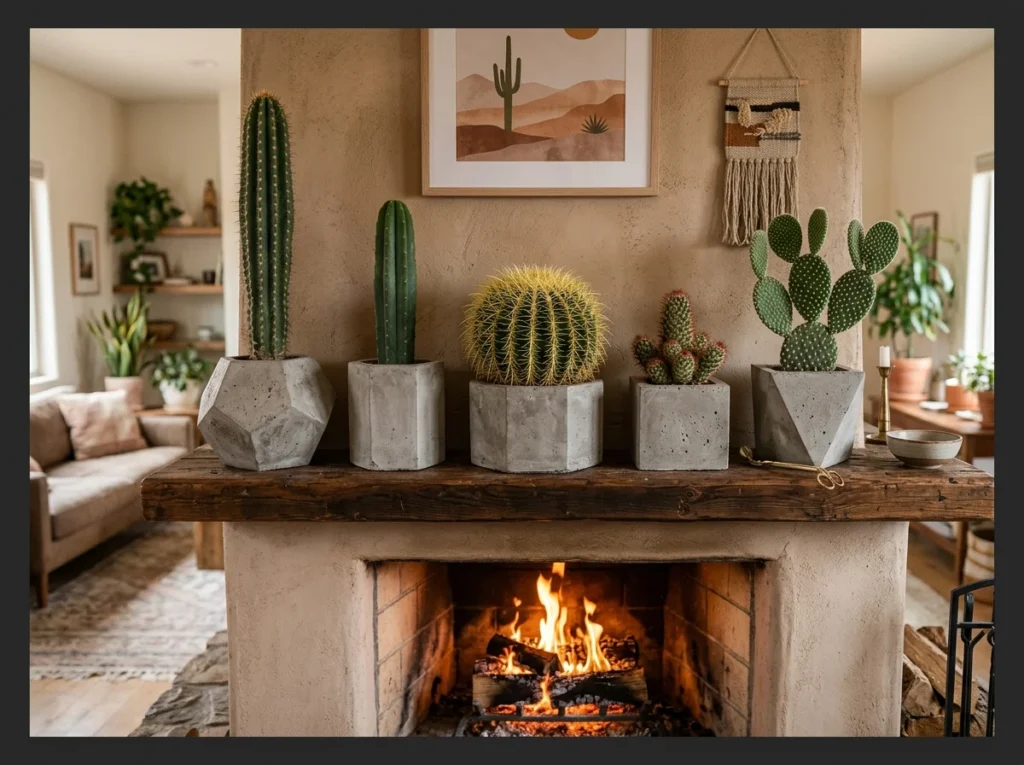
A curated selection of different cactus shapes and sizes on the fireplace mantel creates a desert landscape in miniature that reads as a deliberate sculptural arrangement rather than just a few forgotten pots. The geometric concrete planters suit the architectural quality of the cactus form perfectly.
Cacti on a mantel above an active fireplace appreciate the warmth during winter months when many other plants would struggle. They need very little water and the dry warm air that fireplaces create is genuinely their preferred environment. This is the right plant in the right spot.
Orchid Display on a Console Table
Orchids bring a more delicate, refined look compared to leafier houseplants. A console table gives them a spot to be seen without competing with other furniture for attention. This plant does need slightly more specific care around watering and light than many other options here.
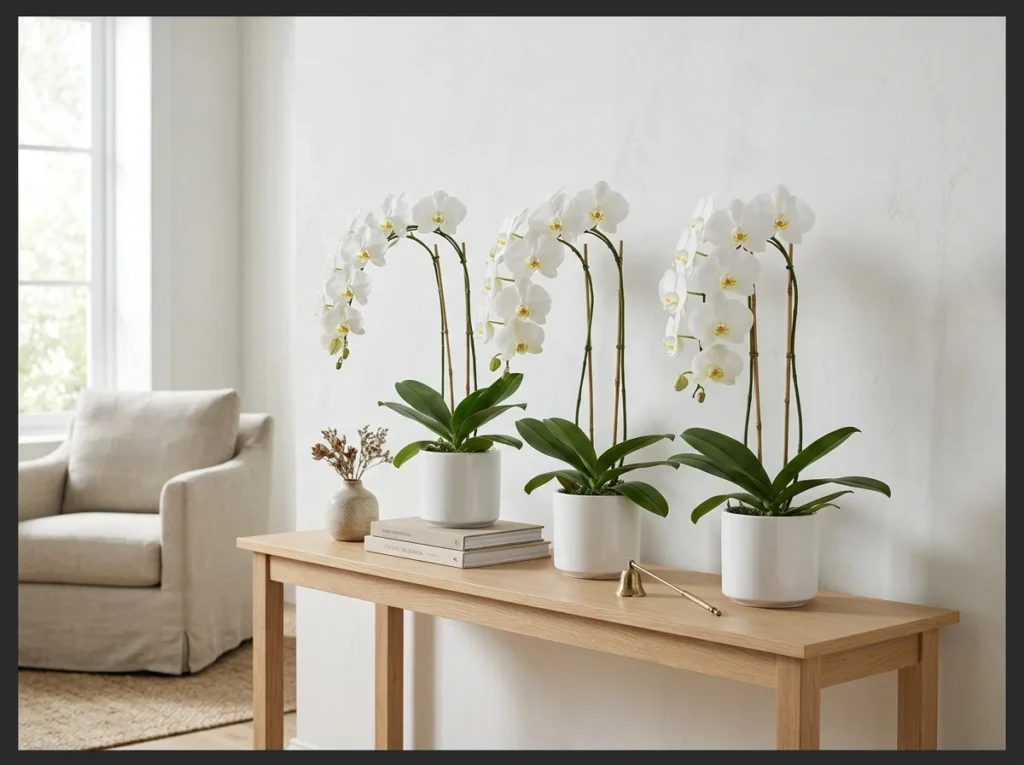
Three phalaenopsis orchids in matching white ceramic pots on a console table create one of the most elegant living room plant displays possible. The arching flower stems with multiple blooms look genuinely luxurious and last for several months with minimal care.
Water orchids by placing ice cubes on the soil once a week. The slow melt delivers moisture without overwatering, which is the most common orchid mistake. After blooming ends, cut the flower spike above the second node and a new one will emerge within a few months.
The same styling instinct works well on any console in the house, so a console dressed for the whole room is worth a look too.
Woven Basket Planter Grouping
Woven baskets used as planters add a natural texture that plastic or ceramic pots don’t provide. Grouping a few together, each holding a different plant, creates a cohesive but varied display. This pairing tends to suit living rooms already leaning toward a relaxed, natural aesthetic.
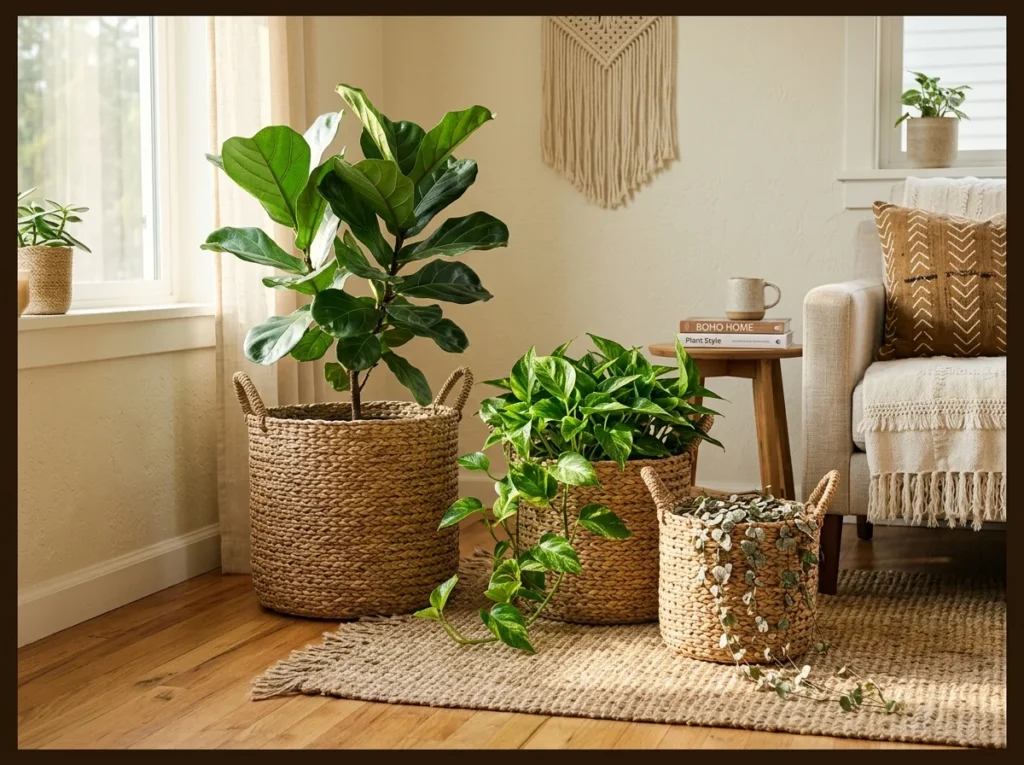
Woven seagrass or rattan basket planters add natural warm texture to any living room floor arrangement. The baskets hide standard plastic nursery pots instantly and the woven material suits coastal, bohemian, and Scandi home styles with equal ease.
Use three basket sizes together rather than all the same size. Tall basket at the back, medium in the middle, small at the front. This staggered arrangement creates visual depth that a single row of identical baskets lacks entirely. It makes the plant group look curated rather than collected.
Botanical Gallery Wall with Real Plants
This setup combines framed botanical prints with actual small plants mounted or shelved nearby. The mix of real and printed greenery adds depth that a standard gallery wall alone wouldn’t have. This works especially well on a wall that gets enough indirect light to support the live plants.
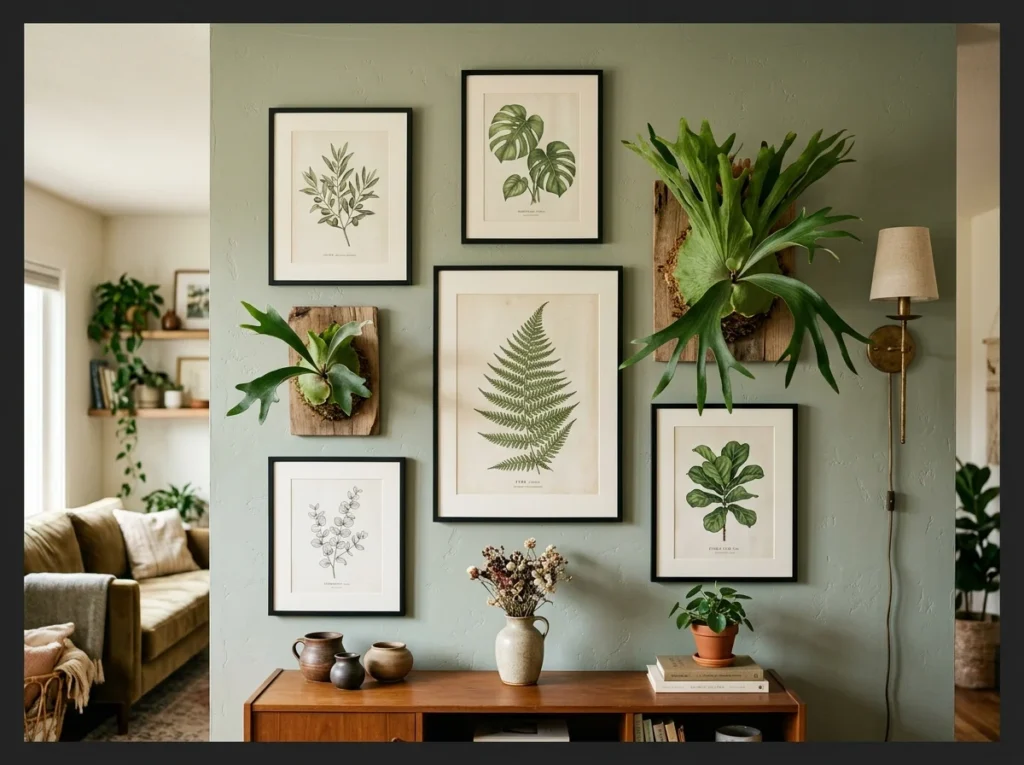
Combining framed botanical prints with mounted living plants creates a gallery wall that blurs the line between art and nature. The printed artwork and the real plants echo each other in subject and color, making the arrangement feel completely cohesive and intentional.
Staghorn ferns are particularly suited to this because they mount directly onto wooden plaques and hang on the wall like framed art. Mist them twice a week and soak the mount in water for twenty minutes monthly. They are slow growing and genuinely long lived when cared for properly.
Peace Lily in a Dark Reading Corner
Peace lilies tolerate lower light better than most flowering houseplants, which suits a dimmer reading nook. Their white blooms add a soft contrast against the plant’s otherwise deep green leaves. This plant also tends to droop noticeably when it needs water, making it easy to know when to check on it.
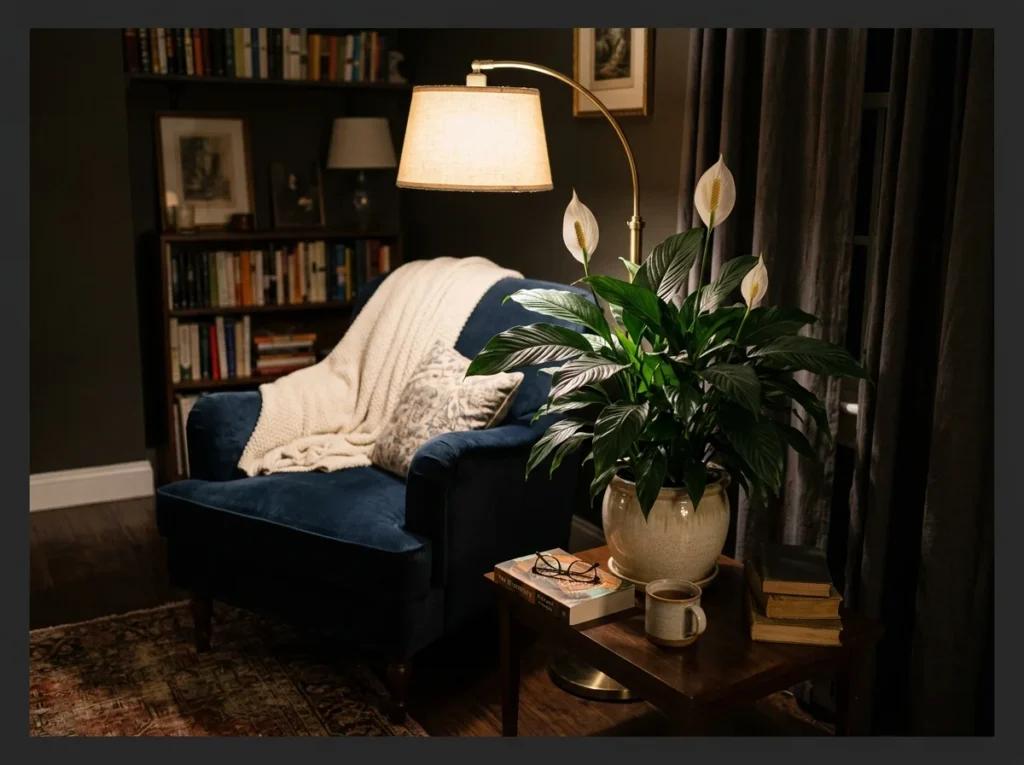
The peace lily is the best plant for a dim living room corner where almost nothing else will survive and grow happily. It tolerates low light conditions that would kill most other decorative houseplants and it communicates its needs clearly by drooping visibly when it needs water.
The white spathe flowers it produces periodically are genuinely elegant and last for weeks. Peace lily also tops most lists of air purifying houseplants. It does well in the kind of cool, low light reading corner that suits a comfortable armchair equally well.
If that corner could use a bit more attention beyond the plant, a reading spot worth settling into rounds out the whole vignette nicely.
ZZ Plant on an End Table
ZZ plants have thick, glossy leaves that hold up well even with inconsistent watering. Their compact size makes them a good fit for smaller surfaces like an end table. This plant is often recommended for anyone new to keeping houseplants since it’s fairly forgiving.
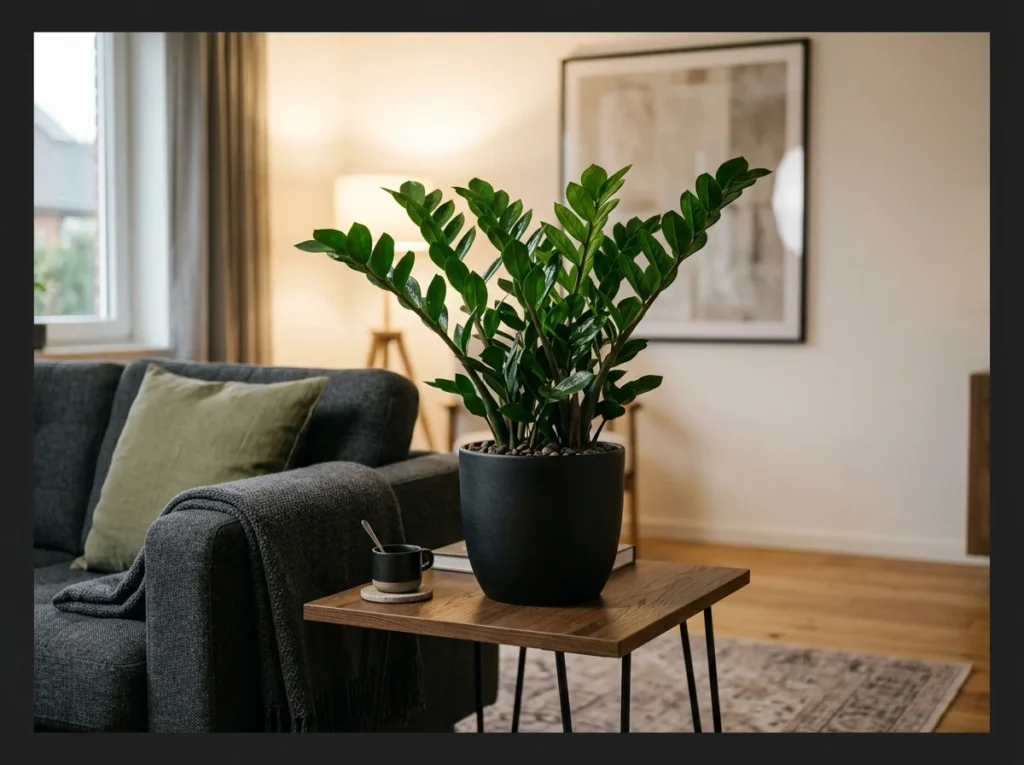
A ZZ plant on an end table beside the sofa adds a glossy, architectural presence to the seating area without overwhelming the space. The dark waxy leaves catch and reflect indoor lighting in a way that makes the plant look like it glows softly from within.
ZZ plants are nearly indestructible. They store water in thick underground rhizomes and can survive weeks without watering. They grow slowly and stay compact, which makes them genuinely suited to a small side table position where a faster growing plant would quickly outgrow its space.
Fern Display in a Humid Corner
Ferns tend to do best in corners with a bit more humidity than the rest of the room. Bathrooms or spots near a humidifier often give ferns the moisture they need to thrive. Their feathery fronds add a softer texture compared to the broader leaves of most other houseplants.
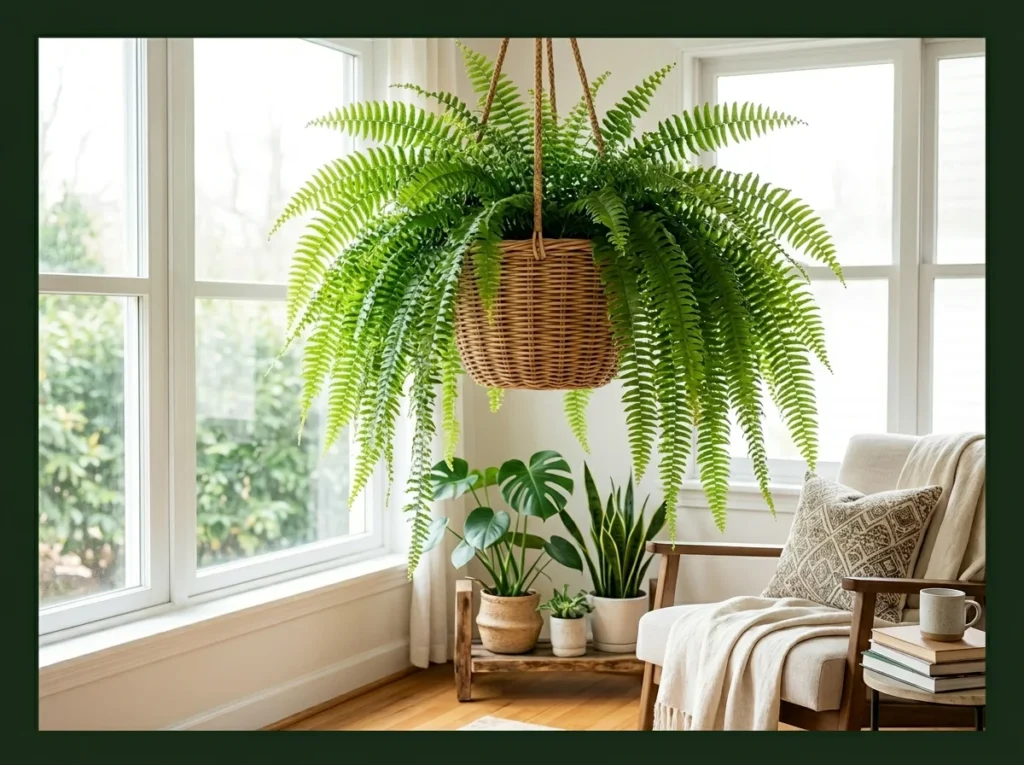
A large Boston fern in a hanging basket creates one of the most lush and tropical living room plant displays available. The long arching fronds cascade naturally downward and fill an otherwise empty overhead zone with vibrant soft green foliage.
Ferns need consistently moist soil and good humidity. In dry heated living rooms they may need misting every two to three days to prevent the frond tips from browning. Position near a window with bright indirect light and away from any heating vents that would dry the foliage too quickly.
Window Sill Succulent Row
A row of small succulents along a window sill makes use of a space that often goes unstyled. This setup works best in windows that get bright, direct light for at least part of the day. Mixing succulent shapes and pot colors adds variety without needing a lot of space.
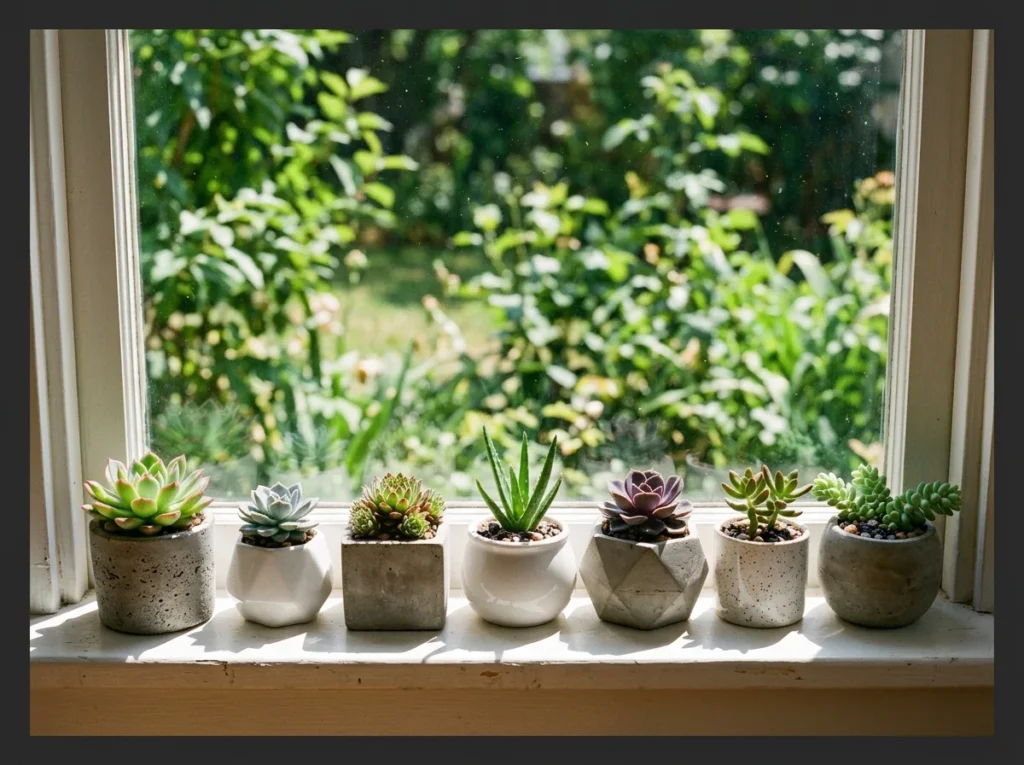
A row of small succulents lined up along the window sill is the lowest maintenance living room plant display on this list. They sit in the exact spot with the best light and ask for almost nothing except well draining soil and water every two weeks.
Mix different succulent varieties for the most visually interesting row. Combine flat rosette forms like echeveria with taller columnar forms and trailing varieties like string of pearls in a small pot at one end. Varying the pot material between concrete and ceramic keeps the row cohesive but not rigid.
Rattan Plant Stand Trio
Three rattan stands at varying heights create a layered display rather than a single flat row of plants. This setup works well in a corner where the different heights can be seen clearly from across the room. The natural material of the stands also ties in nicely with the plants sitting on top of them.
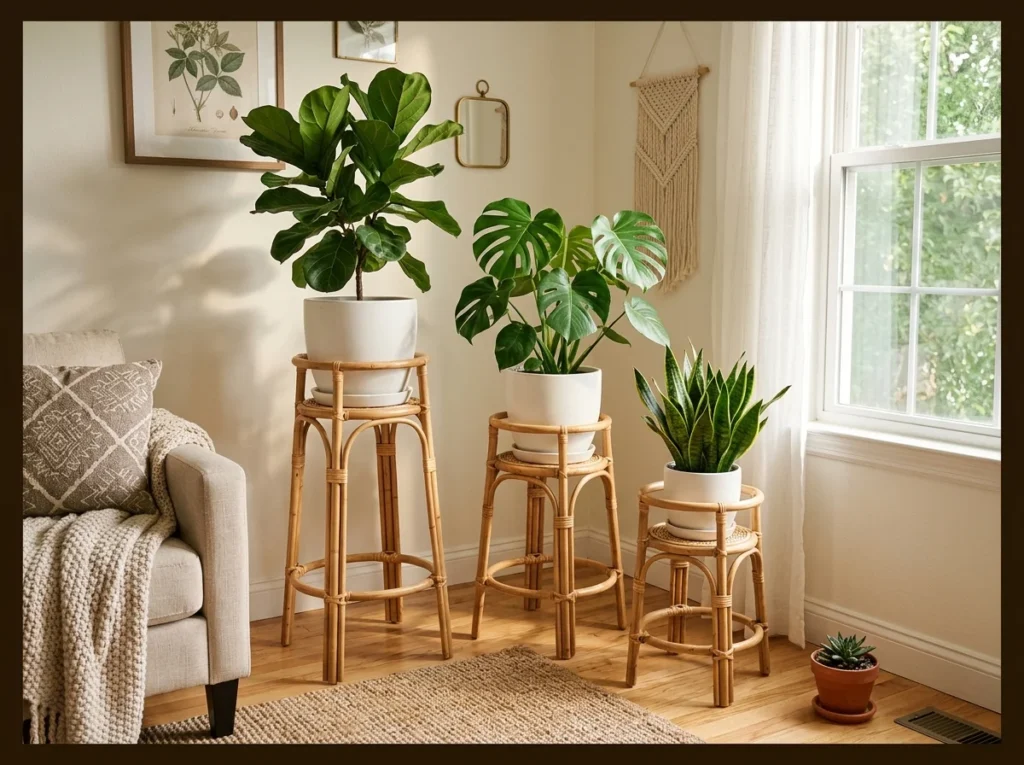
Three rattan plant stands at three different heights create a grouped plant display with natural vertical variation that looks genuinely designed rather than accidental. The warm honey tone of rattan suits terracotta, white, and natural wood living room palettes equally well.
Place the tallest stand at the back of the grouping with the largest plant, medium stand and plant in the middle, and the shortest at the front. This front to back depth creates a real sense of perspective in the arrangement that a flat row of identical height stands never achieves.
Propagation Station Vase Display
A propagation station uses small glass vases to root plant cuttings in water before they’re potted. Arranged together, the vases and visible roots become a display in their own right. This is a low cost way to grow the plant collection over time without buying new pots.
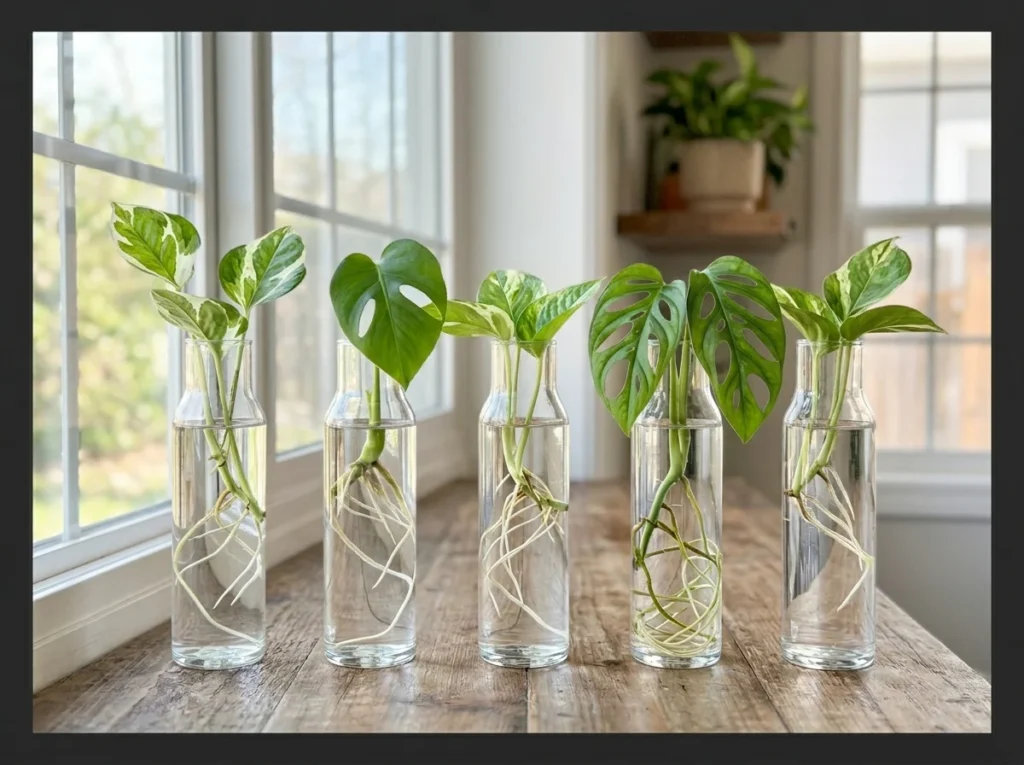
A row of clear glass propagation vases holding plant cuttings in water creates one of the most visually clean and modern living room plant displays available. The visible white root systems growing inside the glass are genuinely beautiful and endlessly fascinating to watch develop week by week.
Budget friendly option. Propagation cuttings cost nothing if taken from existing plants. Pothos, monstera, philodendron, and tradescantia all root readily in water. Change the water every five days to keep it clear and fresh. Once roots reach three inches long the cutting can be potted into soil or left in water permanently.
Fiddle Leaf Fig Duo in Matching Pots
Placing two fiddle leaf figs in matching pots on either side of a window or doorway creates symmetry. This pairing works especially well in living rooms with enough space to let both plants grow to their full height. Matching pots keep the focus on the plants themselves rather than on differing container styles.
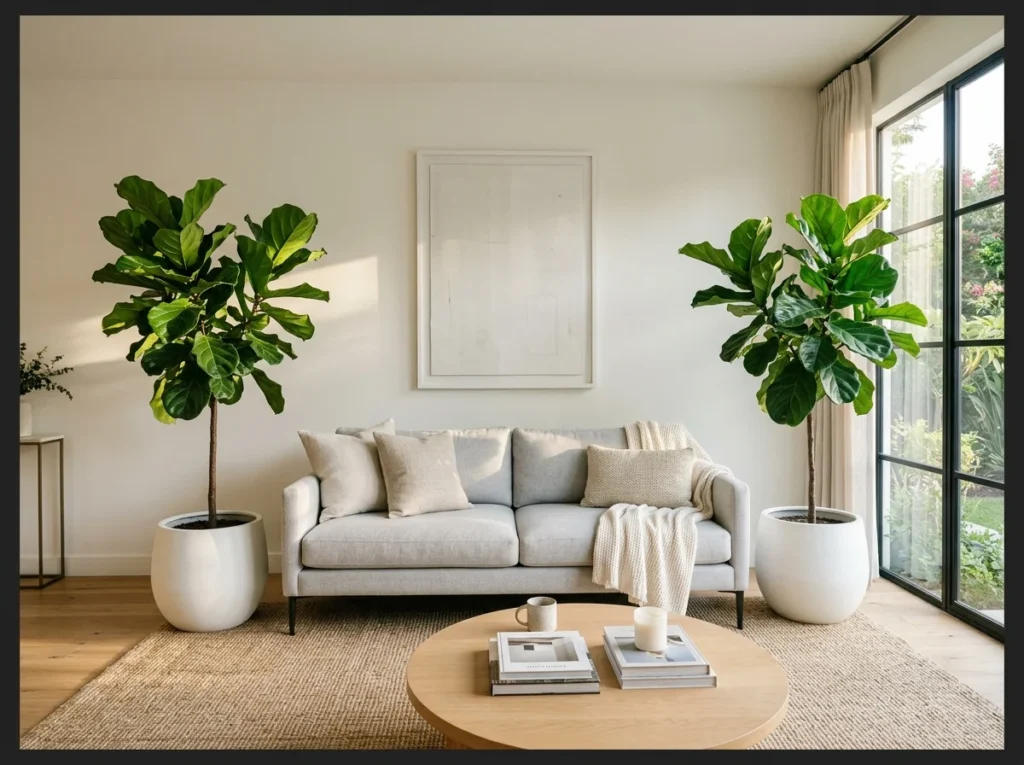
Placing two matching fiddle leaf figs in identical pots symmetrically on either side of the sofa creates a formal, hotel lobby quality of plant arrangement that looks genuinely luxurious. The symmetry signals intentional design in a way that a single plant never quite achieves on its own.
Use matching pots in exactly the same size and finish for this to work properly. Even a slight difference between the two pots breaks the symmetry and makes the arrangement look accidental rather than deliberate. Water both plants identically and rotate them quarterly so both develop the same shape and density over time.
Conclusion
Plants make a living room feel genuinely inhabited in a way that no piece of furniture or decorative object can replicate. They add color, texture, movement, fragrance, and life to a space that would otherwise read as a static arrangement of objects.
Pick two or three ideas from this list that match your light conditions and your realistic maintenance commitment. Start with the easiest plants on this list if you are new to indoor gardening. The skills and the confidence build naturally once you have one healthy, thriving plant in the room. Everything else follows from there.
And once your green collection grows, a tv wall that plants can soften is a natural next spot to bring some of it.