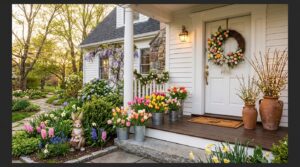
Your front yard is the first thing anyone sees about your home. A well-designed garden transforms that first impression from forgettable to genuinely stunning.
These ideas work for every home style, garden size, and budget level.
Whichever direction you choose, the goal is the same: curb appeal that turns heads the moment someone pulls into the driveway.
Let’s explore the ideas.
Layered Planting Border Along the Facade
A layered border stacks plants by height, with taller shrubs at the back and low growers up front. This technique keeps the foundation of the house from looking bare or flat. It works well along most facades regardless of the home’s architectural style.
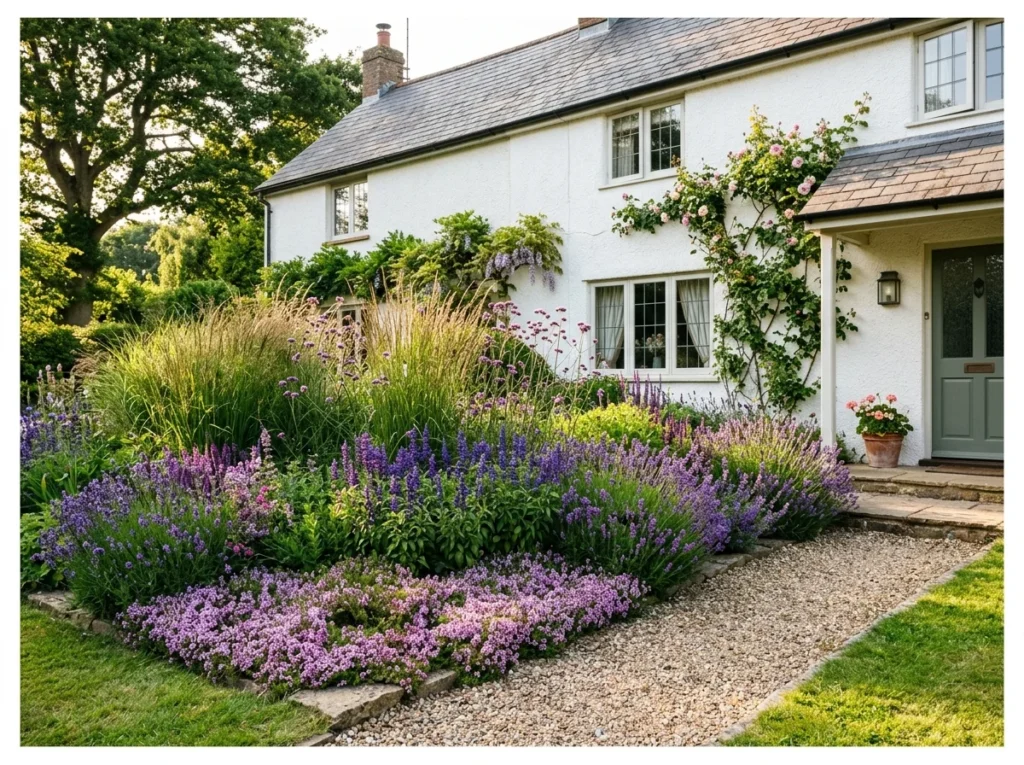
A layered planting border along the home facade uses plants of different heights from tall at the back against the wall to low at the front edge to create depth, texture, and a sense of abundance that a single row of plants can never achieve.
Three clear height tiers are all that is needed. Tall ornamental grasses or shrubs at the back, medium perennials like lavender, salvia, or agapanthus in the middle, and low groundcovers like creeping thyme or sedum at the front. The graduated heights create a naturalistic planting effect that looks professionally designed and genuinely beautiful across every season.
One design principle, endlessly beautiful results.
Cottage Garden Front Yard
Cottage gardens lean into a slightly overgrown, informal mix of flowers rather than neat rows. Plants are often left to self seed and spread naturally from one season to the next. This style suits a home wanting a relaxed, romantic front yard feel.
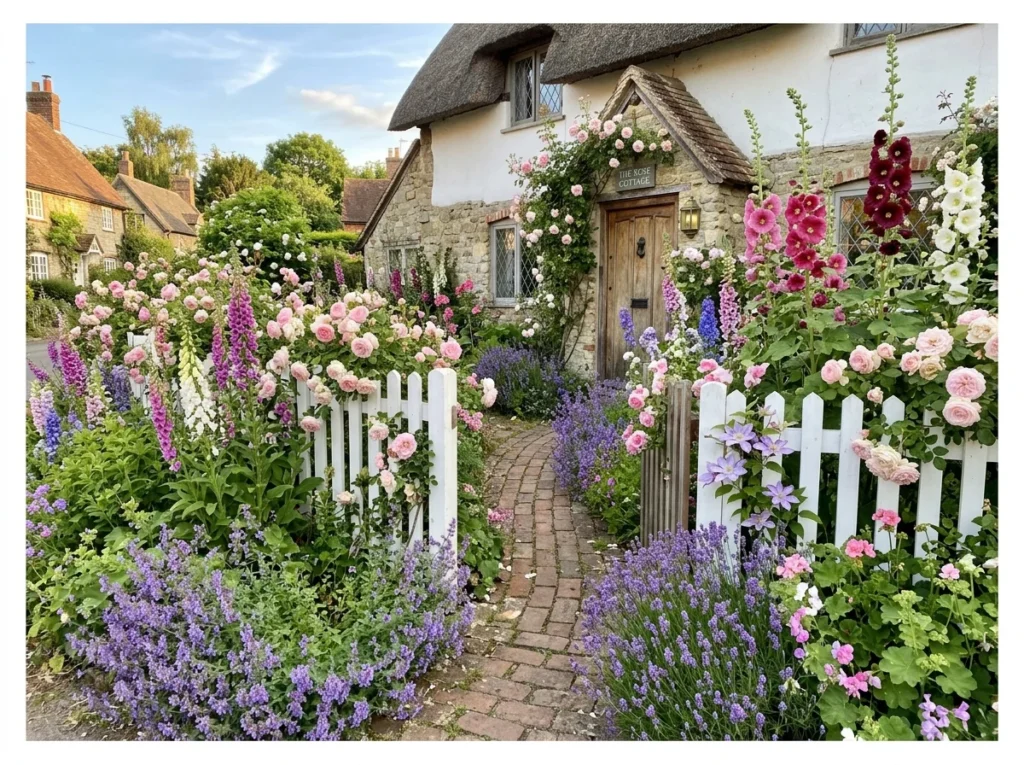
A cottage garden front yard uses abundant flowering plants in soft pastel tones that spill, tumble, and layer over each other in a way that looks simultaneously wild and completely intentional. Roses, foxgloves, lavender, hollyhocks, and sweet peas define this beloved style.
The secret to cottage garden design is planting in generous drifts rather than individual specimens and allowing plants to self-seed naturally in subsequent years. The garden becomes richer and more abundant over time with very little intervention. The structural framework of a clean path and a defined fence edge keeps the abundant planting from looking unkempt.
More beautiful every single year.
Drought-Tolerant Front Yard Garden
Drought tolerant gardens rely on plants like lavender, sedum and ornamental grasses that need little watering. This approach cuts down on maintenance and water bills over time. It suits regions with hot summers or areas facing water restrictions.
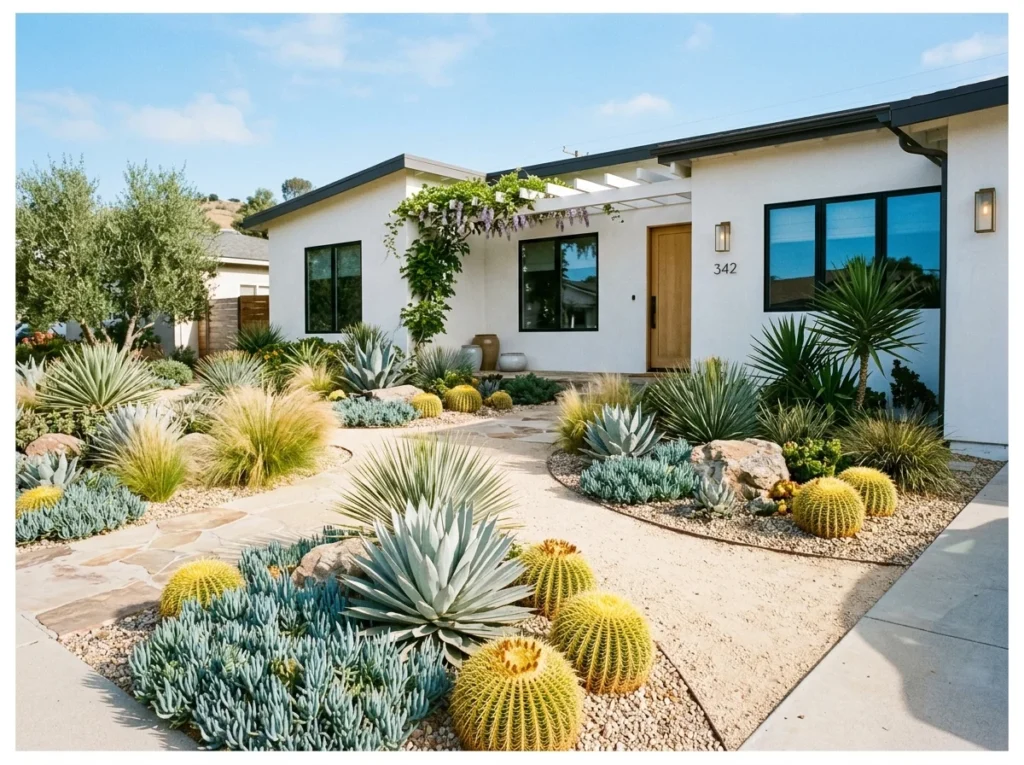
A drought-tolerant front yard replaces water-hungry lawn and high-maintenance annuals with succulents, native grasses, and Mediterranean plants that thrive on minimal irrigation once established. The garden looks intentional and contemporary while eliminating ongoing watering costs and effort.
Agaves, ornamental grasses, lavender, rosemary, and drought-hardy groundcovers all suit this approach beautifully. The key is choosing plants with interesting form and varied textures rather than relying on flower color for visual interest. Silver foliage, architectural shapes, and varied plant heights create a year-round composition that needs almost no maintenance after the first season.
Water-wise, low-maintenance, and genuinely contemporary.
Symmetrical Formal Garden
Formal gardens use mirrored planting on either side of a central path or entrance. Clipped hedges and structured beds give the whole yard a sense of order. This style suits homes with a more traditional or classical architectural look.
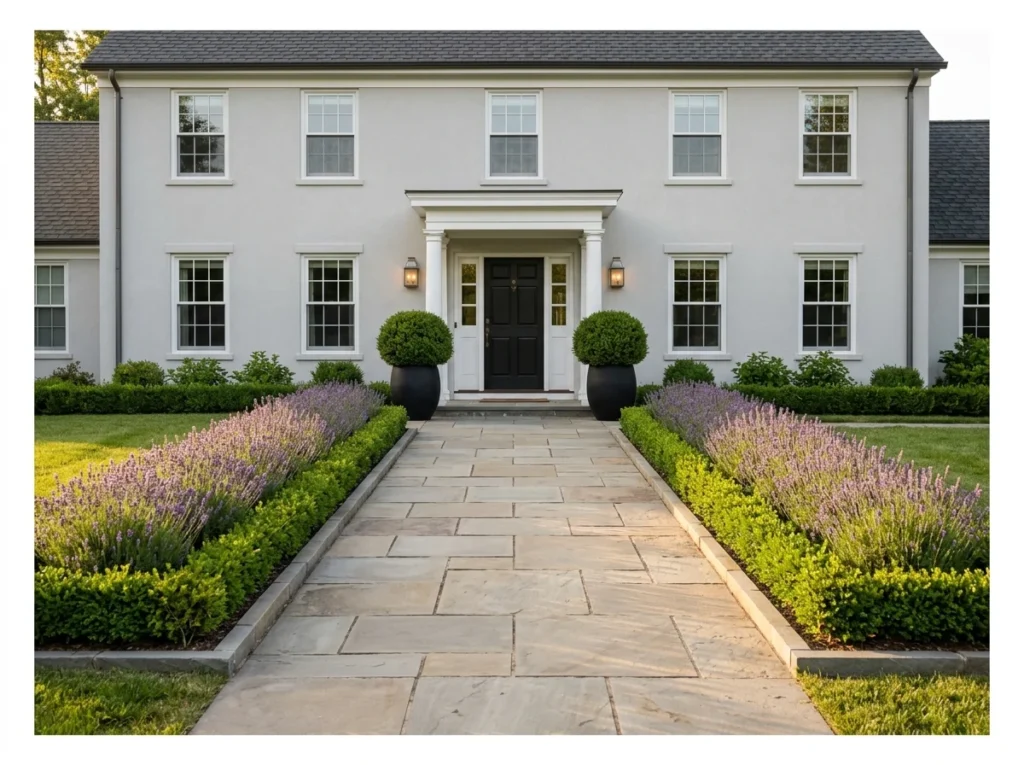
A symmetrical formal garden places identical elements on each side of the central axis from the street to the front door. Matching planters, identical garden beds, and balanced planting create a front yard that reads as deliberately designed and confidently precise from the street.
Symmetry communicates care and intention more clearly than almost any other design approach. It suits Georgian, Colonial, and contemporary homes with centered front doors and balanced facade proportions perfectly. Even a simple symmetrical arrangement of two matching boxwood topiaries flanking the front path creates an immediate sense of order and quality.
That same sense of order carries through beautifully when the hardscaping around it, like a driveway that feels intentional, matches the garden’s precision.
Native Plant Front Yard Garden
Native plants are already adapted to the local climate, so they need less water and care overall. They also tend to support local pollinators and wildlife better than imported species. This approach suits homeowners wanting a lower maintenance yard that still looks intentional.
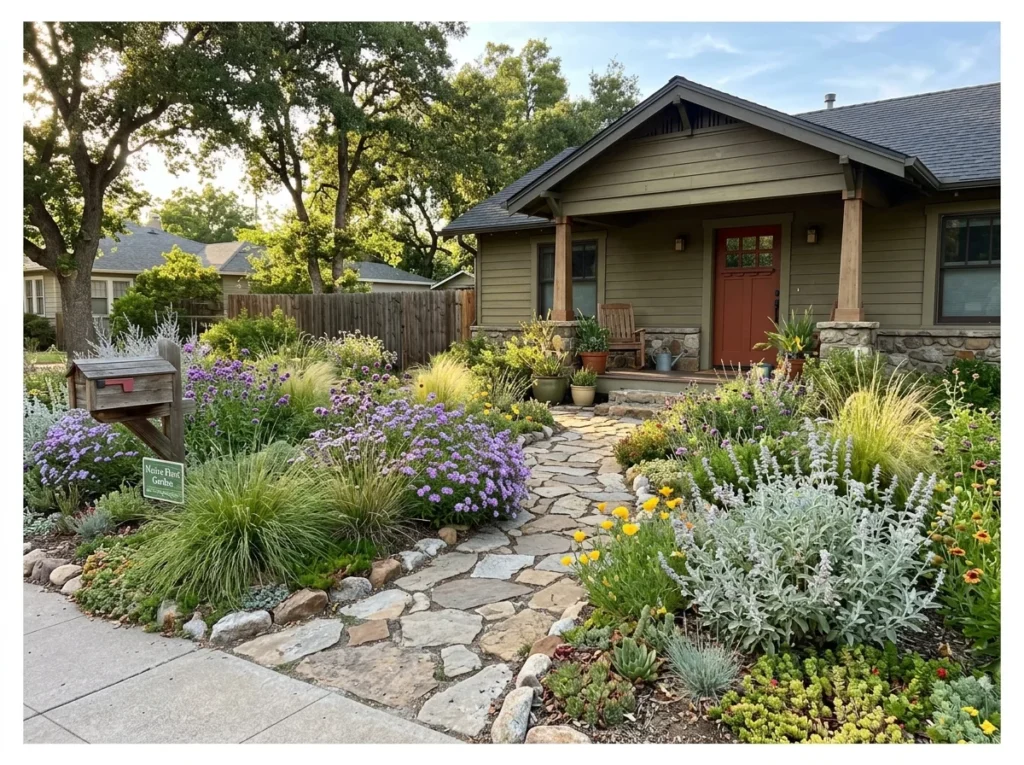
A native plant front yard garden uses plants indigenous to your specific region that evolved alongside local climate, rainfall, and soil conditions. They establish quickly, require minimal irrigation once settled, and support local birds, bees, and butterflies in ways that exotic ornamental plants cannot.
The look is naturalistic and organic rather than formally controlled, which suits informal homes, bungalows, and anyone who wants their front yard to feel genuinely connected to the broader landscape. Native gardens also require less ongoing maintenance than conventional ornamental gardens because the plants are working with their environment rather than against it.
Beautiful, ecological, and completely self-sufficient.
Japanese-Inspired Front Garden
This style favors restraint, using gravel, stone and carefully pruned plants over abundant flowers. A single specimen tree or a small water feature often becomes the focal point. It suits a front yard wanting a calm, contemplative feel rather than bold color.
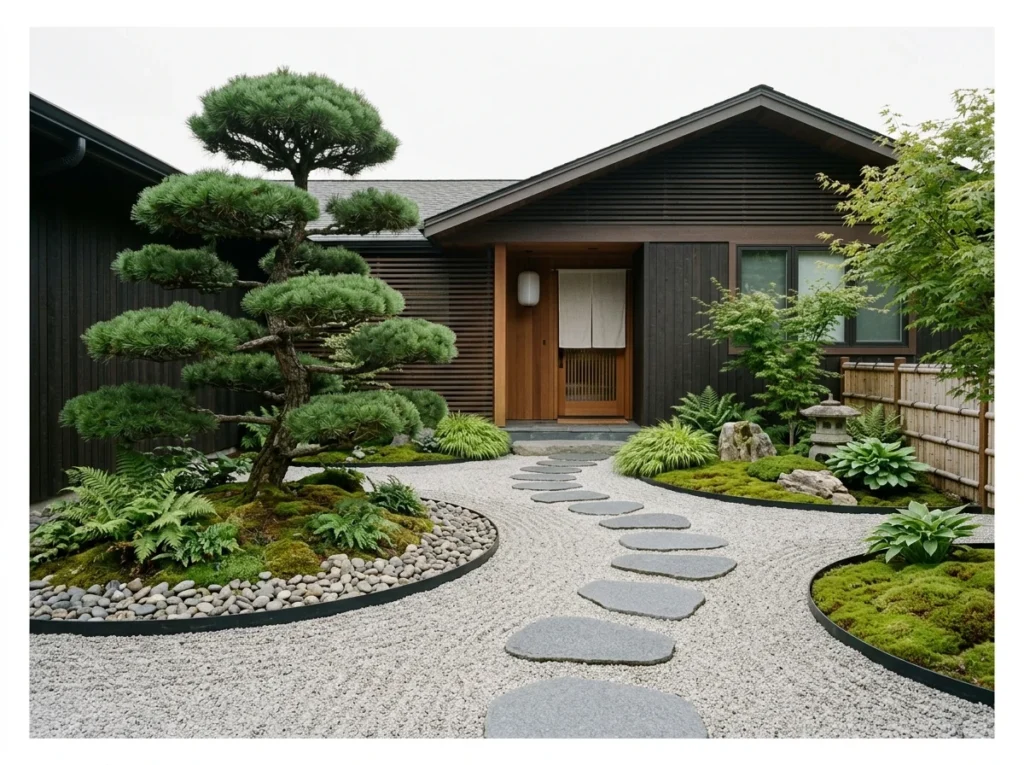
A Japanese-inspired front garden applies the principles of restraint, intentionality, and natural beauty that define Japanese garden design. Raked gravel representing water, carefully placed stepping stones, one or two precisely shaped specimen plants, and clean dark edging create a composition of extraordinary calm.
Every element in a Japanese garden earns its place. Remove anything that does not contribute directly to the composition. The resulting restraint is what gives this style its distinctive quality. Even a small front yard executed with genuine Japanese design principles creates a garden that stands completely apart from every other property on the street.
Front Yard with Statement Tree
A single well placed tree can anchor the entire front yard on its own. Species with interesting bark, shape or seasonal color tend to work best in this role. This approach keeps the rest of the yard simple, letting the tree do most of the visual work.
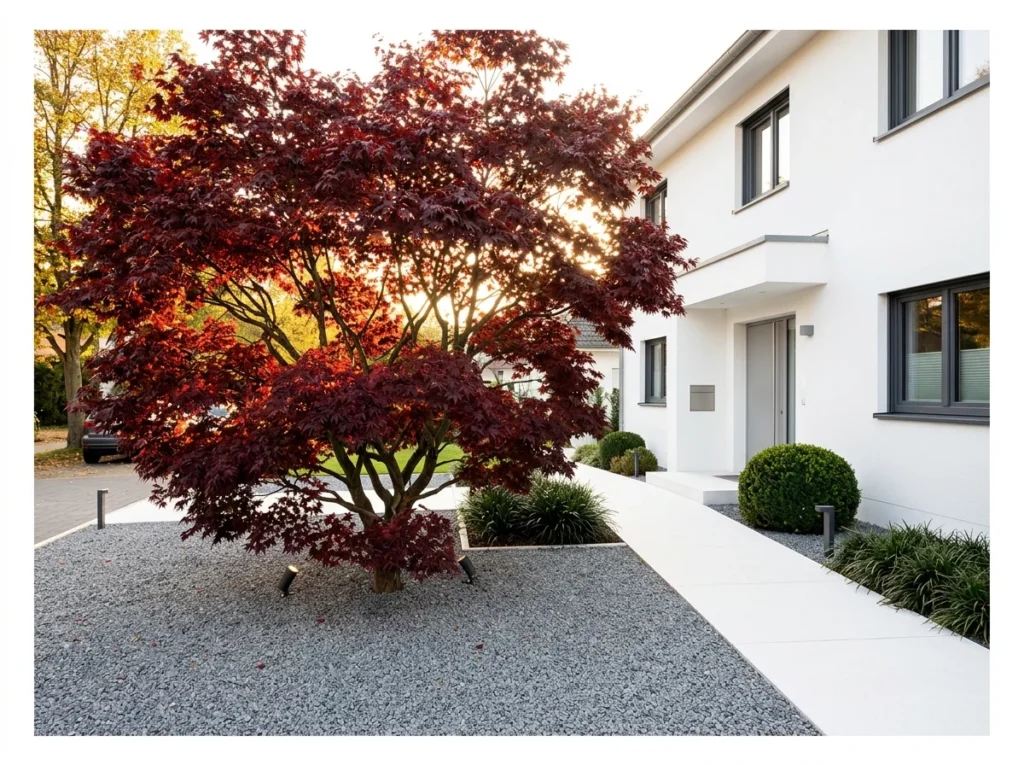
A single well-chosen statement tree planted in the front yard creates the focal point that anchors the entire garden design. One beautiful tree in the right position does more for curb appeal than any combination of smaller plants and shrubs scattered across a garden bed.
Japanese maples, flowering crabapples, ornamental pears, olive trees, and Magnolia grandiflora all suit front yard statement tree applications beautifully. Choose based on your climate and the mature size relative to your front yard proportions. A correctly scaled tree just keeps getting better every year while an oversized choice eventually becomes a problem.
One great tree changes everything.
Low-Maintenance Gravel Garden
Gravel gardens replace grass with a mix of stone and drought hardy plants poking through. This setup cuts down significantly on mowing and watering compared to a traditional lawn. It suits homeowners wanting a modern look with minimal ongoing upkeep.
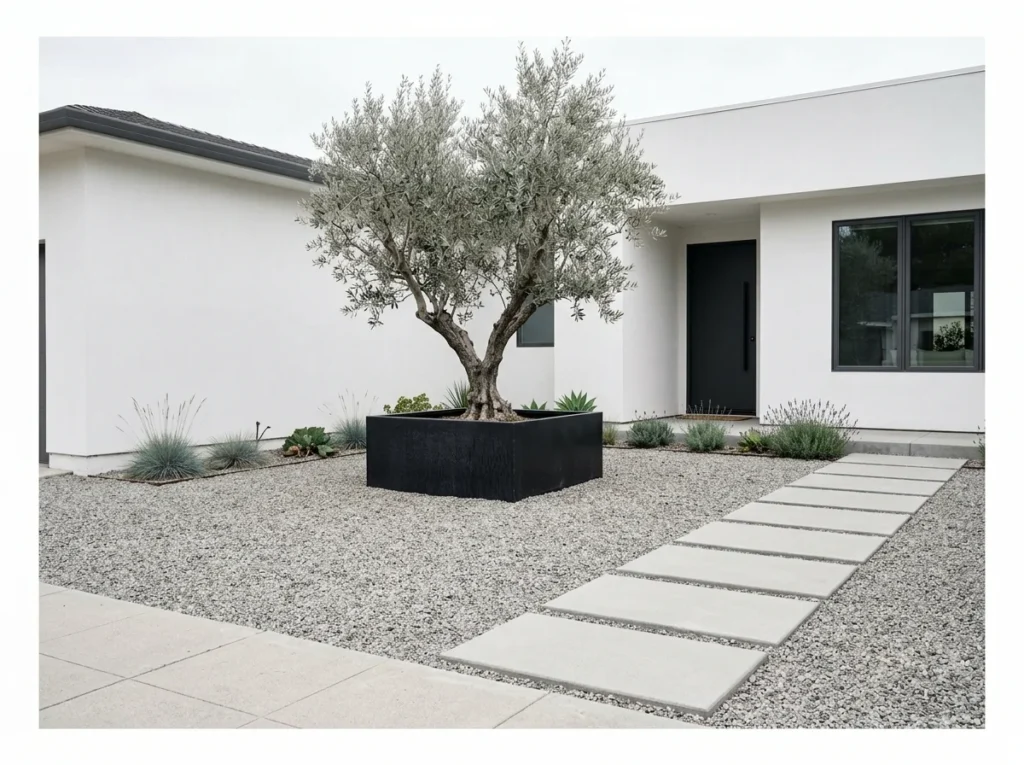
A gravel front garden replaces lawn entirely with a layer of crushed stone or decomposed granite, creating a genuinely low-maintenance front yard that looks deliberately designed. The key is choosing the right gravel color for your home’s exterior palette and containing it with precise steel or aluminum edging.
Lay geotextile landscape fabric beneath the gravel to permanently suppress weeds. Plant occasional specimen plants or small shrubs through the fabric for visual interest. The result looks intentional and contemporary while eliminating mowing, irrigation, and most weekly maintenance permanently.
If minimal upkeep is the priority, it’s worth browsing low-care greenery that still impresses before committing to a full gravel layout.
Budget-friendly option that never needs mowing.
Edged Lawn with Planting Borders
A clearly edged lawn keeps grass from creeping into the planting beds around it. This small detail makes even a simple yard look more deliberate and cared for. Borders along the edge can hold anything from flowers to low shrubs.
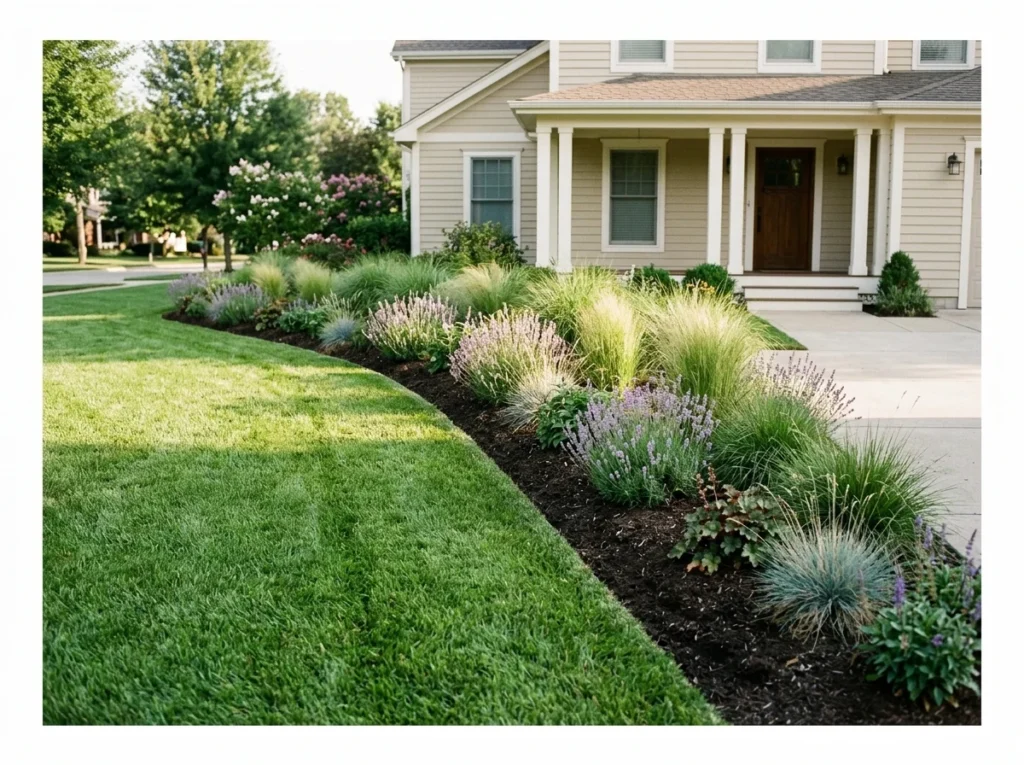
A well-edged lawn with generous planting borders along the house facade and path edges is one of the most universally effective front yard garden designs. The combination of clean grass and lush planting creates a classic curb appeal that works with virtually every home style.
The edging is the most important element. Clean, precisely cut edges between the lawn and garden beds communicate care and attention immediately. Use a half-moon edging tool or rotary edger every three to four weeks and install permanent steel edging strips to maintain the separation between lawn and garden bed with minimal ongoing effort.
Pollinator Garden
Pollinator gardens focus on flowers that attract bees, butterflies and other beneficial insects. Plants are often chosen to bloom in succession, keeping food available across different seasons. This style suits homeowners wanting a yard that actively supports local ecosystems.
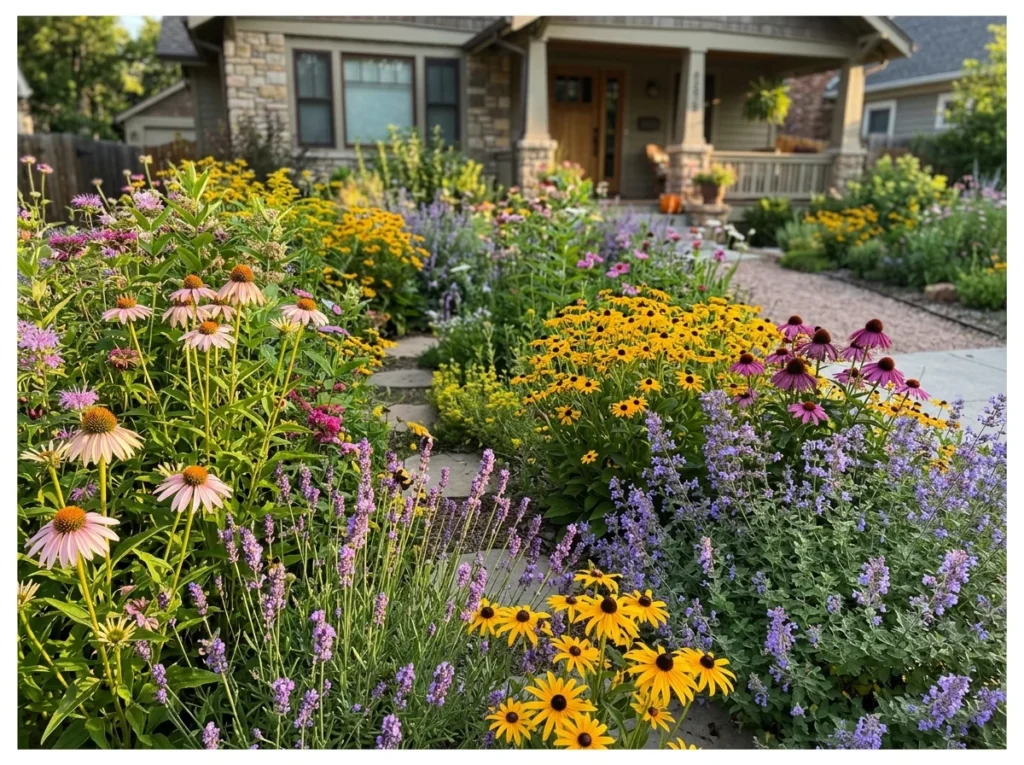
A pollinator front yard garden plants flowering perennials specifically chosen to attract and support bees, butterflies, and other beneficial insects. Echinacea, lavender, catmint, black-eyed Susans, salvia, and alliums all provide nectar and pollen through different parts of the season.
Beyond the ecological benefit, a pollinator garden is genuinely beautiful throughout its long flowering season. The constant activity of bees and butterflies visiting the flowers adds a living, dynamic quality to the garden that conventional planting schemes lack. It is also one of the most low-maintenance garden approaches because the plants are left to grow and seed naturally.
A garden that gives back to the environment.
Front Yard Rose Garden
Roses bring both color and fragrance right up to the front of the house. Climbing varieties can also be trained along a fence, trellis or porch railing. This style suits a more traditional front yard wanting a classic, romantic touch.
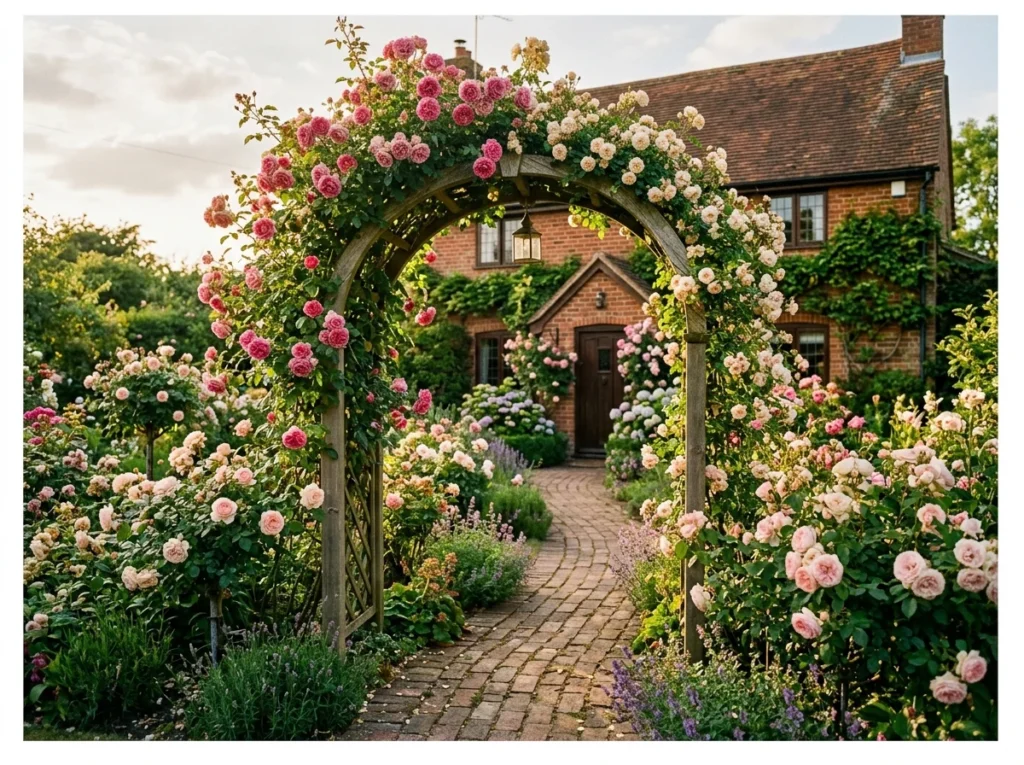
A front yard rose garden creates an instantly romantic and memorable first impression that few other planting schemes can match. Roses in soft pink, cream, blush, and white tones suit most home exterior colors and provide continuous flowering from late spring through autumn.
Modern disease-resistant rose varieties require far less maintenance than heritage types, making a front yard rose garden more achievable for everyday gardeners than it once was. Climbing roses trained over an entrance arch, standard rose bushes flanking the path, and low-growing groundcover roses at the border edges create a layered composition that works beautifully at every scale.
Romantic, fragrant, and timelessly beautiful.
Modern Minimalist Front Garden
Minimalist front gardens rely on clean lines, structured plantings and a limited color palette. Often just one or two plant species repeat throughout the space rather than many varieties. This style suits contemporary homes with simple, geometric architecture.
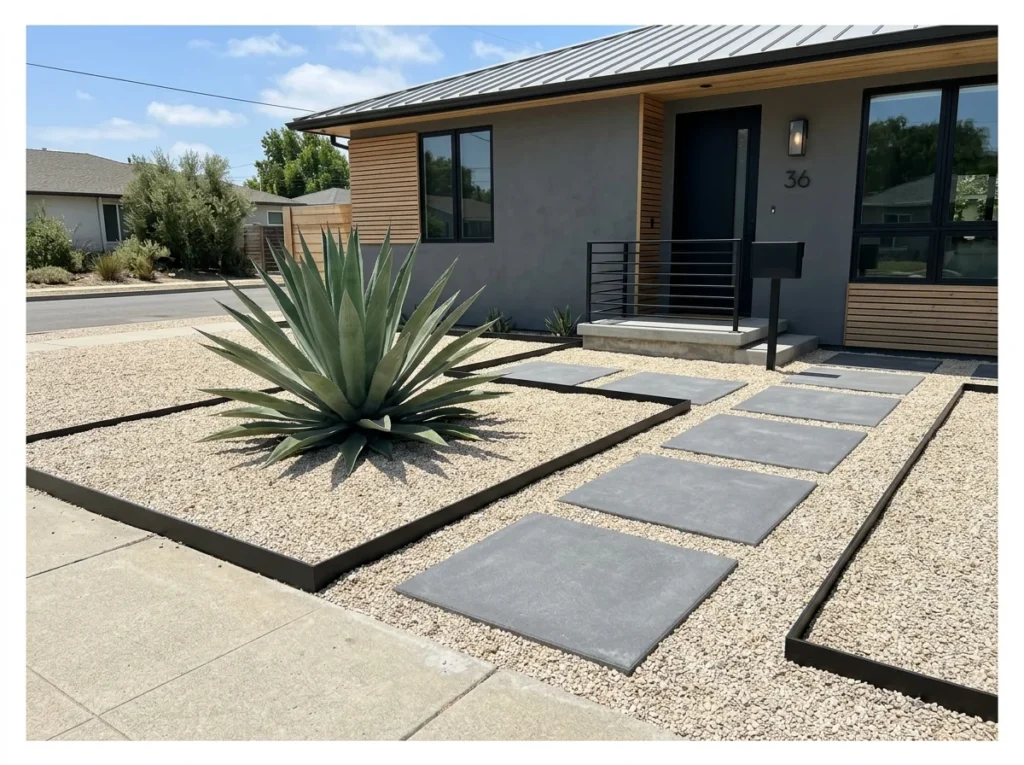
A modern minimalist front garden uses an extremely limited material palette to create a composition that feels architectural rather than decorative. One gravel type, one paving material, one or two plant species placed with absolute precision, and clean dark edging are the only elements required.
The discipline of using so few elements is what gives minimalist garden design its quiet authority. Resist every impulse to add more. When the composition feels balanced and complete with minimal elements, it is finished. Adding more always reduces the impact rather than enhancing it.
Less is genuinely more with this approach.
Front Yard Herb Garden
Growing herbs right at the front of the house puts them within easy reach for cooking. Rosemary, lavender and thyme all hold their shape well and need relatively little care. This style doubles as both a practical garden and an attractive planting bed.
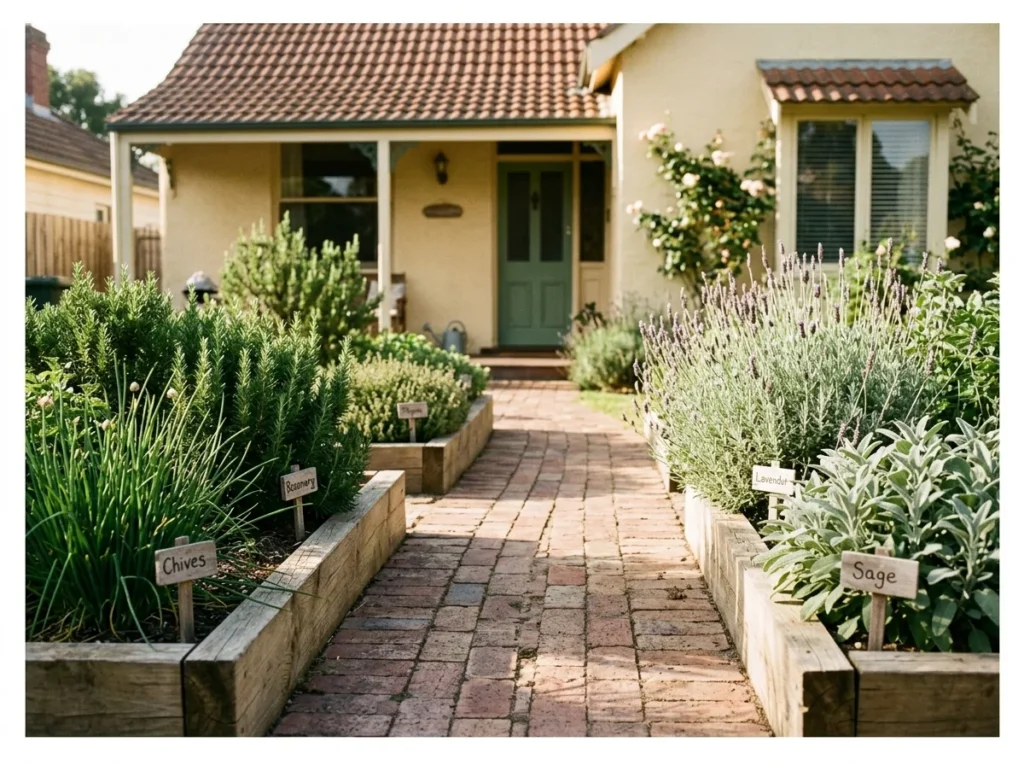
A front yard herb garden combines beauty and genuine daily usefulness in a way that most purely ornamental front gardens cannot. Rosemary, lavender, sage, thyme, lemon balm, and chives all produce attractive foliage and flowers while providing fresh herbs for cooking just steps from the front door.
Raise the herbs in low timber or steel beds flanking the front path for the most organized and visually resolved composition. Group herbs by water requirements and sun preference within each bed. The garden releases natural fragrance in warm weather and provides fresh cut herbs for the kitchen from spring through autumn.
Beautiful, fragrant, and genuinely useful.
Colorful Annual Planting Beds
Annual flowers bloom for one season, which means the bed can be redesigned completely each year. This flexibility makes it easy to experiment with new color combinations regularly. It suits homeowners who enjoy changing up their front yard look often.
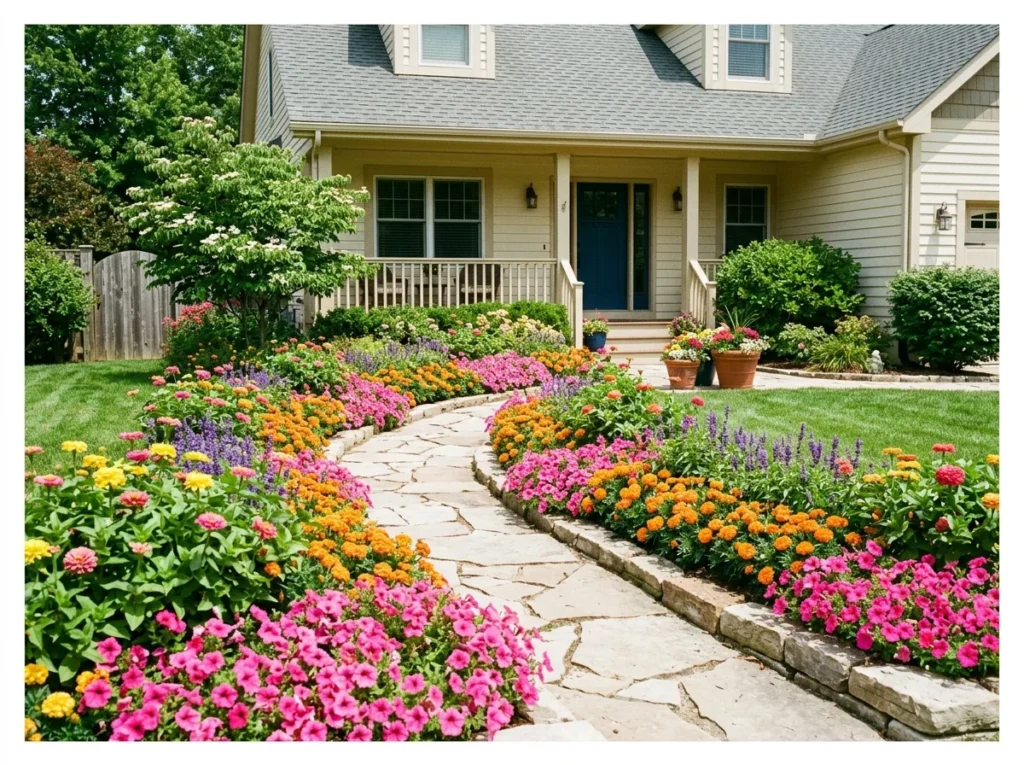
Annual planting beds filled with petunias, marigolds, impatiens, zinnias, and salvias create the most vibrant and colorful front yard display possible during the warm growing season. The color density that annuals achieve in a single season is unmatched by any perennial combination.
The key to great annual bed design is choosing a cohesive color palette rather than planting a random assortment of colors. Two or three complementary colors planted in generous drifts rather than individual plants scattered throughout creates a bold, resolved display. Replace the planting each season for a fresh look every year.
Bold color, maximum cheerfulness.
Front Yard with Ornamental Grasses
Ornamental grasses add movement and texture that flowers alone cannot quite provide. They also tend to hold visual interest through fall and into winter as they dry out. This style suits a yard wanting a softer, more naturalistic planting scheme.
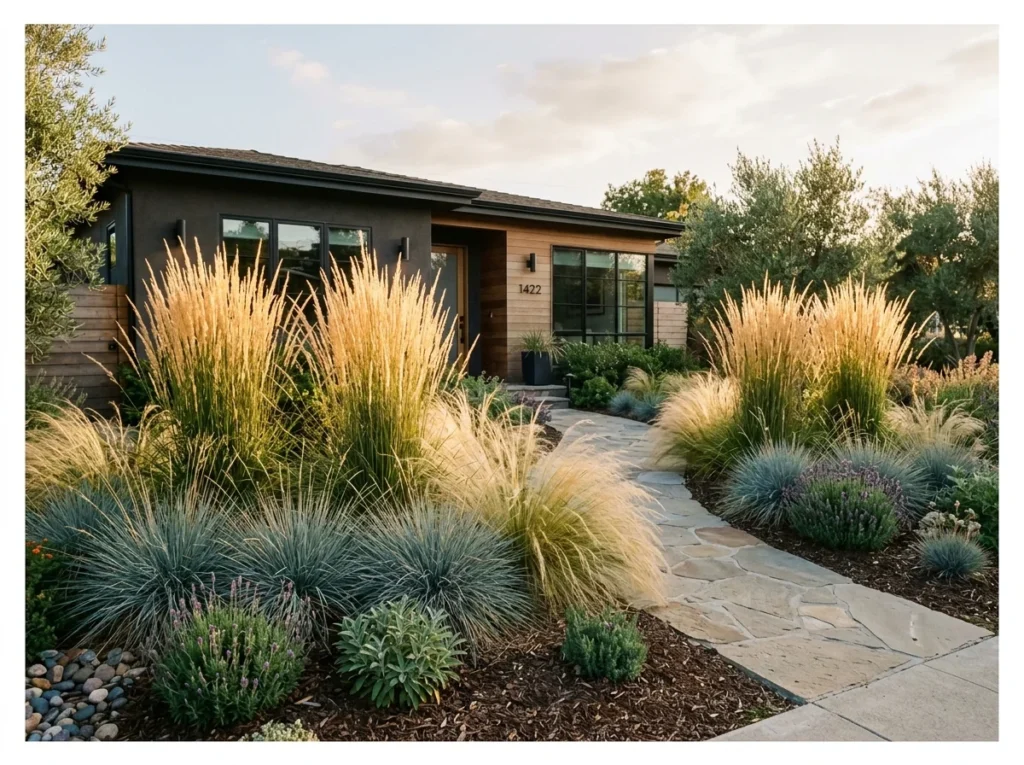
Ornamental grasses planted as the primary front yard design element create a contemporary, low-maintenance garden that is genuinely beautiful across every season. Spring brings fresh green growth, summer produces tall airy seed plumes, autumn turns the plumes golden, and winter reveals structural form against frost and snow.
Choose three or four grass species of different heights and colors for maximum variety within a cohesive palette. Karl Foerster, blue oat grass, Mexican feather grass, and Pennisetum all combine beautifully. Cut back once annually in late winter and the garden essentially maintains itself throughout the year.
Rock Garden Front Yard
Rock gardens combine stones of varying sizes with low growing, drought tolerant plants. This setup works especially well on sloped yards where soil erosion can be an issue. It suits homeowners wanting texture and structure without relying heavily on grass or flowers.
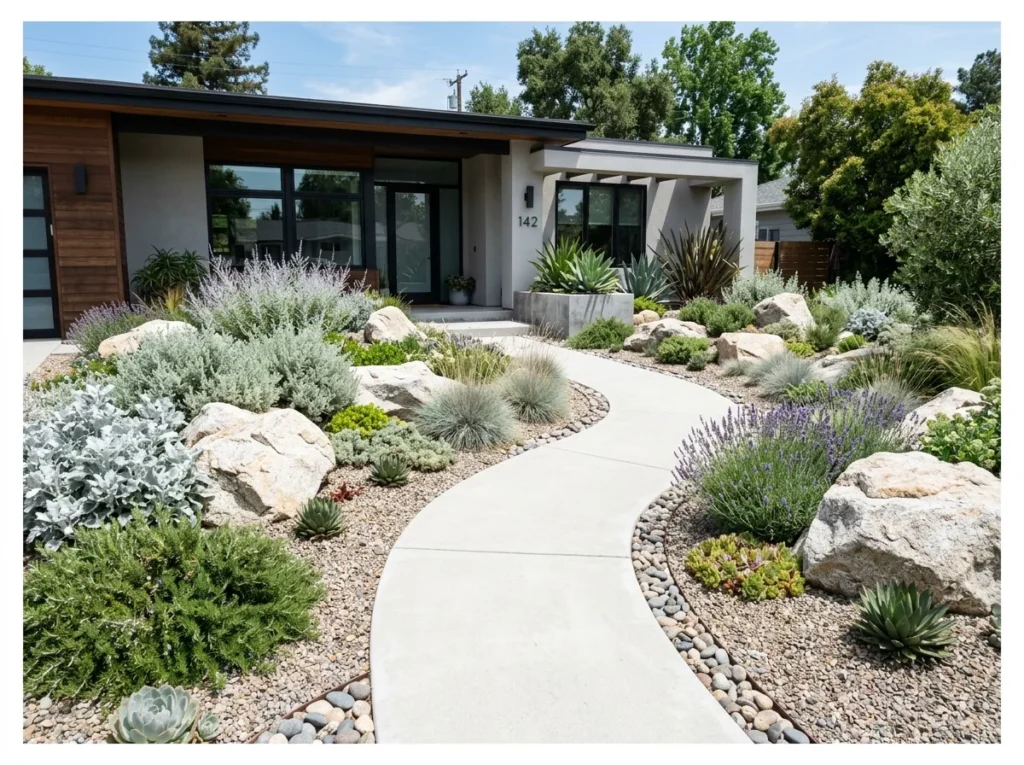
A rock garden front yard replaces lawn with a naturalistic combination of large boulders and drought-tolerant planting that looks designed, requires almost no ongoing maintenance, and solves the ongoing water, mowing, and fertilizing costs of a conventional lawn permanently.
The most important rule for natural-looking rock garden design is choosing boulders large enough to look genuinely substantial rather than decorative. Rocks smaller than a football look placed rather than natural. Boulders the size of a large basket and larger create the naturalistic impression that makes rock gardens look genuinely beautiful rather than rocky.
Zero mowing, zero watering, maximum curb appeal.
Foundation Planting Refresh
Foundation plantings sit directly along the base of the house, softening where the structure meets the ground. Overdue for a refresh, these beds often just need overgrown shrubs replaced or trimmed back. This update tends to make a noticeable difference in curb appeal for relatively little cost.
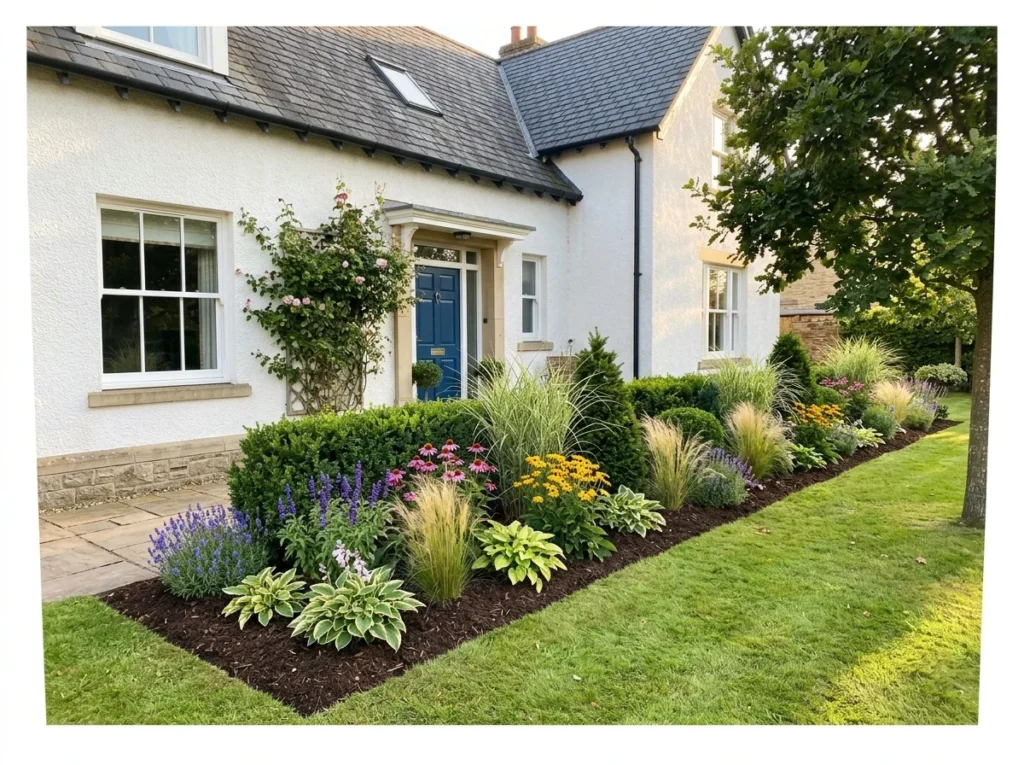
Foundation planting along the base of the home connects the house to the ground and prevents the structure from looking like it is floating above the garden. A well-planned foundation planting refresh replaces overgrown or dated shrubs with a layered combination of plants suited to the light conditions on each side of the house.
Choose plants that remain in scale with the foundation height at maturity. Plants that grow taller than the window sill block light and create a maintenance burden. Evergreen shrubs for structure, flowering perennials for seasonal color, and low groundcovers for the front edge create a complete planting scheme that frames the home beautifully.
Boxwood and Topiary Garden
Boxwood holds its shape well, making it a common choice for clipped, structured hedges. Topiary shapes, from simple spheres to more elaborate forms, add a formal detail to the yard. This style suits homes wanting a classic, well tended front garden look.
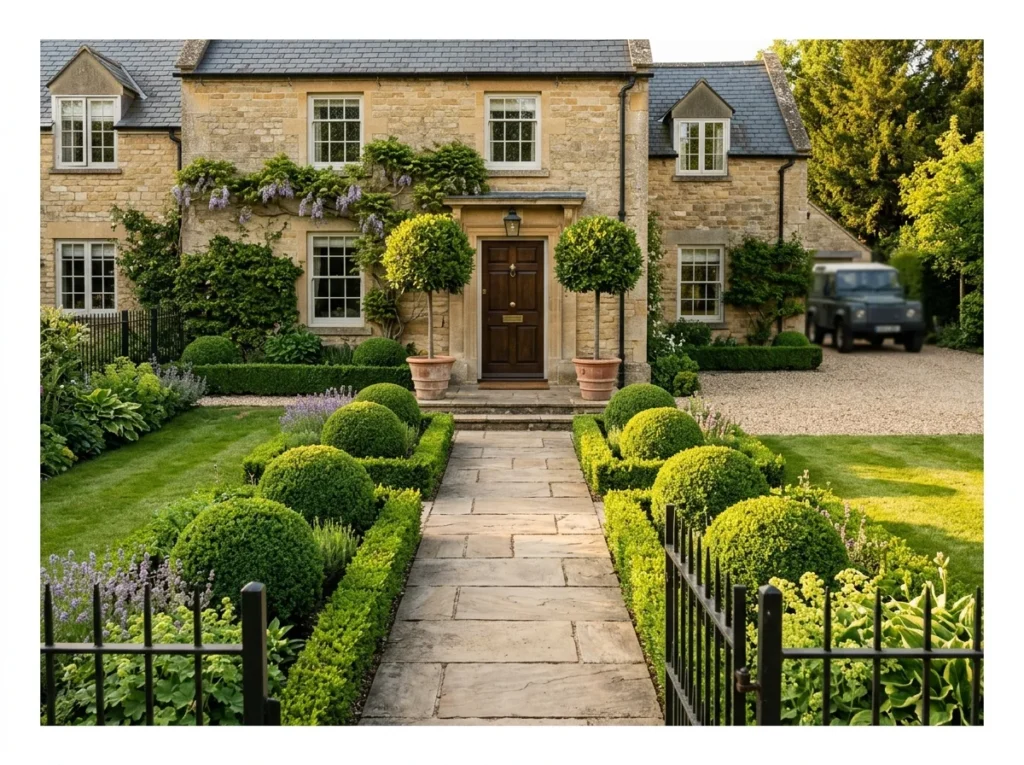
A boxwood and topiary front garden uses clipped evergreen plants shaped into spheres, cones, spirals, and standards to create a formal, sculptural garden that looks elegant and intentional in every season regardless of what is or is not in flower elsewhere.
Boxwood, bay, and yew are the most commonly clipped plants for topiary. They are slow-growing, respond well to regular clipping, and maintain their shapes reliably year-round. A pair of matching topiaries flanking the front door or path creates an immediate sense of quality and formality that elevates the entire exterior.
Small touches near the door go a long way too, and an entry that welcomes guests warmly finishes the look better than planting alone.
Year-round structure that never looks bare.
Wildflower Meadow Front Yard
A wildflower meadow replaces a traditional lawn with a mix of native flowering plants. This approach requires less mowing and supports far more pollinator activity than turf grass. It suits homeowners wanting a more natural, less manicured front yard.
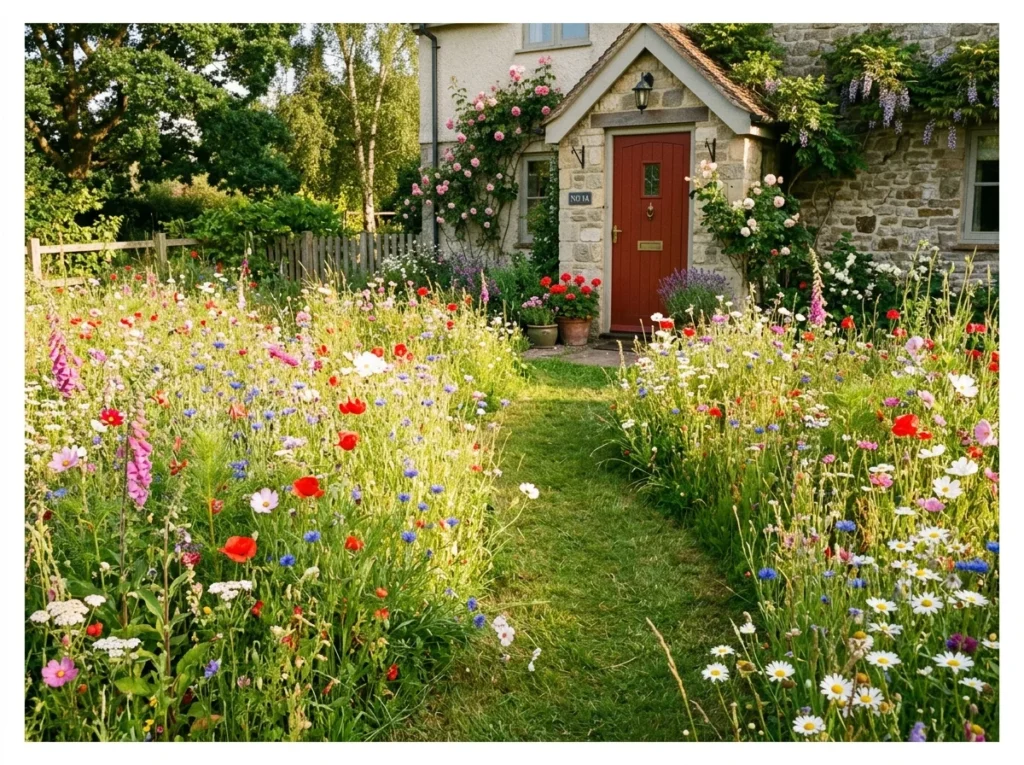
A wildflower meadow front yard sows a diverse mix of annual and perennial wildflower seeds in place of conventional lawn or garden beds. The resulting planting looks joyfully wild while actually being quite deliberately managed in its establishment and maintenance.
Mow a simple path from the street to the front door through the meadow to signal that the wild planting is intentional rather than neglected. A clearly defined mown edge along the boundary reinforces the same message. Without these structural elements, even a beautiful wildflower meadow can read as an unmaintained lawn rather than a deliberate design choice.
Wild, joyful, and genuinely ecological.
Front Yard with Seasonal Containers
Container plantings near the entrance can be swapped out easily as the seasons change. This flexibility means the front yard always has something blooming, regardless of the time of year. It suits smaller yards or rented homes where permanent planting beds are not an option.
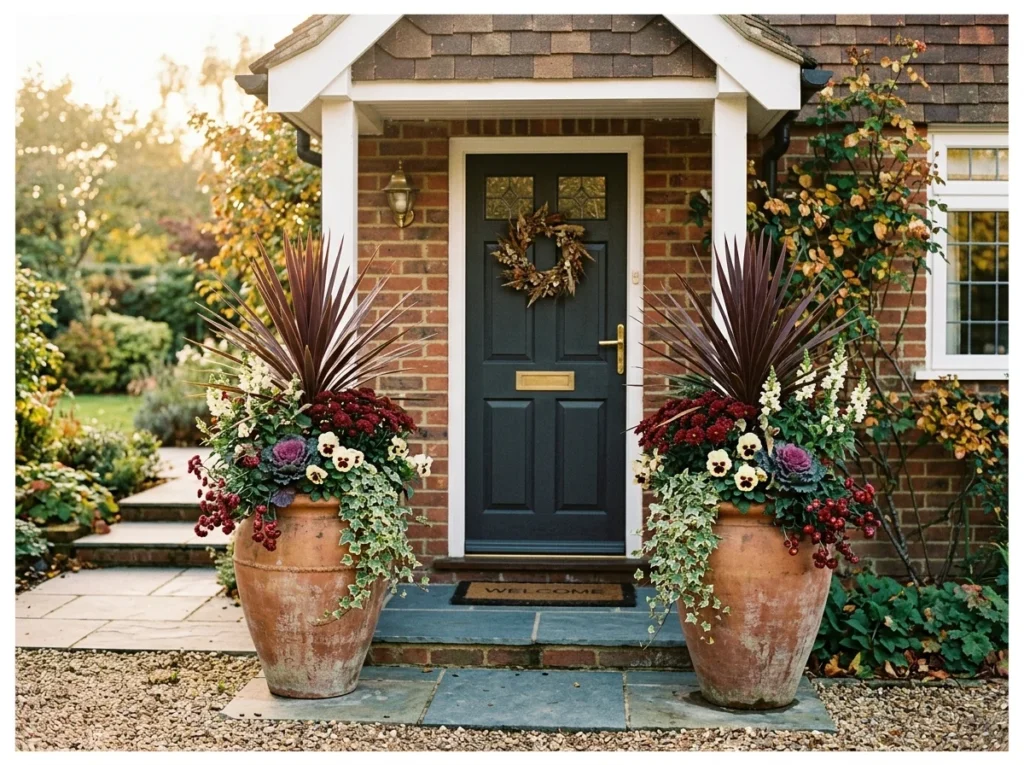
Large planted containers flanking the front door or positioned at key points along the front path create an immediate sense of welcome and can be replanted seasonally to keep the front yard looking fresh and relevant throughout the year.
Two identical large containers symmetrically placed create formal balance. A cluster of three containers in different sizes creates a more informal, layered look. Choose a tall thriller plant at the center, a mid-height filler, and a trailing spiller at the edge for each container to achieve the classic full container planting effect.
Perfect for small spaces or rental homes.
The same container tricks work just as well on a balcony, so it’s worth checking out container displays worth copying if outdoor space is limited.
Garden with Path and Edging Design
A well defined path guides visitors naturally from the sidewalk to the front door. Edging along the path, whether brick, stone or metal, keeps planting beds from spilling over. This detail adds structure to a yard without requiring elaborate landscaping.
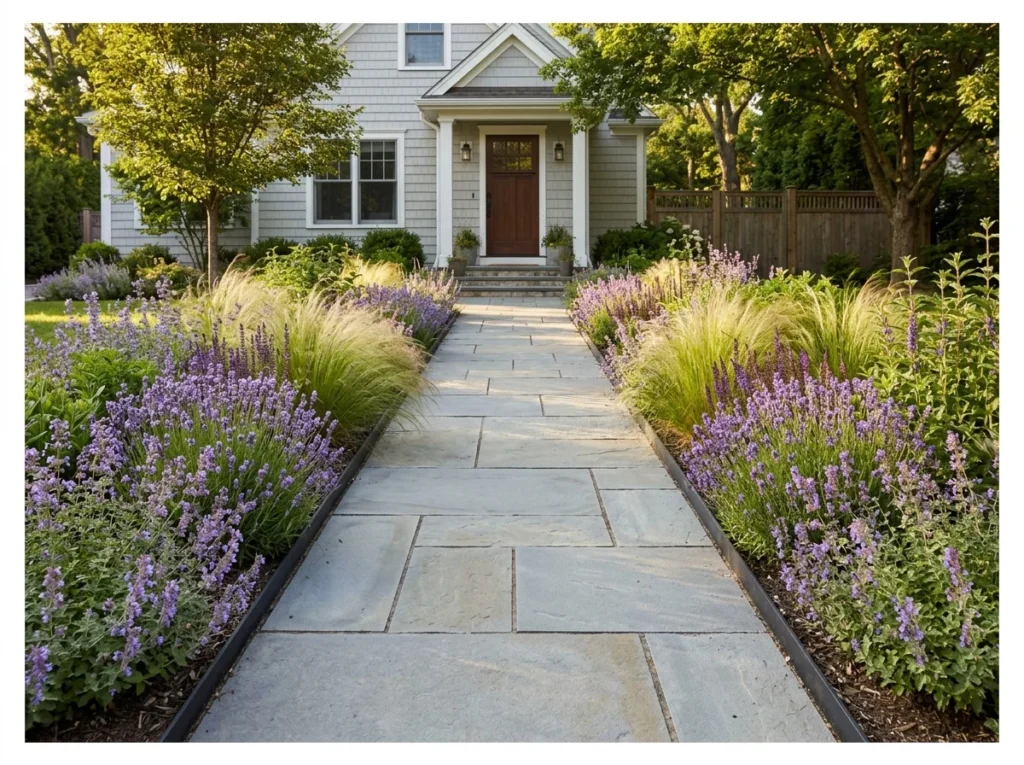
The path and edging system is the structural framework that makes every other front yard garden element look more intentional and resolved. A wide, well-made path in natural stone, brick, or quality concrete communicates quality and care immediately. Clean edging between the path and planting borders sharpens the entire composition.
Black powder-coated steel edging between path and planting bed creates the crispest and most modern separation. Brick soldiers laid on edge create a traditional border. Natural cobblestone or Belgian block edging suits cottage and informal garden styles. The edging material should complement both the path and the surrounding garden aesthetics.
Front Yard Rain Garden
Rain gardens are shallow depressions planted to absorb runoff from roofs or driveways. This setup helps manage water naturally rather than letting it pool or run into the street. It suits properties dealing with drainage issues after heavy rain.
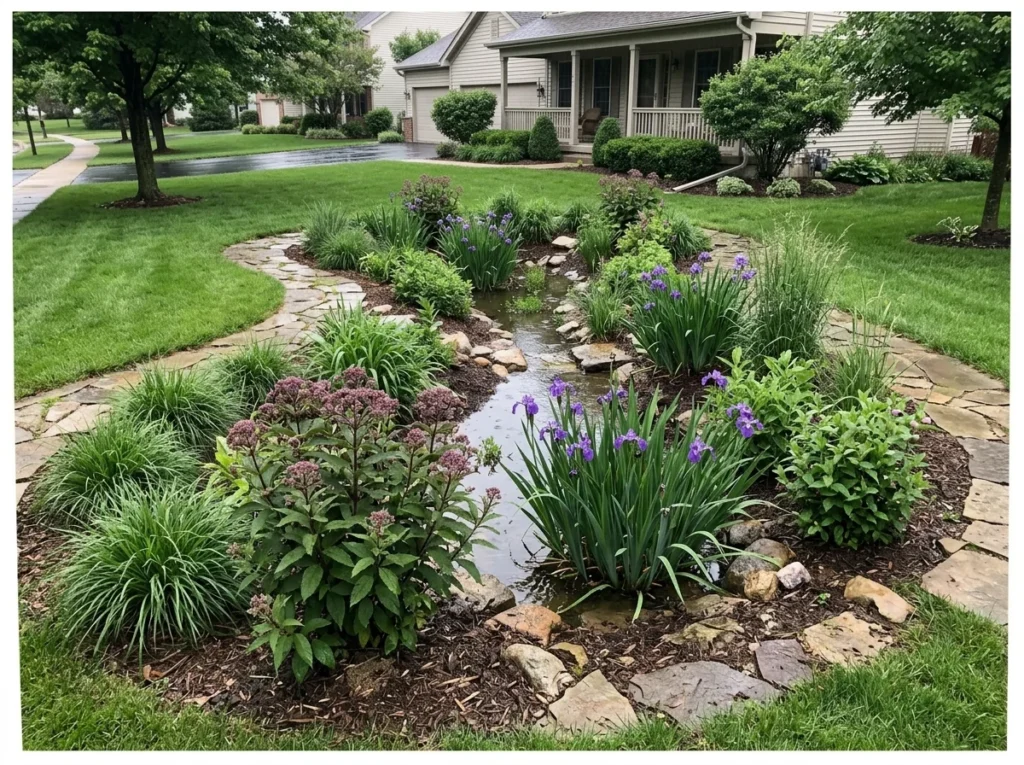
A rain garden is a shallow planted depression designed to capture and absorb rainwater runoff from the driveway, roof, and surrounding impervious surfaces. Rather than allowing stormwater to run off into storm drains, the rain garden filters it slowly through the soil while supporting moisture-tolerant native plants.
Rain gardens suit front yards in areas with heavy rainfall and limited drainage. They reduce flooding risk, improve water quality, and create habitat for local wildlife. Planting with native sedges, rushes, native irises, and moisture-tolerant perennials creates a garden that looks naturalistic and functions as a genuine ecological asset.
Where beauty and ecological function combine perfectly.
Front Yard Garden with Evening Lighting
Evening lighting extends how long a front garden actually gets seen and appreciated each day. Uplighting on trees or path lights along a walkway both add depth once it gets dark. This addition also improves visibility and safety for anyone approaching the house at night.
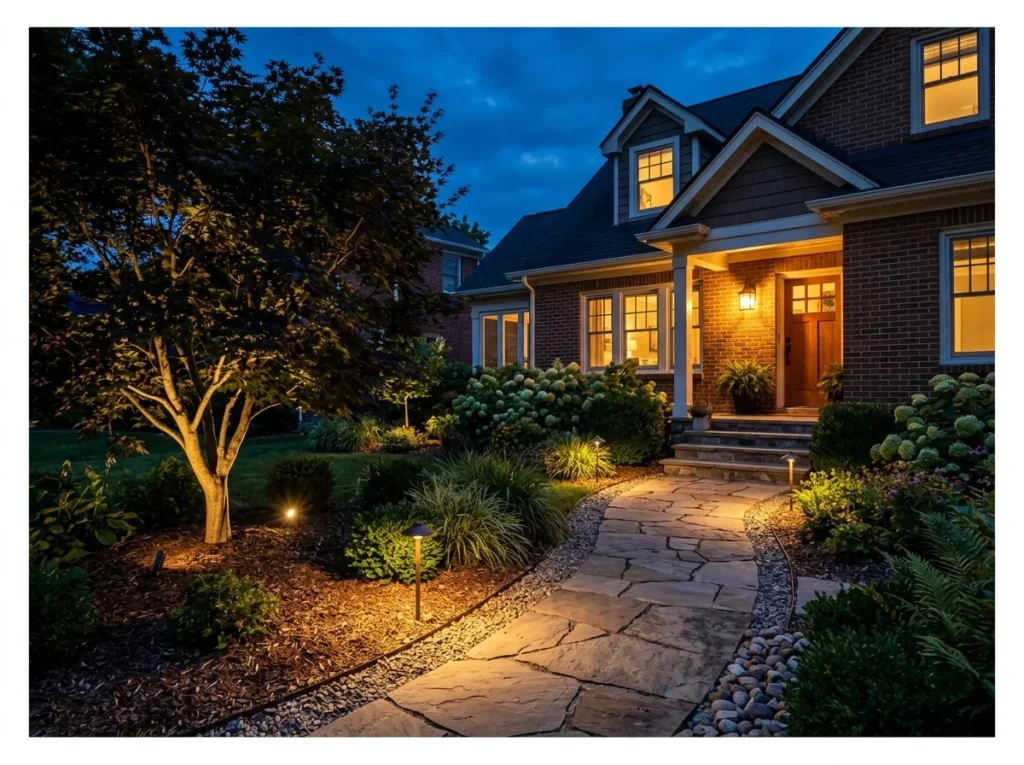
Front yard garden lighting creates a completely different and often more striking appearance after dark than during daylight hours. Uplighting specimen trees from below, path lights along the entry walk, and a warm porch light above the door together create a layered nighttime garden of real beauty.
LED spike uplights at the base of trees and specimen shrubs cast dramatic light upward through the canopy. Solar-powered path lights require no wiring and activate automatically at dusk. A statement pendant or lantern porch light completes the entry lighting picture. Together these three elements make the front garden look just as beautiful at 9pm as it does at 9am.
Your garden deserves to look good after dark too.
Pair the uplighting with lighting that flatters your home at night for a front exterior that feels complete after sunset.
Conclusion
A beautifully designed front yard garden is one of the most rewarding investments a homeowner can make. It improves the daily experience of arriving home, signals genuine care and character to everyone who passes, and adds measurable value to the property.
Start with the idea from this list that genuinely excites you and suits your home’s architectural style. Choose plants based on your actual climate and light conditions rather than what looks beautiful in photographs. Build the structural framework first with paths, edging, and mulch before adding the planting so the garden looks resolved from day one rather than waiting years for plants to fill in.
Your home’s first impression is entirely within your hands.
Whatever you choose to plant, a walkway that ties it all together is often what makes the whole design finally click.