Plain concrete gets a bad reputation. But done right, it becomes one of the most beautiful, durable, and versatile outdoor surfaces your backyard can have.
These ideas prove that concrete is anything but boring.
Pair the right finish with a backyard space you’ll actually use and the whole yard comes together.
Let’s explore the ideas.
Smooth Broom-Finish Concrete Patio
A broom finish drags a stiff bristled broom across wet concrete to create fine texture lines. This texture helps with grip underfoot, especially when the surface gets wet. It is one of the most common and budget friendly patio finishes around.
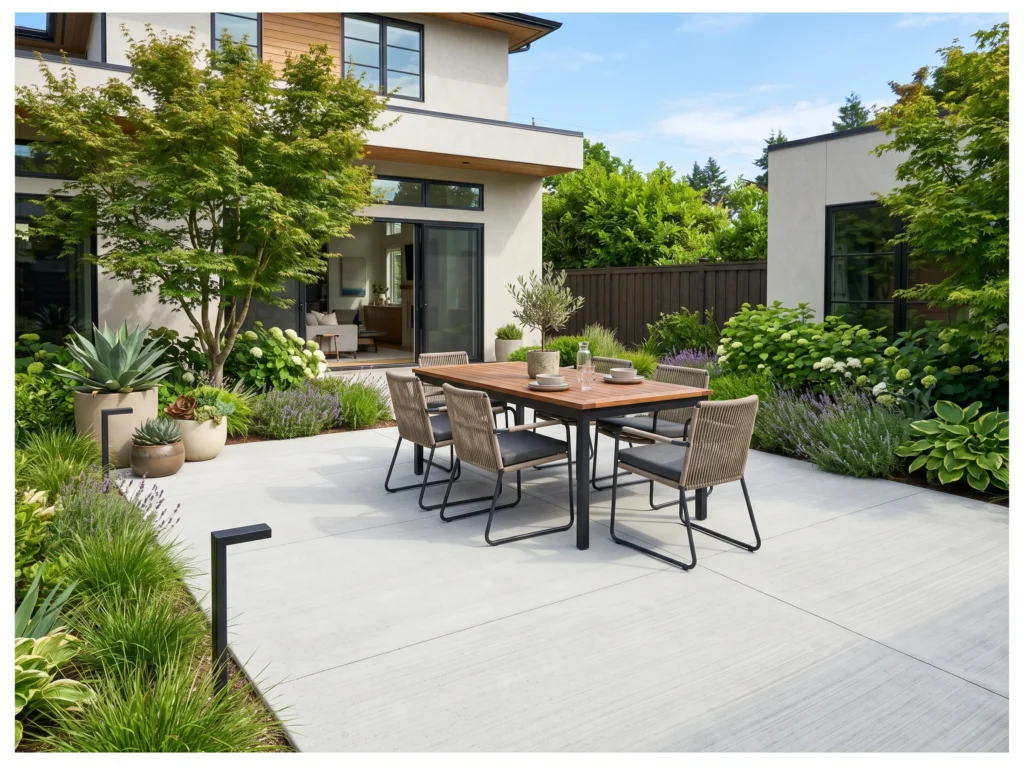
A broom-finish concrete patio is created by dragging a stiff broom across the freshly poured concrete surface before it sets, leaving fine parallel lines that create a subtle texture. This texture improves grip when the surface is wet without adding any visual complexity.
It is the most common residential concrete finish and the most affordable because it requires the least specialized labor. The clean, consistent surface suits contemporary, minimalist, and modern farmhouse outdoor styles well. Pair it with quality outdoor furniture and good planting borders and it reads as a deliberate and refined design choice.
The right seating that ties the whole space together makes a simple broom finish feel intentional rather than plain.
The starting point that everything else builds from.
Stamped Concrete Patio
Stamping presses a pattern into wet concrete before it fully sets, often mimicking stone or brick. This gives the look of a pricier material at a fraction of the cost. Color can also be added during the process to make the illusion more convincing.
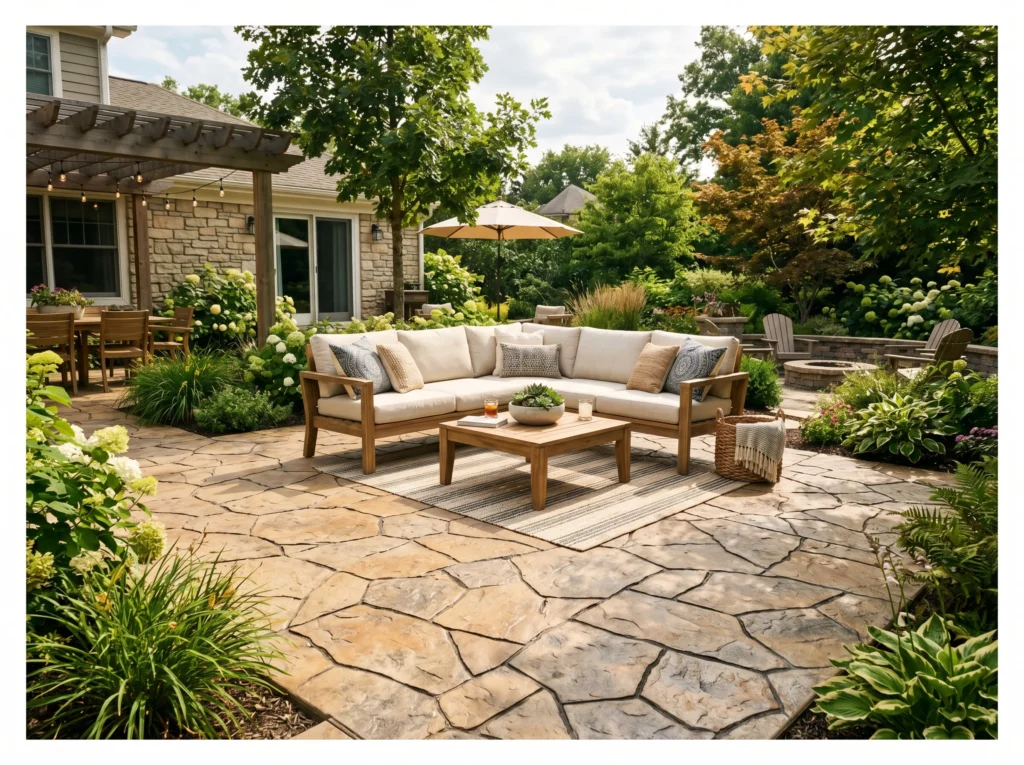
Stamped concrete uses rubber molds pressed into the freshly poured concrete surface to create patterns that mimic natural stone, brick, slate, timber planks, or cobblestone. Combined with integral color or surface stain, the result can look remarkably like the real material it replicates.
Stamped concrete costs more than a standard broom finish but significantly less than the natural stone it imitates. It suits traditional, Mediterranean, and transitional backyard styles where the warmth of natural stone is desired but the budget or installation complexity of genuine stone is prohibitive.
Exposed Aggregate Concrete Patio
This finish washes away the top layer of concrete to reveal the stones mixed in below. The result has a speckled, textured surface that hides dirt better than smooth concrete. It also provides solid traction, which makes it a practical choice near pools.
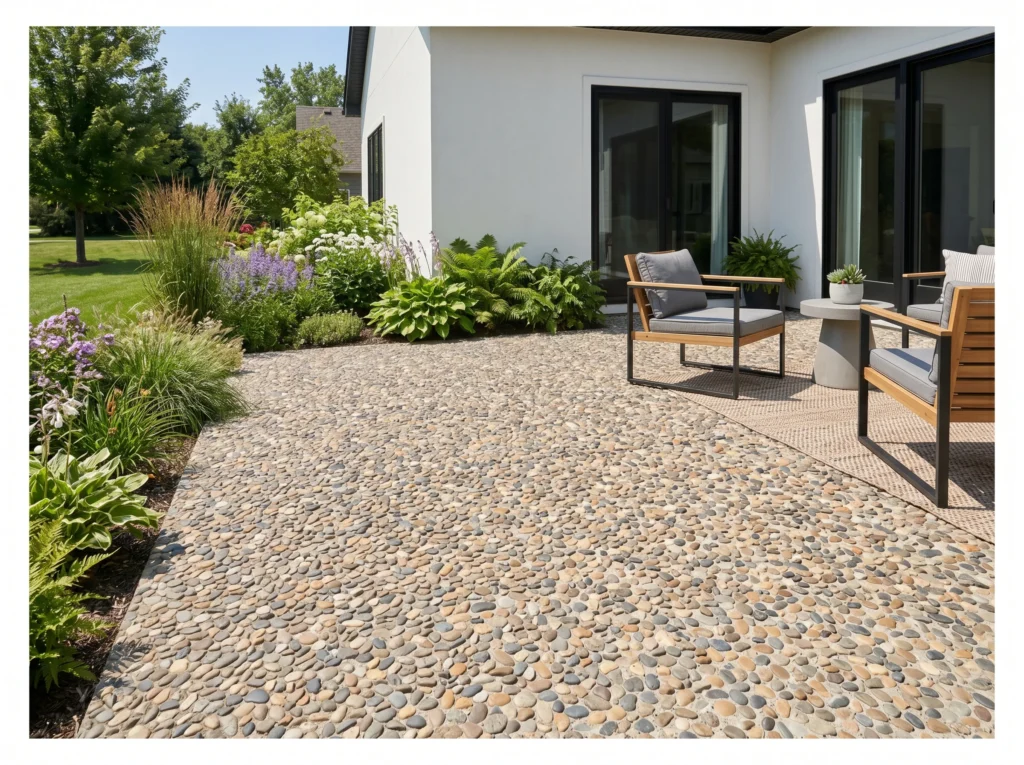
Exposed aggregate concrete is created by washing the surface of freshly poured concrete to reveal the aggregate stones embedded within. The result is a multi-toned, naturally textured surface where smooth river pebbles or crushed stone are visible across the entire patio.
The texture provides excellent non-slip grip, which makes it ideal around pools and in areas that receive frequent rainfall. The aggregate mix can be customized to include stones of specific colors and sizes, allowing the patio surface to complement the surrounding garden and home exterior palette precisely.
Natural looking, slip-resistant, and enduringly popular.
Concrete Patio with Saw-Cut Pattern
Saw cuts carve clean lines into the concrete after it has cured, creating a grid or custom pattern. This technique also helps control natural cracking by giving the concrete planned points to shift. It suits a patio wanting some visual interest without the cost of stamping or staining.
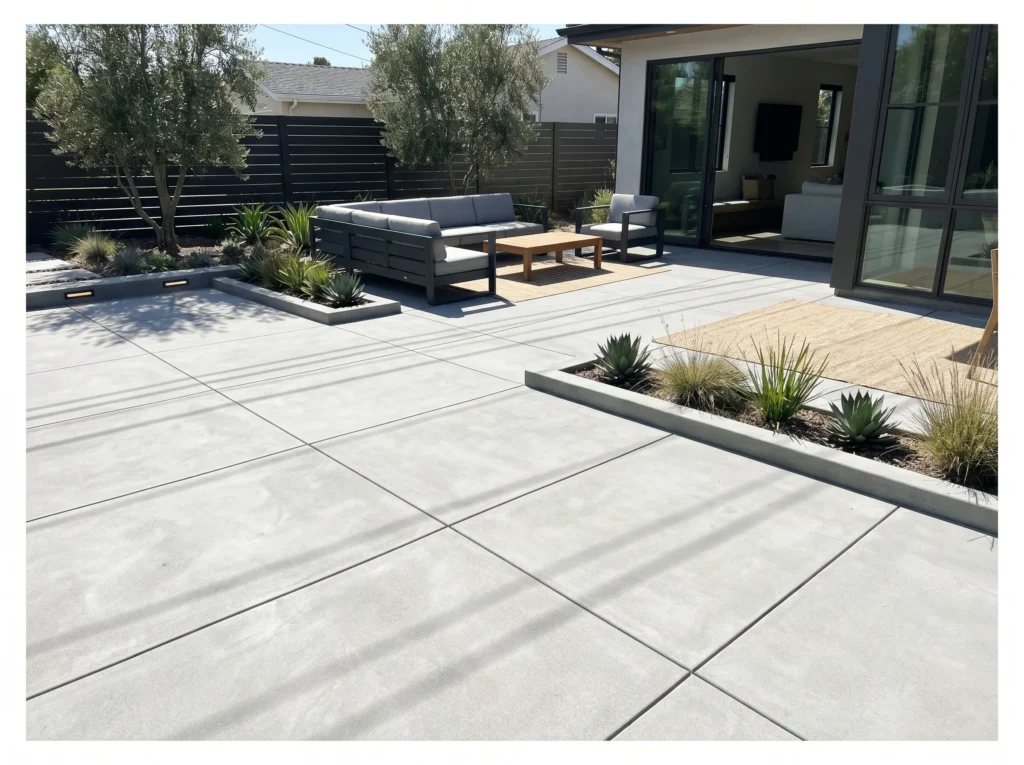
Saw-cut patterns use a diamond blade saw to cut decorative lines into the cured concrete surface after pouring, creating geometric designs, grid patterns, or diagonal layouts that give an otherwise plain concrete patio strong visual interest and architectural character.
The cuts serve two purposes simultaneously. They create decorative patterning and they function as control joints that direct where the concrete cracks as it expands and contracts with temperature changes. A well-planned saw-cut pattern makes the unavoidable movement of concrete work within the design rather than against it.
Polished Concrete Patio
Polishing grinds the surface down in stages until it reaches a smooth, almost glossy finish. This process also brings out the natural color variation already present in the concrete. It suits a more modern patio design that leans toward a sleek, minimal look.
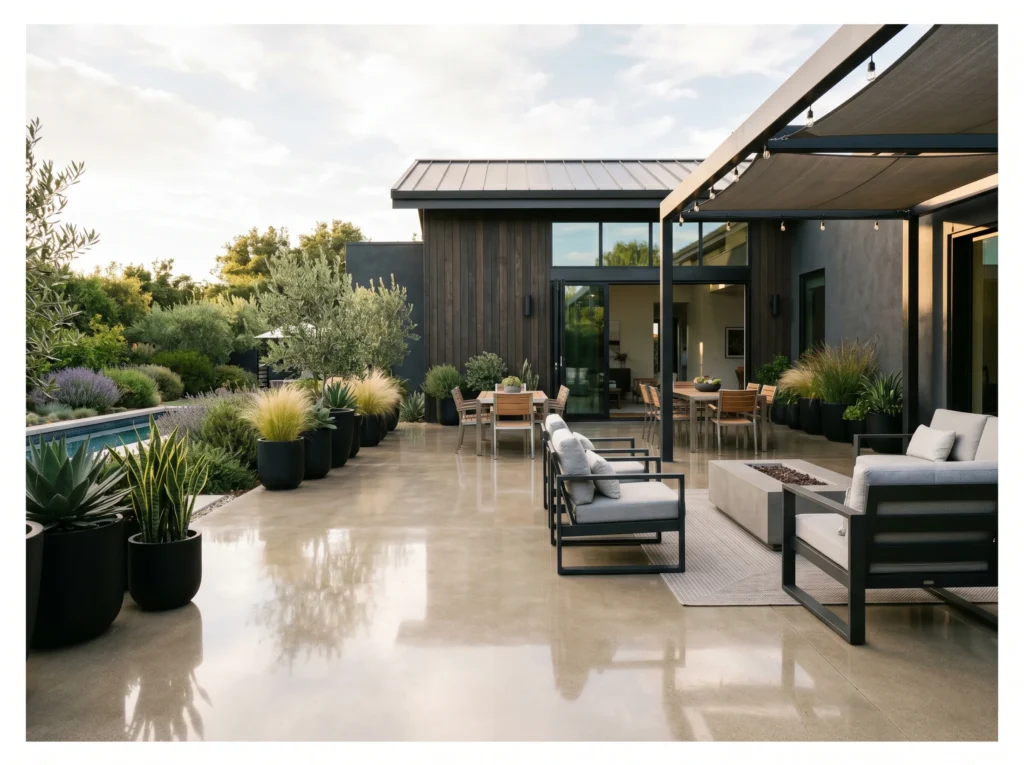
Polished concrete uses a progressive series of diamond grinding pads to mechanically polish the concrete surface to varying degrees of sheen, from a satin matte to a high-gloss mirror finish. The result is a surface that looks as refined as any indoor floor while being fully suitable for outdoor use.
A satin or low-sheen polish suits outdoor patios better than a high gloss because it reduces glare from direct sunlight. The smooth, dense surface resists staining and cleans easily with just water. Polished concrete suits ultra-contemporary and minimalist outdoor spaces where a high-quality, seamless surface is the design priority.
Indoor quality, outdoor durability.
Stained Concrete Patio
Staining adds color that soaks into the concrete rather than sitting on top like paint. This creates a more natural, mottled look compared to a flat, uniform color. Earth tones like terracotta or charcoal are common choices for outdoor spaces.
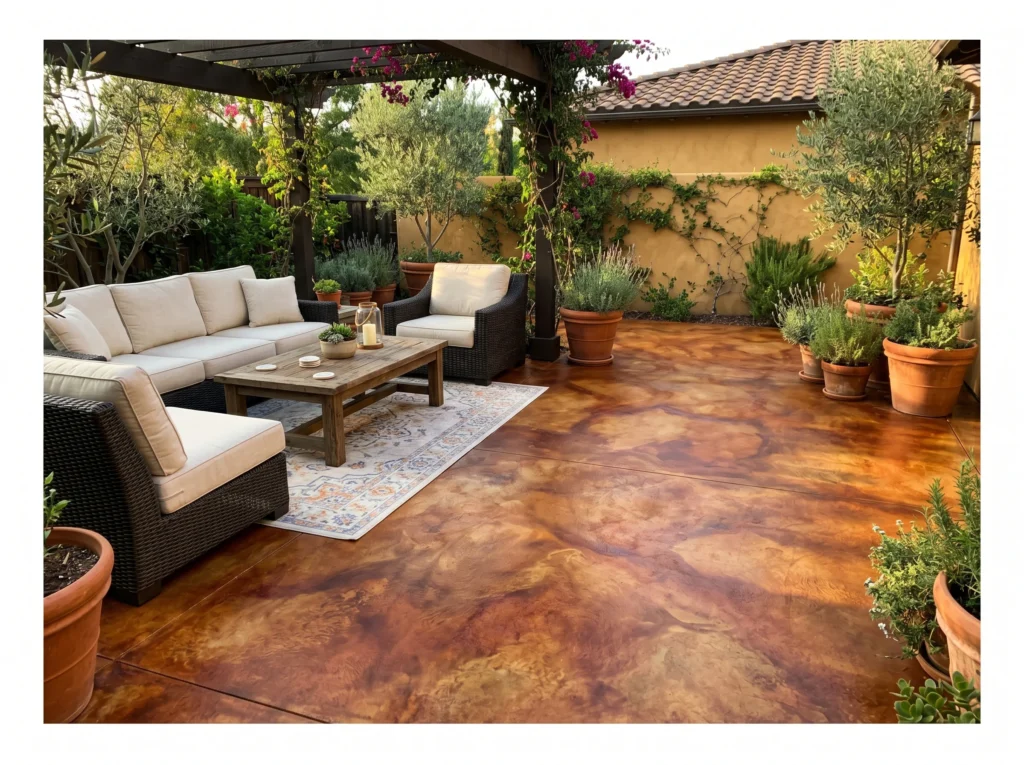
Concrete staining uses acid-based or water-based stains applied to cured concrete to permanently change its color. Acid stains react chemically with the concrete to create mottled, variegated color effects with natural depth and variation that look organic rather than applied.
Terracotta, warm brown, slate grey, and deep charcoal are the most popular acid stain colors for outdoor patios. The natural color variation means no two stained concrete surfaces look identical, which gives each patio a one-of-a-kind quality. The stain penetrates deeply and does not peel or chip like surface coatings.
Warm, organic color that becomes part of the concrete.
Concrete Patio with Grass Joints
Leaving gaps between concrete slabs for grass to grow softens the hard edges of the patio. This combination also helps with drainage compared to one solid poured slab. It suits a yard wanting a patio that still feels connected to the surrounding lawn.
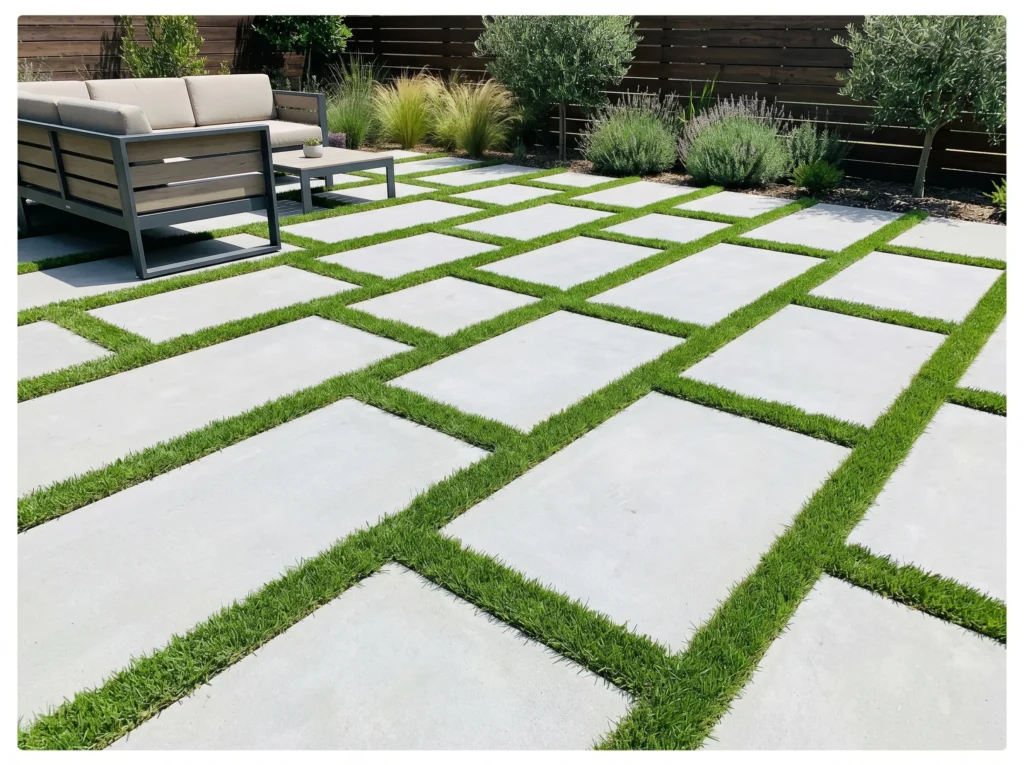
A concrete patio with grass joints uses wide spaces between individual concrete slabs planted with lawn grass, creeping thyme, or groundcover plants. The result is a patio surface that balances the hardness of concrete with the softness of living planting in a way that looks genuinely striking.
The grass or groundcover joints visually lighten the concrete surface and make the patio feel connected to the garden rather than imposed upon it. This style works best with large format slabs of at least 600 x 600 millimeters. Smaller slabs with grass joints can look busy rather than clean.
Hard and soft working beautifully together.
Concrete Patio with Fire Pit
A fire pit built into the concrete patio gives the space a clear gathering point. Concrete itself handles heat well, making it a practical surface to build around. This setup suits a patio wanting use well into the cooler evening hours.
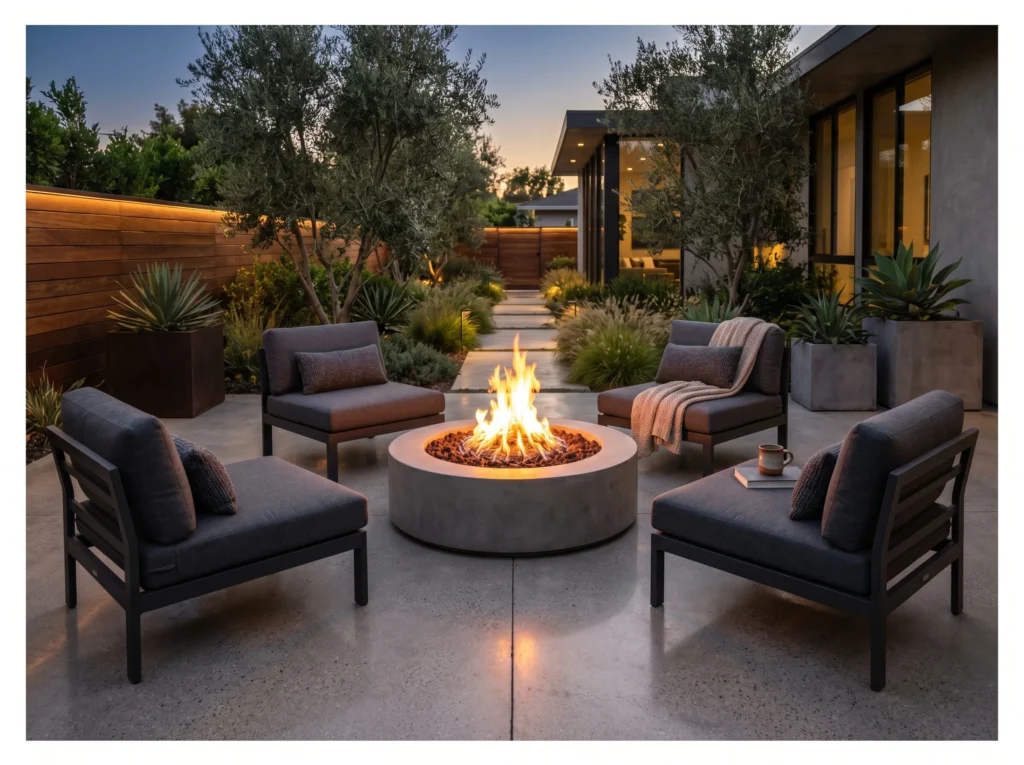
A concrete fire pit built as a permanent part of a concrete patio creates a completely cohesive outdoor design where the fire pit reads as an integrated element of the patio rather than something placed on top of it. The matching material ties the entire space together visually.
A round concrete fire pit with a diameter of 70 to 90 centimeters suits most residential patio sizes. The concrete surround handles the heat of a wood or gas fire without damage. Pour the fire pit wall with the same concrete mix as the patio and finish the interior with a fire-rated refractory coating for long-term durability.
Done right, it becomes a cozy gathering spot after dark that guests never want to leave.
Concrete Patio with Pergola
A pergola overhead adds partial shade without needing a fully enclosed structure. Concrete underneath keeps the footing solid and low maintenance beneath the beams. This combination suits a patio wanting some shelter from direct sun during the day.
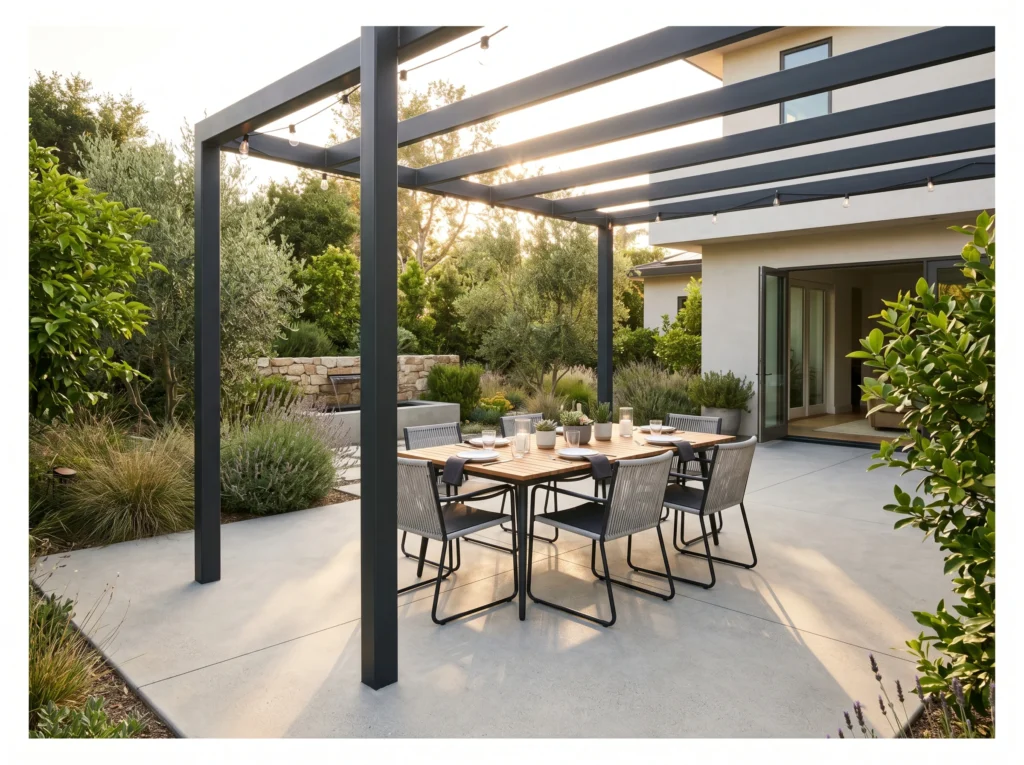
A pergola installed over a concrete patio creates a defined outdoor room with a ceiling reference that gives the space architectural enclosure. The contrast between the raw permanence of concrete below and the structured overhead timber or steel frame creates a layered design that feels genuinely resolved.
Pergola posts set into the concrete patio surface require careful planning before pouring. The post footings should be poured simultaneously with the patio slab so the structural connection is seamless and the post bases are perfectly flush with the finished patio surface.
If you’re planning ahead, an overhead structure worth adding can completely change how the patio feels in summer.
Concrete Patio with Raised Planters
Raised planters built along the edge of the patio bring greenery right up to the seating area. Concrete or matching material for the planters ties the whole space together visually. This setup works well for patios wanting a garden feel without a separate yard bed.
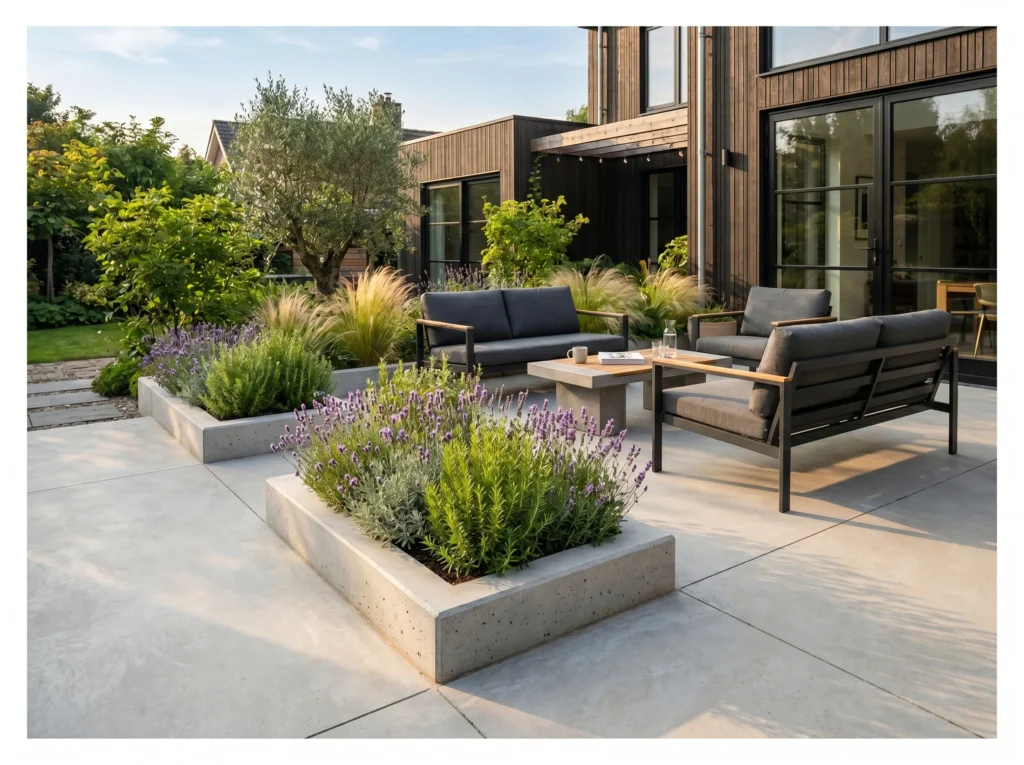
Concrete raised planters built as integral elements of a concrete patio blur the line between hard landscaping and garden planting beautifully. When the planters are poured using the same concrete mix and finish as the patio, the whole outdoor space reads as one unified design.
Low rectangular planters at 40 to 60 centimeters high work as casual seating surfaces as well as planting beds, adding functional value to every edge of the patio. Smooth form concrete planters suit contemporary styles. Rough board-formed concrete planters add texture and industrial character.
Painted Concrete Patio
Painting concrete is one of the more affordable ways to change its color without full replacement. This approach also allows for patterns or designs that staining alone cannot achieve. It does require occasional touch ups since paint wears faster than stain over time.
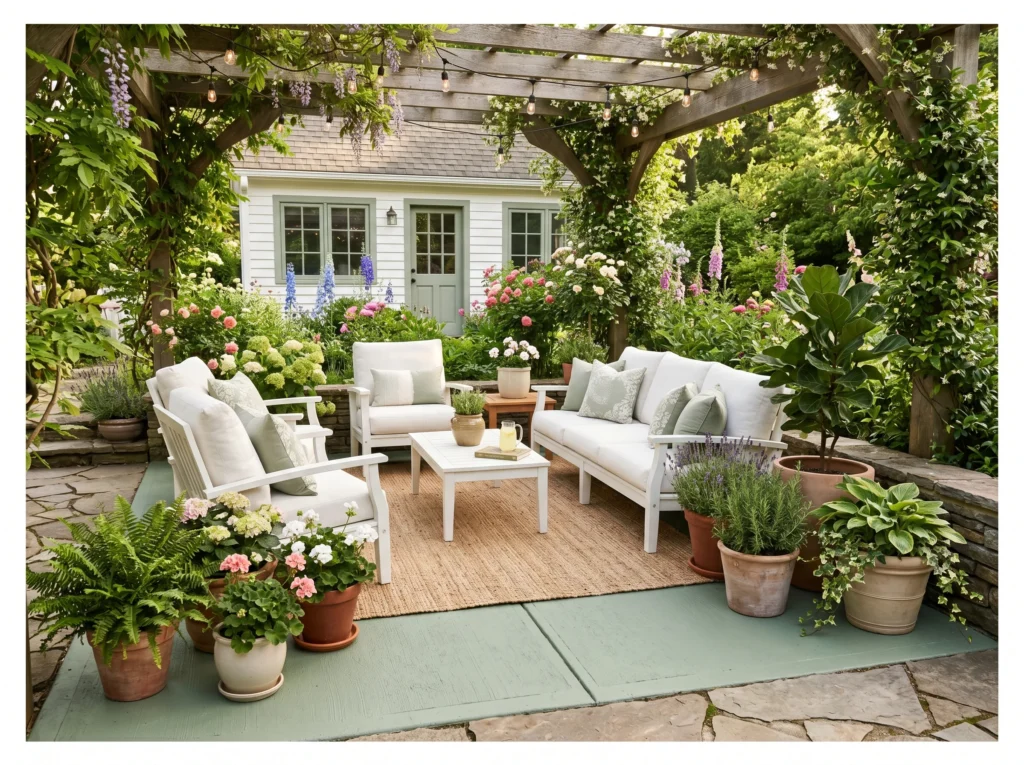
Painting a concrete patio with exterior concrete paint or deck paint is the most affordable way to transform the appearance of an existing slab. A fresh color application changes the entire mood and character of the patio instantly without any excavation or replacement.
Sage green, terracotta, slate grey, and warm white are the most popular concrete patio paint colors. Use a high-quality concrete floor paint rated for exterior use and apply a clear sealer on top for durability. Painted surfaces do require repainting every three to five years but the cost and effort is modest compared to full patio replacement.
Budget-friendly option that makes an immediate impact.
Concrete Patio with Pavers
Combining poured concrete with paver sections adds texture and visual contrast in one space. This mix also allows for design flexibility, like a paver border around a solid concrete center. It suits a patio wanting more detail than plain concrete alone provides.
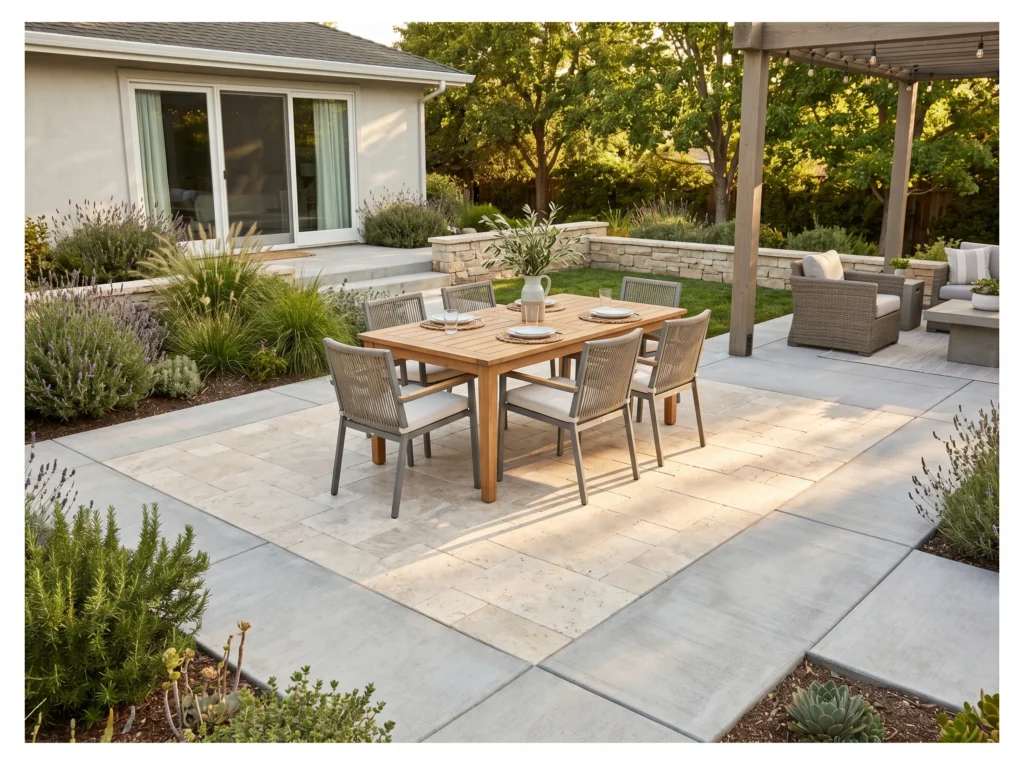
Combining poured concrete with a feature band or zone of natural stone or porcelain pavers creates a patio with two complementary materials that add visual interest and define different zones within the same outdoor space.
A paver dining zone set within a wider concrete patio gives the dining area its own defined identity while the concrete surround provides a consistent and affordable base across the larger patio area. The material contrast also helps distinguish the dining zone from the lounge zone without requiring level changes or walls between them.
Concrete Patio with Stepping Stones
Stepping stones set into or leading away from a concrete patio guide movement through the yard. This detail breaks up a large concrete area into something with more visual rhythm. It suits a patio that connects to a garden path or another part of the property.
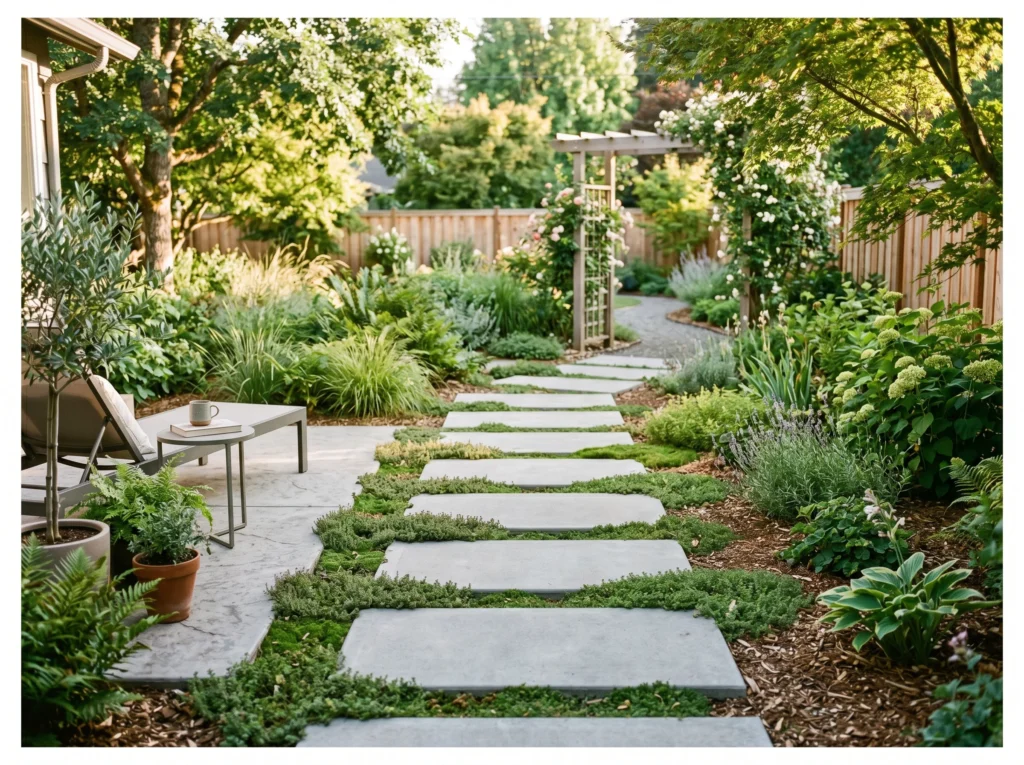
Extending a concrete patio into the garden with a series of large concrete stepping stone slabs creates a seamless transition between the hardscape and the planted garden. The slabs can match the patio concrete exactly or be cast in different shapes for a more organic stepping stone effect.
Square, circular, and irregular free-form concrete slabs all work as stepping stones. Cast them in molds using the same concrete mix as the patio for consistency, or purchase pre-cast concrete stepping pads. Planting creeping thyme or baby tears between the slabs softens the path and connects the concrete to the garden naturally.
Concrete Patio with Outdoor Kitchen
Concrete provides a stable, heat resistant base for grills, counters and other kitchen elements. This setup keeps cooking and dining close together in one outdoor space. It suits households that host regular outdoor meals or gatherings.
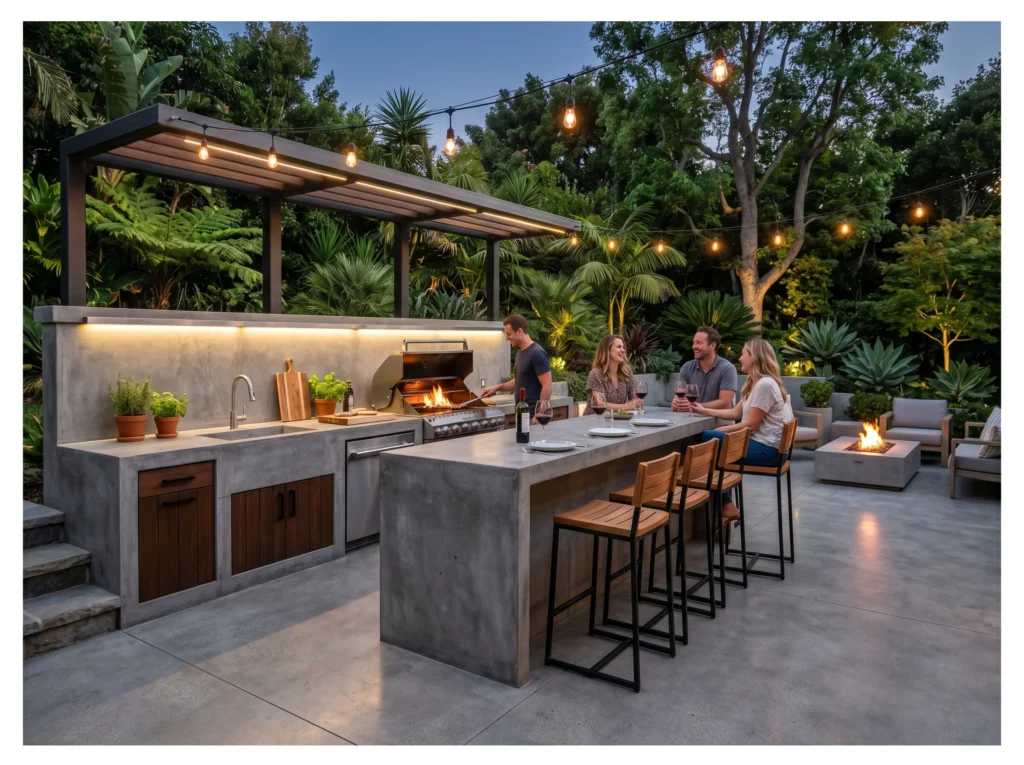
An outdoor kitchen with concrete benchtops installed on a concrete patio creates a completely unified outdoor living space where every hard surface speaks the same material language. The kitchen benchtops, the patio floor, and any built-in planters or seating walls can all be poured in the same concrete tone.
Concrete benchtops for outdoor kitchens are cast in place or precast off site. They handle heat from a grill, resist staining with proper sealing, and develop a natural patina over time that makes them look richer and more interesting as they age. The cohesive material palette creates an outdoor kitchen that looks custom-designed rather than assembled.
It’s the kind of finish that pairs beautifully with a kitchen built for outdoor cooking right on the same patio.
Concrete Patio with Pool
Concrete decking around a pool is a common choice thanks to its durability and slip resistant finishes. Exposed aggregate or textured finishes in particular help with traction near wet areas. This combination suits a backyard built around swimming as the main feature.
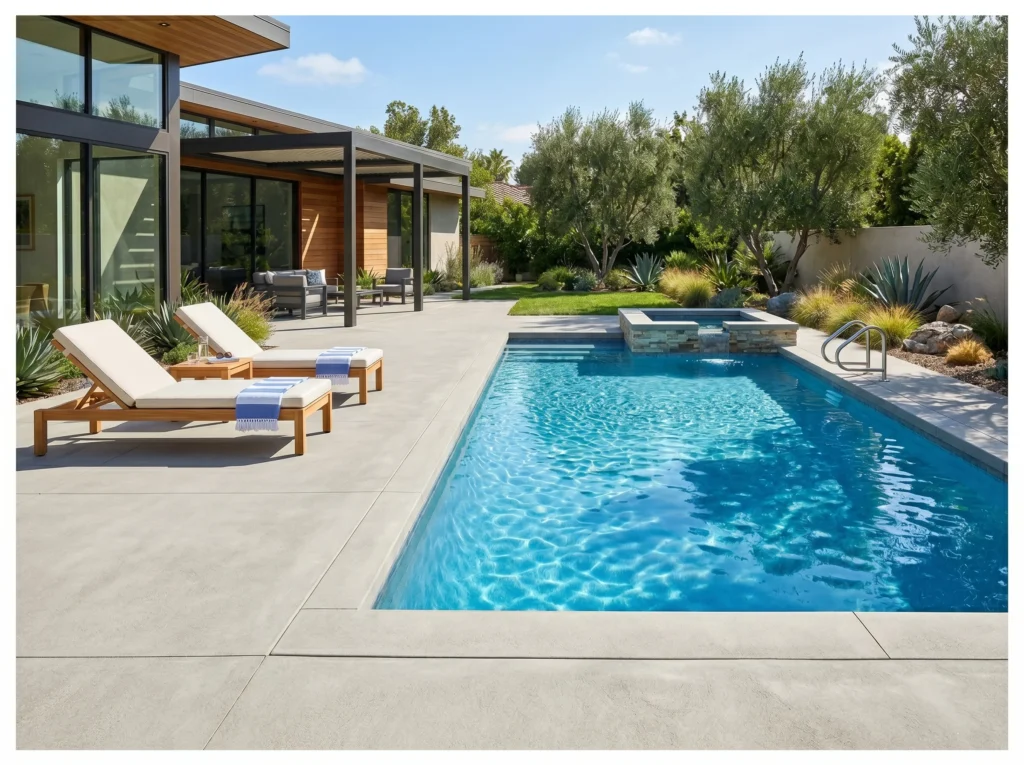
A broom-finish or exposed aggregate concrete surround is the most popular pool deck choice because it provides excellent non-slip texture, handles constant water exposure without deteriorating, and can be poured in one seamless pour from the pool coping outward across the entire surrounding deck.
Light grey or buff-toned concrete reflects heat rather than absorbing it, which keeps the pool deck surface more comfortable underfoot on hot summer days than darker materials. Seal the concrete annually to protect against pool chemical splash and prevent staining from sunscreen and organic material.
Concrete Patio with Seating Wall
A low seating wall built from concrete adds extra seating without needing separate furniture. This detail also helps define the edges of the patio space clearly. It suits a patio wanting built in function alongside its main surface.
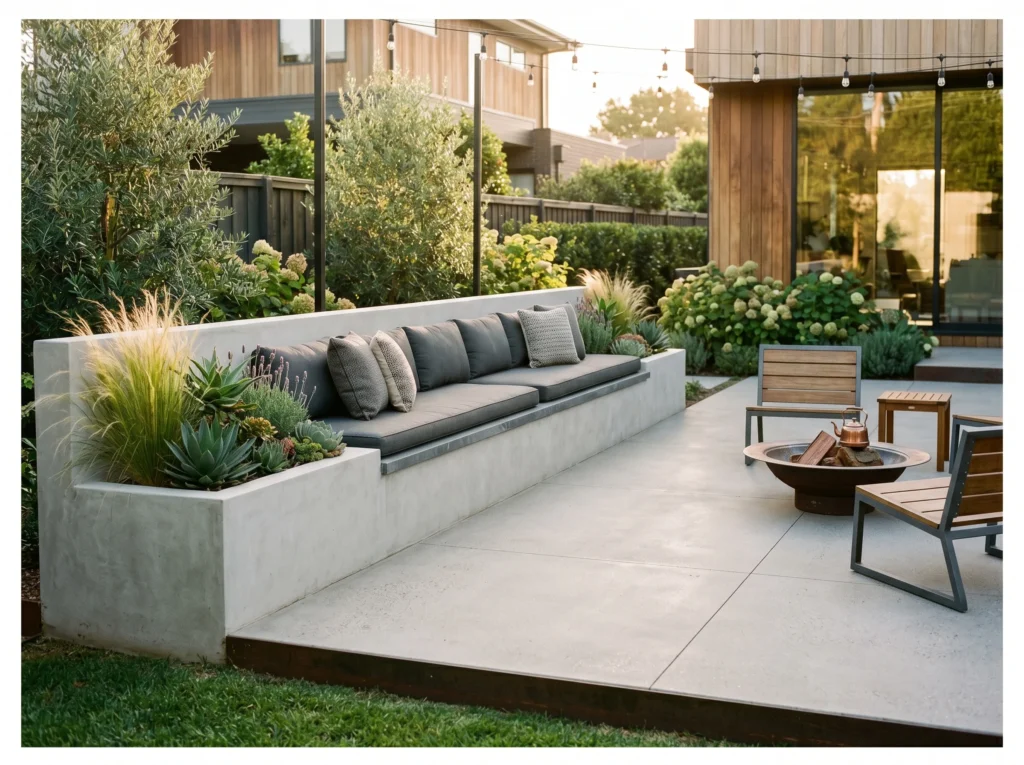
A low concrete seating wall built along one or two edges of a concrete patio serves as both a boundary definition and supplementary seating when guests overflow the main furniture. Capped with a smooth stone or timber top, the wall becomes a comfortable seat at 43 to 46 centimeters height.
The seating wall also acts as a retaining element if the patio is slightly elevated above the surrounding garden level. A planter built into each end of the wall adds a garden element without taking up any patio floor space. The combined wall and planter structure creates a strong architectural edge to the whole patio composition.
Concrete Patio with String Lights
String lights strung above a concrete patio extend how late the space gets used in the evening. This simple addition changes the whole mood once the sun goes down. Warm toned bulbs in particular keep the space feeling inviting rather than stark.
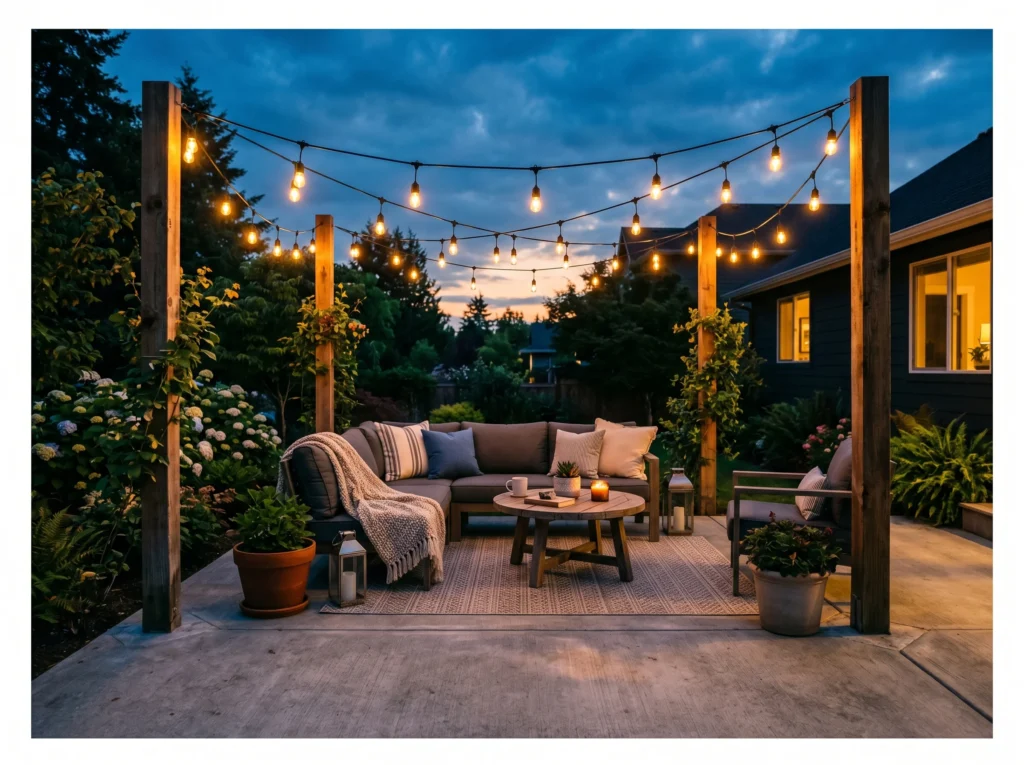
String lights installed on posts above a concrete patio transform it completely after dark. The warm amber glow creates an intimate, atmospheric overhead light source that makes everything beneath it look warmer and more inviting.
The concrete patio surface reflects the string light glow beautifully, particularly when the surface has a slight sheen from a clear sealer. The grey tone of concrete paired with warm amber Edison light creates one of the most appealing outdoor lighting combinations available. The posts can be set in sleeves cast into the concrete at the original pour.
The simplest way to double a patio’s evening appeal.
Combine it with warm lighting that extends the evening and your patio becomes the destination long after sunset.
Small Concrete Patio for Compact Yards
A smaller concrete patio still provides a defined outdoor space without overwhelming a tight yard. This size works well for a couple of chairs or a small table rather than large gatherings. It suits townhouses or smaller lots where space is limited.
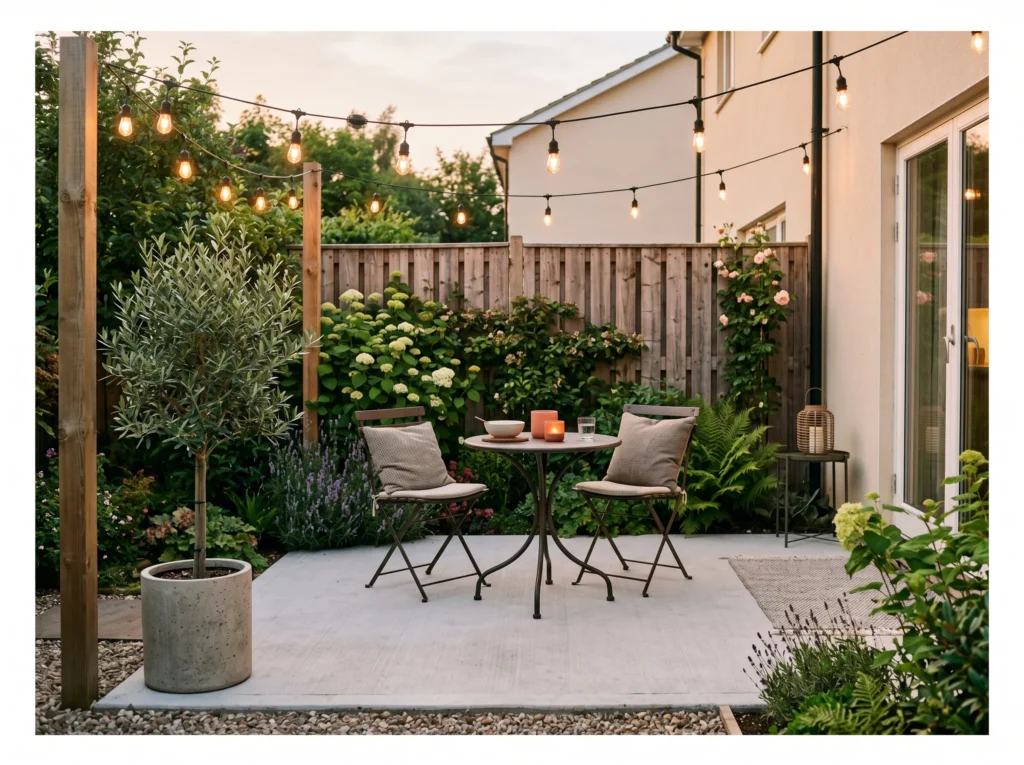
A small concrete patio works beautifully when the proportions and furniture are correctly scaled to the available space. A three by three meter concrete slab is genuinely enough to create a comfortable two-person outdoor dining and lounging area.
The seamless poured surface of concrete makes a small patio look larger than it actually is because there are no joints or pattern repeats breaking the visual surface into smaller units. A light grey or buff tone reflects light and further enhances the sense of space. Keep furniture minimal and planting vertical to maximize the feeling of openness.
Perfect for small spaces.
Concrete Patio with Overhead Shade
Adding a shade sail or canopy above the patio protects the concrete surface from direct sun. This also keeps the space usable during the hottest parts of the day. Concrete underneath stays low maintenance regardless of the shade structure chosen.
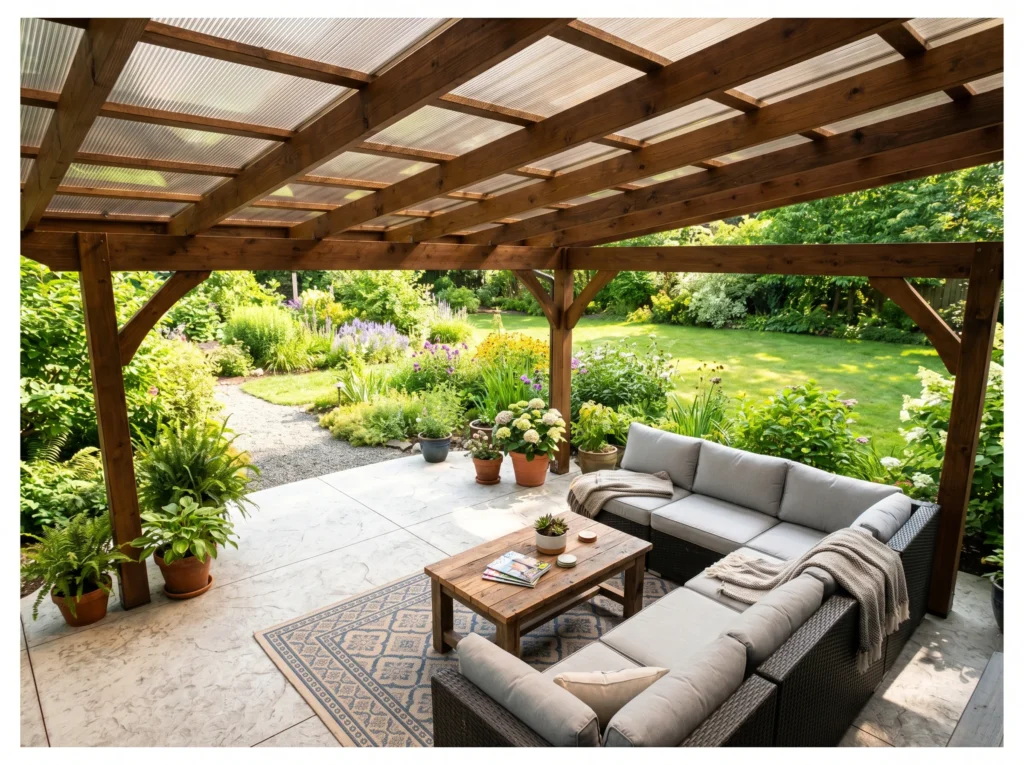
A concrete patio gains enormous practical value when paired with an overhead shade structure. Whether a pergola with climbing plants, a polycarbonate panel roof, a retractable awning, or a solid timber cover, shade transforms a concrete patio from a hot midday surface into a comfortable all-day outdoor room.
Light-colored concrete reflects solar radiation effectively but still heats up significantly under direct afternoon sun without overhead shade. A structure that covers even half of the patio area creates a cool destination that makes the whole outdoor space usable during the hottest parts of summer days.
Stenciled Concrete Patio
Stenciling applies a pattern onto the surface using a template rather than stamping it into wet concrete. This method works well for adding detail to an existing patio without a full replacement. It suits a patio wanting a decorative touch on a smaller budget.
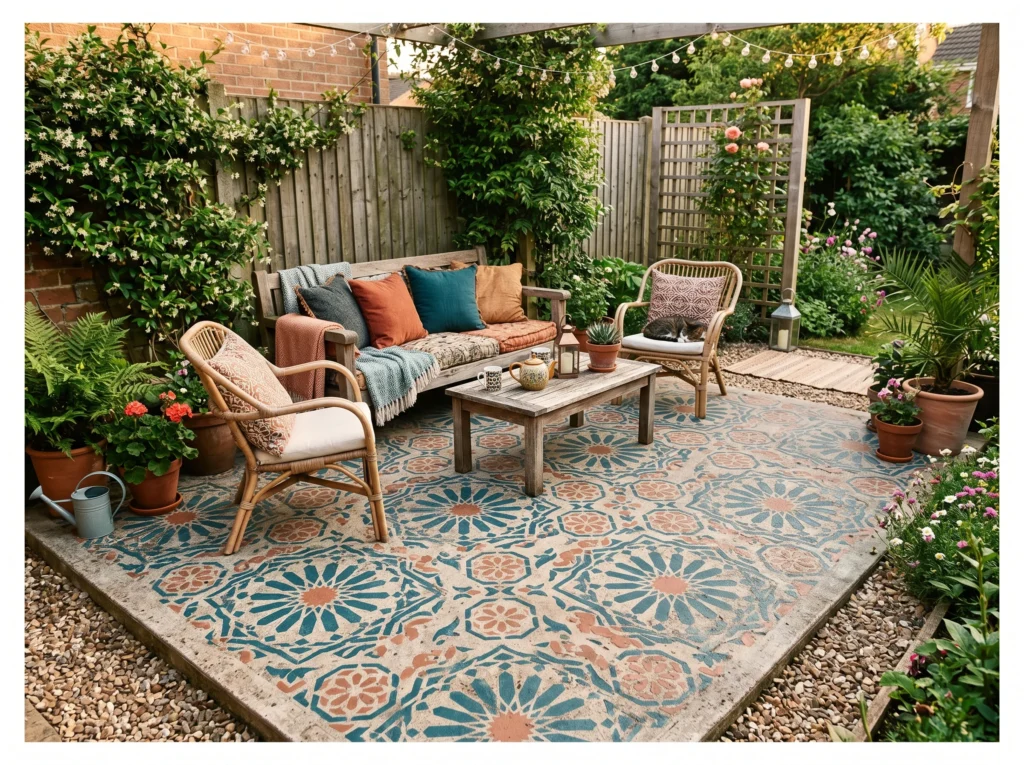
A stenciled concrete patio uses floor stencils and exterior concrete paint to apply decorative patterns to the surface of an existing concrete slab. Moroccan tile patterns, geometric designs, herringbone layouts, and botanical motifs all work beautifully as stenciled concrete designs.
This approach transforms a plain grey slab into something genuinely artistic and distinctive at a fraction of the cost of removing and replacing the concrete. Clean the existing slab thoroughly, apply a base coat of the main color, and then stencil the pattern over it. Finish with a durable exterior clear coat to protect the design from foot traffic.
Budget-friendly option with artistic results.
Multi-Level Concrete Patio
Building the patio across different levels adds depth and visual separation between areas. Steps between levels can also double as extra seating during gatherings. This approach suits a sloped yard or a patio wanting distinct zones for different activities.
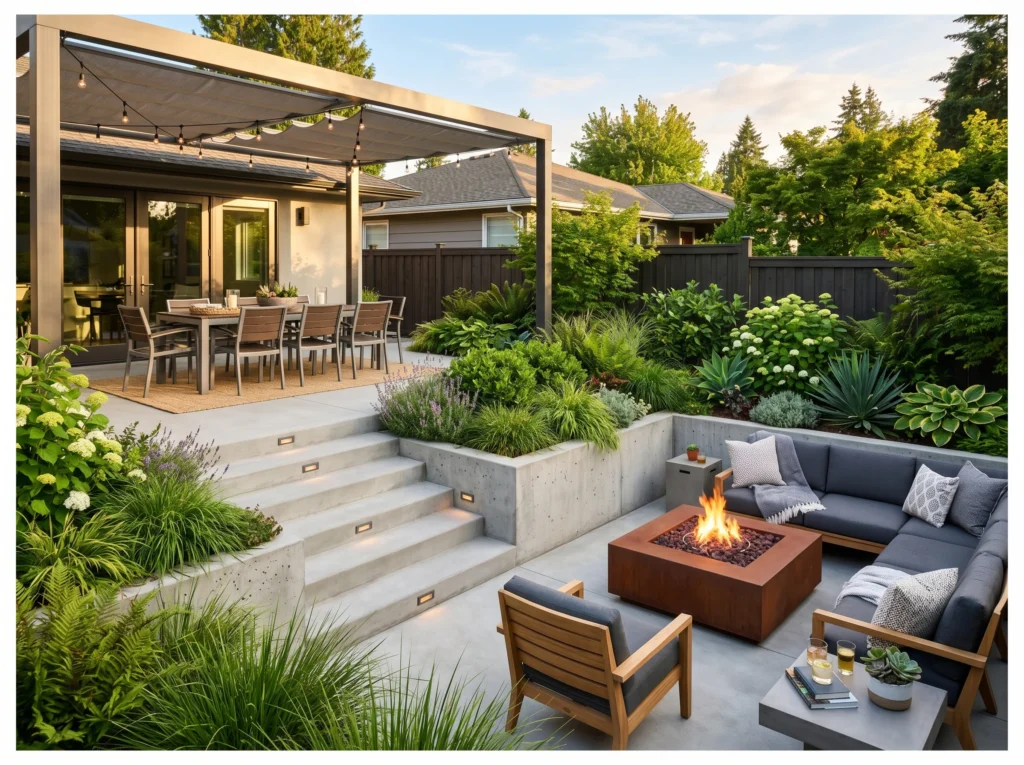
A multi-level concrete patio uses a sloped backyard to create distinct zones at different heights connected by concrete steps. The upper level typically serves dining and cooking while the lower level becomes the lounging and fire pit destination.
Pouring all levels from the same concrete mix and applying the same finish throughout creates a unified material story across the entire outdoor space. Wide generous steps between levels, at least 1.2 meters wide, function as casual seating and planting ledges rather than purely transitional elements. The result is a backyard that uses its slope as a design asset.
Turns a challenging slope into a stunning outdoor space.
Conclusion
Concrete is one of the most underrated outdoor patio materials available. It is affordable, durable, low maintenance, and capable of far more visual variety than most homeowners realize. The right finish, color, pattern, and surrounding design can make a concrete patio look as refined and intentional as any other surface.
Start with the idea from this list that best matches your home’s architecture and how you want to use the outdoor space. Whether that is a smooth polished surface for a contemporary home, an exposed aggregate deck around a pool, or a stained terracotta slab for a Mediterranean courtyard, concrete can deliver the result beautifully.
Your concrete patio is not a compromise. It is a canvas.
Even in tight footprints, small-space layouts that feel bigger prove concrete works at any scale.