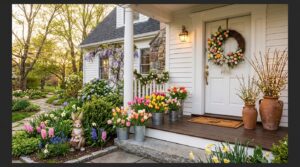
First impressions happen in seconds. A modern front yard tells the whole street your home is cared for, considered, and worth noticing.
These ideas create clean curb appeal without complicated landscaping or big budgets.
Let’s explore the ideas.
If you want to go deeper on planting choices, there are landscaping ideas worth exploring further to round out the whole yard.
Concrete Pathway with Ornamental Grasses
A concrete pathway lined with ornamental grasses softens what would otherwise be a plain, hard surface. Grasses like feather reed or fountain grass sway with the wind, adding movement that most front yards lack. This combination works well because the grasses need very little upkeep once established.
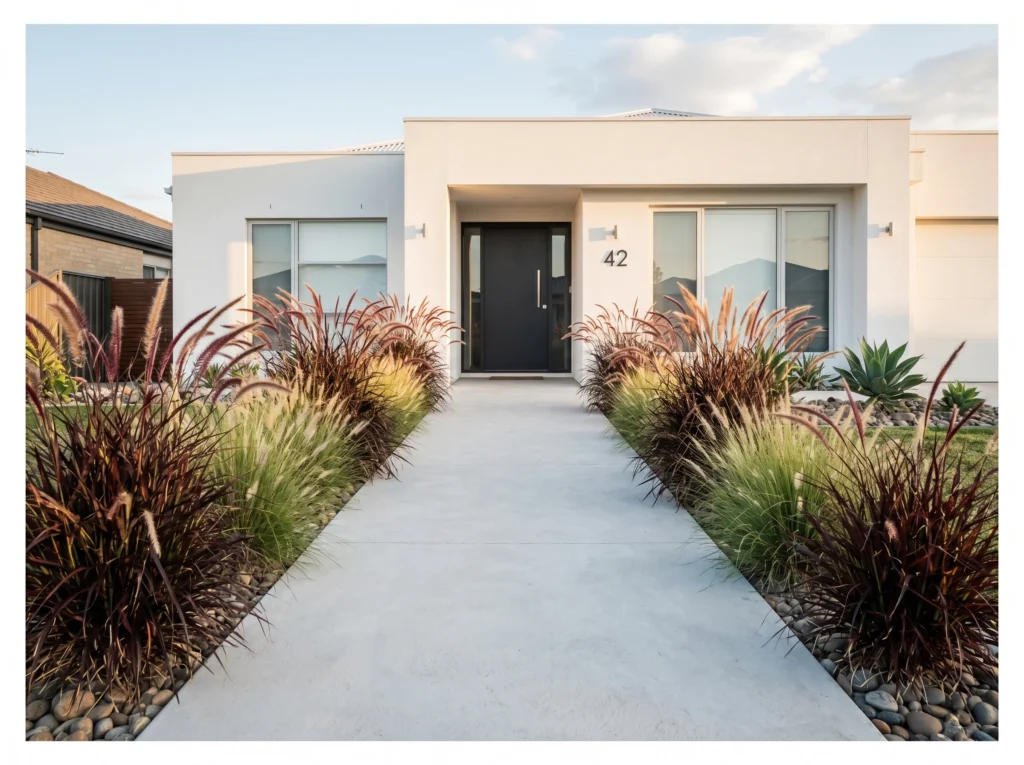
A wide concrete pathway flanked by ornamental grasses on each side creates a strong, directional entry sequence that draws the eye straight to the front door. The contrast between the hard concrete surface and the soft swaying grasses is visually satisfying and deliberately modern.
Ornamental grasses like Karl Foerster, Mexican feather grass, and Pennisetum require minimal water, zero fertilizing, and only one annual cut back. They look beautiful in every season and move gently in the breeze in a way that no other plant category can match.
Low maintenance, high visual impact.
Drought-Tolerant Front Yard Garden
A drought tolerant front yard garden relies on plants that can handle long stretches without regular watering. Succulents, lavender, and native grasses are common choices since they thrive in dry conditions. This approach cuts down water bills significantly, especially in regions that see hot, dry summers.
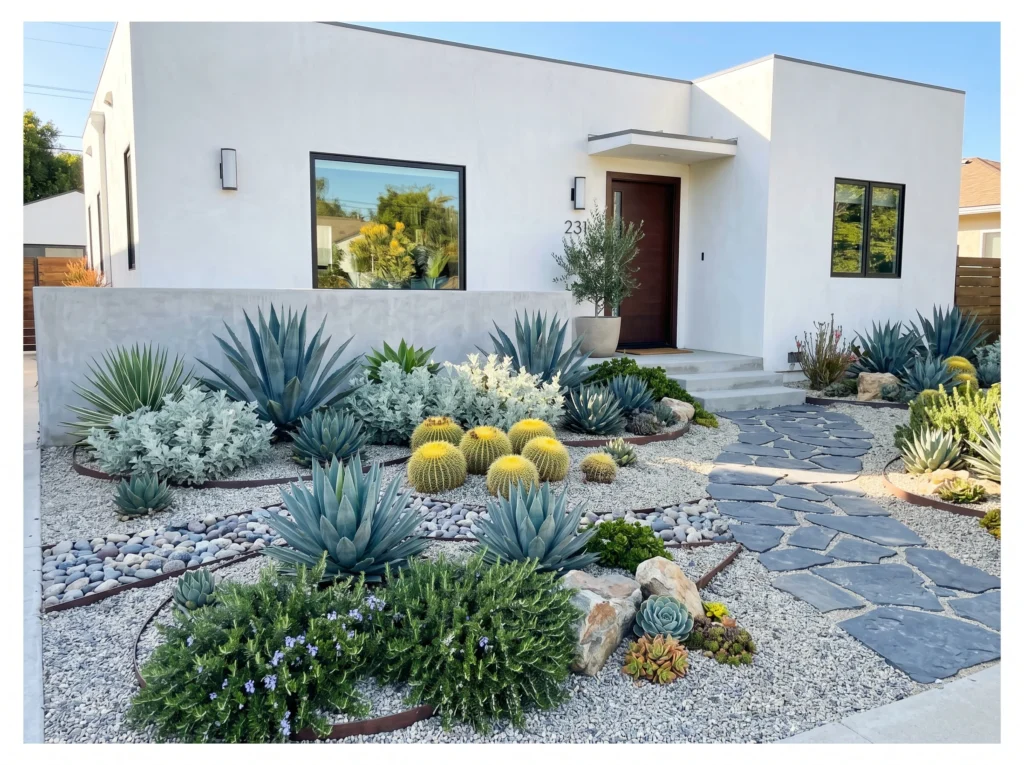
A drought-tolerant front yard replaces thirsty lawn and high-maintenance flowering plants with succulents, native grasses, groundcovers, and Mediterranean plants that thrive on minimal water once established. The result looks intentional, contemporary, and surprisingly lush.
Beyond environmental benefits, a drought-tolerant front yard significantly reduces water bills and eliminates most ongoing maintenance work. No weekly mowing, no seasonal replanting, no irrigation system required in most climates. Once the plants establish in their first season, the garden largely takes care of itself.
For more garden bed designs worth studying, it helps to see how other drought-tolerant yards structure their planting.
Water-wise and genuinely beautiful.
Black Mailbox and House Number Statement
A black mailbox paired with matching house numbers creates a small but noticeable design detail near the curb. The dark color contrasts sharply against lighter siding, brick, or landscaping. This kind of detail is inexpensive to add but still gives the whole front yard a more finished look.
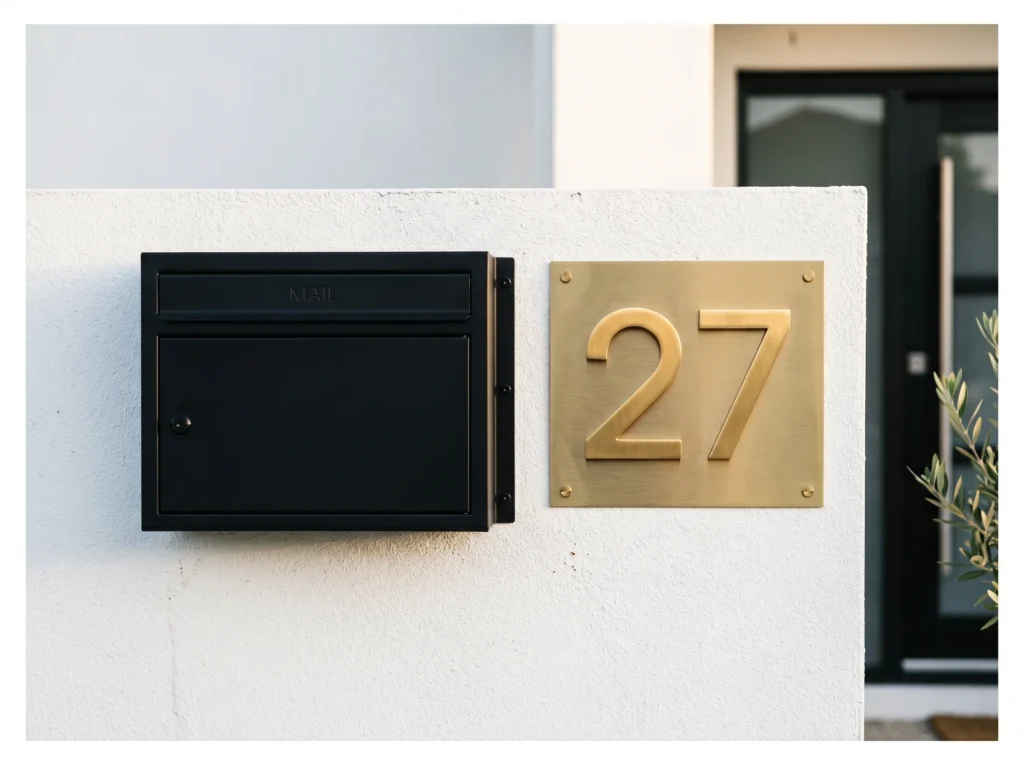
Replacing an old plastic mailbox and faded house numbers with a matte black wall-mounted letterbox and oversized brushed brass or black house numbers is one of the quickest and most affordable front yard upgrades possible.
These details seem small but they signal the design quality of the whole property before a visitor even reaches the door. Bold oversized house numbers are especially effective on rendered or timber-clad facades. The contrast between the number material and the wall surface reads clearly from the street and adds a purposeful quality to the entire exterior.
Budget-friendly option with immediate impact.
Minimalist Gravel Front Yard
A minimalist gravel front yard replaces grass with a clean, low maintenance surface of crushed stone. It drains well and rarely needs mowing, watering, or fertilizing like a traditional lawn does. This style tends to suit modern homes that already favor simple, uncluttered exteriors.
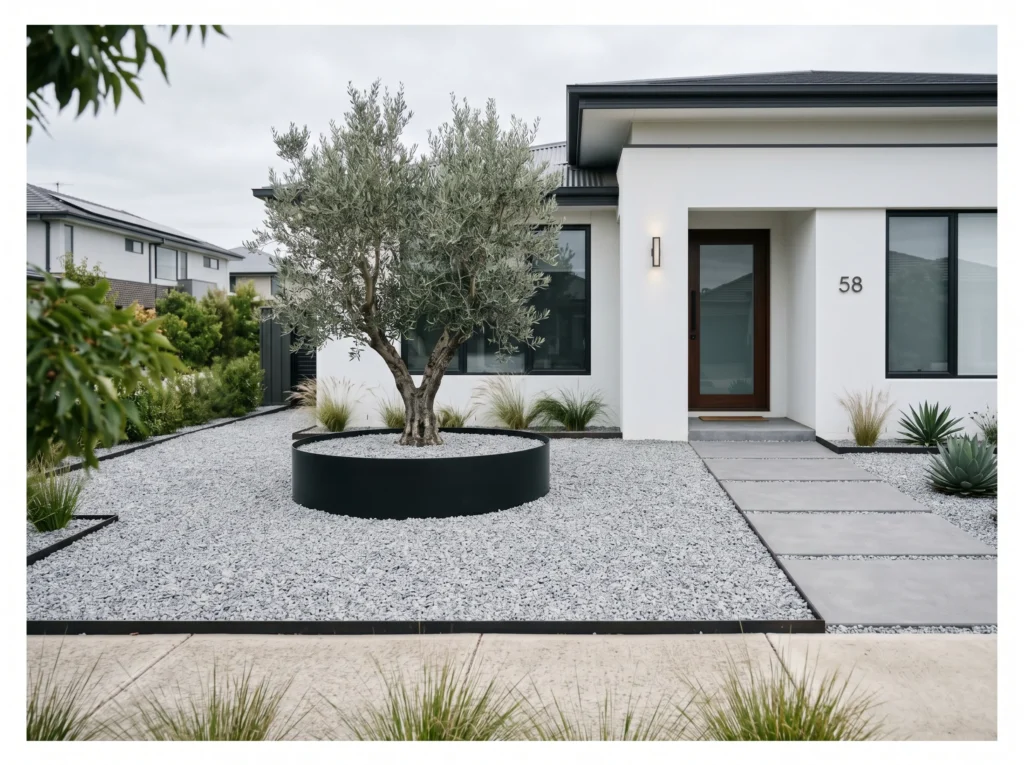
decomposed granite, creating a low-maintenance front garden that looks deliberately designed rather than neglected. The key is choosing a gravel color that works with the home’s exterior palette.
Pale grey gravel suits white, black, and charcoal homes. Warm buff or honey gravel suits timber-clad or brick exteriors. Lay landscape fabric beneath the gravel to suppress weeds permanently and use large steel edging strips to keep the gravel contained within precise geometric borders.
For more low-care rock gardens worth trying, it’s worth seeing how other yards use gravel and stone together.
Front Yard with Boxwood Hedges
Boxwood hedges along a front yard give it a neat, structured appearance year round. Their dense, evergreen leaves hold their shape well, even through colder months when other plants die back. Regular trimming keeps the hedges looking crisp and intentional rather than overgrown.
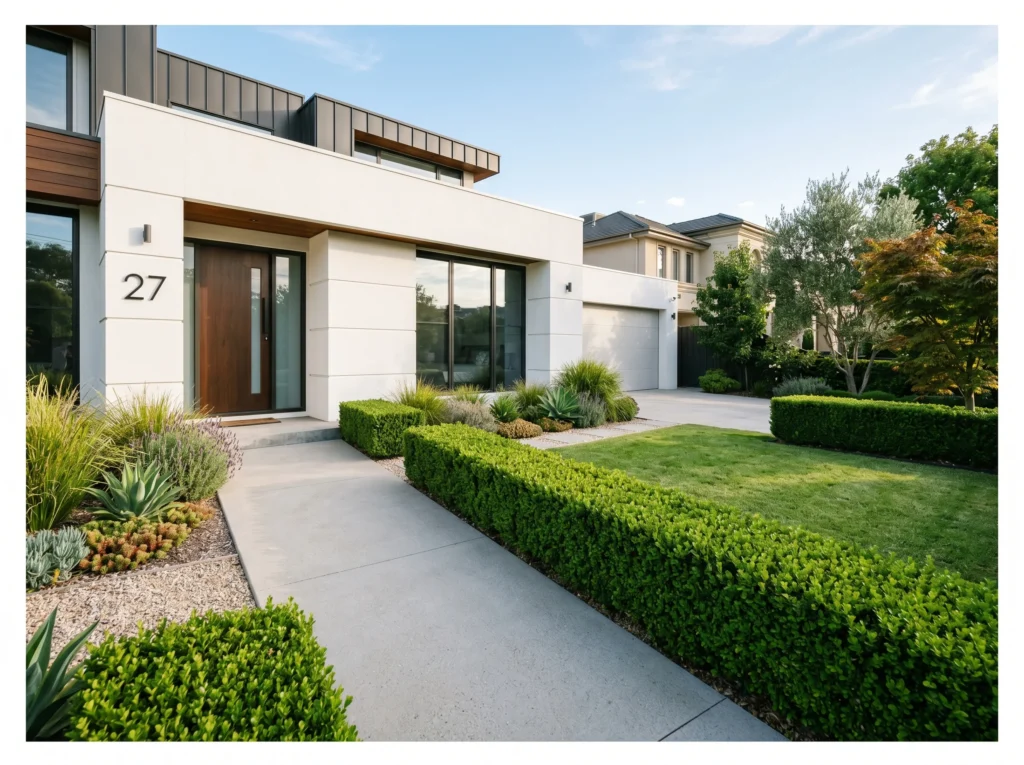
Neatly clipped boxwood hedges running along a front path or defining the garden bed edges bring a formal precision to a front yard that feels simultaneously classic and contemporary. The geometry of a well-maintained hedge communicates care and attention more clearly than almost any other garden element.
Boxwood is slow-growing, responds well to clipping into precise shapes, and stays evergreen year round so it looks equally good in every season. Low hedges at 30 to 60 centimeters suit modern homes best. Taller hedges create more privacy but suit larger properties where they remain in proportion.
Modern Front Yard with Statement Tree
A modern front yard built around a single statement tree keeps the overall design simple but striking. Trees like Japanese maples or olive trees are popular picks because of their distinct shape and texture. With just one tree as the focal point, the rest of the yard can stay minimal without feeling empty.
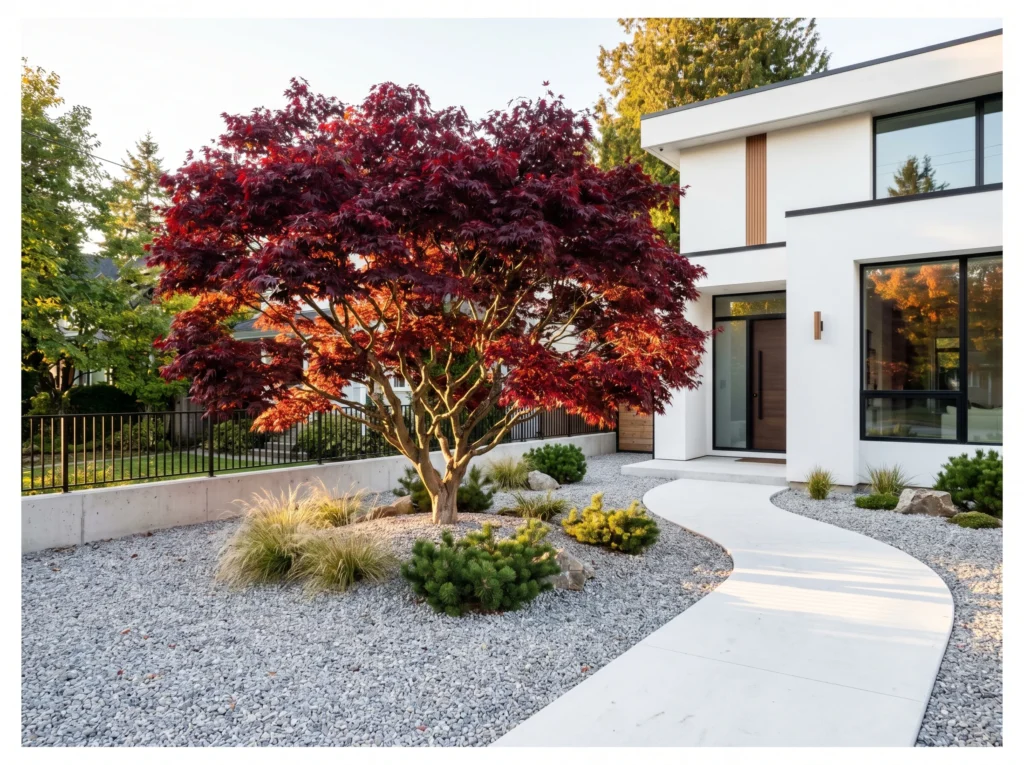
A single well-chosen statement tree planted in the front yard creates a focal point that anchors the entire exterior design. One beautiful tree in the right position does more for curb appeal than a dozen ordinary plants scattered across the garden bed.
Japanese maples, olive trees, ornamental pears, and Magnolia grandiflora all suit modern front yards exceptionally well. Choose the species based on your climate and the mature size relative to your front yard proportions. A tree that is too large for the space will eventually become a problem. One that is correctly proportioned just keeps getting better every year.
One great tree beats ten ordinary plants.
Layered Planting Border Along the Facade
A layered planting border along the house facade uses different plant heights to build visual depth. Taller shrubs typically go in the back, with mid sized plants and low ground cover filling in toward the front. This layering technique makes even a narrow planting bed look fuller and more established.
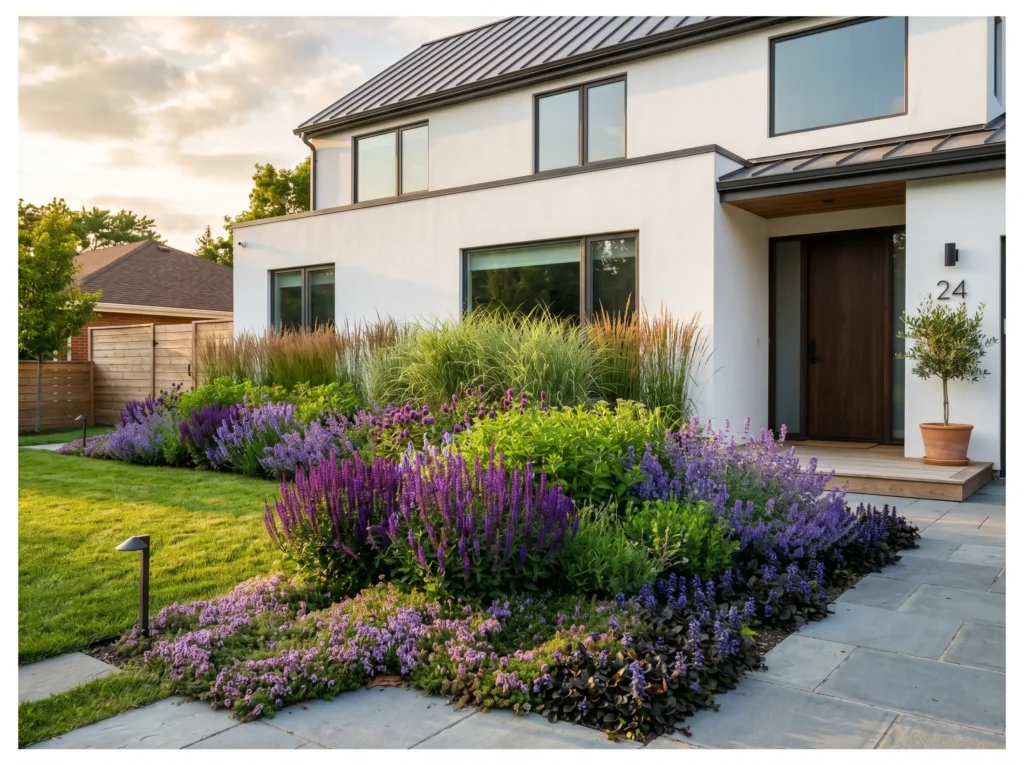
A layered planting border runs along the base of the home facade and uses plants of varying heights, from tall at the back against the wall to low at the front edge, to create a sense of depth and abundance without looking overgrown.
The layering technique makes even a simple plant selection look considered and professional. Stick to a limited palette of three to five plant species in varying quantities to maintain cohesion. Repeat the same plants at intervals along the border so the eye moves rhythmically rather than jumping between too many different elements.
Front Yard with Horizontal Timber Fence
A horizontal timber fence gives a front yard a distinctly modern edge compared to traditional picket styles. The clean, straight lines of the boards pair well with contemporary house designs. Sealing the wood properly helps it hold up against weather over the years.
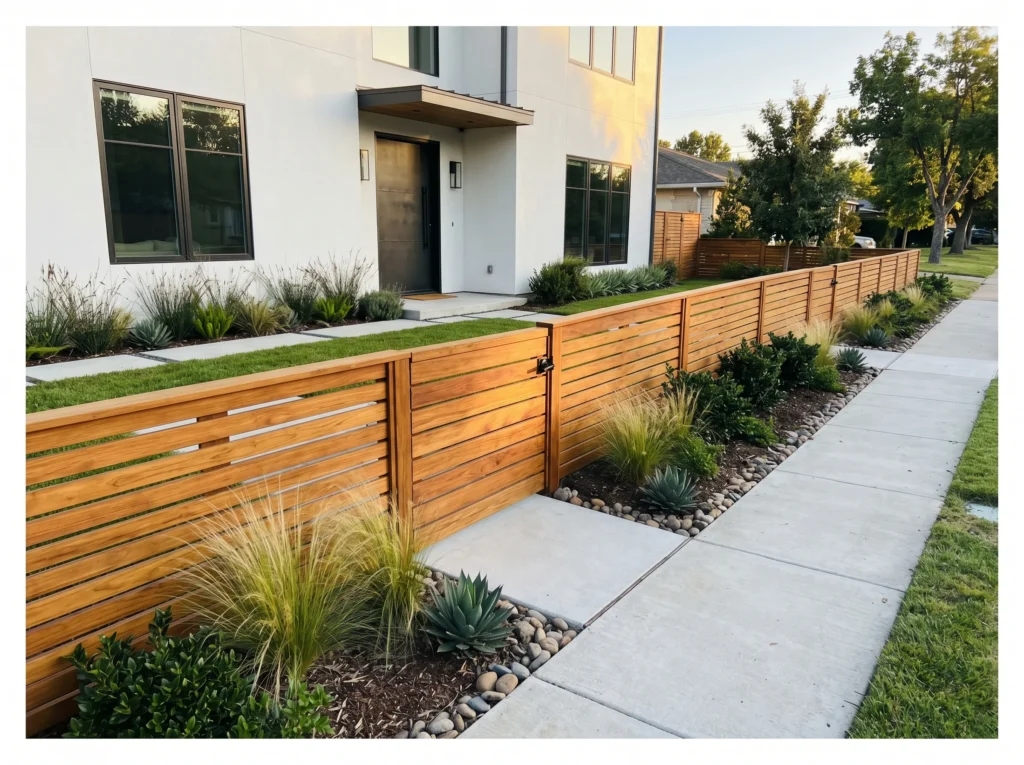
A horizontal timber slat fence along the front boundary gives a modern home a defined edge that also provides partial privacy without enclosing the property completely. The horizontal lines complement the low, wide proportions of most contemporary home designs.
Hardwood timber in a teak or charcoal stain suits almost every contemporary exterior palette. Space the slats 10 to 20 millimeters apart for a balance of privacy and openness. A matching gate with a simple latch keeps the design language consistent from boundary to front door.
Decomposed Granite and Native Plants
Decomposed granite paired with native plants creates a low water, low maintenance front yard option. The fine, compacted gravel provides a stable walking surface while still allowing for natural drainage. Native plants filled in around it require very little extra care since they are already suited to the local climate.
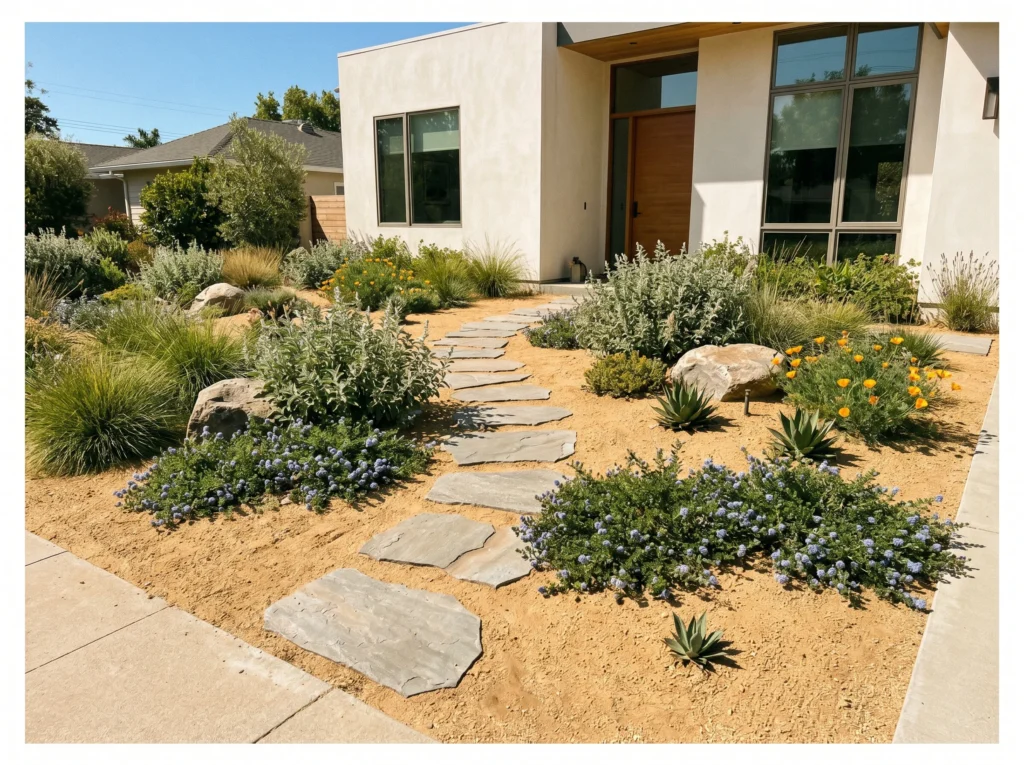
Decomposed granite as a ground cover paired with native plants creates a front yard that looks completely at home in its landscape rather than imposed upon it. Native plants evolved to suit your local climate, soil, and rainfall, which means they establish quickly and need almost no supplemental irrigation once settled.
The combination of warm-toned DG and silvery or grey-green native foliage creates a naturalistic but clearly designed front yard that reads as intentionally contemporary. Defined steel edging between the DG and any lawn areas keeps the design looking precise rather than neglected.
Front Yard with Uplighting
Uplighting in a front yard involves placing fixtures at ground level and aiming them upward at trees or architectural features. This technique creates dramatic shadows and highlights that are completely absent during daylight hours. At night, it gives the whole front of the house a more dimensional, finished appearance.
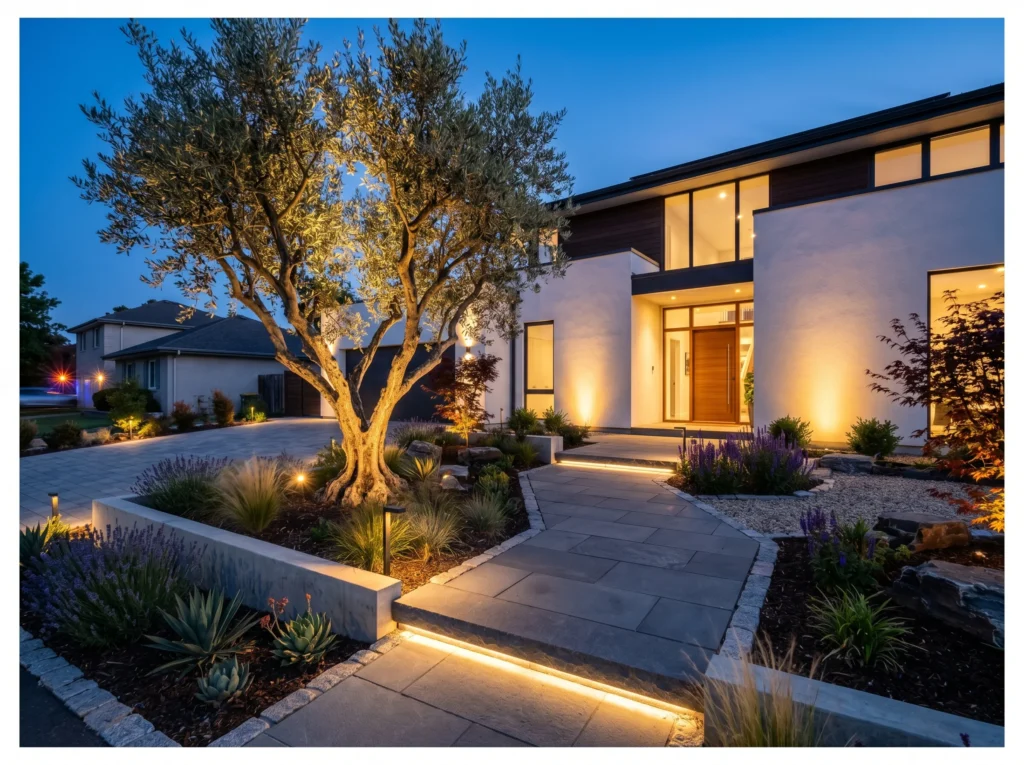
Uplighting installed at the base of trees, plants, and the home facade transforms a front yard’s appearance after dark completely. The upward wash of warm light across the rendered wall, combined with illuminated plants and a lit pathway, creates an evening curb appeal as strong as the daytime version.
Pathway lights along the entry walk add safety and guide visitors clearly toward the front door. Spike-mount uplights at tree bases and shrub groupings highlight the garden structure. Together these layers of light create a front yard that looks genuinely professional and inviting from the moment the sun sets.
For more evening lighting worth adding outside, it’s worth seeing how other front yards layer light for maximum effect after dark.
Your front yard deserves to look good at night too.
Modern Raised Garden Beds Along the Path
Raised garden beds along a front walkway add structure while keeping planting areas clearly defined. Metal or wood edging is common, giving the beds clean, straight lines that suit a modern look. They also make it easier to control soil quality separately from the rest of the yard.
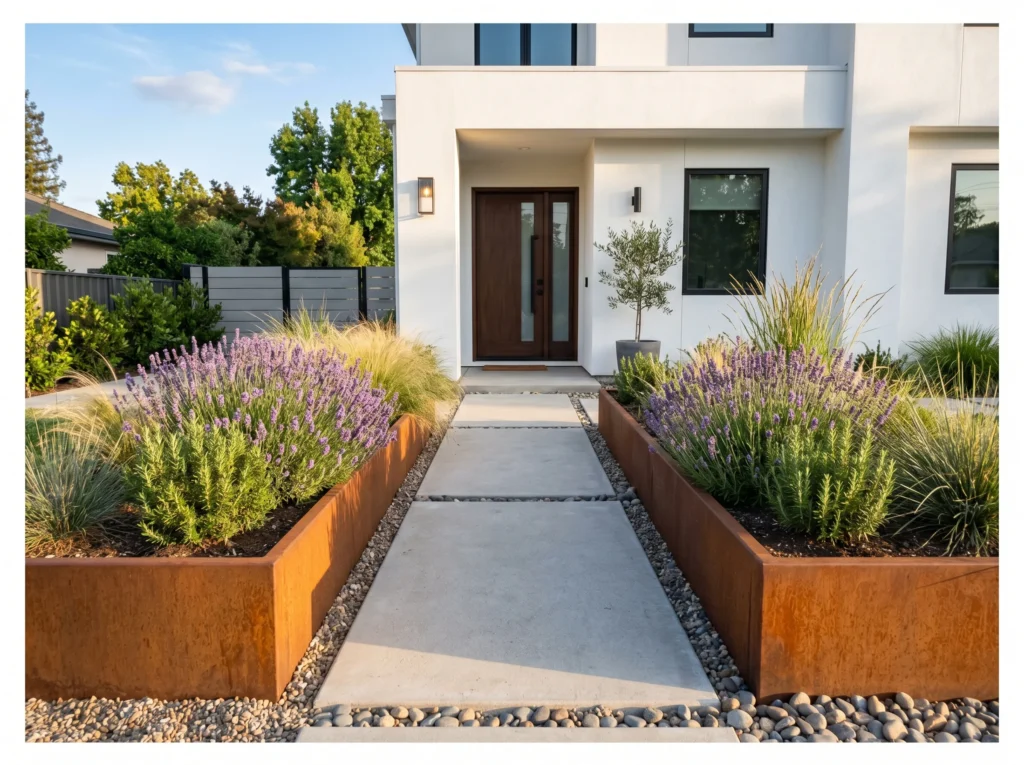
Low rectangular raised garden beds in steel, concrete, or timber installed along each side of the front path create a structured, designed entry sequence that feels genuinely architectural. They raise the planting slightly above path level, giving the garden composition a three-dimensional quality.
Corten steel planters develop a beautiful rust patina outdoors that suits contemporary and industrial home styles naturally. Concrete block planters suit minimalist and brutalist aesthetics. Timber-framed beds suit warm and natural home styles. All three options define the path edges while creating genuine planting depth.
Once the beds are in place, decorative accents for the entry can add the finishing personal touches nearby.
Front Yard with Japandi Influence
A Japandi influenced front yard blends Japanese minimalism with Scandinavian simplicity in its layout and materials. Natural wood, stone, and a limited plant palette are typical features of this style. The result tends to feel calm and uncluttered rather than busy or overly decorated.
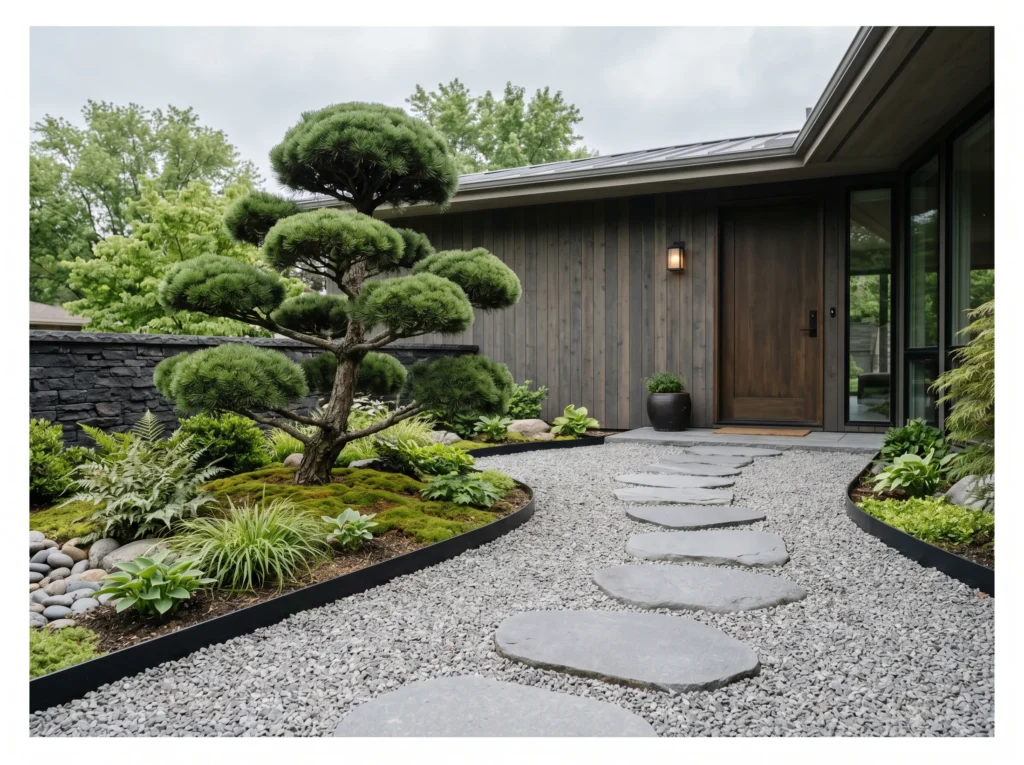
Japandi front yard design combines Japanese garden restraint with Scandinavian material warmth. The result is a front garden that feels deeply calm, carefully considered, and unlike anything else on the street. Every plant, stone, and surface earns its place.
A raked gravel ground cover, one or two carefully shaped specimen plants, smooth stepping stones, and matte black edging are genuinely all you need. The restraint is the design. Resist the urge to add more once the basic composition feels balanced. Japandi gardens work because of what is left out as much as what is included.
Low-Maintenance Artificial Turf Strip
An artificial turf strip offers a green lawn look without the mowing, watering, or fertilizing a real lawn needs. It holds up well in areas with heavy foot traffic or where grass struggles to grow properly. Many homeowners choose it specifically for narrow strips where maintaining real grass is more trouble than it is worth.
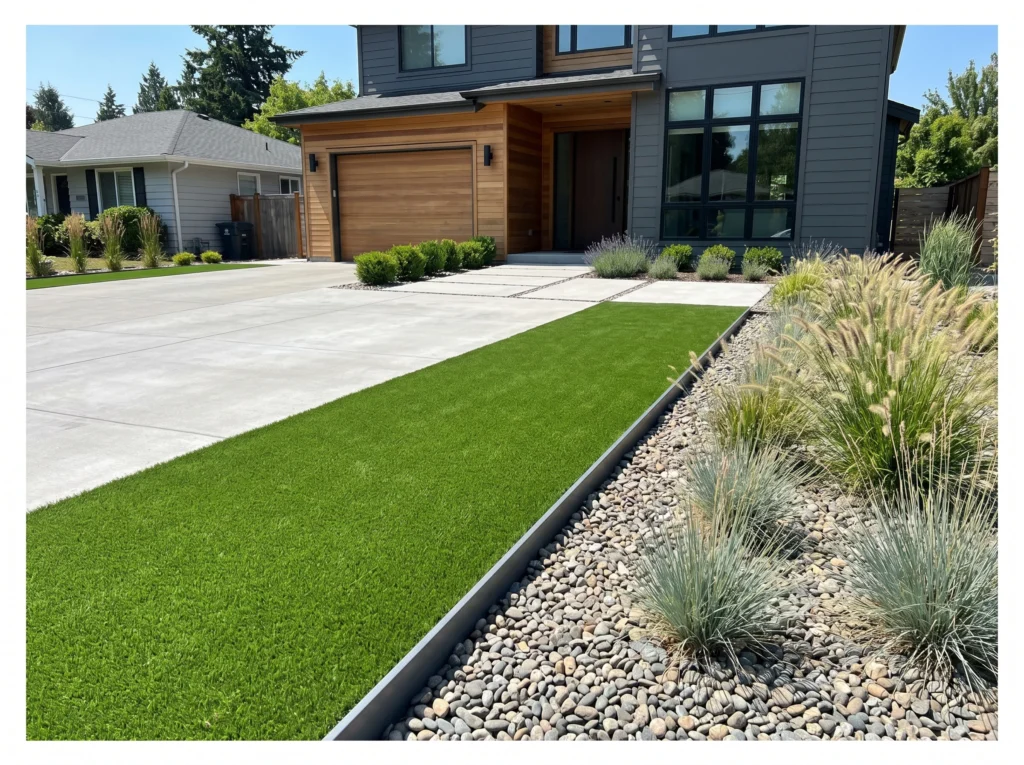
A well-installed strip of high-quality artificial turf maintains the green freshness of a lawn without the mowing, watering, fertilizing, or seasonal browning that real grass requires. In narrow front yard strips beside a driveway or path where a mower barely fits, artificial turf is a genuinely practical solution.
Modern artificial turf products use natural-looking blade colors, varied pile heights, and a thatch layer that mimics real lawn convincingly. Choose products with a dense pile of at least 35 millimeters and a realistic mix of green and brown blade colors to avoid the flat plastic appearance of older products.
Perfect for narrow strips real lawn struggles to fill.
Front Yard with Poured Concrete Driveway
A poured concrete driveway gives a front yard a clean, uniform surface compared to gravel or asphalt. It can be finished in different textures or even scored into patterns for added visual interest. Properly poured concrete also tends to last for decades with minimal repair work.
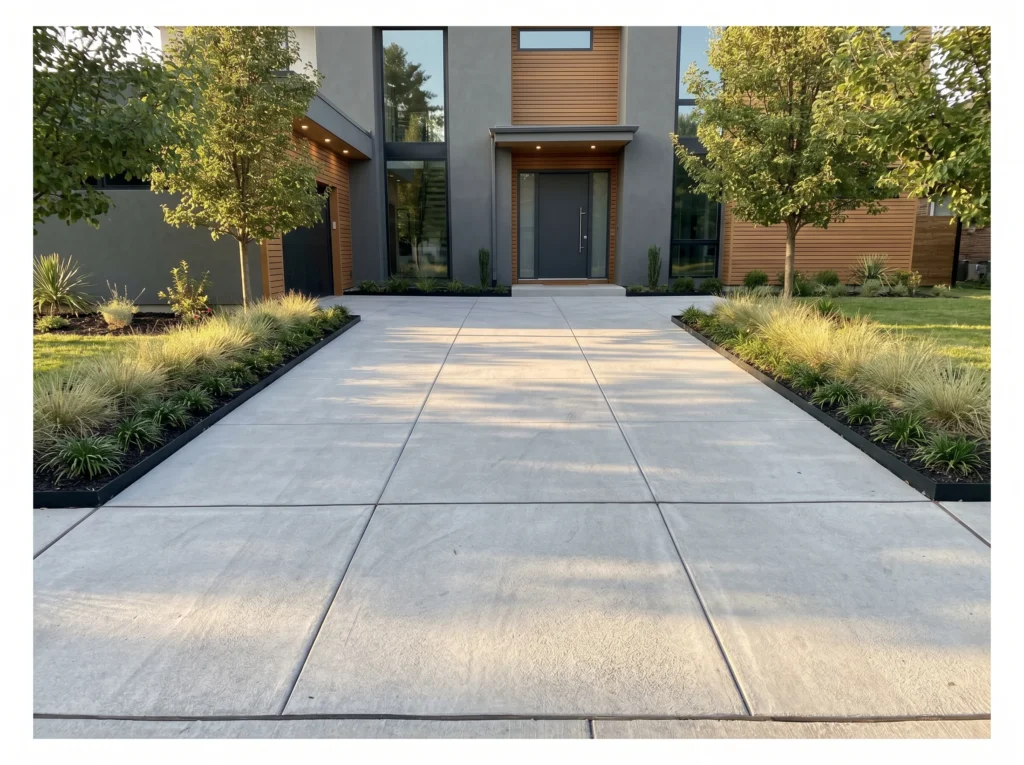
A poured concrete driveway with clean expansion joints and a smooth or lightly brushed finish is the most architecturally cohesive driveway option for modern homes. The consistent grey tone complements white, black, and charcoal rendered facades naturally without competing for attention.
Concrete driveways last 30 years or more with minimal maintenance. The expansion joint pattern, whether a simple grid or diagonal cut design, adds visual interest and prevents random cracking. Pair with steel edging strips along the border and a planting strip on each side to soften the hard surface and add the green balance every front yard needs.
Black Steel Planter Beds
Black steel planter beds add a modern, industrial touch to front yard landscaping. The metal edges hold their shape well and contrast nicely against greenery or flowering plants. Over time, some finishes develop a slight patina, which only adds character to the design.
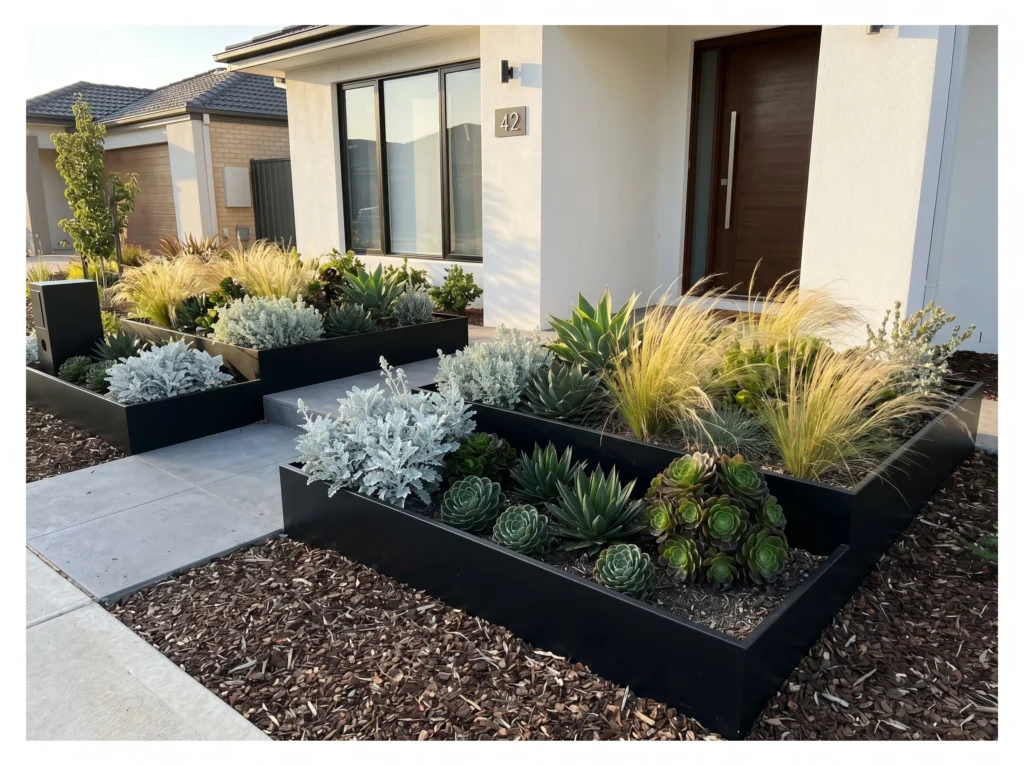
Black powder-coated steel planter beds bring a strong graphic quality to a front yard that other materials cannot replicate. The crisp sharp edges, consistent black color, and geometric forms look deliberately architectural and photograph with exceptional contrast against light-colored home facades.
Steel planter beds are fabricated from flat sheet steel bent into rectangular or square forms and finished with a durable powder coat. They last for decades outdoors, the powder coat holds color well in UV-intense environments, and the hard edges maintain their precision over time without the warping or weathering that timber edging experiences.
Bold, precise, and enduringly modern.
Front Yard with Climbing Plants on Facade
Climbing plants trained along a house facade soften hard exterior surfaces like brick or stucco. Ivy, climbing roses, or jasmine are common choices depending on the climate and desired look. It takes a couple of seasons for the plants to fill in, but the effect is a naturally green, layered exterior.
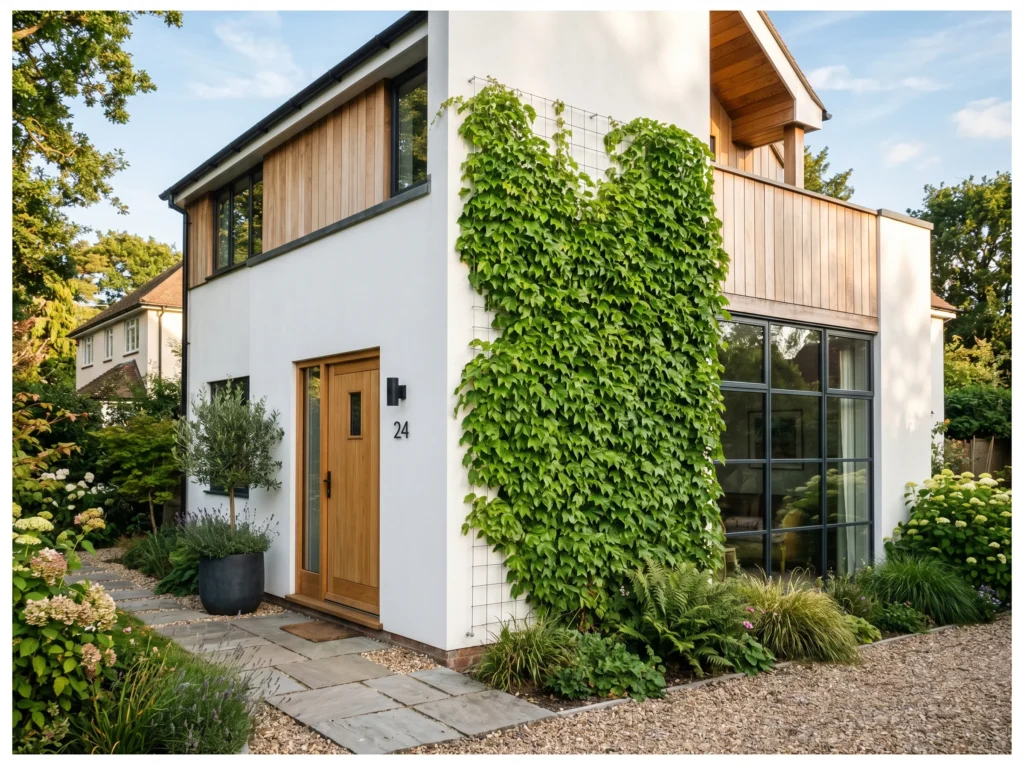
Training a climbing plant along a wire trellis system attached to the home facade adds a softness and living texture that transforms a flat rendered or brick wall into something beautiful and organic. The plant grows in a controlled pattern along the wire guides and covers the wall gradually over two to three seasons.
Star jasmine, Boston ivy, climbing roses, and wisteria all suit facade climbing beautifully. Wire trellis systems attached with standoff fixings allow air to circulate between the plant and wall, which protects the wall surface from moisture damage. The result is a facade that looks genuinely enchanting and completely unique on the street.
Symmetrical Front Yard Design
A symmetrical front yard design mirrors plants, pathways, or lighting fixtures on either side of the entrance. This balance draws the eye directly toward the front door, creating a sense of order. It is a classic approach that works particularly well on homes with a centered entryway.
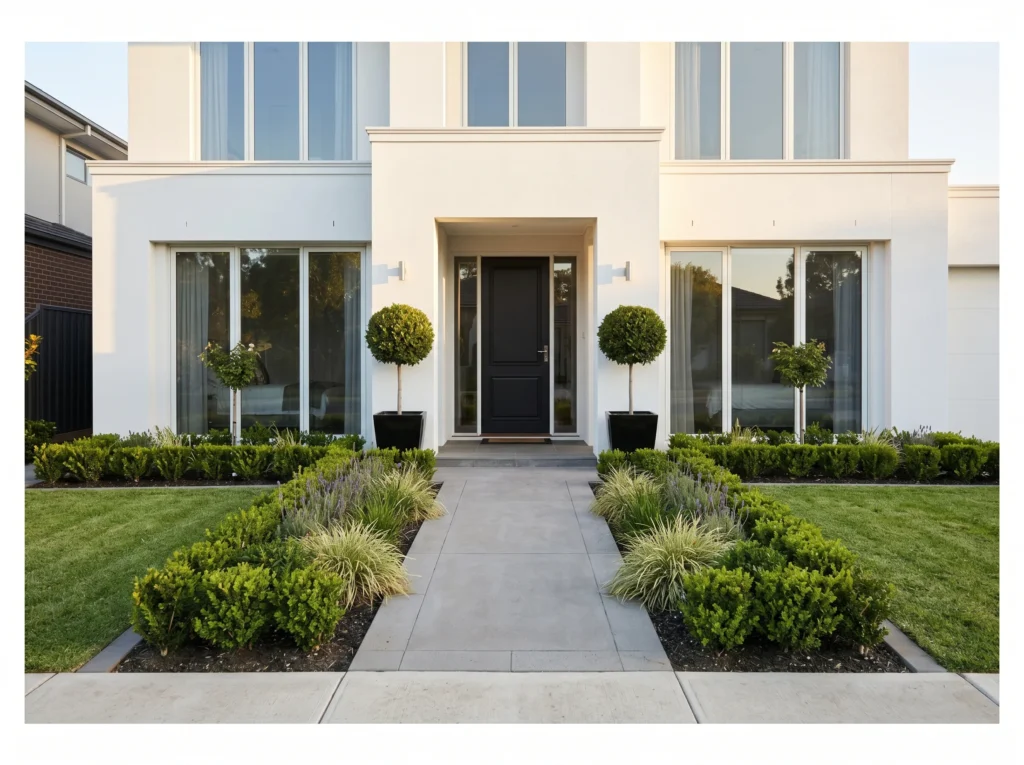
A symmetrical front yard design places identical elements on each side of the central axis that runs from the street to the front door. Matching planters, identical garden beds with the same planting, and balanced lighting on each side create a front yard that feels formal, confident, and completely intentional.
Symmetry communicates care and precision more clearly than any other garden design approach. It suits colonial, Georgian, and contemporary homes with centered front doors and balanced facade proportions naturally. The mirror-image quality reads strongly from the street even at a glance.
For front-of-house layouts worth comparing, it helps to see how other symmetrical designs balance the whole facade.
Front Yard with River Rock and Succulents
River rock combined with succulents creates a textured, low water front yard design. The smooth, rounded stones contrast nicely against the sharp, sculptural shapes of succulent plants. This pairing also requires very little ongoing maintenance once the rocks and plants are in place.
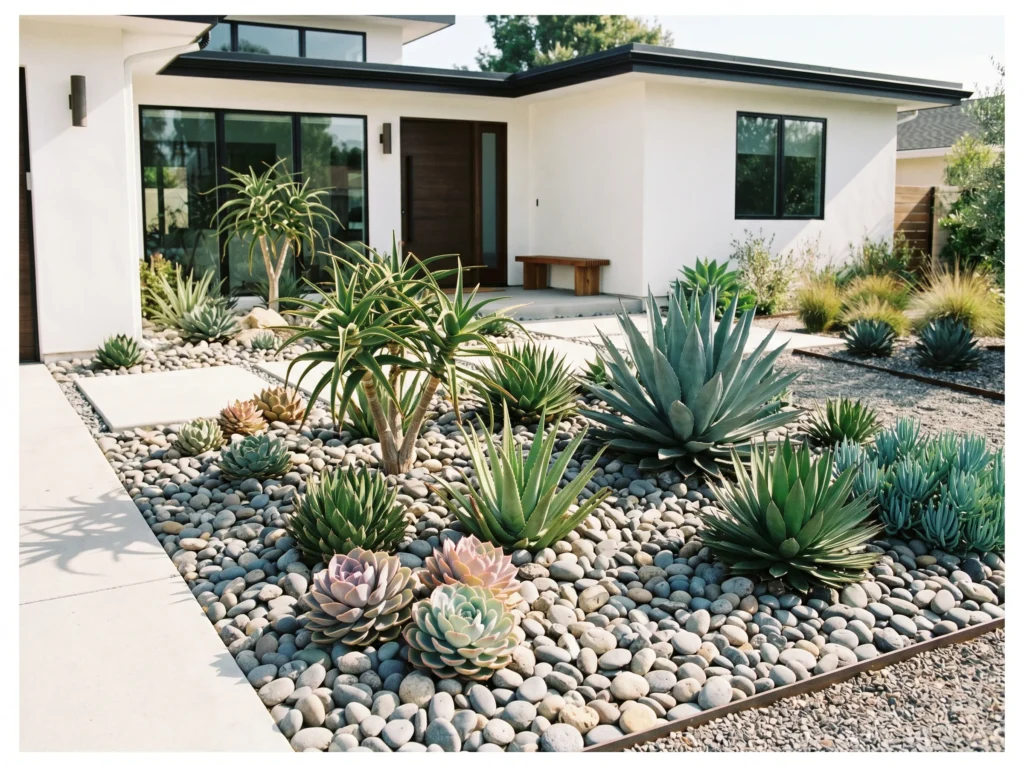
River rocks used as ground cover create a clean, moisture-retaining mulch layer that looks natural and completely weed-suppressive when laid over landscape fabric. The rounded stones in grey, white, and warm brown tones complement succulents and architectural plants beautifully.
Succulents planted through the river rock layer need excellent drainage, which the rock mulch provides naturally. The combination of smooth rounded stones and the sculptural geometry of succulents creates a front garden that looks curated and interesting without requiring any ongoing maintenance beyond removing the occasional fallen leaf.
Zero maintenance after establishment.
Modern Cottage Front Yard
A modern cottage front yard blends the charm of traditional cottage gardens with cleaner, more contemporary lines. Flowering perennials are often planted in a slightly more organized way than a classic cottage garden allows. The result feels warm and inviting without looking overly wild or unkept.
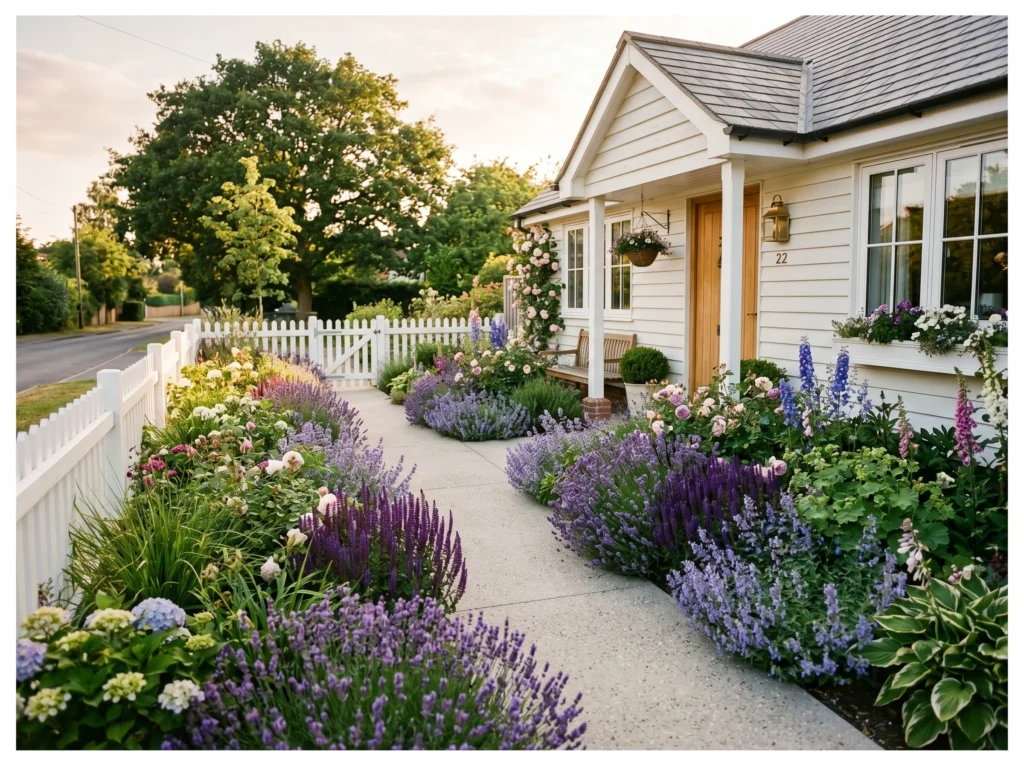
A modern cottage front yard takes the abundant, slightly overflowing planting of traditional cottage style and organizes it within a clean geometric framework. The plants spill and bloom freely but the path, fence, and bed edges remain crisp and defined beneath the softness.
Lavender, salvia, roses, catmint, and echinacea planted in drifts rather than rows create the cottage abundance without looking unplanned. The modern element comes from the restraint of the structural framework, the consistent color palette, and the absence of ornamental clutter that traditional cottage gardens often accumulate.
Romantic planting, modern bones.
Front Yard with Bold Front Door Color
A bold front door color turns the entrance into the focal point of the entire front yard. Deep reds, blues, or greens tend to stand out well against neutral siding or brick. This is one of the simplest updates that can noticeably change the character of a home’s exterior.
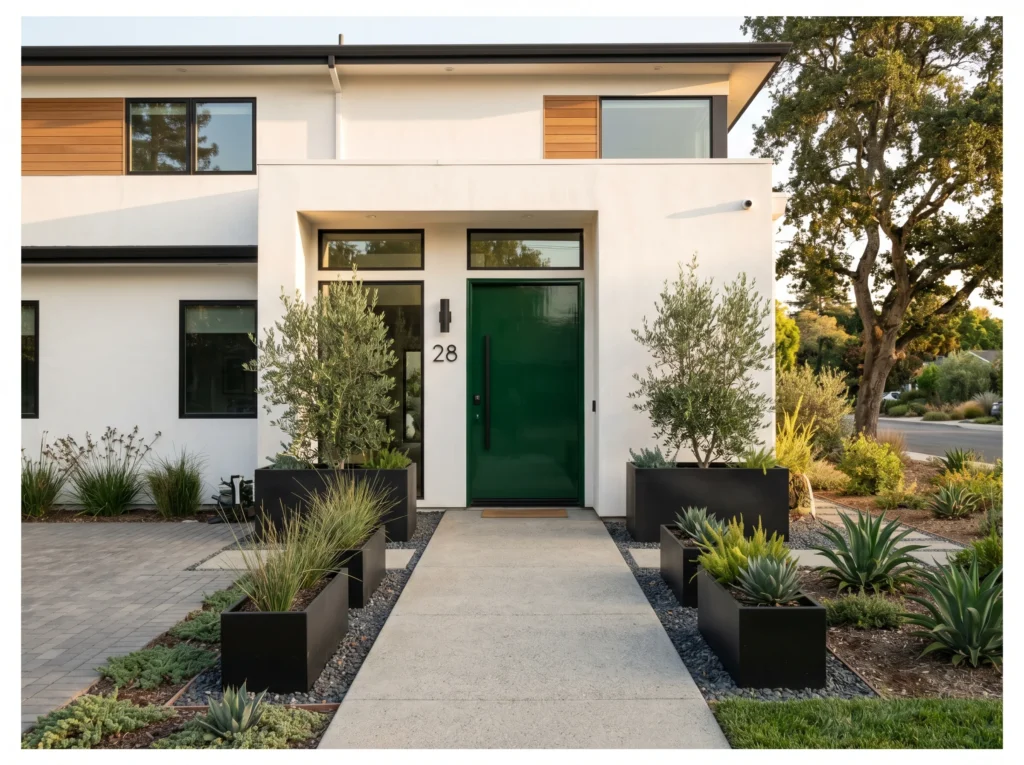
A bold front door color is the single fastest way to give a front yard a point of focus and a memorable identity. When the facade is restrained and the landscaping is clean, a deep forest green, terracotta, navy, or matte black door becomes the design statement that makes the whole exterior feel resolved.
The door color choice communicates personality before anyone steps inside. Deep green reads as sophisticated and grounded. Terracotta reads as warm and creative. Navy reads as classic and confident. Matte black reads as contemporary and precise. Choose a color that reflects the interior personality of the home for a result that feels genuinely coherent.
Edged Lawn with Clean Border Lines
An edged lawn with clean border lines keeps grass neatly separated from walkways, beds, or driveways. Sharp edging, whether metal, stone, or simply well maintained cuts, gives the whole yard a tidy appearance. Regular edging upkeep is what really makes this simple detail stand out over time.
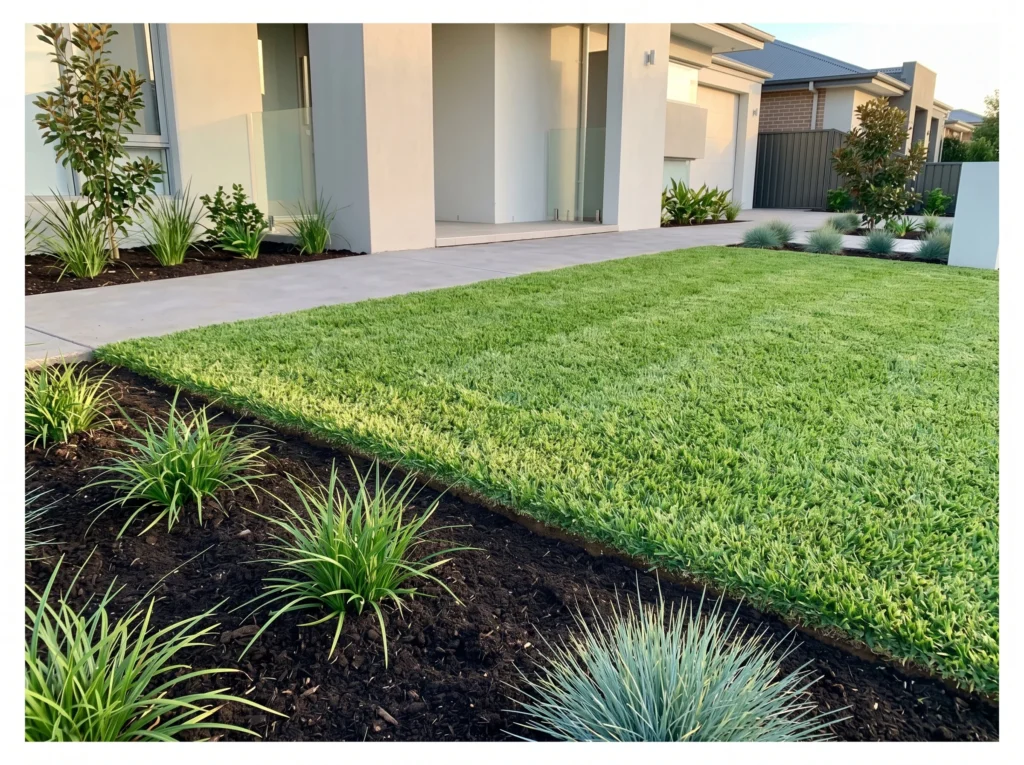
A neatly edged lawn with clean, precise border lines between grass and garden bed is one of the most transformative and affordable front yard improvements possible. The same lawn that looked ordinary becomes sharp and intentional the moment the edges are cut cleanly.
Use a half-moon edging tool or a rotary lawn edger along the garden bed borders once every three to four weeks. Install steel, aluminium, or black plastic edging strips between the lawn and any gravel or garden bed area to maintain the separation permanently without weekly re-cutting. Clean edges communicate care instantly.
The most underestimated curb appeal upgrade available.
Conclusion
A modern front yard does not need to be complicated, expensive, or high maintenance to look genuinely impressive. The ideas on this list prove that restraint, clean lines, and a limited but well-chosen plant palette consistently outperform more elaborate and costly approaches.
Start with the one or two ideas that address your current front yard’s biggest weakness. If it is tired planting, start there. If it is an undefined path, fix that first. Each improvement you make builds on the last and the cumulative effect on curb appeal is always greater than any single change alone.
Your home’s first impression is entirely within your control.
And for more modern curb appeal ideas to explore, there’s plenty of inspiration to keep building on what you’ve started here.