An outdoor space without structure feels unfinished. A modern pergola fixes that instantly and turns any patio into a space worth staying in.
These ideas work for every backyard size, style, and budget.
Let’s explore the ideas.
If you’re weighing materials, there are wooden pergola styles worth comparing alongside these modern options.
Louvered Roof Pergola
A louvered roof pergola comes with slats that tilt open or closed depending on how much sun or shade you want. Most versions can be adjusted manually or with a simple motor and remote. This makes it one of the more flexible pergola styles for changing weather throughout the day.
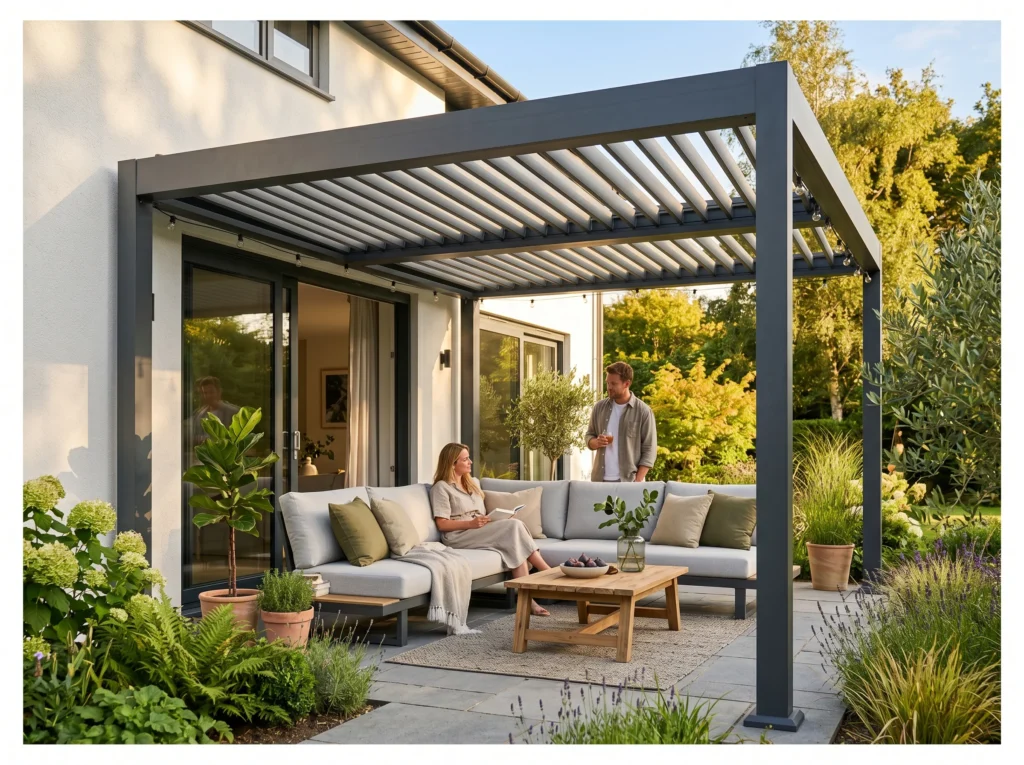
A louvered roof pergola has adjustable horizontal slats that you open or close depending on weather and light conditions. Full sun, partial shade, or complete rain cover, all controlled with a simple manual crank or motorized remote.
This is the most functional pergola style available and explains why it has become the most popular modern option across Australia, Europe, and North America. The aluminum construction is lightweight, rust-proof, and requires virtually no maintenance beyond an occasional rinse with water.
The most versatile pergola you can buy.
Minimalist Steel Frame Pergola
A minimalist steel frame pergola keeps things simple with thin posts and clean, straight lines. The reduced framing gives it a lighter look compared to bulkier wooden structures. It suits modern homes where the outdoor space already leans toward a sleek, uncluttered style.
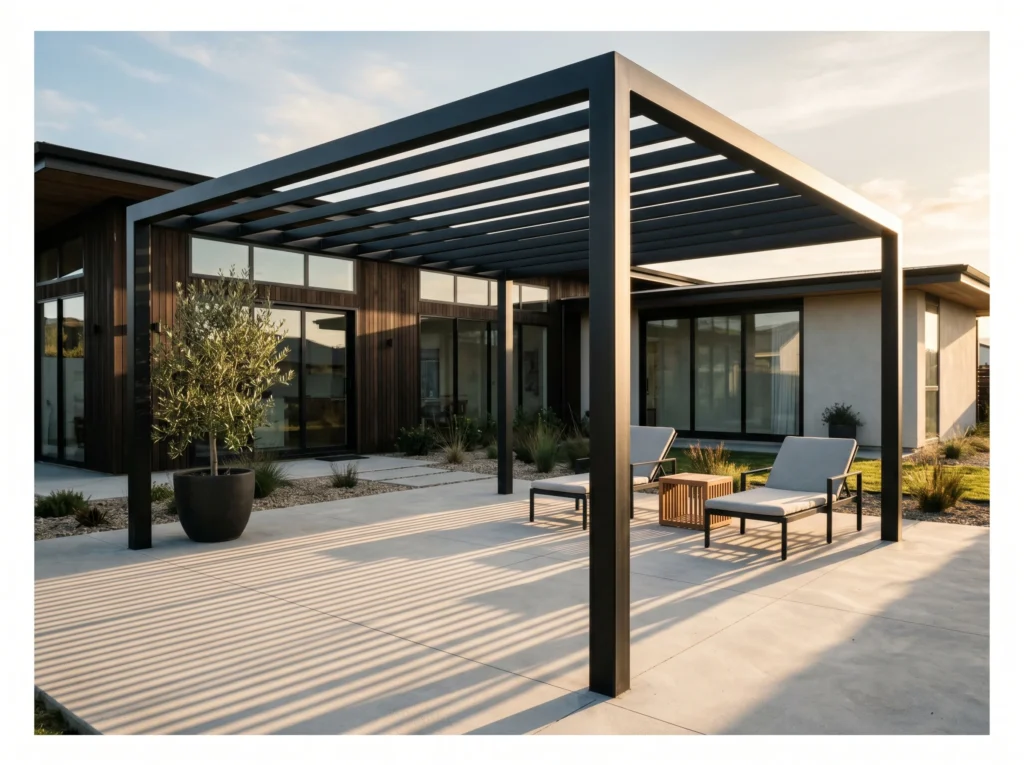
A minimalist steel frame pergola strips the structure back to its pure geometry. Square hollow steel posts and beams in a matte black powder coat finish create a frame that looks deliberately architectural rather than decorative.
The open roof casts beautiful shadow patterns across the floor below as the sun moves through the day. No canopy, no climbing plants, just clean structure and light. This suits modernist homes where the design philosophy values honesty of materials and simplicity of form above everything else.
That same stripped-back philosophy shows up in patio layouts that pair well with a steel-frame structure like this.
Attached House Pergola
An attached pergola connects directly to the house, usually running off an exterior wall or roofline. This setup extends the indoor living space outward and often ties in with an existing patio. It also tends to be more affordable since one side does not need separate support posts.
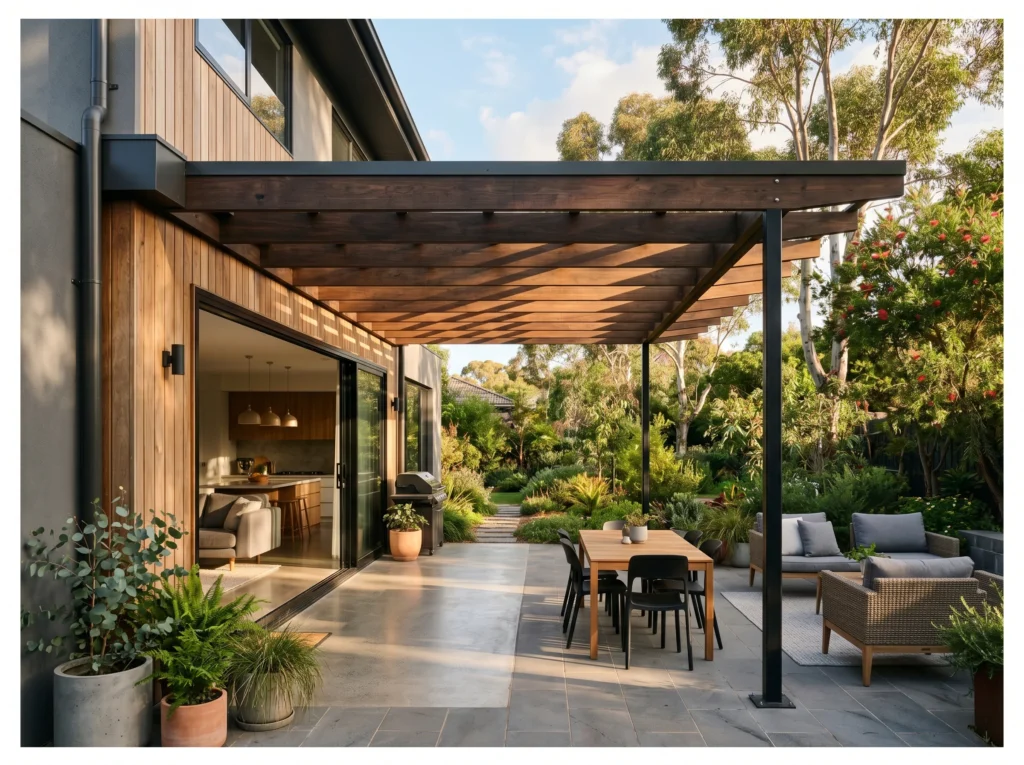
An attached pergola connects directly to the house wall and extends outward over a patio or deck. It becomes a natural extension of the interior living space and creates a covered outdoor zone directly accessible from inside the home.
The structural connection to the house means fewer posts are needed, which keeps the space feeling open. It also means the pergola is partially sheltered from wind on one side. For entertaining and everyday outdoor living, an attached pergola is the most practical configuration available.
Extends your living space instantly.
Freestanding Pergola with Curtains
A freestanding pergola with curtains stands entirely on its own posts, away from the house. Sheer or heavier fabric panels can be drawn shut for privacy or left open for airflow. This combination gives the space a soft, resort like feel that changes depending on how the curtains are set.
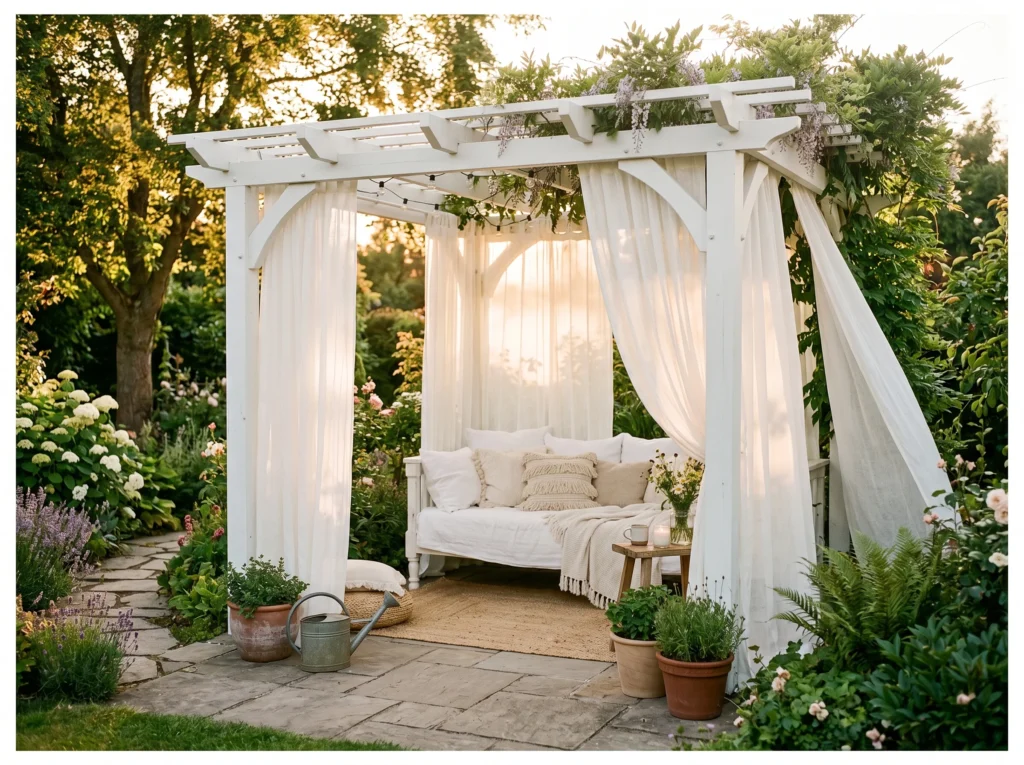
A freestanding pergola with outdoor curtains creates a private outdoor room that feels completely separate from the rest of the garden. The curtains can be drawn for privacy and shade or tied back to open the structure to the garden completely.
Sheer linen or outdoor-grade polyester fabrics in white, cream, or soft sage work best. They flutter gently in the breeze and create a softness that bare timber or steel frames cannot achieve alone. This style suits romantic, boho, and transitional garden aesthetics beautifully.
For even more seclusion, there’s privacy screening worth adding alongside curtains for a fully enclosed feel.
Pergola with Retractable Canopy
A pergola with a retractable canopy lets you slide the fabric top open or closed as needed. On sunny days you can pull it shut for shade, then retract it when you want open sky again. This flexibility makes it a practical choice for climates with unpredictable weather.
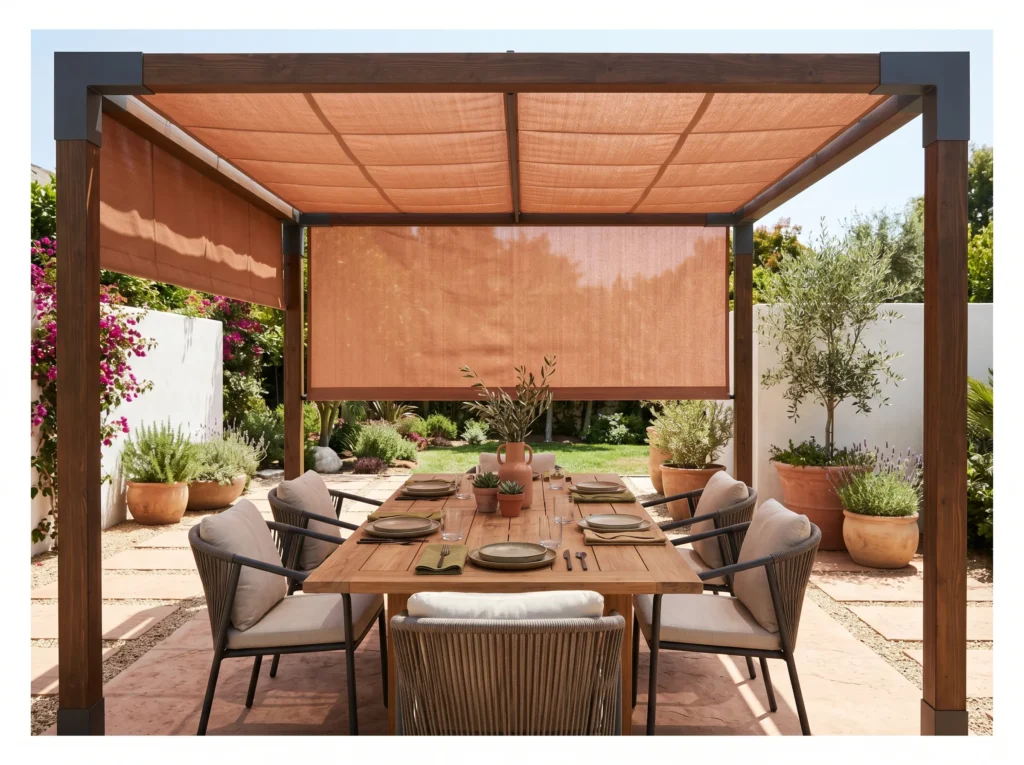
A retractable canopy system mounts onto the roof beams of a pergola and rolls out to provide full overhead shade when needed. When the weather is cooler or you want open sky above, it retracts completely in seconds.
Canvas, shade cloth, and waterproof acrylic fabrics all work well as retractable canopy materials. Sunbrella is the most popular brand for outdoor pergola canopies due to its UV resistance and color longevity. A motorized version controlled by a remote or smart home app is a genuinely satisfying upgrade.
Pergola with String Lights
Adding string lights to a pergola turns it into a favorite spot once evening rolls around. The lights are usually wrapped along the beams or strung diagonally across the open frame. Warm white bulbs tend to work best for creating a relaxed, inviting glow.
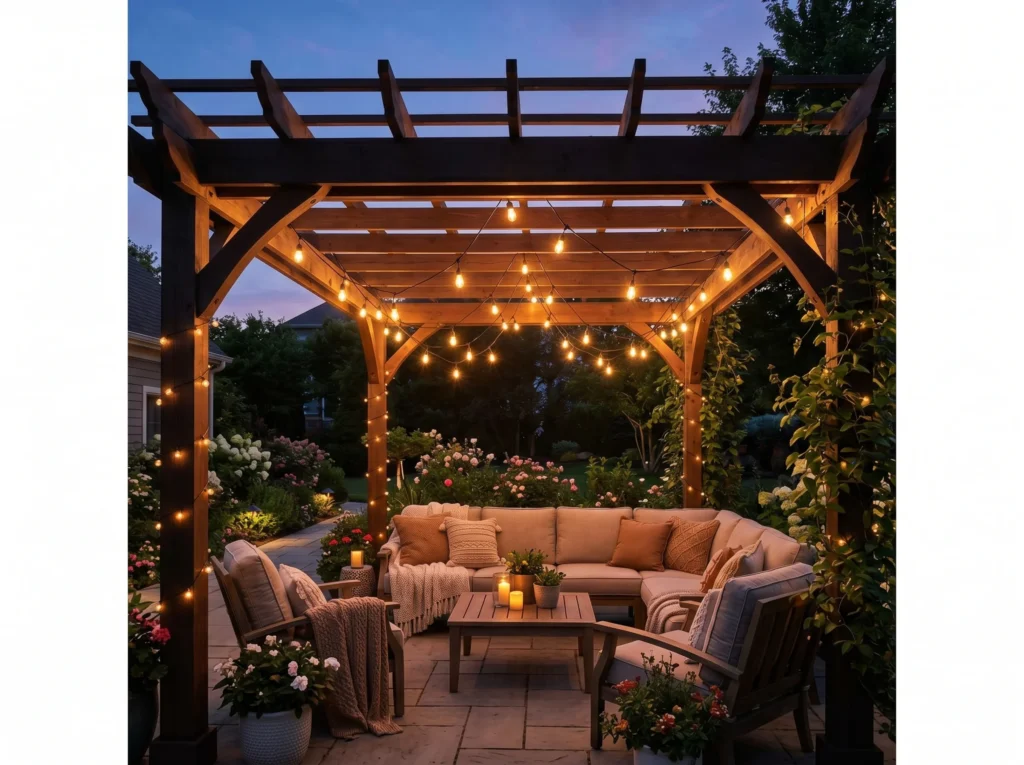
Hanging string lights across the open beams of a pergola is one of the simplest and most effective outdoor upgrades possible. The warm amber glow transforms the space after dark into somewhere genuinely magical that people want to linger in all evening.
Drape them in loose swooping lines from beam to beam rather than pulling them tight and straight. The relaxed curves look more natural and create a softer overhead glow. Solar-powered string lights work well here since no power outlet is needed and running costs are zero.
Highest-impact, lowest-cost pergola upgrade.
Black Aluminum Pergola
A black aluminum pergola is popular for its durability and low maintenance compared to wood. It does not rot, warp, or need repainting every few years like timber structures often do. The dark matte finish also gives it a bold, modern presence against most home exteriors.
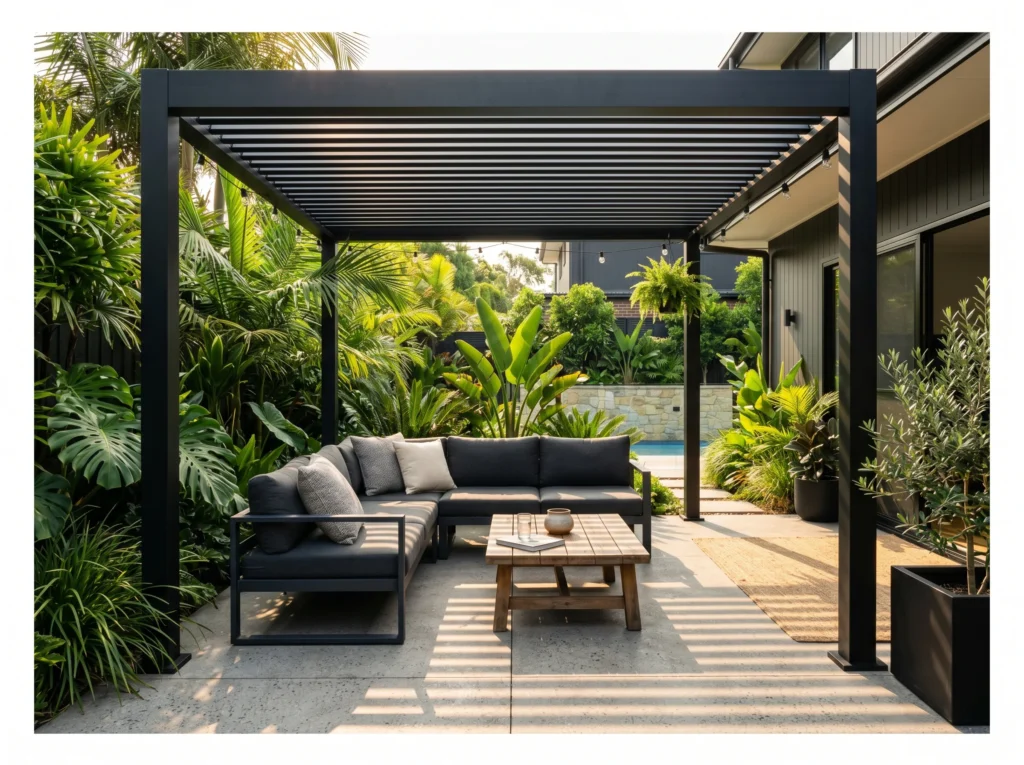
Black powder-coated aluminum pergolas have become one of the defining outdoor design trends of the last five years. The dark frame creates a strong graphic contrast against light-colored paving, white walls, and green planting that photographs spectacularly well.
Aluminum does not rust, warp, or require painting, which means a black aluminum pergola looks as good in year fifteen as it did on installation day. The color holds well in UV-intense climates because powder coating is more resistant to fading than painted finishes.
Bold, low-maintenance, and endlessly photogenic.
Pergola with Outdoor Kitchen
A pergola built over an outdoor kitchen provides shade for cooking and dining areas alike. Counters, a grill, and sometimes a small fridge are commonly built in underneath the structure. This setup basically turns the backyard into a functional second kitchen for warmer months.
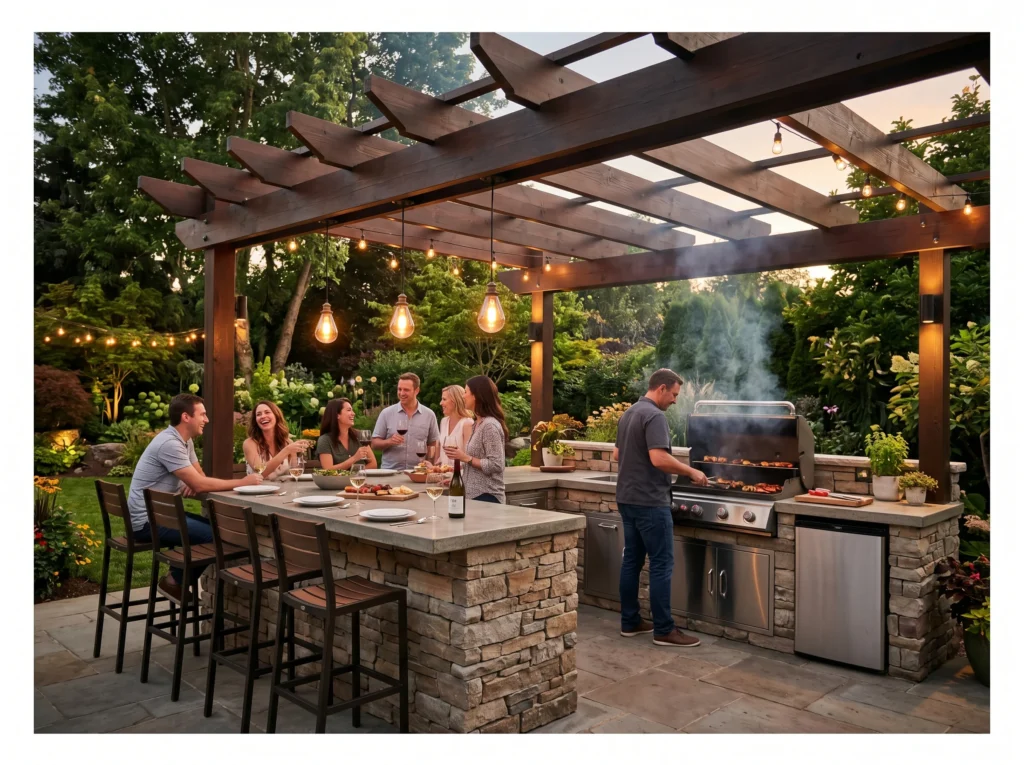
Placing your outdoor kitchen under a pergola creates a dedicated cooking and entertaining zone that works in sun, light rain, and everything in between. The covered structure protects both the cook and the kitchen appliances from direct weather exposure.
Even a simple pergola over a grill and prep counter changes how outdoor cooking feels. The defined space draws guests toward the cooking area, conversations flow naturally, and the whole garden becomes a more socially active space because of it.
Timber Pergola with Climbing Plants
A timber pergola paired with climbing plants lets vines like wisteria or jasmine grow across the beams over time. As the plants fill in, the structure starts providing natural shade instead of relying only on its frame. It takes a season or two to really fill out, but the payoff is a living, green ceiling.
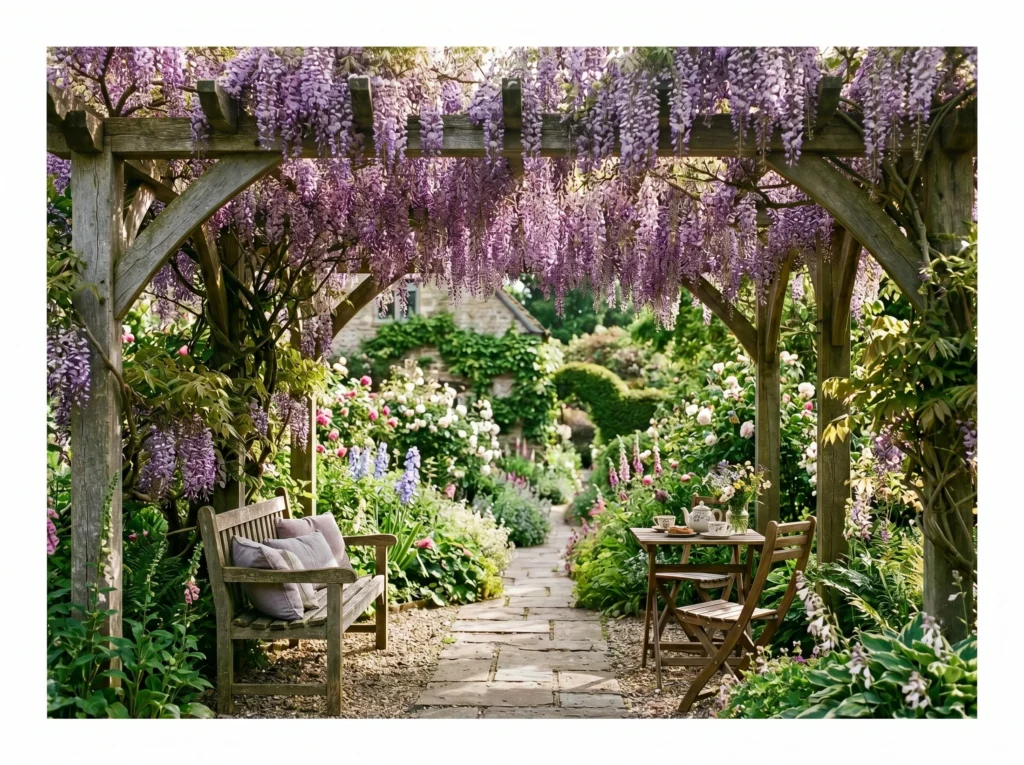
A timber pergola covered in climbing plants becomes something truly spectacular once the plants mature. Wisteria, climbing roses, jasmine, and star jasmine all grow readily over pergola beams and create a living canopy that provides natural shade and fragrance.
The growth takes one to three seasons depending on the plant species and climate. Once established, the plants require only annual pruning to stay looking their best. The combination of natural wood and living plants creates a romantic quality that no manufactured material can replicate.
Gets more beautiful every single year.
Pergola with Fire Pit
A pergola built around a fire pit creates a natural gathering spot for cooler evenings. The overhead structure adds a sense of enclosure while still keeping the area open to the air. Seating is usually arranged in a circle or semicircle facing the fire pit itself.
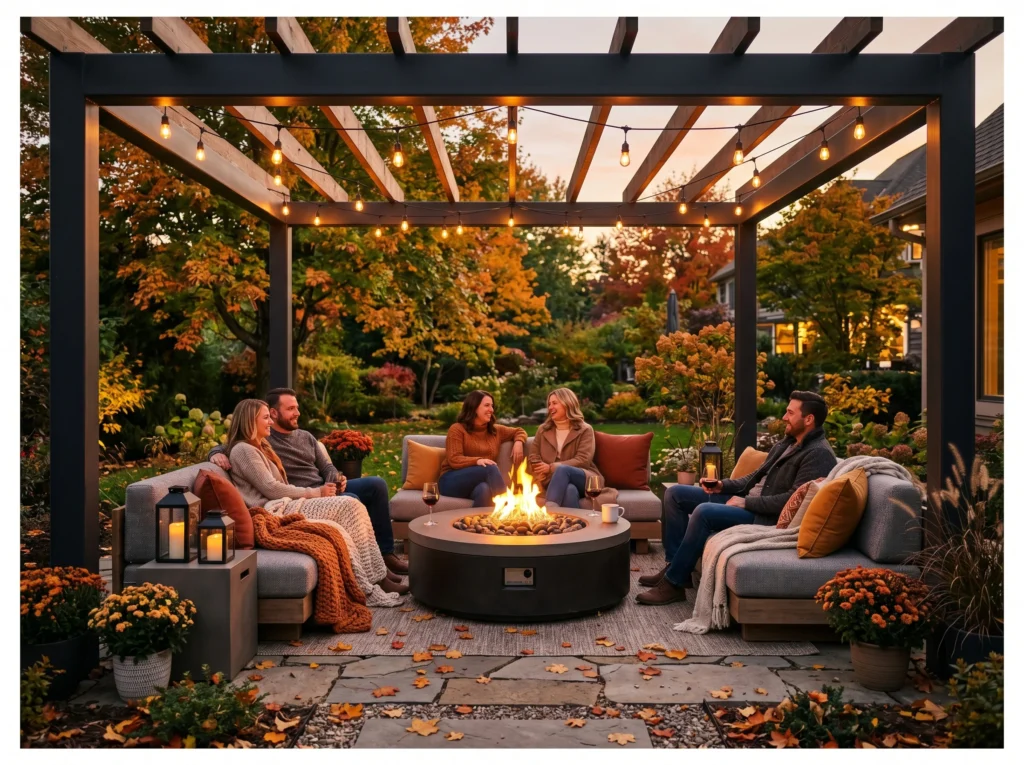
A fire pit positioned beneath a pergola creates a four-season outdoor destination. The pergola provides shelter from light rain and wind while the fire keeps the space warm well into autumn and spring evenings.
Ensure adequate roof clearance above the fire pit, at least 2.4 meters, and use an open or widely slatted roof over the fire rather than a solid canopy. Smoke needs to rise and dissipate freely. A real wood fire or gas fire table both work well in this configuration.
If a fire feature is part of your plan, there are backyard fire features worth exploring to help design the seating around it.
Pergola with Polycarbonate Roof
A pergola with a polycarbonate roof offers real protection from rain, unlike open slat designs. The panels still let daylight filter through, so the space does not feel completely closed off. This makes it a solid choice for anyone who wants to use the pergola even on wetter days.
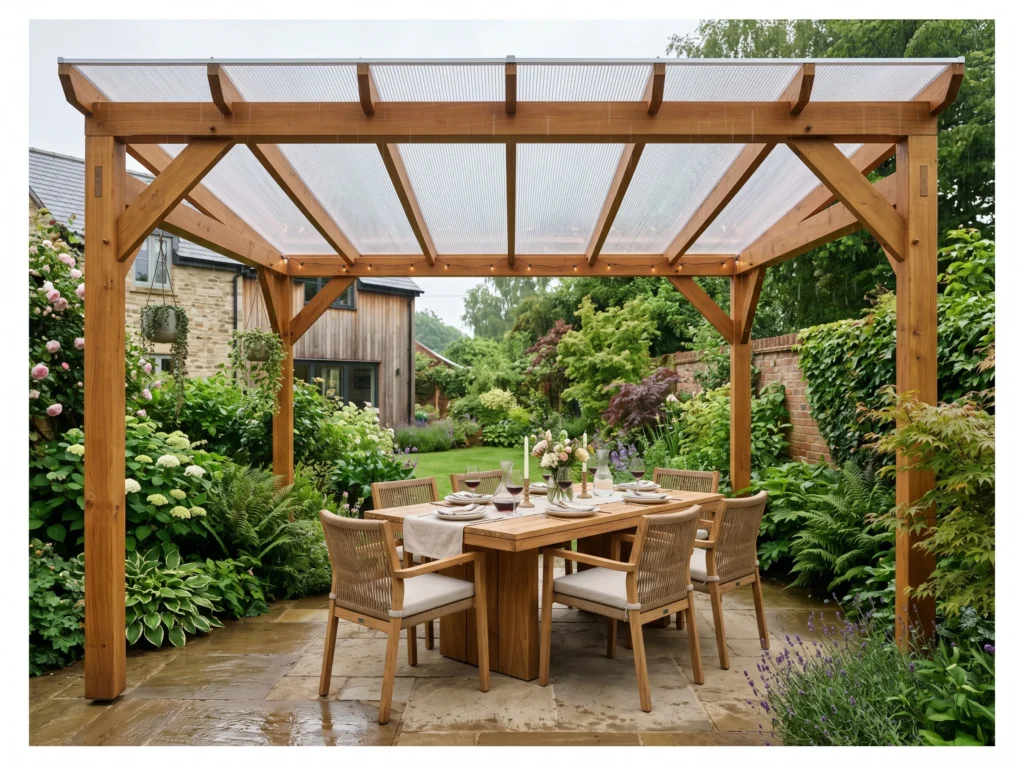
Clear or opal polycarbonate sheeting installed over pergola beams provides full rain protection while still allowing natural light to pass through. Unlike a solid roof, polycarbonate keeps the space feeling open and bright even on overcast days.
Multiwall polycarbonate also provides excellent insulation, keeping the space cooler in summer and warmer in winter than single-sheet alternatives. It is lightweight, easy to cut and install, and significantly more affordable than glass roofing while achieving a very similar effect.
Full rain cover with bright natural light.
Pergola Pool Cabana
A pergola style cabana next to a pool gives swimmers a shaded spot to dry off or relax. It often includes hooks or a small shelf for towels and pool gear nearby. Being close to the water, materials are usually chosen specifically to resist moisture and chlorine exposure.
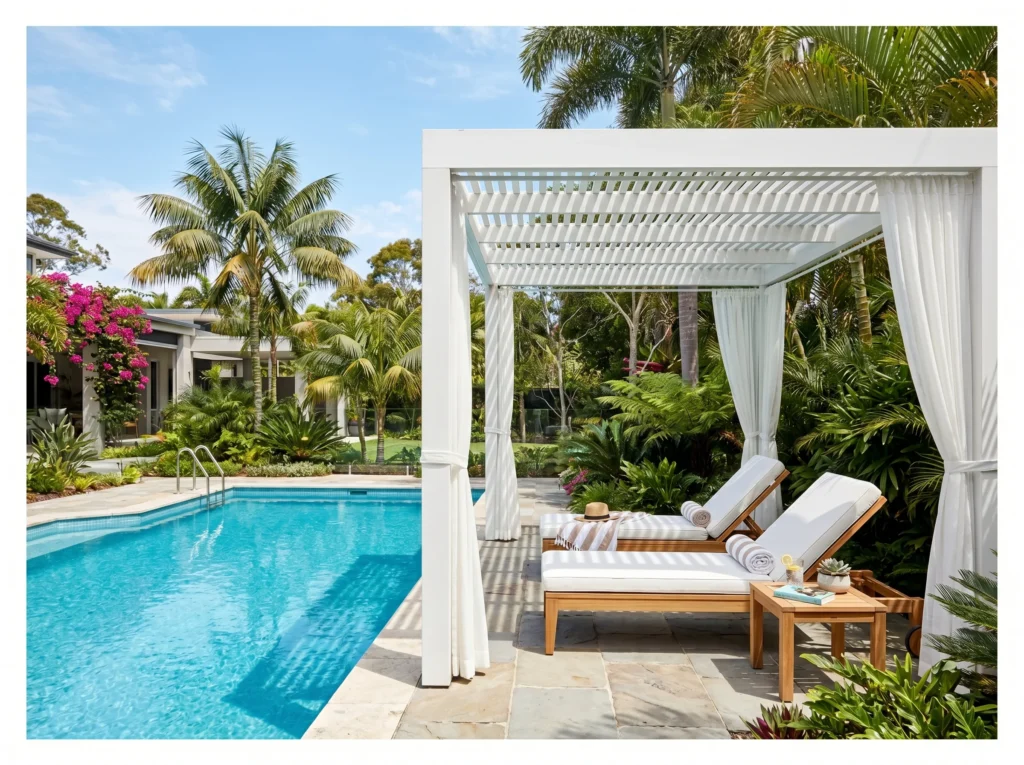
A pergola positioned beside a pool creates an instant resort atmosphere. It gives swimmers a shaded destination to rest between laps, protects non-swimmers from direct sun during long afternoons, and gives the whole pool area a finished, designed quality.
White or light timber finishes suit pool-side pergolas best because they reflect heat rather than absorbing it. Keep the roof open or widely slatted to allow maximum airflow. Add outdoor curtains on the west-facing side to manage afternoon sun without blocking the pool view.
For more pool area styling worth a look, it helps to see how other poolside spaces build out this same shaded retreat.
Pergola with Outdoor Dining Room
A pergola set up as an outdoor dining room usually centers around a large table with proper seating. The overhead beams help define the space, almost like a ceiling for an open air room. It works well for families who eat outside often rather than just occasionally.
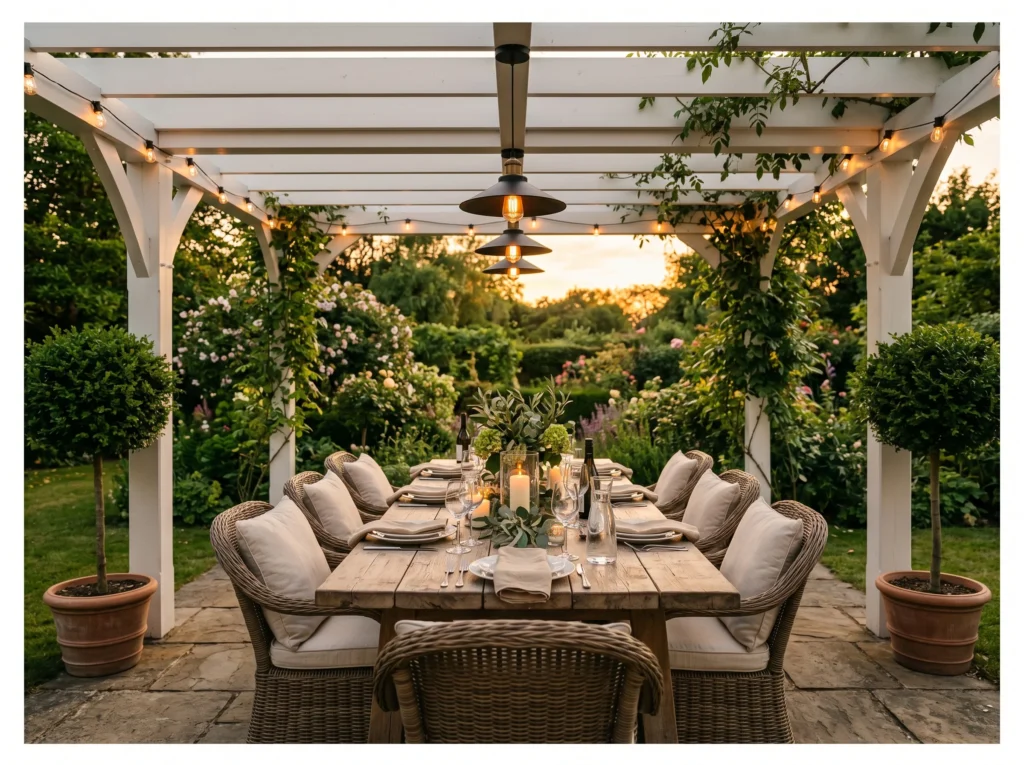
Dedicating a pergola specifically to outdoor dining creates a proper al fresco dining room rather than just a table placed outside. The structure defines the space, supports pendant lighting overhead, and creates a sense of occasion that an open patio table cannot replicate.
A long dining table that seats six to eight people fits comfortably under most standard pergolas. Leave enough space to pull chairs out fully on all sides. Pendant lights hung from the overhead beams at table height create intimate, flattering dining light after dark.
Pergola with Privacy Screen
A pergola fitted with a privacy screen blocks the view from close neighbors or a busy street. Screens can be made from lattice, slatted wood, or even outdoor fabric panels. This addition turns an otherwise open structure into a more secluded, private corner of the yard.
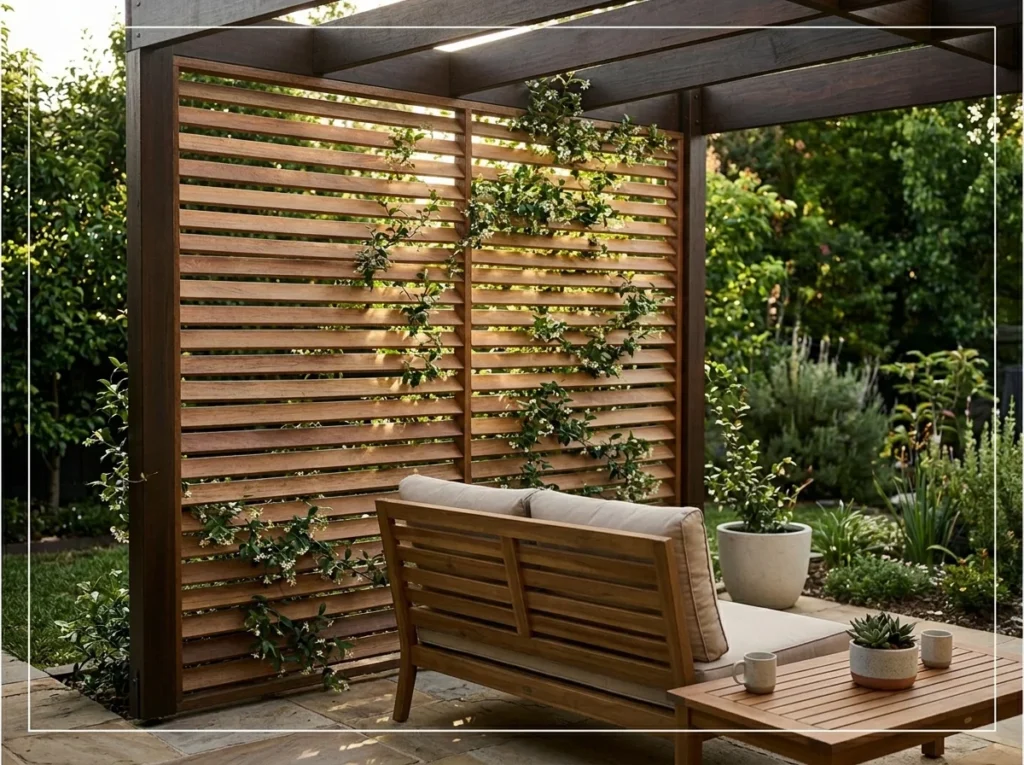
Adding a slatted timber or metal privacy screen to one or two sides of a pergola creates a sheltered outdoor room that feels genuinely private without the need for solid walls. The partial screening blocks sightlines from neighbors while still allowing air movement.
Train climbing plants through the screen slats and within one season you have a living green wall that provides privacy, fragrance, and texture simultaneously. Jasmine, clematis, and climbing roses all establish quickly on slatted screens and require only annual pruning to stay in check.
Concrete and Steel Pergola
A concrete and steel pergola combines heavy, solid posts with a lighter steel frame on top. This mix gives it serious durability while still keeping the upper structure from feeling too bulky. It tends to suit contemporary homes built with similar industrial materials.
A pergola built from concrete posts and steel beams makes a permanent architectural statement that looks like it was designed by an architect rather than assembled from a kit. The raw material combination suits modernist, industrial, and brutalist home styles perfectly.
Concrete posts are poured in situ and become a structural extension of the home’s foundations. This is a permanent installation that adds genuine property value. The combination of smooth concrete and dark steel ages beautifully and requires essentially no maintenance once completed.
Pergola with Integrated Lighting
A pergola with integrated lighting has fixtures built directly into the beams rather than added on afterward. This gives a cleaner look since there are no visible cords or hanging fixtures. It also means the lighting turns on with a simple switch instead of needing separate string lights.
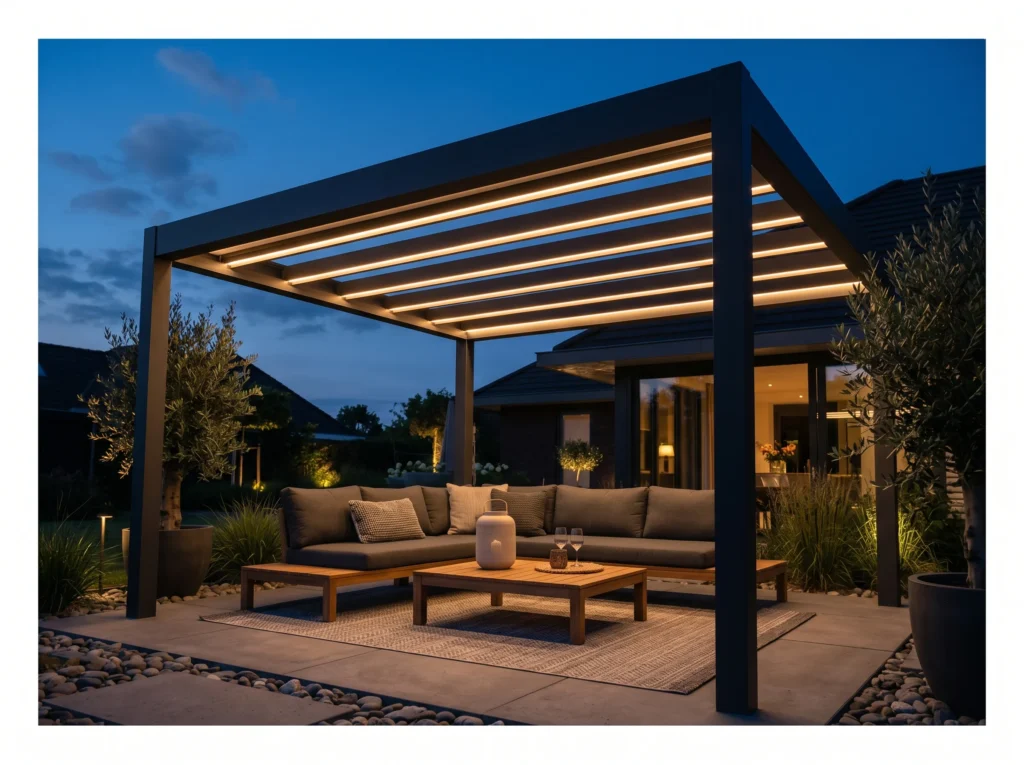
Integrating LED strip lights directly into the roof beam channels creates a lighting effect that appears to come from within the structure itself rather than from visible fixtures. The result is clean, architectural, and deeply atmospheric after dark.
Warm white 2700K LED strips suit outdoor entertaining spaces best. Dimmer-controlled systems let you adjust the mood from bright functional light during dinner to soft ambient glow for later in the evening. Waterproof IP65-rated strips are essential for any outdoor installation.
Transforms any pergola after dark.
Pergola for Small Spaces
A pergola designed for small spaces is scaled down to fit compact patios or narrow backyards. Smaller footprints and simpler frames keep it from overwhelming a limited area. Even at a smaller size, it can still define a cozy seating corner outdoors.
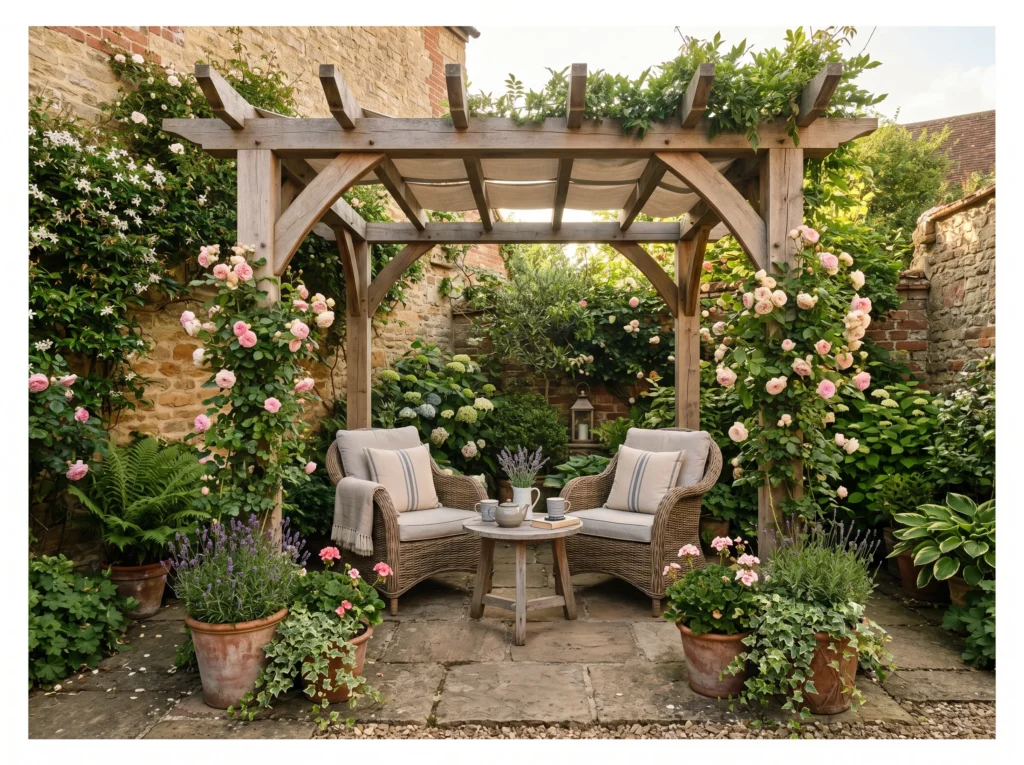
Small courtyards and compact backyards benefit enormously from a correctly proportioned pergola. A three by three meter or ten by ten foot structure is genuinely enough to create a defined outdoor room with seating, lighting, and planting around it.
The key is keeping the pergola proportionate to the space. Oversized beams and posts in a small courtyard look heavy and awkward. Slim profiles in white or light timber keep the structure feeling light and make the courtyard feel larger rather than smaller.
For more small courtyard ideas worth trying, it’s worth seeing how other tight spaces make a compact pergola feel bigger.
Perfect for small spaces.
Pergola with Shade Sail Infill
A pergola with a shade sail infill uses stretched fabric panels instead of a solid roof or slats. The sail can be angled to block sun at specific times of day depending on how it is attached. This gives a more casual, beach like look compared to traditional wooden crossbeams.
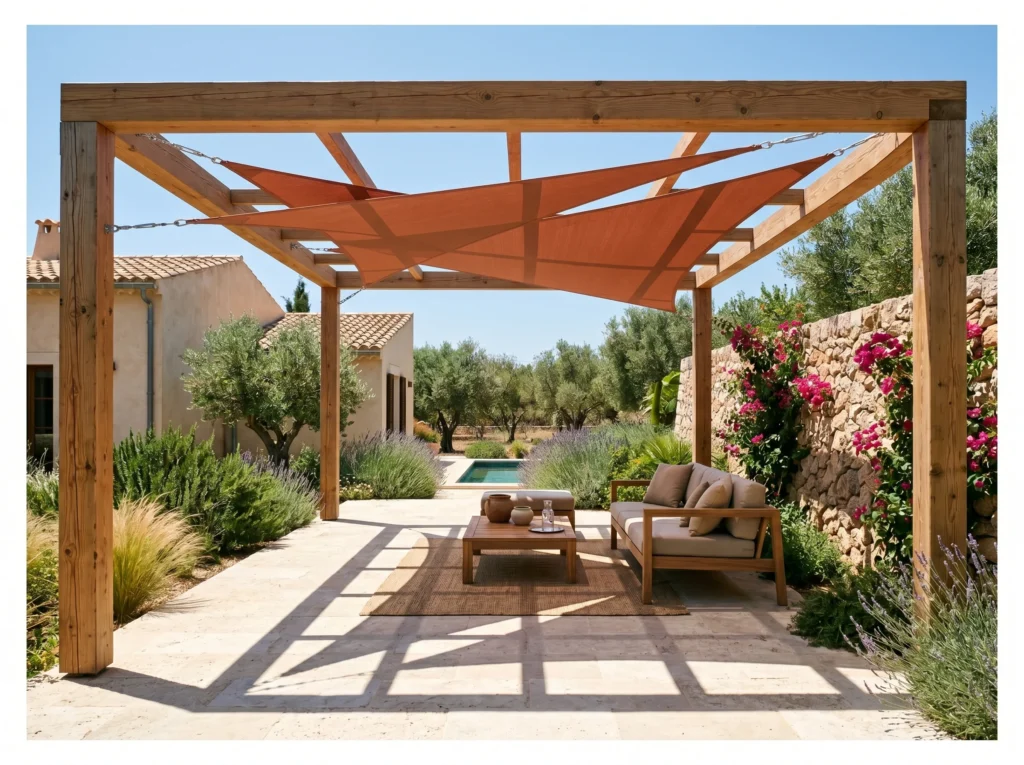
Attaching a shade sail between the roof beams of an existing pergola is the most affordable way to add overhead cover to a structure that currently offers only partial shade. The sail fabric can be tied to the beams and tensioned without any drilling or permanent fixings.
This approach works especially well for homeowners who want to upgrade an existing pergola without replacing it entirely. Shade cloth sails in terracotta, charcoal, or sand suit most outdoor color palettes well and significantly reduce the UV exposure and temperature beneath the pergola.
Budget-friendly option for existing pergolas.
Four-Season Pergola with Heaters
A four season pergola with heaters is built to stay usable well beyond just the warmer months. Overhead or standing heaters keep the space comfortable once temperatures start dropping in fall. With the right heating setup, some homeowners end up using their pergola almost year round.
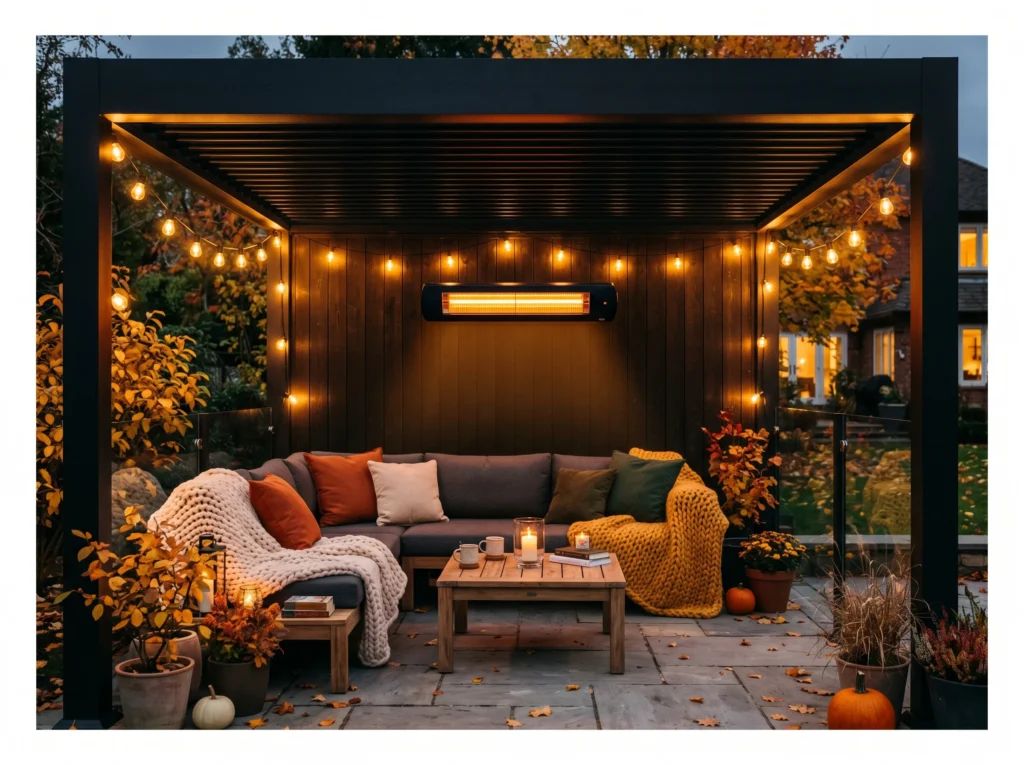
A louvered or solid-roof pergola with wall-mounted or ceiling-mounted infrared heaters becomes a genuinely usable outdoor space from early spring through late autumn in most climates. The heater warms people and surfaces directly rather than trying to heat the open air.
Infrared heaters are the most efficient choice for open or semi-open outdoor spaces. They come on instantly, use less energy than convection heaters, and mount cleanly onto pergola posts or ceiling beams without taking up any floor space. Paired with a closed roof and side screens, the season extends dramatically.
Use your pergola three seasons longer.
Conclusion
A modern pergola is one of the best investments you can make in your outdoor space. It creates structure, provides shade, supports lighting and planting, and turns an ordinary backyard into a space with genuine character and purpose.
Start by deciding how you want to use the space most, whether that is dining, lounging, cooking, or entertaining, and then choose the pergola style that serves that use best. Material and aesthetic follow naturally from there.
Every idea on this list works. The right one is simply the one that fits your home, your lifestyle, and the outdoor space you actually want to live in.
And once the pergola is chosen, there are outdoor spaces worth building around it to bring the whole backyard together.



Pingback: 23 Outdoor BBQ Area Ideas for Backyard Parties