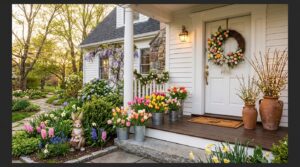
First impressions happen before anyone even reaches your front door and a bland front yard could be costing you big on curb appeal. These 22 front yard landscaping ideas will help you create a welcoming, head-turning entrance no massive budget required. Let’s get started with these front yard landscaping ideas for curb appeal!
If a cleaner, contemporary look appeals to you, there are modern approaches to the whole yard worth browsing alongside these ideas.
Curved Flagstone Walkway
Sidhi concrete path ke bajaye curved flagstone walkway ghar ke entrance ko zyada warm feel deta hai. Har stone ka shape thoda alag hota hai isliye layout natural lagta hai. Joints mein moss ya gravel bhar kar look aur bhi soft kiya ja sakta hai.
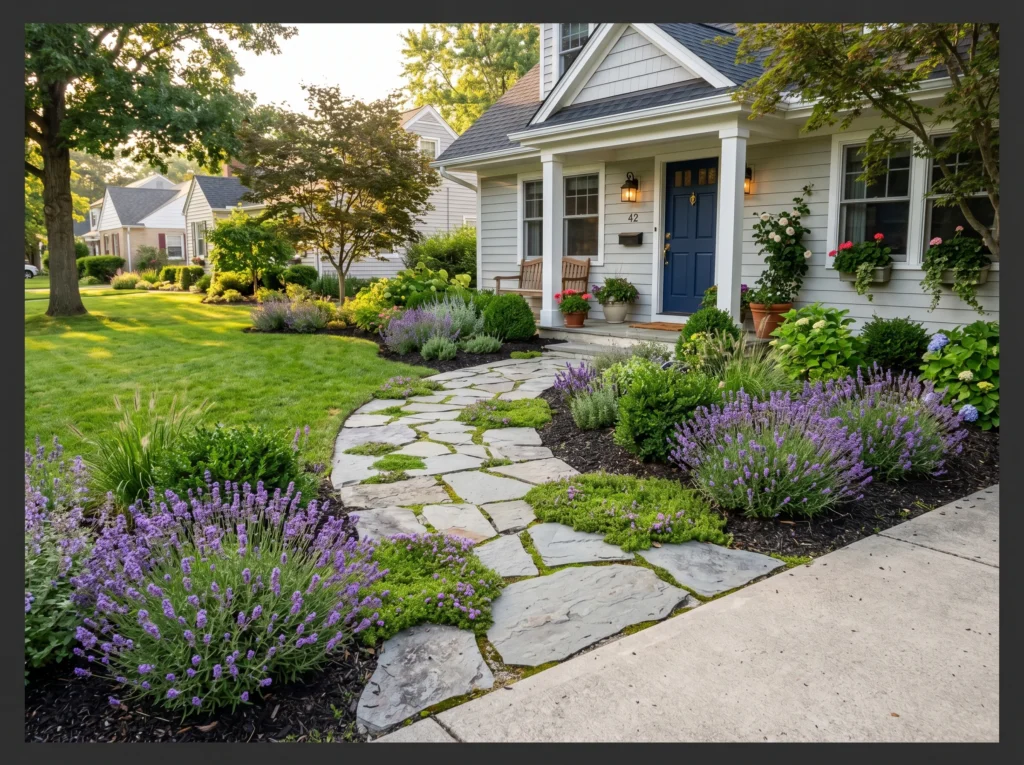
A curved flagstone path is the single fastest upgrade that transforms a front yard from ordinary to genuinely welcoming. The gentle curve slows visitors down and creates a sense of arrival rather than a march straight to the door.
Plant creeping thyme between the flagstone joints it handles foot traffic and releases a pleasant herb fragrance when stepped on. Choose irregular natural flagstone over uniform concrete pavers for the most organic, timeless appearance.
Formal Symmetrical Foundation Plantings
Yeh style ghar ke dono taraf same plants mirror karke ek balanced look banata hai. Boxwood jaisi trimmed shrubs is approach mein kaafi common hain. Classic aur traditional homes par yeh technique bohot achi lagti hai.
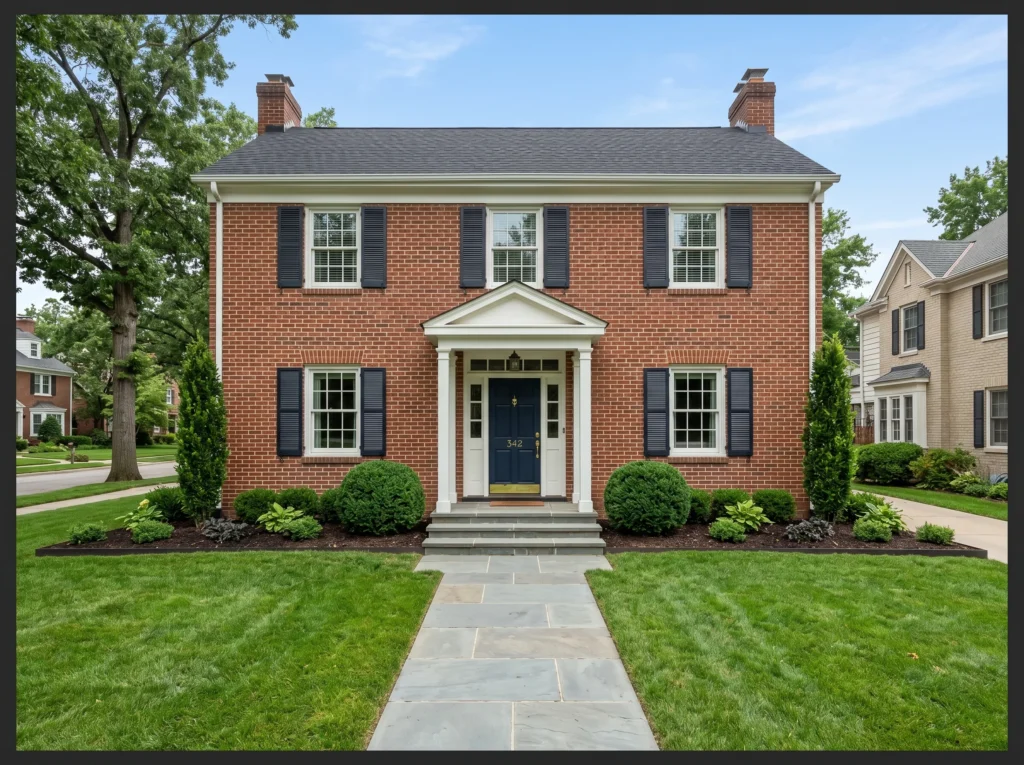
Matching plants on either side of the front door create an immediate sense of order that makes any home look more intentional and well-maintained. Symmetry signals that the property is cared for.
Use evergreen plants boxwood globes, Sky Pencil hollies, or dwarf yews so the symmetry holds through winter when flowering plants go dormant. Consistent plant sizes matter most: even a small height difference between matched plants undermines the formal effect significantly.
Layered Shrub and Perennial Border
Is border mein height ke hisab se plants arrange kiye jaate hain, peeche taller shrubs aur aage chhote perennials. Yeh depth aur texture dono add karta hai. Season change hone par bhi border interesting lagta rehta hai kyunki alag alag plants alag time par khilte hain.
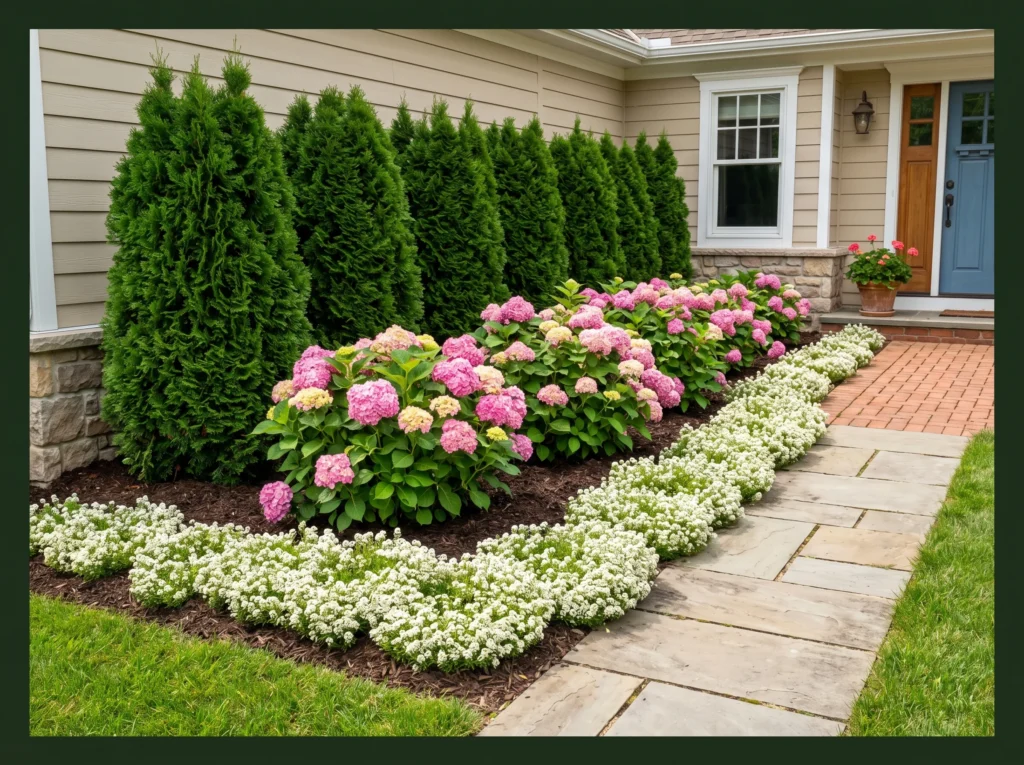
Layering plants from tall at the back to low at the front creates a professional landscape look without requiring a designer. The three-layer rule tall, medium, and groundcover works for any size bed.
Place the tallest evergreens against the house foundation as a permanent green backdrop. Add medium flowering shrubs like hydrangeas or knockout roses in the middle. Finish the front edge with low creeping plants that soften the transition to the lawn.
For more garden bed layouts to explore, it helps to see how other beds handle this same tall-to-low structure.
Dark Hardwood Mulch with Steel Edging
Dark mulch soil ko moisture retain karne mein madad karta hai aur plants ko sharp contrast bhi deta hai. Steel edging mulch ko lawn se clean tarike se separate rakhti hai. Yeh combo maintenance kam karta hai aur beds ko neat rakhta hai.
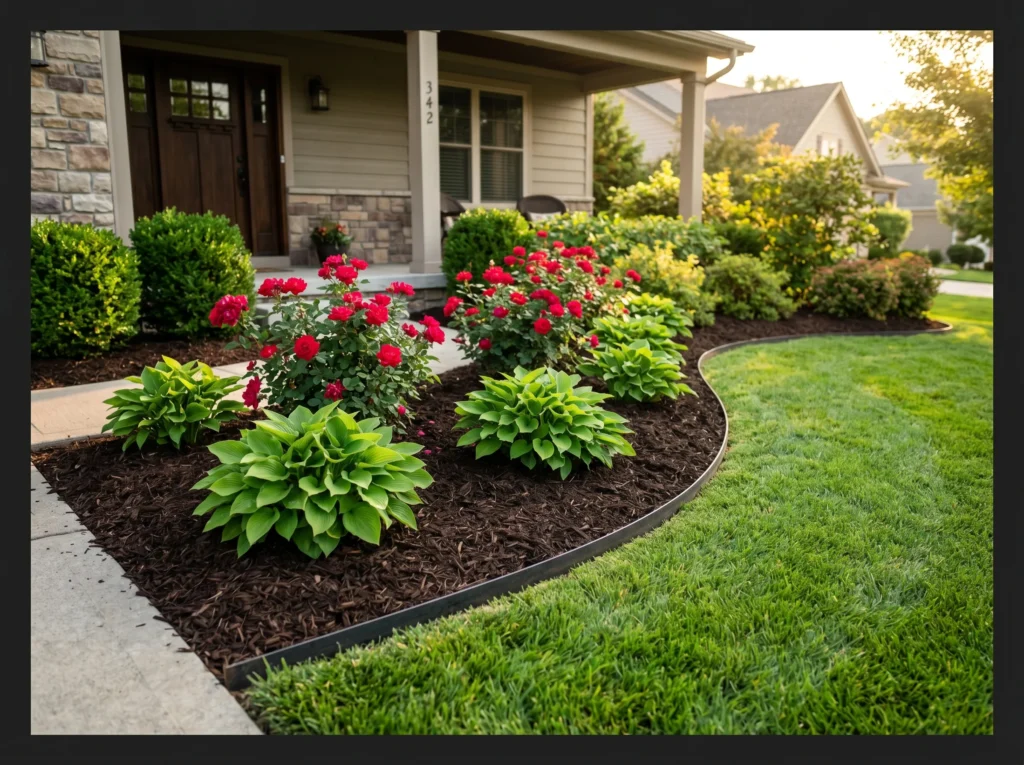
Dark brown hardwood mulch makes every plant color more vivid by creating a high contrast backdrop. It also suppresses weeds, retains moisture, and keeps soil temperatures stable through summer heat and winter cold.
Steel edging holds a crisp boundary between lawn and bed for years without the heaving, cracking, and disappearing that plastic edging does. Install it flush with the soil surface so a mower can pass cleanly over the top without hitting the edge strip.
Japanese Maple Specimen Tree Focal Point
Japanese maple apne delicate leaves aur red ya orange color ki wajah se instantly attention khींchta hai. Isse front yard mein ek single focal point ki tarah plant kiya jaata hai. Fall season mein iska color especially dramatic ho jaata hai.
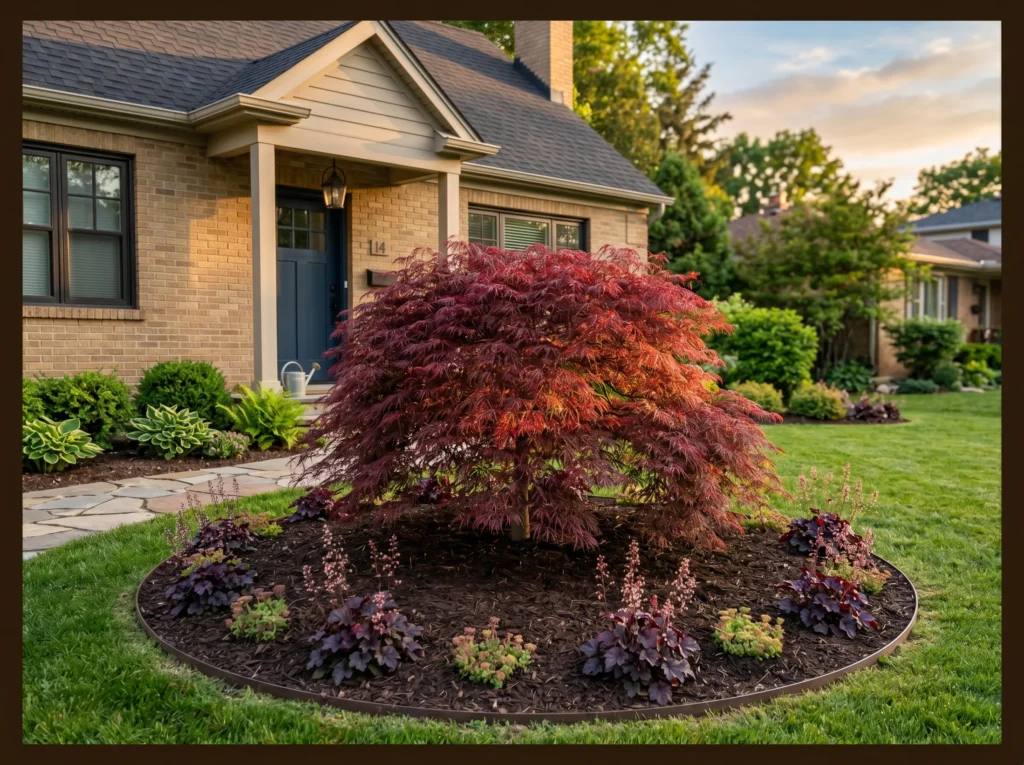
One well-chosen specimen tree gives a front yard a clear visual anchor that ties every other planting together. Without a focal point, even a full landscape bed looks like a random collection of plants.
Japanese maples stay compact most top out at 10 to 15 feet and provide year round interest: red spring growth, lacy summer foliage, brilliant autumn color, and sculptural winter branching. Plant slightly off-center from the main entry for the most natural looking composition.
Low-Water Xeriscape with Gravel and Succulents
Xeriscape design mein pani ki need kam karne wale plants use hote hain jaise succulents aur ornamental gravel. Yeh dry climates ke liye particularly practical option hai. Watering bill kam hone ke saath saath look bhi modern aur clean rehta hai.
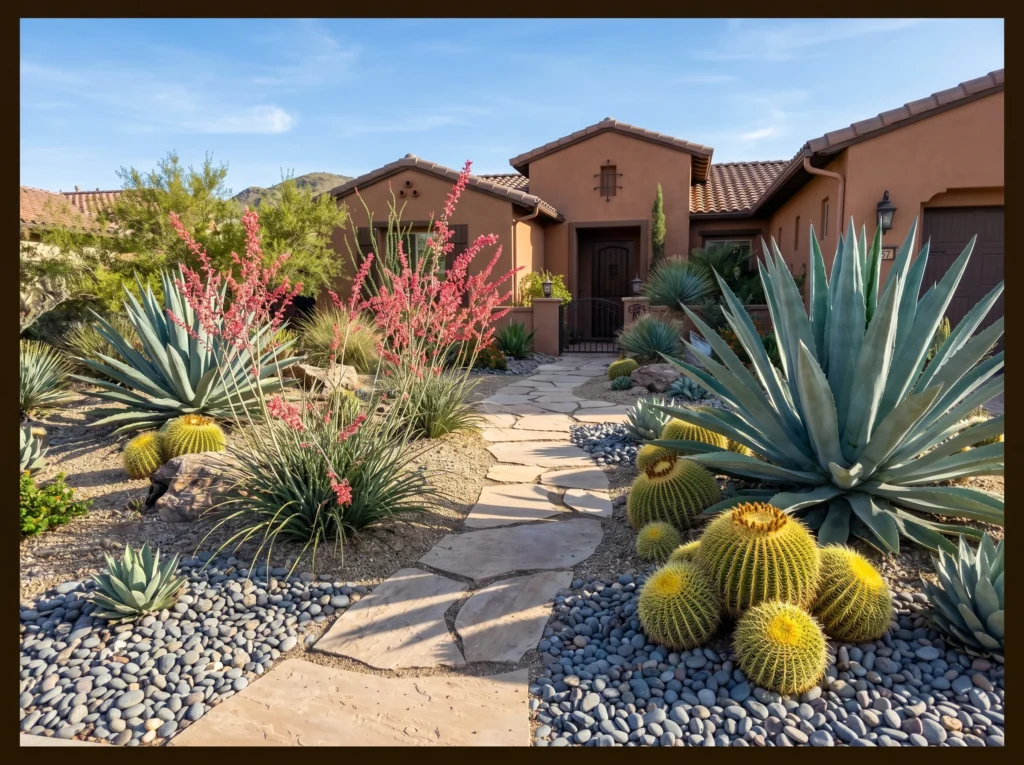
Replacing lawn with a gravel and succulent xeriscape cuts water usage by up to 75 percent while eliminating weekly mowing permanently. In drought-prone regions, it is genuinely the most practical front yard decision available.
Group drought-hardy plants in odd-numbered clusters of three or five for the most natural appearance. Mix plant heights and forms a tall agave beside a low sedum beside a round barrel cactus to create textural variety that keeps the design visually interesting throughout the year.
If a low-water approach fits your climate, there are low-water design ideas worth trying that build on this same drought-hardy plant palette.
Native Plant Pollinator Garden
Native plants local bees aur butterflies ko naturally attract karte hain. Yeh garden ecosystem ko support karta hai aur maintenance bhi kam maangta hai kyunki plants us climate ke already adjusted hote hain. Milkweed ya coneflower jaisi species yahan common choices hain.
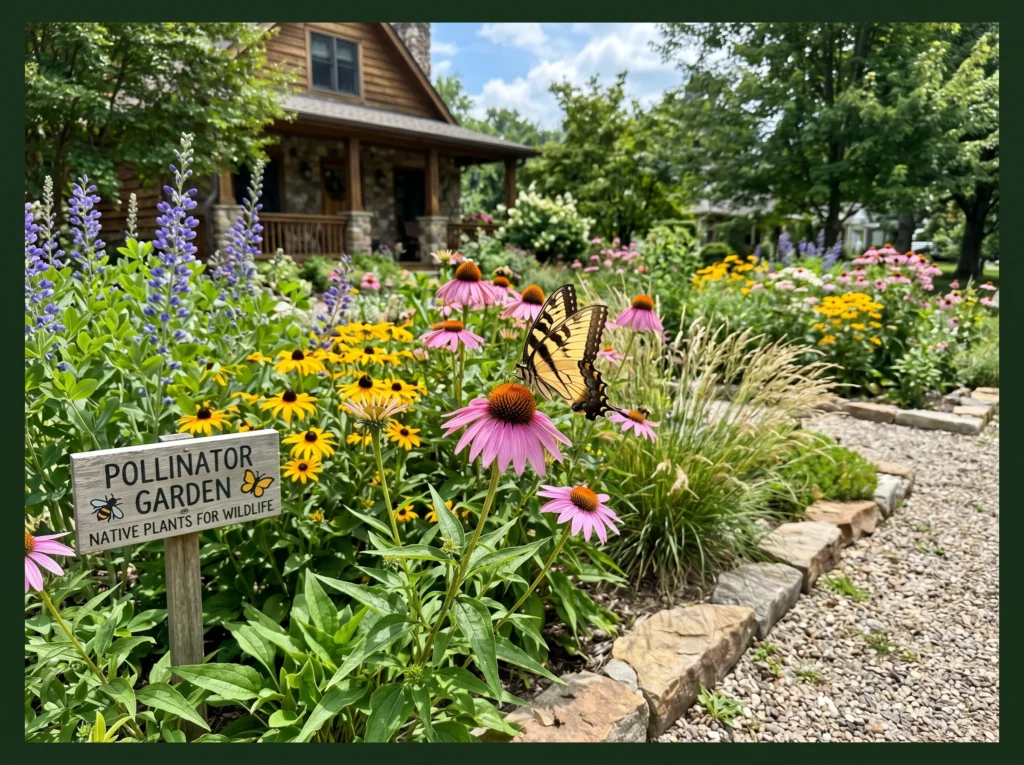
A native plant pollinator garden is the most ecologically impactful front yard landscaping idea available. It supports bees, butterflies, and hummingbirds while thriving in your local climate with virtually no irrigation or fertilizer once established.
Native plants evolved for your specific region’s rainfall, soil, and temperatures. They genuinely take care of themselves after the first establishment year. A small sign identifying the pollinator plants adds a community education element that neighbors consistently find positive and interesting.
Tiered Retaining Wall Garden on a Slope
Sloped yard ko tiers mein divide karke retaining walls se level beds banaye jaate hain. Har tier alag plants ke liye apna space deta hai. Yeh erosion control mein bhi kaafi effective hota hai.
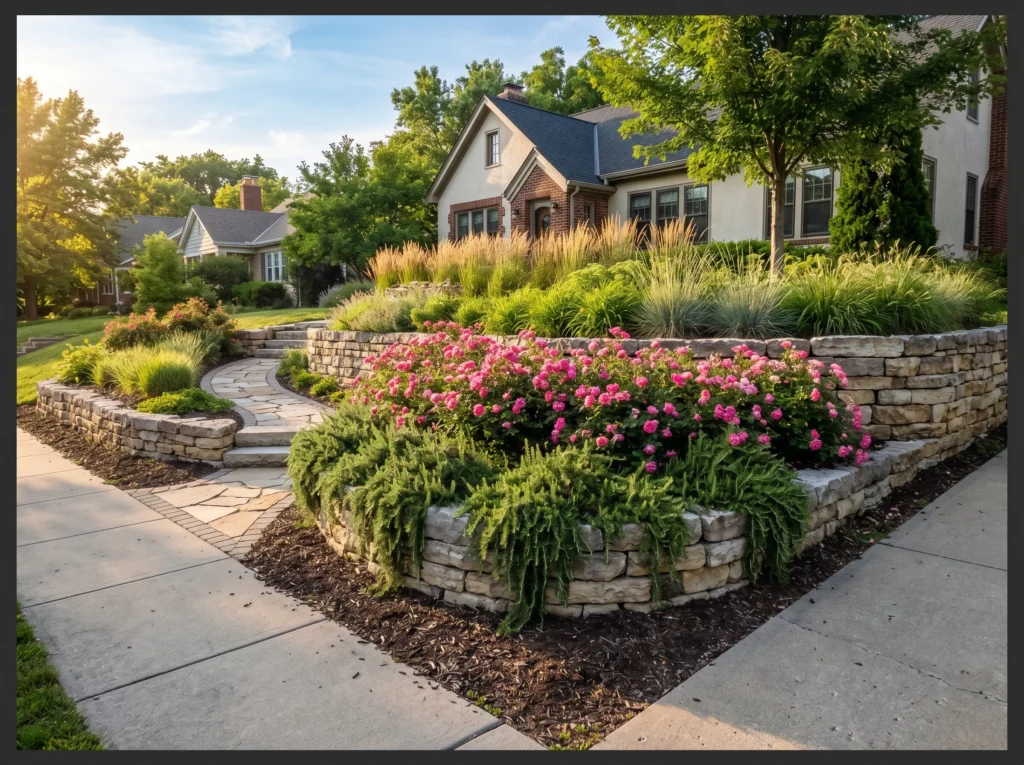
A sloped front yard with tiered retaining walls stops erosion, creates distinct planting zones, and turns the biggest landscaping liability into the most visually interesting feature on the block.
Plant the upper well-drained tier with drought-tolerant ornamentals like ornamental grasses or lavender. Put thirstier plants like roses or hydrangeas on the lower level where water naturally settles after rain. Trailing plants along the wall edges soften the hard retaining wall lines beautifully.
River Rock and Ornamental Grass Border
River rock ka smooth texture ornamental grasses ke movement ke saath achi contrast create karta hai. Yeh low maintenance border banane ka simple tarika hai. Hawa chalne par grasses ka sway visually kaafi appealing lagta hai.
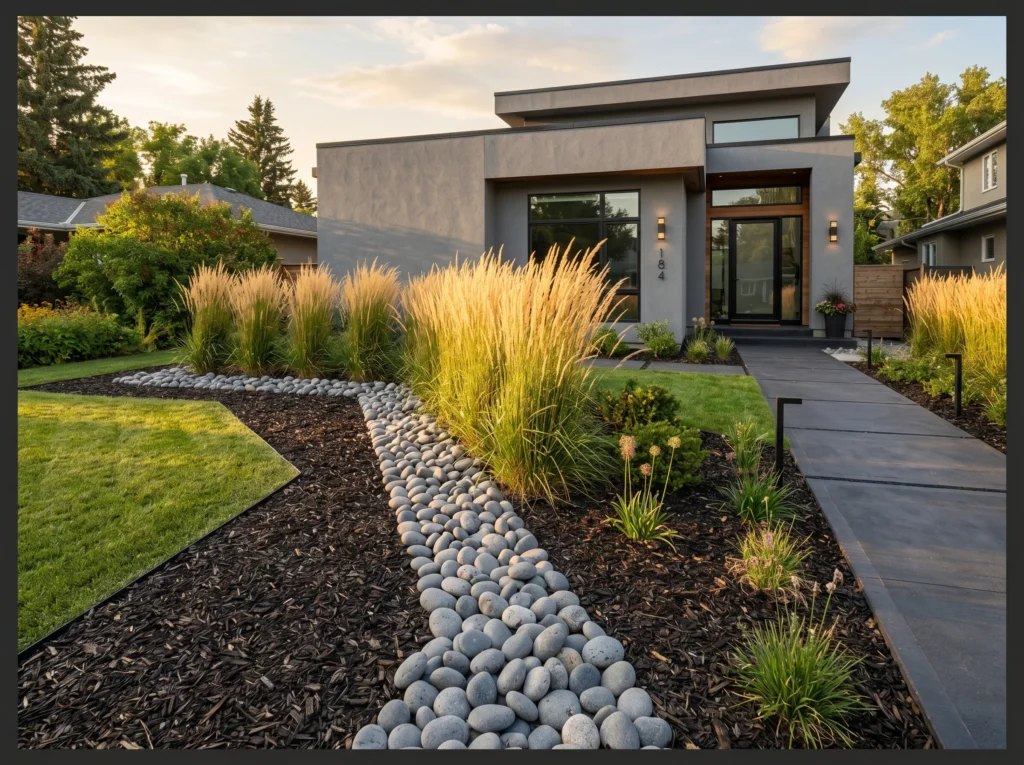
River rocks used as a bed border add a natural texture that ties a landscape to the land rather than looking like it was installed from a catalog. The stones also serve as a clean visual separation between mulch beds and lawn.
Karl Foerster feather reed grass is the ideal companion plant it grows upright to five feet, moves beautifully in any breeze, and stays completely vertical and architectural through winter as a dried grass plume. Plant in groups of three for visual weight.
Colorful Seasonal Container Garden at the Entry
Entry door ke paas rakhe containers seasonal flowers se bharkar quick color add karte hain. Spring mein tulips ya summer mein petunias jaise plants easily rotate kiye ja sakte hain. Yeh chhota sa detail poore front yard ki personality badal deta hai.
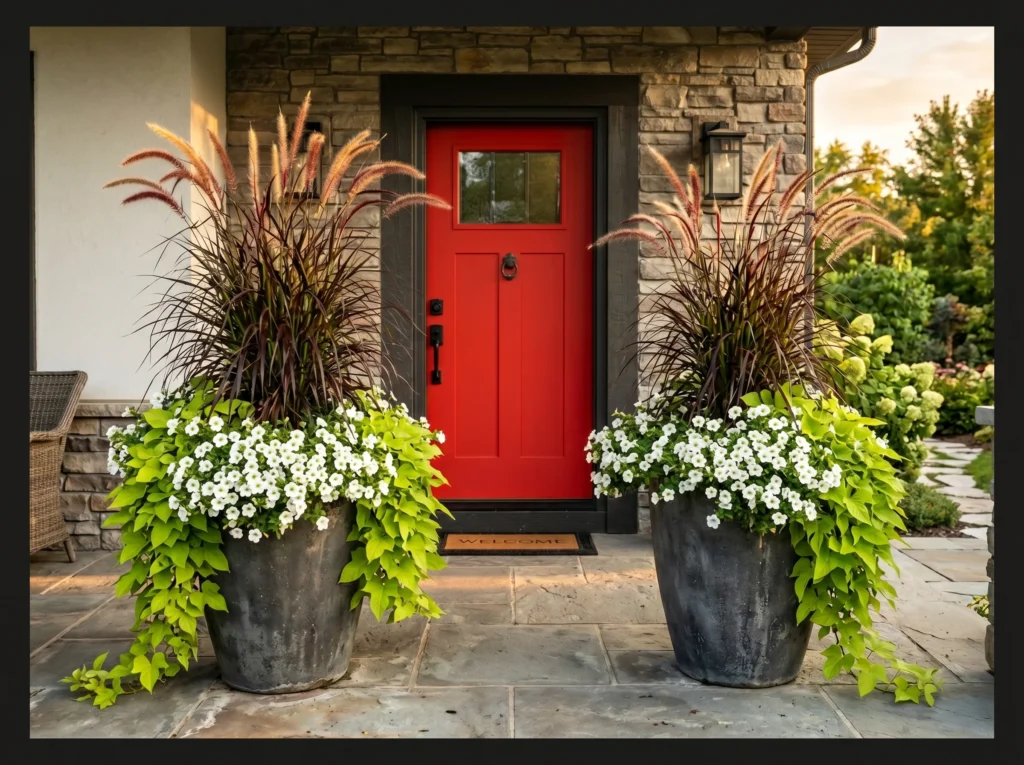
Two large container gardens flanking the front door frame the entry like parentheses and give you complete seasonal flexibility. Swap the plantings three times a year for continuous color without any permanent commitment.
Use the thriller filler spiller method at a generous scale: containers should be at least 18 inches in diameter anything smaller looks lost against the scale of a standard front door. Use a lightweight potting mix with slow release fertilizer for the most abundant growth with the least effort.
For container styling for the entry beyond just planters, there are more ideas worth pairing with this seasonal swap approach.
Curved Brick Driveway Border
Straight edges ki jagah curved brick border driveway ko softer aur traditional feel deta hai. Bricks ka pattern herringbone ya running bond mein arrange kiya ja sakta hai. Yeh landscaping aur hardscape ke beech ek clean visual line banata hai.
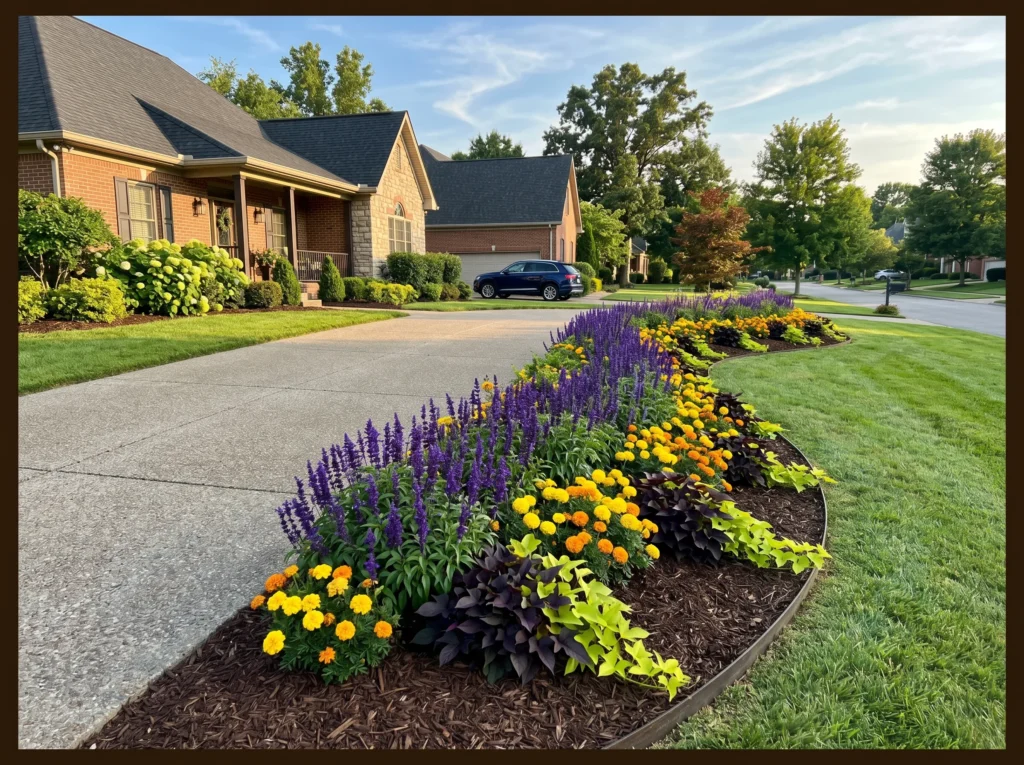
The strip of lawn between the driveway and the property edge is usually the most neglected and least attractive space in the entire front yard. Converting it to a planted driveway border garden immediately improves the approach to the home from the street.
Choose low maintenance plants that handle reflected heat from the asphalt lavender, salvia, ornamental grasses, and marigolds all perform well in this hot, sometimes narrow zone. Keep plants below 18 inches to maintain sight lines when backing out of the driveway.
Flowering Hedge Privacy Screen
Flowering hedge privacy bhi deti hai aur saath mein visual interest bhi. Lilac ya viburnum jaisi species iske liye popular choices hain. Yeh solid fence ke comparison mein zyada natural aur inviting lagti hai.
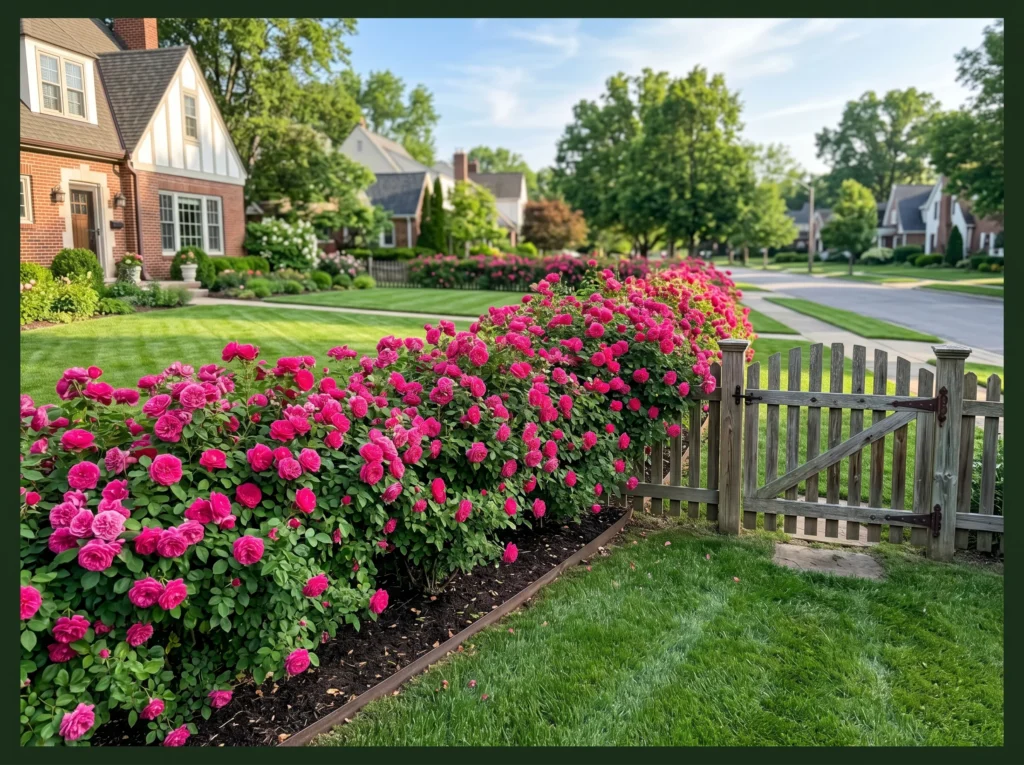
A flowering hedge provides privacy from the street while contributing significant seasonal color something a solid wood or vinyl fence cannot do. Knockout roses, lilac, and forsythia all make excellent flowering hedge species.
Plant hedge shrubs at half their mature width apart for the fastest coverage. For example, knockout roses mature at four feet wide plant two feet apart for a solid hedge within two growing seasons. Add steel edging at the base to keep grass from migrating into the hedge planting zone.
Creeping Groundcover Lawn Replacement
Traditional grass lawn ko creeping groundcover se replace karna mowing ka kaam kam kar deta hai. Creeping thyme ya clover jaise options drought tolerant bhi hote hain. Yeh texture mein bhi lawn se different aur interesting lagta hai.
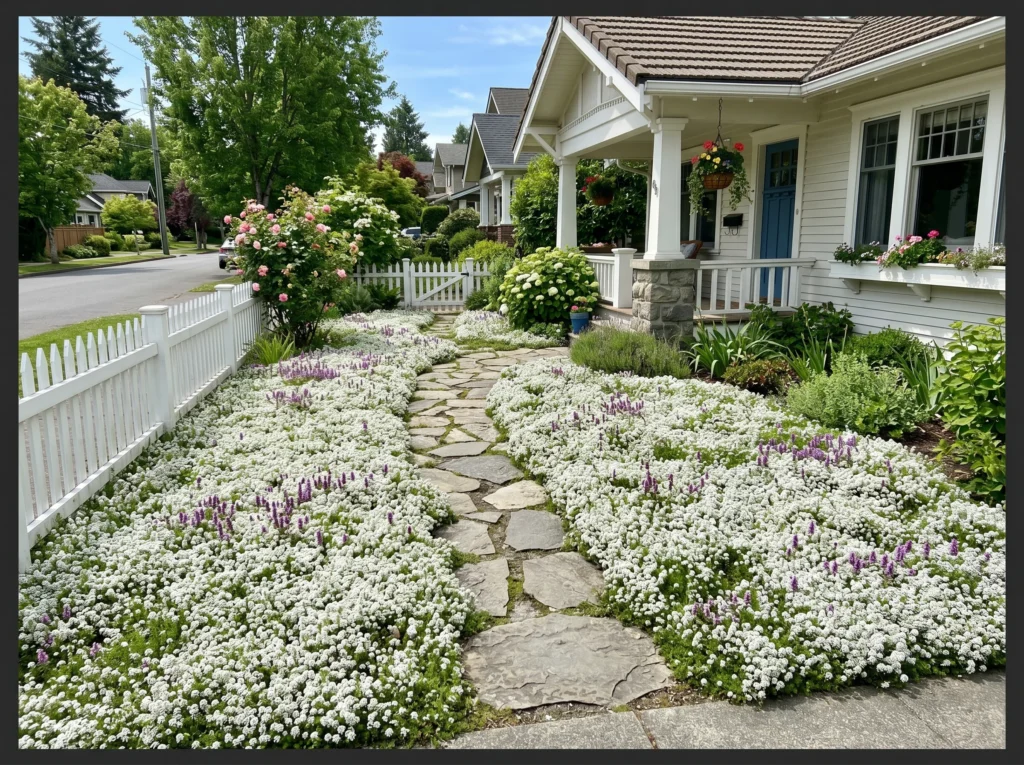
Replacing thirsty lawn with creeping groundcover permanently eliminates mowing, reduces irrigation, and creates a front yard that genuinely stands out in a block of identical grass rectangles.
Creeping thyme is the strongest performer it handles light foot traffic, blooms with tiny purple flowers in spring, smells wonderful, and stays completely green through mild winters. Kurapia and microclover are excellent lawn-replacement alternatives for warmer and wetter climates respectively.
Mailbox Garden Surround
Mailbox ke aas paas chhota sa planted area add karna ek simple lekin effective upgrade hai. Low growing perennials ya small shrubs yahan achi tarah fit hote hain. Yeh curb appeal mein chhota detail hone ke bawajood kaafi farak daalta hai.
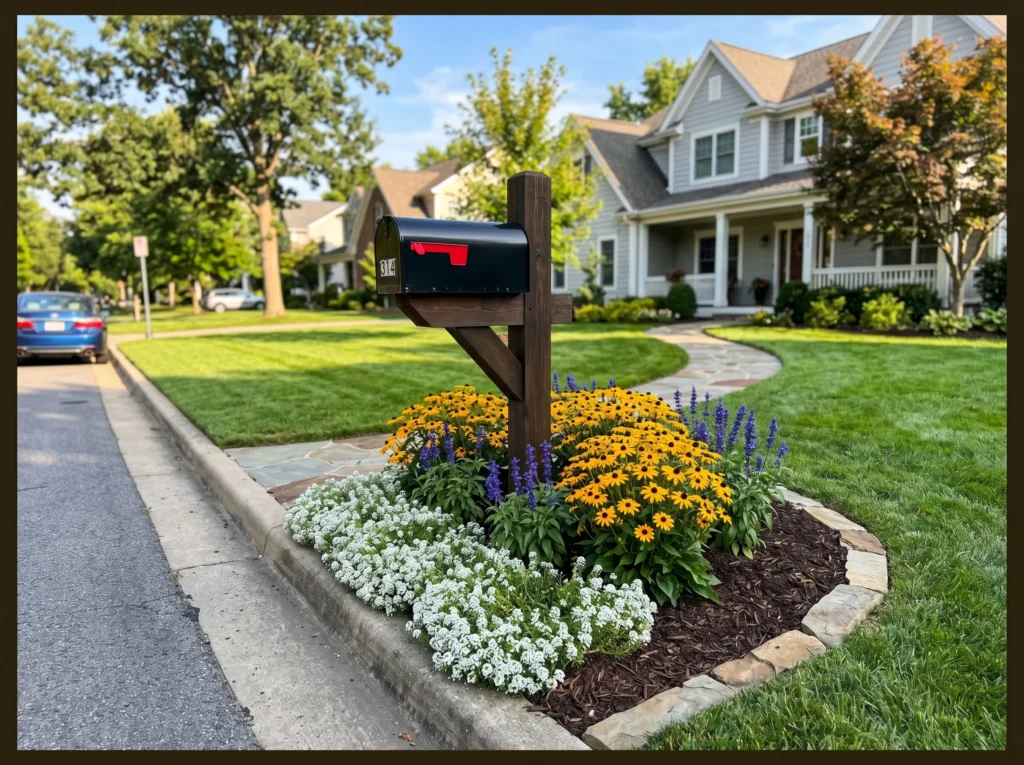
A landscaped mailbox surround turns a utilitarian post into a garden feature that greets visitors and passersby with color and intention before they even reach your front door.
Keep the planting bed compact a 3 by 4 foot kidney or oval shape is sufficient. Choose plants that tolerate the dry, compacted soil near a street edge: black eyed Susan, lavender, salvia, and ornamental grasses all perform reliably in this tough location with minimal supplemental watering.
Trellis or Garden Arbor Entry
Trellis ya arbor entrance par ek welcoming frame create karta hai. Climbing roses ya clematis jaise vines isse aur bhi charming bana dete hain. Yeh structure walkway ke start ko clearly define bhi karta hai.

A garden arbor at the start of the front walkway creates a physical entry threshold a moment of transition from public sidewalk to private home that no amount of planting alone can replicate.
Plant climbing roses, wisteria, or clematis at each base post. Within two to three seasons these climbers will cover the structure completely. White or cream painted wood suits traditional and cottage homes. Black steel framing fits contemporary and industrial aesthetics equally well.
Low Voltage LED Pathway Lighting
Low voltage LED lights walkway ko raat mein safe aur visible rakhti hain. Installation simple hai aur energy consumption bhi minimal rehta hai. Warm white lights particularly soft aur inviting glow dete hain.
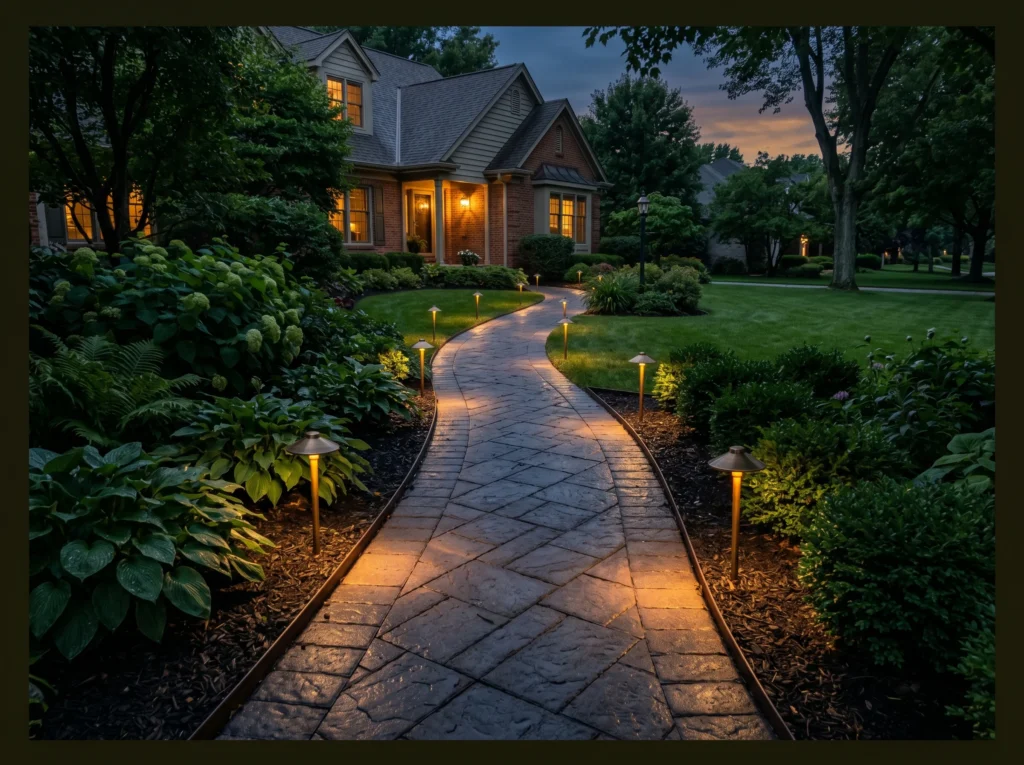
Pathway lighting extends your front yard’s curb appeal into the evening hours and makes the walkway genuinely safe for nighttime use. It also makes the home look far more inviting from the street after dark.
Stagger lights alternately on each side of the path never mirror-symmetrical on both sides simultaneously, which looks like an airport runway. Use warm white LEDs at 2700K to 3000K for the most flattering, welcoming glow. Brass or copper fixtures weather beautifully and never rust.
Uplight Trees and Architecture
Ground se upar ki taraf light throw karke trees ya house ke architectural features highlight kiye ja sakte hain. Yeh technique night mein ek dramatic aur layered look create karti hai. Subtle placement se yeh effect overdone nahi lagta.
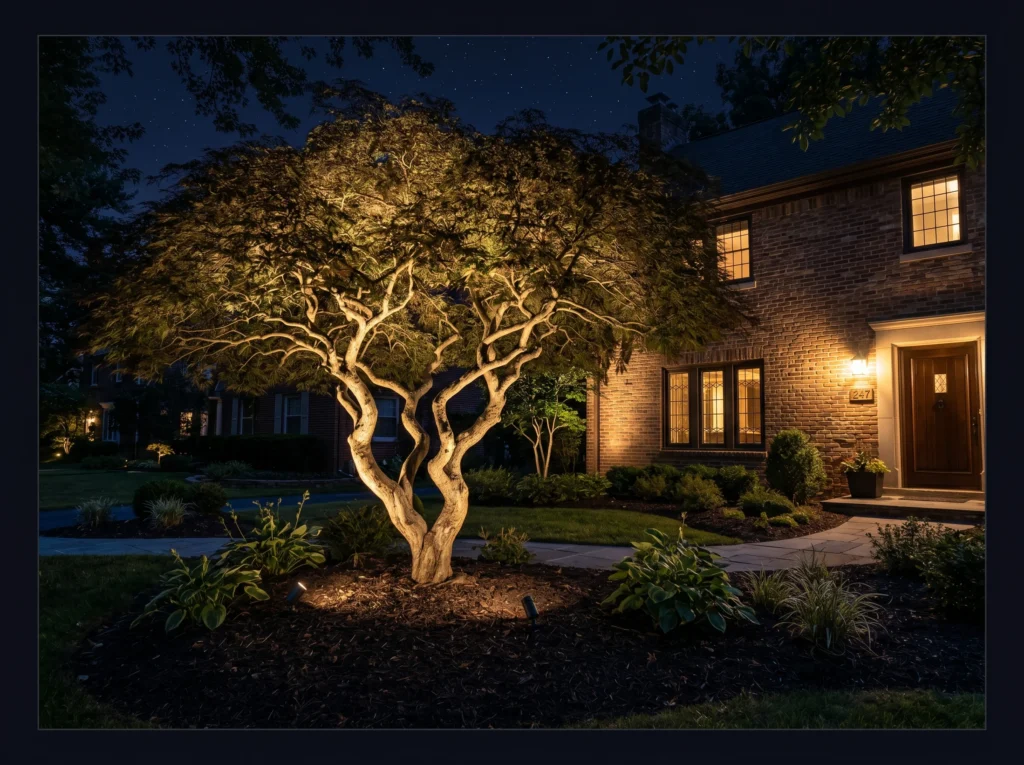
Uplighting a specimen tree or architectural feature transforms your home’s evening street presence completely. A single well placed uplight on a Japanese maple or multi stem birch creates dramatic shadow and warmth that makes the property look significantly larger.
Aim uplights at a 30 to 45-degree angle to the subject rather than straight up, which creates unnatural looking shadows. Use shielded fixtures that direct all light onto the intended subject rather than spilling across neighboring properties.
For evening lighting for the whole property, it’s worth extending this same warm uplighting approach to other architectural features.
Ornamental Grass Mass Planting
Ek hi type ki ornamental grass ko bulk mein plant karna ek bold, flowing statement banata hai. Feather reed grass ya maiden grass is purpose ke liye common hain. Wind mein inka movement garden ko almost alive feel deta hai.
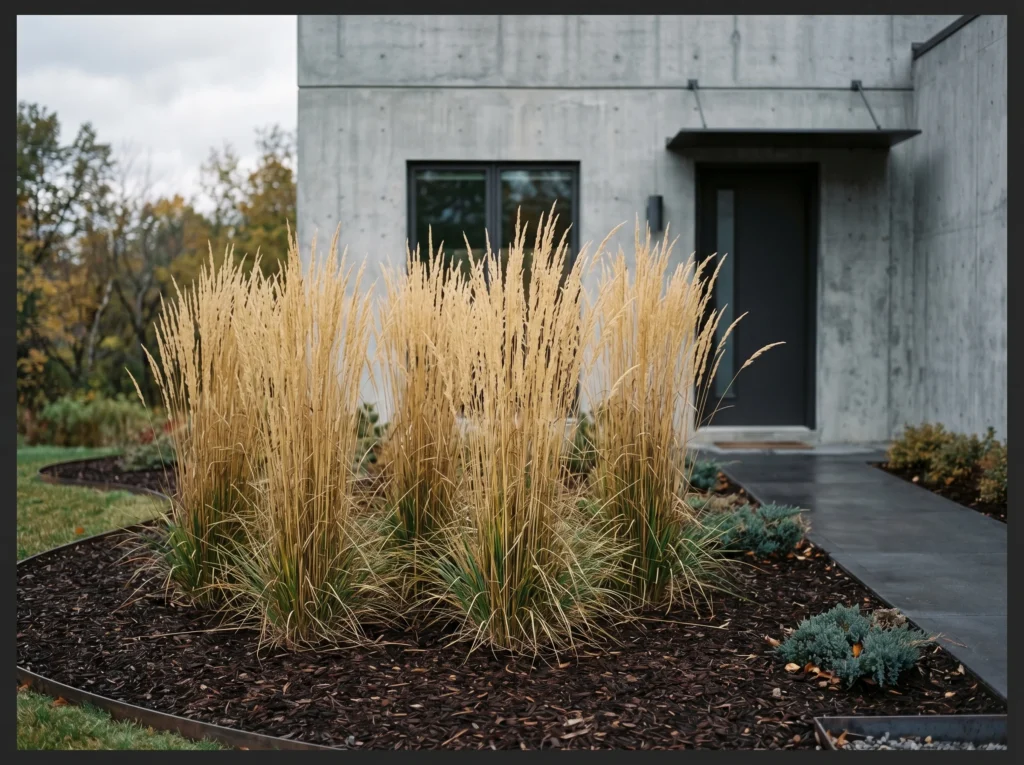
A mass planting of five or more identical ornamental grasses makes a bolder, more confident landscape statement than the same number of plants spread individually across multiple locations. Scale and repetition create visual power.
Karl Foerster, Maiden Grass, and Blue Oat Grass are the three strongest mass planting choices for most US climates. All are low maintenance once established, require cutting back only once in late winter, and provide stunning seasonal interest from summer through the following February.
Rain Garden in a Natural Low Spot
Yard ke natural low spot ko rain garden mein convert karna stormwater ko effectively manage karta hai. Moisture loving plants jaise switchgrass yahan achi tarah grow karte hain. Yeh drainage problem ko ek functional aur beautiful feature mein badal deta hai.
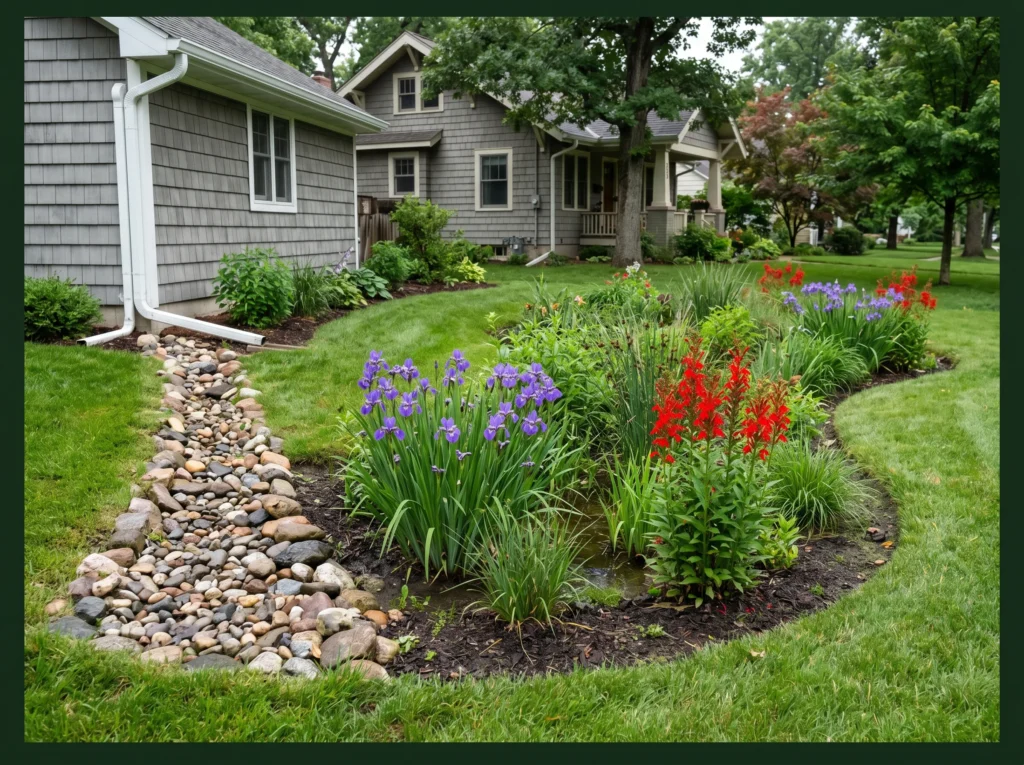
A rain garden converts a low wet spot that kills regular grass into a productive, beautiful garden feature that also protects your foundation by directing storm water away from the house and into the ground naturally.
Plant with moisture-tolerant native species Blue Flag Iris, cardinal flower, swamp milkweed, and native sedges all thrive in the periodic wet-dry cycle of a rain garden. The garden captures the first inch of rainfall from a typical storm, which handles 90 percent of annual runoff events.
Fragrant Herb Border Along the Walkway
Walkway ke kinare herbs plant karna chalte waqt naturally fragrance release karta hai. Rosemary, thyme aur lavender is purpose ke liye popular picks hain. Yeh border practical bhi hai kyunki herbs cooking mein bhi use ho sakte hain.
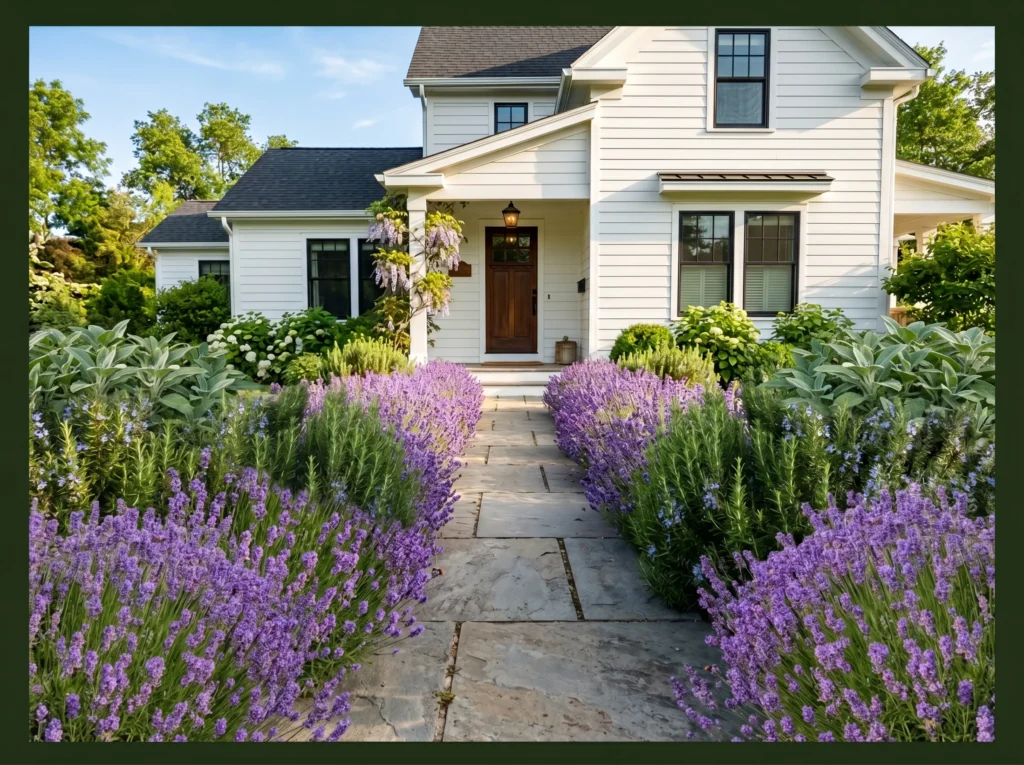
Planting fragrant herbs along the front walkway means every visitor experiences the garden through scent before they even reach the door. Lavender, rosemary, and sage all release their fragrance when brushed by passing clothing.
All three species are drought-tolerant, evergreen (or near-evergreen) in mild climates, and polinator magnets that support bees through summer. They require no regular fertilizing and need watering only during establishment. This is genuinely one of the lowest maintenance walkway border ideas available.
Front Yard Seating Nook with Gravel
Gravel patch par chhota seating area banana front yard ko ek relaxed gathering spot bana deta hai. Bistro chairs ya ek simple bench yahan kaafi hote hain. Yeh space neighbors se chat karne ya bas evening enjoy karne ke liye perfect hai.
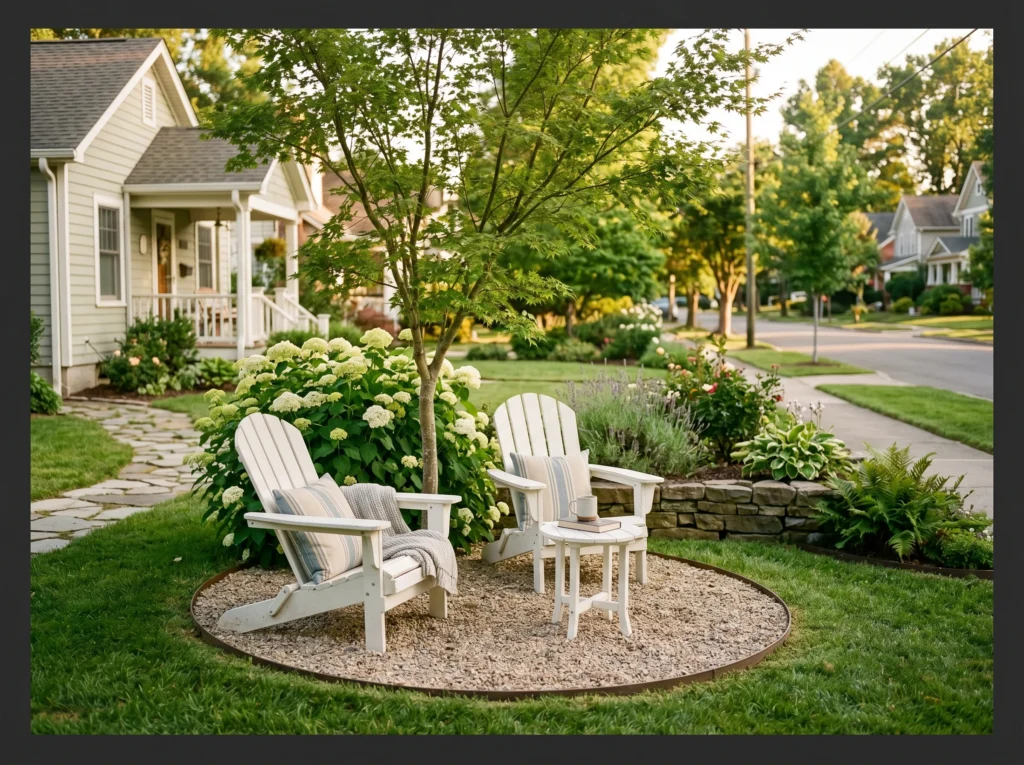
A small front yard seating nook signals that you actually use and enjoy your outdoor space which makes the whole property feel genuinely lived in and welcoming rather than just a maintained surface.
A three to four foot circle of pea gravel provides a clean, level, low-maintenance base for weather-resistant furniture. A medium flowering shrub behind the seating offers enough visual enclosure to feel sheltered without blocking the street view entirely.
If a front yard nook has you thinking about outdoor living more broadly, there are seating spots for outdoor relaxing worth exploring in the backyard too.
Modern Geometric Concrete Planter Wall
Geometric concrete planters modern homes ke saath particularly well pair hote hain. Clean lines aur structured shape traditional garden beds se ekdum different look dete hain. Yeh planters different heights mein arrange karke visual interest bhi add karte hain.
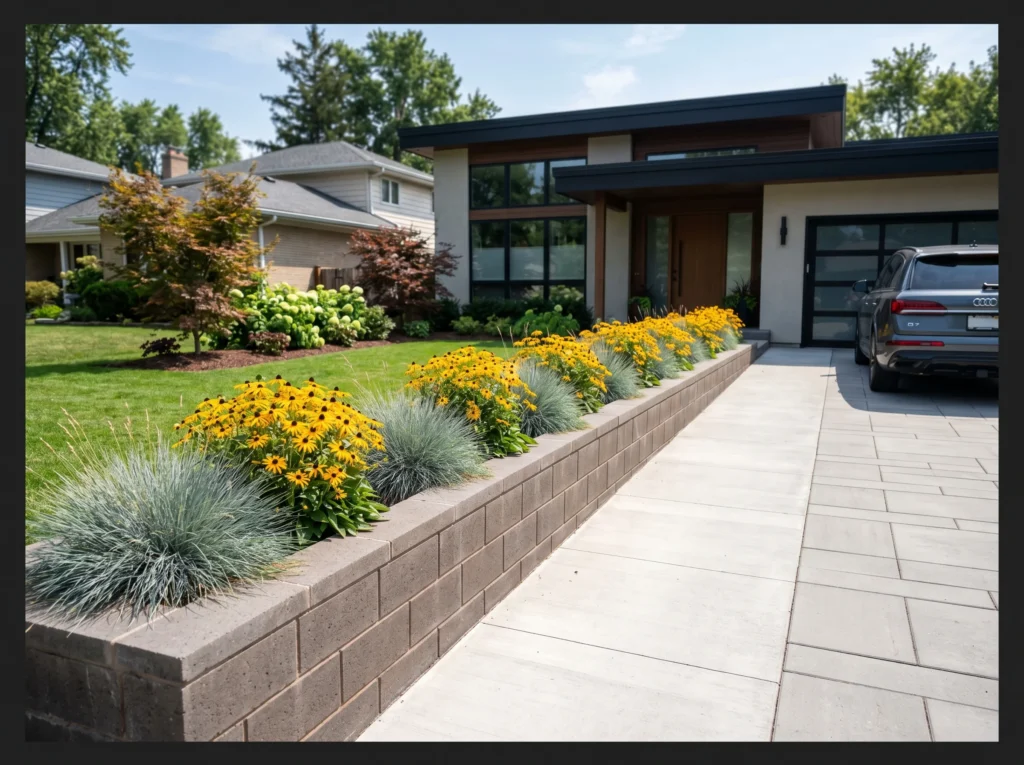
A low concrete planter wall defines the front yard boundary with a clean, architectural line that a fence or hedge cannot replicate. It sits at 18 to 24 inches low enough to see over completely, high enough to define the space.
Build with dry-stacked concrete blocks in a charcoal or warm gray finish for the most current, contemporary look. Plant the top with structural, drought-tolerant plants blue fescue, black eyed Susan, and ornamental sage all perform excellently in this elevated, exposed position.
Conclusion
Front yard landscaping does not require a massive budget or a professional designer to make a real difference. A curved walkway, clean mulch, one great specimen tree, and well chosen foundation plants are genuinely enough to transform how your home reads from the street.
Pick two or three ideas from this list that fit your yard size, your climate zone, and your realistic maintenance commitment. Start with the highest-impact, lowest-cost changes first fresh dark mulch and clean edging alone will surprise you. Then build from there over one or two seasons into the front yard that makes you proud to pull into your driveway every single day.
And if your yard has its own quirks to work around, there are landscaping ideas for sloped or tricky yards worth a look too.